RRR Songs (Songs of Regret, Repentance and Ruefulness)
I started this new series on 17 Jan 21 on my Facebook Group Yaad Kiya Dil Ne. My efforts failed to involve people in writing their own stuff about songs and music rather than copying and pasting from here and there or worse, just sharing url of songs from YouTube. Hence, I had decided to give the group a burial that it deserved rather than making it like thousands of groups on Facebook about songs with nothing unique about them at all.
Hence this series shifted to my page Lyrical.
I hope you liked RRR Song #11: Jis dil mein basa tha pyar tera. Here is the next song:
Song #12
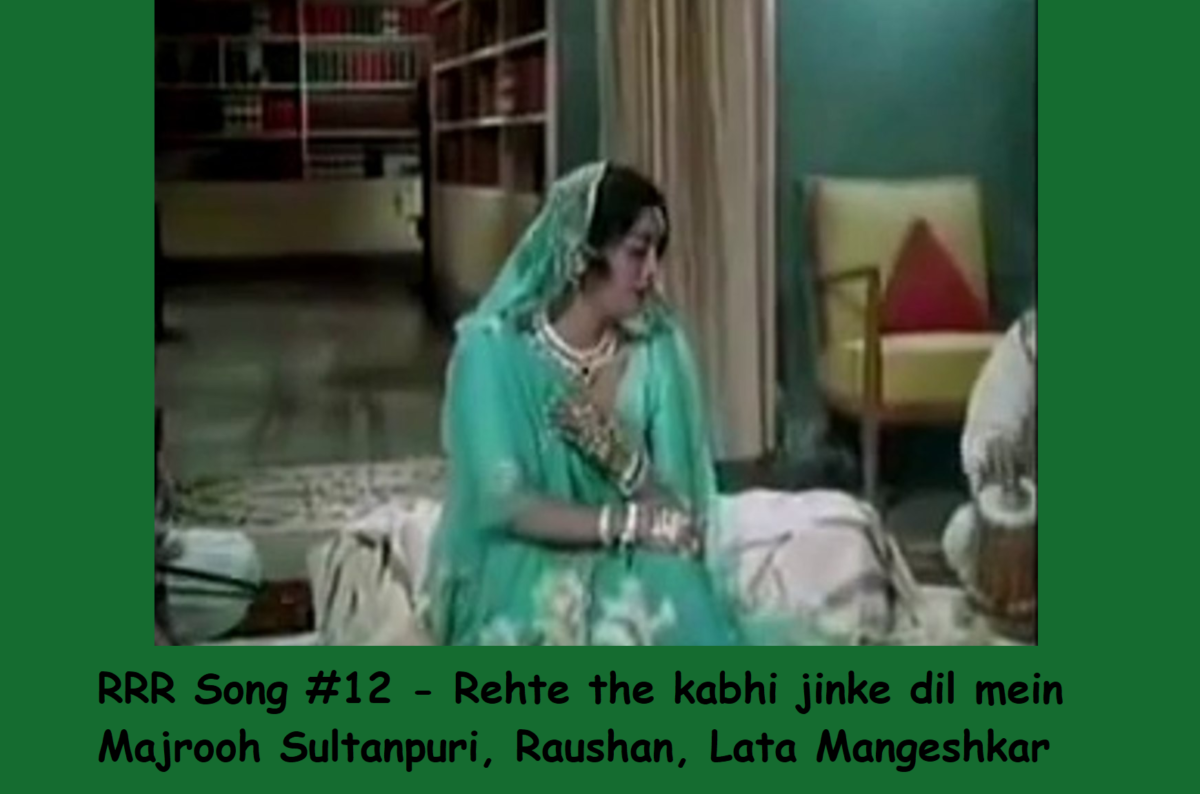
Rehte the kabhi jinake dil mein
Mamta – 1966 Movie
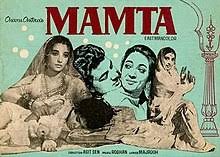 The movie happens to have story similar to 1958 Kalidas movie Adalat starring Nargis, Pradeep Kumar and Pran. That movie had some of the greatest songs of Madan Mohan on the lyrics of Rajinder Krishan.
Surprisingly, this one is not a plagiarised story. It is a remake of Asit Sen’s Bengali 1963 movie Uttar Falguni. It appears that women being wrongfully forced into prostitution was a common theme all over India.
This Asit Sen movie (remember Asit Sen? He was the director of Hemant Kumar’s Khamoshi) starred Suchitra Sen as the one forced to become a courtesan after Ashok Kumar’s family refused to own her up after Ashok Kumar left for England to get education to become a barrister.
Until that time, to become a barrister was thought of as a noble profession for the intellectual. We had the most famous barrister of them all: Mohandas Karamchand Gandhi, who was so noble that he is addressed as Mahatma (Saint). Nowadays, law is considered an outlet for those who want to make quick buck at the expense of others.
Similarly, courtesans are nowadays the women of worthless character and morals.
Nihar Ranjan Gupta and Krishan Chander wrote the story and in the final stages gave it a twist from Adalat by having a child who was never to be seen earlier and thus justifying the name Mamta.
Courtesans and prostitutes with golden heart are an obsession with Hindi films industry and everyone is happy with the situation especially lyricists and music directors.
Majrooh and Roshan
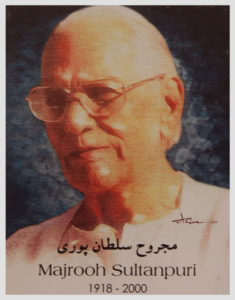 This movie had Majrooh and Roshan doing to its songs what Rajinder Krishan and Madan Mohan did to Adalat songs. They made the following:
- “Chahe To Mera Jiya Lele” Lata Mangeshkar
- “Chupa Lo Yun Dil Mein Pyar Mera” Lata Mangeshkar, Hemant Kumar
- “Hum Gavanwa Na Jayibe Ho” Lata Mangeshkar
- “Rahen Na Rahen Hum (solo)” Lata Mangeshkar
- “Rahen Na Rahen Hum (duet)” Mohammed Rafi, Suman Kalyanpur
- “Rahte The Kabhi Jinke” Lata Mangeshkar
- “In Baharon Mein” Mohammed Rafi, Asha Bhosle
Majrooh has laid nice and thick whilst writing the lyrics; her hopelessness is adequately laced with self pity:
रहते थे कभी जिनके दिल में
हम जान से भी प्यारों की तरह
बैठे हैं उन्ही के कूचे में
हम आज गुनहगारों की तरह – २
दावा था जिन्हें हमदर्दी का
खुद आके न पूछा हाल कभी – २
महफ़िल में बुलाया है हम पे – २
हँसने को सितमगारों की तरह – २
रहते थे…
बरसों से सुलगते तन मन पर
अश्कों के तो छींटे दे ना सके – २
तपते हुए दिल के ज़ख्मों पर – २
बरसे भी तो अंगारों की तरह – २
रहते थे…
सौ रुप धरे जीने के लिये
बैठे हैं हज़ारों ज़हर पिये – २
ठोकर ना लगाना हम खुद हैं – २
गिरती हुई दीवारों की तरह – २
रहते थे…
My Own Poetry
WAQT GAYA BAAT GAYI
बातों बातों में बात निकल जाती है,
वह मिलते नहीं, मुलाकात निकल जाती है।
इंतज़ार करते करते आंख कुछ ऐसे लगे,
खुलते ही देखा हैयात निकल जाती है।
सदियों से पड़े हैं तन्हा और बेकसी में,
लोग क्यूं कहते हैं मजबूरी ए हालात निकल जाती है?
घर के सामने खड़े थे उनकी उम्मीद में हम,
वह नहीं निकले पर बारात निकल जाती है।
सामने होंगें तो ज़रूर पूछूंगा ऐ खुदा,
मुझे अकेला छोड़ के कहां कायनात निकल जाती है?
जब भी भीगने की ख्वाहिश उठी, रवि,
उसी वक़्त देखा बरसात निकल जाती है।
The Song
Lata Mangeshkar has sung it as well as any of Adalat songs.
Please enjoy: Rehte the kabhi ham jinake dil mein…
I hope you liked Song #12 in this series.
Please await Song #13: Woh jo milate the kabhi.
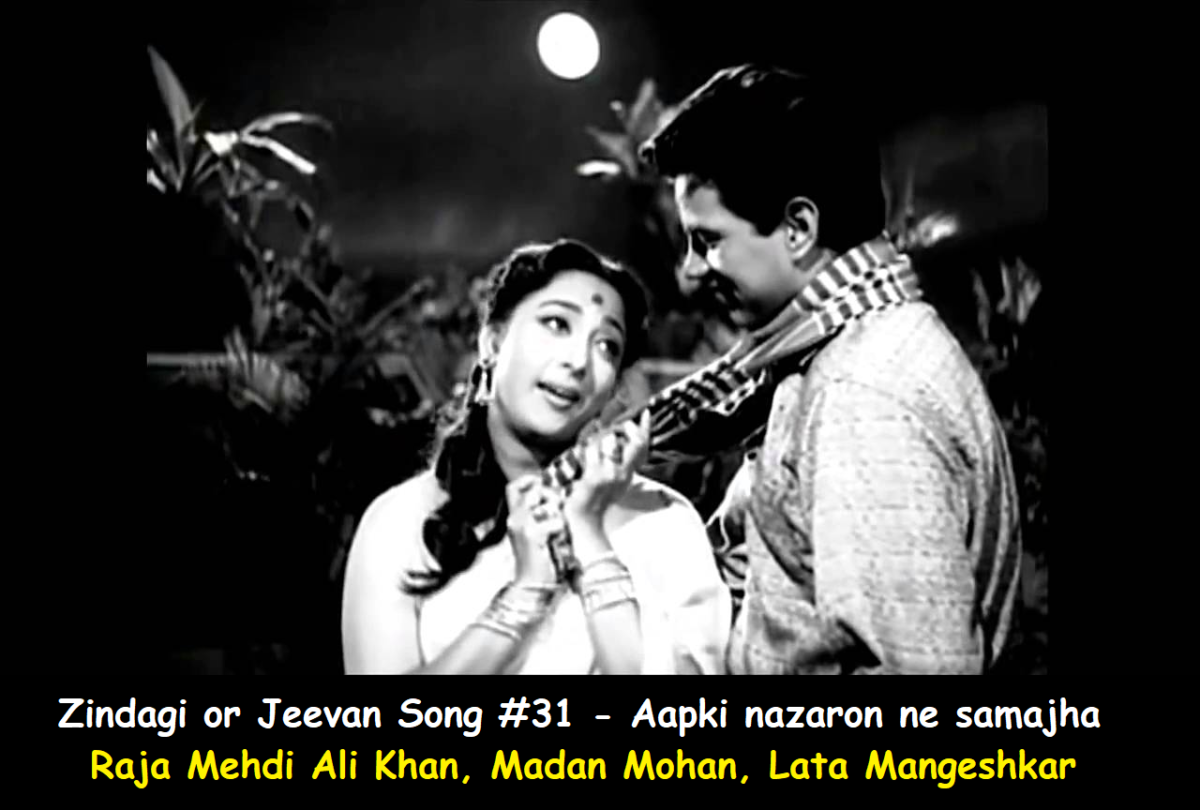
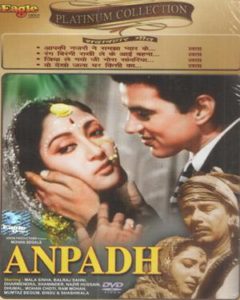 This 1962 movie directed by Mohan Kumar (almost all his movies starting with the letter A such as Aas Ka Panchhi, Ayee Milan Ki Bela, Aap Ki Parchhayiyan, Aman, Anjana, Aap Aaye Bahar Aayi, Avtar, Amba, All Rounder and Amrit (This is a fad in Hindi films industry; numerology and astrology plays a big role in selecting titles of movies), reflected the way we treated women. Being literate wasn’t considered necessary as long as they were well versed in wifely duties (cooking and embroidery and keeping a good and clean house). In this movie, Balraj Sahni as the brother of Mala Sinha felt that as long as they had enough money, being uneducated wasn’t important.
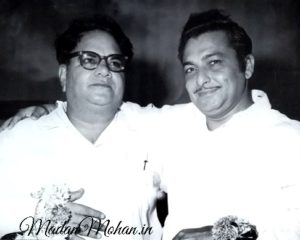 Madan Mohan was the Music Director for women. He made some of the most memorable songs Lata Mangeshkar (who was very fond of “Madan bhaiya”). I feel that in the top ten songs of Lata composed by Madan Mohan, these are equally divided between Rajinder Krishan and Raja Mehdi Ali Khan as lyricists; both of them being extraordinarily aligned to the emotions of women. If Raja would have Lag jaa gale ke phir, Rajinder Krishan would have Unako ye shikayat hai ke ham kuchh nahin kehte. Outstanding combinations both.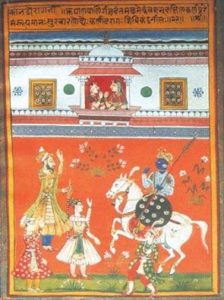
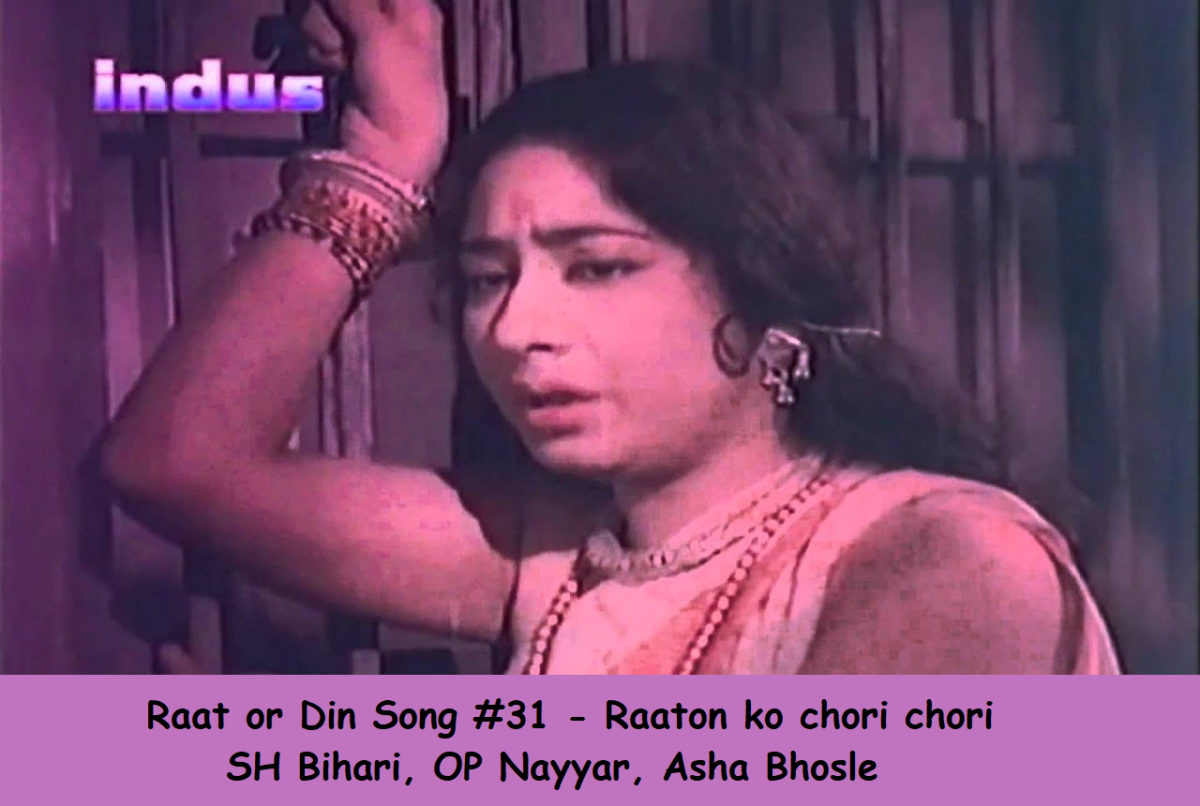
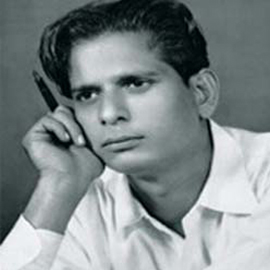 I have liked all the lyrics of Shamsul Huda Bihari; particularly those that have been composed by OP Nayyar. One straightway thinks of Kashmir Ki Kali, Ek Mussafir Ek Hasina, Sawan Ki Ghata, and Yeh Raat Phir Na Aayegi.
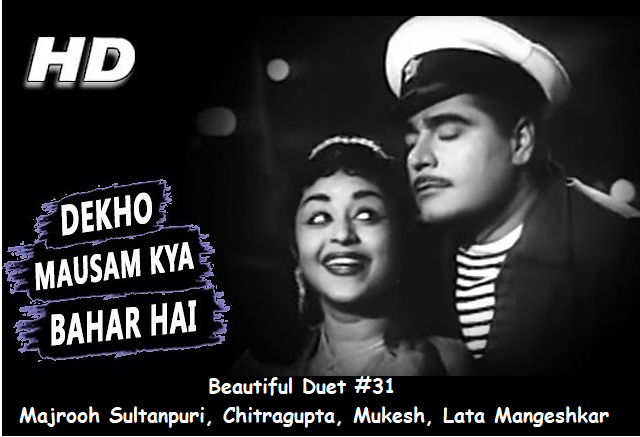
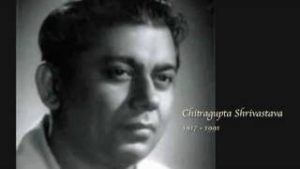 Chitragupt was one Music Director who was known for fusion; I have already given you his fusion song Jodi hamari jamega kaise Jani? Just like all our MDs (without exception) he wasn’t beyond copying tunes from abroad. He just lifted the tune for Dekho mausam kya bahaar hai from Bimbo: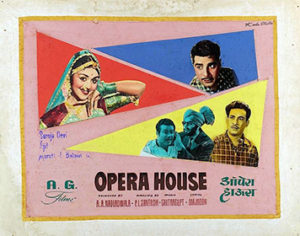
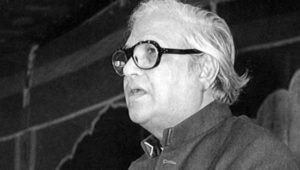 Majrooh didn’t allow himself into being typified; from a typical Urdu poet he often went into all kinds of songs whether Western or Indian.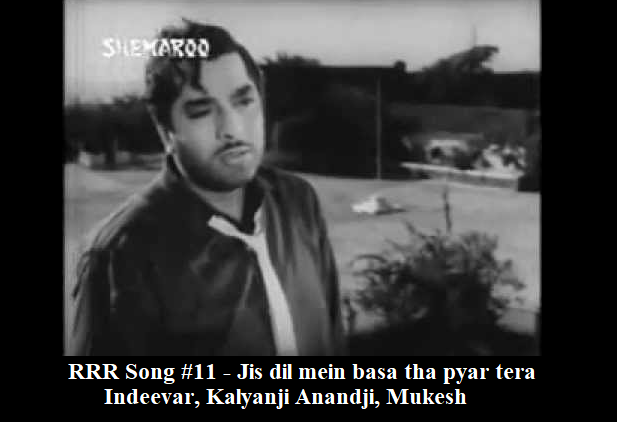
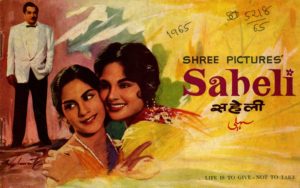
 Indeevar had written the lyrics at a time when he used to write very good and sensitive lyrics and when he hadn’t tied up with Bappi Lahiri to write some 500 trash songs for him for the lure of money.
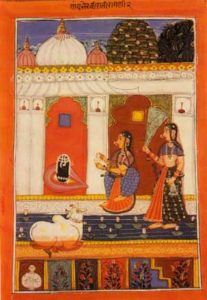 We have seen the handling of Raag Bhairavi by Jaikishan (SJ fame). Here it is Kalyanji Anandji who have thought of Bhairavi to compose it.
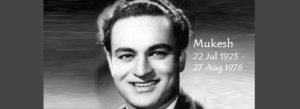 When it comes to RRR songs or Songs of Regret, Repentance and Ruefulness, one singer that comes to mind is Mukesh. He was the best in this genre’. Here too he has done a remarkably beautiful job of it.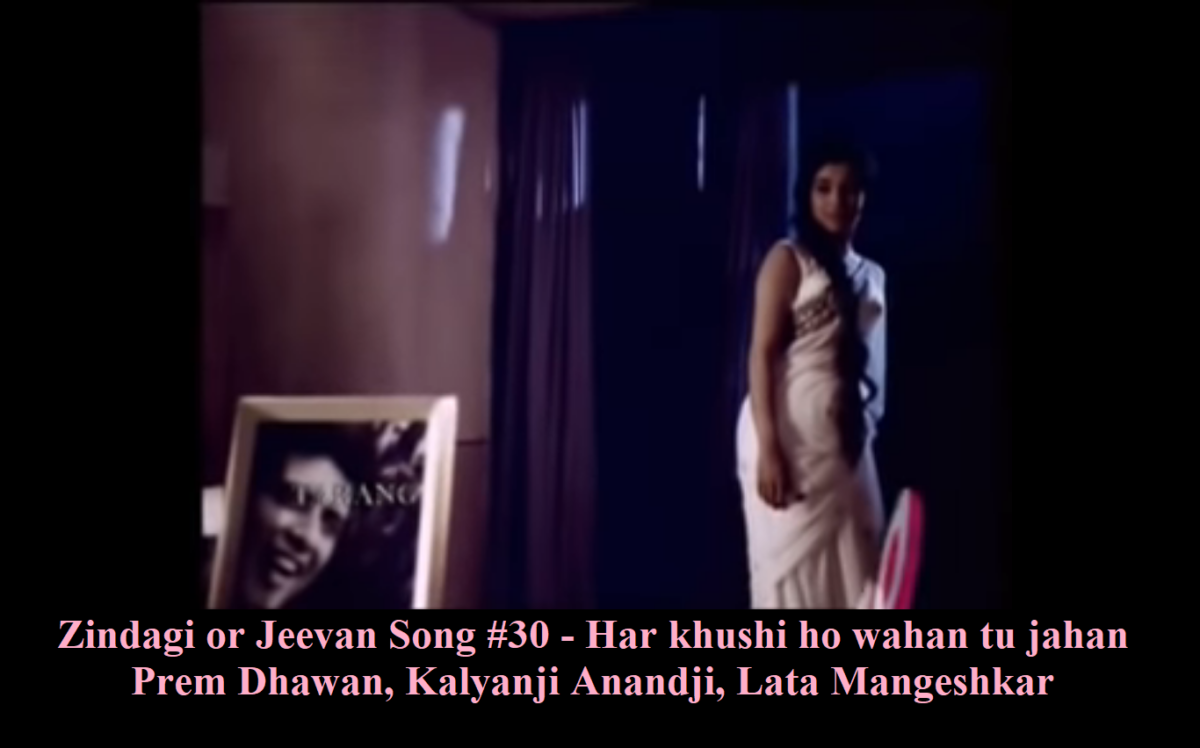
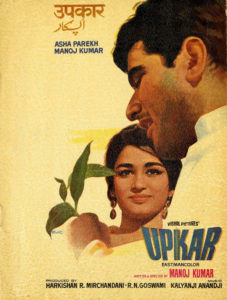
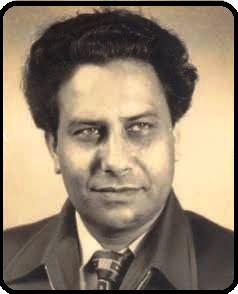
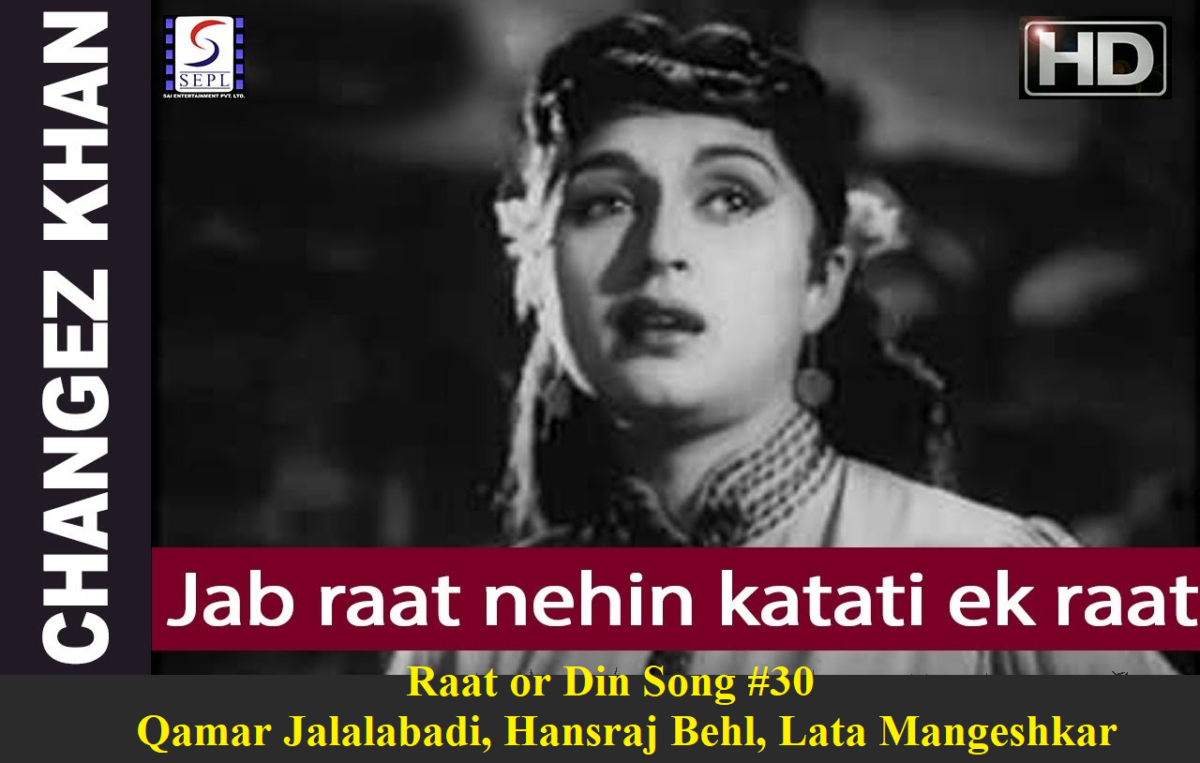
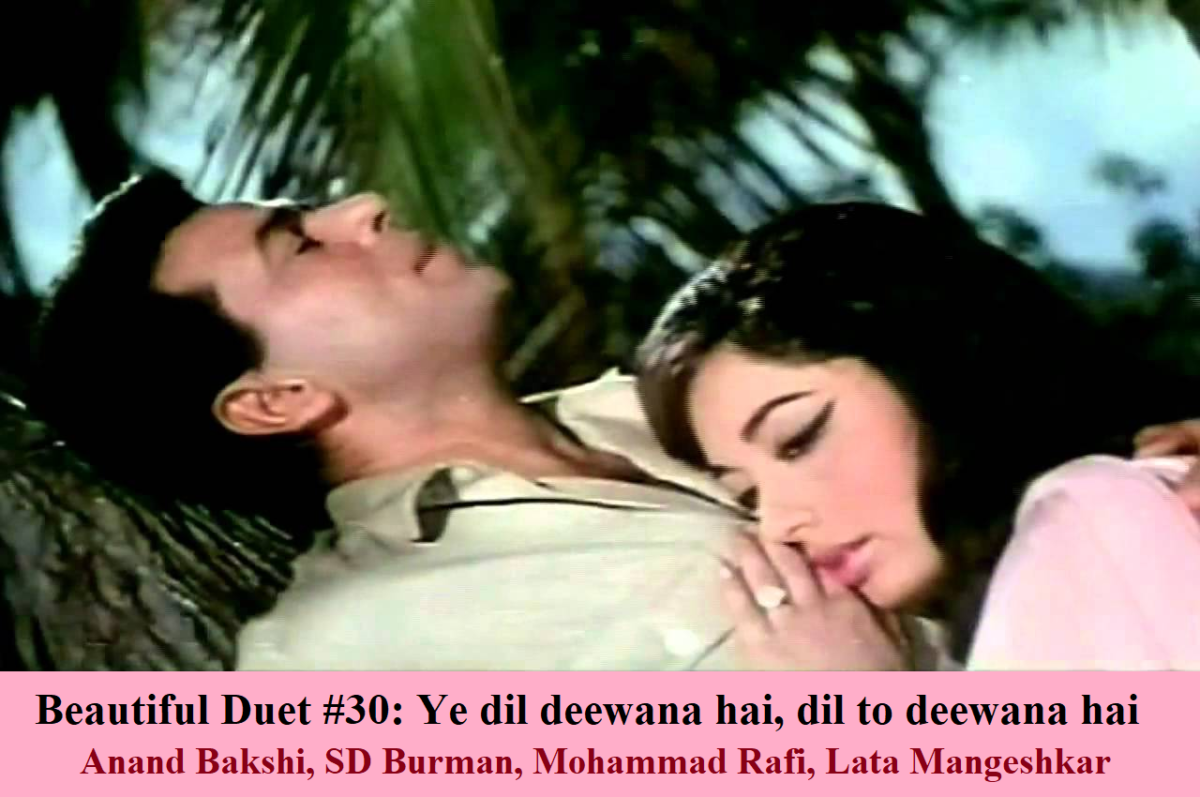
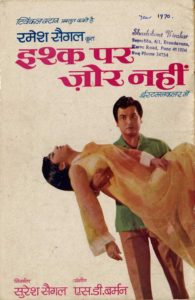 It was a 1970 Ramesh Saigal movie. Who was Ramesh Saigal? He was the one who gave us 1948 Dilip Kumar – Kamini Kaushal starrer Shaheed with the popular Raja Mehdi Ali Khan song: Watan ki raah mein watan ke naujwan shaheed hon. He also gave us 1950 spy thriller Samadhi starring Ashok Kumar and Nalini Jaywant, 1953 Dilip Kumar starrer Shikast with Shankar Jaikishan’s music and Wjahat Mirza’s story and dialogues, 1955 Sunil Dutt starrer Railway Platform, 1958 Raj Kapoor starrer Phir Subah Hogi with Sahr’s inspirational song Woh subah kabhi to aayegi, 1961 movie Shola Aur Shabnam with my all time favourite song Jeet hi lenge baazi hum tum and Jaane kya dhoondati rehti hain and then this movie in 1970; ie, nnine years after his last one: Shola Aur Shabnam.
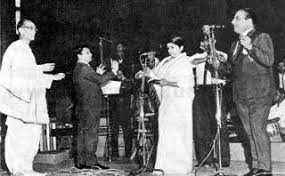 This duet has been sung by Mohammad Rafi and Lata Mangeshkar; the best pair for duets. It was composed as a rare song by Sachin Dev Burman who introduced Santoor for the first time in any movie until then. The lyrics and composition are thus unique.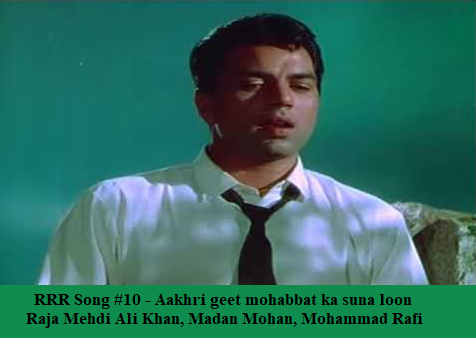
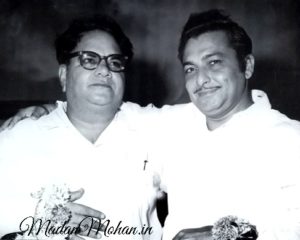 If you look up the You Tube, you would find that some of the most popular and best songs of Lata Mangeshkar have been crafted by the duo. Lets recall songs like Lag jaa gale se of Mera Saya, Agar mujhase mohabbat hai of Aap Ki Parchhayiyan and Aapki nazaron ne samajha pyar ke kabil mujhe of Anpadh.
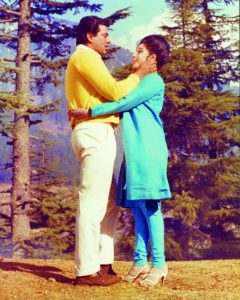 This too was sung by Mohammad Rafi for Dharmendra as the Dulhan Ek Raat Ki song: Ek haseen shaam ko. This is from the 1965 Rajendra Bhatia movie Neela Aakash with Mala Sinha as Neela and Dharmendra as Aakash and thus the title.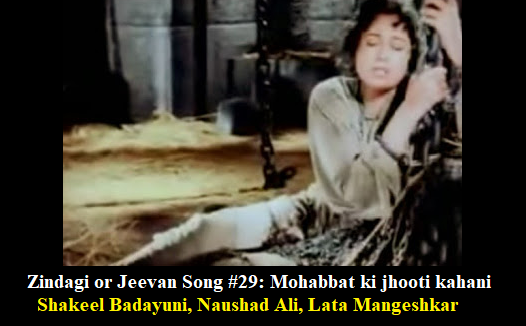
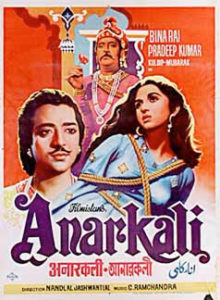 Anarkali would have never imagined that Love would get her this: bondage. Her first reaction is this. In her next, when she is in shackles, she prays to Almighty: Bekas pe karam keejiye Sarkar – e – Madina.
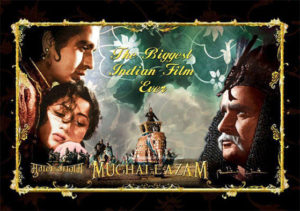 K Asif’s Mughal – e – Azam had Madhubala as Anarkali, a courtesan in the court of Mughal – e – Azam Akbar. She had, she felt in this song, erred in falling in love with Prince Salim.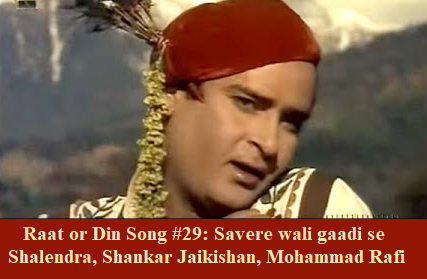
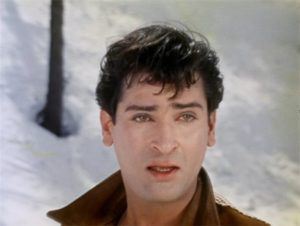 With this, I would have posted all three songs from my ongoing series as tribute to Shammi Kapoor on his Birth Anniversary: Zindagi or Jeevan Song, Beautiful Duet and now Raat or Din Song.
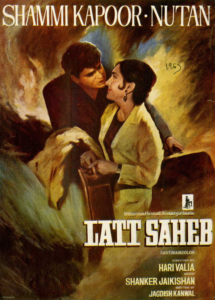 I have given you first two songs from Kashmir Ki Kali and the third is from the 1967 Hari Walia movie Latt Saheb, also shot in Kashmir.
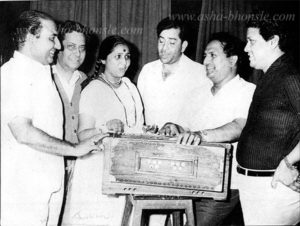 Shailendra wrote the lyrics in such a way so that they can be taken at the light-hearted level of Shammi Kapoor and yet have very deep meaning. He used the same simile as Shakeel Badayuni had used many years earlier in the title song of Mela: Ye zindagi ke mele duniya mein kam na honge, Afsos ham na honge.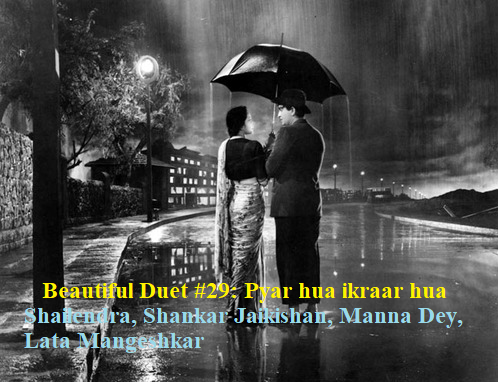
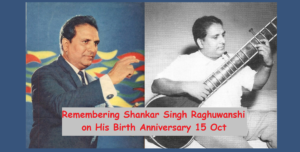 In the Raat Or Din Song #59 today: O mere sanam, O mere sanam, I brought out how Shankar Jaikishan were and are never thought of separately. This happened even after Jaikishan left us early (not yet 42 years when he died on 12 Sep 1971) and the name of the Music Director continued being Shankar Jaikishan.
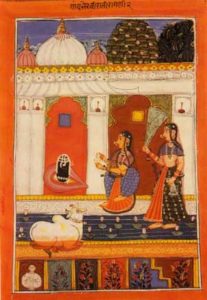 Raag Bhairavi is the basic raag of the Bhairavi Thaat. Bhairavi makes use of all the komal swars, Rishabh, Gandhar, Dhaivat, Nishad. When singing compositions in Bhairavi raag, the singers however take liberty to use all the 12 swars. Bhairavi raag is named after the shakti or feminine aspect of the cosmic life force, which is personified as a consort to Lord Shiva. Bhairavi is a powerful raag filled with devotion and compassion. Its Jati is Sampurna – Sampurna, which means all seven swar (heptatonic) both in Aaroha and Avaroha. In a concert Bhairavi is usually the concluding raaga since it is supposed to cure mistakes of the earlier performances. Hence, if a concert has started at night (which is usually the case), Bhairavi would be played in the wee hours of the morning.
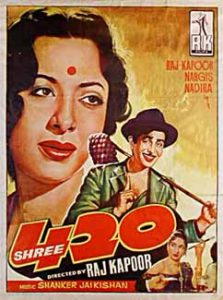 It is from the 1955 Raj Kapoor film Shree 420 starring him in the title role with the heroine of 17 of his movies, Nargis opposite him.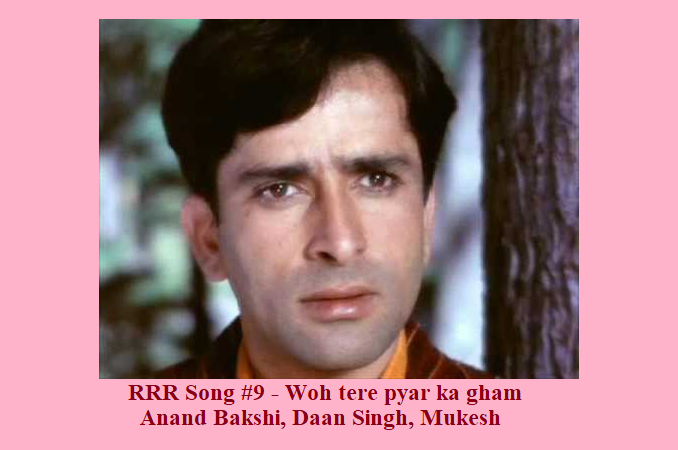
 Until Sameer (Anjaan’s son) came on the scene as a Lyricist, Anand Bakshi had been the most versatile lyricist in Hindi movies. With Laxmikant Pyarelal alone, he wrote songs for 302 movies, with another hundred or so with RD Burman.
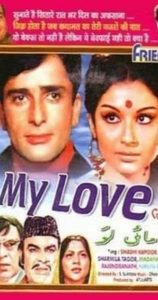 Here, Anand Bakshi, writing for Shashi Kapoor in the 1970 S Sukhdev movie My Love (with Sharmila Tagore) blames his broken heart in Love to his Destiny. Indeed, he adds that if it hadn’t been this sorrow, it would have been some other but he was destined to face sorrows!
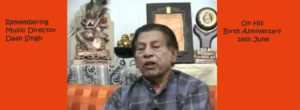 At first, a few words about its composer Daan Singh (1927-2011). He was one of the most neglected music directors of Hindi films, yet he composed many everlasting melodies, especially the ones with Mukesh.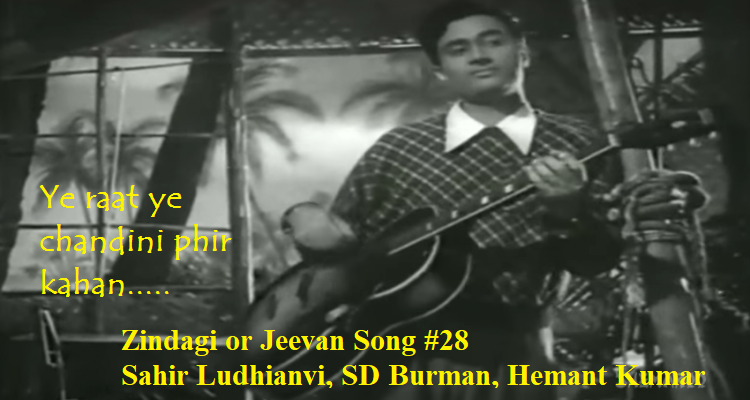
 This was a negative role by Dev Anand (not a good guy but a con-man Tony) and the only movie in which the director Guru Dutt used religion (Catholic faith of Goan fisherwoman Maria played by Geeta Bali (superbly portrayed by her) to resist the seduction of Dev Anand as the deceitful man Tony Fernandez.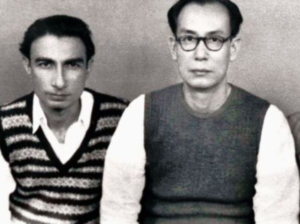
 Hemant Kumar sang only 17 songs (duets included) that were picturised on Dev Anand. And yet, each one is unforgettable. Chup hai dharti, chup hai chand sitaare, Teri duniya mein jeene se to behtar hai ke mar jaayen, and Hai apna dil to awaara are some that easily come to mind in addition to the two that I have mentioned.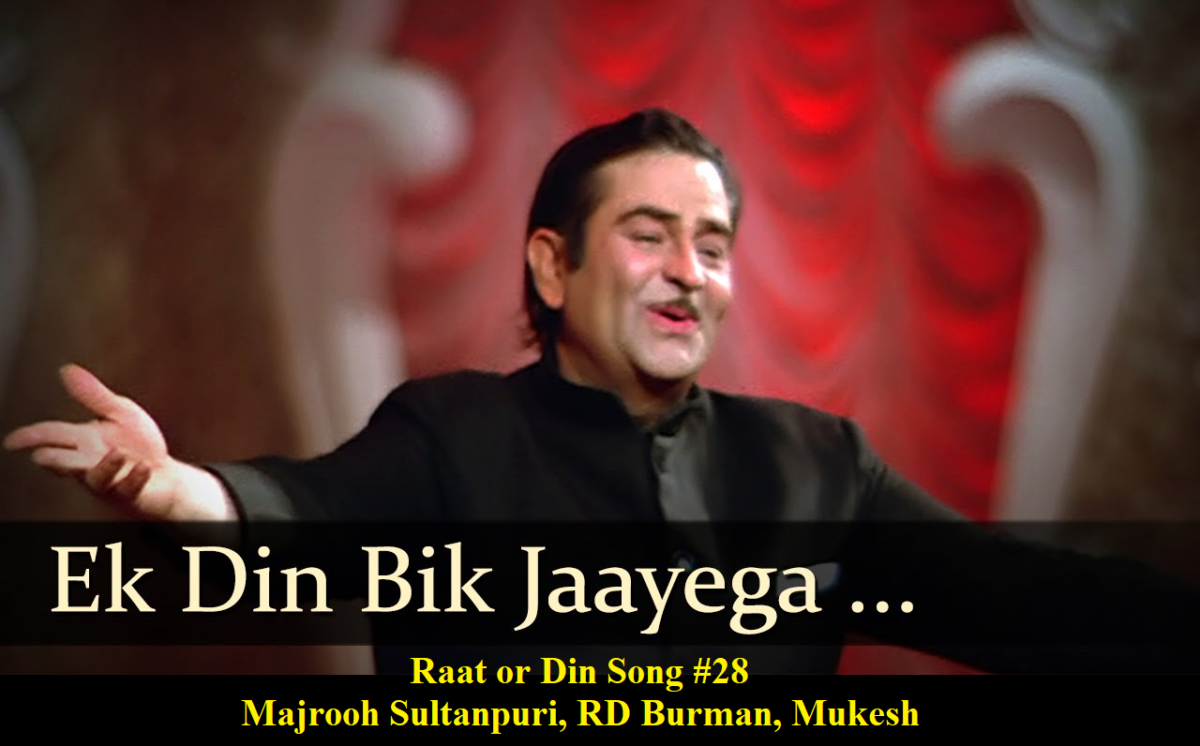
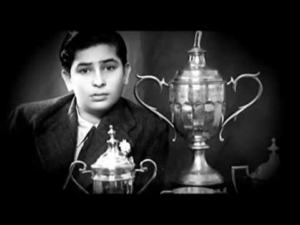 Prithviraj Kapoor introduced Raj Kapoor in the 1935 Debaki Bose movie Inquilab, at the age of only ten years. The movie had Kidar Sharma as a set painter and bit role, also procured through Prithviraj Kapoor. He was so grateful to Prithviraj Kapoor that when he directed his first movie Neel Kamal in 1947 (the longest run by Madhubala in this movie whilst singing a song!), he took Raj Kapoor as the hero in his debut role as hero.
 Twenty eight years later, at the age of nearly 51 years, Raj Kapoor was still going strong after having spent 41 years of acting in Hindi movies. The name of the movie was Dharam Karam, a movie produced by Raj Kapoor and directed by his song Randhir Kapoor.
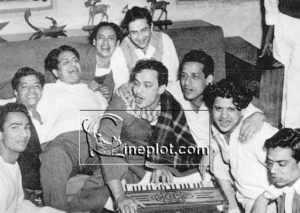 Prithviraj Kapoor initially and then Raj Kapoor set up a team in Hindi movies that made the best movies and songs: Shankar Jaikishan as Music Director, Hasrat Jaipuri and Shailendra as Lyricists, KA Abbas as story teller, Radhu Karmakar as cinematographer and so on.