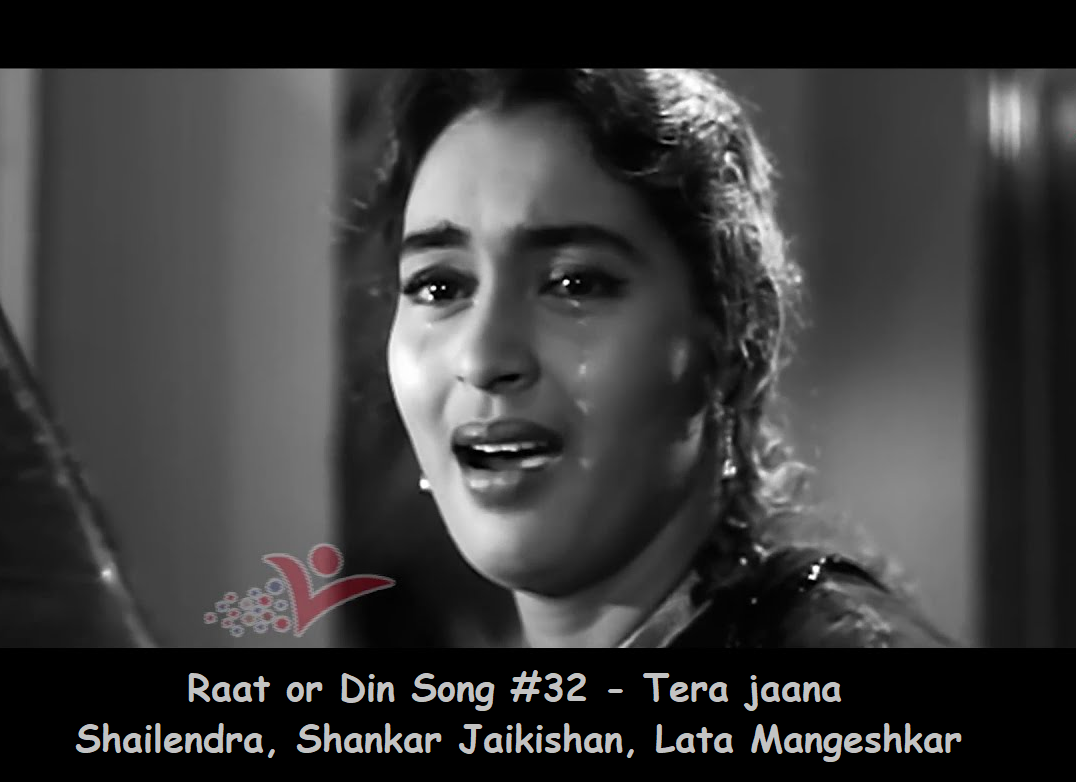
I started this series on my Facebook group Yaad Kiya Dil Ne on 18 Aug 20. Since then, many other members have put up these songs. Here, I shall be giving you one of my own, per day.
This is the Song #32 in the series. I hope you liked Song #31 – Raaton ko chori chori.
Song #32
Tera jaana
Theme-word: Jab jab chanda aayega teri yaad dilayega, Saari raat jagayega
Once Again a Zindagi and Raat Song
In this song she (Nutan) mentions Zindagi first: Tera gham teri khushi, Mera gham meri khushi, Tujhse hi thi zindagi.
I have once again decided in favour of Raat. After all, I started the series with: Saari saari raat teri yaad sataye.
Shankar Jaikishan – Shailendra
 I freak out on this song as one of the best compositions of my favourite duo: Shankar Jaikishan. Every movie of theirs had a song composed in the queen of ragas: Bhairavi, the raga most suited to express devotion. There were movies in which as many as four songs were composed by the duo in this raga. Jaikishan named his daughter Bhairavi because of his devotion to this devotional raga.
Other than Shakeel-Naushad, the guys who put me in a trance because of their compositions were the best duo ever of Shankar Jaikishan. There was this element of timelessness about their compositions.
Despite the best of lyrics and compositions, the songs would have been not even half the success they were if it hadn’t been for their outstanding composition and interludes. So much so that you pay more attention to the songs when the interludes appear.
I believe that the guys who had the best and most memorable interludes in their songs were the best music duo of Shankar and Jaikishan. They treated each song as a unique audience experience and interludes were significant part of their songs.
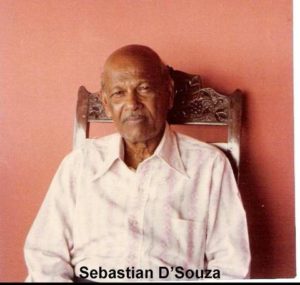 The guy who did it for Shankar Jaikishan to provide us with this memorable song arrangement was a Goan music arranger by the name of Sebastian D’Souza. If you notice a quality of music in Shankar Jaikishan songs wherein the music is not apologetically in the background but stand out as much as the lyrics and the voice, then it is thanks to Sebastian.
He was an arranger for Op Nayyar but started coming into prominence with S-J from their Awara days.
What did he and Shankar Jaikishan did in this song? It is a piano accordion song. First let me tell you a little controversy about S-J’s use of accordion. Their instrumentalist Vistasp Balsara claimed that many of the accordion sounds in the S-J numbers were produced by him on harmonium including for Awara hoon. However, there is no doubt about this song. It is actually on accordion, the instrument that S-J used the best.
Secondly, they made sad songs on fast happy beats so that music would be in prominence and you were taken in by singing, acting and cinematography. This aspect was untried by MDs earlier. However, many of S-J’s sad songs have fast lively tunes about them. In this, in the first interlude, the sound of accordion with percussion actually has the effect of enhancing your heartbeat to the level of Nutan’s for having lost the love of her life. In the second interlude it is mainly accordion but a little calmed down to take her from the level of first shock to acceptance that he would be no more with her.
Anari – 1959 Movie
 Shankar Jaikishan were a total musical experience that seamlessly fitted into the scheme of the director, in this case Hrishikesh Mukherjee and the song, its lyrics, its composition, arrangement, singing by Lata Mangehskar, cinematography, emotions and histrionics were all parts of a complete experience that the audience must get whilst watching the song. I am sure, at some time or the other in the song you shift to walking into the hearts of Nutan and Raj Kapoor. So powerful is this experience.
I have my hair standing on ends when I listen to the song, particularly the interludes. Here is one song that you enjoy with all your senses focused on the song and not just ears. You enjoy the outstanding lyrics by Shailendra too, which is part of the overall experience and don’t stand out by themselves.
My Own Poetry
My similar poetry? I have several but I think this one comes closest:
SULAGTE AANSU
वो लौटा रहें हैं मेरा सामान,
और जला रहे हैं सब कुछ,
मेरी आरज़ू है सितमगर
मेरे अश्क भी जला दें
ताके दिल के समुन्दर में
वो तूफ़ान फिर ना उभरे;
जो मरहले खड़े थे
उन्हें ठोकर से मिटा दें
काश हम ना होते वो ना होते,
और ये आरज़ू ना होती
तेरी आँखों में जो सरूर था
वो सरूर भी हटा दें
मैं भूल गया हूँ सब कुछ,
तेरे प्यार की नज़र में
मेरी कौन सी है मंजिल
मुझे कुछ तो अब पता दें
अब दिल न हो, प्यार ना हो,
और ना रहे उनकी यादें,
कोई उनसे जाके कह दे,
मेरी हस्ती ही मिटा दें
The Song
Ladies and gentlemen, please enjoy: Tera jaana dil ke armaano ka lut jaana….
( तेर जाना
दिल के अरमानों का लुट जाना ) -२
कोई देखे -२
बन के तक़दीरों का मिट जाना
तेरा जाना
तेरा ग़म तेरी ख़ुशी
मेरा ग़म मेरी ख़ुशी
तुझसे ही थी ज़िन्दगी
हँस कर हमने था कहा
जीवन भर का साथ है
ये कल ही की बात है
आ
तेरा जाना
दिल के अरमानों का लुट जाना
कोई देखे -२
बन के तक़दीरों का मिट जाना
तेरा जाना
जब-जब चन्दा आयेगा
तेरी याद दिलायेगा
सारी रात जगायेगा
मैं रो कर रह जाऊँगी
दिल जब ज़िद पर आयेगा
दिल को कौन मनायेगा
आ
तेरा जाना
दिल के अरमानों का लुट जाना
कोई देखे -२
बन के तक़दीरों का मिट जाना
तेरा जाना….
I hope you liked my choice of Raat or Din Song #32.
Please await Raat or Din Song #33- Pardesiyon se na akhiyan milana.
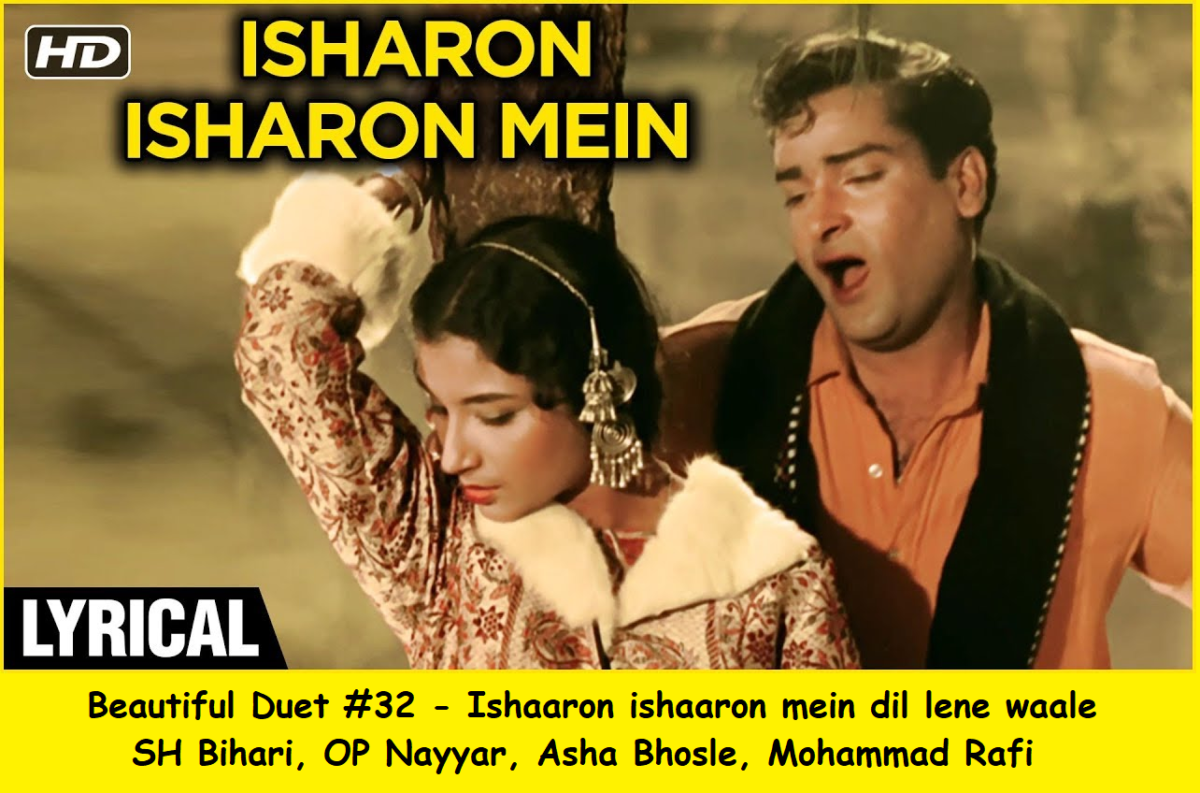
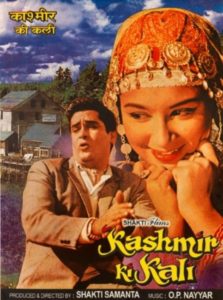 In the Zindagi song of the Day I gave you a song from the 1964 Shakti Samanta movie Kashmir Ki Kali: Hai duniya usi ki zamana usi ka. And today, we have yet another song from the same movie. This was, indeed, the hallmark of OP Nayyar: he had most of his songs in his movies becoming hits and super hits. Many years ago, I did a post on the songs of this movie and for those of you who have the time (less than one percent, that is), you may access all the songs of the movie here:
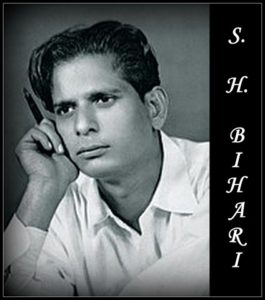 The song was penned by SH Bihari who featured in seven movies with OP Nayyar and made really refreshing and delightful songs for him. In this movie, the pair are at their best.
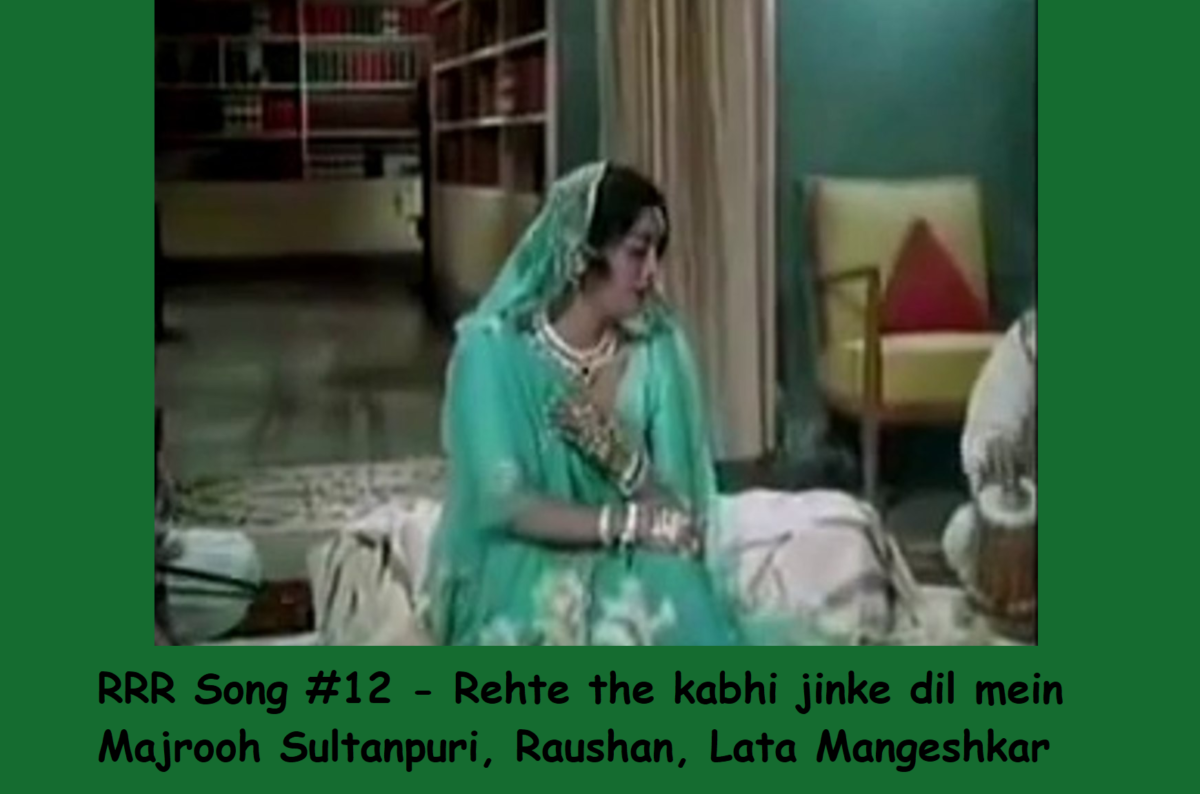
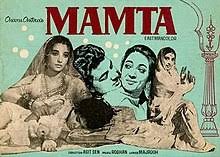 The movie happens to have story similar to 1958 Kalidas movie Adalat starring Nargis, Pradeep Kumar and Pran. That movie had some of the greatest songs of Madan Mohan on the lyrics of Rajinder Krishan.
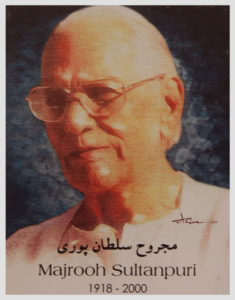 This movie had Majrooh and Roshan doing to its songs what Rajinder Krishan and Madan Mohan did to Adalat songs. They made the following: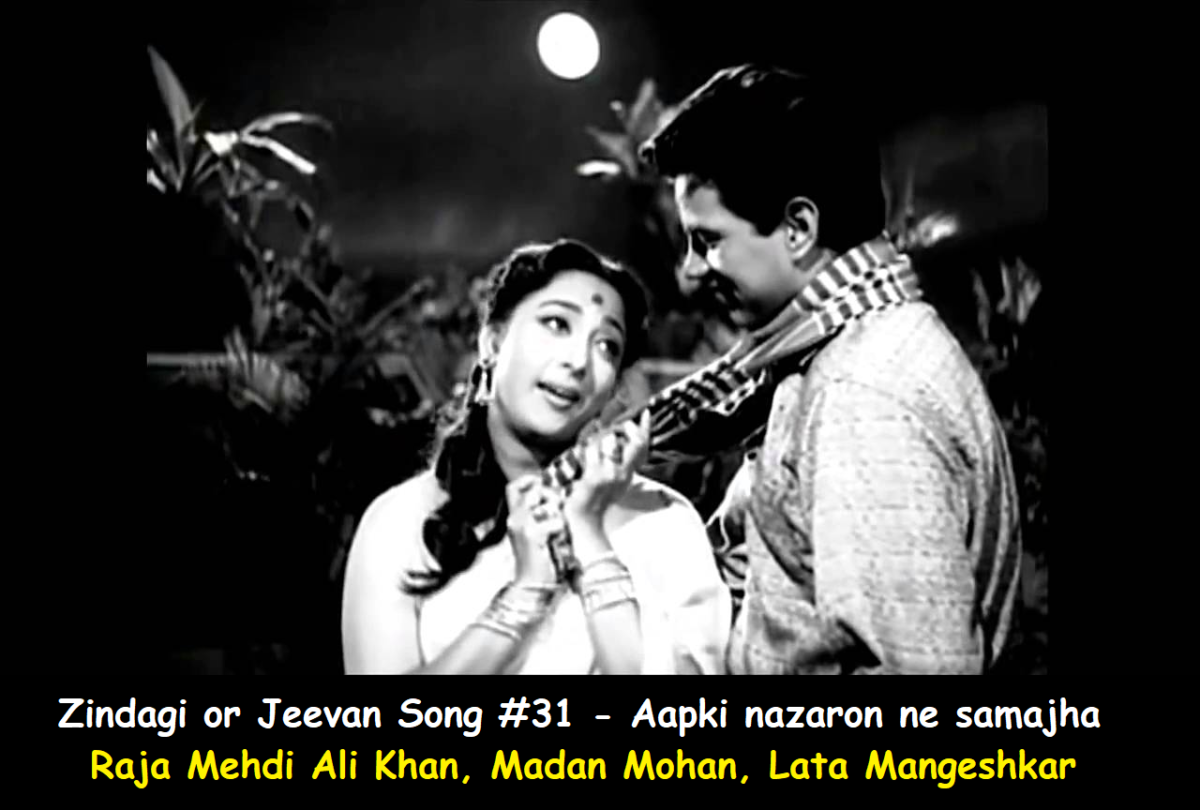
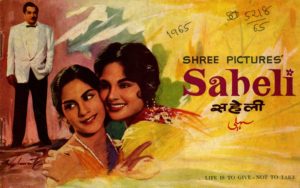
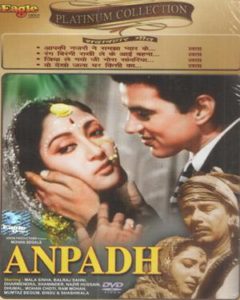 This 1962 movie directed by Mohan Kumar (almost all his movies starting with the letter A such as Aas Ka Panchhi, Ayee Milan Ki Bela, Aap Ki Parchhayiyan, Aman, Anjana, Aap Aaye Bahar Aayi, Avtar, Amba, All Rounder and Amrit (This is a fad in Hindi films industry; numerology and astrology plays a big role in selecting titles of movies), reflected the way we treated women. Being literate wasn’t considered necessary as long as they were well versed in wifely duties (cooking and embroidery and keeping a good and clean house). In this movie, Balraj Sahni as the brother of Mala Sinha felt that as long as they had enough money, being uneducated wasn’t important.
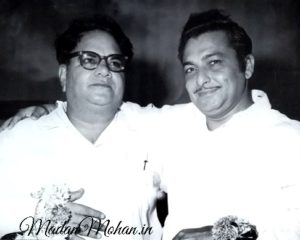 Madan Mohan was the Music Director for women. He made some of the most memorable songs Lata Mangeshkar (who was very fond of “Madan bhaiya”). I feel that in the top ten songs of Lata composed by Madan Mohan, these are equally divided between Rajinder Krishan and Raja Mehdi Ali Khan as lyricists; both of them being extraordinarily aligned to the emotions of women. If Raja would have Lag jaa gale ke phir, Rajinder Krishan would have Unako ye shikayat hai ke ham kuchh nahin kehte. Outstanding combinations both.
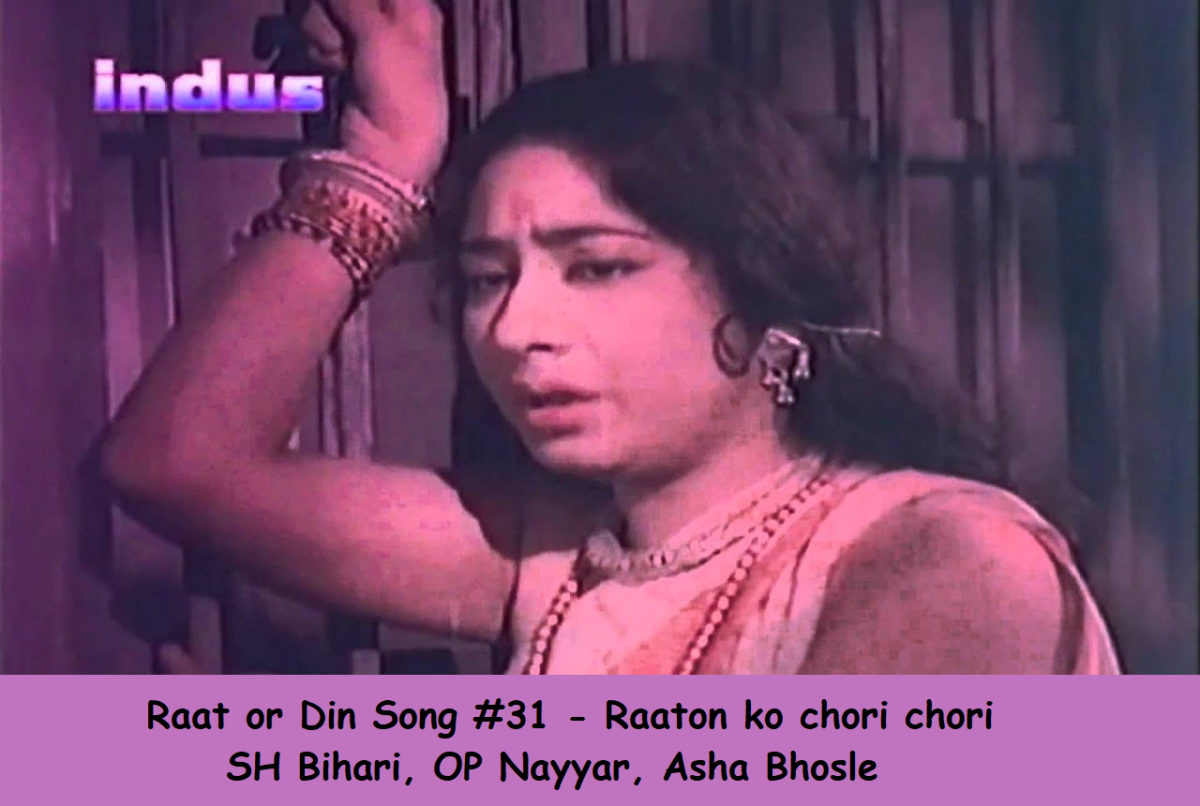
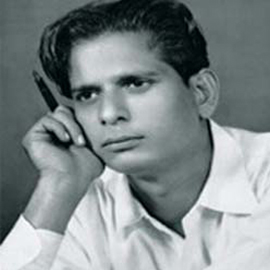 I have liked all the lyrics of Shamsul Huda Bihari; particularly those that have been composed by OP Nayyar. One straightway thinks of Kashmir Ki Kali, Ek Mussafir Ek Hasina, Sawan Ki Ghata, and Yeh Raat Phir Na Aayegi.
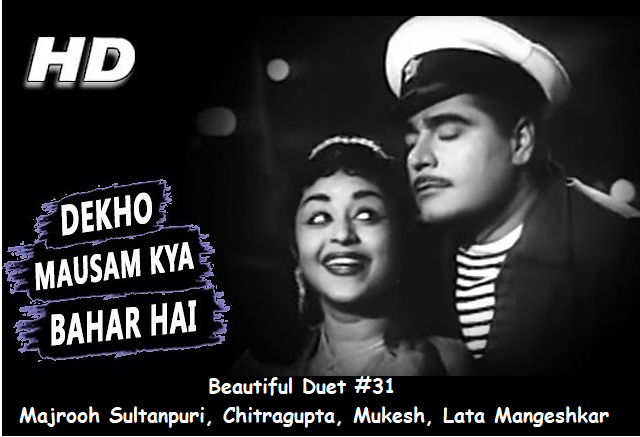
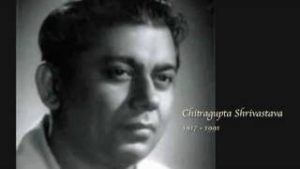 Chitragupt was one Music Director who was known for fusion; I have already given you his fusion song Jodi hamari jamega kaise Jani? Just like all our MDs (without exception) he wasn’t beyond copying tunes from abroad. He just lifted the tune for Dekho mausam kya bahaar hai from Bimbo: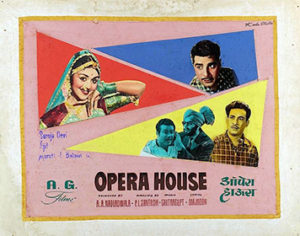
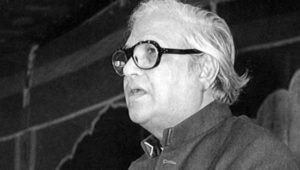 Majrooh didn’t allow himself into being typified; from a typical Urdu poet he often went into all kinds of songs whether Western or Indian.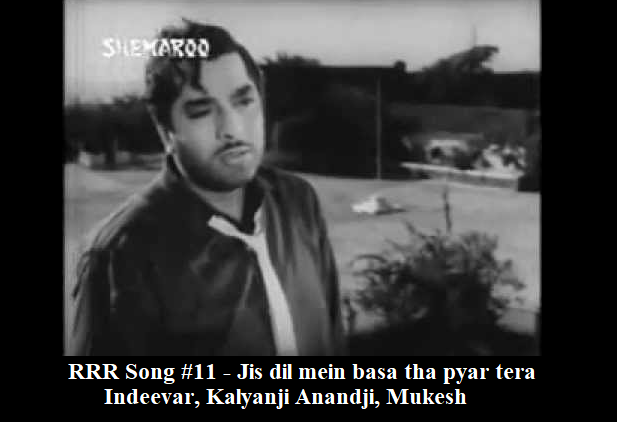
 Indeevar had written the lyrics at a time when he used to write very good and sensitive lyrics and when he hadn’t tied up with Bappi Lahiri to write some 500 trash songs for him for the lure of money.
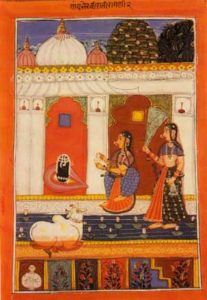 We have seen the handling of Raag Bhairavi by Jaikishan (SJ fame). Here it is Kalyanji Anandji who have thought of Bhairavi to compose it.
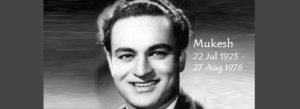 When it comes to RRR songs or Songs of Regret, Repentance and Ruefulness, one singer that comes to mind is Mukesh. He was the best in this genre’. Here too he has done a remarkably beautiful job of it.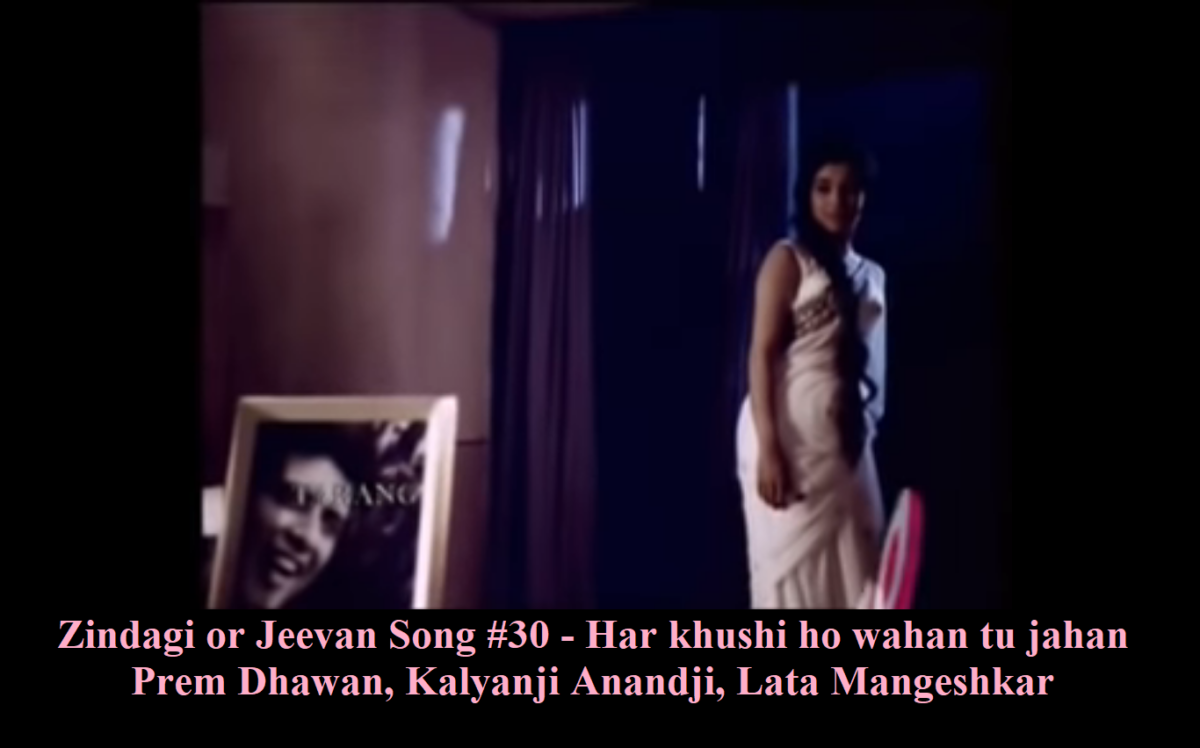
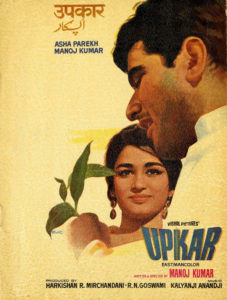
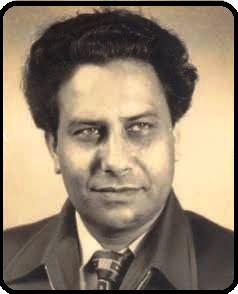
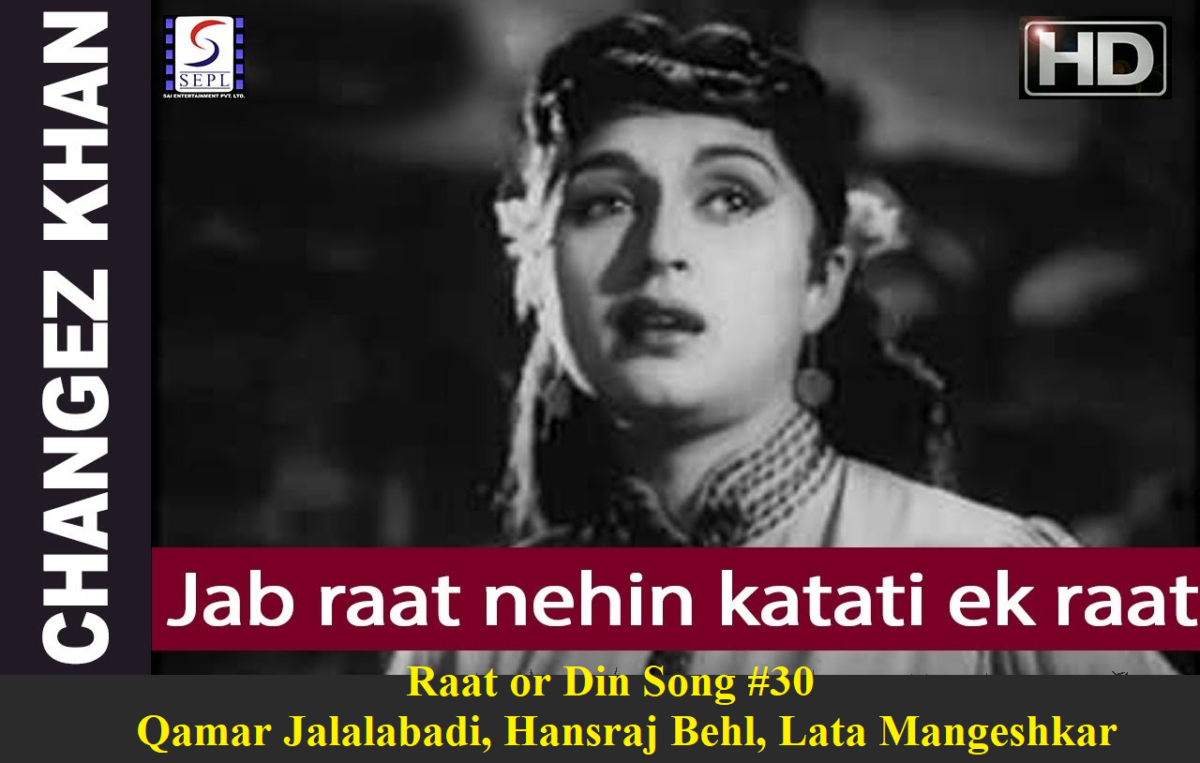
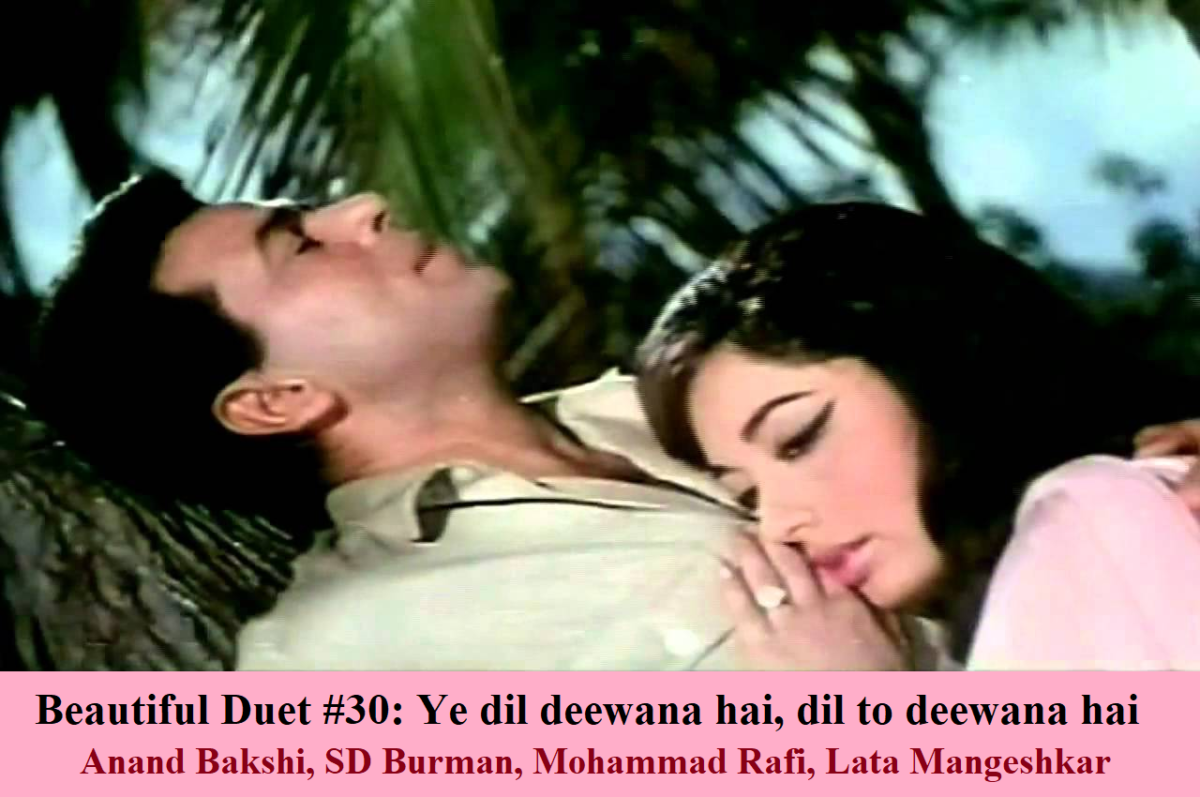
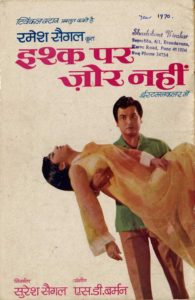 It was a 1970 Ramesh Saigal movie. Who was Ramesh Saigal? He was the one who gave us 1948 Dilip Kumar – Kamini Kaushal starrer Shaheed with the popular Raja Mehdi Ali Khan song: Watan ki raah mein watan ke naujwan shaheed hon. He also gave us 1950 spy thriller Samadhi starring Ashok Kumar and Nalini Jaywant, 1953 Dilip Kumar starrer Shikast with Shankar Jaikishan’s music and Wjahat Mirza’s story and dialogues, 1955 Sunil Dutt starrer Railway Platform, 1958 Raj Kapoor starrer Phir Subah Hogi with Sahr’s inspirational song Woh subah kabhi to aayegi, 1961 movie Shola Aur Shabnam with my all time favourite song Jeet hi lenge baazi hum tum and Jaane kya dhoondati rehti hain and then this movie in 1970; ie, nnine years after his last one: Shola Aur Shabnam.
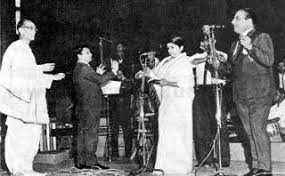 This duet has been sung by Mohammad Rafi and Lata Mangeshkar; the best pair for duets. It was composed as a rare song by Sachin Dev Burman who introduced Santoor for the first time in any movie until then. The lyrics and composition are thus unique.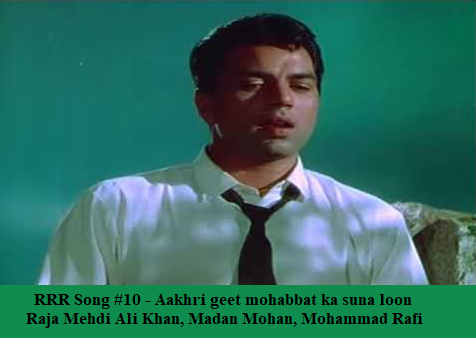
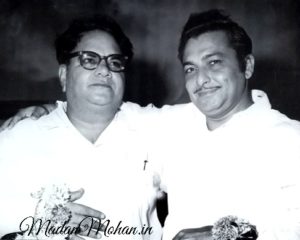 If you look up the You Tube, you would find that some of the most popular and best songs of Lata Mangeshkar have been crafted by the duo. Lets recall songs like Lag jaa gale se of Mera Saya, Agar mujhase mohabbat hai of Aap Ki Parchhayiyan and Aapki nazaron ne samajha pyar ke kabil mujhe of Anpadh.
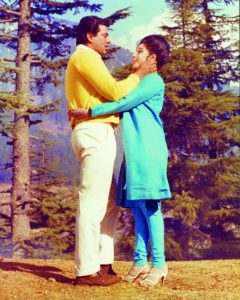 This too was sung by Mohammad Rafi for Dharmendra as the Dulhan Ek Raat Ki song: Ek haseen shaam ko. This is from the 1965 Rajendra Bhatia movie Neela Aakash with Mala Sinha as Neela and Dharmendra as Aakash and thus the title.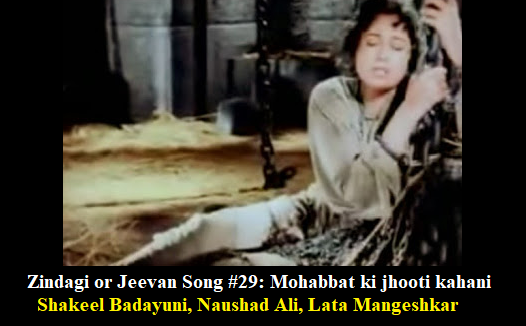
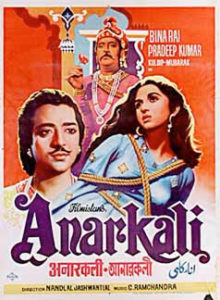 Anarkali would have never imagined that Love would get her this: bondage. Her first reaction is this. In her next, when she is in shackles, she prays to Almighty: Bekas pe karam keejiye Sarkar – e – Madina.
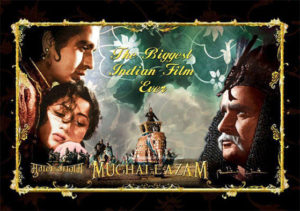 K Asif’s Mughal – e – Azam had Madhubala as Anarkali, a courtesan in the court of Mughal – e – Azam Akbar. She had, she felt in this song, erred in falling in love with Prince Salim.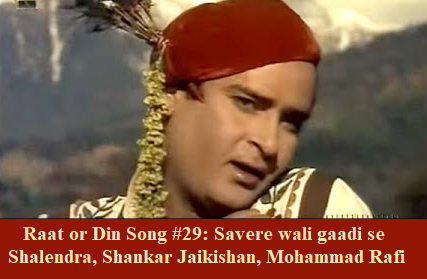
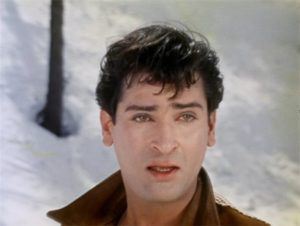 With this, I would have posted all three songs from my ongoing series as tribute to Shammi Kapoor on his Birth Anniversary: Zindagi or Jeevan Song, Beautiful Duet and now Raat or Din Song.
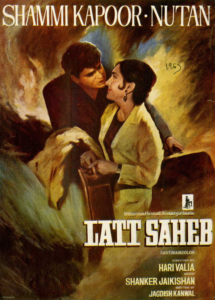 I have given you first two songs from Kashmir Ki Kali and the third is from the 1967 Hari Walia movie Latt Saheb, also shot in Kashmir.
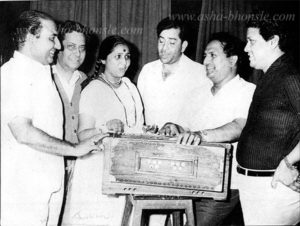 Shailendra wrote the lyrics in such a way so that they can be taken at the light-hearted level of Shammi Kapoor and yet have very deep meaning. He used the same simile as Shakeel Badayuni had used many years earlier in the title song of Mela: Ye zindagi ke mele duniya mein kam na honge, Afsos ham na honge.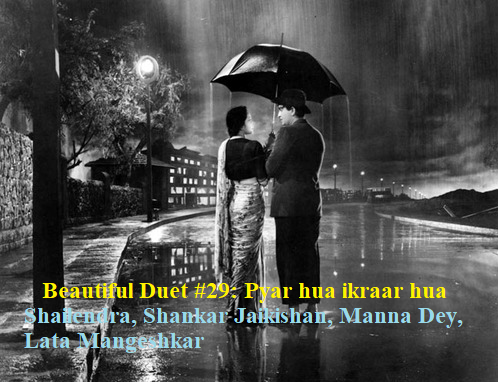
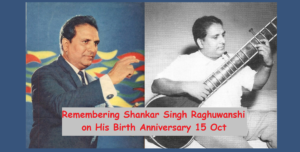 In the Raat Or Din Song #59 today: O mere sanam, O mere sanam, I brought out how Shankar Jaikishan were and are never thought of separately. This happened even after Jaikishan left us early (not yet 42 years when he died on 12 Sep 1971) and the name of the Music Director continued being Shankar Jaikishan.
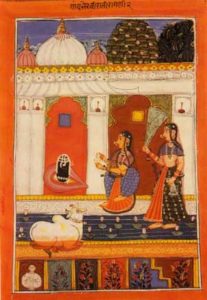 Raag Bhairavi is the basic raag of the Bhairavi Thaat. Bhairavi makes use of all the komal swars, Rishabh, Gandhar, Dhaivat, Nishad. When singing compositions in Bhairavi raag, the singers however take liberty to use all the 12 swars. Bhairavi raag is named after the shakti or feminine aspect of the cosmic life force, which is personified as a consort to Lord Shiva. Bhairavi is a powerful raag filled with devotion and compassion. Its Jati is Sampurna – Sampurna, which means all seven swar (heptatonic) both in Aaroha and Avaroha. In a concert Bhairavi is usually the concluding raaga since it is supposed to cure mistakes of the earlier performances. Hence, if a concert has started at night (which is usually the case), Bhairavi would be played in the wee hours of the morning.
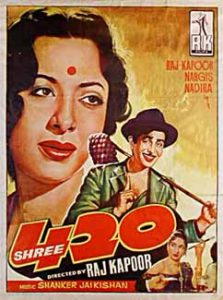 It is from the 1955 Raj Kapoor film Shree 420 starring him in the title role with the heroine of 17 of his movies, Nargis opposite him.