RRR Songs (Songs of Regret, Repentance and Ruefulness)
I started this new series on 17 Jan 21 on my Facebook Group Yaad Kiya Dil Ne. My efforts failed to involve people in writing their own stuff about songs and music rather than copying and pasting from here and there or worse, just sharing url of songs from YouTube. Hence, I had decided to give the group a burial that it deserved rather than making it like thousands of groups on Facebook about songs with nothing unique about them at all.
Movies and Songs Are Reflections of One’s Emotions
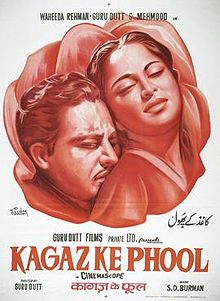
This was the last movie that Guru Dutt produced and directed. He commissioned Abrar Alvi to write the story that he had earlier asked to write Sahib Bibi Aur Gulam and Pyaasa. Another thing common in this movie was Waheeda Rehman, the actress of choice for Guru Dutt so much so that rumours were rife about their real life romance being reflected in their reel life. To complicate it further, Guru Dutt’s wife Geeta (nee’ Roy) used to be the singing voice for Waheeda Rehman.
This complex scenario, some feel, resulted in first Guru Dutt and later Geeta Dutt killing themselves with drinks and emotions.
Pyaasa, the 1957 Guru Dutt movie wherein Waheeda Rehman is depicted as the prostitute with a golden heart whom Guru Dutt seeks after being disappointed with the valueless and even meaningless world.
Pyaasa had some of the best lyrics of Sahir Ludhianvi, whose centenary we shall be celebrating on 08 March this year. And since Guru Dutt was depicted as a poet (with Sahir’s poetry), Pyaasa was also thought of a biographical movie for Sahir.
Kaagaz Ke Phool from where this song is taken may be an attempt to depict Guru Dutt and Waheeda Rehman’s actual aspirations and emotions.
This Song
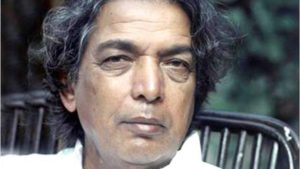
SD Burman of Pyaasa continued in Kaagaz Ke Phool. However Burman and Sahir had fallen apart and hence Kaifi wrote the lyrics. In this song, he may have penned his greatest:
वक़्त ने किया क्या हंसीं सितम
तुम रहे न तुम हम रहे न हम
वक़्त ने किया…
बेक़रार दिल इस तरह मिले
जिस तरह कभी हम जुदा न थे
तुम भी खो गए, हम भी खो गए
एक राह पर चलके दो क़दम
वक़्त ने किया…
जाएंगे कहाँ सूझता नहीं
चल पड़े मगर रास्ता नहीं
क्या तलाश है कुछ पता नहीं
बुन रहे हैं दिल ख़्वाब दम-ब-दम
वक़्त ने किया…
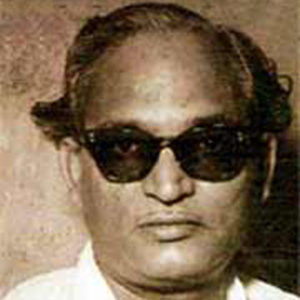
Kaifi Azmi, of course, was the poet and lyricist, who used minimal and most simplistic words to convey the strongest emotions. You can make out that he did here too.
The Light and Shadow Dance
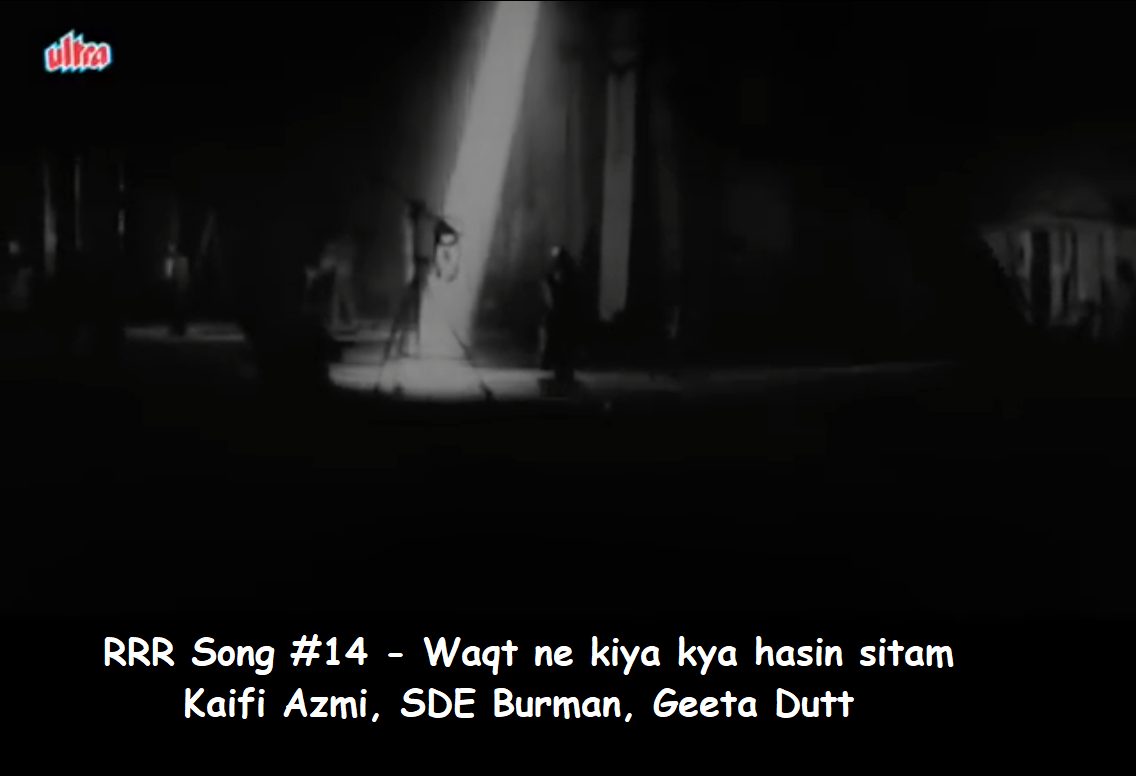
The effect of the song, difference between aspirations and what came about (regret or ruefulness) was sought to be conveyed through light and shadow done very cleverly. It looks ethereal but highly effective. All of us have bodies but the self is something within and Guru Dutt used light and shadows to convey this.
My Own Poetry
HUM RAHE NA HUM…
तनहाई है, उदासी है, पर इतना शोर क्यूं है?
मुहब्बत अच्छी है तो इश्क पे इतना ज़ोर क्यूं है?
चांद निकला नहीं, वही अंधेरी रात है लेकिन,
यहां कोने में खड़ा मुस्कराता चकोर क्यूं है?
उसकी जुल्फें खुली ना थी, ना ही लहराईं,
चारों तरफ फिर यह काली घटा घनघोर क्यूं है?
खुदा ने बख्शी है आदमी को ताकत ओ मजबूती,
फिर प्यार में उसी का दिल इतना कमज़ोर क्यूं है?
अब मिलते नहीं, न ही मिलने की उम्मीद बाकी है,
फिज़ा अब भी उन्हीं की ओर क्यूं है?
कहने को तो सब लोग खुद इन्हिसार और आज़ाद हैं,
ऊनके हाथों में, रवि, फिर मेरी डोर क्यूं है?
I started this series on my Facebook group Yaad Kiya Dil Ne on 18 Oct 20. Since then, many other members have put up these songs. Here, I shall be giving you one of my own, per day.
Song #33 Main to aarti utaru re Santoshi Mata ki Theme-word: Ho deep dharo dhoop karun, Prem sahit bhakti karun, Ho Jeevan sudharo re
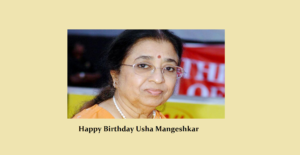
Happy Birthday Usha Mangeshkar 15 Dec
She was born on this day in 1935. She is 85 years old today. And yet she is the youngest of the sisters: Lata, Asha and Meena and elder only to Hridyanath Mangeshkar.
Sometimes greatness and popularity comes to you unexpectedly. She couldn’t have matched the singing skills of Lata and Asha. However, singing for 1975 low budget film Jai Santoshi Maa suddenly shot her to fame.
The Song
Kavi Pradeep
What’s it about the song or hymn that made it so popular? Is it the lyrics of Kavi Pradeep? Is it the composition of C Arjun? Or is it her singing. I think it would be fair to say that the combination did the trick. Of course, Kavi Pradeep excelled in the lyrics, as he always did:
मैं तो आरती उतारूँ रे संतोषी माता की
मैं तो आरती उतारूँ रे संतोषी माता की
मैं तो आरती उतारूँ रे
जय जय संतोषी माता जय जय माँ
जय जय संतोषी माता जय जय माँ
जय जय संतोषी माता जय जय माँ
बड़ी ममता है बड़ा प्यार माँ की आँखों में
माँ की आँखों में
बड़ी करुणा माया दुलार माँ की आँखों में
माँ की आँखों में
क्यूँ ना देखूँ मैं बारम्बार माँ की आँखों में
क्यूँ ना देखूँ मैं बारम्बार माँ की आँखों में
दिखे हर घड़ी नया चमत्कार आँखों में
माँ की आँखों में
हो नृत्य करो झूम झूम, छम छमा छम झूम झूम
नृत्य करो झूम झूम, छम छमा छम झूम झूम
झांकी निहारो रे
ओ बाकि बाकि झांकी निहारो रे
मैं तो आरती उतारूँ रे संतोषी माता की
मैं तो आरती उतारूँ रे
जय जय संतोषी माता जय जय माँ
जय जय संतोषी माता जय जय माँ
जय जय संतोषी माता जय जय माँ
सदा होती है जय जय कार माँ के मंदिर में
माँ के मंदिर में
नित्त झांझर की होवे झंकार माँ के मंदिर में
माँ के मंदिर में
सदा मंजीरे करते पुकार माँ के मंदिर में
सदा मंजीरे करते पुकार माँ के मंदिर में
वरदान के भरे हैं भंडार, माँ के मंदिर मे।
माँ के मंदिर में
हो दीप धरो धूप करूँ, प्रेम सहित भक्ति करूँ
हो जीवन सुधारो रे
हो प्यारा प्यारा जीवन सुधारो रे
मैं तो आरती उतारूँ रे संतोषी माता की
मैं तो आरती उतारूँ रे
जय जय संतोषी माता जय जय माँ
जय जय संतोषी माता जय जय माँ
Santoshi Maa
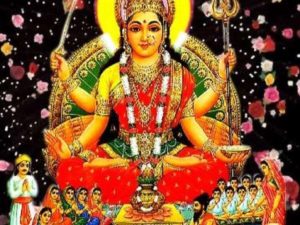
Literally, her name translates to Mother of Satisfaction. She emerged as a goddess in 1960s. Devotees of North India particularly hold her in the highest veneration and it is said that if women would keep Vrata (Fast) on 16 consecutive Fridays, it is sure to win favour of the Maa.
The 1975 movie directed by Vijay Sharma actually “elevated Santoshi Mata as the new goddess on pan India Hindu pantheon”.
Whether or not you believe in her, you’ll agree that the hymn has an undeniable pull about it.
Hence, ladies and gentlemen, please enjoy: Main to aarti utaru re Santoshi mata ki….
I hope you enjoyed my choice for Song #33 in the series.
I started this series on my Facebook group Yaad Kiya Dil Ne on 18 Aug 20. Since then, many other members have put up these songs. Here, I shall be giving you one of my own, per day.
Song #33 Pardesiyon se na akhiyan milana Theme-word: Sach hi kaha hai panchhi inko, Raat ko thehren udh jaayen din ko
Kalyanji Anandji and the Songs of Jab Jab Phool Khile
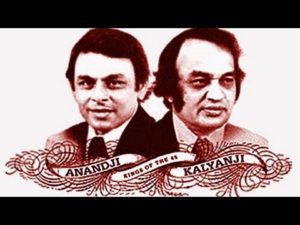
Kalyanji Anandji became musicians because someone owed money to their father and instead of paying back, offered to teach them music.
They started their career ten years after Shankar Jaikishan and soon established themselves as name to reckon with. Their first movie together was Satta Bazaar and I have taken their song Tumhen yaad hoga kabhi hum mile the in my Songs That Tug At Your Emotions series on my blog.
1965 was really a very important year for them for they had not one but two movies with super hit songs: Firstly, Himalaya Ki God Mein with Kankariya maar ke jagaya, Tu raat khadi thi chhat pe, Ek tu na mila, Chand si mehbooba ho meri, Ek tu jo mila, and Main to ek khwab hoon.
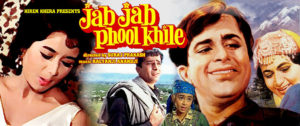
And secondly Jab Jab Phool Khile with Ek tha gul aur ek thi bulbul, Na na karte pyar tumhi se kar baithe, Pardesiyon se na akhiyan milana (three versions), Yahan main ajnabee hoon, and Ye samaa samaa hai ye pyar ka.
Pardesiyon Se Na Akhiyan Milana
Surprisingly, Kalyanji Anandji composed as many songs of Mukesh as Shankar Jaikishan composed. However, this song in its three versions was sung by Mohammad Rafi (Happy and Sad) and Lata Mangeshkar.
It was penned by Anand Bakshi.
Shashi Kapoor and Nanda
Nanda
Whilst his brother Shammi Kapoor acted refreshingly well in Kashmir, Shashi Kapoor was no less in JJPK. Shammi Kapoor had SH Bihari and OP Nayyar creating songs that brought in whiff of fresh Kashmir air into the songs. Shashi Kapoor was equally lucky with Anand Bakshi and KLalyanji Anandji.
He was the owner of a boat house (Raja) and Nanda (Rita), the object of his love rented the boat for her sojourn. She too fell in love with him. However, her father stepped in when she returned home and that caused her to dilly-dally and hence this song by Shashi Kapoor as Raja.
Lyrics
Even though I am giving you the Rafi version only, you may like to go through the lyrics of both Rafi and Lata versions:
(रफ़ी)
परदेसियों से ना अँखियां मिलाना
परदेसियों को है इक दिन जाना
आती है जब ये रुत मस्तानी
बनती है कोई न कोई कहानी
अब के बस देखे बने क्या फ़साना
सच ही कहा है पंछी इनको
रात को ठहरे तो उड़ जाएं दिन को
आज यहाँ कल वहाँ है ठिकाना
बागों में जब जब फूल खिलेंगे
तब तब ये हरजाई मिलेंगे
गुज़रेगा कैसे पतझड़ का ज़माना
(लता)
ये बाबुल का देस छुड़ाएं
देस से ये परदेस बुलाएं
हाय सुनें ना ये कोई बहाना
हमने यही एक बार किया था
एक परदेसी से प्यार किया था
ऐसे जलाए दिल जैसे परवाना
प्यार से अपने ये नहीं होते
ये पत्थर हैं ये नहीं रोते
इनके लिये ना आँसू बहाना
ना ये बादल ना ये तारे
ये कागज़ के फूल हैं सारे
इन फूलों के बाग न लगाना
हमने यही एक बार किया था
एक परदेसी से प्यार किया था
रो रो के कहता है दिल ये दीवाना
The Song
Ladies and gentlemen, please enjoy: Pardesiyon se na akhiyan milana…
Ignore the fact that the You Tube video says it is Lata Mangeshkar version. You Tube loads are often put up by people who cannot make out the difference between Rafi and Lata!
I hope you liked my choice of Raat or Din Song #33.
I started this series on my Facebook group Yaad Kiya Dil Ne on 23 Aug 20. Since then, many other members have put up these songs. Here, I shall be giving you one of my own, per day.
In the Raat or Din post of today: Dil ka haal sune dilwala, I had brought out the inability of Evani Leela to put up the songs today and hence at the last minute I came in. When I finished writing the post (no it wasn’t a copy of the previous post) I glanced at my tote and found that I had already posted it earlier on 21 Sep and the word Repeat was added.
This one is not a repeat, though.
Raag and Tal
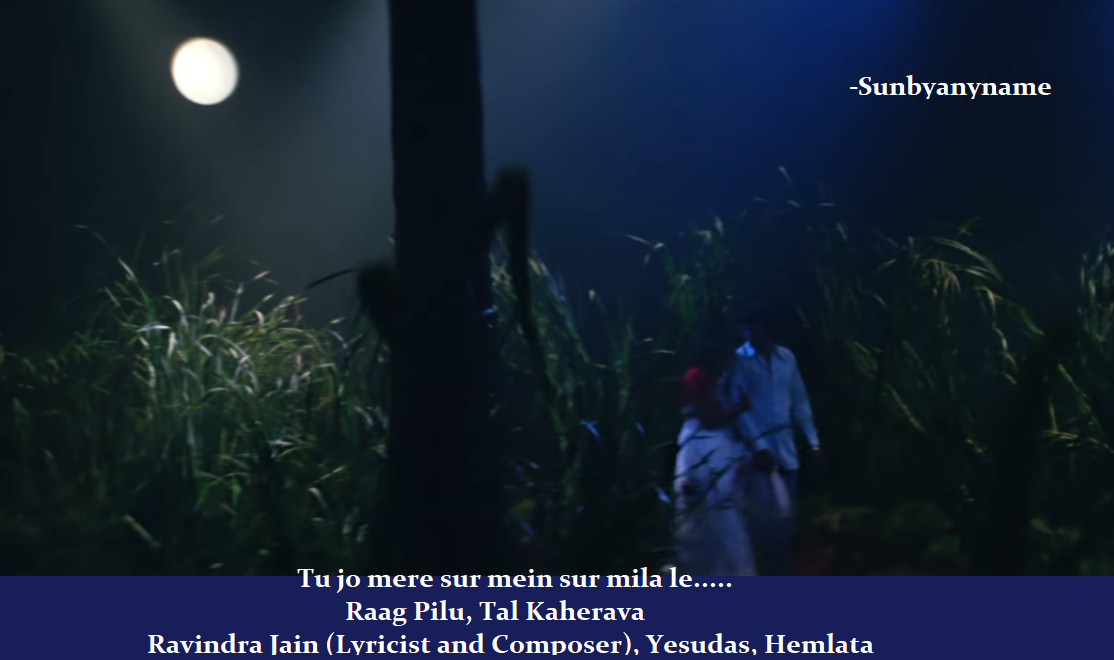
It is in Raag Pilu and Tal Kaherava.
Raag Pilu belongs to the Kafi thaat. Its Jati is Audhav – Sampoorna, which means it is pentatonic (five notes or swar) in Aaroha (ascending) and heptatonic (all seven notes or sawr) in Avroha (descending). The swar that are vrajay (missing) in Aaroha are Re (Rishab) and Dha (Dhaivat). The dominant note (Vadi) is Dhaivat that lends to this raaga a light and tranquil touch. The raaga is full of devotion and piety and as both Amol Palekar and Zarina Wahab lip-sync it you can notice these in the eyes and mannerisms of the protagonists. The raag is well suited for the third prahar of the day; that is, early evening and that’s precisely when it is played in the movie too.
Chitchor – 1976 Movie
This song is from the 1976 Basu Chatterjee movie Chitchor starring Amol Palekar, Zarina Wahab and Vijayendra. The film is a Rajshri Productions film produced by Tarachand Barjatya. It is based on a Bengali story, Chittachakor by Subodh Ghosh.
Lets understand the story-line to see where the song fits in the movie:
Geeta’s (Zarina Wahab) Mumbai based sister Meera sends a letter to Geeta’s father Pitamber (AK Hangal) that an engineer would be arriving at their village and he is a possible match for Geeta. The family dutifully receives Vinod (Amol Palekar) at the railway station. He takes an instant liking to the family, especially Geeta and even tries to teach her music and singing. The two fall in love. All seems to be going well until another letter is received from Meera informing the family that the engineer Sunil (Vijayendra) was earlier delayed and would be arriving soon. Vinod (Amol Palekar) was merely the overseer.
He was nevertheless the Heart-stealer (Chitchor) for the naive village belle Geeta. There is a happy ending for the two.
The song is lip-synced by Amol Palekar and Zarina Wahab when Vijayendra arrives from Mumbai and the family is in the process of telling Zarina Wahab to switch her attention from Amol Palekar to Vijayendra.
The Lyricist and Composer
The lyricist of the song was Ravindra Jain and he composed the song too.
Ravindra Jain was born on 28 Feb 1944 in Aligarh. He was born blind to Sanskrit scholar and Ayurvedacharya, Pandit Indramani Jain and mother Kiran Jain.
He started singing at a very early age singing bhajans. His parents gave him music training fairly early. Ravindra Jain received basic training under Pandit GL Jain, Pandit Janardhan Sharma, and Pandit Nathu Ram. His entry into the films world was at the age of 16 in Calcutta. Ten years later he moved to Bombay wherein he made his debut as a composer for Prathibhushan Bhattacharya’s movie Kranthi. In 1972 he became a full fledged Music Director when Mohammad Rafi recorded a song composed by him that was never released.
Jain progressed his career in the early 1970s, composing for films such as Saudagar (1973 film), Chor Machaye Shor (1974), Geet Gaata Chal (1975), Chitchor (1976), Dulhan Wahi Jo Piya Man Bhaaye (1977), Paheli (1977) and Ankhiyon Ke Jharokhon Se (1978) and Nadiya ke paar (1982). Along with composing music, he also wrote the lyrics for many of his songs. Ravindra Jain’s father died during the recording sessions of the film Saudagar. However, Jain did not leave the studio until the recordings were finalised giving utmost importance to his work.
As far as his association with Yesudas is concerned, Jain is credited for bringing this great South Indian vocalist to Hindi movies, in singing in many of his movies in the 1970s and 1980s.
It is said that Jain was so enthralled by Yesudas’s voice, if he ever received his vision, Yesudas would be the first person he would want to see. Jain has worked on songs after his liaison with Yesudas, but he has failed to attain the pinnacle of glory he achieved with the master singer during the 1970s. Jain has described Yesudas as the ‘Voice of India’.
The Singers – Yesudas and Hemlata
Yesudas
Kattassery Joseph Yesudas was born on 10th January 1940 in Fort Kochi (Kerala) in a Latin-rite Roman Catholic Christian family to late Augustine Joseph and late Elizabeth Joseph. His father, a well-known Malayalam classical musician and stage actor, was his first guru (teacher). Yesudas recorded his first popular song Jaathi Bhedam Matha Dwesham (music: MB Sreenivasan) on 14th November 1961. He got a break in Hindi movies with the 1971 movie Jai Jawan Jai Kisan. Therefore, in 2011 Yesudas completed 50 years as a playback singer. However, it was the 1976 Basu Chatterjee movie, with songs composed by Salil Chowdhury that really made him popular. The song he sang in the movie was: Jaaneman jaaneman tere do nayan. Yesudas has recorded over 70,000 songs and has won scores of accolades including the coveted Padma Shri (1975), Padma Bhushan (2002), Padma Vibhushan (2017) and a record seven National Awards for Best Playback Singer. On 2 Oct 2014, Yesudas sparked a row while speaking at a public function on the occasion of Gandhi Jayanthi, where he stated that “Women should not wear jeans and trouble others. You should dress modestly and do not behave like men”. This resulted in a number of protests from Women’s Rights and Political organizations, who asked him to withdraw the comment, which he never did.
Some of the popular songs of Ravindra Jain that have been sung by Yesudas are: Aaj se pehle, Gori tera gaanv badha pyara and Jab deep jale aana (Chitchor, 1976); Shikari raja aaye re and Utho he laal (Safed Haathi; 1977); Khushiyan hi khushiyan ho daaman mein jiske (Dulhan Wahi Jo Piya Man Bhaaye, 1977); Laal gulabi phool se bhari (Hamra Sansaar, 1978); Sabko chhuti mili mujhako mili kyun nahin and Tere honthon ke pyaale se jo chhalke (Mera Rakshak, 1978); Sunayana aaj in nazaron ko tum dekho and Aansu bhi hain khushiyan bhi hain (Sunayana, 1979); O goriyaa re, Oonchi neechi lehron ke kandhon par and Teara kuchh khoya ho to dhoond de (Naiyya, 1979); Neer bharan ka karke bahana (Gopal Krishna, 1979); Kaun hai aisa jise phoolon se (Raadha Aur Seeta, 1979); Ai mere udaas man and Ik but se mohabbat karke (Maan Abimaan, 1980); Sun sun gaon ki gori (Sasural, 1984); and Saambh sada shiv (Abodh, 1984).
The female singer of this song is Hemlata. Whilst Yesudas won the National Award for this song, she won the Filmfare Award for it (she has won five such awards so far). Having been born on 16 Aug 1954 in Hyderabad, when she was only 12 years old her family moved to Bombay. She had early influence by Ustad Allarakha and Ustad Rais Khan; the latter taught her ghazals. But, the one person who really took her up as a singer in the movies was Naushad Ali (is there no end to how many artistes Naushad helped become good and great including the playback singer Mukesh?) Later, she worked with Roshan and Khaiyyam.
Her association with Ravindra Jain was the most lasting. He used her voice for his debut movie in 1972: Kaanch Aur Heera. She thereafter sang in many of his movies such as Raakh Aur Chingari (1974), Geeta Gaata Chal (1975), Salakhen (1975), Tapasaya (1975), and Fakira (1976). Her singing for him in Akhiyon Ke Jharokhon Se made her very popular.
The Beautiful Duet
Ladies and gentlemen, please enjoy the beautiful duet: Tu jo mere sur mein sur mila le…
ये: तू जो मेरे सुर में -२
सुर मिला ले, संग गा ले
तो ज़िंदगी हो जाए सफ़ल
हे: तू जो मेरे मन का -२
घर बना ले, मन लगा ले
तो बंदगी हो जाए सफ़ल
दोनों: तू जो मेरे सुर में
ये: चाँदनी रातों में, हाथ लिए हाथों में
हे: चाँदनी रातों में, हाथ लिए हाथों में
दोनों: डूबे रहें एक दूसरे की, रस भरी बातों में
ये: तू जो मेरे संग में -२
मुस्कुरा ले, गुनगुना ले
तो ज़िंदगी हो जाए सफ़ल
हे: तू जो मेरे मन का…
दोनों: तू जो मेरे सुर में…
हे: क्यों हम बहारों से, खुशियाँ उधार लें
ये: क्यों हम बहारों से, खुशियाँ उधार लें
दोनों: क्यों न मिलके हम खुद ही अपना जीवन सुधार लें
हे: तू जो मेरे पथ में -२
दीप गा ले ओ उजाले
तो बंदगी हो जाए सफ़ल
ये: तू जो मेरे सुर में -२
सुर मिला ले, संग गा ले
तो ज़िंदगी हो जाए सफ़ल
RRR Songs (Songs of Regret, Repentance and Ruefulness)
I started this new series on 17 Jan 21 on my Facebook Group Yaad Kiya Dil Ne. My efforts failed to involve people in writing their own stuff about songs and music rather than copying and pasting from here and there or worse, just sharing url of songs from YouTube. Hence, I had decided to give the group a burial that it deserved rather than making it like thousands of groups on Facebook about songs with nothing unique about them at all.
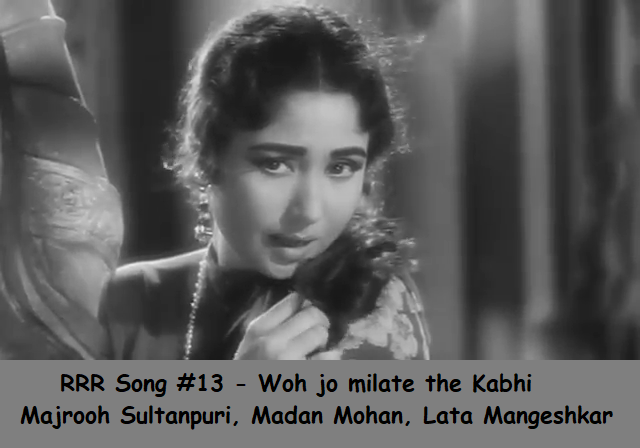
Song #13 Woh jo milate the kabhi hamse deewano ki tarah
Majrooh Sultanpuri and Madan Mohan
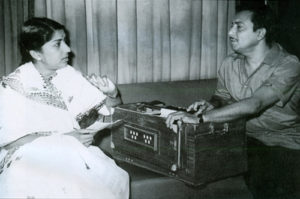
Lata with Madan Mohan
A few days ago, I gave you a song Tujhe kya sunayun main dilruba tere saamne mere haal hai and we witnessed the magic of the duo in the 1958 Mahesh Kaul movie Aakhri Dao starring Nutan and Shekhar.
Let us recall some of their other songs. The 1970 Rajinder Singh Bedi movie Dastak starred Sanjeev Kumar and Rehana Sultan. All songs of the movie by the duo made great waves: Baiyan na dharo O balmaa, Mai ri main kaise jahun, Hum hain mataa-e-kuchaa-o-bazaar ki tarah, and Tumase kahun main ek baat.
Majrooh Sultanpuri
Then there was Chirag, the 1969 Raj Khosla movie starring Sunil Dutt and Asha Parekh with the song whose title was taken (with permission) from a nazm by Faiz: Teri aankhon ke siva duniya mein rakha kya hai and the title song Chirag dil ka jalao bahut andhera hai.
I have, at another time given you another great song from Aakhri Dao: Hamsafar saath apna chhod chale also by the duo.
It would be easy to conclude that some really great lyrics were composed by the mazestro.
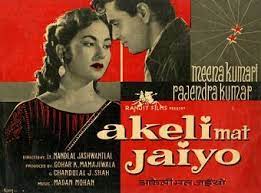
Akeli Mat Jayiyo
(Poster courtesy en.wikipedia.org)
I have taken the present song from the 1963 Nandalal Jaswantlal movie Akeli Mat Jayiyo starring Rajendra Kumar and Meena Kumari.
The song is a great song of ruefulness for love having gone sour. Once again, absolutely great lyrics were composed excellently by Madan Mohan and sung by Lata Mangeshkar for Meena Kumari:
वो जो मिलते थे कभी हम से दीवानों की तरह
आज यूँ मिअल्ते हैं जैसे कभी पहचान न थी
देखते भी हैं तो यूँ मेरी निगाहों में कभी
अजनबी जैसे मिला करते हैं राहों में कभी
इस क़दर उनकी नज़र हम से तो अंजान न थी
वो जो मिलते थे कभी …
एक दिन था कभी यूँ भी जो मचल जाते थे
खेलते थे मेरी ज़ुल्फ़ों से बहल जाते थे
वो परेशाँ थे मेरी ज़ुल्फ़ परेशान न थी
वो जो मिलते थे कभी …
वो मुहब्बत वो शरारत मुझे याद आती है
दिल में इक प्यार का तूफ़ान उठा जाती थी
थी मगर ऐसी तो उलझन में मेरी जान न थी
वो जो मिलते थे कभी …
My Own Poetry
KABHI HAMSE BHI USE PYAR THA
उसे अब हम बुलाते हैं तो आती ही नहीं,
एक समां था जब सोचते थे यह जाती ही नहीं।
कई बार सपनों में खोने का मन करता है,
पर सपनों के उस नगर में अब हमें बुलाती ही नहीं।
एक वक़्त था जब रहते थे उसी की बाहों में,
अब यूं समझो वो सुहाने ख्वाब दिखाती ही नहीं।
उसके आगोश में दिन में भी हम गुम रहते थे,
अब रात को भी अपने पास बुलाती ही नहीं।
आंखे तरसती हैं उसे रखें नज़रों में छुपा के,
वह है के आंखों में अब इठलाती ही नहीं।
जवानी में सोचते थे उसके संग हमें कोई देख न ले,
अब हमारे संग वह जलवे दिखाती ही नहीं।
सारी रात करवटें बदल करते हैं उसी का इंतजार,
हमारी बेकरारी अब करार पाती ही नहीं।
जवानी में इस की कदर करना, दोस्तो,
बुढ़ापे में तो अब नींद आती ही नहीं।
The Song
Meena Kumari, in all situations is known for some elegant acting. She sang a ghazal with her friends in the movie Ghazal: Nagma o sher ki saugat kise pesh karun and she was elegance personified. She sang Dil jo na keh saka in Bheegi Raat and she set the night on fire. And, she enacted this here and it is to be seen to be believed as what good acting can do to a song.
I started this series on my Facebook group Yaad Kiya Dil Ne on 18 Oct 20. Since then, many other members have put up these songs. Here, I shall be giving you one of my own, per day.
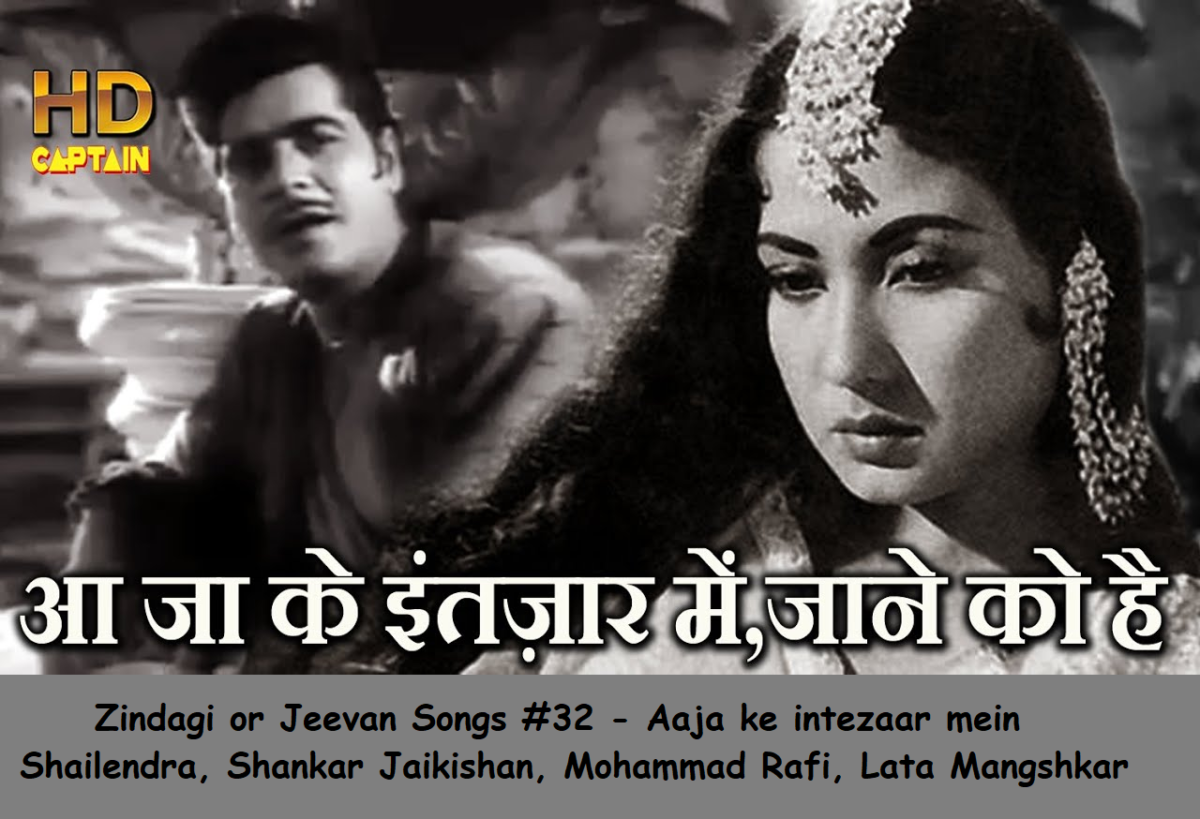
Song #32 Aaja ke intezaar mein Theme-word: Tere bagair zindagi dard ban ke rah gayi
Shankar Jaikishan
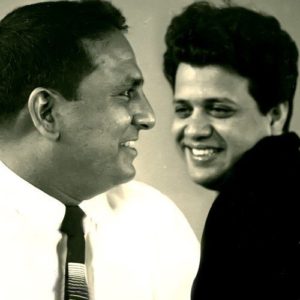
Years before I met my “die-hard fans of Shankar Jaikishan” of SJMF: Anand Desai, Chirag Patel, Uday Joglekar, Rajan Bedke and others, I had done a 45 days feature of these “composers of the millennium”. However, so intense and huge is the contribution of SJMF that every-time one puts up a song of SJ, one bows one’s head to SJMF.
Same is the case with this song.
Halaku – 1956 Movie
(poster courtesy: lyricsia.com)
This song is from a movie whose title role wasn’t played by the hero or the heroine (Ajit and Meena Kumari) but by Pran as Sultan Halaku Khan.
The song, however, is picturised on the hero and the heroine.
DD Kashyap, the director of the movie, is the same man who directed Dulhan Ek Raat Ki with Nutan in the title role and remarkably beautiful songs composed by Madan Mohan including two favourites of mine: Sapnon mein agar mere tum aao to so jayun and Ek haseen sham ko dil mera kho gaya.
The story of the movie reflects the way we went out of India to cover interesting stories. In this movie, for example, Halaku (Pran) was the emperor of Iran who staked claim to Niloufer (Meena Kumari) despite being married to Minoo Mumtaz. Niloufer was in love with Pervez (Ajit). Halaku didn’t take kindly to his wife, Niloufer and Pervez for opposing his marriage to Niloufer.
And that’s how this song came about.
The Lyrics
Shailendra penned the lyrics and the song was sung by Mohammad Rafi and Lata Mangeshkar:
आ जा के इन्तज़ार में, जाने को है बहार भी
तेरे बगैर ज़िन्दगी, दर्द बन के रह गई
अरमान लिये बैठे हैं हम
सीने में है तेरा ही ग़म
तेरे दिल से प्यार की वो तड़प किधर गई
आ जा के इन्तज़ार …
दिल की सदा पे ऐ सनम
बढ़ते गए मेरे कदम
अब तो चाहे जो भी हो दिल तुझे मैं दे चुकी
आ जा के इन्तज़ार …
My Own Poetry
Chalo Intezaar Karte Hain
तू भी देखना एक ऐसा भी दिन आएगा,
आंसुओं से मेरे तेरा दिल पिघल जाएगा
मेरी ना श से तुझे कोई शिक्वा ना होगा
तेरे दिन तो क्या जहान संवर जाएगा
प्यार और इश्क़ मुझे करना ही ना था
घुट घुट रोज़ मुझे मरना ही ना था
अब सोचता हूँ क्यों चला गया वहां
तेरी राहों से मुझे गुज़रना ही ना था
सोचा था ज़िन्दगी का हमसफ़र मिला है
मेरी तनहा रातों का सहर मिला है
हम जिसे पीते रहे दवा जान के, ऐ दिल,
अब पता चला के ज़हर मिला है
खैर ग़म- ऐ-इश्क़ की कोई तो होगी मंज़िल
यह बेवफा निकली, यह हर वक़्त रही संगदिल
यह ज़िन्दगी तो रो रोके गुज़ार दी हमने
आने वाली ज़िन्दगी शायद ना हो मुश्किल
चलो इंतजार करते है! चलो इंतज़ार करते हैं!
ठोकर खा चुके हैं फिर भी प्यार करते हैं
तेरे वादे पे तो तमाम उम्र गुज़र गयी लेकिन
हम अब मौत की वफ़ा का ऐतबार करते हैं|
The Song
Ladies and gentlemen, please enjoy: Aaja ke intezaar mein…
I hope you enjoyed my choice for Song #32 in the series.
I started this series on my Facebook group Yaad Kiya Dil Ne on 18 Aug 20. Since then, many other members have put up these songs. Here, I shall be giving you one of my own, per day.
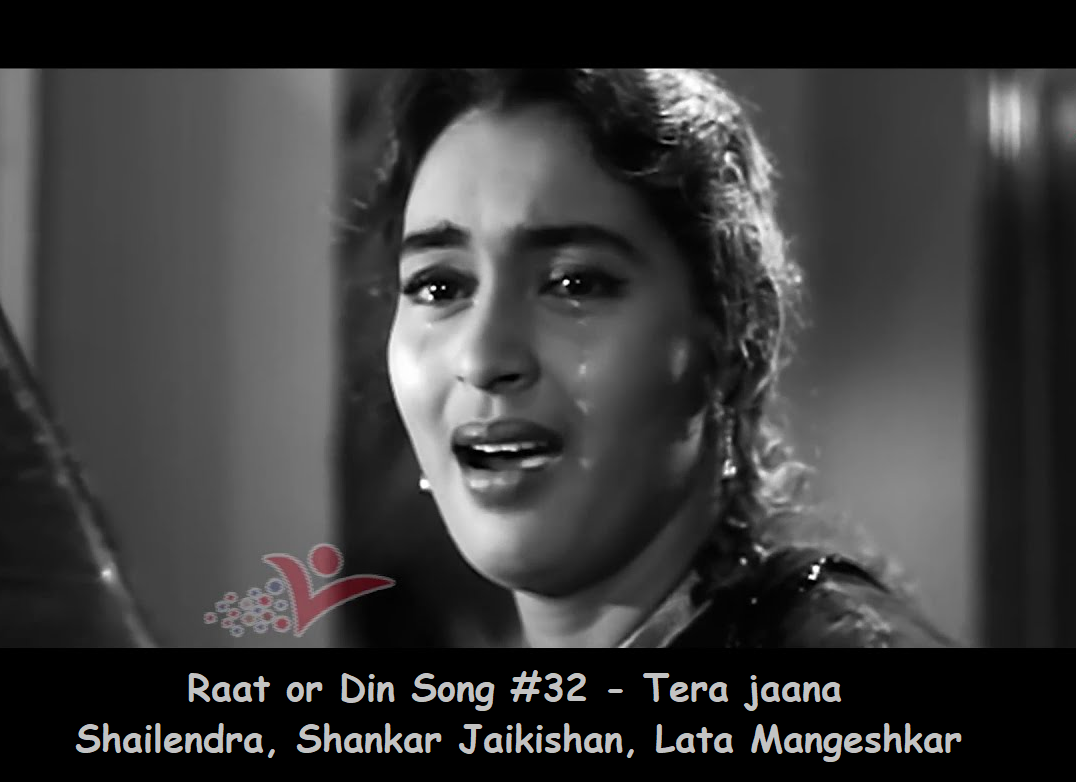
Song #32 Tera jaana Theme-word: Jab jab chanda aayega teri yaad dilayega, Saari raat jagayega
Once Again a Zindagi and Raat Song
In this song she (Nutan) mentions Zindagi first: Tera gham teri khushi, Mera gham meri khushi, Tujhse hi thi zindagi.
I have once again decided in favour of Raat. After all, I started the series with: Saari saari raat teri yaad sataye.
Shankar Jaikishan – Shailendra
I freak out on this song as one of the best compositions of my favourite duo: Shankar Jaikishan. Every movie of theirs had a song composed in the queen of ragas: Bhairavi, the raga most suited to express devotion. There were movies in which as many as four songs were composed by the duo in this raga. Jaikishan named his daughter Bhairavi because of his devotion to this devotional raga.
Other than Shakeel-Naushad, the guys who put me in a trance because of their compositions were the best duo ever of Shankar Jaikishan. There was this element of timelessness about their compositions.
Despite the best of lyrics and compositions, the songs would have been not even half the success they were if it hadn’t been for their outstanding composition and interludes. So much so that you pay more attention to the songs when the interludes appear.
I believe that the guys who had the best and most memorable interludes in their songs were the best music duo of Shankar and Jaikishan. They treated each song as a unique audience experience and interludes were significant part of their songs.
The guy who did it for Shankar Jaikishan to provide us with this memorable song arrangement was a Goan music arranger by the name of Sebastian D’Souza. If you notice a quality of music in Shankar Jaikishan songs wherein the music is not apologetically in the background but stand out as much as the lyrics and the voice, then it is thanks to Sebastian.
He was an arranger for Op Nayyar but started coming into prominence with S-J from their Awara days.
What did he and Shankar Jaikishan did in this song? It is a piano accordion song. First let me tell you a little controversy about S-J’s use of accordion. Their instrumentalist Vistasp Balsara claimed that many of the accordion sounds in the S-J numbers were produced by him on harmonium including for Awara hoon. However, there is no doubt about this song. It is actually on accordion, the instrument that S-J used the best.
Secondly, they made sad songs on fast happy beats so that music would be in prominence and you were taken in by singing, acting and cinematography. This aspect was untried by MDs earlier. However, many of S-J’s sad songs have fast lively tunes about them. In this, in the first interlude, the sound of accordion with percussion actually has the effect of enhancing your heartbeat to the level of Nutan’s for having lost the love of her life. In the second interlude it is mainly accordion but a little calmed down to take her from the level of first shock to acceptance that he would be no more with her.
Anari – 1959 Movie
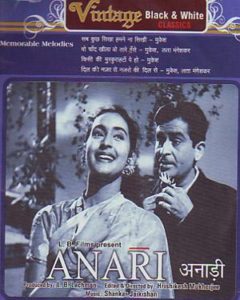
Shankar Jaikishan were a total musical experience that seamlessly fitted into the scheme of the director, in this case Hrishikesh Mukherjee and the song, its lyrics, its composition, arrangement, singing by Lata Mangehskar, cinematography, emotions and histrionics were all parts of a complete experience that the audience must get whilst watching the song. I am sure, at some time or the other in the song you shift to walking into the hearts of Nutan and Raj Kapoor. So powerful is this experience.
I have my hair standing on ends when I listen to the song, particularly the interludes. Here is one song that you enjoy with all your senses focused on the song and not just ears. You enjoy the outstanding lyrics by Shailendra too, which is part of the overall experience and don’t stand out by themselves.
My Own Poetry
My similar poetry? I have several but I think this one comes closest:
SULAGTE AANSU
वो लौटा रहें हैं मेरा सामान,
और जला रहे हैं सब कुछ,
मेरी आरज़ू है सितमगर
मेरे अश्क भी जला दें
ताके दिल के समुन्दर में
वो तूफ़ान फिर ना उभरे;
जो मरहले खड़े थे
उन्हें ठोकर से मिटा दें
काश हम ना होते वो ना होते,
और ये आरज़ू ना होती
तेरी आँखों में जो सरूर था
वो सरूर भी हटा दें
मैं भूल गया हूँ सब कुछ,
तेरे प्यार की नज़र में
मेरी कौन सी है मंजिल
मुझे कुछ तो अब पता दें
अब दिल न हो, प्यार ना हो,
और ना रहे उनकी यादें,
कोई उनसे जाके कह दे,
मेरी हस्ती ही मिटा दें
The Song
Ladies and gentlemen, please enjoy: Tera jaana dil ke armaano ka lut jaana….
( तेर जाना
दिल के अरमानों का लुट जाना ) -२
कोई देखे -२
बन के तक़दीरों का मिट जाना
तेरा जाना
तेरा ग़म तेरी ख़ुशी
मेरा ग़म मेरी ख़ुशी
तुझसे ही थी ज़िन्दगी
हँस कर हमने था कहा
जीवन भर का साथ है
ये कल ही की बात है
आ
तेरा जाना
दिल के अरमानों का लुट जाना
कोई देखे -२
बन के तक़दीरों का मिट जाना
तेरा जाना
जब-जब चन्दा आयेगा
तेरी याद दिलायेगा
सारी रात जगायेगा
मैं रो कर रह जाऊँगी
दिल जब ज़िद पर आयेगा
दिल को कौन मनायेगा
आ
तेरा जाना
दिल के अरमानों का लुट जाना
कोई देखे -२
बन के तक़दीरों का मिट जाना
तेरा जाना….
I hope you liked my choice of Raat or Din Song #32.
I started this series on my Facebook group Yaad Kiya Dil Ne on 23 Aug 20. Since then, many other members have put up these songs. Here, I shall be giving you one of my own, per day.
In the Zindagi song of the Day I gave you a song from the 1964 Shakti Samanta movie Kashmir Ki Kali: Hai duniya usi ki zamana usi ka. And today, we have yet another song from the same movie. This was, indeed, the hallmark of OP Nayyar: he had most of his songs in his movies becoming hits and super hits. Many years ago, I did a post on the songs of this movie and for those of you who have the time (less than one percent, that is), you may access all the songs of the movie here:
Raag Pahadi is specific for the hills of Himalayas. It brings in certain freshness not just in the raag but also because Pahadi is a dhun (very easy to recognise). To the best of my knowledge, it is the first Pahadi song in this series and I was keeping it for this day.
All Involved in the Making of the Song
The song was penned by SH Bihari who featured in seven movies with OP Nayyar and made really refreshing and delightful songs for him. In this movie, the pair are at their best.
Rafi has been the voice of Shammi Kapoor just as Mukesh has been the singing voice of Raj Kapoor. Rafi had something that Mukesh can never match; which is, that he sang not as Rafi but in the characteristic of the hero for which he was singing. So, Rafi’s songs for Shammi Kapoor are sung in Shammi Kapoor’s style and, say, Dev Anand in Dev Anand’s style.
Asha Bhosle sang for Sharmila in her debut movie and brought so much of charm into her role (Op Nayyar, of course, refused to have Lata singing any of his songs).
Sharmila and Shammi Kapoor have enacted in so superbly that it is now among their greatest songs.
My Own Poetry
Incidentally, I had Pahadi in mind when I wrote this recently:
Khwaabon Mein Rakha Hai Sambhaal Ke
तस्सवुर में उनसे हुई गुफ्तगू, मज़ा आ गया,
कब से रही है मेरी जुस्तजू, मज़ा आ गया।
जनमों की कहानी है, यह राज़ ना समझा कोई,
कहां होगी खत्म और कहां शुरू, मज़ा आ गया।
चलो ख्वाबों में ही मिली, मुझे कोई गिला नहीं,
क्या हुआ और क्या थी मेरी आरज़ू, मज़ा आ गया।
समा बांध लिया मेरे मन की छलांग ने,
रख ली प्यार की आबरू, मज़ा आ गया।
इंतज़ार करते रहे ज़िन्दगी भर यूं, रवि,
अब हुए हैं वह रूबरू, मज़ा आ गया।
मेरा हिस्सा गुफ्तुगु में एक अजीब खामोशी थी,
मैं कहूं कुछ या न कहूं, मज़ा आ गया।
लोग कहते रहे वह ना आएगी, वह नहीं है,
पर वह खड़ी थी हूबहू, मज़ा आ गया।
The Song
Ladies and gentlemen, please enjoy a beautiful duet in Raag Pahadi sung by Asha Bhosle for Sharmila Tagore and Mohammad Rafi for Shammi Kapoor, in the 1964 Shakti Samanta movie Kashmir Ki Kali; the song having been written by SH Bihari and composed by OP Nayyar: Ishaaron ishaaron mein dil lene waale..
RRR Songs (Songs of Regret, Repentance and Ruefulness)
I started this new series on 17 Jan 21 on my Facebook Group Yaad Kiya Dil Ne. My efforts failed to involve people in writing their own stuff about songs and music rather than copying and pasting from here and there or worse, just sharing url of songs from YouTube. Hence, I had decided to give the group a burial that it deserved rather than making it like thousands of groups on Facebook about songs with nothing unique about them at all.
The movie happens to have story similar to 1958 Kalidas movie Adalat starring Nargis, Pradeep Kumar and Pran. That movie had some of the greatest songs of Madan Mohan on the lyrics of Rajinder Krishan.
Surprisingly, this one is not a plagiarised story. It is a remake of Asit Sen’s Bengali 1963 movie Uttar Falguni. It appears that women being wrongfully forced into prostitution was a common theme all over India.
This Asit Sen movie (remember Asit Sen? He was the director of Hemant Kumar’s Khamoshi) starred Suchitra Sen as the one forced to become a courtesan after Ashok Kumar’s family refused to own her up after Ashok Kumar left for England to get education to become a barrister.
Until that time, to become a barrister was thought of as a noble profession for the intellectual. We had the most famous barrister of them all: Mohandas Karamchand Gandhi, who was so noble that he is addressed as Mahatma (Saint). Nowadays, law is considered an outlet for those who want to make quick buck at the expense of others.
Similarly, courtesans are nowadays the women of worthless character and morals.
Nihar Ranjan Gupta and Krishan Chander wrote the story and in the final stages gave it a twist from Adalat by having a child who was never to be seen earlier and thus justifying the name Mamta.
Courtesans and prostitutes with golden heart are an obsession with Hindi films industry and everyone is happy with the situation especially lyricists and music directors.
Majrooh and Roshan
This movie had Majrooh and Roshan doing to its songs what Rajinder Krishan and Madan Mohan did to Adalat songs. They made the following:
“Chahe To Mera Jiya Lele” Lata Mangeshkar
“Chupa Lo Yun Dil Mein Pyar Mera” Lata Mangeshkar, Hemant Kumar
“Hum Gavanwa Na Jayibe Ho” Lata Mangeshkar
“Rahen Na Rahen Hum (solo)” Lata Mangeshkar
“Rahen Na Rahen Hum (duet)” Mohammed Rafi, Suman Kalyanpur
“Rahte The Kabhi Jinke” Lata Mangeshkar
“In Baharon Mein” Mohammed Rafi, Asha Bhosle
Majrooh has laid nice and thick whilst writing the lyrics; her hopelessness is adequately laced with self pity:
रहते थे कभी जिनके दिल में
हम जान से भी प्यारों की तरह
बैठे हैं उन्ही के कूचे में
हम आज गुनहगारों की तरह – २
दावा था जिन्हें हमदर्दी का
खुद आके न पूछा हाल कभी – २
महफ़िल में बुलाया है हम पे – २
हँसने को सितमगारों की तरह – २
रहते थे…
बरसों से सुलगते तन मन पर
अश्कों के तो छींटे दे ना सके – २
तपते हुए दिल के ज़ख्मों पर – २
बरसे भी तो अंगारों की तरह – २
रहते थे…
सौ रुप धरे जीने के लिये
बैठे हैं हज़ारों ज़हर पिये – २
ठोकर ना लगाना हम खुद हैं – २
गिरती हुई दीवारों की तरह – २
रहते थे…
My Own Poetry
WAQT GAYA BAAT GAYI
बातों बातों में बात निकल जाती है,
वह मिलते नहीं, मुलाकात निकल जाती है।
इंतज़ार करते करते आंख कुछ ऐसे लगे,
खुलते ही देखा हैयात निकल जाती है।
सदियों से पड़े हैं तन्हा और बेकसी में,
लोग क्यूं कहते हैं मजबूरी ए हालात निकल जाती है?
घर के सामने खड़े थे उनकी उम्मीद में हम,
वह नहीं निकले पर बारात निकल जाती है।
सामने होंगें तो ज़रूर पूछूंगा ऐ खुदा,
मुझे अकेला छोड़ के कहां कायनात निकल जाती है?
जब भी भीगने की ख्वाहिश उठी, रवि,
उसी वक़्त देखा बरसात निकल जाती है।
The Song
Lata Mangeshkar has sung it as well as any of Adalat songs.
Please enjoy: Rehte the kabhi ham jinake dil mein…
I started this series on my Facebook group Yaad Kiya Dil Ne on 18 Oct 20. Since then, many other members have put up these songs. Here, I shall be giving you one of my own, per day.
Song #31 Aapki nazaron ne samajha Theme-word: Has ke apni zindagi mein kar liye shaamil mujhe
Anpadh – The Way We Treated Women
This 1962 movie directed by Mohan Kumar (almost all his movies starting with the letter A such as Aas Ka Panchhi, Ayee Milan Ki Bela, Aap Ki Parchhayiyan, Aman, Anjana, Aap Aaye Bahar Aayi, Avtar, Amba, All Rounder and Amrit (This is a fad in Hindi films industry; numerology and astrology plays a big role in selecting titles of movies), reflected the way we treated women. Being literate wasn’t considered necessary as long as they were well versed in wifely duties (cooking and embroidery and keeping a good and clean house). In this movie, Balraj Sahni as the brother of Mala Sinha felt that as long as they had enough money, being uneducated wasn’t important.
He was wrong. She married Dharmendra, who himself and his family, laid a great store for education. The moment they found out, after wedding, that Mala Sinha was Anpadh, they looked down on her completely and she became a pariah at home.
Only, Dharmendra was not just educated but kind-hearted too. He took pity on her and started teaching and loving her. And that’s how this song came about.
Madan Mohan and Raja Mehdi Ali Khan
Madan Mohan was the Music Director for women. He made some of the most memorable songs Lata Mangeshkar (who was very fond of “Madan bhaiya”). I feel that in the top ten songs of Lata composed by Madan Mohan, these are equally divided between Rajinder Krishan and Raja Mehdi Ali Khan as lyricists; both of them being extraordinarily aligned to the emotions of women. If Raja would have Lag jaa gale ke phir, Rajinder Krishan would have Unako ye shikayat hai ke ham kuchh nahin kehte. Outstanding combinations both.
This one was penned by Raja Mehdi Ali Khan and Lata Mangeshkar herself has acknowledged this to be among her top songs.
Raag and Tal
Raag Darbari Kanada
Madan Mohan was very fond of Raaga based songs, eg, Lata’s favourite in Bhimpalasi: Naino mein badra chhaye. If at all he was inclined more towards a Raag, I feel it was Dardari. Here is why: In Aap Ki Parchhayiyan, he had two songs on same raag: Agar mujhase mohabbat hai and Main nigaahen tere chehre se hatayun kaise.
Therefore, it is not surprising, that for this song he chose Adana, which is, the way Madan Mohan composed it, as close to Darbari as possible. Try singing all the three songs and you’ll know what I have brought out.
The Tal here is Rupaktal.
I have given you, in my Raaga based series, two songs in Adana: Manmohan mein ho tumhi (Tintal) and Ai dil mujhe aisi jagah le chal (Kaherava) and you’d know that Aap ki nazazron ne samajha sounds different.
The only thing that I know about Rupaktal I have learnt from Anand Desai who, for reasons known best to him, has distanced himself for the last two years. Whereas Tintal is symmetrical (each vibhag of four is similar; 16 beats symmetrically arranged in four)), Rupaktal has the vibhags different (seven beats in three vibhags and starting one is not Taali but Khaali (Wave and not a clap).
Lyrics
Lyrics for me are even more important than compositions. Here are these penned by Raja Mehdi Ali Khan (He introduced ‘Aap’ in his songs):
आप की नज़रों ने समझा, प्यार के काबिल मुझे
दिल की ऐ धड़कन ठहर जा, मिल गई मंज़िल मुझे
आप की नज़रों ने समझा
जी हमें मंज़ूर है, आपका ये फ़ैसला – २
कह रही है हर नज़र, बंदा-परवर शुकरिया
दो जहाँ की आज खुशियाँ हो गईं हासिल मुझे
आप की नज़रों ने समझा …
आप की मंज़िल हूँ मैं मेरी मंज़िल आप हैं – २
क्यूँ मैं तूफ़ान से डरूँ मेरे साहिल आप हैं
कोई तूफ़ानों से कह दे, मिल गया साहिल मुझे
आप की नज़रों ने समझा …
पड़ गई दिल पर मेरी, आप की पर्छाइयाँ – २
हर तरफ़ बजने लगीं सैकड़ों शहनाइयाँ
हँसके अपनी ज़िंदगी में, कर लिया शामिल मुझे
आप की नज़रों ने समझा …
My Own Poetry
Aapke Ehsaano Ki Hadd Paar Ho Gayi
आप के एहसानो की हद्द पार हो गयी,
गरीब की यह दुनिया माला – माल हो गयी
तन्हाईयों की दौलत का न था नाम – ओ – निशाँ,
अब यूं मिली है कि शाम शर्मसार हो गयी
यूं तो ज़िन्दगी में ग़म यहाँ वहां पढ़े थे,
तुमने दिए कुछ ऐसे कि ग़म – ए – बहार हो गयी
अपने ही अश्क़ों की कीमत का न था हमें एहसास,
आँख खुश्क हुई तो देखा तंग – हाल हो गयी
मासूमियत – ए – मोहब्बत पे बहुत नाज़ था हमें,
तेरी महफ़िल में जाने क्यों गुनाहगार हो गयी
दिल की धड़कन को अपनी ज़मानत समझते थे,
रफ्ता रफ्ता वह भी तेरी तरफदार हो गयी
सोचता हूँ, रवि, कैसे बचा रखूं इसे,
मेरी ज़िन्दगी की दौलत सर – ए – बाज़ार हो गयी
The Song
Ladies and gentlemen, please enjoy: Aap ki nazaron ne samajha pyar ke kabil mujhe…
I hope you enjoyed my choice for Song #31 in the series.
I started this series on my Facebook group Yaad Kiya Dil Ne on 18 Aug 20. Since then, many other members have put up these songs. Here, I shall be giving you one of my own, per day.
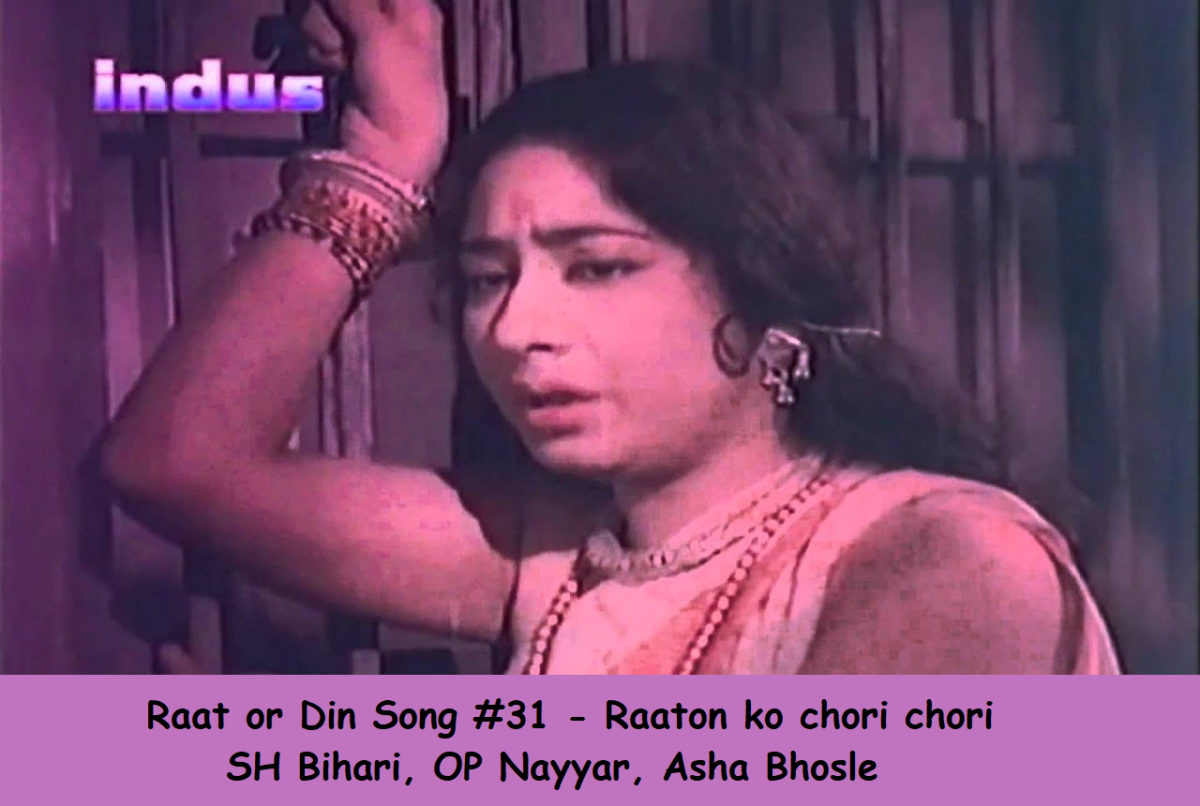
Song #31 Raaton ko chori chori bole mera kangana Theme-word:In the mukhada itself
SH Bihari – OP Nayyar – Asha Bhosle
It is rare for me to give you a song that has the theme-word in the mukhada itself. However, I have been meaning to put up this song for some time now.
I have liked all the lyrics of Shamsul Huda Bihari; particularly those that have been composed by OP Nayyar. One straightway thinks of Kashmir Ki Kali, Ek Mussafir Ek Hasina, Sawan Ki Ghata, and Yeh Raat Phir Na Aayegi.
OP Nayyar. of course, is best remembered for his songs with horse-trot beat such as Maang ke saath tumhara, Laakhon hain yahan dilwale and Phir wohi dil laya hoon. His movies had the largest number of hit and super hit songs. He claimed not to know much about raagas and the like and yet some of his songs were very well composed in raagas; his favourite being Raag Peelu or Pilu and next favourite being Pahadi.
He refused to have Lata sing any of his songs and hence Asha Bhosle was the hot favourite with him together with Geeta Dutt and Shamshad Begum.
Mohabbat Zindagi Hai – 1966 Movie
(Poster courtesy: en.wikipedia.org)
This movie was directed by Jagdish Nirula and starred Dharmendra, Rajshree, Chand Usmani and Mehmood.
The story was very interesting indeed. Rajshree’s father passes away and it is revealed in his will that Rajshree would inherit his property if she’d marry within three months of his dying.
She has a quick way out. She selects Dharmendra as an opportune husband because he is on the death row and would die and she would enjoy the riches of her dad without being encumbered by her spouse.
However, Dharmendra is pardoned and is free to go and that makes the background of the story to follow.
I have not been able to make out anywhere (since I didn’t see the movie) as to how Chand Usmani is singing this song at one end and on the other end Rajshree is in her bed. If any of you have seen the movie, please thrown some light on it.
The Song
I have always been fond of OP Nayyar’s compositions. He has done an exceedingly good job here to make it into a memorable song, Of course, SH Bihari’s lyrics are extraordinary:
रातो को चोरी चोरी बोले
मोरा कगना…
अब के जो बरखा आयी आएगे
सजना…
रातो को चोरी चोरी बोले
मोरा कगना…
कैसी अनोखी प्यारी होगी
वो राते
जबकि पिया से होगीे
मनवा की बाते…
दो चॉद चमकेगे मोरी
अटरिया …-२
एक तो कबर मे होगा दुजा
मोरे अगना
रातो को चोरी चोरी बोले
मोरा कगना…
विरहा अगन बैरी मन को
जलाय-२
बरखा की रिमझिम आग
लगाये
बदरो से केहदे कोइ अब के
बरसिया…-२
आ जाये सइया घर तो जम के
बरसना
रातो को चोरी चोरी बोले
मोरा कगना…
अब के जो बरखा आयी आएगे
सजना…
My Own Poetry
Raat Se Nahin Badalte Haalaat
कसम है तुम्हारी ऐसा लगा कल रात,
जैसे हमारे प्यार में कुछ बने यूँ हालात;
चांद से तुम उतरी, मैं ज़मीन से उठा,
फलक पे हमारी हो गयी मुलाकात।
दिल धड़कने की आवाज़ बनी शहनाई,
साथ में थी हसीं चांदनी की बारात,
फरिश्तों ने बरसाए फूल कई रंग के,
दुल्हन की तरह सजी थी सारी कायनात।
दिल की उमंगे कुछ इस कदर थी बुलंद,
लब खुले पर हो न पाई कोई बात;
बादल गरजे, बिजली चमकी और ऐसा लगा,
थमेगी न कभी इश्क़ की बरसात।
और फिर….
बिखर गए ख्वाब, टूट गए सपने,
तन्हाई की फिर से हो गयी शुरुआत;
हम वहीं खड़े थे जहां तुमने फना किये थे,
रफ्ता रफ्ता गुंचा-ए-दिल-ए-जज़्बात।
Ladies and gentlemen, please enjoy: Raaton ko chori chori bole mera kangana…
I hope you liked my choice of Raat or Din Song #31.
I started this series on my Facebook group Yaad Kiya Dil Ne on 23 Aug 20. Since then, many other members have put up these songs. Here, I shall be giving you one of my own, per day.
The musical heritage that India has is by far the oldest in the world. However, our fascination for Western things is really fascinating. We copy (plagiarise) tunes and introduce Western concepts in our songs at the drop of the hat; or more appropriately the drop of the Gandhi topi.
(Pic courtesy: legacy.com)
Having been married to a Catholic, Jim Reeves was a favourite singer in our household. Year after year, he was popular with us for Christmas carols. In addition to Christmas carols, his other songs were popular with us and the one song that used to play over and over again in our house was Bimbo.
Having been written in 1948 and popularised by Jim Reeves in 1953, its popularity was never on the fade.
Chitragupt was one Music Director who was known for fusion; I have already given you his fusion song Jodi hamari jamega kaise Jani? Just like all our MDs (without exception) he wasn’t beyond copying tunes from abroad. He just lifted the tune for Dekho mausam kya bahaar hai from Bimbo:
Bimbo, Bimbo, where ya gonna go-e-o
Bimbo, Bimbo, whatcha gonna do-e-o
Bimbo, Bimbo, does your mommy know
That you’re goin’ down the road to see a little girleo.
Opera House – 1961
(Poster courtesy: en.wikipedia.org)
Not just foreign tunes and instruments, we were taking large strides into movies with English names: China Town, Modern Girl, Railway Platform, House Full and even Dream Sequence.
Opera House was one such murder mysteries that we were churning out dime a dozen. B Saroja Devi is an actress of Tamil, Kannada and Telugu movies and took a plunge in Hindi movies with a family drama in 1960: Sasural wherein she acted with Rajendra Kumar.
In PL Santoshi’s Opera House too he started out being the typical Indian woman called Saroj from my behna Manik Lakhkar Chava’s home place Nagpur. She seeks job in Bombay as a singer/dancer. Later she becomes Mary D’Souza when she is back in Nagpur. In Bombay itself, she had fallen in love with Ajit Rai (Ajit). He comes chasing her in Nagpur and discovers that she is now Mary D’Souza. Why? The poor girl had seen the murder of Chunilal and the killers are after her! This theme was repeated in Hindi movies so many times that Guineess people approached Hindi movies that this must be a world record for using the same theme in hundreds of movies. By the time, we tricked the Guinness people by changing the name of Hindi movies to Bollywood!
Majrooh, Chitragupt, Mukesh and Lata Mangeshkar
Majrooh didn’t allow himself into being typified; from a typical Urdu poet he often went into all kinds of songs whether Western or Indian.
To give credit to Chitragupt, he made this too into fusion song for the stanzas are totally in Indian tune after the mukhada being copy of Bimbo by Jim Reeves.
Mukesh sang for Ajit and Lata Mangeshkar for B Saroja Devi and truly a magical duet was produced.
The Song
Ladies and gentlemen, please enjoy: Dekho mausam, kya bahar hai…
मु : देखो मौसम
ल : क्या बहार है
मु : सारा आलम
ल : बेक़रार है
मु : ऐसे में क्यूँ हम
ल : दीवाने हो जाएं ना
छलकी-छलकी
मु : चाँदनी भी है
ल : हल्की-हल्की
मु : बेखुदी भी है
ल : ऐसे में क्यूँ हम
मु : यहीं पर खो जाएं ना
ल : गाती सी हर साँस में बजती सी शहनाइयाँ
मु : साया दिल पे डालती तारों की परछाइयाँ
ल : झांके चन्दा
मु : आसमान से
ल : छेड़े हमको
मु : जान-जान के
ल : ऐसे में क्यूँ हम …
मु : दरिया की हर मौज में अरमानों का ज़ोर है
ल : दिलवालों के गीत का लहका-लहका शोर है
मु : लहरें डोलें
ल : झूम-झूम के
मु : साहिल का मुँह
ल : चूम-चूम के
मु : ऐसे में क्यूँ हम …
RRR Songs (Songs of Regret, Repentance and Ruefulness)
I started this new series on 17 Jan 21 on my Facebook Group Yaad Kiya Dil Ne. My efforts failed to involve people in writing their own stuff about songs and music rather than copying and pasting from here and there or worse, just sharing url of songs from YouTube. Hence, I had decided to give the group a burial that it deserved rather than making it like thousands of groups on Facebook about songs with nothing unique about them at all.
It was an Arjun Hingorani movie starring Pradeep Kumar as Kailash, Kalpana as Reshma and Vijaya Choudhary as Bela.
The songs of the movie were penned by Indeevar and composed by Kalyanji Anandji.
Jis Dil Me Basa Tha Pyar Tera Us Dil Ko Kabhi Ka Tod Diya (Male) Mukesh
Itna To Keh Do Humse Tumse Bhi Pyar Hai Lata Mangeshkar, Hemant Kumar
Bahane Kyo Karti Ho Hampe Tum Bhi Marti Ho Mohammed Rafi
Jis Dil Me Basa Tha Pyar Tera Us Dil Ko Kabhi Ka Tod Diya (Female) Lata Mangeshkar
Khushi Bhi Aayi To Kuch Aisi Adaa Se Aayi Lata Mangeshkar
Kaahe Tu Been Bajaye Lata Mangeshkar
As you can make out the this song sung by Mukesh and Lata Mangeshkar separately was the best song of the movie.
Lyrics
Indeevar had written the lyrics at a time when he used to write very good and sensitive lyrics and when he hadn’t tied up with Bappi Lahiri to write some 500 trash songs for him for the lure of money.
Here are the most beautiful lyrics:
जिस दिल में बसा था प्यार तेरा
उस दिल को कभी का तोड़ दिया, हाय, तोड़ दिया
बदनाम न होने देंगे तुझे
तेरा नाम ही लेना छोड़ दिया, हाय, छोड़ दिया
जिस दिल में बसा था प्यार तेरा
जब याद कभी तुम आओगे
समझेंगे तुम्हें चाहा ही नहीं
राहों में अगर मिल जाओगे
सोचेंगे तुम्हें देखा ही नहीं
जो दर पे तुम्हारे जाती थीं
उन राहों को हमने छोड़ दिया हाय, छोड़ दिया
जिस दिल में बसा था प्यार तेरा
हम कौन किसी के होते हैं
कोई हमको याद करेगा क्यूं
अपने दो आंसू भी हम पर
कोई बरबाद करेगा क्यूं – २
उस मांझी को भी गिला हमसे
मंझधार में जिसने छोड़ दिया, हाय, छोड़ दिया
जिस दिल में बसा था प्यार तेरा …
Raag Bhairavi
We have seen the handling of Raag Bhairavi by Jaikishan (SJ fame). Here it is Kalyanji Anandji who have thought of Bhairavi to compose it.
Mukesh
When it comes to RRR songs or Songs of Regret, Repentance and Ruefulness, one singer that comes to mind is Mukesh. He was the best in this genre’. Here too he has done a remarkably beautiful job of it.
My Own Poetry
MUFT HUYE BADNAAM
जिन के लिए हम हो गए बदनाम,
उन्हें याद भी नहीं हमारा नाम।
“कौन हो तुम, क्या चाहते हो?”
उनके लबों से सुना यह पयाम।
आपको आंच न आने देंगे,
दूर से ही हम करते हैं सलाम।
गलती हमने प्यार में कर ली,
कभी न सोचा था अंजाम।
पहले पता होता तो कभी न करते,
ऐसा एहसान फरामोश यह काम।
प्लीज हमें अब माफ करो जी,
इश्क़ का नहीं लेंगे कभी भी नाम।
नज़्म लिखते लिखते हो गयी,
सुबह से अब अंधेरी शाम।
रवि हमारा नाम था लेकिन,
आपने बना दिया गुमनाम।
The Song
Ladies and gentlemen, please enjoy: Jis dil mein basa tha pyar tera…
I started this series on my Facebook group Yaad Kiya Dil Ne on 18 Oct 20. Since then, many other members have put up these songs. Here, I shall be giving you one of my own, per day.
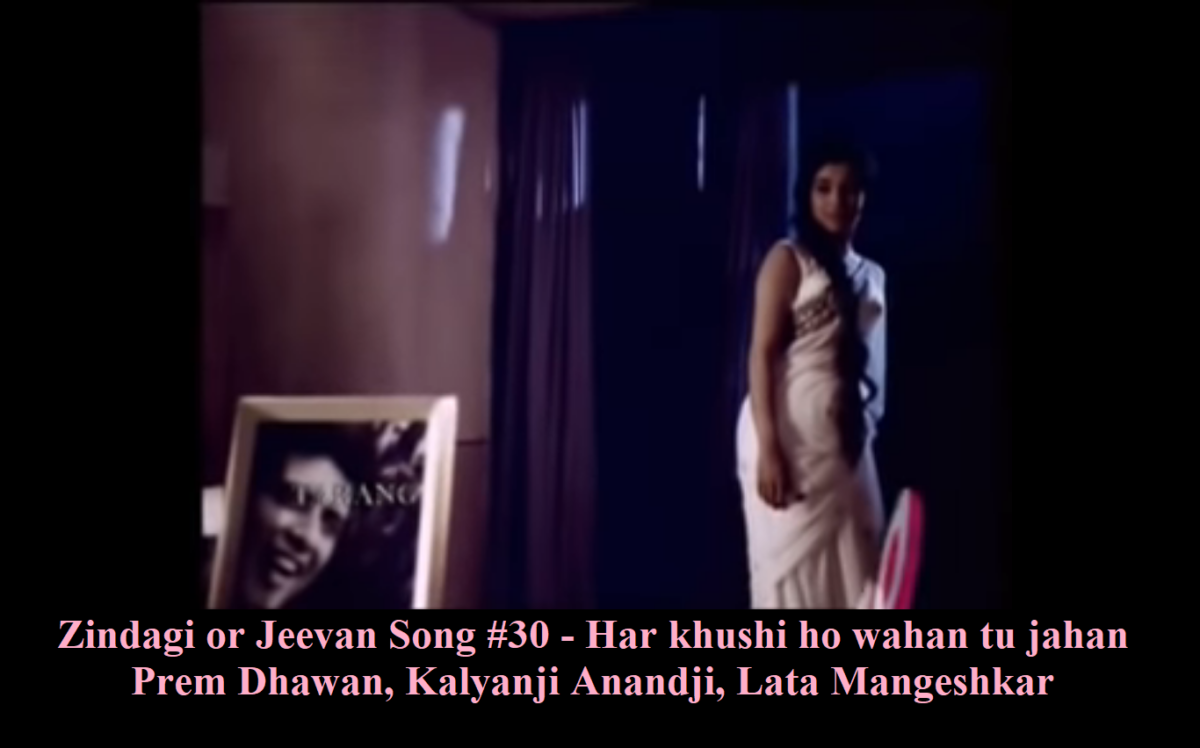
Song #30 Har khushi ho wahan tu jahan bhi rahe Theme-word: Zindagi ho wahan tu jahan bhi rahe
Being a Woman
My association with women (particularly my mom) has taught me that being a woman is the most difficult task on earth. I have penned several poems on the subject.
There is this current trend to treat them as equals. I disagree. How can a woman be treated as an equal (as if doing a favour to her) when, for all intents and purposes she is greater. I recall when mom and us used to climb hills. On return we would all be fatigued. Not she; she would have to cook for all of us. These days – indeed, all these years – I am trying to follow in her footsteps and become the stronger gender and still be full of love and sacrifice.
My favourite book, Sri Guru Granth Sahib, describes the purest form of Love for God as from a Woman towards her Man. I entirely agree.
With this small introduction, please read the lyrics of this song penned by Prem Dhawan. He is at the border and see what she wishes and prays for him (only a woman can do so. I have highlighted the part that tugs at my emotions):
हर ख़ुशी हो वहां
तू जहां भी रहे
हर ख़ुशी हो वहां
तू जहां भी रहे
ज़िन्दगी हो वहाँ
तू जहां भी रहे
हर ख़ुशी हो वहाँ
तू जहां भी रहे
ये अँधेरे मुझे
हो हो हो
ओ ओ ओ
ये अँधेरे मुझे
इस लिए हैं पसंद
इन में साया भी अपना
दिखाई न दे
इन में साया भी अपना
दिखाई न दे
रौशनी हो वहाँ
रौशनी हो वहाँ
रौशनी हो वहाँ
तू जहां भी रहे
ज़िन्दगी हो वहाँ
तू जहां भी रहे
हर ख़ुशी हो वहाँ
तू जहां भी रहे
चाँद धुँधला सही
हो हो हो
ओ ओ ओ
चाँद धुँधला सही
ग़म नहीं है मुझे
तेरी रातों पे रातों का साया न हो
तेरी रातों पे रातों का साया न हो
चांदनी हो वहाँ
चांदनी हो वहाँ
चांदनी हो वहाँ
तू जहां भी रहे
ज़िन्दगी हो वहाँ
तू जहां भी रहे
हर ख़ुशी हो वहाँ
तू जहां भी रहे.
Bozo’s First Desh-Prem Movie
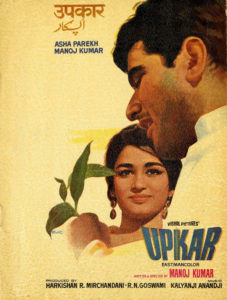
(Poster courtesy: cinestaan)
The 1967 movie Upkar was Bozo’s first desh-prem movie. The emotive reception to it goaded him to make himself into Bharat (the role he played in this) and laugh all the way to the bank besides being considered for Dadasaheb Phalke Award. The theme was so emotional that bad acting didn’t come in the way of its resounding success.
Yesterday only I mentioned to Evani Leela that Bozo also ensured that his movies had the best songs and so did Upkar. His in-your-face patriotism, therefore, was ably supported by excellent songs.
Indeed, much after the movie, when asked to comment upon his favourite scene in the movie, he mentioned about this song. A woman can do wonders. If you think I am overdoing it, I shall like to remind you that when a woman and her infant were buried in a rubble in an earthquake in USSR and they were rescued more than 48 hours later, she had kept her infant alive by feeding it her own blood. That’s a woman for you. Weaker sex? Haha.
The Song
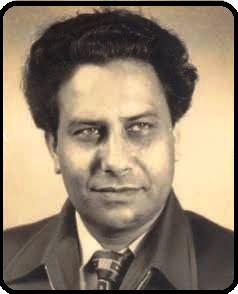
Prem Dhawan
It was put together by Prem Dhawan, Kalyanji Anandji and Lata Mangeshkar singing for Asha Parekh praying for Bozo.
My Own Poetry
I have taken the title from a famous dialogue of the movie Anand:
“Babumoshai, Zindagi Aur Maut Uparwale Ke Haath Mein Hai Jahanpanah”
जाने कब सांस रुक जाए, गर्म खून हो जाए सर्द?
यह जो महल हमने बनाये हैं, कब हो जाएँ गर्द?
जाने कब फरमान आ जाए मौत के शेहन-शाह का?
कौन जाने कहाँ है मुकाम ज़िन्दगी की राह का?
तिनका तिनका बटोर कर बनाया है जो आशियां,
हमसफ़र ओ रहबरों का बढ़ता हुआ ये कारवां,
कठपुतलियां हैं सब, जाने किस को वह उठा ले?
आज, कल या परसों, कब, कैसे, कहाँ?
मजबूरी ओ उदासी ने बाँध दिए हैं हाथ,
दोस्तों और आशिकों का है पल दो पल का साथ;
अभी तो सुहाना दिन है, रंग है और नूर है,
जाने कब बन जाए यह सियाह अँधेरी रात?
आज हमारी बज़म से जाने कहाँ वह जाते हैं?
कल हम ज़ुबान थे, आँख अब चुराते हैं,
मेला है भाई, भीड़ में भी सब अकेले हैं,
दुनिया यूँ ही चलती है, लोग आते हैं, जाते हैं I
यही हकीकत है तो आता है ख्याल मन में,
क्यों ना खुशियों के बूटे उगाएं दिल के आँगन में?
दोस्ती हो सबसे दुश्मनी का नाम ही न हो,
सब ही खुश आमदीद हों अपने नशेमन में I
ज़िन्दगी मिल जुल के प्यारी ओ हसीन हो,
दोस्तों की यादें खूबसूरत और रंगीन हों,
ज़िन्दगी ज़िंदादिली से जियें हम ऐसे,
के मौत को भी हमारी ज़िन्दगी पर यकीन हों I
ज़ेहन में न रंजिश किसी के वास्ते हो,
“छोटी सी ये दुनिया, पहचाने रास्ते” हों,
वफायें हों, जफाओं से कोई नाता ही न हो,
दिल में गर्माहट हर किसी के वास्ते हो I
मौत के फ़रिश्ते को पुर उम्मीद मिलें हम,
वक़्त आने पे हमारे हँसते हुए निकले दम,
छोड़ जाएँ खुशियां सब अपनों के लिए,
न आंसू हों, न पशेमानी, न ख़ौफ हो, न ग़म I
ऐ खुदा, तेरा ‘रवि’ हर दम तैयार हो,
मुस्कराते ले जाना, न के जब बिमार हो,
जीते जी मेरे अपनों का हो घर संसार,
मेरे मरने पे भी उनकी ज़िन्दगी में बहार हो I
Ladies and gentlemen, please enjoy: Har khushi ho wahan, Tu jahan bhi rahe….
I hope you enjoyed my choice for Song #30 in the series.
I started this series on my Facebook group Yaad Kiya Dil Ne on 18 Aug 20. Since then, many other members have put up these songs. Here, I shall be giving you one of my own, per day.
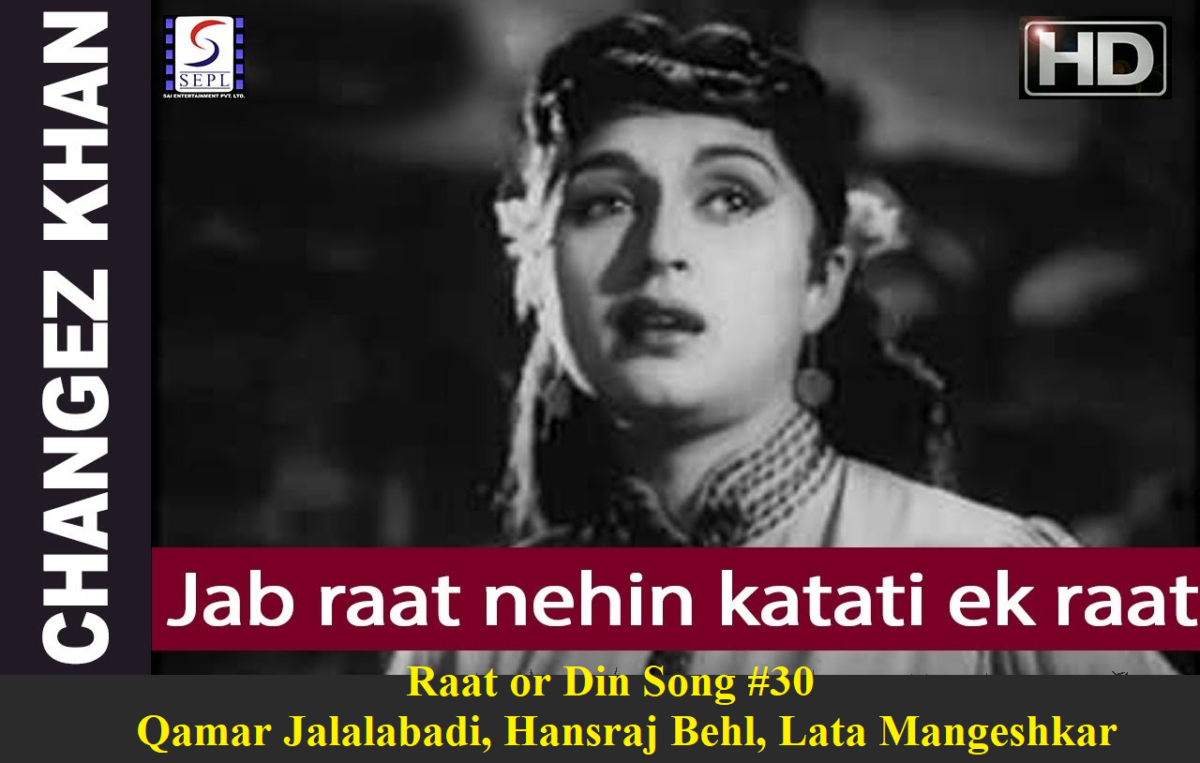
Song 30 Jab raat nahin katati, Ek raat nahin katati, Zindagi kaise kategi?
A Zindagi Song as Raat Song
The other day, I preferred to put Farida Khannum’s Aaj jaane ki zidd na karo as Zindagi song and not as Raat song. That’s because whilst Fayaz Hashmi talked about Raat, his lesson or focus was life.
In this song, I feel the focus is Raat.
A friend of mine would have killed two birds with one stone and put it up as a song in both the series. Busy people do have their ways. Thank God, I never was too busy to see things.
Lata Mangeshkar, Qamar Jalalabadi and Hansraj Behl
Hansraj Behl
My dad was very fond of Hansraj Behl. He used to sing this song even though it was a female song (Lata Mangeshkar singing for Bina Rai). Two years later we saw Bhangra, the Punjabi movie and then my dad’s adoration for Hansraj Behl went up to zenith. The fact is that even I recall most of the songs of Bhangra, thanks to my dad.
This song was penned by Qamar Jalalabadi.
Changez Khan – 1957 Movie
(Poster courtesy IMDb)
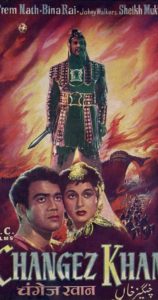
It was a Kedar Kapoor movie made during the times when we went out and explored the world to make Hindi movies; eg, Kabuli Khan about Afghani immigrants, Yahudi about the condition of Jews in Rome and so on.
Changez Khan had Sheikh Mukhtar in the title role. After a military campaign against the Tatars, the Mongols under Changez Khan (Genghis Khna) gather in their camp and look at the loot and prisoners: young men and women.
Changez is not satisfied since he had fallen in love with Tatar princess Azra (Bina Rai). So besotted is he with her that he is ready to lay waste everything in order to get her.
He lets out a reign of tyranny against the Tatars so as to win Azra. Tatar Commander is Sherwa (Prem Nath) is captured by him but escapes.
Finally one day he takes some women prisoners and Azra is one of them. He is overjoyed but it turns out that she is Azra’s twin sister: Zohra.
Finally, after a long winding story he has Azra and offers that he would give up his tyrannical ways if she should marry him.
The song, for you, is the hint.
The Song
All four deserve credit for the song: Here are the lyrics of Qamar Jalalabadi:
जब रात नहीं कटती
एक रात नहीं कटती
ज़िन्दगी कैसे कटेगी
जो आग़ लगी दिल में, अश्क़ों ने बुझाई है,
अश्क़ोन ने जो भड़काई आग़ वो कैसे बुझेगी
दे-दे के हमें आँसू, ये दुनिया ख़ुशी मांगे,
जो शाख़ से टूटी हो, कली वो कैसे खिलेगी
ऐ दर्द ज़रा दम ले, मरने की दुआ कर लूँ,
गर हम न मिटे ऐ दिल, मौत फिर कैसे जियेगी
Hansraj Behl’s composition is simply awesome and so is Lata’s singing. Bina Rai of Anarkali fame enacted it.
Ladies and gentlemen, please enjoy: Jab raat nahin katati, Ek raat nahin katati, Zindagi kaise kategi…
I hope you liked my choice of Raat or Din Song #30.
 This was the last movie that Guru Dutt produced and directed. He commissioned Abrar Alvi to write the story that he had earlier asked to write Sahib Bibi Aur Gulam and Pyaasa. Another thing common in this movie was Waheeda Rehman, the actress of choice for Guru Dutt so much so that rumours were rife about their real life romance being reflected in their reel life. To complicate it further, Guru Dutt’s wife Geeta (nee’ Roy) used to be the singing voice for Waheeda Rehman.
 SD Burman of Pyaasa continued in Kaagaz Ke Phool. However Burman and Sahir had fallen apart and hence Kaifi wrote the lyrics. In this song, he may have penned his greatest: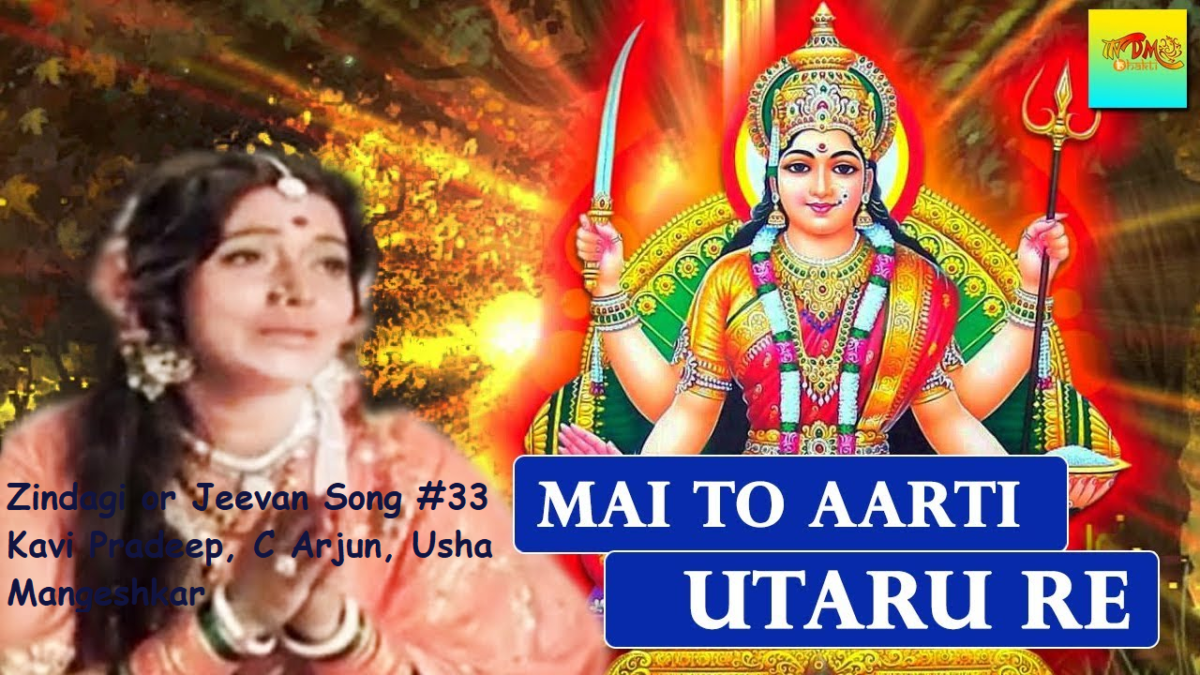
 She was born on this day in 1935. She is 85 years old today. And yet she is the youngest of the sisters: Lata, Asha and Meena and elder only to Hridyanath Mangeshkar.
 Literally, her name translates to Mother of Satisfaction. She emerged as a goddess in 1960s. Devotees of North India particularly hold her in the highest veneration and it is said that if women would keep Vrata (Fast) on 16 consecutive Fridays, it is sure to win favour of the Maa.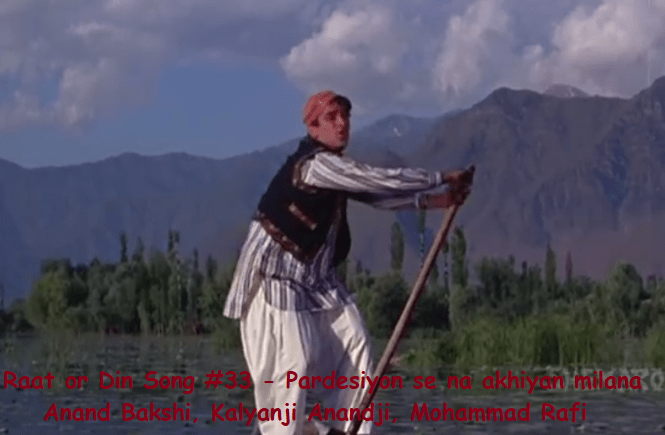
 Kalyanji Anandji became musicians because someone owed money to their father and instead of paying back, offered to teach them music.
 And secondly Jab Jab Phool Khile with Ek tha gul aur ek thi bulbul, Na na karte pyar tumhi se kar baithe, Pardesiyon se na akhiyan milana (three versions), Yahan main ajnabee hoon, and Ye samaa samaa hai ye pyar ka.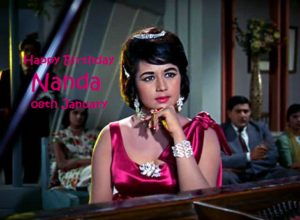
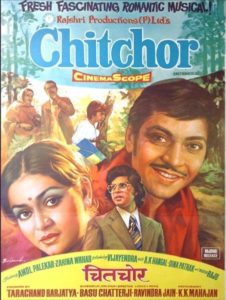 This song is from the 1976 Basu Chatterjee movie Chitchor starring Amol Palekar, Zarina Wahab and Vijayendra. The film is a Rajshri Productions film produced by Tarachand Barjatya. It is based on a Bengali story, Chittachakor by Subodh Ghosh.
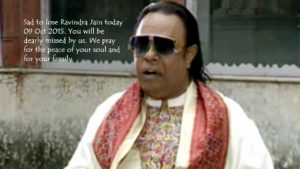 The lyricist of the song was Ravindra Jain and he composed the song too.
 Years before I met my “die-hard fans of Shankar Jaikishan” of SJMF: Anand Desai, Chirag Patel, Uday Joglekar, Rajan Bedke and others, I had done a 45 days feature of these “composers of the millennium”. However, so intense and huge is the contribution of SJMF that every-time one puts up a song of SJ, one bows one’s head to SJMF.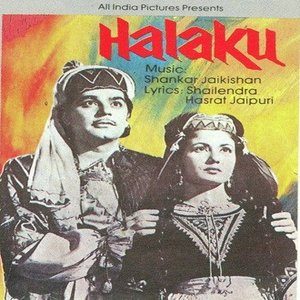
 I freak out on this song as one of the best compositions of my favourite duo: Shankar Jaikishan. Every movie of theirs had a song composed in the queen of ragas: Bhairavi, the raga most suited to express devotion. There were movies in which as many as four songs were composed by the duo in this raga. Jaikishan named his daughter Bhairavi because of his devotion to this devotional raga.
 The guy who did it for Shankar Jaikishan to provide us with this memorable song arrangement was a Goan music arranger by the name of Sebastian D’Souza. If you notice a quality of music in Shankar Jaikishan songs wherein the music is not apologetically in the background but stand out as much as the lyrics and the voice, then it is thanks to Sebastian.
 Shankar Jaikishan were a total musical experience that seamlessly fitted into the scheme of the director, in this case Hrishikesh Mukherjee and the song, its lyrics, its composition, arrangement, singing by Lata Mangehskar, cinematography, emotions and histrionics were all parts of a complete experience that the audience must get whilst watching the song. I am sure, at some time or the other in the song you shift to walking into the hearts of Nutan and Raj Kapoor. So powerful is this experience.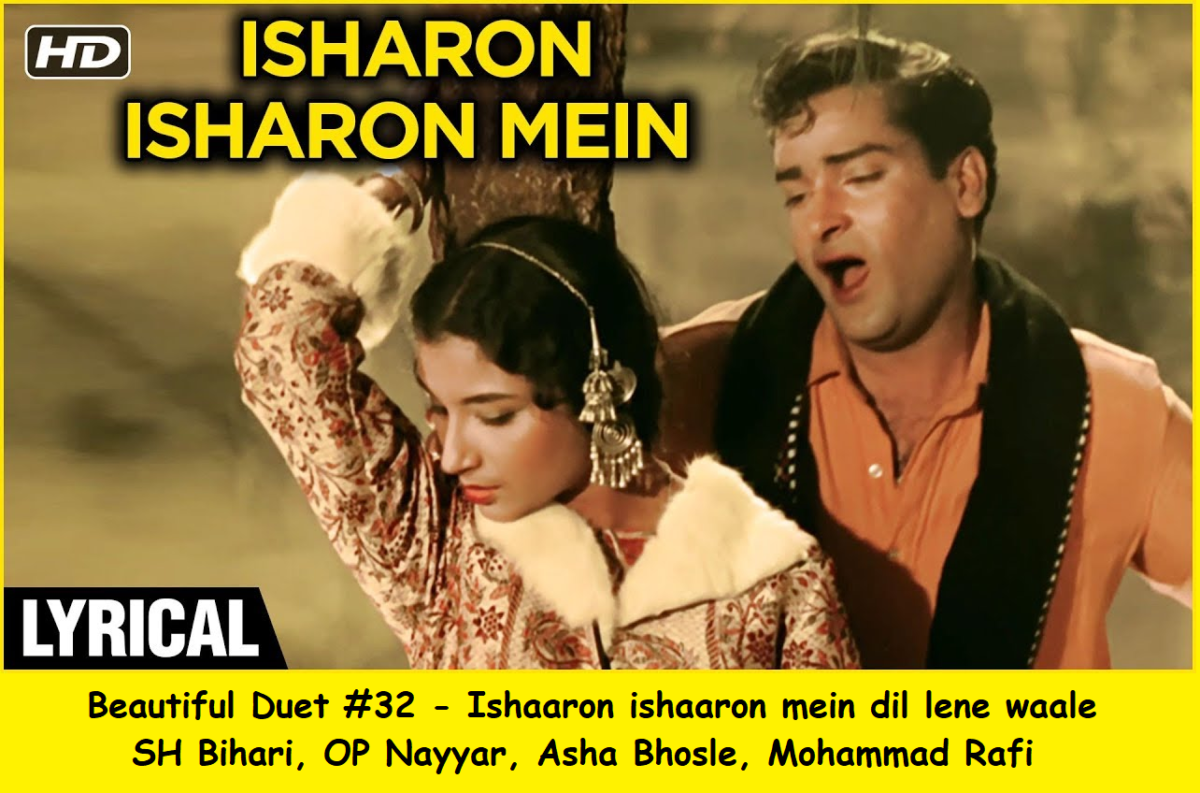
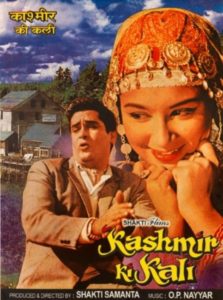 In the Zindagi song of the Day I gave you a song from the 1964 Shakti Samanta movie Kashmir Ki Kali: Hai duniya usi ki zamana usi ka. And today, we have yet another song from the same movie. This was, indeed, the hallmark of OP Nayyar: he had most of his songs in his movies becoming hits and super hits. Many years ago, I did a post on the songs of this movie and for those of you who have the time (less than one percent, that is), you may access all the songs of the movie here:
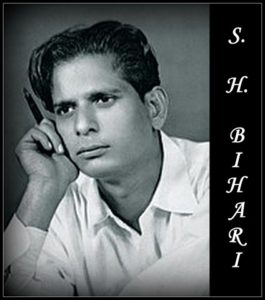 The song was penned by SH Bihari who featured in seven movies with OP Nayyar and made really refreshing and delightful songs for him. In this movie, the pair are at their best.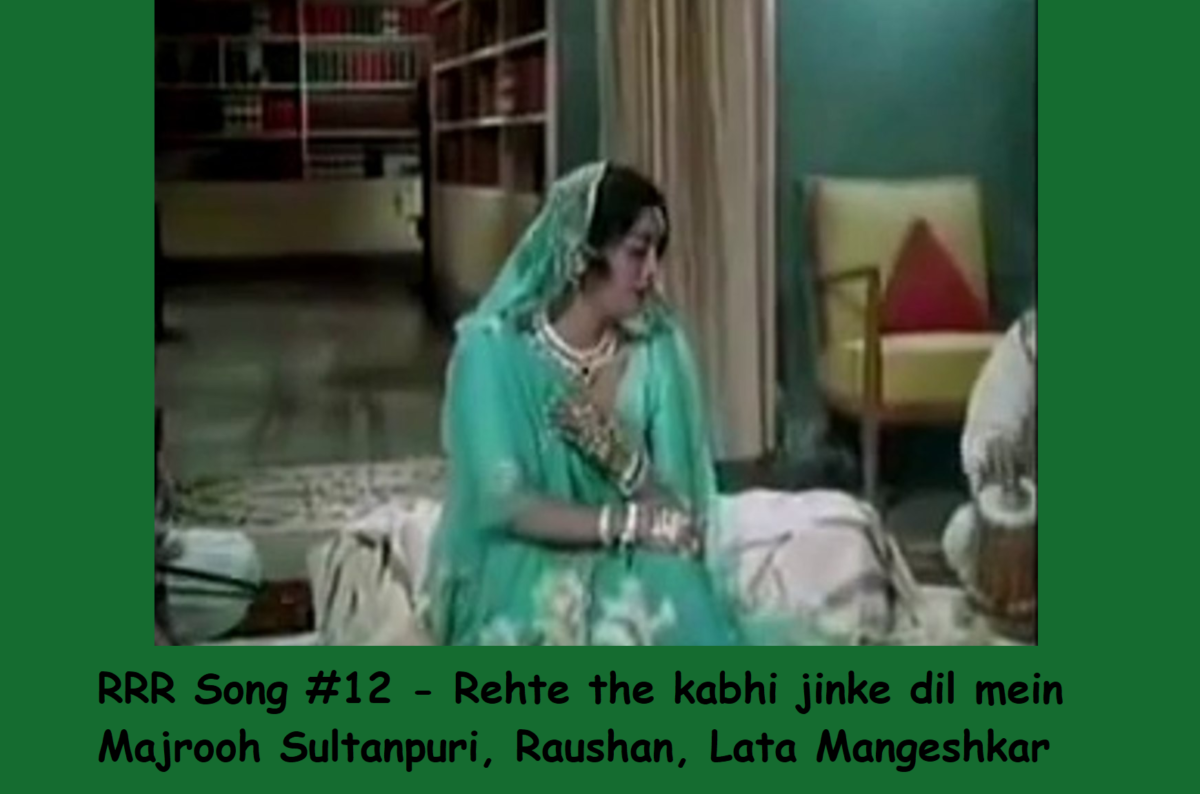
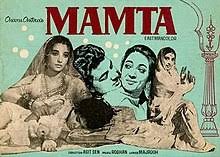 The movie happens to have story similar to 1958 Kalidas movie Adalat starring Nargis, Pradeep Kumar and Pran. That movie had some of the greatest songs of Madan Mohan on the lyrics of Rajinder Krishan.
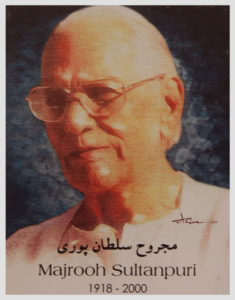 This movie had Majrooh and Roshan doing to its songs what Rajinder Krishan and Madan Mohan did to Adalat songs. They made the following: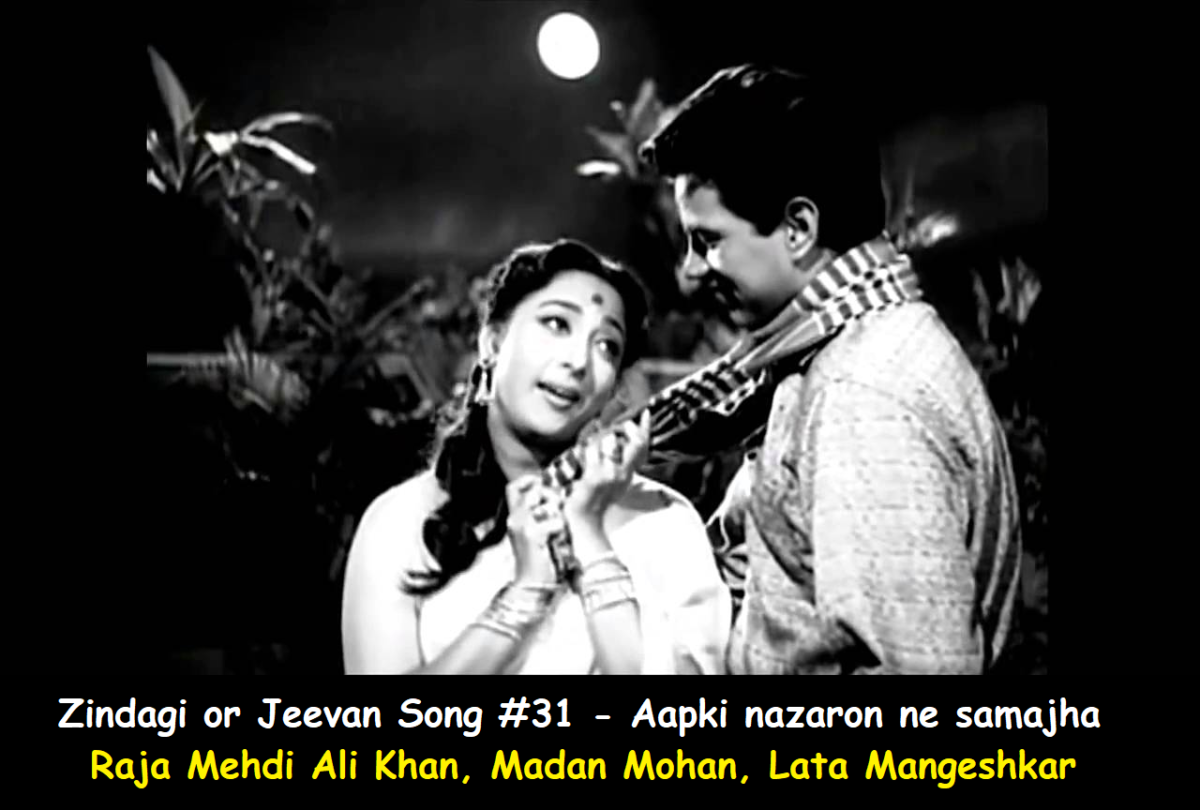
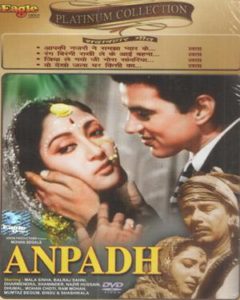 This 1962 movie directed by Mohan Kumar (almost all his movies starting with the letter A such as Aas Ka Panchhi, Ayee Milan Ki Bela, Aap Ki Parchhayiyan, Aman, Anjana, Aap Aaye Bahar Aayi, Avtar, Amba, All Rounder and Amrit (This is a fad in Hindi films industry; numerology and astrology plays a big role in selecting titles of movies), reflected the way we treated women. Being literate wasn’t considered necessary as long as they were well versed in wifely duties (cooking and embroidery and keeping a good and clean house). In this movie, Balraj Sahni as the brother of Mala Sinha felt that as long as they had enough money, being uneducated wasn’t important.
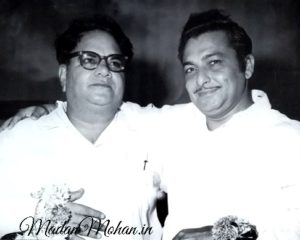 Madan Mohan was the Music Director for women. He made some of the most memorable songs Lata Mangeshkar (who was very fond of “Madan bhaiya”). I feel that in the top ten songs of Lata composed by Madan Mohan, these are equally divided between Rajinder Krishan and Raja Mehdi Ali Khan as lyricists; both of them being extraordinarily aligned to the emotions of women. If Raja would have Lag jaa gale ke phir, Rajinder Krishan would have Unako ye shikayat hai ke ham kuchh nahin kehte. Outstanding combinations both.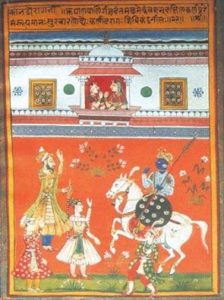
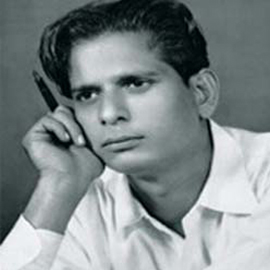 I have liked all the lyrics of Shamsul Huda Bihari; particularly those that have been composed by OP Nayyar. One straightway thinks of Kashmir Ki Kali, Ek Mussafir Ek Hasina, Sawan Ki Ghata, and Yeh Raat Phir Na Aayegi.
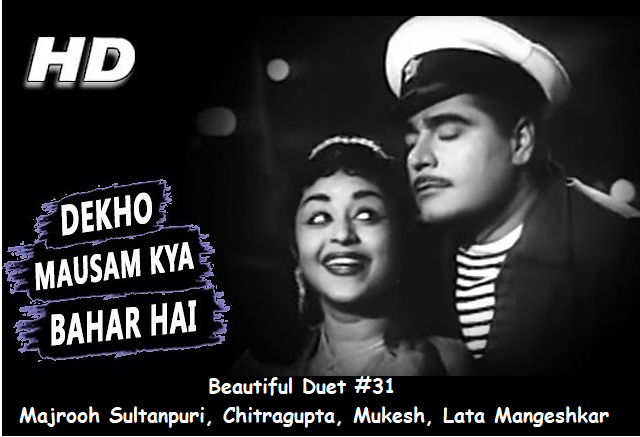
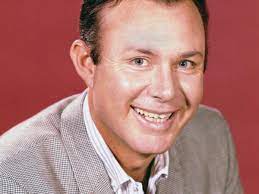
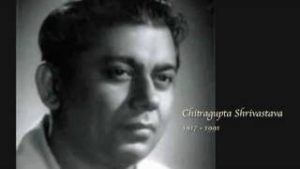 Chitragupt was one Music Director who was known for fusion; I have already given you his fusion song Jodi hamari jamega kaise Jani? Just like all our MDs (without exception) he wasn’t beyond copying tunes from abroad. He just lifted the tune for Dekho mausam kya bahaar hai from Bimbo: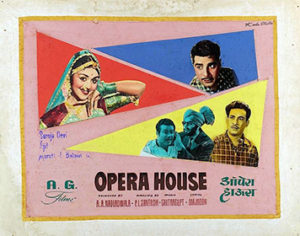
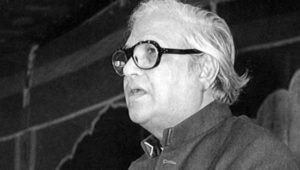 Majrooh didn’t allow himself into being typified; from a typical Urdu poet he often went into all kinds of songs whether Western or Indian.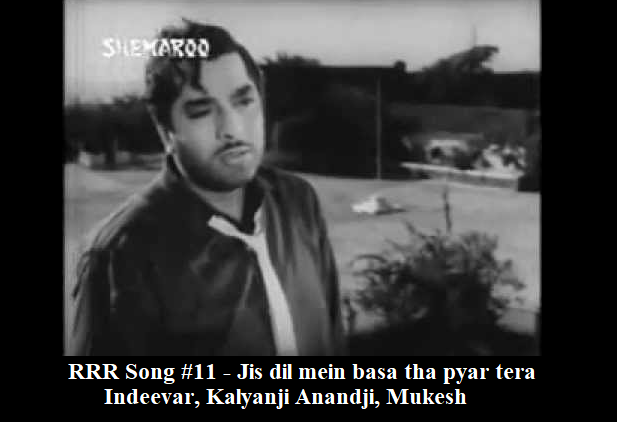
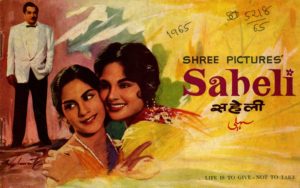
 Indeevar had written the lyrics at a time when he used to write very good and sensitive lyrics and when he hadn’t tied up with Bappi Lahiri to write some 500 trash songs for him for the lure of money.
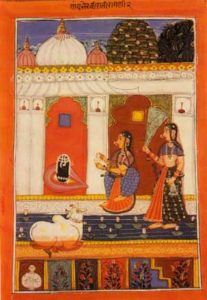 We have seen the handling of Raag Bhairavi by Jaikishan (SJ fame). Here it is Kalyanji Anandji who have thought of Bhairavi to compose it.
 When it comes to RRR songs or Songs of Regret, Repentance and Ruefulness, one singer that comes to mind is Mukesh. He was the best in this genre’. Here too he has done a remarkably beautiful job of it.