I started this series on my Facebook group Yaad Kiya Dil Ne on 23 Aug 20. Since then, many other members have put up these songs. Here, I shall be giving you one of my own, per day.
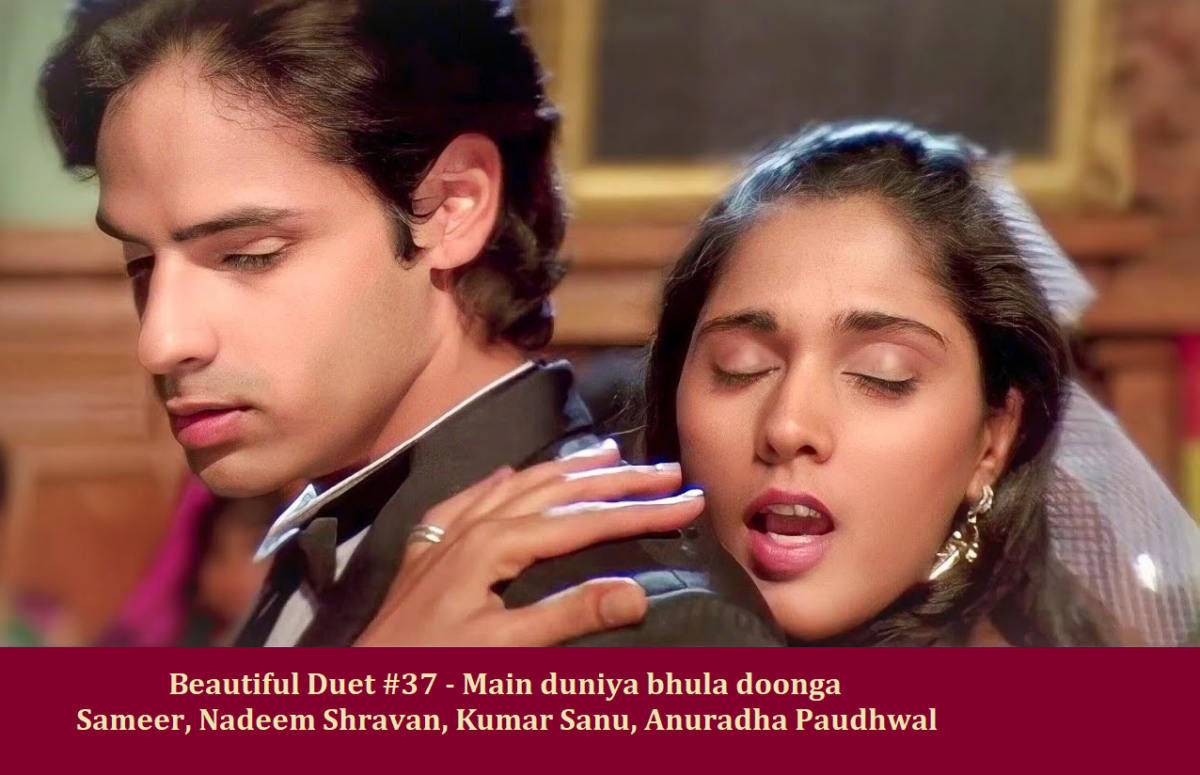
Last time, I gave you Beautiful Duet #37 – Main duniya bhula doonga. So here, then, is the next one:
Song #38
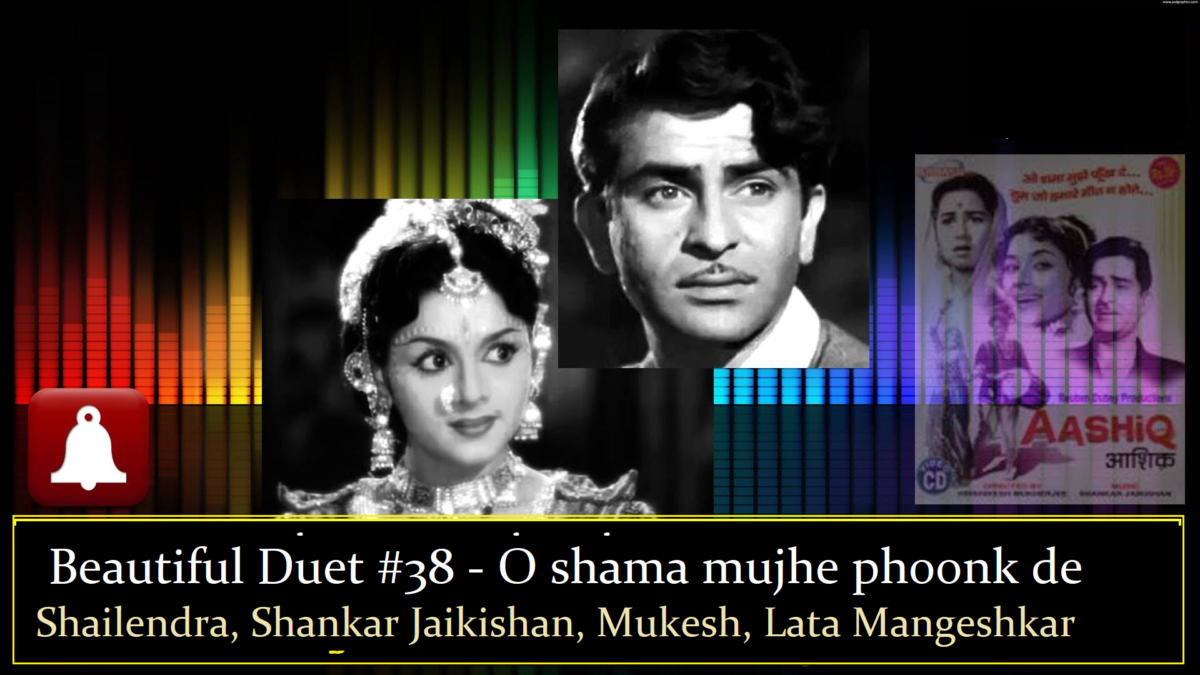
O shama mujhe phoonk de
Raag Bhairavi in 1962 Movie Aashiq
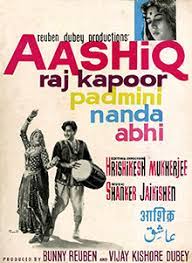
The favourite raag of Shankar Jaikishan again for the simple reason that there are dozens of beautiful songs composed by them in it and I haven’t given you anywhere close to enough. The 1962 movie Aashiq had something in common with the 1959 movie Anari in that both were directed by Hrishikesh Mukherjee. Both being Raj Kapoor starrers had no surprises in lyricists, composers and music directors, and singers. The songs of the movie were penned by Hasrat Jaipuri and Shailendra, composed by the greatest music duo in Hindi films: Shankar Jaikishan, and sung by Mukesh and Lata Mangeshkar.
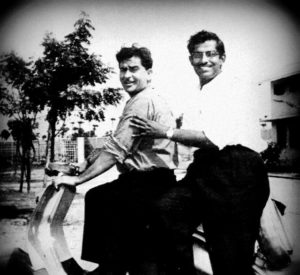
If you were wondering as to why I brought the coincidence of Hrishikesh Mukherjee being the director of both the movies whose songs in Raag Bhairavi I have given in quick succession, then here is the main reason:
Hrishikesh Mukherjee and Raj Kapoor had a very close friendship. The most talked about movie of Hrishikesh Mukherjee was the 1971 movie Anand starring Rajesh Khanna in the title role and Amitabh Bachchan as his doctor Bhaskar Banerjee. Anand’s character was inspired by Raj Kapoor who was sick then. So fond was Hrishikesh Mukherjee of Raj Kapoor that he was fearful of losing him then. He said Raj Kapoor used to call him Babumoshai as Anand’s character calls the doctor in the film. Hence, we know that Amitabh Bachchan’s Bhaskar Banerjee is based on Hrishikesh Mukherjee himself, keeping the Bengali identity as a clue, and Rajesh Khanna was Anand Saigal, a Punjabi, like Raj Kapoor. That was the extent of their friendship.
Mukesh and Lata Mangeshkar
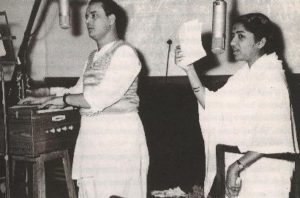 Mukesh and Lata Mangeshkar, the singers of the duet that I am giving you, made some of the most enchanting duets in Raj Kapoor movies. I had a Facebook group called Dil Ki Nazar Se based on the title of their duet in 1959 Hrishikesh Mukherjee movie Anari. Some of the other are: Aa ab laut chalen, Dum bhar jo udhar moonh phere, and Aaja re ab mera dil pukaara.
Raj Kapoor and Padmini
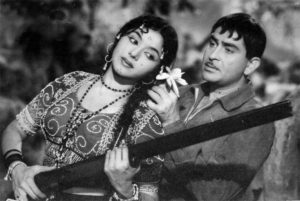 The song has been sung by Lata Mangeshkar and Mukesh on the lyrics of Shailendra and composition by Shankar Jaikishan. As I said, it is in Raag Bhairavi, Tal Kaherava. The song is picturised on Raj Kapoor and Padmini. A word about them at this stage:
Raj Kapoor acted with Nargis in as many as 17 movies, from 1947 movie Aag to 1956 movie Chori Chori. Once the Raj Kapoor-Nargis era got over, Raj Kapoor was looking for a replacement. During the shooting of Chori Chori in Madras, Raj and Padmini came close as she was working in the next studio. After that they met in Moscow where Raj Kapoor had gone to attend Karlovy Vary Award Function and she was there with her sister Ragini for a Youth Festival. After the sudden departure of Nargis from Moscow, when Raj Kapoor fell ill, it was Padmini who nursed him. Raj Kapoor told his friends that he made the 1960 movie Jis Desh Mein Ganga Behati Hai with Padmini to express his gratitude to her. Rumours started abounding that Raj Kapoor was besotted with her due to her ample physicial assets. A proof of that was that Raj Kapoor turned to display her sensuousness in the movies, something that he hadn’t done with Nargis; eg, the song Ho maine pyar kiya picturised on Padmini in Jis Desh Mein Ganga Behati Hai was done in a swim suit and focussed on her cleavage and sexuality. Padmini was pregnant when she acted with Raj Kapoor in 1962 Hrishikesh Mukherjee Aashiq that was produced by Bunny Reuben and VK Dubey. There were rumours galore when she delivered in the 8th month of her marriage though most of these were later proved to be unfounded.
The Lyrics
ओ शमा मुझे फूंक दे
मैं न मैं रहूँ, तू न तू रहे
यही इश्क़ का है दस्तूर
परवाने जा है अजब चलन
यहाँ जीते जी अपना मिलन
क़िस्मत को नहीं मंजूर
शाम से लेकर रोज़ सहर तक तेरे लिए मैं हर रात जली
मैंने तो हाय ये भी न जाना कब दिन डूबा कब रात ढली
फिर भी है मिलने से मजबूर
ओ शमा मुझे…
पत्थर दिल है ये जगवाले, जाने न कोई मेरे दिल की जलन
जबसे है जनमी प्यार की दुनिया, तुझको है मेरी मुझे तेरी लगन
तुझ बिन ये दुनिया है बेनूर
परवाने जा है…
हाय री क़िस्मत अंधी क़िस्मत, देख सकी न मेरी-तेरी ख़ुशी
हाय री उल्फ़त बेबस उल्फ़त, रो के थकी जल-जल के मरी
दिल जो मिले किसका था क़सूर
ओ शमा मुझे…
परवाने जा है…
Ladies and gentlemen, please enjoy: O shama mujhe phoonk de…
I hope you liked my choice of Beautiful Duet #38.
Please await Beautiful Duet #39- Ye kaali kaali aankhen.
 When it came to women, the roles in which each one of them had to show their mettle were as courtesans and the ones in which they could dance in wet saree.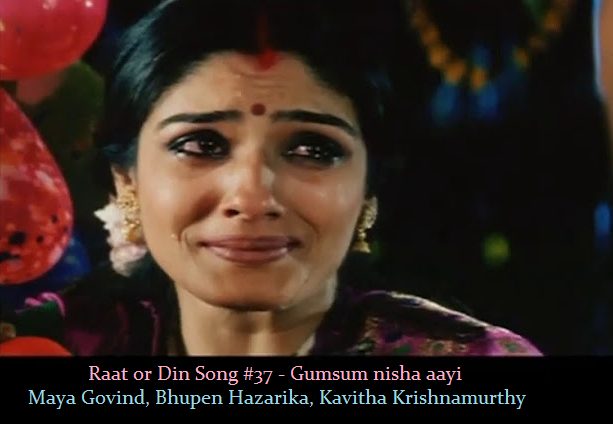
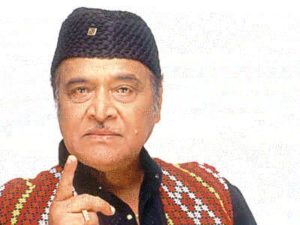 We lost him on this day in the year 2011. He did Assam proud by having been awarded two of the highest awards by the government of India: the Bharat Ratna, eight years after his death and Padma Vibhushan, one year after his death.
 The other day I gave you, in the Beautiful Duets series a song that made Raveena Tandon the “Mast mast girl”. That was in the 1994 movie Mohra. Seven years later, her role in 2001 movie Daman, also a Kalpana Lajmi movie, won her the National Film Award for Best Actress. I am sure, she and us would value it even more than the “mast mast girl” title.
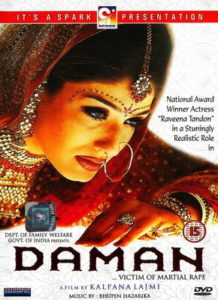 The film is about marital violence. When I acted in and directed in a private show (for the navy audience) Mahesh Dattani play ’30 Days of September’ about Incest, it came out from the mouth of Renuka Chaudhary, the Indian Minister for Women and Child Welfare that the incidence of incest in Indian families was as high as 51 percent! Well, the incidence of marital violence must be even higher. It has been, for ages, a male dominated society and you would have seen thousands of Hindi movies wherein the place of an Indian wife is shown at the feet of the husband (“Ab hamen aap ke kadmon mein hi rehna hoga”!)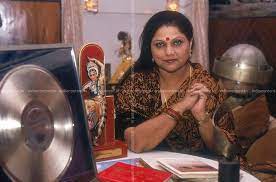
 It was sung by Kavitha Krishnamurthy and composed by Bhupen Hazarika.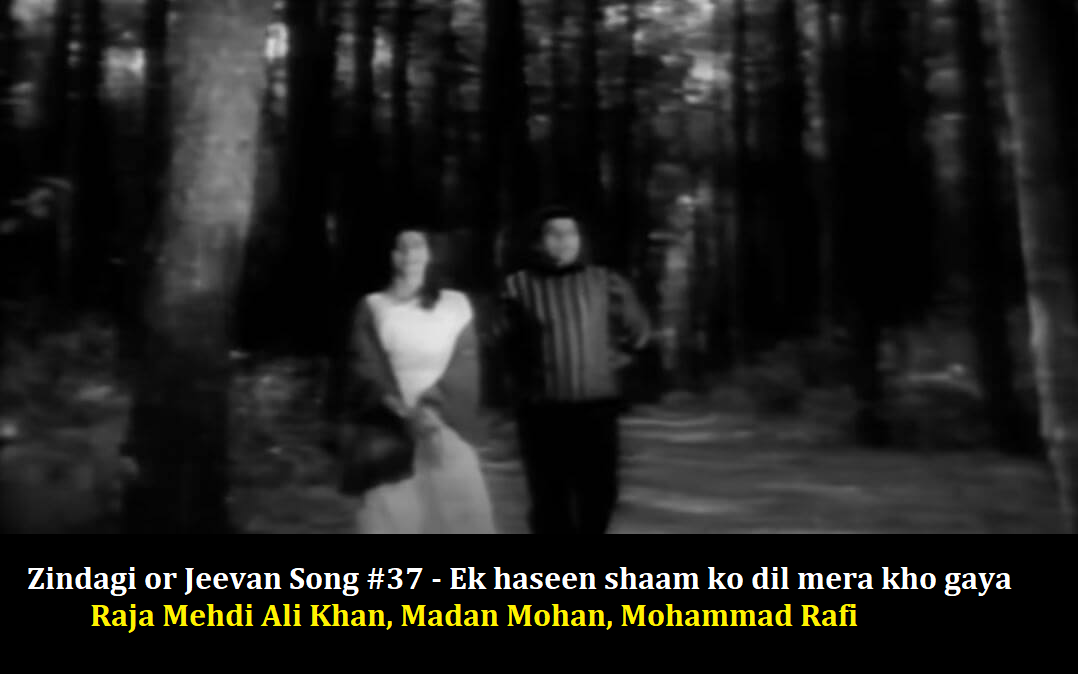
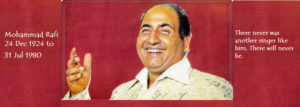 Today is the death anniversary of the greatest singer: Mohammad Rafi. I am going to reproduce three of his songs in each of the series that I am running. This was put up on 01 Jan 2021 as follows:
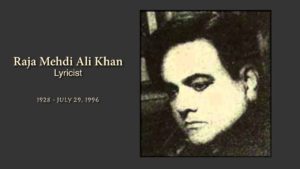 These were penned by my second most favourite lyricist: Raja Mehdi Ali Khan. Almost all the sites giving lyrics don’t even mention this as Zindagi song since they have (they copy from one another all the time) shown the theme-word line as:
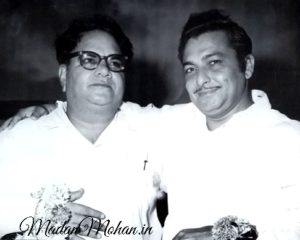 I ended the last year with sad and poignant songs in keeping with the spirit of the year. This year (except for doing away with this group) would usher in Love and Joys for all of us. This song reflects that. It is a very gentle composition by the maestro Madan Mohan (some of the most memorable songs in Hindi movies were by this pair, particularly those sung by Lata Mangeshkar.
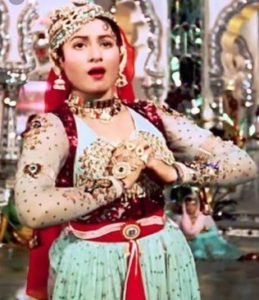 Anarkali screamed in the court of Mughal e Azam, Emperor Akbar: Pyar kiya to darna kya. So what, if she was only a courtesan and the object of her love was Prince Salim. Prince Salim rebelled against his own father: Akbar, was defeated and sentenced to death. She saved his life by offering her own. It wasn’t a happy ending for the couple. It was a rare case.
 However, most often than not rebellious Love wins, whether in Indian Love Story or that based on Eric Segal’s novelette.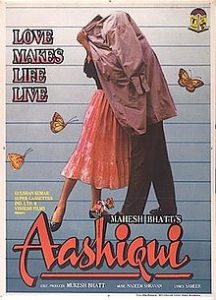
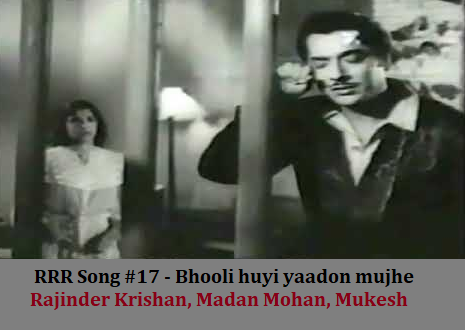
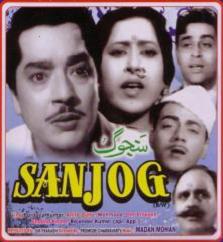 This was a Pramod Chakravorty movie starring Pradeep Kumar and Anita Guha.
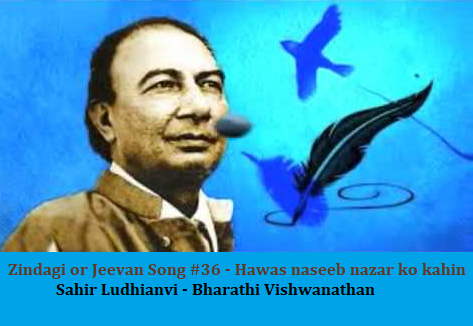
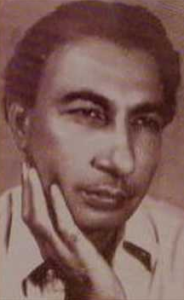 Sahir was his takhallus. If Shakeel means Handsome, Sahir means Magician. He was born as Abdul Hayee on 08 Mar 1921 in Ludhiana (Punjab). He emerged as one of the greatest poets and lyricists of his era. If his poetry and lyrics often favoured women and women’s causes, eg, his famous poem/song Aurat ne janam diya mardon ko; there was a strong reason for it. He was only 13 when his father married again. His mother, Sardar Begum, took the bold step of leaving his father renouncing all rights in the property. The father was not satisfied and wanted possession of young Abdul. As early as in 1935 in India, the mother won!
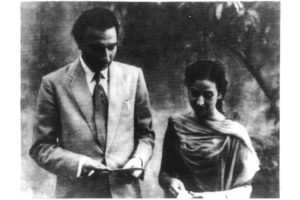 His most talked about love affair was with the writer Amrita Pritam who became an ardent fan of his poetry.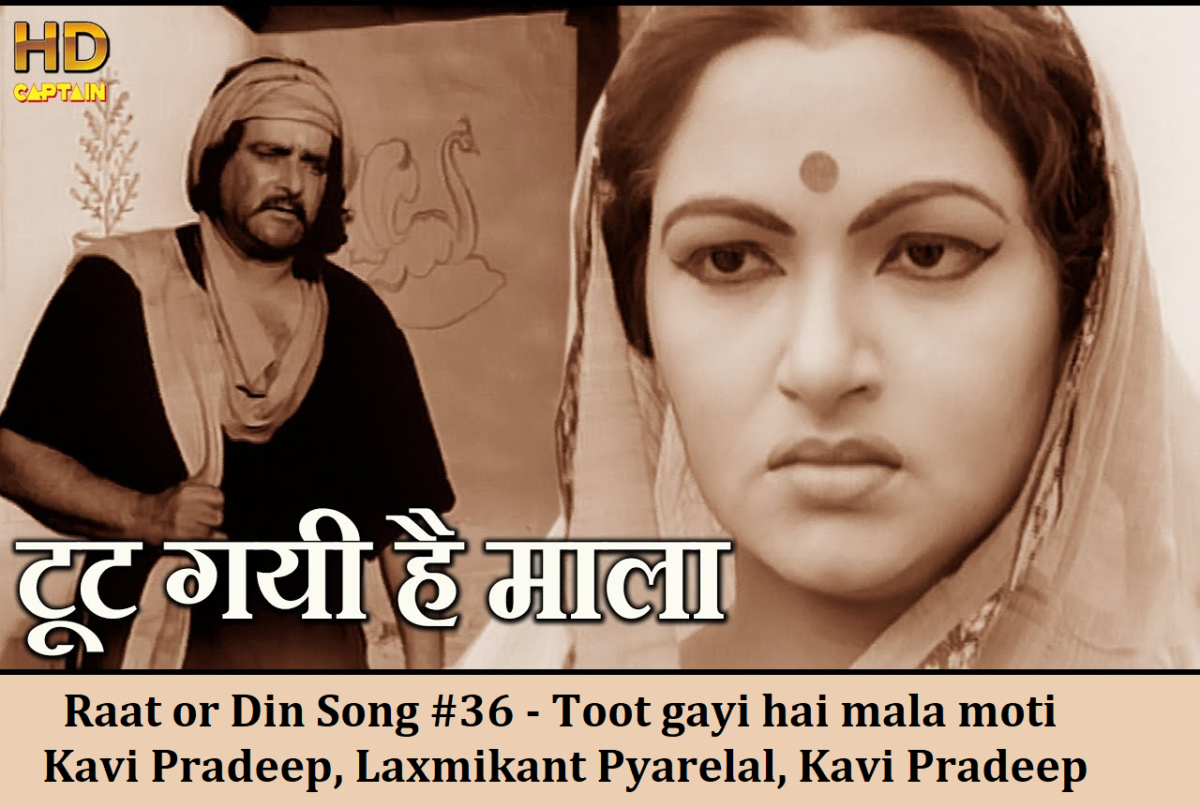
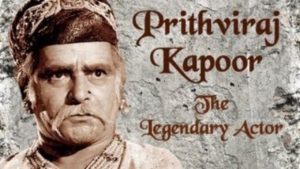 He was born on this day in 1906 in Tehsil Samundri, Lyallpur District of that part of Punjab, which is in Pakistan now.
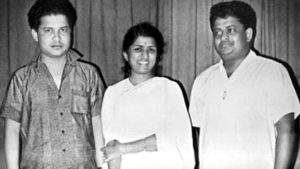 Today, also happens to be the Birth Anniversary of Laxmikant. Laxmikant Pyarelal composed songs for this movie too in 1963, the same year that they composed songs for Parasmani whose song Woh jab yaad aaye bahut yaad aaye I have given you in Zindagi or Jeevan Songs today.
 This song was sung too by Kavi Pradeep. Prithviraj didn’t go about singing and dancing in his movies. However, there are many songs picturised on him.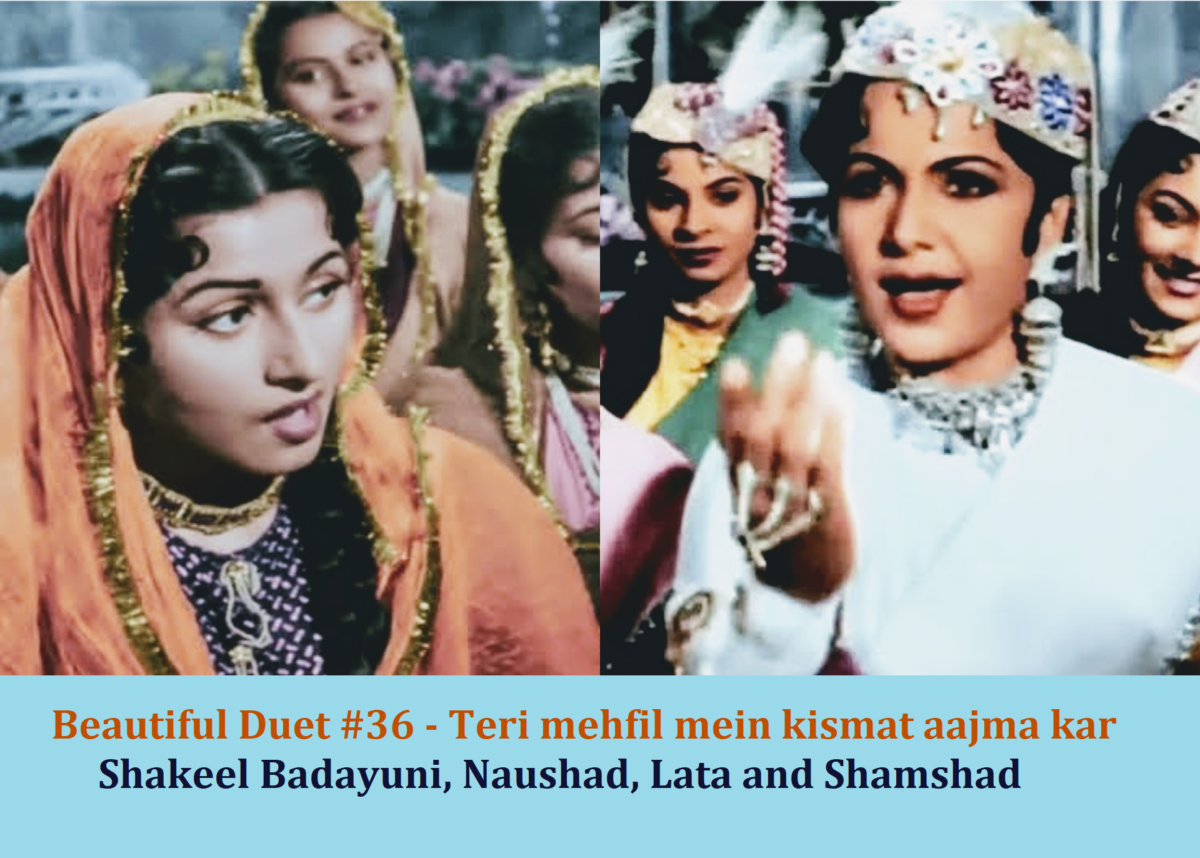
 I am so fond of Shakeel Badayuni, my favourite lyricist, that I keep writing something or the other for and of him. On my blog, there is already a post on the unforgettable songs of Mughal-e-Azam (Songs like Mohe panghat pe and Jab pyar kiya to darna kya have inspired other songs, hymns and even movies). However, this qawwali or song must find a mention in the Beautiful Duets series.
 There is a saying that in every life a little rain must fall. I feel that in every life, a little of Shakeel must be there; else your life won’t be complete!
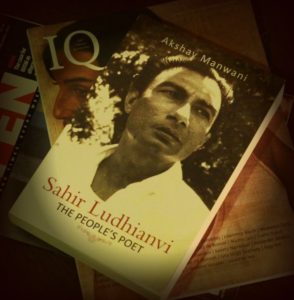 He was born on 08 Mar 1921 in Karimpura, Ludhiana, Punjab. A few years ago NDTV did a debate on who was the best lyricist in Hindi movies: Sahir or Shakeel or Majrooh or Gulzar. It was undecided because each one had (has in case of Gulzar) his strong points. However, one can make out that each one was capable of extraordinary imagination.
 It is from the 1956 movie Chandrakanta starring Bharat Bhushan and Bina Rai. Let’s start with the beauty of the lyrics of this song full of RRR: Regret, Repentance and Ruefulness:
 To get the similarity of Raag and Tal, compare it with another favourite of mine: Khilte hain gul yahan khil ke bikharne ko and Hemant Kumar’s Kohra song: O beqraar dil.
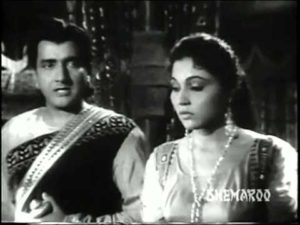 As I mentioned, it is from the 1956 GP Sippy movie Chandrakanta starring Bharat Bhushan and Bina Rai.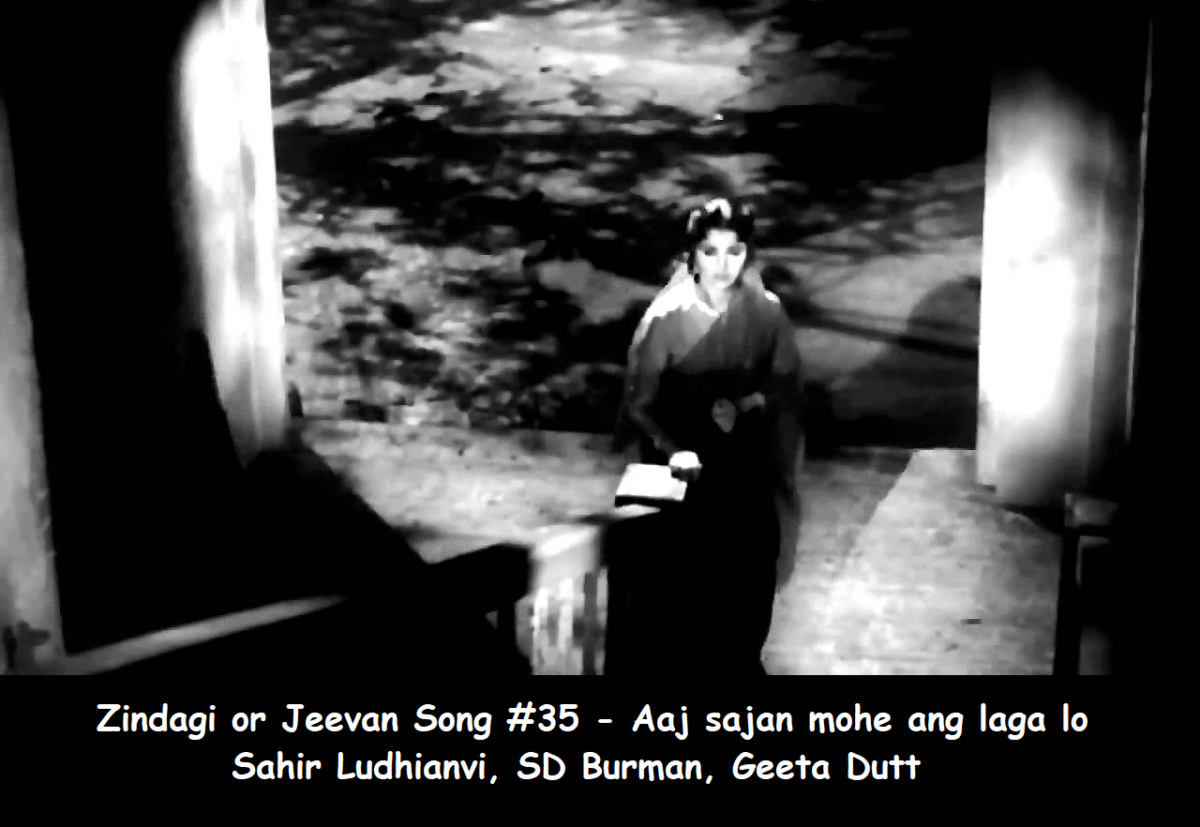
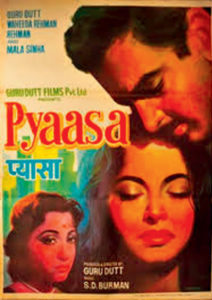 This is one of the most important songs of the movie Pyaasa, a 1957 movie produced and directed by Guru Dutt. The movie is all about Love. In 2005, Time magazine rated it among the 100 Top Movies of All Times. In 2011, the same Time magazine rated it among the Top 10 Romantic Movies of all time.
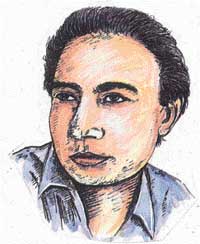 This is what Love can do to you. In its holistic sense, there is no difference between your Love and God (Saanwariya or Krishna). To understand this better, you ought to have a look at the lyrics by Sahir:
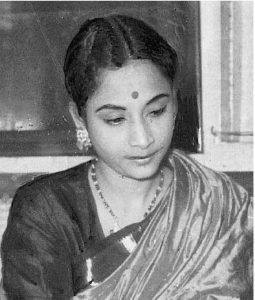 To add to the outstanding direction, Guru Dutt has facilitated Waheeda expressing her Love emotions through a minstrel (street singer) just as in Devdas. Of course Geeta Dutt who sang for Waheeda in many movies, sang for the street singer in this.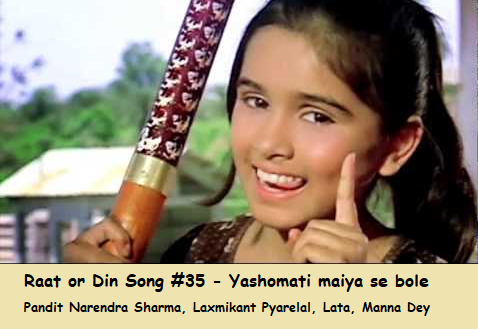
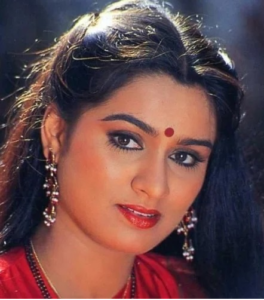 Padmini Kolhapure (13 years old when the movie was released), acted as the child Roopa.
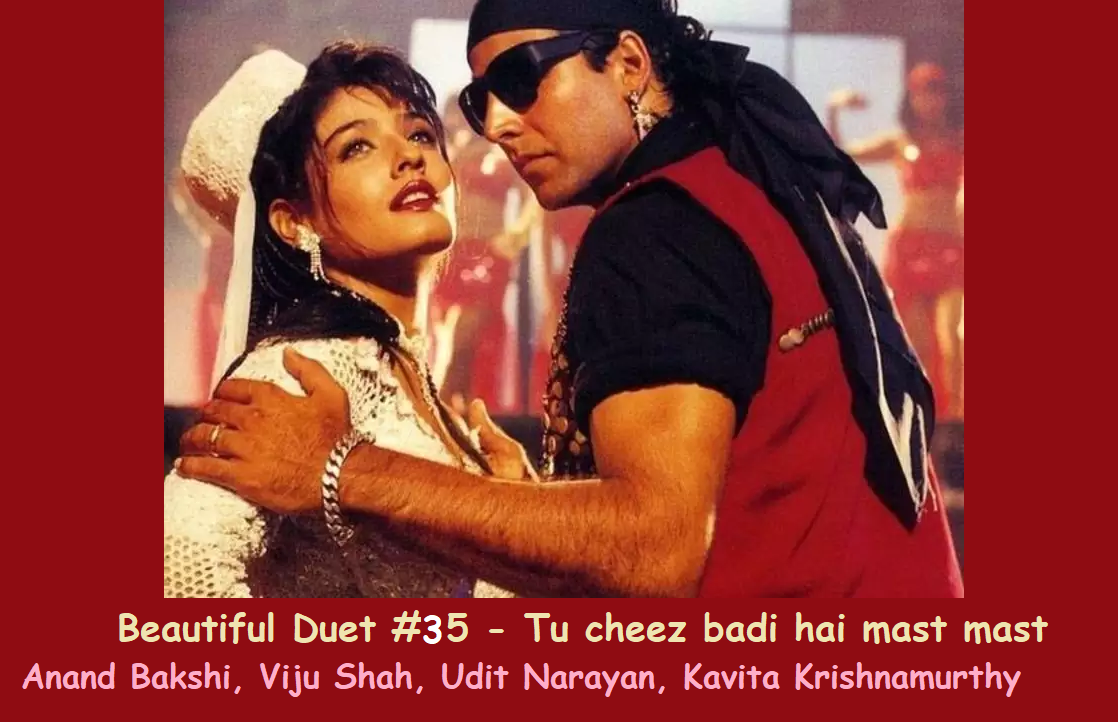
 Divya Bharti was to do this role in 1994 Rajiv Rai movie Mohra. But then she died after just five working days on the movie. In stepped Raveena Tandon and the popularity of this song made her “mast mast girl” virtually overnight. No matter what she did after this song, she is still known by this sobriquet.
 Whatever you say, Bada, Badi, Bade has fascination. Hence, in the 1994 Rajiv Rai movie Mohra (some spell it as Mohraa), when Anand Bakshi had to describe the beauty of the woman (in this case Raveena Tandon, the winner of National Films Award for Best Actress for her role in Kalpana Lajmi’s Daman), he didn’t go the Shakeel Badayuni or Sahir Ludhianvi way. He called her a Cheez that is Badi Mast Mast.
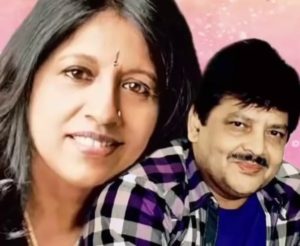 Now what did Udit Narayan and Kavita Krishnamurthy do to the song? They would have been two of the most unlikeliest people for singing Kirtan. However, they did it so well that you feel like singing with them (that’s the effect of Kirtan and how the lead voice or voices of the Raagis inspire you to sing along).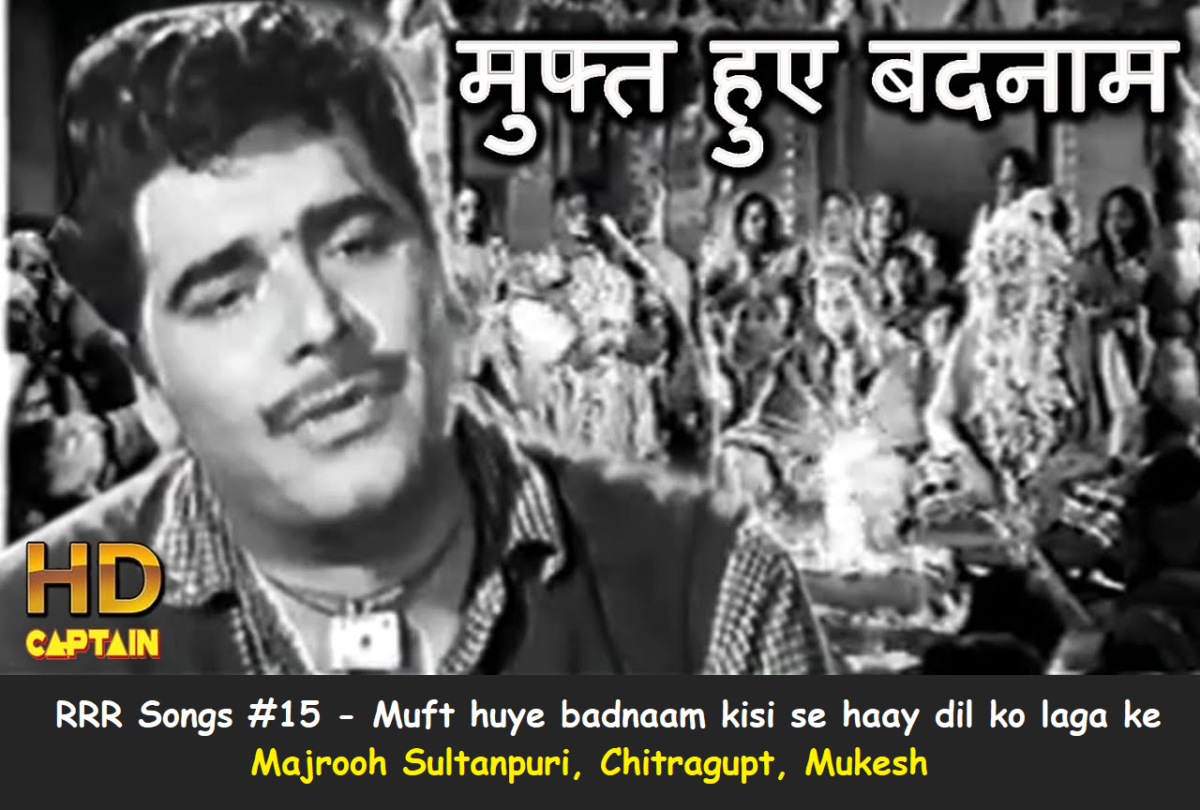
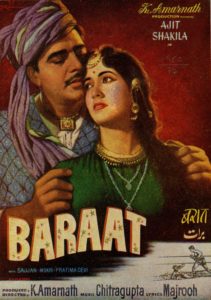 It was a movie directed by K Amarnath and starred Ajit and Shakila. Ajit had been a hero before he took up the villain’s role with such popular dialogues as “Ise liquid oxygen mein daal do; oxygen ise marne nahin dega aur liquid ise jeene nahin dega.” He had beautiful songs to his credit such as Dekho mausam kya bahar hai, Aaja ke intezaar mein, and this beautiful number.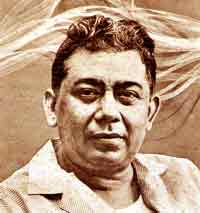
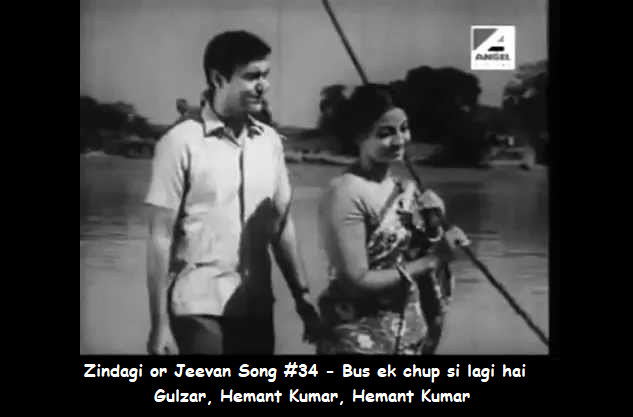
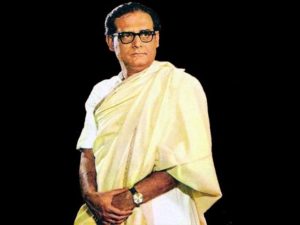 Having been an ardent follower of Rabinder Sangeet, there is never a jarring note in his singing or compositions. Both descend on you like gentle snow. Both touch you like whispers of breeze. There is never Band Baaja Baraat; but…