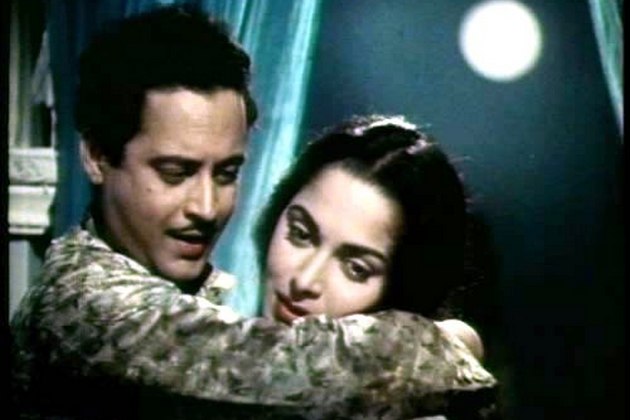
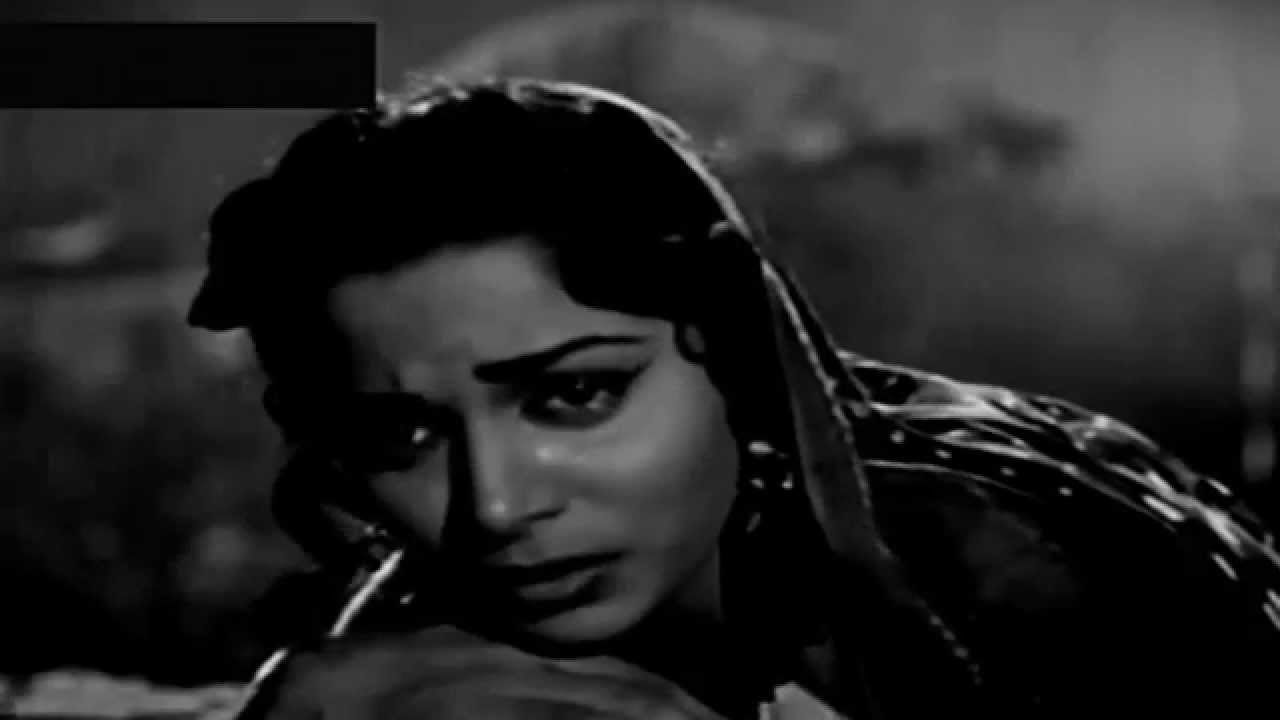
Why do we sometimes cry listening to our favourite old songs?
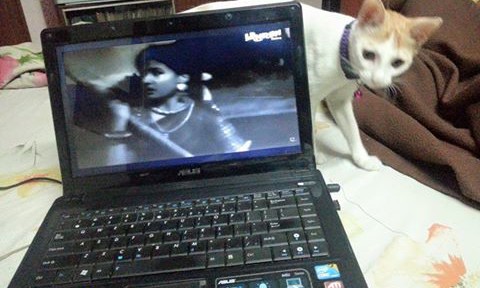
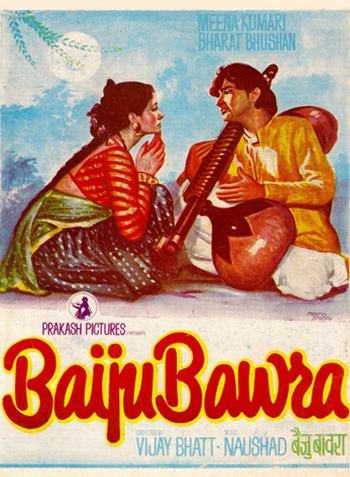
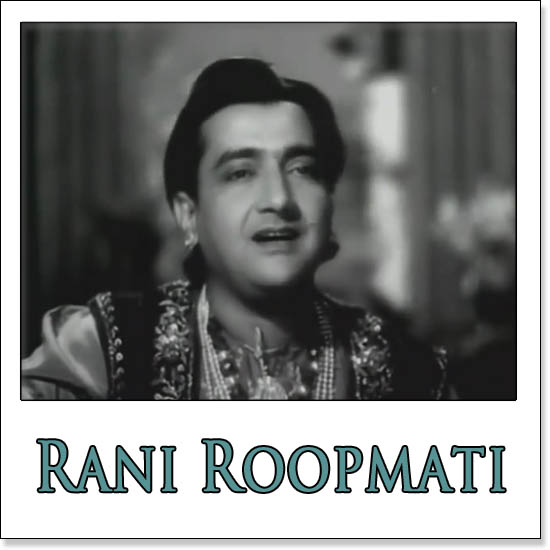
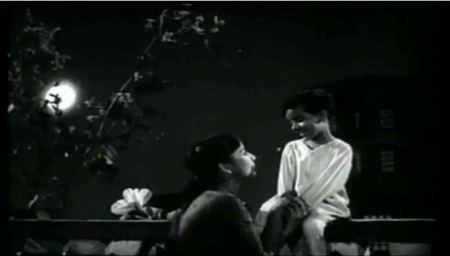
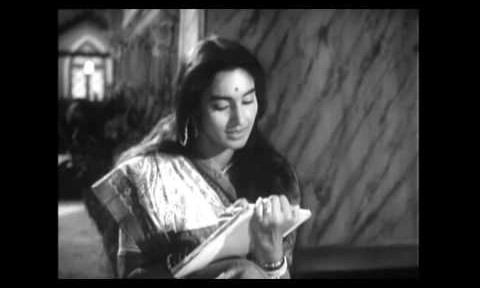
Last night, I got the desire to see 1952 iconic movie Baiju Bawra after five decades. As each song was played from ‘Jhule mein pawan ke aayi bahaar’ as Gauri and Baiju grow up, to ‘Tu Ganga ki mauj’, ‘Door koi gaaye’, ‘Insaan bano’, Bachpan ki mohabbat ko, ‘Mujhe bhool gaye saanwariya’, ‘Man tadpat Hari darsan ko aaj’ and ‘O duniya ke rakhwaale’; I felt the eyes and heart becoming more and more moist.
Why do we cry? Oh, I will give anything to have those movies and songs again; flute was an essential instrument, there was simplicity, there was innocence and there was as Badshaah Akbar said in the movie: Azmat!
I was thrillrd to see that credits to Ustaad Amir Khan and DV Paluskar ranked ahead of playback singers Rafi, Lata and Shamshad Begum.
Why do we cry?
Does anyone have the answer? Well, I posed this question in my Facebook Group ‘Yaad Kiya Dil Ne’ (I had to make this group when in the last group ‘Dil Ki Nazar Se’ people started putting up frivolous posts. All my groups, on the other hand, are based on the principle of mutual-learning than merely groups for entertainment and socialising). Here are the responses from some of my friends on the group.
1. Nitin Shringarpure “Poetry is the spontaneous overflow of Powerful feelings. It takes its origins from the emotions recollected in tranquillity” William Wordsworth, “Same is the thing with crying”.
2. Surekha Saini Well my reason for crying is a bit stupid. ..when I listen to these songs I start relating myself to the character n feel the same pain through lyrics n music the character must be feeling in that situation. …n I cry every time when I listen to. .Mann tadpat Hari darsan ko aaj…and..O duniyaa ke rakh wale. ..from my childhood so no chance of memories related to the songs…I mentioned both poetry n music. ..as a child I used to cry with no reason but now its lyrics n poetry n of course singing. ..n if I relate myself to the character means movie n the storyline come naturally. ..until I understand the film thoroughly how can I relate myself to the character. …actually mera dil mere dimag se jyada kaam karta hai. …
3. Raj Dutta When ever our Soul wishes to have a bath…it takes the body and the brain though a memory trip facilitated by sense organs mostly eyes and ears…the brain does some chemical locha and triggers and squeezes the tears ducts…moistening your eyes and sinuses…And lo the Soul is fresh again…sentimentally and temperamentally formatted…But my late eldest Tayyaji never wept even on the demise of his near and dear ones…When I once asked him the reason He in a shayrana andaz said, “Bahut roya hoon Ghame zindagi mein, Ab toh ansuon ne bhi mujhe bhula diya hai”…He had taken part in WW II.
Raj Dutta then put up a Pakistani song by Rahim Shah to explain this:
https://youtube.com/watch?v=KyHanHl5X30%3F
This only means one thing that the very songs that we rued kept us away from storyline and “avoidable” at that time when we used to see movies as children and teenagers, are actually the most wonderful memories of the movies of that time. And remember how we used to compare with Hollywood matter-of-fact, “professionally made” “no nonsense and no songs” movies?
There is no better way to express emotions than through poetry.
Tears are also seen as a ‘release’ of emotions. Indeed, at deep and traumatic shocks, the docs get worried if the affected person does not cry. There are many theories about crying. One lovely one was given to us by Mukesh through Anand Bakshi and Laxmikant Pyarelal in 1967 movie Milan:
Mubaarak ho sab ko samaa ye suhaanaa mai.n khush huu.N mere aa.Nsuo.n pe na jaanaa mai.n to diivaanaa diivaanaa diivaanaa – 2
Hazaaro.n tarah ke ye hote hai.n aa.Nsuu agar dil me.n Gam ho to rote hai.n aa.Nsuu khushii me.n bhii aa.Nkhe.n bhigote hai.n aa.Nsuu inhe.n jaan sakataa nahii.n ye zamaanaa mai.n khush huu.N mere aa.Nsuo.n pe na jaanaa mai.n to diivaanaa diivaanaa diivaanaa – 2
The other is the 1964 movie Hamrahi song put together by Hasrat Jaipuri and Shankar Jaikishen and Rafi for Rajendra Kumar:
Ye aa.Nsuu mere dil kii zubaan hai.n -2
mai.n ro_uu.N to ro de.n aa.Nsuu
mai.n ha.Ns duu.N to ha.Ns de.n aa.Nsuu
ye aa.Nsuu mere dil kii zubaan hai.n -2
Aa.Nkh se Tapakii jo chi.ngaarii, har aa.Nsuu me.n chhabii tumhaarii
chiir ke mere dil ko dekho, bahate lahuu me.n priit tumhaarii
ye jiivan jaise sulagaa tuufaan hai
ye aa.Nsuu mere dil ki zubaan hai.n -2
mai.n ro_uu.N to ro de.n aa.Nsuu
mai.n ha.Ns duu.N to ha.Ns de.n aa.Nsuu
ye aa.Nsuu mere dil kii zubaan hai.n -2
So then why did the eyes start becoming moist with the very first song: Jhule mein pawan ke aayi bahaar even though the song is nice, happy and romantic song in the movie Baiju Bawra?
Here are the responses:
Ritu Soni I cry sometimes because I connect with the lyrics and music to a very emotional and personal level and sometimes I cry as I feel where all this has gone.. The simple beautiful people and life.
Manju Saigal Mittal Tears r just an expression of emotion I think!
Surekha Saini Ravi ji. …its not necessary that u cry only when you feel sad or hurt…Hum log jab anandit hote hain tab bhi to aankhe chhalakti hain. …Ab main. ..Mann tadpat Hari darsan ko aaj. ..pe kyon roti hun….may be its my desire to see God…reason for crying while listening to a song varies person to person. ..
Vipan Kohli Much has been written by Surekha ji Raj Ritu Soni and Nitin Shingarpure about tears. Here’s Hindi poem on tears. I don’t know who wrote it but it appealed to me the moment I read it.
आंसू छंद नहीं होते हैं आंसू नियम नहीं होते हैं
भावों की अनुभूति है आंसू, कभी ख़ुशी कभी गम होते हैं.. मैंने देखे सुख के आंसू, हंसते गाते झिलमिल आंसू
दुःख मे भी देखे हैं आंसू, दर्द भरे रोते से आंसू.. हुई बिदाई जब बिटिया की, छलक पड़े आँखों से आंसू
गौरव के पल आने पर भी, बह निकले आँखों से आंसू.. कभी किसी की मृत्यु हुई जब, बरबस बहते देखे आँसू
खुशियों के अवसर पर भी तो, रुक न सके आँखों मे आंसू.. दरिया कभी बनाते हैं आंसू, मोती सम पलकों मे आंसू
जार-जार रोते हैं आंसू, बार-बार आते हैं आंसू.. दिल ने जब भी रोना चाहा, सुख गए आँखों के आंसू
प्यार जहां इनको मिल पाया, छलक गये आँखों से आंसू.. सुख में भी आँखों मे आंसू, सूरदास के बहते आंसू
ऊँच -नीच का भेद न करते, नर-नारी के आते आंसू.. प्रियतम की चाहत है आंसू, माँ नयनो मे ममता आंसू भाई बहन का प्यार हैं आंसू, जीवन का श्रृंगार है आंसू..
At this stage, Amit Lambah and Maj Vishwas Mandloi took opportunity to post some Aansu songs (the group is meant for that) such as:
“Teri aankh kay aansoo pii jaoon aisi meri taqdeer kahan”
“Tukde hain mere dil kay aye yaar tere aansoon, dekhey nahin jaate hain dildaar tere aansoo.”
“Rona kabhi nahi rona …chahe toot jaye koyi khilona”
I, therefore, realised that whilst I was looking for reasons as to why does one cry listening to old favourites, everyone has own reasons for the same. This thought itself was covered so nicely by Sahir Ludhianvi (I regard this as his best) in the 1961 Hum Dono’s most beautiful song:
कभी ख़ुद पे, कभी हालात पे रोना आया
बात निकली, तो हर इक बात पे रोना आया
हम तो समझे थे कि हम भूल गए हैं उनको
क्या हुआ आज, ये किस बात पे रोना आया
किस लिये जीते हैं हम किसके लिये जीते हैं
बारहा ऐसे सवालात पे रोना आया
कौन रोता है किसी और की ख़ातिर ऐ दोस्त
सबको अपनी ही किसी बात पे रोना आया
Vipan Kohli, at this stage, put up a most beautiful Punjabi song by Jimmy Shergil: Rona Chadita Mahi Mahi
Raj Dutta wasn’t to be left behind and put up: Aaj bahut roya main….
https://youtube.com/watch?v=qqd4RyezpP0%3F
Here is a moistening of eyes of different nature as a tribute to all my friends on YKDN: Yaaro mera saath nibhaao roz aisi mehfil kahan:
rahe na kuch aaj sab luta do
dilo me jitna hai pyar baki
rahe na kuch aaj sab luta do
dilo me jitna hai pyar baki
rang ho jitne bhi yahi saja do
hogi na kal ye bahar baki
hasi ke chirag jalao ho gayi raat jawan
bhig jaye aaj palke aao hase itna
yaro mera sath nibao roj aisi mahfil kaha
bhig jaye aaj palke aao hase itna
kisi liye koi luta to gham kya
jine ko ek ye khushi bahut hai
kisi liye koi luta to gham kya
jine ko ek ye khushi bahut hai
mile na mile ek sanam ki bahe
mujhe tumhari basti basti bahut hai
dekho aise dur na jao pyar ka yahi hai sama
bhig jaye aaj palke aao hase itna
yaro mera sath nibao roj aisi mahfil kaha
bhig jaye aaj palke aao hase itna
aao hase itna aao hase itna
And since it was the death anniversary of Talat Mehmood and since Patita is the movie of the title song of the group, I put up one more reason why aansu jhalak jaate hain.
Please enjoy: Hain sabase madhur woh geet jinhe…
हैं सबसे मधुर वो गीत जिन्हें, हम ददर् के सुर में गाते हैं
जब हद से गुज़र जाती है खुशी, आँसू भी छलकते आते हैं
हैं सबसे मधुर वो गीत
(पहलू में पराये दर्द बसाके, हँसना हँसाना सीख ज़रा
तू हँसना हँसाना सीख ज़रा ) – २
तूफ़ान से कह दे घिर के उठे, हम प्यार के दीप जलाते हैं
हम प्यार के दीप जलाते हैं
हैं सबसे मधुर वो गीत …
(काँटों में खिले हैं फूल हमारे, रंग भरे अरमानों के
रंग भरे अरमानों के ) – २
नादान हैं जो इन काँटों से, दामन को बचाये जाते हैं
दामन को बचाये जाते हैं
हैं सबसे मधुर वो गीत …
(जब ग़म का अन्धेरा घिर आये, समझो के सवेरा दूर नहीं
समझो के सवेरा दूर नहीं ) – २
हर रात की है सौगात यही, तारे भी यही दोहराते हैं
तारे भी यही दोहराते हैं
हैं सबसे मधुर वो गीत …
HAIN SABSE MADHUR WO GEET -TALAT MEHMOOD…
Manik Lakhkar Chava Awwww…. long discussion. Ravi, there is and can not be any remote control. One feels like crying… aansu bahane dijiye. Cry for some one with some one… the drop of pearls are too valuable…. for you, me for every one.
Evani Leela Aansoo aanaa matlab aatma parmatma ko chu rahi hai. Jab dil se dil ke taar juDte hain to jo bridge banta hai, wohi aansoo hote hain. Jab koi drishya dekha, kuch suna, kuch mehsoos kiya, kisi ki uaad aayi, koi kitab yaa kahani paDhi to aanssoo bhi chalakte hain, muskaan bhi khilti hai. Inn donon par jab sanyam nahin hai to samjho hum uss paramatma ke kareeb hain.
Evani Leela Phoolon ki khushboo bhi aapko rulasakti hai khushi se, bachon ki kilkaari bhi rulasakti hai. Manik Lakhkar Chava se poochiye jab humne inki poti par geet post kiye to kyon royi. Humne jab anniversary lar geet post kiye to kyon aansoo chalke?
Evani Leela Aansoo aur muskaan donon par jab hamara vash na rahe to hum saamne wale ke dil ke ander samaa gaye. Isi liye jab geetkaar ke shabd humen rulate hain to iska matlab hai, woh geetkaar hamare dil mein ufar gaya aur usne woh kaha jo hum khud kehna chahte the. Jab woh shabd hum tak pahunchte hain to hamare dil ke taaron mein jhankaar hoti hai. Wohi niyam sangeet ke liye bhi laagoo hota hai.
Amit Lambah “Jo hamne dastaan apni sunayii aap kyon roye….hamara dard o gham hai yeh issay kyon aap sehte hain, yeh kyun aansoo hamare aapki aankhon se behte hain….. qayamat aapke ashkon ne dhayi aap kyon roye .jo hamne dastaan aoni sunayi…..naa yeh ansoin rukke to dekhiye phir hum bhi ro denge, hum apne ansoo on mein chaand taaron ko dubbo denge, fanaah ho jayegi saari khudaayi aap kyon roye…
Evani Leela Maine ek baar ek choti si kahaani paDhi thi, jismein do sceintist shukr grah par pahunchte hainn wahan par ek hi praani dikha jo ek talab mein tair raha tha. Use ek sceintist ne dekha aur use chune ki koshish ki.par woh haath na aakar door door tairta …See More
This started another round of Aansu songs with Vipan Kohli suggesting that we have a Flash Fest on Aansu
Maj Vishwas Mandloi Jo hamne dastaan apni sunayi … aap kyu roye …
https://www.youtube.com/watch?v=Zf3RhMt_ljU
I reminded them that the other day Surekha Saini commented how at one time she was jealous of my comments on Evani Leela’s posts and comments.
“Now, take this post itself. All of us, in answer to the question ‘Why Do We Cry With Our Favourite Songs?‘ thought of this as an oopurtunity to put up Aansu songs. Some even suggested that we have an Aansu Fest here itself. Not Evani Leela. She responded with ‘dil se’ (something that she does in all her posts and comments, beautifully and brilliantly, in the wee hours of the morning after all the dust had settled down, as to why do we cry.
Now, you will understand, brothers and sisters, this special relationship of not just brother and sister but of love, dard, empathy, and emotions. I remember the time about two years back when her description of a song would be one or two words: eg, Song#1 and the first word of the song such as Aansu. However, I saw in her someone special, someone who feels deeply. The result is for all of you to see.
Evani Leela came up with a gem, at this stage that Aansu and Muskaan are two sides of the same coin. In her own words: “Maine yehi mehsoos kiya ki aansoo aur muskaan sikke ke do pehlu hain. Kisi bhi tarf dekgo sikke ki value kum nahin hoti. Haan yeh baat alag hai ki humari aankhen num hon to tapasya doosron ke aansoo pee saken to paramatma ka vardaan.
She put up a beautiful song by Shailendra from the 1959 Raj Kapoor Movie Anadi:
किसी की मुस्कुराहटों पे हो निसार
किसीका दर्द मिल सके तो ले उधार
किसीके वास्ते हो तेरे दिल में प्यार
जीना इसी का नाम है
किसी की …
(माना अपनी जेब से फ़कीर हैं
फिर भी यारों दिल के हम अमीर हैं ) – (२)
मिटे जो प्यार के लिये वो ज़िन्दगी
जले बहार के लिये वो ज़िन्दगी
किसी को हो न हो हमें तो ऐतबार
जीना इसी का नाम है
(रिश्ता दिल से दिल के ऐतबार का
ज़िन्दा है हमीं से नाम प्यार का ) – (२)
के मर के भी किसी को याद आयेंगे
किसी के आँसुओं में मुस्कुरायेंगे
कहेगा फूल हर कली से बार बार
जीना इसी का नाम है
So, ultimsately, I had dozens of excellent replies as to why do we cry when we listen to old favourite songs.
We feel for the era gone by: our own as well as the era of the song, we feel for the Lyricists, Music Directors, Singers and Actors of those movies. We relive their emotions. We are touched by the simplicity and innocence in people as there used to be (Read: Hindi Songs And The Age of Innocence). There are many valid reasons.
I think, there is one more reason; and that is the great longing to belong (both emotionally and poetically) and call something one’s own: my own thoughts with which I relate to others who have similar (if not identical thoughts); someone who can understand my state of mind; something that I can call my own.
I am past sixty years of age now. And yet, at the end of six decades of going through this world, are friends my own? No. Are relatives my own? No. Are my children I can call my own? No. Is there something I can call my own? Hardly. Songs and poetry are something that helped me build my own private world. I cry when I am reminded of this world, however small, where I was I and I am still I
I was in school when Trini Lopez’s number by the name What Have I Got Of My Own? was released. I later heard the song from pop-singer Ajit during Summer Festival in Shimla.
The lyrics of the song went like this:
What have I got of my own, my own?
What have I got of my own?
The castles I build when I lie in the sand,
Belong to a king in a fairy tale land.
The treasures I find, when I dream in my sleep,
Are gone in the dawn. not a thjng I can keep.
What have I got of my own, my o~own?
What have I got of my own?
The stars all belong high in heaven above.
My heart belongs to the one that I love.
The rivers that flow all belong to the sea.
What have I got that belongs to me?
What have I got of my own, my o~own?
What have I got of my own?
I hope someday before too long
My heart will sing a happy song.
I’m tired of being lonely, unhappy and sad.
I wanna have the things that other men have.
What have I got of my own, my o~own?
What have I got of my own?
Solo interlude
If I could choose one thing forever to hold,
I know I would never choose diamonds or gold.
Just give me one true love to be mine alone,
Then I’ll have all the things of my own, my own.
What have I got of my own?
I was embarking on my journey through life and hence everything appeared within reach, everything was to be owned, to belong.
Four and half decades later, I am not too sure if anything at all belongs to me. Of course religion and scriptures tell me that finally when we go, we don’t take anything with us. And yet, there is this innate desire to own, to possess, to relate to; to be a little more precious than a speck of dust.
My own.
What have I got of my own?
I cry when I realise that just like Baiju Bawra, Naushad, Shakeel and Rafi; everything will pass away and even the memories would get blurred. As Shakeel, Naushad and Rafi voiced in the 1948 movie Mela:
ये ज़िंदगी के मेले, दुनिया में कम न होंगे
अफ़सोस हम न होंगे
इक दिन पड़ेगा जाना, क्या वक़्त, क्या ज़माना
कोई न साथ देगा, सब कुछ यहीं रहेगा
जाएंगे हम अकेले, ये ज़िंदगी …
दुनिया है मौज-ए-दरिया, क़तरे की ज़िंदगी क्या
पानी में मिल के पानी, अंजाम ये के पानी
दम भर को सांस ले ले, ये ज़िंदगी …
होंगी यही बहारें, उल्फ़त की यादगारें
बिगड़ेगी और चलेगी, दुनिया यही रहेगी
होंगे यही झमेले, ये ज़िंदगी …
These personalities are still being remembered at least by some one like me who relives their and my own era through their songs.
Who would ever think of me….. a katra (drop of water) in the river?
India is a nation of debates, discussions and controversies. Our news channels generate enough in a week to last us a few lifetimes. If you listen to a news hour debate anchored by Arnab Goswami, for example, you would conclude that he, by himself, can account for a major part of global-warming.
Religious controversies, however, are not just an Indian phenomenon; all over the world, religious fervour and fanaticism can result into tempers running high, killings and violence in the name of God and Religion. The more anyone would want to liberate the world from ritualistic adherence to religion, the more anyone would desire a world free from fundamentalist hydra-heads, the more these mushroom everywhere. Historically, when Mankind drifted away from God and Godliness, many right-minded saints, gurus and incarnations of God Himself descended on earth to show the right path to the people. However, it appears that the Devil is perhaps as strong and more wily than God that people easily become the followers of the former and require reminders, again and again, to align themselves with God.
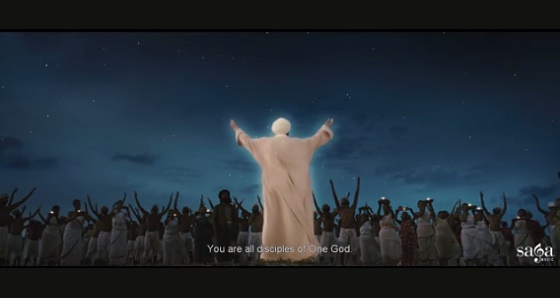
The above were my first reactions on seeing the premiere of Harinder Sikka’s Nanak Shah Fakir on 16th April 2015 in PVR, Juhu, Mumbai; and the ban on the movie in Punjab engineered by SGPC (Shiromani Gurudwara Prabhandak Committee) and a few other organisations ostensibly representing the best interests of Sikhs. Whilst discussing the ills of Kalyug over Satyug, Guru Nanak brought out that there is a great positive in Kakyug; which is that whilst in Satyug you required someone to pray for you, in Kalyug you are one to one with God. Nothing stands between you and God.
(Poster courtesy: www.nanakshahfakir.co.in)
SGPC and other organisations haven’t seen the writing on the wall if they feel that they are intermediaries between us and God. They are as much out of sync as various Hindu organisations including militant ones who tell you what is acceptable to Hindus. They don’t keep you intact because of common culture and love but because of threat of violence in case you don’t listen to them. Incidentally, Guru Nanak and the movie shunned violence but the modern protectors of our religion think nothing of keeping their flock together through threat of violence.
And, as I write this, Harinder Sikka after receiving directions from Akal Takht Jathedar Giani Gurbachan Singh has decided to withdraw the movie for the time being even though he had earlier decided to go ahead with the release of the movie on 17th April with the above poster despite opposition from SGPC, DSGMC and Akal Takht mainly because portrayal of Sikh Gurus on the celluloid is not permitted. The movie has also been banned in UK bowing to the sentiments of the Sikh community.
I feel that Harinder Sikka and his team (Cast of Arif Zakaria (playing Mardana), Puneet Sikka (Harry’s daughter playing Guru Nanak’s elder sister Nanaki, Shraddha Kaul, Anurag Arora, Adil Hussain (playing landlord Rai Bular), Narendra Jha and Tom Alter; Music of Uttam Singh; Sound of Rosul Pookutty; and Cinematographer AK Bir) deserve to be congratulated for an outstanding movie on several counts.
Firstly, the idea behind the movie and its focus. I am convinced that Harry Sikka must have been chosen by God to take up such a project. Sri Guru Granth Sahib has a mention of such blessings showered by God on the chosen ones. The focus throughout the movie is on Guru Nanak and his teachings. There is no other side story; there is no attempt at direct teaching by the chronicler of the movie Mardana, for example or by the movie makers.
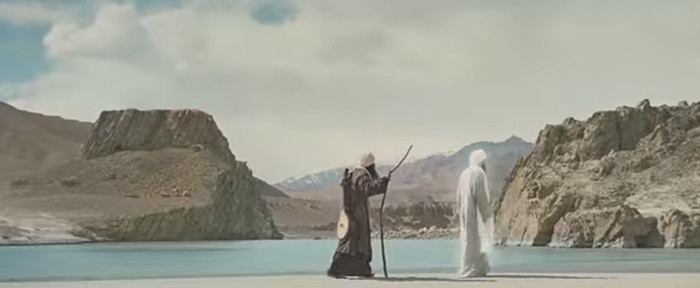
One of the examples of stunningly beautiful cinematography of the movie (Pic courtesy ibnlive.in.com)
Secondly, I like the anecdotes that have been selected from the life of Guru Nanak. These have been selected with an eye on their current relevance. Once again, rather than forcefully and imposingly preaching, these have been as gently brought out as we imagine Guru Nanak to be. There are, for example:
Guru Nanak as a young boy refusing to wear the holy thread Janeyu that every Hindu male is required to wear by religion. This was Guru Nanak’s first opposition to ritualistic adherence to religion rather than binding oneself with God.
Nanak selecting a friend and consort who was always booed as Marjana (Cursed to die) and calling him Mardana. Mardana, the rebab player, a Muslim, accompanies Guru Nanak wherever he goes and gives musical accompaniment to his raagas.
Nanak being sent by his father Mehta Kalu (Full name Kalyan Chand Das Bedi) with 20 rupees “to do business”. Nanak buys food with the money and distributes amongst saints and poor. When questioned by his father, he responds that he has done Sachcha Sauda or “True Business”. It would be sometime before his father would understand. The movie indeed brings out how Rai Bular, the local landlord and Nanak’s elder sister Bebe Nanaki were the first to have recognise divine qualities in him even when he was a boy.
Nanak selling baajra at Sultanpur Mandi and whilst emptying the bowls in buyers’ bags, getting stuck at the count of terah (13), since terah also means ‘yours’ (in this case God’s). A complaint is made against him to Daulat Khan Lodhi, employer of Nanaki’s husband, through whom the job was given to Nanak. But, when the gunny-bags of grains are counted, there is no discrepancy!
Nanak’s wedding with Sulakhani and the mature understanding relationship that he had with her. At the end of the movie, Guru Nanak, back from an Udaasi (travel) to spread the word of God, is seen leaning on the shoulders of their two sons, Sri Chand and Lakshmi Chand and telling them the simple essence of his teachings:
Vand Chhako: Share with others in need. Kirat karo: Earn or make a living honestly without fraud or exploitation. Naam Japna: Meditate on God’s name.
Nanak was thirty years old, in the year 1499 when he went to meditate and bathe beside the river Kali Bein (Black River), accompanied by Mardana. Mardana later discovered Nanak’s clothes on the bank but Nanak was missing. A search was mounted for him including divers sent by Daulat Khan but there was no success. Everyone, except Babe Nanaki, assumed that he had drowned. Three days later, Nanak emerged from the river alive. He had achieved Enlightenment and the locals started calling him Guru. The very first words that he uttered after his Enlightenment were: “Na koi Hindu; na koi Mussalman” (There is no Hindu; there is no Muslim). This led to his prime teaching: Ek Omkar, there is One God.
Soon after his Enlightenment, Guru Nanak, accompanied by Mardana, went on his first Udasi (travel) to Bengal, Assam and Manipur (Between the year 1500 to 1524, Guru Nanak undertook five Udaasis, covering a distance of more than 28000 kms, in all four directions, as far as Tibet, Ceylon, Kashmir, Baghdad, Mecca and Medina.
The movie brings out some remarkable anecdotes during the Udaasis. The incident of his having accepted the invitation of a low-caste artisan, Bhai Lallo and rejected that of the rich landlord Malik Bhago was well covered. When Malik Bhago was enraged, Guru Nanak asked for the two meals: one from Lallo’s house and one from Bhago’s. He produced milk from the former and blood from the latter. Thus, in his simple but clear way of teaching, he brought home the difference between honest work and exploitation in order to obtain riches.
The second anecdote very well covered was at Hasan Abdal, near Rawalpindi. Guru Nanak, Bhai Mardana and a congregation gathered at the foot if the hill, atop which a Muslim priest Bawa Wali Qandhari had established his dera next to the only source of water there. Since Guru Nanak’s congregation was thirsty, Guru Nanak sent Bhai Mardana to request Wali Qandhari to release water for them. The latter angrily turned down the plea. Mardana was asked by Guru Nanak to go up again and request for water. Reluctantly he did and Wali Qandhari derisively asked Mardana to tell Guru Nanak to directly appeal to his God for water. Guru Nanak then lifted a stone over sand, dug with his hands and produced water. Meanwhile Wali Qandhari’s pond began to dry. Enraged he launched a huge rock down the hill in order to crush Guru Nanak and his followers. When the hurling rock came charging towards Guru Nanak, he merely touched it with his hand and the rock stopped. Wali Qandhari witnessed this and suddenly realised that Guru Nanak was a messenger of God and he then fell at Guru’s feet. We all know that the spot of this miracle is marked by Gurudwara Panja Sahib.
My favourite incident of Guru Nanak’s Udaasis, accompanied by my favourite hymn, has been depicted so well in the movie that it left me stunned. The incident at Jagannath Puri, just before the annual rath yatra has Guru Nanak being invited for the Aarti at the temple.
The Guru visited the temple not to offer Aarti to Lord Krishna but to teach the people that the worship of God is superior to the worship of the deity. It was the evening time and the priests brought a salver full of many lighted lamps, flowers, incense and pearls and then all stood to offer the salver to their enshrined idol-god. The ceremony was called ‘Aarti’, a song of dedication. The high-priest invited the Guru to join in the god’s worship. The Guru did not join their service which enraged the priests. On being asked the reason the Guru explained that a wonderful serenade was being sung by nature before the invisible altar of God. The sun and the moon were the lamps, placed in the salver of the firmament and the fragrance wafted from the Malayan mountains was serving as incense. The Guru, therefore, instead of accepting the invitation of the high-priest to adore the idol, raised his eyes to the heaven and uttered the following Shabad as Aarti (Punjabi: Kaisi aarti hoy…)
“The sun and moon, O Lord, are thy lamps; the firmament
Thy salver; the orbs of the stars, the pearls enchased in it.
The perfume of the sandal is Thine incense; the wind is
Thy fan; all the forests are Thy flowers, O Lord of light.
What worship is this, O Waheguru (God)?
This hymn and the scene in the movie at the sea-shore are a powerful message against ritualistic observance of religion, meaningless and fruitless practices and institutions. Instead, one should directly be with God as a supplicant.
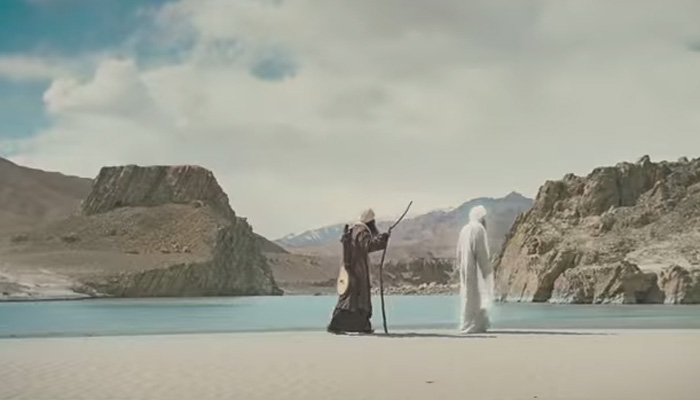
My favourite scene of the movie (Pic courtesy: www.sikhsiyasat.net)
If I have to sum up the movie in one word, I would call it outstanding. And yet, the movie has controversies about it. The media talks about “objectionable scenes in the movie” but no one has specifically brought out as to what is objectionable. So, we are left to wonder whether the so-called guardians of religion have their egos hurt that such a fine movie has been made not because of them, but, in spite of them. Guru Nanak cautioned us all against giving in to haume (I am); five centuries later, is it that the guardians of religion themselves are ruled by haume?
Secondly, doesn’t Guru Nanak belong to all of us surpassing the boundaries of religion? In which case, does our personal observance of his teachings have to be coloured by some intermediaries?
Whilst on this issue, and it is a very touchy issue, the very first utterance of Guru Nanak, after Enlightenment is that there is no Hindu and there is no Mussalman. Five centuries later, we are propagating that even Hindus and Sikhs are different! If that is indeed the case then who exactly is going to reform the religious practices of Hindus and Muslims that Guru Nanak had set out to do? Why is it that idol worshipping is as prevalent today as it was many centuries back? Why are even elections in our so-called democratic society fought on basis of castes that Guru Nanak sought to eradicate? I have visited many gurdwaras and the ritualistic practice of sukh-aasan of the Sri Guru Granth Sahib (Resting of SGGS for the night) would compete with the ritualistic aarti of Jagannath Puri that Guru Nanak was opposed to. If Guru Nanak was to be born again, he would surely tell that when his tenth successor Gobind Singh ordained, “Guru Granth ko maaniyo, pargat Guran ki deh” (“Consider the Granth as your Guru now onwards; wherever the Granth is present, the Guru is bodily present”), he meant the observance of the teachings contained in SGGS and not ritualistically following it as the flesh and body of the Gurus. Guru Nanak wrote about one fifth of the Shlokas in the SGGS and many of these bring out how to be a true Muslim or Hindu sans the rituals. Even in the movie, when Daulat Khan asks him to do the Namaaz with them, he joins. But, when he is told that although he sat with them, he hardly said the Namaaz; Guru Nanak brought out that even they didn’t do so since whilst their lips moved, their minds were elsewhere! Why do we forget all his teachings and observe religion in rituals only?
The other day someone asked me as to why the Sikhs (the word Sikh, to me, has much greater meaning than the narrow confines of religion that were, in any case, opposed by Guru Nanak himself. The word means “the taught” or learned or one who has gained consciousness through his true intellectual growth) have prospered and survived many centuries after the Gurus? My instant response was that the Sikh gurus lived with their people through adversity and kept the flock together through personal sacrifices and examples. A Sikh, therefore, finds his way out of any adversity, trials and tribulations. His faith in oneness of God makes him so brave that he can battle against totally hopeless situations and emerge a winner (the Battle of Saragarhi, for example, on 12 Sep 1897, had 21 Sikhs of 4th Battalion of Sikh Regiment under the British fighting against 10000 Afghans; read ‘Battle of Saragarhi‘ on Wikipedia recorded by the UN as the bravest battle in the world ). Who were the leaders after our Gurus who were fired by the same spirit of sacrifice and selflessness? The factionalism both in our religion and politics, in the current world, is to be seen to be believed. Most of it is based on haume.
One of the arguments against the movie, surprisingly, is that “sentiments of the Sikhs have been hurt”. I have brought out in a series of articles (For example, read: ‘Who Are The “People” Whose “Sentiments Need To Be Respected”‘ and ‘Whose God Is It Anyway?’) that people or mobs do not always have the best sense. If they did in history, for example, we didn’t require the likes of Guru Nanak to bring them to the right path. Lets not follow the edict blindly that Sikh Gurus cannot be depicted on-screen. First of all, as the makers have clarified no human being is represented as the Guru; he being depicted only through a computer graphic. Secondly, if hundreds and thousands of pictures and write-ups are available on the net, in the books, movies, and on the television, why only in the movie that these are not permitted? And, most importantly, the movie makers have taken no license to distort history; the events have been, to the best of my knowledge, brought out as historically recorded.
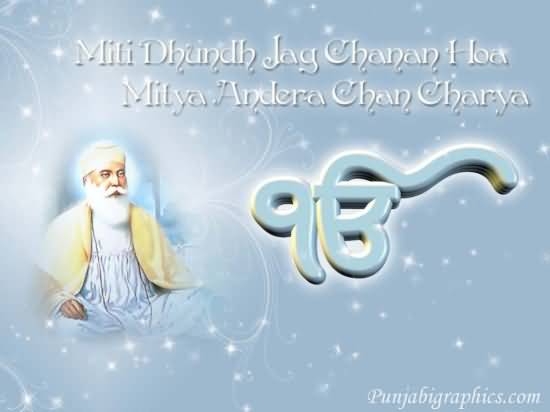
Guru Nanak was one voice against the social ills of his times. He was eminently successful but now we are back to square one. Now is the time when a movie such as Nanak Shah Fakir should be most welcome and seen by all classes and conditions of men and women everywhere. The region of Punjab that Guru Nanak was born in and lived in has the menace of drug-addiction amongst the youth. His teachings would be most relevant to such misguided elements. Religious fundamentalism has shown its ugly ahead in the world again and there is violence and killings in various parts of the world; just as it was Babar’s forces that unleashed unheard of violence in India that was depicted at the end of the movie. We need the teachings of Guru Nanak all over again. Greater part of India is once again in the grip of idol worshipping, corruption, intolerance and the like. We need a messenger of God like Guru Nanak to do away with the dhund (mist) of ignorance and bless the people with chaanan (Light).
So, rather than banning, opposing or protesting against Harry Sikka’s movie, we should ensure that as many people as possible should see it and profit from Guru Nanak’s messages of one God and oneness with God, no haume, no religious and caste divides, Vand Chhako, Kirat Karo and Naam Japna. As the makers of the movie have proclaimed, all proceeds from the sale of tickets would be used to further the teachings of Guru Nanak.
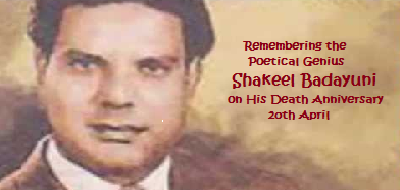
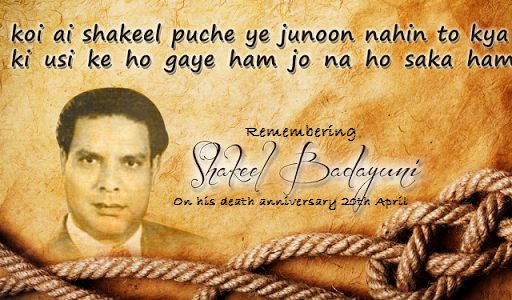
Why do I shed tears, year after year, on the day of the death anniversary of Shakeel (the name means Handsome or Good Looking), today, 20th April? Is it because he died too young (Having been born on 3rd Aug 1916, he was only 53 when he died on this day in 1970)? I am not even well versed in Urdu, not even a hundredth of what he was and yet I pray to God that before I die I should be able to write at least a couplet as good as he wrote.
On the 10th of January this year I started a Facebook group ‘Main Shayar To Nahin’ primarily to air my devotion for him and some other Urdu poets. I regularly put up Shakeel’s poetry with meanings so that more and more people can savour his excellence. I call him the King of Irony since no one can write irony better than he did. Just one example:
Na milata gham to barbaadi ke afsaane kahan jaate? If there was to be no sorrow, where would odes of ruin find a place
Agar duniya chaman hoti to veeraane kahan jaate? If the world would be just a garden, where would deserts find a place
Chalo achha hua apano mein koi gair to nikala, It is good that amongst own people there was an outsider too
Agar hote sabhi apane to begaane kahan jaate? If all people were your own (in the world) where would strangers find a place
We were a slave nation for 31 years of his 53 that he walked on this earth. All his contemporaries wrote about social inequalities, poverty, slavery and the like. Shakeel wrote about Love, Mohabbat, Ishq, Wafa, Ulfat; it is as if he lived in a different world. In addition, his god faring nature ensured that he also wrote the finest Bhajans in Hindi movies.
Lets start the journey into his Ghazals. This is the first part; more to follow:
Ghazal #1
His most famous ghazal had Irony, Gham, Despondency and ruefulness in adequate measures; a ghazal made famous by Begum Akhtar, Mallika-e-Ghazal (Queen of Ghazals), though other vied to sing it too.
Please enjoy: Aye mohabbat tere anjaam pe rona aaya….
Aye Mohabbat Tere Anjaam Pe Ronaa Aayaa O love your outcome makes me cry
Jaane Kyun Aaj Tere Naam Pe Ronaa Aayaa Today I do not know why the mention of your name makes me cry
Youn To Har Shaam Ummidon Mein Guzar Jaati Hai As it is that every evening passed by in expectations
Aaj Kuch Baat Hai Jo Shaam Pe Ronaa Aayaa Today something is there that the evening makes me cry
Kabhi Taqdeer Ka Maatam Kabhi Duniyaa Ka Gilaa Sometimes I grieve for my destiny, sometimes I blame the world
Manzil-e-Ishq Mein Har Gaam Pe Ronaa Aayaa Every step I take towards the destination of love makes me cry
Mujh Pe Hi Khatam Huaa Silsila-e-nauhagari With me ended series of lamenting
Is Kadar Gardish-e-Ayyaam Pe Rona Aaya To this extent the vicissitudes of fortune made me cry
Jab Huaa Zikr Zamaane Mein Mohabbat Ka Shakeel When there was a discussion on love, worldwide, Shakeel
Mujh Ko Apne Dil-e-Naakaam Pe Ronaa Aayaa The futile struggles of my love made me cry
Ghazal #2
Another of his ghazals made immortal by Begum Akhtar had the same despondency, irony, sadness about it. Words melted into tears.
Please enjoy: Mere humnafas, mere humnuwa, mujhe dost ban ke daga na de….
Mere Humnafas, Mere Humnawaa, My soul-mate, my dearest friend
Mujhe Dost Ban Ke Dagaa Na De Do not be my friend and betray me
Main Hoon Dard-e-Ishq Se Jaan-Valab, The pain of love has left me lifeless
Mujhe Zindagi Ki Dua Na De Do not give to me the blessing of life
Main Gham-E-Jahan Se Nidhaal Hoon I am listless with the sorrow of life
Ke Saraapaa Dard-O-Malaal Hoon I am head to toe in the pain of grief
Jo Likhi Hai Mere Naseeb Mein What has been written in my fate
Wo Aalam Kisi Ko Khudaa Na De May God not grant to anyone this state
Na Ye Zindagi Meri Zindagi Neither this life is my life
Na Ye Daastaan Meri Daastaan Nor this story is my story
Main Khayaal O Weham Se Door Hoon From thoughts and fancies I am far away
Mujhe Aaj Koi Sadaa Na De May anyone not call me today
Mere Ghar Se Door Hain Raahatein Relief is distant from my home
Mujhe Dhoondhti Hain Musibatein Trouble has been searching for me
Mujhe Khauf Yeh Hai Ke Mera Pataa I am scared of this, that my address
Koi Gardishon Ko Bataa Na De May someone not reveal to my misfortunes
Mujhe Chhodd De Mere Haal Par, Let me please be on my own
Teraa Kyaa Bharosaa Hai Chaaragar How can I rely on you, O healer
Ye Teri Nawaazish-e-Mukhtasar, This inadequate favor of yours
Meraa Dard Aur Badhaa Na De May it not further aggravate my pain
Meraa Azm Itnaa Buland Hai My resolve is so sublime
Ke Paraaye Sholo-n Kaa Darr Nahin That the fire-bolts of others scare me not
Mujhe Khauf Aatish-e-Gul Se Hai, I fear the flare within the flower
Ye Kahin Chaman Ko Jalaa Na De May it not set the garden ablaze
Mere Daagh-e-Dil Se Hai Roshni, The scar of my love begets a radiance
Isi Roshni Se Hai Zindagi This radiance begets an existence
Mujhe Darr Hai Aye Mere Chaaragar, I am scared of this O healer of mine
Ye Chiraag Tu Hi Bujha Na De May you not yourself, blow out this lamp
Mera Chashm-E-Shauq Tera Bharam The desire in my eyes is a delusion for you
Rahe Umr Bhar Yoon Hi Taaza Dam Shall be fresh like this all of it’s life
Naa Pukaar Us Ko Ke Wo Sanam Do not call her or that darling of yours
Kahin Jal Ke Jalwa Dikha Na De May she not light up to display her splendour
Dar-E-Yaar Par Badi Dhoom Hai There is a big ruckus at the door of my lover
Wahi Aashiqon Ka Hujoom Hai That mob of her suitors has gathered there
Abhi Neend Aayi Hai Husn Ko My sweetheart has just now gone to sleep
Koi Shor Kar Ke Jagaa Na De By their noise they may not wake her up
Kabhi Jaam Lab Se Lagaa Diya Sometimes she takes the wine-cup to my lips
Kabhi Muskura Ke Hataa Diyaa Sometimes she smiles and takes it away
Teri Chedh Chaadh Aye Saaqiyaa This teasing of yours O bar-tender
Meri Tishnagi Ko Badhaa Na De May it not intensify my longing for you
Wo Uthein Hain Leke Khum-o-Suboo, She rises-up holding a cup of wine
Are Aye ‘Shakeel’ Kahaan Hai Tu Listen O Shakeel Where are you
Tera Jaam Lene Ko Bazm Mein To take away your cup of wine
Koi Aur Haath Badha Na De May Someone else not extend his hand
Ghazal #3
Whilst Beghum Akhtar sang some of his non-filmy ghazals, the best filmy ghazals of Shakeel Badayuni were sung by both Mohammad Rafi and Lata Mangeshkar. But, the fact is that they sang some of his non-filmy ghazals too.
Here is one of my favourites by Lata Mangeshkar: Aank se aankh milata hai koi…
Aa.Nkh se aa.Nkh milaataa hai ko_ii Someone is making his eyes rest on mine
Dil ko khii.Nche liye jaataa hai ko_ii Someone is tugging at my heart
Vaa-e-hairat ke bharii mahafil me.n Alas in this party full of wonder
Mujh ko tanhaa nazar aataa hai ko_ii
I find someone is alone
Sub.h ko KHunuk fanaa.oñ ki qasam I vow by the happy weather of the morning
Roz aa aa ke jagaata hai ko_ii Someone comes again and again to awaken me
Manzar-e-husn-e-do-aalam ke nisaar Offering of the spectacle of the beauty of two world
Mujh ko aa-iina dikhaataa hai ko_ii Someone his showing me the looking-glass
Chaahiye Khud pe yaqiin-e-kaamil One should have firm belief on oneself
Hausalaa kis kaa ba.Dhaataa hai ko_ii Who is there to provide encouragement?
Sab karishmaat-e-tasavvur hai “Shakeel” All are miracles of imagination, Shakeel
Varanaa aataa hai na jaataa hai ko_ii Else no one comes, no one goes
Ghazal #4
Another singer who added his name into the list of immortal ghazal singers was Talat Mehmood.
Here is he singing Shakeel’s famous ghazal: Meri zindagi hai zaalim tere gham se aashkara…
Merii zindagii hai zaalim, tere Gam se aashkaaraa My life is a manifestation of your sorrow, O tyrant Teraa Gam hai dar-haqiiqat mujhe zindagii se pyaaraa The truth is that your sorrow is dearer to me than my life
Vo agar buraa na maane to jahaa.N-e-rang-o-buu me.n If she won’t mind then in this world of colour and fragrance
Mai.n sukuun-e-dil kii Khaatir koii Dhuu.NDh luu.N sahaaraa May I search for support for the sake of peace of my heart?
Ye fulak fulak havaaye.N ye jhukii jhukii ghaTaaye.N These happy winds, these low rain bearing clouds
Vo nazar bhii kyaa nazar hai jo samajh na le ishaaraa What kind of eye is that which can’t take this hint?
Mujhe aa gayaa yaqii.n saa yahii hai merii ma.nzil I have come to believe that this is my destination
Sar-e-rah jab kisii ne mujhe daffa’atan pukaaraa On the road when someone called me spontaneously
Mai.n bataauu.N farq naasih, jo hai mujh me.n aur tujh me.n I can tell you my counsellor, the difference between you and me
Merii zindagii talaatum, terii zindagii kinaaraa My life is like a sea-storm, your life is like a shore
Mujhe guftaguu se ba.Dakar Gam-e-izn-e-guftaguu hai More than the conversation, I have grief of permission to converse
Wahii baat puuchhte hai.n jo na kah sakuu.N dobaaraa She asks me about that thing that I can’t repeat
Koii aye ‘Shakeel’ dekhe, ye junuu.N nahii.n to kyaa hai Someone should see this, Shakeel, isn’t it madness
Ke usii ke ho gaye ham jo na ho sakaa hamaaraa That I became hers but she couldn’t be mine
Ghazal #5
These ghazals are not in any order. Here is a famous ghazal of his (there are none of his ghazals that are not famous!). This has been sung by Pankaj Udhas.
Please enjoy: Kaise keh doon ke mulaaqaat nahin hoti hai….
Kaise kah duu.N ki mulaaqaat nahii.n hotii hai How can I say that meeting with her doesn’t take place?
Roz milate hai.n magar baat nahii.n hotii hai We meet everyday but don’t say anything
Aap lillaah na dekhaa kare.n aaiinaa kabhii For God’s sake, don’t ever see a looking-glass
Dil kaa aa jaanaa ba.Dii baat nahii.n hotii hai It is not such a big thing that I fell for you
Chhup ke rotaa huu.N terii yaad me.n duniyaa bhar se Stealthily from the world I cry in your memory
Kab merii aa.Nkh se barasaat nahii.n hotii hai That’s why rain of tears don’t freely fall from my eyes
Haal-e-dil puuchhane vaale terii duniyaa me.n kabhii You aske me the wellness of my heart, in your world at any time
Din to hotaa hai magar raat nahii.n hotii hai Day rises but night never comes
Jab bhii milate hai.n to kahate hai.n kaise ho “Shakeel” When you meet me you ask me how are you, Shakeel
Is se aage to koii baat nahii.n hotii hai Post this, no other conversation takes place
https://youtube.com/watch?v=I3-BbFDE5ys%3F
Ghazal #6
Anyone singing any of Shakeel’s ghazals would gain instant immortality. Begum Akhtar did and also Nirmala Devi, actor Govinda’s mother. She was a Hindustan classical vocalist of the Patiala Gharana and her rendition of Shakeel’s ghazal Bana bana ke tamanna mitayi jaati hai got her fame.
Please enjoy: Bana bana ke tamanna mitayi jaati hai….
Banaa banaa ke tamannaa miTaa_ii jaatii hai Craving is repeatedly built up and destroyed
Tarah tarah se vafaa aazamaa_ii jaatii hai In many different ways fidelity is tested
Jab un ko merii muhabbat kaa aitabaar nahii.n When she has no trust in my love
To jhukaa jhukaa ke nazar kyo.n milaa_ii jaatii hai Then why does she meet my eyes lovingly?
Hamaare dil kaa pataa vo hame.n nahii.n dete She doesn’t let me know where has my heart gone
Hamaarii chiiz hamii.n se chhupaa_ii jaatii hai My own thing is kept hidden from me
‘Shakeel’ duurii-e-manzil se naa-ummiid na ho Shakeel, destination is far, don’t lose hope
Manzil ab aa hii jaatii hai ab aa hii jaatii hai You are about to reach the destination now
Ghazal #7
This is very good and you ought to read it with translation. However, I couldn’t find either the video or the audio for this except for a recitation by Nomaan Shauque. It is still a very fine ghazal.
Please enjoy: Woh hamase door hote jaa rahe hain…
Woh hamase door hote jaa rahe hain She is moving far from me
Bahut maghroor hote jaa rahe hain And becoming arrogant
Bas ik tark-e-mohabbat ke iraade Only the resolve for break-up
Hamen manzoor hote jaa rahe hain Is becoming increasingly acceptable to me
Manaazir the jo firdaus-e-tasavvur The scenes of paradise of imagination that were earlier accepted
Vo sab mastuur hote jaa rahe hain Are becoming hidden now
Badalti jaa rahi hai dil ki duniyaa The world of the heart is changing
Naye dastuur hote jaa rahe hain
New customs are arising
Bahut maghmuum tha jo deeda o dil Very sad was the sight of my heart
Bahut masruur hote jaa rahe hain Very cheerful is she becoming
Wafa par murdaani si chha chali hai Fidelity has the shadow of death over it
Sitam kaa noor hote jaa rahe hain She is becoming the light of the oppression
Kabhi woh pass aaye jaa rahe the At one time she was coming closer
Magar ab door hote jaa rahe hain But now she is moving farther
Firaq-e-hijr ke taareek lamhe The dark moments of parting and separation
Saraapaa noor hote jaa rahe hain Totally are becoming clearernow
Shakeel, ehsaas-e-gumnaami se keh do Shakeel, let the feeling of anonymity know
Ke ham mashhuur hote jaa rahe hain That I am becoming famous now
Ghazal #8
Begum Akhtar again and this time with a much simpler ghazal.
Please enjoy: Khush hoon mera husn-e-talab kaam to aaya…
Khush huu.N ki meraa husn-e-talab kaam to aayaa I am happy my way of wanting beauty has found a use
Khaalii hii sahii merii taraf jaam to aayaa Even though empty at least the wine glass has been offered to me
Kaafii hai mere dil ki tasallii ko yahii baat This thing is sufficient for the consolation of my heart
Aap aa na sake aap kaa paiGaam to aayaa You couldn’t come but at least your message came
Apano.n ne nazar pherii to dil ne to diyaa saath When my own people moved away at least the heart accompanied me
Duniyaa me.n koii dost mere kaam to aayaa In this world at least some friend was of some use
Wo subah kaa ehasaas ho yaa.N merii kashish ho It may be the feeling of morning or my attraction
Duubaa hua Khurshiid sar-e-baam to aayaa Sinking Sun came to the corner of the terrace
Log un se ye kahate hai.n ki kitane hai.n “Shakeel” aap People tell her how Shakeel (good-looking) is she
Is husn ke sadaqe me.n meraa naam to aayaa At least my name was uttered in the offering of the beauty
https://youtube.com/watch?v=fbYP0Y3pHXc%3F
Ghazal #9
If I have given you a ghazal of his sung by Lata Mangeshkar, I am bound to give you one by Asha Bhosle (Asha ji). This is from the 1953 movie Hazaar Raten.
Please enjoy: Meri Zindagi Pe Na Muskaraa Mujhe Zindagi Kaa Alam Nahin….
Merii zindagii pe na muskaraa mujhe zindagii kaa alam nahii.n Don’t smile on my life, I have no anguish about life
Jise tere Gam se ho vaastaa vo Khizaa.N bahaar se kam nahii.n The one that’s related to your sorrow, that autumn is not less than spring
Meraa kufr haasil-e-zuud hai meraa zuud haasil-e-kufr hai My disbelief is in the realm of abstinence, my abstinence is in the realm of disbelief
Merii bandagii vo hai bandagii jo rahiin-e-dair-o-haram nahii.n My devotion is that devotion that’s not pledged to temple or mosque
Mujhe raas aaye Khudaa kare yahii ishtibaah kii saa_ate.n God willing my moments of ambiguity should become acceptable
Unhe.n aitabaar-e-vafaa to hai mujhe aitabaar-e-sitam nahii.n She at least has trust in love, I don’t have trust in her tyranny
Vahii kaaravaa.N vahii raaste vahii zindagii vahii marahale Same caravan, same raods, same stages of life’s journey
Magar apane-apane muqaam par kabhii tum nahii.n kabhii ham nahii.n But in our own stations, sometimes you ain’t there, sometimes I am not there
Na vo shaan-e-jabr-e-shabaab hai na vo rang-e-qahar-e-itaab hai Neither is there pride in being a young man, nor is there atmosphere of havoc and displeasure
Dil-e-beqaraar pe in dino.n hai sitam yahii ki sitam nahii.n These days my restless heart is oppressed that there is no oppression
Na fanaa merii na baqaa merii mujhe ai ‘Shakeel’ na Dhuu.NDiye Neither I own mortality nor death, please don’t search for me
Mai.n kisii kaa husn-e-Khayaal huu.N meraa kuchh vujuud-o-adam nahii.n I am someone’s beauty of thought, I don’t have life or after life
Ghazal #10
K Asif’s 1960 magnum opus Mughal-e-Azam was as famous for depicting the love affair between Prince Salim and courtesan Ananrkali as for its songs and ghazals penned by Shakeel Badayuni with Naushad Ali’s music.
The best ghazal of the movie in his characteristic style is this.
Please enjoy in Lata’s voice: Aye ishq ye sab duniya waale bekaar ki baatein karte hain….
Ae ishq ye sab duniya wale Oh love! All these people of the world
Bekaar ki baatein karte hai Talk nonsense (about love)
Payal ke ghamon ka ilm nahin They don’t have any knowledge of the pain in the ankle bells
Jhankaar ki batein karte hai And then they talk about its jingling (sarcasm)
Ae ishq ye sab duniya wale Oh love! All these people of the world
Har dil me chhupa hai teer koi In every heart there is a hidden arrow
Har paanv me hai zanjir koi In every leg there is a shackle
Puchhe koi unase gham ke maze May someone go and ask them the joys of grief
Jo pyaar ki batein karte hai All those who talk about love
Ae ishq ye sab duniya wale Oh love! All these people of the world
Ulfat ke naye deewano ko The ones who have recently fallen in love
Kis tarah se koi samjhaye How to make them understand
Nazron pe lagi hai paabandi Here, there is a restriction on gazing
Deedar ki baatein karte hai And they are talking about getting a glimpse
Ae ishq ye sab duniya wale Oh love! All these people of the world
Bhanware hain agar madhosh to kya If the bees are intoxicated, then what
Parwane bhi hain khamosh to kya If the moths are silent, then what
Sab pyaar ke nagme gaate hai All of them sing melodies of love
Sab yaar ki baatein karte hai All of them talk about their beloved’s
Ae ishq ye sab duniya wale Oh love! All these people of the world
Bekaar ki baatein karte hai Talk nonsense
Ae ishq ye sab duniya wale Oh love! All these people of the world
https://youtube.com/watch?v=2_scqYgA92s%3F
Ghazal #11
A beautiful ghazal sung very beautifully by Kusum Sharma. Please keep thinking of what I have told you about irony.
Shaayad aaGaaz huaa phir kisii afasaane kaa Perhaps there is beginning of a new romantic tale
Hukm aadam ko hai jannat se nikal jaane kaa Edict has been given to Adam to quite the paradise
Un se kuchh kah to rahaa huu.N magar allaah na kare I am saying something to her but it shouldn’t be Allah
Vo bhii mafahuum na samajhe mere afasaane kaa She too is not able to understand the meaning of my tale of love
Dekhanaa dekhanaa ye hazarat-e-vaa_iz hii na ho.n See again that it shouldn’t be the mister preacher himself
Raastaa puuchh rahaa hai ko_ii maiKhaane kaa He is asking for the way to the tavern
Beta’alluq tere aage se guzar jaataa huu.N Without your acknowledging I pass in front of you
ye bhii ek husn-e-talab hai tere diivaane kaa This too is a way of longing for your mad-lover
hashr tak garmii-e-ha.ngaamaa-e-hastii hai “Shakeel” Until the day of judgment the heat of riotous life is there
sil-silaa Khatm na hogaa mere afasaane kaa The series of my tales of love shall never conclude
https://youtube.com/watch?v=xav5wjLUcs0%3F
Ghazal #12
Once again, I couldn’t find a video or audio for this ghazal. But, nevertheless, it is a beautiful ghazal.
Please enjoy: Teri mehfil se uthkar ishq ke maaron pe kyaa guzari….
Terii mahafil se uThakar ishq ke maaro.n pe kyaa guzarii What happened with the love-stricken who left your assembly?
muKhaalif ik jahaa.N thaa jaane bechaaro.n pe kyaa guzarii The world was inimical, God knows what happened to the poor souls?
Sahar ko ruKhsat-e-biimaar-e-furqat dekhane vaalo O you who look at the departure of ill with separation in the mornings
kisii ne ye bhii dekhaa raat bhar taaro.n pe kyaa guzarii Did you ever think what happened to the stars in the nights?
Sunaa hai zindagii viiraaniyo.n ne luuT lii milakar I have heard that life was looted by the deserted places
na jaane zindagii ke naaz_baradaaro.n pe kyaa guzarii God knowswhat happened to those who tolerate coquetry in life?
Ha.Nsii aa_ii to hai bekaif sii lekin Khudaa jaane Laughter came but joylessly God knows
mujhe masaruur paakar mere Gam_Khvaaro.n pe kyaa guzarii After finding me cheerful what happened to my sympathisers?
Asiir-e-Gam to jaa.N dekar rihaa_ii paa gayaa lekin Prisoners of sorrow escaped after sacrificing their life
kisii ko kyaa Khabar zindaa.N kii divaaro.n pe kyaa guzarii Who knew what happened to the cells of the living?
Ghazal #13
This one is so perfect that I often marvel at its beauty. Once again, I could neither find a video or an audio.
Please enjoy: Ab taq shikaayetein hain dil-e-bad-naseeb se….
Ab taq shikaayetein hain dil-e-bad-nasiib se Until now she has complaints about my unfortunate heart
Ik din kisi ko dekh liya tha kariib se All I did was to see her closely
Aksar ba-zom-e-taraq-e-mohabbat Khudaa gavaah Often with the pride and determination of renouncing love, God be my witness
Guzraa chala gaya huun dayaar-e-habiib se I have crossed the place of the beloved
Dast-e-Khizaan badh ke wahin usako chun liya Autumn’s hand came forward to select the one
Jo phool gir gaya nigaah-e-andaliib se Flower that had fallen from Nightingale’s glance
Ahl-e-sukoon se khel naa ai mauj-e-imbisaat O wave of ecstasy do not play with those who are at peace
Ik din ulajh ke dekh kisi gham-nasiib se One day battle with those who are destined for grief
Naa ahl-e-naaz ko bhi mile fursat-e-niyaaz People of vanity will not find leisure for amorous words
Main duur hat gaya who jo guzre kareeb se I distanced myself when they passed close to me
Ye kis Khata pe rooth gayi chashm-e-iltifaat On whose oversight glance of love became angry
Ye kab kaa intiqaam liya mujh gareeb se I don’t understand of which thing’s revenge was this
Unake bagaair bhi hai wohi zindagi ka daur Without her too there is era of life
Halaat-e-zindagi hain magar kuchh ajeeb se Circumstances of life are there but a little strange
Samajhe huye the husn-e-azal jisako hum Shakeel The one who I had imagined to be eternal beauty
Apna hi aks-e-rukh nazar aaya kareeb se From close it turned out to be own reflection of face
Ghazal #14
Ghazal-king Talat Mehmood again with a very beautiful ghazal of Shakeel Badayuni.
Please enjoy: Unase umeed-e-ruunuumaai hai….
Un se ummiid-e-ruunumaa_ii hai There is hope of guidance/leadership from her
Kyaa nigaaho.n kii maut aa_ii hai Are my eyes heading for death?
Dil ne Gam se shikast khaa_ii hai Heart has been defeated by sorrows
Umr-e-raftaa terii duhaa_ii hai There is appeal to the past life
Dil kii barbaadiyo.n pe naazaa.N huu.N I am proud of the ruins of heart
Fatah paakar shikast khaa_ii hai I have tasted defeat after victory
Mere maa_abad nahii.n hai dair-o-haram My house of worship is not the temple of sanctuary
Ehatiyaatan jabii.n jhukaa_ii hai I have bowed my forehead to my misgivings
Vo havaa de rahe hai.n daaman kii She is fanning with the hem of her dress
Haaye kis vaqt niind aa_ii hai I don’t know when I went to sleep
Khul gayaa un kii aarazuu me.n ye raaz The secret in her longing became known
Ziist apanii nahii.n paraa_ii hai Life is not mine but belongs to someone
Duur ho Gunche-o-gul merii nazar se Remain away from my sight flowers and buds
Tuu ne merii ha.Nsii churaa_ii hai You robbed me of my laughter
Gul fasurdaa chaman udaas ‘Shakeel’ Flower is disappointed, garden is saddened
Yuu.N bhii aksar bahaar aa_ii hai Sometimes spring comes in this manner
https://youtube.com/watch?v=QopXvVHibYs%3F
Ghazal #15
Must end Part I of this labour of love for Shakeel Badayuni’s poetry in the form of Ghazals with this Yaad ghazal.
Please enjoy: Rooh ko tadapa rahi hai unaki yaad….
Ruuh ko ta.Dapaa rahii hai un kii yaad Soul is tormented by her memory
Dard ban kar chhaa rahii hai un kii yaad Pain is the manifestation of her memory
Ishq se ghabaraa rahii hai un kii yaad Scared of love is her memory
Rukate rukate aa rahii hai un kii yaad It is coming haltingly is her memory
Vo ha.Nse vo zer-e-lab kuchh kah uThe She laughed and whispered something
Khvaab se dikhalaa rahii hai un kii yaad It is as if her memory is showing me dreams
Mai.n to Khuddaarii kaa qaa_il huu.N magar I am in favour of self-respect, but
Kyaa karuu.N phir aa rahii hai un kii yaad What can I do when her memory comes to me?
Ab Khayaal-e-tark-e-rabt zabt hii se hai Now there is affinity towards tolerance of thought of giving up
Khud ba Khud sharmaa rahii hai un kii yaad By itself her memory is shy
Please await Part II of Immortal Ghazals of Shakeel Badayuni
On my Facebook group Yaad Kiya Dil Ne, I organise online Music Fests once or twice in a month. These Fests are contests on a chosen theme. The last theme on the weekend of 28th and 28th March was on Zamaana or Duniyaa.
Members realised that there are literally hundreds of songs on this theme. So, they took it upon themselves to put up rare and extraordinary songs. I normally do not put up any posts of mine since I judge the contests. However, on this occasion I put up three of Shakeel’s creations. I realised that Shakeel had much to say on Zamaana or Duniya.
These are interspersed with my own adulatory poetry about him.
Here is the first one.
Music Fest On Zamaana or Duniya Day #2, Song #1
Aye Mohabbat Tere Anjaam Pe Rona Aaya
Shakeel Badayuni was all about Duniya, Zamaana, Zindagi. And I note with satisfaction that quite a few of his songs and ghazals have been selected by members for this Fest.
I also note with satisfaction that the cover picture song of Chhod do aanchal zamaana kya kahega has been put up by Shashi Patil. I am on Ghazals in Hindi movies on my page Lyrical and the Anmol Ghadi ghazal of Noor Jehan: Awaaz de kahan hai duniya meri jawan hai was put up by me last night and today morning it was here in the Fest.
Whilst Suraiyya and Noor Jehan were successively given the honorific title of Mallika-e-Tarunnam (Queen of Melody), there has been only one Mallika -e-Ghazal and that was Begum Akhtar. She could make or mar a lyricist simply by lending or not lending her voice to his/her ghazal.
So much so that the world over, the most famous ghazal ever Aye mohabbat tere anjaam pe rona aaya is widely regarded as Begum Akhtar ghazal!
It is, nevertheless, the best ghazal of my favourite poet and lyricist Shakeel Badayuni. He never wrote! As I have often mentioned, he painted the emotions of his heart and presented them to us. And guess what? Once again all known senses were used the least and this painting was registered straight by the heart.
In short, Shakeel excelled in heart to heart poetry.
Here is in his own words:
Main Shakeel Dil Ka Hoon Tarjuman Keh Mohabbaton Ka Hoon Raazdaan Mujhe Fakhr Hai Meri Shayari Meri Zindagi Se Juda Nahin
He was a poet who excelled in Irony and the last couplet of the ghazal (the ghazal has both Duniya and Zamaana in it) brings out this so well:
Jab huaa zikr zamaane mein mohabbat kaa ‘Shakeel’ Mujhako apane dil-e-naakaam pe ronaa aayaa
If you find better words in self-worthlessness, do let me know.
Here is my small and insignificant tribute to him:
Hamen Shakeel ki shayari kyun pasand hai,
Dil ke taar baja kar woh chala jaata hai,
Phir ham chain o neend apni kho dete hain
Guzra hua zamaana hamen yaad aata hai
Kyaa rang tha, kyaa noor tha, gham-e-aashiqi thi
Woh aalam dil-e-jahan pe chha jaata hai
Door kahin Naushad ki mosiqi ki dhun bajti hai
Dil khud-ba-khud gaata hai aur sunaata hai
Waah Shakeel, mar ke bhi tum zinda hi rahe
Har Fest YKDN pe tumhaari Yaad dilaata hai.
This is not on the music of Naushad but Murli Manohar Swarup.
Please enjoy: Aye mohabbat tere anjaam pe rona aaya…..
Ai mohabbat tere a.njaam pe ronaa aayaa
jaane kyuu.N aaj tere naam pe ronaa aayaa
yuu.N to har shaam umiido.n me.n guzar jaatii thii
aaj kuchh baat hai jo shaam pe ronaa aayaa
kabhii taqadiir kaa maatam kabhii duniyaa kaa gilaa
ma.nzil-e-ishq me.n har gaam pe ronaa aayaa
jab hu_aa zikr zamaane me.n mohabbat kaa ‘shakiil’
mujhako apane dil-e-naakaam pe ronaa aayaa
Music Fest On Zamaana or Duniya Day #2, Song #2
Shakeel Badayuni Again
I can think of another twenty songs and ghazals of Shakeel Badayuni on the theme of the fest. He took songs to a new low of despondency in the 1966 Raj Khosla movie Do Badan starring Manoj Kumar, Asha Parekh and Simi Grewal. Look at the list of songs in this movie:
1. Jab Chali Thandi Hawa sung by Asha Bhosle
2. Bhari Duniya Mein Akhir Dil, Mohammad Rafi
3. Raha Gardishun Main Har Dum, Mohammad Rafi
4. Naseeb Mein Jisko Jo, Mohammad Rafi
5. Lo Aa Gayi Unki Yaad, Lata Mangeshkar
6. Mat Jayio Naukariya Chor Ke, Asha Bhosle
7. Raha Gardishun Mein (Repris’se) Mohammad Rafi
8. Lo Aa Gayi unki Yaad (Reprise) Lata Mangeshkar
Here is a couplet from Raha gardisho mein har dum:
Padhe jab ghamon se pale, rahe mitake nitane waale, Jise maut ne na poochha, use zindagi ne maara…
The song that I am going to put up has both Duniya and Zamaana there once again. It is a cry of the heart, a hopelessness induced by the evil world against true love. Ravi is the composer, just as in Milind’s song Chaudhvinh ka chaand (another Shakeel song) he is the composer in a song wherein Waheeda is called the World of Beauty (duniyaa-e-husn) by Shakeel.
History is full of coincidences. Imagine when Shakeel was alive, to sing his songs and ghazals, we had Begum Akhtar and Rafi.
Here is my take on this coincidence:
Aap ke khayaal kitane haseen the Shakeel Mohabbat ka ek naya andaaz ho gaya Ham pehale se hi aapke qaayal to na the, Padha, suna, socha aur hamen naaz ho gaya Dil ki dhadkan tez hui hamen pata hi naa chala Jab Shakeel ki shayari ka aagaaz ho gaya Aap ke geeton ka dard-e-gham sunaate hi, Har gulokaar sarfaraz ho gaya.
Please enjoy: Bhari duniya mein aakhir dil ko samjhaane kahan jaayen…
Bharii duniyaa me.n aaKir dil ko samajhaane kahaa.N jaae.n
Muhabbat ho ga_ii jinako vo diivaane kahaa.N jaae.n
lage hai.n shammaa par pahare zamaane kii nigaaho.n ke
jinhe.n jalane kii hasarat hai vo paravaane kahaa.N jaae.n
sunaanaa bhii jinhe.n mushkil chhupaanaa bhii jinhe.n mushkil
zaraa tuu hii bataa ai dil vo afasaane kahaa.N jaae.n
Music Fest On Zamaana or Duniya Day #2, Song #3
Shakeel Badayuni Again
The third song, at random, of Shakeel Badayuni that I put up this morning; and the third with both Duniya and Zamaana in it.
Here is Shayar-e-Azam penning his songs for the movie Mughal-e-Azam; meeting of minds of two emperors.
Shakeel and Naushad had already put up some outstanding numbers that are still the standard in songs in Hindi movies. However, in the magnum-opus of 1960, the K Asif’s iconic movie Mughal-e-Azam, they went beyond their own standards. The songs touched new heights in popularity and everyone was singing them.
Once again, look at the songs they created:
1. “Mohe Panghat Pe” Lata Mangeshkar and chorus
2. “Pyar Kiya To Darna Kya” Lata Mangeshkar and chorus
3. “Mohabbat Ki Jhooti” Lata Mangeshkar
4. “Humen Kash Tumse Mohabbat” Lata Mangeshkar
5. “Bekas Pe Karam Keejeye” Lata Mangeshkar
6. “Teri Mehfil Mein” Lata Mangeshkar, Shamshad Begum and chorus
7. “Ye Dil Ki Lagi” Lata Mangeshkar
8. “Ae Ishq Yeh Sab Duniyawale” Lata Mangeshkar
9. “Khuda Nigehbaan” Lata Mangeshkar
10. “Ae Mohabbat Zindabad” Mohammed Rafi and chorus
11. “Prem Jogan Ban Ke” Bade Ghulam Ali Khan
12. “Shubh Din Aayo Raj Dulara” Bade Ghulam Ali Khan
What is the movie all about? An expression of not just Love between a prince and a courtesan but also one of rebelliousness against the attitude of duniya and zamaana that looks down on love that is not between equals.
When Shakeel was asked to pen the lyrics, he must have kept in mind this theme and hence came up with the song as a symbol of this rebelliousness: Pyaar kiya to darna kyaa…parda nahin jab koi khuda se, bando se parda karna kyaa?
K Asif added further meaning to the song by shooting the song in Sheesh Mahal of Lahore Fort. So when Madhubala dancing elegantly on this number sings: Chhup na sakega ishq hamaare, chaaron taraf hai unaka nazaara, she is reflected in hundreds of mirrors in the ceiling of the sheesh mahal; a master stroke by K Asif.
Here is my take on this:
Shakeel, aap geeton mein phoonk dete the jaan, Dhadakon ka khazaana ban jaata tha jahaan Kyaa taaqat thi aap ke alfaaz mein Insaan bhi ban baithata tha bhagwaan “Pyaar kiya to darna kyaa” sirf geet hi nahin hai Ye rivaayat se baghawat ka hai ailaan.
Lata Mangeshkar was the instrument of this rebellion for Madhubala.
Please enjoy: Pyaar kiya to darna kyaa….
insaan kisii se duniyaa me.n ik baar muhabbat karataa hai
is dard ko lekar jiitaa hai, is dard ko lekar marataa hai
pyaar kiyaa to Daranaa kyaa jab pyaar kiyaa to Daranaa kyaa
pyaar kiyaa koii chorii nahii.n kii pyaar kiyaa…
pyaar kiyaa koii chorii nahii.n kii chhup chhup aahe.n bharanaa kyaa
jab pyaar kiyaa to Daranaa kyaa
pyaar kiyaa to Daranaa kyaa jab pyaar kiyaa to Daranaa kyaa
aaj kahe.nge dil kaa fasaanaa jaan bhii lele chaahe zamaanaa -2
maut vohii jo duniyaa dekhe
maut vohii jo duniyaa dekhe ghuT ghuT kar yuu.N maranaa kyaa
jab pyaar kiyaa to Daranaa kyaa
pyaar kiyaa to Daranaa kyaa jab pyaar kiyaa to Daranaa kyaa
unakii tamannaa dil me.n rahegii, shammaa isii mahafil me.n rahegii hbox{-2}
ishq me.n jiinaa ishq me.n maranaa
ishq me.n jiinaa ishq me.n maranaa aur hame.n ab karanaa kyaa
jab pyaar kiyaa to Daranaa kyaa
pyaar kiyaa to Daranaa kyaa jab pyaar kiyaa to Daranaa kyaa
chhup na sakegaa ishq hamaaraa chaaro.n taraf hai unakaa nazaaraa -2
paradaa nahii.n jab koii khudaa se
paradaa nahii.n jab koii khudaa se ba.ndo.n se paradaa karanaa kyaa
jab pyaar kiyaa to Daranaa kyaa
pyaar kiyaa to Daranaa kyaa jab pyaar kiyaa to Daranaa kyaa
pyaar kiyaa koii chorii…
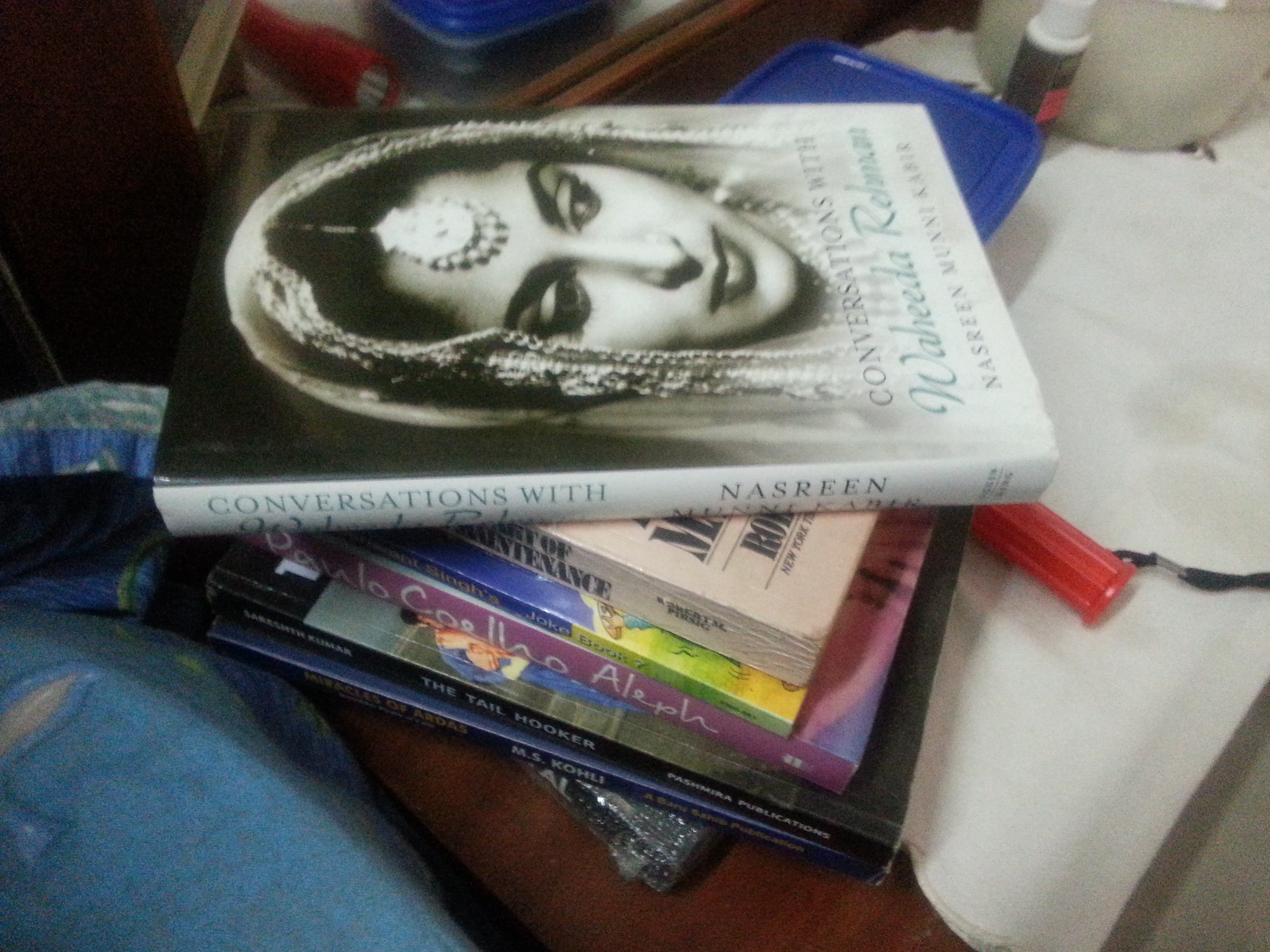
This is the second year in succession when I forgot her birthday. Could there be a hidden mental process involved in my repeatedly forgetting her birthday besides the fact her famous book by Nasreen Munni Kabir titled ‘Conversations With Waheeda Rehman’ is always at my bedside table? Perhaps the hidden mental process is secretly wishing for her not to become older!
Her films have a great association with my childhood and boyhood days and even later days. For some reason, until about three years back, I thought of her as a Telugu origin actress. This was because, at the age of 17 years, she was the find of Guru Dutt in his movie C.I.D. to be directed by Raj Khosla and she was discovered by him in Hyderabad?
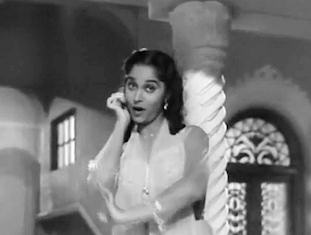
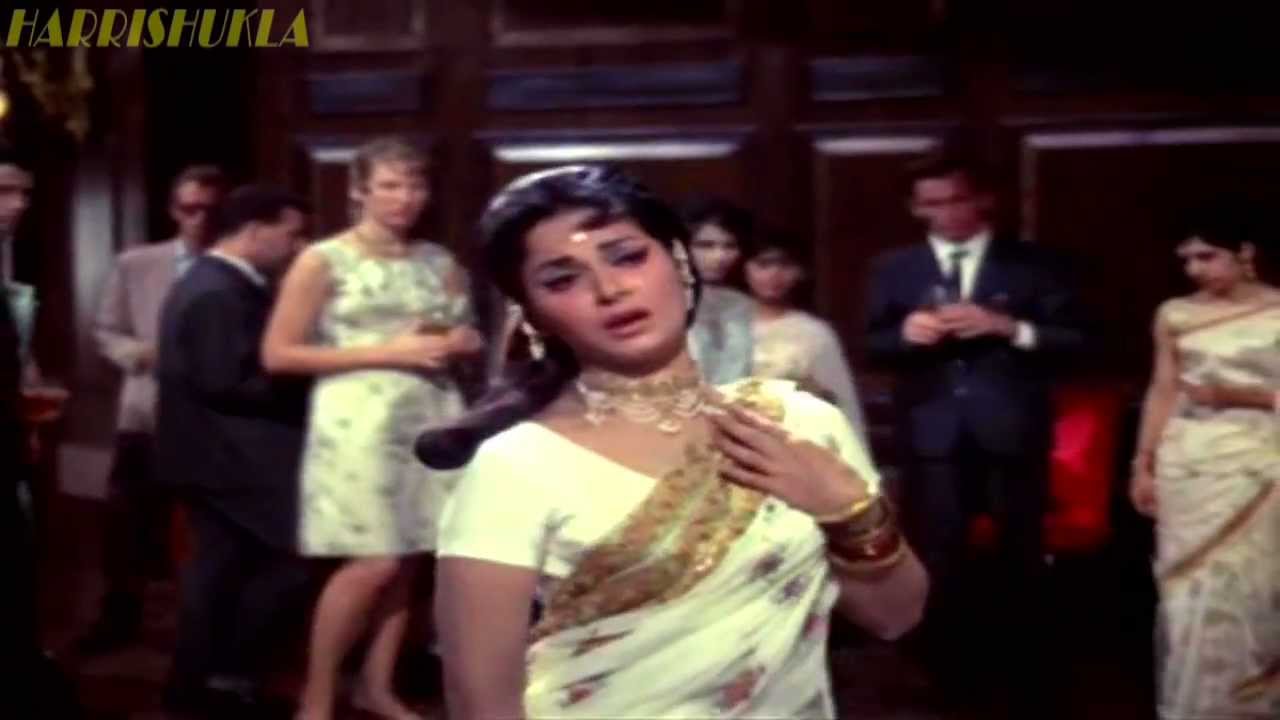
Waheeda in C.I.D. performing the famous number Kahin Pe nigaahen (Pic courtesy: myhindiforum.com)
Anyway, the other night, I was listening to Annu Kapoor in the late night Mastii.. show and he brought out how she refused to act in the movie with revealing clothes as expected by the director Raj Khosla and how despite that, because of her superb histrionics, her career still progressed to the extent of making her the finest actress in Hindi movies.
(pic courtesy: www.youtube.com)
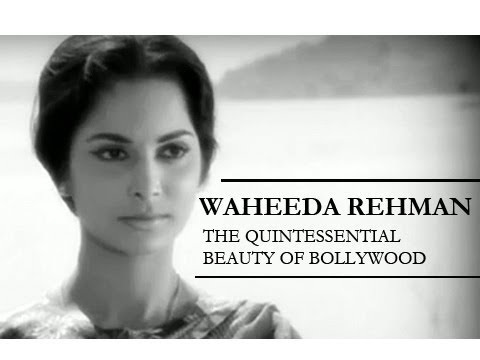
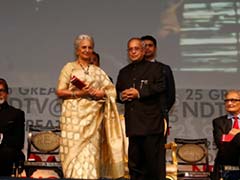
What is so special about her? Could it be just the innumerable awards and honours that have been conferred on her; including the Living Legend Award conferred to her by the President of India in Dec 2013 on the occasion of 25th anniversary of NDTV when they honoured 25 Living Legends?
(Pic courtesy: www.ndtv.com)
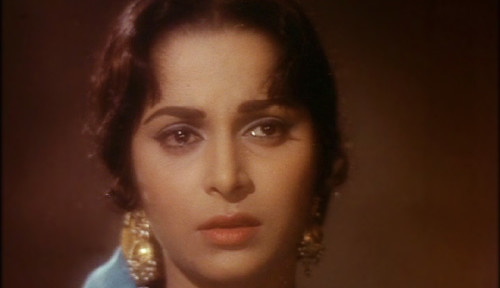
C.I.D. was not the first movie in which I saw her. I saw it many years later. She was a vamp in the movie and one of her songs: Jaata kahan hai deewaane was banned due to its suggestive double entendre’. I saw her other song: Kahin pe nigaahen kahin pe nishaana and was instantly captivated by her; her eyes speak, she had that intrinsic innocence even as a vamp.
In my later life, speaking with her eyes and her likeable elegance and grace are some of the attributes that I associated her with. She is a superb dancer; not of the same class as the other Tamil origin actress Vyjaynthimala (who is to be seen to be believed in Hontho pe aisi baat (Jewel Thief) and Jisse tu kabool karle (Devdas)). However, the overall effect of her dances comes out even better than Vyjaynthimala’s. Some of my favourite dance numbers of hers are: Piya tose naina laagi re, and Mose chhal kiye jaaye (boh from Guide), Raat bhi hai kuchh bheegi bheegi (Mujhe Jeene Do; which is her first movie that I saw. She was a courtesan who falls in love with a dacoit Sunil Dutt. This is the first scene in the movie where he sees her. She did with her full clothes on what actresses of today won’t be able to do with revealing clothes); Paan khayo sainyya hamaro (Teesri Kasam) and a difficult dance number when she was drunk in Prem Pujaari: Rangeela re tere rang mein youn rangaa hai mera man.
(Pic courtesy: www.youtube.com)
I also am indebted to her for being the heroine of my favourite singer Hemant Kumar’s song: Ye Nayan Dare Dare and my favourite lyricist Shakeel Badayuni’s best-in-Hindi-movies-song describing the beauty of a woman: Chaudhvinh ka Chand ho yaa aftaab ho, job hi ho tum khuda ki kasam laajwaab ho..
Waheeda in sad roles? Well, her acting in sad roles makes you feel for her and her situation in the movie to an extent that you feel personally involved to rescue her from the situation. Some of my favourite numbers in this respect are: Badale badale mere sarkaar nazar aate hain..(Chaudhvinh Ka Chaand), Jhoom jhoom dhalati raat (Kohra), Kahin deep jale kahin dil (the song that won Shakeel Badayuni one of his four Best Lyricist awards in Bees Saal Baad), Meri baat rahi mere man mein (Sahib Bibi Aur Ghulam) and Rangeela Re (Prem Pujari).
Waheeda acting on Shakeel’s Aye mohabbat meri duniya mein tera kaam naa tha, in Bees Saal Baad
One reason why I keep forgetting her birthday is because I am still intensely in love with her girlhood songs: Sapane suhaane ladakpan ke..(Bees Sal Baad), Kaanto se kheench kar ye aanchal (Guide); Kaisa jaadu balam toone daara (12 O’Clock, another Guru Dutt movie) and Rimjhim ke taraane leke aayi barsaat (Kaala Bazar).
Waheeda performing on Kaisa jaadu balam toone daala…
So, happy birthday Waheeda Rehman. Thank you very much for bringing enormous happiness, joys, enchantment, and wonderment into our lives. You are a Living Legend and we are proud of belonging to the same era that has been made more beautiful by your eternal grace and elegance.
Let me end by giving you her duet with Dev Anand in the 1960 movie Kaala Bazaar. The song has been put together by Shailendra, Sachin Dev Burman, Geeta Dutt (who sang many of her songs both in Dev Anand and her (Geeta Dutt’s) husband Guru Dutt’s movies.
Please enjoy: Rimjhim ke taraane le ke aayi barsaat….
(giitaa: rim jhim ke taraane leke aayii barasaat
rafii: yaad aaye kisii se vo pahalii mulaaqaat ) – 2
(giitaa: bhiige tan man pa.De ras kii phuhaar
rafii: pyaar kaa sandesaa laayii barakhaa bahaar ) – 2
giitaa: mai.n naa boluu.N, mai.n naa boluu.N aa.Nkhe.n kare.n a.Nkhiyo.n se baat
rafii: rim jhim ke taraane leke aayii barasaat
(rafii: sunake matavaale kaale baadalo.n kaa shor
giitaa: ruum jhuum ghuum ghuum naache man kaa mor ) – 2
rafii: sapano.n kaa saathii chal rahaa mere saath
giitaa: rim jhim ke taraane leke aayii barasaat
rafii: yaad aaye kisii se vo pahalii mulAqaat
dono: rim jhim ke taraane leke aayii barasaat
(giitaa: jab milate ho tum to chhUTe.n dil ke taar
rafii: milane ko tum se mai.n kyo.n thaa beqaraar ) – 2
giitaa: raha jaatii hai, raha jaatii hai kyo.n hoTho.n tak aake dil kii baat
rafii: rim jhim ke taraane leke aayii barasaat
giitaa: yaad aaye kisii se vo pahalii mulAqaat
dono: rim jhim ke taraane leke aayii barasaat!
A few days after our 68th Independence Day, last year, I gave you a compendium of The Best Azaadi (Independence) Poems, together with their translations. A large number of people have messaged to me that it is the finest compendium available on the Internet.
Now, a few days after our 66th Republic Day, I give you – what I consider as – the best patriotic songs. Sometimes, we are filled with anxiety about our country; at others, we are downright cynical. I myself took a reality check four years back with How Proud Should We Be Of Indian Republic At 62? However, we do recognise the fact that it is better to be free, independent and a sovereign republic than to be under a foreign yoke. With all our problems, there won’t be too many of us who don’t love our country India, both as a geographical entity and as an idea or concept. These songs, therefore, not only reflect our history but how and why we love India, that is, Bharat.
The very first song that comes to mind is of course Vande Mataram. It translates into ‘I praise thee, Mother’; wherein Mother is Bharat Mata. The poem was penned by Bankim Chandra Chatterjee in his 1882 classic Anand Math, which was later (in 1952) made into a movie by the same name by Hemen Gupta who was private secretary to Netaji Subhash Chandra Bose and who, in 1961, directed Kabuliwala based on a story by Nobel Laureate Rabindra Nath Tagore. The music of the movie was given by my favourite singer and music director Hemant Kumar. Vande Mataram had many versions sung by many; the latest being on music composed by Oscar winner AR Rehman. However, my favourite is naturally the one sung by Hemant da, even though the movie itself had another version sung by Lata Mangeshkar, widely regarded as one of the best.
Lets now turn to Tarana-e-Hind (Anthem of the People of Hindostan) or the National Song of India: Saare Jahan Se Achha or Better Than The Whole World. It was penned by the Urdu poet Muhammad Iqbal and was published in the weekly journal Ittehad on 16th Aug 1904. It was the leading poem/song of our opposition to the British rule. In the 1950s, the Sitar Maestro Pandit Ravi Shankar composed the music of the national song and Melody Queen Lata Mangeshkar sang it. It also became the marching tune of the Indian Armed Forces. India’s astronaut, in 1984, in an interview with the Indian Prime Minister Indira Gandhi, in answer to a question by her as to how India appeared from the outer space promptly replied (and gladdened the hearts of millions of Indians): “Saare jahan se achchha”!
Please enjoy our national song Saare Jahan Se Achchha sung by Lata Mangeshkar on the music of Pandit Ravi Shankar:
saare jahaa.N se achchhaa, hindostaa.n hamaaraa
ham bulabule hai.n isakii, vo gulasitaa.n hamaaraa
gurabat me.n ho.n agar ham, rahataa hai dil vatan me.n
samajho vahii.n hame.n bhii, dil ho jahaa.N hamaaraa, saare …
parvat ho sabase uu.Nchaa, hamasaayaa aasamaa.N kaa
vo sa.ntarii hamaaraa, vo paasavaa.n hamaaraa, saare …
godii me.n khelatii hai.n, jisakii hazaaro.n nadiyaa.n
gulashan hai jisake dam se, rashk-e-jinaa.n hamaaraa
saare …
ai aab-e-rau.nd-e-ga.ngaa! vo din hai yaad tujhako
utaraa tere kinaare, jab kaaravaa.n hamaaraa, saare …
majahab nahii.n sikhaataa, aapas me.n bair rakhanaa
hindii hai.n ham vatan hai.n, hindostaa.n hamaaraa, saare …
yuunaan, misr, romaa.n, sab miT gae jahaa.N se
ab tak magar hai baakii, naam-o-nishaa.n hamaaraa,
saare …
kuchh baat hai kii hastii, miTatii nahii.n hamaarii
sadiyo.n rahaa hai dushman, daur-e-jahaa.N hamaaraa, saare …
Kadam kadam badhaye jaa was the regimental quick march of Netaji Subhash Chandra Bose. Written by Pt. Vanshidhar Shukla. Composed by Ram Singh Thakur who served in Netaji’s Indian National Army and was of Nepali origin. The song is also currently the regimental quickmarch of the Indian Army.
Please enjoy: Kadam kadam badhaye jaa, khushi ke geet gaaye jaa….
( kadam-kadam ba.Dhaaye jaa
Kushii ke giit gaaye jaa
ye zi.ndagii hai qaum kii
tuu qaum pe luTaaye jaa ) -2
( tuu sher-e-hind aage ba.Dh
marane se phir bhii tuu na Dar
u.Daa ke dushmano.n kaa sar
ju.D-e-watan ba.Dhaaye jaa ) -2
kadam-kadam ba.Dhaaye jaa
Kushii ke giit gaaye jaa
ye zi.ndagii hai qaum kii
tuu qaum pe luTaaye jaa
( chalo chale.n pukaar ke
Gam-e-nishaa.N sa.mbhaal ke
laa qile pe gaa.D ke
laharaaye jaa laharaaye jaa ) -2
( kadam-kadam ba.Dhaaye jaa
Kushii ke giit gaaye jaa
ye zi.ndagii hai qaum kii
tuu qaum pe luTaaye jaa ) -2
https://youtube.com/watch?v=bQcBNutX4GY%3F
This song sung by Lata Mangeshkar on a day after Republic Day in 1963, immediately after the Sino-Indian War of 1962, in Ramlila Maidan, New Delhi, brought the Indian Prime Minister Pandit Jawahar Lal Nehru to tears. In 2013 when the song turned its glorious 50 years, it was sung by Lata ji at Mahalaxmi Race Course in Mumbai whereat the Armed Forces personnel with gallantry medals were re-honoured.
The lyrics of the song were written by Kavi Pradeep, the national poet; and the music was composed by C Ramchandra.
Please enjoy: Aye mere watan ke logo….
ai mere vatan ke logo
tum khuub lagaa lo naaraa
ye shubh din hai ham sab kaa
laharaa lo tira.ngaa pyaaraa
par mat bhuulo siimaa par
viiro.n ne hai praaN ga.Nvaae
kuchh yaad unhe.n bhii kar lo -2
jo lauT ke ghar na aaye -2
ai mere vatan ke logo.n
zaraa aa.Nkh me.n bhar lo paanii
jo shahiid hue hai.n unakii
zaraa yaad karo qurabaanii
jab ghaayal huaa himaalay
khatare me.n pa.Dii aazaadii
jab tak thii saa.Ns la.De vo
phir apanii laash bichhaa dii
sa.ngiin pe dhar kar maathaa
so gaye amar balidaanii
jo shahiid…
jab desh me.n thii dIvaalii
vo khel rahe the holI
jab ham baiThe the gharo.n me.n
vo jhel rahe the golii
the dhanya javaan vo aapane
thii dhanya vo unakii javaanii
jo shahiid…
koii sikh koii jaaT maraaThaa
koii gurakhaa koii madaraasii
sarahad par maranevaalaa
har viir thaa bhaaratavaasii
jo khuun giraa pav.rat par
vo khuun thaa hi.ndustaanii
jo shahiid…
thii khuun se lath-path kaayaa
phir bhii banduuk uThaake
das-das ko ek ne maaraa
phir gir gaye hosh ga.Nvaa ke
jab ant-samay aayaa to
kah gaye ke ab marate hai.n
khush rahanaa desh ke pyaaro.n
ab ham to safar karate hai.n
kyaa log the vo dIvaane
kyaa log the vo abhimaanii
jo shahiid…
tum bhuul na jaao unako
is liye kahii ye kahaanii
jo shahiid…
jay hind… jay hind kii senaa -2
jay hind, jay hind, jay hind
After the success of 1957 Mother India, in 1962 Mehboob Khan made Son of India. As compared to the big cast of Mother India including Nargis, Khan took lesser known Simi Grewal, Kamaljith, Jayant and Kumkum in the lead roles. However, he retained the team of my favourite lyricist Shakeel Badayuni and music director Naushad Ali for the songs of the movie. For a young and newly independent nation, the voice of Shanti Mathur singing Nanha Munna Rahi Hoon was just what India wanted. It became a super-hit song instantly and is reflective of a resurgent India.
Please enjoy: Nanha munna raahi hoon…
nanhaa munnaa raahii huu.N, desh kaa sipaahii huu.N
bolo mere sa.ng, jay hi.nd, jay hi.nd, jay hi.nd …
raste pe chaluu.ngaa na Dar-Dar ke
chaahe mujhe jiinaa pa.De mar-mar ke
ma.nzil se pahale naa luu.ngaa kahii.n dam
aage hii aage ba.Dhaau.ngaa kadam
daahine baae.n daahine baae.n, tham! nanhaa …
dhuup me.n pasiinaa bahaau.ngaa jahaa.N
hare-bhare khet laharaae.nge vahaa.N
dharatii pe faake na paae.nge janam
aage hii aage …
nayaa hai zamaanaa merii na_ii hai Dagar
desh ko banaau.ngaa mashiino.n kaa nagar
bhaarat kisii se na rahegaa kam
aage hii aage …
ba.Daa ho ke desh kaa sitaaraa banuu.ngaa
duniyaa kii aa.Nkho.n kaa taaraa banuu.ngaa
rakhuu.Ngaa uu.nchaa tira.ngaa haradam
aage hii aage …
shaa.nti ki nagarii hai meraa ye vatan
sabako sikhaauu.ngaa pyaar kaa chalan
duniyaa me.n girane na duu.ngaa kahii.n bam
aage hii aage …
This song from the 1965 movie Shaheed on the lives and sacrifices of Shaheed Bhagat Singh, Rajguru and Sukhdev still makes my hair stand on end. The lyricist was Prem Dhawan and music was also composed by him. It was sung by Mohammad Rafi. The version that gives you goose pimples is when Bhagat Singh’s mother visits him in the jail before he and his two friends are taken to the gallows. There is promise in the song that ‘O, mother, your son will not die even after he is hanged and is fortunate to be wedded to the nation’.
Please enjoy: Ai watan, ai watan hamako teri kasam….
tuu nA ronA, ke tU hai bhagat si.nh kii maa.N
mar ke bhI laal terA maregaa nahii.n
Dolii cha.Dhake to laate hai dulhan sabhii
ha.Nsake har koI phaa.Nsii cha.Dhegaa nahii.n
jalate bhii gaye kahate bhii gaye
aazaadii ke paravaane
jiinaa to usiikaa jiinaa hai
jo maranaa desh par jaane
jab shahiido.n kii Dolii uThe dhuum se
deshavaalo.n tum aa.Nsuu bahaanaa nahii.n
par manaao jab aazaad bhaarat kA din
us gha.Dii tum hame.n bhuul jaanaa nahii.n
ai vatan ai vatan hamako terii qasam
terii rAho.n mai.n jaa.n tak luTaa jaaye.nge
phuul kyaa chiiz hai tere kadamo.n pe ham
bhe.nT apane saro.n kii cha.Dhaa jaaye.nge
ai vatan ai vatan
koii pa.njaab se, koii mahaarAshhTr se
koii yuu pii se hai, koii ba.ngaal se
terii puujaa kii thaalii me.n laaye hai.n ham
phuul har ra.ng ke, aaj har Daal se
naam kuchh bhii sahii par lagan ek hai
jot se jot dil kii jagaa jaaye.nge
ai vatan ai vatan …
terii jaanib uThii jo kahar kii nazar
us nazar ko jhukaa ke hii dam le.nge ham
terii dharatii pe hai jo kadam Gair kaa
us kadam kaa nishaa.N tak miTaa de.nge ham
jo bhii diivaar aayegii ab saamane
Thokaro.n se use ham giraa jaaye.nge
When it comes to a patriotic song that still gives you goose pimples, there is nothing to beat this one from Chetan Anand’s 1964 movie Haqeeqat (Reality) that sought to recreate the reality of 1962 Sino Indian War. The movie starred Dharmendra and Priya Rajvansh besides Balraj Sajni, Vijay Anand, Jayant and Sanjay Khan.
This song was penned by Kaifi Azmi who had mastered the art of writing simple words powerfully. Music was composed by Madan Mohan and the song was sung by Mohammad Rafi.
Please enjoy: Kar chale hum fida jaano tan saathiyo….
(kar chale ham fidaa jaan-o-tan saathiyo.n
ab tumhaare havaale vatan saathiyo.n ) – (2)
saa.Ns thamatii ga_ii nabz jamatii ga_ii
phir bhii ba.Dhate kadam ko na rukane diyaa
kaT gaye sar hamaare to kuchh Gam nahii.n
sar himaalay kaa hamane na jhukane diyaa
marate marate rahaa baa.Nkaapan saathiyo.n, ab tumhaare …
zi.ndaa rahane ke mausam bahut hai.n magar
jaan dene kii rut roz aatii nahii.n
husn aur ishq dono.n ko rusavaa kare
vo javaanii jo khuu.N me.n nahaatii nahii.n
baa.Ndh lo apane sar par kafan saathiyo.n, ab tumhaare …
raah qurbaaniyo.n kii na viiraan ho
tum sajaate hii rahanaa naye qaafile
fatah kaa jashn is jashn ke baad hai
zi.ndagii maut se mil rahii hai gale
aaj dharatii banii hai dulhan saathiyo.n, ab tumhaare …
khii.nch do apane khuu.N se zamii.n par lakiir
is taraf aane paaye na raavaN koii
to.D do haath agar haath uThane lage
chhuune paaye na siitaa kaa daaman koii
raam bhii tum tumhii.n lakshmaN saathiyo.n, ab tumhaare …
Lets turn to a little more modern movie and little more modern song. I love this song for its pathos and quiet resolve in the face of unequal war perpetrated on India by the terrorists from across the border. It brought national acclaim to two people: the story-writer and director of the movie Mani Ratnam and its music director AR Rehman. The 1992 movie Roja was first made in Tamil starring Arvind Swamy and Madhoo who nearly received the National Best Actress Award until she was beaten by Dimple Kapadia. The music got the Best Movie on National Integration Award and Best Music Director award for AR Rehman in his debut movie. The soundtrack of the movie by Rehman was declared by Time magazine in 2005 as one of the ten best sound tracks.
The song has the lyrics by PK Mishra and sung by Hariharan.
Please enjoy: Bharat hamako jaan se pyaara hai….
Bhaarat hamako jaan se pyaaraa hai
sabase nyaaraa gulistaa.n hamaaraa hai
sadiyo.n se bhaarat bhuumi duniyaa kii shaan hai
bhaarat maa.n kii rakshaa me.n jiivan qurbaan hai
bhaarat hamako jaan se …
uja.De nahii.n apanaa chaman, TUTe nahii.n apanaa vatan
duniyaa dhar dharatii korI, barabaad naa karade koii
mandir yahaa.N, masjid vahaa.N, hinduu yahaa.N muslim vahaa.N
milate rahe ham pyaar se
jaago …
hindustaanii naam hamaaraa hai, sabase pyaaraa desh hamaaraa hai
janmabhuumi hai hamaarii shaan se kahe.nge ham
sabhii to bhaaI-bhaaI pyaar se rahe.nge ham
hindustaanii naam hamaaraa hai
aasaam se gujaraat tak, ba.ngaal se mahaaraashhTr tak
jhanakii sahii gun ek hai, bhaashhaa alag sur ek hai
kashmiir se madraas tak, kah do sabhii ham ek hai.n
aavaaz do ham ek hai.n
jAgo …
https://youtube.com/watch?v=Wqb4HIcZ-Gc%3F
Talking about AR Rehman, one can never forget his Maa Tujhe Salaam that has been sung by him on his own music. Its lyrics are by Mehboob. AR Rehman has a way of reaching to the hearts of our countrymen with his music and this song really assumed iconic proportions.
Please enjoy: Maa tujhe salaam….
maa.N
(mother)
va.nde maataram
(I pray to you, o mother)
yahaa.N-vahaa.N saaraa jahaa.N dekh liyaa hai
(here and there, i have seen the entire world)
kahii.n bhii tere jaisaa ko_ii nahii.n hai
(but, there is no one anywhere like you)
assii nahii.n sau din duniyaa ghuumaa huu.N
(I have travelled across the world, not for eighty, but for a hundred days)
nahii.n kahii.n tere jaisaa ko_ii nahii.n hai
(no one anywhere, like you no one is there)
mai.n gayaa jahaa.N bhii bas terii yaad thii
(wherever i went, only your memories were there)
jo mere saath thii mujh ko ta.Dapaatii-rulaatii
(that had accompanied me, torturing me, making me weep)
sab se pyaarii terii suurat pyaar hai bas teraa pyaar hii
(your face is the loveliest of them all, your affection is the only love)
maa.N tujhe salaam
(oh mother! i salute to you)
ammaa tujhe salaam
jahaa.N tuu hai vahaa.N mai.n teraa huu.N divaanaa mai.n
(wherever you are, i am there, i am mad after you)
jhuumuu.N naachu.n gaa_uu.N tere pyaar kaa taraanaa mai.n
( i swing, i dance, i sing, the song of your love)
cha.ndaa nahii.n suuraj nahii.n duiyaa kii daulat nahii.n
(i don’t want the moon, nor the sun, nor the wealth of this world)
bas luuTuu.Ngaa tere pyaar kaa khazaanaa
(i will only loot the treasure of your love)
ek nazar jab terii
(one glance of yours)
hotii hai pyaar kii
(you cast on me, filled with love)
duniyaa tab to merii chamake damake mahake re
(then my world shines, glitters, smells)
teraa cheharaa suuraj jaisaa chaa.Nd sii ThaND hai pyaar me.n
(you face is like the sun, the coolness of the moon is in your love)
tere paas hii mai.n aa rahaa huu.N apanii baa.Nhe.n khol de
(i am going to come near you, you please spread your arms)
jor se mujhako gale lagaa le mujhako phir vo pyaar de
(and hug me enthusiatically, grant me again that love of yours)
tuu hii zi.ndagii hai tuu hii merii mohabbat hai
(only your are the life, only you are my love)
tere hii pairo.n me.n jannat hai tuu hii dil tuu jaa.N maa.N
(the paradise lies only in your feet, you are my heart, you are my life, oh mother!)
https://youtube.com/watch?v=jDn2bn7_YSM%3F
Lets now turn to a song that has been filmed in the National Defence Academy at Khadakvasala, near Pune (Maharashtra). It is from the 1970 film Aadmi Aur Insaan. Lyrics of this vivacious song were penned by Sahir Ludhianvi and music composed by Ravi. The song was sung by Mahendra Kapoor, S Balbir and Joginder.
Please enjoy: Yaara dildaara mera dil karta…..
dil karta o yara dildara mera dil karta
o yara dildara mera dil karta
aisa kuch kar paye yado me bas jaye
dil karta o yara dildara mera dil karta
o yara dildara mera dil karta
ho sadiyo jahan me ho charcha hamara
dil karta o yara dildara mera dil karta
o yara dildara mera dil karta
jalti mashale leke milni ki raato me
milni ki rato me
aage aage hum chale yaro ki baraato me
yaro ki baraato me
fanse koi bholi bhali apni bhi baato me
apni bhi baato me
kisi ki kalaayi aaye apne bhi haatho me
apne bhi haatho me
ho sadiyo jahan me ho charcha hamara
dil karta o yara dildara mera dil karta
o yara dildara mera dil karta
aisa kuch kar paye yado me bas jaye
dil karta o yara dildara mera dil karta
o yara dildara mera dil karta
nit naye dhundhe mujhe nit naye mile ho
nit naye mile ho
pariyo me ghire rahe kabhi na akele ho
kabhi na akele ho
gum ki ghataaye ho ki khushiyo ke rele ho
khushiyo ke rele ho
dono se nibhaane wale hum albele ho
hum albele ho
ho sadiyo jahan me ho charcha hamara
dil karta o yara dildara mera dil karta
o yara dildara mera dil karta
aisa kuch kar paye yado me bas jaye
dil karta o yara dildara mera dil karta
o yara dildara mera dil karta
humsa jiyala koi mile na hajaro me
mile na hajaro me
mare chahe jiye rahe agli kataro me
agli kataro me
jhalke hamara lahu kal ki baharo me
kal ki baharo me
ashqo ka tauhafa hoke bant jaye yaaro me
bant jaye yaaro me
ho sadiyo jahan me ho charcha hamara
dil karta o yara dildara mera dil karta
o yara dildara mera dil karta
aisa kuch kar paye yado me bas jaye
dil karta o yara dildara mera dil karta
o yara dildara mera dil karta
o yara dildara mera dil karta
o yara dildara mera dil karta
o yara dildara mera dil karta
o yara dildara mera dil karta
https://youtube.com/watch?v=3adU-Pg7g-o%3F
Lets get back to 1954 movie Jagriti (Awakening) directed by Satyen Bose. It won the Filmfare Best Movie Award and brought for its lead actor Abhi Bhattacharya the Best Supporting Actor Award. This songs lyrics, once again, are by Kavi Pradeep who has excelled in writing patriotic songs. Music is by Hemant Kumar and the song has been sung by Mohammad Rafi.
Please enjoy: Ham laayen hain toofaan se kishati nikaal ke….
paase sabhii ulaT gae dushman kii chaal ke
akshar sabhii palaT gae bhaarat ke bhaal ke
ma.nzil pe aayaa mulk har balaa ko Taal ke
sadiyo.n ke baad phir u.De bAdal gulaal ke
ham laae hai.n tuufaan se kashtii nikaal ke
is desh ko rakhanaa mere bachcho.n sambhaal ke
tum hii bhavishhy ho mere bhaarat vishaal ke
is desh ko rakhanaa mere bachcho.n sambhaal ke
dekho kahii.n barabaad nA hoe ye bagiichaa
isako hR^iday ke khuun se baapuu ne hai sii.nchaa
rakkhaa hai ye chiraaG shahiido.n ne baal ke, is desh ko…
duniyaa ke daa.nv pe.nch se rakhanaa nA vaastaa
ma.nzil tumhaarii dUr hai lambaa hai raastaa
bhaTakaa nA de koii tumhe.n dhokhe me.n Daal ke, is desh ko…
aiTam bamo.n ke jor pe ai.nThii hai ye duniyaa
baaruud ke ik Dher pe baiThii hai ye duniyaa
tum har kadam uThaanaa zaraa dekha bhaal ke, is desh ko…
aaraam kii tum bhuul bhulayyaa me.n nA bhuulo
sapano.n ke hi.nDolo.n pe magan hoke nA jhuulo
ab vaqt aa gayaa hai mere ha.Nsate hue phuulo.n
uTho chhalaa.Ng maar ke aakaash ko chhuu lo
tum gaa.D do gagan pe tira.ngaa uchhaal ke, is desh ko…
https://youtube.com/watch?v=ddrx8288qwA%3F
What can you say about this song? You can only marvel at its lyrics that represents how India was known for the nation with Sone Ki Chidhiya. Rajinder Krishan, its lyricist needs to be congratulated for the words that became immortal, a cherished dream in later years. Music is by Hansraj Behl who has not only given music for several Punjabi movies but also for Hindi movies. It has been sung by Mohammad Rafi. The song is from the 1965 movie Sikander-e-Azam.
Please enjoy: Jahan daal daal par sone ki chidhiyan karti hain basera….
jahaa.N Daal-Daal par
sone kii chi.Diyaa.n karatii hai baseraa
vo bhaarat desh hai meraa
jahaa.N satya, ahi.nsaa aur dharm kaa
pag-pag lagataa Deraa
vo bhaarat desh hai meraa
ye dharatii vo jahaa.N R^ishhi muni
japate prabhu naam kii maalaa
jahaa.N har baalak ek mohan hai
aur raadhaa har ek baalaa
jahaa.N suuraj sabase pahale aa kar
Daale apanaa pheraa
vo bhaarat desh hai meraa
alabelo.n kii is dharatii ke
tyohaar bhii hai alabele
kahii.n diivaalii kii jagamag hai
kahii.n hai.n holii ke mele
jahaa.N raag ra.ng aur ha.Nsii khushii kaa
chaaro aur hai gheraa
vo bhaarat desh hai meraa
jahaa.N aasamaan se baate karate
ma.ndir aur shivaale
jahaa.N kisii nagar me kisii dvaar par
koii na taalaa Daale
prem kii ba.nsii jahaa.N bajaataa
hai ye shaam saveraa
vo bhaarat desh hai meraa …
https://youtube.com/watch?v=-0kPkqkrHPk%3F
Lastly, I give you a song from Manoj Kumar’s 1967 movie Upkaar in which for the first time the villain Pran shifted to good roles. Manoj Kumar was an artificial stereo-typed actor but he excelled in making movies on patriotic themes. The movie Upkaar was also known for Kalyanji Anandji’s music and Indeevar’s lyrics. This very popular song has been sung in the silk-smooth voice of Mahendra Kapoor.
Please enjoy: Mere desh ki dharti…..
mere desh kii dharatii sonaa ugale, ugale hiire motii
mere desh kii dharatii …
bailo.n ke gale me.n jab ghu.ngharuu jiivan kaa raag sunaate hai.n
Gam kos duur ho jaataa hai khushiyo.n ke ka.nval muskaate hai.n
sunake rahaT kii aavaaze.n yuu.N lage kahii.n shahanaaI baje
aate hii mast bahaaro.n ke dulhan kii tarah har khet saje,
mere desh …
jab chalate hai.n is dharatii pe hal mamataa a.nga.Daaiyaa.N letii hai
kyuu.N naa puuje is maaTii ko jo jiivan kaa sukh detii hai
is dharatii pe jisane janam liyaa, usane hii paayaa pyaar teraa
yahaa.N apanaa paraayaa koI nahii.n hai sab pe hai maa.N upakaar teraa,
mere desh …
ye baaG hai gautam naanak kaa khilate hai.n chaman ke phuul yahaa.N
gaa.ndhii, subhaashh, Taigor, tilak, aise hai.n aman ke phuul yahaa.N
ra.ng haraa harii si.nh nalave se ra.ng laal hai laal bahaadur se
ra.ng banaa basa.ntii bhagat si.nh ra.ng aman kaa viir javaahar se,
mere desh …
Before we say Jai Hind, lets recall the 1910 poem of Nobel Laureate Rabindra Nath Tagore and pray that India takes its rightful place in the great nations of the world:
Where The Mind Is Without Fear
by Rabindranath Tagore
Where the mind is without fear and the head is held high
Where knowledge is free
Where the world has not been broken up into fragments
By narrow domestic walls
Where words come out from the depth of truth
Where tireless striving stretches its arms towards perfection
Where the clear stream of reason has not lost its way
Into the dreary desert sand of dead habit
Where the mind is led forward by thee
Into ever-widening thought and action
Into that heaven of freedom, my Father, let my country awake.
These are not merely the songs on guitar. But, these are also the songs in whose scene the guitar is to be seen prominently.
The curious thing about the instrument guitar in the Hindi movies is that the guitar is a fashion statement; the hero or the heroine swings it any which way – across the shoulder, left and right like a man gone berserk with his carbine, or even to rotate it around on the floor a la Zeenat Aman style. Very rarely you come across a song in which the singer actually strums on the guitar throughout the song; most often than not the song starts with the singer strumming the guitar and then forgetting all about either strumming or the guitar itself.
One Music Director who really mastered the acoustic guitar in his songs was Sachin Dev Burman. As soon as you think of the acoustic guitar on the Indian scene, you think of Goa and that’s where Guru Dutt’s 1952 movie Jaal (the Net/Trap) was based; the second movie after Baazi in which Guru Dutt starred Dev Anand.
Dev Anand, as Tony Fernandez, is a good-for-nothing man who comes to a fishing village in Goa with a strange girl Lisa. There Tony seduces a Carlos’s (KN Singh’s) daughter Maria (played by Geeta Bali). Maria is cautioned not to fall for the no-gooder Tony but so strong is the seduction that she cannot help herself. Finally, pure Catholic love of Maria wins over the waywardness of Tony.
Sachin Dev Burman brought the seduction so well through the acoustic guitar that the song is still considered the best that Hindi movies have to offer in this genre. Sahir Ludhianvi, who often penned the lyrics of Guru Dutt movies songs (as in the classic Pyaasa) wrote the lyrics of this song. My favourite singer Hemant Kumar himself sang the song.
Please enjoy the irresistible seduction of acoustic guitar in the iconic song: Ye raat ye chandini phir kahan sun jaa dil ki dastaan……….
ye raat ye chaa.Ndanii phir kahaa.N
sun jaa dil kii daastaa.N
ye raat…
pe.Do.n kii shaakho.n pe soii soii chaa.Ndanii
tere khayaalo.n me.n khoii khoii chaa.Ndanii
aur tho.Dii der me.n thak ke lauT jaaegii
raat ye bahaar kii phir kabhii na aaegii
do ek pal aur hai ye samaa, sun jaa…
laharo.n ke ho.nTho.n pe dhiimaa dhiimaa raag hai
bhiigii havaao.n me.n Tha.nDii Tha.nDii aag hai
is hasiin aag me.n tuu bhii jalake dekhale
zi.ndagii ke giit kii dhun badal ke dekhale
khulane de ab dha.Dakano.n kii zubaa.N, sun jaa…
jaatii bahaare.n hai.n uThatii javaaniyaa.N
taaro.n ke chhaao.n me.n pahale kahaaniyaa.N
ek baar chal diye gar tujhe pukaarake
lauTakar na aae.nge qaafile bahaar ke
aajaa abhii zi.ndagii hai javaa.N, sun jaa…
https://youtube.com/watch?v=dBw_JSiNF9c%3F
Yes, this iconic song doesn’t have the singer strumming the guitar; but, then, you can hardly ever come across a better guitar song in the Hindi movies. It is guitar all the way; so much so that it is hard to imagine this song without the guitar.
This has the consistent magic of the combine of Shailendra with Shankar Jaikishen as Lyricist and Music Director. Lata Mangeshkar sang this for the 1960 movie Dil Apna Aur Preet Praayi. Shankar Jaikishen bagged the best Music Director Award for the movie.
The story of the movie takes you to my home-station Shimla where Raaj Kumar as Doctor Sushil Verma is doctor in the hospital. Meena Kumari as nurse comes to the hospital and since they are together in a difficult operation, they come close to each other.
The story takes a turn when Doctor Sushil’s mother organises a trip to Kashmir. Doctor Sushil is to marry Nadira (Kusum) in gratitude to Nadira’s father for having paid Doctor Sushil’s medical studies fees! It is on this occasion that the song is sung.
With the story, now, you will identify with the lyrics, the now happy, now sad notes and the rueful atmosphere in a boat. More than rueful, it is enigmatic.
Please enjoy: Ajeeb dastaan hai ye….
ajiib daastaa.n hai ye
kahaa.N shuruu kahaa.N khatam
ye ma.nzile.n hai kaun sii
na vo samajh sake na ham
ajiib daastaa.n…
(ye roshanii ke saath kyo.n
dhuaa.N uThaa chiraag se) -2
ye Kvaab dekhatii huu.N mai.n
ke jag pa.Dii huu.N Kvaab se
ajiib daastaa.n…
(kisiikaa pyaar leke tum
nayaa jahaa.N basaaoge) -2
ye shaam jab bhii aaegii
tum hamako yaad aaoge
ajiib daastaa.n…
(mubaarake.n tumhe.n ke tum
kisiike nuur ho gae) -2
kisiike itane paas ho
ke sabase duur ho gae
ajiib daastaa.n…
https://youtube.com/watch?v=eJLdL5_QkVo%3F
Why do I like this guitar song from the 1968 movie Kismat (Destiny) so much? Is it just because of the enchanting guitar notes brought into the song by OP Nayyar whose music direction ensured that he invariably had the maximum number of hit songs in his movies be it Kashmir Ki Kali or Phir Wohi Dil Laya Hoon. He even made songs that the comedian Johnny Walker sang (including the iconic Aye dil hai mushkil jeena yahan….ye hai Bombay meri jaan). Yes, that’s there. But, the song also has Biswajeet acting on the guitar in a club/hotel and he is not just effectively strumming the guitar but also has the right body-language throughout the song. SH Bihari, who wrote lyrics for OP Nayyar in Kashmir Ki Kali too, penned these too. The song has been sung by Mahendra Kapoor, which is not surprising at all considering that even Manna De sang guitar songs!
Please enjoy: Laakhon hain yahan dilwaale par pyaar nahin milata….
mahafil mahafil jaa dekhaa, har dil me.n samaa kar dekhaa
har saaz pe gaa kar dekhaa
dil ko kahii.n chain naa milaa – 2
mai.n to duniyaa me.n pyaare akelaa hii rahaa
laakho.n hai yahaa.N …
is dil ko kahaa.N le jaae.n, kuchh aap agar faramaae.n
to aap ke ham ho jaae.n
kah do hame.n ha.nsake zaraa – 2
ajii jo kuchh bhii dil ne tumhaare hai kahaa
laakho.n hai yahaa.N …
https://youtube.com/watch?v=lzqA4kjBHK8%3F
Ravi, my namesake’s song too in the 1962 Shammi Kapoor and Shakeela starrer movie China Town, reached iconic proportions. So much so that when they talk about guitar songs, this one of the first songs that comes to one’s mind. Majrooh Sultanpuri was one lyricist who was far ahead of his times and penned songs that reflected the modern era during those times (his numbers in Dev Anand starrer Guru Dutt movie C.I.D., for example, shall come to your mind including the one that was banned due to its “suggestive double entendre”): Jaata kahan hai deewaane, sab kuchh yahan hai sanam. Then there are other Dev Anand starrers such as Kaala Paani, Bambai Ka Babu). His songs for Tumsa Nahin Dekha, Dil Deke Dekho, Pyaar Ka Mausam, Yaadon Ki Baraat, all reflected the modern spirit.
Sixteen years later, the story of China Town was copied in Amitabh Bachchan starrer Don. In China Town, Shammi Kapoor as Shekhar is a singer in a hotel. He is in love with Rita (Shakila); but her father wants her to marry someone of their own status, that is, rich. They relocate from Darjeeling to Calcutta and Shammi Kapoor follows them. Shakila’s father gets him arrested. It is at this time that the police realise that Shekhar’s face resembles that of China Town gangster Mike in jail with them. The police think of replacing Mike with Shekhar so as to get to China Town.
Baar baar dekho is one of the songs that Shekhar sings in the hotel in the presence of Rita. Please enjoy: Baar baar dekho, hazaar baar dekho…..
Baar baar dekho, hazaar baar dekho
ke dekhane kii chiiz hai, hamaaraa dilarubaa, Taalii ho
Taalii ho, Taalii ho
(haa.N jii haa.N, aur bhii ho.nge diladaar yahaa.N
laakho.n dilo.n kii bahaar yahaa.N
par ye baat kahaa.N ) – 2
ye bemisaal husn, laajavaab ye aadaa, Taalii ho
Taalii ho, Taalii ho
(dil milaa, ek jaan-e-mahafil milaa
yaa chiraaG-e-ma.nzil milaa
ye na puuchho ke kahaa.N ) – 2
nayaa nayaa ye aashiqii kaa raaz hai merA, Taalii ho
Taalii ho, Taalii ho
(balle balle, uThake misTar kyo.n chale
pyaar pe mere kaho kyo.n jale
baiTh bhii jaao meharabaa.N ) – 2
duaa karo mile tumhe.n bhii aisaa dilarubaa, Taalii ho
Taalii ho, Taalii ho
https://youtube.com/watch?v=k6pYkSh2NcA%3F
Now imagine Majrooh Sultanpuri writing twenty-six years after China Town song Baar baar dekho; he was still writing for the young, the modern, the romantic. The generation had changed and Majrooh kept pace with the times. The film was the 1988 movie Qayamat Se Qayamat Taq. It was the debut film for three important people: Mansoor Khan who directed the film following in the footsteps of his father Nasir Hussain who wrote the story; Nasir Hussain’s nephew Aamir Khan who was later to emerge as the actor who set new standards in acting excellence; and finally Juhi Chawla who emerged as a bubbling and fresh star. The movie was the first grand hit for Music Director Anand, Milind and singer Udit Narayan.
This guitar song became a craze with the younger generation. Please enjoy: Papa kehte hain bada naam karega…..
Paapaa kahate hai.n ba.Daa naam karegaa
beTaa hamaaraa aisaa kaam karegaa
magar ye to, koii nA jaane
ke merii ma.nzil, hai kahaa.N
baiThe hai.n milake, sab yaar apane
sabake dilo.n me.n, aramaa.n ye hai
vo zindagii me.n, kal kyaa banegaa
har ik najar kaa, sapanaa ye hai
koii ##engineer## kaa kaam karegaa
##business## me.n koii apanaa naam karegaa, magar ye to …
meraa to sapanaa, hai ek cheharaa
dekhe jo usako, jhuume bahaar
gaalo.n me.n khilatii, kaliyo.n kaa mausam
aa.Nkho.n me.n jaaduu, hoTho.n me.n pyaar
bandaa ye khUbasUrat kaam karegaa
dil kii duniyaa me.n apanaa naam karegaa, magar ye to …
https://youtube.com/watch?v=FEvBiayarlc%3F
The 1973 Nasir Hussain movie Yaadon Ki Baraat had the oft repeated theme of siblings separated by destiny but meeting in later years through the same destiny.
Shankar (Dharmendra), Vijay (Vijay Arora), and Ratan (Tariq Khan) are three brothers. In their childhood, on their father’s birthday, their mother taught them a song titled Yaadon Ki Baaraat. One day, their father witnessed a robbery by Shakaal (Ajit Khan) and his henchmen and is hence killed by Shakaal together with his wife. The boys watch this and flee.
After they grow up, they cannot forget the nightmarish memories of their parents’ murder. Shankar is haunted by it and is now joined by his friend Usman on a crime spree around the city. Vijay was adopted by a fairly wealthy man who is the groundskeeper to the love of his life, Sunita (Zeenat Aman). Ratan was raised by the boys’ maid, who changed his name to Monto. With his new identity, Monto starts a band and does gigs at hotels for a living and is also in love with a co-singer (Neetu Singh).
The brothers meet several times, yet do not recognize each other; until their song Yaadon Ki Baraat brings them together. This too is a lovely guitar song. However, the guitar song that scores over this in my list of Best Guitar Songs in Hindi movies is certainly the one between Zeeant Aman and Vijay Arora. Now, here is one heroine who looked class with a guitar even if she only rotated it on the floor and hardly strummed it. Majrooh Sultanpuri who never disappointed with his modern era lyrics, penned the lyrics for this too. And, RD Burman’s music is simply superb. Mohammad Rafi who has sung all types and genres of songs in the movies including children’s songs, ushered in the era of pop music in Hindi movies and was totally at home singing it. Asha Bhosle, singing for Zeenat Aman was sensuous indeed.
Please enjoy: Chura liya hai tum ne jo dil ko…….
Churaa liyaa hai tum ne jo dil ko
nazar nahii.n churaanaa sanam
badal ke merii tum zi.ndagaanii
kahii.n badal na jaanaa sanam
le liyaa dil, haay meraa dil
haay dil lekar mujhako naa bahalaanaa
churaa liyaa… churaa liyaa hai …
bahaar ban ke aauu.N kabhii tumhaarii duniyaa me.n
guzar na jaae.n ye din kahii.n isii tamannaa me.n
tum mere ho, haa.N tum mere ho
aaj tum itanaa vaadaa karate jaanaa
churaa liyaa … churaa liyaa hai …
sajaauu.Ngaa luT kar bhii tere badan kii Dolii ko
lahuu jigar kaa duu.Ngaa ha.nsii.n labo.n kii laalii ko
hai vafaa kyaa, is jahaa.N ko
ek din dikhalaa duu.Ngaa mai.n diivaanaa
churaa liyaa… churaa liyaa hai …
le liyaa dil, haay meraa dil
haay dil lekar mujhako naa bahalaanaa
churaa liyaa… churaa liyaa hai …
https://youtube.com/watch?v=HvY9nHIAneg%3F
This song would have jumped several steps up and would have rubbed shoulders with the top-most guitar songs in Hindi movies, except that it was spoiled by bad picturisation by the director T Prakash Rao. Its lyrics by Anand Bakshi, music by Kalyanji Anandji and singing by Kishore Kumar are all top-notch though. It is from the 1970 movie Ghar Ghar Ki Kahani with Balraj Sahni and Nirupa Roy in title roles. They have three school going children Ravi, Roopa and Raja. The three go into a hunger strike because the parents are not able to meet their demands, what with the father’s income being only Rupees 630 per month. It is at this time that Balraj Sahni tries to teach them budgeting by giving them reign of household expenses for the next six months. A beautiful story follows, literally ghar ghar ki kahani.
The song is played on guitar in the movie by Jalal Agha, a college student whilst Rakesh Roshan and Bharati are seen loving in the backdrop. How one wishes, the scene was built up better in the movie.
Anyway, enjoy: Samaa hai suhaana suhaana, nashe mein jahaan hai……
Samaa hai suhaanaa suhaanaa
nashe me.n jahaa.N hai
kisii ko kisii kii khabar hii kahaa.N hai
har dil me.n dekho
mohabbat javaa.N hai
##hmm##…
kah rahii hai nazar nazar se afasaane
##hmm##…
kah rahii hai nazar nazar se afasaane
ho rahaa hai asar ke jisako dil jaane
dekho ye dil kii ajab daastaa.n hai
nazar bolatii hai, dil bezubaa.n hai
##hmm##…
samaa hai suhaanaa suhaanaa…
ho rahaa hai milan dilo.n kaa mastaanaa
##hmm##…
ho rahaa hai milan dilo.n kaa mastaanaa
ho gayaa hai koii kisii kaa diivaanaa
jahaa.N dilarubaa hai, dil bhii vahaa.N hai
jise pyaar kahiye, vahii darmiyaa.N hai
##hmm##…
samaa hai suhaanaa suhaanaa…
Now that I have introduced you to a guitar song by the composers Kalyanji Anandji, I am tempted to give you another beautiful one by the same duo; this one with even better guitar notes. It is from thew 1983 movie Kalaakar starring Sridevi and Kunal Goswami. Lyrics are by Indeevar.
Please enjoy: Neele neele ambar par chand jab aaye……..
nIle nIle ambar par, chA.Nd jab aaye
pyaar barasaae, hamako tarasaaye
aisaa koii saathii ho
aisaa koii premii ho
pyaas dil kii bujhaa jaae
nIle nIle …
(ho, uu.Nche uu.Nche parvat
jab chuumate hai ambar ko
pyaasaa pyaasaa ambar
jab chuumataa hai saagar ko ) – 2
pyaar se kasane ko
baaho.n me.n basane ko
dil meraa lalachaaye
koI to aa jaaye
aisaa koI saathii ho
aisaa koI premii ho
pyaas dil kii bujhaa jaae
nIle nIle …
(ho, Tha.nDe Tha.nDe jho.nke
jab baalo.n ko sahalaae.n
tapatii tapatii kiraNe.n
jab gaalo.n ko chhU jAe.n ) – 2
saa.Nso.n kii garamii ko
haatho.n kii naramii ko
dil meraa tarasaae
koI to chhU jAye
aisaa koI saathii ho
aisaa koI premii ho
pyaas dil kii bujhaa jAe
nIle nIle …
(chham chham karataa sAvan
bU.ndo.n ke baaN chalAe
satara.ngii barasaato.n me.n jab
tan man bhIgaa jaae ) – 2
pyaar me.n nahAne ko
DUb hii jaane ko
koI to aa jAe
khvaab jagaa jAye
aisaa koI saathii ho
aisaa koI premii ho
pyaas dil kii bujhaa jae
nIle nIle …
https://youtube.com/watch?v=ZUlDWcik6dg%3F
After the success of 1952 movie Jaal’s guitar based song Ye raat ye chandini phir kahan, Sahir Ludhianvi, SD Burman and Hemant Kumar did it again, in another Dev Anand movie, the 1955 film Munimji in which Dev Anand acted with Nalini Jaywant and Pran. However, this time, singing for the heroine wasn’t Lata Mangeshkar but Geeta Dutt.
There will be some who will consider this song as a little comical because of Pran’s farcical attempts at singing. However, it is still a very beautiful guitar based song, well deserving of being included in the Best Guitar Songs compilation.
Please enjoy: Dil ki umange hain jawan, rang mein dooba hai samaa…..
he : dil kii uma.nge.n hai.n javaa.N
ra.ng me.n Duubaa hai samaa
mai.n ne tumhe.n jiit liyaa
haar ke dono.n jahaa.N
pa ma pa dha pa ga sa pa
dil kii uma.nge.n hai.N javaa.N
gaa_ie
praa: dil kii uma.nge.n hai.n javaa.N
gii: bahut achchhe
praa: ra.ng me.n Duubaa hai samaa
gii: vaah vaah vaah
he: dil kii uma.nge.n hai.n javaa.N
aa haa haa haa haa haa haa
gii: gaa_ie gaa_ie gaa_ie
praa: o ho ho ho ho ho ho
gii: kyaa kahane
he: o~ o~ o~ o~ o~
sadiyo.n puraanii ye zamiin
hai aaj kitanii hasiin
aataa nahii.n hai yakiin
hotaa nahii.n hai bayaa.N
gii: aap bhii gaa_ie
praa: dil kii uma.nge.n hai.n javaa.N
ra.ng me.n Duubaa hai samaa
gii: jiyo jiyo
praa: mai.n ne tumhe.n jiit liyaa
he: uu.N huu.N, mai.n ne tumhe.n jiit liyaa
haar ke dono.n jahaa.N
dil kii uma.nge.n hai.n javaa.N
bhiige nazaaro.n se kaho
gaatii havaao.n se kaho o o
jaatii bahaaro.n se kaho
ruk jaaye aaj yahaa.N
dil kii uma.nge.n hai.n javaa.N
gii: gaa_ie naa
kyaa mazaa aa rahaa hai
huu.N huu.N huu.N
praa: dil kii uma.nge.n hai.n javaa.N
ra.ng me.n Duubaa hai samaa
he: mai.n ne tumhe.n jiit liyaa
haar ke dono.n jahaa.N
dil kii uma.nge.n hai.n javaa.N
praa: dil kii uma.nge.n hai.n javaa.N
ra.ng me.n Duubaa hai samaa
he: mai.n_ne tumhe.n jiit liyaa
haar ke dono.n jahaa.N
gii: aa_ie na aap bhii naachiye
he, gii: dil kii uma.nge.n hai.n javaa.N
ra.ng me.n Duubaa hai samaa
he: mai.n ne tumhe.n jiit liyaa
gii: uu.N, huu.N mai.n ne tumhe.n jiit liyaa
he, gii: haar ke dono.n jahaa.N
https://www.youtube.com/watch?v=Q5rRt2jt5Aw
Lets now turn to some of the latter day movies and the guitar based songs in them. The title song of the 1990 Mahesh Bhatt movie Aashiqi. The film was a total success because of the music given by Nadeem Shravan and because of Kumar Sanu’s singing. Rahul Roy and Anu Agarwal also debuted in the movie and came in as whiffs of fresh air. In the title song, Nadeem Shravan used the electric guitar notes so well that these stay with you long after you have finished listening to the song. Lyricist is Ravi Malik and the song has been sung by Kumar Sanu and Anuradha Paudwal.
Please enjoy: Saanson ki zaroorat hai jaise zindagi ke liye……
saa.Nso.n kii zaruurat hai jaise – (2)
zi.ndagii ke liye – (2)
bas ek sanam chaahiye, aashiqii ke liye
(jaam kii zaruurat hai jaise – 2), bekhudii ke liye
haa.N ek sanam chaahiye, aashiqii ke liye
bas ek sanam chaahiye, aashiqii ke liye
vaqt ke haatho.n me.n sabakii taqadiire.n hai.n – (2)
aaInaa jhuuThaa hai sachchii tasaviire.n hai.n
jahaa.N dard hai vahii.n giit hai
jahaa.N pyaas hai vahii.n miit hai
koI naa jaane magar jiine kii yahii riit hai
(saaz kii zaruurat hai jaise -2), mausiqii ke liye
bas ek sanam chaahiye, aashiqii ke liye
ho ho ho ho ho ho ho – (2)
ma.nzile.n haasil hai.n phir bhii ek duurii hai
binaa hamaraahii ke zi.ndagii adhuurii hai
milegii kahii.n koI rahaguzar
tanhaa kaTegaa kaise ye safar
mere sapane ho jahaa.N
DhuunDhuu.N mai.n aisii nazar
(chaa.nd kii zaruurat hai jaise -2), chaa.ndanii ke liye
bas ek sanam chaahiye, aashiqii ke liye
https://youtube.com/watch?v=YCuhzjK11iA%3F
I love this song from the 1998 movie Pyaar Kiya To Darna Kyaa starring Salman Khan and Kajol. The singer Kamal Khan became an overnight success with this song. The guitar notes are really good; though, it is a shame that Salman Khan gets rid of the guitar like he does of his shirt.
The song is also a success story for the lyricist Sameer and composers Jatin Lalit.
Please enjoy: O o jaane jaana, dhoonde tujhe deewana…..
I love you all
Doston na koi manzil hai
No koi saathi hai
Phir bhi nikal pada hoon ghar se
Shaayad wohi saathi hai wohi manzil hai
Hit it !!!
O O Jaane Jaana
Dhoondhe Tujhe Deewana
Sapnoo Mein Roz Aaye
Aa Zindagi Mein Aa Na
O O Jaane Jaana
Dhoondhe Tujhe Deewana
Sapnoo Mein Roz Aaye
Aa Zindagi Mein Aa Na Sanam
Mere Khaab Mere Khayaloon Ki Rani
Kisi Din Banegi Humari Kahani
Mere Khaab Mere Khayaloon Ki Rani
Kisi Din Banegi Humari Kahani
Aye meri Bekhudii
Ye Kasam Maine Li
Pyaar Mein Ek Din
Meri Jaan Tujhe Hai Paana
Sapnoo Mein Roz Aaye
Aa Zindagi Mein Aa Na
O O Jaane Jaana
Dhoondhe Tujhe Deewana
Sapnoo Mein Roz Aaye
Aa Zindagi Mein Aa Na Sanam
Kisi Khoobsurat Paari Jaisi Hogi
Mujhe Kya Pataa
Dilruba Kaisi Hogi
Kisi Khoobsurat Paari Jaisi Hogi
Mujhe Kya Pataa
Dilruba Kaisi Hogi
Sochta Hoon Tujhe
Chahata Hoon Tujhe
Tujhe Choom Loon Sajan
Dil Mera Keh Raha
Saare Fasley Mitaana
O O Jaane Jaana
Dhoondhe Tujhe Deewana
Sapnoo Mein Roz Aaye
Aa Zindagi Mein Aa Na
https://youtube.com/watch?v=nX_34QEVHSk%3F
If Rakesh Roshan was the second fiddle (good expression there, considering that we are talking of Guitar Songs!) in the Ghar Ghar Ki Kahani song (he didn’t act singing it; but, was somewhere in the backgrounsd), in this song too, he was the second fiddle; in that whilst he played the guitar and sang it, it was actually for the lovers Jeetendra and Neetu Singh. But, the song is so good that once again, like the Sama hai suhaana suhaana song, you will be lost in the dream world. Yogesh, Rajesh Roshan and Kishore Kumar have put this together as Lyricist, Music Director and Singer for Rakesh Roshan in the 1977 movie Priyatama.
Please enjoy: Koi rook naa deewaane ko Man machal raha kuchh gaane ko…..
ko_ii roko naa diivaane ko
man machal rahaa kuchh gaane ko -2
ye bhiigaa-bhiigaa mausam ye bhiigii-bhiigii raahe.n
chale do ham raahii baa.Nho.n me.n Daale baahe.n
to phuulo.n ne khil ke kahaa ye dil se
haa.N din suhaanaa mausam salonaa
daaman se baa.NDh lo pyaaraa samaa.N
ko_ii roko naa …
umar ke safar me.n jise jo yahaa.N bhaa_e
usii ke sapano.n me.n ye man ra.ng jaa_e
to ra.ngo.n me.n priit ke ra.nge ra.ngiilaa
gaa le taraanaa jo ye rasiilaa
alabelaa giit vo bhuule kahaa.N
ko_ii roko naa …
https://youtube.com/watch?v=7iK4trzUR7c%3F
The atmosphere of Sama hai suhaana suhaana was copied in a later day Shah Rukh Khan 1997 movie Pardes. As it happens so many times in Shah Rukh Khan movies, he is not the one wooing the heroine, in this case Mahima Chaudhary, but helping her get a good husband in Apurva Agnihotri. Her entire family would like this very much since Apurva has made himself successful in America. Now, it is up to her, Mahima, to win Apurva over and hence, Shah Rukh steps in providing the helping hand. It is only much later in the movie, when Apurva manages to show his true and evil colours that Sha Rukh and Mahima realize how much they themselves love each other. Once again, as in Sama hai suhaana suhaana song, Anand Bakshi is the lyricist. Nadeem Shravan is the composer and the song has been sung by Kumar Sanu.
Please enjoy: Do dil mil rahe hain, magar chupake chupake….
ko: gup-chup gup-chup chup-chup
ku: do dil mil rahe hai.n
do dil mil rahe hai.n magar chupake-chupake -2
sabako ho rahii hai
haa.N sabako ho rahii hai Kabar chupake-chupake
ho do dil mil rahe hai.n magar chupake-chupake
saa.Nso.n me.n ba.Dii beqaraarii, aa.Nkho.n me.n ka_ii ratajage
kabhii kahii.n lag jaye dil to, kahii.n phir dil naa lage
apanaa dil mai.n zaraa thaam luu.N
jaaduu kaa mai.n ise naam duu.N
jaaduu kar rahaa hai
jaaduu kar rahaa hai asar chupake-chupake
do dil mil rahe hai.n magar chupake-chupake
aise bhole ban kar hai.n baiThe, jaise ko_ii baat nahii.n
sab kuch nazar aa rahaa hai, din hai ye raat nahii.n
kyaa hai, kuchh bhii nahii.n hai agar
ho.nTho.n pe hai Kaamoshii magar
baate.n kar rahii.n hai
baate.n kar rahii.n hai nazar chupake-chupake
do dil mil rahe hai.n magar chupake-chupake
kahii.n aag lagane se pahale uThataa hai aisaa dhu_aa.N
jaisaa hai idhar kaa nazaaraa o vaisaa hii udhar kaa samaa.N
dil me.n kaisii kasak sii jagii
dono.n jaanib baraabar lagii
dekho to idhar se
dekho to idhar se udhar chupake-chupake
do dil mil rahe hai.n magar chupake-chupake
sabako ho rahii hai
haa.N sabako ho rahii hai Kabar chupake-chupake
ho do dil mil rahe hai.n magar chupake-chupake
ko: gup-chup gup-chup chup-chup
ku: magar chupake-chupake -2
I would be amiss if I don’t include this song in the list of Best Guitar songs in the Hindi movies. And please notice how as late as in 1995, Majrooh Sultanpuri was still going strong. The song and the guitar playing are important since Aamir Khan in the movie Akele Ham Akele Tum is teaching Manisha Koirala guitar and singing. Anu Malik’s music is refreshing indeed. The song has been sung by Udit Narayan and Alka Yagnik.
Please enjoy: Raja ko rani se pyaar ho gaya…..
raajaa ko raanii se pyaar ho gayaa pahalii nazar me.n pahalaa pyaar ho gayaa
dil jigar dono.n ghaayal hu_e tiir-e-nazar dil ke paar ho gayaa
raajaa ko raanii se …
ho raaho.n se raahe.n baaho.n se baahe.n milake bhii milatii nahii.n
ho hotaa hai aksar aramaa.n kii kaliyaa.n khil ke bhii khilatii nahii.n
o phir bhii na jaane kyuu.n nahii.n maane diivaanaa dil bekaraar ho gayaa
raajaa ko raanii se …
raanii ko dekho nazare.n milii.n to aa.Nkhe.n churaane lagii
ho karatii bhii kyaa vo sar ko jhukaa ke ka.nganaa ghumaane lagii
ho raajaa ne aisaa jaaduu chalaayaa na karate karate ikaraar ho gayaa
raajaa ko raanii se …
https://youtube.com/watch?v=Z4BhFQiX3xE%3F
I have taken you on quite a roller-coaster ride starting with the older songs and then brought you to some of the newer songs that had not just the guitar notes but, guitar was prominently there in the video of the songs.
To end, I shall give you a song representative of the older era. In this, the music directors had got sufficient hang of the guitar but, in the movie, the hero or the heroine merely carried the guitar as some sort of a fashion statement without playing it even once. It is from the 1963 movie Phir Wohi Dil Laaya Hoon. The songs of this movie penned by Majrooh Sultanpuri with remarkably bubbly music composed by OP Nayyar, are amongst the most refreshing songs in Hindi movies. Mohammad Rafi sang for Joy Mukherjee carrying his guitar as a piece of baggage.
Please enjoy the last song in this article: Laakhon hain niggah mein, zindagi ki raah mein, sanam haseen jawaan….
laakho.n hai.n nigaah me.n, zi.ndagii kii raah me.n
sanam hasiin javaa.N
hoTho.n me.n gulaab hai, aa.Nkho.n me.n sharaab hai
lekin vo baat kahaa.N
(laT hai kisii kii jaaduu kaa jaal
ra.ng Daale kisii pe kisii kaa jamaal) – 2
taubaa ye nigaahe.n, ke rokatii hai raahe.n
le leke tiir kamaan
laakho.n hai.n nigaah me.n …
(jaanuu.n naa diivaanaa mai.n dil kaa
kaun hai khayaalo.n kii malikaa) – 2
bhiigii bhiigii rut kii chhaao.n tale
man ko kahii.n vo aan mile
kaise pahachaanuu.N, ki naam nahii.n jaanuu.N
Dhuu.NDhe mere aramaan
laakho.n hai.n nigaah me.n …
(kabhii kabhii vo ek maha-jabii.n
Dolatii hai dil ke paas kahii.n) – 2
ke hai.n jo yahii baate.n
to ho.ngii mulaakaate.n
kabhii vahaa.N nahii.n to yahaa.N
On Thursday, the 8th of May 14, our first-born Arjun S Ravi weds Samira Kanwar, the first-born of Asha and Atul Kanwar. This photo-essay traces Arjun and Samira’s life leading up to the wedding. Here is their Wedding Invite:
Let me first explain the name ‘Loveapalooza‘ to you. It has been derived from ‘Lollapalooza’, that is a very well attended “annual music festival featuring popular alternative rock, heavy metal, punk rock and hip hop bands, dance and comedy performances, and craft booths.”
You see, Arjun and Sam (Samira) both are into music in a huge way. They are both directors in the music company called OML (Only Much Louder); Sam looks after the television content through a company under OML banner called Babble Fish Productions. Arjun looks after the digital content on the portals NH7 and Indiecision.
Let me now begin their story:
Early Childhood
Arjun, our elder son, was born on 14th of May in 1984. All children are god sent. However, Arjun was special since he was born two weeks after my father’s tragic death and all of us, especially my mom (his dadi (paternal grandmother)) felt that he was sent to wipe away our tears. And he did and still does. He was a joy to hold and to watch growing up:
My mom (his dadi) holding Arjun as a gift from God:
Lyn, always so beautiful, in ecstasy to hold “such a wonderful bundle of joy”:
During his early childhood, we shuttled between Mumbai and Kandaghat in Shimla Hills and then for the next three years until we went for my Staff Course in Wellington (Nilgiris) in May 1990, we were in New Delhi. This included the six months period between January and June 1988 when I was on deputation to Seville in Spain and the family (by this time our younger son Arun was born on the 22nd of Dec 1986 in Mumbai when I and my ship INS Ganga were away to Andaman & Nicobar islands with Prime Minister Rajiv Gandhi and his wife Sonia Gandhi) shifted with my mother in Kandaghat.
There was nothing that he did that was not refreshingly appealing to people all around him. He had a natural propensity to love all animals and befriended cats and dogs at a very early stage. A few years back, he found that a bitch had littered under the stairs leading to his office of the JAM magazine. He found that one of the pups was not just small and weak but unable to cope up. He brought the pup home and throughout the night tended to it with the advice being received on phone by an NGO looking after the welfare of the stray dogs. He didn’t sleep at all. In the morning, he was in tears when the pup died.
Most of his toys were shaped like petsHe’d have pets even in his cot cum play-penLooking good and cute even in a trash box
He was at home with everything; as the picture above shows, even in a trash-box. The moment he learnt to crawl, he was everywhere, helping my mom and all of us with our work:
Frequent travels from Bombay to Kandaghat didn’t keep him away from looking cute and relaxed:
And then, he learnt to stand on his two feet and walk around. Here is a picture of the first step he ever did! Lyn and I have, at least one picture of all his firsts except one; the first word he uttered was ‘Goo”, all by himself. We called over friends to share with them the exciting news that Arjun spoke. Over drinks, they asked us to share with them the word and when we told them, they stared at us in amazement. It was amazing indeed.
Now that he learnt to walk, it was difficult to keep him in his play-pen:
Or, for that matter, in his pram:
Samira
She is the first-born of Asha and Atul Kanwar; born on the American Independence Day: the 4th of July. It was certainly the most beautiful thing that ever happened to Asha and Atul. Holding the gift of their love close to them was like their most ardent dream come true. Here is Asha, as in Donald Peer’s song: “Looking proud as a queen as she carried” Samira:
The sheer joy of holding her whilst the fawning husband looked on is something that is unforgettable for Asha. As far as Samira is concerned, she knows that the happiness, warmth and confidence of being in her parents’ arms can never be replaced by any other experience. Just about two years back she wrote on Facebook on a picture of Arjun: ‘My boy-friend bestest‘. However, a bird told us that until she met Arjun, she didn’t have any boy-friends and her parents and later her sister were her complete world.
Samira’s total countenance is that of being at perfect ease and trust with the rest of the world. She has a natural sense of humour. Here is one of her typical comments made with her characteristic tinkle: “My parents decided to move abroad to the Gulf to save a lakh. They decided that once they did that, they’d move back to India – it’s now been 33 years and they’re still trying to save that one Lakh”.
Samira or Sam as she is known, moved to Dubai (where Atul got his first job as a financier in a construction company. Says Sam, “Numbers are his friend unlike they are to me or my sister”) with her parents from Bombay when she was three. By that time, Asha and Atul’s love had produced another miracle that they named Anjali. Here is Asha having her hands full with doubled joys:
Sam recalls, “My sister was the cutest baby in the world.” Lyn and I, however, with the pride born out of our immense good fortune in about to have a very pretty and affectionate daughter, (exactly how Asha and Atul would gain a son in Arjun), feel that no one can be more cute than Sam. We feel that she is still a baby and she is likely to keep her baby looks for at least a few more decades! See if you can make one baby from the other in the following picture:
Growing Up
Arjun
Arjun became such an important part of our lives that we just couldn’t leave him at any time (I was commissioned in the Indian Navy in Jul 1975 and I was a Lieutenant Commander when he was born). A few pictures of his being with us:
Lyn spent hours looking at him and admiring him:
I took him everywhere with me, my Yezdi KEE 438 was the first vehicle he rode:
My mother even took him to the Gurudwara in our house for her prayers and reading of the Guru Granth Sahib:
Here is Arjun on his First Birthday; the cake had to be made in the shape of a ship since I was posted on one at that time:
And then, in Dec 1986, Arun was born. Both Arjun and Arun formed a very loving team and got along famously.
Their love and comfort level with each other was such that once after a quarrel in the daytime, when they went to sleep, in mock estrangement, Arun complained to us that he couldn’t go to sleep since Arjun was not holding his hand!
Here are some more pictures of Arjun’s childhood, having Arun as his constant companion:
During their first visit to America:
At home in Kandaghat, Arun still trying to gain confidence in the cycle-riding skills of his elder brother, Arjun.
Now this is really funny. During those days when an overseas (ISD) call used to cost a bomb, Arjun and Arun learnt how to dial the various codes and numbers and connected to my brother JP Singh in the USA:
Holding hands and going to sleep never left them, even when they were on their first overseas trip, to USA:
Picnics were part of our life and during these outings, Arjun and Arun found ways and means to amuse themselves:
During their visit to the Disney Land in California:
Both with my brother, studying in Campion School in Mumbai:
At a very very young age, Arjun became very fond of music. Here is the first picture of his enjoying music; there was no looking back after that:
After Arun was born, Arjun also gave signs of doing things by himself rather than asking me or even Lyn how to (Please also read: ‘Diminishing Dad’):
If he is seen above trying to put a knot on a neck-tie, here he is trying to polish shoes:
All in all, I feel Arjun had a very healthy, happy and interesting childhood. Did that prepare him for life and its challenges? I would think so. If there is one word in which I can describe him, then the word is ‘gentleman’. When he was studying in the Timpany School in Vizag, as a class monitor, he took his job so seriously that when the school bus from Naval Base didn’t report, he put all the kids in a few auto-rickshaws, and then left them one by one in their houses; especially the girls. Here is a picture of Arjun in the Holy Innocents School in Wellington (Nilgiris) whereat I was undergoing Staff Course at DSSC. He was all of six years old:
We moved to Kochi when he was in the 12th standard. Normally, kids should do their schooling in classes 11th and 12th from the same school for the Board (CBSE or ICSE) exams. But, it was not to be in Arjun’s case because of the Navy’s system of postings. Ostensibly he used to listen to music and play cricket; however, when the board results were announced (on the net), Lyn and I were pleasantly surprised to see him pass out with nearly 93 per cent marks (he actually stood first in all the Naval Public Schools (now re-christened as Naval Children’s Schools) in his (commerce) stream.
By this time, in the year 1998, there was another addition to our family; our darling dog Roger who was born on the 3rd of July that year. Roger was with me in a remote locality called INS Kattabomman (near Tirunelvelli in Tamilnadu) and the rest of the family missed seeing him as a puppy. On their visit to Kattbomman, here is how Roger made a place for himself in the family:
Curiously, whilst doing stunningly well in studies (Roger used to give Arjun company during his late night studies), he took part in debates and declamations and plays. One of these, during that period, was directed by me: a play titled Dear Charles. He used to be present during the rehearsals of the play in the US Club. Whenever anyone forgot their dialogues, Arjun used to help them without even looking at the script. Finally, we all felt that he could be given a role. He did superbly as Bruno, Denise’s son and won a huge applause for his performance. Then, he acted as Lieutenant Sanjay, the hero, in my adaptation of Molière’s Baker’s Muddle. I called it ‘Suddenly in the Park’. This was the first play presented in Navy’s Mulla auditorium in NOFRA, Colaba. Lastly, he acted in another play that I directed in the same auditorium: The Black Comedy; the play was presented for the farewell visit of the Chief of the Naval Staff Admiral Arun Prakash to Mumbai. Here is Arjun as the rich baron Georg Bamberger:
Arjun joined St Xavier’s in Mumbai for his graduation in the year 2001 and thereafter worked for a magazine called JAM (Just another Magazine) whilst preparing for his CAT exam. He went to MICA (Mudra Institute of Communications, Ahmedabad) for his MBA in 2005 and graduated from there in 2007. He worked for Mudra for sometime before getting back as an Editor for JAM. By this time it was clear to him that his calling was music. He started a popular musical portal called Indiecision. He joined his present company OML (Only Much Louder) and started another music portal named NH7 (named after India’s longest highway) and merged Indiecision into it. The picture below shows Arjun, Anshul and Sachin giving a performance of their band ‘The Unlike No One’s’ at MICA:
At this juncture, the Ravi family looked like this and we waited for our would-be daughter to enter our lives:
Samira
Sam moved to Dubai with her parents when she was three. After that, they moved to Muscat and her parents are still there though her mother divides time between Muscat and Mumbai (Bandra, where they have a house). Sam recalls that after Anjali was born, one day she fed her potato chips even though Anjali had no teeth. The reason? Anjali looked at Sam eating chips and Sam took pity on her! The result? Well, potato chips are now a favourite with Anjali. That she nearly choked on the chips is not remembered by both Anjali and Sam.
Much like Arjun and Arun, Sam and Anjali made a great and almost inseparable pair:
Here is another adorable picture of the two (Please notice that holding hands is common between Anjali & Sam, and Arun & Arjun:
Sam did her schooling from the Indian School, Muscat until she became sweet sixteen. After this, she had to return to Mumbai since she wasn’t interested in either Commerce or Science streams and wanted to pursue Arts. She sat through the boring commerce classes in Indian School at Muscat and decided that she wasn’t cut out for Commerce.
Recalls Sam fondly, “We had a wonderful school life, growing up in Muscat. My mom is a closet event manager. She has amazing organizational skills and she’d organize games and we even had a club for kids where we’d meet up and learn, cook, play sports.” Amazing indeed.
As a girl happy with others and also happy by herself:
Love for dogs is something that she shares with Arjun. In Muscat, she enjoyed the company of not one but three dogs – Timmy, Scamp and Sheeba. Even now they have dogs in their house in Muscat: Oscar and Misha.
She then moved to Bombay and studied in Sophia College for 5 years (FYJC – TYBA). She was in the hostel for the first 2.5 years and made a lot of close friends. This is what she feels about her life in Bombay: “I became a lot bolder in college. I started to speak out and gain confidence. Bombay helped me come out of my shell a lot.”
She ended up being Student Body President in her final year of college and she majored in English Literature.
She did a post-graduate diploma course in Sophia Polytechnic in Mass Communications after which she began working in advertising film production.
After a few years in advertising, she realized she wasn’t happy so she moved to television. She visited Europe during this period: Italy, Germany and Turkey and talked with her camera. Here she is at the Trevi Fountain in Rome tossing the coin to ensure she visits again:
And then, after some years, she joined OML and she has been a part of it since 2006. In her own words, “I’ve been very happy working with like-minded people where we share a common goal of supporting the music and alternative culture scene by doing things we’re good at. (in my case making films!)”
Meanwhile last year, her sister Anjali got married to Avinash – yes younger sister got married before her – but only by a year.
Their dog Biscuit is the queen in their lives:
All in all Samira (Sam) is a love-child who had a very happy, loving, and interesting childhood and growing up. Here is what the Kanwar family looked at this juncture, awaiting the arrival of another son in their family after Sam’s sister Anjali married Avinash:
Cupid Strikes
When love strikes, all you can do is bow your head and accept the best gift that God can give you. As it creeps over you and totally engulfs you, a realisation comes over you to tell you that you were wasting your time not being the object of your love. Sam and Arjun went over this in their own unique way whilst going through their separate lives with moments of togetherness thrown in here and there.
Once Arjun decided to quit Mudra and JAM, he was determined to devote his life to covering music scene in various publications including on his own portal Indiecision that was becoming increasingly more popular.
Even though the music scene in Mumbai was small, he hadn’t come across Sam. She was the head of a production house that made music videos for bands.
Arjun had seen her at gigs and other music related events but the first time he and Samira properly met and had a conversation was at the first edition of Baajaa Gaajaa in Pune, a festival hosted by Shubha Mudgal in February 2009. She had a stall there where she was telling people about her production house and the work they were doing.
At around the same time, Arjun came in touch with Misha and Ekadish, and Sam was a common friend of theirs. So they’d meet up at parties at Misha’s house in Bandra, and at gigs as well.
Says Arjun, “That’s when we really started to get to know each other better. I remember at Sam’s birthday that year, she had a party at her house. She had quite a bit to drink and she becomes really very adorable when she’s a bit tipsy. She wouldn’t let me leave her house and even hid my cellphone so I wouldn’t leave.”
He adds: “We went on many small dates – to movies, restaurants, etc and given how similar we both are as people, it was startling, in retrospect, that we didn’t get together sooner.”
“For the next few months, a lot of ‘will they’, ‘wont they’ happened as we got to know more and more about each other. It was quite obvious to everyone around us that we would probably end up together, but we were quite oblivious of it at the time. We both have very, very similar interests, almost scarily so, and even there’s a five-year age difference between us, we got along as if we’d known each other for years.”
“Then finally after many ups and downs we finally decided that we would be together. This was in May 2010. It was in December last year when we decided that we should get married.”
Sam visited our house in Ahilya building in Navy area in Colaba for the first time in 2009. After I retired in end Feb 2010 and we moved to our house in Kharghar, Navi Mumbai, Sam started visiting us with Arjun more regularly. That we were quite drawn to her can be made out from:
And we became a family together:
So much so that last year onwards we have a Whatsapp group appropriately named: Together As A Happy Family. Lyn and I looked forward to their visits, Bacardi Weekenders in Pune, and going out together:
With all this, what is in store for the future? Only this that the days of making music separately as in the following pictures are now over:
Now onwards, it has got to be: Loveapalooza, Arjun and Sam’s Lifetime Music Fest:
Congratulations Sam and Arjun, we await Loveapalooza and its editions year after year after year:
CHALTA HAI – MOHAN RAM-BHAROSE is Chalta Hai’s first attempt at movie making and is already being talked about as a potential Oscar winner. Here are some of the scenes that have already been shot (being an international movie, some of the dialogues are in English, whilst others are in Hindi; the ones which are in Punjabi have been deleted in order to avoid getting an ‘A’ Certificate for the movie):
Scene One: A warship has been wrecked and is seen going down in almost still waters (Sea State 1). The hero of the movie, a certain RR, (not to be confused with another Ram, eg, Raja Ram or with the expression “Ram Ram” (of ‘RR Satya Hai’ fame) is seen in sea-water clinging for dear life to a wooden grating along with his friend RS (Raavan Singh; he was christened as Ram Singh on birth, but, after he joined WATT, all the constructors led by one whose name has two Hindu gods strength, pronounced him as the most evil man on earth: Raavan).
RR (speaking from the memory of the most ‘intellectual’ books that he had read (written by René Goscinny and illustrated by Albert Uderzo): Shiver my timbers; what happened.
RS (as calmly as explaining A for Apple to a child): Our ship went down.
RR (Perplexed, similar to his hero Obelix): But, did we hit something?
RS: No.
RR (Seeking clarity): Did something hit us?
RS: No.
RR: (Getting that bolt from the blue): The Pakis? Jehadis? LeT? Al Qaeda? Indian Mujahideen? What then?
RS: (Furiously shaking his nut even though almost fully immersed in water) No, no, no, no….for Ram’s sake no. And don’t keep saying “What”; this Watt only got us into thick soup with all our friends. At last count it was 93 Likes, 1 Share and 46 obnoxious comments.
RR: (Losing his patience): But _____(Censored Being in Punjabi; in future: CBP) huaa kyaa?
RS: Nothing huaa Sir; the ship was as it is (Mohan) Ram bharose. Starts singing: “Yeh to hona hi thaa”.
Fadeout with gradually fading notes of the song Yeh to hona hi tha.
Scene Two: Shows an old man MR, wistfully remembering his best ship designs: paper-boats or kaagaz ki kashtiyan. This is the scene wherein the credits of the movie are flashed. The old man, in the background, is seen lowering some of his best ‘designs’ into the water. Gentle notes of Jagjit Singh’s ghazal accompany the credits:
Ye daulat bhi le lo, Ye shauhrat bhi le lo, Bhale chheen lo mujhase meri jawaani; Magar mujhako lauta do DND ka wo tenure Wo kaagaz ki kashti Wo baarish ka paani.
Scene Three: Shows MR sitting in his office in DND with a huge map of the world. A freshman constructor walks in.
FC: What is with this huge map of the world, Sir?
MR: I am planning the next indigenous design of a navy ship.
FC (Scratching his head, admittedly a great pastime with NCs): I don’t understand what has an indigenous design got to do with the world map?
MR: You are new to the constructor branch. We have to cull the indigenous design from as many foreign countries as we can visit.
FC: But Sir you just finished visiting dozens of countries from Iran to England to Russia; indeed, the number of countries that you have visited is much more than any ship designed by you in a lifetime would visit. Indeed, in later life, if someone were to start a Humour In Uniform group, you would have more than enough to regale them endlessly with your tales of, say, sitting in a plane in Iran full of chickens or being treated as a royal guest by a German company director. Why do you want to visit more?
MR: You will not make a good NC if you keep questioning the need to visit foreign countries extensively in search of indigenous design. In any case, the last two dozen countries that I visited were in connection with Leander – nay – Giri class of ships’ indigenous design. Now I have to go abroad to inculcate the indigenous design for modified Leander – er, Godavari class of ships. Remember, every time I go abroad we get a huge fillip for indigenous design effort.
FC: Now I get it; I too want to get into indigenous designs. I always wanted to visit Scandinavian countries.
Scene fades with FC singing: zara haule haule chalo MR ji; ham bhi peechhe hain tumhaare.
Scene Four: Commissioning ceremony of INS Ganga by PM Shri Rajiv Gandhi. Ceremony over, the commissioning CO is having a party on the quarterdeck. Both the Fleet Commander and the CO are Punjabis. Hence, some of the dialogues are CBP.
Fleet Cdr: I say Kailash, have you seen your ship’s side? It is in the pits.
KKK: I know Sir, such large scale pits were not there either in the British ships or Russian ships.
Fleet Cdr: I believe you have very large free spaces but weapon and sensor spaces are cramped.
KKK: Yes Sir. It is a ______(CBP) pity.
Fleet Cdr: And on the radar you paint louder than a carrier.
KKK: Yes Sir.
Fleet Cdr: Whose ______ (CBP) design is this?
KKK: I am not sure Sir; but, they call it Mohan Ram Bharose design.
Fleet Cdr: Strange name! Why can’t they sail on their own designed ships?
KKK: I think they are hardly ever in India to do that!
Scene fades with the notes of: Hey Rome Rome mein basane waale Ram….
Cut to last scene.
Last Scene: Opening time of a famous mobike peddling shop in Bengaluru. The owner, known by his initials ‘MR’ as most south Indians are known, is saying his prayers with dhoop and agarbatti at a sandal-wood garlanded huge picture of Rajnikant. His wife has arrived there carrying his tiffin with his breakfast.
Wife: Why do you keep praying with dhoop to Rajnikant’s picture?
MR: Because I have the same qualities as him; no one can even dream of beating me. I am fast on the draw. Indeed, I am the fastest like my idol RK.
Wife (Glancing at the morning newspaper): Have you seen the headlines today; another ship designed by you when you were in the Navy has gone down.
MR (Quick on the draw as RK): I have already analysed it as I did with others:
One, ships are manned by nincompoops; for a ship meant for 300, the AHs in NHQ put 600.
Two, my designed ships older than just a few days should be retired. My guarantee of the ships is only about a week; excluding Sunday, that is.
Three, do you think these _____s (Not CBP but still censored!) know how to operate the ships.
Wife: But, why did they sink?
MR (takes out his calculator and does extensive calculations of whose results he writes on the side-lines of the same paper carrying the news about the ship sinking): See here, my stability calculations still hold good. It should never have sunk.
Wife (Remembering something from her primary class Hindi books): Abhi to jyun kaa tyun, kunbaa dooba kyun?
MR: Search me.
The scene fades with MR having pooja thali in one hand and a brass ghanti in the other and singing the ‘hymn’: Rajnikanta fool tumhaare, mehken youn constructor ban ke…..
And his wife singing: Ram teri Ganga maili ho gayi….
The End
And then a voice over: Kahin naa jayiye meharbaan; Chalta Hai abhi aur baaki hai dost.
Chalta Hai is a group on the Facebook with the following Link:
[lineate][/lineate]Desh hamaara banega beeg power,[lineate][/lineate] Khushiyon ka ho jaayegi shower.[lineate][/lineate] Sab kuchh chalta hai….[lineate][/lineate]
[lineate][/lineate]Traffic mein ham rehte hain # One,[lineate][/lineate]Accidents for us is great fun;[lineate][/lineate]Sab kuchh chalta hai….[lineate][/lineate]
[lineate][/lineate]Ghar mein ham karte nahin kaam,[lineate][/lineate]Office mein to aaraam hi aaraam.[lineate][/lineate]Sab kuchh chalta hai…[lineate][/lineate]
[lineate][/lineate]Trains and flights are never on time,[lineate][/lineate]To be honest and upright is a crime.[lineate][/lineate]Sab kuchh chalta hai….[lineate][/lineate]
[lineate][/lineate]Rishwat khori hai way of life,[lineate][/lineate]Moonh mein Ram Ram, bagal mein knife.[lineate][/lineate] Sab kuchh chalta hai, mere bhai,[lineate][/lineate]Sab kuchh chalta hai[lineate][/lineate]
Disclaimer: All characters in the above screen play are fictional and bear no resemblance to any person living or….well, living.
I was undergoing the 25th Higher Command course at the College of Combat, Mhow (Madhya Pradesh). I admired and was stunned with the Army’s outstanding capability to provide logistics at the most remote and hostile places in terms of weather, terrain and connectivity. After returning from a Northern tour to J&K, Thoise, Leh and Siachin, I was oozing with overwhelming respect for the Army, its dedication and commitment. I felt that it was the Army that was keeping Kashmir with India through its commitment and strategic sense.
One day, I was sitting with a few Army course mates at the bar (even though I don’t drink) and enjoying their conversation. I told them that I am very fond of old Hindi songs and a particular song: Aa laut ke aaja mere meet, which I used to hear at my nana and nani’s place on Murphy radio, and which was Binaca #1 song in the year had me captivated. I told them that it would be nice to visit Rani Roopmati’s palace or pavilion, at Mandu, about 75 kms from Mhow.
(Pic courtesy: www.bcmtouring.com )
I had intended it as a casual visit with a few of us going there on a sunday forenoon in a leisurely sort of way. So often, in the Navy, we have undertaken such visits to Lonavala, or Hamla at the spur of the moment.
Three days later, a thick document landed in my locker. It was titled: ‘Orders for the Visit of HC 25 Officers to Rani Roopmati’s Palace’. It had various appendices and annexures. I noticed from the long list of addresses that it wasn’t addressed to the President of the United States and Secretary General of the UN. Most others had been taken care off. Amongst other things, the orders covered:
1. Recce.
2. Advance party and complete logistics (spelled ‘lgs’ in the orders) the men of this party had to carry. This included such small items as ash trays, saunf and tooth-picks to such big items as kitchen-tent, portable urinals, lamps, serving trays, wash basins etc.
3. A complete appendix and annexures on transport (tpt); who to report to at what time; fuel and lubricants to carry.
4. Medical contingencies.
5. Other contingencies and alternate plans with a map of the area with route chart and alternate route.
6. A list of telephone numbers that may be of use.
7. Reports to be submitted.
8. Detailed (as if this was not detailed enough) briefing would be held at….etc.
Suddenly, the casual visit was no more casual. As the lyrics of the 1959 movie Rani Roopmati starring Bharat Bhushan and Nirupa Roy, reverberated in my ears, I didn’t think of Rani Roopmati or her Pavilion in Mandu from where she could gaze at the palace of her love Baaz Bahadur. I didn’t think of Bharat Vyas, SN Tripathi and Mukesh who put the enigmatic song together that haunted me for years. Curiously, I thought of Naidus of Coimbatore, Tamilnadu (where I was posted in 1978-79). Whenever they got the urge to rough it out in the hills on an annual adventure picnic, their advance party carried air-conditioned tents for them and all the necessities of life that they were used to. And then, they would arrive to be one with Nature.
Late in the night, after reading the detailed orders, I switched on my cassette-deck and listened to Aa laut ke aa ja mere meet. Laut ke aa? Well, we hadn’t even started yet; and the song had already lost its enigma, nostalgia and fascination.
Life is the biggest gift of God to us; the next biggest is sleep. It relaxes us and refreshes us and prepares us to face a new day. But, what about those who can’t sleep? If they are small children, then God has given them the gift of their parents, especially their mother, who sings for them lori or lullabies to them to make them sleep. And if they are older people? Well, they still need lullabies from their beloved to make them sleep.
Lori or lullabies send the child or beloved to a different world, a world of dreams. This one from the 1955 movie Vachan, penned by my namesake, and composed by him and sung by Asha Bhosle is the ultimate into this dream world. We are all familiar with it:
Chandamama door ke, puye pakaayen boor ke
Aap khaaen thaalii men, munne ko den pyaali men
PyaalI gai toot munna gaya rooth
Laaenge nayi pyaaliyaan bajaa bajaa ke taaliyaan
Munne ko manaaenge ham dudh malayi khaaenge
Chandamama …
Udan – khatole baith ke munna chanda ke ghar jaayega
Taaron ke sang aankh michauli khel ke dil behlaayega
Khel kood se jab mere munne ka dil bhar jaayega
Thumak thumak mera munna vaapas ghar ko aayega,
Chandamama …
(Boor = white cane sugar powder, puye = plural of ‘puaa’ or ‘malpuaa’, a sweet bread made from thick fluor (sooji / rava); thaali = a dinner plate pyaali = a small bowl to serve side dishes munna = a traditional name for a small child.
There are dozens of Lori songs in the Hindi movies. I was requested to do a post on Lori songs, when, a few months back, I did one on Neend (Sleep) songs (Please read: Neend Hamari Khwaab Tumhaare – Best Of (Lost) Neend Songs – A ‘Lyrical’ Special). I didn’t know it would be such a difficult task since I landed up with almost a hundred Lori songs. I wanted to select just ten for this post; but, finally I have ended up selecting a dozen. These are not in any particular order.
Lets begin with the first one. It is from the 1953 Bimal Roy classic ‘Do Bigha Zameen’ starring Balraj Sahni and Nirupa Roy in lead roles. The movie’s songs lyrics were by Shailendra Singh and the music director was Salil Choudhury who also wrote the story. A young Lata Mangeshkar has sung this so well that it must rank amongst her top 50.
Please enjoy: Aa ja re aa nindiya tu aa…
Aa jaa re aa ni.ndiyaa tuu aa
jhilamil sitaaro.n se utar aa.Nkho.n me.n aa sapane sajaa
SoI kalI soyaa chaman pIpal tale soI havaa
sab ra.ngaa ik ra.ng me.n tuune ye kyaa jaaduu kiyaa
aa jaa …
Sa.nsaar kii raanI hai tuu raa jaa hai meraa laaDalaa
duniyaa hai merii god me.n soyaa huaa sapanaa meraa,
aa jaa …
So jaa tuu aise morii sajaniyaa
so jaa tuu aise morii sajaniyaa
sajiyaa pe soye jaise dulhaniyaa
chandaa kaa Tiikaa maathe lagaa_uu.N
taaro.n kii maalaa tujhako pahanaa_uu.N
taaro.n kii maalaa tujhako pahanaa_uu.N
tohe sulaa_uu.N gaa gaa ke lorii
jhuulaa jhuulaa_uu.N ni.ndiyaa ko torii
chandan kaa palanaa …
In the duet version, Hemantda and Lata sing the following stanza together:
Uu.Nche gagan se koii bulaaye
laayii.n hai.n pariyaa.n Dolaa sajaaye
sajan se milane duur chalii jaa
u.Dake tuu ni.ndiyaa phur.r chalii jaa
u.Dake tuu ni.ndiyaa phur.r chalii jaa
chandaa pukaare aajaa chakorii
jhuulaa jhuulaa_uu.N ni.ndiyaa ko tori
https://youtube.com/watch?v=H0l1qQVTfHA%3F
Have you realised that the movies that we saw in our childhood and boyhood/girlhood have much more lasting effects on us than the latter day movies? One such movie for me was the 1963 movie Mujhe Jeene Do starring Sunil Dutt and Waheeda Rehman. The movie was about the rehabilitation of dacoits who want to live the lives of ordinary people with families and children. This song is sung by a mother (Waheeda) to her child as a Lori. The dacoit father Sunil Dutt is on run from the police. Hence, the entire family is constantly in hiding, moving from place to place and hoping to remain undetected. This song is a very touching song showing the anxiety of a young mother for her new-born child and the kind of life that he faces. Lata’s voice has made it a most touching lullaby. Sahir Ludhianvi’s lyrics are superb and Jaidev’s music is perfect for the emotions.
Please enjoy: Tere bachpan ko jawani ki dua deti hoon, aur dua deke preshaan si ho jaati hoon…
tere bachapan ko javaanii kii duaa detii huu.N
aur duaa deke pareshaan sii ho jaatii huu.N
mere munne mere gulazaar ke nanhe paudhe
tujhako haalat kii aa.ndhii se bachaane ke liye
aaj mai.n pyaar ke aa.nchal me.n chhupaa letii huu.N
kal ye kamazor sahaaraa bhii na haasil hogaa
kal tujhe kaa.nTo.n bharii raaho.n pe chalanaa hogaa
zi.ndagaanii kii ka.Dii dhuup me.n jalanaa hogaa
tere bachapan ko javaanii …
tere maathe pe sharaafat kii koI mohar nahii.n
cha.nd hote hai.n muhabbat ke sukuun hii kyaa hai.n
jaise maao.n kii muhabbat kaa koI mol nahii.n
mere maasuum farishte tuu abhii kyaa jaane
tujhako kis-kisakii gunaaho.n kii sazaa milanii hai
diin aur dharm ke maare hue i.nsaano.n kii
jo nazar milanii hai tujhako vo khafaa milanii hai
tere bachapan ko javaanii …
be.Diyaa.N leke lapakataa huaa kaanuun kaa haath
tere maa.N-baap se jab tujhako milii ye saugaat
kaun laaegaa tere vaaste khushiyo.n kii baaraat
mere bachche tere a.njaam se jii Darataa hai
terii dushman hii na saabit ho javaanii terii
khaak jaatii hai jise sochake mamataa merii
usii a.njaam ko pahu.nche na kahaanii terii
tere bachapan ko javaanii …
https://youtube.com/watch?v=P2D-Z7XM7aU%3F
The 1968 movie Brahmachari starring Shammi Kapoor, Rajshree, Pran and Mumtaz. Shammi Kapoor, the brahmachari, was an orphan who had taken upon himself to take care of orphan children in his home. The movie had many best awards: Best Movie, Best Actor: Shammi Kapoor, Best Singer: Mohammad Rafi, Best Lyricist: Shailendra, and Best Music Director: Shankar Jaikishan.
This Lori sung by Mohammad Rafi for Shammi Kapoor is touching indeed when Shammi Kapoor is forced to make the children sleep hungry.
Please enjoy: Main gaaun tum so jaao…
mai.n gaauu.N tum so jaao
sukh sapano.n me.n kho jaao
maanaa aaj kii raat hai lambii
maanaa din thaa bhaarii
par jag badalaa badalegii
ek din taqadiir hamaarii
us din ke khvaab sajaao
kal tum jab aa.Nkhe.n khologe
jab hogaa ujiyaaraa
khushiyo.n kaa sandeshaa lekar
aaegaa saveraa pyaaraa
mat aas ke diip bujhaao,
mai.n gaaU.N …
jii karataa hai jiite jii
mai.n yU.N hii gaataa jaaU.n
gardish me.n thake haatho.n kaa
maathaa sahalaataa jaauu.n
phir ik din tum doharaao,
sukh sapano.n …
At this stage let me take you to the era of the first super-star of the Hindi movies: KL Saigal; a singer par excellence. This Lori is for the old timers who like the lyrics of Kedar Sharma, the music of Pankaj Mullick and KL Saigal singing and acting. The movie is the 1940 movie Zindagi.
Please enjoy: So jaa raajkumari, so jaa….
so jA ##(slow)##
so jA rAjakumArI so jA
so jA mai.n balihArI so jA
so jA rAjakumArI so jA
so jA mIThe sapane Ae.N
sapano.n me.n pI daras dikhAe.N – 2
u.D kar rUpanagar me.n jAe.N – 2
rUpanagar kI sakhiyA.n Ae.N – 2
rAjAjI mAlA pahanAe.N – 2
chUme mA.ng tihArI so jA
so jA rAjakumArI so jA
https://youtube.com/watch?v=aNfuW2i4tLw%3F
This one is an extraordinary Lori sung by Lata Mangeshkar and C Ramachandra for the 1951 movie Albela starring Geeta Bali and Bhagwan. These absolutely enchanting lyrics are by Rajendra Krishan and the music is by C Ramachandra. The Lori is in two parts. The duet version is a sadder one. Chitalkar just sings the mukhada
and Lata sings the two antaraas. The tune is the same for both versions.
Please enjoy: Dheere se aaja ri ankhiyan mein, nindiya aaja ri aaja…
dhiire se aajaa rii a.Nkhiyan me.n
ni.ndiyaa aajaa rii aajaa, dhiire se aajaa
chhoTe se nainan kii bagiyan me.n
nindiyaa aajaa rii aajaa, dhiire se aajaa
o …
lekar suhaane sapano.n kii kaliyaa.N, sapano.n kii kaliyaa.N
aake basaa de palako.n kii galiyaa.N, palako.n kii galiyaa.N
palako.n kii chhoTii sii galiyan me.n
nindiyaa aajaa rii aajaa, dhiire se aajaa
dhiire se …
o …
taaro.n se chhup kar taaro.n se chorii, taaro.n se chorii
detii hai rajanii cha.Ndaa ko lorii, cha.Ndaa ko lorii
ha.Nsataa hai cha.Ndaa bhii nindiyan me.n
nindiyaa aajaa rii aajaa, dhiire se aajaa
dhiire se …
Sad / Duet version
dhiire se aajaa rii a.Nkhiyan me.n
ni.ndiyaa aajaa rii aajaa, dhiire se aajaa
chhoTe se nainan kii bagiyan me.n
nindiyaa aajaa rii aajaa, dhiire se aajaa
o …
aa.Nkhe.n to sab kii hai.n ik jaisii
jaisii amiiro.n kii, gariibo.n kii vaisii
palako.n kii suunii sii galiyan me.n
nindiyaa aajaa rii aajaa, dhiire se aajaa
dhiire se …
o …
jagatii hai a.Nkhiyaa.N sotii hai qismat, sotii hai qismat
dushman gariibo.n kii hotii hai qismat, hotii hai qismat
dam bhar gariibo.n kii kuTiyan me.n
nindiyaa aajaa rii aajaa, dhiire se aajaa
dhiire se …
https://youtube.com/watch?v=TEN1DkOiFuY%3F
Have you ever imagined cinematography that enhances the effect of a Lori? If you haven’t, you have to see this Lori sung by Sunil Dutt for Nutan in the 1967 movie Milan. The lyrics are by Anand Bakshi and music by Laxmikant Pyarelal and the singer is Mukesh.
Please enjoy: Raam kare aisa ho jaaye, meri nindiya tohe mil jaaye…
raam kare aisaa ho jaae
merii ni.ndiyaa tohe mil jaae
mai.n jaaguu.N, tuu so jaae
mai.n jaaguu.N, tuu so jaae …
(svapna chalaa aae koii chorii-chorii
mast pavan gaae lorii
cha.ndra kiraN banake Dorii) -2
tere man ko jhuulaa jhulaae
merii ni.ndiyaa tohe mil jaae
mai.n jaaguu.N, tuu so jaae
mai.n jaaguu.N, tuu so jaae …
guzar jaae.n sukh se terii dukh bharii ratiyaa.N
badal luu.N mai.n tose a.Nkhiyaa.N
bas me.n agar ho.n ye batiyaa.N
maa.Nguu.N duaae.n haath uThaae
merii ni.ndiyaa tohe mil jaae
mai.n jaaguu.N, tuu so jaae
mai.n jaaguu.N, tuu so jaae …
mai.n hii nahii.n tuu hii nahii.n
saaraa zamaanaa dard kaa hai ek fasaanaa
aadamii ho jaae diivaanaa
yaad kare gar bhuul na jaae
merii ni.ndiyaa tohe mil jaae
mai.n jaaguu.N, tuu so jaae
mai.n jaaguu.N, tuu so jaae …
https://youtube.com/watch?v=P9qhPcwndP0%3F
Okay, time for a happy Lori now. This is from the 1977 movie Mukti starring Vidya Sinha and Shashi Kapoor. Once again, the lyrics are by Anand Bakshi but, this time, the music is by RD Burman. The Lori is a duet between Lata Mangeshkar and Mukesh.
chhoTii-chhoTii pyaarii sundar pariyo.n jaisii hai
kisii kii nazar naa lage merii munnii aisii hai
shahad se bhii miiThii duudh se bhii gorii
chupake-chupake chorii-chorii chorii
lallaa lallaa lorii …
kaarii rainaa ke maathe pe chamake chaa.Nd sii bi.ndiyaa
munnii ke chhoTe-chhoTe naino.n me.n khele ni.ndiyaa
sapano.n kaa palanaa aashaa_o.n kii Dorii
chupake-chupake chorii-chorii chorii
lallaa lallaa lorii …
https://youtube.com/watch?v=s3iOMHOg7DI%3F
This one is another heart rending Lori from the 1964 movie Beti Bete starring Sunil Dutt with Saroja Devi and Jamuna. Shalendra as lyricist, Shankar Jaikishan as composers and Lata Mangeshkar as singer have put this together.
Please enjoy: Aaj kal mein dhal gaya din hua tamaam…
aaj kal me.n Dhal gayaa, din huaa tamaam
tuu bhii so jaa, so ga_ii, ra.ng bharii shaam
so gayaa chaman chaman, so ga_ii kalii-kalii
so gae hai.n sab nagar, so ga_ii galii-galii
nii.nd kah rahii hai chal, merii baa.Nh thaam, tuu bhii …
hai bujhaa-bujhaa saa dil, bojh saa.Ns-saa.Ns pe
jii rahe hai.n phir bhii ham, sirf kal kii aas pe
kah rahii hai chaa.Ndanii, leke teraa naam, tuu bhii …
kaun aaegaa idhar, kisakii raah dekhe.n ham
jinakii aahaTe.n sunii, jaane kisake ye kadam
apanaa koI bhii nahii.n, apane to hai.n raam, tuu bhii …
https://youtube.com/watch?v=eTh9WUbvkwE%3F
I don’t know about you but I am very fond of this Lori from the 1959 movie Chiraag Kahan Roshni Kahan starring Rajendra Kumar and Meena Kumari. Ravi is the lyricist as well as the music director. Singer is Lata Mangeshkar.
Please enjoy: Tim tim karte tare, kehate hain saare…
Tim-Tim karate taare ye kahate hai.n saare
so jaa tohe ni.ndiyaa pukaare
Tim-Tim karate …
sapano.n ke desh chandaa maamaa raajaa
bulaa rahaa hai bajaakar suro.n kaa baajaa
chorii-chorii khi.Dakii se karataa hai ishaare
Tim-Tim karate …
baadalo.n kii paalakii pe tujhako biThaa ke
chandaa maamaa saaraa jag laa_egaa ghumaa ke
lauT ke aa_e shaan se raajaa dvaare
Tim-Tim karate …
https://youtube.com/watch?v=vpLmlPLJkO8%3F
I hope you enjoyed all these Loris. We come to the last two now. The first one of these is from an outstanding movie of Kamal Hassan and Sridevi: the 1983 movie Sadma. This is the story of a girl: Sridevi who meets with an accident, loses her memory and is led into prostitution. Kamal Hassan rescues her and painstakingly works on her with love and understanding to make her recall her past. It takes him months of hard labour and many unpleasant situations. But, ironically, when she regains her memory, she can’t recognise Kamal Hassan.
This Lori is sung by Yesudas for Kamal Hassan trying to make Sridevi sleep. It has really outstanding lyrics by Gulzar and music by Illayaraaja.
Please enjoy: Surmayi akhiyon mein nanna munna ik sapna de jaa re…
suramaI akhiyo.n me.n nanhaa munnaa ek sapanaa de jaa re
nindiyaa ke udate paakhii re, a.Nkhiyo.n me.n aajaa sAthI re
raa rii raa ram o raarii ram
sachchaa koI sapanaa dejaa
mujhako koI apanA dejaa
anajaanaa saa magar kuchh pahachaanaa saa
halkaa phulkaa shabanamii
resham se bhI reshamii
suramaI …
raat ke rath par jaane vaale
nI.nd kA ras barasaane vaale
itanA kar de kI merI aa.Nkhe.n bhar de
aa.Nkho.n me.n basataa rahe, sapanA ye ha.Nsataa rahe
sapanaa yuu.N chalataa rahe
a.Nkhiyo.n me.n basataa rahe
suramaI …
https://youtube.com/watch?v=V5qMS-K8eYY%3F
Sadly, that brings us to the last one of the dozen best Lori songs that I selected for you. This is from the 1959 movie Sujata about the rehabilitation of untouchables. The movie starred Nutan as an untouchable and Sunil Dutt who falls in love with her. This outstanding Lori has been sung by Geeta Dutt on the lyrics of Majrooh Sultanpuri and music of Sachin Dev Burman.
Please enjoy: Nanhi kali sone chali hawa dheere aana…
resham kii Dor agar pairo.n ko ulajhaae – 2
ghu.ngharuu kaa daanaa koI shor machaa jAe
daane mere jaage to phir ni.ndiyaa tU bahalaanaa
nI.nd bhare pa.nkh liye jhuulaa jhuulaa jaanaa
nanhii kalii sone chalI havaa dhIre aanaa
https://youtube.com/watch?v=l1rjhKLsi88%3F
In the end, anyone who has read Rudyard Kipling’s ‘The Jungle Book’ and/or has seen the movie, will be aware of the dream world of the lullaby. Here is Seal Lullaby for you from the children’s loved book and movie: The Jungle Book:
Seal Lullaby
[lineate][/lineate]Oh! hush thee, my baby, the night is behind us[lineate][/lineate]And black are the waters that sparkled so green.[lineate][/lineate]The moon, O’er the combers, looks downward to find us[lineate][/lineate]At rest in the hollows that rustle between.[lineate][/lineate]Where billow meets billow, there soft by the pillow.[lineate][/lineate]Oh, weary wee flipperling, curl at thy ease![lineate][/lineate]The storm shall not wake thee, no shark shall overtake thee[lineate][/lineate]Asleep in the storm of slow-swinging seas.[lineate][/lineate]
Phool or flowers are amongst the best of God’s creations, so much so, that we often compare our dear ones to flowers; we send flowers to people we like and we are convinced that there are as many colours of flowers as the colours that God made.
There are many poems on Flowers. One of the best is Pushp Ki Abhilasha by Makhanlal Chaturvedi. This is even more apt after the heartless remark of Bihar Rural Works and Panchayat Raj Minister Bhim Singh that soldiers are meant to die. He was responding to five Indian soldiers having been killed in cold blood by the Pakis.
पुष्प की अभिलाषा- माखनलाल चतुर्वेदी (Makhanlal Chaturvedi)
[lineate][/lineate]चाह नहीं मैं सुरबाला के गहनों में गूँथा जाऊँ[lineate][/lineate]चाह नहीं, प्रेमी-माला में बिंध प्यारी को ललचाऊँ[lineate][/lineate]चाह नहीं, सम्राटों के शवपर हे हरि, डाला जाऊँ[lineate][/lineate]चाह नहीं, देवों के सिर पर चढ़ूँ भाग्य पर इठलाऊँ[lineate][/lineate]मुझे तोड़ लेना वनमाली उस पथ पर देना तुम फेंक[lineate][/lineate]मातृभूमि पर शीश चढ़ाने जिस पर जावें वीर अनेक II[lineate][/lineate]
[lineate][/lineate]It is not my desire to be weaved in the ornaments of a beautiful girl.[lineate][/lineate]It is not my desire to be weaved into a Lover’s garland and tempt a beloved.[lineate][/lineate]It is not my desire, O Hari, to adorn the funeral of a monarch.[lineate][/lineate]It is not my desire to be presented as offering to a goddess and rejoice at my good luck.[lineate][/lineate]O, Gardner, all I desire is[lineate][/lineate]That you will pluck me and throw me on that path[lineate][/lineate]On which our brave soldiers tread to sacrifice their lives for the motherland.[lineate][/lineate]
(Photo Courtesy: photodivision.gov.in)
P.S. Any guesses how many Flowers would like to adorn the funeral of the Bihar Minister Bhim Singh?
The first Phool song, the best Phool song ever in Hindi movies, therefore, I have taken from the 1965 movie Shaheed starring Manoj Kumar and Kamini Kaushal. Lyrics are by Prem Dhawan as also the music. Mohammad Rafi has sung it with his usual passion. ‘Phool’ occurs once in the mukhada and once in the antara. In the mukhada it signifies that Flowers are nothing; at your feet, O’ Nation, we are prepared to offer our heads too. In the antara it signifies that We are from different parts of this great nation. We thus are like flowers of different colours and plants in your pooja thali. Really, I cannot think of a better Phool song for an Indian.
Ai vatan ai vatan hamako terii qasam
terii rAho.n mai.n jaa.n tak luTaa jaaye.nge
phuul kyaa chiiz hai tere kadamo.n pe ham
bhe.nT apane saro.n kii cha.Dhaa jaaye.nge
ai vatan ai vatan
Koii Pa.njaab se, koii MahaarAshhTr se
koii yuu pii se hai, koii ba.ngaal se
terii puujaa kii thaalii me.n laaye hai.n ham
phuul har ra.ng ke, aaj har Daal se
naam kuchh bhii sahii par lagan ek hai
jot se jot dil kii jagaa jaaye.nge
ai vatan ai vatan …
Terii jaanib uThii jo kahar kii nazar
us nazar ko jhukaa ke hii dam le.nge ham
terii dharatii pe hai jo kadam Gair kaa
us kadam kaa nishaa.N tak miTaa de.nge ham
jo bhii diivaar aayegii ab saamane
Thokaro.n se use ham giraa jaaye.nge
https://www.youtube.com/watch?v=c_I2sU8k7Hk
The second song is from the 1968 movie Saraswati Chandra starring Nutan and Manish. The movie won the National Awards in the Best Cinematography and Best Music Director (Kalyanji Anandji) categories.
The lyrics are by Indeevar and singers are Lata Mangeshkar and Mukesh.
Please enjoy: Phool tumhen bheja hai khat mein, Phool nahin mera dil hai, Pritam mere tum bhi likhana Kya yeh tumhaaare kaabil hai?
https://youtube.com/watch?v=vlLL2YlcGUI%3F
Phool or flower is often compared to blossoming of Love. The last thing that the lovers want is that it should be called infatuation. This is exactly the theme of this Manna De song. Manna De left us on the 25th of Oct 13 and this ranks amongst his best. The song is from the 1971 movie Anubhav directed by Basu Bhattacharya and starring Sanjeev Kumar and Tanuja. Lyrics are by Kapil Kumar and music by Kanu Roy.
Man kaa samu.ndar pyaasaa huaa, kyuu.N kisii se maa.Nge duaa – 2
laharo.n kaa lagaa jo melaa, tuufaa.n naa kaho usako
phir kahii.n …
Dekhe.n sab vo sapane, khud hii sajaae jo hamane – 2
dil unase bahal jaae to, raahat naa kaho usako
phir kahii.n …
https://youtube.com/watch?v=i40o6DEdIy0%3F
What about a Phool song describing the beauty of the heroine? There are dozens of them. I plan to give you just three of them. The first one is from the 1964 movie Aarzoo starring Rajendra Kumar, Feroze Khan, and Sadhna. Hasrat-SJ-Rafi have put this together. It has phool all the way, in the mukhada and antaras.
Please enjoy: Ai phoolon ki rani, baharon ki malika…
[lineate][/lineate]Ai phoolon ki raani, baharon ki malika,[lineate][/lineate]Tera muskaraana ghazab ho gaya…[lineate][/lineate] ai phuulo.n kii raanii bahaaro.n kii malikaa[lineate][/lineate]teraa muskuraanaa gazab ho gayaa[lineate][/lineate]na dil hosh me.n hai na ham hosh me.n hai.n[lineate][/lineate]nazar kaa milaanaa gazab ho gayaa[lineate][/lineate]
[lineate][/lineate]Tere ho.nTh kyaa hai.n gulaabii ka.nval hai.n[lineate][/lineate]ye do pattiyaa.n pyaar kii ik gazal hai.n[lineate][/lineate]vo naazuk labo.n se muhabbat kii baate.n[lineate][/lineate] hamii.n ko sunaanaa gazab ho gayaa[lineate][/lineate]
[lineate][/lineate]Kabhii khul ke milanaa kabhii khud jhijhakanaa[lineate][/lineate]kabhii raasto.n pe bahakanaa machalanaa[lineate][/lineate]ye palako.n kii chilaman uThaakar giraanaa[lineate][/lineate]giraakar uThaanaa gazab ho gayaa[lineate][/lineate]
[lineate][/lineate]Fizaao.n me.n Tha.nDak ghaTaa bhar javaanii[lineate][/lineate]tere gesuo.n kii ba.Dii meharabaanii[lineate][/lineate]har ik pe.nch me.n saika.Do.n maikade hai.n[lineate][/lineate]teraa la.Dakha.Daanaa gazab ho gayaa[lineate][/lineate]
https://youtube.com/watch?v=zJd0ZZ-pezk%3F
We are on the sub-theme of phool songs describing the beauty of the heroine. This is from the 1962 movie Professor starring Shammi Kapoor and Kalpana. Hasrat Jaipuri, Shankar Jaikishan and Rafi have put this together.
Please enjoy: Aye gulbadan, aye gulbadan…
[lineate][/lineate]Aye gulbadan, aye gulbadan,[lineate][/lineate]Phoolon ki mehak, kaanton ki chubhan…[lineate][/lineate]ai gulabadan, ai gulabadan, phuulo.n kii mahak kaa.NTo.n kii chubhan[lineate][/lineate]tujhe dekh ke kahataa hai meraa man[lineate][/lineate]kahii.n aaj kisii se muhabbat naa ho jaae[lineate][/lineate]
[lineate][/lineate]Kyaa hasiin mo.D par aa ga_ii zi.ndagaanii[lineate][/lineate]kii haqiiqat na ban jaae merii kahaanii[lineate][/lineate]jab aahe.n bhare ye Tha.nDii pavan[lineate][/lineate]siine me.n sulag uThatii hai agan[lineate][/lineate]tujhe dekh ke …[lineate][/lineate]
[lineate][/lineate]Kyaa ajiib ra.ng me.n saj rahii hai Kudaaii[lineate][/lineate]kii har ik chiiz maalik ne su.ndar banaaii[lineate][/lineate]nadiyaa kaa chamakataa hai darapan[lineate][/lineate]muKa.Daa dekhe.n sapano.n kii dulhan[lineate][/lineate]tujhe dekh ke …[lineate][/lineate]
[lineate][/lineate]Mai.n tumhii.n se yuu.N aa.Nkhe.n milaataa chalaa huu.N[lineate][/lineate]ki tumhii.n ko mai.n tumase churaataa chalaa huu.N[lineate][/lineate]mat puuchho meraa diivaanaapan[lineate][/lineate]aakaash se uu.Nchii dil kii u.Dan[lineate][/lineate]tujhe dekh ke …
https://www.youtube.com/watch?v=Bo3-uUPSAnc
We are on the sub-theme of Phool songs describing the beauty of the heroine. The third best song in this category (there are dozens of these) is from the 1963 movie Shikari. Lyrics by Farooq Qaisar and music by GS Kohli. It is a duet between Rafi and Lata.
Please enjoy: Chaman ke phool bhi tumako ghulab kehte hain…
[lineate][/lineate]Chaman ke phuul bhii tujh ko gulaab kahate hai.n[lineate][/lineate]hamii.n nahii.n, hai.n sabhii laajavaab kahate hai.n[lineate][/lineate]
[lineate][/lineate]Nazar milaa ke mere dil kii baat pahachaano[lineate][/lineate]sunaa hai chehare ko dil kii kitaab kahate hai.n[lineate][/lineate]
[lineate][/lineate]Saaz-e-dil chhe.D diyaa hai to ye naGamaa sun lo[lineate][/lineate]bikharii bikharii huii ye pyaar kii kiraNe.n chun lo[lineate][/lineate]isii kiraN ko sanam aafataab kahate hai.n[lineate][/lineate]hamii.n nahii.n, hamii.n nahii.n[lineate][/lineate]hamii.n nahii.n hai.n sabhii laajavaab kahate hai.n[lineate][/lineate]chaman ke phuul bhii tujhako[lineate][/lineate]
[lineate][/lineate]aaj tak dekhii nahii.n aisii dahakatii aa.Nkhe.n[lineate][/lineate]Daal do aa ke in aaNkho.n me.n chhalakatii aa.Nkhe.n[lineate][/lineate]sambhal ke piinaa ise sab sharaab kahate hai.n[lineate][/lineate]hamii.n nahii.n, hamii.n nahii.n[lineate][/lineate]hamii.n nahii.n hai.n sabhii laajavaab kahate hai.n[lineate][/lineate]
[lineate][/lineate]Chaman ke phuul bhii tujhako …[lineate][/lineate]
https://youtube.com/watch?v=4ZW0SXRZDr4%3F
Lets now look at the comical and satirical songs with phool.
The first song in this category is also by Mukesh for the 1975 movie Prem Kahani starring Rajesh Khanna and Mumtaz. Lyrics have a kind of indirect satire perfected byAnand Bakshi and the music is by Laxmikant Pyarelal.
[lineate][/lineate]Phuul aahistaa phe.nko, phuul ba.De naazuk hote hai.n[lineate][/lineate]vaise bhii to ye bad.h-qisamat nok pe kaa.nTo.n kii sote hai.n[lineate][/lineate]phuul aahistaa …[lineate][/lineate]
[lineate][/lineate]ba.Dii khuubsuurat shiqaayat hai ye[lineate][/lineate]magar sochiye kyaa sharaafat hai ye[lineate][/lineate]jo auro.n kaa dil to.Date rahate hai.n[lineate][/lineate]lagii choT unako to ye kahate hai.n[lineate][/lineate]ki phuul aahistaa phe.nko, phuul ba.De naazuk hote hai.n[lineate][/lineate]jo rulaate hai.n logo.n ko ek din khud bhii rote hai.n[lineate][/lineate]phuul aahistaa …[lineate][/lineate]
[lineate][/lineate]kisii shoK ko baaG kii sair me.n[lineate][/lineate]jo lag jaaye kaa.nTaa koii pair me.n[lineate][/lineate]Kafaa husn vaalo.n se ho kis liye[lineate][/lineate]ye maasuum hai bahakataa is liye[lineate][/lineate]ki phuul aahistaa phe.nko, phuul ba.De naazuk hote hai.n[lineate][/lineate]ye kare.nge kaise ghaayal ye to khud ghaayal hote hai.n[lineate][/lineate]phuul aahistaa …[lineate][/lineate]
[lineate][/lineate]gulo.n ke ba.De aap hamadard hai.n[lineate][/lineate]bhalaa kyo.n na ho aap bhii mard hai.n[lineate][/lineate]hazaaro.n savaal.o.n kaa hai ik javaab[lineate][/lineate]fareb-e-nazar ye na ho ai janaab[lineate][/lineate]ki phuul aahistaa phe.nko phuul ba.De naazuk hote hai.n[lineate][/lineate]sab jise kahate hai.n shabanam, phuul ke aa.Nsuu hote hai.n[lineate][/lineate] phuul aahistaa …[lineate][/lineate]
https://youtube.com/watch?v=J_RLTi5ufCI%3F
The second one in this category is from the 1964 Raj Kapoor movie Sangam and everyone knows why it is a phool song: Sab jo laaye phool buddha gobhi le ke aa gaya….
Hasrat Jaipuri, Shankar Jaikishan and Lata Mangeshkar have put this together.
Please enjoy: Main kaa Karun Raam mujhe buddha mil gaya…
[lineate][/lineate]Mai.n kaa karuu.N raam mujhe buDDhaa mil gayaa -2[lineate][/lineate]hoy hoy buDDhaa mil gayaa[lineate][/lineate]haay, haay buDDhaa mil gayaa[lineate][/lineate]mai.n kaa karuu.N raam mujhe buDDhaa mil gayaa[lineate][/lineate]
[lineate][/lineate]sab jo gaye baaG meraa buDDhaa bhii chalaa gayaa -2[lineate][/lineate]sab to laaye phuul buDDhaa gobhii le ke aa gayaa -2[lineate][/lineate]mai.n ho ga_ii badanaam mujhe buDDhaa mil gayaa[lineate][/lineate]haay kaa karuu.N raam mujhe buDDhaa mil gayaa[lineate][/lineate]hoy hoy buDDhaa mil gayaa[lineate][/lineate]haay buDDhaa mil gayaa[lineate][/lineate]mai.n kaa karuu.N raam mujhe buDDhaa mil gayaa[lineate][/lineate]
[lineate][/lineate]mai.n gu.Diyaa hasiin merii moranii sii chaal hai -2[lineate][/lineate]sar pe.n safed[lineate][/lineate]sar me.n safed usake daadaa jii kaa baal hai -2[lineate][/lineate]ab kyaa hogaa a.njaam mujhe buDDhaa mil gayaa[lineate][/lineate]haay kaa karuu.N raam mujhe buDDhaa mil gayaa[lineate][/lineate]hoy hoy buDDhaa mil gayaa[lineate][/lineate]haay buDDhaa mil gayaa[lineate][/lineate]mai.n kaa karuu.N raam mujhe buDDhaa mil gayaa[lineate][/lineate]
[lineate][/lineate]pariyo.n ke des mujhe buDDhaa le ke aa gayaa -2[lineate][/lineate]mai.nne jo uThaayaa ghuu.NghaT buDDhaa Gussaa khaa gayaa -2[lineate][/lineate]biga.De saare kaam mujhe buDDhaa mil gayaa[lineate][/lineate]haay kaa karuu.N raam mujhe buDDhaa mil gayaa[lineate][/lineate][lineate][/lineate]hoy hoy buDDhaa mil gayaa[lineate][/lineate]haay buDDhaa mil gayaa[lineate][/lineate]haay mai.n kaa karuu.N raam mujhe buDDhaa mil gayaa[lineate][/lineate]mai.n kaa karuu.N raam mujhe buDDhaa mil gayaa[lineate][/lineate]
https://youtube.com/watch?v=m0k2wzIeNjo%3F
And the third one in this variety is an old favourite of mine sung by Manna Dey.
The song is from the 1964 movie Door Ka Chand starring Bharat Bhushan and B Saroja Devi. Sahir Ludhianvi was the lyricist and Roshan the music director. This song has typical Manna De classical singing.
Please enjoy: Phul gendwa naa maaro,…
[lineate][/lineate]haay[lineate][/lineate]ajii phul gendawaa na maaro, na maaro[lineate][/lineate]lagat karejawaa me.n choT[lineate][/lineate]phul gendawaa na maaro, na maaro (2)[lineate][/lineate]lagat karejawaa me.n choT[lineate][/lineate]
[lineate][/lineate]duu.Ngii mai.n duhaa_ii[lineate][/lineate]kaahe chatur banat chhichhorii karat harajaa_ii[lineate][/lineate]phul gendawaa na maaro, na maaro[lineate][/lineate]lagat karej[lineate][/lineate]t karej (3)[lineate][/lineate]gat karejawaa me.n choT[lineate][/lineate]
[lineate][/lineate]he dahakaa hu_aa ye a.ngaaraa, a.ngaaraa haa.N[lineate][/lineate]dahakaa hu_aa ye a.ngaaraa[lineate][/lineate]jo gendawaa kahalaaye hai[lineate][/lineate] ajii tan par jahaa.N gire paapii[lineate][/lineate]wahii.n daaG pa.D jaaye hai[lineate][/lineate]a.ng-a.ng moraa piir kare aur kar ke kahe[lineate][/lineate]
[lineate][/lineate]phul gendawaa na maaro[lineate][/lineate]phul gendawaa na maaro, na maaro[lineate][/lineate]lagat karejawaa me.n choT[lineate][/lineate]he phul gendawaa na maaro[lineate][/lineate]ajii phul gendawaa na maaro[lineate][/lineate]phul gendawaa na maaro -2[lineate][/lineate]ma_ika[lineate][/lineate]na maaro -3[lineate][/lineate]phul gendawaa na maaro, na maaro[lineate][/lineate]lagat karejawaa me.n choT[lineate][/lineate]
[lineate][/lineate]ruk jaa_o -5[lineate][/lineate]na sataa_o mohe julamii balam, o balam -2[lineate][/lineate]maan jaa_o, binatii abalaa kii[lineate][/lineate]dekho-dekho ab duu.Ngii mai.n duhaa_ii[lineate][/lineate]kaahe chatur banat chhichhorii karat harjaa_ii[lineate][/lineate]phul gendawaa na maaro[lineate][/lineate]na maaro na maaro na[lineate][/lineate]pa pa dha[lineate][/lineate]dha dha dha ni dha[lineate][/lineate]pa ma dha pa ma[lineate][/lineate]ga ma ga re sa[lineate][/lineate]sa sa sa sa sa sa[lineate][/lineate]phul gendawaa na maaro[lineate][/lineate]
[lineate][/lineate]na maaro (6)[lineate][/lineate]lagat karejawaa me.n choT[lineate][/lineate]karejawaa me.n choT (2)[lineate][/lineate]sa ga ga re re sa[lineate][/lineate]sa ma pa ma ga ga re sa sa ni[lineate][/lineate]sa dha dha dha sa pa pa pa sa pa sa pa sa[lineate][/lineate]pa ni ma[lineate][/lineate]phul gendawaa na -3[lineate][/lineate]na maaro -3[lineate][/lineate]
[lineate][/lineate]arre phul gendawaa na maaro, na maaro[lineate][/lineate]lagat karejawaa me.n choT[lineate][/lineate]
Can a phool or flower be used for sad feelings or feelings of revenge? See it for yourself.
The name of this 1966 movie is ‘Aye Din Bahar Ke’ and hence one would expect that it would have happy phool songs. Well, it had: the title song and the song: Phoolon se mukhade waali. But, you have to give in to the lyrics of this revenge song too wherein the hero Dharmendra feels that he has been deceived by his beloved Asha Parekh. Amongst other things he curses her in the song that she should become a phool of patjhad (an autumn flower). The song has been put together by Anand Bakshi, Laxmant Pyarelal and Mohammad Rafi.
Please enjoy: Mere dushman tu meri dosti ko tarase…
mere dushman tuu merii dostii ko tarase
mujhe Gam dene vaale tuu khushii ko tarase
tuu phuul bane patajha.D kaa, tujh pe bahaar na aae kabhii
merii hii tarah tuu ta.Dape tujhako qaraar na aae kabhii
jiye tuu is tarah kii zi.ndagii ko tarase
itanaa to asar kar jaae.n merii vafaae.n o bevafaa
jab tujhe yaad aae.n apanii jafaae.n o bevafaa
pashemaan hoke roe, tuu ha.nsii ko tarase
tere gulashan se zyaadaa viiraan koI viiraanaa na ho
is duniyaa me.n teraa jo apanaa to kyaa, begaanaa na ho
kisii kaa pyaar kyaa tuu beruKii ko tarase
https://youtube.com/watch?v=9X0eenyBvvU%3F
This is not a filmy song but is dear to me. It has the same sentiments as in the Lyrical page picture of Rajesh Khanna holding a dried flower in his hand whilst singing: Kahin door jab din dhal jaaye.
This ghazal is from a favourite ghazal singer of mine:Mehdi Hasan. The ghazal was penned by Ahmed Faraz.
[lineate][/lineate]Please enjoy: Ab ke ham bichhade to shayad kabhi khwaabon mein milen,[lineate][/lineate]Jis tarah sookhe hue phool kitabon mein mile….
[lineate][/lineate]Ab ke ham bichha.De to shaayad kabhii Kaabo.n me.n mile.n[lineate][/lineate]jis tarah suukhe huye phuul kitaabo.n me.n mile.n[lineate][/lineate]
[lineate][/lineate]Dhuu.NDh uja.De huye logo.n me.n wafaa ke motii[lineate][/lineate]ye Kazaane tujhe mumkin hai Karaabo.n me.n mile.n[lineate][/lineate]
[lineate][/lineate]Tuu Kudaa hai na meraa ishq farishto.n jaisaa[lineate][/lineate]dono.n insaa.N hai.n to kyuu.N itane hijaabo.n me.n mile.n[lineate][/lineate]
[lineate][/lineate]Gam-e-duniyaa bhii Gam-e-yaar me.n shaamil kar lo[lineate][/lineate]nashaa ba.Dhataa hai sharaabe.n jo sharaabo.n me.n mile.n[lineate][/lineate]
[lineate][/lineate]ab na wo mai.n huu.N na wo tuu hai na wo maazii hai ‘faraaz'[lineate][/lineate]jaise do saaye tamannaa ke saraabo.n me.n mile.n[lineate][/lineate]
https://youtube.com/watch?v=hGUrNF9cdzU%3F
Another melancholic song in this category is depicting that if I don’t get phool (flowers) I shall live with the friendship of the thorns. It is from the 968 movie Anokhi Raat starring Parikshat Sahni and Zaheeda. Kaifi Azmi, Roshan and Rafi have put this together.
Please enjoy: Mile naa phool to kaanto se dosti kar li…
[lineate][/lineate]Mile na phuul to kaa.NTo.n se dostii kar lii[lineate][/lineate]isii tarah se basar hamane zi.ndagii kar lii[lineate][/lineate]
[lineate][/lineate]Ab aage jo bhii ho a.njaam, dekhaa jaaegaa[lineate][/lineate]Kudaa talaash liyaa aur ba.ndagii kar lii[lineate][/lineate]
[lineate][/lineate]Nazar milii bhii na thii aur unako dekh liyaa[lineate][/lineate]zabaa.n khulii bhii na thii aur baat bhii kar lii[lineate][/lineate]
[lineate][/lineate]Vo jinako pyaar hai chaa.ndii se, ishq sone se[lineate][/lineate]vahii kahe.nge kabhii hamane Kudakashii kar lii[lineate][/lineate]
https://youtube.com/watch?v=EdePhHHjHO0%3F
Okay, just one last sad phool song before I end with happy ones.
This one is from the 1964 movie Chandi Ki Deewar. The singer is Talat Mehmood on Sahir Ludhianvi’s lyrics and N Dutta’s music.
[lineate]Please enjoy: Ashqon mein jo paaya hai, vo geeton mein diya hai,[/lineate]Is par bhi sunaa hai ke zamaane ko gila hai…[lineate][/lineate]
[lineate][/lineate]PHOOL is in the second stanza…[lineate][/lineate]
[lineate][/lineate]Ashko.n ne jo paayaa hai vo giito.n me.n diyaa hai[lineate][/lineate]is par bhii sunaa hai ki zamaane ko gilaa hai[lineate][/lineate]
[lineate][/lineate]Jo taar se nikalii hai vo dhun sab ne sunii hai[lineate][/lineate]jo saaz pe guzarii hai vo kis dil ko pataa hai[lineate][/lineate]ashko.n ne jo paayaa hai …[lineate][/lineate]
[lineate][/lineate]Ham phuul hai.n auro.n ke liye laaye hai.n khushabuu[lineate][/lineate]apane liye le de ke bas ik daaG milaa hai[lineate][/lineate]ashko.n ne jo paayaa hai …
https://youtube.com/watch?v=flBfcMCgVe0%3F
Lets now take up some happy phool songs.
No ‘Special’ on Phool songs can be complete without this Prem Pujari song penned by Neeraj with music by Sachin Dev Burman (since Prem Pujari was a Dev Anand movie). Kishore Kumar sang it.
Please enjoy: Phoolon ke rang se, dil ki kalam se….
[lineate][/lineate]Phuulo.n ke ra.ng se, dil kii kalam se[lineate][/lineate]tujhako likhii roz paatii[lineate][/lineate]kaise bataauu.N, kis kis tarah se[lineate][/lineate]pal pal mujhe tuu sataatii[lineate][/lineate]tere hii sapane, lekar ke soyaa[lineate][/lineate]terii hii yaado.n me.n jaagaa[lineate][/lineate]tere khayaalo.n me.n ulajhaa rahaa yuu.N[lineate][/lineate]jaise ke maalaa me.n dhaagaa[lineate][/lineate]haa.N, baadal bijalii cha.ndan paanii jaisaa apanaa pyaar[lineate][/lineate]lenaa hogaa janam hame.n, ka_ii ka_ii baar[lineate][/lineate]haa.N, itanaa madir, itanaa madhur teraa meraa pyaar[lineate][/lineate]lenaa hogaa janam hame.n, ka_ii ka_ii baar[lineate][/lineate]
[lineate][/lineate]saa.Nso.n kii saragam, dha.Dakan kii viinaa,[lineate][/lineate]sapano.n kii giitaa.Njalii tuu[lineate][/lineate]man kii galii me.n, mahake jo haradam,[lineate][/lineate]aisii juhii kii kalii tuu[lineate][/lineate]chhoTaa safar ho, lambaa safar ho,[lineate][/lineate]suunii Dagar ho yaa melaa[lineate][/lineate]yaad tuu aae, man ho jaae, bhii.D ke biich akelaa[lineate][/lineate]haa.N, baadal bijalii, cha.ndan paanii jaisaa apanaa pyaar[lineate][/lineate]lenaa hogaa janam hame.n, ka_ii ka_ii baar[lineate][/lineate]
[lineate][/lineate]puurab ho pachchhim, uttar ho dakkhin[lineate][/lineate]tuu har jagah muskuraae[lineate][/lineate]jitanaa bhii jaauu.N, mai.n duur tujhase,[lineate][/lineate]utanii hii tuu paas aae[lineate][/lineate][lineate][/lineate]aa.Ndhii ne rokaa, paanii ne Tokaa,[lineate][/lineate]duniyaa ne ha.Ns kar pukaaraa[lineate][/lineate]tasaviir terii, lekin liye mai.n, kar aayaa sabase kinaaraa[lineate][/lineate]haa.N, baadal bijalii, cha.ndan paanii jaisaa apanaa pyaar[lineate][/lineate]lenaa hogaa janam hame.n, ka_ii ka_ii baar[lineate][/lineate]
The 1966 movie Dil Ne Phir Yaad Kiya starred Dharmendra, Nutan and Rehman and some very nice numbers put together byGS Rawal and Sonik Omi. This one is particularly refreshing; sung byMohammad Rafi.
[lineate][/lineate]Please enjoy: Kaliyon ne ghoonghat khole,[lineate][/lineate]Har phool pe banvara dole….[lineate][/lineate]
[lineate][/lineate]Kaliyo.n ne ghuu.NghaT khole har phuul pe bha.Nvaraa Dole[lineate][/lineate]lo aayaa pyaar kaa mausam gul-o-gulazaar kaa mausam[lineate][/lineate]kaliyo.n ne ghuu.NghaT …[lineate][/lineate]
[lineate][/lineate]O hoy jab tuu chaman me.n aa_e har gu.nchaa muskaraa_e -2[lineate][/lineate]hai behijaab teraa shabaab ham ho ga_e diivaane[lineate][/lineate]lo aayaa pyaar kaa mausam tere diidaar kaa mausam[lineate][/lineate]kaliyo.n ne ghuu.NghaT …[lineate][/lineate]
[lineate][/lineate]O hoy har-suu teraa nashaa hai har zarraa pii rahaa hai -2[lineate][/lineate]tuu aafataab jaam-e-shabaab roshan hu_e maiKaane[lineate][/lineate]lo aayaa pyaar kaa mausam visaal-e-yaar kaa mausam[lineate][/lineate]kaliyo.n ne ghuu.NghaT …[lineate][/lineate]
[lineate][/lineate]O haay jaan-e-bahaar aa jaa dil ke qaraar aa jaa -2[lineate][/lineate]ye shab ye Kvaab ye maahataaab ab to lage ta.Dapaane[lineate][/lineate]lo aayaa pyaar kaa mausam mere diladaar kaa mausam[lineate][/lineate]kaliyo.n ne ghuu.NghaT …[lineate][/lineate]
https://youtube.com/watch?v=TwLfCH6CL7A%3F
Since we are on the sub theme of happy phool songs, how can we forget this really enchanting duet from 1975 movie Chupke Chupke starring Dharmendra, Sharmila Tagore, Amitabh Bachchan and Jaya Bahaduri? Anand Bakshi, SD Burman, Mukesh and Lata have put this together.
Please enjoy: Baagon meinm kaise ye phool khilate hain?
[lineate][/lineate]BaaGo.n me.n kaise ye phuul khilate hai.n[lineate][/lineate]khilate hai.n bha.Nvaro.n se jab phuul milate hai.n[lineate][/lineate]o~ baaGo.n me.n …[lineate][/lineate]
[lineate][/lineate]o~ a Haa~[lineate][/lineate]
[lineate][/lineate]Mausam bahaaro.n ke lagate hai.n kyo.n pyaare[lineate][/lineate]ha.Nsate hai.n rote hai.n kaliyo.n ke sa.ng saare[lineate][/lineate]kaliyo.n ke khilane se dil bhii khilate hai.n[lineate][/lineate]baaGo.n me.n …[lineate][/lineate]
[lineate][/lineate]Achchhaa ab tum bolo aisaa kab hotaa hai[lineate][/lineate]ba.De vo ho mat chhe.Do aisaa tab hotaa hai[lineate][/lineate]jab tere nayano.n se mere nain milate hai.n[lineate][/lineate]baaGo.n me.n …[lineate][/lineate]
https://youtube.com/watch?v=v2lxsXa_Nkk%3F
We haven’t exhausted all the sub-themes of phool songs. But I end up with the Yaad theme. Phool or flowers are beautiful creations of God. When you look at them, if you are away from your love, you think of him or her. There are many songs on this sub theme, eg, Rang rang ke phool khile mujhe bhaaye koi rang na..ab aan milo sajana; and Rajnigandha phool tumhaare mehake younhi jeevan mein. But my favourite is this from the 1967 movie Taqdeer. It is an Anand Bakshi – Laxmikant Pyarelal song sung by various singers.
[lineate][/lineate]Jab jab bahaar aa_ii[lineate][/lineate]Aur phool muskuraaye[lineate][/lineate](mujhe tum yaad aaye) -2[lineate][/lineate]jab jab bhii chaa.Nd nikalaa[lineate][/lineate]aur taare jagamagaaye[lineate][/lineate](mujhe tum yaad aaye) -2[lineate][/lineate]
[lineate][/lineate](ik pyaar aur wafaa kii tasaviir maanataa huu.N) -2[lineate][/lineate]tasaviir kyaa, tumhe.n mai.n taqadiir jaanataa huu.N ho~~[lineate][/lineate]dekhii nazar ne Kushiyaa.N, yaa dekhe Gam ke saaye[lineate][/lineate](mujhe tum yaad aaye) -2[lineate][/lineate]
[lineate][/lineate](apanaa ko_ii taraanaa mai.n ne nahii.n banaayaa) -2[lineate][/lineate]tum ne mere labo.n pe har ek sur sajaayaa… o…[lineate][/lineate]jab jab mere taraane duniyaa ne gun_gunaaye[lineate][/lineate](mujhe tum yaad aaye) -2[lineate][/lineate]
[lineate][/lineate](mum_kin hai zi.ndagaanii kar jaaye bewafaa_ii) -2[lineate][/lineate]lekin ye pyaar vo hai jis me.n nahii.n judaa_ii… o…[lineate][/lineate]is pyaar ke fasaane jab jab zubaa.N pe aaye[lineate][/lineate](mujhe tum yaad aaye) -2[lineate][/lineate]
https://youtube.com/watch?v=mrY6FIQcbYY%3F
On second thoughts the best way to end with the best phool songs is with a bhajan – my favourite form of music.
This is a very beautiful bhajan from the 1954 movie Nastik starring Nalini Jaywant and Ajit. Lyrics are those of Pradeep and music is by C Ramachandra.
This is the only way to love God!
[lineate][/lineate]Tere phoolon se bhi pyaar,[lineate][/lineate]Tere kaanton se bhi pyaar…[lineate][/lineate]
[lineate][/lineate]AmR^it aur zahar dono.n hai.n saagar me.n ek saath[lineate][/lineate]manthan kaa adhikaar hai sab ko phal prabhu tere haath[lineate][/lineate]
[lineate][/lineate]Tere phuulo.n se bhii pyaar[lineate][/lineate]tere kaa.nTo.n se bhii pyaar[lineate][/lineate]jo bhii denaa chaahe de de karataar[lineate][/lineate]duniyaa ke taaraNahaar[lineate][/lineate]tere phuulo.n se bhii pyaar …[lineate][/lineate]
[lineate][/lineate]Chaahe sukh de yaa dukh, chaahe khushii de yaa Gam -2[lineate][/lineate]maalik jaise bhii rakhegaa vaise rah le.nge ham[lineate][/lineate]maalik rah le.nge ham[lineate][/lineate]chaahe ha.Nsii bharaa sa.nsaar de yaa aa.Nsuo.n kii dhaar[lineate][/lineate]jo bhii denaa chaahe de de karataar[lineate][/lineate]duniyaa ke taaraNahaar[lineate][/lineate]
[lineate][/lineate]Ham ko dono.n hai.n pasa.nd terii dhuup aur chhaa.Nv -2[lineate][/lineate]daataa kisii bhii dishaa me.n le chal zi.ndagii kii naav[lineate][/lineate]le chal zi.ndagii kii naav[lineate][/lineate]chaahe hame.n lagaa de paar Dubaa de chaahe hame.n ma.njhadhaar[lineate][/lineate]jo bhii denaa chaahe de de karataar[lineate][/lineate]duniyaa ke taaraNahaar …[lineate][/lineate]
https://youtube.com/watch?v=18CI719CKmQ%3F
I hope you liked my choice of phool songs under various sub-themes.
My next theme is the best of lori (lullaby) songs in Hindi movies. Please keep accessing this blog.
Lets start our journey through the Final Part, the Part III.
We had completed Day – 7 of the 15 days tribute in Part II.
Day – 8
Lets begin tonight with the 1955 movie Udan Khatola starring Dilip Kumar and Nimmi. An uran khatola is a fictional flying vehicle in the traditional folktales of North India and Pakistan. The term literally means ‘flying bedstead’ or ‘flying cot’ but in folklore the term is used more expansively to cover any flying vehicle.
It was also synonym with Flight of Fancy and hence the song penned by Shakeel was so appropriate: O door ke musafir, hum ko bhi saath le le, hum reh gaye akele. There are no surprises: Naushad composed the music and Mohammad Rafi sang the song.
Enjoy: O door ke musafir hamko bhi saath le le…
chale aaj tum jahaa.N se, huii zi.ndagii paraayii
tumhe.n mil gayaa Thikaanaa, hame.n maut bhii na aayii
o duur ke musaafir ham ko bhii saath le le re
ham ko bhii saath le le
ham rah gaye akele
tuune vo de diyaa Gam, bemaut mar gaye ham
dil uTh gayaa jahaa.N se, le chal hame.n yahaa.N se
le chal hame.n yahaa.N se
kis kaam kii ye duniyaa jo zi.ndagii se khele re
ham ko bhii saath le le, ham rah gaye akele
suunii hai.n dil kii raahe.n, khaamosh hai.n nigaahe.n
naakaam hasarato.n kaa uThane ko hai janaazaa
uThane ko hai janaazaa
chaaro.n taraf lage hai.n barabaadiyo.n ke mele re
ham ko bhii saath le le, ham rah gaye akele
o duur ke musaafir ham ko bhii saath le le re
ham ko bhii saath le le
ham rah gaye akele
https://youtube.com/watch?v=pD7HziV7204%3F
Udan Khatola has this number where Shakeel expressed the dark side of Mohabbat.
The number is: Mohabbat ki raahon pe chalna sambhal ke, Yahan jo bhi aaya gaya haath mal ke…
muhabbat kii raaho.n me.n
chalanaa sambhal ke
yahaa.N jo bhii aayaa
gayaa haath mal ke
na paaii kisii ne muhabbat kii ma.nzil
qadam Dagamagaae, zaraa duur chal ke
hame.n Dhuu.NDhatii hai, bahaaro.n kii duniyaa
kahaa.N aa gae ham, chaman se nikal ke
kahii.n Duub jaae na, hasarat bharaa dil
na yuu.N tiir fe.nko, nishaanaa badal ke
https://youtube.com/watch?v=2bUviGAnI9s%3F
Lets now turn to the 1967 movie Ram Aur Shyam. This too had music by Naushad and lyrics by Shakeel Badayuni. The movie starred Dilip Kumar, Pran, Waheeda Rehman, Mumtaz, Nirupa Roy.
The theme owes its origins to Alexandre Dumas’s story The Corsican Brothers: twins separated at birth who grow up with very different temperaments and then exchange places, leading to the villain being taught a lesson. Like The Corsican Brothers, which has been adapted into several feature films, Ram Aur Shyam has inspired remakes in Hindi movies too, with Seeta Aur Geeta (featuring female twins, played by Hema Malini) in 1972; Chaalbaaz (starring Sridevi) in 1989; and Kishen Kanhaiya (starring Anil Kapoor) in 1990.
This one was a super hit song from the movie:
Enjoy: Aaj ki raat mere dil ki salaami le le…
THIS TOO IS A PIANO NUMBER
ye raat jaise dulhan ban gaI hai chiraago.n se
karu.ngaa ujaalaa mai.n dil ke daaGo.n se
aaj kii raat mere, dil kii salaamii le le
dil kii salaamii le le
kal terii bazm se diivaanaa chalaa jaaegaa
shammaa rahe jaaegii paravaanaa chalaa jaaegaa
terii mahafil tere jalave ho.n mubaarak tujhako
terii ulfat se nahii.n aaj bhii inakaar mujhe
teraa may-khaanaa salaamat rahe ai jaan-e-vafaa
muskuraakar tuu zaraa dekh le ik baar mujhe
phir tere pyaar kaa mastaanaa chalaa jaaegaa
maine chaahaa ki bataa duu.N mai.n haqiiqat apanii
tuune lekin na meraa raaz-e-muhabbat samajhaa
merii ulajhan mere haalaat yahaa.N tak pahu.nche
terii aa.Nkho.n ne mere pyaar ko nafarat samajhaa
ab terii raah se begaanaa chalaa jaaegaa
tuu meraa saath na de raah-e-muhabbat me.n sanam
chalate-chalate mai.n kisii raah pe mu.D jaauu.ngaa
kahakashaa.n chaa.nd sitaare tere chuume.nge qadam
tere raste kii mai.n ek dhuul huu.N u.D jaauu.ngaa
saath mere meraa afasaanaa chalaa jaaegaa
https://youtube.com/watch?v=PrjHjEFwz5g%3F
Shakeel Badayuni was to Dilip Kumar what Hasrat Jaipuri and Shailendra were to Raj Kapoor. This lovely number from the 1968 movie Sanghursh shows Dilip Kumar at his dancing best. And why not, when he sings:
Mere pairon mein ghunghru pehna de to phir meri chaal dekh le…
https://youtube.com/watch?v=HCYCIVXCz10%3F
Before we take on our usual ghazal ending, lets take this absolutely enchanting song from Ganga Jamuna starring Dilip Kumar and Vyjayantimala. Lata Mangeshkar sang it on Naushad’s music.
Enjoy: Dagabaaz tori batiya na maanu re…
Naa maanuu.N naa maanuu.N naa maanuu.N re
dagaabaaj torii batiyaa.N naa maanuu.N re
piyaa man me.n tore kaa hai mai.n naa jaanuu.N re
dagaabaaj torii batiyaa.N …
saa.Njh kahe tose ( chundarii ma.nga_ibe ) -2
chundarii ma.nga_ibe tose chundarii ma.nga_ibe
bhor bha_e to bisar ga_ii batiyaa.N -2
naa maanuu.N re
dagaabaaj torii batiyaa.N …
hamarii garaj pe ( mukh se naa bole ) -2
mukh se naa bole sai.nyaa mukh se naa bole
apanii garaj pe milaay le akhiyaa.N
naa maanuu.N re
dagaabaaj torii batiyaa.N …
https://youtube.com/watch?v=KtlMv1j5Evw%3F
And finally the promised ghazal:
Duur hai manzil raahe.n mushkil aalam hai tanahaa_ii kaa aaj mujhe ehasaas huaa hai apani shikastaapaa_ii kaa
[shikastaah_paaii=infirmity of the feet]
dekh ke mujh ko duniyaaa vaale kahane lage hai.n diivaanaa
aaj vahaa.N hai ishq jahaa.N kuchh Khauf nahii.n rusavaa_ii kaa
chho.D de.n rasm-e-Khud_nigarii ko to.D de.n apanaa iimaa.N
Khatm kiye detaa hai zaalim ruup terii a.nga.Daa_ii kaa
Note: Peenaz Masani sinsg this as:
chho.D de rasm-e-Khud_nigarii ko chho.D de apanaa haath yahaa.N
Khaak kiye detaa hai zaalim ruup terii a.nga.Daa_ii kaa
mai.n ne ziyaa husn ko baKhshii us kaa to ko_ii zikr nahii.n
lekin ghar ghar me.n charchaa hai aaj terii raanaa_ii kaa
ahal-e-havas ab ghabaraate hai.n Duub ke behar-e-Gam me.n “Shakeel”
pahale na thaa bechaaro.n ko a.ndaazaa geharaa_ii kaa
[havas=desire; behar=sea, gulf, bay]
Enjoy Begum Akhtar sing this famous ghazal:
https://youtube.com/watch?v=PHwT0PF2c2E%3F
Day – 9
There are instances in one’s life when one wants to sing Shakeel’s verses written for Ananrkali in the 1960 movie Mughal-e-Azam: Hamen kaash tumase mohabbat na hoti! The fact is that Dil is not under the control of the Dimaag and mohabbat ho hi jaati hai. Once again, Naushad is the music director and the singer is Lata Mangeshkar.
Enjoy: hame.n kaash tum se muhabbat na hotii
kahaanii hamaarii haqiikat na hotii
na dil tum ko dete na majabuur hote
na duniyaa na duniyaa ke dastuur hote
qayaamat se pahale qayaamat na hotii
hamii.n ba.Dh gaye ishq me.n had se aage
zamaane ne Thokar lagaayii to jaage
agar mar bhii jaate to hairat na hotii
tumhii.n phuu.Nk dete nasheman hamaaraa
muhabbat pe ahasaan hotaa tumhaaraa
zamaane se koi shikaayat na hotii
https://youtube.com/watch?v=8-Hu4tr8Mv8%3F
This is from the 1954 movie Amar on similar theme as the Mughal-e-Azam song. Shakeel, Naushad, Lata made this too.
.Enjoy: (na shikawaa hai koii na koii gilaa hai)-3
salaamat rahe tuu ye merii duaa hai
na shikawaa hai koii
(bahut hii kaThin hai.n mohabbat kii raahe.n)-2
zaraa bach ke chalanaa zamaanaa buraa hai
na shikawaa hai koii
(ajab terii mahafil me.n dekhaa tamaashaa
kahii.n raushanii hai kahii.n hai a.Ndheraa)-2
kahii.n hai a.Ndheraa
(muqaddar chiraaGo.n ke badale hue hai.n)-2
koii bujha rahaa hai koii jal rahaa hai
na shikawaa hai koii
(mubaarak tujhe ho tere dil kii duniyaa
merii zi.ndagii kaa koii Gam na karanaa)-2
koii Gam na karanaa
(ye sab gardishe.n hai.n nasiibo.n kii pyaare)-2
na merii Kataa hai na terii Kataa hai
na shikawaa hai koii
https://youtube.com/watch?v=U40XA559-UY%3F
This is a beautiful Talat Mehmood number sung by him on his own acting in the 1953 movie Dil-e-Nadaan. Shakeel’s lyrics were adorned by Ghulam Mohammed’s music.
Enjoy: Jo khushi se chot khaaye vo jigar kahan se laayun?
terI khAtir sitam dil pe gavaaraa kar liyaa mai.nne
kahaa kisane muhabbat se kinaaraa kar liyaa mai.nne
jo khushI se choT khaaye,
vo jigar kahaa.N se laauu.n – 2
kisii aur ko jo dekhe,
vo najar kahaa.N se laauu.n – 2
jo khushI se choT khaaye
mujhe terI aarazuu hai,
mere dil me.n tuu hii tuu hai – 2
base gair jisame.n aa kar,
mai.n vo ghar kahaa.N se laauu.n – 2
jo khushI se choT khaaye
terI berukhii pe sadake,
terI har adaa pe kurbaa.n – 2
kare aur ko jo sajade,
mai.n vo sar kahaa.N se laauu.n – 2
jo khushI se choT khaaye
vo jigar kahaa.N se laauu.n – 2
jo khushI se choT khaaye
https://youtube.com/watch?v=CDG0C9HiZJg%3F
Shakeel Badayuni, Ravi and Mohammad Rafi have put together this sad number for the 1964 movie Door Ki Awaaz.
Enjoy: Kya younhi rooth ke jaane ko mohabbat ki thi Zindagi meri mitaane ko mohabbat ki this?
banaa ke meraa muqaddar bigaa.Dane vaale
javaab de o meraa ghar ujaa.Dane vaale
kyaa yuu.N hii ruuTh ke jaane ko mohabbat kii thii -2
zindagii merii miTaane ko mohabbat kii thii
kyaa yuu.N hii …
aa.Nkh me.n aa.Nsuu lab pe kahaanii terii
mujhako ta.Dapaatii hai din-raat nishaanii terii
kyaa mujhe tuune rulaane ko mohabbat kii thii
kyaa yuu.N hii …
o mujhe bhuulane vaale tuu kahaa.N hai aajaa
kyaa hu_ii mujhase Kataa ye to zaraa batalaa jaa
yaa ye kah de ke dikhaane ko mohabbat kii thii
kyaa yuu.N hii …
https://youtube.com/watch?v=Q6p-ylR6v_k%3F
Day – 10
I started telling you about ‘the beauty of the Lyrics of Shakeel Badayuni’ ten days back and by this time you must know as to why I have been so fond of his songs, nazms, ghazals etc. Lets begin Day 10 with a ghazal that is so full of meaning:
Various singers have sung this beautiful ghazal such as Begum Akhtar and Ustad Raza Ali Khan. I have, however, chosen Farida Khanum singing it live. Remember her? Her famous ghazal: Aaj jaane ki zid naa karo, younhi pehlu mein baithe raho? Of course you remember; how can anyone forget?
Enjoy:
Mere Ham-Nafas, Mere Ham-Navaa, Mujhe Dost Banake Dagaa Na De Main Hun Dard-E-Ishq Se Jaanvalab, Mujhe Zindagi Ki Duaa Na De
[Jaanvalab=death, Dead]
Mere Daag-E-Dil Se Hai Raushani, Usi Raushani Se Hai Zindagi
Mujhe Dar Hai Aye Mere Chaaraagar, Ye Charaag Tu Hi Bujhaa Na De
[Chaaraagar=physician]
Mujhe Chhod De Mere Haal Par, Teraa Kyaa Bharosaa Hai Chaaraagar
Ye Teri Nawaazish-E-Mukhtasar, Meraa Dard Aur Badaa Na De
[Mukhtasar=brief]
Meraa Azm Itanaa Baland Hai Ke Paraaye Sholon Kaa Dar Nahin
Mujhe Khauf Aatish-E-Gul Se Hai, Ye Kahin Chaman Ko Jalaa Na De
[Sholon=balls Of Fire; Aatish=fire]
Wo Uthe Hain Leke Hom-O-Subu, Arey O ‘Shakeel’ Kahaan Hai Tu
Teraa Jaam Lene Ko Bazm Mein Koi Aur Haath Badaa Na De
[Hom=burnt Offering; Subu=wine Cup]
https://youtube.com/watch?v=JGpOe3Rn_Kc%3F
How I have dedicated the start of Day 10 to a deceiving friend! The first song is also so dedicated to the same person. It is from the 1952 movie Aan starring Dilip Kumar and Nimmi. Music is by Naushad and the song is a duet between Mohammad Rafi and Lata Mangeshkar.
Enjoy: Tujhe kho diya hamane paane ke baad…
https://youtube.com/watch?v=lGq7Fh21FvE%3F
Shakeel, Naushad, Rafi again on the same theme but for the 1951 movie Deedar starring Dilip Kumar Nimmi, Nargis and Ashok Kumar. This was amongst the rare movies in which the career of Mohammad Rafi coincided with that of his idol GM Durani. The movie had some lovely numbers such as:
1. Bachpan Ke Din Bhoola Na Dena – Male Mohammad Rafi
2. Hue Hum Jinke Liye Barbad – I Mohammad Rafi
3. Hue Hum Jinke Liye Barbad – II Mohammad Rafi
4. Naseeb Dar Pe Tera Aazmane Aya Hon Mohammad Rafi
5. Meri Kahani Bhoolne Wale Mohammad Rafi
6. Dekh Liya Maine Kismat Ka Tamasha Mohammad Rafi & Lata Mangeshkar
7. Tu Kon Hai Mera Kehde Balam Lata Mangeshkar
8. Le Ja Meri Duayeein Le Ja Lata Mangeshkar
9. Duniya Ne Teri Duniyawale Lata Mangeshkar
10. Bachpan Ke Din Bhoolana Dena – Female Shamshad Begum & Lata Mangeshkar
11. Chaman Mein Rakhe Verana Shamshad Begum
12.Nazar Na Phero Humse Shamshad Begum & GM Durani
What a veritable treat! On an everyday basis I am literally finding dozens of songs by Shakeel Badayuni penned so beautifully that one marvels at his ability to write. Lets just take one: Huye ham jinake liye barbaad. Even before you see and hear, just read and digest the lyrics:
(asire panjae ahade shabab karke mujhe
kaha gaya meraa bachpan, kharab kaa key mujhe
ha ha ha ha aa…..)
huye ham jhinke liye barbad, woh hamko chahe kare naa yad
jivan bhar, jivan bhar unkee yad me, (ham gaye jayenge -2)
ek jamana tha woh pal bhar (hamse rahe naa dur -2)
ek jamana hai key huye hai (milane se majbur -2)
rahe woh dil kaa nagar aabad, basee hai jis me kisee kee yad
ham dil ko -2 unkee yad se, bahelaye jayenge gaye jayenge
me hu aisa dipak jis me (naa batee naa tel -2)
bachpan bita, banee muhobbat (char dino kaa khel -2)
woh gham se lakh rahe aajhad, sune naa dard bharee fariyad
afsana -2 unke pyar kaa ham gaye jayenge, gaye jayenge
huye ham jhin key liye barbad………
SHAKEEL BADAYUNI I SALUTE YOU!
https://youtube.com/watch?v=N7dWUwyffxE%3F
One can spend a whole night singing not just Shakeel Badayuni songs but just Deedar songs. Here is another on the same theme:
mere giit sune duniyaa ne magar
meraa dard koI na jaan sakaa
ek teraa sahaaraa thaa dil ko
par tuu bhii na mujhe pahachaan sakaa
bachapan ke vo giit puraane aaj tujhe na yaad rahe
merii kahaanii
mai.n apanaa fasaanaa kah na sakaa
mere dil kii tamannaa dil me.n rahii
lo aaj kinaare par aake
aramaano.n kii kashtii Duub ga_ii
qismat ko ma.nzuur yahii thaa lab par mere fariyaad rahe
merii kahaanii
https://youtube.com/watch?v=gkbU2zUmxmk%3F
Before we call it a day, I am going to give you yet another number from Deedar. It is a duet between Mohammad Rafi and Lata Mangeshkar.
Enjoy: Dekh liya maine kismet ka tamaasha dekh liya
ra : dekh liyaa maine
qisamat kaa tamaashaa dekh liyaa
ik aaG bujhii
ik aaG lagii
aa.Nkho.n ne merii kyaa dekh liyaa
la : dekh liyaa maine
saajan teraa vaadaa dekh liyaa
rasate pe huu.N mai.n
ma.nzil pe hai tuu
ye pyaar kaa naataa dekh liyaa
dekh liyaa maine
ra : aayaa mai.n kisii kii mahafil me.n
mahafil me.n
tuufaan liye laakho.n dil me.n
milakar bhii rahaa mai.n mushkil me.n
milane kaa natiijaa dekh liyaa
ik aaG bujhii
ik aaG lagii
aa.Nkho.n ne merii kyaa dekh liyaa
dekh liyaa maine
la : chhupate hii tere o chaa.Nd mere
o chaa.Nd mere
suuraj bhii na nikalaa aa.Ngan me.n
phir Gam kii a.Ndherii raat hu_ii
do din kaa ujaalaa dekh liyaa
rasate pe huu.N mai.n
ma.nzil pe hai tuu
ye pyaar kaa naataa dekh liyaa
dekh liyaa maine
dekh liyaa maine
saajan teraa vaadaa dekh liyaa
ra : dekh liyaa maine
qisamat kaa tamaashaa dekh liyaa
https://youtube.com/watch?v=1W8ZEbF_q3c%3F
I am going to do something rare tonight:
After all these lovely songs, even though I started with a ghazal, I am going to end with another ghazal of Shakeel Badayuni.
Enjoy: Begum Akhtar sing:
Khush huu.N ki meraa husn-e-talab kaam to aayaa Khaalii hii sahii merii taraf jaam to aayaa
[talab=pursuit; jaam=wineglass]
kaafii hai mere dil ki tasallii ko yahii baat
aap aa na sake aap kaa paiGaam to aayaa
apano.n ne nazar pherii to dil ne to diyaa saath
duniyaa me.n koii dost mere kaam to aayaa
wo subah kaa ehasaas ho yaa.N merii kashish ho
Duubaa hua Khurshiid sar-e-baam to aayaa
[kashish=strife; Khurshiid=sun; baam=morning]
log un se ye kahate hai.n ki kitane hai.n “Shakeel” aap
is husn ke sadaqe me.n meraa naam to aayaa
https://youtube.com/watch?v=WKD1yBTuWjs%3F
Day – 11
This is one of the most famous ghazals of Shakeel Badayuni; indeed the first that I heard during my boyhood days. To say that it has been penned beautifully is only saying the obvious. I leave it to you to refresh your memory of this ghazal:
Nazar nawaaz nazaaron mein jee nahin lagtaa aa wo kyaa gaye ke bahaaron mein jee nahin lagtaa aa
na poochh mujh se tere gham mein kyaa guzarti hai ae
na poochh mujh se tere gham main kyaa gujarti hai ae
yahi kahoongaa hazaaron mein jee nahin lagtaa aa
nazar nawaaz nazaaron mein jee nahin lagtaa aa
kuchh iss qadar hai gham-e-zindagi se dil-e-manoos
kuchh iss qadar hai gham-e-zindagi se dil-e-manoos
fizaan gayi to bahaaron mein jee nahin lagtaa aa
nazar nawaz nazaaron mein jee nahin lagtaa aa
fasaana e shab-e-gham khatm hone waala hai ae
fasaana e shab-e-gham khatm hone walaa hai ae
Shakeel ab chaand sitaaron mein jee nahin lagtaa aa
wo kyaa kahen ke bahaaron mein jee nahin lagtaa aa
This ghazal also owes a lot to the singing of Shanti Hiranand Mansukhani who was born in Lucknow in a business family in 1940. From the childhood, she was drawn towards singing. So her mother admitted her to a music college in Lucknow. However, her father had to shift to Lahore for business purposes. Being the youngest in the family, Shanti Hiranand went with her parents to Lahore in early 40s. Here, she came into contact with a blind woman who was a music teacher. She learnt the nuances of classical singing from her for about 5 years. In 1947, she gave her first singing performance on All India Radio, Lahore. After partition, the family returned to Lucknow where she began learning music from Ustad Aijaz Hussain Khan. She continued to participate in singing and musical dramas on AIR, Lucknow. It was one of AIR Lucknow’s senior staff who introduced her to Begum Akhtar. In 1957, she became the disciple of Begum Akhatar who trained her in thumri, dadra and ghazal singing. After the death of Begum Akhtar in October 1974, Shanti Hiranand propagated her style of singing by giving public concerts both in India and abroad. She was instrumental in bringing out a book ‘The Story of My Ammi Begum Akhtar’. She also acted in Conard Rooks’s ‘Siddhartha’ (1972) donning the role of Shashi Kapoor’s mother.
Enjoy the ghazal of a great poet by a great singer:
https://youtube.com/watch?v=WYQRvcaU8FA%3F
And what about the idol of Shanti Heranand Mansukhani: the great Begum Akhtar herself? She was simply called Mallika-e-Ghazal (the Queen of Ghazals). I have already put up her singing of Shakeel’s most famous ghazal ‘Ai mohabbat tere anjaam pe rona aaya’. Here is another Nazar ghazal by her (penned by Shakeel) for the 1948 movie Anokhi Ada on the music of Naushad. The movie starred Naseem Bano, Murad, Cuckoo and Surendra.
Enjoy: Nazar mil gayi jaane kis ki nazar se…
nazar mil ga_ii jaane kis kii nazar se – 2
Dha.Dakane lagaa dil mohabbat ke Dar se-2
nazar mil ga_ii jaane kis kii nazar se
uThii huu.N ki yuu.N aaj pahaluu me.n jaise
pahaluu me.n jaise – 2
uThii huu.N ki yuu.N aaj pahaluu me.n jaise
ko_ii chiiz Takaraa ga_ii hai jigar se – 2
jaane kis kii nazar se
nazar mil ga_ii jaane kis kii nazar se
Dha.Dakane lagaa dil mohabbat ke Dar se
nazar mil ga_ii jaane kis kii nazar se
ko_ii jaane vaale kii himmat to dekhe
himmat to dekhe – 2
ko_ii jaane vaale kii himmat to dekhe
mujhii ko churaa le gayaa mere ghar se – 2
jaane kis kii nazar se
nazar mil ga_ii jaane kis kii nazar se
Dha.Dakane lagaa dil mohabbat ke Dar se
nazar mil ga_ii jaane kis kii nazar se
https://youtube.com/watch?v=nR56_u1EV6w%3F
Last of Nazar songs/ghazals tonight. This is a duet between Shanti Heranand Mansukhani’s idol Begum Akhtar and Mohammad Rafi’s idol GM Durrani. It is from the 1951 movie Deedar starring Dilp Kumar, Ashok Kumar, Nimmi and Nargis. Last night too I gave two or three songs from the same movie.
Each one of us has a desire, sometimes, to live in another era. How I wish I could live in the era of Shakeel Badayuni. Many a times when someone chooses to compare him with other lyricists and poets, I feel like telling him/her about the pristine beauty of Shakeel’s lyrics. This tribute of mine that has been going on for the last eleven days is as a result of this feeling.
Enjoy: Nazar Phero Na Hamse Ham Hain Tum Par Marne Walon Mein
Nazar Phero Na Hamse
Ham Hain Tum Par
Marne Walon Mein
Hamara Naam Bhi Likh Lo
Mohabbat Karne Walon Mein
Shamshad : Jahan Nazaren Mili
Bole Ke Ham Hain Marne Walon Mein
Banawat Hi Banawat Hai
Mohabbat Karne Walon Mein
Gm: O
Tumhari Shokiyon Ko Dil Mera
Nakam Kar Dega
Aa..N
Suna Kar Pyar Ke Nagmein
Tumhein Badnam Kar Dega
Haan
Aji Ye Dil Nahi Chhip-Chhip Ke
Aahen Bharne Walon Mein
Hamara Naam Bhi Likh Lo
Mohabbat Karne Walon Mein
Shamshad: Wahi Dil Hai Jo Is Duniya Mein
Apna Nam Kar Jaye
Mohabbat Kya Karega Wo
Jo Badnami Se Dar Jaye
Haan
Nahi Ham Aapki In Dhamkiyon Se
Darne Walon Mein
Banawat Hi Banaawat Hai
Mohabbat Karne Walon Mein
https://youtube.com/watch?v=F59isyJfYA4%3F
During the good old days, expressing love wasn’t as easy as it is these days; young boys and girls now announce it on facebook and twitter and put up photos etc.
Here is the old andaaz; though very forward looking during those days! It is from 1963 movie Mere Mehboob. Rafi sings it on Naushad’s music.
Enjoy: Tumase izhaar-e-haal kar baithe Bekhudi mein kamaal kar baithe…
aaj furakat kA khvaab TuuT gayaa
mil gaye tum hijaab TuuT gayaa
tum se izahaar-e-haal kar baiThe
bekhudii me.n kamaal kar baiThe
tum se izahaar-e-haal …
kho gaye husn kI bahaaro.n me.n
kah diyaa raaz-e-dil ishaaro.n me.n
kaam ham bemisaal kar baiThe
bekhudii me.n kamaal kar baiThe
tum se izahaar-e-haal …
kitane majabuur ho gaye dil se
soche samajhe bagair qaatil se
zindagii kA savaal kar baiThe
bekhudii me.n kamaal kar baiThe
tum se izahaar-e-haal …
ye adaae.n ye shokhiyaa.n taubaa
bas khudaa hii khudaa hai us dil kA
jo tumhaaraa khayaal kar baiThe
bekhudii me.n kamaal kar baiThe
tum se izahaar-e-haal …
https://youtube.com/watch?v=-fmYt9Qa_BA%3F
Day – 12
How I wish Shakeel would have lived longer and I would reach the 100th day still putting up his songs, nazms and ghazals!
Lets start with the usual ghazal and pay attention to the second couplet:
terii mahafil se uThakar ishq ke maaro.n pe kyaa guzarii muKhaalif ik jahaa.N thaa jaane bechaaro.n pe kyaa guzarii
sahar ko ruKhsat-e-biimaar-e-furqat dekhane vaalo
kisii ne ye bhii dekhaa raat bhar taaro.n pe kyaa guzarii
sunaa hai zindagii viiraaniyo.n ne luuT lii milakar
na jaane zindagii ke naaz_baradaaro.n pe kyaa guzarii
ha.Nsii aa_ii to hai bekaif sii lekin Khudaa jaane
mujhe masaruur paakar mere Gam_Khvaaro.n pe kyaa guzarii
asiir-e-Gam to jaa.N dekar rihaa_ii paa gayaa lekin
kisii ko kyaa Khabar zindaa.N kii divaaro.n pe kyaa guzarii
Rare picture shows Rafi, Lata, Shakeel and Naushad.
I have already given you a Zindagi number from the 1948 movie Mela starring Dilip Kumar and Nargis. The song is the ultimate lesson of life that life will go on even when we won’t be there…. How about a Mukesh number from the same movie? Surely, this would rank amongst the best of Mukesh’s songs even though Mukesh normally sang the lyrics of Shailendra or Hasrat Jaipuri. Music is by Naushad.
Enjoy: Gaaye jaa geet Milan ke, tu apni lagan ke, Sajan ghar jaana hai…
gaae jaa giit milan ke, tuu apane lagan ke
sajan ghar jaanaa hai
kaahe chhalake naino.n kii gagarii kaahe barase jal
tum bin suunii saajan kii nagarii paradesiyaa ghar chal
pyaase hai.n diip nayan ke, tere darshan ke
sajan ghar…
luT na jaae jiivan kaa Dheraa mujhako hai ye Gam
ham akele, ye jag luTeraa bichha.De.n na milake ham
biga.De nasiib na banake ye din jiivan ke
sajan ghar…
Dole nayanaa priitam ke dvaare milane kii ye dhun
baalam teraa tujhako pukaare yaad aanevaale sun
saathii mile.nge bachapan ke khile.nge phuul man ke
sajan ghar…
https://www.youtube.com/watch?v=oYknpzlVlxo
In the various genres of poetry, the one that Shakeel had perfected the best was the Irony. He did it so marvelously that it left you gaping. Take this one from Mughal-e-Azam. The Emperor has granted Anarkali her last wish to spend one night with Prince Salim before she is thrown into the dungeon; she having traded her own life to save his life. Read every word of this qwaali carefully, digest every sentence when you hear it and then compare it with the scene that I have described….and the irony will make you get goose pimples. Only, Shakeel could write as if he himself was present at the scene!
Enjoy: Lata singing on Naushad’s music: Jab raat hai aisi matvaali phir subah ka aalam kyaa hoga…
Jab raat hai aisi matvaali
Phir subah kaa aalam kaya hoga?
ye dil kii lagii kam kyaa hogii
ye ishq bhalaa kam kyaa hogaa
jab raat hai aisI matavaalii – 2
phir subah kA aalam kyaa hogaa – 2
naGamo se barasatii hai mastii
chhalake hai.n khushI ke paimaane – 2
aaj aisI bahaare.n aaii hai.n
kal jinake bane.nge afasaane – 2
ab ise jyaadaa aur hasii.n ye pyaar kA mausam kyaa hogaa – 2
jab raat hai aisI matavaalii
phir subah kA aalam kyaa hogaa – 2
ye aaj kA ra.ng aur ye mahafil
dil bhI hai yahaa.N diladaar bhI hai – 2
aa.Nkho.n me.n kayaamat ke jalave
siine me.n sulagataa pyaar bhI hai – 2
is ra.ng me.n koI jii le agar marane kA use Gam kyaa hogaa – 2
jab raat hai aisI matavaalii
phir subah kA aalam kyaa hogaa – 2
haalat hai ajab dIvaano.n kii
ab khair nahii.n paravaano.n kii – 2
anjaam-e-mohabbat kyaa kahiye
laya ba.Dhane lagI aramaano.n kii – 2
aise me.n jo paayal TuuT gayii phir ai mere hamadam kyaa hogaa – 2
jab raat hai aisI matavaalii – 2
phir subah kA aalam kyaa hogaa – 2
https://www.youtube.com/watch?v=7vLKhdjXBkg
Finally to end tonight, let me give you a ghazal sung by Melody Queen Lata Mangeshkar:
Enjoy: Aankh se aankh milata hai koi, Dil ko kheenche liye jaata hai koi
aa.Nkh se aa.Nkh milaataa hai koii
dil ko khii.nche liye jaataa hai koii
hai ye hairat ki bharii mahafil me.n
mujhako tanhaa nazar aataa hai koii
chaahiye Kud pe yaqiin-e-qaamil
hausalaa kisakaa ba.Dhaataa hai koii
sab karishmaat-e-tasavvur hai shaqiil
van.raa aataa hai na jaataa hai koi
Day – 13
What about magical simplicity? You mean “Jaadu”? Well, that is the name of the 1951 movie for which Shakeel wrote his lyrics. This one is a particularly enchanting number. Lata sings it for Nalini Jayawant singing for Suresh, on Naushad‘s music.
Enjoy: Lo pyaar ki ho gayi jeet, Balam ham tere ho gaye…
lo pyaar kii ho gayii jiit
balam ham tere ho gaye
ham tujh se lagaa kar priit
nayii duniyaa.N me.n kho gaye
naino.n ne tere saajan
man ko lubhaa ke chho.Daa
dil pe kiyaa vo jaaduu
apanaa banaa ke chho.Daa
mere dil me.n khushii kaa ra.ng
ho.nTho.n pe khushii ke giit
lo pyaar kii ho gayii jiit …
aramaan bhare do dil hai.n
duniyaa.N pe hai javaanii
terii qasam o saajan
rut hai ba.Dii suhaanii
o~
rahe.n mil ke sadaa ham tum
yuu.Nhii jaaye umariyaa biit
lo pyaar kii ho gayii jiit …
How about starting tonight with a duet, for a change? It is sung by Mohammad Rafi and Asha Bhosle. The film is the 1963 movie Gehra Dagh. Ravi composed the music on Shakeel’s lyrics….
Enjoy: Tumhen paa ke hamne jahan paa liya hai,
Zameen to zameen aasman pa liya hai….
aa : tumhe.n paa ke hamane jahaa.N paa liyaa hai -2
zamii.n to zamii.n aasamaa.N paa liyaa hai
ra : tumhe.n paa ke …
aa : miTaa na sakegii jise ab Kizaa.N bhii
jalaa na sake.ngii ab bijaliyaa.N bhii
mohabbat kaa vo aashiyaa.N paa liyaa hai
tumhe.n paa ke …
ra : zamaane ke Gam pyaar me.n Dhal ga_e hai.n -2
ummiido.n ke laakho.n di_e jal ga_e hai.n -2
ke jabase tumhe.n meharabaa.N paa liyaa hai
tumhe.n paa ke …
aa : jahaa.N se mohabbat kii raahe.n milii hai.n
ra : vahii.n se merii gardishe.n tham ga_ii hai.n
do : na bichha.De.nge ham kaaravaa.N paa liyaa hai
tumhe.n paa ke …
Day – 14
Only a week left for the Death Anniversary of the great poet and lyricist who wrote from the heart…. The 1966 movie Do Badan, a Raj Khosla directed movie was another one that had the combination of Shakeel Badayuni and Ravi for its songs. The movie not only had some excellent songs but some of the saddest songs; which, as mentioned by the poet Shelley, are amongst our sweetest.
Jab Chali Thandi Hawa Asha Bhosle
Bhari Duniya Mein Akhir Dil Mohammad Rafi
Raha Gardishun Main Har Dum Mohammad Rafi
Naseeb Mein Jisko Jo Mohammad Rafi
Lo Aa Gayi Unki Yaad Lata Mangeshkar
Mat Jayio Naukariya Chor Ke Asha Bhosle
Raha Gardishun Mein (Reprise) Mohammad Rafi
Lo Aa Gayi unki Yaad (Reprise) Lata Mangeshkar
To understand the beauty of these songs, one has to know the story: Vikas (Manoj Kumar) comes from a poor family, and is attending college so that he can complete his studies, get a job, and look after himself and his dad. He meets with wealthy Asha (Asha Parekh) at this college, and after a few misunderstandings, both fall in love. Vikas’ dad passes away during the exams. Because Vikas leaves to attend the funeral, he is unable to complete his studies. Asha feels sorry for him and arranges to get him employed with her dad, without telling Vikas about it. Asha’s dad wants her to get married to Ashwini (Pran), and he soon announces their engagement. Ashwini finds out that Asha is in love with Vikas, and arranges an accident for Vikas. Vikas survives the accident, but loses his eyesight. After this incident, Vikas does not want to burden Asha, and strikes up a new friendship with Dr. Anjali (Simi Grewal). Meanwhile, Ashwini informs Asha that Vikas has died in the accident. Asha loses interest in life after listening to the news of Vikas’s death. Ashwini then meets Vikas and requests him to convince Asha that he does not love her any more. Vikas agrees and convinces Asha that he is having an affair with Dr. Anjali. Asha marries Ashwini but refuses to live with him in the same room.Vikas starts singing to earn money. Dr. Anjali asks him to get an eye operation, but Vikas refuses. One day Dr. Anjali visits Asha and requests her to persuade Vikas for the operation. While Asha is asking Vikas to undergo the operation, Ashwini takes her away and locks her in a room. She feels suicidal. One day Asha’s uncle goes to meet her and feels saddened by her condition. He takes her to her father’s home. Within three days, Asha becomes sick and doctors are unable to do anything for her. Meanwhile, Vikas’s eye operation is successful. Ashwini apologizes to Asha. He goes to Vikas and tells him about Asha’s condition. Vikas and Ashwini go to Asha. She dies after taking one look at Vikas. He is not able to bear that and also dies. Both of them reunite after their death.
With this background, you will be able to understand the emotions behind this song for which Shakeel was nominated for the Best Lyricist award that year:
Enjoy Mohammad Rafi singing: Naseeb mein jisake jo likha tha…
nasiib me.n jisake jo likhaa thaa
vo terii mahafil me.n kaam aayaa
kisii ke hisse me.n pyaas aaii
kisii ke hisse me.n jaam aayaa
mai.n ik fasaanaa huu.N bekasii kaa
ye haal hai merii zi.ndagii kaa
na husn hii mujhako raas aayaa
na ishq hii mere kaam aayaa
nasiib me.n …
badal ga_ii.n terii ma.nzile.n bhii
bichha.D gayaa mai.n bhii kaaravaa.n se
terii muhabbat ke raaste me.n
na jaane ye kyaa makaam aayaa
nasiib me.n …
tujhe bhulaane ki koshishe.n bhii
tamaam naakaam ho ga_ii hai.n
kisii ne zikr-e-vafaa kiyaa jab
zubaa.N pe teraa hii naam aayaa
nasiib me.n …
This too was a Shakeel – Ravi combine movie; only it came three years earlier than Do Badan. The movie was ‘Pyar Kiya To Darna Kya’ starring Shammi Kapoor and Saroja Devi…. This is another sad sad song on almost the same thought as the one of Do Badan. Ravi’s music is fantastic and suits the personality of Shammi Kapoor.
Enjoy: Zindagi kya hai, gam ka dariya hai
Na jeena yahan bas mein, na marna yahan bas mein
Ajab duniya hai…
zindagii kyaa hai Gam kaa dariyaa hai
na jiinaa yahaa.N bas me.n na maranaa yahaa.N bas me.n
ajab duniyaa hai
zindagii kyaa hai …
haay re vo insaan ke jisako Gam kii nazar lag jaa_e
chupake-chupake aahe.n bhare aur mu.Nh se na kuchh kah paa_e
dil apanaa ha.Nsataa hai khud par ( aur kabhii rotaa hai ) -2
zindagii kyaa hai …
jhuuThii hai.n duniyaa kii bahaare.n ra.ng hai.n saare kachche
vaqt pa.De to thaam le.n daaman phuul se kaa.NTe achchhe
is gulashan me.n qadam-qadam par ek ( nayaa dhokhaa hai ) -2
zindagii kyaa hai …
jab insaan akelaa thaa to dukh bhii na the jiivan me.n
paayaa jab hamaraahii usane Duub gayaa ulajhan me.n
ye duniyaa hai begaano.n kii kaun ( yahaa.N apanaa hai ) -2
zindagii kyaa hai …
https://www.youtube.com/watch?v=dzA2H_xErPE
Yet another piano number! This one is sung by Jagjit Kaur for the 1953 movie Dil-e-Nadaan starring Shyama and Talat Mehmood. Ghulam Mohammad is the music composer. The other night I had put up another beautiful number from the same movie: Jo khushi se chot khaaye.
Tonight, enjoy: Khamosh zindagi ko ik afsaana mil gaya…
( Kaamosh zi.ndagii ko o
Kaamosh zi.ndagii ko ik afasaanaa mil gayaa
ajii afasaanaa mil gayaa
bha.Nware ko phuul shammaa ko parawaanaa mil gayaa
ajii parawaanaa mil gayaa ) -2
o
dil me.n Kumaariyaa.N sii
mastii jagaate giit ho -2
diiwaanagii me.n kaun ye diiwaanaa mil gayaa
ajii diiwaanaa mil gayaa
bha.Nware ko phuul shammaa ko parawaanaa mil gayaa
ajii parawaanaa mil gayaa
o
sabakaa hai dil ke hosh me.n
aane ke din gaye -2
aaye bahaar shiishe se paimaanaa mil gayaa
ajii paimaanaa mil gayaa
bha.Nware ko phuul shammaa ko parawaanaa mil gayaa
ajii parawaanaa mil gayaa
o
laayaa hai ko_ii mere liye
dil kii dha.Dakane -2
nazaro.n ke chaar hote hii nazaraanaa mil gayaa
ajii nazaraanaa mil gayaa
bha.Nware ko phuul shammaa ko parawaanaa mil gayaa
ajii parawaanaa mil gayaa
Kaamosh zi.ndagii ko o
Kaamosh zi.ndagii ko ik afasaanaa mil gayaa
ajii afasaanaa mil gayaa
bha.Nware ko phuul shammaa ko parawaanaa mil gayaa
ajii parawaanaa mil gayaa
What would you say about this most enchanting bhajan; whether the credit goes to Shakeel as lyricist or Sachin Dev Burman as music director? I think both are deserving of our deep appreciation. The bhajan has been sung by Mohammad Rafi, Sudha Malhotra and SD Batish. Its music and lyrics leave you spellbound. The movie is the 1964 movie Kaise Kahoon. The other night I had put up: Tum hamen pyaar karo ya na karo, ham tumhen pyaar kiye jaayenge.
Enjoy: Manmohan mein ho tumhin…..
shi : a~ tanu~~um aa~ aa~ aa aa~
su : aa~ aa~ aa~ aa~ aa~
shi : aa~ manamohan man me.n ho tumhii.n
ra, su : manamohan man me.n ho tumhii.n
more a.ng a.ng tumhii.n samaaye
jaano ya jaano na ho tumahii
manamohan man ## SDB joins in, R+S fade out ## me.n …
R: manamohan man me.n man me.n
S: ho tumhii.n ho tumhii.n ho tumhii.n
R+S=manamohan man me.n ho tumhii.n
more a.ng a.ng tumhii.n samaaye
jaano yaa jaano naa ho tumhii.n
manamohan ## SDB joins in, R+S fade out ## man me.n …
SDB: dekh dekh torii chhab saa.Nvariyaa
R+S: dekh dekh torii chhab saa.Nvariyaa
banii hai raadhaa tumharii baa.Nvariyaa
rom rom tumhare guN gaaye
maano yaa maano naa ho tumhii.n
manamohan man ## R fade out, S alone ## me.n
R: dekh dekh torii chhab saa.Nvariyaa
S: ho~o bani hai raadha tumharii baa.Nvariyaa
R+S: dekh dekh torii chhab saa.Nvariyaa
banii hai raadhaa tumharii baa.Nvariyaa
rom rom tumhare guN gaaye
maano yaa maano na ho tumhii.n
manamohan man(R fade out, S alone) me.n
R: a~ aa~
S: aa~ aa~ a~
As usual lets end tonight with a ghazal. Please forgive me for the poor quality of the audio.
Here is Talat Mahmood singing Shakeel’s ghazal: Un se ummiid-e-ruunumaa_ii hai
kyaa nigaaho.n kii maut aa_ii hai
dil ne Gam se shikast khaa_ii hai
umr-e-raftaa terii duhaa_ii hai
dil kii barbaadiyo.n pe naazaa.N huu.N
fatah paakar shikast khaa_ii hai
mere maa_abad nahii.n hai dair-o-haram
ehatiyaatan jabii.n jhukaa_ii hai
vo havaa de rahe hai.n daaman kii
haaye kis vaqt niind aa_ii hai
khul gayaa un kii aarazuu me.n ye raaz
ziist apanii nahii.n paraa_ii hai
duur ho Gunche merii nazar se
tuu ne merii ha.Nsii churaa_ii hai
gul fasurdaa chaman udaas ‘Shakeel’
yuu.N bhii aksar bahaar aa_ii hai
https://www.youtube.com/watch?v=QopXvVHibYs
Final Day
It has been exactly two weeks back that I started this tribute to Shakeel Badayuni whom I call the Best Lyricist and Ghazal writer that the Hindi film industry has ever seen; before it rejoiced in being bastardized as “Bollywood”.
On this day, 43 years back, at the age of 53, Shakeel from the town of Badayun in Uttar Pradesh succumbed to diabetes. As I said, in the beginning of my tribute, he left but he left with generations to come some of the finest songs and ghazals that we ever heard such as Ai mohabbat tere anjaam pe rona aaya, Gam-e aashiqui se keh do raah-e aam taq na pahunche, bana bana ke tamanna mitaayi jaati hai, nazar nawaaz nazaron mein dil nahin lagata, mere mehboob tujhe meri mohabbat ki kasam, chaudhvinh ka chand ho, beqraar karake hamen youn naa jayiye, husn vale tera jawaab nahin, ye zindagi ke mele duniya mein kam na honge, suhani raat dhal chuki, koi sagar dil ko behlata nahin…..and many many more.
Tonight, I may repeat some though I shall try not to.
I have already put up the song: Husn vale tera jawaab nahin for the 1962 movie Gharana for which Shakeel Badayuni got the Best Lyricist Award for the second time. Also, I have brought out the fact that even though Shakeel Badayuni was an Urdu poet, he wrote some of the best Hindi bhajans; the best out of them being Man tadpat Hari darshan ko aaj.
On the occasion of Ramnavami, whilst wishing my friends, I brought out that we are blessed indeed that Lord Ram was born in our midst. He set before the world the finest example of service before self. I accompanied my greetings with an Anand Bakshi bhajan: Ram ji ki nikali sawaari, Raam ji ki leela hai nayari.
Lets celebrate Ramnavami with this beautiful Ram bhajan from Shakeel Badayuni: Please enjoy: Jay Raghunandan, Jay Siyaram sung by Mohammad Rafi and Asha Bhosle on Ravi’s music.
jay raghunandan jay siyaaraam
he dukhabha.njan tumhe.n praNaam
bhraat-bhraat ko he parameshvar sneh tumhii.n sikhalaate
nar-naarii ko he parameshvar sneh tumhii.n sikhalaate
o naiyaa ke khevanahaare japuu.N mai.n tumharo naam
jay raghunandan …
tum hii dayaa ke saagar prabhu jii tum hii paalanahaare
chain tumhii.n se paa_e bekal manavaa saa.Njh-sakaare
jo bhii tumhaarii aas lagaa_e bane usii ke kaam
jay raghunandan …
The 1963 movie Grahasti was released at the height of Shakeel Badayuni’s popularity as a lyricist. The movie starred Ashok Kumar, Manoj Kumar, Rajshree, Nirupa Roy, Mehmood, Shubha Khote, Indrani Mukherjee and others. I want to draw your attention to the simplicity of this Hindi (not Urdu) song (bhajan) written by Shakeel sung by Asha Bhosle on Ravi‘s music: jiivan jyot jale
jiivan jyot jale
kou na jaane kab nikase din
aur kab raat Dhale
jiivan jyot jale …
bhor bhaye to man muskaaye
sa.Njh bhaye to niir bahaaye
ek pal maan kare sa.nsaarii
ek pal haath male
jiivan jyot jale …
https://www.youtube.com/watch?v=UemDW8KonE8
The 1954 movie Amar had the complete quartet together of Shakeel as Lyricist, Naushad as Music Director, Mohammad Rafi as singer and Dilip Kumar as actor opposite Madhubala who was head over heels in love with Dilip Kumar and wanted to marry him.
Lets go to the temple together with Dilip Kumar and Madhubala and hear and see the beauty of Shakeel’s lyrics for this song:
##during casting##
ra: insaaf kaa mandir hai ye bhagavaan kaa ghar hai -2
ko: insaaf kaa mandir hai ye bhagavaan kaa ghar hai
ra: kahanaa hai jo kah de tujhe kis baat kaa Dar hai
hai khoT tere man me.n jo bhagavaan se hai duur -2
hai.n paa.Nv tere
##casting ends here##
part 2
##Dilip and Madhubaalaa go to temple##
ra: insaaf kaa mandir hai ye bhagavaan kaa ghar hai
kahanaa hai jo kah de tujhe kis baat kaa Dar hai
hai khoT tere man me.n jo bhagavaan se hai duur -2
hai.n paa.Nv tere
hai.n paa.Nv tere phir bhii tuu aane se hai majabuur
aane se hai majabuur
himmat hai to aa jaa ye bhalaa_ii kii Dagar hai
insaaf kaa mandir hai ye bhagavaan kaa ghar hai
dukh de ke jo dukhiyo.n se na insaaf karegaa
bhagavaan bhii usako na kabhii maaf karegaa
ye soch le -2
ye soch le har baat kii daataa ko Kabar hai
daataa ko Kabar hai
himmat hai to aa jaa ye bhalaa_ii kii Dagar hai
ko: insaaf kaa mandir hai ye bhagavaan kaa ghar hai
Part 3:
##at the end##
ra: maayuus na ho haar ke taqadiir kii baazii
pyaaraa hai vo Gam jisame.n ho bhagavaan bhii raazii
dukh dard mile
dukh dard mile jisame.n wohii pyaar amar he
wohii pyaar amar he
ye soch le har baat kii daataa ko Kabar hai
ko: insaaf kaa mandir hai ye bhagavaan kaa ghar hai -2
I have already put up two songs from the 1960 Guru Dutt movie Chaudhvinh Ka Chand: the title song and Mili khaak mein mohabbat. This one is picturised on Waheeda Rehman who was Guru Dutt’s find. She acted as a vamp in her first movie C.I.D. and then as a heroine in Guru Dutt’s 1957 classic Pyasa. Three years later, in 1960, she acted in Guru Dutt’s movie Chaudhvinh Ka Chand and look how she had matured as an actor.Marvel at the beauty of the lyrics by Shakeel. Lata Mangeshkar sang it on Ravi’s music.
Enjoy: Badale badale mere sarakaar nazar aate hai.n -2
chaudahavii.n kaa chaa.Nd ho, yaa aafataab ho
jo bhii ho tum khudaa ki qasam, laajavaab ho
zulfe.n hai.n jaise kaa.Ndhe pe baadal jhuke hue
aa.Nkhe.n hai.n jaise may ke payaale bhare hue
mastii hai jisame pyaar kii tum, vo sharaab ho
chaudahavii.n kaa …
cheharaa hai jaise jhiil me khilataa huaa ka.nval
yaa zi.ndagii ke saaj pe chhe.Dii huii gazal
jaane bahaar tum kisii shaayar kaa Kvaab ho
chaudahavii.n kaa …
ho.nTho.n pe khelatii hai.n tabassum kii bijaliyaa.N
sajade tumhaarii raah me.n karatii hai.n kaikashaa.N
duniyaa-e-husn-o-ishq kaa tum hii shabaab ho
chaudahavii.n kaa …
https://www.youtube.com/watch?v=Pjf9ORFDwQA
The 1965 movie Bedaagh had Nanda, Manoj Kumar, Shashikala and Mehmood in the lead roles together with Shubha Khote and Laita Pawar…. This song has Shakeel’s lyrics and talks about the inevitability of every path in hero Manoj Kumar’s life leading back to his lost love. Mohammad Rafi has sung this on Roshan‘s music.
Enjoy: Zindagi ke mor par jo koi raasta mila
Teri gali se jaa mila…
zindagii ke mo.D par jo ko_ii raastaa milaa
terii galii se jaa milaa -2
aaj khaate hai.n Thokare.n shahar me.n zindagii ke ham -2
tujhase chale the duur-duur Gam kii sharaab pii ke ham -2
terii taraf bahak ga_e -2
aisaa hame.n nashaa milaa
teraa Kyaal chho.D ke ba.Dh ga_ii.n aur ulajhane.n
tere hii naam kii sadaa detii hai dil kii dha.Dakane.n -2
ab ye hii sochate hai.n ham ruuTh ke tujhase kyaa milaa -2
tujhase ko_ii garaz nahii.n phir bhii hai terii aarazuu
dil ne tujhe bhulaa diyaa phir bhii hai dil me.n tuu hii tuu -2
tujhase bichha.D ga_e to ab -2
teraa hame.n pataa milaa -2
terii galii se jaa …
https://www.youtube.com/watch?v=qXaw5Dw69QY
We have already talked about the 1954 movie Baiju Bawra, who went to the court of Emperor Akbar to win in a contest against the great musician Tansen in order to avenge his father’s death. Baiju Bawra got Meena Kumari her first (out of four) Best Actress awards and Music Director Naushad his first and only Best Music Director award.
Shakeel penned some of his loveliest numbers for the movie and I have already put up one of them: Tu Ganga ki mauj. Here are the others:
sh: duur koii gaae dhun ye sunaae
tere bin chhaliyaa re baaje na muraliyaa re
ra: ho jii ho
ko: duur ko_ii gaa_e dhun ye sunaae
tere bin chhaliyaa re baaje na muraliyaa re
sh: man ke a.Ndar ho pyaar kii agni
ko: ho man ke a.Ndar pyaar kii agnii
sh: nainaa khoye-khoye ki are raamaa naina khoye-khoye
ko: are ramaa nainaa khoye khoye
sh: ho abhii se hai ye haal ho
abhii se hai ye haal to aage
naa jaane kyaa hoe
ko: ke are raamaa na jaane kyaa hoe
nii.nd nahii.n aae birahaa sataae
tere bin chhaliyaa re
baaje na muraliyaa re
ra: ho ji ho
ko: duur ko_ii gaa_e …
la: ho more a.Nganaa laaj kaa paharaa
ko: laaj kaa paharaa raamaa laaj kaa paharaa
la: paa.Nv pa.Dii za.njiir
ki are raamaa paa.Nv pa.Dii za.njiir ho
yaad kisii kii jab-jab aae
laage jiiyaa pe tiir
yaad kisii kii jab-jab aae
laage dil pe tiir
ko: ke are raamaa lage dil pe tiir
la: aa.Nkh bhar aae jal barasaae
tere bin chhaliyaa re baaje na muraliyaa re
ra: ho ji ho
ko: duur ko_ii gaaye …
Until Sahir Ludhianvi’s 1968 tear-jerker song for the movie Neelakamal (Babul ki duyaanyen leti jaa) came on the scene, the standard doli number for Indian weddings was from the 1950 movie Babul starring Dilip Kumar and Madhubala. Shakeel penned the lyrics, Naushad composed the music and Mohammad Rafi, Talat Mehmood and Shamshad Begum sang it together with chorus.
Enjoy: Chhod babul ka ghar…
Part I
sha : chho.D baabul kaa ghar, mohe pii ke nagar
aaj jaanaa pa.Daa
o
aaj jaanaa pa.Daa
ko : chho.D baabul kaa ghar, mohe pii ke nagar
aaj jaanaa pa.Daa
sha : yaad mayake kii tan se bhulaaye chalii
ko : haa.N bhulaaye chalii
sha : priit saajan kii man me.n basaaye chalii
ko : haa.N basaaye chalii
sha : yaad kar ke ye ghar, ro_ii.n aa.Nkhe.n magar
muskuraanaa pa.Daa
o
aaj jaanaa pa.Daa
ko : ( chho.D baabul kaa ghar, mohe pii ke nagar
aaj jaanaa pa.Daa ) -2
% Part II
ta : chho.D baabul kaa ghar, mohe pii ke nagar
aaj jaanaa pa.Daa
sha : chho.D baabul kaa ghar, mohe pii ke nagar
aaj jaanaa pa.Daa
o
aaj jaanaa pa.Daa
ko : chho.D baabul kaa ghar, mohe pii ke nagar
aaj jaanaa pa.Daa
sha : sa.ng sakhiyo.n ke bachapan bitaatii thii mai.n
ko : haa.N bitaatii thii mai.n
sha : byaah gu.Diyo.n kaa ha.Ns-ha.Ns rachaatii thii mai.n
ko : haa.N rachaatii thii mai.n
sha : sab se mu.Nh mo.D kar, kyaa bataa_uu.N kidhar
dil lagaanaa pa.Daa
o
aaj jaanaa pa.Daa
ko : chho.D baabul kaa ghar, mohe pii ke nagar
aaj jaanaa pa.Daa
% Part III
ta : chho.D baabul kaa ghar, mohe pii ke nagar
aaj jaanaa pa.Daa
ho
aaj jaanaa pa.Daa
pahan ulafat kaa gahanaa dulhan mai.n banii
Dolaa aayaa piyaa kaa sakhii mai.n chalii
ye thaa jhuuThaa nagar, isaliye chho.D kar,
mohe jaanaa pa.Daa
o
aaj jaanaa pa.Daa
ko : aa
ra : aa_o saajan kha.De hai.n duwaar
lene ko aaye kahaar
Dolii me.n ho jaa sawaar
sha : ye thaa jhuuThaa nagar, isaliye chho.D kar,
mohe jaanaa pa.Daa
o
aaj jaanaa pa.Daa
ko : chho.D baabul kaa ghar, mohe pii ke nagar
aaj jaanaa pa.Daa
I can go on and on and it has been only two weeks and I have only given about 100 top songs and ghazals of the greatest Lyricist in Hindi movies: Shakeel Badayuni. I have given you many songs from the movie Bees Saal Baad, eg: Beqraar karke, kahin deep jale kahin dil, sapane suhaane ladakpan ke and ai muhabbat meri duniya mein tera kaam na tha.Why am I partial towards these songs? These have Hemant Kumar’s music and some of them his singing.
Let me end my tribute to Shakeel Badayuni with this one.
Enjoy: Zara nazaron se keh do ji….
zaraa nazaro.n se kah do jii nishaanaa chuuk na jaae
zaraa nazaro.n se kah do jii
mazaa jab hai tumhaarii har adaa qaatil hii kahalaae
zaraa nazaro.n se…
qaatil tumhe pukaaruu.N ke jaan-e-vafaa kahuu.N
hairat me.n pa.D gayaa huu.N ke mai.n tum ko kyaa kahuu.N
zamaanaa hai tumhaaraa
zamaanaa hai tumhaaraa chaahe jisakii zi.ndagii le lo
agar meraa kahaa maano to aise khel na khelo
tumhaarii is sharaarat se na jaane kis kii maut aae
zaraa nazaro.n se…
haay, kitanii maasuum lag rahii ho tum
tumako zaalim kahe vo jhuuThaa hai
ye bholaapan tumhaaraa
(ye bholaapan tumhaaraa ye sharaarat aur ye shokhii
zaruurat kyaa tumhe.n talavaar kii tiiro.n kii kha.njar kii ) – (2)
nazar bhar ke jise tum dekh lo vo khud hii mar jaae
zaraa nazaro.n se…
ham pe kyo.n is qadar biga.Datii ho
chhe.Dane vaale tumako aur bhii hai.n
bahaaro.n par karo gussaa ulajhatii hai.n jo aa.Nkho.n se
havaao.n par karo gussaa jo Takaraatii hai.n zulfo.n se
kahii.n aisaa na ho koii tumhaaraa dil bhii le jaae
zaraa nazaro.n se…
https://www.youtube.com/watch?v=eqts8urMO-g
Ladies and gentlemen,
It has been veritable pleasure putting up 100 Best Ghazals and Songs of the greatest Lyricist and Poet in the Hindi movies in three parts. His poetry and songs were all about love – particularly irony in love, feelings, emotions and a host of other things. As he himself said:
[lineate][/lineate]Main Shakeel Dil Ka Hoon Tarjuman[lineate][/lineate]Keh Mohabbaton Ka Hoon Raazdaan[lineate][/lineate]Mujhe Fakhr Hai Meri Shayari[lineate][/lineate]Meri Zindagi Se Juda najin[lineate][/lineate]
My Page on Facebook called Lyrical has always given you the best of songs from the best of Lyricists; it is because the Lyrics are the origin of the song, the thought and emotion behind it. In all the songs that I have on my cell-phone, whenever I want to hear them during my walks, the first few numbers are always from Raja Mehdi Ali Khan. Can anyone guess why?
It is rather simple: in any album or playlist, the songs sort out alphabetically; and since Raja Mehdi Ali Khan is credited with the word ‘Aap‘ in songs, these are usually the first few songs that I hear. By far the first always is: Aapki nazaron ne samajha pyaar ke kaabil mujhe from the 1962 movie Anpadh starring Dharmendra and Mala Sinha.
Having been born in 1928 in Jehlum in undivided India, when the partition of India took place, Raja Mehdi Ali Khan and wife Tahira refused to go to Pakistan despite communal riots. His patriotism came to fore in 1948 itself when he wrote the famous number: Watan ki raah mein watan ke naujwaan shahid hon for the movie Shaheed starring Dilip Kumar.
Raja Mehdi Ali Khan paired with the Music Director Madan Mohan to produce some of Lata Mangeshkar‘s best numbers. She has acknowledged so.
Lets turn to the 1962 movie Anpadh. Here are five songs sung by Lata Mangeshkar with lyrics penned by Raja Mehdi Ali Khan and music composed by Madan Mohan. Four out of these are amongst the best songs of Lata:
1. Aapakii nazaro.n ne samajhaa.
2. Hai isii me.n pyaar kii aabaru.
3. Jiyaa le gayo jii moraa saa.nvariyaa.
4. Ra.ng\-bira.ngii raakhii leke aa_ii bahana.
5. Vo dekho jalaa ghar kisii kaa.
Please enjoy: Aapki nazaron ne samajha pyaar ke kaabil mujhe…
aap kii nazaro.n ne samajhaa, pyaar ke kaabil mujhe
dil kii ai dha.Dakan Thahar jaa, mil ga_ii ma.nzil mujhe
aap kii nazaro.n ne samajhaa
jii hame.n ma.nzuur hai, aapakaa ye faisalaa – 2
kah rahii hai har nazar, ba.ndaa-paravar shukariyaa
do jahaa.N kii aaj khushiyaa.N ho ga_ii.n haasil mujhe
aap kii nazaro.n ne samajhaa …
aap kii ma.nzil huu.N mai.n merii ma.nzil aap hai.n – 2
kyuu.N mai.n tuufaan se Daruu.N mere saahil aap hai.n
koii tuufaano.n se kah de, mil gayaa saahil mujhe
aap kii nazaro.n ne samajhaa …
pa.D ga_ii dil par merii, aap kii parchhaa_iyaa.N – 2
har taraf bajane lagii.n saika.Do.n shahanaa_iyaa.N
ha.Nsake apanii zi.ndagii me.n, kar liyaa shaamil mujhe
aap kii nazaro.n ne samajhaa …
Here is one more song from the 1962 movie Anpadh. We have many initiatives for the education of the girl-child; Anpadh was amongst the first ones. Here is the story: Chaudhary Shambhunath (Balraj Sahni) considers the accumulation of wealth to be more important than education. He condones his sister’s (Mala Sinha) inattention at school and consequently she grows up anpadh (illiterate). When she finds herself married to a bibliophile her problems really begin. Unable to read the poetry her husband loves and being a rotten cook too, she becomes despised by her husband and her in-laws. Circumstances conspire to leave her homeless, widowed and pregnant. Narrowly escaping from the attentions of a panderer she falls amongst friends and, with the birth of her daughter, she starts on the long road to redemption. An entertaining plea for education in general and for the education of girls in particular.
Please enjoy: Hai isi mein pyaar ki aabru wo zafa karen main wafa karun…
hai isii me.n pyaar kii aabaruu
vo zafaa kare.n mai.n vafaa karuu.N
jo vafaa bhii kaam na aa sake
to vohii kahe.n ke mai.n kyaa karuu.N
hai isii …
(mujhe Gam bhii unakaa aziiz hai
ke unhii.n kii dii huii chiiz hai ) – (2)
ke unhii.n kii dii huii chiiz hai
yahii Gam hai ab merii zi.ndagii
ise kaise dil se judaa karuu.N
hai isii …
(jo na ban sake mai.n vo baat huu.N
jo na khatm ho mai.n vo raat huu.N ) – (2)
jo na khatm ho mai.n vo raat huu.N
ye likhaa hai mere nasiib me.n
yuu.Nhii shammaa banake jalaa karuu.N
hai isii …
(na kisii ke dil kii huu.N aarazuu
na kisii kii nazar kii huu.N justajuu ) – (2)
na kisii kii nazar kii huu.N justajuu
mai.n vo phuul huu.N jo udaas ho
na bahaar aae to kyaa karuu.N
hai isii …
Raja Mehdi Ali Khan could have been the greatest lyricist of all times; except that he preferred to be Raja (King) of his own world. The fact is that in order to win popularity, he never brought down the quality of his lyrics even though he experimented with many music directors such as the popular ones like Laxmikant Pyarelal. Songs, to me, mean emotions, thoughts, moods, hopes, aches, frustrations and triumphs….and all these are brought out by the lyricist. Others such as Music Directors, Actors and Singers only add to these or subtract from these; but, if there is no lyricist, there is no song!
I have given you two really nice numbers from the 1962 movie Anpadh. Here are the next two beautiful numbers before we take on others.
The first one is: Jiya le gayo ji mera saanvariya….
jiyaa le gayo jii moraa saa.nvariyaa
laagii man me.n lagan huii baavariyaa
pa ni ni ni re re re ma ma ma dha pa ma pa re
ni re re re ma ma ma dha dha dha saa ni dha ni pa
o papiihe, o papiihe
tuune papiihe nahii.n dekhe more sai.nyaa
dekhe to le-legaa unakii bala_iyaa.n
jaa re dIvaane, maar naa taane,
piyaa kii sun jaake baa.nsuriyaa
saamane aae to mai.n aa.Nkho.n me.n chhupaa luu.N
thaamake bai.nyaa unhe.n dilame.n biThaa luu.N
shaam savere, saath ho mere
gorii ke sa.ng jaise gaagariyaa
aaj kisii ne mujhe apanaa banaayaa
saath rahuu.ngii jaise piyaa kii mai.n chaayaa
ThaNDii havaao.n tum bhii to gaao
priit kii dekho baaje jhaa.Njhariyaa
This one takes you to the depths of depression: that’s a good lyricist for you – one moment he takes you the crest of the waves and next he makes you experience the trough.
Whilst listening to this number, give a thought to how well Lata Mangeshar used to sing in her youth. Madan Mohan’s music enhances her lugubrious mood. It is really a super song: well crafted in every facet.
Please enjoy: Woh dekho jala ghar kisi ka…
vo dekho jalaa ghar kisii kaa ye TuuTe hai.n kisake sitaare
vo qismat ha.Nsii aur aise ha.Nsii ke rone lage Gam ke maare
vo dekho jalaa …
gayaa jaise jho.nkaa havaa kaa hamaarii Kushii kaa zamaanaa
di_e hamako qismat ne aa.Nsuu jab aayaa hame.n muskaraanaa
binaa hamasafar hai suunii Dagar kidhar jaa_e.N ham besahaare
vo dekho jalaa …
hai.n raahe.n kaThin duur ma.nzil ye chhaayaa hai kaisaa a.Ndheraa
ki ab chaa.Nd-suuraj bhii milakar nahii.n kar sakegaa saveraa
ghaTaa chhaa_egii bahaar aa_egii naa aa_e.Nge vo din hamaare
vo dekho jalaa …
idhar ro rahii hai.n aa.Nkhe.n udhar aasamaa.N ro rahaa hai
mujhe kar ke barabaad zaalim pashemaan ab ho rahaa hai
ye barakhaa kabhii to ruk jaa_egii ruke.nge naa aa.Nsuu hamaare
vo dekho jalaa …
Ladies and gentlemen, I am convinced that with the introduction to Raja Mahdi Ali Khan that I have given and with the first four songs from his 1962 movie Anpadh, you are convinced that his poetry and lyrics rank amongst the best of Urdu songs (erroneously called Old Hindi songs).
Let me now go back to his first movie Do Bhai of 1947 starring Ulhas, Rajan and Kamini Kaushal. Geeta Dutt has sung this song on Sachin Dev Burman‘s music.
Geeta Dutt was a most accomplished singer who didn’t get the kind of recognition she should have; her genres included naughty bar numbers, bhajans, serious and melancholic songs and of course some effervescent numbers as well.
This one is on the melancholic side. Full marks to her and full marks to Raja for having conceived it.
Enjoy one of the most famous songs of the early days of Hindi cinema: Mera sundar sapana beet gaya…
Mera sunder sapana beet gaya,
Main prem mein sab kuchh haar gayi,
Bedard zamaana jeet gaya.
o cho.D ke jaane vaale aa
dil to.D ke jaane vaale aa
aa.Nkhe.n asuvan me.n Duub gayii.n
ha.Nsane kaa zamaanaa biit gayaa
meraa sundar sapanaa biit gayaa
har raat merii divaalii thii
mai.n piyaa kii hone vaalii thii
is jiivan ko ab aag lage, aag lage
is jiivan ko ab aag lage
mujhe cho.Dake jiivan miit gayaa
meraa sundar sapanaa biit gayaa
Let me know if it is the same with you but for me Songs are like a chain of memories….one invariably leads to others. And, when it comes to Raja Mehdi Ali Khan, there is no stopping the flood.
We just talked about Do Bhai and Geeta Dutt and the next thing I know is Yaad karoge song from her. It should really be the signature number of Geeta Dutt; she sang it so well.
Enjoy: Yaad karoge, yaad karoge, ik din hamako yaad karoge…
yaad karoge …
yaad karoge, yaad karoge, ik din ham ko yaad karoge
ta.Dapoge, fariyaad karoge, ik din ham ko yaad karoge
aaye.ngii jab saawan kii raate.n
jaag uThe.ngii bhuulii baate.n
dard se dil aabaad karoge,
ik din ham ko yaad karoge
jise basaayaa thaa kabhii man me.n
Dhuu.NDhoge, Dhuu.NDhoge use baaG me.n ban me.n,
Dhuu.NDhoge …
dil kaa sukuu.N barabaad karoge,
ik din ham ko yaad karoge
dil me.n basaa ke chhoD diyaa hai
apanaa hii ghar barabaad kiyaa hai
kaise use aabaad karoge,
ik din ham ko yaad karoge
kho kar ham ko paa na sakoge
ho.nge jahaa.N ham aa na sakoge
aa na sakoge, paa na sakoge,
ta.Dapoge, ta.Dapoge fariyaad karoge
yaad karoge, yaad karoge …
For the 1950 movie Madhosh, starring Meena Kumari and Manhar Desai, he gave his best number ever. Imagine him writing this at the age of 22! Also, since I gave you those two deep numbers of Do Bhai numbers, you have to imagine Raja writing these at the age of 19!
This one has been sung by Talat Mahmood on the music of Madan Mohan and happens to be one of the best of Talat Mahmood too.
Please enjoy: Meri yaad mein tum na aansu bahana Na ji ko jalaana mujhe bhool jaana…
merii yaad me.n tum na aa.Nsuu bahaanaa
na jii ko jalaanaa, mujhe bhuul jaanaa
samajhanaa ke thaa ek sapanaa suhaanaa
vo guzaraa zamaanaa, mujhe bhuul jaanaa
merii yaad me.n…
judaa merii ma.Nzil, judaa terii raahe.n -2
mile.ngii na ab terii-merii nigaahe.n
mujhe terii duniyaa se hai duur jaanaa
merii yaad me.n…
ye ro-ro ke kahtaa hai TuuTaa huaa dil -2
nahii.n huu.N mai.n terii mohabbat ke kaabil
meraa naam tak apane lab pe na laanaa
na jii ko jalaanaa, mujhe bhuul jaanaa
merii yaad me.n…
I am sure all of you have heard of the Producer, Director and Screen-writer Raj Khosla or Rajveer Singh Khosla, who like the poet and lyricist Sahir, hailed from Ludhiana in Punjab. His films often had focus on women. Initially, he started being an assistant to Guru Dutt but later emerged as an independent Producer and Director of such movies as Ek Musafir Ek Haseena, C.I.D., Woha Kaun Thi and Mera Saya and later Main Tulsi Tere Aangan Ki.
Raja Mehdi Ali Khan was his preferred lyricist. In the 1962 Raj Khosla movie Ek Musafir Ek Haseena, Raja Mehdi Ali Khan wrote two songs (the others were by SH Behari and Shewan Rizwi). The first song has the word ‘Aap’ which Raja introduced in songs and others followed. Music is by OP Nayyar. This duet is between Mohammad Rafi and Asha Bhosle since none of OP Nayyar’s songs were ever sung by Lata Mangeshkar. He didn’t allow her.
Enjoy: Aap younhi agar hamse milate rahe dekhiye ek din pyaar ho jaayega….
ra: aap yuu.N hii agar hamase milate rahe
dekhi_e ek din pyaar ho jaaegaa
aa: aisii baate.n na kar ai hasii.n jaaduugar
meraa dil terii nazaro.n me.n kho jaaegaa
ra: piichhe-piichhe mere aap aatii.n hai.n kyo.n -2
merii raaho.n me.n aa.Nkhe.n bichhaatii hai.n kyo.n
aap aatii hai.n kyo.n …
aa: kyaa kahuu.N aapase ye bhii ek raaz hai
ek din isakaa izahaar ho jaaegaa
ra: kaisii jaaduugarii kii are jaaduugar -2
tere chahare se haTatii nahii.n ye nazar
hai ye nazar …
aa: aisii nazaro.n se dekhaa agar aapane
sharm se ra.Ng gulanaar ho jaaegaa
ra: mai.n mohabbat kii raaho.n se a.njaan huu.N -2
kyaa karuu.N kyaa kyaa karuu.N pareshaan huu.N
mai.n pareshaan huu.N …
aa: aapakii ye pareshaaniyaa.N dekhakar
meraa dil bhii pareshaan ho jaaegaa
We are talking about the 1962 movie Ek Musafir Ek Haseena directed by Raj Khosla. The film was produced by Sashadhar Mukherjee; who, made his son Joy Mukherjee the hero in the movie, opposite Sadhana. This lovely duet written by Raja Mehdi Ali Khan can be played over and over again. It is between Mohammad Rafi and Asha Bhosle singing for Joy Mukherjee and Sadhana on the music of OP Nayyar.
Please enjoy: Main pyaar ka rahi hoon…
ra: mai.n pyaar kaa raahii huu.N
terii zulf ke saae me.n
kuchh der Thahar jaauu.N
aa: tum ek musaafir ho
kab chho.Dake chal doge
ye sochake ghabaraauu.N
ra: mai.n pyaar kaa raahii huu.N
ra: tere bin jii lage na akele
aa: ho sake to mujhe saath le le
ra: naazanii.n tuu nahii.n jaa sakegii
chho.Dakar zindagii ke jhamele
naazanii.n
aa: jab bhii chhaae ghaTaa
yaad karanaa zaraa
saath ra.ngo.n kii umr kahaanii
ra: mai.n pyaar kaa raahii huu.N
ra: pyaar kii bijaliyaa.N muskuraae.n
aa: dekhiye aap par gir na jaae.n
ra: dil kahe dekhataa hii rahuu.N mai.n
saamane baiThakar ye adaae.n
dil kahe
aa: na mai.n huu.N naazanii.n
na mai.n huu.N mahajabii.n
aap hii kii nazar hai diivaanii
ra: mai.n pyaar kaa raahii huu.N
The 1967 movie ‘Dulhan Ek Raat Ki’ starred Dharmendra, Nutan and Rehman; the same trio that did ‘Dil Ne Phir Yaad Kiya’ one year earlier. But, for the latter, Sonik Omi composed the music and GL Rawal wrote the lyrics. For Dulahan Ek Raat Ki, Raja Mehdi Ali Khan wrote the lyrics and music was by Madan Mohan.
The movie has one of the best numbers with the trio of Raja Mehdi Ali Khan, Madan Mohan and Lata Mangeshkar.
Please enjoy: Sapano mein agar mere tum aao to so jaayun…
sapano.n me.n agar mere
tum aa_o to so jaauu.N -2
sapano.n me.n agar mere
baaho.n ki agar maalaa
pehanaa_o to so jaauu.N -2
sapano.n me.n agar mere
sapano.n me.n kabhii saajan
baiTho mere paas aake
jab siine pe sar rakh duu.n
mai.n pyaar me.n sharamaate
ek giit muhabbat kaa
tum gaa_o to so jaauu.N -2
sapano.n me.n agar mere
biitii huii wo yaade.n
ha.Nsatii huii aatii hai.n
leharo.n kii tarah dil me.n
aatii kabhii jaatii hai.n
yaado.n kii tarah tum bhii
aa jaa_o to so jaauu.N -2
sapano.n me.n agar mere
tum aa_o to so jaauu.N -2
sapano.n me.n agar mere
The second song from the 1967 movie ‘Dulhan Ek Raat Ki’ is one of the best of Mohammad Rafi. Madan Mohan’s music is superb.
Enjoy: Ik haseen shaam ko dil mera kho gaya…
ik hasiin shaam ko dil meraa kho gayaa
pahale apanaa huaa karataa thaa
ab kisiikaa ho gayaa
muddato.n se aarazuu thii
mere dil me koii aaye
suunii suunii zindagii me.n
ek shammaa jhilamilaaye
vo jo aaye to roshan zamaanaa ho gayaa
ik hasiin …
mere dil ke kaaravaa.n ko
le chalaa hai aaj koii
shabanamii sii jisakii aa.Nkhe.n
tho.Dii jaagii tho.Dii soyii
unako dekhaa to mausam suhaanaa ho gayaa
ik hasiin …
The 1964 movie Aap Ki Parchhayiyan starred Dharmendra opposite beautiful eyed Shashikala. Raja Mehdi Ali Khan wrote his best song ever for this movie that was sung with matching passion by the God of Songs: Mohammad Rafi. When it came to gentle songs, there was nobody to beat the music of Madan Mohan.
Please enjoy one of the best of Rafi’s song: main nigaahen tere chehre se hatayun kaise..
mai.n nigaahe.n tere chehare se haTaa_uu.N kaise
lut ga_e hosh to phir hosh me.n aa_uu.N kaise
chhaa rahii thii terii mahakii hu_ii zulfo.n kii ghaTaa
terii aa.Nkho.n ne pilaa dii to mai.n piitaa hii gayaa
taubaa taubaa taubaa taubaa taubaa taubaa
vo nashaa hai ki bataa_uu.N kaise
shoK nazare.n ye sharaarat se na baaz aa_e.ngii
kabhii ruuThe.ngii kabhii mil ke palaT jaa_e.ngii
tujh se nibh jaa_egii mai.n in se nibhaa_uu.N kaise
As I mentioned to you earlier, Raja Mehdi Ali Khan paired with Madan Mohan (just like Rajinder Krishan and Madan Mohan) to make some of the best songs sung by Lata Mangeshkar during her young days when her voice was really heavenly. This one is particularly superb.
Please enjoy: Agar mujhase mohabbat hai mujhe sab apne gam de do..
Please notice the liberal use of Urdu in songs of that era.
agar mujh se muhabbat hai mujhe sab apane Gam de do
in aa.Nkho.n kaa har ik aa.Nsuu mujhe merii qasam de do
agar mujh se …
tumhaare Gam ko apanaa Gam banaa luu.N to qaraar aae
tumhaaraa dard siine me.n chhupaa luu.N to qaraar aae
vo har shay jo tumhe.n dukh de mujhe mere sanam de do
agar mujh se …
shariik-e-zi.ndagii ko kyuu.N shariik-e-Gam nahii.n karate
dukho.n ko baa.NT kar kyuu.N in dukho.n ko kam nahii.n karate
ta.Dap is dil kii tho.Dii sii mujhemere sanam de do
agar mujh se …
We are paying tribute to a great lyricist who paired with many music directors to produce some very melodious and poignant songs in Hindi movies. His combination with Music Director Madan Puri resulted in some …of the most memorable songs.
Here is one. The movie is the 1965 movie Neela Akash (Blue Sky) starring Dharmendra, Mala Sinha, Shashikala, Mehmood and Madan Puri. The music for the song is composed by Madan Mohan. It is one of the best songs enacted by Dharmendra and the lyrics are just wonderful. Mohammad Rafi sang it.
Enjoy: Aakhiri geet mohabbat ka suna loon to chalun, Main chala jayunga, do ashq baha loon to chalun.
aakhirii giit muhabbat kaa sunaa luu.n to chaluu.n
mai.n chalaa jaauu.ngaa
mai.n chalaa jaauu.ngaa do ashq bahaa luu.n to chaluu.n
aaj mai.n Gair huu.n kuuchh din hu_e mai.n Gair na thaa
merii chaahat merii ulfat se tujhe bair na thaa
mai.n huu.n ab Gair yakii.n dil ko dilaa luu.n to chaluu.n
mai.n chalaa jaauu.ngaa
mai.n chalaa jaauu.ngaa do ashq bahaa luu.n to chaluu.n
aaj wo din hai ke tuune mujhe Thukaraayaa hai
apanaa anjaam in aa.Nkhon ko nazar aayaa hai
dahashat-e-dil mai.n zaraa hosh me.n aa luu.N to chaluu.N
mai.n chalaa jaauu.ngaa
mai.n chalaa jaauu.ngaa do ashq bahaa luu.n to chaluu.n
terii duniyaa se mai.n ek roz chalaa jaau.ngaa
aur gaye waqt ki maani.nd nahii.n aauu.ngaa
phiir na aane kii qasam aaj mai.n khaa luu.n to chaluu.n
mai.n chalaa jaauu.ngaa
mai.n chalaa jaauu.ngaa do ashq bahaa luu.n to chaluu.n
There is one more song of Neela Akash, the 1965 movie starring Dharmendra and Mala Sinha but, somehow, I am not much enamoured with it. It is, “Tere paas aake mera waqt nikal jaata hai”. The reason why I don’t like it is because whatever the situation in the movie, the song tends to use a woman as a ‘time-pass’. However, there is this duet in the movie that starts with the word ‘Aap’ that Raja Mehdi Ali Khan intoduced in Hindi songs.
The duet is between Mohammad Rafi and Asha Bhosle on Madan Mohan’s music.
Please enjoy: Aapko pyaar chhupaane ki buri aadat hai…
aap ko pyaar chhupaane kii burii aadat hai
aap ko pyaar jataane kii burii aadat hai
aap ne siikhaa hai kyaa dil ke lagaane ke sivaa
aap ko aataa hai kyaa naaz dikhaane ke sivaa
aur hame.n naaz uThaane kii burii aadat hai …
kis liye aap ne sharamaa ke jhukaa lii aa.Nkhe.n
is liye aap se ghabaraa ke bachaa lii aa.Nkhe.n
aap ko tiir chalaane kii burii aadat hai …
ho chukii hai der bas ab jaaiyegaa jaaiyegaa
bandaa paravar zaraa tho.Daa saa kariib aa_iyegaa
aap ko paas na aane kii burii aadat hai …
I have given you songs from Raj Khosla’s 1962 movie Ek Musafir Ek Haseena. Two years later he made a most successful suspense thriller Woh Kaun Thi starring Sadhana, Manoj Kumar and Prem Chopra. Once again Madan Mohan composed the music. The movie had five songs, all of them became super hit. Here is the list:
1. Chhod kar tere pyaar kaa daaman.
2. Jo hamane daastaan apani sunaayi aap kyun roye.
3. Lag jaa gale ki phir ye haseen raat ho na ho.
4. Nainaa barasen rimajhim rimajhim.
5. Shokh nazar ki bijaliyaan dil pe mere giraaye jaa.
The song ‘Lag jaa gale se phir’ is amongst the top ten songs of Lata Mangeshkar and has been acknowledged so by herself. It has the perfect combination of enigmatic lyrics, music that tugs at you, and singing that is so captivating.
Please enjoy: Lag jaa gale se phir ye haseen raat ho na ho…
lag jaa gale ki phir ye hasii.n raat ho na ho
shaayad phir is janam me.n mulaaqaat ho na ho
lag jaa gale se …
hamako milii hai.n aaj, ye gha.Diyaa.N nasiib se
jii bhar ke dekh liijiye hamako qariib se
phir aapake nasiib me.n ye baat ho na ho
phir is janam me.n mulaaqaat ho na ho
lag jaa gale ki phir ye hasii.n raat ho na ho
paas aaiye ki ham nahii.n aae.nge baar-baar
baahe.n gale me.n Daal ke ham ro le.n zaar-zaar
aa.Nkho.n se phir ye pyaar ki barasaat ho na ho
shaayad phir is janam me.n mulaaqaat ho na ho
lag jaa gale ki phir ye hassii.n raat ho na ho
shaayad phir is janam me.n mulaaqaat ho na ho
lag jaa gale ki phir ye hassii.n raat ho na ho
Lets take one more song from the 1964 movie Woh Kaun Thi starring Sadhana, Manoj Kumar and Prem Chopra before turning in for the night. This too has the same combination of Raja Mehdi Ali Khan, Madan Mohan and Lata Mangeshkar. It is very poignant number and like the number before this, tugs at your heart with great force.
Please enjoy: Jo hamane dastaan apani sunaayi aap kyun roye…
jo hamane daastaa.n apanii sunaaii, aap kyo.n roe
tabaahii to hamaare dil pe aaii, aap kyo.n roe
hamaaraa dard-e-Gam hai ye, ise kyo.n aap sahate hai.n
ye kyo.n aa.Nsuu hamaare, aapakii aa.Nkho.n se bahate hai.n
Gamo.n kii aag hamane khud lagaaii, aap kyo.n roe
bahut roe magar ab aapakii khaatir na roe.nge
na apanaa chain khokar aapakaa ham chain khoe.nge
kayaamat aapake ashko.n ne Dhaaii, aap kyo.n roe
na ye aa.Nsuu ruke to dekhiye, ham bhii ro de.nge
ham apane aa.Nsuo.n me.n chaa.Nd taaro.n ko Dubo de.nge
fanaa ho jaaegii saarii khudaaii, aap kyo.n roe
Here is another soulful number from the same movie; this too a perfect blend of lyrics, music and singing.
(vo din merii nigaaho.n me.n
vo yaade.n merii aaho.n me.n) -2
ye dil ab tak bhaTakataa hai
terii ulfat kii raaho.n me.n
suunii-suunii raahe.n, sahamii-sahamii baahe.n
aa.Nkho.n me.n hai baraso.n kii pyaas
nainaa barase.n, rimajhim rimajhim
nainaa barase.n, barase.n, barase.n
(nazar tujh bin machalatii hai
mohabbat haat malatii hai) -2
chalaa aa mere paravaane
vafaa kii shamaa jalatii hai
o mere hamaraahii, phiratii huu.N ghabaraaii
jahaa.N bhi hai, aa jaa mere paas
nainaa barase.n, rimajhim rimajhim
nainaa barase.n, barase.n, barase.n
adhuuraa huu.N mai.n afasaanaa
jo yaad aauu.N chale aanaa
meraa jo haal hai tujh bin
vo aakar dekhate jaanaa
bhiigii-bhiigii palake.n, chham-chham aa.Nsuu chhalake.n
khoii-khoii aa.Nkhe.n hai.n udaas
nainaa barase.n, rimajhim rimajhim
nainaa barase.n, barase.n, barase.n
(ye laakho.n Gam ye tanahaaii
mohabbat kii ye rusavaaii) -2
kaTii aisii ka_ii raate.n
na tum aae na maut aaii
ye bi.ndiyaa kaa taaraa, jaise ho a.ngaaraa
maha.ndii mere haatho.n kii udaas
nainaa barase.n, rimajhim rimajhim
nainaa barase.n, rimajhim rimajhim
piyaa tore aavan kii aas
nainaa barase.n, rimajhim rimajhim
nainaa barase.n, barase.n, barase.n
https://www.youtube.com/watch?v=RURaAWQ1hF0
It wasn’t Lata Mangeshkar all the way in the 1964 movie Woh Kaun Thi; Asha Bhosle too sang a beautiful number and she sang it with matching verve.
Please enjoy: Shokh nazar ki bijliyan dil pe mere giraaye jaa…
shoK nazar kii bijaliyaa.N dil pe mere giraa_e jaa
meraa na kuchh Kyaal kar tuu yuu.N hii muskaraa_e jaa
shoK nazar kii …
jaag uThii hai aarazuu jaise chiraaG jal pa.De
ab to vafaa kii raah pe ham tere saath chal pa.De
chaahe ha.Nsaa_e jaa hame.n chaahe hame.n rulaa_e jaa
shoK nazar kii …
chain kahii.n kisii gha.Dii aa_e ne tere bin mujhe
kaash mai.n is jahaan se chhiin luu.N ek din tujhe
shoK nazar kii …
Raj Khosla made Ek Musafir Ek Haseena and Woh Kaun Thi with Sadhana in 1962 and 1964 respectively. So captivated was he by her (his movies had a decidedly female focus) that he made, in 1966, another movie with her: ‘Mera Saya’, with the male lead being Sunil Dutt.
Raj Khosla continued with Lyricist Raja Mehdi Al Khan and Music Director Madan Mohan for the songs. Mera Saya, therefore, had some really beautiful songs by this pair:
1. “Tu Jahaan Jahaan Chalegaa Mera Saaya Saath Hoga” Lata Mangeshkar
2. “Jhumka Gira Re, Bareli Ke Bazaar Mein” Asha Bhosle
3. “Nainon Mein Badra Chhaye” Lata Mangeshkar
4. “Aap Ke Pehloo Mein Aakar Roh Diye” Mohammad Rafi
5. “Nainonwali Ne Haye Mera Dil Loota” Lata Mangeshkar
Lets start with the title song.
Please enjoy: Tu jahan jahan chalega mera saya saath hoga…
kabhii mujhako yaad karake, jo bahe.nge tere aa.Nsuu
to vahii.n pe rok le.nge, unhe.n aake mere aa.Nsuu
tuu jidhar kaa rukh karegaa, meraa saayaa, saath hogaa …
tuu agar udaas hogaa, to udaas huu.Ngii mai.n bhii
nazar aauu.N yaa naa aauu.N, tere paas huu.Ngii mai.n bhii
tuu kahii.n bhii jaa rahegaa, meraa saayaa, saath hogaa …
mai.n agar bichha.D bhii jaauu.N, kabhii meraa Gam na karanaa
meraa pyaar yaad karake, kabhii aa.Nkh nam na karanaa
tuu jo mu.Dake dekh legaa, meraa saayaa, saath hogaa …
meraa Gam rahaa hai shaamil, tere dukh me.n, tere Gam me.n
mere pyaar ne diyaa hai, teraa saath har janam me.n
tuu koI janam bhii legaa, meraa saayaa saath hogaa …
By now you would have already perceived that half of the Top Ten Songs of Lata Mangeshkar have been penned by Raja Mehdi Ali Khan. He had penned his ‘Aap ki nazaron ne smajha’ for the 1962 movie Anpadh at the age of 24. Mera Saya too had a song amongst her top ten.
These are outstanding lyrics. In the movie, it is picturised without any clouds (badara) and lightening (bijli) so as to bring home the point that the mood is not outside but within her!
prem diivaanii huu.N me.n
sapano.n kii raanii huu.N mai.n
pichhale janam se terii
prem kahaanii huu.N mai.n
aa is janam me.n bhii tuu
apanaa banaa le
naino.n me.n…
Just like in 1964 Woh Kaun Thi, in the 1966 Mera Saya too, Asha Bhosle too sang a super-hit number. In the latter, it was and it still is very popular.
Please enjoy: Jhumaka gira re Bareilley ke bazaar mein…
jhumakaa giraa re
haay
jhumakaa giraa re barelii ke bazaar me.n
jhumakaa giraa jhumakaa giraa jhumakaa giraa
haay haay haay jhumakaa giraa re …
ghar kii chhat pe mai.n kha.Dii, galii me.n dilabar jaanii -2
ha.Nsake bole niiche aa, ab niiche aa diiwaanii
yaa a.NguuThii de apanii yaa chhallaa de nishaanii
ghar kii chhat pe kha.Dii-kha.Dii mai.n huii sharam se paanii
haay huii sharam se paanii
##Male voice:## phir kyaa huaa?
daiyaa! phir jhumakaa giraa re ham dono.n ke is pyaar me.n
jhumakaa giraa re …
bagiyaa me.n balamaa ne merii laT ulajhii sulajhaaii -2
thaamake aa.Nchal bole, gorii tuu mere man bhaaii
aa.Nkh jhukaake kuchh naa bolii
kuchh naa bolii haay, haay, haay
aa.Nkh jhukaake kuchh naa bolii, dhiire se musakaaii
sai.nyaa.N ne jab chhe.Daa mujhako, ho ga_ii haathaapaayii
haay ho ga_ii haathaapaayii
##Male voice:## are, phir kyaa huaa?
phir jhumakaa giraa re, mai.n kyaa boluu.N bekaar me.n
jhumakaa giraa re …
This is a superb Mohammad Rafi number from the same movie Mera Saya with lyrics by Raja Mehdi Ali Khan and music by Madan Mohan. Rafi sang for Sunil Dutt.
Please enjoy: Aapke pehlu mein aakar ro diye…
aapake pahaluu me.n aakar ro diye – 2
daastaan-e-Gam sunaakar ro diye
aapake pahaluu me.n aakar ro diye
zindagii ne kar diyaa jab bhii udaas
aa gaye ghabaraa ke ham ma.nzil ke paas
sar jhukaayaa, sar jhukaakar ro diye
aapake pahaluu me.n aakar ro diye
shaam jab aa.Nsuu bahaatii aa ga_ii – 2
har taraf Gam kii udaasii chhaa ga_ii
diip yaado.n ke jalaakar ro diye
aapake pahaluu me.n aakar ro diye
Gam judaaii kaa sahaa jaataa nahii.n
aapake bin ab rahaa jaataa nahii.n
pyaar me.n kyaa-kyaa ga.Nvaakar ro diye
daastaan-e-Gam sunaakar ro diye
aapake pahaluu me.n aakar ro diye
Raja Mehdi Ali Khan was really like the proverbial Lily of a Day in May; not known for penning volumes. However, whatever he wrote was always straight from his heart and, went straight to the hearts of his fans. I am one of them.
Part II of A Fifteen Days Tribute Leading Up To His Death Anniversary, 20 Apr 13
As I mentioned in the post ‘Shakeel Badayuni – The King Amongst Lyricists And Poets – Part I’, this tribute was done on both: a music group called ‘Dil Ki Nazar Se’ and on my page ‘Lyrical’ on Facebook. This tribute is not about his history or past, for example, being from the town Badayun in Uttar Pradesh, having been born on 3rd Aug 1916 and having completed his journey on earth on 20th April 1970. This post is about his poems, ghazals and songs that are erroneously referred to as Old Hindi Songs (probably because these were sung in Old Hindi Movies) but are actually Old Urdu Songs (Read ‘Urdu – A Language of the Heart’)
I thank everyone who have read the Part I. I was pleasantly surprised to see overwhelming response, which only goes to prove that I share my adoration of Shakeel Badayuni with many others.
Day – 3
As usual lets start with a ghazal or nazm. This is one of those that when you reach the last couplet, you are fully soaked…
Enjoy: Once again it is King of Ghazals Talat Mehmood singing a ghazal by the Emperor of Ghazals and Songs: Merii zindagii hai zaalim, tere Gam se aashkaaraa….
merii zi.ndagii hai zaalim tere Gam se aashakaaraa
teraa Gam hai dar haqiiqat mujhe zi.ndagii se pyaaraa
tuu agar buraa na maane to jahaan-e-ra.ng-o-buu me.n
mai.n sukuun-e-dil kii Kaatir ko_ii Dhuu.NDh luu.N sahaaraa
mai.n bataa_uu.N farq naaseh jo hai mujhame.n aur tujhame.n
merii zi.ndagii talaatum terii zi.ndagii kinaaraa
ko_ii ai ‘shakiil’ puuchhe ye junuu.N nahii.n to kyaa hai
ki usiike ho gaye ham jo na ho sakaa hamaaraa
Tonight I am in a mood for the melancholic songs of Dil Diya Dard Liya. On the screen, such songs of intoxication were sung best by Dev Anand; if you recall his songs in Sharabi (Kabhi na kabhi, kahin na kahin, koi na koi to aayega; Saawan ke mahine mein; and Mujhe le chalo phir aaj us gali mein), Manzil (Yaad aa gayin vo nasheeli nigaahen) and Guide (Din dhal jaaye, raat naa jaaye) and Hum Dono (Kabhi khud pe kabhi halaat pe rona aaya) etc. However, Dilip Kumar was no less (remember: mujhe duniya waalo sharaabi na samajho) and especially since Shakeel wrote songs for him, how would he do it? See for yourself in his songs for the 1966 movie Dil Diya Dard Liya (What a barter!). The movie was based on Emile Bronte’s Wuthering Heights, that was amongst the first of the novels that I read. I am going to give you several songs from the movie, all sung by Mohammad Rafi and all with Naushad‘s music.
The first one is Guzren hain aaj ishq mein hum us maqaam se, Nafrat si ho gayi hai mohabbat ke naam se..
Enjoy: guzare hai.n aaj ishq me.n ham us maqaam se…
guzare hai.n aaj ishq me.n ham us maqaam se
nafarat sii ho ga_ii hai muhabbat ke naam se
hamako na ye gumaan thaa, o sa.ngadil sanam
raah-e-vafaa se tere bahak jaae.nge qadam
chhalakegaa zahar bhii terii aa.Nkho.n ke jaam se
o bevafaa teraa bhii yuu.N hii TuuT jaae dil
tuu bhii ta.Dap-ta.Dap ke pukaare haay dil
teraa bhii saamanaa ho kabhii, Gam kii shaam se
ham vo nahii.n jo pyaar me.n rokar guzaar de.n
parachhaaI.n bhii ho terii to Thokar se maar de.n
vaaqif hai.n ham bhii Kuub har ek i.ntaqaam se
When you have unrequited love, liquor and wine don’t help. They only help to enhance your sadness. Shakeel has given a similar thought to this song whose lyrics reverberate in your mind long after you finish listening to the song. I am giving you the lyrics here so that you can enjoy even when the song is being loaded.
Enjoy: Koi saagar dil ko behlaata nahin…
koii saagar dil ko bahalaataa nahii.n – 2
bekhudii me.n bhii qaraar aataa nahii.n, koI saagar …
kal to sab the kaaravaa.N ke saath saath – 2
aaj koI raah dikhalaataa nahii.n
koI saagar …
zi.ndagii ke aa_ine ko to.D do – 2
isame.n ab kuchh bhii nazar aataa nahii.n
koI saagar …
Lets also hear the title song about this barter between giving someone your heart and getting heartache in return. To understand this barter, one has to know the story. In short it is: A kind-hearted, widowed landlord, Thakur, lives a wealthy lifestyle with his son, Ramesh; daughter, Roopa; and an adopted child, Shankar. Ramesh hates Shankar and often abuses him.Years pass by. Thakur dies, and all three children have grown up. Ramesh (Pran) frequents a beautiful courtesan, drinks alcohol, and continues to abuse and mercilessly beat Shankar (Dilip Kumar), who bears this in silence, as he and Roopa (Waheeda Rehman) are in love with each other. When Ramesh finds out that Roopa wants to wed Shankar, he has him severely beaten and thrown off a cliff. Ramesh then arranges Roopa’s marriage to another wealthy man, Satish (Rehman), while he continues to romance Tarabai (Rani) and even signs over his entire estate and home to her.
A few years later, Shankar returns as the wealthy Raja of Belapur. He is fully prepared to compromise with Ramesh and propose to Roopa. He finds out that nothing has changed, however. Ramesh, though rendered penniless by Tara, still hates Shankar. Satish is engaged to Roopa and a marriage date has been fixed. Shankar’s love is now replaced by vengeance and hate, and all he can think of is destroying the lives of Ramesh, Roopa, Satish and his sister, Mala (Shyama), and he devises several plans to destroy his opponents’ lives. He abuses and insults Roopa, attempting to avenge himself upon her for her apparent unfaithfulness by romancing Mala, but love conquers all in the end.
Anyway, we are not at the end of the story but at the title song.
Enjoy: Dlruba maine tere pyaar mein kya kya na kiya, Dil diya dard liya….
dilarubaa maine tere pyaar me.n kyaa-kyaa naa kiyaa
dil diyaa dard liyaa -2
kabhii phuulo.n me.n guzaarii kabhii kaa.NTo.n pe jiyaa
dil diyaa dard liyaa -2
zindagii aaj bhii hai bekhudii aaj bhii hai
pyaar kahate hai.n jise vo Kushii aaj bhii hai
maine din-raat mohabbat kaa terii jaam piyaa
dil diyaa dard liyaa -2
dilarubaa maine tere …
kyaa kahuu.N tere li_e maine aa.Nsuu bhii pi_e
kabhii Kaamosh rahaa kabhii shikave bhii ki_e
kar liyaa chaaq garebaa.n kabhii daaman ko siyaa
dil diyaa dard liyaa -2
dilarubaa maine tere …
pyaar kii aan hai tuu dil kaa aramaan hai tuu
kaun duniyaa se Dare jab nigehabaan hai tuu
apanii kashtii ko sahaare pe tere chho.D diyaa
dil diyaa dard liyaa -2
dilarubaa maine tere …
One of my friends wants me to put up songs from Bees Saal Baad and here they are. The movie is extremely close to my heart because of several reasons:Shakeel Badayuni was given the Best Lyricist award for Kahin deep jale kahin dil.
Hemant Kumar produced the movie.
Hemant Kumar composed the music.
Hemant Kumar sang some of the songs.
It was based on Sherlock Holmes’ The Hound of Baskerville and as a boy these used to be my favourite stories.
Bees Saal Baad also belonged to Lata Mangeshkar and has some of her finest songs. Lets start with this song for which Shakeel received the Best Lyricist Award for 1962.Enjoy: Kahin deep jale kahin dil…a piano number
kahii.n diip jale kahii.n dil
zaraa dekh le aa kar paravaane
terii kaun sii hai ma.nzil
kahii.n diip jale kahii.n dil
meraa giit tere dil kii pukaar hai
jahaa.N mai.n huu.N vahii.n teraa pyaar hai
meraa dil hai terii mahafil
zaraa dekh le aa kar paravaane
terii kaun sii hai ma.nzil
kahii.n diip jale kahii.n dil
naa mai.n sapanaa huu.N naa ko_ii raaz huu.N
ek dard bharii aavaaz huu.N
piyaa der na kar, aa mil
zaraa dekh le aa kar paravaane
terii kaun sii hai ma.nzil
kahii.n diip jale kahii.n dil
dushman hai.n hazaaro.n yahaa.N jaan ke
zaraa milanaa nazar pahachaan ke
ka_ii ruup me.n hai.n qaatil
zaraa dekh le aa kar paravaane
terii kaun sii hai ma.nzil
kahii.n diip jale kahii.n dil
https://www.youtube.com/watch?v=NHNb5uypKvA
Even though Shakeel Badayuni got the Best Lyricst award for Kahin deep jale kahin dil, the song or ghazal close to my heart is this and Lata Mangeshkar has sung this rather well.
Enjoy: Ai mohabbat meri duniya mein tera kaam na tha…
ai mohabbat merii duniyaa me.n teraa kaam na thaa
tuu naa aa_ii thii to Gam kaa bhii kahii.n naam na thaa
ai mohabbat merii duniyaa …
jaane kyuu.N aaj hai shikavaa mujhe duniyaa bhar se
isase pahale to kisii par ko_ii ilzaam na thaa
ai mohabbat merii duniyaa …
merii qismat ki mujhe ashq hii piine ko mile
mere hisse me.n mohabbat kaa ko_ii jaam na thaa
ai mohabbat merii duniyaa …
dene vaale mujhe kyo.n tuune mohabbat de dii
kyaa mujhe ishq se pahale ko_ii aaraam na thaa
ai mohabbat merii duniyaa …
https://www.youtube.com/watch?v=jPf9T1O8aEI
To end tonight, I leave you with a promise for more Shakeel songs and ghazals tomorrow. To depict this theme is this lovable song from the 1968 movie Aadmi starring Waheeda Rehman and Dilip Kumar and Manoj Kumar. Music is by Naushad.
Enjoy: Lata Mangeshkar singing Kal ke sapne aaj bhi aana, Pritam ko bhi saath mein laana…
It was sung by the Queen of Melody, Lata Mangeshkar, on K Mahavir’s music.
kal ke sapane aaj bhii aanaa
priitam ko bhii saath me.n laanaa
kal ke sapane …
aaj bhii din hai madhur suhaanaa baaj rahii hai man kii baa.Nsuriyaa
naino.n ke taT pe prem ke path pe lauT ke ab to aajaa saa.Nvariyaa
mai.n bhii sunaa_uu.N dil kaa taraanaa -2
kal ke sapane …
jhuumate baadal gaate jharane aaj kisii ko Dhuu.NDh rahe hai.n
mai.n to ye jaanuu.N saare nazaare sajanaa tumako Dhuu.NDh rahe hai.n
aaj mujhe bhii daras dikhaanaa -2
kal ke sapane …
merii nagariyaa aa more rasiyaa Dagar-Dagar mai.n a.Nkhiyaa.N bichhaa_uu.N
dil me.n biThaa ke nain milaa ke janam-janam kii pyaas bujhaa_uu.N
tohe sikhaa_uu.N priit nibhaanaa -2
kal ke sapane …
Day – 4
Lets start with our usual ghazal: Aankh se aankh milata hai koi…
aa.Nkh se aa.Nkh milaataa hai koii
dil ko khii.nche liye jaataa hai koii
hai ye hairat ki bharii mahafil me.n
mujhako tanhaa nazar aataa hai koii
chaahiye Kud pe yaqiin-e-qaamil
hausalaa kisakaa ba.Dhaataa hai koii
sab karishmaat-e-tasavvur hai shaqiil
van.raa aataa hai na jaataa hai koii
Shakeel Badayuni had a long association with the Music Director Naushad, Mohammad Rafi – the singer, and Dilip Kumar the actor. The 1950 movie Babul had all of them together.Those were the days when movies usually had six to eight songs. But, Babul had as many as thirteen and all of them great hits! You can gauge the success of the movie from the fact that the movie became the second highest grosser of the year with 1.25 Crore Rupees of earnings!
Here are the songs:
Bachapan yaad aaye (dha.Dake meraa dil, mujhako)
Chhod babul kaa ghar mohe pii ke nagar.
Duniyaa badal gayi.
Husn vaalon ko na dil do ye miTaa dete hain.
Huve majabuur ham … kisii ke dil me.n rahanaa thaa.
Jaadu bhare naino.n me.n Dole jiyaa, terii qasam.
Lagan more man kii balam nahii.n jaane.
Meraa jiivan saathii bichha.D gayaa.
Milate hii aa.nkhe.n dil huaa diivaanaa kisiikaa.
Na sochaa thaa ye dil lagaane ke pahale.
Nadiyaa me.n uThaa hai shor … shaam suhaanii aa_ii.
Nadi kinaare.
pa.nchhii ban me.n piyaa\-piyaa gaane lagaa.
As you can see from the list, all of them have been penned beautifully. Lets take one tonight as I want to turn in early.
The song that I have selected is the duet sung between Talat Mahmood and Shamshad Begum.
Enjoy: Milate hi aankhen dil hua deewaana kis ka, Afsaana mera ban gaya afsaana kisi ka…
This too is a piano number!
ta: milate hii aa.Nkhe.n dil huaa diivaanaa kisiikaa
sh: milate hii aa.Nkhe.n dil huaa diivaanaa kisiikaa
ta: afasaanaa meraa ban gayaa, afasaanaa kisiikaa
sh: afasaanaa meraa ban gayaa, afasaanaa kisiikaa
ta: puuchho naa mohabbat kaa asara, haay na puuchho
haay naa puuchho
sh: puuchho naa mohabbat kaa asara, haay na puuchho
haay naa puuchho
ta: dam bhara me.n koI ho gayaa, paravaanaa kisiikaa
sh: dam bhara me.n koI ho gayaa, paravaanaa kisiikaa
dono: afasaanaa meraa ban gayaa, afasaanaa kisiikaa
milate hii aa.Nkhe.n dil huaa diivaanaa kisiikaa
ta: ha.nsate hii naa aa jaaye.n kahii.n, aa.Nkho.n me.n aa.Nsuu
aa.Nkho.n me.n aa.Nsuu
sh: ha.nste hii naa aa jaaye.n kahii.n, aa.Nkho.n me.n aa.Nsuu
aa.Nkho.n me.n aa.Nsuu
ta: bharate hii chhalaka jaaye naa, paimaanaa kisiikaa
sh: bharate hii chhalaka jaaye naa, paimaanaa kisiikaa
dono: afasaanaa meraa ban gayaa, afasaanaa kisiikA
https://www.youtube.com/watch?v=GXFURlgbMF0
Alright, just one more number since two is hardly anything to keep you all going. Here is a Lata Mangeshkar number from Babul in 1950. Marvel at the beauty of her voice even then, 63 years back!Enjoy: Lagan mere man ki balam nahin jaane…
It is picturised on Nargis who acted opposite Dilip Kumar.
lagan more man kii balam nahii.n jaane -2
balam nahii.n jaane sajan nahii.n jaane
lagan more man kii balam nahii.n jaane
laaj kii maarii mai.n to mu.Nh se naa boluu.N
mu.Nh se naa boluu.N
bhed kisii se kabhii dil ke na kholuu.N
dil ke na kholuu.N
Thes jiyaa pe laage -2
chhup-chhup ro luu.N -2
ta.Dap birahan kii balam nahii.n jaane
balam nahii.n jaane sajan nahii.n jaane
lagan more man kii balam nahii.n jaane
Duub na jaaye.n kahii.n aashaa ke taare
aashaa ke taare
nain churaa ke haay saiyaa.N hamaare
saiyaa.N hamaare
nehaa lagaane gaye -2
sautan dwaare -2
kadar mere dhan kii balam nahii.n jaane
balam nahii.n jaane sajan nahii.n jaane
lagan more man kii balam nahii.n jaane
Day – 5
Let me do something different today; let me not start with his ghazal but with a song. Yesterday, we talked about the 1952 movie Babul and how the film had thirteen songs and all of them hit. We shall come to that later. Lets talk about another super hit movie of my times: Aan starring Dilip Kumar, Nimmi, Nadira and Premnath. It was directed by Mehboob Khan, who later became famous for setting up Mehboob Studios in Bandra; as also for his 1957 movie Mother India.
Aan was the highest grosser of that year and all its ten songs became popular. Music Director was Naushad. Here is the list of songs:
1.”Maan Mera Ehsan” — Mohammed Rafi
2.”Dil Mein Chhupake Pyar Ka” — Mohammed Rafi
3.”Tujhe Kho Diya Hamne” — Lata Mangeshkar
4.”Aaj Mere Man Mein” — Lata Mangeshkar, Chorus
5.”Mohabbat Choome Jinke Haath” — Mohammed Rafi
6.”Gao Tarane Man Ke” — Mohammed Rafi, Lata Mangeshkar, Shamshad Begum
7.”Takra Gaya Tumse” — Mohammed Rafi
8.”Khelo Raang Hamare Sang” — Shamshad Begum, Lata Mangeshkar
9.”Aag Lagi Tan Man Mein” — Shamshad Begum
10.”Mein Raani Hoon Raja Ki” — Shamshad Begum
One doesn’t know where to start!
Anyway, let me start with one of my favourite Shakeel Badayuni number.
Enjoy: Dil mein chhupa ke pyaar ka toofan le chale…
dil me.n chhupaa ke pyaar kaa tuufaan le chale
ham aaj apanii maut kaa saamaan le chale
maut kaa saamaan le chale
dil me.n chhupaa ke pyaar kaa tuufaan le chale
ha ha haa a aa
miTataa hai kaun dekhiye ulafat kii raah me.n
he
ulafat kii raah me.n
miTataa hai kaun dekhiye ulafat kii raah me.n
wo le chale hai.n aan to ham jaan le chale
maut kaa saamaan le chale
dil me.n chhupaa ke pyaar kaa tuufaan le chale
ha ha haa a aa
manzil pe hogaa faisalaa qisamat ke khel kaa
aa
qisamat ke khel kaa
manzil pe hogaa faisalaa qisamat ke khel kaa
kar de jo dil kaa Kuun wo mehamaan le chale
maut kaa saamaan le chale
dil me.n chhupaa ke pyaar kaa tuufaan le chale
https://www.youtube.com/watch?v=Dua-vIwaNQ4
Lets take one more song from the 1952 movie Aan. During those days, it was common for a woman to think of her lover as Krishna whilst thinking of herself as Radha. Needless to say Shakeel excelled in such songs. This one is a very enchanting number.
Enjoy: Aaj mere man mein sakhi baansuri bajaae koi Pyaar bhare geet sakhi baar-baar gaaye koi
la: aa haa haa…
aaj mere man me.n sakhii baa.Nsurii bajaae koii
aaj mere man me.n…
aaj mere man me.n sakhii baa.Nsurii bajaae koii
pyaar bhare giit sakhii baar-baar gaa_e koii
baa.Nsurii bajaae…
baa.Nsurii bajaae, sakhii gaa_e sakhii re, koii chhailavaa ho
ko: koii alabelavaa ho, koii chhailavaa ho
la: ra.Ng merii javaanii kaa ki_e jhuumataa ghar aayaa hai saavan
ko: ra.Ng merii javaanii kaa ki_e jhuumataa ghar aayaa hai saavan
la: aa haa haa…
ho sakhii, ho re sakhii, aayaa hai saavan
ko: mere naino.n me.n hai saajan
la: in uu.Ndii ghaTaao.n me.n, havaao.n me.n sakhii, naache meraa man
ho sakhii, naache meraa man
ko: ho aa.Ngan me.n saavan man-bhaavan ho jii
la: ho, in uu.Ndii ghaTaao.n me.n, havaao.n me.n sakhii, naache meraa man
ko: lallaa laalaa laa laalaa
la: dil ke hi.nDole pe mohe jhuule na jhulaae koii
ko: pyaar bhare giit sakhii, baar-baar gaa_e koii
la: baa.Nsurii bajaae sakhii gaae sakhii re
koii chhailavaa ho
ko: koii alabelavaa ho, koii chhailavaa ho
la: kahataa hai ishaaro.n me.n koii
aa mohe ambu_aa ke tale mil
ko: bhalaa vo kaun hai ghaayal
kahataa hai ishaaro.n me.n koii
aa mohe ambu_aa ke tale mil
la: mai.n naam na luu.N
aaj lage laaj sakhii dha.Dake meraa dil ho sakhii dha.Dake meraa dil
ko: ho aa.Ngan me.n saavan man-bhaavan ho jii
la: ho, mai.n naam na luu.N
aaj lage laaj sakhii dha.Dake meraa dil ho sakhii dha.Dake meraa dil
ko: lallaa laalaa laa laalaa
la: taar pe jiivan ke madhur raaginii sunaae koii
ko: pyaar bhare giit sakhii baar-baar gaa_e koii
la: baa.Nsurii bajaae sakhii gaae sakhii re
la: koii chhailavaa ho
ko: koii alabelavaa ho, koii chhailavaa ho
Will they ever make songs like this again? This is from the 1950 movie Babul with Dilip Kumar and Nargis making it a great movie to watch. It is a Shakeel – Naushad song but look at the number of singers who put this together: Mohammad Rafi, Talat Mahmood, Shamshad Begum and Chorus.
Enjoy: Chhod babul ka ghar, mohe pi ke nagar aaj jaana pada…
Part I
sha : chho.D baabul kaa ghar, mohe pii ke nagar
aaj jaanaa pa.Daa
o
aaj jaanaa pa.Daa
ko : chho.D baabul kaa ghar, mohe pii ke nagar
aaj jaanaa pa.Daa
sha : yaad mayake kii tan se bhulaaye chalii
ko : haa.N bhulaaye chalii
sha : priit saajan kii man me.n basaaye chalii
ko : haa.N basaaye chalii
sha : yaad kar ke ye ghar, ro_ii.n aa.Nkhe.n magar
muskuraanaa pa.Daa
o
aaj jaanaa pa.Daa
ko : ( chho.D baabul kaa ghar, mohe pii ke nagar
aaj jaanaa pa.Daa ) -2
Part II
ta : chho.D baabul kaa ghar, mohe pii ke nagar
aaj jaanaa pa.Daa
sha : chho.D baabul kaa ghar, mohe pii ke nagar
aaj jaanaa pa.Daa
o
aaj jaanaa pa.Daa
ko : chho.D baabul kaa ghar, mohe pii ke nagar
aaj jaanaa pa.Daa
sha : sa.ng sakhiyo.n ke bachapan bitaatii thii mai.n
ko : haa.N bitaatii thii mai.n
sha : byaah gu.Diyo.n kaa ha.Ns-ha.Ns rachaatii thii mai.n
ko : haa.N rachaatii thii mai.n
sha : sab se mu.Nh mo.D kar, kyaa bataa_uu.N kidhar
dil lagaanaa pa.Daa
o
aaj jaanaa pa.Daa
ko : chho.D baabul kaa ghar, mohe pii ke nagar
aaj jaanaa pa.Daa
Part III
ta : chho.D baabul kaa ghar, mohe pii ke nagar
aaj jaanaa pa.Daa
ho
aaj jaanaa pa.Daa
pahan ulafat kaa gahanaa dulhan mai.n banii
Dolaa aayaa piyaa kaa sakhii mai.n chalii
ye thaa jhuuThaa nagar, isaliye chho.D kar,
mohe jaanaa pa.Daa
o
aaj jaanaa pa.Daa
ko : aa
ra : aa_o saajan kha.De hai.n duwaar
lene ko aaye kahaar
Dolii me.n ho jaa sawaar
sha : ye thaa jhuuThaa nagar, isaliye chho.D kar,
mohe jaanaa pa.Daa
o
aaj jaanaa pa.Daa
ko : chho.D baabul kaa ghar, mohe pii ke nagar
aaj jaanaa pa.Daa
Since I had earlier claimed that Shakeel was the best for describing husn (a la Chaudhvinh Ka Chand), here is yet another song to depict this. This is from the 1961 movie Gharana. Ravi composed the music just as he did in CKC. However, once gain Rafi sang it, this time for Rajendra Kumar singing in praise of Asha Parekh.Enjoy: Husn waale tera jawaab nahin Koi tujhasa nahin hazaron mein…
tuu hai aisii kalii jo gulashan me.n
saath apane bahaar laayii ho
tuu hai aisii kiraN jo raat Dhale
chaa.Ndanii me.n nahaa ke aayii ho
ye teraa nuur ye tere jalave
jis tarah chaa.Nd ho sitaaro.n me.n
husn vaale …
terI aa.Nkho.n me.n aisii mastii hai
jaise chhalake hue ho.n paimaane
tere ho.nTho.n pe vo khaamoshii hai
jaise bikhare hue ho.n afasaane
terii zulfo.n kii aisii ra.ngat hai
jaise kaalii ghaTaa bahaaro.n me.n
husn vaale …
terii suurat jo dekh le shaayar
apane shero.n me.n taazagii bhar le
ek musavvir jo tujh ko paa jaae
apane Kvaabo.n me.n zi.ndagii bhar le
naGamaagar Dhuu.NDh le agar tujh ko
dard bhar le vo dil ke taaro.n me.n
husn vaale teraa javaab nahii.n …
https://www.youtube.com/watch?v=1Pn81ApIsfs
Tonight, lets end with a ghazal of his:
ruuh ko ta.Dapaa rahii hai un kii yaad
dard ban kar chhaa rahii hai un kii yaad
[ruuh=soul]
ishq se ghabaraa rahii hai un kii yaad
rukate rukate aa rahii hai un kii yaad
vo ha.Nse vo zer-e-lab kuchh kah uThe
Khvaab se dikhalaa rahii hai un kii yaad
[zer-e-lab=in a whisper/undertone]
mai.n to Khuddaarii kaa qaa_il huu.N magar
kyaa karuu.N phir aa rahii hai un kii yaad
[Khuddaarii=self-respect; qaa_il=in favour of/have faith in]
ab Khayaal-e-tark-e-rabt zabt hii se hai
Khud ba Khud sharmaa rahii hai un kii yaad
[Khayaal-e-tark=Thought of giving up; rabt=affinity]
[zabt=tolerance; Khud-ba-Khud=by itself (apane aap)]
Day – 6
Shakeel started taking part in mushairas at the age of twenty. It was only 8 years later that he moved to Bombay from Aligarh to write songs for movies. His friendship with music directors Naushad and Ravi is well known. Naushad gave him his break after asking him to describe his skill in just one line. This is what Shakeel wrote:
Hum dard Ka Afsana Duniya Ko Suna Denge,
Har Dil Main Mohabbat Ki Ek aag Laga Denge.
Shakeel, therefore, is all about dard and mohabbat. Here is one of his famous ghazals:
[lineate][/lineate]Kaise kah duu.N ki mulaaqaat nahii.n hotii hai[lineate][/lineate][lineate][/lineate]roz milate hai.n magar baat nahii.n hotii hai[lineate][/lineate]
[lineate][/lineate]aap lillaah na dekhaa kare.n aaiinaa kabhii[lineate][/lineate][lineate][/lineate]dil kaa aa jaanaa ba.Dii baat nahii.n hotii hai[lineate][/lineate]
[lineate][/lineate]chhup ke rotaa huu.N terii yaad me.n duniyaa bhar se[lineate][/lineate][lineate][/lineate]kab merii aa.Nkh se barasaat nahii.n hotii hai[lineate][/lineate]
[lineate][/lineate]haal-e-dil puuchhane vaale terii duniyaa me.n kabhii[lineate][/lineate][lineate][/lineate]din to hotaa hai magar raat nahii.n hotii hai[lineate][/lineate]
[lineate][/lineate]Jab bhii milate hai.n to kahate hai.n kaise ho “Shakeel”[lineate][/lineate]is se aage to koii baat nahii.n hotii hai[lineate][/lineate]
The name of this 1964 movie is Kaise Kahoon, a question that Shakeel Badayuni never would have asked; since he knew precisely how to express himself through words.
Unrequited love…but Shakeel made the heroine say:
tum hame.n pyaar karo yaa na karo
ham tumhe.n pyaar ki_e jaa_e.Nge
chaahe qismat me.n Kushii ho ke na ho
Gam uThaakar hii ji_e jaa_e.Nge
tum hame.n pyaar …
ham nahii.n vo jo Gam-e-ishq se ghabaraa jaa_e.N
ho ke maayuus zubaa.N par ko_ii shikavaa laa_e.N
chaahe kitanaa hii ba.Dhe dard-e-jigar
apane ho.nTho.n ko si_e jaa_e.Nge
tum hame.n pyaar …
tum salaamat ho to ham chain bhii paa hii le.nge
kisii suurat se lagii dil kii bujhaa hii le.nge
pyaar kaa jaam mile yaa na mile
ham to aa.Nsuu bhii pi_e jaa_e.Nge
tum hame.n pyaar …
to.D dii aas to phir itanaa hii ehasaan karo
dil me.n rahanaa jo na chaaho to nazar hii me.n raho
Thes lagatii jo hai dil par to lage
Gam uThaakar hii ji_e jaa_e.Nge
tum hame.n pyaar …
Day – 7
Many of my friends know that I am emotional about the title song of the 1963 movie Mere Mehboob. For reasons that I can’t share, I can never share this song; it is too sacred because of the emotions expressed in the song. However, I can take you through some of the other songs that Shakeel Badayuni crafted. Other than the title songs, there were seven songs in the movie that starred Rajendra Kumar and Sadhana in the lead roles:
“Mere Mehboob Tujhe” Mohammad Rafi
“Tere Pyar Mein Dildar” Lata Mangeshkar
“E – Husn Jara Jaag” Mohammad Rafi
“Mere Mehboob Mein Kya Nahin” Lata Mangeshkar and Asha Bhosle
“Tumse Izhar – E -Haal Kar Baithe” Mohammad Rafi
“Janeman Ek Nazar Dekh Le” Lata Mangeshkar and Asha Bhosle
“Yaad Mein Teri” Lata Mangeshkar and Mohammad Rafi
“Allah Bachaye Naujawano Se” Lata Mangeshkar
“Mere Mehboob Tujhe (Female)” – Lata Mangeshkar
What a treat! Lets start with Yaad Mein Teri jag jag ke ham raat bhar karvaten badalate hain….Mere Mehboob has music by Naushad and this song is a duet between Rafi and Lata.
Enjoy: yaad me.n terI jaag-jaag ke ham raat bhar karavaTe.n badalate hai.n
yaad me.n terI jaag-jaag ke ham
raat bhar karavaTe.n badalate hai.n
har gha.Dii dil me.n terI ulfat ke
dhiime dhiime chiraaG jalate hai.n
jabase tUne nigaah pherii hai
din hai suunaa to raat a.ndherii hai
chaa.Nd bhI ab najar nahii.n AtA
ab sitaare bhI kam nikalate hai.n
yaad me.n terI jaag-jaag ke ham …
luT gayii vo bahaar kI mahafil
chhuT gayii hamase pyaar kI ma.nzil
zi.ndagii kI udaas rAho.n me.n
terI yaado.n ke sAth chalate hai.n
yaad me.n terI jaag-jaag ke ham …
tujhako paakar hame.n bahaar milii
tujhase chhuTakar magar ye baat khulii
baaGabaan hii chaman ke phuulo.n ko
apane pairo.n se khud masalate hai.n
yaad me.n terI jaag-jaag ke ham …
kyA kahe.n tujhase kyuu.n huii duurii
ham samajhate hai.n apanii majabuurii
tujhako maaluum kyA ke tere liye
dil ke gam aa.Nsuo.n me.n Dhalate hai.n
yaad me.n terI jaag-jaag ke ham …
Shall we run a parallel between Mere Mehboob of 1963 and Mughal-e-Azam of 1960 since the profile picture of this group shows a song each from the two movies on wither side of the picture of the greatest Lyricist of all times: Shakeel Badayuni?
Mughal-E-Azam (English: The Greatest of the Mughals) is a 1960 Indian period epic film directed by K. Asif and produced by Shapoorji Pallonji. The film featured Prithviraj Kapoor, Dilip Kumar, Madhubala and Durga Khote in pivotal roles. Dilip Kumar was Prince Salim to Akbar the Great and Madhubala was Anarkali, a court dancer. Both fell in love.Whilst I can never put up the right hand side song from Mere Mehboob sung in the Aligarh Muslim University, I can at least put up the song depicted by the picture on the left hand side. Once gain Naushad is the music director and the song is sung by Lata Mangeshkar for Madhubala (as Anarkali) and Shamshad Begum for Nigar Sulatana as Bahar.
Enjoy: Teri mehfil mein kismet aazma kar ham bhi dekhenge…
(aalaap)
s: terI mahafil me.n kismat aazamaa kar ham bhI dekhe.nge
gha.Dii bhar ko tere nazadiik aakar ham bhI dekhe.nge – 2
ajii haa.n ham bhI dekhe.nge – 2
l: terI mahafil me.n kismat aazamaa kar ham bhI dekhe.nge
tere kadamo.n pe sar apanaa jhukaa kar ham bhI dekhe.nge – 2
ajii haa.n ham bhI dekhe.nge – 2
s: bahaare.n aaj paiGaam-e-mohabbat le ke aaii hai.n
ba.DI muddat me.n ummiido.n kii kaliyaa.n muskuraaI hai.n
ba.DI muddat me.n ajii haa.n
ba.DI muddat me.n ummiido.n kii kaliyaa.n muskuraaI hai.n
Gam-e-dil se jaraa daaman bachaakar ham bhI dekhe.nge – 2
ajii haa.n ham bhI dekhe.nge
l: agar dil Gam se khaalii ho to jiine kA mazaa kyA hai
nA ho khuun-e-jigar to ashq piine kA mazaa kyA hai
nA ho khuun-e-jigar haa.n haa.n
nA ho khuun-e-jigar to ashq piine kA mazaa kyA hai
mohabbat me.n jaraa aa.Nsuu bahaakar ham bhI dekhe.nge – 2
ajii haa.n ham bhI dekhe.nge
s: mohabbat karane vaalo kA hai bas itanaa hii afasaanaa
ta.Dapanaa chupake chupake aahe.n bharanaa ghuT ke mar jaanaa
ta.Dapanaa chupake chupake haa.n haa.n
ta.Dapanaa chupake chupake aahe.n bharanaa ghuT ke mar jaanaa
kisii din ye tamaashaa muskuraa kar ham bhI dekhe.nge – 2
terI mahafil me.n kismat aazamaa kar ham bhI dekhe.nge
ajii haa.n ham bhI dekhe.nge
l: mohabbat hamane maanaa zindagii barabaad karatii hai
ye kyA kam hai ke mar jaane se duniyA yaad karatii hai
ye kyA kam hai ajii haa.n haa.N
ye kyA kam hai ke mar jaane se duniyA yaad karatii hai
kisii ke ishq me.n duniyA luTaakar ham bhI dekhe.nge – 2
terI mahafil me.n kismat aazamaa kar ham bhI dekhe.nge
l: tere kadamo.n pe sar apanaa jhukaakar aa aa …
s: gha.Dii bhar ko tere nazadiik aakar aa aa …
dono.n: terI mahafil me.n kismat aazamaa kar ham bhI dekhe.nge
s: ajii haa.n ham bhI dekhe.nge
l: ajii haa.n ham bhI dekhe.nge
https://www.youtube.com/watch?v=TC7LyI1GVYw
Returning to Mere Mehboob; yes, it has Shakeel Badayuni’s trademark husn song…and what a song it was! Some of the most beautiful lines have been written by Shakeel for this song. Naushad has done well to give it appropriate music and once again the voice is that of Mohammad Rafi.I feel that the complete lyrics need to be reproduced here to assimilate their beauty.
Enjoy: Ai husn zara jag tujhe ishq jagaye…
ai husn zaraa jaag tujhe ishk jagaaye
badale merii takadIr jo tU hosh me.n aaye (2)
ye pyaara ke nagame ye muhabbat ke taraane
tujhako ba.De aramaan se laayaa huu.N sunaane
ummId mere dil kii kahii.n TUT na jaaye
ye husn …
saaz-e-dile khaamosh me.n ek soj jagaa de
tU bhii merii Avaaz me.n Avaaz milaa de
aayaa huu.N tere dar pe ba.Dii aas lagaaye
ye husn …
ai shammaa tU aajaa zaraa chilamanase nikalake
hasarat hai ki rahaa jaa_uu.n terii aag me.n jalake
paravaanaa vo kyaa tujhape jo miTakar naa dikhaa de
ye husn …
https://www.youtube.com/watch?v=pnFYfKahhdY
Mughal-e-Azam belonged to Lata Mangeshkar just as Mere Mehboob belonged to Mohammad Rafi. I have earlier put up Mohabbat ki jhooti kahani pe roye when Anarkali was thrown into the dungeon by the Emperor Akbar. Bekas pe karam kijiye was the second song in the cell and is the plaintive cry of Anarkali for mercy and justice. The lyrics are great.
Enjoy: Beqas pe karam kijiye sarkar-e madina….
ai mere mushkil-kushaa, fariyaad hai, fariyaad hai
aapake hote hue duniyaa merii barabaad haibekas pe karam kiijiye, sarkaar-e-madiinaa
bekas pe karam kiijiye
gardish me.n hai taqadiir bha.Nvar me.n hai safiina -2
bekas pe karam kiijiye, sarkaar-e-madiinaa
bekas pe karam kiijiyehai vaqt-e-madad aaii biga.Dii ko banaane
goshiidaa nahii.n aapase kuchh dil ke fasaane
zaKmo.n se bharaa hai kisii majabuur kaa siinaa
bekas pe karam kiijiye …chhaaii hai musiibat kii ghaTaa gesuo.n vaale, gesuo.n vaale
lillaah merii Duubatii kashtii ko bachaale
tuufaan ke aasaar hai.n, dushvaar hai jiinaa
bekas pe karam kiijiye …
gardish me.n hai taqadiir bha.Nvar me.n hai safiina
bekas pe karam kiijiye, sarkaar-e-madiinaa
bekas pe karam kiijiye
ai mere mushkil-kushaa, fariyaad hai, fariyaad hai
https://www.youtube.com/watch?v=DaeiwBG_DbE
Lets end tonight with a ghazal of Shakeel Badayuni:[lineate][/lineate]Terii mahafil se uThakar ishq ke maaro.n pe kyaa guzarii[lineate][/lineate][lineate][/lineate]muKhaalif ik jahaa.N thaa jaane bechaaro.n pe kyaa guzarii[lineate][/lineate]
[lineate][/lineate]sahar ko ruKhsat-e-biimaar-e-furqat dekhane vaalo kisii ne ye bhii dekhaa[lineate][/lineate][lineate][/lineate]raat bhar taaro.n pe kyaa guzarii[lineate][/lineate]
[lineate][/lineate]sunaa hai zindagii viiraaniyo.n ne luuT lii milakar[lineate][/lineate][lineate][/lineate]na jaane zindagii ke naaz_baradaaro.n pe kyaa guzarii[lineate][/lineate]
[lineate][/lineate]ha.Nsii aa_ii to hai bekaif sii lekin Khudaa jaane[lineate][/lineate][lineate][/lineate]mujhe masaruur paakar mere Gam_Khvaaro.n pe kyaa guzarii[lineate][/lineate]
[lineate][/lineate]asiir-e-Gam to jaa.N dekar rihaa_ii paa gayaa lekin[lineate][/lineate][lineate][/lineate]kisii ko kyaa Khabar zindaa.N kii divaaro.n pe kyaa guzarii[lineate][/lineate]
Ladies and gentlemen, I hope you enjoyed Part II of Shakeel Badayuni’s ghazals and songs. I shall get back to you with Part III soon.