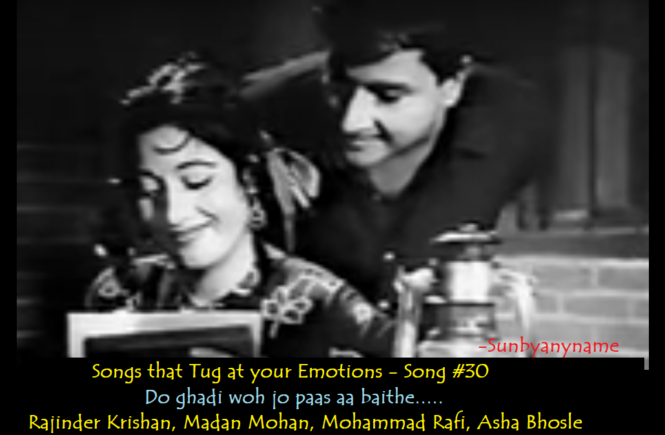
Songs That Tug At Your Emotions – Song #30

The thirtieth song in this series.

Do ghadi woh jo paas aa baithe….

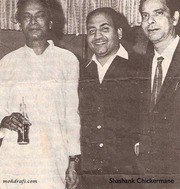
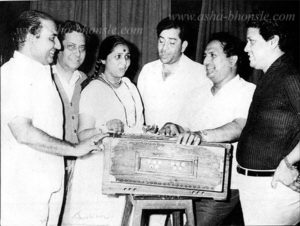
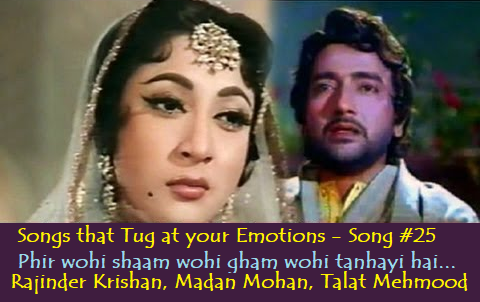
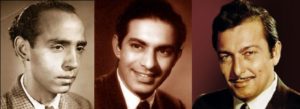
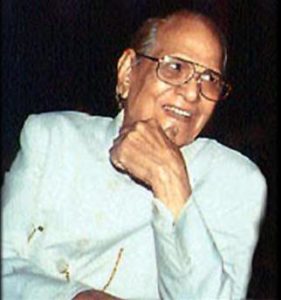
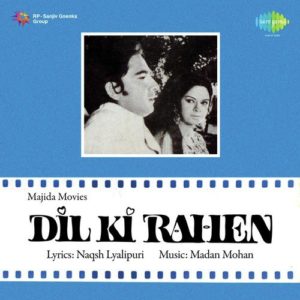
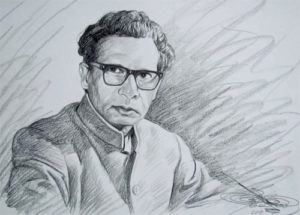
I thought of this song for two distinct reasons. One is that that three of the greats involved in the making of the song have their birth anniversaries in the month of June: Lyricist Rajinder Krishan who was born on sixth of June 1919; Music Director Madan Mohan who was born on 25th June 1924 and Actor Bharat Bhushan who was born on 14th June 1920. The others involved in the making of this song are: Actress Madhubala, and Singers Mohammad Rafi and Lata Mangeshkar.

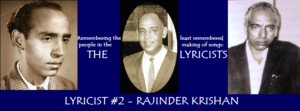
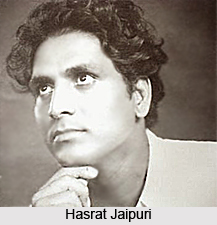
Let me start with the Lyricist, Rajinder Krishan. Rajendra Krishan (that’s the second way his name is often written) shares his birthday with me: 6th June. He too spent his youth in Shimla. I have as many as four blog-posts on him; and not because of these coincidences or because he won Rupees 64 Lakhs as Jackpot in horse-racing (Please see: ‘The Best Songs Of Rajendra Krishan, The Richest Lyricist’, ‘Part II’, ‘Part III’ and ‘Part IV’). Some of Lata Mangeshkar’s best songs have been penned by him and composed by Madan Mohan.

The best thing about him was that he could pen both serious and sad songs such as Anarkali songs: Mohabbat aisi dhadkan hai, Ye zindagi usi ki hai, and Zindagi pyaar ki do chaar ghadi hoti hai as well as Westernised Songs, for example in Bhagwan Dada’s Albela (Shola jo bhadake, Sham dhale khidaki tale, and Dil dhadake nazar sharmaaye). His Jahan Ara songs (Main teri nazar ka saroor hoon, Teri aankh ke aansu pi jaayun, and Phir wohi shaam wohi gham wohi tanhaayi hai) and Adalat Songs (Unako ye shikayat hai hai ke ham kuchh nahin kehte, Youn hasraton ke daag mohabbat mein dho liye, and Jaana tha hamase door) are in sharp contrast with his, for example, Padosan songs (Ek chatur naar and Mere saamne wali khidaki mein). Some of my other favourites of his are in Dekh Kabira Roya (Meri veena tum bin roye, Hamase aay ana gaya, Kaun aaya mere man ke dwaare), Nagin (All songs including Jaadugar sainya), Main Bhi Ladaki Hoon (Chanda se hoga wo pyara), Manmauji (Chanda ja, and Main to tum sang nain mila ke) and Nai Roshnai (Kis tarah jeete hain ye log bata do yaaro).
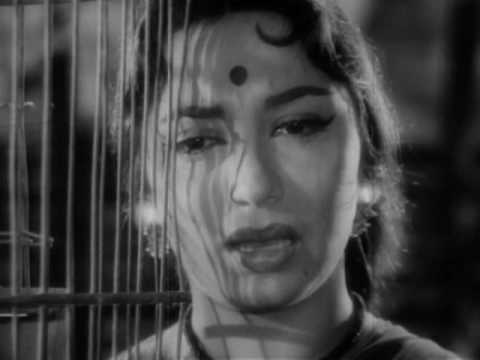
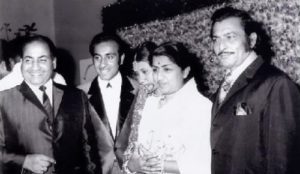
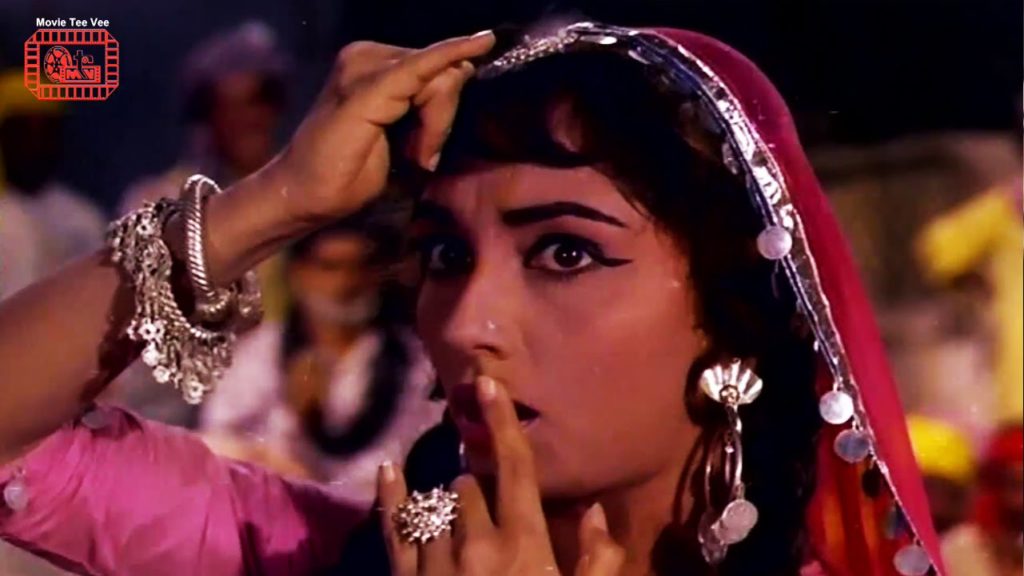
Sadhana lip-syncing Manmauji’s Main to tum sang nain mila ke


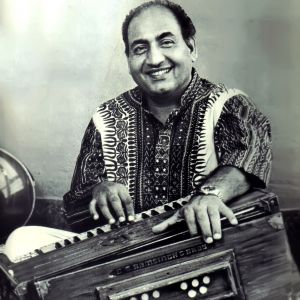
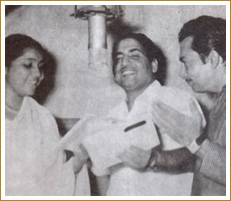
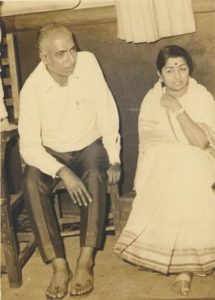
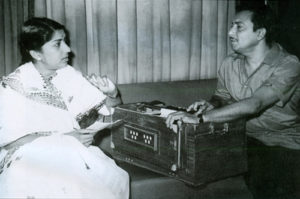
Madan Mohan brought out the best in Lata’s singing. She used to be annoyed with Mohammad Rafi for making her sing in high-pitched voice, against her natural grain. However, Madan Mohan “bhaiya’s” composition ensured that the song was low pitched to her liking.

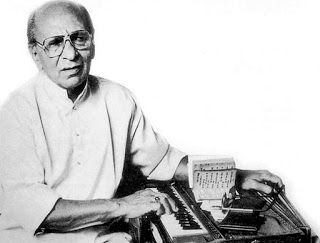
Madan Mohan was born on 25 Jun 1924 at Erbil, Iraqi Kurdistan, where his father Rai Bahadur Chunilal was working as an Accountant General with the Kurdistan Peshmerga forces. Madan Mohan spent the early years of his life in the Middle East. After 1932, his family returned to their home town of Chakwal, then in Jhelum district of Punjab, British India. He joined the Army as a Second Lieutenant in the year 1943. He served there for two years until end of World War II, when he left the Army and returned to Bombay to pursue his musical interests. In 1946, he joined the All India Radio, Lucknow as Programme Assistant, where he came in contact with various artists such as Ustad Faiyaz Khan, Ustad Ali Akbar Khan, Begum Akhtar, and Talat Mahmood.

He was very fond of singing, and so in 1947 he got his first chance to record two ghazals penned by Behzad Lucknawi, Aane Laga Hai Koi Nazar Jalwa Gar Mujhe and Is Raaz Ko Duniya Jaanti Hai. Soon after, in 1948 he recorded two more private ghazals penned by Deewan Sharar, Wo Aaye To Mahfil Mein Ithlaate Huye Aaye and Duniya Mujhe Kahti Hai Ke Main Tujhko Bhoolaa Doon. In 1948, he got his first opportunity to sing a film duet Pinjare Mein Bulbul Bole and Mera Chhotasa Dil Dole with Lata Mangeshkar under composer Ghulam Haider (composer) for the film Shaheed (1948 film), though these songs were never released or used in the film. Between 1948 and 1949, he assisted music composers SD Burman for Do Bhai, and Shyam Sundar in Actress and Nirdosh.

As Music Director, he scored his first big break with the film Aankhen in 1950. He was soon to emerge as a music director par excellence especially for ghazals. Indeed, music director OP Nayyar once said about Madan Mohan that two of his ghazals were better than all that OP Nayyar composed. Some of the best songs of Lata Mangeshkar (she fondly called him “Madan Bhaiyya”) were composed by him on the lyrics of Raja Mehdi Ali Khan and Rajinder Krishan.

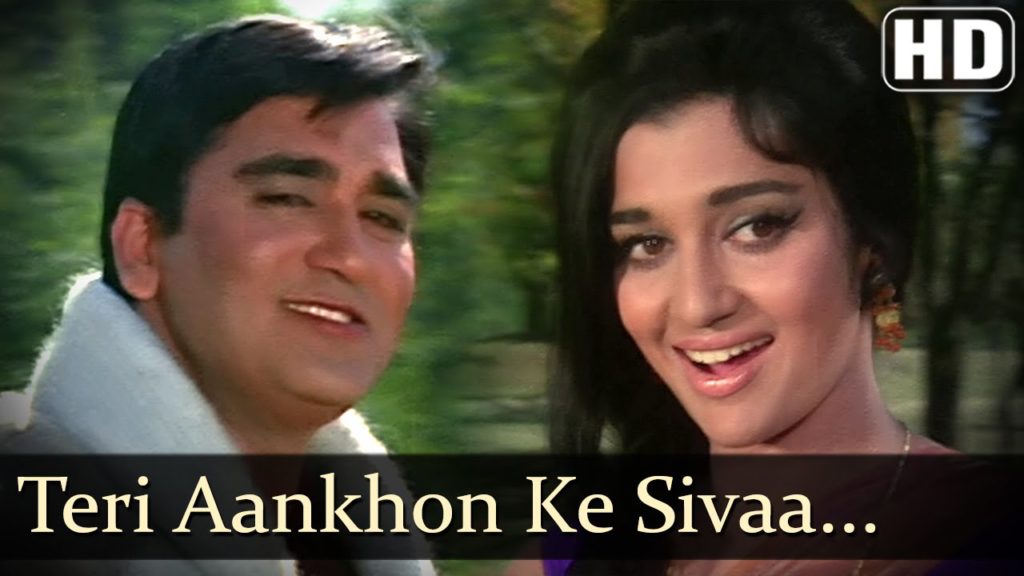
Some of my favourite songs of Madan Mohan are: Aaj soch to aansu bhar aaye, Betaab dil ki tamanna yehi hai, Tum jo mil gaye ho (Hanste Zakham 1973), Aapke pehlu mein aa ke ro diye, Naino mein badra chhaye, Jhumka gira re, Tu jahan jahan chalega (Mera Saya 1966), Aapki nazaron ne samajha, Hai isi mein pyaar ki aabru, Vo dekho jala ghar kisi ka (Anpadh 1962), Aapko pyaar chhupane ki buri aadat hai, Tere paas aake mera waqt nikal jaata hai (Neela Akash 1965), Agar mujhase mohabbat hai, Main nigaahen tere chehre se hatayun kaise (Aap Ki Parchhayiyan), Ai mere dil mujhe bata de (Bhai Bhai 1946), Ari vo shokh kaliyon muskara dena vo jab aayen (Jab Yaad Kisi Ki Aati Hai 1967), Baad muddat ke yeh ghadi aayi, Haal-e-dil youn unhe sunaya gaya, Jab jab tumhe bhulaya tum aur yaad aaye, Kisi ki yaad mein duniya ko jhain bhulaye huye, Main teri nazar ka saroor hoon, Phir wohi shaam wohi gham wohi tanhaayi hai, Teri aankh ke aansu pi jaayun, Wo chup rahen to mere dil ke daag jalate hain (Jahan Ara 1964), Hamare baad mehfil mein (Baghi 1953), Bainya na dharo O balma, Ham hain mataa-e-kuchcha-e-bazaar ki tarah, Mai ri main kaase kahun, Tumse kahun ik baat (Dastak, 1970), Bairan neend na aaye mohe (Chacha Zindabad 1959), Basti basti parbat parbat gaata jaaye banjara, Chand madham hai aasman chup hai, Dekh tere Bhagwan ki haalat (Railway Platform 1955), Bhooli hui yaado mujhe itna na satayo, Vo bhooli dastaan lo phir yaad aa gayi (Sanjog 1961), Chanda ja re ja re, Main to tum sang nain mila ke (Manmauji 1962), Chhadi re chhadi kaise gale mein padhi, Dil dhoondata hai fursat ke, Ruke ruke se kadam (Mausam 1975), Chhod kar tere pyar ka daaman, Jao hamane dastaan apni sunaayi, Lag jaa gale ke phir, Naina barse rimjhim rimjhim, Shokh nazar ki bijliyan  (Woh Kaun Thi 1964), Do dil toote do dil haare, Doli chadate hi Heer ne bain kiye, Milo na tum to ham ghabraayen, Ye duniya ye mehfil mere kaam ki nahin (Heer Ranjha 1970), Ham chal rahe the wo chal rahe the (Duniya Na Maane 1959), Ham pyar mein jalane waalo ko chain kahan (Jailor 1958), Hamsafar saath apna chhod chale, Tujhe kya sunayun main dilruba (Aakhri Dao 1958), Hamse aaya na gaya, Kaun aay mere man ke dwaare, Meri veena tum bin roye, Tu pyar kare ya thukraye (Dekh Kabira Roya 1957), Har taraf ab yahi afsaane hain, Hai tere saath meri wafa main nahin to kya (Hindustan Ki Kasam 1973), Hoke majbuur mujhe usne bhualaya hoga, Kar chale ham fida, Khelo na mere dil se, Main ye soch kar uske dar se, Zara si aahat hoti hai (Haqeeqat 1964), Husn haazir hai mohabbat ki saza paane ko, Is reshmi paazeb ki jhankar ke sadake, Tere dar pe aaya hoon (Laila Majnu 1976), Ik haseen raat ko dil mera kho gaya, Kabhi ai haqeeqat-e-muntazar, Sapano mein agar mere (Dulhan Ek Raat Ki 1966), Ishq ki garmi-e-jazbaat kise pesh karun. Mere mehboob kahin aur mila kar mujhase, Naghma o sher ki saugat, Rang aur noor ki baraat (Ghazal 1964), Jaa jaa re jaa saajna, Jaana tha hamse door, Unako ye shikayat hai, Youn hasaraton ke daag (Adalat 1958), Kabhi na kabhi kahin na kahin koi na koi to aayega, Mujhe le chalo aaj us jagah, Sawan ke mahine mein (Sharaabi 1964), Koi shikwa bhi nahin koi shikayat bhi nahin (Neend Hamari Khwab Tumhaare 1966), Main paagal mera manwa paagal (Aashiyana 1952), Meri yaad mein tum na aasnu bahana (Madhosh 1951), Na tum bewafa ho na ham bewafa hain (Ek Kali Muskaaye 1958), Sapne mein sajan se do baaten, Do ghadi wo jo paas aa baithe (Gateway Of India 1957), Teri aankhon ke siwa duniya mein rakha kya hai (Chirag 1969), Tumhari zulf ke saaye mein shaam kar loonga (Naunihaal 1967), Tu mere saamne hai teri zulfen hain khuli (Suhagan, 1964), and Vo jo milate the kabhi hamsase deewano ki tarah (Akeli Mat Jaiyo 1963).
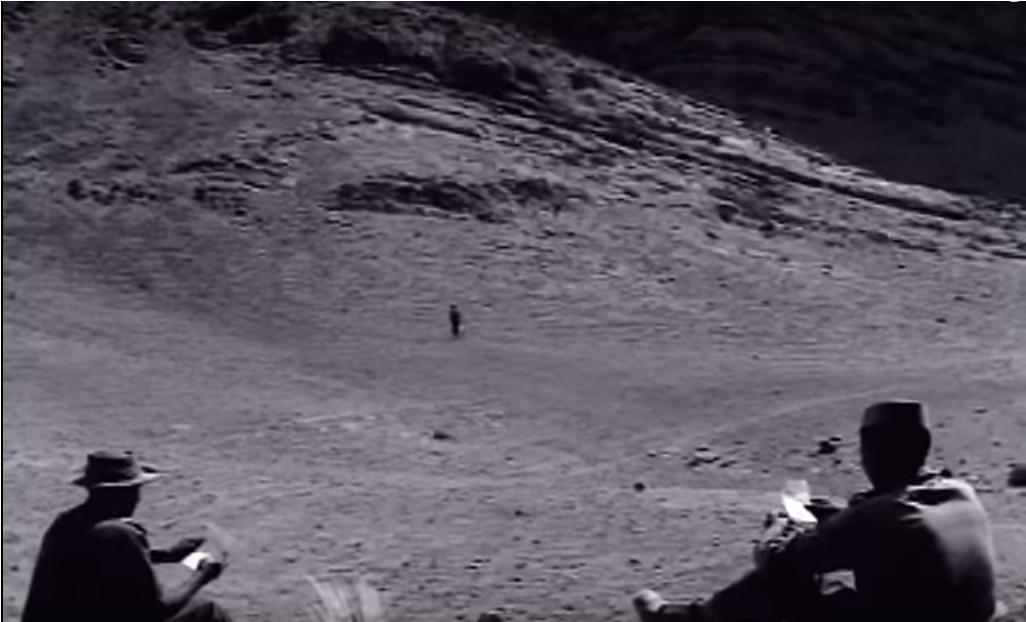
Madan Mohan’s Haqeeqat song: Main ye socj kar usake dar se utha tha brought out the deep sadnesss of soldiers in the desolation of Ladakh during Sino-Indian War of 1962. The song was sung like a poem by Mohammad Rafi without mukhada and antara.
(Pic courtesy: Indianetzine)

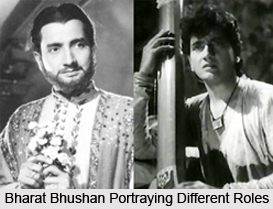
Lets take up Bharat Bhushan, the actor, screen-writer and producer. He was best known for the portrayal of Baiju Bawra in the 1952 Vijay Bhatt movie by the same name. The first Filmfare Award for Best Actor was instituted in 1954 and Dilip Kumar got it for the 1952 movie Daag over his Baiju Bawra. However, he received the second such award for Chaitanya Mahaprabhu. Indeed, he was considered best suited for portrayal of historical and mythological characters in the Hindi movies. Such was his acting prowess that in the 1960s, he and Dev Anand (one each) were the only actors other than Dilip Kumar who won the awards; though Raj Kapoor too was nominated twice.
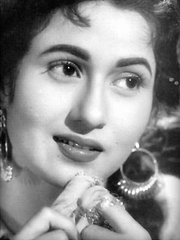
Lets turn to the actress of the song: Madhubala, a name (Honey belle) suggested to her by the first lady of Indian cinema and first recipient of India’s highest award in cinematic excellence – the Dadasaheb Phalke Award. Madhubala was otherwise born on February 14, 1933 as Mumtaz Jehan Begum Dehlavi in Peshawar (in Pakistan); the same place wherein the love of her life, Dilip Kumar (born Yusuf Mohammad) was born. She would have married him except that Madhubala’s father Ataullah Khan first didn’t approve of the wedding and later wanted to convert the alliance into a business proposition that Dilip Kumar didn’t approve of. She, therefore, married Kishore Kumar on the rebound.

In 1954, she was diagnosed with a hole in the heart (ventricular septal defect), which eventually took her life, fifteen years later, on 23 Feb 1969. By this time, the beauty and charm of Madhubala had become legendary. She was often compared with Hollywood legend Marilyn Monroe. On 10 August 2017, the New Delhi center of Madame Tussauds unveiled a statue of Madhubala, as the famous courtesan Anarkali (of Mughal-E-Azam fame) as a tribute to the legendary actress.
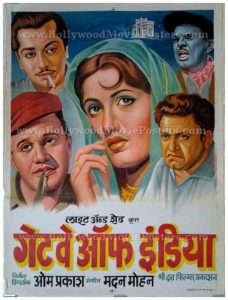
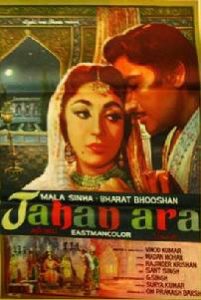
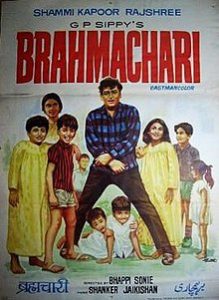
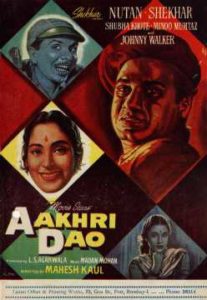
(Poster courtesy: Bollywood Movie Posters)

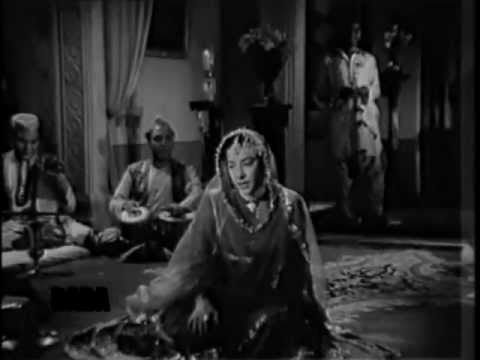
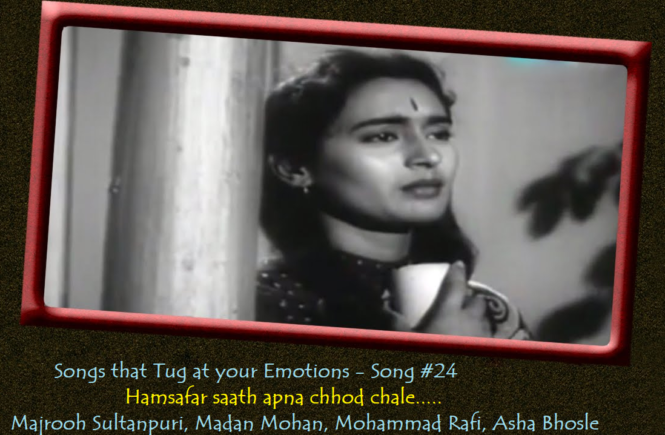
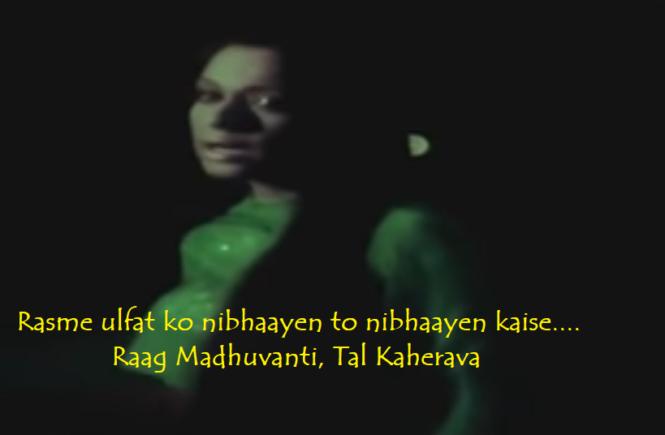
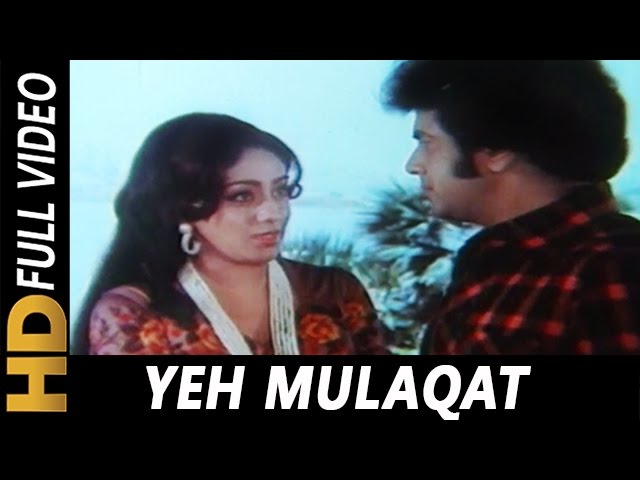
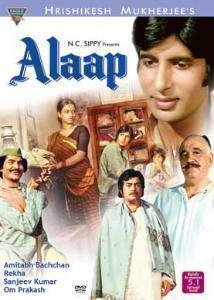
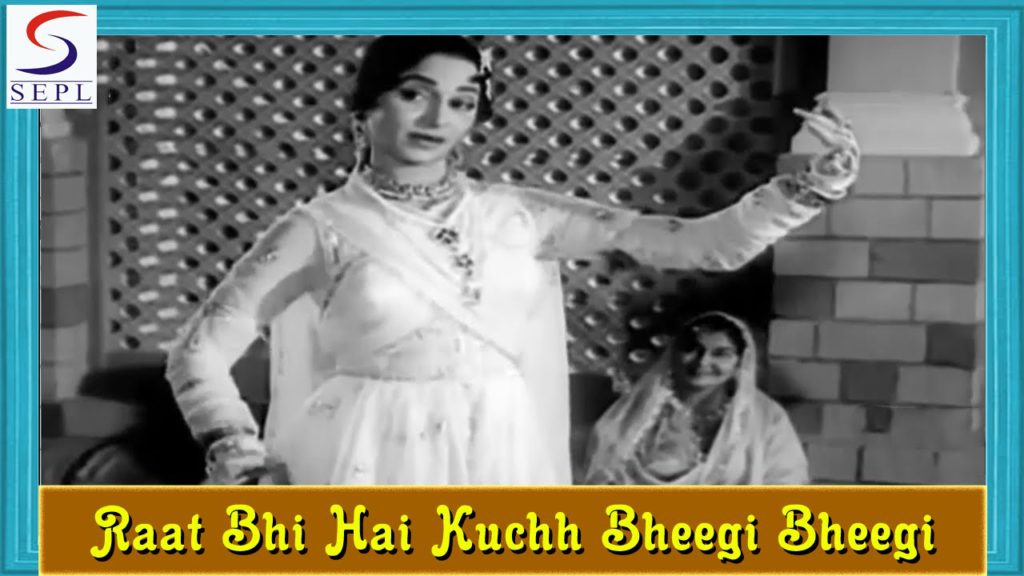
Today’s song is from a J Om Prakash movie of 1957 titled Gateway of India. Madhubala played Anju in the film, a woman running away from her killers and encountering many suspicious characters whilst on the run. That’s why in the song, you can see two suspicious characters waiting below the building wherein she is with her friend and lover Prakash played by Bharat Bhushan. It is a long wait for the ruffians chasing her since she has spent the whole night with Prakash. In the wee hours of the morning, they write a song together: he sings the lines she writes and vice versa. It is such an adorable romantic number and there is quite a bit of chemistry between them (Madhubala always had chemistry with her co-stars). In the final stanza, she doesn’t require any cues from him in pouring out her natural emotions.

Please enjoy Mohammad Rafi and Lata Mangeshkar sing a composition of Madan Mohan on the lyrics of Rajinder Krishan, a song from the 1957 J Om Prakash movie Gateway of India: Do ghadi woh jo paas aa baithe….

रफ़ी : दो घड़ी वो जो पास आ बैठे
हम ज़माने से दूर जा बैठे

आशा : दो घड़ी वो जो पास आ बैठे
हम ज़माने से दूर जा बैठे

रफ़ी : (भूल की उनका हम्नशीं हो के
रोयेंगे दिल को उम्र भर खो के) – २
हाय! क्या चीज़ थी गँवा बैठे

आशा : (दिलको एक दिन ज़रुर जाना था
वही पहुँचा जहां ठिकाना था ) – २
दिल वही दिल जो दिल में जा बैठे

रफ़ी : (एक दिल ही था ग़मगुसार अपना
मेहरबां, खास राज़दार अपना ) – २
गैर का क्यों इसे बना बैठे

आशा : (गैर भी तो कोई हसीं होगा
दिल यूँ ही दे दिया नहीं होगा ) – २
देख कर कुछ तो दिल लगा बैठे

दो घड़ी वो जो पास आ बैठे
हम जमाने से दूर जा बैठे

Only about 15 of Madhubala’s over 70 movies were box-office hits; she wasn’t very selective about her roles. However, Bharat Bhushan was certainly more successful. Nevertheless, such was her appeal that she is remembered more than her. She didn’t receive a single Filmfare Award though she was nominated for Best Actress Award for her role as Anarkali in 1960 K Asif magnum opus Mughal-e-Azam.

She has certainly left a mark on this role. The lateness of the night is clearly visible in her eyes.

Rajinder Krishan and Madan Mohan made a very good pair and gave us really memorable songs especially those sung by Lata Mangeshkar. Here too their magic is pravalent in abundance.

The song belongs to that era when it was the done thing to make Hindi movies’ names in English such as Half Ticket, Howrah Bridge, China Town, Mr and Mrs 55, Leader, Blackmail, An Evening in Paris, Jewel Thief and Naughty Boy. The best part was that all of them had good songs.

I hope you enjoyed it too.

Please await the next song in the series.
Songs That Tug At Your Emotions – Song #29

The twenty-ninth day of songs in this series.

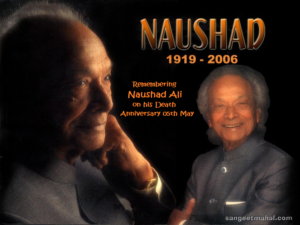
Three days ago was the death anniversary of one of the greatest music directors that India saw: Naushad Ali. Naushad was the second (after Pankaj Mullick) of the music directors to be awarded the highest honour in Indian Cinema: the Dadasaheb Phalke Award, in the year 1981. Since then, no other music director has been so honoured.

As far as I am concerned, everything that my favourites: lyricist Shakeel Badayuni wrote, Naushad Ali composed, Mohammad Rafi sang and Dilip Kumar enacted tugs at my emotions. That’s why my blog has more than 15 posts dedicated to Shakeel and most of these are with Naushad, his guide and mentor. Indeed, in my ‘The Best Of Old Hindi Songs – Rafi, Shakeel, Naushad and Dilip Kumar Together’, I had brought out the magic that ensues when the quartet was together. In my ‘Songs That Tug At Your Emotions – Song #14’ I had given the first ever song that Shakeel penned in Hindi movies (a song that was sung by Uma Devi (Tun Tun) on a composition by Naushad): Afsaana likh rahi hoon dil-e-beqraar ka. This was for the 1947 Abdul Kardar movie: Dard. Shakeel’s last song with Naushad was for the 1968 A Bhimsingh movie Aadmi: Na aadmi ka koi bharosa.

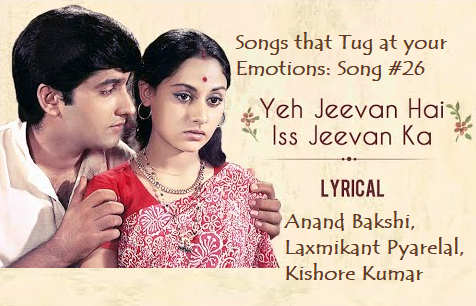
In the last twenty-eight days, we have taken up songs of thirteen male singers: Talat Mahmood, Manna Dey, Kishore Kumar, Mohammad Rafi, Mukesh, Hemant Kumar, Mahendra Kapoor, SD Burman, KL Saigal, Pankaj Mullick, Jagmohan ‘Sursagar’, Hariharan and Yesudas. We also took up songs of eleven female singers: Lata Mangeshkar, Asha Bhosle, Suman Kalyanpur, Shamshad Begum, Geeta Dutt, Uma Devi (Tun Tun), Suraiya and Zohrabai Ambalewali, Sudha Malhotra, Amirbai Karnataki and Kavita Krishnamurthy. We took up a duet between Mohammad Rafi and Asha Bhosle in the last post. And lastly we took up a Talat Mehmood song: Phir wohi shaam wohi gham wohi tanhaayi hai. After that, on the twenty-sixth day we took up a Kishore Kumar song for Piya Ka Ghar: Ye jeevan hai. The twenty-seventh post was devoted to Shankar Jaikishan Foundation’s Mumbai Meet with the Lata Mangeshkar and Manna Dey song from Raat Aur Din: Dil ki girah khol do. The twenty-eighth post was devoted to Majrooh-Laxmikant Pyarelal-Rafi song: Chahunga main tujhe saanjh savere for the 1964 Satyen Bose movie: Dosti.

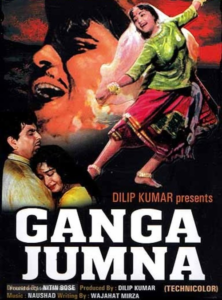
(Poster courtesy: cinematerial.com)

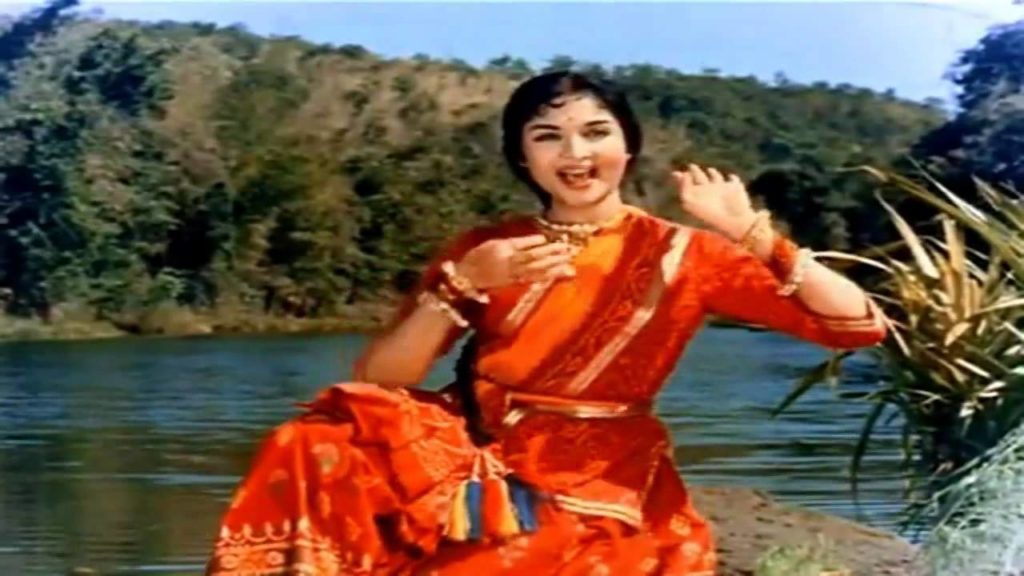
Today’s song is from one of the most popular movies that the quartet attempted together: the 1961 movie Gunga Jumna, written and produced by Dilip Kumar (another Dadasaheb Award winner and holding the record (now jointly with Shah Rukh Khan) for highest number of Filmfare Awards. He holds the Guinness World Record for the highest number of awards won by an Indian actor). The movie was directed by Nitin Bose and starred Dilip Kumar and Vyjayanthimala in the lead roles. She won the Best Actress award for the movie whereas Dilip Kumar lost to Raj Kapoor for his role in Jis Desh Mein Ganga Behati Hai (Another Ganga movie!), a move criticized by The Hindu.

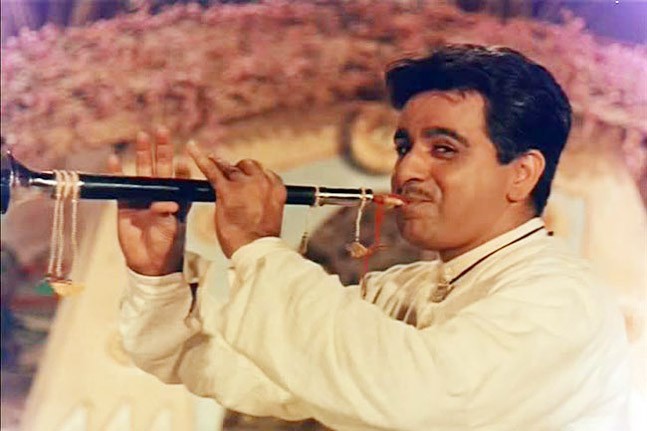
The film starred the brothers Dilip Kumar (Muhammad Yusuf Khan) and Nasir Khan as Gunga and Jumna. Many people regard this as the best role ever played by Dilip Kumar. Amitabh Bachchan is on record saying that he tailored his own acting after watching Dilip Kumar in Gunga Jumna. The Hindu, therefore, called it a travesty of justice that one of the finest performances ever in Indian Cinema wasn’t rewarded by Filmfare. What was so special about the performance. Besides the rustic image that Dilip Kumar perfected, his dacoit role (when he is forced to become one in the end) inspired many others in the movies. “Bachchan, who hails from Uttar Pradesh, was particularly impressed by Dilip Kumar’s mastery of the Awadhi dialect, expressing awe and surprise as to how a man who’s not from Allahabad and Uttar Pradesh could accurately express all the nuances of Awadhi.”

Dilip Kumar gave the performance of a lifetime in Gunga Jumna, the only film produced by him (Pic courtesy: India Today)
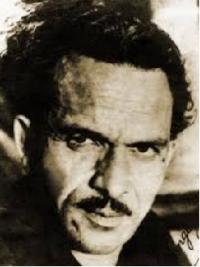
(Pic courtesy: Veethi)

Gunga Jumna’s dialogues were penned by Wajahat Mirza who had penned the same for Mughal-e-Azam one year ago and won Filmfare Award. He won for this movie too. We must remember that dialogues and lyrics played important roles in popularity of films at that time and both were penned by the best in their profession. Both were Urdu speaking and mastered Awadhi in this movie. We have only mentioned the men. However, please think of the lady who won the Best Actress Award: Vyjayanthimala. She was from the South, a fashion model, and yet her portrayal of Dhanno, a rustic girl, speaking fluently in Bhojpuri, would be nothing short of sterling performance.

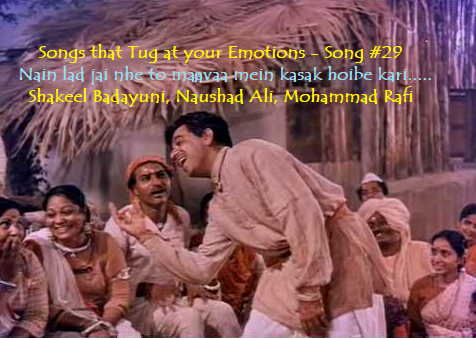
The one song in the movie that brings out the best in all the personae that I have mentioned so far is the song that I have decided to give today: Nain lad jainhe to manva mein kasak hoibe kari. Lets go over them one by one:

  • Shakeel with Naushad in rustic surroundings.

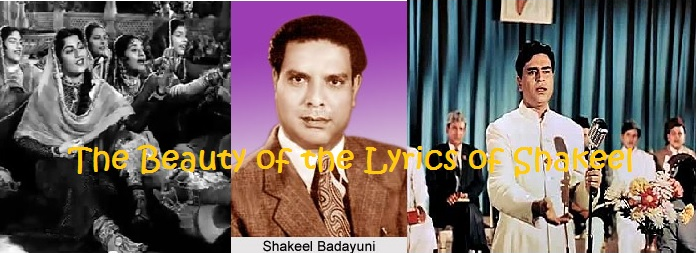
    Shakeel Badayuni. He was at his best at that time and created a record by being the only Lyricist ever to have done a hat-trick of winning the Best Lyricist awards for three consecutive years. He had mastered the Urdu poetry and lyrics and here in this song he proved his mettle at writing in Awadhi. If you pay attention to the lyrics (I am giving an example below), you’d notice that it is not just the language; it is a deep understanding of the mores of that area:

आँख मिल गयी है सजनिया से तो नाचन लगी है
प्यार की मीठी गजल मनवा भी गावन लगी है
झाँझ बजी है तो कमरिया म लचक होइबे करी

  • Naushad Ali. He was the best in many aspects. However, when it came to folk based tunes (such as in Baiju Bawra), he had no peers. Some of the songs that come to mind are: Aaj mere man mein sakhi bansuri bajaye (Aan), Door koi gaaye dhun ye sunaaye (Baiju Bawra), Chhod babul ka ghar mohe pi ke nagar aaj jaana padha, Panchhi ban mein piya piya gaane laga (Babul), Dukh bhare din beete re bhaiya, Gaadi waale gaadi dheere haank re, Holi aayi re Kanhaai, Matwaala jiya bole piya (all from Mother India), and Mere pairon mein ghungru bandha de (Sunghursh). In this song, the kind of folksy atmosphere that he has created is simply adorable.
  • Naushad, Rafi and Shakeel together

    Mohammad Rafi. For most genre of songs, Mohammad Rafi was simply the best that we ever had. Whilst all other playback singers sang with their characteristic styles, Mohammad Rafi went beyond and sang in the style of the actor for whom he was singing. In this song, for example, never do you get the impression of Rafi singing; the song is just an extension of Dilip Kumar’s acting as Gunga in the movie. If Dilip Kumar mastered the Awadhi in the movie, Mohammad Rafi – as far from Awadhi as you can get – made it look like as if he was brought up singing such songs.

  • Dilip Kumar. The hallmark of a great actor is to let you forget his own personna but make you think of the role that he is portraying. Dilip Kumar’s performance in this song is seamless and flawless. It is as if the song was written, composed and sung for him. You can’t even imagine anyone else enacting this song.
  • Vyjaynthimala. She is the one who walked away with the Best Actress Award. In this song, she makes her appearance very briefly first in the prelude when she sits next to a diya and thinking of him and in the end when he has finished dancing with all the other belles and returns to the focus of his life: Dhanno. Those brief moments of histrionics are enough to leave an impact. Of course, she is only enjoying his singing and dancing. Later in the movie when she dances on Dhoondo dhoondo re saajana, she is like rhythm in motion.

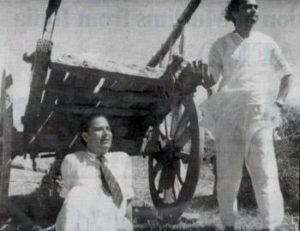
  • Nitin Bose. There is hardly anyone who hasn’t heard of Nitin Bose. The first use of playback singing in Indian movies occurred in 1935 Bengali movie Bhagya Chakra. The same year, the movie was made in Hindi as Dhoop Chhaon. Bose started his film career as a cinematographer in 1926 in the movie Punarjanma. His debut as cinematographer under New Theatres banner was in the movie Devdas (1928). He was cinematographer of the only film directed by Rabindranath Tagore, Natir Puja (1932), which was based on a dance-drama composed by Tagore. The great Satyajit Ray was a nephew of Nitin Bose and worked under him for Mashaal (1950). In this movie and the song, Nitin Bose seem to have perfected the village setting to such an extent that it was copied in many other movies. The sight of a village teacher (Abhi Bhattacharya) teaching the children (Insaaf ki dagar pe bachcho dikhao chal ke) has also been copied in many other movies. Nitin Bose won the Dadasaheb Phalke Award four years before Dilip Kumar did.

Before we take up the song, let’s have a look at the other songs in the movie put together by Shakeel and his mentor Naushad:

1 Dagabaaz Tori Batiyan Lata Mangeshkar 2:47
2 Dhoondo Dhoondo Re Sajna Lata Mangeshkar 3:19
3 Do Hanson Ka Joda Lata Mangeshkar 3:14
4 Jhanan Ghoongar Baje Lata Mangeshkar 3:32
5 Naina Lad Jaihen Mohammed Rafi 4:44
6 O Chhalia Re Chhalia Mohammed Rafi, Asha Bhosle 3:30
7 Tora Man Bada Papi Asha Bhonsle 4:41
8 Insaaf Ki Dagar Pe Hemant Kumar 3:20
9 Naina Lad Jaihen (Revival) Mohammed Rafi 4:46

Please enjoy Mohammad Rafi sing a composition of Naushad Ali on the lyrics of Shakeel Badayuni, a song from the 196i Nitin Bose movie Gunga Jumna: Nain lad jainhe to manva kasak hoibe kari….

लागा गोरी गुजरिया से नेहा हमार
होइ गवा सारा चौपट मोरा रोजगार
ओ~

नैन लड़ जैंहे तो मनवा में कसक होइबे करी
प्रेम का छुटि है पटाखा तो धमक होइबे करी
नैन लड़ जैंहे …

रूप को मनमा बसैबा तो बुरा का होई है
तोहू से प्रीत लगैबा तो बुरा का होई है
प्रेम की नगरी म कुछ हमरा भी हक़ होइबे करी
नैन लड़ जैंहे …

होई गवा मन मा मोरे तिछर्ई नजर का हल्ला
गोरी को देखे बिना निंदिया न आवै हमका
फाँस लगी है तो करेजवा म खटक होइबे करी
नैन लड़ जैंहे …

थैक थैक थै थै, थै
धाक धिनक धिन, ताक तिनक तिन
धाक धिनक धिन, धाक धिनक धिन, धा!

आँख मिल गयी है सजनिया से तो नाचन लगी है
प्यार की मीठी गजल मनवा भी गावन लगी है
झाँझ बजी है तो कमरिया म लचक होइबे करी
नैन लड़ जैंहे …

नैना जब लड़ी है तो भैय्या मन में कसक होइबे करी
थैक थैक तिक था

होय होय होय!

मन ले गयी रे धोबनिया रामा कैसा जादू डार के
कैसा जादू डार के रे, कैसा टोना डार के
मन ले गयी रे धोबनिया रामा कैसा जादू डार के

It is not just because of the principal people involved in the making of the song that make this song tug at your emotions. The song fills you with nostalgia of the era that was there when we were small. When melody ruled, when folks were simple, when what we saw on the screen was a reflection of the society that existed with all its good and evil, when songs made or marred a movie and hence took even more time making than the rest of the movie, and when there was a desire to imitate the acting in a song.

However, no one has been able to copy Dilip Kumar’s acting in this song; he simply appears to be one of the several villagers in the dance and makes no attempt to stand out or be different.

I just can’t get the song out of my system. I watch it fully whenever it is screened on the telly.

I hope you enjoyed it too.

Please await the next song in the series.
FUNNY TWIST TO HINDI SONGS #5 – JAANE WAALE ZARA HOSHIYAR

(On 23rd April 18, on my Facebook group ‘Main Shayar To Nahin‘, I started a new series. Here is the fifth one of the series)

वोट वालो ज़रा होशियार
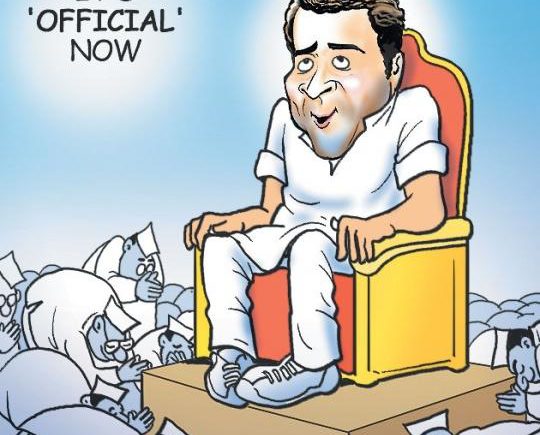
कांग्रेस के हैं PM उम्मीदवार,
हमें कहते हैं पप्पू गँवार,
कांग्रेस के हैं PM उम्मीदवार।
वोट वालो..

काम हमारा सबको हंसाना,
जबसे सीखा ज़ुबान चलाना,
हमसे जो टक्कर लेने आये,
हम हैं उनको भी हँसाये।
Cartoons में हमारी जयकार,
कांग्रेस के हैं PM उम्मीदवार।
वोट वालो…

जब भी हमने मूँह है खोला,
जैसे बोतल में coca cola;
झाग बेअंत निकलती जाए,
कोई मतलब समझ न पाए।
आगे पीछे हमारी सरकार,
कांग्रेस के हैं PM उम्मीदवार।
वोट वालो….

YKDN LIVE FEST IN KANDAGHAT ON WALTZING NUMBERS – BACKGROUND

Friends,

Today I can share with you as to why I selected Waltzing numbers as the theme of the Live Fest in Kandaghat this year.

The day of the Fest, Saturday, 14th April, coincides with the Festival of Baisakhi or Vaisakhi. On this day, the tenth Guru of the Sikhs, Sri Guru Gobind Singh ji founded the Khalsa Panth. This day also coincides with the harvesting of crops in Punjab and the famous lines: Kanka di muk gayi raakhi, o jatta aayi baisakhi (We have finished looking after the wheat plants; now, baisakhi (harvesting) is there).

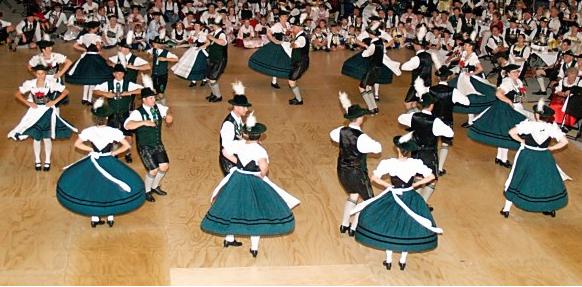
Now, you are bound to interject as to what Baisakhi has to do with Waltz. Well, the joy of the jatt (farmer) on harvesting is translated in the men and women getting together and performing the bhangra and the gidda. Both are peasant dances. So is Waltz! Next you are bound to ask me that Waltz is now a sophisticated ballroom dance and how come its origin is peasant dance? It is a fact. The noble of that era in Europe used to dance the minuet but found the close, vigorous, rhythmic dance of the peasants more inviting. Thus the dance called Walzer (German) of the farmers in Bavarai, Tyrol and Styria actually went into the ballrooms of the noble and delighted them. We have many equivalents in India of the elite following in the footsteps of the commoners.

(Pic courtesy: The United German Hungarian Club)

Fests So Far

Our journey of Music Fests is FIVE AND A HALF YEARS old TODAY!
Here is a list of Music Fests that we have hosted so far on the group ‘Yaad Kiya Dil Ne’: 

1.Dec 2012  –  Chand Songs
2.Jan 2013  –  Shaam Ke Geet
3.Feb 2013  –  Dil Ki Awaaz Bhi Sun
4.Mar 2013  –  Boat Scene Songs
5.Mar 2013  –  Piano Scene Songs
6.Jun 2013  –  Songs of Rain
7.Jul 2013  –  Bhajans in Hindi Movies
8.Aug 2013  –  Funny, Comical and Anglicized Hindi Songs
9.Sep 2013  –  Sadhana Songs
10.Nov 2013  –  Mala Sinha Songs
11.Nov 2013  –  Story Telling, Kahani, Katha Songs
12.Dec 2013   –  Mohammad Rafi Songs
13.Jan 2014  –  Complementary Songs (same number repeated by Hero/heroine later in the movie)
14.Feb 2014  –  Qawwali Songs
15.Feb 2014   –  Nutan Songs
16.Mar 2014   –  Bicycle Scene Songs
17.Apr 2014   –  Flute Scene Songs
18.May 2014   –  Sapna, Khwaab, Dream Songs
19.Jun 2014   –  Maa, Maiyya, Mata, Maan Songs
20.Jul 2014   –  Raahi or Mussafir Songs
21.Aug 2014   –  Patriotic Songs
22.Sep 2014   –  Train Scene Songs
23.Sep 2014   –  Jeep, Car, Bus, Truck Scene Songs
24.Oct 2014  –  Deewana or Paagal Songs
25.Nov 2014  –  Hindi Flavour Songs
26.Dec 2014  –  Guitar Scene Songs
27.Jan 2015  –  Songs With Whistle
28.Jan 2015 II-  Zindagi (Happy or Sad) Songs
29.Feb 2015  –  Horse (Mule and Donkey too) Scene Songs
30.Feb 2015 II-  Flash Rain Scene Songs
31.Mar 2015  –  Neend Songs
32.Mar 2015 II-   Zamana or Duniya Songs
33.Apr 2015  –  Indoor Party Scene Songs
34.May 2015  –  Chaman Baag Bagiya Songs
35.May 2015 II-  Zulf Gesu Baal Songs
36.Jun 2015  –  Baadal Badra Songs
37.Jun 2015 II-  Mujra Songs
38.Jul 2015  –  Hawa Songs
39.Aug 2015  –  Shraabi Songs
40.Aug 2015 II-  Na or Nahin Songs
41.Sep 2015  –  Chal Chali Chalo Songs
42.Oct 2015  –  Kabhi Songs
43.Nov 2015  –  Dance Scene Songs
44.Dec 2015  –  Mil Milan Songs
45.Jan 2016  –  Khushi Hansi Muskaan Songs
46.Feb 2016  –  Geet Gaana Nagma Taraana Songs
47.Mar 2016  –  Bahaar Songs
48.Apr 2016  –  Funny Songs
49.May 2016  –  Hill Scene Songs
50.Jun 2016  –  Ghar Songs
51.Jul 2016  –  Kahin Kahan Songs
52.Aug 2016  –  Yellow Dress Songs
53.Sep 2016  –  Dost Dosti Songs
54.Oct 2016  –  Mera Apna Hamara Songs
55.Nov 2016  –  Songs in Headgear
56.Dec 2016  –  Ajanabee Songs
57.Jan 2017  –  Krishna Songs
58.Feb 2017  –  Husn Songs
59.Feb 2017 II-  Hot Songs of Lata Mangeshkar
60.Mar 2017  –  Rang, Rangeen Songs
61.Apr 2017  –  Raat or Din Songs Live Fest at Kandaghat
62.May 2017  –  Aansu Songs
63.Jun 2017  –  Koi Songs
64.Jul 2017  –  Combination Songs
65.Aug 2017  –  Not Held
66.Sep 2017  –  Maa Songs
67.Oct 2017  –  Chand & Chand Scene Songs
68.Nov 2017  –  Bada, Badi, Bade Songs
69.Dec 2017  –  Sajan, Sajani Songs
70.Jan 2018  –  Drunken Scene Songs
71.Feb 2018  –  Ek, Ik, One Songs
72.Mar 2018  –  Sridevi Songs

Counting that in the month of August 2017 no Fest was held, the Fest on Waltzing numbers is going to be our 72nd Fest.

Waltz

Waltz is defined as a ‘A gliding dance done to music having three beats to the measure’ or ‘the kind of music suitable for Waltzing’.

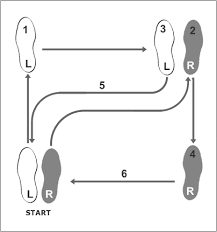
The basic Waltz is a box movement as given below:

(Pic courtesy: Dancing for Beginners)

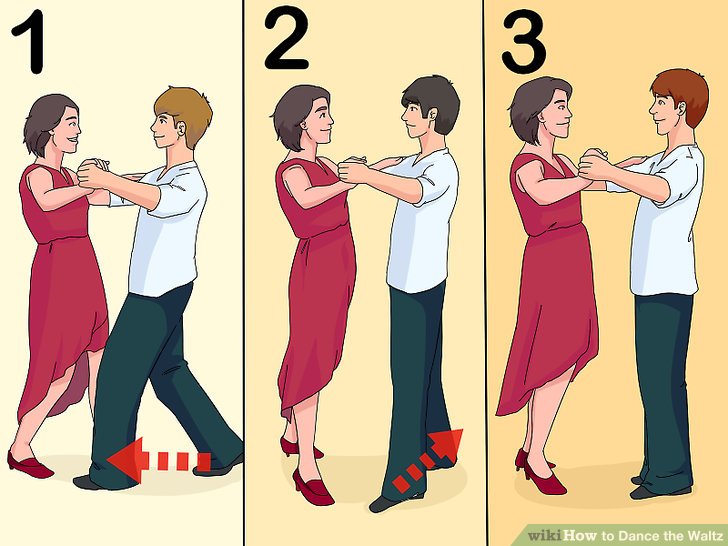
With a couple, another way to look at the Waltz is:

(Graphic courtesy: Wikihow.com)

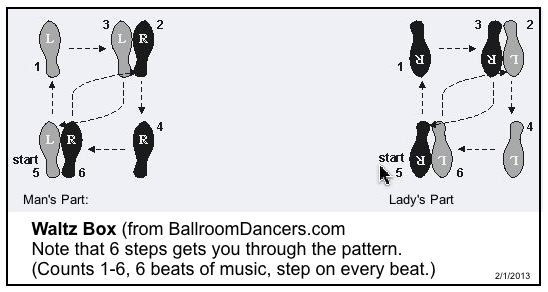
One last look at Waltz Box before we move on:

For the beginners any number of online classes are available to learn Waltz. Here is one Demo Waltz for the beginners by Michael Thomas:

Waltz in Hollywood Movies and Music

Waltz has been a popular theme of music (and dance) for English movies. One of the most popular has been Lara’s Theme for the David Lean 1966 movie Doctor Zhivago with Omar Sharif in the title role and Julie Christie as Lara Antipova. The leitmotif was later adapted as the number Somewhere My Love and it was very popular indeed:

Another popular number has been Engelbert Humperdinck’s The Last Waltz:

Waltzing Numbers in Hindi Movies (Thanks Anand Desai for helping me with this):

“The Waltz a 3/4 beat or the Time Signature has been a very popular beat among Indian Music directors. The beat is divided into 2 Vibhags or
Cycles of 3 beats each i.e. 3 beats make 1 Bar.. Now since its played in a tempo cycle we call it 3/4 coz you would play it fully twice so have 4 bars.”

Ladies and gentlemen, if you look at the Waltz Box pictures that I provided, you will understand it better.

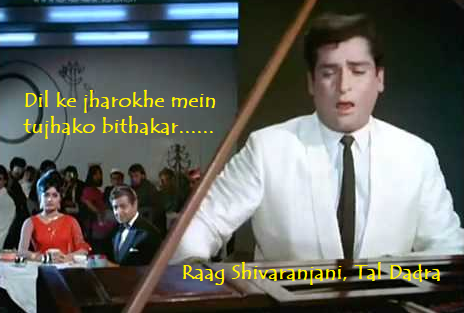
It is similar to Tal Dadra since that too is a 3 beat Tal divided into 2 Vibhags.

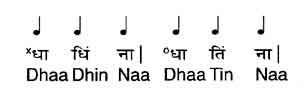
“The Hinch / Khemta or Udaliyo that one hears in Raas Garbas has 6 beats each of  two cycles and thus sounds similar but is not the same. Its a variation of the Dadra … Dha tin tin  Na dhin dhin again 6 beats make a  Bar  However one plays the total cycle twice so we have four bars.”

The first known appearance of waltz in a Hindi song is in “Hum Aur Tum Aur Yeh Khushi” from Ali Baba (1940) composed by the legendary Anil Biswas.

Music director Naushad, known for his brilliant Hindustani classical compositions, helped usher the waltz rhythm into Bollywood mainstream as early as with the tragic “Tod Diya Dil Mera” from Andaz (1949), “Ab Raat Milan Ki” from Jadoo (1951), and “Tara Ri Yara Ri” from Dastan (1952).

Hats off to Naushad to come up with Waltzing on a very sad number!

Anand Desai and his friends came up with a list of songs in Hindi movies based on the Waltzing beat:

1.Aaja panchhi akela hai

2.Aap ke haseen rukh pe aaj naya noor

3.Agar mujhse mohhobat hai

4.Ai dil hai mushkil jeena yahan

5.Bedardi balama tujhko mera maan yaad karta

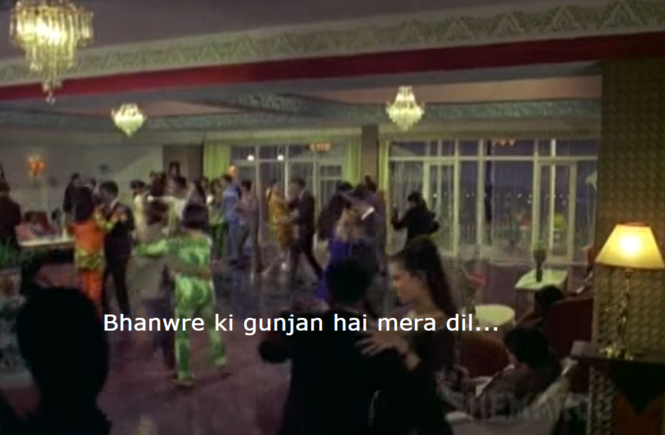
6.Bhanwre ki gunjan

7.Chup hai dharti chup hai chand sitare

8.Dil ke jharaoko mein tujhko bithakar

9.Dil ki girah khol do chupp na baitho

10.Dil ki nazar se

11.Dil mein sama gaye saajan

12.Dilbar mere kab tak mujhe

13.Hum aapki aankhon mein

14.Humne toh dil ko aapke kadmon mein

15.Jeena yahan marna yahan

16.Jeevan ke din chhote sahi hum bhi bade dilwale

17.Kuchh na kaho

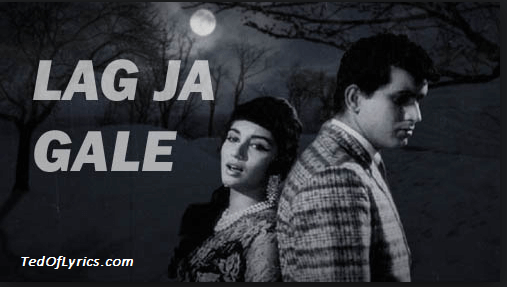
18.Lag jaa gale ke phir yeh haseen raat

19.Mai shayar toh nahi

20.Meri neendon mein tum

21.Mud mud ke na dekh mud mud ke

22.Na yeh chand hoga na taare rahenge

23.Pyar ki yeh kahani suno

24.Suniye kahiye

25.Tarari ara ri ara ri

26.Tera mera pyar amar

27.Tera mujhse hai pehele ka naata

28.Tum jo hue mere humsafar

29.Udhar tum haseen ho

30.Yeh dil tum bin kahin lagta nahi

31.Yeh raatein nayi purani

32.Yeh raatein yeh mausam

33.Zulfon ko hatale chehere se

My own favourite is Bhanwre ki gunjan that I shall be singing during the Fest (even though I hardly know how to sing). I am giving you the movie version of the song. After the Fest, I shall replace it with my own singing:

https://www.youtube.com/watch?v=6aMH-zOmTh8

And now, friends, with this curtain-raiser for the Fest tomorrow, I must rush as my sister from Nagpur Manik will be arriving at the Kandaghat Railway Station shortly with her husband Sreehari and during the evening Vipan Kohli, Jaswant Lagwal and Kavita will arrive from Hamirpur.

I hope you know now as to why I selected this theme (I always have a reason!)

Songs That Tug At Your Emotions – Song #28

I am back after a long break caused by my blog having been hacked. It is absolutely alright now and back with you.

The twenty-eighth day of songs in this series.

In the last twenty-seven days, we have taken up songs of thirteen male singers: Talat Mahmood, Manna Dey, Kishore Kumar, Mohammad Rafi, Mukesh, Hemant Kumar, Mahendra Kapoor, SD Burman, KL Saigal, Pankaj Mullick, Jagmohan ‘Sursagar’, Hariharan and Yesudas. We also took up songs of eleven female singers: Lata Mangeshkar, Asha Bhosle, Suman Kalyanpur, Shamshad Begum, Geeta Dutt, Uma Devi (Tun Tun), Suraiya and Zohrabai Ambalewali, Sudha Malhotra, Amirbai Karnataki and Kavita Krishnamurthy. We took up a duet between Mohammad Rafi and Asha Bhosle in the last post. And lastly we took up a Talat Mehmood song: Phir wohi shaam wohi gham wohi tanhaayi hai. After that, on the twenty-sixth day we took up a Kishore Kumar song for Piya Ka Ghar: Ye jeevan hai. The twenty-seventh post was devoted to Shankar Jaikishan Foundation’s Mumbai Meet with the Lata Mangeshkar and Manna Dey song from Raat Aur Din: Dil ki girah khol do.

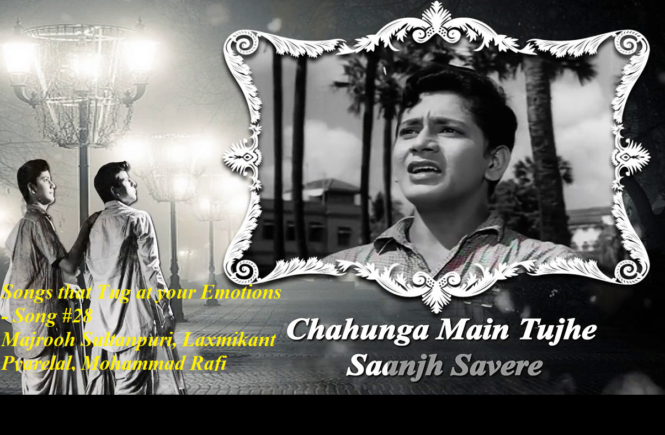
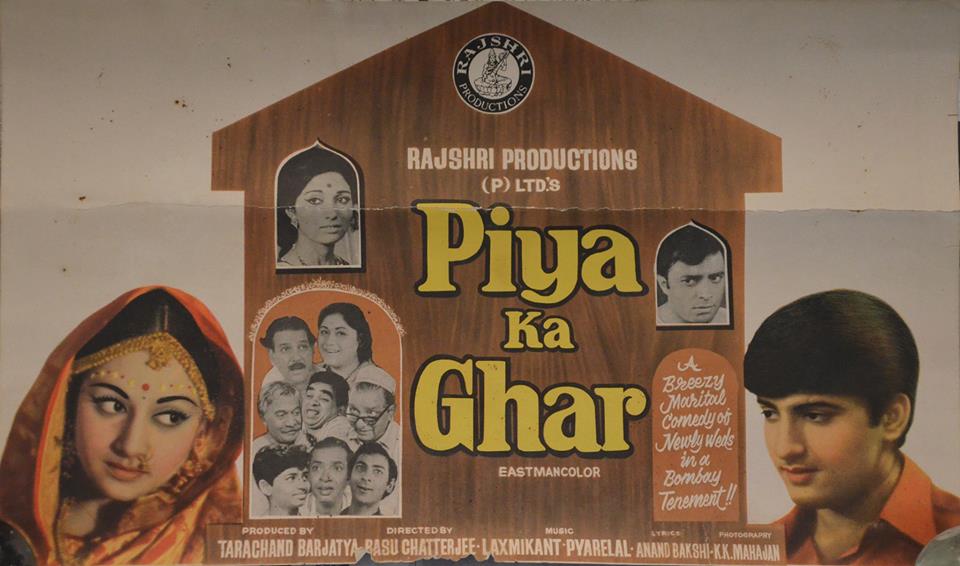
Today, I am back with Mohammad Rafi with one of the best of Laxmikant Pyarelal from the 1964 Satyen Bose movie Dosti, a movie whose songs made L-P one of the most loved music duos in India and a movie whose songs are still fondly remembered even today. Majrooh Sultanpuri penned the lyrics and L-P composed it in the raaga of my place: Pahadi.

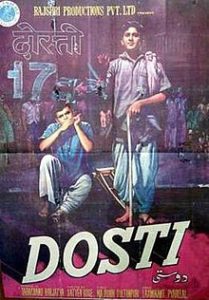
(Poster courtesy: Wikipedia)

Lets start with the movie. Bombay based Rajshri was founded by Tarachand Barjatya in the year 1947. However, Rajshri Productions Pvt Ltd engaged in films production came about in the year 1962. Its first film Arti, in 1962 was highly acclaimed. However, the grand success of its second production Dosti in 1964 included winning the National Award for Best Feature Film and as many as six Filmfare Awards: Best Film, Best Music Director (the debut Filmfare Award for L-P), Best Story: Ban Bhatt, Best Dialogue: Govind Moonis, Best Playback Singer: Mohammad Rafi for the song I am giving you today, and finally Best Lyricist: Majrooh Sultanpuri for the same song.

Dosti was directed by Satyen Bose. It was Sanjay Khan’s debut film and had Sudhir Kumar Sawant, and Sushil Kumar Somaya in lead roles. The film focuses on the friendship between two boys, one blind and the other a cripple.

Laxmikant Pyarelal started off with 1963 movie Parasmani and they made such popular songs for their very first movie that these are fondly remembered even today:

1. “Hansta Hua Noorani Chehra” Asad Bhopali Lata Mangeshkar, Kamal Barot 3:40
2. “Mere Dil Mein Halki Si” Asad Bhopali Lata Mangeshkar 4:56
3. “Ooi Maa Ooi Maa Yeh Kya Ho Gaya” Asad Bhopali Lata Mangeshkar 3:24
4. “Salamat Raho Salamat Raho” Indeevar Mohammad Rafi 5:57
5. “Woh Jab Yaad Aaye” Asad Bhopali Mohammad Rafi, Lata Mangeshkar 4:43
6. “Chori Chori Jo Tumse Mili” Faruk Kaiser Mukesh, Lata Mangeshkar 4:01

The duet Woh jab yaad aaye was picturised on small time actors Mahipal and Geetanjali. However, even after 55 years, its popularity continues being as strong as it was when the film was released:

The duo that started off so outstandingly well in their very first movie had indeed great future ahead for them. Dosti was only their sixth movie (they did a total of 635 movies between 1963 to 1998) after Parasmani (1963), Harishchandra Taramati (1963), Sati Savitri (1964), Sant Gyaneshwar (1964) and Mr X in Bombay (1964). All these movies too had excellent and memorable songs; eg, Main ek nanha sa main ek chhota sa bachcha hoon and Suraj re jalte rehna from Harishchandra Taramati; Tum gagan ke chandrama ho main dhara ki dhool hoon, Jeevan dor tumhi sang bandhi, Sakhi ri pi ka naam naam na poochho, and Itni jaldi kya hai gori saajan ke sang jaane ki from Sati Savitri; Jaago re prabhat aaya, Jyot se jyot jalaate chalo, and Ek do teen chaar bhaiya bano hoshiyar from Sant Gyaneshwar; Mere mehboob qyaamat hogi, Khoobsurat haseena jaan-e-jaan jaan-e-mann, Chali re chali re gori paniya bharan ko, and Julmi hamaare saanwariya ho Raam from Mr X In Bombay.

The 1964 movie Dosti was a landmark for Laxmikant Pyarelal as the movie’s songs enabled them to receive their first Filmfare Award for Best Music Director. Out of the six songs of the movie, Mohammad Rafi sang six and Lata Mangeshkar sang one. These two playback singers, the best in their fields, stayed with Laxmikant Pyarelal till the end and even sang for them in low budget movies.

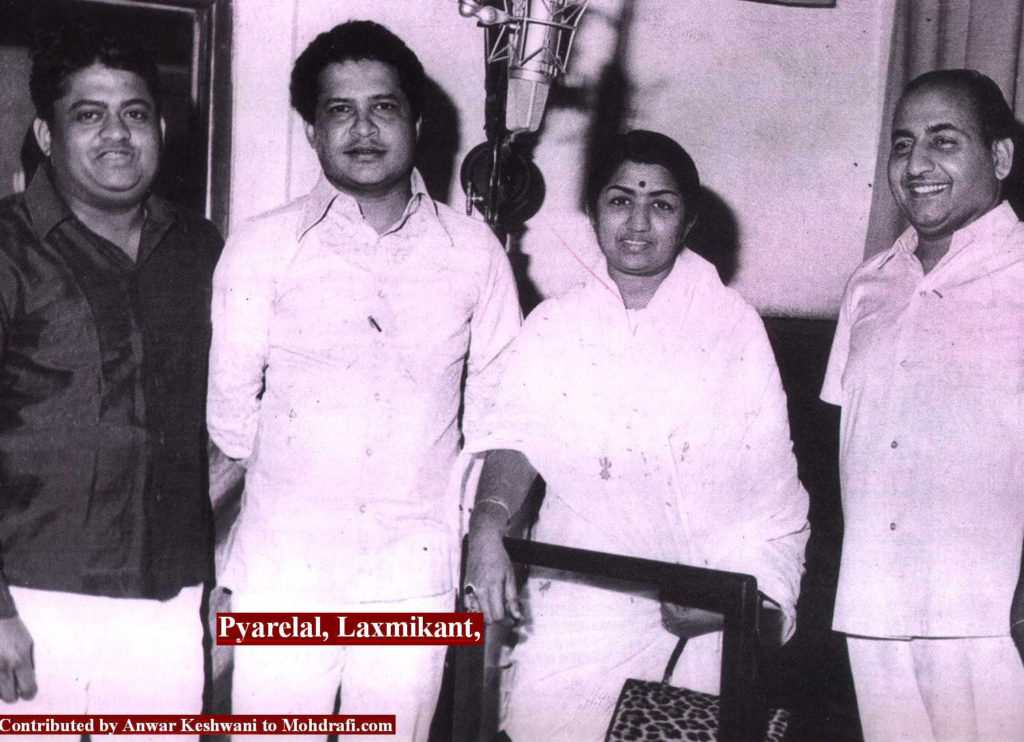
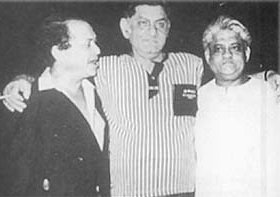
Laxmikant Pyarelal with Mohammad Rafi and Lata Mangeshkar (Pic courtesy: Hamara Photos)

Here are the iconic songs that Majrooh Sultanpuri, Laxmikant Pyarelal, Mohammad Rafi and Lata Mangeshkar made together for Dosti:

1. “Chahoonga Main Tujhe Saanj Savere” Mohammad Rafi 04:55
2. “Meri Dosti Mera Pyar” Mohammad Rafi 04:23
3. “Rahi Manwa Dukh Ki Chinta” Mohammad Rafi 04:07
4. “Mera To Jo Bhi Kadam” Mohammad Rafi 04:03
5. “Gudiya Humse Roothi Rahogi Kab Tak Na Hasogi” Lata Mangeshkar 03:31
6. “Jaanewalo Zara” Mohammad Rafi 04:06

Lastly, before we take up the song, lets for a minute talk about the lyricist Majrooh Sultanpuri.

Presently, on my Facebook page Lyrical, I am engaged in covering Lyricist #5: Majrooh Sultanpuri under my Remembering Great Lyricists series. I have kept my favourite Shakeel Badayuni out of this series since I already have a number of articles and tributes on him.
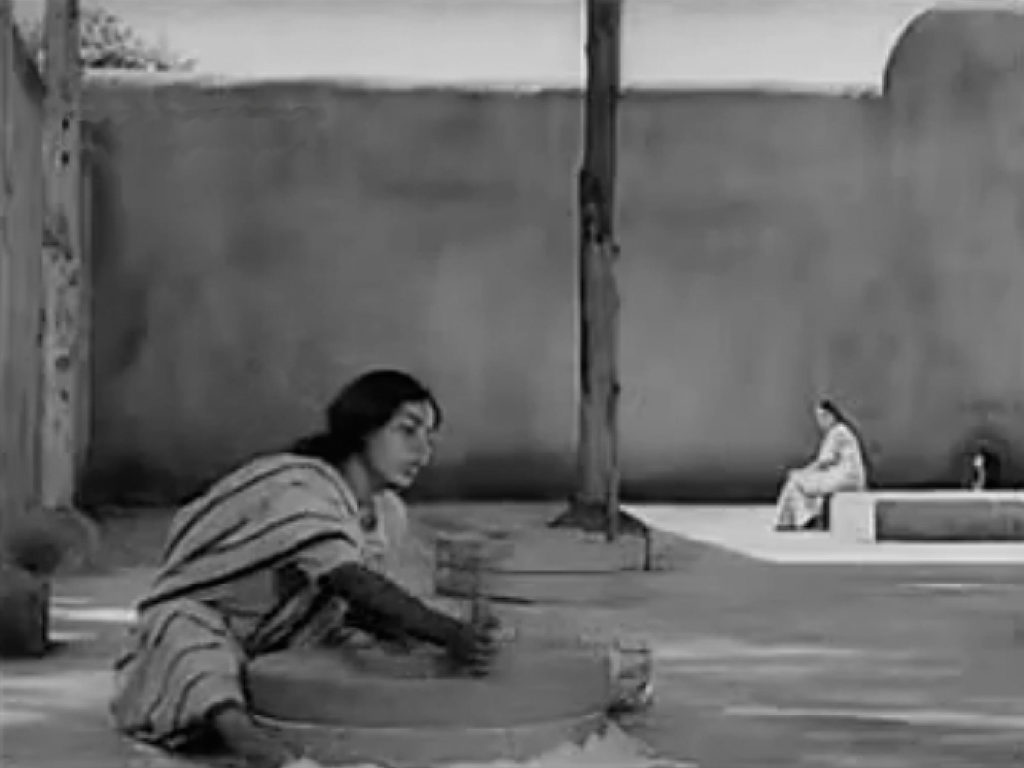
Majrooh is the fifth of our lyricists who was a contemporary of Shakeel Badayuni. Out of all these six (*including Shakeel), three have been from Uttar Pradesh, which says something about that region producing some great poets and lyricists.

Majrooh Sultanpuri was born on 01 Oct 1919 as Asrar ul Hassan Khan in a Tarin Pashtun family, in Sultanpur, Uttar Pradesh. His father was an officer in the police department, but, preferred to send his son for traditional madrasa (Urdu school) rather than provide him with English schooling.

He tried his hand at being a quack until he was noticed in a mushaira in Sultanpur.

He was a disciple of the great Urdu poet Jigar Moradabadi. When he visited Bombay in 1945 to participate in a mushaira, the director Abdul Rashid Kardar noticed him and invited him to write for the movies. Majrooh turned it down as he looked down upon movies! He was persuaded through his mentor Jigar Moradabadi and then there was no turning back.

Many traditionalists of the Urdu literature, however, felt that Majrooh sold his soul to the Hindi films and that he could have emerged a great poet in the likeness of Ghalib and Jigar.

The takhalus Majrooh means “injured” or “wounded”.

Majrooh was awarded, in 1993, the highest award – Dadasaheb Phalke award – for his lifetime contribution towards lyrics and poetry. He was the first lyricist ever to be given that award. For the film Dosti, that made Laxmikant Pyarelal famous, he was awarded the Filmfare Best Lyricist Award for the song: Chahunga main tujhe saanjh savere.

For someone who didn’t want to join Hindi movies, Majrooh emerged as a natural lyricist, very popular, very romantic and enchanting.

Laxmikant Pyarelal and Majrooh Sultanpuri paired in a number of movies to make songs: Dosti (1964), Mere Lal (1966), Dillagi (1966), Shagird (1967), Patthar Ke Sanam (1967), Duniya Nachegi (1967), Mere Hamdam Mere Dost (1968), Wapas (1969), Pyasi Sham (1969), Meri Bhabhi (1969), Dharti Kahe Pukar Ke (1969), Abhinetri (1970), Jal Bin Machli Nritya Bin Bijli (1971), Bikhre Moti (1971), Ek Nazar (1972), Anokhi Ada (1973), Imtihaan (1974), Mere Sajana (1975), Anari (1975), Aaj Ka Mahatma (1976), Dus Numbri (1976), Master Dada (1977), Kali Raat (1977), Parvarish (1977), Swan Ke Geet (1978), Naach Utha Sansar (1978), Phaansi (1978), Prayaschit (1979), Ladies Tailor (1981), Ek Aur Ek Gyarah (1981), Watan Ke Rakhwale (1987), Janam Janam (1988), Humshakal (1992), Badi Bahen (1993), West is West (2011) and Soundtrack (2011).

These movies that Majrooh and LP did together produced some really enchanting songs such as Bade miyan deewane, Dil wil pyar wyar, Kanha kanha aan padhi, Woh hain zara khafa khafa, Ruk ja aye hawa, and Duniya pagal hai ya main deewana (all from 1967 movie Shagird); Koi nahin hai phir bhi hai mujhako, Tauba ye matwali chaal, Mehboob mere, and Patthar ke sanam (all from 1967 movie Patthar Ke Sanam); Chhalkaye jaam, Chalo sajna jahan taq, Na jaa kahin ab na jaa, Allah ye ada kaisi, Hui shaam unka khyaal aa gaya, Hamen to ho gaya hai pyaar, and Tum jao kahin (all from 1968 movie Mere Hamdam Mere Dost); and Ye kaisa gham sajna and Yaaro mera saath nibhao (both from 1969 movie Pyasi Sham).

Before we take up the song, let me tell you briefly as to how it came about in the movie. Ramu (Sushil Kumar) is a cripple and good at playing harmonica. Thrown out of his home, crippled and penniless, he roams around the streets of Mumbai. Here he comes across Mohan (Sudhir Kumar), a boy who is blind and has a similar tale of woe. Mohan is a singer. Both meet on the streets of Bombay and form a good pair. One day, Ramu gets into trouble for no fault of his own and is bailed out on the condition that he would keep no contact with Mohan. That’s how this song came about.

Please enjoy Mohammad Rafi sing a composition of Laxmikant Pyarelal on the lyrics of Majrooh Sultanpuri, a song from the 1964 Satyen Bose movie Dosti: Chahunga main tujhe saanjh savere….

चाहूँगा मैं तुझे साँझ सवेरे
फिर भी कभी अब नाम को तेरे
आवाज़ मैं न दूँगा, आवाज़ मैं न दूँगा

देख मुझे सब है पता
सुनता है तू मन की सदा (२)
मितवा …
मेरे यार तुझको बार बार
आवाज़ मैं न दूँगा, आवाज़ मैं न दूँगा
चाहूँगा मैं तुझे साँझ सवेरे

दर्द भी तू चैन भी तू
दरस भी तू नैन भी तू
मितवा …
मेरे यार तुझको बार बार
आवाज़ मैं न दूँगा, आवाज़ मैं न दूँगा

I have been giving you Songs that Tug at your Emotions, off and on, since 04 Oct 2017. However, I don’t think other songs would tug at your emotions as much as songs of the 1964 movie Dosti that made Laxmikant Pyaralal very famous indeed. It was, first of all, the unlikeliest of the stories to succeed: a cripple and a blind boy; hardly any entertainment there. However, Majrooh, Laxmikant Pyarelal, and Mohammad Rafi created songs that went deep and touched your heart like nothing had ever done before.

Another song from the movie: Jaanewalo zara mudh ke dekho mujhe main bhi insaan hoon was a pointer towards how we treat cripples on our streets.

Chahunga main tujhe not just tugged at our emotions but rightly won so many awards for all three who made it possible.

I know I can never forget it.

I hope you enjoyed it too.

Please await the next song in the series.

SRIDEVI – CHANDNI THAT WENT AWAY TOO SOON

दिल की धड़कन रुक गयी सुनके आपके मरने की खबर,
लोग चाहे कुछ भी कहें, आपकी अदाकारी रहेगी अमर I

लाखों हैं मेरे जैसे जिन्होंने देखी हैं आपकी सब फिल्में,
कैसे ब्यान करें क्या होता था हम पे असर?

आपका बांकपन, अनोखी मासूमियत और दिलकशी हुसन,
और आँखों को देखते ही कोई चाहे भूल जाये दर बदर I

हम सबके दिलों में आपने यूँ बना ली थी जगह,
आपको देखते ही वक़्त जैसे जाता था ठहर I

चांदनी को देख के फिर जब आपको देखते थे,
आपके चेहरे का नूर झलकता था रात भर I

आपके रक़्स में भी एक अलग सा लचकपन था,
माधुरी ने भी नाच बनाया आपकी ही नक़ल कर I

सदमा में आपकी अदाकारी इतनी हुई थी मशहूर,
लोग फ़िदा थे आपकी मासूम और सेहमी अदाओं पर I

जब आप पहली अदाकारा सुपर स्टार बनी,
जहाँ होना चाहिए था आप पहुंच गयीं वहां पर I

सब मायूस, उदास, मजबूर और सदमे में हैं श्रीदेवी,
यकीन नहीं होता आप ऐसे चले जाएँगी छोड़ कर I

खुदा गवाह है वक़्त चालबाज़ निकला हम नहीं हैं,
वहीँ हम आपको आके ढून्ढ लेंगे खुदा के घर I

और हम सब देखेंगे फिर से अपनी हवा हवाई,
लक चिकी लक चिकी चिकी लक चुम कर I

Dil ki dhadkan ruk gayi sunake aapke marne ki khabar,
Log chaahe kuchh bhi kahen, aapki adakaari rahegi amar.

Laakhon hain mere jaise jinhone dekhi hain aapki sab filmen,
Kaise byaan karen kyaa hota tha ham pe asar?

Aapka baankpan, anokhi maasumiyat aur dilkashi husn,
Aur aankhon ko dekhte hi koi chaahe bhool jaaye dar badr.

Ham sab ke dilon mein aapne youn jagah bana li thi,
Aapko dekhte hi waqt jaise jaata tha thhehr.

Chandni ko dekh ke phir jo aapko dekhte the,
Aapke chehre ka noor jhalakta tha raat bhar.

Aapke raqs mein bhi ek alag sa lachakpan tha,
Madhuri ne bhi naach banaya aapki hi nakal kar.

Sadma mein aapki adakaari itani hui thi mashhur,
Log fida de aapki maasoom aur sehmi adayon par.

Jab aap pehli adaakara super star bani,
Jahan hona chahiye the aap pahunch gayi wahan par.

Sab maayus, udaas, majboor aur sadme mein hain Sridevi,
Yakeen nahin hota aap aise chale jaayengi chhod kar.

Khuda gwaah hai waqt chaalbaaz nikla ham nahin hain,
Wahin ham aapko dhoond lenge khuda ke ghar.

Aur ham sab dekhenge phir se apni Hawa Hawai,
Lak chikki lak chikki chiki lak chum kar.


Raaga Based Song Of The Day #92

Raaga Based Song of the Day: Jeevan jyot jale….
Raag Sohani, Tal Tintal

Today sees me returning to my favourite lyricist Shakeel Badayuni after a long time. And, he is with Ravi here – the composer and music director with whom he got two of his three Filmfare Awards for Best Lyricist.

Today is the third day that I am giving you a song based on Raag Sohani. The first time I gave you a Sohani based song was, I hope, a treat for you since I gave you Ustaad Bade Ghulam Ali Khan‘s rendition of it: Prem jogan ban ke, also penned by Shakeel for K Asif’s Mughal-e-Azam; however, composed by Naushad (Please see: ‘Raaga Based Song Of The Day #42’). Exactly 42 more songs later, I gave you another song based on this raag: Jhoomati chali hawa yaad aa gaya koi; this time in Tal Dadra. This was penned by a great lyricist Shailendra on a composition by SN Tripathi in Tripathi’s own directed 1962 movie Sangeet Samrat Tansen (Please see: ‘Raaga Based Song Of The Day #84’).

We have completed ninety-one days of Raaga Based Songs of the Day. Our first post in the series was titled ‘Raaga Based Song Of The Day #1’ and the song was a Mohammad Rafi and Lata Mangeshkar song from the 1970 Shakti Samanta movie Pagla Kahin Ka: Tum mujhe youn bhula na paoge.  It is in Raag Jhinjhoti, Tal Kaherava.

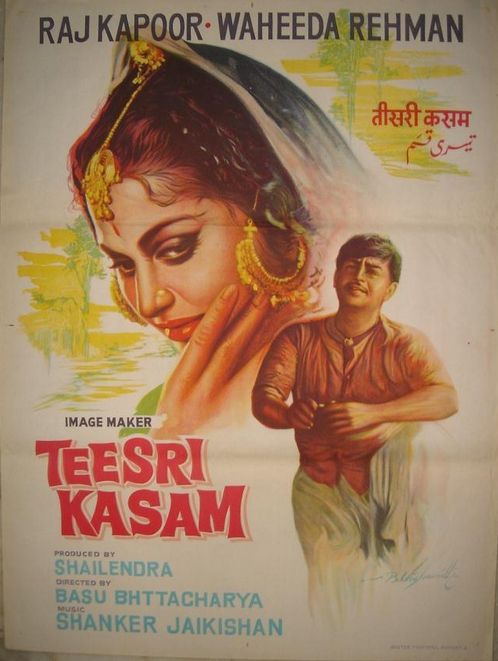
Our ninety-first post or the last post was titled ‘Raaga Based Song Of The Day #91’ and the song was an Asha Bhosle song from the 1966 Shailendra production and Basu Bhattacharya movie Teesri Kasam starring Raj Kapoor and Waheeda Rehman. It is in Raag Kalyan, Tal Dadra.

This blog has a number of posts on Raaga based songs in Hindi movies titled similarly; for example: ‘The Best Raaga Based Songs in Hindi Movies – Raaga Bhairavi – Part II’.

In the last ninety days of sharing Raaga based songs of the day, I have given you songs based on Raag Jhinjhoti, Gara, Bhimpalasi, Madhuvanti, Shivaranjani, Bihag, Pahadi, Sarang, Pilu, Bhairavi, Khammaj, Charukesi, Kalyan or Yaman, Desh, Malgunji, Kirwani, Kedar, Bageshri, Megh Malhar, Bhupali, Ahir Bhairav, Malkaush, Mand, Adana, Kafi, Rageshri, Jaunpuri, Tilang, Janasammohini, Chayanat, Shuddha Kalyan, Gaur Sarang, Jogiya, Asavari, Maru Bihag, Durga, Lalit, Puria Dhanashri, Bhinna Sahdja, Sohani, Multani, Patdeep, Jaijaiwanti, Tilak Kamod, Hemant, Basant Mukhari, Gujri Todi, Kalavati, Hamir, Bhatiyar, Gawati, Shyam Kalyan, Gorakh Kalyan, Madhamat Sarang, Manj Khammaj, Darbari Kanada, Vibhas, Shankara, Bahar, Nand and Mian Ki Malhar; making it a total of 61 raagas. The raagas that have been repeated so far are Pahadi, the raaga of my home place in the Himalayas, Maru Bihag, Raag Kirwani, Jhinjhoti, Bhairavi, Gara, Basant Mukhari, Malkauns, Bhairavi, Mand, Sohani, Madhuvanti and Shivaranjani. Today, I am repeating Raag Sohani for the third time.

Sohani, also known as Sohni and Sohini,  is a raaga that belongs to Marwa Thaat. Its Jati is Audhav – Shadav, ie, five notes in Aaroha and six in Avroha. The time for performing this raaga is in the wee hours of the morning or last prahar of the night, that is, from 3 to 6 AM. In the Marwa thaat, Sohani is similar to Marwa and Puria raagas. In the Poorvi thaat, it is similar to Basant.

In the wee hours of the morning, you would find the atmosphere of dew. Hence, the mood of the raaga is the moist atmosphere that prevails in a tranquil and silent night.

Some of the other songs composed in Raag Sohani are:

1.
2.
3.
4.
5.
6.
7.
8.
9.
10.
11.
Prem Jogan Ban Ke
Jhoomti Chali Hawa
Kuhu Kuhu Bole
Jeevan Jyot Jale
Saawan Ban Gaye Nain
Muft Hue Badnaam
Jhoote Zamane Bhar Ke
Bedardi Nazarein Mila Ke
Sajan Tori Preet
Naina Hai Jadoo Bhare
Payal Chham Chham
Mughal-E-Azam
Sangeet Samrat Tansen
Suvarna Sundari
Grihasthi
Karorpati
Baraat
Musafir Khana
Aji Bas Shukriya
Sagai
Bedard Zamana Kya Jaane
Basant
Bade Ghulam Ali Khan
Mukesh
Lata, Rafi
Asha
Asha
Mukesh
Nirmala Devi, Rafi
Lata
Asha
Mukesh
Asha

I had given you an introduction to Tal (musical measure) on the second day itself. Some of you would recall that I had mentioned that Tal, Taal or Tala is a word that is variation of the word Taali (Clap). Before the advent of Tabla, the standard method of keeping the musical measure was with the clapping or tapping of one’s hand on the arm or thigh. Indeed, now that we have Tabla, this beat is still maintained by clapping and waving of hands. If you recall, I had also mentioned that whilst the Raaga sets the mood, time of day and season of a composition, Tal constitutes the time-cycle. Therefore, a Raaga and Tal go hand in hand. On the 14th Raaga Based Song of the Day, was the only occasion when we didn’t have a Raaga (Kalyan) accompanied by a Tal since the entire composition of Lagata nahin hai dil mera was in Alaap.

The rhythmic hand gestures used to denote Tal are called Kriyas. If you recall, I laid emphasis on something called Vibhag or sections or angas or parts of a Tal. In Hindustani music, the first beat of a Vibhag is Tali (Clap), whilst the empty beat (Khali) is indicated is indicated by the sideways wave of the dominant clapping hand. And thus, you would recall, I represented the Tal for you with Claps and Waves.

We had also learnt that a Tal doesn’t have a fixed tempo or laya. Hence, we had learnt three different tempos: Vilambit (delayed or slow), Madhya (medium) and Drut (fast).

Teental or Tintal is the most popular Tal in North India/Hindustani Music. It is also the most symmetrical. It has 16 beats in four vibhags. The period between every two beats is the same. We already know that the first beat is called Sam (to be pronounced like the English word Sum) and the ninth beat is Khali or empty. To perform the kriya of Tintal, one has to clap on the first beat, clap on the 5th beat, then waves on the 9th beat and lastly again claps on the 13th beat; these three claps give the rhythm its name: Teental or Tintal.

The Theka for Tintal
dha dhin dhin dha | dha dhin dhin dha |
x 2
dha tin tin ta | ta dhin dhin dha |
o 3

This can also be shown using the following figure:

Taal signs X 2 0 3
Maatra 1 2 3 4 5 6 7 8 9 10 11 12 13 14 15 16
Bols dha dhin dhin dha dha dhin dhin dha dha tin tin ta ta dhin dhin dha
(Poster courtesy: Wikipedia)

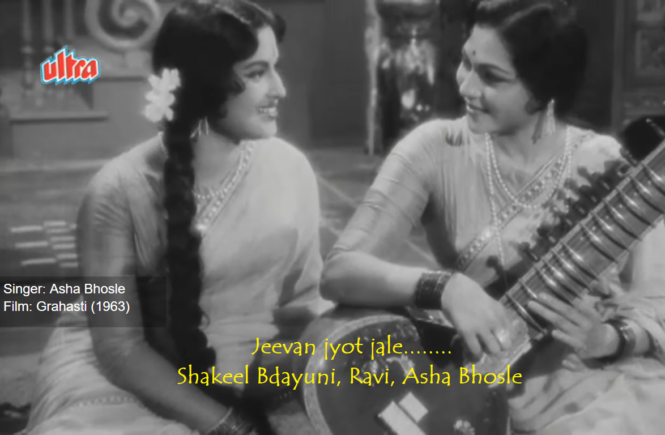
The song I have taken for you today is from the 1963 SS Vasan production and Kishore Sahu movie Grahasti starring Ashok Kumar, Manoj Kumar, Rajshree, Nirupa Roy and Mehmood. As I said, it was penned by Shakeel Badayuni, composed by Ravi and sung by Asha Bhosle. “Grahasti was the first film to “start the trend” of family dramas being made in South India. The story revolves around Harish Khanna (Ashok Kumar) who leads a dual life, having two sets of families in different cities. The effect the exposure has on him and his family forms the basis of the story.”

The music composer Ravi won an award for the song Jeevan Jyot Jale. It was adjudged the Best Classical Composition in the Sur-Singar Film Awards for 1963. He won the Swami Haridas Award, while Asha Bhosle won the Mian Tansen Award as the singer. The song was cited as the best song of 1963 out of the 544 songs released that year from a total of 77 films. Of course, Ravi has won the Filmfare Award only twice out of seven nominations and in 1964 (the awards after the movie was made), he lost out to Roshan for Taj Mahal and joined other losers: Naushad Ali for Mere Mehboob and Shankar Jaikishan for Dil Ek Mandir.

I don’t have to give you more about Shakeel Badayuni since this blog has as many as sixteen posts about and involving him. I won’t even give you a list of my favourite songs penned by him since all his songs and ghazals are my favourite. I indulge in writing poetry in Hindustani/Urdu and many of these are on this blog. My fervent wish is that sometime or the other I shall write something as good as Shakeel Badayuni.

For Music Director Ravi to compose one of the finest raaga based songs was nothing short of miracle since he had no formal education in Raagas at all. He learnt music by listening to his father sing bhajans. He worked as an electrician to support the family whilst learning harmonium and other classical instruments entirely on his own. He shifted to Bombay to become a singer in the movies and continued to work as an electrician for the railways. How tough life was for him can be made out from the fact that he had no house/room in Bombay and he used to sleep at Malad Railway Station.

Ravi is my namesake and my favourite singer Hemant Kumar gave him a break in 1952 to sing the vocals of his composition Vande Mataram in the 1952 Hemen Gupta movie Anand Math. Within three years he emerged as an independent music director for Albeli, a 1955 movie starring Pradeep Kumar and Geeta Bali. Ravi got his first Filmfare Award for the 1962 movie Gharana. Two years before that he gave Shakeel his first Filmfare Award for Chaudhvinh Ka Chand. For a musician without any formal training in music, Ravi came a long way. Some of the Sitar based songs of Ravi are classics such as Tora man darpan kehlaaye for the 1965 movie Kaajal (Please see: ‘Songs That Tug At Your Emotions – Song #9’).

Asha Bhosle with Ravi on her right

As far as Asha Bhosle, the singer of this song is concerned, I am one who thinks of Asha Bhosle as a complete singer and not just a singer of sexy and sensuous numbers. Have a look at some of the sad and serious numbers that she has sung: Phir thes lagi dil mein phir yaad ne tadpaaya (Kashmir Ki Kali), Ye khaamoshiyan ye tanhaayiyan mohabbat ki duniya hai kitani jawan (Ye Raaste Hain Pyaar Ke), Wo subah kabhi to aayegi (Phir Subah Hogi), Tang aa chuke hain kashm-e-kash zindagi se ham (She sang the same song of Sahir Ludhianvi in 1958 movie Lighthouse as was sung by Mohammad Rafi in 1957 movie Pyaasa), Sun le pukaar aayi (Phool Aur Patthar), Sawan aaye ya na aaye (Dil Diya Dard Liya), Sach huye sapne tere (Kaala Bazaar), Raaton ko chori chori bole mera kangana (Mohabbat Zindagi Hai), Raat ke hamsafar thak ke ghar ko chale (An Evening In Paris), Puuchho na hamen ham unake liye kyaa kyaa nazraane laaye hain (Mitti Mein Sona), Piya piya na laage mora jiya (Phagun), Mujhe gale se laga lo bahut udaas hoon main (Aaj Aur Kal), Mere bhaiya mere chanda mere anmol ratan (Kaajal), Main jab bhi akeli hoti hoon tum chupake se aa jaate ho (Dharmputra), Koi aaya dhadkan kehati hai (Lajwanti), Koi shikwa bhi nahin koi shikaayat bhi nahin (Neend Hamari Khwaab Tumhaare), Kali ghata chhaye mora jiya tarsaaye (Sujata), Jab chali thandi hawa (Do Badan), Jaa jaa re jaa saajana (Adaalat), Ik pardesi mera dil le gaya (Phagun), Ham intezzar karenge tera qayaamat taq (Bahu Begum), Ham tab simat ke aapki baahon mein aa gaye (Waqt), Do ghadi woh jo paas aa baithe (Gateway Of India), Dil ki tamanna thi masti mein (Gyaarah Hazaar Ladkiyan), Dekh hamen awaaz na dena (Amardeep), Chain se hamako kabhi aap ne jeene na diya (Pran Jaaye Pazr Vachan Na Jaaye), Chand sa mukhada kyun sharmaaya (Insaan Jaag Uthja), Bachchon tum taqdeer ho kal ke Hindostan ki (Didi), Aur is dil mein kyaa rakha hai (Imaandaar), Ashkon mein hamane tasveer banayi hai (Dekh Kabira Roya), Ab ke baras bhej bhaiya ko babul (Bandini), Aapse maine meri jaan mohabbat ki hai (Ye raat phir na aayegi), and Aaj ki raat badhi shok badhi natkhat hai (Nai Umr Ki Nai Fasal).

Asha Bhosle’s Bandini song ‘Ab ke baras bhej bhaiya ko babul’ is as popular today as it was 55 years ago.

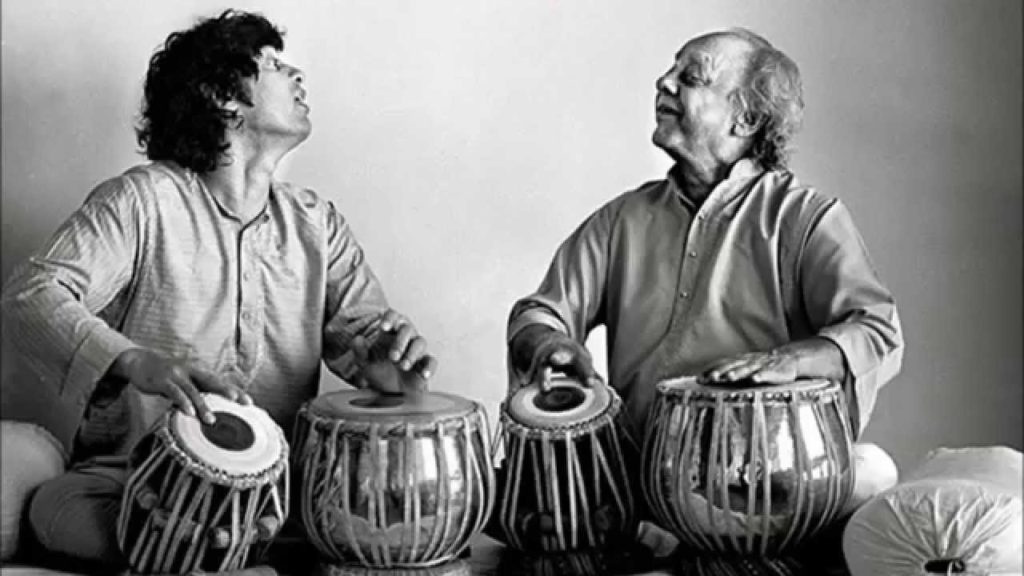
Before we actually take up the song, first, lets take up the value added learning of today. From the last ten times we started learning about some of the leading personalities in Indian Classical Music or Shastriya Sangeet. The first one that we took up was Ustaad Asad Ali Khan, the finest Rudra Veena player in the country. Then we took up Pandit Hari Parsad Chaurasia, the greatest Bansuri player in the country. Then we talked about Ali Akbar Khan, the greatest Sarod player in the country. Then we took up Pandit Ravi Shankar, the greatest Sitar player in the world. Then we took up the greatest classical singer in the country (of Carnatic tradition): MS Subbulakshmi. Then, we took up the greatest classical singer in the country (of Hindustani tradition): Pandit Bhimsen Joshi. Then, we learnt about the Shehnai maestro Ustad Bismillah Khan. Then, we learnt about Annapurna Devi, a great Surbahar (bass sitar) player of Hindustani Classical Music. Thereafter, we took up Pandit Shiv Kumar Sharma, the grestest Santoor player in the country. Then we learnt a little more about Ustaad Alla Rakha Qureshi or simply Alla Rakha, the Tabla Maestro and father of Ustaad Zakir Hussain. And finally, we learnt about the master and one of the pioneers of fusion: Anand Shankar.

(Pic courtesy: Amazon India)

Tonight, we shall take up a personality who represents both the worlds: that of classical Veena player as well as that of an accomplished filmmaker: Sundaram Balachander. He was born on 18 Jan 1927 to V Sundaram Iyer and Parvathi alias Chellamma in Mylapore, Madras Presidency. British India. His elder brother S Rajam was a well-known singer and teacher, and a gifted artist as well. His elder sister is S Jayalakshmi (who later acted as MK Thyagaraja Bhagavathar’s pair in Sivakavi), S Saraswathi was his younger sister, followed by the twins S Karpagam and S Gopalaswami.

From the age of five, Sundaram Balachander showed an interest in classical music and his first musical attempt was with the kanjeera, which is a small, circular percussion instrument. Within a year he was accompanying his brother and other musicians on the kanjeera during regular concert engagement, in Sabhas, in temple festivals, in devotional congregations, etc. From age six on his career achieved steady growth. He also learnt to play tabla, mridangam, harmonium, bulbul tarang, dilruba, and shehnai. On the sitar, Balachander was a fully fledged solo concert artist by age twelve and it is interesting to note that he performed South Indian Carnatic music on that instrument. And then Veena entered his life. Falling in love with the instrument, from the beginning he felt that it deserved his undivided attention and every skill. Without a tutor or master to guide him, within two years he was an established concert veena player.

He travelled all over the world, and won international fame as an instrumentalist of rare repute. The famous electric bassist Mark Egan cites Balachander as a major influence on his music. At one time, Balachander held the record for cutting the highest number of records (21 in India, and 6 outside India). The 12-LP set encompassing the 72 melakartas is a piece of work that has no parallel. Magic Music of India (World Pacific), Sounds of the Veena (WPS), Veena Virtuoso (World Music Library), Immortal Sounds on the Veena (Oriental Records), veeNa (EMI), The Music of the Veena (JVC, Japan), and The Music of India (Nonesuch Explorer) are some his releases that have been best-sellers worldwide.

He is also known for his work in cinema, his writing and his polemics. Balachander was awarded the Padma Bhushan in 1982.

As far as movies are concerned, he began as a child artist in Tamil film Seetha Kalyanam in 1934 as a child musician in Ravana’s court. His other Tamil movies that he acted include Devaki (1951), Rajambal (1951), Rani (1952), Inspector (1953), Penn (1954), Kodeeswaran (1955), Doctor Savitri (1955) and Maragadham (1959). In addition to acting and composing film music, from the late 1940s to the mid-1960s Balachander directed a number of Tamil films. He had acted, directed, composed music and sang in Idhu Nijama (1948), En Kanavar (1948) and Kaidhi (1951). A number of Telugu movies followed. In the 1960s, he formed his own production company called SB Creations where he made 3 movies, produced, directed, composed music and sang in Avana Ivan (1962), Bommai (1964) and Nadu Iravil (1965).

Ladies and gentlemen, please enjoy in Raag Sohani Taal Tintal, Asha Bhosle sing a composition of Ravi on the lyrics of Shakeel Badayuni in the 1963 SS Vasan Production and Kishore Sahu directed movie Grahasti: Jeevan jyot jale…..

जीवन ज्योत जले
कोउ न जाने कब निकसे दिन
और कब रात ढले
जीवन ज्योत जले …

भोर भये तो मन मुस्काये
सँझ भये तो नीर बहाये
एक पल मान करे संसारी
एक पल हाथ मले
जीवन ज्योत जले …

https://www.youtube.com/watch?v=UemDW8KonE8

We have intended to learn about Raaga based music whilst we entertain ourselves with Raaga based songs. So, lets, once again, take stock of our collective learning so far:

  1. On the first day we learnt about the Raaga system devised by Pandit Vishnu Narayan Bhatkhande, which is the prevalent system in Hindustani Classical Music and based on ten Thaats.
  2. On the second day we learnt about Tal or Taal.
  3. On the third day we learnt about characteristics of Raagas that included Swar, Jati, Thaat, Arohana and Avarohana, Vadi, Samvadi and Pakad.
  4. On the fourth day, we learnt about Sargam.
  5. On the fifth day, we learnt about notations used in Indian classical music or simply Swar Lipi.
  6. On the sixth day, we learnt about the Ras (sentiments) that Raagas evoke.
  7. On the seventh day, we learnt about various types of Swar: Shuddha, Achal, Vikrut, Komal and Teevra.
  8. On the eighth day, we learnt the parts of a composition in Indian Classical Music.
  9. On the ninth day, we learnt the names of some of the popular instruments used in Indian Classical Music.
  10. On the tenth day, we learnt about the sources of names of Raagas.
  11. On the eleventh day, we learnt about why Bhairavi is the first raag to be taught to beginners and also why it is the last in a performance.
  12. On the twelfth day, we learnt about Khammaj Thaat.
  13. On the thirteenth day, we learnt about Tal Punjabi Theka or Sitarkhani.
  14. On the fourteenth day, we learnt about Alap.
  15. On the fifteenth day, we learnt about List of Raagas (Raagmala) in my favourite book: Sri Guru Granth Sahib.
  16. On the sixteenth day, we learnt about tips for raaga identification.
  17. On the seventeenth day, we learnt the basics of Gharana system.
  18. On the eighteenth day, we learnt about Filmi Sangeet.
  19. On the nineteenth day, we learnt about the commonest Tal in Raagas: Tintal.
  20. On the twentieth day, we learnt about the Kafi Thaat.
  21. On the twenty-first day, we learnt a little more in detail about the classification of Raagas.
  22. On the twenty-second day, we learnt the essential differences between Bhairavi and Bhairav.
  23. On the twenty-third day, we learnt a little more in detail about the Jati or Jaati of a raaga.
  24. On the twenty-fourth day, we learnt details of Thaat Bilawal, the most basic thaat in the Bhatkhande’s system of raagas.
  25. On the twenty-fifth day, we learnt about Tintal.
  26. On the twenty-sixth day, we learnt in detail about the Raaga – Samay linkage.
  27. On the twenty-seventh day, we learnt about Lehar.
  28. On the twenty-eighth day, we learnt about the history of the Hindustani Music.
  29. On the twenty-ninth day, we learnt about Dhrupad.
  30. On the thirtieth day, we learnt about Rupaktal that I was introduced to, a few months back, by my friend Anand Desai.
  31. On the thirty-first day, we learnt about Khayal.
  32. On the thirty-second day, we learnt about Thumri.
  33. On the thirty-third day, we learnt about Tappa.
  34. On the thirty-fourth day, we learnt about Tarana.
  35. On the thirty-fifth day, we learnt about Tal Dipchandi (Moghali).
  36. On the thirty-sixth day, we learnt about Tabla.
  37. On the thirty-seventh day, we learnt about Kirtan.
  38. On the thirty-eighth day, we learnt about Pakhawaj.
  39. On the thirty-ninth day, we learnt about Hori.
  40. On the fortieth day, we learnt about Dadra.
  41. On the forty-first day, we learnt about Kajri.
  42. On the forty-second day, we learnt about Chaiti.
  43. On the forty-third day, we learnt about Sarangi.
  44. On the forty-fourth day, we learnt about Shehnai.
  45. On the forty-fifth day, we learnt about Sarod.
  46. On the forty-sixth day, we learnt about Bansuri.
  47. On the forty-seventh day, we learnt about Ektal and Tanpura.
  48. On the forty-eighth day, we learnt about Veena.
  49. On the forty-ninth day, we repeated our learning of Veena with a small excitement added.
  50. On the fiftieth day, we learnt about Dilruba/Esraj.
  51. On the fifty-first day, we learnt about Jaltarang.
  52. On the fifty-second day we learnt about Qawwali.
  53. On the fifty-third day, we learnt about Sitar.
  54. On the fifty-fourth day, we learnt about Surbahar.
  55. On the fifty-fifth day, we learnt about Harmonium.
  56. On the fifty-sixth day, we learnt about Santoor.
  57. On the fifty-seventh day, we learnt about Swarmandal.
  58. On the fifty-eighth day, we learnt about the Shruti Box.
  59. On the fifty-ninth day, we learnt about Alankar.
  60. On the sixtieth day, we learnt about singing in Aakaar.
  61. On the sixty-first day, we learnt about the Classification of Indian Musical Instruments.
  62. On the sixty-second day, we learnt a little about Carnatic Music.
  63. On the sixty-third day, we learnt about Natya Shastra.
  64. On the sixty-fourth day, we learnt about evolution of musical instruments in India down the ages.
  65. On the sixty-fifth day, we learnt about Riyaaz.
  66. On the sixty-sixth day, we looked at a list of Raagas in Hindustani Classical Music.
  67. On the sixty-seventh day, we learnt about the health benefits of raagas.
  68. On the sixty-eighth day, we learnt a little more comprehensively about the moods and emotions that raagas evoke.
  69. On the sixty-ninth day, we learnt about a mobile application to help identify raagas.
  70. On the seventieth day, we learnt about Melakarta Raagas.
  71. On the seventy-first day, we learnt about Sangita Makarand.
  72. On the seventy-second day, we learnt about TaalMala an Android application for personalized accompaniment of musical instruments during Riyaaz or even during Concert.
  73. On the seventy-third day, we learnt about Indian Classical Ragas, an Android application for mobile phones.
  74. On the seventy-fourth day, we learnt about Saregama Classical, another application for Classical Raagas.
  75. On the seventy-fifth day, we learnt about a free online service available to learn Indian Classical Music.
  76. On the seventy-sixth day, we learnt about List of Hindustani Classical Musical Festivals in India and Abroad.
  77. On the seventy-seventh day, we learnt about List of Carnatic Musical Festivals in India and Abroad.
  78. On the seventy-eighth day, we learnt about Jhaptal.
  79. On the seventy-ninth day, we learnt about Ektal.
  80. On the eightieth day, we learnt about Tivra Tal.
  81. On the eighty-first day, we learnt about the greatest Rudra Veena player ever: Ustaad Asad Ali Khan.
  82. On the eighty-second day, we learnt about the greatest Bansuri player alive: Pandit Hariprasad Chaurasia.
  83. On the eighty-third day, we learnt about the best Sarod player in the country: Ustaad Ali Akbar Khan.
  84. On the eighty-fourth day, we learnt about the greatest Sitar player in the world: Pandit Ravi Shankar.
  85. On the eighty-fifth day, we learnt about the greatest Indian vocalist of Carnatic tradition: MS Subbulakshmi.
  86. On the eighty-sixth day, we not just learnt about the greatest vocalist of Hindustani tradition: Pandit Bhimsen Joshi but also learnt about Tal Hinch.
  87. On the eighty-seventh day, we learnt about the Shehnai maestro Ustaad Bismillah Khan.
  88. On the eighty-eighth day, we learnt about Annapurna Devi, the greatest Surbahar player in India.
  89. On the eighty-ninth day, we learnt about Pandit Shiv Kumar Sharma, the greatest Santoor Player in the country.
  90. On the ninetieth day, we learnt about Ustaad Alla Rakha, the Tabla maestro.
  91. On the ninety-first day, we learnt about Anand Shankar, the great fusion musician from Bengal.
  92. And today, on the ninety-second day, we learnt about Sundaram Balachander, the great Veena player and film-maker.

There is much more still to be learnt and enjoyed.

Please stay tuned!

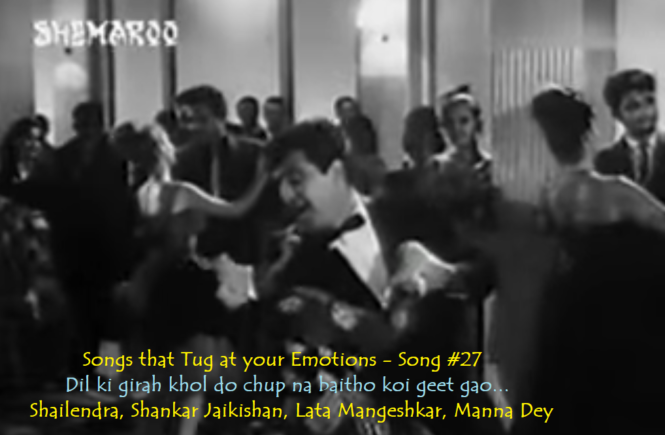
Songs That Tug At Your Emotions – Song #27 (SJMF MUMBAI MEET – AN APPRECIATION)

The twenty-seventh day of songs in this series.

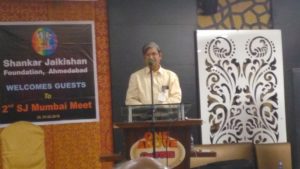
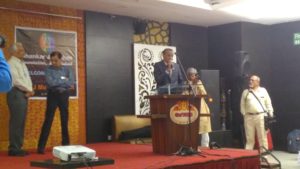
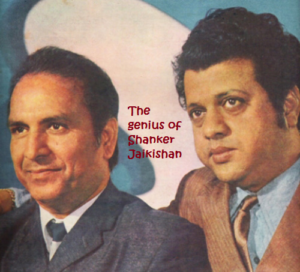
This is, however, not a routine post. It is my appreciation of the conduct of the Shankar Jaikishan Foundations’ Mumbai Meet, Saturday, 03 February 2018.

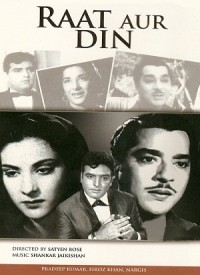
Before I come to the song – Dil ki girah khol do – put together by the Lyricist Shailendra, Composers and Music Directors Shankar-Jaikishan, and Singers Lata Mangeshkar and Manna Dey, let me tell you about the Meet and what led to my thinking of this song to show my apreciation.

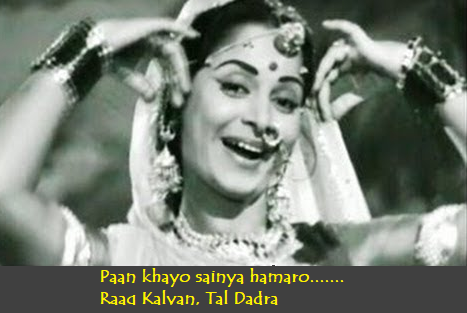
My curtain raiser of the SJMF Mumbai Meet was the song Paan khaye sainya hamaro in Raag Kalyan, Tal Dadra (Please see: ‘Raaga Based Song Of The Day #91’) since yesterday also happened to be the 80th birthday of the Living Legend Waheeda Rehman and this was one song that she did with Shailendra and S-J which was very popular.

About the Foundation

About six years ago SJ fans, lovers of the golden period of the Hindi Film Music gathered and decided to create a Registered Trust in the fond memory of the greatest music maestro of the Hindi Film Industry SHANKAR – JAIKISHAN. A trust named SHANKAR JAIKISHAN FOUNDATION was Registered on Dt. 11-5-2012 with Registration No.e/19925/Ahmedabad thus, a dream came true of the sj fans and the SHANKAR JAIKISHAN FOUNDATION became the first SJ Memorial Trust in the world. They have a web page http://shankarjaikishansjmf.com/ and a Facebook page Shankar Jaikishan Foundation, Ahmedabad. They have conducted a number of events and meets in various parts of the country.

As for as the city of Mumbai is concerned, they conducted their First Meet in June 2016. Yesterday was the second such meet. My wife and I joined them from the time of the First Mumbai Meet and we are proud that the leading lights of SJMF: Shri Chirag Patel, Shri Snehal Patel, Shri Padmanabh Joshi, Shri Anand Desai, Shri Valmik Rawal, and Shri Hiren Patel have graciously accepted us as lifelong members of SJMF.

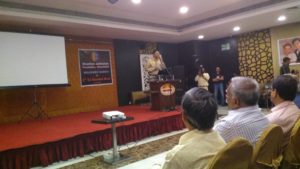
About the Second Mumbai Meet

Just like the 2016 Meet, this was held at Oneup Banquets, 1st Floor of Palm Spring Building, Link Road, Malad West.

Lyn and I started the New Year being ill and bed-ridden and we nearly didn’t make it to the Meet. However, after we dragged ourselves across, Anand and others made us feel so much at home that illness was soon forgotten.

To start with everyone met over a cup of tea and renewed acquaintances. It was a delight to meet both old and new participants not only because the love of Shankar Jaikishan music binds us as a family (as Shri Padmanabh Joshi said in his concluding address) but also, because as I looked around I found that everyone is so aware of and well versed with the nuances of S-J’s music.

We were regaled by the following events during the Meet, ably compered by Shri Valmik Rawal:

  • Welcome address by Shri Chirag Patel.
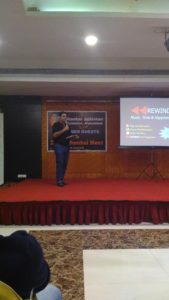
  • Some Raaga Based Songs of S-J. This was a delightful presentation by the group called Rewind who do lot of research and showcase the rich legacy of Indian Film Music as an art form. The presentation by Shri Archisman Mozumdar, ably assisted by Shri Shankar Iyer and Shri Balaji Ramachndran was so interesting that we wanted it to go on and on. S-J’s love for raagas and the liberties that they took by changing the swars so as to get at popular tunes produced some really memorable songs. If the presentation was interesting and informative, I was stunned to see the audience response; as Archie would introduce a raaga, at once three or four would jump up to predict the songs (s). One or two of them even tried to correct the presenters. My day was made with Archie spending considerable time over my favourite Jao jao Nand ke Lala in Raag Bageshri, Tal Kaherava (Please see:Raaga Based Song Of The Day #19). Rewind can be reached on www.rewind.co.in, and Rewind_hfm on Facebook.
  • S-J, the Trendsetter. This treat of a presentation was given by Shri Kushal Gopalka. Why I call it a treat is because the speaker ventured into his personal observations backed by apt examples rather than on information that is widely available on the net and elsewhere. How S-J went past their mentors Husnlal Bhagatram (the first music duo in films) and gave prominence to music in general and rhythm in particular in their compositions, how they didn’t accept the arrangement of sad songs which were prevalent until they started ruling the film music scene, how their popular tunes were adored by millions around the world (and it seemed like that they made only popular tunes), how they built up the careers of Lata Mangeshkar, Raj Kapoor and Mukesh, their mastery over dance based songs, and how their songs were packaged well were some of the findings of the speaker. Kushal also gave us a short brief about the music activities that he spearheads including the forthcoming one on 14-15 Apr 18.
  • Lunch Break.
  • Instrumental Music by Shri Iqbal Darbar (Saxophone) and Shri Anil Gode (Accordion). This was for 30 minutes only. Most of us agreed that it appeared to be for only about a few seconds only because just as we were getting the groove of it, it got over. Truly, 30 minutes are never enough to listen to the songs of S-J. They (Shri Iqbal and Shri Anil) regaled us with such songs as Teri pyaari pyaari surat ko, Dil ki nazar se, Ajeeb dastaan hai ye, Sunate the naam jinaka bahaar se, Bedardi baalma, Aji rooth kar ab kahan jaayiega, Dil ki girah khol do, and Badan pe sitaare lipete huye. Here is my recording of them playing today’s song: Dil ki girah khol do:


  • After that, there was a presentation about Shailendra’s lyrics by Shri Murlikrishna Kasturi, a writer from Hyderabad who has written 38 books on various films personalities. He brought out various facets of Shailendra’s lyrics: He was purely a lyricist as opposed to others of era who were poets turned lyricists, his songs started off with lyrics unique to the protagonist in the movie and in the end there would be universal comment befitting the complete humanity, he built up the image of Raj Kapoor, Rajendra Kumar etc and yet, his lyrics reflected his own personality, he used simplest of words to describe in-your-face thoughts without any metaphor etc, he was very profound in his thinking and so on.
  • We were fortunate that like last year, we had the presence of Shri Kishore Desai, the great mandolin player in S-J’s orchestra. He related two anecdotes: one about Jaikishan questioning him about the notations of the song Pyar karle nahin to phaansi chadh jaayega, and Shashi Kapoor, his school junior not knowing that he could play Sarod too.
  • Concluding address and vote of thanks by Shri Padmanabh Joshi.
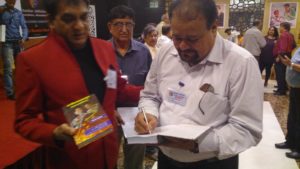
  • Release of Book संगीतभावनामृत शंकरजयकिशन, भाग प्रथम written by Shri Shyam Shanker Sharma. All the participants were given a copy of the book free. Shri Shyam Shanker Sharma was kind enough to autograph copies for all of us.

About the Song and its Relevance for the Meet

Out of all the songs of Shankar-Jaikishan, I found it with the best lyrics and composition to describe our Meet at Mumbai. People had arrived from nine different cities in India to be at the Meet. Because of our common love for Shankar Jaikishan, महफ़िल में अब कौन है अजनबी? None of us behaved like strangers even though some of us were meeting for the first time.

मिलने दो अब दिल से दिल को, मिटने दो मजबूरियों को
शीशे में अपने डुबोदो, सब फ़ासलों दूरियों कोI

And why was that? In the movie, the 1967 Satyen Bose movie Raat Aur Din, the National Award winning (for this movie) actress Nargis suffered from MPD, ie, Multiple Personality Disorder. In the daytime (Din part of the title of the movie) she was a normal housewife. However, in the night (Raat) she was transformed into Peggy, and she walked the streets of Calcutta. In real life, we too, the Shankar Jaikishan fans, have our normal individual lives. However, during the Meet, we are transformed into the make-believe world of Shankar Jaikishan, Shailendra, Hasrat Jaipuri, Lata Mangeshkar and Manna Dey. And suddenly, there is Mehfil, Song, Music, Excitement, Hope, Dreams.

In the last twenty-six days, we have taken up songs of thirteen male singers: Talat Mahmood, Manna Dey, Kishore Kumar, Mohammad Rafi, Mukesh, Hemant Kumar, Mahendra Kapoor, SD Burman, KL Saigal, Pankaj Mullick, Jagmohan ‘Sursagar’, Hariharan and Yesudas. We also took up songs of eleven female singers: Lata Mangeshkar, Asha Bhosle, Suman Kalyanpur, Shamshad Begum, Geeta Dutt, Uma Devi (Tun Tun), Suraiya and Zohrabai Ambalewali, Sudha Malhotra, Amirbai Karnataki and Kavita Krishnamurthy. Then took up a duet between Mohammad Rafi and Asha Bhosle. And then we took up a Talat Mehmood song: Phir wohi shaam wohi gham wohi tanhaayi hai. Finally, we took up Kishore Kumar song for Piya Ka Ghar: Yeh jeevan hai, is jeevan ka yehi hai rang roop.

One of the fans commented on these songs, “The songs that you are giving us are everyone’s favourites.” The truth is that songs often remind us of days gone by and fill us with nostalgia both happy and sad.

I am sure thousands of you would be filled with strong emotions remembering this song. I am sure that those of you, who attended the Shankar Jaikishan Foundation Meet at Mumbai yesterday would not just remember this great S-J song from the movie Raat Aur Din, but would also recall the delightful rendition of it by Anil Gode and Iqbal Darbar during the meet.

About the Movie

(Poster courtesy: Lyrics Bogie)

Lets start with the movie. Raat Aur Din, as I said earlier, is a 1967 Satyen Bose movie starring Nargis as Varuna, the woman with multiple personality disorder; the acting of which role won her the National Award for Best Actress and a nomination for Filmfare Award for the same reason. She was supported in the movie by Pradeep Kumar as her husband Pratap. Their marriage was also out of ordinary. Pratap was on his way to Shimla for a marriage proposal when his car broke down and he was forced to stay at Varuna’s house. So, instead of getting married to a girl of his mother’s choice, he returned to get married to Varuna.

Varuna, gets headaches at night, dances to loud music and appears to be under some childhood trauma. In this scene from the party, she dances with a stranger Feroze Khan as Dilip, but when Pratap confronts her, she doesn’t remember anything of it. Dilip remembers it and admits it to Pratap.

One of the recurring nightmares for Varuna is falling off a cliff. In the end, it comes out that, when Varuna was small, her mother had a cardiac arrest because of which, the car that she was driving, went over a cliff. Recalling that finally, Varuna is cured.

About the Music Duo Shankar Jaikishan

Music Director Shankar Jaikishan were called the ‘house musicians’ of Raj Kapoor since the latter was responsible for having given them a break with his 1949 movie Barsaat. In the movie before that (the debut movie of Raj Kapoor as a director, the 1948 movie Aah, Shankar Jaikishan were assistants to music director Ram Ganguly. Raj Kapoor had a tiff with Ram Ganguly and hence invited S-J for Barsaat. The rest is history. Until Jaikishan died on 12 Sep 1971, Shankar Jaikishan had won the Filmfare Award for Best Music Director eight times (including for Mera Naam Joker in 1972). Considering that the Filmfare Award for Best Music Director started in 1954, it makes them win the coveted award on an average of every alternate year. Raj Kapoor maintained a music bank of their compositions even after Jaikishan died and in his later movies used those compositions though the credit was given to music directors such as Laxmikant Pyarelal.

S-J emerged as the toppers in various genre of music such as raaga based songs, party songs, and dance numbers. Amongst all the raagas, Bhairavi was their (Jaikishan’s) favourite.

About the Lyricist Shailendra

Lyricist Shailendra

The lyricist Shailendra has been called by me as lyricist beyond compare (Please see: The Best Songs Of Shailendra, The Lyricist Beyond Compare – Part I and Part II‘). Unlike almost all poets turned lyricists of that era, Shailendra was solely a lyricist; lyrics were his life and he put his life and soul into it. His lyrics always made you think, frequently with their deeper meaning.

Shri Kasturi yesterday, very aptly, told us a lot about Shailendra. Of course, what Shri Kasturi didn’t tell us, is actually the most significant aspect of Shailendra’s lyrics, which is that Shailendra often made the listeners/viewers imagine the meaning of his lyrics. Now, one can say that every lyricist is supposed to do that. However, what is unique in Shailendra’s case that even after you see the video, there is still an enigma about what exactly he meant. Examples: Main nadiya phir bhi main pyaasi bhed ye gehra baat zara si, Taaron ki ote se muskara gaya koi, and Khil gayi kaliyan duniya jaane lekin na jaane bagiya ka mali. Here is his famous song with the line: Main nadiya phir bhi main pyaasi:

I also feel that whilst other Shailendra songs must also be about himself, there is one song in which he couldn’t hide his own feelings and that’s the song from the movie 1965 Chhoti Chhoti Baatein, just before the release of his own movie Teesri Kasam, the outcome of which killed him:

दुनिया ने हमें बेरहमी से
ठुकरा जो दिया, अच्छा ही किया
नादान हम समझे बैठे थे
निभती है यहाँ दिल से दिल की
कुछ और ज़माना कहता है …

About the Singers Lata Mangeshkar and Manna Dey with S-J

As soon as Lata Mangeshkar arrived on the scene of Hindi movies, she dethroned playback singers of the earlier era such as Suraiya, Amirbai Karnataki and Shamshad Begum from the top. And the movie that made it possible was the 1949 Raj Kapoor movie Barsaat, the debut movie of Shankar Jaikishan. S-J were responsible for taking her to the top. They actually increased the range and even pitch of her singing. Out of 171 films for which Shankar-Jaikishan composed music, Lata Mangeshkar sang for them in 124 films, singing over 450 songs for them of which over 300 were solos. Her best songs with S-J are dance numbers; she was of course, no strager to their party songs: In Sangam itself there are two: Har dil jo pyaar karega with Mukesh and Mahendra Kapoor and a solo O mere sanam O mere sanam.

https://www.youtube.com/watch?v=EagBXY4TqKI


As far as Manna Dey is concerned, unlike Mukesh being identified with Raj Kapoor, and Mohammad Rafi being identified with Dilip Kumar, he wasn’t identified with any hero. And yet, he made some great songs with S-J. One of the foremost that comes to mind is his Ketaki gulaab juuhii champakaban phuule in 1956 movie Basant Bahaar, in which Manna Dey, much against his will, had to commit “the sacrilege” of winning a singing dual against Pandit Bhimsen Joshi. His most memorable S-J song is, of course, Pyar hua iqraar hua. But, there are others too such as: Aa ja sanam madhur chandini mein hum, Ye raat bheegi bheegi, and Tu pyar ka sagar hai.

Please enjoy Lata Mangeshkar and Manna Dey sing a composition of Shankar Jaikishan on the lyrics of Shailendra a song from the 1967 Satyen Bose movie Piya Ka Ghar: Dil ki girah khol do, chup na baitho, koi geet gao….

दिल की गिरह खोल दो, चुप न बैठो, कोई गीत गाओ
आ आ आ आ, महफ़िल में अब कौन है अजनबी,
तुम मेरे पास आओ
दिल की गिरह खोल दो …

मिलने दो अब दिल से दिल को, मिटने दो मजबूरियों को
शीशे में अपने डुबोदो, सब फ़ासलों दूरियों को
आँखों में मैं मुस्कुराऊं तुम्हारे, जो तुम मुस्कुराओ
आ आ आ आ, महफ़िल में अब कौन है अजनबी
तुम मेरे पास आओ …

हम तुम न हम तुम रहें अब, कुछ और ही हो गए अब
सपनो के झिलमिल नगर में, जाने कहाँ खो गए अब
हम राह पूछें किसीसे, न तुम अपनी मंज़िल बताओ
आ आ आ आ, महफ़िल में अब कौन है अजनबी
तुम मेरे पास आओ …

कल हमसे पूछे न कोई, क्या हो गया कल था तुम्हे कल
मुड़कर नहीं देखते हम, दिल ने कहा है चला चल
जो दूर पीछे कहीं रह गए अब उन्हें मत बुलाओ
आ आ आ आ, महफ़िल में अब कौन है अजनबी
तुम मेरे पास आओ …

Shankar Jaikishan were the greatest music-duo for many genre’ of music; but, they were indeed the best for party songs. Many a times, their party songs reflected the reality of the life and/or had message for life. My profile song on Facebook is a party song: Sab kuchh seekha hamne na seekhi hoshiyari. Taste these lines regarding the universality of lyrics about people in the world around us:

हमने हर जीने वाले को
धन दौलत पे मरते देखा
दिल पे मरने वाले मरेंगे भिखारी

It is the same with this great song. As she waltzes along singing this song, you are overcome with emotions whether anyone of us is a normal or balanced human being. We apply the song’s lyrics to ourselves and lo, we find, the song is not about Nargis or Pradeep Kumar or Feroze Khan but it is about ourselves:

कल हमसे पूछे न कोई, क्या हो गया कल था तुम्हे कल
मुड़कर नहीं देखते हम, दिल ने कहा है चला चल
जो दूर पीछे कहीं रह गए अब उन्हें मत बुलाओ

I remember having seen Jack Nicholson starrer One Flew Over The Cuckoo’s Nest and I was never the same person again after seeing the movie. It is the same with this movie, particularly this song.

I hope you enjoyed it too.

Please await the next song in the series.

Raaga Based Song Of The Day #91

Raaga Based Song of the Day: Paan khaye sainya hamaro….
Raag Kalyan, Tal Dadra

Tomorrow, 3rd February 2018 is a special day. It is the birthday of the Living Legend Waheeda Rehman. I generally forget her birthday and one of the reasons that I have put my finger on is that it is a subconscious attempt not to see her becoming older (Please read: Happy Birthday Waheeda Rehman 03 February). She is an actress beyond compare. The heart and soul that she puts into her acting NDTV to honour her with the Living Legend award given by the President (one of the thirty on the occasion of NDTV’s thirtieth anniversary in 2013). Take this song itself. It is a nautanki song and her acting, dancing and histrionics all give the impression of doing nautanki.

Tomorrow, 3rd February 2018 also happens to be the Second Mumbai Meet of Shankar Jaikishan Music Foundation (SJMF). This Foundation, based in Ahmedabad, has done a lot to keep alive the music of S-J, who were the best music duo that we ever had in the Hindi movies. I had to, therefore, find a song that would pay tribute to both and it wasn’t difficult to find. It is from the 1966 Shailendra (Lyricist often to be found with Shankar Jaikishan, together with Hasrat Jaipuri) production and Basu Bhattacharya directed movie Teesri Kasam of which one song I have already given you in this series, viz: Duniya banane waale kyaa tere man mein samayi in Raag Bhairavi, Tal Kaherava (Please see: Raaga Based Song Of The Day #85).

Today is the fourth day that I am giving you a song based on Kalyan. To start with I gave you a song in this raag without any tal since the whole song was as an Alaap: Lagta nahin hai dil mera (Please see: Raaga Based Song Of The Day #14). Then I gave you another in the same raag Klayan and Tal Dadra: Bhooli hui yaadon (Please see: Raaga Based Song Of The Day #63). In between I also gave you my most favourite song of Lata Mangeshkar in Raag Shuddha Kalyan, Tal Kaherava: Rasik Balma (Please see: Raaga Based Song Of The Day #33 and My Favourite Songs Of Lata Mangeshkar).

We have completed ninety days of Raaga Based Songs of the Day. Our first post in the series was titled ‘Raaga Based Song Of The Day #1’ and the song was a Mohammad Rafi and Lata Mangeshkar song from the 1970 Shakti Samanta movie Pagla Kahin Ka: Tum mujhe youn bhula na paoge.  It is in Raag Jhinjhoti, Tal Kaherava.

Our ninetieth post or the last post was titled ‘Raaga Based Song Of The Day #90’ and the song was a Mohammad Rafi song from the 1968 Bhappi Sonie movie Brahmachari starring Shammi Kapoor, Rajshree, Mumtaz and Pran: Dil ke jharokhe mein tujhako bithakar. It is in Raag Shivaranjani, Tal Dadra.

This blog has a number of posts on Raaga based songs in Hindi movies titled similarly; for example: The Best Raaga Based Songs in Hindi Movies – Raaga Bhairavi – Part I‘.

In the last ninety days of sharing Raaga based songs of the day, I have given you songs based on Raag Jhinjhoti, Gara, Bhimpalasi, Madhuvanti, Shivaranjani, Bihag, Pahadi, Sarang, Pilu, Bhairavi, Khammaj, Charukesi, Kalyan or Yaman, Desh, Malgunji, Kirwani, Kedar, Bageshri, Megh Malhar, Bhupali, Ahir Bhairav, Malkaush, Mand, Adana, Kafi, Rageshri, Jaunpuri, Tilang, Janasammohini, Chayanat, Shuddha Kalyan, Gaur Sarang, Jogiya, Asavari, Maru Bihag, Durga, Lalit, Puria Dhanashri, Bhinna Sahdja, Sohani, Multani, Patdeep, Jaijaiwanti, Tilak Kamod, Hemant, Basant Mukhari, Gujri Todi, Kalavati, Hamir, Bhatiyar, Gawati, Shyam Kalyan, Gorakh Kalyan, Madhamat Sarang, Manj Khammaj, Darbari Kanada, Vibhas, Shankara, Bahar, Nand and Mian Ki Malhar; making it a total of 61 raagas. The raagas that have been repeated so far are Pahadi, the raaga of my home place in the Himalayas, Maru Bihag, Raag Kirwani, Jhinjhoti, Bhairavi, Gara, Basant Mukhari, Malkauns, Bhairavi, Mand, Sohani, Madhuvanti and Shivaranjani. Today, I am repeating Raag Kalyan.

Raag Kalyan is the basic raaga of Kalyan Thaat. Its Jati is Sampurna-Sampurna, that is, all seven notes in Aaroha and all seven notes in Avaroha.  All the scale notes (called swaras) in the raga are Shuddha, the exception being Teevra Madhyam or prati madhyamam. It is sung during the first prahar of the night, that is, between  6 to 9 PM. Raag Kalyan of Hindustani Music is also known as Raag Yaman in Carnatic Music; however, Raag Yaman Kalyan is a totally different raag. Considered to be one of the most fundamental ragas in the Hindustani Classical tradition, it is thus often one of the first ragas taught to students.

Some of the Hindi films songs composed in raag Shyam Kalyan are:

1.
2.
3.
4.
5.
6.
7.
8.
9.
10.
11.
12.
13.
14.
15.
16.
17.
18.
19.
20.
21.
22.
23.
24.
25.
26.
27.
28.
29.
30.
31.
32.
33.
34.
35.
36.
37.
38.
39.
Khuda Nigahbaan Ho
Main Kya Jaanu Kya
Aansoo Bhari Hai
Man Re Tu
Ang Ang Rang
Re Man Sur Mein Ga
Aapke Anorodh Par
Is Mod Se Jate
Jo Tum Todo Piya
Hamari Thodi Si Bewafai
Aaj Hum Apni
Nav Kalpana Nav Roop
Na Jao Saeeyan
Mithe Bol Bole
Mitwa Bole Meethe
Jane Kya Sochkar
Tarana
Mohe Maro Na Kanha
Dekho Ri Koi
Ehsaan Tera Hoga
Chale Ja Rahe Hain
Yahi Hai Tamanna
Gahar Se Nikalte
Saras Raat Man Bhaye
Salaam-e-Hasrat
Kabhi Kabhi Mere Dil Mein
Nigahein Milane Ko
Paan Khayo Saiyan Hamaro
Sabere Ka Suraj
Tera Chhehera
Woh Shaam Kuchh
Maangne Se Jo Maut
Mausam Hai Aashiqana
Sapna ban Saajan
Chhupalo Yun Dil
Woh Jab Yaad Aaye
Jhamela Jhoote Jag Ka
Diya Jalao Jagmag
Nukta Chi Hain
Mughal-E-Azam
Zindagi
Parvarish
Chitralekha
Sandhya
Lal Pathar
Anurodh
Aandhi
Meera
Thodi Si Bewafai
Pakeezah
Mrigtrishna
Sahib Bibi Aur Ghulam
Kinara
Parichaye
Kinara
Pakeezah
Manavta
Ganga Ki Leherein
Junglee
Kinare Kinare
Aapki Parchhaiyan
Papa Kehte Hain
Suwarn Sundari
Babar
Kabhi Kabhi
Dil Hi To Hai
Teesri Kasam
Ek Baar Muskura Do
Aapas Ki Baat
Khamoshi
Sunehere Kadam
Pakeezah
Shokhiyan
Mamta
Parasmani
Bhajan
Tansen
Mirza Galib
Lata
K L Saigal
Mukesh
Rafi
Sulakshana
Asha, Manna Dey
Kishore
Lata, Kishore
Vani Jayram
Kishore, Lata
Lata
Rafi
Geeta Dutt
Bhupendra, Lata
Bhupendra
Kishore
Lata
Lata
Asha
Rafi
Manna Dey
Rafi
Udit Narayan
Rafi, Lata
Sudha Malhotra
Mukesh, Lata
Asha
Asha
Kishore
Kishore
Kishore
Lata
Lata
Lata
Lata, Hemant
Lata, Rafi
Mukesh
K L Saigal
Suraiya

As far as Tal Dadra is concerned I have given you enough already.

The song I have taken for you today is from the 1966 Shailendra production and Basu Bhattacharya movie Teesri Kasam starring Raj Kapoor and Waheeda Rehman. It was penned by Shailendra, composed by Shankar Jaikishan and sung by Asha Bhosle.

Shailendra was known for his deep thinking. Indeed, this type of deep thinking is true of all songs of the 1966 movie Teesri Kasam. Shailendra had Basu Bhattacharya direct the movie. In later years (after the movie flopped at Box Office), people realised what a masterpiece it was. In any case, it won the National Award for Best Feature Film of that year. The film starring Raj Kapoor (there is a controversy about him delaying the film to ensure the success of his 1964 movie Sangam) and Waheeda Rehman is based on the short story Mare Gaye Gulfam by the novelist Phanishwarnath Renu. Mare gaye gulfam was also the title of a song in the movie that was penned by Shailendra’s co-lyricist Hasrat Jaipuri:

1. “Aa Aa Bhi Jaa” Shailendra Lata Mangeshkar 5:03
2. “Chalat Musafir” Shailendra Manna Dey 3:04
3. “Duniya Bananewale” Hasrat Jaipuri Mukesh 5:03
4. “Haye Ghazab Kahin Tara Toota” Shailendra Asha Bhosle 4:13
5. “Maare Gaye Gulfaam” Hasrat Jaipuri Lata Mangeshkar 4:00
6. “Paan Khaye Saiyan Hamaaro” Shailendra Asha Bhosle 4:08
7. “Sajanwa Bairi Ho Gaye Hamar” Shailendra Mukesh 3:51
8. “Sajan Re Jhoot Mat Bolo” Shailendra Mukesh 3:43
9. “Lali Lali Doliya Mein Lali Re” Shailendra Asha Bhosle 3:11
10. “Kissa Hota Hai Shuru” Hasrat Jaipuri Shankar-Shambhu 2:57

The song too had lyrics by Shailendra.

Shailendra with S-J

The lyricist Shailendra has been called by me as lyricist beyond compare (Please see: The Best Songs Of Shailendra, The Lyricist Beyond Compare – Part I and Part II). Unlike almost all poets turned lyricists of that era, Shailendra was solely a lyricist; lyrics were his life and he put his life and soul into it. His lyrics always made you think, frequently with their deeper meaning. This song is from a movie that was his only production. He really put his heart and soul into the songs. The movie wasn’t a success at post office. This broke Shailendra’s heart to the extent that he took to heavy drinking, which ultimately led to his death.

Take this song itself. It is a typically nautanki song and yet, he let in his signature deep-thinking into it too:

( बगिया गुन-गुन पायल छुन-छुन
चुपके से आई है रुत मतवाली ) -२

खिल गईं कलियाँ दुनिया जाने
लेकिन न जाने बगिया का माली
बगिया का माली

Now, anybody would start thinking as to what he meant by Bagiya ka mali.

Lets get to the movie: Teesri Kasam. As I said, this 1966 movie was the first and last production of the lyricist Shailendra and directed by Basu Bhattacharya. Basu Bhattacharya started as an assistant to Bimal Roy in Madhumati and Sujata and later married Bimal Roy’s daughter Rinki. Some of his memorable movies are: Anubhav, Aavishkar, Sparsh, Aastha and Griha Pravesh.  It is the story of a naive bullock cart driver Hiraman (Raj Kapoor) who falls in love with a dancer Hirabai (Waheeda Rehman) at nautanki, the popular folk theatre of the Bihar region. Hiraman takes two vows based on difficult situations in his life. After he meets and befriends Hirabai, a nautanki dancer, who is a passenger in his bullock cart, he takes a third vow never to get himself involved in such love again. And that’s why the name of the movie.

Music Director Shankar Jaikishan were called the ‘house musicians’ of Raj Kapoor since the latter was responsible for having given them a break with his 1949 movie Barsaat. In the movie before that (the debut movie of Raj Kapoor as a director, the 1948 movie Aah, Shankar Jaikishan were assistants to music director Ram Ganguly. Raj Kapoor had a tiff with Ram Ganguly and hence invited S-J for Barsaat. The rest is history. Until Jaikishan died on 12 Sep 1971, Shankar Jaikishan had won the Filmfare Award for Best Music Director eight times (including for Mera Naam Joker in 1972). Considering that the Filmfare Award for Best Music Director started in 1954, it makes them win the coveted award on an average of every alternate year. Raj Kapoor maintained a music bank of their compositions even after Jaikishan died and in his later movies used those compositions though the credit was given to music directors such as Laxmikant Pyarelal.

S-J emerged as the toppers in various genre of music such as raaga based songs, party songs, and dance numbers. Amongst all the raagas, Bhairavi was their (Jaikishan’s) favourite.

Their music and compositions for the 1956 Raja Nawathe film Basant Bahaar (surprisingly they didn’t get Filmfare Award for it as they were competing with their own Chori Chori) have some of their best raaga based songs:

1 Badi Der Bhai (Pilu)
Mohd. Rafi
2 Bhay Bhajana Vandana Sun (Mian ki Malhar) Manna Dey
3 Duniya Na Bhaye (Todi)
Mohd. Rafi
4 Ja Ja Re Ja Balama (Jhinjhoti)
Lata Mangeshkar
5 Kar Gaya Re Lata Mangeshkar, Asha Bhosle
6 Ketaki Gulab Juhi (Basant Bahar)
Manna Dey, Bhimsen Joshi
7 Main Piya Teri Lata Mangeshkar
8 Nain Mile Chain Kahan Lata Mangeshkar, Manna Dey
9 Sur Na Saje (Pilu)
Manna Dey
Shankar Jaikishan master-minded Ketaki gulab juhi chamkaban phule, a duet between Pandit Bhimsen Joshi and Manna Dey (singing for the hero Bharat Bhushan as Gopal). It is in Raag Basant Bahar and is considered one of the best raaga based songs in Hindi movies. The song too had lyrics by Shailendra.

Before we actually take up the song, first, lets take up the value added learning of today. From the last ten times we started learning about some of the leading personalities in Indian Classical Music or Shastriya Sangeet. The first one that we took up was Ustaad Asad Ali Khan, the finest Rudra Veena player in the country. Then we took up Pandit Hari Parsad Chaurasia, the greatest Bansuri player in the country. Then we talked about Ali Akbar Khan, the greatest Sarod player in the country. Then we took up Pandit Ravi Shankar, the greatest Sitar player in the world. Then we took up the greatest classical singer in the country (of Carnatic tradition): MS Subbulakshmi. Then, we took up the greatest classical singer in the country (of Hindustani tradition): Pandit Bhimsen Joshi. Then, we learnt about the Shehnai maestro Ustad Bismillah Khan. Then, we learnt about Annapurna Devi, a great Surbahar (bass sitar) player of Hindustani Classical Music. Thereafter, we took up Pandit Shiv Kumar Sharma, the grestest Santoor player in the country. Finally, we learnt a little more about Ustaad Alla Rakha Qureshi or simply Alla Rakha, the Tabla Maestro and father of Ustaad Zakir Hussain.

Tonight, we shall take up another Shankar: Anand Shankar. He lived between 11 December 1942 and 26 March 1999. He made a huge name for himself for fusing Western and Indian musical styles. He was born in Almora in Uttar Pradesh. His parents Uday Shankar and Amala were both dancers. He was also the nephew of the Sitar maestro Pandit Ravi Shankar.

In the late 1960s, Shankar travelled to Los Angeles, where he played with many contemporary musicians including Jimi Hendrix. There he was signed to Reprise Records and released his first album, Ananda Shankar, in 1970, with original Indian classical material alongside sitar-based cover versions of popular hits, The Rolling Stones’ “Jumpin’ Jack Flash” and The Doors’ “Light My Fire”. The album is included in the book 1001 Albums You Must Hear Before You Die.

(Picture courtesy: Scroll.in)

Here is what The Guardian had to say about him: He became one of the foremost exponents of fusion music without diluting the uniqueness of Indian music. He was probably the first to use mridangam with guitar and sitar, and sarod with rockbeat. His work drew from the Ravi Shankar gharana, epitomised by the blend of the late Yehudi Menuhin’s violin style with his uncle’s. ‘He was a true modern composer,’ said the eminent lyricist Pulak Bandopadhyay.

Ladies and gentlemen, on the eve of Waheeda Rehman’s 80th birthday, and on the eve of SJMF’s Second Mumbai Meet please enjoy in Raag Kalyan, Taal Dadra, Asha Bhosle sing a composition of Shankar Jaikishan on the lyrics of Shailendra in the 1966 Shailendra Production and Basu Bhattacharya directed movie Teesri Kasam: Paan khaye sainya hamaro…..

पान खाये सैंयाँ हमारो
साँवली सूरतिया होंठ लाल-लाल
हाय-हाय मलमल का कुरता
मलमल के कुरते पे छींट लाल-लाल
पान खाये सैंयाँ हमारो

( हमने मँगाई सुरमेदानी
ले आया ज़ालिम बनारस का ज़रदा ) -२

अपनी ही दुनिया में खोया रहे वो
हमरे दिल की न पूछे बेदर्दा
पूछे बेदर्दा

पान खाये सैंयाँ हमारो
होय-होय
साँवली सूरतिया होंठ लाल-लाल
हाय-हाय मलमल का कुरता
laugh
मलमल के कुरते पे छींट लाल-लाल
पान खाये सैंयाँ हमारो

( बगिया गुन-गुन पायल छुन-छुन
चुपके से आई है रुत मतवाली ) -२

खिल गईं कलियाँ दुनिया जाने
लेकिन न जाने बगिया का माली
बगिया का माली

पान खाये सैंयाँ हमारो
होय-होय
साँवली सूरतिया होंठ लाल-लाल
हाय-हाय मलमल का कुरता
मलमल के कुरते पे छींट लाल-लाल
पान खाये सैंयाँ हमारो

( खा के गिलोरी शाम से ऊँघे
सो जाये वो दीया-बाती से पहले ) -२
हा
आँगन-अटारी में घबराई डोलूँ
चोरी के डर से दिल मोरा दहले
दिल मोरा दहले

पान खाये सैंयाँ हमारो
साँवली सूरतिया होंठ लाल-लाल
हाय-हाय मलमल का कुरता
laugh
मलमल के कुरते पे छींट लाल-लाल
पान खाये सैंयाँ हमारो

We have intended to learn about Raaga based music whilst we entertain ourselves with Raaga based songs. So, lets, once again, take stock of our collective learning so far:

  1. On the first day we learnt about the Raaga system devised by Pandit Vishnu Narayan Bhatkhande, which is the prevalent system in Hindustani Classical Music and based on ten Thaats.
  2. On the second day we learnt about Tal or Taal.
  3. On the third day we learnt about characteristics of Raagas that included Swar, Jati, Thaat, Arohana and Avarohana, Vadi, Samvadi and Pakad.
  4. On the fourth day, we learnt about Sargam.
  5. On the fifth day, we learnt about notations used in Indian classical music or simply Swar Lipi.
  6. On the sixth day, we learnt about the Ras (sentiments) that Raagas evoke.
  7. On the seventh day, we learnt about various types of Swar: Shuddha, Achal, Vikrut, Komal and Teevra.
  8. On the eighth day, we learnt the parts of a composition in Indian Classical Music.
  9. On the ninth day, we learnt the names of some of the popular instruments used in Indian Classical Music.
  10. On the tenth day, we learnt about the sources of names of Raagas.
  11. On the eleventh day, we learnt about why Bhairavi is the first raag to be taught to beginners and also why it is the last in a performance.
  12. On the twelfth day, we learnt about Khammaj Thaat.
  13. On the thirteenth day, we learnt about Tal Punjabi Theka or Sitarkhani.
  14. On the fourteenth day, we learnt about Alap.
  15. On the fifteenth day, we learnt about List of Raagas (Raagmala) in my favourite book: Sri Guru Granth Sahib.
  16. On the sixteenth day, we learnt about tips for raaga identification.
  17. On the seventeenth day, we learnt the basics of Gharana system.
  18. On the eighteenth day, we learnt about Filmi Sangeet.
  19. On the nineteenth day, we learnt about the commonest Tal in Raagas: Tintal.
  20. On the twentieth day, we learnt about the Kafi Thaat.
  21. On the twenty-first day, we learnt a little more in detail about the classification of Raagas.
  22. On the twenty-second day, we learnt the essential differences between Bhairavi and Bhairav.
  23. On the twenty-third day, we learnt a little more in detail about the Jati or Jaati of a raaga.
  24. On the twenty-fourth day, we learnt details of Thaat Bilawal, the most basic thaat in the Bhatkhande’s system of raagas.
  25. On the twenty-fifth day, we learnt about Tintal.
  26. On the twenty-sixth day, we learnt in detail about the Raaga – Samay linkage.
  27. On the twenty-seventh day, we learnt about Lehar.
  28. On the twenty-eighth day, we learnt about the history of the Hindustani Music.
  29. On the twenty-ninth day, we learnt about Dhrupad.
  30. On the thirtieth day, we learnt about Rupaktal that I was introduced to, a few months back, by my friend Anand Desai.
  31. On the thirty-first day, we learnt about Khayal.
  32. On the thirty-second day, we learnt about Thumri.
  33. On the thirty-third day, we learnt about Tappa.
  34. On the thirty-fourth day, we learnt about Tarana.
  35. On the thirty-fifth day, we learnt about Tal Dipchandi (Moghali).
  36. On the thirty-sixth day, we learnt about Tabla.
  37. On the thirty-seventh day, we learnt about Kirtan.
  38. On the thirty-eighth day, we learnt about Pakhawaj.
  39. On the thirty-ninth day, we learnt about Hori.
  40. On the fortieth day, we learnt about Dadra.
  41. On the forty-first day, we learnt about Kajri.
  42. On the forty-second day, we learnt about Chaiti.
  43. On the forty-third day, we learnt about Sarangi.
  44. On the forty-fourth day, we learnt about Shehnai.
  45. On the forty-fifth day, we learnt about Sarod.
  46. On the forty-sixth day, we learnt about Bansuri.
  47. On the forty-seventh day, we learnt about Ektal and Tanpura.
  48. On the forty-eighth day, we learnt about Veena.
  49. On the forty-ninth day, we repeated our learning of Veena with a small excitement added.
  50. On the fiftieth day, we learnt about Dilruba/Esraj.
  51. On the fifty-first day, we learnt about Jaltarang.
  52. On the fifty-second day we learnt about Qawwali.
  53. On the fifty-third day, we learnt about Sitar.
  54. On the fifty-fourth day, we learnt about Surbahar.
  55. On the fifty-fifth day, we learnt about Harmonium.
  56. On the fifty-sixth day, we learnt about Santoor.
  57. On the fifty-seventh day, we learnt about Swarmandal.
  58. On the fifty-eighth day, we learnt about the Shruti Box.
  59. On the fifty-ninth day, we learnt about Alankar.
  60. On the sixtieth day, we learnt about singing in Aakaar.
  61. On the sixty-first day, we learnt about the Classification of Indian Musical Instruments.
  62. On the sixty-second day, we learnt a little about Carnatic Music.
  63. On the sixty-third day, we learnt about Natya Shastra.
  64. On the sixty-fourth day, we learnt about evolution of musical instruments in India down the ages.
  65. On the sixty-fifth day, we learnt about Riyaaz.
  66. On the sixty-sixth day, we looked at a list of Raagas in Hindustani Classical Music.
  67. On the sixty-seventh day, we learnt about the health benefits of raagas.
  68. On the sixty-eighth day, we learnt a little more comprehensively about the moods and emotions that raagas evoke.
  69. On the sixty-ninth day, we learnt about a mobile application to help identify raagas.
  70. On the seventieth day, we learnt about Melakarta Raagas.
  71. On the seventy-first day, we learnt about Sangita Makarand.
  72. On the seventy-second day, we learnt about TaalMala an Android application for personalized accompaniment of musical instruments during Riyaaz or even during Concert.
  73. On the seventy-third day, we learnt about Indian Classical Ragas, an Android application for mobile phones.
  74. On the seventy-fourth day, we learnt about Saregama Classical, another application for Classical Raagas.
  75. On the seventy-fifth day, we learnt about a free online service available to learn Indian Classical Music.
  76. On the seventy-sixth day, we learnt about List of Hindustani Classical Musical Festivals in India and Abroad.
  77. On the seventy-seventh day, we learnt about List of Carnatic Musical Festivals in India and Abroad.
  78. On the seventy-eighth day, we learnt about Jhaptal.
  79. On the seventy-ninth day, we learnt about Ektal.
  80. On the eightieth day, we learnt about Tivra Tal.
  81. On the eighty-first day, we learnt about the greatest Rudra Veena player ever: Ustaad Asad Ali Khan.
  82. On the eighty-second day, we learnt about the greatest Bansuri player alive: Pandit Hariprasad Chaurasia.
  83. On the eighty-third day, we learnt about the best Sarod player in the country: Ustaad Ali Akbar Khan.
  84. On the eighty-fourth day, we learnt about the greatest Sitar player in the world: Pandit Ravi Shankar.
  85. On the eighty-fifth day, we learnt about the greatest Indian vocalist of Carnatic tradition: MS Subbulakshmi.
  86. On the eighty-sixth day, we not just learnt about the greatest vocalist of Hindustani tradition: Pandit Bhimsen Joshi but also learnt about Tal Hinch.
  87. On the eighty-seventh day, we learnt about the Shehnai maestro Ustaad Bismillah Khan.
  88. On the eighty-eighth day, we learnt about Annapurna Devi, the greatest Surbahar player in India.
  89. On the eighty-ninth day, we learnt about Pandit Shiv Kumar Sharma, the greatest Santoor Player in the country.
  90. On the ninetieth day, we learnt about Ustaad Alla Rakha, the Tabla maestro.
  91. And today, on the ninety-first day, we learnt about Anand Shankar, the great fusion musician from Bengal.

There is much more still to be learnt and enjoyed.

Please stay tuned!

Songs That Tug At Your Emotions – Song #26

The twenty-sixth day of songs in this series.

In the last twenty-five days, we have taken up songs of thirteen male singers: Talat Mahmood, Manna Dey, Kishore Kumar, Mohammad Rafi, Mukesh, Hemant Kumar, Mahendra Kapoor, SD Burman, KL Saigal, Pankaj Mullick, Jagmohan ‘Sursagar’, Hariharan and Yesudas. We also took up songs of eleven female singers: Lata Mangeshkar, Asha Bhosle, Suman Kalyanpur, Shamshad Begum, Geeta Dutt, Uma Devi (Tun Tun), Suraiya and Zohrabai Ambalewali, Sudha Malhotra, Amirbai Karnataki and Kavita Krishnamurthy. We took up a duet between Mohammad Rafi and Asha Bhosle in the last post. And lastly we took up a Talat Mehmood song: Phir wohi shaam wohi gham wohi tanhaayi hai.

One of the fans commented on these songs, “The songs that you are giving us are everyone’s favourites.” The truth is that songs often remind us of days gone by and fill us with nostalgia both happy and sad.

I am sure thousands of you would identify with the next song. It is from the 1972 Basu Chatterjee movie Piya Ka Ghar starring two who graduated from the Film and Television Institute of India (FTII) at Pune: Jaya Bahaduri and Anil Dhawan. The song is: Yeh jeevan hai is jeevan ka yehi hai rang roop.

(Poster courtesy: learningandcreativity.com)

Lets start with the movie. First, Raja Thakur made a Marathi movie called Mumbaicha Jawai, which speaks volumes about the title since at that time Mumbai was known as Bombay. Then came Tarachand Barjataya, who founded Rajshri Productions and made many successful movies such as Dosti, Uphaar, Geet Gaata Chal, Jeevan Mrityu, Hum Aapke Hain Kaun, Dulhan Wohi Jo Piya Man Bhaaye, Akhiyon Ke Jharokhe Se, and Maine Pyar Kiya. He produced Piya Ka Ghar and made Basu Chatterjee direct it. The movie brings out the reality, difficulties and travails of staying in a house in Bombay by large families (which is generally the case). Even though the movie depicted this life in 1970s, the scenario would be generally the same even now, if not worse. Let alone there being no privacy for a new couple in the house, there is none outside too. For example, couples in love are often the target of others including the police.

The song brings out this reality and calls it the reality of life, not just the reality of life in Mumbai.

Anand Bakshi with Laxmikant Pyarelal

Let me tell you something about the Lyricist of the song: Anand Bakshi and the Composer Laxmikant Pyarelal:

Anand Bakshi was a master lyricist who matched his lyrics perfectly with the emotions of the protagonist. His most common  pairing was with Laxmikant Pyarelal with whom he worked in 302 movies. Then, with RD Burman, he did the second highest movies of his career: 99. Amongst the old breed of lyricsts, Anand Bakshi was the only one who penned more than 3000 songs whilst lyricists like Sahir and Sahkeel only penned less than 800.

This song is because of Anand Bakshi pairing with Laxmikant Pyarelal.

Laxmikant Pyarelal made songs and music for 635 movies from 1963 to 1998 when Laxmikant died on 25 May. Nearly half of the movies, 302 to be exact, have been with Anand Bakshi. Anand Bakshi penned more than 3000 songs. More than half of these are with Laxmikant Pyarelal. Just like Anand Bakshi, Laxmikant Pyarelal too tasted resounding success in the very first movie that they attempted: the 1963 movie Parasmani. The popular songs of the movie include: Hansta hua noorani chehra, and Raushan tumhi se duniya. But, the song from the movie that is still everfresh and fondly remembered is this:

Anand Bakshi died on 30 Mar 2002 in Mumbai. However, the songs of Anand Bakshi with Laxmikant Pyarelal kept appearing until the 2011 movie Soundtrack. They had started with the 1964 movie Mr. X in Bombay with super-hit songs: Mere mehboob qayamat hogi, Chali gori pi ke milan ko chali, and Khoobsurat haseena jaane jaan jaaneman. Some of my other favourite songs of the pair from 1965 to 1975 are: Main mujhe apne aanchal mein chhupa le (Chhota Bhai, 1965), Khat likh de saanwariya ke naam babu, Mere dushman tu meri dosti ko tarse, Suno sajana papihe ne (Aaye Din Bahar Ke, 1966), Jab jab bahar aayi aur phool muskaraye, Saat samundar paar se gudiyon ke bazaar se (Taqdeer, 1967), Baahosh habas mein deewana and Nazar na lag jaaye kisi ki raahon mein (Night In London, 1967), Ham tum yug yug se yeh geet milan ka, Sawan ka mahina pawan kare sor, Ram kare aisa ho jaaye, and Mubarak ho sabako sama ye suhaana (Milan, 1967), Mera naam hai chameli, Tu kitani achhi hai O maa, Sang basanti rang basanti aa gaya, and O phiraki waali tu kal phir aana (Raja Aur Rank, 1968), Raat suhaani jaag rahi hai dheere dheere chupke chupke (Jigri Dost, 1969), Bindiya chamkegi, Chhup gaye saare nazaare, Khiza ke phool pe aati kabhi bahaar nahin, and Ye reshmi zulfen ye sharbati aankhen (Do Raaste, 1969), Main raahi anjaan raahon ka, and Rimjhim ke geet sawan gaaye (Anjana, 1969), Saari khushiyan hain mohabbat ki zamaane ke liye (Suhana Safar, 1970), Sharaafat chhod di hamane (Sharaafat, 1970), Sham dhale Jamuna kinaare (Pushpanjali, 1970), Dhal gaya din ho gayi shaam, Haay re haay neend nahin aaye (Humjoli, 1970), Shadi ke liye razamand karli (Devi, 1970), Mujhe tumase mohabbat hai magar main keh nahin sakta (Bachpan, 1970), Achchha to hum chalte hain, Ab aan milo sajana (Aan Milo Sajana, 1970), Agar dilbar ki ruswayi, Khilauna jaankar tum to mera dil, Teri shaadi pe doon tujhako tohfa main kya (Khilauna, 1970), Jaane kyun log mohannat kiya karte hain, Itna to yaad hai mujhe, Mere deewanepan ki bhi koi dawa nahin, and Ye jo chilman hai (Mehboob Ki Mehndi, 1971), Chal chal chal mere haathi, Dilbar jaani chali hawa mastani, and Nafrat ki duniya ko chhod ke (Haathi Mere Saathi, 1971), Sachayi chhup nahin sakti (Dushman, 1971), Aap aaye bahar aayee, Mujhe teri mohabbat ka (Aap Aaye Bhar Aayee, 1971), Haay sharmaayun (Mera Gaon Mera Desh, 1971), Kitna maza aa raha hai (Raja Jani, 1972), Dheere dheere bol koi sun na le, and Ek na ek din ye kahani banegi (Gora Aur Kala, 1972), O manchali kahan chali, Tan man dhan sab hai tera (Manchali, 1973), Aj mausam nbada beimaan hai, Main tere ishq mein mar na jaayun kahin, Motiyon ki ladhi hoon main (Loafer, 1973), Mere dil mein aaj kya hai, Ni main yaar manana ni (Daag, 1973), Akhiyon ko rehne de, Hum tum ik kamre mein band hon, Beshaq mandir masjid tode, and Main shayar to nahin (Bobby, 1973), Gore rang pe itna gumaan kar, Naach meri bulbul ke paisa milega, Ye public hai ye sab janati hai (Roti, 1974), Aadmi jo kehta hai, Phir na kehna Michael daaru pi ke danga karta hai, Nahin main nahin dekh sakta tujhe rote huye, Tumhen jo bhi dekh lega (Majboor, 1974), Chal dariya mein doob jaayen, Doston mein koi baat, Prem kahani mein ik ladka hota hai, and Phool ahista phenko (Prem Kahani, 1975), Man jat yamla pagla deewana (Pratigya, 1975).

https://www.youtube.com/watch?v=KM9CHdpk-9Q

Some other favourites of Anand Bakshi with Laxmikant Pyarelal from 1975 onwards are: Aayegi aayegi kisi ko hamari yaad aayegi, Jaaneman kisi ka naam nahin, Ki gal hai koi nahin (Jaaneman, 1976), Ke aaja teri yaad aayi (Charas, 1976), Dream girl (Dream Girl, 1977), O meri mehbooba tujhe jaana hai to jaa (Dharm-Veer, 1977), Koi maane ya na maane (Chacha Bhatija, 1977), Aadmi musafir hai aata hai jaata hai (Apnapan, 1977), Ke mere dil ne tadap ke, Aap ke anurodh pe main ye geet, Aate jaate khuubsurat awara sadakon pe, Jab dard nahin tha seene mein (Anurodh, 1977), Anhoni ko honi karde, O hamako tumase ho gaya hai pyaar, Parda hai parda, and Shirdi waale Sai Baba (Amar Akbar Antony, 1977), Bhor bhaye panghat pe, Chanchal sheetal komal (Satyam Shivam Sundaram, 1978), Main tulsi tere aangan ki (Main Tulsi Tere Aangan Ki, 1978), Ham to chale pardes, Ram ji ki nikali sawari (Sargam, 1979), Ek ritu aaye ek ritu jaaye (Gautam Govinda, 1979), Teri rab ne banayi jodi (Suhaag, 1979), Bane chahe dushman zamaana hamara, and Mere dost kissa ye kyaa ho gaya (Dostana, 1980), Dard-e-dil dard-e-jigar dil mein jagaya aapne, He tumne kabhi kisi se pyaar kiaya hai (Karz, 1980), Hamako bhi gham ne maara (Aas Paas, 1981), Ham bane tum bane ek duje ke liye, Solah baras ki baali umar ko salaam, Mere jeevan saathi pyar kiye ja, and Tere mere beech mein kaisa hai ye bandhan anjaana (Ek Duje Ke Liye, 1981), Khatun ki khdmat mein salaam apun ka (Desh Premi, 1982), Rote rote hansana seekho (Andha Kanoon, 1983), Saari duniya ka bojh uthaate hain (Coolie, 1983), Ding dong O baby sing a song (Hero, 1984), Chitthi aayi hai watan ki chitthi aayi hai (Naam, 1986), Main teri dushman (Nagina, 1986), Mera naam hai Lakhan (Ram Lakan, 1989), Jumma chumma de de (Hum, 1991), Tu mujhe qabool main tujhe qabool (Khuda Gwaah, 1992), Choli ke peeche kya hai, Nayak nahin khalnayak hoon main (Khalnayak, 1993), and Khidaki khuli zara to hangama ho gaya (Deewana Mastana, 1997).

Please enjoy Kishore Kumar sing a composition of Laxmikant Pyarelal on the lyrics of Anand Bakshi a song from the 1972 Basu Chatterjee movie Piya Ka Ghar: Yeh jeevan hai is jeevan ka yehi hai rang roop….

ये जीवन है
इस जीवन का
यही है, यही है, यही है रंग रूप (२)
थोड़े ग़म हैं, थोड़ी खुशियाँ
यही है, यही है, यही है छाँव धूप
ये जीवन है …

(ये ना सोचो इसमें अपनी
हार है कि जीत है ) – २
उसे अपना लो जो भी
जीवन की रीत है
ये ज़िद छोड़ो, यूँ ना तोड़ो
हर पल एक दर्पण है
ये जीवन है …

धन से ना दुनिया से
घर से न द्वार से
साँसों की डोर बंधी है
प्रीतम के प्यार से
दुनिया छूटे, पर ना टूटे
ये कैसा बंधन है
ये जीवन है
इस जीवन का
यही है, यही है, यही है रंग रूप
थोड़े ग़म हैं
थोड़ी खुशियाँ
यही है, यही है, यही है छाँव धूप
ये जीवन है

In the 1967 movie Jewel Thief, there is a dialogue about Bombay being too crowded and hence Tanuja liked to stay in Powai hills. Now, even those places are crowded. Indeed, crowds never leave you all the way to Viraar on the Western side and Panvel on the Eastern side. There is no place to go for a modicum of privacy. There was a time, when one could go to Lonavla to see that quiet and be with one’s partner exclusively. Now, there would be any number of people getting into your love scene.

The movie portrayed the situation in 1972. Forty-six years later, you are always in a crowd anywhere in Mumbai and suburbs. Hence, the strain of the song even more appropriate today than it was in 1972.

इस जीवन का
यही है, यही है, यही है रंग रूप

I hope you enjoyed it too.

Please await the next song in the series.

Songs That Tug At Your Emotions – Song #25

The twenty-fifth day of songs in this series.

In the last twenty-four days, we have taken up songs of thirteen male singers: Talat Mahmood, Manna Dey, Kishore Kumar, Mohammad Rafi, Mukesh, Hemant Kumar, Mahendra Kapoor, SD Burman, KL Saigal, Pankaj Mullick, Jagmohan ‘Sursagar’, Hariharan and Yesudas. We also took up songs of eleven female singers: Lata Mangeshkar, Asha Bhosle, Suman Kalyanpur, Shamshad Begum, Geeta Dutt, Uma Devi (Tun Tun), Suraiya and Zohrabai Ambalewali, Sudha Malhotra, Amirbai Karnataki and Kavita Krishnamurthy. We took up a duet between Mohammad Rafi and Asha Bhosle in the last post.

Tonight, we repeat a song sung by Talat Mehmood on the lyrics of Rajinder Krishan and on a composition of Madan Mohan: Phir wohi shaam wohi gham wohi tanhayi hai.

Once again, the means of tugging at our emotions are to be equally divided between the three who brought this song to us: Rajinder Krishan for the excellent Urdu lyrics (eg, Phir tasavvur tere pehlu mein bitha jayega); Madan Mohan, the ghazal maestro for composing it into a ghazal that made the lyrics reach our hearts directly; and finally Talat Mehmood who was known as the Ghazal King and whose voice’s natral tremor was sought to be copied even by Mohammad Rafi.

As far as the movie is concerned, 1964 Vinod Kumar movie Jahan Ara, Hindi movie makers’ fascination for Mughal themes is really something that should be discussed at great length. The Mughals ruled over us for nearly ten centuries with extraordinary truculence and savagery. Our history is full of the nearly unbelievable atrocities done by each of them on our people: gouging eyes, killing women and children and engaging themselves in their favourite pastime of buggery. And yet, in majority of the movies that we made on them, we remember their great love affairs, romances and the like. From the beginning, when Hindi kings sided with them against their own brethern to usher in Muslim era in the country, and until now, we are obsessed by their generosity and other finer feelings. This obsession has finally made them look human. I wonder if we have shown our own indigenous heroes with such compassion.

Take Shah Jahan, for example, on whom we have made dozens of movies depicting his love for Mumtaz. His first act as ruler was to execute his chief rivals and imprison his step mother Nur Jahan. Upon Shah Jahan’s orders several executions took place on 23 January 1628. Those put to death included his own brother Shahryar; his nephews Dawar and Garshasp, sons of Shah Jahan’s previously executed brother Prince Khusrau; and his cousins Tahmuras and Hoshang, sons of the late Prince Daniyal. This is only a small fact in his life. But, do we have any movies showing his truculence? Nil. We revere his love for Mumtaz and showcase it to the world.

In the 1964 movie Jahan Ara too, we brought to fore what we called a historical failed romance between Shah Jahan’s daughter Jahanara Begum Sahib (played by Mala Sinha) and Mirza Yusuf Changezi (played by Bharat Bhushan). And why did the romance fail? Because, Mumtaz when she was dying, aged 37 (7 July 1631), while giving birth to Shah Jahan’s and her fourteenth child, Gauhara Begum, had postpartum haemorrhage, which caused considerable blood-loss after a painful labour of thirty hours. Jahanara was 17 at that time. Mumtaz, at the death bed, according to the movie’s plot (unsupported by history), makes Jahanara promise that Jahanara would look after Shah Jahan, sacrificing her own love in the bargain.

This scenario maded their love very sad, the kind that makes Hindi movies hit and super hit. Sadness of love also lends itself ably in making songs for the movie and Jahan Ara had some really very beautiful songs:

1. “Baad Muddat Ke Yeh Ghadi Ayee” Mohammed Rafi, Suman Kalyanpur
2. “Main Teri Nazar Ka Suroor Hoon” Talat Mahmood
3. “Woh Chup Rahen To Mere” Lata Mangeshkar
4. “Phir Wohi Sham Wohi Gham” Talat Mahmood
5. “Aye Sanam Aaj Aye Qasam Khayen” Talat Mahmood, Lata Mangeshkar
6. “Teri Aankh Ke Ansoo” Talat Mahmood
7. “Kisi Ki Yaad Mein Duniya Ko” Mohammed Rafi
8. “Haal-E-Dil Yoon Unhe Sunaayaa Gayaa” Lata Mangeshkar
9. “Jab Jab Tumhe Bhulaya, Tum Aur Yaad Aaye” Lata Mangeshkar, Asha Bhosle
10. “Tum uda Hokar Hame” Talat Mahmood
11. “Kabhi Aankhon Mein Teri” Lata Mangeshkar, Asha Bhosle, Usha Mangeshkar, Meena Mangeshkar

Rajinder Krishan, the lyricist of the above songs, penned some really memorable songs for this movie as he did for several other movies including Anarkali and Adalat. On Facebook, on my page Lyrical, I pay tribute to the Lyricists of that era and I have already finished my tribute for him. This is available in four parts, as follows:

  1. The Best Songs Of Rajindra Krishan – The Richest Lyricist.
  2. The Best Songs Of Rajindra Krishan – The Richest Lyricist – Part II.
  3. The Best Songs Of Rajindra Krishan – The Richest Lyricist – Part III.
  4. The Best Songs Of Rajindra Krishan – The Richest Lyricist – Part IV.

Needless to say that Rajinder Krishan has penned many a song that tug at my emotions, particularly for this movie.

Rajinder Krishan, Talat Mehmood and Madan Mohan

Madan Mohan and Rajinder Krishan had a great association together. Their songs are certainly amongst the best and most memorable songs of Lata Mangeshkar. In this movie, Madan Mohan took a gamble with Talat Mehmood (even though personally he was very fond of Mohammad Rafi) and it paid off very well indeed.

Madan Mohan was born on 25 Jun 1924 at Erbil, Iraqi Kurdistan, where his father Rai Bahadur Chunilal was working as an Accountant General with the Kurdistan Peshmerga forces. Madan Mohan spent the early years of his life in the Middle East. After 1932, his family returned to their home town of Chakwal, then in Jhelum district of Punjab, British India. He joined the Army as a Second Lieutenant in the year 1943. He served there for two years until end of World War II, when he left the Army and returned to Bombay to pursue his musical interests. In 1946, he joined the All India Radio, Lucknow as Programme Assistant, where he came in contact with various artists such as Ustad Faiyaz Khan, Ustad Ali Akbar Khan, Begum Akhtar, and Talat Mahmood.

He was very fond of singing, and so in 1947 he got his first chance to record two ghazals penned by Behzad Lucknawi, Aane Laga Hai Koi Nazar Jalwa Gar Mujhe and Is Raaz Ko Duniya Jaanti Hai. Soon after, in 1948 he recorded two more private ghazals penned by Deewan Sharar, Wo Aaye To Mahfil Mein Ithlaate Huye Aaye and Duniya Mujhe Kahti Hai Ke Main Tujhko Bhoolaa Doon. In 1948, he got his first opportunity to sing a film duet Pinjare Mein Bulbul Bole and Mera Chhotasa Dil Dole with Lata Mangeshkar under composer Ghulam Haider (composer) for the film Shaheed (1948 film), though these songs were never released or used in the film. Between 1948 and 1949, he assisted music composers SD Burman for Do Bhai, and Shyam Sundar in Actress and Nirdosh.

As Music Director, he scored his first big break with the film Aankhen (1950 film) in 1950. He was soon to emerge as a music director par excellence especially for ghazals. Indeed, music director OP Nayyar once said about Madan Mohan that two of his ghazals were better than all that OP Nayyar composed. Some of the best songs of Lata Mangeshkar (she fondly called him “Madan Bhaiyya”) were composed by him on the lyrics of Raja Mehdi Ali Khan and Rajinder Krishan.

Some of my favourite songs of Madan Mohan are: Aaj soch to aansu bhar aaye, Betaab dil ki tamanna yehi hai, Tum jo mil gaye ho (Hanste Zakham 1973), Aapke pehlu mein aa ke ro diye, Naino mein badra chhaye, Jhumka gira re, Tu jahan jahan chalega (Mera Saya 1966), Aapki nazaron ne samajha, Hai isi mein pyaar ki aabru, Vo dekho jala ghar kisi ka (Anpadh 1962), Aapko pyaar chhupane ki buri aadat hai, Tere paas aake mera waqt nikal jaata hai (Neela Akash 1965), Agar mujhase mohabbat hai, Main nigaahen tere chehre se hatayun kaise (Aap Ki Parchhayiyan), Ai mere dil mujhe bata de (Bhai Bhai 1946), Ari vo shokh kaliyon muskara dena vo jab aayen (Jab Yaad Kisi Ki Aati Hai 1967), Baad muddat ke yeh ghadi aayi, Haal-e-dil youn unhe sunaya gaya, Jab jab tumhe bhulaya tum aur yaad aaye, Kisi ki yaad mein duniya ko jhain bhulaye huye, Main teri nazar ka saroor hoon, Phir wohi shaam wohi gham wohi tanhaayi hai, Teri aankh ke aansu pi jaayun, Wo chup rahen to mere dil ke daag jalate hain (Jahan Ara 1964), Hamare baad mehfil mein (Baghi 1953), Bainya na dharo O balma, Ham hain mataa-e-kuchcha-e-bazaar ki tarah, Mai ri main kaase kahun, Tumse kahun ik baat (Dastak, 1970), Bairan neend na aaye mohe (Chacha Zindabad 1959), Basti basti parbat parbat gaata jaaye banjara, Chand madham hai aasman chup hai, Dekh tere Bhagwan ki haalat (Railway Platform 1955), Bhooli hui yaado mujhe itna na satayo, Vo bhooli dastaan lo phir yaad aa gayi (Sanjog 1961), Chanda ja re ja re, Main to tum sang nain mila ke (Manmauji 1962), Chhadi re chhadi kaise gale mein padhi, Dil dhoondata hai fursat ke, Ruke ruke se kadam (Mausam 1975), Chhod kar tere pyar ka daaman, Jao hamane dastaan apni sunaayi, Lag jaa gale ke phir, Naina barse rimjhim rimjhim, Shokh nazar ki bijliyan  (Woh Kaun Thi 1964), Do dil toote do dil haare, Doli chadate hi Heer ne bain kiye, Milo na tum to ham ghabraayen, Ye duniya ye mehfil mere kaam ki nahin (Heer Ranjha 1970), Ham chal rahe the wo chal rahe the (Duniya Na Maane 1959), Ham pyar mein jalane waalo ko chain kahan (Jailor 1958), Hamsafar saath apna chhod chale, Tujhe kya sunayun main dilruba (Aakhri Dao 1958), Hamse aaya na gaya, Kaun aay mere man ke dwaare, Meri veena tum bin roye, Tu pyar kare ya thukraye (Dekh Kabira Roya 1957), Har taraf ab yahi afsaane hain, Hai tere saath meri wafa main nahin to kya (Hindustan Ki Kasam 1973), Hoke majbuur mujhe usne bhualaya hoga, Kar chale ham fida, Khelo na mere dil se, Main ye soch kar uske dar se, Zara si aahat hoti hai (Haqeeqat 1964), Husn haazir hai mohabbat ki saza paane ko, Is reshmi paazeb ki jhankar ke sadake, Tere dar pe aaya hoon (Laila Majnu 1976), Ik haseen raat ko dil mera kho gaya, Kabhi ai haqeeqat-e-muntazar, Sapano mein agar mere (Dulhan Ek Raat Ki 1966), Ishq ki garmi-e-jazbaat kise pesh karun. Mere mehboob kahin aur mila kar mujhase, Naghma o sher ki saugat, Rang aur noor ki baraat (Ghazal 1964), Jaa jaa re jaa saajna, Jaana tha hamse door, Unako ye shikayat hai, Youn hasaraton ke daag (Adalat 1958), Kabhi na kabhi kahin na kahin koi na koi to aayega, Mujhe le chalo aaj us jagah, Sawan ke mahine mein (Sharaabi 1964), Koi shikwa bhi nahin koi shikayat bhi nahin (Neend Hamari Khwab Tumhaare 1966), Main paagal mera manwa paagal (Aashiyana 1952), Meri yaad mein tum na aasnu bahana (Madhosh 1951), Na tum bewafa ho na ham bewafa hain (Ek Kali Muskaaye 1958), Sapne mein sajan se do baaten, Do ghadi wo jo paas aa baithe (Gateway Of India 1957), Teri aankhon ke siwa duniya mein rakha kya hai (Chirag 1969), Tumhari zulf ke saaye mein shaam kar loonga (Naunihaal 1967), Tu mere saamne hai teri zulfen hain khuli (Suhagan, 1964), and Vo jo milate the kabhi hamsase deewano ki tarah (Akeli Mat Jaiyo 1963).

Another very popular Rajinder Krishan – Madan Mohan song from the 1958 Nargis starrer Adaalat

Please enjoy Talat Mehmood sing a composition of Madan Mohan on the lyrics of Rajinder Krishan a song from the 1964 Vinod Kumar (his debut movie as a director) movie Jahan Ara: Phir wohi shaam wohi gham wohi tanhayi hai….

फिर वोही शाम वही ग़म वही तनहाई है
दिल को समझाने तेरी याद चली आई है

फिर तसव्वुर तेरे पहलू में बिठा जाएगा
फिर गया वक़्त घड़ी भर को पलट आएगा
दिल बहल जाएगा आखिर ये तो सौदाई है
फिर वोही शाम …

जाने अब तुझ से मुलाक़ात कभी हो के न हो
जो अधूरी रहे वो बात कभी हो के न हो
मेरी मंज़िल तेरी मंज़िल से बिछड़ आई है
फिर वोही शाम …

फिर तेरे ज़ुल्फ़ के रुखसार की बातें होंगी
हिज्र की रात मगर प्यार की बातें होंगी
फिर मुहब्बत में तड़पने की क़सम खाई है
फिर वोही शाम …

Why does the song tug at your emotions so strongly? We have a tendency not to visualise songs in their original scenario. Hence, in this case too, the scenario of the song being that of Mirza Yusuf Changezi not being able to come to terms with having lost the love of his life Jahanara Begum for some strange reason, is not the scenario that we remember the song by. We build up our own scenario of separation in love, particularly at the time of Shaam (evening) when shadows fall, heart is saddened, and there is no hope left except the darkness that fills within and without.

There is a beautiful reference to फिर तसव्वुर तेरे पहलू में बिठा जाएगा. This happens to lovers very frequently when they, in tasavvur (khayal or imagination) build up to something that is not real but it appears real to them. I have written a poem about it when I was only sixteen or seventeen. You may read the poem by clicking on: TU.

Every time I listen to the song, I have memories that come flooding in.

I hope you enjoyed it too.

Please await the next song in the series.

Raaga Based Song Of The Day #90

Raaga Based Song of the Day: Dil ke jharokhe mein tujhako bithakar….
Raag Shivaranjanii, Tal Dadra

I gave you a song in this Raag in very early stages of this series. In ‘Raaga Based Song Of The Day #4’, I gave you a song in the same raaga and tal: Laage na mora jiya. That, of course had the genius of Ravi with my favourite lyricist Shakeel Badayuni.

We have completed eighty-eight days of Raaga Based Songs of the Day. Our first post in the series was titled ‘Raaga Based Song Of The Day #1’ and the song was a Mohammad Rafi and Lata Mangeshkar song from the 1970 Shakti Samanta movie Pagla Kahin Ka: Tum mujhe youn bhula na paoge.  It is in Raag Jhinjhoti, Tal Kaherava.

Our eighty-ninth post or the last post was titled ‘Raaga Based Song Of The Day #89’ and the song was a Lata Mangeshkar song from the 1973 BR Ishara movie Dil Ki Rahen starring Rakesh Pandey and Rehana Sultan: Rasme ulfat ko nibhayen to nibhayen kaise. It is in Raag Madhuvanti, Tal Kaherava.

This blog has a number of posts on Raaga based songs in Hindi movies titled similarly; for example: ‘The Best Raaga Based Songs in Hindi Movies – Raaga Yaman – Part III’.

In the last eighty-nine days of sharing Raaga based songs of the day, I have given you songs based on Raag Jhinjhoti, Gara, Bhimpalasi, Madhuvanti, Shivaranjani, Bihag, Pahadi, Sarang, Pilu, Bhairavi, Khammaj, Charukesi, Kalyan or Yaman, Desh, Malgunji, Kirwani, Kedar, Bageshri, Megh Malhar, Bhupali, Ahir Bhairav, Malkaush, Mand, Adana, Kafi, Rageshri, Jaunpuri, Tilang, Janasammohini, Chayanat, Shuddha Kalyan, Gaur Sarang, Jogiya, Asavari, Maru Bihag, Durga, Lalit, Puria Dhanashri, Bhinna Sahdja, Sohani, Multani, Patdeep, Jaijaiwanti, Tilak Kamod, Hemant, Basant Mukhari, Gujri Todi, Kalavati, Hamir, Bhatiyar, Gawati, Shyam Kalyan, Gorakh Kalyan, Madhamat Sarang, Manj Khammaj, Darbari Kanada, Vibhas, Shankara, Bahar, Nand and Mian Ki Malhar; making it a total of 61 raagas. The raagas that have been repeated so far are Pahadi, the raaga of my home place in the Himalayas, Maru Bihag, Raag Kirwani, Jhinjhoti, Bhairavi, Gara, Basant Mukhari, Malkauns, Bhairavi, Mand, Sohani and Madhuvanti. Today, I am repeating Raag Shivaranjani.

Raag Shivaranjani is another Raag that belongs to Kafi Thaat. The mood of the raag is Karuna Rasa (pathos) that suited both Shakeel and Ravi very well. However, the MDs who had this as their favourite (both of them as opposed to Bhairavi that was favourite of Jaikishan only) were Shankar Jaikishan. Some of their popular numbers in this Raag are: Awaaz deke hamen tum bulao, Baharon phool barsao, Dil ke jharokhe mein tujhako bithakar, Jaane kahan gaye woh din, and O mere sanam.

Some of the popular numbers of other composers in this raag are: Banake kyun bigada re, Dhak dhak karne laga, Kahin deep jale kahin dil, Mere naina sawan bhaadon, Mujhe kuchh kehna hai, Rimjhim ke geet sawan gaaye, Sawan aaye sawan jaaye, Tere mere beech mein, and Yaad teri aayegi.

Shivaranjani’s Jati is Audhav-Audhav, that is pentatonic in both ascent (Aaroha) and descent (Avaroha);Madhyam and Nishad are the swar that are varjya, Gandhar is Komal. Rest all are shuddha swar. This raag and Bhopali are similar except that in Bhopali, even Gandhar is shuddha whereas it is Komal in Shivaranjani.

The raag is to be normally performed at midnight.

As far as Tal Dadra is concerned I have given you enough already.

The song I have taken for you today is from the 1968 GP Sippy production and Bhappi Sonie movie Brahmachari starring Shammi Kapoor, Rajshree, Pran and Mumtaz. It was penned by Hasrat Jaipuri, composed by Shankar Jaikishan and sung by Mohammad Rafi.

Let me start with telling about Hasrat Jaipuri. Shailendra and Hasrat Jaipuri formed a team with Shankar Jaikishan. It was the most abiding team of Lyricists with Composer in Hindi movies. Although, Hasrat was a find of Prithviraj Kapoor who introduced him to his son Raj Kapoor, both the Filmfare Awards that he received were both non-Raj Kapoor movies: Andaz starring Rajesh Khanna and Shammi Kapoor and Suraj starring Rajendra Kumar. Hasrat Jaipuri was born as Iqbal Hussain in Jaipur, Rajashtan, on 15 Apr 1922. His schooling was entirely in English language and it is only later that he learnt Urdu and Persian. He came to Bombay at the age of 18 years and worked as a bus-conductor, similar to Johnny Walker. His first song was Jiya beqraar hai for the 1949 Raj Kapoor movie Barsaat, the debut film of Shankar Jaikishan.

Before penning lyrics for the songs, he was fond of poetry. Some of his poetry was written for his beloved in Jaipur: Radha including the famous song: Yeh mera prem patr padh kar ke tum naraaz na hona.

As far as my favourite songs of Hasrat Jaipuri are concerned, let me tell you first that what I regard as Lata Mangeshkar’s best song ever: Rasik balmaa, has been penned by him (Please see: ‘My Favourite Songs Of Lata Mangeshkar‘). Some of the others are: Aa neele gagan tale (Badshah, 1954), the title song of my Facebook group Yaad Kiya Dil Ne (Patita, 1953), Aansu bhari hain ye jeevan ki raahen (Parvarish, 1958), Aaye bahaar ban ke lubha kar chale gaye (Rajhath, 1956),  Awaaz de ke hamen na bulao (Professor, 1962), Ajahu na aaye baalma (Saanjh Aur Savera, 1964), Aji rooth kar ab kahan jaayiga, Chhalke teri aankho se (Arzoo, 1965), Rukh se zara naqaab utha do mere huzoor, Gam uthhane ke liye main to jiye jaayunga, Jhanak jhanak tori naaje payaliya, Jo guzr rahi hai mujhape use kaise main batayun, Kyaa kyaa na sahe hamne sitam aap ki khaatir (Mere Huzoor, 1968), Bat itani si hai kah do koi deevano se, Gori chalo na hans ki chaal (Beti Bete, 1964), Bahaaro phool barsaao (Suraj, 1966), Bhanvre ki gunjan hai mera dil (Kal, Aaj Aur Kal, 1971), Chale jaana zara thehro (Around The World, 1967), Chhod gaye baalam mujhe haay akela chhod gaye, Jiya beqraar hai chhayi bahaar hai, Meri aankhon mein bas gaya koi re (Barsaat, 1949), Dekho ruutha na karo, Tere ghar ke saamne ik ghar banayunga, Tu kahan ye bata is nasheeli raat mein (Tere Ghar Ke Saamne, 1963), Dheere dheere chal chand gagan mein (Love Marriage, 1959), Dil ek mandir hai, Ham tere pyaar mein saara aalam, Yahan koi nahin tera mere siva (Dil Ek Mandir, 1963), Dil ke jharokhe mein tujhako bithakar (Brahmachari, 1968), Mere yaar shab-ba-khair, Ehsaan tera hoga mujhpar, Jaa jaa jaa mere bachpan (Junglee, 1961), Duniya waalon se duur, Jhuumata mausam mast maheena, Tera jalwa jisne dekha (Ujaala, 1959), Ehsaan mere dil pe tumhaara hai dosto (Gaban, 1966), Falsafa pyaar ka tum kyaa jaano (Duniya, 1968), Gumnaam hai koi, Is duniya mein jeena hai to sun lo meri baat, Jaago sone waalo. Jaan-e-chaman shola badan pehlu mein aa jaao (Gumnaam, 1965), Ho maine pyaar kiya hai hai kya zurm kiya (Jis Desh Mein Ganga Behati Hai, 1960), Ibtidaa-e-ishq mein ham saari raat jaage (Hariyali Aur Raasta (1962), Ichak daana bichak daana (Shri 420, 1955), Ik bewafa se pyaar kiya, Jabase balam ghar aaye (Awaara, 1951), Ik but banayunga tera, Tera mera pyaar amar, Tujhe jeevan ki dore se baandh liya hai (Asli Naqli, 1962), Is rang badalati duniya mein (Rajkumar, 1964), Jaane kahan gaye woh din (Mera Naam Joker, 1970), Le gayi dil gudiya Japan ki, Koi matwaala aaya mere dwaare, Sayonara waada nibhayungi (Love In Tokyo, 1966), Janam janam ka saath hai nibhane ko (Tumase Achha Kaun Hai, 1969), Jiya o, jiya o jiya luchh bol do (Jab Pyaar Kisi Se Hota Hai, 1961), Kaun hai jo sapano mein aaya (Jhuk Gaya Asmaan, 1968), Kuchh sher sunaata hoon main (Ek Dil Sau Afsaane, 1963), Manzil wohi hai pyaar ke raahi badal gaye (Kathputli, 1957), Maare gaye gulfaam (Teesri Kasam, 1966), Main Ka karun Raam mujhe buddha mil gaya, O mehbooba tere dil ke paas hi hai (Sangam, 1964), Main kahin kavi na ban jaayun (Pyaar Hi Pyaar, 1968), Main piya teri tu maane ya na maane (Basant Bahar, 1956), Mere mehboob tere dam se hai duniya mein bahar (Bhai Bhai, 1970), Meri zindagi mein aate to kuchh aur baat hoti (Kanyadaan, 1968), Mujhako apne gale lagalo ai mere humraahi, Vo chale haan vo chale, Ye aansu mere dil ki zubaan hain (Hamrahi, 1963), Nain se nain naahi milao (Jhanak Jhanak Payal Baje, 1955), Pankh hote to udh aati re, Taqdeer ka fasaana jaakar kise sunaayen (Sehra, 1963), Hai na bolo bolo (Andaaz, 1968), Parde mein rehane do (Shikar, 1968), Pyar aankhon se jataya to bura maan gaye, Tumhe aur kyaa doon main dil ke siva (Aayi Milan Ki Bela, 1964), Rungoli sajaao (Rungoli, 1962), Sau saal pehle mujhe tumase pyar tha, Teri zulfon se judaayi to nahin maangi thi (Jab Pyar Kisi Se Hota Hai (1961), Sunate the naam ham jinaka bahar se (Aah, 1953), Suno chhoti si gudiya ki lambi kahani (Seema, 1955), Tere khayalon mein ham (Geet Gaya Pathron Ne, 1964), Teri pyari pyari surat ko (Sasural, 1961), Tujhe pyar karte hain karte rahenge (April Fool, 1964), Tuu mere saamne hai teri zulfen hain khuli (Suhaagan, 1964), Unake khayal aaye to aate chale gaye (Laal Patthar, 1971), Ye kya kar daal tune dil tera ho gaya (Howrah Bridge, 1958), and Ye raat bheegi bheegi (Chori Chori, 1956).

Hasrat Jaipuri’s song Yaad kiya dil ne, in the 1953 movie Patita, starring Dev Anand and Usha Kiran, is the title of my Facebook group for Songs.

Shankar Jaikishan were the best and my most favourite music-duo on several scales such as popularity, the number of Filmfare Awards that they bagged and were nominated for, and their range of compositions from classical music based, jazz, semi classical, piano based, party songs, sad songs, lively and lilting melodies, comic songs and even some foreign tunes. Let alone mukhadas and antaras of songs of their compositions, they paid particular attention to interludes. It is, therefore, not surprising that in addition to their songs, even their interludes became memorable. They hardly ever used the same interlude twice in a song. One of my favourites, when it comes to interludes, is the interlude after the mukhada in the Anaadi song: Tera jaana. Of course, Tera jaana is a piano based, Raaga based (Raag Bhairavi, Tal Kaherava) sad song sung by Lata Mangeshkar for Nutan at the time when she is forced to break-up with Raj Kapoor, her only love, at the behest of her rich father. We must also acknowledge the genius of the arranger Sebastian D’Souza in making this interlude memorable. Have a look:

https://www.youtube.com/watch?v=URfoTtyxOdU

Mohammad Rafi, what can you say about him except that he was God of Songs? There was no singer ver like him and there will never be anyone like him. He brought to the songs a certain adorable personalisation. For example, the songs that he sang for Dharmendra, Rajendra Kumar, Shammi Kapoor, Sunil Dutt, Shashi Kapoor, or any of his heroes are so different in each case. When you listen to his songs for Dharmendra, you get that something in the songs that was so typically Dharmendra. Mohammad Rafi was one singer who got into the souls of his heroes and made each song a unique experience. Listen to Main nigaahen tere chehre se hayayun kaise in Raag Darbari Kanada, Tal Dadra in 1964 movie Aap Ki Parchhayian, for example, and you would know that he sang it exclusively and uniquely for Dharmendra. Similarly, his Mere mehboob is exclusively and uniquely for Rajendra Kumar.

https://www.youtube.com/watch?v=rSDkZyO-4tY

For Dil ke jharokhe mein Mohammad Rafi got yet another Filmfare Award for Best Playback Singer (Male) and Shankar Jaikishan got yet another Filmfare Award for Best Music Direction for the movie. Shailendra won another award for the Best Lyricist for Main gaayun tum so jaao. Even though Hasrat Jaipuri didn’t get an award for this song, it has unforgettable lyrics that were so beautifully composed in Raag Shivaranjani that it actually became one of the most memorable songs of that era. In any case, Mohammad Rafi and Shankar Jaikishan made some of their best songs for Shammi Kapoor.

Before we actually take up the song, first, lets take up the value added learning of today. From the last nine times we started learning about some of the leading personalities in Indian Classical Music or Shastriya Sangeet. The first one that we took up was Ustaad Asad Ali Khan, the finest Rudra Veena player in the country. Then we took up Pandit Hari Parsad Chaurasia, the greatest Bansuri player in the country. Then we talked about Ali Akbar Khan, the greatest Sarod player in the country. Then we took up Pandit Ravi Shankar, the greatest Sitar player in the world. Then we took up the greatest classical singer in the country (of Carnatic tradition): MS Subbulakshmi. Then, we took up the greatest classical singer in the country (of Hindustani tradition): Pandit Bhimsen Joshi. Then, we learnt about the Shehnai maestro Ustad Bismillah Khan. Then, we learnt about Annapurna Devi, a great Surbahar (bass sitar) player of Hindustani Classical Music. Finally, we took up Pandit Shiv Kumar Sharma, the grestest Santoor player in the country. Tonight we shall learn a little more about Ustaad Alla Rakha Qureshi or simply Alla Rakha, the Tabla Maestro and father of Ustaad Zakir Hussain.

Alla Rakha with his son Zakir Hussain


He was born on 29 Apr 1919 in Ghaghwal, Jammu and Kashmir in British India. His mother tongue was Dogri. He became fascinated by the sound of tabla from the age of 12 when he was staying with his uncle in Gurdaspur. He ran away from home to become a tabla player and started training with Mian Kader Baksh of Punjab Gharana.

Allah Rakha began his career as an accompanist in Lahore and then as an All India Radio staffer in Bombay in 1940, playing the station’s first ever tabla solo and elevating the instrument’s position in the process. Soon after, he composed music for a couple of Hindi films from 1943–48. However, he still played as an accompanist, for soloists like Bade Ghulam Ali Khan, Allauddin Khan, Vilayat Khan, Vasant Rai, Ali Akbar Khan, and Ravi Shankar. The venerable master achieved world renown as Shankar’s chief accompanist during his apex in the 1960s, delighting audiences in the West with his percussive wizardary, not only as an uncanny accompanist with flawless timing and sensitivity but also as a soloist where he was a master of improvisation, a prolific composer and an electric showman. The partnership was particularly successful, and his legendary and spellbinding performances with Shankar at the Monterey Pop Festival in 1967 and the Woodstock Festival in 1969 served to introduce classical Indian music to general Western audiences.

Rakha was awarded the Padma Shri in 1977 and the Sangeet Natak Akademi Award in 1982.

Alla Rakha died on 3 Feb 2000 at his Simla House residence on Nepean Sea Road following a heart attack, which he suffered on learning of the death of his daughter, Razia, the previous evening.

(Poster courtesy: Wikipedia)

Lastly, a word about the movie from where this song has been taken by me. The 1968 movie Brahmachari was produced by GP Sippy and directed by Bhappie Sonie and starred Shammi Kapoor, Rajshree, Pran and Mumtaz. The movie had Shammi Kapoor in the title role. He was an orphan looking after other orphan children from the street. The movie won the Filmfare Award for the best movie that year.

Please enjoy in Raag Shivaranjani, Taal Dadra, Mohammad Rafi sing a composition of Shankar Jaikishan on the lyrics of Hasrat Jaipuri in the 1968 Bhappi Sonie movie Brahmachari: Dil ke jharokhe mein tujhako bithakar…..

दिल के झरोखे में तुझको बिठाकर
यादों को तेरी मैं दुल्हन बनाकर
रखूँगा मैं दिल के पास, मत हो मेरी जाँ उदास

कल तेरे जलवे पराये भी होंगे,
लेकिन झलक मेरे ख्वाबों में होंगे
फूलों की डोली में होगी तू रुखसत,
लेकिन महक मेरी सांसों में होगी
दिल के झरोखे में …

अब भी तेरे सुर्ख होठों के प्याले,
मेरे तसव्वुर में साक़ी बने हैं
अब भी तेरी ज़ुल्फ़ के मस्त साये,
बिरहा की धूप में साथी बने हैं
दिल के झरोखे में …

मेरी मुहब्बत को ठुकरा दे चाहे,
मैं कोई तुझसे ना शिकवा करुंगा
आँखों में रहती हैं तस्वीर तेरी,
सारी उमर तेरी पूजा करुंगा
दिल के झरोखे में …

We have intended to learn about Raaga based music whilst we entertain ourselves with Raaga based songs. So, lets, once again, take stock of our collective learning so far:

  1. On the first day we learnt about the Raaga system devised by Pandit Vishnu Narayan Bhatkhande, which is the prevalent system in Hindustani Classical Music and based on ten Thaats.
  2. On the second day we learnt about Tal or Taal.
  3. On the third day we learnt about characteristics of Raagas that included Swar, Jati, Thaat, Arohana and Avarohana, Vadi, Samvadi and Pakad.
  4. On the fourth day, we learnt about Sargam.
  5. On the fifth day, we learnt about notations used in Indian classical music or simply Swar Lipi.
  6. On the sixth day, we learnt about the Ras (sentiments) that Raagas evoke.
  7. On the seventh day, we learnt about various types of Swar: Shuddha, Achal, Vikrut, Komal and Teevra.
  8. On the eighth day, we learnt the parts of a composition in Indian Classical Music.
  9. On the ninth day, we learnt the names of some of the popular instruments used in Indian Classical Music.
  10. On the tenth day, we learnt about the sources of names of Raagas.
  11. On the eleventh day, we learnt about why Bhairavi is the first raag to be taught to beginners and also why it is the last in a performance.
  12. On the twelfth day, we learnt about Khammaj Thaat.
  13. On the thirteenth day, we learnt about Tal Punjabi Theka or Sitarkhani.
  14. On the fourteenth day, we learnt about Alap.
  15. On the fifteenth day, we learnt about List of Raagas (Raagmala) in my favourite book: Sri Guru Granth Sahib.
  16. On the sixteenth day, we learnt about tips for raaga identification.
  17. On the seventeenth day, we learnt the basics of Gharana system.
  18. On the eighteenth day, we learnt about Filmi Sangeet.
  19. On the nineteenth day, we learnt about the commonest Tal in Raagas: Tintal.
  20. On the twentieth day, we learnt about the Kafi Thaat.
  21. On the twenty-first day, we learnt a little more in detail about the classification of Raagas.
  22. On the twenty-second day, we learnt the essential differences between Bhairavi and Bhairav.
  23. On the twenty-third day, we learnt a little more in detail about the Jati or Jaati of a raaga.
  24. On the twenty-fourth day, we learnt details of Thaat Bilawal, the most basic thaat in the Bhatkhande’s system of raagas.
  25. On the twenty-fifth day, we learnt about Tintal.
  26. On the twenty-sixth day, we learnt in detail about the Raaga – Samay linkage.
  27. On the twenty-seventh day, we learnt about Lehar.
  28. On the twenty-eighth day, we learnt about the history of the Hindustani Music.
  29. On the twenty-ninth day, we learnt about Dhrupad.
  30. On the thirtieth day, we learnt about Rupaktal that I was introduced to, a few months back, by my friend Anand Desai.
  31. On the thirty-first day, we learnt about Khayal.
  32. On the thirty-second day, we learnt about Thumri.
  33. On the thirty-third day, we learnt about Tappa.
  34. On the thirty-fourth day, we learnt about Tarana.
  35. On the thirty-fifth day, we learnt about Tal Dipchandi (Moghali).
  36. On the thirty-sixth day, we learnt about Tabla.
  37. On the thirty-seventh day, we learnt about Kirtan.
  38. On the thirty-eighth day, we learnt about Pakhawaj.
  39. On the thirty-ninth day, we learnt about Hori.
  40. On the fortieth day, we learnt about Dadra.
  41. On the forty-first day, we learnt about Kajri.
  42. On the forty-second day, we learnt about Chaiti.
  43. On the forty-third day, we learnt about Sarangi.
  44. On the forty-fourth day, we learnt about Shehnai.
  45. On the forty-fifth day, we learnt about Sarod.
  46. On the forty-sixth day, we learnt about Bansuri.
  47. On the forty-seventh day, we learnt about Ektal and Tanpura.
  48. On the forty-eighth day, we learnt about Veena.
  49. On the forty-ninth day, we repeated our learning of Veena with a small excitement added.
  50. On the fiftieth day, we learnt about Dilruba/Esraj.
  51. On the fifty-first day, we learnt about Jaltarang.
  52. On the fifty-second day we learnt about Qawwali.
  53. On the fifty-third day, we learnt about Sitar.
  54. On the fifty-fourth day, we learnt about Surbahar.
  55. On the fifty-fifth day, we learnt about Harmonium.
  56. On the fifty-sixth day, we learnt about Santoor.
  57. On the fifty-seventh day, we learnt about Swarmandal.
  58. On the fifty-eighth day, we learnt about the Shruti Box.
  59. On the fifty-ninth day, we learnt about Alankar.
  60. On the sixtieth day, we learnt about singing in Aakaar.
  61. On the sixty-first day, we learnt about the Classification of Indian Musical Instruments.
  62. On the sixty-second day, we learnt a little about Carnatic Music.
  63. On the sixty-third day, we learnt about Natya Shastra.
  64. On the sixty-fourth day, we learnt about evolution of musical instruments in India down the ages.
  65. On the sixty-fifth day, we learnt about Riyaaz.
  66. On the sixty-sixth day, we looked at a list of Raagas in Hindustani Classical Music.
  67. On the sixty-seventh day, we learnt about the health benefits of raagas.
  68. On the sixty-eighth day, we learnt a little more comprehensively about the moods and emotions that raagas evoke.
  69. On the sixty-ninth day, we learnt about a mobile application to help identify raagas.
  70. On the seventieth day, we learnt about Melakarta Raagas.
  71. On the seventy-first day, we learnt about Sangita Makarand.
  72. On the seventy-second day, we learnt about TaalMala an Android application for personalized accompaniment of musical instruments during Riyaaz or even during Concert.
  73. On the seventy-third day, we learnt about Indian Classical Ragas, an Android application for mobile phones.
  74. On the seventy-fourth day, we learnt about Saregama Classical, another application for Classical Raagas.
  75. On the seventy-fifth day, we learnt about a free online service available to learn Indian Classical Music.
  76. On the seventy-sixth day, we learnt about List of Hindustani Classical Musical Festivals in India and Abroad.
  77. On the seventy-seventh day, we learnt about List of Carnatic Musical Festivals in India and Abroad.
  78. On the seventy-eighth day, we learnt about Jhaptal.
  79. On the seventy-ninth day, we learnt about Ektal.
  80. On the eightieth day, we learnt about Tivra Tal.
  81. On the eighty-first day, we learnt about the greatest Rudra Veena player ever: Ustaad Asad Ali Khan.
  82. On the eighty-second day, we learnt about the greatest Bansuri player alive: Pandit Hariprasad Chaurasia.
  83. On the eighty-third day, we learnt about the best Sarod player in the country: Ustaad Ali Akbar Khan.
  84. On the eighty-fourth day, we learnt about the greatest Sitar player in the world: Pandit Ravi Shankar.
  85. On the eighty-fifth day, we learnt about the greatest Indian vocalist of Carnatic tradition: MS Subbulakshmi.
  86. On the eighty-sixth day, we not just learnt about the greatest vocalist of Hindustani tradition: Pandit Bhimsen Joshi but also learnt about Tal Hinch.
  87. On the eighty-seventh day, we learnt about the Shehnai maestro Ustaad Bismillah Khan.
  88. On the eighty-eighth day, we learnt about Annapurna Devi, the greatest Surbahar player in India.
  89. On the eighty-ninth day, we learnt about Pandit Shiv Kumar Sharma, the greatest Santoor Player in the country.
  90. And today, on the ninetieth day, we learnt about Ustaad Alla Rakha, the Tabla maestro.

There is much more still to be learnt and enjoyed.

Please stay tuned!

Songs That Tug At Your Emotions – Song #24

The twenty-fourth day of songs in this series.

In the last twenty-two days, we have taken up songs of thirteen male singers: Talat Mahmood, Manna Dey, Kishore Kumar, Mohammad Rafi, Mukesh, Hemant Kumar, Mahendra Kapoor, SD Burman, KL Saigal, Pankaj Mullick, Jagmohan ‘Sursagar’, Hariharan and Yesudas. We also took up songs of eleven female singers: Lata Mangeshkar, Asha Bhosle, Suman Kalyanpur, Shamshad Begum, Geeta Dutt, Uma Devi (Tun Tun), Suraiya and Zohrabai Ambalewali, Sudha Malhotra, Amirbai Karnataki and Kavita Krishnamurthy.

Tonight, we repeat one each male and female singer. Yes, this a duet between Mohammad Rafi and Asha Bhosle. It is picturised on the lead actors of the 1958 Mahesh Kaul movie Aakhri Dao: Shekhar and Nutan. However, the song only brings out their emotions silently; they don’t lip-sync it.

Who would the song belong to more than anyone else? I would say the honours are to be divided between the lyricist Majrooh Sultanpuri for coming up with remarkably beautiful words that go straight into your heart; composer Madan Mohan for coming up with a super slow composition in Raag Gara, Tal Dadra, as if he knew that people need to pause and take in the beautiful lyrics; singers Mohammad Rafi and Asha Bhosle who made it look like as if the words don’t come out of the throat but from the heart and finally actress Nutan who came up with better histrionics here than she did in most other similar songs including Anaadi’s Tera jaana. That leaves only Shekhar. But, those who have seen the movie and the song would know that he was actually the weak point.

(Poster courtesy: Cinestaan.com)

Lets start with the movie itself. Regrettably, some of the movies having exceptionally beautiful songs were not just weak movies but had weak plots too. Aakhri Dao was one of them. The story was about a misunderstanding between the hero (Shekhar as a car mechanic) and the heroine (Nutan; all we know is she goes to a dance class) which makes them each think that the other is rich. They start loving each other but of course there are circumstances and a villain. Nutan’s dad owes some Rs. 5000 to the villain, which Shekhar tries to repay by asking for a loan first, then by gambling and losing it all and then goes on to steal from none other than Nutan’s dad. Of course npone of this works and he finally agrees to marry TunTun for the meagre amount. The song is sung at the betrothal of Shekhar.

There was another great song in the movie: Tujhe kyaa sunaaun main dilruba tere saamne mere haal hai, which Shekhar actually lip syncs to Nutan. Naturally, she looks as stunned as some of Anil Dhawan’s actresses did. Hindi movies actually excelled in some of the worst guys (in acting) singing some of the best songs (you should listen to the songs lip synced by Manoj Kumar to see this phenomenon). The saving grace is that Nutan is there to render respectability to the song in the same manner Sadhana was there for Manoj Kumar in Lag jaa gale se phir yeh haseen raat ho na ho.

I am merely a beginner in the world of Indian classical music and my interest is limited to its effect on Hindi songs. The raaga that I know least about is Raag Gara though it fascinates me no end. It is another thing that the second of my Raaga based songs of the day was composed in Raag Gara, Tal Kaherava: Unake khayaal aaye to aate chale gaye (Please see: ‘Raaga Based Song Of The Day #2’). Raag Gara, of course, boasts of some of the best songs in Hindi movies:

1.
2.
3.
4.
5.
6.
7.
8.
9.
10.
11.
12.
13.
14.
15.
16.
17.
18.
19.
20.
21.
22.
23.
24.
25.
26.
27.
Mohe Panghat Pe
Bol Mere Nandlala
Deewana Kehke Aaj
Is Paar SaajanTu Kahan Kho Gaya
Unke Khayal Aaye
Kasme Hum Unki
Do Roz Mein
Jab Jab Tumhein
Jo Guzar Rahi Hai
Chehere Se Apne
Guzre Hain Aaj
Aapki Nazaron Ne
Aapki Baatein Karein

Mein To Tere Haseen
Apni Khushi Se
Aaya Koi Khayal
Mera Mann Tera Pyasa
Aise To Na Dekho
Aajkal Humse Roothe
Chhodo Baeeyan Hamari
Aankhon Mein Teri Yaad
Main Nigahein tere
Kabhi Khud Pe
Phir Woh Bhuli Si

Mughal-E-Azam
Bahana
Mulzim
Chori ChoriSingapore
Lal Pathar
Mere Gareeb Nawaaz
Pyar Ki Raahein
Jahanara
Mere Huzoor
Paalki
Dil Diya Dard Liya
Anpadh
Dil Ki Raahein

Sangraam
Kunwara Badan
Tarana
Gambler
Teen Deviyan
Aamne Samne
Tarana
Hamari Yaad Aayegi
Aapki Parchhaeeyan
Hum Dono
Begana

Lata
Lata
Rafi
LataLata
Rafi
Anwar
Mukesh
Lata, Asha
Rafi
Rafi
Rafi
Lata
Lata

Rafi
Lata
Vani Jayram
Rafi
Rafi
Rafi
Aarti
Mukesh
Rafi
Rafi
Rafi

Raag Gara belongs to Kafi Thaat. It is traditionally sung in second half of morning although Bhatkhande didn’t specify any time of the day for this Raaga. Gara is one of the family of Raagas derived from folk melodies and entered classical music in concert with Thumri. The closest resemblance of the raag is to Jaijaivanti, a raag devised by Shri Tegh Bahadur, the 9th Guru of the Sikhs.

The Jati of Raag Gara is Shadhav – Sampurna; in Avroha Rishab is Varjya.

Amongst the songs that I gave you above, the songs that come close to this composition by Madan Mohan are: Ravi’s Deewana keh ke aaj mujhe phir pukaariye and Jaidev’s Kabhi khud pe kabhi halaat pe rona aaya; both being in the same Tal Dadra.

Asha Bhosle, Mohammad Rafi and Madan Mohan (Pic courtesy: the official site of Madan Mohan)

Madan Mohan brought out the best in Lata’s singing. However, surprisingly, in this song, he has Asha Bhosle accompanying Mohammad Rafi in the duet.

Madan Mohan was born on 25 Jun 1924 at Erbil, Iraqi Kurdistan, where his father Rai Bahadur Chunilal was working as an Accountant General with the Kurdistan Peshmerga forces. Madan Mohan spent the early years of his life in the Middle East. After 1932, his family returned to their home town of Chakwal, then in Jhelum district of Punjab, British India. He joined the Army as a Second Lieutenant in the year 1943. He served there for two years until end of World War II, when he left the Army and returned to Bombay to pursue his musical interests. In 1946, he joined the All India Radio, Lucknow as Programme Assistant, where he came in contact with various artists such as Ustad Faiyaz Khan, Ustad Ali Akbar Khan, Begum Akhtar, and Talat Mahmood.

He was very fond of singing, and so in 1947 he got his first chance to record two ghazals penned by Behzad Lucknawi, Aane Laga Hai Koi Nazar Jalwa Gar Mujhe and Is Raaz Ko Duniya Jaanti Hai. Soon after, in 1948 he recorded two more private ghazals penned by Deewan Sharar, Wo Aaye To Mahfil Mein Ithlaate Huye Aaye and Duniya Mujhe Kahti Hai Ke Main Tujhko Bhoolaa Doon. In 1948, he got his first opportunity to sing a film duet Pinjare Mein Bulbul Bole and Mera Chhotasa Dil Dole with Lata Mangeshkar under composer Ghulam Haider (composer) for the film Shaheed (1948 film), though these songs were never released or used in the film. Between 1948 and 1949, he assisted music composers SD Burman for Do Bhai, and Shyam Sundar in Actress and Nirdosh.

As Music Director, he scored his first big break with the film Aankhen (1950 film) in 1950. He was soon to emerge as a music director par excellence especially for ghazals. Indeed, music director OP Nayyar once said about Madan Mohan that two of his ghazals were better than all that OP Nayyar composed. Some of the best songs of Lata Mangeshkar (she fondly called him “Madan Bhaiyya”) were composed by him on the lyrics of Raja Mehdi Ali Khan and Rajinder Krishan.

Some of my favourite songs of Madan Mohan are: Aaj soch to aansu bhar aaye, Betaab dil ki tamanna yehi hai, Tum jo mil gaye ho (Hanste Zakham 1973), Aapke pehlu mein aa ke ro diye, Naino mein badra chhaye, Jhumka gira re, Tu jahan jahan chalega (Mera Saya 1966), Aapki nazaron ne samajha, Hai isi mein pyaar ki aabru, Vo dekho jala ghar kisi ka (Anpadh 1962), Aapko pyaar chhupane ki buri aadat hai, Tere paas aake mera waqt nikal jaata hai (Neela Akash 1965), Agar mujhase mohabbat hai, Main nigaahen tere chehre se hatayun kaise (Aap Ki Parchhayiyan), Ai mere dil mujhe bata de (Bhai Bhai 1946), Ari vo shokh kaliyon muskara dena vo jab aayen (Jab Yaad Kisi Ki Aati Hai 1967), Baad muddat ke yeh ghadi aayi, Haal-e-dil youn unhe sunaya gaya, Jab jab tumhe bhulaya tum aur yaad aaye, Kisi ki yaad mein duniya ko jhain bhulaye huye, Main teri nazar ka saroor hoon, Phir wohi shaam wohi gham wohi tanhaayi hai, Teri aankh ke aansu pi jaayun, Wo chup rahen to mere dil ke daag jalate hain (Jahan Ara 1964), Hamare baad mehfil mein (Baghi 1953), Bainya na dharo O balma, Ham hain mataa-e-kuchcha-e-bazaar ki tarah, Mai ri main kaase kahun, Tumse kahun ik baat (Dastak, 1970), Bairan neend na aaye mohe (Chacha Zindabad 1959), Basti basti parbat parbat gaata jaaye banjara, Chand madham hai aasman chup hai, Dekh tere Bhagwan ki haalat (Railway Platform 1955), Bhooli hui yaado mujhe itna na satayo, Vo bhooli dastaan lo phir yaad aa gayi (Sanjog 1961), Chanda ja re ja re, Main to tum sang nain mila ke (Manmauji 1962), Chhadi re chhadi kaise gale mein padhi, Dil dhoondata hai fursat ke, Ruke ruke se kadam (Mausam 1975), Chhod kar tere pyar ka daaman, Jao hamane dastaan apni sunaayi, Lag jaa gale ke phir, Naina barse rimjhim rimjhim, Shokh nazar ki bijliyan  (Woh Kaun Thi 1964), Do dil toote do dil haare, Doli chadate hi Heer ne bain kiye, Milo na tum to ham ghabraayen, Ye duniya ye mehfil mere kaam ki nahin (Heer Ranjha 1970), Ham chal rahe the wo chal rahe the (Duniya Na Maane 1959), Ham pyar mein jalane waalo ko chain kahan (Jailor 1958), Hamsafar saath apna chhod chale, Tujhe kya sunayun main dilruba (Aakhri Dao 1958), Hamse aaya na gaya, Kaun aay mere man ke dwaare, Meri veena tum bin roye, Tu pyar kare ya thukraye (Dekh Kabira Roya 1957), Har taraf ab yahi afsaane hain, Hai tere saath meri wafa main nahin to kya (Hindustan Ki Kasam 1973), Hoke majbuur mujhe usne bhualaya hoga, Kar chale ham fida, Khelo na mere dil se, Main ye soch kar uske dar se, Zara si aahat hoti hai (Haqeeqat 1964), Husn haazir hai mohabbat ki saza paane ko, Is reshmi paazeb ki jhankar ke sadake, Tere dar pe aaya hoon (Laila Majnu 1976), Ik haseen raat ko dil mera kho gaya, Kabhi ai haqeeqat-e-muntazar, Sapano mein agar mere (Dulhan Ek Raat Ki 1966), Ishq ki garmi-e-jazbaat kise pesh karun. Mere mehboob kahin aur mila kar mujhase, Naghma o sher ki saugat, Rang aur noor ki baraat (Ghazal 1964), Jaa jaa re jaa saajna, Jaana tha hamse door, Unako ye shikayat hai, Youn hasaraton ke daag (Adalat 1958), Kabhi na kabhi kahin na kahin koi na koi to aayega, Mujhe le chalo aaj us jagah, Sawan ke mahine mein (Sharaabi 1964), Koi shikwa bhi nahin koi shikayat bhi nahin (Neend Hamari Khwab Tumhaare 1966), Main paagal mera manwa paagal (Aashiyana 1952), Meri yaad mein tum na aasnu bahana (Madhosh 1951), Na tum bewafa ho na ham bewafa hain (Ek Kali Muskaaye 1958), Sapne mein sajan se do baaten, Do ghadi wo jo paas aa baithe (Gateway Of India 1957), Teri aankhon ke siwa duniya mein rakha kya hai (Chirag 1969), Tumhari zulf ke saaye mein shaam kar loonga (Naunihaal 1967), Tu mere saamne hai teri zulfen hain khuli (Suhagan, 1964), and Vo jo milate the kabhi hamsase deewano ki tarah (Akeli Mat Jaiyo 1963).

Jhumka gira re, a song from Mera Saya, was also sung by Asha Bhosle on the composition of Madan Mohan

Presently, on my Facebook page Lyrical, I am engaged in covering Lyricist #5: Majrooh Sultanpuri under my Remembering Great Lyricists series. I have kept my favourite Shakeel Badayuni out of this series since I already have a number of articles and tributes on him.
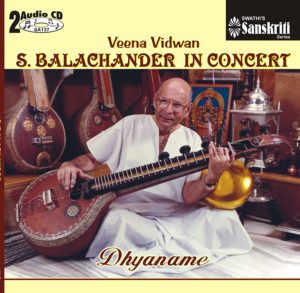
Majrooh is the fifth of our lyricists who was a contemporary of Shakeel Badayuni. Out of all these six (*including Shakeel), three have been from Uttar Pradesh, which says something about that region producing some great poets and lyricists.

Majrooh Sultanpuri was born on 01 Oct 1919 as Asrar ul Hassan Khan in a Tarin Pashtun family, in Sultanpur, Uttar Pradesh. His father was an officer in the police department, but, preferred to send his son for traditional madrasa (Urdu school) rather than provide him with English schooling.

He tried his hand at being a quack until he was noticed in a mushaira in Sultanpur.

He was a disciple of the great Urdu poet Jigar Moradabadi. When he visited Bombay in 1945 to participate in a mushaira, the director Abdul Rashid Kardar noticed him and invited him to write for the movies. Majrooh turned it down as he looked down upon movies! He was persuaded through his mentor Jigar Moradabadi and then there was no turning back.

Many traditionalists of the Urdu literature, however, felt that Majrooh sold his soul to the Hindi films and that he could have emerged a great poet in the likeness of Ghalib and Jigar.

The takhalus Majrooh means “injured” or “wounded”.

Majrooh was awarded, in 1993, the highest award – Dadasaheb Phalke award – for his lifetime contribution towards lyrics and poetry. He was the first lyricist ever to be given that award. For the film Dosti, that made Laxmikant Pyarelal famous, he was awarded the Filmfare Best Lyricist Award for the song: Chahunga main tujhe saanjh savere.

For someone who didn’t want to join Hindi movies, Majrooh emerged as a natural lyricist, very popular, very romantic and enchanting.

Most of Majrooh’s songs are of Dil vil pyaar vyaar main kyaa jaanu, Baahon mein chale aao, Bangle ke peechhe, Ye raaten ye amusam nadi ka kinaara, and Dekho mausam kyaa bahaar hai. However, some of his lyrics are still comparable to Shakeel’s such as Hui shaam unaka khayaal aa gaya, Woh jo milate the kabhi, Rahe na rahe ham, Chhupa lo youn dil mein pyaar mera, Tu kahe agar jeevan bhar main geet sunaata jaayun, Mujhe dard-e-dil ka pata na tha, Hamaare baad ab mehfil mein afsaane bayaan honge, and the great song on eyes: Teri aankhon ke siwa duniya mein rakha kyaa hai.

Majrooh’s Teri aankhon ke siwa has some of his best lyrics

Please enjoy Mohammad Rafi and Asha Bhosle sing a composition of Madan Mohan in Raag Gara Tal Dadra on the lyrics of Majrooh Sultanpuri a song from the 1958 Mahesh Kaul movie Aakhri Dao: Hamsafar saath apna chhod chale….

र : हमसफ़र साथ अपना छोड़ चले
रिश्ते नाते वो सारे तोड़ चले
हमसफ़र साथ …
आ : हमसफ़र साथ अपना छोड़ चले
रिश्ते नाते वो सारे तोड़ चले
हमसफ़र साथ …

र : रासता साफ़ था तो चलते रहे
साथ हँसते रहे मचलते रहे
मोड़ आय तो मूँह को मोड़ चले
हमसफ़र साथ …

आ : सपने टूटे पड़े हैं राहों में
दर्द की धूल है निगाहों में
दिल पे क़दमों के नक़्श छोड़ चले
हमसफ़र साथ …

र : जब उन्हें हमसे प्यार ही न रहा
रोयें क्या, इन्तज़ार भी न रहा
हम भी दामन को अब निचोड़ चले
हमसफ़र साथ …

What is about the song that grips you so strongly? As  I explained it is the overall effect of some very beautiful lyrics by Majrooh Sultanpuri, super slow and emphatic composition by Madan Mohan, excellent rendition by Moahammad Rafi and Asha Bhosle and outstanding histrionics by Nutan. I would like to venture that the starting point of gripping of emotions in this song is lyrics: two stanzas by Mohammad Rafi and one by Asha Bhosle. As I explained elsewhere, Hindi movies never had a female lyricist. Hence, it was left to the male lyricists to imagine the emotions of females too. Look at how well Majrooh did for Nutan here:

आ : सपने टूटे पड़े हैं राहों में
दर्द की धूल है निगाहों में
दिल पे क़दमों के नक़्श छोड़ चले
हमसफ़र साथ …

I hope you enjoyed it too.

Please await the next song in the series.

Raaga Based Song Of The Day #89

Raaga Based Song of the Day: Rasme ulfat ko nibhaayen to nibhaayen kaise….
Raag Madhuvanti, Tal Kaherava

I gave you a song in this Raag in very early stages of this series. In ‘Raaga Based Song Of The Day #5’, I gave you a song in the same raaga and tal: Ajahun na aaye baalma. That, of course had the genius of Shankar Jaikishan though in that they mixed elements of their favourite Raag Bhairavi.

We have completed eighty-eight days of Raaga Based Songs of the Day. Our first post in the series was titled ‘Raaga Based Song Of The Day #1’ and the song was a Mohammad Rafi and Lata Mangeshkar song from the 1970 Shakti Samanta movie Pagla Kahin Ka: Tum mujhe youn bhula na paoge.  It is in Raag Jhinjhoti, Tal Kaherava.

Our eighty-eighth post or the last post was titled ‘Raaga Based Song Of The Day #88’ and the song was a Kishore Kumar song from the 1972 Shakti Samanta movie Amar Prem starring Rajesh Khanna and Sharmila Tagore: Kuchh to log kahenge. It is in Raag Khammaj, Tal Kaherava.

This blog has a number of posts on Raaga based songs in Hindi movies titled similarly; for example: ‘The Best Raaga Based Songs in Hindi Movies – Raaga Yaman – Part II’.

In the last eighty-eight days of sharing Raaga based songs of the day, I have given you songs based on Raag Jhinjhoti, Gara, Bhimpalasi, Madhuvanti, Shivaranjani, Bihag, Pahadi, Sarang, Pilu, Bhairavi, Khammaj, Charukesi, Kalyan or Yaman, Desh, Malgunji, Kirwani, Kedar, Bageshri, Megh Malhar, Bhupali, Ahir Bhairav, Malkaush, Mand, Adana, Kafi, Rageshri, Jaunpuri, Tilang, Janasammohini, Chayanat, Shuddha Kalyan, Gaur Sarang, Jogiya, Asavari, Maru Bihag, Durga, Lalit, Puria Dhanashri, Bhinna Sahdja, Sohani, Multani, Patdeep, Jaijaiwanti, Tilak Kamod, Hemant, Basant Mukhari, Gujri Todi, Kalavati, Hamir, Bhatiyar, Gawati, Shyam Kalyan, Gorakh Kalyan, Madhamat Sarang, Manj Khammaj, Darbari Kanada, Vibhas, Shankara, Bahar, Nand and Mian Ki Malhar; making it a total of 61 raagas. The raagas that have been repeated so far are Pahadi, the raaga of my home place in the Himalayas, Maru Bihag, Raag Kirwani, Jhinjhoti, Bhairavi, Gara, Basant Mukhari, Malkauns, Bhairavi, Mand and Sohani. Today, I am repeating Raag Madhuvanti.

Madhuvanti belongs to the Todi Thaat. As you must have guessed it Madhu means honey and the raag is as sweet as honey in sringar ras depicting love and romance. It is an Audhav – Sampurna raag. Rishabh and Dhaivat Varjya in Aaroha, Gandhar Komal, Madhyam Teevra. Rest all are Shuddha Swaras. This raag is to be sung at the fourth prahar of the day, that is late afternoon/evening. It is a fairly modern raag. Its earlier names are Ambika and Madhumalati. It is popular amongst musicians, especially instrumentalists. The nearest Raag is Raag Multani. Using Rishabh and Dhaivat Shuddha in Raag Multani, Raag Madhuvanti appears.

The song I have taken for you today is from the 1973 BR Ishara movie Dil Ki Rahen starring Rakesh Pandey and Rehana Sultan and Sulochana Latkar. It was penned by Naqsh Lyallpuri, composed by Madan Mohan and sung by Lata Mangeshkar.

Naqsh Lyallpuri with Lata Mangeshkar

Naqsh Lyallpuri was born on 24 Feb 1928 as Jaswant Rai Sharma in Lyallpuri in what became later as Pakistan. Presently, it is known as Faislalbad. Jaswant was interested in literature but his father wanted him to become a mechanical engineer like him. His mother died when he was only eight. His father remarried and their relationship deteriorated even further. In 1946, he moved to Lahore and started working for Hero Publications. After the partition, his family moved to Lucknow and he assumed the pen-name “Naqsh” – meaning an impression, a mark or a print. It was common for Urdu poets to assume their birth places in their names and Naqsh did the same. In 1951 he moved to Bombay and first worked for the Times of India as a proof-reader. Lyallpuri debuted as a film lyricist with the 1953 film Jaggu, writing the lyrics of “Agar Teri Aankhon Se Aankhein Mila Doon”, rendered by Asha Bhosle and composed by Hansraj Bahl.

He was one of those lyricists who wrote real good Urdu poetry and he looked down upon profanity and belittling the language. Some of my favourite songs of Naqsh Lyallpuri are: Ahal-e-dil youn bhi nibha dete hain, Pyar ka dard hai meetha meetha (Dard 1981), Apni zulfen mere shaano pe bikhar jaane do (Taj Mahal 2005), Jaate ho pardes piya jaate hi khat likhna (Jeena Teri Gali Mein 1990), Maana teri nazar mein tera pyaar ham nahin (Ahista Ahista 1981), Main to har mod par tumako doonga sada (Chetna 1970), Raaz-e-dil hamase kaho ham to koi gair nahin, Tumhen dekhati hoon to lagata hai aise (Tumhaare Liye 1978), and Ye mulaaqaat ik bahaana hai (Khandaan 1979).

Yeh mulaqat ik bahaana hai – one of the popular songs of Naqsh Lyallpuri from Khandaan, 1979
Madan Mohan with Lata Mangeshkar)

Madan Mohan was born on 25 Jun 1924 at Erbil, Iraqi Kurdistan, where his father Rai Bahadur Chunilal was working as an Accountant General with the Kurdistan Peshmerga forces. Madan Mohan spent the early years of his life in the Middle East. After 1932, his family returned to their home town of Chakwal, then in Jhelum district of Punjab, British India. He joined the Army as a Second Lieutenant in the year 1943. He served there for two years until end of World War II, when he left the Army and returned to Bombay to pursue his musical interests. In 1946, he joined the All India Radio, Lucknow as Programme Assistant, where he came in contact with various artists such as Ustad Faiyaz Khan, Ustad Ali Akbar Khan, Begum Akhtar, and Talat Mahmood.

He was very fond of singing, and so in 1947 he got his first chance to record two ghazals penned by Behzad Lucknawi, Aane Laga Hai Koi Nazar Jalwa Gar Mujhe and Is Raaz Ko Duniya Jaanti Hai. Soon after, in 1948 he recorded two more private ghazals penned by Deewan Sharar, Wo Aaye To Mahfil Mein Ithlaate Huye Aaye and Duniya Mujhe Kahti Hai Ke Main Tujhko Bhoolaa Doon. In 1948, he got his first opportunity to sing a film duet Pinjare Mein Bulbul Bole and Mera Chhotasa Dil Dole with Lata Mangeshkar under composer Ghulam Haider (composer) for the film Shaheed (1948 film), though these songs were never released or used in the film. Between 1948 and 1949, he assisted music composers SD Burman for Do Bhai, and Shyam Sundar in Actress and Nirdosh.

As Music Director, he scored his first big break with the film Aankhen (1950 film) in 1950. He was soon to emerge as a music director par excellence especially for ghazals. Indeed, music director OP Nayyar once said about Madan Mohan that two of his ghazals were better than all that OP Nayyar composed. Some of the best songs of Lata Mangeshkar (she fondly called him “Madan Bhaiyya”) were composed by him on the lyrics of Raja Mehdi Ali Khan and Rajinder Krishan.

Some of my favourite songs of Madan Mohan are: Aaj soch to aansu bhar aaye, Betaab dil ki tamanna yehi hai, Tum jo mil gaye ho (Hanste Zakham 1973), Aapke pehlu mein aa ke ro diye, Naino mein badra chhaye, Jhumka gira re, Tu jahan jahan chalega (Mera Saya 1966), Aapki nazaron ne samajha, Hai isi mein pyaar ki aabru, Vo dekho jala ghar kisi ka (Anpadh 1962), Aapko pyaar chhupane ki buri aadat hai, Tere paas aake mera waqt nikal jaata hai (Neela Akash 1965), Agar mujhase mohabbat hai, Main nigaahen tere chehre se hatayun kaise (Aap Ki Parchhayiyan), Ai mere dil mujhe bata de (Bhai Bhai 1946), Ari vo shokh kaliyon muskara dena vo jab aayen (Jab Yaad Kisi Ki Aati Hai 1967), Baad muddat ke yeh ghadi aayi, Haal-e-dil youn unhe sunaya gaya, Jab jab tumhe bhulaya tum aur yaad aaye, Kisi ki yaad mein duniya ko jhain bhulaye huye, Main teri nazar ka saroor hoon, Phir wohi shaam wohi gham wohi tanhaayi hai, Teri aankh ke aansu pi jaayun, Wo chup rahen to mere dil ke daag jalate hain (Jahan Ara 1964), Hamare baad mehfil mein (Baghi 1953), Bainya na dharo O balma, Ham hain mataa-e-kuchcha-e-bazaar ki tarah, Mai ri main kaase kahun, Tumse kahun ik baat (Dastak, 1970), Bairan neend na aaye mohe (Chacha Zindabad 1959), Basti basti parbat parbat gaata jaaye banjara, Chand madham hai aasman chup hai, Dekh tere Bhagwan ki haalat (Railway Platform 1955), Bhooli hui yaado mujhe itna na satayo, Vo bhooli dastaan lo phir yaad aa gayi (Sanjog 1961), Chanda ja re ja re, Main to tum sang nain mila ke (Manmauji 1962), Chhadi re chhadi kaise gale mein padhi, Dil dhoondata hai fursat ke, Ruke ruke se kadam (Mausam 1975), Chhod kar tere pyar ka daaman, Jao hamane dastaan apni sunaayi, Lag jaa gale ke phir, Naina barse rimjhim rimjhim, Shokh nazar ki bijliyan  (Woh Kaun Thi 1964), Do dil toote do dil haare, Doli chadate hi Heer ne bain kiye, Milo na tum to ham ghabraayen, Ye duniya ye mehfil mere kaam ki nahin (Heer Ranjha 1970), Ham chal rahe the wo chal rahe the (Duniya Na Maane 1959), Ham pyar mein jalane waalo ko chain kahan (Jailor 1958), Hamsafar saath apna chhod chale, Tujhe kya sunayun main dilruba (Aakhri Dao 1958), Hamse aaya na gaya, Kaun aay mere man ke dwaare, Meri veena tum bin roye, Tu pyar kare ya thukraye (Dekh Kabira Roya 1957), Har taraf ab yahi afsaane hain, Hai tere saath meri wafa main nahin to kya (Hindustan Ki Kasam 1973), Hoke majbuur mujhe usne bhualaya hoga, Kar chale ham fida, Khelo na mere dil se, Main ye soch kar uske dar se, Zara si aahat hoti hai (Haqeeqat 1964), Husn haazir hai mohabbat ki saza paane ko, Is reshmi paazeb ki jhankar ke sadake, Tere dar pe aaya hoon (Laila Majnu 1976), Ik haseen raat ko dil mera kho gaya, Kabhi ai haqeeqat-e-muntazar, Sapano mein agar mere (Dulhan Ek Raat Ki 1966), Ishq ki garmi-e-jazbaat kise pesh karun. Mere mehboob kahin aur mila kar mujhase, Naghma o sher ki saugat, Rang aur noor ki baraat (Ghazal 1964), Jaa jaa re jaa saajna, Jaana tha hamse door, Unako ye shikayat hai, Youn hasaraton ke daag (Adalat 1958), Kabhi na kabhi kahin na kahin koi na koi to aayega, Mujhe le chalo aaj us jagah, Sawan ke mahine mein (Sharaabi 1964), Koi shikwa bhi nahin koi shikayat bhi nahin (Neend Hamari Khwab Tumhaare 1966), Main paagal mera manwa paagal (Aashiyana 1952), Meri yaad mein tum na aasnu bahana (Madhosh 1951), Na tum bewafa ho na ham bewafa hain (Ek Kali Muskaaye 1958), Sapne mein sajan se do baaten, Do ghadi wo jo paas aa baithe (Gateway Of India 1957), Teri aankhon ke siwa duniya mein rakha kya hai (Chirag 1969), Tumhari zulf ke saaye mein shaam kar loonga (Naunihaal 1967), Tu mere saamne hai teri zulfen hain khuli (Suhagan, 1964), and Vo jo milate the kabhi hamsase deewano ki tarah (Akeli Mat Jaiyo 1963).

One of the most popular songs of Madan Mohan from Woh Kaun Thi

Before we actually take up the song, first, lets take up the value added learning of today. From the last eight times we started learning about some of the leading personalities in Indian Classical Music or Shastriya Sangeet. The first one that we took up was Ustaad Asad Ali Khan, the finest Rudra Veena player in the country. Then we took up Pandit Hari Parsad Chaurasia, the greatest Bansuri player in the country. Then we talked about Ali Akbar Khan, the greatest Sarod player in the country. Then we took up Pandit Ravi Shankar, the greatest Sitar player in the world. Then we took up the greatest classical singer in the country (of Carnatic tradition): MS Subbulakshmi. Then, we took up the greatest classical singer in the country (of Hindustani tradition): Pandit Bhimsen Joshi. Then, we learnt about the Shehnai maestro Ustad Bismillah Khan. And finally, we learnt about Annapurna Devi, a great Surbahar (bass sitar) player of Hindustani Classical Music. Tonight, we shall take up Pandit Shiv Kumar Sharma, the grestest Santoor player in the country

Pandit Shiv Kumar Sharma was born to Uma Dutt Sharma on 13 Jan 1938 in Jammu. His father started teaching him vocals and tabla when he was only five. Uma Dutt Sharma did extensive research on Santoor and started teaching his son Santoor by the age of 13. He gave his first public performance in Bombay in 1955, at the age of 17. Pandit Shiv Kumar Sharma is credited with having made Santoor as a popular Indian classical instrument world-wide. He composed the background music for V Shantaram’s Jhanak Jhanak Payal Baaje in 1956. He gave his first solo performance in 1960.

He has composed music for many Hindi films in collaboration with Hariprasad Chaurasia starting with Silsila (1980). They came to be known as the Shiv-Hari music duo. Some of the movies they composed music for were big musical hits, such as Faasle (1985), Chandni (1989), Lamhe (1991), and Darr (1993).

Fascinatingly, he has played tabla in the song Mose Chhal Kiye Jaye Haay Re Haay Dekho Saiyan Beimaan. While he started his career playing the tabla, Shiva Kumar Sharma had given up the instrument to focus on the santoor. It was RD Burman who convinced him to play the tabla for this song. He did not play the tabla again for any other Hindi film song. He has been awarded the Sangeet Natak Akademi Award in 1986, the Padma Shri in 1991, and the Padma Vibhushan in 2001.

Lastly, a word about the movie from where this song has been taken by me. The 1973 movie Dil Ki Rahen was produced by Syed Kausar Hussain and directed by BR Ishara and starred Rakesh Pandey and Rehana Sultan and Sulaochana. The film’s print allegedly got damaged as time passed by. Hence, the movie cannot be produced in any viewing format.
Please enjoy in Raag Madhuvanti, Taal Kaherava, Lata Mangeshkar sing a composition of Madan Mohan on the lyrics of Naqsh Lyallpuri in the 1973 BR Ishara movie: Rasme ulfat ko nibhaayen to nibhaayen kaise…..

रस्म-ए-उल्फ़त को निभाएं तो निभाएं कैसे
हर तरफ़ आग है दामन को बचाएं कैसे
रस्म-ए-उल्फ़त को निभाएं…

दिल की राहों में उठते हैं जो दुनिया वाले -२
कोई कह दे के वोह दीवार गिराएं कैसे -२
रस्म-ए-उल्फ़त को निभाएं…

दर्द में डूबे हुए नग़मे हज़ारों हैं मगर -२
साज़-ए-दिल टूट गया हो तो सुनाए कैसे -२
रस्म-ए-उल्फ़त को निभाएं…

बोझ होता जो ग़मों का तो उठा भी लेते -२
ज़िंदगी बोझ बनी हो तो उठाएं कैसे -२
रस्म-ए-उल्फ़त को निभाएं…

We have intended to learn about Raaga based music whilst we entertain ourselves with Raaga based songs. So, lets, once again, take stock of our collective learning so far:

  1. On the first day we learnt about the Raaga system devised by Pandit Vishnu Narayan Bhatkhande, which is the prevalent system in Hindustani Classical Music and based on ten Thaats.
  2. On the second day we learnt about Tal or Taal.
  3. On the third day we learnt about characteristics of Raagas that included Swar, Jati, Thaat, Arohana and Avarohana, Vadi, Samvadi and Pakad.
  4. On the fourth day, we learnt about Sargam.
  5. On the fifth day, we learnt about notations used in Indian classical music or simply Swar Lipi.
  6. On the sixth day, we learnt about the Ras (sentiments) that Raagas evoke.
  7. On the seventh day, we learnt about various types of Swar: Shuddha, Achal, Vikrut, Komal and Teevra.
  8. On the eighth day, we learnt the parts of a composition in Indian Classical Music.
  9. On the ninth day, we learnt the names of some of the popular instruments used in Indian Classical Music.
  10. On the tenth day, we learnt about the sources of names of Raagas.
  11. On the eleventh day, we learnt about why Bhairavi is the first raag to be taught to beginners and also why it is the last in a performance.
  12. On the twelfth day, we learnt about Khammaj Thaat.
  13. On the thirteenth day, we learnt about Tal Punjabi Theka or Sitarkhani.
  14. On the fourteenth day, we learnt about Alap.
  15. On the fifteenth day, we learnt about List of Raagas (Raagmala) in my favourite book: Sri Guru Granth Sahib.
  16. On the sixteenth day, we learnt about tips for raaga identification.
  17. On the seventeenth day, we learnt the basics of Gharana system.
  18. On the eighteenth day, we learnt about Filmi Sangeet.
  19. On the nineteenth day, we learnt about the commonest Tal in Raagas: Tintal.
  20. On the twentieth day, we learnt about the Kafi Thaat.
  21. On the twenty-first day, we learnt a little more in detail about the classification of Raagas.
  22. On the twenty-second day, we learnt the essential differences between Bhairavi and Bhairav.
  23. On the twenty-third day, we learnt a little more in detail about the Jati or Jaati of a raaga.
  24. On the twenty-fourth day, we learnt details of Thaat Bilawal, the most basic thaat in the Bhatkhande’s system of raagas.
  25. On the twenty-fifth day, we learnt about Tintal.
  26. On the twenty-sixth day, we learnt in detail about the Raaga – Samay linkage.
  27. On the twenty-seventh day, we learnt about Lehar.
  28. On the twenty-eighth day, we learnt about the history of the Hindustani Music.
  29. On the twenty-ninth day, we learnt about Dhrupad.
  30. On the thirtieth day, we learnt about Rupaktal that I was introduced to, a few months back, by my friend Anand Desai.
  31. On the thirty-first day, we learnt about Khayal.
  32. On the thirty-second day, we learnt about Thumri.
  33. On the thirty-third day, we learnt about Tappa.
  34. On the thirty-fourth day, we learnt about Tarana.
  35. On the thirty-fifth day, we learnt about Tal Dipchandi (Moghali).
  36. On the thirty-sixth day, we learnt about Tabla.
  37. On the thirty-seventh day, we learnt about Kirtan.
  38. On the thirty-eighth day, we learnt about Pakhawaj.
  39. On the thirty-ninth day, we learnt about Hori.
  40. On the fortieth day, we learnt about Dadra.
  41. On the forty-first day, we learnt about Kajri.
  42. On the forty-second day, we learnt about Chaiti.
  43. On the forty-third day, we learnt about Sarangi.
  44. On the forty-fourth day, we learnt about Shehnai.
  45. On the forty-fifth day, we learnt about Sarod.
  46. On the forty-sixth day, we learnt about Bansuri.
  47. On the forty-seventh day, we learnt about Ektal and Tanpura.
  48. On the forty-eighth day, we learnt about Veena.
  49. On the forty-ninth day, we repeated our learning of Veena with a small excitement added.
  50. On the fiftieth day, we learnt about Dilruba/Esraj.
  51. On the fifty-first day, we learnt about Jaltarang.
  52. On the fifty-second day we learnt about Qawwali.
  53. On the fifty-third day, we learnt about Sitar.
  54. On the fifty-fourth day, we learnt about Surbahar.
  55. On the fifty-fifth day, we learnt about Harmonium.
  56. On the fifty-sixth day, we learnt about Santoor.
  57. On the fifty-seventh day, we learnt about Swarmandal.
  58. On the fifty-eighth day, we learnt about the Shruti Box.
  59. On the fifty-ninth day, we learnt about Alankar.
  60. On the sixtieth day, we learnt about singing in Aakaar.
  61. On the sixty-first day, we learnt about the Classification of Indian Musical Instruments.
  62. On the sixty-second day, we learnt a little about Carnatic Music.
  63. On the sixty-third day, we learnt about Natya Shastra.
  64. On the sixty-fourth day, we learnt about evolution of musical instruments in India down the ages.
  65. On the sixty-fifth day, we learnt about Riyaaz.
  66. On the sixty-sixth day, we looked at a list of Raagas in Hindustani Classical Music.
  67. On the sixty-seventh day, we learnt about the health benefits of raagas.
  68. On the sixty-eighth day, we learnt a little more comprehensively about the moods and emotions that raagas evoke.
  69. On the sixty-ninth day, we learnt about a mobile application to help identify raagas.
  70. On the seventieth day, we learnt about Melakarta Raagas.
  71. On the seventy-first day, we learnt about Sangita Makarand.
  72. On the seventy-second day, we learnt about TaalMala an Android application for personalized accompaniment of musical instruments during Riyaaz or even during Concert.
  73. On the seventy-third day, we learnt about Indian Classical Ragas, an Android application for mobile phones.
  74. On the seventy-fourth day, we learnt about Saregama Classical, another application for Classical Raagas.
  75. On the seventy-fifth day, we learnt about a free online service available to learn Indian Classical Music.
  76. On the seventy-sixth day, we learnt about List of Hindustani Classical Musical Festivals in India and Abroad.
  77. On the seventy-seventh day, we learnt about List of Carnatic Musical Festivals in India and Abroad.
  78. On the seventy-eighth day, we learnt about Jhaptal.
  79. On the seventy-ninth day, we learnt about Ektal.
  80. On the eightieth day, we learnt about Tivra Tal.
  81. On the eighty-first day, we learnt about the greatest Rudra Veena player ever: Ustaad Asad Ali Khan.
  82. On the eighty-second day, we learnt about the greatest Bansuri player alive: Pandit Hariprasad Chaurasia.
  83. On the eighty-third day, we learnt about the best Sarod player in the country: Ustaad Ali Akbar Khan.
  84. On the eighty-fourth day, we learnt about the greatest Sitar player in the world: Pandit Ravi Shankar.
  85. On the eighty-fifth day, we learnt about the greatest Indian vocalist of Carnatic tradition: MS Subbulakshmi.
  86. On the eighty-sixth day, we not just learnt about the greatest vocalist of Hindustani tradition: Pandit Bhimsen Joshi but also learnt about Tal Hinch.
  87. On the eighty-seventh day, we learnt about the Shehnai maestro Ustaad Bismillah Khan.
  88. On the eighty-eighth day, we learnt about Annapurna Devi, the greatest Surbahar player in India.
  89. And today, on the eighty-ninth day, we learnt about Pandit Shiv Kumar Sharma, the greatest Santoor Player in the country.

There is much more still to be learnt and enjoyed.

Please stay tuned!

Songs That Tug At Your Emotions – Song #23

The twenty-third day of songs in this series.

Happy Birthday KJ Yesudas 10 January

In the last twenty-two days, we have taken up songs of twelve male singers: Talat Mahmood, Manna Dey, Kishore Kumar, Mohammad Rafi, Mukesh, Hemant Kumar, Mahendra Kapoor, SD Burman, KL Saigal, Pankaj Mullick, Jagmohan ‘Sursagar’ and Hariharan. We also took up songs of eleven female singers: Lata Mangeshkar, Asha Bhosle, Suman Kalyanpur, Shamshad Begum, Geeta Dutt, Uma Devi (Tun Tun), Suraiya and Zohrabai Ambalewali, Sudha Malhotra, Amirbai Karnataki and Kavita Krishnamurthy.

Tonight, in order to pay tribute to the singer KJ Yesudas, we take up our thirteenth male singer. This song is dear to me. On the 9th of August last year, I lost my mother. There are a number of songs that I put up as a dedication to her. This is another one. Just like the others, it brings tears in my eyes.

Lets start with the movie itself from where this song has been taken. The 1977 movie Alaap was a Hrishikesh Mukherjee movie penned by Rahi Masoom Raza on a story by Hrishikesh Mukherjee himself. The movie starred Amitabh Bachchan, Rekha, Asrani, Farida Jalal, Om Prakash, Chhaya Devi and AK Hangal. Rahi Masoom Raza penned all the songs of the movie except this one (highlighted at #7 below), which was penned by Harivansh Rai Bachchan, Amitabh Bachchan’s father. Jaidev composed all the songs:
1. “Aai Ritu Sawan Ki” Bhupinder Singh, Kumari Faiyaz
2. “Binati Sun Le Tanik” Asrani
3. “Chand Akela Jaye Sakhi Ri” Yesudas
4. “Chand Akela” Yesudas
5. “Ho Rama Dar Lage Apni Umariya Se” Asrani
6. “Kahe Manva Nache” Lata Mangeshkar
7. “Koi Gata Main So Jata” Yesudas
8. “Mata Saraswati Sharda” Lata Mangeshkar, Dilraj Kaur
9. “Mata Saraswati Sharda” Yesudas, Dilraj Kaur, Madhurani
10. “Nai Ri Lagan Aur Meethi Batiyan” Yesudas, Madhurani, Kumari Faiyaz
11. “Zindagi Ko Sanwarna Hoga” Yesudas

Triloki Prasad (Om Prakash) is a rich advocate. He has two sons: Ashok (Vijay Sharma) who is an advocate like him and married to Geeta (Lily Chakravarty) and Alok (Amitabh Bachchan) who is taking time to settle down in Triloki Prasad’s law firm. To add to Triloki Prasad’s misgivings about Alok, he is fond of music and joins Pandit Jamuna Prasad’s (AK Hangal’s) classes. As if this is not enough, Alok spends a lot of time in the slums with a former courtesan  named Sarju Bai Banaraswali (Chhaya Devi). Triloki’s counseling his son falls on deaf ears since Alok actually regards Sarju Bai as his mother. Triloki, therefore, works out a plan with one Mr Gupta (Yunus Parvez) to demolish the slums. Sarju Bai is rendered homeless and eventually dies. This song is sung by Amitabh Bachchan in her memory. Jaidev took the lyrics of Harivansh Rai Bachchan, composed them in Raag Bihag (with a lot of mixing), Tal Kaherava and made Yesudas sing it for Amitabh Bachchan.

I put up a song in Raag Bihag, Tal Dadra long time ago: Tere sur aur mere geet (Please see: ‘Raaga Based Song Of The Day #7’). Raag Bihag belongs to Bilawal Thaat. However, if Teevra Madhyam is used (Bihag uses both Madhyam, that is, Teevra and Shuddha) then it is more akin to Kalyan Thaat. It is an Audhav-Sampurna Vakra Raag (Rishab and Dhaivat are varjay in the ascent (Aaroha). It is both romantic and celebratory and hence normally used for weddings. It is normally sung during the second prahar of the night (9 PM to midnight).

Kattassery Joseph Yesudas was born on 10th January 1940 in Fort Kochi (Kerala) in a Latin-rite Roman Catholic Christian family to late Augustine Joseph and late Elizabeth Joseph. His father, a well-known Malayalam classical musician and stage actor, was his first guru (teacher). Yesudas recorded his first popular song Jaathi Bhedam Matha Dwesham (music: MB Sreenivasan) on 14th November 1961. He got a break in Hindi movies with the 1971 movie Jai Jawan Jai Kisan. Therefore, in 2011 Yesudas completed 50 years as a playback singer. However, it was the 1976 Basu Chatterjee movie, with songs composed by Salil Chowdhury that really made him popular. The song he sang in the movie was: Jaaneman jaaneman tere do nayan. Yesudas has recorded over 70,000 songs and has won scores of accolades including the coveted Padma Shri (1975), Padma Bhushan (2002), Padma Vibhushan (2017) and a record seven National Awards for Best Playback Singer. On 2 Oct 2014, Yesudas sparked a row while speaking at a public function on the occasion of Gandhi Jayanthi, where he stated that “Women should not wear jeans and trouble others. You should dress modestly and do not behave like men”. This resulted in a number of protests from Women’s Rights and Political organizations, who asked him to withdraw the comment, which he never did.
Some of my favourite Hindi songs of Yesudas are: Aaj se pehle aaj se zyaadah, Gori tera gaanv bada pyaara, Jab deep jale aana, Tu jo mere sur mein (Chitchor, 1976), Chand akela jaye sakhi ri and all the other songs of Alaap that I have given above, Dil ke tukade tukade kar ke (Dada, 1978), Jaaneman jaaneman tere do nayan (Chitchor, 1976), Kya karun sajani (Swaami, 1977), Kahan se aaye badra (Chashm-e-Budoor), Maana ho tum behadd hasin (Toote Khilone, 1978), Madhuban khushbu deta hai (Saajan Bin Suhaagan, 1978), and Shyam ran ranga re (Apne Paraye, 1980).

Chhoti Si Baat (1976) song that made Yesudas famous in Hindi movies

Jaidev Verma, the composer of this song, was born in Nairobi (Kenya) on 03 Aug 1919 and brought up in Ludhiana (Punjab). In 1933, when he was 15 years old, he ran away to Bombay to become a film star. There, he acted in eight films as a child star for the Wadia Film Company. He was initiated into music at a young age in Ludhiana by Prof. Barkat Rai. Later, when he made it Bombay, he learnt music from Krishnarao Jaokar and Janardan Jaokar.

Unfortunately, he had to leave his film career abruptly and return to Ludhiana, due to his father’s blindness, which thrust the sole responsibility of his family on his young shoulders.

After his father died, Jaidev took the responsibility of looking after his sister, Ved Kumari and later got her married. After that in 1943, he left for Lucknow to study under the tutelage of music maestro Ustad Ali Akbar Khan.

His songs and music for Mujhe Jeene Do, Hum Dono, Reshma Aur Shera (I have already given you his song in Raag Mand: Tu chanda main chandini for which please see: ‘Raaga Based Song Of The Day #78’), Prem Parbat, Parinay and Gharonda are well-remembered. He received National Filmfare Awards for Best Music Direction three times: Reshma Aur Shera (1972), Gaman (1979) and Ankahee (1985).

A Jaidev composed song for the movie Mujhe Jeene Do

Harivansh Rai Bachchan, the lyricist of the song lived between 27 Nov 1907 and 18 Jan 2003. was a noted Indian poet of the Nayi Kavita literary movement (romantic upsurge) of early 20th century Hindi literature. Born in a Hindu Awadhi Indian Srivastava Kayastha family, in Allahabad in the United Provinces of Agra and Oudh, in British India, he was also a famous poet of the Hindi Kavi Sammelan. He is best known for his early work Madhushala (मधुशाला). Some of his poetic work has been used in Hindi movies, the most popular of which was the Silsila song Rang barse, also picturised on his son: Amitabh Bachchan.

Harivansh Rai’s Rang Barse was used in Hindi movie Silsila

Please enjoy Yesudas sing a composition of Jaidev on the lyrics of Harivansh Rai Bachchan a song from the 1977 Hrishikesh Mukherjee Alaap in Raag Bihag, Tal Kaherava: Koi gaata main so jaata….

कोई गाता मैं सो जाता – २

संस्रिति के विस्त्रित सागर में
सपनों कि नौका के अंदर
दुख सुख कि लहरों में उठ गिर
बहता जाता, मैं सो जाता …

आँखो में लेकर प्यार अमर
आशीश हथेली में भर कर
कोइ मेरा सर गोदी में रख
सहलाता, मैं सो जाता …

मेरे जीवन का काराजल
मेरे जीवन का हालाहल
कोइ अपने स्वर में मदुमय कर
दोहराता मैं सो जाता

कोइ गाता मैं सो जाता …

https://www.youtube.com/watch?v=6Lg1bLwBjLA

If someone were to ask me which is the number one most memorable song in my life, I would say it is my mother’s Lori (lullaby) to me when I was small. Indeed, for most others too it would be likewise. It was heard by us when we didn’t even know anything about songs, music, raagas and the like. Her singing was the key to opening doors of dreams for us since the Lori would transport us into another world. Lets say if we were to choose between that singing and those by even Bharat Ratnas, without flinching, any of us would choose that.

And even after mother leaves you, the strains of her Lori are sufficient to make you sleep. It would be there until you finally sleep for ever.

मेरे जीवन का काराजल
मेरे जीवन का हालाहल
कोइ अपने स्वर में मदुमय कर
दोहराता मैं सो जाता

You would hardly come across songs that tug at your emotions more.

I hope you enjoyed it too.

Please await the next song in the series.

Follow

Get every new post delivered to your Inbox

Join other followers:

error

Enjoy this blog? Please spread the word :)

RSS
Follow by Email
YouTube
YouTube
Set Youtube Channel ID
LinkedIn
Share
WhatsApp
Copy link
URL has been copied successfully!