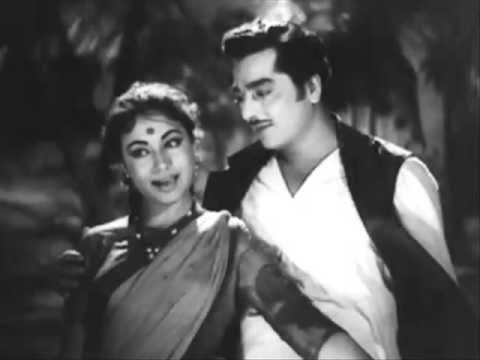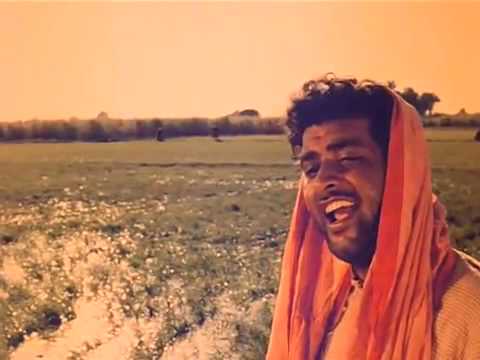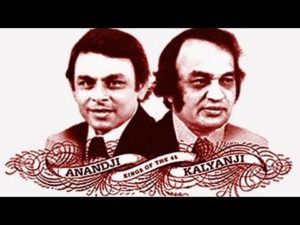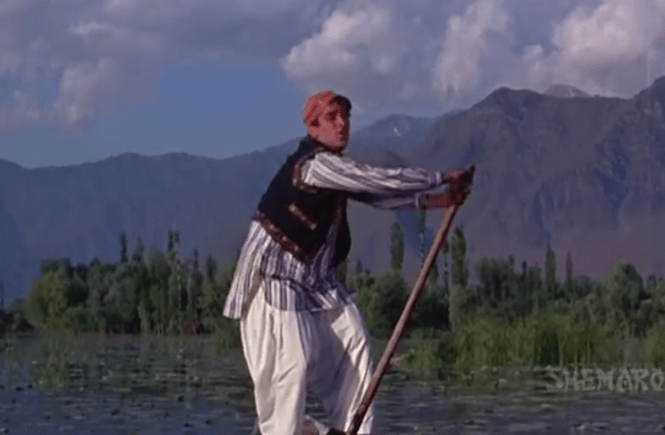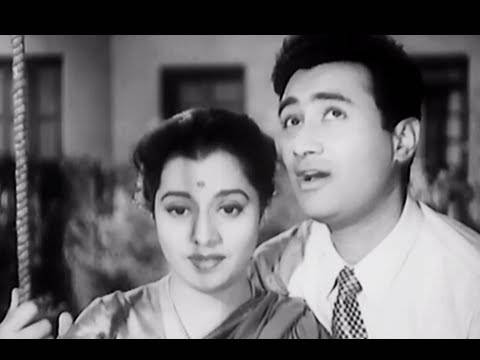
Raaga Based Song Of The Day #96

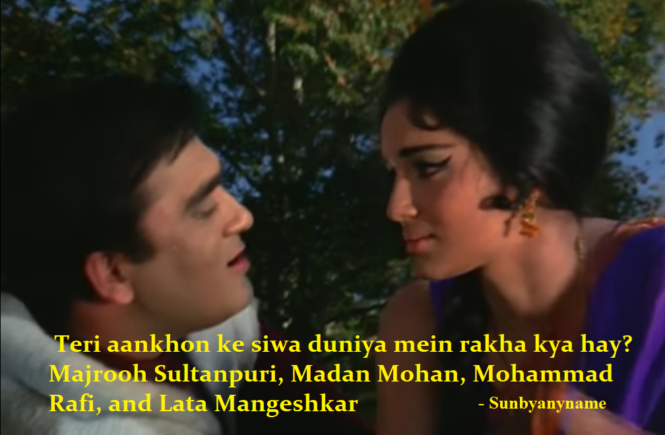
Raaga Based Song of the Day: Teri aankhon ke siwa duniya mein rakha kya hai….
Raag Jhinjhoti, Tal Dadra

The legendary poet Faiz Ahmed Faiz wrote a nazm (poem) with the opening words: Mujh se pehli si mohabbat mere mehboob na maang. Malika-e-Tarannum (Queen of Melody) Noorjehan composed the nazm into an immortal ghazal in a gathering that was celebrating his release from prison (he was imprisoned for supporting Communist ideology). It became so popular because of her composition that she started being credited for having penned it in almost the same manner as Begum Akhtar owns Ai mohabbat tere anjaam pe rona aaya and not the poet Shakeel Badayuni.

The mukhada of that ghazal ended in the title of this song:

Mujh se pehli si muhabbat mere mehboob na maang
Maine samjhaa tha ke tu hai to darakhshaan hai hayaat
Tera gham hai to gham-e-dehar ka jhagdaa kyaa hai
Teri surat se hai aalam mein bahaaron ko sabaat
Teri aankhon ke siwaa duniyaa mein rakhkhaa kya hai

Raj Khosla, the director of the 1969 movie Chirag called the lyricist Majrooh Sultanpuri and asked him to use this line as the title of the song. Due permission was taken to do so. This is how this great song was born.

This song was first sung by Mohammad Rafi for Sunil Dutt in the movie. He addressed it to Asha Parekh. Later, Asha Parekh lip-synced it to Sunil Dutt in the voice of Lata Mangeshkar. This is the second song in succession in which I am giving you both the versions.

Today is the second time that I give you a song in this raaga. The first time I gave you a song in this raag was on the very first day: Tum mujhe youn bhula na paoge (Please see: Raaga Based Song Of The Day #1).

I couldn’t have given you the best song ever composed in this raaga: Mere mehboob tujhe meri mohabbat ki kasam and hence I gave you what I thought was the second best. Coincidentally, that song, penned by Hasrat Jaipuri and composed by Shankar Jaikishan had two versions: first sung by Mohammad Rafi for Shammi Kapoor and then sung by Lata Mangeshkar for Asha Parikh. Ninety-five songs later we have come back to where we started from.

We have completed ninety-five days of Raaga Based Songs of the Day. Our first post in the series was titled ‘Raaga Based Song Of The Day #1’ and the song was a Mohammad Rafi and Lata Mangeshkar song from the 1970 Shakti Samanta movie Pagla Kahin Ka: Tum mujhe youn bhula na paoge.  It is in Raag Jhinjhoti, Tal Kaherava.

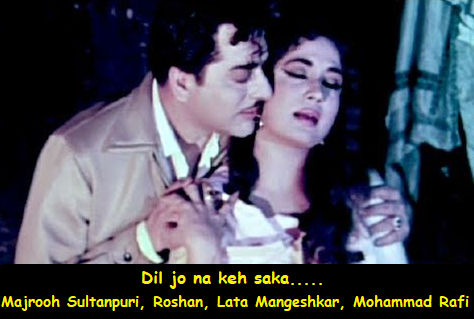
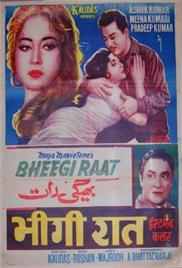
Our ninety-fifth post or the last post here was titled Raaga Based Song Of The Day #95 and the song was a Lata Mangeshkar song from the 1965 Kalidas movie Bheegi Raat starring Meena Kumari, Pradeep Kumar and Ashok Kumar: Dil jo na keh saka. It is in Raag Maru Bihag, Tal Kaherava.

This blog has a number of posts on Raaga based songs in Hindi movies titled similarly; for example: The Best Raaga Based Songs in Hindi Movies – Raaga Darbari Kanada – Part I.

In the last ninety-five days of sharing Raaga based songs of the day, I have given you songs based on Raag Jhinjhoti, Gara, Bhimpalasi, Madhuvanti, Shivaranjani, Bihag, Pahadi, Sarang, Pilu, Bhairavi, Khammaj, Charukesi, Kalyan or Yaman, Desh, Malgunji, Kirwani, Kedar, Bageshri, Megh Malhar, Bhupali, Ahir Bhairav, Malkaush, Mand, Adana, Kafi, Rageshri, Jaunpuri, Tilang, Janasammohini, Chayanat, Shuddha Kalyan, Gaur Sarang, Jogiya, Asavari, Maru Bihag, Durga, Lalit, Puria Dhanashri, Bhinna Sahdja, Sohani, Multani, Patdeep, Jaijaiwanti, Tilak Kamod, Hemant, Basant Mukhari, Gujri Todi, Kalavati, Hamir, Bhatiyar, Gawati, Shyam Kalyan, Gorakh Kalyan, Madhamat Sarang, Manj Khammaj, Darbari Kanada, Vibhas, Shankara, Bahar, Nand and Mian Ki Malhar; making it a total of 61 raagas. The raagas that have been repeated so far are Pahadi, the raaga of my home place in the Himalayas, Maru Bihag, Raag Kirwani, Jhinjhoti, Bhairavi, Gara, Basant Mukhari, Malkauns, Bhairavi, Mand, Sohani, Madhuvanti, Shivaranjani and Adana. Today, I am repeating Raag Jhinjhoti for the second time.
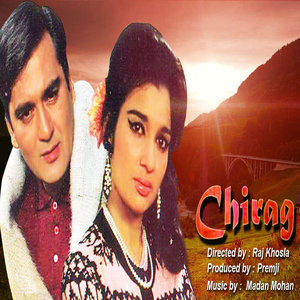
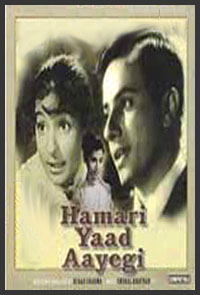
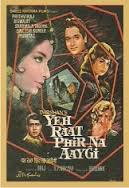
(Poster courtesy: Lyricsia.com)

Today’s song is from the 1969 Raj Khosla movie Chirag starring Sunil Dutt and Asha Parekh.  Lets understand the story-line to see where the two versions of the song fit in the movie:

Ajay Singh (Sunil Dutt) meets Asha Chibber (Asha Parekh) and is led to believe that she belongs to a wealthy family. After a few misunderstandings, he does find out that she is a simple girl living a poor lifestyle. Both do fall in love, and Ajay goes to meet with Asha’s brother, Dr. O.P. Chibber (Om Prakash), and his wife, Shanti (Sulochana Latkar). They are pleased to meet him, and Ajay’s mother, Gayetridevi (Lalita Pawar) visits them and approves of Asha. Ajay and Asha get married and settle down. After marriage Asha is expected to conceive, but she is unable to do so. After a certain incident she also loses her eyesight and becomes dependent on Ajay. Frustrated Gayetridevi decides to ask Asha to leave the house, and arranges a second marriage for Ajay.

The first time the song is sung is the happy occasion when they are in love and he finds in her eyes the world that is waiting for him after marriage. She sings the last stanza of the song indicating that for her too his eyes were the whole world.

The second time this song is sung is when she loses her eyesight. She begins with the stanza that she had sung earlier with him and now every word has a new meaning. She concludes with the second stanza saying that as long as his eyes were hers too, she would live by that support.

Clearly, the movie’s story revolves around this song. And that’s why Raj Khosla wanted to get it right by borrowing a line from Faiz’s famous nazm.

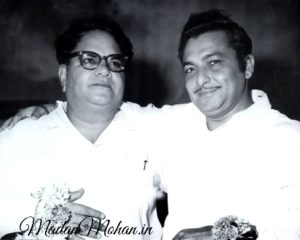
The lyricist of the song was, once again, Majrooh Sultanpuri and the composer was Madan Mohan.  On my Facebook page Lyrical I have, in the last few months, put up over a hundred of my favourite songs penned by Majrooh Sultanpuri.
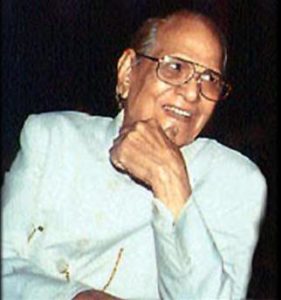
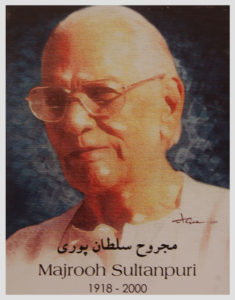
Majrooh Sultanpuri was born on 01 Oct 1919 as Asrar ul Hassan Khan in a Tarin Pashtun family, in Sultanpur, Uttar Pradesh. His father was an officer in the police department, but, preferred to send his son for traditional madrasa (Urdu school) rather than provide him with English schooling.

He tried his hand at being a quack until he was noticed in a mushaira in Sultanpur.

He was a disciple of the great Urdu poet Jigar Moradabadi. When he visited Bombay in 1945 to participate in a mushaira, the director Abdul Rashid Kardar noticed him and invited him to write for the movies. Majrooh turned it down as he looked down upon movies. He was persuaded through his mentor Jigar Moradabadi and then there was no turning back.

Many traditionalists of the Urdu literature, however, felt that Majrooh sold his soul to the Hindi films and that he could have emerged a great poet in the likeness of Ghalib and Jigar.

The takhalus Majrooh means “injured” or “wounded”.

Majrooh was awarded, in 1993, the highest award – Dadasaheb Phalke award – for his lifetime contribution towards lyrics and poetry. He was the first lyricist ever to be given that award. For the film Dosti, that made Laxmikant Pyarelal famous, he was awarded the Filmfare Best Lyricist Award for the song: Chahunga main tujhe saanjh savere.

For someone who didn’t want to join Hindi movies, Majrooh emerged as a natural lyricist, very popular, very romantic and one who kept pace with the changing times.

Madan Mohan was born on 25 June 1924, at Erbil, Iraqi Kurdistan, where his father Rai Bahadur Chunilal was working as an Accountant General with the Kurdistan Peshmerga forces. In the later part of his life Madan Mohan, frustrated at not finding enough assignments, took to heavy drinking and finally he died of liver cirrhosis on 14 July 1975, in Mumbai.

However, during the peak of his career, some of the most memorable songs of Mohammad Rafi (for example for Dev Anand starrer Sharabi; viz, Sawan ke mahine mein, Mujhe le chalo phir aaj us gali, and Kabhi na kabhi kahin na kahin koi na koi to aayega) and Lata Mangeshkar were composed by him. He was the composer of choice for Raj Khosla in that for his triology on Sadhana, Raj Khosla took Madan Mohan for two of the three movies: Woh Kaun Thi and Mera Saya. Some of his best songs are to be found in Haqeeqat, Aap Ki Parchhayiyan, Anpadh, Jahan Ara and Dekh Kabira Roya.

He earned the reputation of being the best composer of ghazals in the movies and these became very memorable; eg, for the movie Adaalat: Unako yeh shikayat hai ke ham kuchh nahin kehte, and Youn hasraton ke daag.

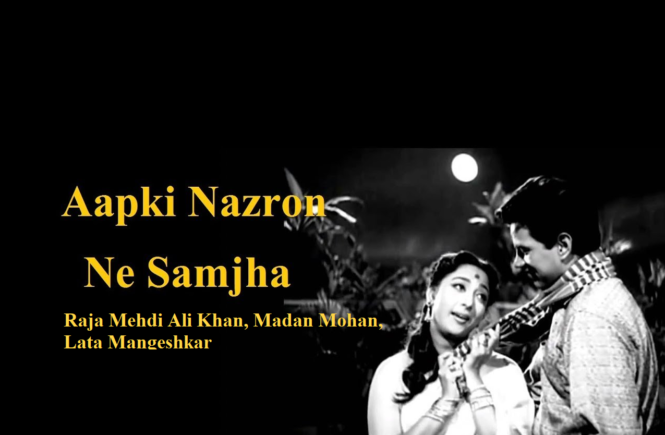
As far as Lata Mangeshkar is concerned, some of her most memorable songs have been composed by Madan Mohan either on the lyrics of Rajinder Krishan or Raja Mehdi Ali Khan. These include Lag jaa gale se phir, and Aapki nazaron ne samajha.

Madan Mohan and Majrooh Sultanpuri worked together in seven movies: Night Club (1958), Ek Shola (1958), Aakhri Dao (1958), Jagir (1959), Akeli Mat Jaiyo (1963), Chirag (1969) and Dastak (1970).

These films had some very beautiful songs. Some of these are: Nigaahon ka ishara hai bahon ka sahaara hai (Night Club, 1958); Kahin chal na de raat ka kya thikana (Ek Shola, 1958); Tujhe kya sunayun main dilruba, and Hamsafar saath apna chhod chale (Aakhri Dao, 1958); Maane na haay baalam pardesiya (Jagir, 1959); Ye to kaho kaun ho tum, Thodi der ke liye mere ho jayo, and Woh jo milate the kabhi (Akeli Mat Jaiyo, 1963); Teri aankhon ke siwa and Chirag dil ka jalao (Chirag, 1969); Baiyan na dharo, Ham hain mata-e-koocha-o bazaar ki tarah, Mai ri main kaise kahun, and Tumse kahoon ek baat (Dastak, 1970).
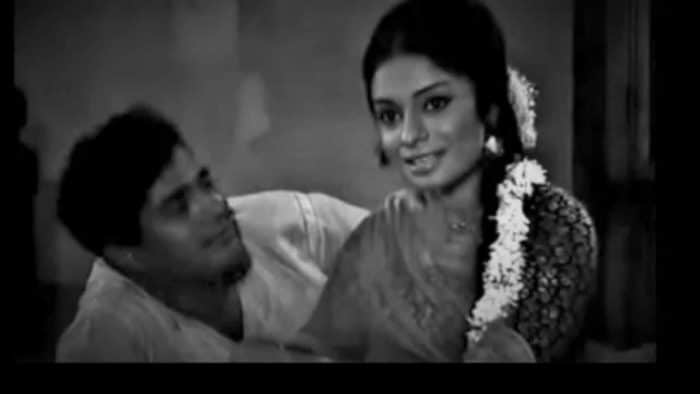
Dastak’s Baiyan na dharo O balma is one of the most memorable songs put together by Majrooh Sultanpuri and Madan Mohan. It starred Sanjeev Kumar and Rehana Sultan.

Madan Mohan also made many memorable songs based on Raagas. One of his most memorable numbers is in Raag Pahadi, Tal Dadra, which was penned by Raja Mehdi Ali Khan: Lag jaa gale ke phir.

This song, as I told you, is in Raag Jhinjhoti, Tal Dadra.

Raag Jhinjhoti, as I told you on the first day itself (Please go through Raaga Based Song Of The Day #1) is a raag named after an apsara. It belongs to Khammaj or Khamaj thaat. Its Jati is Shadhav-Sampoorna (Vakra) (Nishad is Varjya in Aaroh, Nishad is Komal in Avroh. Rest all Shuddha Swaras). It is normally to be sung in the second prahar of the night (9 PM to midnight).

Hindi songs composed in this raag have an element of self-pity about them; eg, Tum mujhe youn bhula na paoge, Badli badli duniya hai meri, Mose chhal kiye jaaye, Chhup gaya koi re door se pukaar ke, Ghungroo ki tarah bajta hi raha hoon main, Jaayun kahan bata ai dil, and Koi hamdam na raha koi sahara na raha.

I have, at various places earlier, told you about the Dadra Tal and hence don’t feel the need to repeat it here (For example, the latest being in Raaga Based Song Of The Day #93).

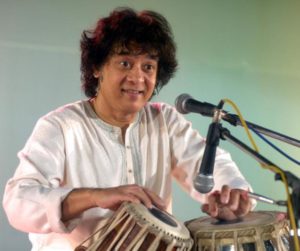
Before we actually take up the song, first, lets take up the value added learning of todayFrom the last fourteen times we started learning about some of the leading personalities in Indian Classical Music or Shastriya Sangeet. The first one that we took up was Ustaad Asad Ali Khan, the finest Rudra Veena player in the country. Then we took up Pandit Hari Parsad Chaurasia, the greatest Bansuri player in the country. Then we talked about Ali Akbar Khan, the greatest Sarod player in the country. Then we took up Pandit Ravi Shankar, the greatest Sitar player in the world. Then we took up the greatest classical singer in the country (of Carnatic tradition): MS Subbulakshmi. Then, we took up the greatest classical singer in the country (of Hindustani tradition): Pandit Bhimsen Joshi. Then, we learnt about the Shehnai maestro Ustad Bismillah Khan. Then, we learnt about Annapurna Devi, a great Surbahar (bass sitar) player of Hindustani Classical Music. Thereafter, we took up Pandit Shiv Kumar Sharma, the grestest Santoor player in the country. Then we learnt a little more about Ustaad Alla Rakha Qureshi or simply Alla Rakha, the Tabla Maestro and father of Ustaad Zakir Hussain. Then we learnt about the master and one of the pioneers of fusion: Anand Shankar. Then we learnt about a Veena player who was also a great filmmaker: Sundaram Balachander. Then we learnt about Sarod Player Ustad Amjad Ali Khan. And then we learnt about Ustaad Zakir Hussain, the Tabla maestro. Finally, we learnt about Sitar Player and Composer Anoushka Shankar.
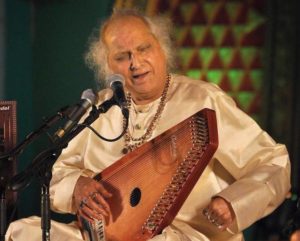
(Pic courtesy: The Hindu)

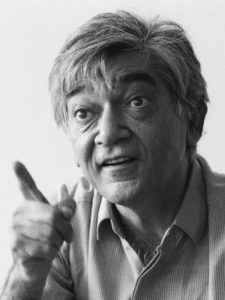
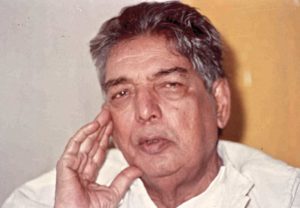
Tonight, we shall take up the great living vocalist: Pandit Jasraj of the Mewati gharana.  He was born on 28 Jan 1930 in Village Pili Mandori in Hisar (now Fatehabad) district of Haryana. His father Motilal was a classical singer. He died when Jasraj was only 4 years old. Jasraj’s elder brother, Pratap Narain, was also an accomplished musician and was the father of music composer duo Jatin-Lalit, of singer-actress Sulakshana Pandit and of actress Vijeta Pandit.

Jasraj was initiated into vocal music by his father, but initially trained as an accompanist, playing the tabla at vocal performances by his brother, the singer Maniram. He credits the vocalist, Begum Akhtar, as inspiring him to take up classical music. Jasraj began training as a vocalist at the age of 15, and performed his first stage concert as a vocalist at the age of 22. Before becoming a stage performer, Jasraj worked as a performing artist on radio for several years.

Pandit Jasraj is a recipient of Padma Bhushan and Padma Vibushan (the third and second highest civilain honours in India). Jasraj has tutored several students who have gone on to perform as classical musicians including Sanjeev Abhyankar, Kala Ramnath,Tripti Mukherjee, Suman Ghosh, Kavita Krishnamurthy, Anuradha Paudwal, Sadhana Sargam, Shankar Mahadevan, and Ramesh Narayan.

Pandit Jasraj is married to Madhura Shantaram, the daughter of film director V Shantaram.

Returning to the song now. For a great song by both Majrooh and Madan Mohan, neither the direction nor cinematography is actually great. Even the acting by the lead actors is average. However, that doesn’t take away from the song superb lyrics, outstanding composition and remarkable singing by both Mohammad Rafi and Lata Mangehskar.

Ladies and gentlemen, please enjoy in Raag Jhinjhoti Tal Dadra, first Mohammad Rafi and Lata (one stanza) and later in the movie Lata sing a composition of Madan Mohan on the lyrics of Majrooh Sultanpuri in the 1969 Raj Khosla movie Chirag starring Sunil Dutt and Asha Parekh: Teri aankhon ke siwa duniya mein rakha kya hai…..

Mohammad Rafi and Lata First:

तेरी आँखों के सिवा दुनिया में रक्खा क्या है
ये उठें सुबह चले, ये झुकें शाम ढले
मेरा जीना मेरा मरना इन्हीं पलकों के तले
तेरी आँखों के सिवा …

Rafi

पलकों की गलियों में चेहरे बहारों के हँसते हुए
हैं मेरे ख़ाबों के क्या-क्या नगर इनमें बसते हुए
ये उठें सुबह चले …

इनमें मेरे आनेवाले ज़माने की तस्वीर है
चाहत के काजल से लिखी हुई मेरी तक़दीर है
ये उठें सुबह चले …

Lata

ये हों कहीं इनका साया मेरे दिल से जाता नहीं
इनके सिवा अब तो कुछ भी नज़र मुझको आता नहीं
ये उठें सुबह चले …

Lata Now: Asha Parekh is blinded and the words have a different meaning. She is looking forward to seeing the world through his eyes. Majrooh has done outstandingly well with the lyrics especially इनके सिवा अब तो कुछ भी नज़र मुझको आता नहीं:

तेरी आँखों के सिवा दुनिया में रक्खा क्या है
ये उठें सुबह चले, ये झुकें शाम ढले
मेरा जीना मेरा मरना इन्हीं पलकों के तले
तेरी आँखों के सिवा …

ये हों कहीं इनका साया मेरे दिल से जाता नहीं
इनके सिवा अब तो कुछ भी नज़र मुझको आता नहीं
ये उठें सुबह चले …

ठोकर जहाँ मैने खाई इन्होंने पुकारा मुझे
ये हमसफ़र हैं तो काफ़ी है इनका सहारा मुझे
ये उठें सुबह चले …

We have intended to learn about Raaga based music whilst we entertain ourselves with Raaga based songs. So, lets, once again, take stock of our collective learning so far:

  1. On the first day we learnt about the Raaga system devised by Pandit Vishnu Narayan Bhatkhande, which is the prevalent system in Hindustani Classical Music and based on ten Thaats.
  2. On the second day we learnt about Tal or Taal.
  3. On the third day we learnt about characteristics of Raagas that included Swar, Jati, Thaat, Arohana and Avarohana, Vadi, Samvadi and Pakad.
  4. On the fourth day, we learnt about Sargam.
  5. On the fifth day, we learnt about notations used in Indian classical music or simply Swar Lipi.
  6. On the sixth day, we learnt about the Ras (sentiments) that Raagas evoke.
  7. On the seventh day, we learnt about various types of Swar: Shuddha, Achal, Vikrut, Komal and Teevra.
  8. On the eighth day, we learnt the parts of a composition in Indian Classical Music.
  9. On the ninth day, we learnt the names of some of the popular instruments used in Indian Classical Music.
  10. On the tenth day, we learnt about the sources of names of Raagas.
  11. On the eleventh day, we learnt about why Bhairavi is the first raag to be taught to beginners and also why it is the last in a performance.
  12. On the twelfth day, we learnt about Khammaj Thaat.
  13. On the thirteenth day, we learnt about Tal Punjabi Theka or Sitarkhani.
  14. On the fourteenth day, we learnt about Alap.
  15. On the fifteenth day, we learnt about List of Raagas (Raagmala) in my favourite book: Sri Guru Granth Sahib.
  16. On the sixteenth day, we learnt about tips for raaga identification.
  17. On the seventeenth day, we learnt the basics of Gharana system.
  18. On the eighteenth day, we learnt about Filmi Sangeet.
  19. On the nineteenth day, we learnt about the commonest Tal in Raagas: Tintal.
  20. On the twentieth day, we learnt about the Kafi Thaat.
  21. On the twenty-first day, we learnt a little more in detail about the classification of Raagas.
  22. On the twenty-second day, we learnt the essential differences between Bhairavi and Bhairav.
  23. On the twenty-third day, we learnt a little more in detail about the Jati or Jaati of a raaga.
  24. On the twenty-fourth day, we learnt details of Thaat Bilawal, the most basic thaat in the Bhatkhande’s system of raagas.
  25. On the twenty-fifth day, we learnt about Tintal.
  26. On the twenty-sixth day, we learnt in detail about the Raaga – Samay linkage.
  27. On the twenty-seventh day, we learnt about Lehar.
  28. On the twenty-eighth day, we learnt about the history of the Hindustani Music.
  29. On the twenty-ninth day, we learnt about Dhrupad.
  30. On the thirtieth day, we learnt about Rupaktal that I was introduced to, a few months back, by my friend Anand Desai.
  31. On the thirty-first day, we learnt about Khayal.
  32. On the thirty-second day, we learnt about Thumri.
  33. On the thirty-third day, we learnt about Tappa.
  34. On the thirty-fourth day, we learnt about Tarana.
  35. On the thirty-fifth day, we learnt about Tal Dipchandi (Moghali).
  36. On the thirty-sixth day, we learnt about Tabla.
  37. On the thirty-seventh day, we learnt about Kirtan.
  38. On the thirty-eighth day, we learnt about Pakhawaj.
  39. On the thirty-ninth day, we learnt about Hori.
  40. On the fortieth day, we learnt about Dadra.
  41. On the forty-first day, we learnt about Kajri.
  42. On the forty-second day, we learnt about Chaiti.
  43. On the forty-third day, we learnt about Sarangi.
  44. On the forty-fourth day, we learnt about Shehnai.
  45. On the forty-fifth day, we learnt about Sarod.
  46. On the forty-sixth day, we learnt about Bansuri.
  47. On the forty-seventh day, we learnt about Ektal and Tanpura.
  48. On the forty-eighth day, we learnt about Veena.
  49. On the forty-ninth day, we repeated our learning of Veena with a small excitement added.
  50. On the fiftieth day, we learnt about Dilruba/Esraj.
  51. On the fifty-first day, we learnt about Jaltarang.
  52. On the fifty-second day we learnt about Qawwali.
  53. On the fifty-third day, we learnt about Sitar.
  54. On the fifty-fourth day, we learnt about Surbahar.
  55. On the fifty-fifth day, we learnt about Harmonium.
  56. On the fifty-sixth day, we learnt about Santoor.
  57. On the fifty-seventh day, we learnt about Swarmandal.
  58. On the fifty-eighth day, we learnt about the Shruti Box.
  59. On the fifty-ninth day, we learnt about Alankar.
  60. On the sixtieth day, we learnt about singing in Aakaar.
  61. On the sixty-first day, we learnt about the Classification of Indian Musical Instruments.
  62. On the sixty-second day, we learnt a little about Carnatic Music.
  63. On the sixty-third day, we learnt about Natya Shastra.
  64. On the sixty-fourth day, we learnt about evolution of musical instruments in India down the ages.
  65. On the sixty-fifth day, we learnt about Riyaaz.
  66. On the sixty-sixth day, we looked at a list of Raagas in Hindustani Classical Music.
  67. On the sixty-seventh day, we learnt about the health benefits of raagas.
  68. On the sixty-eighth day, we learnt a little more comprehensively about the moods and emotions that raagas evoke.
  69. On the sixty-ninth day, we learnt about a mobile application to help identify raagas.
  70. On the seventieth day, we learnt about Melakarta Raagas.
  71. On the seventy-first day, we learnt about Sangita Makarand.
  72. On the seventy-second day, we learnt about TaalMala an Android application for personalized accompaniment of musical instruments during Riyaaz or even during Concert.
  73. On the seventy-third day, we learnt about Indian Classical Ragas, an Android application for mobile phones.
  74. On the seventy-fourth day, we learnt about Saregama Classical, another application for Classical Raagas.
  75. On the seventy-fifth day, we learnt about a free online service available to learn Indian Classical Music.
  76. On the seventy-sixth day, we learnt about List of Hindustani Classical Musical Festivals in India and Abroad.
  77. On the seventy-seventh day, we learnt about List of Carnatic Musical Festivals in India and Abroad.
  78. On the seventy-eighth day, we learnt about Jhaptal.
  79. On the seventy-ninth day, we learnt about Ektal.
  80. On the eightieth day, we learnt about Tivra Tal.
  81. On the eighty-first day, we learnt about the greatest Rudra Veena player ever: Ustaad Asad Ali Khan.
  82. On the eighty-second day, we learnt about the greatest Bansuri player alive: Pandit Hariprasad Chaurasia.
  83. On the eighty-third day, we learnt about the best Sarod player in the country: Ustaad Ali Akbar Khan.
  84. On the eighty-fourth day, we learnt about the greatest Sitar player in the world: Pandit Ravi Shankar.
  85. On the eighty-fifth day, we learnt about the greatest Indian vocalist of Carnatic tradition: MS Subbulakshmi.
  86. On the eighty-sixth day, we not just learnt about the greatest vocalist of Hindustani tradition: Pandit Bhimsen Joshi but also learnt about Tal Hinch.
  87. On the eighty-seventh day, we learnt about the Shehnai maestro Ustaad Bismillah Khan.
  88. On the eighty-eighth day, we learnt about Annapurna Devi, the greatest Surbahar player in India.
  89. On the eighty-ninth day, we learnt about Pandit Shiv Kumar Sharma, the greatest Santoor Player in the country.
  90. On the ninetieth day, we learnt about Ustaad Alla Rakha, the Tabla maestro.
  91. On the ninety-first day, we learnt about Anand Shankar, the great fusion musician from Bengal.
  92. On the ninety-second day, we learnt about Sundaram Balachander, the great Veena player and film-maker.
  93. On the ninety-third day, we learnt about Ustaad Amjad Ali Khan, the great Sarod player.
  94. On the ninety-fourth day, we learnt about the Tabla maestro: Ustaad Zakir Hussain.
  95. On the ninety-fifth day, we learnt about the Sitar player and Composer: Anoushka Shankar.
  96. And today, on the ninety-sixth day, we learnt about the Vocalist Pandit Jasraj.

There is much more still to be learnt and enjoyed.

Please stay tuned!
Raaga Based Song Of The Day #95

Raaga Based Song of the Day:Dil jo na keh saka….
Raag Maru Bihag, Tal Kaherava

We recently had, on my Facebook group on music Yaad Kiya Dil Ne, a Fest on Interludes, Preludes and Codas. I mentioned it there that the songs that were repeated in the movie because of nostalgia – good or bad – had very distinctive preludes and interludes so that just by a few strains the song could be recognised. This is one of those songs penned by Majrooh Sultanpuri and composed by Roshan. Under happier circumstances, in the 1965 Kalidas movie Bheegi Raat, it was sung by Lata Mangeshkar and lip synced by Meena Kumari to Pradeep Kumar. Later, when she is to be married to Ashok Kumar, Pradeep Kumar sings it in the party in the voice of Mohammad Rafi.

I shall be giving you both the versions.

Today is the third time that I give you a song in this raaga. The first time I gave you a song in this raag was on the 37th day: Tum toh pyaar ho sajna (Please see: Raaga Based Song Of The Day #37). Naturally, I give you the best song composed in the raaga first. That song in Kaherava tal was from the 1963 V Shantaram movie Sehra. Next I gave you a song in this raaga and Kaherava Tal as the 45th song: Matwali naar thumak thumak chali jaaye (Please read: Raaga Based Song Of The Day #45). It was from the 1960 Bhappi Sonie movie Ek Phool Chaar Kaante starring Waheeda Rehman and Sunil Dutt. It was penned by Shailendra and composed by Shankar Jaikishan.

We have completed ninety-four days of Raaga Based Songs of the Day. Our first post in the series was titled ‘Raaga Based Song Of The Day #1’ and the song was a Mohammad Rafi and Lata Mangeshkar song from the 1970 Shakti Samanta movie Pagla Kahin Ka: Tum mujhe youn bhula na paoge.  It is in Raag Jhinjhoti, Tal Kaherava.

Our ninety-fourth post or the last post here was titled Raaga Based Song Of The Day #94 and the song was a Lata Mangeshkar song from the 1962 Mohan Kumar movie Anpadh starring Mala Sinha and Dharmendra: Aap ki nazaron ne samajha. It is in Raag Adana, Tal Rupaktal.

This blog has a number of posts on Raaga based songs in Hindi movies titled similarly; for example: The Best Raaga Based Songs in Hindi Movies – Raaga Bhimpalasi – Part II.

In the last ninety-four days of sharing Raaga based songs of the day, I have given you songs based on Raag Jhinjhoti, Gara, Bhimpalasi, Madhuvanti, Shivaranjani, Bihag, Pahadi, Sarang, Pilu, Bhairavi, Khammaj, Charukesi, Kalyan or Yaman, Desh, Malgunji, Kirwani, Kedar, Bageshri, Megh Malhar, Bhupali, Ahir Bhairav, Malkaush, Mand, Adana, Kafi, Rageshri, Jaunpuri, Tilang, Janasammohini, Chayanat, Shuddha Kalyan, Gaur Sarang, Jogiya, Asavari, Maru Bihag, Durga, Lalit, Puria Dhanashri, Bhinna Sahdja, Sohani, Multani, Patdeep, Jaijaiwanti, Tilak Kamod, Hemant, Basant Mukhari, Gujri Todi, Kalavati, Hamir, Bhatiyar, Gawati, Shyam Kalyan, Gorakh Kalyan, Madhamat Sarang, Manj Khammaj, Darbari Kanada, Vibhas, Shankara, Bahar, Nand and Mian Ki Malhar; making it a total of 61 raagas. The raagas that have been repeated so far are Pahadi, the raaga of my home place in the Himalayas, Maru Bihag, Raag Kirwani, Jhinjhoti, Bhairavi, Gara, Basant Mukhari, Malkauns, Bhairavi, Mand, Sohani, Madhuvanti, Shivaranjani and Adana. Today, I am repeating Raag Maru Bihag for the third time.

(Poster courtesy: HindiMovies.to)

Today’s song is from the 1965 Kalidas movie Bheegi Raat starring Ashok Kumar, Meena Kumari and Pradeep Kumar.  Lets understand the story-line to see where the two versions of the song fit in the movie. Pradeep Kumar as Ajay is a painting artiste, living a wealthy lifestyle along with his Bombay-based father Dwarkanath (Ulhas). His father wants him to marry Vinita (Shashikala). Ajay not only refuses but also insults her and she swears to avenge this humiliation. He then re-locates to Nainital, rents a cottage from Colonel Bhim Singh, meets with his neighbor’s Governess, Neelima (Meena Kumari), and both fall in love. Neither are aware that Neelima’s employer, Pushpa, would prefer that she marry her London-based widower Civil Engineer brother, Anand (Ashok Kumar), so that she could look after his child, Munni (Baby Irani). After a dramatic and life-threatening hunt, Ajay asks Neelima to be present at their engagement – not knowing that she will not only not show up but also subsequently announce that she is going to marry Anand.

The first time the song is sung is on that Bheegi Raat when Neelima and Ajay have taken shelter at a place and lit a fire. She sings it to him. The second time, he sings at the party wherein she announces the engagement with Anand. Please have a look at the expressions of Shashikala for having taken revenge.

The lyricist of the song was Majrooh Sultanpuri and the composer was Roshan.  On my Facebook page Lyrical I have, in the last few months, put up over a hundred of my favourite songs penned by Majrooh Sultanpuri.

Majrooh Sultanpuri was born on 01 Oct 1919 as Asrar ul Hassan Khan in a Tarin Pashtun family, in Sultanpur, Uttar Pradesh. His father was an officer in the police department, but, preferred to send his son for traditional madrasa (Urdu school) rather than provide him with English schooling.

He tried his hand at being a quack until he was noticed in a mushaira in Sultanpur.

He was a disciple of the great Urdu poet Jigar Moradabadi. When he visited Bombay in 1945 to participate in a mushaira, the director Abdul Rashid Kardar noticed him and invited him to write for the movies. Majrooh turned it down as he looked down upon movies. He was persuaded through his mentor Jigar Moradabadi and then there was no turning back.

Many traditionalists of the Urdu literature, however, felt that Majrooh sold his soul to the Hindi films and that he could have emerged a great poet in the likeness of Ghalib and Jigar.

The takhalus Majrooh means “injured” or “wounded”.

Majrooh was awarded, in 1993, the highest award – Dadasaheb Phalke award – for his lifetime contribution towards lyrics and poetry. He was the first lyricist ever to be given that award. For the film Dosti, that made Laxmikant Pyarelal famous, he was awarded the Filmfare Best Lyricist Award for the song: Chahunga main tujhe saanjh savere.

For someone who didn’t want to join Hindi movies, Majrooh emerged as a natural lyricist, very popular, very romantic and one who kept pace with the changing times.

Roshanlal Nagrath was born on 14 Jul 1917 in Gujranwala, Punjab, now in Pakistan. He began music lessons at a young age and later attended Marris College (now Bhatkhande Music Institute) in Lucknow under the training of Pt. S N Ratanjankar (principal of the institute). In the early 1940s, Khawaja Khurshid Anwar, programme producer/music, AIR Delhi, hired Roshan as staff artist for Esraj, the instrument he used to play. Some of you would recall that I covered Esraj or Dilruba on the 50th day and told you that it was an instrument created by the tenth Guru of the Sikhs: Sri Guru Gobind Singh ji (Please read: Raaga Based Song Of The Day #50).

In 1948, Roshan came to Mumbai to find work as a Hindi film music director and became assistant of music composer Khawaja Khurshid Anwar in the film Singaar. He struggled until meeting Kidar Sharma, who gave him the job of composing for his film Neki aur Badi (1949). While it was a flop, Roshan emerged as a player on the Hindi film music scene with Baawre Nain, released the following year. The movie had two really beautiful songs: Khyalon mein kisi ke and Teri duniya mein dil lagta nahin.

Majrooh and Roshan worked together in five movies: Chandni Chowk (1954), Aarti (1962), Bheegi Raat (1965), Mamta (1966), and Daadi Maa (1966).

Amongst their memorable songs are: Hamen aye dil kahin le chal (Chandni Chowk); Aapne yaad dilaya, Ab kya misaal doon, Baar baar tohe kya samjhatye, Bane ho ek khaak se, Kabhi to milegi, and Tere bin laage na jiya (all from Aarti, 1962); Dil jo na keh saka, Aise to na dekho kahin behak jaayen ham, and Mohabbat se dekha khafa ho gaye hain (Bheegi Raat, 1965); Chhupa lo youn dil mein pyar mera, Rahen na rahen ham, Rehte the kabhi, and In baharon mein (Mamta, 1966); Usko nahin dekha hamne kabhi, and Jaata hoon main mujhe ab na bulaana (Daadi Maa, 1966).

The same pair (as in the present song) of Pradeep Kumar and Meena Kumari enacting the 1962 movie Aarti song: Aap ne yaad dilaya. Aarti was the best movie that Majrooh and Roshan worked together on.

Roshan has made many memorable songs based on Raagas. One of his most memorable numbers is in Raag Kalyan, Tal Kaherava, which was penned by Sahir Ludhianvi: Zindagi bhar nahin bhoolegi wo barsaat ki raat.

This song, as I told you, is in Raag Maru Bihag, Tal Kaherava.

Maru Bihag, as I already told you on the 37th day (Please go through ‘Raaga Based Song Of The Day #37’) is a very melodious raaga that belongs to the Kalyan Thaat. It is to be sung during the second prahar of the night: from 9 PM to midnight. Its Jati is Audhav-Sampoorna. Maru Bihag is a variation of Raag Bihag in which I gave you the song Tere sur aur mere geet from Goonj Uthi Shehnai that had Shehnai-vaadan by Ustaad Bismillah Khan. In the Sri Guru Granth Sahib, Raag Bihagara occurs on 20 pages from 537 to 557 and is similar to its modern version: Raag Bihag.

Some of the other songs composed in Raag Maru Bihag are: Tum to pyar ho sajna (Tal Kaherava), Dil jo na keh saka(Tal Kaherava), Payal wali dekhana (Tal Kaherava) and Radha jaaye na (Tal Dadra).

I have, at various places earlier, told you about the commonest Tal in raagas: Kaherava and I know that by now you know enough about it.

Before we actually take up the song, first, lets take up the value added learning of todayFrom the last thirteen times we started learning about some of the leading personalities in Indian Classical Music or Shastriya Sangeet. The first one that we took up was Ustaad Asad Ali Khan, the finest Rudra Veena player in the country. Then we took up Pandit Hari Parsad Chaurasia, the greatest Bansuri player in the country. Then we talked about Ali Akbar Khan, the greatest Sarod player in the country. Then we took up Pandit Ravi Shankar, the greatest Sitar player in the world. Then we took up the greatest classical singer in the country (of Carnatic tradition): MS Subbulakshmi. Then, we took up the greatest classical singer in the country (of Hindustani tradition): Pandit Bhimsen Joshi. Then, we learnt about the Shehnai maestro Ustad Bismillah Khan. Then, we learnt about Annapurna Devi, a great Surbahar (bass sitar) player of Hindustani Classical Music. Thereafter, we took up Pandit Shiv Kumar Sharma, the grestest Santoor player in the country. Then we learnt a little more about Ustaad Alla Rakha Qureshi or simply Alla Rakha, the Tabla Maestro and father of Ustaad Zakir Hussain. Then we learnt about the master and one of the pioneers of fusion: Anand Shankar. Then we learnt about a Veena player who was also a great filmmaker: Sundaram Balachander. And then we learnt about Sarod Player Ustad Amjad Ali Khan. Finally, we learnt about Ustaad Zakir Hussain, the Tabla maestro.

(Pic courtesy: Wikipedia)

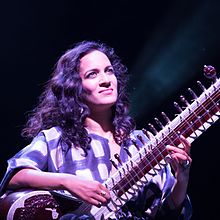
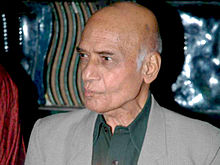
Tonight, we shall take up the Sitar Player and Composer Anoushka Shankar.  She is the daughter of Sitar maestro Pandit Ravi Shankar and Sukanya Shankar. She is the half-sister of Singer, Song-writer and Pianist Norah Jones who was born to Pandit Ravi Shankar and American Concert Producer Sue Jones.

Anoushka, a London born, started training on Sitar with her father when she was only seven years old. At the age of ten, she started accompanying him for his performances on stage by playing tanpura. Anoushka gave her first public sitar performance on 27 February 1995 at the age of 13, at Siri Fort in New Delhi as part of her father’s 75th birthday celebration concert. For this solo debut, she was accompanied by tabla maestro Zakir Hussain.

She released her first album, Anoushka, in 1998, followed by Anourag in 2000. In 1999 Anoushka graduated from high school with honors, but decided against university in favour of beginning to tour as a solo artist. Both Anoushka and her half-sister Norah Jones were nominated for Grammy awards in 2003 when Anoushka became the youngest-ever and first woman nominee in the World Music category for her third album, Live at Carnegie Hall. Since then, she has been nominated for Grammy awards five more times, the last time being in 2016.

Ladies and gentlemen, please enjoy in Raag Maru Bihag Tal Kaherava, first Lata Mangeshkar and then Mohammad Rafi sing a composition of Roshan on the lyrics of Majrooh Sultanpuri in the 1965 Kalidas movie Bheegi Raat starring Pradeep Kumar and Meena Kumari: Dil jo na keh saka…..

Lata First:

दिल जो ना कह सका
वही राज-ए-दिल, कहने की रात आई

नग्मा सा कोई जाग उठा बदन में
झनकार की सी थरथरी है तन में
प्यार की इन्हीं धड़कती फ़िज़ाओं में
रहने की रात आई…

अब तक दबी थी एक मौज-ए-अरमां
लब तक जो आई, बन गई हैं तूफां
बात प्यार की बहकती निगाहों से
कहने की रात आई…

गुज़रे ना ये शब, खोल दूँ ये जुल्फें
तुम को छुपा लूँ, मूँद के ये पलकें
बेक़रार सी लरज़ती सी छाँव में
रहने की रात आई…

https://www.youtube.com/watch?v=9WrSdaDI51g

Rafi Now:

दिल जो ना कह सका
वोही राज़-ए-दिल कहने की रात आई
दिल जो ना कह सका

तौबा ये किस ने अंजुमन सजा के
टुकड़े किये हैं गुंच-ए-वफ़ा के – २
उछालो गुलों के टुकड़े
के रंगीं फ़िज़ाओं में रहने की रात आई
दिल जो ना कह सका

चलिये मुबारक ये जश्न दोस्ती का
दामन तो थामा आप ने किसी का – २
हमें तो खुशी यही है
तुम्हें भी किसी को अपना कहने की रात आई
दिल जो ना कह सका

सागर उठाओ दिल का किस को ग़म है
आज दिल की क़ीमत जाम से भी कम है – २
पियो चाहे खून-ए-दिल हो
के पीते पिलाते ही रहने की रात आई
दिल जो ना कह सका

https://www.youtube.com/watch?v=7ANtZ53ygIY

We have intended to learn about Raaga based music whilst we entertain ourselves with Raaga based songs. So, lets, once again, take stock of our collective learning so far:

  1. On the first day we learnt about the Raaga system devised by Pandit Vishnu Narayan Bhatkhande, which is the prevalent system in Hindustani Classical Music and based on ten Thaats.
  2. On the second day we learnt about Tal or Taal.
  3. On the third day we learnt about characteristics of Raagas that included Swar, Jati, Thaat, Arohana and Avarohana, Vadi, Samvadi and Pakad.
  4. On the fourth day, we learnt about Sargam.
  5. On the fifth day, we learnt about notations used in Indian classical music or simply Swar Lipi.
  6. On the sixth day, we learnt about the Ras (sentiments) that Raagas evoke.
  7. On the seventh day, we learnt about various types of Swar: Shuddha, Achal, Vikrut, Komal and Teevra.
  8. On the eighth day, we learnt the parts of a composition in Indian Classical Music.
  9. On the ninth day, we learnt the names of some of the popular instruments used in Indian Classical Music.
  10. On the tenth day, we learnt about the sources of names of Raagas.
  11. On the eleventh day, we learnt about why Bhairavi is the first raag to be taught to beginners and also why it is the last in a performance.
  12. On the twelfth day, we learnt about Khammaj Thaat.
  13. On the thirteenth day, we learnt about Tal Punjabi Theka or Sitarkhani.
  14. On the fourteenth day, we learnt about Alap.
  15. On the fifteenth day, we learnt about List of Raagas (Raagmala) in my favourite book: Sri Guru Granth Sahib.
  16. On the sixteenth day, we learnt about tips for raaga identification.
  17. On the seventeenth day, we learnt the basics of Gharana system.
  18. On the eighteenth day, we learnt about Filmi Sangeet.
  19. On the nineteenth day, we learnt about the commonest Tal in Raagas: Tintal.
  20. On the twentieth day, we learnt about the Kafi Thaat.
  21. On the twenty-first day, we learnt a little more in detail about the classification of Raagas.
  22. On the twenty-second day, we learnt the essential differences between Bhairavi and Bhairav.
  23. On the twenty-third day, we learnt a little more in detail about the Jati or Jaati of a raaga.
  24. On the twenty-fourth day, we learnt details of Thaat Bilawal, the most basic thaat in the Bhatkhande’s system of raagas.
  25. On the twenty-fifth day, we learnt about Tintal.
  26. On the twenty-sixth day, we learnt in detail about the Raaga – Samay linkage.
  27. On the twenty-seventh day, we learnt about Lehar.
  28. On the twenty-eighth day, we learnt about the history of the Hindustani Music.
  29. On the twenty-ninth day, we learnt about Dhrupad.
  30. On the thirtieth day, we learnt about Rupaktal that I was introduced to, a few months back, by my friend Anand Desai.
  31. On the thirty-first day, we learnt about Khayal.
  32. On the thirty-second day, we learnt about Thumri.
  33. On the thirty-third day, we learnt about Tappa.
  34. On the thirty-fourth day, we learnt about Tarana.
  35. On the thirty-fifth day, we learnt about Tal Dipchandi (Moghali).
  36. On the thirty-sixth day, we learnt about Tabla.
  37. On the thirty-seventh day, we learnt about Kirtan.
  38. On the thirty-eighth day, we learnt about Pakhawaj.
  39. On the thirty-ninth day, we learnt about Hori.
  40. On the fortieth day, we learnt about Dadra.
  41. On the forty-first day, we learnt about Kajri.
  42. On the forty-second day, we learnt about Chaiti.
  43. On the forty-third day, we learnt about Sarangi.
  44. On the forty-fourth day, we learnt about Shehnai.
  45. On the forty-fifth day, we learnt about Sarod.
  46. On the forty-sixth day, we learnt about Bansuri.
  47. On the forty-seventh day, we learnt about Ektal and Tanpura.
  48. On the forty-eighth day, we learnt about Veena.
  49. On the forty-ninth day, we repeated our learning of Veena with a small excitement added.
  50. On the fiftieth day, we learnt about Dilruba/Esraj.
  51. On the fifty-first day, we learnt about Jaltarang.
  52. On the fifty-second day we learnt about Qawwali.
  53. On the fifty-third day, we learnt about Sitar.
  54. On the fifty-fourth day, we learnt about Surbahar.
  55. On the fifty-fifth day, we learnt about Harmonium.
  56. On the fifty-sixth day, we learnt about Santoor.
  57. On the fifty-seventh day, we learnt about Swarmandal.
  58. On the fifty-eighth day, we learnt about the Shruti Box.
  59. On the fifty-ninth day, we learnt about Alankar.
  60. On the sixtieth day, we learnt about singing in Aakaar.
  61. On the sixty-first day, we learnt about the Classification of Indian Musical Instruments.
  62. On the sixty-second day, we learnt a little about Carnatic Music.
  63. On the sixty-third day, we learnt about Natya Shastra.
  64. On the sixty-fourth day, we learnt about evolution of musical instruments in India down the ages.
  65. On the sixty-fifth day, we learnt about Riyaaz.
  66. On the sixty-sixth day, we looked at a list of Raagas in Hindustani Classical Music.
  67. On the sixty-seventh day, we learnt about the health benefits of raagas.
  68. On the sixty-eighth day, we learnt a little more comprehensively about the moods and emotions that raagas evoke.
  69. On the sixty-ninth day, we learnt about a mobile application to help identify raagas.
  70. On the seventieth day, we learnt about Melakarta Raagas.
  71. On the seventy-first day, we learnt about Sangita Makarand.
  72. On the seventy-second day, we learnt about TaalMala an Android application for personalized accompaniment of musical instruments during Riyaaz or even during Concert.
  73. On the seventy-third day, we learnt about Indian Classical Ragas, an Android application for mobile phones.
  74. On the seventy-fourth day, we learnt about Saregama Classical, another application for Classical Raagas.
  75. On the seventy-fifth day, we learnt about a free online service available to learn Indian Classical Music.
  76. On the seventy-sixth day, we learnt about List of Hindustani Classical Musical Festivals in India and Abroad.
  77. On the seventy-seventh day, we learnt about List of Carnatic Musical Festivals in India and Abroad.
  78. On the seventy-eighth day, we learnt about Jhaptal.
  79. On the seventy-ninth day, we learnt about Ektal.
  80. On the eightieth day, we learnt about Tivra Tal.
  81. On the eighty-first day, we learnt about the greatest Rudra Veena player ever: Ustaad Asad Ali Khan.
  82. On the eighty-second day, we learnt about the greatest Bansuri player alive: Pandit Hariprasad Chaurasia.
  83. On the eighty-third day, we learnt about the best Sarod player in the country: Ustaad Ali Akbar Khan.
  84. On the eighty-fourth day, we learnt about the greatest Sitar player in the world: Pandit Ravi Shankar.
  85. On the eighty-fifth day, we learnt about the greatest Indian vocalist of Carnatic tradition: MS Subbulakshmi.
  86. On the eighty-sixth day, we not just learnt about the greatest vocalist of Hindustani tradition: Pandit Bhimsen Joshi but also learnt about Tal Hinch.
  87. On the eighty-seventh day, we learnt about the Shehnai maestro Ustaad Bismillah Khan.
  88. On the eighty-eighth day, we learnt about Annapurna Devi, the greatest Surbahar player in India.
  89. On the eighty-ninth day, we learnt about Pandit Shiv Kumar Sharma, the greatest Santoor Player in the country.
  90. On the ninetieth day, we learnt about Ustaad Alla Rakha, the Tabla maestro.
  91. On the ninety-first day, we learnt about Anand Shankar, the great fusion musician from Bengal.
  92. On the ninety-second day, we learnt about Sundaram Balachander, the great Veena player and film-maker.
  93. On the ninety-third day, we learnt about Ustaad Amjad Ali Khan, the great Sarod player.
  94. On the ninety-fourth day, we learnt about the Tabla maestro: Ustaad Zakir Hussain.
  95. And today, on the ninety-fifth day, we learnt about the Sitar player and Composer: Anoushka Shankar.

There is much more still to be learnt and enjoyed.

Please stay tuned!
Raaga Based Song Of The Day #94

Raaga Based Song of the Day: Aap ki nazaron ne samjha….
Raag Adana, Tal Rupaktal

As soon as you look at the post, the first thing that occurs to you is as to why this song now as 94th song and not much earlier. I hasten to add that the songs here have not been given as per any ranking or order. If I give you all the good songs first, won’t it become rather monotonous?

Today is the third time that I give you a song in this raaga. The first time I gave you a song in this raag was on the 25th day: Manmohan mein ho tumhi (Please see: Raaga Based Song Of The Day #25). Naturally, I give you the best song composed in the raaga first. That song in Tintal was from the 1964 Atma Ram movie Kaise Kahoon. Next I gave you a song in this raaga and Kaherava Tal as the 59th song: Ai dil mujhe aisi jagah le chal (Please read: Raaga Based Song Of The Day #59). It was from the 1950 movie Arzoo starring Dilip Kumar and Kamini Kaushal. It was penned by Majrooh Sultanpuri and composed by Anil Biswas.

We have completed ninety-three days of Raaga Based Songs of the Day. Our first post in the series was titled ‘Raaga Based Song Of The Day #1’ and the song was a Mohammad Rafi and Lata Mangeshkar song from the 1970 Shakti Samanta movie Pagla Kahin Ka: Tum mujhe youn bhula na paoge.  It is in Raag Jhinjhoti, Tal Kaherava.

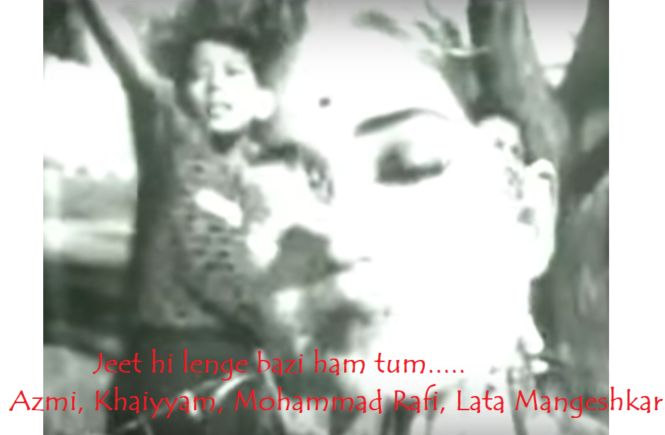
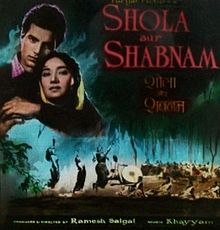
Our ninety-third post or the last post here was titled Raaga Based Song Of The Day #93 and the song was a Mohammad Rafi and Lata Mangeshkar song from the 1961 Ramesh Saigal movie Shola Aur Shabnam starring Dharmendra and Tarla Mehta: Jeet hi lenge baazi ham tum. It is in Raag Bhairavi, Tal Dadra.

This blog has a number of posts on Raaga based songs in Hindi movies titled similarly; for example: The Best Raaga Based Songs in Hindi Movies – Raaga Bhimpalasi – Part I.

In the last ninety-three days of sharing Raaga based songs of the day, I have given you songs based on Raag Jhinjhoti, Gara, Bhimpalasi, Madhuvanti, Shivaranjani, Bihag, Pahadi, Sarang, Pilu, Bhairavi, Khammaj, Charukesi, Kalyan or Yaman, Desh, Malgunji, Kirwani, Kedar, Bageshri, Megh Malhar, Bhupali, Ahir Bhairav, Malkaush, Mand, Adana, Kafi, Rageshri, Jaunpuri, Tilang, Janasammohini, Chayanat, Shuddha Kalyan, Gaur Sarang, Jogiya, Asavari, Maru Bihag, Durga, Lalit, Puria Dhanashri, Bhinna Sahdja, Sohani, Multani, Patdeep, Jaijaiwanti, Tilak Kamod, Hemant, Basant Mukhari, Gujri Todi, Kalavati, Hamir, Bhatiyar, Gawati, Shyam Kalyan, Gorakh Kalyan, Madhamat Sarang, Manj Khammaj, Darbari Kanada, Vibhas, Shankara, Bahar, Nand and Mian Ki Malhar; making it a total of 61 raagas. The raagas that have been repeated so far are Pahadi, the raaga of my home place in the Himalayas, Maru Bihag, Raag Kirwani, Jhinjhoti, Bhairavi, Gara, Basant Mukhari, Malkauns, Bhairavi, Mand, Sohani, Madhuvanti and Shivaranjani. Today, I am repeating Raag Adana for the third time.

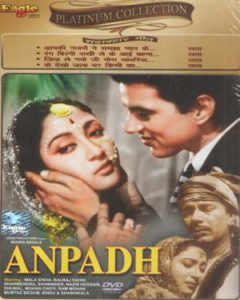
(Poster courtesy: Myantakashri)

Today’s song is from the 1962 Mohan Kumar movie Anpadh starring Mala Sinha in the title role because her brother Balraj Sahni believed that women had no requirement to be educated since their job was to get married, love and look after their husbands. Dharmendra as her husband happened to be from a well-read family and hence Mala Sinha faced tremendous problems in the new home. She sang this song to her husband when finally he accepted her despite her being illiterate. As the movie progressed, her problems were not over because of this.

Having missed watching it when I was small, this too is amongst the hundred movies or so that I watched on the net, fascinated by its songs:

“Hai Isi Me Pyar Ki Aabru” Lata Mangeshkar Raja Mehdi Ali Khan Madan Mohan
“Jiya Le Gayo Ji Mora Sanwariya” Lata Mangeshkar Raja Mehdi Ali Khan Madan Mohan
“Vo Dekho Jalaa Ghar Kisi Kaa” Lata Mangeshkar Raja Mehdi Ali Khan Madan Mohan
“Rang Birangi Rakhi Leke Aayi Bahana” Lata Mangeshkar Raja Mehdi Ali Khan Madan Mohan
“Sikandar Ne Poras Se Ki Thi Ladai” Mahendra Kapoor Raja Mehdi Ali Khan Madan Mohan
“Dulhan Marwad Ki Aaaee Chham Chham” Mohammad Rafi & Asha Bhosle Raja Mehdi Ali Khan Madan Mohan
“Aap Ki Nazron Ne Samjha” Lata Mangeshkar Raja Mehdi Ali Khan Madan Mohan

In the second half, as was the case with most movies of that era, the movie dragged and the end actually came as a relief. Yet, one can enjoy the songs.

Raja Mehdi Ali Khan (L) with Music Director Madan Mohan

The lyricist of the song was Raja Mehdi Ali Khan. I have two blog posts on him: The Magic of the Lyrics Of Raja Mehdi Ali Khan‘ and ‘Raja Mehdi Ali Khan’s Humorous Poem: Adib Ki Mehbooba. At the partition of India, he refused to go to Pakistan, stayed in India and wrote songs, especially with Music Director Madan Mohan, that became very popular and memorable.

I have quite a few of my favourite songs penned by him and composed by Madan Mohan. These are: Aakhri geet muhabbat ka suna loon to chalun, Aapko pyar chhupane ki buri aadat hai (Neela Akaash, 1965), Aapke pehlu mein aake ro diye, Jhumka gira re, Nainon mein badra chhaye, Nainon wali ne haay mera dil loota, Tu jahan jahan chalega (Mera Saya, 1966), Agar mujhase mohabbat hai, Main nigahen tere chehre se, Yehi hai tamanna tere ghar ke saamne (Aapki Parchhayiyan, 1964), Chhod kar tere pyaar ka daman, Jo hamne dastaan apni sunaayi, Lag ja gale ki phir, Naina barse rimjhim rimjhim, Shokh nazar ki bijliyan (Woh Kaun Thi, 1964), Ik haseen raat ko, Maine rang di aaj chunariya, Sapnon mein agar mere tum aao to so jaayun (Dulhan Ek Raat Ki, 1966), Jiya le gayo ji mora sanwariya, Vo dekho jala ghar kisi ka (Anpadh, 1962), and Meri yaad mein tum na aansu bahana (Madhosh, 1951).

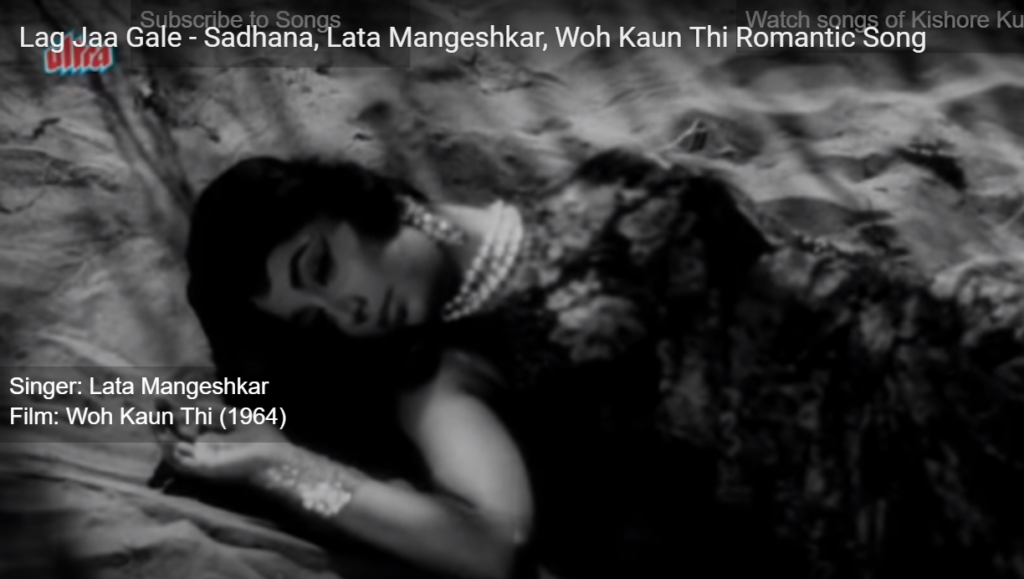
Sadhana enacting the most popular song of Raja Mehdi Ali Khan and Madan Mohan: Lag ha gale.

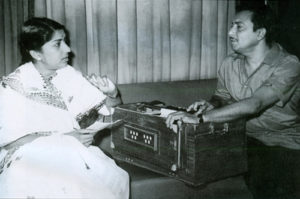
The Music Director Madan Mohan had a special relationship not only with Raja Mehdi Ali Khan but also with the singer Lata Mangeshkar. Some of the greatest songs of Lata Mangeshkar have been composed by him. Other than Raja Mehdi Ali Khan, many of these have been penned by Rajinder Krishan. Their Adalat songs made waves: Unako ye shikayat hai ke ham kuchh nahin kehte, Youn hasraton ke daag, and Jaana tha hamse door.

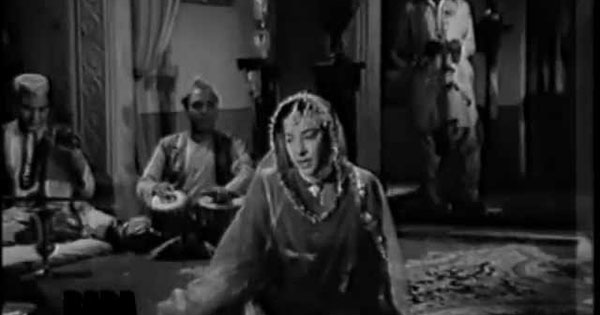
Nargis enacting one of the best songs of Madan Mohan, Lata Mangeshakr and Rajinder Krishan: Youn hasraton ke daag.

When it came to composing songs based on raagas, Madan Mohan was amongst the best. He composed this song: Aapki nazaron ne samajha pyar ke kaabil mujhe in Raag Adana. Tal Rupaktal.

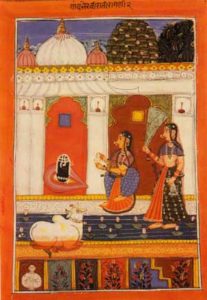
Raag Adana belongs to Asavari Thaat. Raag Adana resembles Raag Darbari Kanada, with the difference that Gandhar is forbidden in Aaroh in Adana. This Raag is rendered mostly in Madhya and Tar Saptaks unlike Raag Darbari Kanada, which is more deep and hence is rendered in Madhya and Mandra Saptaks (Octaves). In this Raag, Komal Gandhar and Komal Dhaivat should not be repeated (oscillated) otherwise Raag Darbari Kanada makes its appearance. Like Darbari Kanada, this Raag does not employ Meend and Gamak, as this is a flittering dynamic type melodic form. Its Jati (and by now you understand this completely) is Shadhav-Smapurna Vakra. It is normally to be sung during the second prahar of the night, that is, between 9 PM and midnight. Adana was a major raga in the 17th century and a combination of the then current ragas Malhar and Kanada. In a ragamala painting from Mewar it is depicted as an ascetic man sitting on a tiger skin, however, Somanatha describes him as Kama the god of love. His Adana was quite different from the raga as it is performed today.

Some of the songs composed in this raaga are:

1.
2.
3.
4.
5.
6.
7.
8.
9.
10.
11.
12.
13.
Jhanak Jhanak Payal
Jaa Main Tose
Manmohan Man Mein
Lapak Jhapak Tu
Mukh Se Na Boloon
Ghar Aaja Meray
Jab Ishaq Kahin Ho Jaata Hai
Saanware Mat Ja
Tumhe Jo bhi
Cham Cham Baje Re
Dil Ka Fasaana
Aap ki nzaron ne samajha
Radhike tune bansuri
Jhanak Jhanak Payal Bajay
Sautela Bhai
Kaisay Kahoon
Boot Polish
Jalianwala Bagh
Garam Coat
Aarzoo

Majboor
Jaane-Anjaane

Anpadh
Beti Bete
Ustaad Amir Khan & Chorus
Lata Mangeshkar
Rafi, Suman, S. D. Batish
Manna Dey & Chorus
Lata Mangeshkar, Talat
Lata Mangeshkar
Asha Bhosle, Mubarak Begum
Lata Mangeshkar
Hemant Kumar
Manna Dey
Manna Dey
Lata
Rafi

Lets now re-learn about Rupaktal since we haven’t done this for quite some time:

Do you remember when we took up Dhrupad (Please read:Raaga Based Song Of The Day #29‘)? That’s one style of singing that doesn’t use Rupaktal. However, Rupaktal is otherwise such a common tal that it is to be found in almost all styles of singing in Hindustani Music including Khayal.

Rupaktal distinguishes itself from the other Tals in that the first beat (Sam) is Khali (Wave and not Clap or Taali). The total number of beats (matra) are seven. It is represented by:

wave, 2, 3, clap, 2, clap, 2

that is, unlike the symmetric Tintal, the vibhags (three of them) are not of equal length.

and the Theka is:

Theka for Rupak Tal

At this juncture, since we are re-starting after a long time, please do recall that I had given you an introduction to Tal (musical measure) on the second day itself. Some of you would recall that I had mentioned that Tal, Taal or Tala is a word that is variation of the word Taali (Clap). Before the advent of Tabla, the standard method of keeping the musical measure was with the clapping or tapping of one’s hand on the arm or thigh. Indeed, now that we have Tabla, this beat is still maintained by clapping and waving of hands. If you recall, I had also mentioned that whilst the Raaga sets the mood, time of day and season of a composition, Tal constitutes the time-cycle. Therefore, a Raaga and Tal go hand in hand. On the 14th Raaga Based Song of the Day, was the only occasion when we didn’t have a Raaga (Kalyan) accompanied by a Tal since the entire composition of Lagata nahin hai dil mera was in Alaap.

The rhythmic hand gestures used to denote Tal are called Kriyas. If you recall, I laid emphasis on something called Vibhag or sections or angas or parts of a Tal. In Hindustani music, the first beat of a Vibhag is Tali (Clap), whilst the empty beat (Khali) is indicated is indicated by the sideways wave of the dominant clapping hand. And thus, you would recall, I represented the Tal for you with Claps and Waves.

We had also learnt that a Tal doesn’t have a fixed tempo or laya. Hence, we had learnt three different tempos: Vilambit (delayed or slow), Madhya (medium) and Drut (fast).

Before we actually take up the song, first, lets take up the value added learning of todayFrom the last twelve times we started learning about some of the leading personalities in Indian Classical Music or Shastriya Sangeet. The first one that we took up was Ustaad Asad Ali Khan, the finest Rudra Veena player in the country. Then we took up Pandit Hari Parsad Chaurasia, the greatest Bansuri player in the country. Then we talked about Ali Akbar Khan, the greatest Sarod player in the country. Then we took up Pandit Ravi Shankar, the greatest Sitar player in the world. Then we took up the greatest classical singer in the country (of Carnatic tradition): MS Subbulakshmi. Then, we took up the greatest classical singer in the country (of Hindustani tradition): Pandit Bhimsen Joshi. Then, we learnt about the Shehnai maestro Ustad Bismillah Khan. Then, we learnt about Annapurna Devi, a great Surbahar (bass sitar) player of Hindustani Classical Music. Thereafter, we took up Pandit Shiv Kumar Sharma, the grestest Santoor player in the country. Then we learnt a little more about Ustaad Alla Rakha Qureshi or simply Alla Rakha, the Tabla Maestro and father of Ustaad Zakir Hussain. Then we learnt about the master and one of the pioneers of fusion: Anand Shankar. Then we learnt about a Veena player who was also a great filmmaker: Sundaram Balachander. And finally we learnt about Sarod Player Ustad Amjad Ali Khan.

(Pic courtesy: surdemy.com)

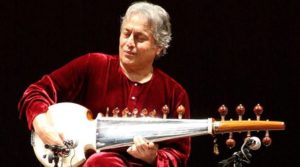
Tonight, we shall take up the Tabla Maestro Ustad Zakir Hussain, son of another great Tabla Maestro: Alla Rakha who we had taken up earlier. He was awarded the Padma Shri in 1988, and the Padma Bhushan in 2002, by the Government of India. He was also awarded the Sangeet Natak Akademi Award in 1990, given by the Sangeet Natak Academy, India’s National Academy of Music, Dance & Drama. In 1999, he was awarded the United States National Endowment for the Arts’ National Heritage Fellowship, the highest award given to traditional artists and musicians. He has won two Grammy awards.

Zakir Hussain was a recognised musician from St.Xavier’s College. Mumnbai whereat I used to go and attend Indian Classical Music performances when my brother was studying there.

From a young age, Zakir has been accompanying all the leading lights of Hindustani classical music, both vocal and instrumental – from Pandit Ravi Shankar, Ustad Vilayat Khan, Ustad Ali Akbar Khan, Pandit Hari Prasad Chaurasia, Pandit Shiv Kumar Sharma, Pandit VG Jog, Pandit Bhimsen Joshi, Pandit Jasraj, and many more.

In addition to being an outstanding accompanist, Zakir brought great attention to and raised the profile of tabla players, both through his solo excursions as an accompanist and through his solo tabla performances. His on-stage charm and virtuosity single-handedly raised the visibility of tabla players, who in times past were not considered very important to the performance. Zakir made stars out of tabla players, and a whole generation of young tabla players grew up imitating his head gestures and even his hair style while performing.

He also became famous for his ad: Waah Taj for the makers of Taj Mahal tea.

Ladies and gentlemen, please enjoy in Raag Adana Tal Rupaktal, Lata Mangeshkar sing a composition of Madan Mohan on the lyrics of Raja Mehdi Ali Khan in the 1962 Mohan Kumar movie Anpadh starring Dharmendra and Mala Sinha: Aap ki nazaron  ne samjha…..

आप की नज़रों ने समझा, प्यार के काबिल मुझे
दिल की ऐ धड़कन ठहर जा, मिल गई मंज़िल मुझे
आप की नज़रों ने समझा

जी हमें मंज़ूर है, आपका ये फ़ैसला – २
कह रही है हर नज़र, बंदा-परवर शुकरिया
दो जहाँ की आज खुशियाँ हो गईं हासिल मुझे
आप की नज़रों ने समझा …

आप की मंज़िल हूँ मैं मेरी मंज़िल आप हैं – २
क्यूँ मैं तूफ़ान से डरूँ मेरे साहिल आप हैं
कोई तूफ़ानों से कह दे, मिल गया साहिल मुझे
आप की नज़रों ने समझा …

पड़ गई दिल पर मेरी, आप की पर्छाइयाँ – २
हर तरफ़ बजने लगीं सैकड़ों शहनाइयाँ
हँसके अपनी ज़िंदगी में, कर लिया शामिल मुझे
आप की नज़रों ने समझा …

We have intended to learn about Raaga based music whilst we entertain ourselves with Raaga based songs. So, lets, once again, take stock of our collective learning so far:

  1. On the first day we learnt about the Raaga system devised by Pandit Vishnu Narayan Bhatkhande, which is the prevalent system in Hindustani Classical Music and based on ten Thaats.
  2. On the second day we learnt about Tal or Taal.
  3. On the third day we learnt about characteristics of Raagas that included Swar, Jati, Thaat, Arohana and Avarohana, Vadi, Samvadi and Pakad.
  4. On the fourth day, we learnt about Sargam.
  5. On the fifth day, we learnt about notations used in Indian classical music or simply Swar Lipi.
  6. On the sixth day, we learnt about the Ras (sentiments) that Raagas evoke.
  7. On the seventh day, we learnt about various types of Swar: Shuddha, Achal, Vikrut, Komal and Teevra.
  8. On the eighth day, we learnt the parts of a composition in Indian Classical Music.
  9. On the ninth day, we learnt the names of some of the popular instruments used in Indian Classical Music.
  10. On the tenth day, we learnt about the sources of names of Raagas.
  11. On the eleventh day, we learnt about why Bhairavi is the first raag to be taught to beginners and also why it is the last in a performance.
  12. On the twelfth day, we learnt about Khammaj Thaat.
  13. On the thirteenth day, we learnt about Tal Punjabi Theka or Sitarkhani.
  14. On the fourteenth day, we learnt about Alap.
  15. On the fifteenth day, we learnt about List of Raagas (Raagmala) in my favourite book: Sri Guru Granth Sahib.
  16. On the sixteenth day, we learnt about tips for raaga identification.
  17. On the seventeenth day, we learnt the basics of Gharana system.
  18. On the eighteenth day, we learnt about Filmi Sangeet.
  19. On the nineteenth day, we learnt about the commonest Tal in Raagas: Tintal.
  20. On the twentieth day, we learnt about the Kafi Thaat.
  21. On the twenty-first day, we learnt a little more in detail about the classification of Raagas.
  22. On the twenty-second day, we learnt the essential differences between Bhairavi and Bhairav.
  23. On the twenty-third day, we learnt a little more in detail about the Jati or Jaati of a raaga.
  24. On the twenty-fourth day, we learnt details of Thaat Bilawal, the most basic thaat in the Bhatkhande’s system of raagas.
  25. On the twenty-fifth day, we learnt about Tintal.
  26. On the twenty-sixth day, we learnt in detail about the Raaga – Samay linkage.
  27. On the twenty-seventh day, we learnt about Lehar.
  28. On the twenty-eighth day, we learnt about the history of the Hindustani Music.
  29. On the twenty-ninth day, we learnt about Dhrupad.
  30. On the thirtieth day, we learnt about Rupaktal that I was introduced to, a few months back, by my friend Anand Desai.
  31. On the thirty-first day, we learnt about Khayal.
  32. On the thirty-second day, we learnt about Thumri.
  33. On the thirty-third day, we learnt about Tappa.
  34. On the thirty-fourth day, we learnt about Tarana.
  35. On the thirty-fifth day, we learnt about Tal Dipchandi (Moghali).
  36. On the thirty-sixth day, we learnt about Tabla.
  37. On the thirty-seventh day, we learnt about Kirtan.
  38. On the thirty-eighth day, we learnt about Pakhawaj.
  39. On the thirty-ninth day, we learnt about Hori.
  40. On the fortieth day, we learnt about Dadra.
  41. On the forty-first day, we learnt about Kajri.
  42. On the forty-second day, we learnt about Chaiti.
  43. On the forty-third day, we learnt about Sarangi.
  44. On the forty-fourth day, we learnt about Shehnai.
  45. On the forty-fifth day, we learnt about Sarod.
  46. On the forty-sixth day, we learnt about Bansuri.
  47. On the forty-seventh day, we learnt about Ektal and Tanpura.
  48. On the forty-eighth day, we learnt about Veena.
  49. On the forty-ninth day, we repeated our learning of Veena with a small excitement added.
  50. On the fiftieth day, we learnt about Dilruba/Esraj.
  51. On the fifty-first day, we learnt about Jaltarang.
  52. On the fifty-second day we learnt about Qawwali.
  53. On the fifty-third day, we learnt about Sitar.
  54. On the fifty-fourth day, we learnt about Surbahar.
  55. On the fifty-fifth day, we learnt about Harmonium.
  56. On the fifty-sixth day, we learnt about Santoor.
  57. On the fifty-seventh day, we learnt about Swarmandal.
  58. On the fifty-eighth day, we learnt about the Shruti Box.
  59. On the fifty-ninth day, we learnt about Alankar.
  60. On the sixtieth day, we learnt about singing in Aakaar.
  61. On the sixty-first day, we learnt about the Classification of Indian Musical Instruments.
  62. On the sixty-second day, we learnt a little about Carnatic Music.
  63. On the sixty-third day, we learnt about Natya Shastra.
  64. On the sixty-fourth day, we learnt about evolution of musical instruments in India down the ages.
  65. On the sixty-fifth day, we learnt about Riyaaz.
  66. On the sixty-sixth day, we looked at a list of Raagas in Hindustani Classical Music.
  67. On the sixty-seventh day, we learnt about the health benefits of raagas.
  68. On the sixty-eighth day, we learnt a little more comprehensively about the moods and emotions that raagas evoke.
  69. On the sixty-ninth day, we learnt about a mobile application to help identify raagas.
  70. On the seventieth day, we learnt about Melakarta Raagas.
  71. On the seventy-first day, we learnt about Sangita Makarand.
  72. On the seventy-second day, we learnt about TaalMala an Android application for personalized accompaniment of musical instruments during Riyaaz or even during Concert.
  73. On the seventy-third day, we learnt about Indian Classical Ragas, an Android application for mobile phones.
  74. On the seventy-fourth day, we learnt about Saregama Classical, another application for Classical Raagas.
  75. On the seventy-fifth day, we learnt about a free online service available to learn Indian Classical Music.
  76. On the seventy-sixth day, we learnt about List of Hindustani Classical Musical Festivals in India and Abroad.
  77. On the seventy-seventh day, we learnt about List of Carnatic Musical Festivals in India and Abroad.
  78. On the seventy-eighth day, we learnt about Jhaptal.
  79. On the seventy-ninth day, we learnt about Ektal.
  80. On the eightieth day, we learnt about Tivra Tal.
  81. On the eighty-first day, we learnt about the greatest Rudra Veena player ever: Ustaad Asad Ali Khan.
  82. On the eighty-second day, we learnt about the greatest Bansuri player alive: Pandit Hariprasad Chaurasia.
  83. On the eighty-third day, we learnt about the best Sarod player in the country: Ustaad Ali Akbar Khan.
  84. On the eighty-fourth day, we learnt about the greatest Sitar player in the world: Pandit Ravi Shankar.
  85. On the eighty-fifth day, we learnt about the greatest Indian vocalist of Carnatic tradition: MS Subbulakshmi.
  86. On the eighty-sixth day, we not just learnt about the greatest vocalist of Hindustani tradition: Pandit Bhimsen Joshi but also learnt about Tal Hinch.
  87. On the eighty-seventh day, we learnt about the Shehnai maestro Ustaad Bismillah Khan.
  88. On the eighty-eighth day, we learnt about Annapurna Devi, the greatest Surbahar player in India.
  89. On the eighty-ninth day, we learnt about Pandit Shiv Kumar Sharma, the greatest Santoor Player in the country.
  90. On the ninetieth day, we learnt about Ustaad Alla Rakha, the Tabla maestro.
  91. On the ninety-first day, we learnt about Anand Shankar, the great fusion musician from Bengal.
  92. On the ninety-second day, we learnt about Sundaram Balachander, the great Veena player and film-maker.
  93. On the ninety-third day, we learnt about Ustaad Amjad Ali Khan, the great Sarod player.
  94. And today, on the ninety-fourth day, we learnt about the tabla maestro: Ustaad Zakir Hussain.

There is much more still to be learnt and enjoyed.

Please stay tuned!
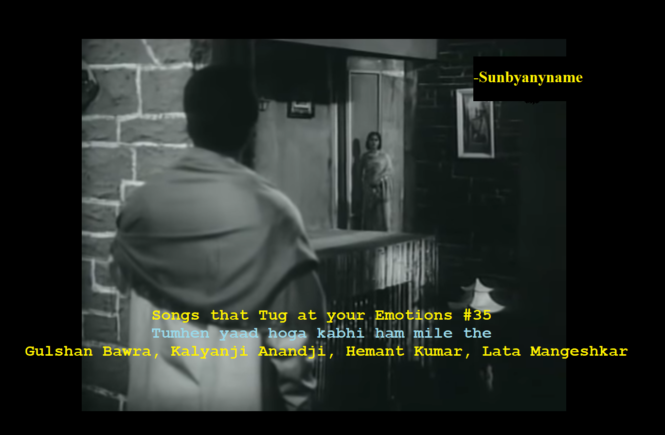
Songs That Tug At Your Emotions – Song #35

The thirty-fifth song in this series.

Tumhen yaad hoga kabhi ham mile the….

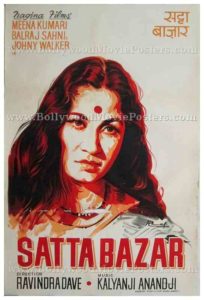
This song is from the 1959 Ravindra Dave movie Satta Bazaar (Stock Market). The movie starred Balraj Sahni, Meena Kumari, Suresh and Vijaya Choudhury. Khwaja Ahmad Abbas was the writer of the movie and dialogues were by SM Abbas.

(Poster courtesy: www.bollywoodmovieposters.com)

Lets have a look at the story of the movie since songs often carry forward the story:

Widower Ramesh (Balraj Sahni) lives a comfortable lifestyle with his daughter, Kala (Vijaya Choudhury). He re-marries so that Kala can get the love and caring of a mother. He re-marries Jamuna (Meena Kumari). But Kala hates Jamuna and will not even call her “Maa”. Jamuna continues to love Kala as her own despite of giving birth to a baby boy.

Years pass by. Kala grows up and falls in love with Ramesh’s business partner, Bholanath’s son Shyam (Suresh).

Shyam and Kala are of a different caste. Ramesh disapproves, but Jamuna convinces him otherwise. The couple gets formerly engaged. After the engagement, Ramesh gets to meet multi-millionaire Badriprasad (Ramayan Tiwari), who has accumulated wealth through the stock exchange. Ramesh takes a interest and invests heavily, he does win some money, but his luck soon changes when he loses everything. He is on the verge of bankruptcy, and the only man who can save him now is Badriprasad on one condition – that Kala must marry his son, Pritam (Krishna Kant).

And now you know how this song came about. You also know the importance of the name of the movie.

The song was penned by Gulshan Bawra. He was born as Gulshan Kumar Mehta on 12 Apr 1937 in Sheikhupura (30 kms from Lahore), Punjab (now in Pakistan). During the Partition riots he witnessed the killing of his father and his father’s cousin. His elder sister then brought him up.

Gulshan applied for a vacancy in Indian Railways in Kota, Rajasthan but when he got there, the vacancy had been filled. He, then, started working as a clerk in Bombay. All throughout he wanted a break in Hindi movies. Kalyanji Veerji Shah, then on his own (and not as Music duo Kalyanji Anandji) gave him his first break in Chandrasena (1959) in the song “Main kya jaanu kahan laage yeh saawan matwala re”, sung by Lata Mangeshkar.

Later, he also emerged as an actor with the 1966 movie Vishwas.

Satta Bazaar was the first movie of the music duo Kalyanji Anandji. Tumhen yaad hoga and Chandi ke chand tukadon ke liye made him a good name as a lyricist. It was during the making of this film that the film’s distributor Shantibhai Patel christened him Bawra (Madman).

He has won two Filmfare Awards as Best Lyricist: In 1968 for Mere desh ki dharti in the movie Upkaar and in 1974 for Yaari hai imaan mera in the movie Zanjeer.

Some of his popular songs are: Aap se hamako bichhade huye, Chandi ki deewar na todi, Le chal mere jeevan saathi (Vishwas, 1969), Aati rahengi bahaaren, Mile jo kadi kadi ek zanjeer bane, Qasme vaade nibhayenge ham (Kasme Vaade, 1978), Banake kyun bigaada re (Adaalat, 1976), Chand ko kya maalum chahta hai use koi chakor (Lal Bangla, 1966), Deewane hain deewano ko na ghar chahiye, Yaari hai imaan mera (Zanjeer, 1973), Ek main aur ek tu, Hamane tumako dekha tumane hamako dekha, Khullam khulla pyar karenge, Sapna mera toot gaya (Khel Khel Mein, 1975), Hamane jo dekhe sapne (Parivaar, 1967), Hamen aur jeene ki chahat na hoti (Agar Tum Na Hote, 1983), Kitane bhi tu kar le sitam (Sanam Teri Kasam, 1982), Mujhe kehate hain Kallu Kawaal (Dulhan Dulhan, 1964), Peene waalon ko peene ka bahana chahiye (Haath Ki Safai, 1974), Pyar hamen kis mod pe le aaya (Satte Pe Satta, 1981), and Ye mausam rangeen sama (Modern Girl, 1961).

Gulshan Bawra’s most popular song for the 1967 Manoj Kumar movie Upkaar: Mere desh ki dharti.

Kalyanji Anandji, the music duo who composed this song, came together as a music duo for the first time for this movie Satta Bazaar. This song sung by Hemant Kumar and Lata Mangeshkar made the Gujarat duo famous. It is so appropriate that a song sung by Hemant Kumar paved their way to success since Kalyanji (then solo) started his career as an assistant to Hemant Kumar as Music Director for the 1954 movie Nagin. He was so good with this new instrument called clavioline which was used to produce the sound of Nagin’s been that even if you forget any of the Nagin songs, you can’t forget the been.

Kalyanji Veerji Shah, then, with his brother Anandji Veerji Shah, started an orchestral group called Kalyanji Virji and Party which organised musical shows in Mumbai and outside. This was the first attempt made for holding live musical shows in India.

The high-points of their career were their first and only Filmfare Award for the 1974 movie Kora Kagaz, a National Award for the 1968 movie Sraswatichandra and India’s fourth highest civilian honour Padma Shri in the year 1992.

Some of their popular songs are: Aankhon aankhon mein hum tum, Ye duniya waale poochhenge (Mahal, 1969), Aap se hamko bichhade huye, Chandi ki deewar na todi, Le chal mere jeevan saathi (Vishwas, 1969), Akele hain chale aao (Raaz, 1967), Are deewano mujhe pehchano, Khaike paan Banaraswala (Don, 1978), Aur is dil mein kya rakha hai (Imaandaar, 1987), Are rafta rafta dekho (Kahani Kismat Ki, 1973), Badi door se aaye hain (Samjhauta, 1973), Bekhudi mein sanam, Chale the saath milkar (Haseena Maan Jayegi, 1968), Bure bhi hum bhale bhi hum (Banarasi Babu, 1973), Chand aahen bharega (Phool Bane Angaray, 1973), Chandan sa badan, Main to bhool chali babul ka desh, Phool tumhen bheja hai khat mein (Saraswatichandra, 1968), Chhalia mera naam, Dam dam diga diga, Mere toote huye dil se, Teri raahon mein khade hain (Chhalia, 1960), Chhuk chhuk (Rafoo Chakkar, 1975), Chhoti si umar mein lag gaya rog (Bairag, 1976), Chupke se dil de de (Maryada, 1971), and Darpan ko dekha (Upasna, 1971).

Some more are: Dil beqraar sa hai (Ishaara, 1964), Dil ko dekho chehra na dekho, Meri pyari behaniya (Sacha Jhutha, 1970), Dil lootnewale jadugar (Madari, 1959), Dil to dil hai (Kab Kyon Aur Kahan, 1970), Do bechare bina sahare (Victoria No. 203, 1972), Bharat ka rehnewala hoon, Dulhan chali, Koi jab tumhara hriday chhod de (Purab Aur Pachhim, 1970), Ek tara bole (Yaadgaar, 1970), Ek tara bole (Yaadgaar, 1970), Ek tha gul, Na na karte pyar tumhi se, Pardesiyon se na akhiyan milana, Ye sama sama hai ye pyar ka  (Jab Jab Phool Khile, 1965), Ek tu na mila, Kankariya maar ke jagaya, Main to ek khwab hoon (Himalaya Ki God Mein, 1965), Ganga maiya mein hab tak, Khush raho har khushi hai tumhaare liye (Suhaag Raat, 1968), and Govinda aala re aala (Bluff Master, 1963).

Kalyanji Anandji’s songs in Jab Jab Phool Khile were and are very popular. Pardesiyon se na akhiyan milana was one of them.

Still some more are:  Hum bolega to bologe ki (Kasauti, 1974), Hum chhod chale hain mehfil ko (Ji Chahta Hai, 1964), Hamare siva tumhaare aur kitane (Apradh. 1972), Ham the jinake sahare, Jeevan se bhari teri aankhen, Zindagi ka safar, Jo tumako ho pasand wohi baat karenge (Safar, 1970), Humsafar mere humsafar (Purnima, 1965), Hamne tujhako pyar kiya hai jitana, Jo pyar tune mujhako diya tha, Mujhe kehte hain kallu qawaal (Dulha Dulhan, 1964), Husn ke laakhon rang, Nafrat karne waalon ke, Pal bhar ke liye koi, O mere Raja (Johnny Mera Naam, 1970), Jiske sapne hamen roz aate rahe, Mere mitwa mere meet re (Geet, 1971), Jis dil mein basa tha pyar tera (Saheli, 1965), Zubaan pe dard bhari dastaan (Maryada, 1971), Kabhi raat din hum door the (Aamne Saamne, 1978), Kisi raah mein kisi mod par (Mere Hamsafar, 1970), Kya khoob kagti ho, Tere chehre mein woh jadu hai (Dharamatma, 1975) and Laila O’ Laila (Qurbani, 1980).

And yet more are: Main pyasa tum sawan (Faraar, 1975), Mere desh ki dharti, Qasme waade pyar wafa (Upkar, 1967), Mera jeevan kora Kagaz (Kora Kagaz, 1973), Mujhako is raat ki tanhai mein (Dil Bhi Tera Ham Bhi Tere, 1960), O saathi re tere bina bhi kya jeena, Salaam e ishq meri jaan (Muqaddar Ka Sikandar, 1978), Pal pal dil ke paas (Blackmail, 1973), Peene waalon ko peene ka bahana, Vaada karle saajna (Haath Ki Safai, 1974), Peete peete kabhi kabhi (Bairag, 1976), Samjhauta ghamon se karlo (Samjhauta, 1973), Sama hai suhana suhana (Ghar Ghar Ki Kahani, 1970), Sukh ke sab saathi (Gopi, 1970)

And finally: Tere honthon ke do phool (Paras, 1971), Waqt karta jo wafa (Dil Ne Pukara, 1967), Yaari hai imaan mera (Zanjeer, 1973), Zuban pe dard bhari dastaan (Maryada, 1971).

As far as the singers Hemant Kumar and Lata Mangeshkar singing together are concerned, they have given us some really memorable songs. Some of these are: Aa neele gagan tale pyar ham karen, Dekho wo chand chhupke, Nain se nain nahin milao, Yaad kiya dil ne kahan ho tum, Chhupa lo dil mein youn pyar mera, Chandan ka palna, O neend na mujhako aaye, Na ye chand hoga, Na tum hamen jaano and Ye raat ye chandini phir kahan.

Yaad kiya dil ne kahan ho tum is one of the best Hemant Kumar and Lata Mangeshkar sang together.

Many of Hemant Kumar duets with Lata Mangeshkar have that touch of ruefulness about them that seem to be bordering on enigma. When you recall them, you not just recall the lyrics and the notes, you also recall the world these transported you into. The present duet has that quality about it.

Please enjoy: Tumhen yaad hoga kabhi ham mile the…..

हे: (तुम्हें याद होगा कभी हम मिले थे ) -२
मुहब्बत की राहों में मिल के चले थे
ल: भूला दो मुहब्बत में हम तुम मिले थे
सपना ही समझो के मिल के चले थे …

हे: (डूबा हूँ ग़म की गहराइयों मे ं
सहरा हैं यादों का तनहाइयों में ) -२
सहरा हैं यादों का तनहाइयों में …

ल: (कहीं और दिल की दुनिया बसा लो
क़सम है तुम्हें वो क़सम तोड़ डालो) -२
क़सम है तुम्हें वो क़सम तोड़ डालो …

हे: (नई दिल की दुनिया बसा न सकूँगा
जो भूले हो तुम वो भुला न सकूँगा) -२
जो भूले हो तुम वो भुला न सकूँगा …

ल: (अगर ज़िंदगी हो अपनी ही बस में
तुम्हारी क़सम हम न भूलें वो क़समें) -२
तुम्हारी क़सम हम न भूलें वो क़समें …

Love is never a reasoned emotion. Hence, you never walk into love, you fall in love. It is overpowering, overwhelming and a feeling beyond control. And, most often than not, the course that this flood of emotions takes is also not under the lovers’ control. People around them and circumstances bring in variables that the lovers would have never imagined.

In this case, the fly in the ointment of the lovers is Sata Bazaar (Stock Market) that wreaks havocs in their lives because of the lure of good money that Balraj Sahni, her father, falls for. Suddenly, they find themselves estranged. At one moment, for the lovers, the world appeared thew most wonderful place to be in. The next moment their world is as if it went through an earhtquake, as if they were marooned by a strong typhoon.

Indeed, in the last stanza, Gulshan Bawra makes her say that she was the victim of circumstances beyond her control:

अगर ज़िंदगी हो अपनी ही बस में
तुम्हारी क़सम हम न भूलें वो क़समें I

This and other thoughts in the lyrics hit you with great force. It can happen with anyone. The villain of the piece here is Satta Bazaar. However, it could be anything beyond the control of the lovers.

Great songs are those wherein you not only recall the lyrics but all the notes including the interludes. This song is one of them. It tugs at my emotions persistently.

I hope you enjoyed it too.

Please await the next song in the series.

Songs That Tug At Your Emotions – Song #34

The thirty-fourth song in this series.

Dil ne phir yaad kiya….

This was the title song of the 1966 movie: Dil Ne Phir Yaad Kiya that was produced by BL Rawal, written by GL Rawal and directed by CL Rawal. The movie starred Dharmendra, Nutan and Rehman in a complex triangle.

I saw the movie with my parents in the hill town of Dalhousie where I had gone with my parents from Chamba (about 45 Kms away). My father was posted as a Horticulture Development Officer there.

To understand the song one has to know the story and I shall straightway tell you that:

Dharmendra as Ashok is in love with and wants to marry Nutan as Ashoo. In the toy store wherein Ashok works, he has a close friend Amjad (Rehman). Rehman’s marriage has been fixed with Shabnam (also played by Nutan though Ashok doesn’t know this).
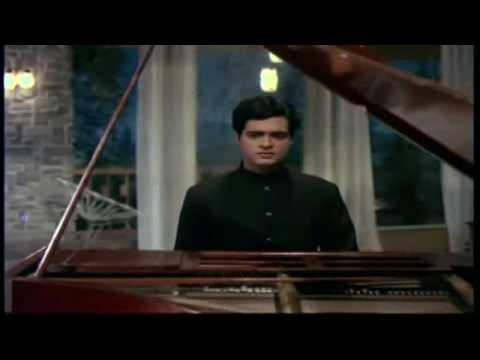
As the story progresses, Ashok goes to the village to marry Ashoo and finds she has been abducted by his brother Bhagat (Jeevan) after killing her brother Bhagwan. Ashok successfully rescues Ashoo and they head to the city to attend Amjad’s wedding with Shabnam.

The train that they travel by meets with an accident. Ashok survives but Ashoo dies. Amjad finds that his friend Ashok is under tremendous shock and asks Shabnam to act like Ashoo with Ashok. Ashok suspects that Ashoo has changed (he doesn’t realise it is Shabnam) and that’s how this song came about.

He starts singing this song (Mohammad Rafi sings for him) in a boat rowed by him where his friend Amjad and Shabnam sit opposite him. He reminds her of the past which is no more there now. Suman Kalyanpur sings for Shabnam (as Nutan) and tells about the cards that fate played to her (she having reluctantly agreed to act as Ashoo at the behest of her would-be husband Amjad (Rehman). Finally, in the song, Mukesh sings for Amjad (Rehman) and he tells about his own emotions.

The song’s lyrics were written by GS Rawal who also wrote the lyrics for the 1968 CL Rawal movie Aabroo starring Ashok Kumar, Vimi and Rehman. Finally, he wrote the songs of the 1971 CL Rawal movie Ladki Pasand Hai starring Mumtaz, Deepak Kumar and Jeevan. All his songs were composed by Sonik Omi.

A complete list of his songs is (Songs #1 to 10 for this movie, 11 to 17 for Aabroo and 18 to 25 for Ladki Pasand Hai):

1″Aaja Re Pyar Pukare”Lata Mangeshkar
2″Dil Ne Phir Yaad Kiya”Mohammed Rafi, Mukesh, Suman Kalyanpur
3″Main Suraj Hoon Tu Meri Kiran”Mohammed Rafi, Asha Bhosle
4″Lo Chehra Surkh Sharab Hua”Mohammed Rafi
5″Hamen To Khushi Hai”Asha Bhosle
6″Kaliyon Ne Ghunghat Khole”Mohammed Rafi
7″Yeh Dil Hai Mohabbat Ka Pyasa”Mukesh
8″Yun Chaal Chalo Na Matwali”Mohammed Rafi
9″Humne Jalwa Dikhaya To Jal Jaoge”Manna Dey, Asha Bhosle
10″Main To Naina Ladake”Usha Khanna, Usha Mangeshkar, Krishna Kalle
11 “Aap Se Pyaar Hua Aap Khafa Ho Baithe” Mohammed Rafi, Asha Bhosle
12 “Aap Se Pyaar Hua Aap Khafa Ho Baithe” Mohammed Rafi
13 “Meri Aankhon Ke Ujale” Mohammed Rafi
14 “Yeh Dil Nahin Ki Jiske Sahare Jeete Hain” Mohammed Rafi
15 “Jinhen Ham Bhulna Chaahein Woh Aksar Yaad Aate Hain” Mukesh
16 “Aai Aai Re Holi” Asha Bhosle, Manna Dey
17 “Yeh Vaadi-E-Kashmir” Mohammed Rafi
18″Tu Kar De Nazar Se Mastana Main Cheez Hai Kya” – Hemlata, Mukesh
19″Maan Bhi Jao Sanam Ruth Ke Jaya Na Karo” – Mohammed Rafi
20″Vafaa Ke Naam Par Mitanaa, Agar Tu Aabaru Apani” – Mukesh
21″Zulfon Me Chupana Kya, Main Apne DilMein” – Hemlata, Mohammed Rafi
22″Jawani Phir Na Aayegi mahobbat phir” – Hemlata
23″Pappa Humse Pyar Karo” – Hemlata, Sulakshana Pandit, Usha Timothy
24″Ho Bhala Pyar Ka Ek Ho Gaye Begane Do” – Mahendra Kapoor, Mumtaz
25″Kaha Le Kar Jaye Ye Tuta Hua Dil” – Lata Mangeshkar

One of GS Rawal – Sonik Omi’s best is the Aaabroo song by Mukesh: Jinhen hum bhoolna chahen woh aksar yaad aate hain

Sonik Omi, the composers and music directors have been associated with many more movies than the three that GS Rawal wrote the songs of. The duo consists of Master Sonik and his nephew Om Prakash. Some of their best-known works are Bhakti Mein Shakti, Dharma, Dil Ne Phir Yaad Kiya (1966), Sawan Bhadon, Aabroo, and Raftaar.

Besides the songs that they composed for GS Rawal, some of the their other popular songs are: Raaz ki baat keh doon to (Dharma), Kaan mein jhumka and Sun sun sun O gulabi kali (Sawan Bhadon), Lehnga manga de mere babu (Beti), and Donon ne kiya tha pyar magar (Mahua).

The Mahua song of Sonik Omi that was very popular

As far as the lead pair of Dharmendra and Nutan is concerned, they acted together in five movies: The 1962 Rajnish Behl movie Soorat ASur Seerat was their first in the year 1962. One year later they were together in Bimal Roy’s Bandini though she continued being in love with Ashok Kumar in the movie. Then they were together in this movie and one year after that they were together in DD Kashyap movie Dulhan Ek Raat Ki with a favourite Lata Mangeshkar song of mine: Sapnon mein agar mere tum aao to so jaayun and a beautiful Rafi song: Ek haseen shaam ko dil mera kho gaya. In 1988 they were somewhat together in a masala film: Sone Pe Suhaaga.

I saw three of them: Bandini, Dil Ne Phir Yaad Kiya and Dulhan Ek Raat Ki and in the last two of these Rehman acted with them. Hats off to him for he could so easily fit into a variety of roles: Hero, side-hero, and even villain.

Please enjoy Mohammad Rafi, Suman Kalyanpur and Mukesh sing a composition of Sonik Omi on the lyrics of GS Rawal in the 1966 CL Rawal movie Dil Ne Phir Yaad Kiya with the actors Dharmendra, Nutan and Rehman thrown into a situation beyond their control: Dil ne phir yaad kia….

दिल ने फिर याद किया बर्क़ सी लहराई है
फिर कोई चोट मुहब्बत की उभर आई है
दिल ने फिर याद किया …

वो भी क्या दिन थे हमें दिल में बिठाया था कभी
और हँस हँस के गले तुम ने लगाया था कभी
खेल ही खेल में क्यों जान पे बन आई है
फिर कोई चोट मुहब्बत की …

क्या बतायें तुम्हें हम शम्मा की क़िसमत क्या है
आग में ग़मे के जलने के सिवा मुहब्बत क्या है
ये वो गुलशन है कि जिस में न बहार आई है
दिल ने फिर याद किया …

हम वो परवाने हैं जो शम्मा का दम भरते हैं
हुस्न की आग में खामोश जला करते हैं
आह भी निकले तो प्यार की रुसवाई है
फिर कोई चोट मुहब्बत की …

https://www.youtube.com/watch?v=aRnI2xb2biI

Often, my first requirement of a song that tugs at my emotions is its lyrics. These should be so powerful that these can stand without any composition. You would agree with me that GS Rawal created a classic here. It won’t have been an easy task considering that both Nutan and Rehman can only bare their hidden emotions without letting the cat out of the bag. GS Rawal has done a great job of giving vent to the emotions of these two and, in the first stanza, of Dharmendra who thinks that his beloved is behaving differently (not knowing that she died).

Sonik Omi’s composition and music have significantly added to the emotions of this impossible situation in which the three find themselves. It has notes of regret, ruefulness, hurt innocence and that remarkable enigma.

And finally, you would agree with me that the three singers: Mohammad Rafi, Suman Kalyanpur and Mukesh have excelled without taking anything away from one another. If you were to choose a winner I am sure you would choose all three.

In every possible aspect, the song goes deep in your heart and makes a niche there and refuses to leave.

Lastly, the scene of the song: in a boat in a lake with Dharmendra trying to be in control of the boat whereas the other two are helpless for having lost all control.

I hope you liked it too.

Please await the next song in the series.


MY FAVOURITE PUNJABI SONGS – SONG #4 – SAUN DA MAHINA

Saun da mahina…
Lyrics: Chaman Lal Chaman
Singer: Jagjit Singh

Fourth song of the not so new series that started on 21 Jun 18.

The three songs that I have given you so far are: Ik meri akh kashni (‘My Favourite Punjabi Songs – Song #1 – Ik Meri Akh Kashni‘) sung by the Nightingale of Punjab: Surinder Kaur; Mainu tera shabaab lai baitha (‘My Favourite Punjabi Songs – Song #2 – Mainu Tera Shabaab Lai Baitha‘); and Jatt kudian to darda maara (‘My Favourite Punjabi Songs – Song #3 – Jatt Kudian To Darda Maara‘).

This one was sung by Jagjit Singh on his own composition on the lyrics of Chaman Lal Chaman.

First regarding the lyricist of this song. Chaman Lal Chaman is a London -based Punjabi poet, lyricist and broadcaster. The song Saun da Mahina came about in 1979 and made both Chaman Lal Chaman and the singer Jagjit Singh very popular.
If you have been following the singing careers of Jagjit Singh and his wife Chitra Singh you would know that he wrote many songs for them including the most popular Tumako dekha to yeh khayal aaya.

You would also remember him for having written the Bhangra song Balle Balle for Gurinder Chadha’s 2004 movie Bride and Prejudice that was composed by Anu Malik and sung by Sonu Nigam and Gayatri Iyer.

As far as the singer and composer Jagjit Singh (born Jagmohan Singh Dhiman on 08 Feb 1941) is concerned, when he died on 10th Oct 2011, at the age of 70 years, he left behind a legacy as India’s best known Ghazal Singer who had a style of his own. He earned the sobriquet of ‘Ghazal King’. In 1998 he was awarded the Sahitya Academy Award for popularising the writings of Mirza Ghalib. Five years later, the Government of India awarded him the third highest civilian honour: Padma Bhushan.

Jagjit Singh and his wife Chitra have touched the hearts of millions of Indians. In 1990 when their only son Vivek (18 years old) died in a road accident, the whole country wept with them. Monica, Chitra’s daughter from her first wedding committed suicide in 2009, adding to their already overflowing cup of sorrows.

Amomgst my favourite ghazals of the Ghazal King are: Woh kaagaz ki kashti woh barish ka pani, Honthon se chhu lo tum, Chitthi na koi sandesh, Jhuki jhuki si nazar, Tum itna jo muskara rahe ho, Kal chaudhvin ki raat thi, and his Mirza Ghalib ghazals.

Jagjit Singh has sung ghazals in many Hindi movies. Here is a scne from his ghazal Jhuki jhuki si nazar (penned by Kaifi Azmi) in the 1982 Mahesh Bhatt movie Arth

Amongst my favourite Punjabi songs of Jagjit and Chitra Singh are: Dhai din na jawani naal, Eh mera geet kise ne naa gaana (Shiv Batalvi’s), Tappe, Boliyan, Maye ni main ik shikra yaar (Shiv Batalavi’s), and Chhadeyan di joon buri.

Saun da Mahina is his best known Punjabi song. Chaman Lal Chaman, in the lyrics of the song, takes you to rustic Punjab and all the little family and romantic activities that take place during the monsoons. The song hits you both with its simplicity and nostalgic appeal.

It is most relevant these days since it is the Saun da Mahina now too.

Please enjoy: Saun da mahina yaaro….

Saun da mahina yaaro, saun da mahina ae
saun da mahina yaaro, saun da mahina ae
ambraan ch vaal koi jhaad di hasina ae
ik ik bund koi motti te nagina ae
bhiji bhiji silli silli paun da mahina ae
saun da mahina yaaro, saun da mahina ae

Dharti de mukhde nu dhon da mahina ae
te tip tip kotheyan de chonn da mahina ae
dharti de mukhde nu dhon da mahina ae
te tip-tip tip-tip tip-tip
tip tip kotheyan de chonn da mahina ae
te dila vich, dila vich kujh kujh hon da mahina ae
saun da mahina yaaro, saun da mahina ae

Mithe mithe sur atte taal da mahina ae
mithe mithe sur atte taal da mahina ae
kule kule phul muskan da mahina ae
te kise utte dil aa jann da mahina ae
kise kise utte dil aa jaan da mahina ae
te russe hoye yaara nu manaun da mahina ae
saun da mahina yaaro, saun da mahina ae

Bharke ranjhe nal nakko nakki ranjheya nu
bada hi hairaan kare mahina eh te ganjeya nu
baar-baar launa pawe kothe utton manjeya nu
dhilli kade kassi hoyi
dhilli kade kassi hoyi doan da mahina ae
saun da mahina yaaro, saun da mahina ae

Ambraan ch vaal koi jhaad di hasina ae
ambraan ch vaal koi jhaad di hasina ae
ik ik boond koi moti te nagina ae
bhiji bhiji silli silli paun da mahina ae
saun da mahina yaaro, saun da mahina ae

I hope you liked the song.

Please await the next song in the series.

HAMARE DIL KA GEET

रातों के ख्वाब दिन में भी लगे आने,
तेरे प्यार में सनम हम हो गए दीवाने।
सांस रुकने लगी,
आंख झुकने लगी,
तन्हाई के पल भी अब बन गए सुहाने।

मुहब्बत की यह धुन,
इसे दिल से सुन।

सेहरा में भी आ गयी बहार,
खिल उठा है मेरा घर संसार।
ठंडी ठंडी हवाएं,
भीगी भीगी फिजायें,
तेरा ही कर रही थी इंतज़ार।

मुहब्बत की यह धुन,
इसे दिल से सुन।

ज़िन्दगी भर रहेगा अपना साथ,
हमेशा रहेगा मेरे हाथों में तेरा हाथ।
बस यूँ ही यूँ है,
हर तरफ तूँ ही तूँ है,
जन्मों जन्मों की हमारी मुलाकात।

मुहब्बत की यह धुन,
इसे दिल से सुन।

(Image courtesy: Youngisthan.In

Raaton ke khwaab din mein bhi lage aane,
Tere pyaar mein sanam ham ho gaye deewane.
Saans rukne lagi,
Aankh jhukne lagi,
Tanhayi ke pal bhi ab ban gaye suhaane.

Muhabbat ki yeh dhun,
Ise dil se sun.

Sehra mein bhi aa gayi bahaar,
Khil utha hai mera ghar sansaar.
Thandi thandi hawaayen,
Bheegi bheegi fizaayen,
Tera hi kar rahi thi intezaar.

Muhabbat ki yeh dhun,
Ise dil se sun.

Zindagi bhar rahega apna saath,
Hamesha rahega mere haathon mein tera haath.
Bas youn hi youn hai,
Har taraf tu hi tu hai,
Janmon janmon ki hamari mulaqaat.

Muhabbat ki ye dhun,
Ise dil se sun.

MY FAVOURITE PUNJABI SONGS – SONG #3 – JATT KUDIAN TO DARDA MAARA

Jatt kudian ton darda maara….
Lyricis: Varma Malik
Composer: Hansraj Behl
Singer: Shamshad Begum, Mohammad Rafi

Third song of the new series that we started day before yesterday.

The two songs that I have given you so far are: Ik meri akh kashni (‘My Favourite Punjabi Songs – Song #1 – Ik Meri Akh Kashni‘) sung by the Nightingale of Punjab: Surinder Kaur; and Mainu tera shabaab lai baitha (‘My Favourite Punjabi Songs – Song #2 – Mainu Tera Shabaab Lai Baitha’).

(Collage courtesy: dsfsd)

This song is from the 1959 Punjabi movie Bhangra that was directed by Jugal Kishore and starred Sunder, Nishi and Manju.

All these Punjabi songs that I am giving you are nostalgic to me, Punjabi being my mother tongue. However, the songs of this movie are really very dear to me as I saw the movie with my parents and after all these years (59 to be exact), I can recall all the songs and most of the lyrics. During those days, if I would listen to a song on the radio just once I would remember the lyrics.

Have a look at the songs of the movie (many of you too would be filled with nostalgia):

  • Rabb na kare ke meri akh fadke, uton wagda hai meenh chham chham.
  • Batti baal ke banere utte rakhdi haan.
  • Chitte dand hasno nahio rehnde.
  • Jatt kudian on darda maara.
  • Ambiaan de booteaan te (Rut hai milaapan wali chann mera door).
  • Been na wajaeen mundia.
  • Mull wikda sajjan mil jaave lai lanvan main jind vech ke.

The songs of this movie are nostalgic to me for one more reason. My family was in Mandi, Himachal. However, during our summer holidays we used to go to my maternal grandparents house in Village Urapur, Jullunder District, Punjab.

Very often in the evenings visiting song and drama groups would go from village to village performing. We used to sit on the ground in a circle around them munching pop-corn that would have been made from corn taken from the house to the Bhatti (where these would be roasted over hot-sand and the Bhatti owner would accept a handful of corn as his remuneration). This song was performed for us by a visiting theater group. Because of the popularity of the song and the acting skills of the actors of the drama company, everyone enjoyed it to the hilt.

Here is the story (Sunder is Sunder in the movie and Nishi is Banto):

Sunder, the son of the moneylender Kaude Shah, goes to a poor farmer, Bulaki, in the village of Rangpur to get money-with-interest back from him, but falls in love with his daughter Banto. A suspended Munshi of Kaude Shah, Mehnga Mall, also tries to get Banto; he steals Kaude Shah’s jewellery and reaches Rangpur. He gives the jewellery to Sunder for staying away from him and Banto. Sunder gives the jewellery to Bulaki to pay back his debt and so did the unconscious Bulaki, the truth comes out and Bulaki is charged for stealing jewellery. He explains that the jewellery was given to him by Sunder and so Sunder is arrested. Finally, Mehnga Mall confesses and Bulaki and Sunder go free. After a little protest Sunder’s father, Kaude Shah, agrees to Sunder and Banto’s marriage.

Not that it is required, but, let me tell you at this stage about the actress Nishi who lip-syncs the song to Sunder, the actor.

Nishi lip syncing Mul wikda sahan mil jaave lai lanva main jind vech ke

Nishi’s full name is Nishi Kohli. She acted in many Hindi movies with Dara Singh and then with co-stars Raj Kapoor, Balraj Sahni, Bharat Bhushan, Helen, Ashok Kumar, Shashi Kapoor, Madhubala, Mala Sinha, and Rajendra Kumar.

Her first movie was the 1955 Ramesh Saigal movie Railway Platform. Her last Hindi movie was the 1970 Ganwaar.

However, she made better name for herself in Punjabi movies wherein she emerged as the heart-throb of many. Bhangra was her first Punjabi film and then she went on to act in Banto, Main Jatti Punjab Di and finally in 1969 Nanak Naam Jahaz Hai wherein my favourite hymn: Mere sahib, mere sahib, sung by Asha Bhosle, is picturised on her.

Guess what? I still remember her role in Bhangra and when she lip-synced the sad numbers Mul wikda sahan mil jaawe lai lanva main jind vech ke, and Batti baal ke banere utte rakhdi haan, my heart went out to her. I was only six years old though.

I loved Sunder‘s acting too. He was the hero in many Punjabi movies and comedian and hero in many Hindi movies. He died on 05 Mar 1992 in Mumbai and was active from 1938 to 1980s.

Madari was his debut Punjabi movie in 1950 though he had acted in many Hindi movies before that. His memorable roles are in Do Lachhian, Vilayati Babu and Chann Pardesi.

Sunder watches Banto perform bhangra/giddha with another person in the song and then in the end he (Sunder) steps in to claim her for the first time, captivated by her beauty and her pleasing ways. This song is, therefore, important in the movie as Sunder expresses his interest in her. In the end, she responds in kind and tells him in a boli to disregard her earlier bolis and that she loved his ways.

This song is in the form of Boliyan. What exactly are Boliyan? Boliyan or Bolis are Punjabi couplets. These days these are written as lyrics but, during my boyhood days and before, these used to be passed from generation to generation; each generation adding some more.

Initially, as I remember, Boliyan used to be sung by women and some of them would break out in giddha, becoming much more energetic during the interludes. Here, these are performed in the form of bhangra (the name of the movie) with one boli by female and an answering one by him and vice-versa. The energetic interludes are not after every boli but after three or four boliyan, every time.

For me, these are very nostalgic as I have listened to my mother and her sisters singing Boliyan and dancing giddha. Also, in many Punjabi weddings that I have attended Jaago aayiyan boliyan is sung on the night before the wedding (the night of awakening and that’s why Jaago aayiyan).

Varma Malik, the lyricist, made a name for himself with the song Ek Tara Bole in the 1970 Manoj Kumar movie Yaadgaar.

He was born on 13 Apr 1925 in Ferozepur (now in Pakistan). He was an active freedom fighter during the British Raj. The composer of this song and other songs in the movie, Hansraj Behl, actually launched his career as a lyricist.

Hansraj Behl was born on 19 Nov 1916 in Ambala (then in Punjab). He received his early education in music from Pandit Chunnilal.

He opened a music school in Lahore and recorded a few songs for HMV. In 1944, he traveled to Bombay to seek a career in movies. He managed to make his debut as a composer with Pujari, (1946), directed by Ardeshir Irani. Noted playback singer Asha Bhosle made her Hindi film debut when she sang the song Saawan aaya for Hansraj Behl’s film Chunariya (1948).

In 1964 he gave music for hit Punjabi film by Padam Prakash Maheshwary titled Satluj De Kandhe, starring Balraj Sahni, Nishi, Wasti, and Mirza Musharraf. The patriotic hit, ‘Jahan Daal Daal Pe Sone Ki Chidiya Karti Hai Basera’ sung by Mohammed Rafi in the film Sikandar-e-Aazam (1965), starring Prithviraj Kapoor was one of his last memorable numbers.

I think in the movie Bhangra, he really excelled as the movie has a very good mix of fast dance numbers, slow romantic numbers and sad numbers. All songs became popular.

No lyrics of the song are available on the net. I have written them down both from my recollection and after listening to the song.

Please enjoy Shamshad Begum and Mohammad Rafi sing on the lyrics of Verma Malik and composition of Hansraj Behl, a song in the form of Boliyan in the 1958 Jugal Kishore movie Bhangra starring Sunder and Nishi: Jatt kudiyan to darda maara……..(F is for Female and M for Male)

F: Jatt kudiyan ton darda maara
Ke mode’ ute daang rakhda – 2
(Jatt, afraid of the girls,
Keeps a stick on his shoulder)

M: Othe daang na kise’ di chaldi
Ke jithe chale teer akh da – 2
(There no stick would be effective
Where the arrow of the eyes shoots)

F: Kaanu muchh nu maroden denven,
kehda tera saag todeya?
(Why are you twirling your moustache,
As I have I have picked your saag?)

M: Saara khet hawaale tere,
Ni asan tainu kadon modeya?
(The whole field (of crop) is yours
When have I stopped you?

F: Ve main haan pandran murebbeya waali,
Kachehri wich mile kursi
( I have 15 murabba of land in my name (One murabba = 25 acres)
I get a seat in a court.

M: Mainu bin tankha vich kudiye
Murebbeyan te rakh munshi
(You can keep me without pay
As a Munshi (clerk) in your lands)

M: Teri hasiyan chalan te chadiyan
Ki ik waar has ke vikha
(Your laughter can send one high,
Just once show your laughter)

F: Putt hatt da bada tut bhaida,
Hasdi de dand ginada
(As a Jatt’s son, you are naughty,
You count my teeth when I laugh)

M: Kithe wajadi patal wang kajadi,
Ni kaali daang meri soniye
(It bangs with the sound of metal,
My black stick, O beautiful)

F: Laddu vandadi gali te vich niklan
Ve shaala teri daang tut paye
(I’d walk through the street distributing laddus,
If sometime your stick would break)

M: Teri dhaun surahi wargi
Ki chak na tu tin matke
(Your neck is like a surahi
You shouldn’t balance three pitchers over it)

F: Hath laayin na beganiyan mundeyan,
Ke gal kar pare hat ke
(Don’t touch (me) you stranger boy,
Talk to me (only) from a distance.

M: Teri gutt gitteyan te wajadi,
Ke hauli hauli nach kudiye
(Your braids fall up to your knees,
You should dance very very slowly)

F: Kale naag de vaangan dang maare
Ke ede kolon wach mundeya
(It would bite like a black snake,
You should protect yourself, boy)

M: Tainu chand di main sait karaanva,
Ke Roos de rocket te
(I would take you for a moon-walk
On a Russian rocket)

F: Othe jaake main charkhi chalanvan
Ke jithe tera hal wagde
(There I would work on the spinning wheel
Where you plough the lands)

M: Saare pind wich chaanan tera,
Ke maan diye mombatiye
(Whole village is lit with your light,
You are your mom’s candle)

At this stage Sunder (who was a spectator so far) comes dancing in:

Sunder: Tainu lai jaanwan Kashmir,
Je tu ban jaayen meri Heer,
Paanvan sone di zanjeer
Ni tu bindiye…..
(I’d take you to Kashmir,
If you agree to become my Heer,
I’d give you a gold chain (for your neck)
You are like a bindi.

Nishi suddenly becoming aware of his presence. This is her first reaction

Nishi: Tere naal kadin na jaawan,
Tere bapu nu bulwaawan,
Ohnu jaa fariyaadan laanvan,
Jatt vairya -2
(I’ll never go with you,
I’d call your father,
I’d go there and pray to him (to keep you away)
My enemy Jatt

Sunder: Koi mere pind da raah
beshak bapu kol tu jaa
Nahin hai bapu di parwah
Ni tu bindiye
(You can find the path to my village,
Even if you go to my father,
I don’t care for my father
You are like a bindi

Nishi: Main taan ainvin kardi saan,
Mere dil wich teri thaan,
Aaja phad lai meri baanh
Mere makhna, mere sajna
(I was just like that saying it,
In my heart there is place for you,
Come and hold my arm
My dearest, my lover)

https://youtu.be/xFLXRH9828U

The song, in the form of Boliyan, is not just in Punjabi but, it also has the flavour of Punjab that was there in its villages; where men and women broke into bhangra and giddha; where love stories began and ended with songs.

In this case, since the name of the movie was Bhangra, this song had the beginning of the love between Sunder and Banto, he having gone there to collect money with interest from Banto’s father.

I hope you too enjoyed it.

Please await the next song in this series.


Raaga Based Song Of The Day #93

Raaga Based Song of the Day: Jeet hi lenge bazi ham tum….
Raag Bhairavi, Tal Dadra

I am returning to Raaga based songs of the day after 02 Feb 18.

And, I am returning with the raaga most widely used in Hindi films songs: Bhairavi.

Today is the ninth time that I give you a song in this raaga. I took my time to give you the first song in Bhairavi on the 11th day: Babul mora naihar chhooto hi jaaye (Please see: ‘Raaga Based Song Of The Day #11’). That, I believe is the best song composed in Bhairavi. As I went along, I gave you several others including some of the favourite songs composed by Shankar Jaikishan. The last song in Bhairavi was on the 86th day: Aapki yaad aati rahi raat bhar (Please see: ‘Raaga Based Song Of The Day #86’).

We have completed ninety-two days of Raaga Based Songs of the Day. Our first post in the series was titled ‘Raaga Based Song Of The Day #1’ and the song was a Mohammad Rafi and Lata Mangeshkar song from the 1970 Shakti Samanta movie Pagla Kahin Ka: Tum mujhe youn bhula na paoge.  It is in Raag Jhinjhoti, Tal Kaherava.

Our ninety-second post or the last post here was titled Raaga Based Song Of The Day #92 and the song was an Asha Bhosle song from the 1963 SS Vasan production and Kishore Sahu directed movie Grahasti starring Ashok Kumar, Manoj Kumar, Rajshree, Nirupa Roy and Mehmood.. It is in Raag Sohani, Tal Tintal.

This blog has a number of posts on Raaga based songs in Hindi movies titled similarly; for example: The Best Raaga Based Songs in Hindi Movies – Raaga Bhairavi – Part III.

In the last ninety-two days of sharing Raaga based songs of the day, I have given you songs based on Raag Jhinjhoti, Gara, Bhimpalasi, Madhuvanti, Shivaranjani, Bihag, Pahadi, Sarang, Pilu, Bhairavi, Khammaj, Charukesi, Kalyan or Yaman, Desh, Malgunji, Kirwani, Kedar, Bageshri, Megh Malhar, Bhupali, Ahir Bhairav, Malkaush, Mand, Adana, Kafi, Rageshri, Jaunpuri, Tilang, Janasammohini, Chayanat, Shuddha Kalyan, Gaur Sarang, Jogiya, Asavari, Maru Bihag, Durga, Lalit, Puria Dhanashri, Bhinna Sahdja, Sohani, Multani, Patdeep, Jaijaiwanti, Tilak Kamod, Hemant, Basant Mukhari, Gujri Todi, Kalavati, Hamir, Bhatiyar, Gawati, Shyam Kalyan, Gorakh Kalyan, Madhamat Sarang, Manj Khammaj, Darbari Kanada, Vibhas, Shankara, Bahar, Nand and Mian Ki Malhar; making it a total of 61 raagas. The raagas that have been repeated so far are Pahadi, the raaga of my home place in the Himalayas, Maru Bihag, Raag Kirwani, Jhinjhoti, Bhairavi, Gara, Basant Mukhari, Malkauns, Bhairavi, Mand, Sohani, Madhuvanti and Shivaranjani. Today, I am repeating Raag Bhairavi for the ninth time.

Today’s song is from the 1961 Ramesh Saigal movie Shola Aur Shabnam starring Dharmendra and Tarla Mehta together with M Rajan, Abhi Bhattacharya and Vijayalaxmi. Its lyrics are by Kaifi Azmi that have been composed by Khayyam and sung by Mohammad Rafi and Lata Mangeshkar. As in many other movies, this duet reminds the lovers of their childhood love.

It is amongst the hundred movies or so that I watched on the net, fascinated by its songs and for once, I was not disappointed though, in the second half, the movie does drag on a bit; which was the case with most movies of that era.

The story is about Dharmendra and Tarla being childhood friends, very close and in love. They grow up after having been separated at childhood. He is poor and his friend M Rajan gives him a much-needed job in his timber business. M Rajan is engaged to be married to Tarla. Dharmendra doesn’t recognise Tarla who has grown up. His friend M Rajan asks him to sing when they meet and he sings their childhood favourite. She joins in the second stanza.

Another song from the movie became very popular: Jaane kya dhoondati rehati hain ye aankhen mujh mein, which was Dharmendra’s way of telling Talrla that he couldn’t possibly return to their loving days since he owed it all to his friend and benefactor M Rajan.

The lyricist of the song is Kaifi Azmi. I have as many as three blog posts on him: ‘The Best Songs Of Kaifi Azmi – A Great Lyricist And Poet’, ‘Part II’ and ‘Part III’. He was the only famous lyricist whom I heard live in a mushaira (in my college Govt College Dharamshala). I have found his poetry and lyrics so powerful that I wonder how could he write these in such simple words.

Of all the lyricists that I know of, Kaifi Azmi mastered the art of giving vent to the most intense and most powerful emotions through simplest words. One author who did that is my favourite: Ernest Hemingway. Likewise, taste this from Kaifi in this song: 

मिलने की खुशी ना मिलने का गम, खत्म ये झगड़े हो जाएं
तू तू ना रहे, मैं मैं ना रहूँ
इक दूजे मैं खो जाएं
मैं भी ना छोड़ूं पल भर दामन
तू भी पल भर रूठे ना, प्यार का बंधन ..

These are the kind of simple words that take you another world altogether; the world of pure love and enchantment.

Now, about music director Khayyam, the composer of this delightful song.

Khayyam and his wife Jagjit Kaur are from the town of Rahon, near Nawanshahr in Punjab. This is close (14 Kms) from my maternal grandparents place in Urapur. Khayyam is not just the gentlest of the music directors, he has affinity towards the raaga of my place: Pahadi.

Mohammad Zahur Khayyam Hashmi decided to donate his entire wealth of about Rupees Ten Crores to the trust founded by him as KPJ Trust (K for Khayyam, P for their late son Pradeep (they lost him in 2012) and J for his wife Jagjit) to support budding artists and technicians in India.

In this song, he surprised us by composing it in Raag Bhairavi.

Raag Bhairavi is the basic raag of the Bhairavi Thaat. Bhairavi makes use of all the komal swars, Rishabh, Gandhar, Dhaivat, Nishad. When singing compositions in Bhairavi raag, the singers however take liberty to use all the 12 swars. Bhairavi raag is named after the shakti or feminine aspect of the cosmic life force, which is personified as a consort to Lord Shiva. Bhairavi is a powerful raag filled with devotion and compassion. Its Jati is Sampurna – Sampurna, which means all seven swar (heptatonic) both in Aaroha and Avaroha. I have already told you that in a concert Bhairavi is usually the concluding raaga since it is supposed to cure mistakes of the earlier performances. Hence, if a concert has started at night (which is usually the case), Bhairavi would be played in the wee hours of the morning.

A pleasant sobering atmosphere full of love and piety is created with this raag and one feels so close to the Supreme. Its compositions include several Thumris, Bhajans, Ghazals, Songs etc. Since it is an ocean of immense possibilities the melodic combinations can include all the twelve notes with skill.

I am not giving you again a list of songs composed in Raag Bhairavi as I have given this adequate number of times.

As far as Tal Dadra is concerned, Tal Dadra derives its name from Dadra style of singing prevalent in Dadra. It is a six or three beat Tal:
Clap, 2, 3, Wave, 2, 3; that is two vibhags of three matras each. The theka is:
Dhaa Dhin Naa Dhaa Tin Naa

I gave you a song in this Tal and Raag Bhimpalasi as m 3rd song in the series: Maine chand aur sitaaron ki tamanna ki thi. After that I have given you several songs in the Tal such as: Tere sur aur mere geet (Bihag), Aaj ki raat piya dil na todo (Pahadi), Beqasi hadd se jab guzr jaay (Desh and Khammaj), Dukh bhare din beete re bhaiya (Megh Malhar), Kesariya Balma (Nand), Kuchh aur zamaana kehta hai (Gaur Sarang), Taqdeer ka fasaana (Desh), Bhooli hui yaadon (Kalyan), Benuravvat bewafa (Shankara), Jhumati chali hawa (Sohani), Dil Ke jharokhe mein (Shivaranjani), and Paan khaayo sainya hamaro (Kalyan). However, in the eight songs based on Raag Bhairavi that I have given you, there has never been one in this Tal; most of these have been in Tal Kaherava.

At this juncture, since we are re-starting after a long time, please do recall that I had given you an introduction to Tal (musical measure) on the second day itself. Some of you would recall that I had mentioned that Tal, Taal or Tala is a word that is variation of the word Taali (Clap). Before the advent of Tabla, the standard method of keeping the musical measure was with the clapping or tapping of one’s hand on the arm or thigh. Indeed, now that we have Tabla, this beat is still maintained by clapping and waving of hands. If you recall, I had also mentioned that whilst the Raaga sets the mood, time of day and season of a composition, Tal constitutes the time-cycle. Therefore, a Raaga and Tal go hand in hand. On the 14th Raaga Based Song of the Day, was the only occasion when we didn’t have a Raaga (Kalyan) accompanied by a Tal since the entire composition of Lagata nahin hai dil mera was in Alaap.

The rhythmic hand gestures used to denote Tal are called Kriyas. If you recall, I laid emphasis on something called Vibhag or sections or angas or parts of a Tal. In Hindustani music, the first beat of a Vibhag is Tali (Clap), whilst the empty beat (Khali) is indicated is indicated by the sideways wave of the dominant clapping hand. And thus, you would recall, I represented the Tal for you with Claps and Waves.

We had also learnt that a Tal doesn’t have a fixed tempo or laya. Hence, we had learnt three different tempos: Vilambit (delayed or slow), Madhya (medium) and Drut (fast).

Before we actually take up the song, first, lets take up the value added learning of todayFrom the last eleven times we started learning about some of the leading personalities in Indian Classical Music or Shastriya Sangeet. The first one that we took up was Ustaad Asad Ali Khan, the finest Rudra Veena player in the country. Then we took up Pandit Hari Parsad Chaurasia, the greatest Bansuri player in the country. Then we talked about Ali Akbar Khan, the greatest Sarod player in the country. Then we took up Pandit Ravi Shankar, the greatest Sitar player in the world. Then we took up the greatest classical singer in the country (of Carnatic tradition): MS Subbulakshmi. Then, we took up the greatest classical singer in the country (of Hindustani tradition): Pandit Bhimsen JoshiThen, we learnt about the Shehnai maestro Ustad Bismillah Khan. Then, we learnt about Annapurna Devi, a great Surbahar (bass sitar) player of Hindustani Classical Music. Thereafter, we took up Pandit Shiv Kumar Sharma, the grestest Santoor player in the country. Then we learnt a little more about Ustaad Alla Rakha Qureshi or simply Alla Rakha, the Tabla Maestro and father of Ustaad Zakir Hussain. Then we learnt about the master and one of the pioneers of fusion: Anand Shankar. And finally, we learnt about a Veena player who was also a great filmmaker: Sundaram Balachander.

(Photo courtesy: The Indian Express)

Tonight, we shall take up the Sarod Player Ustad Amjad Ali Khan, the recipient of second highest civilian award in India: the Padma Vibhushan. Indeed, Amjad Ali Khan is the recipient of the three awards in 2nd, 3rd and 4th position, that is, Padma Vibhushan, Padma Bhushan, and Padma Shri.

Born on 9 October 1945 as Masoom Ali Khan Bangash, the youngest of seven children, to Gwalior court musician Hafiz Ali Khan and Rahat Jahan. His family is part of the Bangash lineage and Khan is in the sixth generation of musicians; his family claims to have invented the Sarod.

I have heard him live a number of times and it is sheer magic seeing him perform.

(Pic courtesy: The Indian Express)

As far as the singers Mohammad Rafi and Lata Mangeshkar are concerned, I have only this to say: People have brought out that the best duets are between A, B, and C. However, both Rafi and Lata have etched names for themselves as the best playback singers there ever were.

Ladies and gentlemen, please enjoy in Raag Bhairavi Tal Dadra, Mohammad Rafi and Lata Mangeshkar sing a composition of Khayyam on the lyrics of Kaifi Azmi in the 1961 Ramesh Saigal movie Shola Aur Shabnam starring Dharmendra and Tarla Mehta: Jeet hi lenge bazi ham tum…..

रफ़ी:
जीत ही लेंगे बाज़ी हम तुम, खेल अधूरा छूटे न
प्यार का बंधन, जन्म का बंधन, जन्म का बंधन टूटे न

मिलता है जहाँ धरती से गगन, आओ वहीं हम जाएं
तू मेरे लिये, मैं तेरे लिये – २
इस दुनिया को ठुकरायें – २
दूर बसा ले दिल की जन्नत – २
जिसको ज़माना लूटे ना, प्यार का बंधन

लता:
मिलने की खुशी ना मिलने का गम, खत्म ये झगड़े हो जाएं
तू तू ना रहे, मैं मैं ना रहूँ – २
इक दूजे मैं खो जाएं – २
मैं भी ना छोड़ूं पल भर दामन – २
तू भी पल भर रूठे ना, प्यार का बंधन …

We have intended to learn about Raaga based music whilst we entertain ourselves with Raaga based songs. So, lets, once again, take stock of our collective learning so far:

  1. On the first day we learnt about the Raaga system devised by Pandit Vishnu Narayan Bhatkhande, which is the prevalent system in Hindustani Classical Music and based on ten Thaats.
  2. On the second day we learnt about Tal or Taal.
  3. On the third day we learnt about characteristics of Raagas that included Swar, Jati, Thaat, Arohana and Avarohana, Vadi, Samvadi and Pakad.
  4. On the fourth day, we learnt about Sargam.
  5. On the fifth day, we learnt about notations used in Indian classical music or simply Swar Lipi.
  6. On the sixth day, we learnt about the Ras (sentiments) that Raagas evoke.
  7. On the seventh day, we learnt about various types of Swar: Shuddha, Achal, Vikrut, Komal and Teevra.
  8. On the eighth day, we learnt the parts of a composition in Indian Classical Music.
  9. On the ninth day, we learnt the names of some of the popular instruments used in Indian Classical Music.
  10. On the tenth day, we learnt about the sources of names of Raagas.
  11. On the eleventh day, we learnt about why Bhairavi is the first raag to be taught to beginners and also why it is the last in a performance.
  12. On the twelfth day, we learnt about Khammaj Thaat.
  13. On the thirteenth day, we learnt about Tal Punjabi Theka or Sitarkhani.
  14. On the fourteenth day, we learnt about Alap.
  15. On the fifteenth day, we learnt about List of Raagas (Raagmala) in my favourite book: Sri Guru Granth Sahib.
  16. On the sixteenth day, we learnt about tips for raaga identification.
  17. On the seventeenth day, we learnt the basics of Gharana system.
  18. On the eighteenth day, we learnt about Filmi Sangeet.
  19. On the nineteenth day, we learnt about the commonest Tal in Raagas: Tintal.
  20. On the twentieth day, we learnt about the Kafi Thaat.
  21. On the twenty-first day, we learnt a little more in detail about the classification of Raagas.
  22. On the twenty-second day, we learnt the essential differences between Bhairavi and Bhairav.
  23. On the twenty-third day, we learnt a little more in detail about the Jati or Jaati of a raaga.
  24. On the twenty-fourth day, we learnt details of Thaat Bilawal, the most basic thaat in the Bhatkhande’s system of raagas.
  25. On the twenty-fifth day, we learnt about Tintal.
  26. On the twenty-sixth day, we learnt in detail about the Raaga – Samay linkage.
  27. On the twenty-seventh day, we learnt about Lehar.
  28. On the twenty-eighth day, we learnt about the history of the Hindustani Music.
  29. On the twenty-ninth day, we learnt about Dhrupad.
  30. On the thirtieth day, we learnt about Rupaktal that I was introduced to, a few months back, by my friend Anand Desai.
  31. On the thirty-first day, we learnt about Khayal.
  32. On the thirty-second day, we learnt about Thumri.
  33. On the thirty-third day, we learnt about Tappa.
  34. On the thirty-fourth day, we learnt about Tarana.
  35. On the thirty-fifth day, we learnt about Tal Dipchandi (Moghali).
  36. On the thirty-sixth day, we learnt about Tabla.
  37. On the thirty-seventh day, we learnt about Kirtan.
  38. On the thirty-eighth day, we learnt about Pakhawaj.
  39. On the thirty-ninth day, we learnt about Hori.
  40. On the fortieth day, we learnt about Dadra.
  41. On the forty-first day, we learnt about Kajri.
  42. On the forty-second day, we learnt about Chaiti.
  43. On the forty-third day, we learnt about Sarangi.
  44. On the forty-fourth day, we learnt about Shehnai.
  45. On the forty-fifth day, we learnt about Sarod.
  46. On the forty-sixth day, we learnt about Bansuri.
  47. On the forty-seventh day, we learnt about Ektal and Tanpura.
  48. On the forty-eighth day, we learnt about Veena.
  49. On the forty-ninth day, we repeated our learning of Veena with a small excitement added.
  50. On the fiftieth day, we learnt about Dilruba/Esraj.
  51. On the fifty-first day, we learnt about Jaltarang.
  52. On the fifty-second day we learnt about Qawwali.
  53. On the fifty-third day, we learnt about Sitar.
  54. On the fifty-fourth day, we learnt about Surbahar.
  55. On the fifty-fifth day, we learnt about Harmonium.
  56. On the fifty-sixth day, we learnt about Santoor.
  57. On the fifty-seventh day, we learnt about Swarmandal.
  58. On the fifty-eighth day, we learnt about the Shruti Box.
  59. On the fifty-ninth day, we learnt about Alankar.
  60. On the sixtieth day, we learnt about singing in Aakaar.
  61. On the sixty-first day, we learnt about the Classification of Indian Musical Instruments.
  62. On the sixty-second day, we learnt a little about Carnatic Music.
  63. On the sixty-third day, we learnt about Natya Shastra.
  64. On the sixty-fourth day, we learnt about evolution of musical instruments in India down the ages.
  65. On the sixty-fifth day, we learnt about Riyaaz.
  66. On the sixty-sixth day, we looked at a list of Raagas in Hindustani Classical Music.
  67. On the sixty-seventh day, we learnt about the health benefits of raagas.
  68. On the sixty-eighth day, we learnt a little more comprehensively about the moods and emotions that raagas evoke.
  69. On the sixty-ninth day, we learnt about a mobile application to help identify raagas.
  70. On the seventieth day, we learnt about Melakarta Raagas.
  71. On the seventy-first day, we learnt about Sangita Makarand.
  72. On the seventy-second day, we learnt about TaalMala an Android application for personalized accompaniment of musical instruments during Riyaaz or even during Concert.
  73. On the seventy-third day, we learnt about Indian Classical Ragas, an Android application for mobile phones.
  74. On the seventy-fourth day, we learnt about Saregama Classical, another application for Classical Raagas.
  75. On the seventy-fifth day, we learnt about a free online service available to learn Indian Classical Music.
  76. On the seventy-sixth day, we learnt about List of Hindustani Classical Musical Festivals in India and Abroad.
  77. On the seventy-seventh day, we learnt about List of Carnatic Musical Festivals in India and Abroad.
  78. On the seventy-eighth day, we learnt about Jhaptal.
  79. On the seventy-ninth day, we learnt about Ektal.
  80. On the eightieth day, we learnt about Tivra Tal.
  81. On the eighty-first day, we learnt about the greatest Rudra Veena player ever: Ustaad Asad Ali Khan.
  82. On the eighty-second day, we learnt about the greatest Bansuri player alive: Pandit Hariprasad Chaurasia.
  83. On the eighty-third day, we learnt about the best Sarod player in the country: Ustaad Ali Akbar Khan.
  84. On the eighty-fourth day, we learnt about the greatest Sitar player in the world: Pandit Ravi Shankar.
  85. On the eighty-fifth day, we learnt about the greatest Indian vocalist of Carnatic tradition: MS Subbulakshmi.
  86. On the eighty-sixth day, we not just learnt about the greatest vocalist of Hindustani tradition: Pandit Bhimsen Joshi but also learnt about Tal Hinch.
  87. On the eighty-seventh day, we learnt about the Shehnai maestro Ustaad Bismillah Khan.
  88. On the eighty-eighth day, we learnt about Annapurna Devi, the greatest Surbahar player in India.
  89. On the eighty-ninth day, we learnt about Pandit Shiv Kumar Sharma, the greatest Santoor Player in the country.
  90. On the ninetieth day, we learnt about Ustaad Alla Rakha, the Tabla maestro.
  91. On the ninety-first day, we learnt about Anand Shankar, the great fusion musician from Bengal.
  92. On the ninety-second day, we learnt about Sundaram Balachander, the great Veena player and film-maker.
  93. And today on the ninety-third day, we learnt about Ustaad Amjad Ali Khan, the great Sarod player.

There is much more still to be learnt and enjoyed.

Please stay tuned!

MY FAVOURITE PUNJABI SONGS – SONG #2 – MAINU TERA SHABAAB LAI BAITHA

Mainu tera shabaab lai baitha….
Lyricis: Shiv Kumar Batalvi
Singer: Asa Singh Mastana

Second song of the new series that we started day before yesterday. This too has lyrics by Shiv Kumar Batalvi. Thank you very much for the enthusiastic response to the first post.

Coincidentally, my first post in the series also had his poetry: My Favourite Punjabi Songs – Song #1 – Ik Meri Akh Kashni sung by the Nightingale of Punjab: Surinder Kaur.

Shiv Kumar Batalvi‘s life and poetry can be compared with Lily of May, short-lived but providing immense joys to all those who came in touch with either or both. He lived between 23 Jul 1938 and 06 May 1973. As I said in the first post, he and Lord Byron died before their 37th birthday.

Whereas, Lord Byron had a number of affairs including scandalous and licentious ones, Shiv Kumar’s poetry was driven by just two of them: Maina, a young girl that he met in Baijnath and Uma, Gurbakhsh Singh Preetlari’s daughter. Maina died and Shiv penned his elegy Maina for her. Uma left for the US and married someone else. Later Shiv Kumar too married Aruna and they have two children: Meharban and Puja.

When Uma Gurbakhsh gave birth to her first child, Shiv Kumar Batalvi penned his most poignant poem: ‘Main ek shikra yaar banaya’, which is rated as his most famous.

Mainu tera shabaab lai baitha is equally popular.

On the 14th of April, this year, we had the third annual meet of our music group ‘Yaad Kiya Dil Ne’ (Please read: ‘YKDN Live Fest In Kandaghat On Waltzing Numbers’). We had a ghazal and Sufi singer Pammi Hanspal with us. At the end of our Live Fest, he sang this song and we were all floored. That’s as much for Pammi’s singing skills as for the effect of the extraordinary lyrics penned by Shiv Kumar Batalvi. Here are all of us joining in for the rendition of this extraordinary Ghazal by Shiv Kumar Batalvi:

Of course, these are amateurish efforts. The ghazal is so popular even after 45 years of Shiv Kumar Batalvi’s demise that one can hear it at various gatherings. Everyone seems to know the lyrics.

Of course, my nostalgia goes back to hearing it from a great son of Punjab: Asa Singh Mastana though there are various versions of this ghazal including by one of the greatest ghazal singers: Jagjit Singh.

(Photo courtesy: Panj Pedia)

Asa Singh Mastana lived between 22 Aug 1927 and 23 May 1999. He made a name for himself on the All India Radio from 1940s onwards by singing Punjabi folk songs either by himself or in concert with Surinder Kaur and Kuldeep Manak. Some of his songs became so popular that these are hummed even today. One of my all time favourites is the tear-jerker: Jadon meri arthi uthha ke chalange. I shall be giving that to you as I go along. Another is: Mutiyare jaana door pya, which has flavour of a typical Punjabi wedding.

Another two favourites are the Heer and Jugni that he sang for the Hindi movie Heer. Yet another is Sarke sarke jaandiye mutiyare ni.

In 1985, he was honoured by the government of India by the award of Padma Shri, India’s fourth highest civilian award.

Now lets look at the beauty of the lyrics (Please do remember that this ghazal has been sung by many different singers and each has chosen some stanza or the other and his own sequence):

First in Punjabi transliterated:

Mainu tera shabab lai baitha,
Rang gora gulab lai baitha,
Mainu tera shabab lai baitha

Dil daa darr si kite naa lai baithe
Lai hee baitha janab lai baitha
Mainu tera shabab lai baitha

Kini beeti te kini baaki eh,
Mainu eho hisaab lai baitha,
Mainu tera shabab lai baitha

Shiv nu ikk gham te hee bharosa si
Gham toh kora jawaab lai baitha
Mainu tera shabab lai baitha

Wel jad vi mili hai farza taun,
Tere mukh di kitaab lai baitha,
Mainu tera shabab lai baitha

Mainu jad vi tusi ho yaad aye,
Din dihaade sharab lai baitha,
Mainu tera shabab lai baitha

Changa hunda je sawaal na poochda,
Mainu tera jawaab lai baitha,
Mainu tera shabab lai baitha

And now the translation by me:

Your young beauty has seized my senses
(Your) fair-rosy colour has seized me
Your young beauty has seized my senses

I feared for my heart that it shouldn’t be seized,
(But) It was seized, my dear Sir, it was,
(Your) young beauty has seized my senses

How much life is spent and how much remains
This calculation has seized me
Your young beauty has seized my senses

Shiv relied on just one sorrow
(That) Grief too has abandoned me
Your young beauty has seized my senses

Whenever I had free time from my duties,
I was seized by the book of your face,
Your young beauty has seized my senses

Whenever I have thought of you,
I took to drinking even during daytime,
Your young beauty has seized my senses

It would have been good if I hadn’t asked the question,
I was seized by your answer.
Your young beauty has seized my senses

Please enjoy Asa Singh Mastana sing the most popular ghazal of Shiv Singh Batalvi: Mainu tera shabab lai baitha:

https://youtu.be/SAUh28WCvpY

Shiv Kumar Batalvi’s love poems had all the melancholy about them that he faced in his life with unrequited love.

This one is very important since it talks about drinking in her gham (sorrow). All of us know that finally this gham and consequent drinking heavily into the wee hours of mornings that killed him.

He was the youngest recipient of Sahitya Akademi Award and he died young.

I hope you enjoyed it.

Please await the next song in this series.


MY FAVOURITE PUNJABI SONGS – SONG #1 – IK MERI AKH KASHNI

Ik meri akh kashni duja raat de uneendre ne mareya…..
Lyrics: Shiv Batalvi
Composition and Music: K Pannalal
Singer: Surinder Kaur

Ladies and gentlemen, I am starting another series today titled: My Favourite Punjabi Songs.

Why Punjabi? Simple; it is my mother tongue (my mother passed away last year on the 9th of August). She was the biggest influence that I had on my thought process, the way I led my life, my emotions and my language. I was born in her parents’ house (it was called Pakkyan Waala since for a number of years it was the only brick and lime-mortar house in the village whilst others were thatched clay houses) in Village Urapur, District Jullunder (now spelled Jalandhar).

My mother married my father when she was only sixteen. However, so strong was the influence of her parents that the last words that she whispered before she went away last year were: Pitaji, Beeji main aa rahi haan (My father and mother, I am returning to you).

Similarly, even though she spent all her years with my father in Himachal wherein Hindi was more prevalent, she could never forget her Punjabi roots. The other day I read a joke that a Punjabi is a person who speaks any language in Punjabi. My mom for nearly seventy years after leaving Punjab, spoke Hindi in Punjabi. Taste this, for example; it is my mother’s instruction to the servant at home in what she believed is Hindi: “Bahadur, neeche kyaari se gande poot ka laao.”

Truly, whilst you can take a Punjabi out of Punjab but you can’t take Punjab out of him or her.

During my childhood and boyhood, I have listened to Punjabi songs on the radio, in movies that I went to with my parents, and during weddings and other parties. Ladies used to sing some of these songs (that I would give you) sitting around a dholaki with a lady playing the dholaki and another (sitting in front) rhythmically beating a metal spoon on the wooden body of the dholaki. Others would be dancing keekli or gidda.
My mom and her sisters would not just sing but dance too.

My mother (right) and her youngest sister Jaspal dancing during the celebrations for my mom’s 75th birthday on 15th March 2007. My buaji’s son Bawa (an accomplished A.I.R. singer and dancer is seen her playing the dholaki.
My mother dancing with my son Arjun and his wife Samira on the eve of their wedding on 8th May 2014

These songs that I shall be putting up here are not in any particular order or ranking. I am just giving them to you as I recall them.

Surinder Kaur and her sister Parkash Kaur were my late mother’s favourites. Whenever my mother traveled with us long-distance we listened to the two sisters frequently on cassettes; songs such as: Kala doriya, Lathhe di chaadar, Jutti kasuri, Bajre da sitta, Gori diya jhanjhra, Sarke sarke jaandiye, Chan ve ke shaunkan mele di, Chan kitha guzari aayi raat ve and Dachi waliya mor mohar ve.

(Pic courtesy: Famouspunjabi.com)

Surinder Kaur was certainly the more popular and accomplished of the two sisters: Surinder and her elder (by ten years) sister Prakash. She was born on 25 Nov 1929 in Lahore (now in Pakistan). When Surinder was not yet 14 years old, the two sisters cut their first duet maavan ‘te dheean ral baithian on 31 Aug 1943 for HMV. After the Partition of India, the family moved to Ghaziabad, Delhi. When she was 19 years old she married Professor Joginder Singh Sodhi. He was to emerge as her greatest support who assisted her first to become a playback singer in Hindi films and later to follow her passion of Punjabi folk songs.

Before she died on 14th June 2006, she not only recorded more than 2000 songs but also promoted Punjabi culture and folk songs. Some of her duets have been sung with other great singers of Punjab: Asa Singh Mastana,  Karnail Gill, Harcharan Grewal, Rangila Jatt, and Didar Sandhu.

She was a song-writer herself. In addition, she sang songs penned by Bulleh Shah, Nand Lal Noorpuri, Amrita Pritam, Mohan Singh and Shiv Kumar Batalvi.

On her death, the Prime Minister of India, Dr. Manmohan Singh, described her as the Nightingale of Punjab.

A few months before she died, she was awarded the fourth highest civilian honour by government of India: the Padma Shri. However, she was taken aback to know that the recommendation for the same had gone from Haryana (because she had settled in Panchkula) and not from Punjab, the state whose culture and folk-music she relentlessly promoted for more than five decades.

(Pic courtesy: Hindustan Times)

Shiv Kumar Batalvi, as I have written elsewhere, had many things in common with the English poet Lord Byron except that whilst the latter was of aristocracy, Shiv died in penury. Otherwise, the description of beauty, sadnesses and melancholy are the same. Both died before reaching the age of 37 years. Shiv Kumar Batalvi lived between 23 July 1936 and 6 May 1973.

Shiv was born on 23 Jul 1936 in village Bara Pind Lohtian, Shakargarh Tehsil, Sialkot District (now in Pakistan). He is called Batalvi, because at the Partition’s time, when he was only 11 years old, his family moved to Batala in Punjab.

His first anthology of poems was published in 1960, titled Piran da Paraga (The Scarf of Sorrows). He became the youngest recipient of the Sahitya Akademi Award in 1967, for his magnum opus, a verse play Loona (1965).

Many of his poems are love poems of parting. For example, he fell in love with a girl called Maina who died. He wrote an elegy called Maina. Similarly, he was in love with Gurbaksh Singh Preetlari’s daughter. When she married someone else, he wrote his famous love poem ‘Main ek shikra yaar banaya’. In 1967 he married Aruna, a girl from his own Brahmin caste.

After Shiv returned from his visit to England in Sep 1972 his health deteriorated and he finally died on 6th May 1973. He was brought to PGI Hospital Chandigarh. But, he walked away from the hospital saying he didn’t like dying in a hospital.

Shiv Kumar Batalvi, in his short life earned the distinction of being one of the most famous poets of Punjab and yet on his 45th death anniversary this year, he was virtually neglected by the Punjab government and dignitaries.

Very little is known about the Composer K Pannalal. I picked this up from the You Tube:

“Pannalal Kathak….later called K Pannalal was  one of the early composers and singers of AIR who excelled in classical mould……. It was an era when film composers Ravi, Roshan, OP Nayyar, Dan Singh were employees of All India Radio  ….. Most in the new generation might not even know that it was AIR that moulded artists who later became big names in the Hindi film industry….. K Pannalal, though passed away long back in 1975, has left behind his traditions to his family….. and notable amongst them is his son-in-law, the acknowledged Ghazal singer, Chandan Das….. A treat to watch this along with other radio singers like Trilok Kapoor, Pushpa Hans, Mahinder Pal, Pramilla Das seen in the brief excerpts ….. Enjoy this rare Doordarshan recording.”

Lets look at the lyrics of the song and their translation:

Ni ek meri akh kashni
Dooja raat deyo neend re ne maariya
Ni sheeshe ‘ch tarerr pai gai (x2)

Vaal vandi ne deyaan jadon mareya
Ni ik meri akh kashni

Ik meri sass ni buri
Bherri roi de kikkar to kali
Haaye bherri roi de kikkar to kali
Ni aandhe jaandhe taane maar di
Ni mein usdha kuch vi vigaadhiya
Ni ik meri akh kaashni

Ik meri nandh buri bherri ser karanh nu jaave
Ni dooroh toh oh ainjh lagdhi
Haaye ni dooroh toh oh ainjh lagdhi
Jeeve majni matakdhi aave
Ni ik meri akh kashni

Ik mera kanth ni jeeve
Raat chandhani teh doodh da katora
Ni eko gal maadhi usdhi
Haaye ni eko gal maadhi usdhi
Layi lagni oh maa ne vigaadhiya
Ni ik meri akh kashni
Dooja raat deyo neend re ne maariya
Ni sheeshe ‘ch tarerr pai gai
Haaye sheeshe ‘ch tarerr pai gai

Translation:

My eyes are hazel of all things
I didn’t sleep for two nights in a row
The mirror broke
I saw it while combing my hair (х2)

My eyes are hazel of all things

First of all my mother-in-law is severe,
Her complexion is darker than a desert tree
Each word from her mouth is against my brother
And she continuously runs down my parents

I don’t know why she is doing that
I didn’t ruin her cardamom garden anyway

My eyes are hazel of all things
I didn’t sleep for two nights in a row
My eyes are hazel of all things

Secondly my younger brother-in-law
Is fond of fair women
He tries to sit close to me,
On the closest chair or whatever

His flirting is hard on me
I have not dropped my veil till this day

My eyes are hazel of all things
I didn’t sleep for two nights in a row
The mirror broke
I saw it while combing my hair
My eyes are hazel of all things

Thirdly my beloved husband
Is like a bowl of milk on the night of full moon
His eyes have little lines of vermilion colour
There is only one bad thing about him

He believes without proof
And is spoiled by his mother

My eyes are hazel of all things
I didn’t sleep for two nights in a row
The mirror broke
I saw it while combing my hair (X2)

Please enjoy: Ik meri akh kashni duja raat de uneendre ne mareya…..

Yes, the composition and music by K Pannalal suddenly transport you to rustic Punjab. However, I think the song belongs in equal measure to the singer Surinder Kaur and the poet Shiv Kumar Batalvi for bringing out the flavour of Punjab so well.

I hope you liked it too.

Please await my next favourite Punjabi song.

Songs That Tug At Your Emotions – Song #33

The thirty-third song in this series.

Ye kaisi ajab dastaan ho gayi hai….

Today is Singer – Actress Suraiya‘s Birth Anniversary. This is a song that was sung by her for herself as Shehzadi Tehmina in the 1967 Vishram Bedekar movie Rustom Sohrab that starred Prithviraj Kapoor as the epic Persian hero Rustom and Prem Nath as his son Sohrab.

Let me tell you, at the outset itself, as to why this song tugs at our emotions.

(Poster courtesy: Cinestaan)

To understand that, you have to know the story of Rustom and Sohrab as written by poet Ferdowsi in Shahnameh, a 10th century Persian epic.

In Sistan, Iran (Persia) Rustom was a hero in the army of King Kaykavous. Once he enters the neighbouring kingdom of Samangan, looking for his lost horse. Rustom is treated as the guest of the king of Samangan. Whilst he is there, princess Tahmina, knowing his heroic deeds, falls in love with him. She goes to his room at night (the scene of this song), and asks him to make her the mother of his child. In return, she promises to return his lost horse.

Rustom accepts and she gives birth to a boy who grows to become Sohrab. At this stage, war is about to break out between Persia and Turan. Sohrab has emerged as the best fighter of Turan, in the image of his father Rustom. In the Turan army, no one is ready to fight with Rustom of Persia, knowing his reputation. So Sohrab is sent to wrestle with Rustom. Father and son cannot recognise each other since they never met. They fight like there is no tomorrow.

After exhaustive wrestling, Rustom finally manages to break Sohrab’s back and then kills him by stabbing. Whilst dying Sohrab tells Rustom that his father would avenge his death and then only the identity of Sohrab is revealed to Rustom when Sohrab shows him the neckless Rustom gave to Tahmina to give to their son. As soon as Tahmina hears of her son Sohrab’s death, she burns Rustom’s house. And then she dies.

Hence, the song is actually the most important song in the movie. It enables Rustom and Tahmina’s son to be born, which finally leads to the epic tragedy.

To whom should I give the credit for the keystone song of the movie?

Let me start with Qamar Jalalabadi, the lyricist. He had to pen a song in which a woman expresses herself, with the normal shyness and chastity of a woman, to a man she is in awe of, to give her his child, at their first tryst itself. He does it so well that it leaves you gaping. Taste this: Illahi, ye toofaan hai kis bala ka, ke haathon se chhoota hai daaman heya ka (My God, what kind of typhoon (passion) is this that I have to discard my modesty?)

But then, Qamar (Moon) was a great lyricist indeed. He was born as Om Prakash Bhandari on 09 Mar 1917, in the town of Jalalabad, near Amritsar in Punjab. To become a lyricist in Hindi movies he arrived in Pune in 1940s (he had started writing Urdu poetry at the age of seven). He wrote his first lyrics for the Pancholi Pictures movie Zamindar in which his song Duniya mein gareebon ko araam nahin milta, sung by Shamshad Begum became quite famous. You would recall his 1958 movie Howrah Bridge songs that sky-rocketed his career particularly Aaiye mehrabaan baithiye jaane jaan and Mera naam Chin Chin chu.

Some of my favourite songs of Qamar Jalalabadi are: Chhaliya mera naam chhalna mera kaam, Chhota sa baalma, Dam dam digha digha mausam bigha bigha, Dekh ke teri nazar beqraar ho gaye, Deewano se mat puuchho, Din hai suhaana aaj pehli tareeq hai (That used to be played on Radio Ceylone on first of ewvery month), Ik dil ke tukade hazaar huye, Ik pardesi mera dil le gaya, Jab raat nahin katati, Main bewafa nahin huun tere pyaar ki kasam, Main soya akhiyan meeche, Main to ek khwaab hoon, Mere tuute huye dil se koi to aaj ye puuchhe, O duur jaane waale wada na bhool jaana (Suraiya in Pyaar ki Jeet 1948), Phir aane laga yaad wohi pyaar ka mausam, Phir tumhaari yaad aayi hai sanam, Piya piya na laage mora jiya, Rafta rafta woh hamare dil ke armaan ho gaye, Teri raahon mein khade hain dil thaam ke, Tum ruuthh ke mat jaana, Tumhin mere meet ho tumhin meri preet ho, Tu hai mera prem devta, and Ye kaisi ajab daastan ho gayi hai. I also like him due to his secularism in that he would quote from Bhagwad Geeta and Bible as much as he did from Koran.

Another great song from the movie Rustom Sohrab, penned by Qamar Jalalabadi

Naturally, considerable credit goes to Suraiya for singing the song and then enacting it. For both, she has done very well.
Suraiya died on 31 Jan 2004, at the age of nearly 75 years, a spinster. And it is not that she didn’t want to get married. Her love affair with actor Dev Anand started with working together for the 1948 movie Vidya. Their love affair, one of the most intense love-affairs in the history of Hindi films, lasted for three years. In those three years, she willingly let go of singing many a song in her movies to Lata Mangeshkar so that she could spend more time with Dev Anand. The two of them were paired in seven films together; Vidya (1948), Jeet (1949), Shair (1949), Afsar (1950), Nili (1950), Do Sitare (1951) and Sanam (1951), all of which were successful at the box office. In all these movies’ credits, her name was shown before Dev Anand’s since she was a bigger star than him. The movie Vidya had a popular song: Kinaare kinaare chale jayenge. During the shooting of the song in the river, her boat capsized. And who do you think rescued her? Well, Dev Anand did and it was a story in the making in real life as well as in reel life. By the time they came to their fourth movie Afsar, they were so much in love that Dev Anand proposed to her with a diamond ring that cost all of Rupees 3000, a huge sum during those days. Her maternal grandmother, who didn’t like the alliance, threw the ring into the sea.

During the shooting of Rana Pratap’s film Jeet, both Dev Anand and Suraiya, with the help of the film cast and crew, namely Durga Khote (actress), Dwarka Divecha (cinematographer) and others, had made plans for marriage in a temple, and elopement, but at the last-minute, an assistant director, jealous of their marriage, informed Suraiya’s grandmother, who dragged her home from the scene. Speaking to journalist Sheila Vesuna, Suraiya said: “Eventually, my grandmother succeeded in separating us. Dev was deeply hurt and offended by my lack of courage. But I was afraid for him. In retrospect, I don’t think anything would have happened if I’d been bold enough. But I was terrified of my grandmother. And was heartbroken. But time is the greatest healer.”

Some of my favourite songs of Singing – Star Suraiya are: Aap se pyaar hua jaata hai and Mast aankhon mein sharaarat kabhi aise to na thi (Shama 1961), Chahat ka bhulana mushkil hai (Khiladi 1950), Chale din ki duniya barbaad karke and Dil dhadake aankh mori phadke (Dard 1947, Shakeel Badayuni’s debut film), Dil-e-naadan tujhe hua kyaa hai, Rahiye ab aisi jagah, Aaah ko chahiye, Nuktacheen hai gham-e-dil, and Ye naa thi hamari kismat (Mirza Ghalib 1954), Hamen tum bhuul baithe ho and Kyaa cheez hai mohabbat koi mere dil se puuchhe (Shair 1949, another Shakeel Badayuni song), Ho ho ho chandini raat hai (Dak Bangla 1947), Holi khele Nandlala Birj mein (Maashooqa 1953), Il bewafa ki yaad ne tadapa ke maar daala (Char Din, 1949, Shakeel), Ik teri nazar ik meri nazar and Khushiyon ka zamaana beet gaya (Amar Kahani 1949), Jab se chale gaye hain wo zindagi zindagi nahin (Natak 1947), Jab tum hi nahin apne duniya hi begaani hai (Parwana 1947), Kaagaz ki meri naav aur duur kinaara hai (Do Dil 1947), Kinaare kinaare chale jaayenge (Vidya 1948), Man more hua matwaala and Nain deewane ik nahin maane (Afsar 1950), Mohabbat badha kar judaa ho gaye (Dastan 1950), Mujhe tumase mohabbat hai (Do Sitaare 1951), Nigaahen kyun milaayi thi agar youn chhod jaana tha (Lal Kunwar 1952), O duur jaanewaale (Pyaar Ki Jeet, 1948), Rahi matwaale tu chhed ik baar (Waris 1954), Raaton ki neend chheen li aankhon ke intezaar ne (Shokhiyan 1951), Tera khayal dil se bhuallaya na jaayega and Tuu mera chaand main teri chandini (Dillagi 1949, Shekeel), Tum man ki peedha kya samajho (Jeet 1949), Ye kaisi ajab dastaan ho gayi hai (Rustom Sohrab 1963), and Zara thehro main haal-e-dil suna luun (Inaam 1955).

Suraiya enacting and singing Dhadakte dil ki tamanna ho mera pyaar ho tum

Lets now talk about Sajjad Hussain, the composer of this song.

Sajjad Hussain is the one who gave us the popular Talat Mehmood number Ye hawa ye raat ye chandinio for the 1952 movie Sangdil starring Dilip Kumar and Madhubala. It was such a beautiful composition that the maestro Madan Mohan shamelessly copied it in his Tujhe kya sunayun main dilruba in Aakhri Dao.

Sajjad Hussain was born in 1917 in the Sitamau, a village in Madhya Pradesh. His education in music started with his father when he was taught sitar as a child. Later, he learnt veena, violin, flute and piano. He also became an accomplished mandolin player. At the age of 20 years, he moved to Bombay to try to become a music director.

His first job was at Sohrab Modi’s Minerva Movietone at Rs. 30 a month. He later moved to the Wadia Movietone, working at Rs. 60 a month. During the next few years, he worked as an assistant to music composer Meer Saheb and Rafiq Ghaznavi, and as a contract player for Shaukat Hussain Rizvi.

Some of my favourite songs of Sajjad Hussain are: Phir tumhaari yaad aayi ai sanam, Ye hawa ye raat ye chandini, Vo raat din vo shaam ki guzari hui kahaniyan, Tujhe kya sunaayun main dilruba and Badnaam mohabbat kaun kare.

Sajjad Hussain’s most popular song Ye hawa ye raat ye chandini was sung by Talat Mahmood for Sangdil

Before I give you the song, I want to, once again, bring out how our movie makers made movies on foreign themes in just independent India. We made movies, for example, on the plight of Jews, on Iraqis (particularly Baghdad), and on themes driven by Egypt, China, Burma and Japan.

Many a times, our music directors assimilated notes from these foreign locales. For example, the song that I have selected for you is based on a folk-tune of Afghanistan.

We were the best in portraying themes of humanism, international cross cultures and search for mutated identities of people affected by large-scale migration.

Please enjoy Suraiya sing for herself as Shehzadi Tahmina, a song penned by Qamar Jalalabadi and composed by Sajjad Hussain for the 1967 Vishram Bedekar movie Rustom Sohrab: Ye kaisi ajab dastaan ho gayi hai…….

(ये कैसी अजब दास्ताँ हो गई है
छुपाते छुपाते बयाँ हो गई है) – २
ये कैसी…

ये दिल का धड़कना, ये नज़रों का झुकना
जिगर में जलन सी ये साँसों का रुकना
ख़ुदा जाने क्या दास्ताँ हो गई है
छुपाते छुपाते बयाँ हो गई है
ये कैसी….

बुझा दो बुझा दो, बुझा दो सितारों की शम्में बुझा दो
छुपा दो छुपा दो, छुपा दो हसीं चाँद को भी छुपा दो
यहाँ रौशनी महमाँ हो गई है
आअ~
ये कैसी….

इलाही ये तूफ़ान है किस बला का
कि हाथों से छुटा है दामन हया का
(ख़ुदा की क़सम आज दिल कह रहा है) – २
कि लुट जाऊँ मैं नाम लेकर वफ़ा का
तमन्ना तड़प कर जवाँ हो गई है
आआ~
ये कैसी….
छुपाते छुपाते…..

I am primarily a lyrical man. Lyrics, for me, are the starting point of the emotional outlet of actors in old Hindi movies. This one has superb lyrics. I didn’t see the movie when I was a teenager but it still filled me with very strong emotions to hear this song. Suraiya’s singing and histrionics are remarkable to bring out the depth of emotions.

I am sure, for years to come, it would continue being a song that tugs at my emotions.

I hope you liked it too.

Please await the next song in the series.

Songs That Tug At Your Emotions – Song #32

The thirty-second song in this series.

Kabhi tanhayiyon mein youn hamari yaad aayegi….

I am sure this song is on everyone’s favourite list; all fans of old Hindi songs, that is. It is from the 1961 Kidar Sharma movie Hamari Yaad Aayegi. Kidar Sharma himself penned the lyrics of the song, Snehal Bhatkar composed it and Mubarak Begum sang it for Tanuja. Kidar Sharma’s son Ashok Sharma featured in the song and the film opposite Tanuja.

Lets start with knowing a little more about all the people involved in the making of this unforgettable song:

Kidar Nath Sharma was born on 12 April 1910 in Narowal, Punjab (now in Pakistan) in a poor family. The family was so poor that two of his brothers and one sister died early. Guro, his younger sister and Himmat Rai, his younger brother survived. He attended a school in Amritsar and then ran away from home to join films. He was unsuccessful and returned to Amritsar.

He joined college in Amritsar and there he formed a Dramatic Society. Interestingly, his love for drama gave him his first break in films. It so happened that the head of the local Temperance Movement saw one of his plays and asked him to produce a silent movie on the evils of alcohol. With the money earned from the silent movie he finished his MA (English) from Khalsa College, Amritsar (my late father’s college too).

He went to Calcutta, this time after seeing a 1933 movie Puran Bhagat (one of the earliest talkies) directed by Debaki Bose. After months of wait he could meet an unknown (that time) actor Prithviraj Kapoor. Rest is history. His first break came in 1935 as a Set-Painter and Actor in the movie Inquilab. He kept working as Actor and Assistant Manager until 1936 movie Krodepati, in which, for the first time, he penned lyrics of songs. For the 1936 Pramathesh Barua movie Devdas, with KL Saigal (who was the neighbour of Prithviraj Kapoor in Calcutta) in the title role, Kidar Sharma penned the lyrics and dialogues. He then took to story and screenplay writing too and wrote the story of his first movie Anath Ashram. His directorial debut was in the 1939 movie Dil Hi To Hai in which he penned the lyrics of the songs too.

Kidar Sharma launched the films career of both Madhubala and Raj Kapoor with the 1947 movie Neel Kamal (Please read: Incredible Nostalgia (I.N.) Songs – Part I), which he wrote, produced and directed. Bawre Nain, Jogan and Chitralekha are some more of his directorial ventures. He wrote the story of Kaajal too. He also launched the careers of Mala Sinha, Geeta Bali, Bharat Bhushan and Tanuja.

Hamari Yaad Aayegi was one of the movies in which the songs were penned by him. An outstanding poet, Sharma wrote some of the most memorable songs including Balam aayo baso more man mein, Dukh kay ab din beetat nahi (Devdas), Khayalon Mein Kisike, Teri Duniya Mein Dil Lagta Nahin (Bawre Nain), Kabhi Tanhaiyon Mein Bhi (Hamari Yaad Aayegi) and Teri duniya mein dil lagta nahi. Kidar would continue to contribute as a lyricist and to write and direct films through the 1990s. Ironically, many Indian film critics and historians argued that he deserved the highest cinema award from the government of India but he died a day before he was to receive the Raj Kapoor Award, named in honour of the actor he helped make a success.

Vijayalaxmi and Raj Kapoor enacting Khayalon Mein Kisi Ke, song sung for them by Geeta Dutt and Mukesh, in the 1950 Kidar Sharma movie Bawre Nain. Song was composed by Roshan on the lyrics of Kidar Sharma

The 1961 Kidar Sharma movie Hamari Yaad Aayegi was the debut movie of Tanuja as a heroine though she had earlier acted as a child artiste in Chhabili that was produced and directed by her mother Shobana Samarth. Kidar Sharma made his son Ashok Sharma play a young man Ashok, newly relocated to a city, staying in rented accommodation owned by a young widow. He befriends an orphan girl Manorama (Tanuja) and her brother Bulva. The story follows the heartbreak Manorama causes Ashok due to her love for money. He dies without getting her love.

This song was the zenith in the career of Music Director Snehal Bhatkar (real name Vasudev Gangaram Bhatkar), who gave us music for several Hindi and Marathi movies. Kidar Sharma had launched his career in 1947 Neel Kamal, which, I have already told you, was the debut movie of Madhubala and Raj Kapoor. To avoid any breach in contract while officially working for HMV, he adopted various pseudonyms as a composer. These included “B. Vasudev” and “Snehal” but another choice, “Snehal Bhatkar”, became fixed. The name was derived from that of his then newly-born daughter, Snehlata.
Some other memorable songs of Snehal Bhatkar are: Lehron pe lehar ulfat hai jawan (sung by Hemant Kumar and Nutan for Chhabili), and Kisne ye kisne chhede taar mere dil ki sitaar ke.

Snehal tried to get Lata Mangeshakr to sing this song but she was “busy”. He finally could get Mubarak Begum to sing it and it became the most popular song sung by her. Here are the other songs of the movie:

# Title Singer
1 Kabhi Tanhaiyon Mein Yoon Hamari Yaad Aayegi Mubarak Begum
2 Sochata Hoon Ye Kya Kiya Mainne Mukesh, Lata Mangeshkar
3 “Farishton Ki Nagari Mein Main Aa Gaya Hoon Main” Mukesh
4 “Ek Chhail Chhabila Chokhra Mane Le Gayo Nadiya Paar” Suman Kalyanpur,Mohammed Rafi
5 “Aankhon Me Teri Yaad Liye Ja Raha Hoon Main” Mukesh
6 “Jawaan Mohabbat Hasin Aankhon Mein” Mukesh, Lata Mangeshkar
7 “Dil Tod Ke Chale Jana Hai Toh” Suman Kalyanpur
8 “Kanhaiya Chala Dhor Ban Me Charane” Mukesh
9 “Kabhi To Pura Tol Prani” Mubarak Begum, Suman Kalyanpur

Finally, a word about Mubarak Begum. Mubarak Begum was born in the year 1935/36 in Sujangarh, Churu Dirtric, Rajasthan. She started her career on the All India Radio with light music recitals. Nashad (not Naushad) gave her a break as Playback Singer in 1949 movie Aiye, produced and directed by Yakub. Her first ever song was Mohe Aane Lagi Angrayi, Aja Aja Balam for the same film. She has sung 178 songs in 115 movies. Some of her popular songs are: Mujh ko Apne Gale Lagalo, Aye Mere Hamrahi (Hamrahi, 1963), Neend Ud Jaaye Teri, Chain se Sone Wale (Juaari, 1968), Woh na aayenge palat kar (Devdas, 1955), Hum haal-e-dil sunayenghe, sunyay ke na sunyay (Madhumati, 1958), Wada humse kiya, dil kisi ko diya, (Saraswatichandra, 1968), Be-murawwat bewafa begana-e dil aap hain (Susheela, 1966), Ae dil bataa hum kahan aa gaye, (Khooni Khazana, 1965), Kuchh Ajnabi se aap hain (Shagun, 1964), Ayji ayji yaad rakhna sanam (Daku Mansoor), Shama Gul Karke Na Jao Yun (Arab Ka Sitara, 1961), Sanwariya teri yaad men ro ro marenge hum (Ramu Toh Deewana Hai, 1980), Humein Dum Daike, Sautan Ghar Jana (Yeh Dil Kisko Doon, 1963), and Yeh moonh aur masoor ki daal with Sharda (Around The World, 1967).

Please enjoy Mubarak Begum sing a composition of Snehal Bhatkar on the lyrics of Kidar Sharma in the 1961 Kidar Sharma movie Hamari Yaad Aayegi, a movie that starred Tanuja in her debut role and Kidar’s son Ashok with her: Kabhi tanhayiyon mein youn hamari yaad aayegi….

हमारी याद आएगी
अंधेरे छा रहे होंगे
के बिजली कौंध जाएगी
कभी तनहाइयों में यूँ…

ये बिजली राख कर जएगी तेरे प्यार की दुनिया – २
ना फिर तू जी सकेगा और, ना तुझको मौत आएगी
कभी तनहाइयों में यूँ…

It is a very short song and yet, it fascinates you like Lily of May. Its pull lies in its deep melancholy, almost bordering on being enigmatic. That’s the effect of all three: the composition, the lyrics and the vocals.

In any case, because of how we are made as human beings, most Yaad songs tend to send us in another world. This happens to be amongst the best of Yaad songs. Every time I listen to it, I am hit by pangs of melancholy.

I hope you liked it too.

Please stay tuned for my next song.

FUNNY TWIST TO HINDI SONGS #7 – GHAM UTHAANE KE LIYE MAIN TO JIYE JAAYUNGA

मैखाने में जितने पैमाने हैं वो भीे शर्माएं,
मेरे साकी तो इतनी मुझे शराब दे दे,
यही सज़ा है मेरी नशा भी न चढ़े मुझको,
एक दो पेग नही मुझे बेहिसाब दे दे।

रम उठाने के लिए मैं तो पीये जाऊंगा,
हरक्युलिस, ओल्ड मोंक, नाम लिए जाऊंगा।

हाय तूने मुझे ठर्रे के सिवा कुछ न दिया,
और मैंने अंग्रेज़ी दारू के सिवा कुछ न पीया,
तूने शर्मिंदा किया संतरी पिला के मुझको,
तुझे क्या मालूम मैंने एक सिप भी न लिया।
रम उठाने के लिए मैं तो पीये जाऊंगा….

देसी दारू मुझे अब भी नहीं भाती है,
स्वाद और बदबू दोनो का जनाज़ा लेकर,
सोचता हूँ कब तूँ स्कॉच लेके आती है,
मेरी अच्छी परवरिश का इशारा लेकर।
रम उठाने के लिए मैं तो पीये जाऊंगा….

Maikhaane mein jitne paimaane hain wo bhi sharmaayen,
Mere saaki tu itani mujhe sharaab de de;
yehi saza hai meri nasha bhi na chdhe mujhako.
Ek do peg bahin mujhe behisaab de de.

Rum uthaane ke liye main to piye jaayunga,
Hercules, Old Monk, naam liye jaayunga.

Haay tune mujhe dharre ke siva kuchh na diya,
Aur maine English daaru ke siva kuchh na piya;
Tune sharminda kiya santri pila ke mujhako,
Tujhe kyaa maalum maine ek sip bhi na liya.
Rum uthaane ke liye main to piye jaayunga….

Desi daaru mujhe ab bhi nahin bhaato hai,
Swaad aur khushbu dono ka janaaza lekar;
Sochata hoon kab tu Scotch leke aati hai,
Meri achhi parvarish ka ishaara lekar.
Rum uthaane ke liye main to piye jaayunga…

Songs That Tug At Your Emotions – Song #31

The thirty-first song in this series.

Mera pyaar woh hai ke mar kar bhi tumako….

I am partial towards songs sung by a couple in a boat in a lake on a moonlit night. I go into another world, another life. Don’t ask me why; it must be something from my previous life. Hindi films have quite a few of these and one of my favourites is from Jaag Utha Insaan picturised on Sunil Dutt and Madhubala (in the second stanza they are in this fantasy scene of mine): Chand sa mukhada kyun sharmaaya. At one point in the scene, there is full moon right behind her competing with her radiance.

This one is different since this has an air not so much of wistfulness as of mystery about it. Just like me going into another world, another life, the story of the movie also does it for you.

The song is from the 1966 movie Yeh Raat Phir Na Aayegi, a movie directed by Brij and starring Sharmila Tagore, Biswajit, and Mumtaz. Now for the mystery part of it; no, not about my boat in a moonlit night fantasy – there is no mystery left in it when I told you that I like those songs. Ye Raat Phir Na Aayegi is a rivetting film about a woman’s two-centuries old skeleton mysteriously coming to life as Kiran, after it was excavated by Reeta (Mumtaz) and her assistant Rakesh (Sailesh Kumar) from a site of archaeological interest. Amid the passage of these surreal events, Reeta and her widower father come to know that Kiran (Sharmila Tagore) has resurfaced after two centuries to claim Suraj (Biswajit), her lover from the past life, who is presently engaged to Reeta as her fiance.

To help build up the story (the director Brij Kaltyal wrote the story himself), as was usual during those days, he took the help of Music Director Omkar Prasad Nayyar; and, like always, he delivered. During those days, movies owed their success to the songs and OP Nayyar has record number of hit songs in all his movies.

OP Nayyar was born on 16 Jan 1926 in Lahore (now in Pakistan). At the age of 23, OP Nayyar composed the background score for the movie Kaneez. Three years later, in 1952, he was a full fledged music director for the movie Aasman. OP Nayyar perfected songs whose beats (often horse-trot beat such as in 1957 movie Naya Daur‘s song Maang ke saath tumhaara) became so popular that people were often heard humming these everywhere. He also delved into raaga based songs although, in all humility, he claimed that he had no knowledge of classical music. Raag Peelu or Pilu, followed by Pahadi, were his favourite raagas in songs.

He didn’t like Lata Mangeshkar sing any of his songs as he didn’t find her voice sexy. Most of his female songs have been sung by Shamshad Begum, Asha Bhosle and Geeta Dutt. He depended heavily on Asha Bhosle and in a television interview he said, “She was almost like a wife to me.” OP Nayyar and Asha Bhosle parted in 1974. Soon after that, in 1974, she received Filmfare Best Female Playback Singer Award for his song: Chain se hamako kabhi aap ne jeene na diya that was intended to be used for the 1973 movie Praan Jaaye Par Vachan Na Jaaye but didn’t find a place in the final cut.

OP Nayyar paired with major lyricists Majrooh Sultanpuri and Sahir Ludhianvi. With the latter he received the Filmfare Award for 1957 movie Naya Daur. However, he also worked with lesser lyricists like SH Bihari for 1962 movie Ek Mussafir Ek Haseena, 1964 movie Kashmir Ki Kali, and as many as three movies in 1966: Sawan Ki Ghata, Yeh Raat Phir Na Aayegi, and Mohabbat Zindagi Hai, 1974 movie Pran Jaaye Par Vachan Na Jaaye, and 1978 movie Khoon Ka Badla Khoon.

Shamsul Huda Bihari, born in Arrah, Bihar, must rank amongst the most underrated lyricist in the Hindi films industry. And yet, it is pleasantly surprising to see the range and popularity of his songs. As far as OP Nayyar is concerned, he made all hit songs that include Bahut Shukriya Badi Meherbani, and Mujhe Dekhkar Aapka Muskurana (Ek Mussafir Ek Haseena, 1962); Diwana Huwa Badal, Hai Duniya Usi Ki, Isharon Isharon Mein Dil Lene Waale, Meri Jaan Balle, Phir Thes Lagi Dil Pe, Subhan Allah, Tarif Karun Kya Uski, Kisi Na Kisise Kabhi Na Kabhi, and Balamaa Khulii Havaa Mein (Kashmir Ki Kali, 1964); “Yehi Woh Jagah Hai, Phir Miloge Kabhi, Is Baat Ka Wada Karlo, Aap Se Maine Meri Jaan Mohabbat Ki Hai, Main Shayad Tumhare Liye Ajnabi Hoon, and Mera Pyar Woh Hai Ke (Yeh Raat Phir Na Aayegi, 1966); Zara Haulle Haulle Challo Mere Sajna, Zulfon Ko Hata Le Chehre Se, Aaj Koi Pyar Se, Meri Jaan Tum Pe Sadhke, Jo Dil Ki Tadap Na Jane, and Khuda Huzoor Ko Meri Bhi Zindagi De De (Sawan Ki Ghata, 1966); Raaton Ko Chori Chori, Na Jaane Kyon, Mehfil Mein,
Tumhari Mulaqat Se, Yeh Purnoor Chehra, Nazar Nazar Se Milaao, Tum Sab Se Haseen Ho and Kyar Cheez Ho Zaalim (Mohabbat Zindagi Hai, 1966); Chain Se Hamko Kabhi Aapne Jeene Na Diya, and Ek Tu Hai Piya Jis Pe Dil Aa Gaya (Praan Jaaye Par Vachan Na Jaaye, 1974); Badan Gora Haseen Jalwe Tumko Deewaana Meri Jaan,Ghar Apna Bangaal Aur Bambai Mein Hai Sasuraal, Gham Yateemon Ke Jaisa Bhi Sansaar Main Koi Bachcha, Kisko Gale Lagaaye Dil Kiska Todiye, Pyaar Bhara Kajara Aankhiyon Mein Daal Ke, Saaqi Ki Nigaahon Seae Jee Hoga Kya Aage and Zulf Lehraayi To Saawan Ka Mahina Aa Gaya (Khoon Ka Badla Khoon, 1978).

SH Bihari – OP Nayyar – Asha Bhosle – Mohammad Rafi song for 1964 movie Kashmir Ki Kali was composed in Raag Pahadi and became super-hit.

Like the one above, some of the best male songs of OP Nayyar have been sung by Mohammad Rafi. However, after a disagreement with Mohammad Rafi (OP Nayyar was a strict disciplinarian), OP Nayyar had Mahendra Kapoor sing his male numbers. That’s how this number has been sung by Mahendra Kapoor.

Mahendra Kapoor was born on 09 Jan 1934 very close to where Mohammad Rafi was born, in Amritsar, Punjab. Indeed, he considered Mohammad Rafi as his mentor. He died on 27 Sep 2008 in Mumbai and was active playback singer from 1956 to 1999. Some of Mahendra Kapoor’s most notable songs were the ones he performed in B.R. Chopra’s films (Dhool Ka Phool, Gumrah, Waqt, Hamraaz, Dhund and Nikaah) and for Manoj Kumar (Upkaar, Purab Aur Paschim). Many of his songs became very popular such as for Gumraah: Chalo ek baar phir se ajnabee ban jaayen hum dono, Aap aaye to khayaale dil-e-nashaad aaya, and Tujhako mera pyar pukaare.

Besides the song that I am giving you, the movie Yeh Raat Phir Na Aayegi had other beautiful songs too. As I mentioned, SH Bihari – OP Nayyar combine ensured that all were hit songs:

1 “Meraa Pyaar Woh Hain Ke Mar Kar Bhee Tumko” Mahendra Kapoor
2 “Huzurevaalaa Jo Ho Ijaazat To” Asha Bhosle, Minoo Purushottam
3 “Phir Miloge Kabhi Is Baat Ka Vada Karlo” Mohammed Rafi, Asha Bhosle
4 “Mai Shaayad Tumhaare Liye Ajanabee Hoon” Asha Bhosle
5 “Aapase Mainne Meri Jaan Muhabbat Ki” Mohammed Rafi, Asha Bhosle
6 “Har Tukda Mere Dil Ka Deta Hai” Asha Bhosle
7 “Mohabbat Chiz Kya Hai” Asha Bhosle
8 “Yehi Woh Jagah Hai, Yahi Woh Fizaye” Asha Bhosle

Please enjoy Mahendra Kapoor sing a composition of OP Nayyar on the lyrics of SH Bihari a song from the 1966 Brij movie Yeh Raat Phir Na Aayegi, the song having been picturised on Biswajit singing his heart out to Sharmila Tagore:

मेरा प्यार वो है के, मर कर भी तुम को (slow)
जुदा अपनी बाहों से होने न देगा
मेरा प्यार वो है के, मर कर भी तुम को
जुदा अपनी बाहों से होने न देगा
मिली मुझको जन्नत तो जन्नत के बदले
खुदा से मेरी जां तुम्हें मांग लेगा
मेरा प्यार वो है

ज़माना तो करवट बदलता रहेगा
नए ज़िन्दगी के तराने बनेंगे
मिटेगी न लेकिन मुहब्बत हमारी
मिटाने के सौ सौ बहाने बनेंगे
हक़ीकत हमेशा हक़ीकत रहेगी
कभी भी न इसका फ़साना बनेगा
मेरा प्यार वो है के …

तुम्हें छीन ले मेरी बाहों से कोई
मेरा प्यार यूं बेसहारा नहीं है
तुम्हारा बदन चांदनी आके छूले
मेरे दिल को ये भी गवारा नहीं है
खुदा भी अगर तुमसे आके मिलेगा
तुम्हारी क़सम है मेरा दिल जलेगा
मेरा प्यार वो है के …

Now, what’s it about the song that tugs at my emotions. First, as I mentioned about my fantasy of a boat song in a moonlit night, performed by a couple in love. Secondly, I am Sunbyanyname but Chand (Moon) affects me in a huge manner. Thirdly, the powerful lyrics (I am but a Lyrical man) including the ultimate: Khuda bhi agar tum se aake mile to khuda ki kasam hai mera dil jalega. And finally, the picturisation: Full mean to provide wistfulness and then mist to shroud it with enigma. That really gets you.

Mahendra Kapoor has sung it with passion too.

I hope you too enjoyed it.

Please await the next song in the series.

Follow

Get every new post delivered to your Inbox

Join other followers:

error

Enjoy this blog? Please spread the word :)

RSS
Follow by Email
YouTube
YouTube
Set Youtube Channel ID
LinkedIn
Share
WhatsApp
Copy link
URL has been copied successfully!