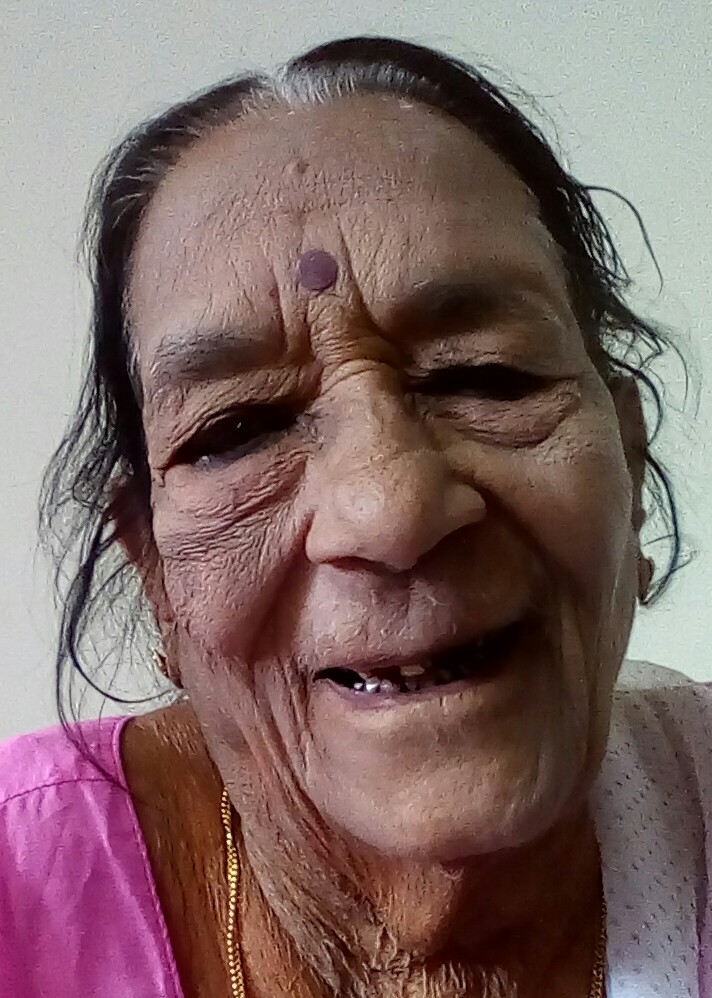
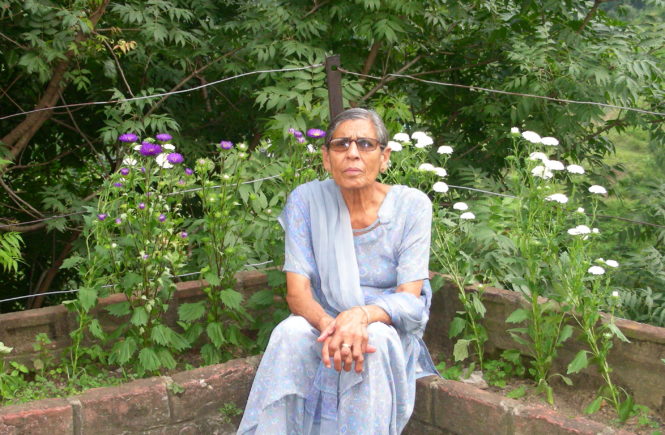
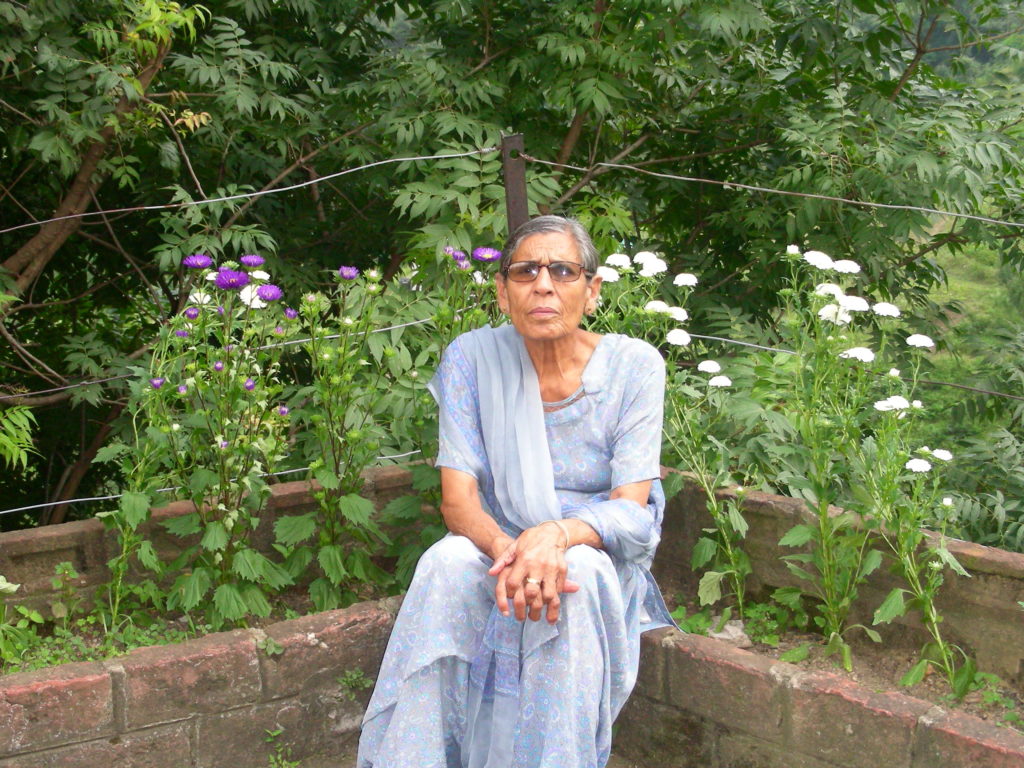
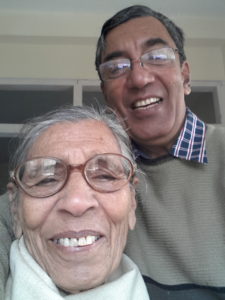
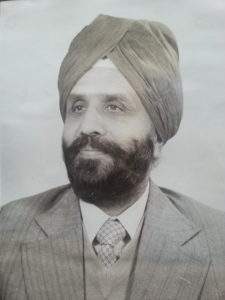
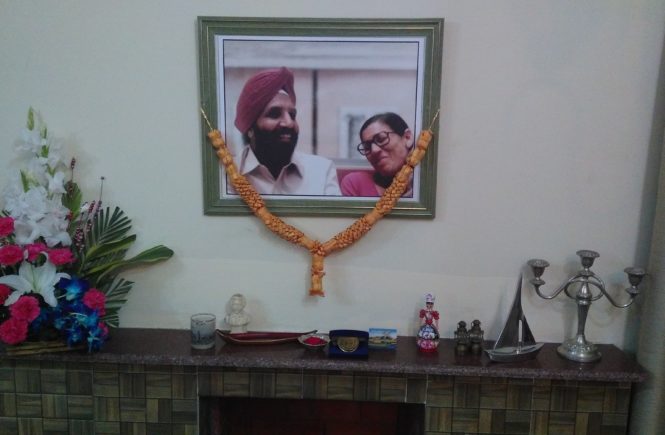
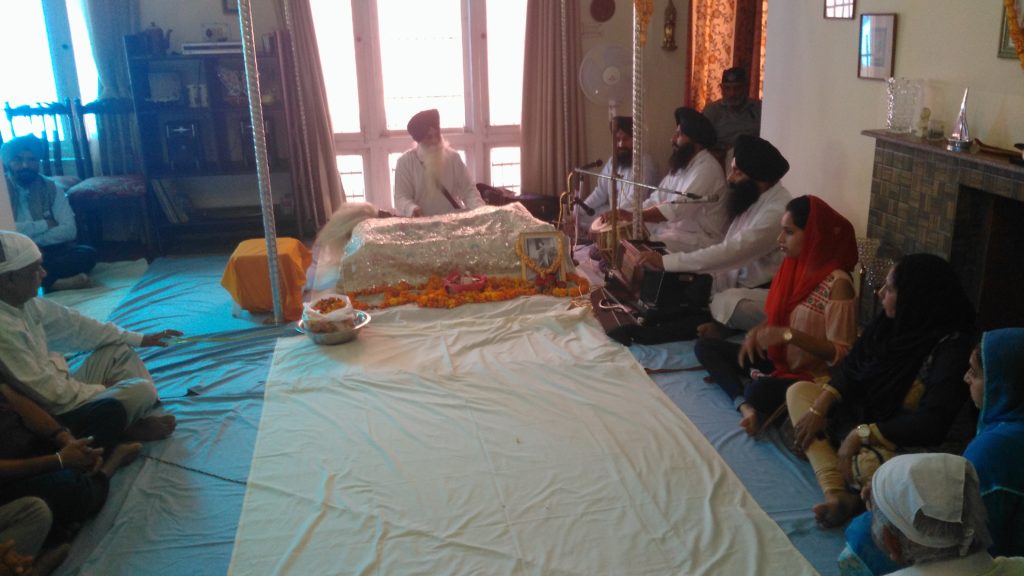
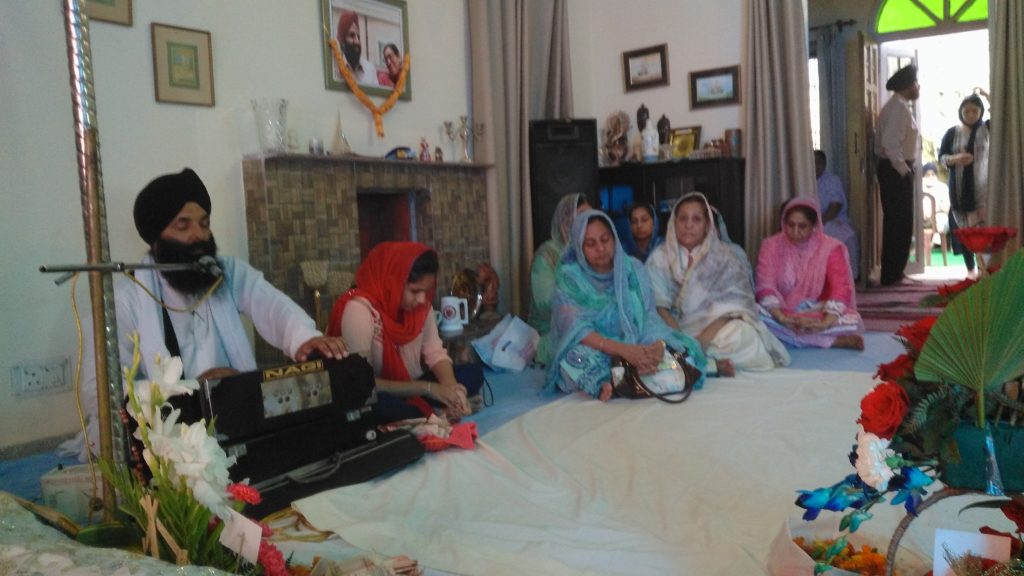
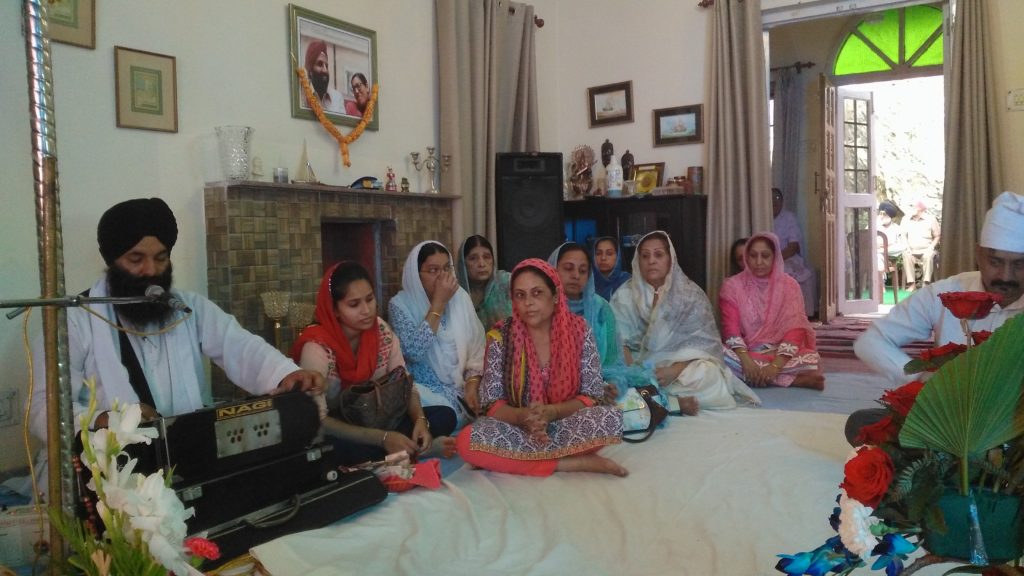
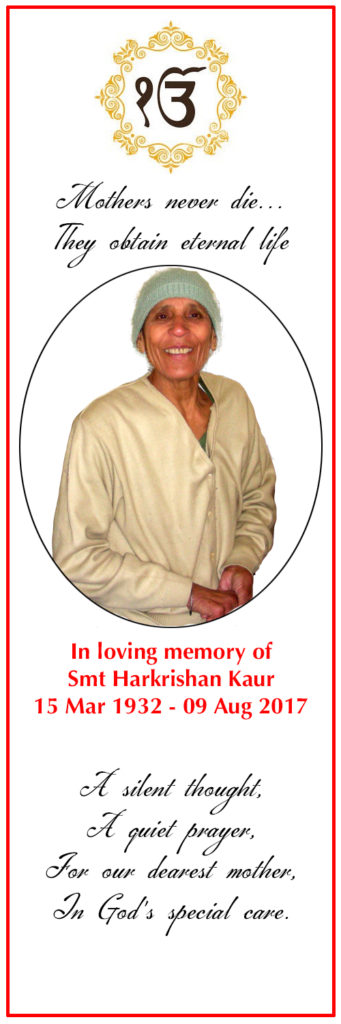
Now that, our mother, you reside with God,
And physically are a world apart,
There are voids in our home and life,
And an unfillable hole in our heart.
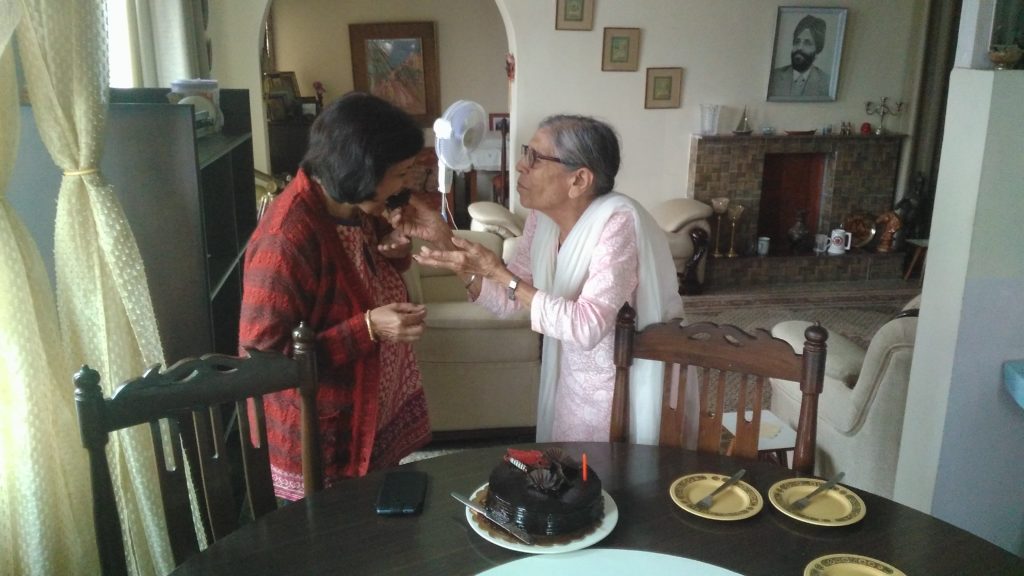
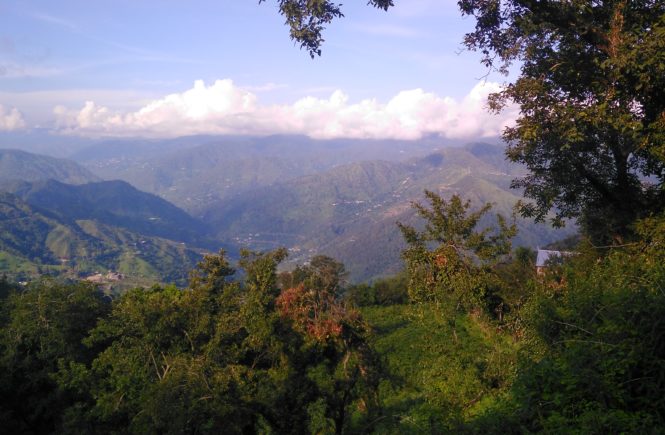
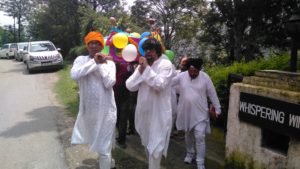
‘Whispering Winds‘ was made with your blood & sweat,
You made it a heaven on earth;
Not just we, your children, family & friends,
Even gods and goddesses know your worth.
So, adieu, mom, in the physical sense only,
You will always be there in our thought;
We promise you that the world you made,
Shall never be reduced to nought.
May you guide us with your kind hand,
From your seat in the Heaven above,
May gods shower on you now and always,
Their special care, peace and love.
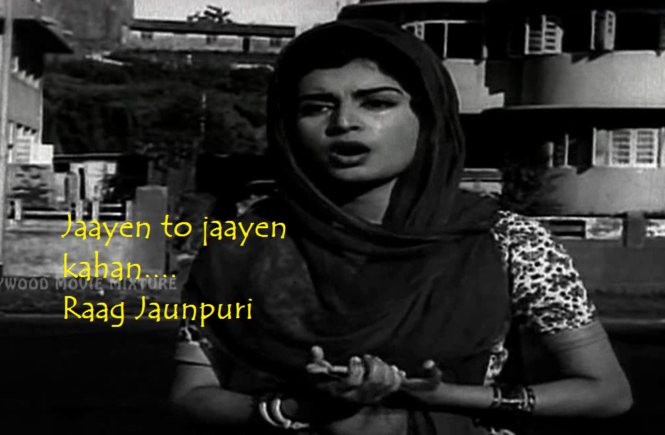
Raaga Based Song of the Day: Jaayen to jaayen kahan… Raag Jaunpuri, Tal Kaherava
We have completed twenty-seven days of Raaga Based Songs of the Day. Our first post in the series was titled ‘Raaga Based Song Of The Day #1’ and the song was a Mohammad Rafi and Lata Mangeshkar song from the 1970 Shakti Samanta movie Pagla Kahin Ka: Tum mujhe youn bhula na paoge. It is in Raag Jhinjhoti, Tal Kaherava.
Our twenty-seventh post was titled ‘Raaga Based Song Of The Day #27’ and the song was a Lata Mangeshkar song from the 1953 Nandlal Jaswantlal movie Anarkali: Muhabbat aisi dhadkan hai. It is in Raag Rageshri, Tal Kaherava.
In the last twenty-seven days of sharing Raaga based songs of the day, I have given you songs based on Raag Jhinjhoti, Gara, Bhimpalasi, Madhuvanti, Shivaranjani, Bihag, Pahadi, Sarang, Pilu, Bhairavi, Khammaj, Charukesi, Kalyan or Yaman, Desh, Malgunji, Kirwani, Kedar, Bageshri, Megh Malhar, Bhupali, Ahir Bhairav, Malkaush, Adana, Kafi and Rageshri.
Today, I give you a song in Raag Jaunpuri, Tal Kaherava.
However, first, lets take up the value added learning of today. Today, we shall learn about the History of Hindustani Music that we have been taking up for the last twenty-seven days:
Hindustani Music – also known as North Indian Classical Music or Shastriya Sangeet – started evolving sometime in the 12th century. Below, you would read about the person who devised Raag Jaunpuri: Amir Khusrow, and then you would understand how apt it is today to understand the history of Hindustani music.
Many of my friends routinely talk about how some of the best Hindi bhajans have been put together by Muslims. That’s exactly the beauty of Hindustani Music. It is because the tradition is pegged to Sufi music in India that was free from communal parochialism. The Hindu experts in music were called Pandits and Muslims as Ustaad and it was common for both of them to sing praises of one another’s deities.
Sufi composers like Amir Khusrow not just fused this music with Persian music but were able to bring into the courts of mughal emperors. Tansen, as we already know, was one of the navratnas in the court of Emperor Akbar and it was all because of his skills at music and raagas.
The fusion of Hindu music styles with Muslim in the courts of mughal rulers helped evolve various new forms or genre’s of music called Qawwali and Khayaal (Amir Khusrow has been credited with having devised Sufi Qawwali which fuses Persian melody and beat on a dhrupad like structure. A number of instruments (such as the sitar) were also introduced in his time).
All this while, the Hindu part of the fusion that finally emerged as Hindustani Music was in Sanskrit tradition. However, Guru Nanak (the father of Sikh religion) and Kabir (in the Bhakti Movement) used the popular language of the masses to popularise Hindustani music. And that’s why a study of Hindustani Music is not complete unless one understands about the Raag, Ragini, Putra system as enumerated in Sri Guru Granth Sahib, the holy book of the Sikhs. Jayadeva (11th century), Vidyapati (fl. 1375 CE), Chandidas (14th–15th century), and Meerabai (1555–1603 CE) were all part of the Bhakti Movement to which Guru Nanak and Kabir belonged and they were responsible for consolidating Hindustani Music.
Gradually, as I told you in one of my earlier posts, from the courts the Hindustani music came down to Gharanas. For example, in the late 15th century to early 16th century, Raja Mansingh Tomar of Gwalior encouraged shift from Sanskrit to Hindi as the language of classical songs. Many of our rulers were well versed in music (they used to be trained alike in fighting skills and music in Guru-Shshya tradition). Raja Mansingh was one of them. One of the musical forms called Dhrupad developed during his times. And, now you would recall why I penned Dhrupad to Gwalior Gharana when I told you about Gharanas (Please read: ‘Raaga Based Song Of The Day #17’).
The Nawab of Awadh, Wajid Ali Shah, is another name that springs to mind. His reign was between 13 February 1847 and 11 February 1856 and he was an exponent of Thumri. I have already given you his most famous composition in Raag Bhairavi (albeit sung by KL Saigal): Babul mora naihar chhooto hi jaaye when the British exiled him from his favourite city of Lucknow (Please read: ‘Raaga Based Song Of The Day #11’).
Today’s song, as I have already told you, is in Raag Jaunpuri, Tal Kaherava.
In our tenth post, that is, ‘Raaga Based Song Of The Day #10’, I had told you about the sources of name of Raagas; eg, deities: Kedar, Bhairavi, Gouri, Durga; and Tribal melodies: Ahir, Asavari, Gujari. And then came to the raagas that have been named after names of regions such as Pahadi (my place), Marwa, Bhupali and Jaunpuri.
Guess what? Jaunpuri (name of the place in Saurashtra as well as in Uttar Pradesh) belongs to the Asavari Thaat. Many experts feel that Jaunpuri is the same as Shuddha Rishab Asavari. What are the attributes of Asavari Thaat? It is full of tyaag (sacrifice) and renunciation and pathos. It is a late morning raaga.
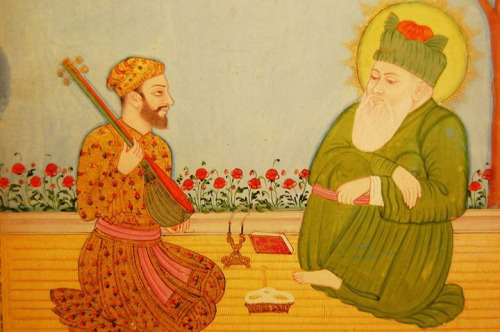
Who was the first one to devise this raaga? Well, the raaga has been attributed to Amir Khusrow in the reign of Emperor Akbar.One of the benefits of Raag Jaunpuri is believed to be a cure from headache (as claimed by Pandit Jasraj).
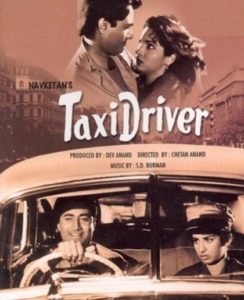
Nizamuddin Auliya listening to Amir Khusrow (Pic courtsey: TheSufi.com)(Poster courtesy: eternalcinema.com)
The song is from the 1954 Dev Anand production (Navketan Films) Taxi Driver directed by his brother Chetan Anand and starring Dev Anand, his wife Kalpana Kartik(they secretly got married on the sets of the movie) and Johnny Walker. Lyrics of the songs of the movie were penned by Sahir Ludhianvi and since it was pre-1957 Pyaasa days, the songs were composed by SD Burman.
The song was sung by Talat Mahmood too. However, I am giving you the version by my favourite female singer: Lata Mangeshkar.
Please enjoy: Jaayen to jaayen kahan…
Jaaye to jaaye kahan
jaaye to jaaye kahan
samjhega kaun yahan
dard bhare dil ki juban
jaaye to jaaye kahan
samjhega kaun yahan
dard bhare dil ki juban
jaaye to jaaye kahan
O jaane waale daaman chhudake
mushkil hain jeena, tujhko bhula ke
o jaane waale
o jaane waale daaman chhudake
mushkil hain jeena, tujhko bhula ke
isse to hain, maut aasan
jaaye to jaaye kahan
samjhega kaun yahan
dard bhare dil ki juban
jaaye to jaaye kahan
Seene mein shole, saanso mein aahe
is zindagi se kaise nibhaye
seene mein shole
seene mein shole, saanso mein aahe
is zindagi se kaise nibhaye
har jajba hain veeran
jaaye to jaaye kahan
samjhega kaun yahan
dard bhare dil ki juban
jaaye to jaaye kahan
We have intended to learn about Raaga based music whilst we entertain ourselves with Raaga based songs. So, lets, once again, take stock of our collective learning so far:
On the first day we learnt about the Raaga system devised by Pandit Vishnu Narayan Bhatkhande, which is the prevalent system in Hindustani Classical Music and based on ten Thaats.
On the second day we learnt about Tal or Taal.
On the third day we learnt about characteristics of Raagas that included Swar, Jati, Thaat, Arohana and Avarohana, Vadi, Samvadi and Pakad.
On the fourth day, we learnt about Sargam.
On the fifth day, we learnt about notations used in Indian classical music or simply Swar Lipi.
On the sixth day, we learnt about the Ras (sentiments) that Raagas evoke.
On the seventh day, we learnt about various types of Swar: Shuddha, Achal, Vikrut, Komal and Teevra.
On the eighth day, we learnt the parts of a composition in Indian Classical Music.
On the ninth day, we learnt the names of some of the popular instruments used in Indian Classical Music.
On the tenth day, we learnt about the sources of names of Raagas.
On the eleventh day, we learnt about why Bhairavi is the first raag to be taught to beginners and also why it is the last in a performance.
On the twelfth day, we learnt about Khammaj Thaat.
On the thirteenth day, we learnt about Tal Punjabi Theka or Sitarkhani.
On the fourteenth day, we learnt about Alap.
On the fifteenth day, we learnt about List of Raagas (Raagmala) in my favourite book: Sri Guru Granth Sahib.
On thesixteenth day, we learnt about tips for raaga identification.
On the seventeenth day, we learnt the basics of Gharana system.
On the eighteenth day, we learnt about Filmi Sangeet.
On the nineteenth day, we learnt about the commonest Tal in Raagas: Tintal.
On the twentieth day, we learnt about the Kafi Thaat.
On the twenty-first day, we learnt a little more in detail about the classification of Raagas.
On the twenty-second day, we learnt the essential differences between Bhairavi and Bhairav.
On the twenty-third day, we learnt a little more in detail about the Jati or Jaati of a raaga.
On the twenty-fourth day, we learnt details of Thaat Bilawal, the most basic thaat in the Bhatkhande’s system of raagas.
On the twenty-fifth day, we learnt about Tintal.
On the twenty-sixth day, we learnt in detail about the Raaga – Samay linkage.
On the twenty-seventh day, we learnt about Lehar.
And today, on the twenty-eighth day, we learnt about the history of the Hindustani Music.
There is much more still to be learnt and enjoyed.
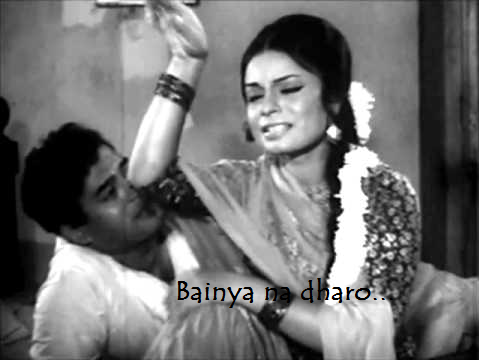
Raaga Based Song of the Day: Bainya na dharo, O balma… Raag Charukesi, Tal Punjabi Theka (Sitarkhani), Kaherava
We have completed twelve days of Raaga Based Songs of the Day. Our first post in the series was titled ‘Raaga Based Song Of The Day #1’ and the song was a Mohammad Rafi and Lata Mangeshkar song from the 1970 Shakti Samanta movie Pagla Kahin Ka: Tum mujhe youn bhula na paoge. It is in Raag Jhinjhoti, Tal Kaherava.
Our twelfth post or the last post was titled ‘Raaga Based Song Of The Day #11’ and the song was a Lata Mangeshkar song from the 1960 Bimal Roy movie Parakh: O sajana barkha bahaar aayi. It is in Raag Khammaj, Tal Kaherava.
Charukesi or Charukeshi is a raaga of Carnatic music. The raaga is called Tarangini in Muthuswami Dikshitar school; he was an early 19th century poet and composer.y
Charukesi is also very popular in Hindustani music. The mood of the raag is pathos (karuna) and devotion. Some of Hindi films most beautiful songs have been composed in it, such as Aaj dil pe koi zor chalta nahin (that was deleted from some versions of the movie Milan), Akele hain chale aao kahan ho, Bedardi balma tujhko mera man yaad karta hai, Bekhudi mein sanam, Chhod de saari duniya kisi ke liye, Ek tu jo mila, Kisi raah pe kisi mod par, Koi jab tumhaara hriday tod de, Shyam teri bansi pukaare Radha naam, Teri umeed tera intezar and karte hain.
Value added learning for today is about this new Tal we are learning:
I have told you adequately about Tal Kaherava. Today I shall cover with you Tal Punjabi Theka or Sitarkhani.
Sitarkhani takes it’s name from Siddhar-Khan-e-Theka, which means a grove invented by Siddhar Khan, widely credited with invention of Tabla.
It is a Tal of 16 beats. Some consider it as a variation of Tintal in which two dhins in the middle of each vibhag have been replaced by a single dhin: Dhaa Dhin Dhaa, Dhaa Dhin Dhaa, Dhaa Tin Naa, Naa Dhin Dhaa Clap, 2, 3, 4, Clap 2, 3, 4, Wave, 2, 3, 4, Clap, 2, 3, 4
I feel that the best rendition of Charukesi in a Hindi films is by Lata Mangeshkar in the 1970 Rajinder Singh Bedi movie Dastak (the Knock) that starred Sanjeev Kumar and Rehana Sultan. The movie has some of the best lyrics by the only Dadasaheb Phalke Award Winner Lyricist Majrooh Sultanpuri; eg, this song, Mai ri main kase kahun, and Hum hain mata-e-kuucha-o-bazaar ki tarah.
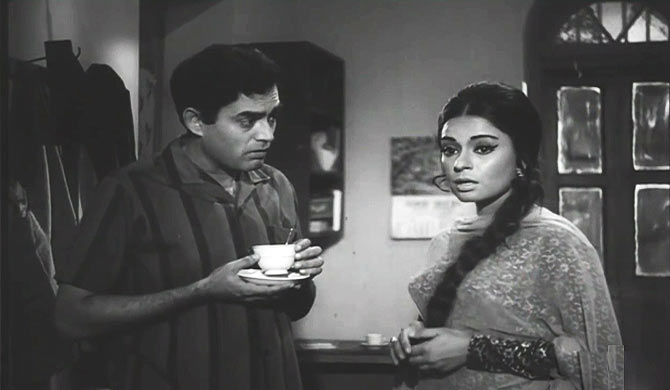
A scene from the 1960 movie Dastak starring Sanjeev Kumar and Rehana Sultan (Picture courtesy: Rediff.com)
And as far as the composer Madan Mohan is concerned, what can you stay about him? I feel that he was the best in composing songs with poignancy and even melancholy.
Ladies and gentlemen, please enjoy: Bainya na dharo, O balma…
Bai.nyaa na dharo, o balamaa,
bai.nyaa na dharo, o balamaa
na karo mose raa… r
bai.nyaa na dharo
Dhalegii chunariyaa, tan se
Dhalegii chunariyaa, tan se … tan se …
aa aa aa…
Dhalegii chunariyaa, tan se
ha.Nse.ngii re chU.Diyaa.N chhan se
ha.Nse.ngii re chU.Diyaa.N chhan se … chhan se chhan se
ha.Nse.ngii re chU.Diyaa.N chhan se
machegii jhanakaa … r …
bai.nyaa na dharo … na dharo … na dharo, o balamaa
Mohe chho.Do hAy … sajanaa …
mohe chho.Do hAy … mohe chho.Do
mohe … chho.Do … chho.Do sajanaa …
mohe chho.Do hAy sajanaa …
diyaa siis uThaaye … sajanaa
diyaa siis uThaaye … uThaaye sajanaa …
rahaa mohe nihaa … r
bai.nyaa na dharo … na dharo … na dharo, o balamaa
Mai.n to aap bahakii bahakii
mai.n to aap bahakii bahakii bahakii, aa … aa … aa
mai.n to aap bahakii bahakii
chaluu.N jaise mahakii mahakii
chaluu.N jaise mahakii … mahakii
chaluu.N jaise mahakii
chameliyaa kii Daa … ra
bai.nyaa na dharo, o balamaa
na karo mose raa … ra
bai.nyaa na dharo … na dharo … na dharo, o balamaa
We have intended to learn about Raaga based music whilst we entertain ourselves with Raaga based songs. So, lets, once again, take stock of our collective learning so far:
On the first day we learnt about the Raaga system devised by Pandit Vishnu Narayan Bhatkhande, which is the prevalent system in Hindustani Classical Music and based on ten Thaats.
On the second day we learnt about Tal or Taal.
On the third day we learnt about characteristics of Raagas that included Swar, Jati, Thaat, Arohana and Avarohana, Vadi, Samvadi and Pakad.
On the fourth day, we learnt about Sargam.
On the fifth day, we learnt about notations used in Indian classical music or simply Swar Lipi.
On the sixth day, we learnt about the Ras (sentiments) that Raagas evoke.
On the seventh day, we learnt about various types of Swar: Shuddha, Achal, Vikrut, Komal and Teevra.
On the eighth day, we learnt the parts of a composition in Indian Classical Music.
On the ninth day, we learnt the names of some of the popular instruments used in Indian Classical Music.
On the tenth day, we learnt about the sources of names of Raagas.
On the eleventh day, we learnt about why Bhairavi is the first raag to be taught to beginners and also why it is the last in a performance.
On the twelfth day, we learnt about Khammaj Thaat.
And today, on the thirteenth day, we learnt about Tal Punjabi Theka or Sitarkhani.
There is much more still to be learnt and enjoyed.
Raaga Based Song of the Day:Zara sun haseena ai nazneen…
Raag Pahadi, Tal Rupaktal
We have completed seven days of Raaga Based Songs of the Day. Although our first post in the series was titled ‘Raaga Based Song Of The Day #1’ and the song was a Mohammad Rafi and Lata Mangeshkar song from the 1970 Shakti Samanta movie Pagla Kahin Ka: Tum mujhe youn bhula na paoge (It is in Raag Jhinjhoti, Tal Kaherava), the fact is that on WhatsApp groups I had started with these posts three or four days before putting them up here on this blog. Yesterday onwards, I am merging these posts.
Our seventh post or the last post was titled ‘Raaga Based Song Of The Day #7’ and the song was a Geeta Dutt (when she was still Geeta Roy) song from the 1951 Guru Dutt movie Baazi: Aaj ki raat piya dil na todo. It is in Raag Pahadi, Tal Dadra.
There is no doubt in my mind that the best of any genre’ of music has been sung by the god of songs: Mohammad Rafi.
The best in Raag Pahadi is also by him: Chaudhvin ka Chand, in Taal Kaherava.
By the way, my favourite lyricist Shakeel Badayuni received his first Filmfare Award in 1961 for this song. Shakeel’s association with Ravi resulted in some remarkably beautiful songs sung by Mohammad Rafi. The theme of describing husn (beauty) of the woman was prominent in these songs. Indeed the second song for which Shakeel received his Filmfare Award in 1962 was also a husn song: Husn wale tera jawab nahin for the movie Gharana.
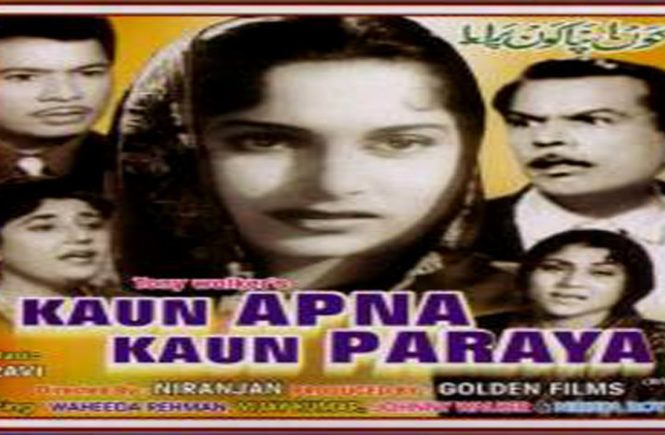
In 1963 movie Kaun Apna Kaun Praya, Shakeel, Ravi and Rafi made yet another enchanting husn song that Vijay Kumar lip-synced to Waheeda Rehman.
This song and a part of the movie was shot in the picturesque hill station of Nainital.
You can feel the Pahadi dhun with Rupaktal. I have told you enough about Pahadi, let me give you a few songs in Rupaktal though not in Pahadi. Before that: Rupak is unique among the tals in that the first beat (ie, the sam) is khali (ie., represented by a wave of the hand).
wave, 2, 3, clap, 2, clap, 2
Some songs in Rupaktal: Aap ki nazaron ne samajha, Ghar aaja ghir aaye badra sanwariya, Haay re vo din kyun na aaye, Kisi raah pe kisi mod par, Piya tose naina laagi re, Tum gagan ke chandrama and Megha chhaye aadhi raat.
What about the value-added learning for today? Well, today, we shall learn about parts of a compostion in Indian Classical Music.
In Indian Classical Music, a composition has four parts, of which only the first two are performed regularly:
Asthaai including mukhda.
Antara.
Sanchari.
Abhog.
The other day (Raaga Based Song Of The Day #2), I mentioned to you the concept of Sam – the first beat of a taal (rhythm) cycle. It is also the syllable(s) of the bandish (composition) on which the first beat of the taal cycle falls. When an artist begins a composition, the tabla enters at the sam syllable.
Reshma Hingorani, in her celebrated blog on Indian Classical Music explains this with an example (a bandish in afternoon raag, Shuddha Sarang: Ab mori baat maan le piharava) and it is worth going through that.
She then gives description of each part:
Asthaai (pallavi in Carnatic music, base or refrain in western music) is the first part of a composition, its first line serving as a Mukhda, while the Asthaai itself serves as a base for the singer to returns to, repeatedly.
Mukhda: literally ‘face’, is the opening phrase of an asthaai, which comes before, leads up to, and arrives on the sam. So a mukhda introduces and sets the tone. When artists improvise, they return to the Asthaai periodically, by picking up the mukhdaa at the right time.
Antara: literally ‘within’; (Anupallavi in Carnatic music, “Stanza” or “verse” in western music). It is the second part, a continuation from where the mukhda left off, sung in a high octave, focusing on the taar shadaj, with a good deal of text manipulation and repeated forays into asthaai.
Sanchari: literally, “wandering”; the 3rd section (Charanam in Carnatic music) – remains a free-flowing, section.
Abhoga: 4th or concluding section (Pallavi in Carnatic music); includes notes from all three octaves, and in present-day performances, may well be sung with the Sanchari, if these two sections are included.
The song Zara sun haseena ai naazneen takes you straight to the hills (where I am) with its Raag Pahadi, Tal Rupaktaland beautiful rendition by Mohammad Rafi.
Please enjoy: Zara sun haseena ai nazneen…
Zaraa sun hasiinaa ai naazanii.n
meraa dil tujh hii pe nisaar hai
tere dam se hii mere dilarubaa
merii zi.ndagii me.n bahaar hai
hu_ii jab se mujh pe terii nazar
mai.n huu.N apane aap se beKabar
hu_aa jab se dil me.n teraa guzar
mujhe chain hai na qaraar hai
tere husn se jo sa.Nvar ga_ii
vo fizaa_e.n mujhako aziiz hai.n
terii zulf se jo lipaT ga_ii.n
mujhe un havaa_o.n se pyaar hai
ye hasiin phuulo.n kii Daaliyaa.N
tujhe de rahii hai salaamiyaa.N
mujhe kyo.n na rashq ho ai sanam
tere saath fasl-e-bahaar hai
We have intended to learn about Raaga based music whilst we entertain ourselves with Raaga based songs. So, lets, once again, take stock of our collective learning so far:
On the first day we learnt about the Raaga system devised by Pandit Vishnu Narayan Bhatkhande, which is the prevalent system in Hindustani Classical Music and based on ten Thaats.
On the second day we learnt about Tal or Taal.
On the third day we learnt about characteristics of Raagas that included Swar, Jati, Thaat, Arohana and Avarohana, Vadi, Samvadi and Pakad.
On the fourth day, we learnt about Sargam.
On the fifth day, we learnt about notations used in Indian classical music or simply Swar Lipi.
On the sixth day, we learnt about the Ras (sentiments) that Raagas evoke.
On the seventh day, we learnt about various types of Swar: Shuddha, Achal, Vikrut, Komal and Teevra.
And today, on the eighth day, we learnt the parts of a composition in Indian Classical Music.
There is much more still to be learnt and enjoyed.
There are many Song and Music groups on the Facebook; but, ‘Yaad Kiya Dil Ne‘ is different. Most other groups simply have members putting up urls of songs from YouTube and other sources and then members congratulate the choice of the one who has posted by such comments as “Wow”, “I love this too”, “Really nice” and so on.
‘Yaad Kiya Dil Ne‘ is different and unique. It is a successor to my group ‘Dil Ki Nazar Se‘, which I had to abandon when some of the members insisted on just putting up urls from YouTube with very little or no contribution of their own. Here is the description o ‘Yaad Kiya Dil Ne‘:
“A group for serious music lovers who not just relish putting up and listening to songs but also identify these with Lyricists, Music Directors, Singers and Actors who brought the songs to us. The group pays tributes to these four classes of people on their birth and death anniversaries. The group is also interested in sharing knowledge about all aspects of songs including Raagas. The group also has thematic Music Fests at least once in a month. If you are a casual copy-paste music lover who can copy-paste ten songs (urls) from You Tube in ten minutes, this group is NOT recommended for you.
The name of the group has been derived from the title of a duet between Hemant Kumar and Lata Mangeshkar from the 1953 movie Patita starring Dev Anand and Usha Kiran.”
From its inception in Nov 2013, the group has come a long way off. Many of the members research everything about the song that they are going to put up, write descriptions that can compete with the best blogs, and everyone is on a learning curve of knowing more about songs and music.
Now who says Facebook is for dumbos only?
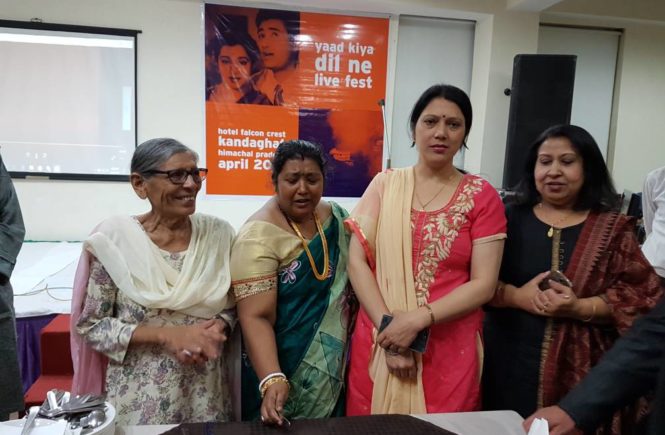
As far as thematic fests are concerned, from the days of DKNS we have had as many as 61 fests so far including a Live Fest on the Theme: Raat and/or Din in Kandaghat on the 22nd April 17.
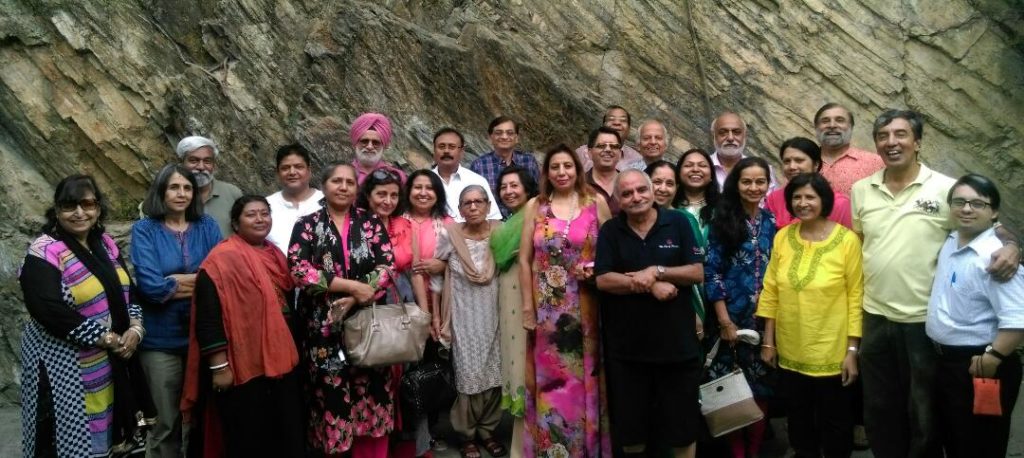
The winning ‘Bahaar’ team at the end of Kandaghat Live Fest (KLF) on 22nd Apr 17
When I started the thematic Fests, in Dec 2012, I started off on my most favourite topic Chand. The next fest on Sat/Sun 13th/14th May 17 is important to me as Aansu is my second most favourite topic for Fest (If you read the last poem in this post, you will know why).
In no other Fest, I have built up to the Fest by Preludes like I have done for Aansu Fest. One of the reasons is because at a very early stage itself I took out the usual interpretations of the theme so as to somehow get one’s songs included. Taste this:
“The songs are to have the word Aansu or any of its synonyms either in the mukhada or the antara. (Rona may produce aansu or ashq but is not a synonym of Aansu. Similarly ‘Naina Barse’ is not a synonym of Aansu. Hint: Don’t use logic/reasoning later; there are enough songs with Aansu/Ashq in them)”.
क्या फर्क है आंसू और रोने में,
उम्र बीत गयी हमारी दामन धोने में,
उन्हें फिर भी रूल्स न समझ आये तो क्या,
तरस आता है अपने एडमिन होने पे!
And since the stubborn in the group were bemoaning the letting go of such songs, I started with a Prelude or Doubt Clearance #1:
Aansu Songs Fest Doubt Clearance #1
Imagine this one put together by Raja Mehdi Ali Khan, Madan Mohan and Lata ji not qualifying for the Fest! Raag Bhimpalasi, Taal Kaherava at that.
How unfair the Admin can get!
https://www.youtube.com/watch?v=VXbJwAstSR4
I also brought out another one of the rejects. And see how closely it comes to Aansu. At this juncture I reminded everyone that I had personally checked at least 80 songs on the theme before announcing the Fest and now the list had crossed 100!
गाए जा गीत मिलन के, तू अपने लगन के
सजन घर जाना है
काहे छलके नैनों की गगरी काहे बरसे जल
तुम बिन सूनी साजन की नगरी परदेसिया घर चल
प्यासे हैं दीप नयन के, तेरे दर्शन के
सजन घर…
लुट न जाए जीवन का ढेरा मुझको है ये ग़म
हम अकेले, ये जग लुटेरा बिछड़ें न मिलके हम
बिगड़े नसीब न बनके ये दिन जीवन के
सजन घर…
डोले नयना प्रीतम के द्वारे मिलने की ये धुन
बालम तेरा तुझको पुकारे याद आनेवाले सुन
साथी मिलेंगे बचपन के खिलेंगे फूल मन के
सजन घर…
And, I continued with my own preludes in the form of either comical or serious poems:
Aansu Songs Fest Prelude #2
आंसू गाने याद आये, होंठो पे आ गयी मुस्कान,
फेस्ट के लिये तैयार करूँगा छे हसीन पैगाम।
‘कर चले हम फ़िदा’ तो किसी तरह से फिट नहीं होता,
Unless: ‘मान न मान, मैं तेरा मेहमान’!
आहों और आँसुयों में फर्क न होता तो पूरे कर लेता,
‘आज पुरानी राहों से’ ही दिल के सारे अरमान।
रवि भाई को क्या सूझी है, मुझे कुछ अंदाज़ नहीं,
रोने और आँसुयों को अलग करके ले आये हैं तूफ़ान।
चलो सब लूट नहीं गया, ‘याद में तेरी जाग जाग कर’ तो है ही,
शकील ने तो आँसुयों की खोल रखी है दूकान!
मुझे तो अपना दोस्त याद है, सफ़ेद निक्कर में हम गाते थे,
गाड़ी बुला रही है और यह भूली दास्तान।
मैं तो कम controversial हूँ, मेरा एक दोस्त है विशवास,
उसके doubt clear करते करते, रवि को हो जाएगा जुकाम!
खैर आंसू और रोना अलग हैं, पर आँखें तो common हैं,
और आंसू बन ही जाते हैं आशिक़ के दिल की ज़ुबान।
भाई ने मोटीवेट किया है तो ऐसे गीत लायूँगा मैं फेस्ट में,
भाई भी कहेगा: “हम सब फ़क्त आदमी हैं, तुम्ही हो इन्सान”!
Aansu Songs Fest Prelude #3
Those who know me well – and all of you in YKDN do – know that Aansu is my second most favourite Fest theme after Chand.
We have had discussion on Aansu before too. I cry easily and not only when I cook and cut onions! I hope I don’t offend my sisters here but, for the kind of sensitivity God has given me, I could very well have been a woman!
Last time when you contributed your views on Aansu, I recorded them. Please read what YOU penned about Aansu earlier (Please read: ‘Why Do We Sometimes Cry Listening To Old Songs?’). All of you, without exception, are the best that God could have gifted me and he did!
मेरी ख़ुशी में आपकी झलक, आँसुयों में है आपकी छवि,
दोस्तों आप के दम से ही जीता है आपका रवि।
खुदा ने गीत दिए, संगीत दिया, और दी प्यार की रौशनी,
और मुझ जैसा ज़ाहिल भी बन बैठा छोटा सा कवि।
अपने छोटे पन का एहसास मुझे सताता था हर दम,
आपकी ताक़त और इल्म से मैं भी जचता हूँ अनुभवी।
मिल के आंसू छलक जाएँ, ख़ुशी के हों या ग़म के,
पर दुबारा कभी भी हम ना होंगे अजनबी।
फेस्ट आयेंगे, फेस्ट चले जायेंगे मेरे साथियो,
अपने ‘भैया’ और ‘वीरजी’ से ना रूठना कभी।
आपके इशारे से ही चलती है दिल की धड़कन,
कल भी, आज भी और आने वाले कल में भी।
There are, of course, one or two members who invariably have doubts even after the Fest is over. This is a tribute to them:
Aansu Songs Fest Prelude/Doubt Clearance #4
TRIBUTE TO YOU-KNOW-WHO!
What would Fests be without a doubt?
What would suave be without a lout?
Tears can be even in pants and shirts,
But we talk about only those in the eyes sprout.
Weeping like a willow is alright in a way,
But in the Fest we’d like to see drops about.
There are many songs on Aansu and synonyms,
But remember what is IN and what is OUT.
You will have to wait until the end of the Fest,
To beat your ‘bhaiyya’ with a stick that is stout!
I am hell-bent to give you negative marks,
If you continue to rules and norms flout.
And those of you who like to take up the cudgels,
Remember, it is just a Fest and not a boxing bout!
(Surprise! Surprise!)
Let me see you laugh and smile in Aansu Fest,
No long face, no grudge, no anger, no pout.
Aansu Songs Fest Prelude/Doubt Clearance #5
RARE KI KHOJ
बीसियों गाने हैं आंसू और अश्क़ पर लेकिन,
हमें ढूंढना है कुछ हटके,
रवि भैया ने लंबी लिस्ट बनायीं होगी फेस्ट से पहले,
पर हम लगे रहेंगे डट के।
कल रात मैंने फिर से लिस्ट देखी, क्या अनोखे गीत हैं आँसुयों पे!
समझ नहीं आता क्यों हैं मेरे दोस्त, rare की खोज में सटके?
जब आंसू और अश्क़ पर ही हैं इतने प्यारे नग्में,
तो यह सब नीर, बदरा, घटा, बरसात में क्यों अटके?
कहीं ऐसा तो नहीं के अभी से महसूस हो रहे हैं,
After Fest के भूकंप के ज़ोरदार झटके?
सिर्फ मेरी बहनें चुप हैं, क्योंकि आंसू उनके अपने हैं,
Rare की खोज में उनके तो नैन भी ना मटके।
बाकी रहे मेरे भाई, यूँ लगता है मुझे तो हुज़ूर,
आसमान से गिरे, ख़जूर पे लटके!
लगे रहो Munna भाई!
Aansu Songs Fest Prelude #6
I agree with you that most things in this universe are inter-connected. Hence, some of the causes of Aansu would be crying, wailing, screaming, cutting onions and weeping. There are others who would like to reason out that even uncontrolled laughter can cause Aansu and hence even Hansi, Muskaan, Khushi, Gham, Sorrow, Miseries all should be under the general heading AANSU.
This time, unlike the working of your complex minds, I made it very simple. ONLY Aansu and its direct synonyms such as Ashq and Tears are included. No Rona Dhona, Aankhon se Barsaat, Naino mein Badra, Motiyon ki ladhi, Neer, Paani, NOTHING. If you have the slightest doubt whether what you are putting up is a synonym or your interpretation of Aansu, DON’T PUT IT UP.
I have already done the homework for you and confirmed that there are adequate songs on Aansu and its direct synonyms.
AANSU AUR DIL by Sunbyanyname (First Look here, as always)
लोग कहते हैं आंसू दिल की जुबां हैं,
मैं सोचता हूँ आंसुओं के अपने अरमान हैं,
कई बार लगता है इन नन्हे आंसुओं में,
गौर से देखें तो सारा जहान है I
आंसू चुप रह के भी सब कुछ बोल जाते हैं,
किस खूबी से दिल से दिल को टोल जाते हैं,
राज़ – ऐ – दिल लाख आप छुपाते रहें,
खामोशी में छुपे राज़ अक्सर खोल जाते हैं I
आंसुओं के साथ जुड़े हैं कई जज़्बात,
आंसू ही तो हैं एहसास – ऐ – कायनात,
खशी में, ग़म में, उदासी में, हँसते हुए,
आंसू हैं सुहाना दिन, आंसू हैं हिज्र की रात I
आंसुओं की बौछार से खिल जाते हैं फूल,
वल्लाह, कई बार चुभते हैं बनके गरम शूल,
बेकसी के आलम में तो यौन भी लगता है हमें,
हमारे आंसू हैं किसी और की भूल I
आंसुओं का फेस्ट मेरा दिल – पसंद और अज़ीज़ है,
चाँद के बाद एहि तो मेरे करीब है,
साड़ी उम्र गुज़री है यह खज़ाना जमा करने में,
आंसुओं के बग़ैर रवि फ़क़त गरीब है !
Log kehte hain aansu dil ki zubaan hain,
Main sochata hoon aansuyon ke apne armaan hain,
Kayi baar lagta hai in nanhe se aansuyon mein,
Gaur se dekhen to saara jahaan hai.
Aansu chup reh ke bhi sab kuchh bol jaate hain,
Kis khoobi se dil ko dil se tol jaate hain,
Raaz-e-dil laakh aap chhupate rahen,
Khaamoshi mein chhupe raaz aksar khol jaate hain.
Aansuyon ke saath judhe hain kayi jazbaat,
Aansu hi to hain ehsaas – e – kayinaat,
Khushi mein, gham mein, udaasi mein, hanste huye,
Aansu hain suhaana din, aansu hain hijr ki raat.
Aansuyon ki bauchhar se khil jaate hain phool,
Wallah kayi baar chubhate hain banake garam shool,
Bekasi ke aalam mein to youn bhi lagta hai hamen,
Hamaare aansu hain kisi aur ki bhool.
Aansuyon ka Fest mera dil-pasand aur azeez hai,
Chand ke baad yehi to mere kareeb hai,
Saari umr guzari hai yeh khazaana jama karne mein,
Aansuyon ke bagaair Ravi faqt gareeb hai!
Aansu Songs Fest Prelude #7 (Six Hours to Go!)
AANSUYON KI TAMANNA!
आज तो आंसुओं की बरसात होने वाली है,
थाम लो दिल अब मुलाक़ात होने वाली है I
अजीब तमन्ना – ए – आंसू लेकर उठेंगे दोस्त मेरे,
ख़ुशी अब मिले अब अश्क़ों की बरात होने वाली है I
बहारों से दिन रात सजे थे पिछले फेस्ट में,
अब तो सुनते हैं ग़म – ए – हयात होने वाली है I
सुलगते अश्क़ों से दिल के फ़साने सुनाएंगे,
मुझे लगता है करामात होने वाली है I
दोस्तो, अल्लाह का फज़ल हो आप पे और आप की कलम पे,
खामोश लबों की आँखों से बात होने वाली है I
आपकी सालगिरह पर आपको बधाई हो,
आपके प्यार में हर दम गहराई हो,
और कुछ ऐसा संगीत और गीत बनें,
अपनी अपनी बीन नहीं, सांझी शहनाई हो !
आप दोनों ही प्यार की हसीन मूरत हो,
आपसी ख्वाइश ही नहीं ज़िन्दगी की ज़रुरत हो,
आपको देख के लगता है कुछ यूँ हमें,
सारे जहाँ में आप दोनों सबसे खूबसूरत हो I
खुदा ने बनाई है यह जोड़ी बड़े प्यार के संग,
सुन्दर मीना है फ़रिश्ते राज कुमार के संग,
फिर ऊंचे बादल क्यों न हों पैरों तले?
बसंत जब जुड़ी हो बहार के संग !
अगर शहनशाह है राज तो मीना है मुमताज़,
राज की गहरी आवाज़ और मीना का अंदाज़,
सच पूछो तो ऐसा महसूस होता है हमें,
राज गर गीत का सुर है तो मीना है साज़ I
आपके प्यार में खुशबु हो, कभी न हो गन्दगी,
मीना की हो इबादत और राज की हो बंदगी,
हज़ारों जनम आप का बार बार मिलन हो,
हसीं ख़ुशी से गुज़रे मुहब्बत की ज़िन्दगी I
Aapki saalgirah par aapko badhayi ho,
Aapke pyaar mein har dam gehrayi ho,
Aur kuchh aisa sangeet aur geet banen,
Apni apni been nahin saanjhi shehnayi ho!
Aap dono hi pyaar ki haseen murat ho,
Aapsi khwaaish hi nahin zindagi ki zaroorat ho,
Aapko dekh ke lagta hai kuchh youn hamen,
Saare jahan mein aap dono sabse khoobsurat ho.
Khuda ne banayi hai yeh jodhi badhe pyaar ke sang,
Sundar Meena hai farishtey Raj Kumar ke sang,
Phir oonche baadal kyun na hon pairon tale?
Basant jab judhi ho Bahaar ke sang!
Agar Shehanshah hai Raj to Meena hai Mumtaz,
Raj ki gehri awaaz aur Meena ka andaaz,
Sach poochho to aisa mehsoos hota hai hamen,
Raj gar geet ka sur hai to Meena hai saaz!
Aapke pyar mein khushbu ho, kabhi na ho gandagi,
Meena ki ho ibaadat aur Raj ki ho bandagi,
Hazaaron janam aapka baar baar milan ho,
Hansi khushi se guzre aapki muhabbat ki zindagi.
At the end of the Fest, my sister Suman Saxena paid the following tribute to Shakeel Badayuni (there can’t be a YKDN Fest without him). By the way, the entire lot of participants were divided into two groups: Basant and Bahaar and Suman was the leader of the Bahaar group that won the Fest.
Tribute to Shakeel Badayuni ————————————- Sab karishmat-e-tasavvur hai ‘Shakeel’ Warna aataa hai na jata hai koi
Dedicating this song to our Ravinder PS Ravi Bhaiya and Basant Team (fans of Shakeel).
I wanted to post something unique for ‘Basant’ team for their unconditional love and support throughout the meet. While surfing songs came across this rare gem “Hangaama E Gham Se Tang Aakar” which is the only song that Shakeel Badayuni has recorded in his own voice in movie Paak Daaman (1957). Music directed and composed by Ghulam Mohammad and lyrics written by Shakeel Badayuni.
Hope you all will like it.
Requesting Ravinder PS Ravi Bhaiya to add value to this post with his comments.
Lyrics
Hangaamah e gham se tang aa kar Izhaar e masarrat kar baithhe ae Mashoor thi apni zinda dili Daanistah sharaarat kar baithhe ae
Koshish to bahut ki hamne magar Paaya na gham e hasti se mafarr Veeraani e dil jab hadd se badhi Ghabraa ke mohabbat kar baithhe ae
Har cheez nahin ek markaz par Ik roz idhar ik roz udhar Nafrat se na dekho dushman ko Shaayad ye mohabbat kar baithhe ae
Allaah to sab ki suntaa hai Jur’at hai ‘shakeel’ apni apni Haali ne zubaan se uff bhi naa ki Iqbaal shikaayat kar baithhe ae Hangaama e gham se tang aa kar Izhaar e masarrat kar baithhe ae.
Here is what I wrote on her poet spontaneously without giving it too much of a thought:
Shakeel का कलाम उन्ही की ज़ुबान से,
सुनते ही फरिश्ते बन जाते हैं इनसान से,
दिल की तरंगें उठके गिरने का नाम नहीं लेतीं,
सांस थम जाती है जशन-ऐ-अरमान से।
और क्या मैं लिखूं इस बारे में Suman?
यही के उन जैसा शायर कहाँ चला गया जहान से?
शुक्र गुज़ार हूँ आपका, आपने जज़्बात की कदर की,
वर्ना आजकल लोग नज़र आते हैं मेहमान से।
अल्लाह, मुझे Shakeel की बज़्म में ही जगह देना,
कल जब मैं उठ जायूँ इस जहान से।
Doesn’t look like I will ever fail to pay tribute to Shakeel Badayuni. A sizeable portion of my blog Sunbyanyname is already devoted to Shakeel whose ‘takhallus‘ means: Handsome, Idealistic, Sensitive. Just how ‘sensitive’ he could get can be made out from just two couplets from his songs:
फिर आह दिल से निकली, टपका लहू जिगर से
शायद वो जा रहे हैं, छुपकर मेरी नज़र से
and….
तूने वो दे दिया ग़म, बेमौत मर गये हम
दिल उठ गया जहाँ से, ले चल हमें यहाँ से
ले चल हमें यहाँ से
किस काम की ये दुनिया जो ज़िंदगी से खेले रे
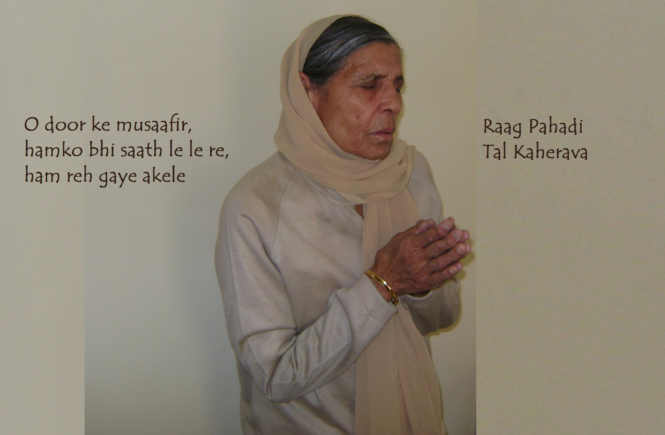
हम को भी साथ ले ले, हम रह गये अकेले
And yet, he was a poet of Husn and Bahaar. What did he have to say about the latter, Bahaar or the group Bahaar commanded by Suman Saxena? Here are a few examples:
ज़रा सुन हसीना ऐ नाज़नीं
मेरा दिल तुझ ही पे निसार है
तेरे दम से ही मेरे दिलरुबा
मेरी ज़िंदगी में बहार हैI
आई हैं बहारें मिटे ज़ुल्म-ओ-सितम
प्यार का ज़माना आया दूर हुए ग़म
बहारों की दुनिया पुकारे तू आ जा
तेरे मुन्तज़िर हैं सितारे तू आ जा
दो दिन की बहार प्यारे
दिल में बसा ले प्यार
हम-तुम ये बहार
देखो रंग लाया प्यार
मुस्कराएँ जो तेरे लब तो बहारें आईं
खिल गए फूल पड़ी तेरी जहाँ परछाईं
तूने गुलशन मेरा महकाया है
तेरी सूरत ने गज़ब ढाया है
तू है ऐसी कली जो गुलशन में
साथ अपने बहार लायी हो
And here is a special one for Yaad Kiya Dil Ne group from Shakeel:
ये बहारें ये फ़िज़ा, देखकर ओ दिलरुबा
जाने क्या दिल को हुआ, तुम याद आये
The fact is that I can go on and on and on and yet not come to the end of what Shakeel had to write about Bahaar!
So, how do you put both these things together: One side ‘Dard‘ (Ache) and extreme sensitivity and on the other side Husn (Beauty) and Bahaar (Spring)?
Simple! Many a times, he combined both together and made it into ‘Irony’ especially for those who understood the deep emotions. For others who like their poetry and lyrics as ‘fast food’, he made it look like as if there was ‘Bahaar‘ and happiness and celebrations around.
Her name too was Bahaar – the senior courtesan in the court of Emperor Akbar (Mughal-e-Azam) (Please also enjoy ‘Immortal Songs Of Mughal-e-Azam’) and she was jealous of the love that existed between Prince Salim and a junior courtesan Nadira (Anarkali; the blossom that sprouts in Bahaar! (Height of Irony)). So she tattled to the Emperor and he immediately had Anarkali imprisoned. When you are in love you can do anything. Hence, Prince Salim amassed an army against his own father to rescue Ananrkali. Salim was defeated and sentenced to death and it was Anarkali who offered to die in his place! This was accepted by Emperor Akbar. Before being entombed alive to die, she asked for a few hours of the night with Salim. It was granted on the condition that she would make him smell a sedative in a rose flower so that he won’t interfere with her being taken to the dungeon.
Shakeel had nothing to do with the above story; it is just historical. So where did he come in? He had to make a song that would bring out the irony of this situation! He was – this is what I have dubbed him as – the King of Irony. He came up with this outstanding song that was composed by Naushad in a Qawwali in K Asif’s 1960 movie Mughal-e-Azam. He composed it in Raag Jaijaiwanti, Taal Kaherava (Please read: ‘The Best Raaga Based Songs In Hindi Movies – Raag Jaijaivanti’).
Each word of this qawwali has been scripted keeping in mind the dual meaning of total happiness at Salim and Nadira being together for the night and, at the same time, pointing indirectly (and cleverly) to her being entombed to death in the morning.
Shakeel’s fans (the Basant Group, for example) can delve in ‘Irony’ as much as Shakeel did! They selected this qawwali to pay tribute to what should have been their rival group: the Bahaar group. Please see how outstandingly they did it:
नग़मो से बरसती है मस्ती
छलके हैं खुशी के पैमाने आज ऐसी बहारें आई हैं कल जिनके बनेंगे अफ़साने
अब इसे ज्यादा और हसीं ये प्यार का मौसम क्या होगा?
No one could have even thought of it but Shakeel did and his fans did!
Last year (56 years after the movie was released), the Akademi for promoting South Asian Dance form in UK paid tribute to the genius of Shakeel, Naushad and K Asif by re-enacting (in dance form) that magnificent night when Anarkali was granted her wish to spend a part of night with Prince Salim, her lover.
(Ladies and gentlemen, we of the Bassant Group also take the help of Shakeel to convey a further message to the Bahaar group through a rare Shakeel song sung by Kishore Kumar (of course with Asha Bhosle) in the year 1955):
ये चार दिन बहार के
हँसी-ख़ुशी ग़ुज़ार के
भुला दो ज़िन्दगी के ग़म
तुम्हारे दिल में हम रहें
हमारे दिल में तुम रहो
किसी से अपनी दास्ताँ
न हम कहें न तुम कहो
ज़माना चाहे कुछ कहे
ज़फ़ा करे सितम करे
जुदा न होंगे तुम से हम
भुला दो ज़िन्दगी के ग़म)
Ladies and gentlemen please enjoy the magic and irony of one of the greatest songs that Shakeel wrote so as to remember him on his 48th death anniversary: Jab raat hai aisi matwaali phir subah ka aalam kyaa hoga?
ये दिल की लगी कम क्या होगी
ये इश्क़ भला कम क्या होगा
जब रात है ऐसी मतवाली – २
फिर सुबह का आलम क्या होगा – २
नग़मो से बरसती है मस्ती
छलके हैं खुशी के पैमाने – २
आज ऐसी बहारें आई हैं
कल जिनके बनेंगे अफ़साने – २
अब इसे ज्यादा और हसीं ये प्यार का मौसम क्या होगा – २
जब रात है ऐसी मतवाली
फिर सुबह का आलम क्या होगा – २
ये आज का रंग और ये महफ़िल
दिल भी है यहाँ दिलदार भी है – २
आँखों में कयामत के जलवे
सीने में सुलगता प्यार भी है – २
इस रंग में कोई जी ले अगर मरने का उसे ग़म क्या होगा – २
जब रात है ऐसी मतवाली
फिर सुबह का आलम क्या होगा – २
हालत है अजब दीवानों की
अब खैर नहीं परवानों की – २
अन्जाम-ए-मोहब्बत क्या कहिये
लय बढ़ने लगी अरमानों की – २
ऐसे में जो पायल टूट गयी फिर ऐ मेरे हमदम क्या होगा – २
जब रात है ऐसी मतवाली – २
फिर सुबह का आलम क्या होगा – २
When Socrates said: ‘The more you know, the more you come to know how little you know’, no one could have visualised how well it fits in with Shakeel Badayuni, the greatest poet and lyricist.
In ‘The Best Songs Of Sahir Ludhianvi – Part I’, I gave you two dozen songs. Initially, I started with a favourite of mine: Aurat ne janam diya mardon ko, mardon ne use bazaar diya, from the 1958 BR Chopra movie Sadhana. I soon settled with giving you his songs chronologically from Thandi hawayen, lehrake aayen (from 1951 movie Naujawaan) to Ab woh karam karen yaa sitam main nashen main hoon (from 1955 movie Marine Drive).
In ‘The Best Songs Of Sahir Ludhianvi – Part II’, I gave you two songs more than two dozens as I wanted to finish with the songs of 1957 Guru Dutt classic Pyaasa in one part only (the last song was ‘Aaj sajan mohe ang laga lo’). This was the last and the 18th movie when Sahir Ludhianvi paired with SD Burman. Of course, the Part II we had started with ‘Ye baharon ka sama’ from the 1955 Dev Anand, Geeta Bali movie Milaap.
In ‘The Best Songs Of Sahir Ludhianvi – Part III’, I gave you 22 songs from Youn to hamane lakh haseen dekhe hain from the 1957 movie Tumsa nahin dekha to Bachcho tum taqdeer ho kal ke Hindustan ki from the 1959 movie Didi.
Let me reiterate that I am a lyrical man; words of the songs are often the most important part of the songs for me. Indeed, on the Facebook I have a page titled ‘Lyrical’ to honour and pay tribute to various lyricists. I have several (almost a dozen) posts on my blog on my favourite lyricist and poet Shakeel Badayuni. The following posts about Sahir Ludhianvi have been reconstructed from the same page. Sahir was given the moniker of being the People’s Poet. As we go along, you would know why.
Lets proceed further into the world of Sahir Ludhianvi’s songs.
Song #73
Ye husn ye ada….
The next movie of 1959 in which there was just one song by him (the rest were by Anand Bakshi) was Lal Nishan. The song Ye husn ye ada was penned by him, composed by Nirmal Kumar and sung by Sudha Malhotra and Mohammad Rafi. It is a qawwali.
Please enjoy: Ye husn ye ada….
ye husn, ye ada, ye najakat to dekhiye
aji tuti hai hum pe jo wo
haye tuti hai hum pe jo, wo kayamat to dekhiye
tuti hai hum pe jo, wo kayamat to dekhiye
ye shokh, ye junun, ye dahshat to dekhiye
aashiq bane hai haye
aashiq bane hai, aapki surat to dekhiye
o aashiq bane hai, aapki surat to dekhiye
aashiq bane hai, aapki surat to dekhiye
zulfo me badaliya hai, nigaho me bijaliya
baato me shokhiya hai, adao me mastiya
inki nazar ke waar se, bachna muhal hai
is husne nau bahar se, bachna muhal hai
jab chahe ye dilo ke, khazane ko lut le
ek hum hi kya hai, sare zamane ko lut le
zamane ko lut le
ye husn, ye ada, ye najakat to dekhiye
haye najakat to dekhiye
hoye najakat to dekhiye
tuti hai hum pe jo, wo kayamat to dekhiye
https://www.youtube.com/watch?v=rOD5UiiKzL8
Main hoon Mister John….
(Pic courtesy: LyricsBogie)
The next movie of 1959 was indeed his last for that year: Naach Ghar and he was back with N Dutta or Datta Naik.
Have a look at the songs that they made together:
1. Dil Zubaan Na Khol Sirf Dekh Le Kisi Se Kuch Na Bole Sirf Dekh Le.
2. Dukh Jo Diye Hain Duneeya Ne.
3. Meri Sune To O Pardesi Dil Se Dil Takrane De, Bhala Lage Toh Gale Se Lagja.
4. Dil Tujhko Diya Tha Dildar Maan Ke.
5. Janeman Chilman Utha Kar Dekh Le Dil Jalo Se Dil Laga Kar Dekh Le.
6. Door Se Yun Na Tarsao.
7. Main Banjara Door Ka.
8. Main Hoon Mr. John.
9. Tere Shaharo Se Raaja Hame Ban Hee Bhale.
10. Tumhe Kaise Kahoon.
Lets listen to Main Hoon Mister John if not for anything but to relive that era that Sahir earlier than 1957 had with SD Burman. The movie Naach Ghar was a forgettable movie starring Ashok Kumar, Anoop Kumar, Kamala Laxman, Helen, Shobha Khote, Iftekhar, and Gopi Krishna.
Please enjoy: Main hoon Mister John….
(The picture shown in the video is NOT the picture of this song but from Mr and Mrs 55: Jaane kahan mera jigar gaya ji)
main hoon mr. John
watan hai mera Bonn
rang birange bhes badal kar
ghooma hoon jahaan
main hoon mr. John
watan hai mera Bonn
rang birange bhes badal kar
ghooma hoon jahaan
arbastaan,
inglistaan
cheen japan aur afghanistaan
mat khaa mere kaan
chhod yeh ulti taan
jaan na hai pehchaan
magar tu ban baithha mehmaan
mat khaa mere kaan
chhod yeh ulti taan
jaan na hai pehchaan
magar tu ban baithha mehmaan
oh shaitaan
be-imaan
kehnaa maan
kho baithhegaa jaan
main hoon mr. John
hrr
tum ne ham se dil thha lagaaya
haan
ham ne thha tum ko apnaaya
hmm hmmm
tum ne ham se dil thha lagaaya
ham ne thha tum ko apnaaya
beech mein tapka ek paraaya
jis ne tum ko ham se chhudaaya
oh baap re
ham ko tum bin chain na aaya
deputy jaisa bhes banaaya
desh desh mein khoj lagaaya
aakhir iss mehfil mein paaya
meri jaan
jaa jaa
ho main qurbaan
achcha
kuchh pehchaan
kyun hai tu hairaan
main hoon mr. john
watan hai mera Bonn
rang birange bhes badal kar
ghooma hoon jahaan
arbastaan,
oh ho
inglistaan
aa aa
cheen japan aur afghanistaan
main hoon mr. John
o awaara o deewaane
oh ho ho ho
waah waah
samajh gayee main tere bahaane
aa haaa
o awaara o deewaane
samajh gayee main
tere bahaane
chala hai tu kis ko behkaane
yeh saare kartab hain puraane
kitne bhi hain tere thhikaane
sab hain mere jaane pehchaane
tu ho kar aaya hai thaane
ab jaayegaa paagalkhaane
yaah yaah yaahu hu yaa
hu yaa yaa yaahu
chhod yeh jaan
khaak na chhaan
pakad yeh kaan
ishq nahin aasaan
mat khaa mere kaan
chhod yeh ulti taan
jaan na hai pehchaan
magar tu ban baithha mehmaan
oh shaitaan
ah haa haa
be-imaan
oh ho ho
kehnaa maan
kho baithegaa jaan
main hoon mr. John
Song #75
Tum ek baar mohabbat ka imtihaan to lo….
And that brings us to the first movie of 1960 Babar which started a very meaningful pairing that Sahir had with Music Director Roshan. Another thing that happened with the movie was that Sahir was with Sudha Malhotra in a big way.
The movie was directed by Hemen Gupta who was secretary to Netaji Subhash Chndra Bose and made several movies for Bimal Roy including Anand Math and Kabuliwala.
(Moghul king Babur as depicted in a painting)
Hindi movies’ infatuation with our moghul rulers and trying to find something good about them are indeed fascinating. Babur or Ẓahīr-ud-Dīn Muḥammad was responsible for laying the moghul dynasty foundation in India. He was the direct desendant of Taimur and Genghis Khan who perpetrated untold atrocities on our people. “Unlike his father, he had ascetic tendencies and did not have any great interest in women. In his first marriage, he was “bashful” towards Aisha Sultan Begum, later losing his affection for her. However, he acquired several more wives and concubines over the years, and as required for a prince, he was able to ensure the continuity of his line; Babur treated them and his other women relatives well. In his memoirs, there is a mention of his infatuation for a younger boy when Babur was 16 years old. According to the historian Abraham Eraly, bisexuality was common and pederasty high fashion among the central Asian aristocrats of the time.” However, since he was relatively nicer to women as compared to his predecessor and successors, the imagination of Hindi films industry was aroused!
Following are the songs that Sahir and Roshan put together:
1. Payaam\-e\-ishq muhabbat hame.n pasa.nd nahii.n.
2. Salaam\-e\-hasarat qubuul kar lo.
3. Tum ek baar muhabbat kaa imtahaan to lo.
4. Tum maa ho tum aisa na karo.
5. Haseeno ke jalwe pareshan rehte agar ham na hote.
We shall be taking up two out of these.
The first one is a favourite Mohammad Rafi song of mine. It has very romantic and powerful lyrics. The Mughals were known to have ill-treated their women and Babar was no exception. However, in poetical expressions especially in the movies, they made the women feel absolutely great!
One person who needs to be appreciated for the song is Mohammad Rafi.
Please enjoy: Tum ek baar mohabbat ka imtihaan to lo….
tum ek baar muhabbat ka imtahaan to lo
mere junun meri vahshat ka imtahaan to lo
tum ek baar muhabbat ka imtahaan to lo
salaam-e-shauq pe ranjish bhara payaam na do
mere khloos ko hiras-o-havas ka naam na do
meri vafa ki haqikat ka imtahaan to lo
tum ek baar muhabbat ka imtahaan to lo
na takt-o-taz na laal-o-guhar ki hasarat hai
tumhare pyar tumhari nazar ki hasarat hai
tum apne husn ki azmat ka imtihaan to lo
tum ek baar muhabbat ka imtahaan to lo
mai apni jaan bhi de du to aitbaar nahi
ke tum se badhke mujhe zindagi se pyar nahi
yu hi sahi meri chahat ka imtihaan to lo
tum ek baar muhabbat ka imtahaan to lo
https://www.youtube.com/watch?v=JSmeq0fqA50
Song #76
Haseeno ke jalwe parehsan rehte….
(Gajanan Jagirdar as Babar or Babur in the 1960 movie)
Yesterday, we started taking up songs of the 1960 movie Babar and we had taken up just one song, one of the best of Mohammad Rafi: Tum ek baar mohabbat ka imtihaan to lo.
I told you yesterday that with this movie there started a very meaningful relationship between Sahir Ludhainvi and Roshan.
Roshan was, of course, very good at qawwalis.
Here is, therefore, a very fine qawwali from the movie, sung by Mohammad Rafi, Manna Dey, Sudha Malhotra and Asha Bhosle.
Please enjoy: Haseeno ke jalwe parehsan rehte….
hasino ke jalwe pareshan rahte
agar hum na hote, agar hum na hote
hasino ke jalwe
mohabbat se tum log anjan rahte
agar hum na hote, agar hum na hote
mohabbat se tum log anjan rahte
hami ne tumhe jane mahfil banaya
nigaho me tulne ke kabil banaya
hami ne sikhaya tumhe war karna
huye katl or tumko katil banaya
ye sab nazo bejan rahte, bejan rahte
ye sab nazo bejan rahte
agar hum na hote, agar hum na hote
agar hum na hote
hasino ke jalwe pareshan rahte
hami ne tumhe pyar ki roshni di
jo aachal se chalki wo chandani di
najar se jawani ki shabnam luta ke
tamanna ke har phul ko tajgi di
chamak aarzuo ke viran rahte, viran rahte
chamak aarzuo ke viran rahte
agar hum na hote, agar hum na hote
tumhe hamne jadu bhare khwab bakshe
andheri fizao ko mahtab bakshe
junu ko wafa ka salika sikhaya
dilo ko dhadkane ke aadab bakshe
ye nadan dil yuhi nadan rahte, nadan rahte
ye nadan dil yuhi nadan rahte
agar hum na hote, agar hum na hote
mohabbat se tum log anjan rahte
jawa bajuo ko lachak hamne di hai
hasi chudio ko khanak di hai
hami ne bhara loch angadayi me
tumhe bijliyo ki chamak hamne di hai
tum is husn par khud pasheman rahte, pasheman rahte
tum is husn par khud pasheman rahte
agar hum na hote, agar hum na hote
hasino ke jalwe pareshan rahte
dua do ke tumko mohabbat sikha di
murabbat ki khatir sarafar sikha di
hami ne tumhe dhange tahzib baksha
hami ne tumhe aadmiyat sikha di
jamane me wahsat ke saman rahte, saman rahte
jamane me wahsat ke saman rahte
agar hum na hote, agar hum na hote
mohabbat se tum log
Song #77
Naa to karvaan ki talaash hai……
Alright, ladies and gentlemen, if you are waiting for me to tell you about the affairs of Sahir Ludhianvi, I think you all know about Amrita Pritam already. She had an unsuccessful marriage with Pritam Singh. She listened to Sahir in a mushaira in 1944 and was enamoured by him. He was shy of course and usually the one thing that they shared together was – hold your breath – silence. She was so fascinated by him that when they were together, mostly in silence, he would smoke cigarettes, leave them half and light more. She used to save all the stubs and smoke them after he’d leave. That’s how she took to smoking.
In 1958, suddenly after 14 years of their silent acquaintance, he took fancy to Sudha Malhotra. She was an aspiring singer and Sahir started giving her his best songs to sing. I have already given her: Tum mujhe bhool bhi jaao to ye haq hai tumako. I just gave you another qawwali from 1960 movie Babar and one of the singers was Sudha.
It didn’t go beyond his “morning-alarm” calls to her (always to discuss songs only) and then it ended as abruptly as it started. Many people feel that the 1963 Gumraah song that he wrote: Chalo ik baar phir se ajanabee ban jaayen hum dono, was meant for her!
The 1960 movie Barsaat Ki Raat had Bharat Bhushan as a poet with Madhubala enamoured by him. Sahir was such a lyricist and poet that many movies had poets as central character, based on his own life. This continued, if you recall, until 1976 movie Kabhi Kabhi!
I have already given you three songs from Barsaat Ki Raat on the birth anniversary of Madhubala on Valentine’s Day this year: 14th of Feb.
It remains for me only to give you the best qawwali in Hindi movies ever, which was a qawwali that he made Sudha Malhotra sing together with Mohammad Rafi, Asha Bhosle, SD Batish and Manna Dey.
A scene from the best qawwali in Hindi movies: Na to karwaan ki talaash hai…
Roshan based on Raag Kalavati, Taal Kaherava.
Please enjoy: Naa to karvaan ki talaash hai……
naa to kaaravaa.N kii talaash hai, naa to hamasafar kii talaash hai
mere shauq-e-khaanaa kharaab ko, terii rahaguzar kii talaash hai
mere naamuraad junuun kaa hai ilaaj koI to maut hai
jo davaa ke naam pe zahar de usii chaaraagar kii talaash hai
teraa ishq hai merii aarazuu, teraa ishq hai merii aabaruu
dil ishq jism ishq hai aur jaan ishq hai
Imaan kii jo puuchho to Imaan ishq hai
teraa ishq hai merii aarazuu, teraa ishq hai merii aabaruu,
teraa ishq mai.n kaise chho.D duu.N, merii umra bhar kii talaash hai
ishq ishq teraa ishq ishq …
ye ishq ishq hai ishq ishq, ye ishq ishq hai ishq ishq
jaa.Nsoz kii haalat ko jaa.Nsoz hii samajhegaa
mai.n shamaa se kahataa huu.N mahafil se nahii.n kahataa kyo.nki
ye ishq ishq hai ishq ishq, ye ishq ishq hai ishq ishq
sahar tak sabakaa hai a.njaam jal kar khaak ho jaanaa,
bharii mahafil me.n koI shammaa yaa paravaanaa ho jAe kyo.nki
ye ishq ishq hai ishq ishq, ye ishq ishq hai ishq ishq
vahashat-e-dil rasm-o-diidaar se rokii naa gaI
kisii kha.njar, kisii talavaar se rokii naa gaI
ishq majanuu kii vo aavaaz hai jisake aage
koI lailaa kisii diivaar se rokii naa gaI, kyo.nki
ye ishq ishq hai ishq ishq, ye ishq ishq hai ishq ishq
vo ha.Nsake agar maa.Nge.n to ham jaan bhii dede.n,
haa.N ye jaan to kyaa chiiz hai Imaan bhii dede.n kyo.nki
ye ishq ishq hai ishq ishq, ye ishq ishq hai ishq ishq
naaz-o-a.ndaaz se kahate hai.n ki jiinaa hogaa,
zahar bhii dete hai.n to kahate hai.n ki piinaa hogaa
jab mai.n piitaa huu.N to kahate.n hai ki marataa bhii nahii.n,
jab mai.n marataa huu.N to kahate hai.n ki jiinaa hogaa
ye ishq ishq hai ishq ishq, ye ishq ishq hai ishq ishq
mazahab-e-ishq kii har rasm ka.Dii hotii hai,
har kadam par koI diivaar kha.Dii hotii hai
ishq aazaad hai, hi.nduu naa musalamaan hai ishq,
aap hii dhama.r hai aur aap hii Imaan hai ishq
jisase aagaah nahii shekh-o-barahaaman dono,
us haqiiqat kaa garajataa huA ailaan hai ishq
ishq naa puchchhe diin dharam nuu, ishq naa puchchhe jaataa.N
ishq de haatho.n garam lahuu vich, Dubiyaa.n lakh baraataa.N
ke … de ishq
ye ishq ishq hai ishq ishq, ye ishq ishq hai ishq ishq
raah ulfat kii kaThin hai ise aasaa.N naa samajh
ye ishq ishq hai ishq ishq, ye ishq ishq hai ishq ishq
bahut kaThin hai Dagar panaghaT kii
ab kyaa bhar lAU.N mai jamunaa se maTakii
mai jo chalii jal jamunaa bharan ko
dekho sakhii jii mai jo chalii jal jamunaa bharan ko
na.ndakishor mohe roke jhaa.Do.n to
kyaa bhar lAU.N mai jamunaa se maTakii
ab laaj raakho more ghuu.NghaT paT kii
jab jab kR^ishhN kii ba.nsii baajii, nikalii raadhaa saj ke
jaan ajaan kaa maan bhulaa ke, lok laaj ko taj ke
janak dulaarii ban ban Dolii, pahan ke prem kii maalaa
dasha.rn jal kii pyaasii miiraa pii gaI vishh kaa pyaalaa
aur phir araj karii ke
laaj raakho raakho raakho, laaj raakho dekho dekho,
laaj raakho raakho, he he he,
laaj raakho raakho
ye ishq ishq hai ishq ishq, ye ishq ishq hai ishq ishq
allaah rasuul kaa faramaan ishq hai
yaane hafiiz ishq hai, quraan ishq hai
gautam kaa aur masiih kaa aramaan ishq hai
ye kaayanaat jism hai aur jaan ishq hai
ishq saramad, ishq hii ma.nsuur hai
ishq muusaa, ishq koh-e-nuur hai
Kaaq ko but, aur but ko devataa karataa hai ishq
intahaa ye hai ke ba.nde ko Kudaa karataa hai ishq
haa.N ishq ishq teraa ishq ishq
teraa ishq ishq, ishq ishq …
Song #78
Kashti ka khamosh safar hai, aaj mujhe kuchh kehna hai….
(Pic courtesy: LyricsBogie)
That brings us to the 1960 movie Girl Friend that starred Kishore Kumar with Waheeda Rehman. For the first time, Sahir paired with Hemant Kumar as Music Director and they made the following songs:
1. Aaj Rona Pada Toh Samjhe – Kishore Kumar.
2. Aaj Mujhe Kuchh Kahanaa Hai, Aaj Mujhe Kuchh Kahanaa Hai – Kishore Kumar and Sudha Malhotra.
3. Kashti Kaa Kaamosh Safar Hai, Aaj Mujhe Kuchh Kahanaa Hai – Kishore Kumar and Sudha Malhotra.
4. Mai Pagal Hu – Kishore Kumar.
5. Na Dhela Lagta Hai Na Paisa – Daisy Irani, Kishore Kumar.
6. Kahate Hain Ise Paisaa, Paise Ki Kahaani – Hemant Kumar, Kishore Kumar, Ranu Mukherjee.
7. Jhuk Jhuk Buddhi Maa Ko – Kishore Kumar.
8. Bum Buma Bum Karega Kutum Jo – Asha Bhosle, Kishore Kumar.
Lets take up the song sung by a girl in her twenties at that time that Sahir had crush on: Sudha Malhotra. Was this the song that he would have sung for her?
Please enjoy: Kashti ka khamosh safar hai, aaj mujhe kuchh kehna hai….
ki: kashti ka khaamosh safar hai, shaam bhi hai tanahaai bhi
dur kinare par bajati hai laharo ki shahanai bhi
aaj mujhe kuchh kahana hai, aaj mujhe kuchh kahana hai
lekin ye sharmili nigaahe mujhako ijaazat de to kahun
ye meri betaab umage thodi fursat de to kahun
su: jo kuchh tumako kahana hai, vo mere hi dil ki baat na ho
jo mere khvaabo ki mazil us mazil ki baat na ho
ki: kahate hue dar sa lagata hai, kahakar baat na kho baithun
ye jo zara sa saath mila hai, ye bhi saath na kho baithun
su: kabase tumhaare raste pe mai, phul bichhaaye baithi hun
kah bhi chuko jo kahana hai mai aas lagaaye baithi hun
ki: dil ne dil ki baat samajh li, ab munh se kya kahana hai
aaj nahi to kal kah lege, ab to saath hi rahana hai
Before we broke off last week, I gave you a song from the 1960 movie Girl Friend: Kashti ka khamosh safar hai. If in Girl Friend, Sahir paired with Hemant Kumar for the first time, for the 1960 movie Hum Hindustani, he paired with Usha Khanna for the first time. In a typical male bastion of music direction, Usha Khanna battled to establish herself and she did.
The title song of the movie: Chhodo kal ki baaten made waves. But, as some of you may know, the song was not penned by Sahir, but by Prem Dhawan. The movie starring Asha Parekh and Joy Mukherjee (both in their second movies after Dil Deke Dekho and Love in Shimla respectively) and Sunil Dutt had nine songs: four penned by K Manohar, two by Bharat Vyas, and one each by Prem Dhawan, Rajinder Krishan and Sahir Ludhianvi.
The Sahir Ludhianvi song Hum jab chale to ye jahan jhuume was sung by Mohammad Rafi for Sunil Dutt.
Please enjoy: Hum jab chale to ye jahan jhuume…..
ham jab chale.n to ye jahaan.N jhuume
aarazuu hamaarii aasamaa.N ko chuume
o ho ho ham jab chale.n …
ham na_e jahaan ke paasabaa.N
ham na_ii bahaar ke raazadaa.N
ham ha.Nse.n to ha.Ns pa.De har kalii
ham chale.n to chal pa.De zindagii
saare nazaaro.n me.n phuulo.n me.n taaro.n me.n
hamane hii jaaduu bharaa
ham jab chale.n …
hamase hai fizaa_o.n me.n ra.ng-o-buu
hamase hai is zamii.n kii aabaruu
nadiyo.n kii raaginii hamase hai
har taraf ye taazaGii hamase hai
saare nazaaro.n me.n …
duur ho ga_ii.n sabhii mushkile.n
khi.nch ke paas aa ga_ii.n ma.nzile.n
dekhakar shabaab ke hausale
khud-ba-khud simaT ga_e faasale
saare nazaaro.n me.n …
https://www.youtube.com/watch?v=iP2x54fTVjI
Song #80
Ye haath hi apni daulat hai….
(Pic courtesy: CineMaterial)
In his next movie, the 1960 movie Masoom (in Hindi films, at least four movies have been named Masoom: in 1941, 1960, 1983 and 1996).
The movie had a favourite song of mine albeit penned by Shailendra: Nani teri morni ko more le gaye sung by Ranu Mukherjee with composition of Hemant Kumar. Four other songs were penned by Raja Mehdi Ali Khan and one by Sahir, all with compositions by Robin Banerjee.
Sahir’s one is titled: Yeh haath hi apni daulat hai and was sung by a woman Sahir was in love with: Sudha Malhotra though at that time, whatever was the enthusiasm for love, had already tapered off.
Please enjoy: Ye haath hi apni daulat hai….
mehnat karte aaye hai hum mehnat karte jayenge
jab tak ye hath salamat hai kyu daan ke tukde khayenge
kyu daan ke tukde khayenge ye hath hi apni daulat hai
ye hath hi apni takat hai kuch aur to punji paas nahi
ye hath hi apni kismat hai ye hath hi apni daulat hai
hum dhanwalo ke put nahi nirdhan ma bap ke bache hai
sab aur sahare chhute hai ye do hi sahare sache hai
ye do hi sahare sache hai ye hath hi apni daulat hai
ye hath hi apni takat hai kuch aur to punji pas nahi
ye hath hi apni kismat hai ye hath hi apni daulat hai
kya gam jo hamare mat pita sona chandi na jod sake
wo achhe dil ke malik the wo lut ka mal na jod sake
wo lut ka mal na jod sake ye hath hi apni daulat hai
ye hath hi apni takat hai kuch aur to punji pas nahi
ye hath hi apni kismat hai ye hath hi apni daulat hai
bhulenge hum na is shiksha ko chori se mehnat behtar hai
sukh ke liye zilat sahne se dukh sahne ki aadat behtar hai
dukh sahne ki aadat behtar hai ye hath hi apni daulat hai
ye hath hi apni takat hai kuch aur to punji pas nahi
ye hath hi apni kismat hai ye hath hi apni daulat hai
Song #81
Bhool sakta hai bhala kaun tumhaari aankhen…..
(Pic courtesy: LyricsBogie)
His next movie was the 1961 movie Dharamputra in which he was back with N Dutta or Datta Naik. Dharamputra was one of the early movies of Yash Chopra based on a novel by the same name by Acharya Chatursen. If you recall, two years before this, Yash Chopra had made Dhool Ka Phool and I gave you songs of that too, penned by Sahir and composed by N Dutta.
If Dhool Ka Phool was steeped in Nehruvian secularism (I gave you the song: Tu Hindu banega na musalmaan banega, insaan ki aulad hai insaan banega), the same theme in another manner returns in this movie through the characters of Shashi Kapoor (Dilip Rai, a Muslim hater but born to Mala Sinha as Husn Bano and her lover Rehman as Javed) and Indrani Mukherjee (Meena).
The movie had excellent songs just like Dhool Ka Phool.
1 Main Jab Bhi Akeli Hoti Hoon Asha Bhosle
2 Aaj Ki Raat Mahendra Kapoor
3 Naina Kyon Bhar Aaye Asha Bhosle
4 Tumhari Aankhen Mahendra Kapoor
5 Jo Dil Deewana Machal Gaya Mohammed Rafi, Chorus
6 Yeh Kis Ka Lahu Hai Kaun Mara Mahendra Kapoor, Chorus
7 Jai Janani Jai Bharat Maa Mahendra Kapoor, Chorus
8 Chahe Yeh Mano Chahe Woh Mano Mahendra Kapoor, Balbir, Chorus
Please enjoy my favourite by Mahendra Kapoor: Bhool sakta hai bhala kaun tumhaari aankhen…..
bhuul sakataa hai bhalaa kaun ye pyaarii aa.Nkhe.n
ra.ng me.n Duubii huii nii.nd se bhaarii aa.Nkhe.n
bhuul sakataa hai bhalaa kaun …
merii har sos ne har soch ne chaahaa hai tumhe.n
jab se dekhaa hai tumhe.n tab se saraahaa hai tumhe.n
bas ga_ii hai.n merii aa.Nkho.n me.n tumhaarii aa.Nkhe.n
ra.ng me.n Duubii huii nii.nd se bhaarii aa.Nkhe.n
bhuul sakataa hai bhalaa kaun …
tum jo nazaro.n ko uThaao to sitaare jhuk jaaye.n
tum jo palko.n ko jhukaao to zamaane ruk jaaye.n
kyuu.N na ban jaaye.n in aa.Nkhon kii pujaarii aa.Nkhen
ra.ng me.n Duubii huii nii.nd se bhaarii aa.Nkhe.n
bhuul sakataa hai bhalaa kaun …
jaagatii raato.n ko sapano.n kaa khazaanaa mil jaaye
tum jo mil jaao to jiine ka bahaanaa mil jaaye
apanii qismat pe kare naaz hamaarii aa.Nkhen
bhuul sakataa hai bhalaa kaun ye pyaarii aa.Nkhe.n
ra.ng me.n Duubii huii nii.nd se bhaarii aa.Nkhe.n
bhuul sakataa hai bhalaa kaun …
https://www.youtube.com/watch?v=gDE2vaArWsY
Song #82
Abhi na jaao chhod kar ke dil abhi bhara nahin…..
We have had a two weeks break in continuing with the best songs of our fourth Lyricist in our ‘Remembering Great Lyricists’ series: Sahir Ludhianvi. At this juncture I want to remind you that these lyricists are not being taken up in any particular order and the number of the lyricist doesn’t correspond with his or her ranking or standing.
His next movie in 1961 was Dev Anand’s Navketan Films production Hum Dono which was credited to have been directed by Amarjeet but Dev Anand claimed that it was his brother Vijay Anand who directed the movie based on his own script.
Dev Anand had a double role in the movie: as Army Captain Anand and Major Manohar Lal Verma. Anand was in love with Sadhana as Mita and joined the army so as to prove to Sadhana’s father that he could be someone in life. Manohar Lal Verma was married to Nanda as Ruma. Both, the Captain and the Major meet in Burma and the Major is reported dead in action. Captain has to break news to his widow Ruma and the story becomes complicated when Nanda as Ruma starts thinking of him as her husband Manohar and Sadhana as Mita suspects that her love of lifetime is having affair with another woman. In the end, Manohar too returns having miraculously escaped death.
Dev Anand had a double role in the movie, seen here with his two heroines: Sadhana and Nanda (Pic courtesy: Indiandhamaal)
After 1955, when Sahir paired with Music Director Jaidev in the movie Joru Ka Bhai, Sahir paired with him again in this movie and both ended up creating some of his best songs:
1. “Abhi Na Jao Chhodkar” – Mohammed Rafi, Asha Bhosle
2. “Adhuri Yaad Pyas Chhod Ke” – Mohammed Rafi, Asha Bhosle
3. “Allah Tero Naam Ishwar Tero Naam” – Lata Mangeshkar
4. “Jahan Mein Aisa Kaun Hai” – Asha Bhosle
5. “Kabhi Khud Pe Kabhi Haalaat Pe” – Mohammed Rafi
6. “Main Zindagi Ka Saath” – Mohammed Rafi
7. “Allah Tero Naam” – Lata Mangeshkar
We shall be taking up three songs tonight.
Lets first take up the song that is considered one of the most iconic and enchanting duets in Hindi films, having been sung by Mohammad Rafi and Asha Bhosle. It was composed by Jaidev in the Raaga of the evening: Kalyan. Taal is Dadra.
Please enjoy: Abhi na jaao chhod kar ke dil abhi bhara nahin…..
ra: abhii na jaao chho.D kar ke dil abhii bharaa nahii.n – (2)
abhii abhii to aaii ho – abhii abhii to
abhii abhii to aaii ho, bahaar banake chhaaii ho
havaa zaraa mahak to le, nazar zaraa bahak to le
(ye shaam Dhal to le zaraa – 2), ye dil sambhal to le zaraa
mai.n tho.Dii der jii to luu.N, nashe ke ghuu.NT pii to luu.N
nashe ke ghuu.NT pii to luu.N
abhii to kuchh kahaa.Nahii.n, abhii to kuchh sunaa nahii.n
abhii na jaao chho.Dakar ke dil abhii bharaa nahii.n
aa: sitaare jhilamilaa uThe, sitaare jhilamilaa uThe, charaaG jagamagaa uThe
bas ab na mujhako Tokanaa
bas ab na mujhako Tokanaa, na ba.Dhake raah rokanaa
agar mai.n ruk ga_ii abhii to jaa na paauu.Ngii kabhii
yahii kahoge tum sadaa ke dil abhii nahii.n bharaa
jo khatm ho kisii jagah ye aisaa silasilaa nahii.n
ra: abhii nahii.n abhii nahii.n
aa: nahii.n nahii.n nahii.n nahii.n
ra: abhii na jaao chho.Dakar ke dil abhii bharaa nahii.n
ra: adhuurii aas, adhuurii aas chho.Dake, adhuurii pyaas chho.Dake
jo roz yuu.Nhii jaaogii to kis tarah nibhaaogii
ki zi.ndagii kii raah me.n, javaa.N dilo.n kii chaah me.n
ka_ii muqaam aae.nge jo ham ko aazamaae.nge
buraa na maano baat kaa ye pyaar hai gilaa nahii.n
aa: haa.N, yahii kahoge tum sadaa ke dil abhii nahii.n bharaa
ra: haa.N, dil abhii bharaa nahii.n
aa: nahii.n nahii.n nahii.n nahii.n
https://www.youtube.com/watch?v=9VlDX_U2PkI
Song #83
Main zindagi ka saath nibhata chala gaya….
We had just started taking up songs of the 1961 movie Hum Dono starring Dev Anand in double role as Captain Anand and Major Verma together with Sadhana and Nanda.
Anand was in love with Sadhana as Mitu. Her father was not keen on the match since Anand didn’t even have a job whereas she was the daughter of a rich Jagirdar (played by Gajanan Jagirdar; yes, ladies and gentlemen the same man who played Babar’s title role). So, in order to prove to the father that he could become something, he joined the Indian Army.
In the video of the last song you must have seen the cigarette lighter that Sadhana as Mita had given him. He lights a cigarette with this lighter and then sings this song whilst looking at himself in a pond, after joining the Army.
Mohammad Rafi sang this on Jaidev’s composition.
Please enjoy: Main zindagi ka saath nibhata chala gaya….
mai.n zi.ndagii kaa saath nibhaataa chalaa gayaa
har fikr ko dhu.Ne.n me.n u.Daataa chalaa gayaa
jo mil gayaa usii ko muqaddar samajh liyaa – 2
jo kho gayaa mai.n usako bhulaataa chalaa gayaa
mai.n zi.ndagii…
Gam aur khushii me.n fark na mahasuus ho jahaa.N – 2
mai.n dil ko us muqaam pe laataa chalaa gayaa
mai.n zi.ndagii…
Song #84
Kabhi khud pe kabhi halaat pe rona aaya…
The last song of the 1961 movie Hum Dono has some of the best lyrics of Sahir Ludhianvi and as per my personal choice, actually his best lyrics. I feel that following lines are the best lines that he ever wrote:
कौन रोता है किसी और की ख़ातिर ऐ दोस्त
सबको अपनी ही किसी बात पे रोना आया
What’s the scene? Dev Anand as Captain Anand meets Dev Anand as Major Manohar Lal Verma in a camp during the Burma Campaign. He is filled with heartache of having parted from his beloved Sadhana as Mita and Manohar has similar feelings for his wife Nanda as Ruma. It is Dev Anand as Captain Anand who lip syncs this song sung by Mohammad Rafi on Jaidev’s composition.
Dev Anand as Captain Anand (left) and also as Major Manohar Lal Verma (right)
Jaidev composed it in Raag Gara, Taal Dadra; the same Raag and Taal in which these songs were composed: Tere mere sapne ab ek rang hain, Aise to na dekho, Hamsafar saath apna chhod chale, and that beautiful song of Shakeel Badayuni in 1963 movie Mulzim composed by Ravi and picturised on Pradeep Kumar and doe-eyed Shakeela: Deewana keh ke aaj mujhe phir pukaariye.
Please enjoy: Kabhi khud pe kabhi halaat pe rona aaya…
kabhii Kud pe, kabhii haalaat pe ronaa aayaa
baat nikalii, to har ik baat pe ronaa aayaa
ham to samajhe the ki ham bhuul gae hai.n unako
kyaa huaa aaj, ye kis baat pe ronaa aayaa
kisa liye jiite hai.n ham kisake liye jiite hai.n
baarahaa aise savaalaat pe ronaa aayaa
kaun rotaa hai kisii aur kii Kaatir ai dost
sabako apanii hii kisii baat pe ronaa aayaa
https://www.youtube.com/watch?v=kEoSO3lppyg
Song #85
Rimjhim rimjhim sawan barse tumse milan ko jiyara tarse…..
(Pic courtesy: Cinestaan)
We finished with the songs of the 1961 Navketan production Hum Dono last night. In 1962 he worked only with N Dutta or Datta Naik and did three movies with him: Dilli Ka Dada, Kala Samundar, and Sachche Moti.
In Dilli Ka Dada, Sahir penned four songs and Jaan Nisar Akhtar wrote three. These were the four songs penned by Sahir:
1. Aji ham Dilli ke daade hain.
2. Hamne bhi mohabbat ki thi.
3. Rimjhim rimjhim sawan barse tumse milan ko jiyara tarse.
4. Zara suno ji.
Lets take up Song #3 sung by Manna Dey and Asha Bhosle.
Please enjoy: Rimjhim rimjhim sawan barse tumse milan ko jiyara tarse…..
rim jhim rim jhim sawan barse
tumhare milan ko jiyra tarse
chham chham chham chham payal chhanke
bolo sajan kaise niklu ghar se
chham chham chham chham payal chhanke
sawan barse
chanchal shital pawan jhakore
vyakul man me aag lagaye
garaj garaj ke kare badarwa
dekh ke soi peed jagaye
nain hatat nahi tumhari dagar se
tumhare milan ko jiyra tarse
chham chham chham chham payal chhanke
sawan barse
more anganwa laz ka pahra
band kiwadiya khol na pau
gili lakadiya ban ban sulgu
muh se kuch bhi bol na pau
mar mar jau jag ke dar se
bolo sajan kaise niklu ghar se
chham chham chham chham payal chhanke
sawan barse
Song #86
Arre O deewane khushi ke zamaane phir nahin aane….
In the next movie of 1962 Kala Samundar, Sahir penned just one song whilst Anand Bakshi wrote the rest including Meri tasveer lekar kyaa karoge.
The song that Sahir penned was Mohabbat karo to karo chhup chhupa ke that was sung by Asha Bhosle and Mohammad Rafi. I am not giving it here.
Asha Bhosle and Mohammad Rafi singing song Chahe dekhe ghoor ke
In the next movie Sachche Moti starring Madhu Apte, Helen and Jeewan, he penned all the songs:
1. Arre O deewane khushi ke zamaane phir nahin aane.
2. Chahe dekhe ghoor ke chahe deve gaaliyan.
3. Garaz ho to nakhre dikhati hai biwi.
4. Mere munne re seedhi raah pe chalna.
5. Ai mere meharbaan ab na le imtihaan.
6. Sachche ka hai bol bala suno re bhai.
In the first song, danced by Helen, N Dutta somewhat recreated the magic that Sahir had with SD Burman.
Geeta Dutt sang this song.
Please enjoy: Arre O deewane khushi ke zamaane phir nahin aane….
are o diwane khushi ke jamane
phir nahi aane re man bhi ja
are o diwane khushi ke jamane
phir nahi aane re man bhi ja
ye sharmana ye ghabrana thik nahi
aahe bharna ji tarsana thik nahi
jine ke bahane sare jag jane
tu nahi jane re jaan bhi ja
are o diwane khushi ke jamane
phir nahi aane re man bhi ja
badh ke dil ka daw laga le der na kar
koi suhana dhokha khale der na kar
jine ke bahane sare jag jane
tu nahi jane re jaan bhi ja
are o diwane khushi ke jamane
phir nahi aane re man bhi ja
are o diwane khushi ke jamane
phir nahi aane re man bhi ja
Song #87
Mujhe gale se laga lo bahut udaas hoon main….
In the first movie of the year 1963, Sahir Ludhianvi paired, for the first time in his career as a lyricist, with Ravi. You may recall that two years before him, for the first time, Shakeel Badayuni too had paired with Ravi in Chaudhvinh Ka Chand and straightway won his first Filmfare Award as Best Lyricist, an award that Shakeel made a hat-trick of in the next two years, and an award, which so far since inception two years before Shakeel had gone to Shailendra (Yeh mera deewanapan hai, and Sab kuchh seekha hamne). Sahir would have to wait for another year before he would get his for Taj Mahal song, pairing with Roshan.
(Pic courtesy: webmallindia)
The name of the movie was Aaj Aur Kal. The movie produced and directed by Vasant Joglekar starred Sunil Dutt, Raj Kumar and Nanda besides Tanuja and Ashok Kumar.
Sahir and Ravi created the following songs:
1. “Mujhe Gale Se Laga Lo” Mohammad Rafi and Asha Bhosle 3:14
2. “Raja Saheb Ghar Nahin” Mahendra Kapoor and Asha Bhosle 3:23
3. “Maut Kitni Bhi Sangdil Ho” Asha Bhosle 3:24
4. “Taqat Na Hoga Taj Na Hoga” Manna Dey and Geeta Dutt and Mohammed Rafi 3:15
5. “Yeh Wadiyan Yeh Fazayen” Mohammad Rafi 3:13
6. “Mujhe Chhedo Na Kanha” Asha Bhosle 3:25
7. “Itni haseen itni jawaan raat kya karen” Mohammad Rafi
8. “Zindagi ke rang kayi re” Asha Bhosale
We shall take up one song today and one tomorrow.
This song was composed by Ravi in Raag Asavari, Taal Kaherva. It is amongst the best sad songs of Asha Bhosle and the lyrics are outstanding.
Please enjoy Mohammad Rafi and Asha Bhosle sing for the lead actors a marvellous song: Mujhe gale se laga lo bahut udaas hoon main….
aa: mujhe gale se lagaa lo, bahut udaas huu.N mai.n
nazar me.n tiir se chubhate hai.n ab nazaaro.n se
mai.n thak ga_ii huu.N sabhii TuuTate sahaaro.n se
ab aur bojh na Daalo
ra: bahut sahii, Gam-e-duniyaa, magar udaas na ho
kariib hai shab-e-Gam kii, sahar udaas na ho
bahut sahii
sitam ke haath kii talavaar TuuT jaaegii
ye uu.Nch-niich kii ciivaar TuuT jaaegii
tujhe kasam hai merii hamasafar udaas na ho
aa: na jaane kab ye tariikaa ye taur badalegaa
sitam kaa Gam kab musiibat kaa daur badalegaa
mujhe jahaa.N se uThaa lo, bahut udaas huu.N mai.n
https://www.youtube.com/watch?v=dozK_TbXP38
Song #88
Ye waadiyan ye fazayen bula rahi hain hamen….
Last night, I started giving songs of the 1963 movie Aaj Aur Kal in which, for the first time, Sahir paired with Ravi, the music director with a golden touch (I say that conscious of the fact that as soon as Shakeel Badayuni paired with him, he received two of his three Filmfare Awards).
Last night I gave you one of the most beautiful songs of Asha Bhosle: Mujhe gale se laga lo bahut udaas hoon main.
Tonight I give you the other song from the movie that is so refreshing. And the reason it is so refreshing is because it has been composed in Raag Pahadi (Tal Kaherva). Pahadi is a dhun and is indeed very refreshing. In this case, it is actually used in the hills.
Please enjoy Mohammad Rafi sing: Ye waadiyan ye fazayen bula rahi hain hamen….
ye vaadiyaa.N ye fizaa_e.n bulaa rahii hai.n tumhe – 2
khaamoshiyo.n kii sadaa_e.n bulA rahii hai.n tumhe
ye vaadiyaa.N ye fizaa_e.N bulaa rahii hai.n tumhe
tumahArI zulpho.n se khushabU kI bhIkh lene ko
jhukI jhukI sI ghaTAe.n bulA rahI hai.n tumhe
khAmoshiyo.n kI sadAe.N …
hasI.n champAI pairo.n ko jabase dekhA hai
nadI kI mast adAe.n bulA rahI hai.n tumhe
khAmoshiyo.n kI sadAe.N …
merA kahA nA suno dil kI baat to sunalo
har ek dil kI duAe.N bulA rahI hai.n tumhe
khAmoshiyo.n kI sadAe.n bulA rahI hai.n tumhe
ye vAdiyA.N ye fizAe.N bulA rahI hai.n tumhe …
https://www.youtube.com/watch?v=M1l52x3wXYw
Song #89
Umr hui tumase mile phir bhi jaane kyun…
Sahir’s next movie in 1963 was Bahurani in which, once again, for the first time he paired with music director C Ramchandra. The movie had the following songs:
1. Umr hui tumase mile phir bhi jaane kyun.
2. Balma anari man bhaye.
3. Main jaagun sari rain sajan tum so jao.
4. Ye husn tera ye ishq mera rangeen to hai badnaam nahin.
5. Kaam krodh aur lobh ka maara.
6. Etal Ke Ghal Me Tital Bahar Acha Ya Bheetar.
7. Kab gham ki ghatayein.
8. Bane aisa samaaj.
We shall be taking up two tonight.
Lets take the first one sung by Hemant Kumar and Lata Mangeshkar for Guru Dutt and Mala Sinha.
Please enjoy: Umr hui tumase mile phir bhi jaane kyun…
umr hui tumase mile phir bhi jaane kyo
aise lage jaise pahali baar mile hai
umr hui baag saje phir bhi jaane kyo
aise lage phool pahali baar khile hai
rup jagaa yun, bin sanvaare saajanaa mai sanvar gai
aaj lagaa yun, aaj lagaa yun
motiyo se meri maang bhar gai
kajaraa chhalake, acharaa dhalake
umr hui tumse mile phir bhi jaane kyo
aise lage jaise pahali baar mile hai
sag tumhaaraa, meri zindagi ko raas aa gayaa
paa ke sahaaraa, paa ke sahaaraa
dur thhaa mai, apne paas aa gayaa
duniyaa saari laage nyaari
umr hui tumase mile phir bhi jaane kyo
aise lage jaise pahali baar mile hai
jhum uthaa tan, man me ek aisi baat aa gai
jiski thi lagan, jiski thi lagan
aaj vo milan ki raat aa gai
akele rah gaye, akhiyaan bah gayi
umr hui tumase mile phir bhi jaane kyo
aise lage jaise pahali baar mile hai
https://www.youtube.com/watch?v=ZtMK5pHLHWU
Song #90
Main jaagun sari rain sajan tum so jao…
And the last song tonight is also from the 1963 T Prakash Rao film Bahurani, a remake of Telugu film Ardhangi, which was based on Maddipatla Suri’s Telugu translation of Bengali novel Swayamsiddha written by Manilal Banerjee. Swayamsiddha went on to be made into a 1975 Bengali movie of same name.
The movie starred Guru Dutt and Mala Sinha in the lead roles together with Feroz Khan.
The second promised song from the movie is once again a slow song and very very good. It has been sung by Lata Mangeshkar and brings out the self-sacrificing image of the Indian women, at least in that era.
Please enjoy: Main jaagun sari rain sajan tum so jao…
mai jagu sari rain sajan tum so jao so jao so jao
gito me chupa lu sajan tum so jao so jao so jao
saanjh dhale se bhor bhaye tak jaag ke jab katti hai ghadiya
madhur milan ki aas me baskar khilti hai jab jeevan ladiyan
mai jagu sari rain sajan tum so jao so jao so jao
phiki pad gayi chand ki jyoti dhundhale ho gaye dip gagan ke
so gayin sundar sej ki kaliya so gaye khuilte bhag dulhan ke
khulkar ro le nain khulkar ro le nain sajan tum so jao
mai jagu sari rain sajan tum so jao so jao so jao
jag ke so gayi tan ki agni badhkar tham gayi man ki halchal
apna ghunghat aap uthakar khol di maine panv ki chhagal
abb hai chain hi chain sajan tum so jao so jao
mai jagu sari rain sajan tum so jao so jao so jao
Song #91
Laaga chaunari mein daag chhupaaun kaise….
(Pic courtesy: The-Sales Room)
In the next movie of 1963, Dil Hi To Hai, it was the third time that Sahir paired with Roshan: Babar and Barsaat Ki Raat in 1960 and now in 1963 Dil Hi To Hai. The movie was a Rawal movie: written by CL Rawal, produced by BL Rawal and directed by both CL Rawal and PL Santoshi. It starred Raj Kapoor and Nutan.
Sahir and Nutan created the following songs in the movie:
1. “Bhoole Se Mohabbat” – Mukesh
2. “Dil Jo Bhi Kahenga” – Mukesh
3. “Laaga Chunri Mein Daag” – Manna Dey
4. “Nigahen Milane Ko Jee Chahta Hai” – Asha Bhosle
5. “Parda Uthe Salam Ho Jaye” – Asha Bhosle, Manna Dey
6. “Tum Agar Mujhko Na Chaho” -Mukesh
7. “Tumhari Mast Nazar” – Lata Mangeshkar, Mukesh
8. “Yun Hi Dil Ne Chaha Tha” – Suman Kalyanpur
9. “Gusse Men Jo Nakhra Hai” – Mukesh
10. “Chura Le Na Tumko Ye Mausam Suhana” – Mukesh, Suman Kalyanpur
11. “Tumhari Mast (Revival)” – Mukesh, Lata Mangeshkar
12. “Laga Chunari Mein Daag (Revival)” – Manna Dey
If you notice, one after the other, all good and popular songs. However, we shall be taking up only three.
First lets take up Manna Dey‘s favourite genre’ of singing: the classical. This was composed by Roshan in Raag Bhairavi, Tal Kaherava.
The song is at two levels: one is the ordinary sounding worldly level and the second is the spiritual level about a person visiting the Earth from his/her babul’s (father’s) place in Heavens and getting corrupted here and then having to return to the Creator (babul). It is the deeper meaning which is indeed the essence of the song.
(ho ga_ii mailii morii chunariyaa
kore badan sii korii chunariyaa ) – 2
aa … jaake baabul se, nazare.n milaaU.N kaise, ghar jaaU.N kaise
laagaa, chunarii me.n daag …
bhuul ga_ii sab bachan bidaa ke
kho ga_ii mai.n sasuraal me.n aake
aa … jaake baabul se, nazare milaaU.N kaise, ghar jaaU.N kaise
laagaa, chunarii me.n daag …
(korii chunariyaa aatmaa morii
mail hai maayaa jaal ) – 2
vo duniyaa more bAbul kaa ghar
ye duniyaa sasuraal
haa.N jaake, baabul se, nazare milaaU.N kaise, ghar jaaU.N kaise
laagaa, chunarii me.n daag …
aa aa~
dhiim ta na na na dir dir taanum
taa na dere na
dhiim ta na na na dir dir taan, dhiim ta dere na …
sapt suran tiin graam ba.nsii baajii
dir dir taanii, taa nii nii da, nii da pa ma, pa ma ma ga
ma dha ga ma ma ga re sa
dha dha keTe dha dha dha keTe dha dha keTa dha keTa
dharat paag pa.Dat nayii paraN
jhaa.Njhar jhanake jhana nana jhana nana
dir dir ta tuum ta da nii, ta na na na ta na na na
dhiim ta na na na na dir dir taam …
Song #92
Bhule se mohabbat kar baitha…..
We have just started taking up songs of the 1963 movie Dil Hi To Hai penned by Sahir Ludhianvi and composed by Roshan.
Lets now take up the title song sung by Mukesh. The movie had a predominant Urdu content as was the trend during those days. Raj Kapoor acted as Ysuf/Chand/Khan and Nutan as Jamila Banu. Even the villain Pran was Sheku/Yusuf in the movie. Hence, one would witness in the movie sherwanis and the like.
This one though has Raj Kapoor wearing a western suit and he sings in the style that he perfected: standing in front of the mike and emoting mostly with facial expressions; you may recall his Dulha Dulhan song of five stanzas in front of the mike: Hamane tujhako pyaar kiya hai jitana kaun karega itana.
Please enjoy: Bhule se mohabbat kar baitha…..
bhuule se mohabbat kar baiThaa
naadaa.N thaa bechaaraa dil hii to hai
har dil se Kataa ho jaatii hai
biga.Do na Kudaaraa dil hii to hai
duniyaa me.n hamaaraa dil hii to hai
( is tarah nigaahe.n mat phero
aisaa na ho dha.Dakan ruk jaa_e ) -2
siine me.n ko_ii patthar to nahii.n -2
ehasaas kaa maaraa dil hii to hai
duniyaa me.n hamaaraa …
( bedaadagaro.n kii Thokar se
sab Kvaab suhaane chuur hu_e ) -2
ab dil kaa sahaaraa Gam hii to hai -2
ab Gam kaa sahaaraa dil hii to hai
duniyaa me.n hamaaraa …
https://www.youtube.com/watch?v=M4-6CFRmehs
Song #93
Nigaahen milane ko ji chahta hai….
As you saw in the movie Barsaat Ki Raat that had the best qawwali in Hindi movies: Na to karwan ki talaash hai, Roshan was very accomplished in this genre of music.
The 1963 movie Dil Hi To Hai too had a qawwali that has been sung by a female: Asha Bhosle singing for Nutan. Roshan composed it in Raag Kalyan, the raag of the evenings, Tal Kaherava.
Please enjoy: Nigaahen milane ko ji chahta hai….
… raaz kii baat hai
mehafil me.n kahe.n yaa na kahe.n
bas gayaa hai koii is dil me.n kahe.n yaa na kahe.n
kahe.n yaa na kahe.n …
nigaahe.n milaane ko jii chaahataa hai
dil-o-jaa.n luTaane ko jii chaahataa hai
vo tohamat jise ishq kahatii hai duniyaa
vo tohamat uThaane ko jii chaahataa hai
kisii ke manaane me.n lazzat vo paayii
ki phir ruuTh jaane ko jii chaahataa hai
vo jalavaa jo ojhal bhii hai saamane bhii
vo jalavaa churaane ko jii chaahataa hai
o… jis gha.Dii merii nigaaho.n ko terii diid huii
vo gha.Dii mere liye aish kii tamahiid huii
jab kabhii mai.nne teraa chaa.Nd saa cheharaa dekhaa
iid ho yaa ki na ho mere liye iid huii
vo jalavaa jo ojhal bhii hai saamane bhii
vo jalavaa churaane ko jii chaahataa hai
mulaaqaat kaa koii paiGaam diijiye kii
chhup chhupake aane ko jii chaahataa hai
aur aake na jaane ko jii chaahataa hai
nigaahe.n milaane ko jii chaahataa hai
https://www.youtube.com/watch?v=VBo-wwCttec
Song #94
Yeh fiza, Yeh hawa, Aa bhi jaa….
The year 1963 was a very successful year for Sahir Ludhianvi, if not the most successful. He started his career as a lyricist from the 1949 movie Azaadi Ki Raah Par and it was in 1964 that he received his first Filmfare Award for the 1963 movie Taj Mahal, which he did with Roshan. It would be another 13 years before he would get his second and last one for the movie Kabhie Kabhie.
Best Lyricist Award was instituted in 1959, four years after the Awards themselves were instituted and Shailendra received the first two: 1959 and 1960. After these Shakeel did a hat-trick from 1961 to 1963 and then it was Sahir.
We shall come to Taj Mahal later. Before that, even if Sahir failed to get award for the movie Gumraah, these are indeed his best and most beautifully worded songs:
1. “Yeh hawa, ye fiza, Aa Bhi Ja” Mahendra Kapoor
2. “Aa Ja Aa Ja Re” Mahendra Kapoor, Asha Bhosle
3. “Aap Aaye To” Mahendra Kapoor
4. “Chalo Ek Baar Phir Se” Mahendra Kapoor
5. “Ek Pardesi Door Se Aaya” Asha Bhosle
6. “Ek Thi Ladki Meri Saheli” Asha Bhosle
7. “In hawaaon mein Tujhko Mera Pyar Pukare” Mahendra Kapoor, Asha Bhosle
We shall be taking up three tonight; Song #s 1, 3 and 4.
Gumraah was the fourth BR Chopra film for which Sahir penned the lyrics. For the other three: Naya Daur, Sadhana and Dharamputra, BR Chopra had got N Dutta as Music Director. Here he got Ravi and after Aaj Aur Kal, this was the second film in which Sahir paired with Ravi.
Lets take the setting of Song #1. Meena (Mala Sinha) an ex beloved of Rajendra (Sunil Dutt) is married to Ashok (Ashok Kumar). They are in Naini Tal and Rajendra is waiting for his ex flame to have a tryst with him on a hill top, for old time’s sake.
Ravi composed this in Raag Bhupali, Taal Kaherva.
Please enjoy Mahendra Kapoor sing for Sunil Dutt: Yeh fiza, Yeh hawa, Aa bhi jaa….
o ho ho
o ho ho o ho o ho
o ho ho ho
o ho ho o ho ho ho ho ho
o ho ho ho ho ho
o ho ho
ye hawaa ye hawaa ye hawaa
ye fizaa ye fizaa ye fizaa
hai udaas jaise meraa dil meraa dil meraa dil
aa bhii jaa aa bhii jaa aa bhii jaa -2
aa ke ab to chaa.Ndanii bhii zard ho chalii ho chalii ho chalii
dha.Dakano.n kii narm aa.Nch sard ho chalii ho chalii ho chalii
Dhal chalii hai raat aa ke mil aa ke mil aa ke mil
aa bhii jaa aa bhii jaa aa bhii jaa -2
raah me.n bichhii hu_ii hai merii har nazar har nazar har nazar
mai.n ta.Dap rahaa huu.N aur tuu hai beKabar beKabar beKabar
ruk rahii hai saa.Ns aa ke mil aa ke mil aa ke mil
aa bhii jaa aa bhii jaa aa bhii jaa -2
o ho ho
o ho ho o ho o ho
o ho ho ho
o ho o ho ho ho ho ho ho
o ho ho ho ho ho
o ho ho
https://www.youtube.com/watch?v=rZs2NqhNFWs
Song #95
Aap aaye to khyaal-e-dil-nashaad aaya….
We are taking up songs of the 1963 BR Chopra movie Gumraah in which Mala Sinha is married to Ashok Kumar but is still in alliance with her ex lover Sunil Dutt. The name of the movie Gumraah (Astray) is revealing. Both Sunil Dutt and Mala Sinha are astray.
The next song is when she actually meets him for the recording of his song in a studio. The lyrics are amongst the best of Sahir and very impressive and revealing indeed.
This too has been sung by Mahendra Kapoor for Sunil Dutt.
Please enjoy: Aap aaye to khyaal-e-dil-nashaad aaya….
aap ke lab pe kabhii apanaa bhii naam aayaa thaa
shokh nazaro.n se muhabbat kaa salaam aayaa thaa
umr bhar saath nibhaane kaa payaam aayaa thaa
aapako dekh ke vo ahad-e-vafaa yaad aayaa
kitane bhuule hue zakhmo.n kaa pataa yaad aayaa
aap aaye …
ruuh me.n jal uThe bujhatii huii yaado.m ke diye
kaise diivaane the ham aapako paane ke liye
yuu.N to kuchh kam nahii.n jo aapane ahasaan kiye
par jo maa.Nge na paayaa vo silaa yaad aayaa
kitane bhuule hue zakhmo.n kaa pataa yaad aayaa
aap aaye …
aaj vo baat nahii.n phir bhii koii baat to hai
mere hisse me.n ye halkii sii mulaaqaat to hai
Gair kaa ho ke bhii ye husn mere saath to hai
haay kis vaqt mujhe kab kaa gilaa yaad aayaa
kitane bhuule hue zakhmo.n kaa pataa yaad aayaa
aap aaye …
Song #96
Chalo ik baar phir se ajanabee ban jayen ham dono….
Ladies and gentlemen, if in the last two songs of the 1963 BR Chopra film Gumraah you appreciated the lyrics of Sahir Ludhianvi, the compositions of Ravi and silky smooth singing of Mahendra Kapoor, then you haven’t seen the best yet.
The best is about it dawning on both the Gumraah or Astray lovers that it is not socially acceptable to carry on with a love afffair of earlier days after she had got married.
This is the best of Sahir, in the same class as his Hum Dono (surprisingly, these two words actually occur in the song!) number: Kabhi khud pe kabhi halaat pe rona aaya.
The husband between the two ex lovers.
Please enjoy: Chalo ik baar phir se ajanabee ban jayen ham dono….
chalo ik baar phir se, ajanabii ban jaae.n ham dono
chalo ik baar phir se …
na mai.n tumase koI ummiid rakhuu.N dilanavaazii kii
na tum merii taraf dekho galat a.ndaaz nazaro.n se
na mere dil kii dha.Dakan la.Dakha.Daaye merii baato.n se
na zaahir ho tumhaarii kashm-kash kaa raaz nazaro.n se
chalo ik baar phir se …
tumhe.n bhii koI ulajhan rokatii hai peshakadamii se
mujhe bhii log kahate hai.n ki ye jalave paraae hai.n
mere hamaraah bhii rusavaaiyaa.n hai.n mere maajhii kii – 2
tumhaare saath bhii guzarii huii raato.n ke saaye hai.n
chalo ik baar phir se …
taarruf rog ho jaaye to usako bhuulanaa behatar
taalluk bojh ban jaaye to usako to.Danaa achchhaa
vo afasaanaa jise a.njaam tak laanaa naa ho mumakin – 2
use ek khuubasuurat mo.D dekar chho.Danaa achchhaa
chalo ik baar phir se …
Song #97
Tere bachpan ko jawani ki dua deti hoon….
We finished taking up songs of the 1963 BR Chopra movie Gumraah in which Sahir had some of his best lyrics especially in the iconic and unforgettable song: Chalo ik baar phir se Ajnabee ban jaayen hum dono.
As I mentioned earlier, 1963 was the most successful year for Sahir since that was the year for him to get his first Filmfare Award. He got the next and last one more than a decade later with Kabhie Kabhie.
We shall come to that movie two movies later. First, lets take up his Mujhe Jeene Do, a production of Sunil Dutt’s company Ajanta Arts (the same one that made Sadhana earlier, whose songs I gave including the one with which I started this tribute for him: Aurat ne janam diya mardon ko).
The movie was directed by Moni Bhattachargee and was about the rehabilitation of dacoits. Hindi movies were and are very concerned about the rehabilitation of prostitutes, dacoits, Pakistanis and anyone whom the society looks down upon. Considering that Hollywood has similar obsession (eg, Pretty Women), we conclude that nothing like taking up cudgels for the downtrodden and pariahs whilst laughing all the way to the bank.
We should never forget that the Film industry also hold faujis in great esteem on the screen and lose no opportunity making money from their misery, valour and values. However, in real life, ask anyone in the film industry to stand up for the faujis and they have sudden bouts of amnesia.
One person, who probably believed in everything that he was writing was Sahir Ludhianvi and his last song that justifies the title of the movie, as Waheeda Rehman is running away from the police with her child born out of relationship with a dacoit is indeed the most memorable song of the movie with the best lyrics.
Jaidev, who paired with Sahir in Dev Anand movie Hum Dono (glorifying the life of an army officer) was the composer.
Knowing me, it should surprise no one that I should start with this, the last song, whilst taking up songs of 1963 movie Mujhe Jeene Do.
Please enjoy Lata Mangeshkar sing: Tere bachpan ko jawani ki dua deti hoon….
This song is sung by a mother (Waheeda) to her child as a “lori”. The father (Sunil Dutt) is a “daaku” and is on the run from the law. Hence the entire family is constantly in hiding, moving from place to place hoping to remain undetected. This song is basically an expression of how the sins of the parents visit the children. The “dard” and softness in Lata’s voice as she sings this song makes it one of the most moving songs that you can get from Sahir.
tere bachapan ko javaanii kii duaa detii huu.N
aur duaa deke pareshaan sii ho jaatii huu.N
mere munne mere gulazaar ke nanhe paudhe
tujhako haalat kii aa.ndhii se bachaane ke liye
aaj mai.n pyaar ke aa.nchal me.n chhupaa letii huu.N
kal ye kamazor sahaaraa bhii na haasil hogaa
kal tujhe kaa.nTo.n bharii raaho.n pe chalanaa hogaa
zi.ndagaanii kii ka.Dii dhuup me.n jalanaa hogaa
tere bachapan ko javaanii …
tere maathe pe sharaafat kii koI mohar nahii.n
cha.nd hote hai.n muhabbat ke sukuun hii kyaa hai.n
jaise maao.n kii muhabbat kaa koI mol nahii.n
mere maasuum farishte tuu abhii kyaa jaane
tujhako kis-kisakii gunaaho.n kii sazaa milanii hai
diin aur dharm ke maare hue i.nsaano.n kii
jo nazar milanii hai tujhako vo khafaa milanii hai
tere bachapan ko javaanii …
be.Diyaa.N leke lapakataa huaa kaanuun kaa haath
tere maa.N-baap se jab tujhako milii ye saugaat
kaun laaegaa tere vaaste khushiyo.n kii baaraat
mere bachche tere a.njaam se jii Darataa hai
terii dushman hii na saabit ho javaanii terii
khaak jaatii hai jise sochake mamataa merii
usii a.njaam ko pahu.nche na kahaanii terii
tere bachapan ko javaanii …
https://www.youtube.com/watch?v=ECphye5BvqY
Song #98
Jo wada kiya wo nibhana padhega….
We just started taking up songs of the 1963 movie Mujhe Jeene Do in which Sahir paired with Music Director Jaidev to create the following songs, the last one of which we have already taken up. We shall not take up any more remembering the fact that we took up these songs for the birthday of Waheeda Rehman on 03 January.
Lets take up the songs of his next movie Pyaar Ka Bandhan, in which, once again, he paired with Ravi after Gumraah, the same year.
The movie starred Raj Kumar and Punjabi actress Nishi. Sahir and Ravi made the following songs:
1 “Ghodaa Pishori Meraa, Main Hun Alabelaa” Mohammed Rafi
2 “Meri Pahali Aarazu Ka” Mohammed Rafi, Asha Bhosle
3 “Aa Meri Ankho Ki Gehrayi Me” Mohammed Rafi, Asha Bhosle
4 “Zaraa Bach Ke O Balie Bach Ke” Mahendra Kapoor, Asha Bhosle
5 “Bojh Utha Le Saathi Bojh Uthale” Mohammed Rafi
6 “Ek Pyar Ke Bandhan Ki Khatir (Sad)” Asha Bhosle
7 “Sambhal Kar Ishq Farmana” Mohammed Rafi, S. Balbir
None of these deserve to be given here. Hence, without much ado, we jump to his 1963 movie Taj Mahal. The movie was directed by M Sadiq and starred Pradeep Kumar as Mughal Emperor Shehan Shah and Beena Rai as Mumtaz, his beloved, for whom Shahen Shah erected the Taj Mahal, one of the seven wonders of the world.
After Dil Hi To Hai, the same year, Sahir paired with Roshan and this was their best pairing ever. They created the following songs:
1. “Jo Baat Tujh Mein Hai” Mohammed Rafi
2. “Jo Wada Kiya Wo” Mohammed Rafi, Lata Mangeshkar
3. “Jurm-E-Ulfat Pe” Lata Mangeshkar
4. “Qhuda-E-Burtur” Lata Mangeshkar
5. “Na Na Na Re Na Na, Haath Na Lagana” Suman Kalyanpur, Minoo Purshottam
6. “Paaon Chhoo Lene Do” Mohammed Rafi, Lata Mangeshkar
7. “Chandi Ka Badan” Mohammed Rafi, Manna Dey, Asha Bhosle, Meena Kapoor
8. “Husn Se Duniya Hansi” Asha Bhosle
We shall be taking up two of the songs tonight.
The first song is the one for which Lata Mangeshkar was nominated for yet another Filmfare Award. For the movie, of course, both Sahir and Roshan were goven Filmfare Awards for Best Lyricist and Best Music Director respectively.
Please enjoy this lovely duet sung for the lovers by Mohammad Rafi and Lata Mangeshkar. Roshan composed it in Raag Pahadi, Tal Kaherava: Jo wada kiya wo nibhana padhega….
jo vaadaa kiyaa vo nibhaanaa pa.Degaa
roke zamaanaa chaahe roke khudaaii tumako aanaa pa.Degaa
jo vaadaa…
tarasatii nigaaho.n ne aavaaz dii hai
muhabbat kii raaho.n ne aavaaz dii hai
jaan-e-hayaa, jaan-e-adaa chho.Do tarasaanaa tumako aanaa pa.Degaa
jo vaadaa…
ye maanaa hame.n jaa.N se jaanaa pa.Degaa
par ye samajh lo tumane jab bhii pukaaraa hamako aanaa pa.Degaa
jo vaadaa…
ham apanii vafaa pe naa ilazaam le.nge
tumhe.n dil diyaa hai tumhe jaa.N bhii de.nge
jab ishq kaa saudaa kiyaa phir kyaa ghabaraanaa tumako aanaa pa.Degaa
jo vaadaa…
chamakate hai.n jab tak ye chaa.Nd aur taare
na TuuTe.nge ab ehad-o-paimaa.n hamaare
ik duusaraa jab de sadaa hoke diivaanaa hamako aanaa pa.Degaa
jo vaadaa…
sabhii ehal-e-duniyaa ye kahatii hai hamase
ki aataa nahii.n koii mu.Dake adam se
aaj zaraa shaan-e-vafaa dekhe zamaanaa tumako aanaa pa.Degaa
jo vaadaa…
bahut jii lagaayaa zamaane se hamane
bahut vaqt kaaTaa bahaane se hamane
jab se huaa tumase judaa ye dil na maanaa tumako aanaa pa.Degaa
jo vaadaa kiyaa
ham aate rahe hai.n ham aate rahe.nge
muhabbat kii rasame.n nibhaate rahe.nge
jaan-e-vafaa tum do sadaa fir kyaa Thikaanaa hamako,
aanaa pa.Degaa
jo vaadaa…
Song #99
Paanv chhune do phuulon ko inaayat hogi…
And the last song for tonight from the 1963 movie Taj Mahal too became equally popular. This too is a duet between Mohammad Rafi and Lata Mangeshkar singing for Pradeep Kumar as Shahen Shah and Bina Rai as Mumtaz; they, if you remember, also acted as Prince Salim and Anarkali in the 1953 movie Anarkali that had some of the best lyrics of Rajendra Krishan.
Please enjoy: Paanv chhune do phuulon ko inaayat hogi…
paa.Nv chhuu lene do phuulo.n ko inaayat hogii, inaayat hogii
varanaa hamako nahii.n, inako bhii shikaayat hogii
shikaayat hogii
aap jo phuul bichhaae.n unhe.n ham Thukaraae.n – 2
hamako Dar hai
hamako Dar hai ke ye tauhiin-e-muhabbat hogii, muhabbat hogii
paa.Nv chhuu lene do …
dil kii bechain uma.ngo.n pe karam faramaao – 2
itanaa ruk ruk
itanaa ruk ruk ke chaloge to qayaamat hogii, qayaamat hogii
paa.Nv chhuu lene do …
sharm roke hai idhar, shauk udhar khii.nche hai – 2
kyaa khabar thii
kyaa khabar thii tabhii is dil kii ye haalat hogii
ye haalat hogii
paa.Nv chhuu lene do …
sharm gairo.n se huaa karatii hai apano.n se nahii.n – 2
sharm ham se
sharm ham se bhii karoge to musIbat hogii, musIbat hogii
paa.Nv chhuu lene do …
Ladies and gentlemen, with that I finish with Part IV of the best songs of our fourth lyricist (not in any order): Sahir Ludhianvi. I hope you liked my selection. We have reached only up to the year 1963 and have a long way to go. Please await following parts.
My wishes on the birthday of my sister, Surekha Saini:
जन्मदिन मुबारक सुरेखा,
जबसे हमने तुम्हें है देखा,
दिल में ख़ुशी और उमंगो की,
खींच गयी है जैसे रेखा।
आप अच्छाई और सुंदरता की मूरत हो,
हम भाइयों के लिए बहिन की सूरत हो,
आपसे मिल के यूँ लगता है हमें,
ज़िन्दगी की एक हसीन ज़रुरत हो ।
सूफ़ी संगीत आपकी पसंदीदा चाहत है,
इसी से आपके जीवन में राहत है,
“जैसा जिसका संगीत हो, वैसा ही इन्सान होता है”
यह तो बहुत पुरानी कहावत है ।
बच्चों और उनके बच्चों संग आप लहराती हो,
बहुओं को तो आप दोस्त बनके भाती हो,
बाकी रहे हम आपके YKDN के fan (पंखे),
हमें rare और सुरीले नग़में सुनाती हो ।
आपको रब्ब ने बहुत इत्मिनान से है बनाया,
क्या मुस्कराहट दी है, और क्या दी है काया,
यानि यूँ कहो के गहरी अँधेरी रात में भी,
जैसे चौदहवीं का चाँद हो निकल आया ।
Vipan कहते हैं उनका पहले से आप से नाता, Raj कहते हैं वह हैं आपके असली भ्राता, Vishwas तो “मैडम” से ही काम चला लेता है, Nitin तो सुबह शाम आपके ही गीत गाता ।
Manik पल पल आपके ही गुन गाती है, Leela आपके बारे सोच मंद मंद मुस्कराती है, Sumedha आपको समझती हैं अप्सरा, Ritu को वह aunty मिली जो उसे भाती है ।
Surinder आपको समझता है देवी का रूप, Sumona के लिए आप हैं छाँव में घूप,
और जो आपकी Ambale वाली फॅमिली है,
उनके लिए आप हैं KFC और Manchow सूप।
और वह भी हैं जिनके मैंने नाम नहीं लिए, (जैसे कि Jaswant)
उनके लिए हो आप सबसे प्रिय,
बाकी मैं रह गया आपका खुश किसमत वीरजी,
मेरी बहिन हो आप सौ जन्मो के लिए ।
सोचता हूँ बहिन पा के मुझे मिला है इनाम,
मुझ नामुराद को भी मिल गया है नाम,
आपका वीरजी बनना किसी तोहफ़े से कम नहीं,
भगवान् तुझे दिल जिगर से सलाम ।
आपका जन्मदिन शुभ हो, यह हमारी आशा है,
प्यार से family संग रहना, YKDN की भाषा है,
सौ वर्ष जिए हमारी सुन्दर और प्यारी बहना,
हम सबकी आज के शुभ दिन की अभिलाषा है ।
Janamdin mubaarak Surekha,
Jabase hamane tumhen hai dekha,
Dil mein khushi aur umango ki,
Kheench gayi hai jaise rekha.
Aap achchhayi aur sundarta ki moorat ho,
Hum bhatiyon ke liye bahin ki soorat ho,
Aap se mil ke youn lagata hai hamen,
Zindagi ki ek haseen zaroorat ho.
Sufi sangeet aapki pasandeeda chahat hai,
Isi se aapke jeevan mein raahat hai,
“Jaisa jiska sangeet ho, waisa hi insaan hota hai”,
Yeh to bahut purani kahawat hai.
Bachchon aur unake bachchon sang aap lehraati ho,
Bahuyon ke liye aap dost ban ke bhaati ho,
Baaqi rahe ham aapke YKDN ke fan (pankhe),
Hamen rare aur sureele naghmen sunaati ho.
Aapko rabb ne bahut itminaan se hai banaya,
Kyaa muskraahat di hai, aur kyaa di hai kaaya,
Yani youn kaho ke gehri andheri raat mein bhi,
Jaise chaudhvin ka chand ho nikal aaya.
Vipan kehte hain unaka pehle se hai aap se naata, Raj kehte hain woh hain aapke asli bhraata, Vishwas to “madam” se hi kaam chala lete hain, Nitin to subah shaam appke hi geet gaata.
Manik pal pal aapke hi gun gaati hai, Leela aapke baare mein soch mand mand muskraati hai, Sumedha aapko samajhati hai apsara, Ritu ko woh aunty mili jo use’ bhaati hai.
Surinder aapko samajhata hai devi ka roop, Sumona ke liye aap hain chhanv mein dhoop,
Aur woh jo aapki Ambale waali family hai,
Unake liye aap hain KFC aur Manchow soup.
Aur woh bhi hain jinake maine naam nahin liye,(eg, Jaswant)
Unake liye ho aap sabse priya,
Baaki main reh gaya aap ke khush kismat veerji,
Meri bahin ho aap sau janamo ke liye.
Sochata hoon bahin paa ke mujhe mila hai inaam,
Mujh namuraad ko bhi mil gaya hai naam,
Aapka veerji banana kisi tohfe se kam nahin,
Bhagwan tujhe dil jigar se salaam.
Aapka janmadin shubh ho, yeh hamaari aasha hai,
Pyaar se family sang rehna, YKDN ki bhasha hai,
Sau varsh jiye hamaari sundar aur pyaari behna,
Hum sabaki aaj ke shubh din ki abhilasha hai.
I felt it in my guts when you first came in my life,
That you are the one for me in peace and in strife,
It started with love, we can never forget that,
But, we both knew, for sure, you’d be my wife.
And when we wedded, it was the best hour,
Even gods, I know, sprinkled many a flower,
As we stood before the deity in the temple we chose,
We knew to do us apart there wasn’t a power.
Just the two of us in love, with virtually no support,
We started with a mere handwritten order of the court,
But, we went from strength to strength, my love,
And soon we held an impregnable fort.
Yes, we went through the smooth and the rough,
But, somehow, we always managed to have enough,
And when luck refused to see us through,
We caught the elusive luck by the cuff.
Soon, God sent His angels, for us, on earth,
Both Arjun and Arun filled us with unending mirth,
We didn’t have much but we had one another,
And we always kept the fires burning in our hearth.
Friends and relations were loving and kind,
Virtually everyday there was a new find,
Of how much love was in and around us,
To fill our hand, heart, soul and mind.
I don’t suppose we ever felt broken and alone,
Thank God for the Navy, we always had a home,
And don’t forget the delightful places we visited,
London, Paris, to name a few, Cape Town and Rome.
Thirty six years later, we are content and together,
In the cap of our love, we have many a feather,
I feel proud when they quote us as an example,
Of how Love is strong to withstand any weather.
All that you require in life is love, we can proclaim,
Love is more glorious than riches and fame,
It may be dim at times but it burns constantly, Lyn,
The warmest glow is that of Love’s Flame.
Happy Anniversary, my life, love, and soulmate,
Today is the day to rejoice and celebrate,
We did it, purely on the strength of our love,
And built a loving life, and have memories great.
Recently, a number of friends and collegues have left us……
जाने कब सांस रुक जाए, गर्म खून हो जाए सर्द?
यह जो महल हमने बनाये हैं, कब हो जाएँ गर्द?
जाने कब फरमान आ जाए मौत के शेहन-शाह का?
कौन जाने कहाँ है मुकाम ज़िन्दगी की राह का?
तिनका तिनका बटोर कर बनाया है जो आशियां,
हमसफ़र ओ रहबरों का बढ़ता हुआ ये कारवां,
कठपुतलियां हैं सब, जाने किस को वह उठा ले?
आज, कल या परसों, कब, कैसे, कहाँ?
मजबूरी ओ उदासी ने बाँध दिए हैं हाथ,
दोस्तों और आशिकों का है पल दो पल का साथ;
अभी तो सुहाना दिन है, रंग है और नूर है,
जाने कब बन जाए यह सियाह अँधेरी रात?
आज हमारी बज़म से जाने कहाँ वह जाते हैं?
कल हम ज़ुबान थे, आँख अब चुराते हैं,
मेला है भाई, भीड़ में भी सब अकेले हैं,
दुनिया यूँ ही चलती है, लोग आते हैं, जाते हैं I
यही हकीकत है तो आता है ख्याल मन में,
क्यों ना खुशियों के बूटे उगाएं दिल के आँगन में?
दोस्ती हो सबसे दुश्मनी का नाम ही न हो,
सब ही खुश आमदीद हों अपने नशेमन में I
ज़िन्दगी मिल जुल के प्यारी ओ हसीन हो,
दोस्तों की यादें खूबसूरत और रंगीन हों,
ज़िन्दगी ज़िंदादिली से जियें हम ऐसे,
के मौत को भी हमारी ज़िन्दगी पर यकीन हों I
ज़ेहन में न रंजिश किसी के वास्ते हो,
“छोटी सी ये दुनिया, पहचाने रास्ते” हों,
वफायें हों, जफाओं से कोई नाता ही न हो,
दिल में गर्माहट हर किसी के वास्ते हो I
मौत के फ़रिश्ते को पुर उम्मीद मिलें हम,
वक़्त आने पे हमारे हँसते हुए निकले दम,
छोड़ जाएँ खुशियां सब अपनों के लिए,
न आंसू हों, न पशेमानी, न ख़ौफ हो, न ग़म I
ऐ खुदा, तेरा ‘रवि’ हर दम तैयार हो,
मुस्कराते ले जाना, न के जब बिमार हो,
जीते जी मेरे अपनों का हो घर संसार,
मेरे मरने पे भी उनकी ज़िन्दगी में बहार हो I
Jaane kab saans ruk jaaye, garm khoon ho jaaye sard?
Yeh jo mahal hamane banaaye hain, kab ho jaayen gard?
Jaane kab farmaan aa jaaye maut ke shehan-shah ka?
Kaun jaane kahan hai mukaam zindagi ki raah ka?
Tinaka tinaka batore kar banaaya hai jo aashiyaan,
Hamsafar o rehbaron ka badhata hua ye karvaan,
Kathhputliyan hain sab, jaane kis ko woh uthha le?
Aaj, kal ya parson, kab, kaise, kahan?
Majburi o udhasi ne baandh diye hain haath,
Dosto aur aashiqon ka hai pal do pal ka saath,
Abhi to suhaana din hai, rang hai aur noor hai,
Jaane kab ban jaaye yeh siyah andheri raat?
Aaj hamari bazm se jaane kahan woh jaate hain?
Kal hum zubaan the, aankh ab churaate hain,
Mela hai bhai, bheedh mein bhi sab akele hain,
Duniya youn hi chalti hai, log aate hain, jaate hain.
Yahi haqeeqat hai to aata hai khayaal man mein,
kyun na khushiyon ke boote ugaayen dil ke aangan mein?
Dosti ho sabse dushmani ka naam hi na ho,
sab hi khush amdeed hon apne nasheman mein.
Zindagi mil jul ke pyaari ho o haseen ho,
Doston ki yaadein khoobsurat aur rangeen hon,
Zindagi zindadili se jiyen ham aise,
Ke maut ko bhi hamaari zindagi pe yakeen ho.
Zehan mein na ranjish kisi ke vaaste ho,
“Chhoti si ye duniya, pehchaane raaste” hon.
Wafaayen hon, jafaayon se koi naata hi na ho,
Dil mein garmaahat har kisi ke vaaste ho.
Maut ke farishtay ko pur umeed milen ham,
Waqt aane pe hamaare hanste huye nikle dam,
Chhod jaaye khushiyan sab apno ke liye,
Na aansu hon, na pashemaani, na khauf ho, na gham.
Ai khuda, tera ‘Ravi’ har dam taiyyar ho,
Muskraate le jaana, na ke jab bimaar ho,
Jeete ji mere apno ka ho ghar sansaar,
Mere marne pe bhi unaki zindagi mein bahaar ho.
It started in early twentieth century. The industrial era had brought with it problems of aspiring needs of milling populations. Amongst these, the one problem that came to fore was oppression of women and gender inequality. For the first time in the year 1908, 15000 women marched through the streets of New York demanding equality with their male counterparts. This led to National Women’s Day being held on 28th Feb or last Sunday of the month. In 1910 a second International Conference of Working Women was held in Copenhagen and following the success of it, it was announced that IWD would be held on 19th March. In 1913 following discussions, International Women’s Day was transferred to 8 March and this day has remained the global date for International Women’s Day ever since.
Remembering Devika Rani on Her Death Anniversary and Sahir Ludhianvi on His Birth Anniversary, 08 March
I have a Facebook Group called ‘Yaad Kiya Dil Ne’ for serious music lovers (not the ones who just copy-paste You Tube urls of songs and clap their hands for a job well done). In this group, besides monthly thematic music fest, we pay tribute to actors, singers, lyricists and composers involved with the making of the songs.
It is only appropriate (a magnificent coincidence) that we should remember these two icons: Devika Rani and Sahir Ludhianvi on this important day, the International Women’s Day (08th March). IWD is the day for remembering the social, economic, cultural and political achievements of women. We shall be doing so for Devika Rani. We shall also recollect what Sahir wrote about women.
Devika Rani
Devika was the first lady of the Indian Cinema (not just Hindi movies) who was active in the Indian movies from 1928 to 1943 and who chose to live life her own way. My wife and I, on our visit to Kulu and Manali last September, went out of our way to visit the Roerich Art Gallery and Roerich House in Naggar, about 25 Kms from Manali.
Please have a look at the accompanying pictures, a remembrance of our visit. In their house, her room and her prized possessions (including a type-writer) have been maintained exactly as they were. Then there is a separate Devika Rani and Svetoslav Memorial:
She was born on 30th March 1908 in Waltair (Andhra Pradesh) as Devika Rani Choudheri to Colonel MN Choudheri, IMS (Indian Medical Services) and Mrs. Leela Choudheri. She came from a distinguished family. She was the grand-niece of Nobel laureate Rabindranath Tagore. Her father rose to become the first Indian Surgeon General of Madras.
Her schooling was in London. She graduated in Arts from there, specialising in textile designing and architecture. She had started work as a textile designer in London when she met Himanshu Rai, who was instrumental in her joining his films production unit and contribute towards Indian films.
In 1929, at the age of 21 years, she married Himanshu Rai. Initially, she assisted him in only production related activities such as Art Direction and Costume Designing. However, in 1933, she debuted as an actress in his movie Karma, in which their kissing scene is still regarded as one the longest kissing scene in Indian movies (of more than four minutes). After her schooling in London, she had done courses in acting and music at he Royal Academy of Dramatic Art and the Royal Academy of Music. However, after joining hands with Himanshu Rai, during a visit to Germany, inspired by their methods of film-making, she enrolled for a film-making course at Universum Film AG studio in Berlin. She also took an advanced course in Acting.
Himanshu Rai then started the famous films studio called Bombay Talkies, the second oldest movie studio in the Indian movies and also the best equipped. Himanshu started the studio in the year 1934 and she continued running it after his death in 1940. In 1935, Bombay Talkies first production Jawani Ki Hawa was launched. It starred Devika Rani and Najm-ul-Hassan, and was shot fully on a train.
During the making of the movie Jeevan Naiya, her second film with the hero Najm-ul-Hassan, she eloped with him. Her husband Himanshu Rai, having spent a lot of money on that movie already, was going to be in ruins.
Ashok Kumar’s uncle Sashadhar Mukherjee, who was an assistant sound-engineer at Bombay Talkies got in touch with Devika Rani and Najm and convinced Devika to return to Himanshu. Two of the reasons he was able to convince her is relevant on this International Women’s Day: One, in India, at that time, it was next to impossible to get legal divorce; and two, women who eloped were regarded as prostitutes and also disowned by their own families. Thus she was made to be convinced that she won’t ever get divorce from Himanshu and marry Najm.
She, therefore, did the next best thing. Through Sashadhar Mukherjee she sought and obtained financial independence from her husband as a condition for her return. Another condition was that he would pay entirely the expenses for running the house. And, lo and behold, Himanshu agreed to this, in order to save face in society and to prevent his studio from going bankrupt. Today, when we celebrate IWD again and remember how wretched are the lives of Indian women (Please read ‘Is There Reason To Celebrate Women’s Day In India?’ which is what I wrote on the eve of IWD seven years ago and one of my first essays after I formed this blog), please remember that Devika Rani was gutsy enough to do this in 1936.
On her return, Himanshu Rai dropped Najm-ul-Hassan altogether and got Ashok Kumar, Sashadhar Mukherjee’s cousin (later Joy Mukherjee’s father) to do the role. This marked the debut of Ashok Kumar’s long career in the movies.
She made a number of movies with her co-star of Jeevan Mrityu Ashok Kumar. Their 1936 movie Achhut Kanya is still considered iconic.
I am giving you a song from the movie Achhut Kanya of 1936 that was penned by JS Kashyap (known by his nickname Natawa) and sung by Devika Rani and Ashok Kumar (during those days there was no playback singing and actors and actresses sang their own songs). Saraswati Devi (the second Hindi and Indian female music director after Jaddan Bai; Usha Khanna, the living female MD is the third one) composed the song.
The song is all about her saying that she is a free bird and he saying that he would have her. Finally, he succeeded in that Sashadhar and Ashok Kumar started another film studio called Filmistan and she had no support to continue running Bombay Talkies. She had to thus give up films.
Please enjoy: Main ban ki chidhiya ban ke ban ban bolun re….
(de: mai.n ban kii chi.Diyaa ban ke ban ban boluu.n re
a: mai.n ban kaa panchhii ban ke sa.ng sa.ng Doluu.n re) – 2
de: (mai.n Daal Daal u.D jaauu.N
nahii.n paka.Daa_ii mai.n aauu.N) – 2
a: (tum Daal Daal mai.n paat paat
bin paka.De kabhii na chho.Duu.N
sa.ng sa.ng Doluu.n re ) – 2
de: ban ban boluu.n re
de: mai.n ban kii chi.Diyaa ban ke ban ban boluu.n re
a: mai.n ban kaa panchhii ban ke sa.ng sa.ng Doluu.n re
de: mai.n ban kii chi.Diyaa ban ke ban ban boluu.n re
a: sa.ng sa.ng Doluu.n re
In 1944, she quit film idustry and in 1945 she married Russian painter Svetoslav Roerich, son of Russian artist Nicholas Roerich. That’s how Lyn and I visited their house in Nagger (Manali). Both Roerich and Devika were favourites of Jawahar Lal Nehru and the gallery has quite a few photos of them together. During her stay in Manali, Devika Rani made a few documentaries on wildlife, which are dutifully kept in the gallery. She died of bronchitis in 1994—a year after Roerich died—in Bangalore.
In 1958, Devika Rani was awarded the Padma Shri, India’s fourth highest civilian honour. In 1969, when the Dadasaheb Phalke Award was instituted (the highest award for films in India), she became its first proud recipient. In the year 1990, USSR honoured her with Soviet Land Nehru Award. Finally, in Feb 2011, a postage stamp honouring her was released by the Government of India.
Sahir Ludhainvi
Sahir (Magical) Ludhianvi was born on this day in 1921 as Abdul Hayee. His mother, left on her own, her estranged husband and Sahir’s father, and hence, she forfeited willingly any claim over her husband’s assets. Sahir and his mother stayed together though the father, after remarrying, made abortive attempts to obtain custody of the son.
I am presently engaged (on my Facebok Page Lyrical) in paying tribute to Sahir and hence do not want to write about him at great length here.
Suffice it to say that having seen the deprivation of his mother, Sahir was full of feelings for women: his mother and the two that he was romantically inclined with Amrita Pritam (Punjabi writer and poet) and Sudha Malhotra (Singer).
I have, in my tribute on Lyrical, already covered the 1958 movie Sadhana, a BR Chopra movie that starred Vyjayanthimala as a prostitute whom Sunil Dutt’s mother (Leela Chitnis) finally had to accept as his wife.
After the 1957 Guru Dutt movie Pyaasa, after doing 18 movies together, Sahir had parted ways with SD Burman and was making songs with many different music directors. N Dutta (also known as Datta Naik) was a prominent Music Director with whom Sahir worked in more movies than with others (you might remember their Dhool Ka Phool with the famous songs: Na ye Hindu banega na musalmaan banega, and Dhadakne lgi dil ke taaron ki duniya).
Here is a song that both of them created in Sadhana and the song after 49 years is still representative of how we treat women in Indian society. Its lyrics are amongst the most powerful lyrics that Sahir ever penned (Indeed, this was the starting song of my tribute to him; I having jumped many years to give this song).
It is just a coincidence (on IWD) that Vyjayanthimala won the Best Actress award for her role in the movie.
Please enjoy: Aurat ne janam diay mardon ko….
aurat ne janam diyaa mardo.n ko, mardo.n ne use baazaar diyaa
jab jii chaahaa kuchalaa masalaa, jab jii chaahaa dutkaar diyaa
tulatii hai kahii.n diinaaro.n me.n, bikatii hai kahii.n baazaaro.n me.n
na.ngii nachavaaii jaatii hai, aiyyaasho.n ke darabaaro.n me.n
ye vo beizzat chiiz hai jo, ba.nT jAtI hai izzatadaaro.n me.n
mardo.n ke liye har zulm ravaa.N, aurat ke liye ronaa bhii khataa
mardo.n ke liye laakho.n seje.n, aurat ke liye bas ek chitaa
mardo.n ke liye har aish kaa haq, aurat ke liye jiinaa bhii sazaa
jin hoTho.n ne inako pyaar kiyaa, un hoTho.n kaa vyaapaar kiyaa
jis kokh me.n inakaa jism Dhalaa, us kokh kaa kaarobaar kiyaa
jis tan se uge kopal ban kar, us tan ko zaliil-o-khAr kiyaa
mardo.n ne banaayii jo rasme.n, unako haq kaa faramaan kahaa
aurat ke zindaa jal jaane ko, kurbaanii aur balidaan kahaa
qismat ke badale roTii dii, usako bhii ehasaan kahaa
sa.nsaar kii har ek besharmii, gurbat kii god me.n palatii hai
chakalo.n me.n hii aa ke rukatii hai, faako.n me.n jo raah nikalatii hai
mardo.n kii havas hai jo aksar, aurat ke paap me.n Dhalatii hai
aurat sa.nsaar kii qismat hai, fir bhii taqadiir kii hotii hai
avataar payambar janatii hai, phir bhii shaitaan kii beTii hai
ye vo badaqismat maa.N hai jo, beTo.n kii sez pe leTii hai
Finally, here is something from my Page: Make Your Own Quotes in which I make and publish quotes and encourage others to do so: