काश तेरे लिए बन पाता शकील बदायुनी,
ग़ज़ल लिख पाता कोई ताज़ा अनसुनी I
चौदहवीं का चाँद कह के तुम्हें बुलाता,
खुशियां तेरी कर देता दूनी चौगुनी I
या फिर मैं रूप धारण करता शैलेन्द्र का,
तेरे मन की गंगा और मेरे मन की जमुना का,
मैं होता आवारा, और तुम होती अनुराधा,
दोनों मिल के गाते प्यार हुआ इकरार हुआ I
शायद तुम्हें पसंद आता, मैं होता हसरत जयपुरी,
मेरा प्रेम पत्र पढ़ के तुम्हे होती बेहद्द ख़ुशी,
सेहरा में भी अंदाज़ से आती मिलन की बेला,
और जीवन की राहें ना कभी होती आंसू भरी I
कितना अच्छा होता जो मैं होता रजिन्दर कृष्ण,
गीतों के ज़रिये सुनाता तुम्हें मुहब्बत की धड़कन,
मन – मौजी बनके हम करते लव इन शिमला,
फर्क नहीं गर तुम होती लड़की, आशा या पड़ोसन I
और काश कहीं मैं होता मजरूह सुल्तानपुरी,
नी सुल्ताना कह के तुम्हारे दिल पे चलाता छुरी,
भीगी रात में सुजाता बनके करती तुम मदहोश,
ओपेरा हाउस और टैक्सी स्टैंड में होती हमारी मश्हूरी I
कैफ़ी आज़मी बनके सुनाता वक़्त के हसीं सितम,
दोनों मिलके फिर भी जीत ही लेते बाज़ी हम,
झूम झूम ढलती हमारी हर एक रात,
हीर राँझा बनते या बनते शोला और शबनम I
आखिर कहीं मैं होता राजा मेहदी अली खान,
आप की परछाईयों पे दे देता मैं अपनी जान,
शोख नज़र की बिजलियाँ तुम दिल पे मेरे गिराती,
लग जाती तुम गले से, सुनाके अपनी दास्तान I
पर ये सब हैं ख़्वाबों की या ख्यालों की बातें,
यहीं हमारे दिन हैं और यही हमारी रातें,
ना तो मैं हूँ गीतकार, ना ही तुम हो फिल्म स्टार,
आम हमारी कहानी है, आम हमारी मुलाकातें I
लेकिन क्या जो बन ना पाया मैं मशहूर गीतकार,
आम सही पर अमर रहेगा हम दोनों का प्यार,
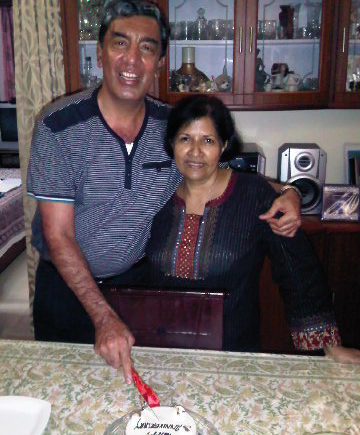
सालगिरह मुबारक Lyn, जो भी हूँ मैं तेरा हूँ,
तू मेरी महबूबा है, और मैं तेरा दिलदार I
फूल हैं बड़े सुन्दर और रंगीले,
लाल, हरे, नीले और पीले I
इनसे अलग एक है सबसे प्यारा,
वह है सनम चेहरा तुम्हारा I
तुम हो तो ज़िन्दगी है चमन,
तुम नहीं तो ज़िन्दगी वीरान,
फूलों को भी पता है जान-ए-बहार,
तुम्ही तो हो फूलों की जान I
भँवरे बाग़ में गुनगुनाते हैं,
तितलियों संग मन लुभाते हैं I
पर सबसे दिलकश है तुम्हारा गीत,
जिसने मेरा दिल लिया है जीत I
तुम हो तो ज़िन्दगी है सुरीली,
तुम नहीं तो ज़िन्दगी सुनसान,
भंवरों को भी पता है जान-ए-मौसिकी,
तुम्ही तो हो भंवरों की जान I
झरने ताज़गी बरसा रहे हैं,
आशिकों के दिल तरसा रहें हैं I
पर फ़िज़ाएं जो चूमें तेरे रुखसार,
ले के आएं हसीं प्यार की बौछार I
तुम हो तो ज़िन्दगी में ताज़गी,
तुम नहीं तो ज़िन्दगी वीरान,
झरनों को भी पता है जान-ए-शादाब,
तुम्ही तो हो झरनों की जान I
सपनो की दुनिया लगती है रंगीन,
बादलों के ऊपर वह नगरी हसीन,
पर जिसने देखा तेरी आँख का नज़ारा,
ख्वाब-ए-जन्नत से कर बैठा किनारा I
तुम हो तो वो दुनिया पहचानी है,
तुम नहीं तो वो दुनिया अनजान,
सपनो को भी पता है जान-ए-ख्वाब,
तुम्ही तो हो सपनो की जान I
(Pic courtesy: www.aksharsamrat.com)
Phool hain bade sundar aur rangeele,
Laal, hare, neele aur peele.
Inse alag ek hai sabse pyaara,
Woh hai sanam chehra tumhaara.
Tum ho to zindagi hai chaman,
Tum nahin to zindagi veeraan,
Phoolon ko bhi pata hai jaan-e-bahaar,
Tumhi to ho phoolon ki jaan.
Bhanvre baag mein gungunaate hain,
Titliyon sang man lubhaate hain.
Par sabse dilkash hai tumhaara geet,
Jisane mera dil liya hai jeet.
Tum ho to zindagi hai sureeli,
Tum nahin to zindagi sunsaan,
Banvron ko bhi pata hai jaan-e-mausiki,
Tumhi to ho banvron ki jaan.
Jharne taazgi barsa rahe hain,
Aashiqon ke dil tarsa rahe hain.
Par fizaayen jo chume tere rukhsaar,
Le ke aayen hasin pyaar ki bochhar.
Tum ho to zindagi mein taazgi,
Tum nahin to zindagi veeraan,
Jharno ko bhi pata hai jaan-e-shadaab,
Tumhi to ho jharno ki jaan.
Sapno ki duniya lagati hai rangeen,
Baadlon ke ooper woh nagri haseen.
Par jisne dekha teri aankh ka nazaara,
Khwaab-e-jannat se kar baitha kinaara.
Tum ho to wo duniya pehchaani hai,
Tum nahin to wo duniya anjaan,
Sapno ko bhi pata hai jaan-e-khwaab,
Tumhi to ho sapno ki jaan.
In the last seventeen days, we have taken up songs of nine male singers: Talat Mahmood, Manna Dey, Kishore Kumar, Mohammad Rafi, Mukesh, Hemant Kumar, Mahendra Kapoor, SD Burman and KL Saigal. We also took up songs of eight female singers: Lata Mangeshkar, Asha Bhosle, Suman Kalyanpur, Shamshad Begum, Geeta Dutt, Uma Devi (Tun Tun), Suraiya and Zohrabai Ambalewali. Naturally, stage is set up for taking up our ninth female singer.
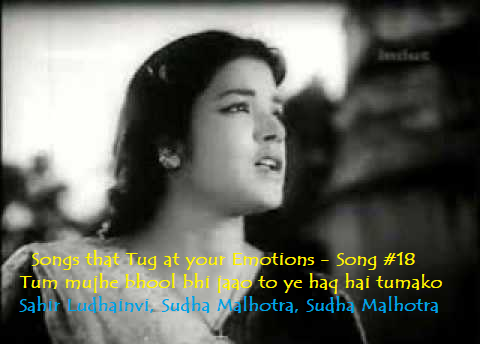
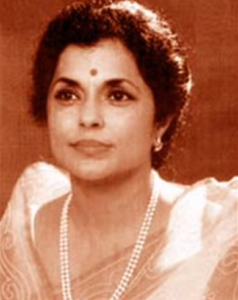
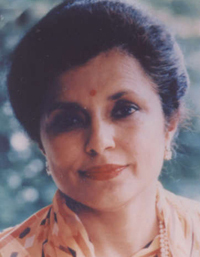
Tonight, we shall take up a song of our ninth female singer: Sudha Malhotra.After the failed love affair with Amrita Pritam, Sahir Ludhianviturned toSudha Malhotrafor loving support and she ended up singing many songs penned by him. This is one of them.
Sudha was born in Kurukshetra (now in Haryana) in 1954. Thanks to music director Ghulam Haider who discovered her as a child artiste, she sang her first song for Dilip Kumar starrer Arzoo at the age of 14. The song was milaa gaye nain. She was hailed as the next singing sensation in the country after Lata Mangeshkar. But then, at the height of her career, she suddenly left film industry after her marriage to Giridhar Motwani whose family owned the Chicago Radio Mike Company. Before her marriage she was romantically linked with Sahir Ludhainvi as far as grapevine is concerned. He had approached her for a song in 1959 movie Bhai Bahen. This led to this romantic linkage which was neither denied nor affirmed by the couple. However, the film industry was rife with rumours of his calling on her early mornings, which was chided by the industry as ‘morning alarm call’. She, however, admitted that the attention that he showered on her resulted in her getting unprecedented success. Some of my favourite songs of Sudha Malhotra are: Awaaz de raha hai koi asmaan se (Gauhar, 1953; song penned by Shakeel Badayuni), Ganga ki reti pe bangla chhavay de (Mirza Ghalib, 1954), Hari tum meri raakho laaj Hari (Dekh Kabira Roya, 1957), Kaise kahun man ki baat (Dhool Ka Phool, 1959), Manmohan mein ho tumhi (Kaise Kahoon, 1964; also penned by Shakeel Badayuni), Mohabbat ki dhun beqraaron se poochho (Dil-e-Nadaan, 1953; also penned by Shakeel), and Salaam-e-hasrat qabool kar lo (Babur, 1960).
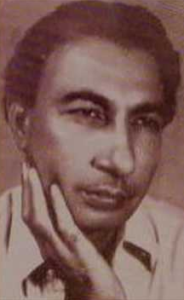
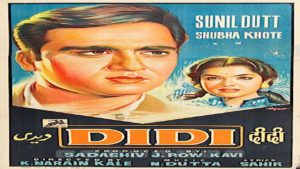
Lets turn to Sahir Ludhianvi, the lyricist of this song. Of course, many of his songs were indicative of the situation between him and Sudha Malhotra. For example, this one from 1959 movie Didi. All that one has to do is to ascribe male lines to female and vice-versa and it fits in well with them. It was also rumoured that the Gumraah song Chalo ek baar phir se ajnabi ban jaayen hum dono was indicative of the ceasing of their affair after she married Motwani. But, then, such was the persona of Sahir Ludhianvi that many situations in the movies were supposedly based on his life: Pyaasa, Kabhi Kabhi are two examples. As far as my favourites penned by him are concerned, there are quite a few. However, here is a shorter list: Aaj ki raat piya dil na todo, Tadbeer se bigadi hui taqdeer bana le (Baazi, 1951), Aap aaye to khayaal-e-dil-e-nashaad aaya, Chalo ek baar phir se, Ye hawa ye fiza (Gumrah, 1963), Abhi na jaao chhod kar, Kabhi khud pe kabhi halaat pe rona aaya, Main zindagi ka saath nibhaata chala gaya (Hum Dono, 1961), Ashqon ne jo paaya hai (Chandi Ki Deewar, 1964), Ai meri zohra zabeen, Chehre pe khushi chha jaati hai, Aage bhi jaane na tu, Ham jab simat ke aap ki baahin mein aa gaye (Waqt, 1964), Aurat ne janam diya mardon ko (Sadhana, 1964), Baabul ki duyayen leti jaa, Tujhako pukaare mera pyaar (Neelkamal, 1968), Bhool sakta hai bhala kaun (Dharamputra, 1961), Dhadakne lage dil ke taaron ki duniya, Tere pyaar ka assra chahta hoon (Dhool Ka Phool, 1959), Dil ki umange hain jawan, Jeewan ke safar mein rahi (Munimji, 1955), Dukhi man mere sun mera kehna (Funtoosh, 1956), Duniya kare sawaal to hum jawab dein, Log kehte hain tum se kinara kar lein, Sab mein shaamil ho magar (Bahu Begum, 1967), Door reh kar na karo baat (Amanat, 1975), Zindagi bhar nahin bhoolegi, Maayus to hoon waade pe tere, Na to karvaan ki talaash hai (Barsaat Ki Raat, 1960), Ham aapki aankhon mein, Tang aa chuke hain kashmakash zindagi se ham, Jinhe naaz hai Hind par woh kahan hain, Jaane kya tune kahi, Sar to tera chakraaye, Jaane wo kaise log the jinake pyaar ko pyar mila (Pyaasa, 1957), Husn haazir hai muhabbat ki saza paane ko (Laila Majnu, 1976), Iswar Allah tere naam sabako snmati de bhagwan (Naya Rasta, 1970), Jaayen to jaayen kahan (Taxi Driver, 1954), Jaan-e-bahaar husn tera bemissal hai (Pyar Kiya To Darna Kya, 1963), Jise tu qabuul kar le, Kisako khacar thi kisako yakeen tha (Devdas, 1955), Jo waada kiya wo, Paaon chhu lene do, Zurm-e-ulfat pe hamen log saza dete hain (Taj Mahal, 1963), Kabhi kabhi mere dil mein khayal aata hai, Main pal do pal ka shayar hoon (Kabhi Kabhi, 1976), Laaga chunari mein daag, Nigahen milane ko ji chahta hai (Dil Hi To Hai, 1963), Maang ke saath tumhaara, Ude jab jab zulfen teri, Ye desh hai veer jawano ka (Naya Daur, 1957), Mehfil se uthh jaane waalo, Phool gendwa na maaro (Dooj Ka Chand, 1964), Mera tujhase hai pehle ka naata koi (Aa Gale Lag Jaa, 1973), Tora man darpan kehlaaye, Chhu lene do naazuk hontho ko, Mere bhaiya mere chanda mere anmol ratan (Kajal, 1965), Mujhe gale se laga lo bahut udaas hoon main (Aaj Aur Kal, 1963), Na tu zameen ke liye hai na aasman ke liye (Dastaan, 1972), Parbaton ke pdho par shaam ka basra hai, Tum chali jaogi parchaayiyan reh jayengi (Shagoon, 1964), Pyaar par bas to nahin hai mera, Raat bhar ka hai mehmaan andhera (Sone Ki Chidhiya, 1958), Rang aur noor ki baraat kise pesh karun (Ghazal, 1964), Teri duniya mein jeene se behtar hai ke mar jaayen, Chup hai dharti chup hain chand sitaare (House No. 44), Thandi hawaayen lehra ke aayen (Naujawan, 1951), Tum ek baar mohabbat ka imtihaan to lo (Babur, 1960), and Ye raat ye chandini phir kahan (Jaal, 1952).
Kabhi khud pe kabhi halaat pe rona aaya is regarded by me as the best lyrics that he penned. It featured in Hum Dono, a movie with double-role of Dev Anand
Perhaps it would be better to go through my posts on Sahir Ludhianvi:
Lets turn to the composer of this song:Sudha Malhotra herself. Actually, the music director of the movie was N Dutta who had worked with Sahir Ludhainvi in as many movies as Sahir did with SD Burman before the two broke up in 1957 after Pyaasa. However, N Dutta fell ill during the film’s making and then Suhda Malhotra came forward and helped with this song. Isn’t it a great coincidence that the song was composed by her in the raaga of my home-place: Pahadi and Tal Dadra? She actually made it into a memorable song.
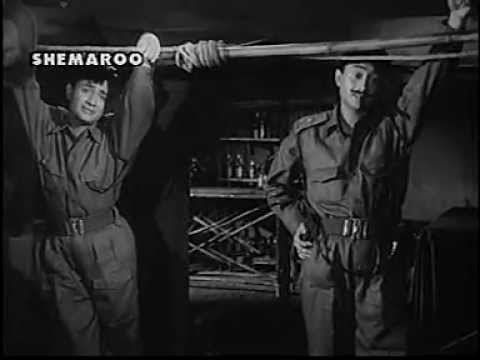
The movie from which the song of this post has been taken is the 1959 movie Didi. The movie was directed by K Narayan Kale and produced by Sadashiv J Row Kavi. This was a remake of an iconic Marathi Movie “Vahininchya Bangadya”. A famous Telugu version also was made in the name of “Vadina Gajulu”. Didi was a story of brother-sister love, but NOT in a tear-tear way but in a very hilarious way. The main roles were done by Sunil Dutt and Shubha Khote(a perinnial sister of the Indian screen). This was also one of the rare films in which the Parsi sisters Honey and Daisy Irani were acting together and both were as boys.
Please enjoy Sudha Malhotra sing (with Mukesh): Tum mujhe bhool bhi jaao to ye haq hai tumako, meri baat aur hai maine to mohabbat ki hai….
सुधा: तुम मुझे भूल भी जाओ तो ये हक़ है तुमको
मेरी बात और है मैंने तो मुहब्बत की है
मेरे दिल की मेरे जज़बात की कीमत क्या है
उलझे-उलझे से ख्यालात की कीमत क्या है
मैंने क्यूं प्यार किया तुमने न क्यूं प्यार किया
इन परेशान सवालात कि कीमत क्या है
तुम जो ये भी न बताओ तो ये हक़ है तुमको
मेरी बात और है मैंने तो मुहब्बत की है
तुम मुझे भूल भी जाओ तो ये हक़ है तुमको
मुकेश: ज़िन्दगी सिर्फ़ मुहब्बत नहीं कुछ और भी है
ज़ुल्फ़-ओ-रुख़सार की जन्नत नहीं कुछ और भी है
भूख और प्यास की मारी हुई इस दुनिया में
इश्क़ ही एक हक़ीकत नहीं कुछ और भी है
तुम अगर आँख चुराओ तो ये हक़ है तुमको
मैंने तुमसे ही नहीं सबसे मुहब्बत की है
तुम अगर आँख चुराओ तो ये हक़ है तुमको
सुधा: तुमको दुनिया के ग़म-ओ-दर्द से फ़ुरसत ना सही
सबसे उलफ़त सही मुझसे ही मुहब्बत ना सही
मैं तुम्हारी हूँ यही मेरे लिये क्या कम है
तुम मेरे होके रहो ये मेरी क़िस्मत ना सही
और भी दिल को जलाओ ये हक़ है तुमको
मेरी बात और है मैंने तो मुहब्बत की है
तुम मुझे भूल भी जाओ तो ये हक़ है तुमको
Hindi movie industry has a number of love-affairs in real life that have been as famous and fascinating as some of the others in reel-life. Sahir Ludhainvi’s attraction for Sudha Malhotra was the subject of many rumours after the unrequited affair that he had with Punjabi poetess Amrita Pritam. I not only think of this song as the one about another affair that didn’t fructify. I also think of the most beautiful lyrics of this song that destiny directed that the object of his love should compose since the music director N Dutta fell ill. And Sudha not just sang it with passion but put her heart and soul into composing it in my favourite raaga and dhun Pahadi. The song often gives me goosebumps when I listen to it.
माँ के बगैर अब गीत भी न मुझको भाये,
पढ़ने लिखने में भी बस आंसू ही निकल आये,
कहने को तो उन्हीं के नाम का संगीत Fest है,
क्या करे कोई जब उनकी याद फिर सताये?
वह मासूम चेहरा, वह मंद सी मुस्कान,
वह बचपन मेरा, वह मीठे मीठे पकवान,
उन्ही की हौंसला अफ़ज़ाई के असर से,
एक दिन हो गया मैं काबिल और जवान I
उनके इशारे से, सब कुछ था मुमकिन,
माँ के संग कुछ भी न लगता था मुश्किल,
वह थी मेरी ताक़त, मेरी उम्मीद – ऐ – कामयाबी,
अब कौन जाने कैसे कटेगी ज़िन्दगी उन बिन?
एक दिन सबको जाना है, उनको भी था जाना,
मेरे पास Fest के लिए बहुत सुन्दर था गाना,
पर क्या करूँ, दिल कहीं है और जज़्बात कहीं और,
उन्ही के Fest में उनके बाद मुझे नहीं है आना I
एहसान मंद हूँ आपका, आपके बेनज़ीर प्यार के लिए,
माँ होती तो खुश होती मुहब्बत – ऐ – इज़हार के लिए,
मुझे माफ़ करना मैंने गीत नहीं अश्क़ ही दिए हैं,
पर दुआ ज़रूर करना मेरे दिल – ऐ – बेक़रार के लिए I
Maa ke bagair ab geet bhi naa mujhako bhaaye,
Padhne likhne mein bhi bas aansu hi nikal aaye,
Kehne ko to unhin ke naam ka sangeet Fest hai,
Kyaa kare koi jab unaki yaad phir sataaye?
Woh masoom chehra, woh mand si muskaan,
Woh bachpan mera, woh meethe meethe pakwaan,
Unhi ki haunsla afzayi ke asar se,
Ek din ho gaya main kaabil aur jawaan.
Unake ishaare se, sab kuchh tha mumkin,
Maa ke sang kuchh bhi na lagta tha mushkil,
Woh thi meri taaqat, meri umeed-e-kamyaabi,
Ab kaun jaane kaise kategi zindagi un bin?
Ek din sabako jaana tha, unako bhi tha jaana,
Mere paas Fest ke liye bahut sundar sa tha gaana,
Par kyaa karun, dil kahin hai aur jazbaat kahin aur,
Unake Fest mein unake baad mujhe nahin hai aana.
Ehsaan mand hoon aapka, aapke benazir pyaar ke liye,
Maa hoti to khush hoti muhabbat-e-izhaar ke liye,
Mujhe muaaf karna maine geet nahin ashq hi diye hain,
Par dua zaroor karna mere dil-e-beqraar ke liye.
It is sometimes expedient to take women and what they do, for granted. However, it is high time that I acknowledge the enormous contribution made by Lyn (short for Marilyn), my wife, in my life and especially during the last few days of my mother. She is silent but sincere and dedicated (In a chorus, in the church, for example, she shyly stands in the rear row). On the day when I took my mother to the hospital in Shimla, Lyn sat holding her hand throughout the night even when I slept for two to three hours.
Here are a few lines I have penned for her:
एक औरत को औरत का एहसास है,
चाहे वह बहु है, बेटी है या सास है,
मेरे दोस्त राज ने बहुत खूब लिखा है:
“लिन साथ है तो लगता है माँ हमारे पास है I”
चुप चाप, बिना शिकायत वह करती है काम,
उसके लिए ना कहीं चैन न कहीं आराम,
कई बार दबे पैर मैंने आके देखा है,
धीमे धीमे माँ का वह लेती है नाम I
कैसे कहे प्यार की क्या होती है जुबां,
कभी सास न थी, थी वह उसकी भी माँ,
बार बार यही सवाल आता होगा मन में:
“माँ के बगैर जायूँ मैं अब कहाँ ?”
पैंतीस साल पहले, वह आयी थी इस घर में,
दो परिवारों का प्यार मिला, दोनों मुट्ठी भर के,
पहले अपने, फिर अपनाये माँ – बाप बिछड़ गए,
अब ना इधर के रहे, न रहे उधर के I
माँ और लिन में रिश्ता था घने प्यार का,
दो जिस्म एक रूह से बने घर संसार का,
लिन को देखते माँ यूँ समझती थी,
जैसे चमन में फूल खिल उठा हो बहार का I
छिप गयी माँ, लिन, पर अभी भी है उनकी ख़ुश्बू,
इस घर में बसती है अभी भी उनकी रूह,
हम मिलके रखेंगे माँ को ज़िंदा,
यहीं तो बहा है उनका पसीना और लहू I
आपका एहसान मंद हूँ, आप हैं मेरी ज़िन्दगी में,
जैसे कोई इबादत गुज़ार हो खुदा की बंदगी में,
आप अपने आप भी सजदे के काबिल हो,
आपके आगे सर झकाता हूँ मैं शर्मिंदगी में I
11th Jul 2017: Lyn’s birthday and my dad’s (pic in the background) birth-anniversary. Less than a month before we lost our mother.
Ek aaurat ko aurat ka ehsaas hai,
Chaahe woh bahu hai, beti hai yaa saas hai,
Mere dost Raj ne kya khoob likha hai:
“Lyn saath hai to lagta hai maa hamare paas hai.”
Chup chaap bina shikayat woh karti hai kaam,
Uske liye naa kahin chain naa kahin aaraam,
Kayi baar dabe pair maine aake dekha hai,
Dheeme dheeme maa ka woh leti hai naam.
Kaise kahe pyaar ki kyaa hoti hai zuban,
Kabhi saas naa thi, thi woh usaki bhi maa,
Baar baar yahi sawaal aata hoga man mein:
“Maa ke bagair jaayun main ab kahan?”
Paintees saal pehle, woh aayi thi is ghar mein,
Do parivaaron ka pyaar mila dono muthhi bhar ke,
pehle apne, phir apnaaye maa-baap bichhad gaye,
Ab naa idhar ke rahe, naa rahe udhar ke.
Maa aur Lyn mein rishta tha ghane pyaar ka,
Do jism ek rooh se bane ghar sansaar ka,
Lyn ko dekhte maa youn samajhati thi,
Jaise chaman mein phool khil utha ho bahaar kaa.
Chhip gayi maa, Lyn, par abhi bhi hai unaki khushbu,
Is ghar mein basti hai abhi bhi unaki rooh,
Ham milake rakhenge maa ko zinda,
Yahin to baha hai unaka paseen aur lahu.
Aapka ehsaan mand hoon, aap hain meri zindagi mein,
Jaise koi ibaadat guzaar ho khuda ki bandagi mein,
Aaap apne aap bhi sajde ke kaabil ho,
Aapke aage sar jhukaata hoon main sharmindagi mein.
Some of you have asked me for the translation. So, here I go:
A woman feels for a woman,
She may be daughter-in-law, daughter or mother-in-law,
My friend Raj expressed himself well when he wrote:
“If Lyn is with us, we feel we have Ma with us.”
Silently, without complaints, she works,
For her, there is no relief nor rest,
Sometimes when I have tiptoed to her,
I have heard her whisper mom’s name.
How does one say, what is the language of love,
She was never her mother-in-law, she was indeed her mother,
Time and again, this thought must be in her mind:
“Now where do I go without Ma?”
Thirty-five years ago, she entered this home,
She was blessed to have abundant love from both families,
First her own, and then adopted parents departed,
Now neither hers nor mine are anymore.
Ma and Lyn had relationship of deep love,
A home-world made up of two bodies but one soul,
Looking at Lyn, Ma used to feel,
That a spring-flower had blossomed in her garden.
Ma has hidden, Lyn, but her fragrance still abounds,
Her soul still lives in this house,
You and I, we shall together keep Ma alive,
Here only she has shed her sweat and blood.
I am grateful to you, you are in my life,
Like some worshipper is there in worship of God,
You yourself are worthy of obeisance,
Hence, I bow my head to you in humility.
Raaga Based Song of the Day: O door ke musaafir hamko bhi saath le le re, ham reh gaye akele…. Raag Pahadi, Tal Kaherava
I gave you the last raaga based song of the day on 31st Jul 17, which happened to be on the death anniversary of the greatest Indian playback singer: Mohammad Rafi (Please read: ‘Raaga Based Song Of The Day #54’). I wasn’t able to put up anything for the last three weeks because my mother – hale and hearty – suddenly took ill and passed away on the morning of 09 Aug 17. On Sunday, the 20th Aug 17, we had Antim Ardaas (Farewell Prayer) for her (Please read: ‘Mom’s Antim Ardaas‘) and now I am back with you with the raaga based songs of the day. The first one is a tribute to her. It happens to have all my favourites: my favourite Raag Pahadi and my favourite quartet: Shakeel Badayuni as Lyricist, Naushad Ali as Composer and Music Director, Mohammad Rafi as Singer, and finally Dilip Kumar as Actor (Please go through: ‘The Best Of Old Hindi Songs: Rafi, Shakeel, Naushad and Dilip Kumar Together‘).
I physically lost my mother. However, I rediscovered my younger brother JP Singh during this period. He is the Chair & Professor of Cultural and Political Economy and Director, Institute of International Cultural Relations (IICR) at the University of Edinburgh. During his childhood, I was not just an elder brother to him but a guardian. I used to make up and sing lullabies to him, the favourite one being:
My redicovery of him included learning about his abiding interest in old Hindi movies and songs. After the Antim Ardaas, on the night of 20th/21st Aug, we sat together to listen to songs and ghazals of Shakeel Badayuni. JP brought out that he had done eight years research on Shakeel’s song in Mughal-e-Azam that resulted in his most widely read piece on the song ‘Pyar kiya to darna kya’:
Of course, he is an academician and hence his piece has superb erudition about it as compared to any of my ordinary and somewhat infantile efforts.
As you are aware, on 31st Jul, when I put up the last raaga based song: Yaad na jaaye beete dilon ki in Raag Kirwani, Tal Kaherava, we completed fifty-four days of Raaga Based Songs of the Day. Our first post in the series was titled ‘Raaga Based Song Of The Day #1’ and the song was a Mohammad Rafi and Lata Mangeshkar song from the 1970 Shakti Samanta movie Pagla Kahin Ka: Tum mujhe youn bhula na paoge. It is in Raag Jhinjhoti, Tal Kaherava.
In the last fifty-four days of sharing Raaga based songs of the day, I have given you songs based on Raag Jhinjhoti, Gara, Bhimpalasi, Madhuvanti, Shivaranjani, Bihag, Pahadi, Sarang, Pilu, Bhairavi, Khammaj, Charukesi, Kalyan or Yaman, Desh, Malgunji, Kirwani, Kedar, Bageshri, Megh Malhar, Bhupali, Ahir Bhairav, Malkaush, Mand, Adana, Kafi, Rageshri, Jaunpuri, Tilang, Janasammohini, Chayanat, Shuddha Kalyan, Gaur Sarang, Jogiya, Asavari, Maru Bihag, Durga, Lalit, Puria Dhanashri, Bhinna Sahdja, Sohani, Multani, Patdeep, Jaijaiwanti, Tilak Kamod, Hemant, Basant Mukhari, Gujri Todi, Kalavati and Hamir. The only three raag that has been repeated so far are Pahadi, the raaga of my home place in the Himalayas, Maru Bihag and Raag Kirwani. That makes a total of 49 raagas so far; today’s one too I am repeating: Raag Pahadi.
Today, I give you a song, once again, in Raag Pahadi, Tal Kaherava, one of the best of Mohammad Rafi.
However, first, lets take up the value added learning of today. Today, we shall learn about Harmonium.
Harmonium is a popular insterument in many forms of Indian music. Although developed in the West (Christian Gottlieb Kratzenstein (1723–1795), professor of physiology at Copenhagen, was credited with the first free-reed instrument made in the Western world), Harmonium, the way it was developed in the Indian sub-continet, became a unique instrument with its drone stops and scale changing mechanism. It also became hand-held after Dwarkanath Ghose of Dwarkin company modified the Western and cumbersome harmony flute that was pedal pumped. Indeed, in many Indian movies, harmonium used to be played with hands and hung around the neck (eg, in the 1956 Raj Khosla movie C.I.D.’s song ‘Leke pehla pehla pyaar’.
Though Harmonium became an integral part of Indian music scenario, by early 20th century, in a move to do away with unwanted foreign objects, harmonium was looked down upon. It had limitations to be used for classical raagas such as inability to produce meend (slides between notes) and its inability to be tuned during a performance.
Hence, Harmonium was banned from All India Radio from 1940 to 1971; a ban still stands on harmonium solos. On the other hand, many of the harmonium’s qualities suited it very well for the newly reformed classical music of the early 20th century: it is easy for amateurs to learn; it supports group singing and large voice classes; it provides a template for standardized raga grammar; it is loud enough to provide a drone in a concert hall. For these reasons, it has become the instrument of choice for accompanying most North Indian classical vocal genres, with top vocalists (e.g., Bhimsen Joshi) routinely using harmonium accompaniment in their concerts. However, it is still despised by some connoisseurs of Indian music, who prefer the sarangi as an accompanying instrument for khayal singing.
For Hindu and Sikh bhajans and kirtan, however, harmonium is an instrument of choice. It is also instrument of choice for qawwalis.
As I mentioned, today’s song is composed in Raag Pahadi, Tal Kaherava.
Raag Pahadi is the raag of my place in Himalayas and I have already given you four other songs in this raag: Aaj ki raat piya dil na todo (Tal Dadra) on the seventh day, Zara sun haseena ai nazneen (Tal Rupaktal) on the eighth day, Chal udd ja re panchhi (Tal Kaherava) on the thirty-second day, and Sawan ka mahina pawan kare sor (Tal Kaherava) on the forty-sixth day.
If you recall, I had told you that Pahadi is as much a raag as a dhun. It belongs to Bilawal Thaat and Audhav-Audhav Jati, that is six each notes in Aaroha and Avroha. It is normally played in the first prahar of the night.
Why do I have this urge to get back to Pahadi? On the tenth day, I had covered for you, the sources of names of raagas and mentioned that raagas like Marwa, Jaunpuri, Mand and Pahadi were named after places. Pahadi is not a place, in the same manner, as Marwa, Mand and Jaunpur. You should expect Pahadi anywhere you see pahad or hills but actually the name is from hills in Himalayas, my home place. It is a light raaga and is more akin to being a dhun.
Pahadi is a very beautiful raag. Soundofindia.com describes it beautifully: the raga is like a lover, unruffled in union, serene in separation, powerful enough to achieve eternal union, but resigned to the painful parting ordained by destiny.
All raagas are supposed to transport you to the mood of the raaga (bhaav). But, none other does it better than Pahadi: you can’t escape the freshness, quiet, wetness, echoing effect and palpable romance of the hills. It is as if the raaga says to you: ‘Love is in the air’.
Today, of course, I take recourse to being resigned to the painful parting ordained by destiny, another beautiful facet of Pahadi and that too related to my late mother, the one person whose love, devotion and spirit have guided me throughout my life and particularly in the last 33 years after the premature demise of my father in a jeep accident on 01 May 1984 when he was just 56 years old.
Many people have mentioned that mine is an extraordinary attachment. Indeed, in addition to my total love for my mother and father, I can never forget that I was made to live my life in this manner:
My dad had taken loans to start a mushroom project (he was the pioneer in button mushroom growing in India in an instituitionalised way). However, he died before the project became viable. My mother and I struggled to pay back loans. Every bit of my money, leave and effort went into repaying the loans and running the project. I was in active service of the Indian Navy and was on the verge of being sent on deputation abroad. I sought a transfer on compassionate grounds closer home to enable me to do the above.
Suddenly, because of above, from middle-class comfort my mother and I found ourselves in abject penury. As an example, I used to go riding a bicycle to Solan and back in the hills (a distance of 32 kms) to exchange an empty cooking-gas cylinder for a filled one rather than having to pay the bus-fare.
One day we faced the ire of a creditor to repay him the money due to him for having supplied cotton wool for capping the mushroom spawn bottles. My mom and I sold off old newspapers, bottles and other junk to repay him.
Being in the Navy, I was invariably posted to the coastal cities whereas my mom was in a village in the hills and yet, my mom proudly told all and sundry that should in case she wanted me, I would be home within hours. Indeed, in May 2006, I went back to Mumbai from Kandaghat after spending my full leave and next day my mom phoned me that those who had encroached on our land (finding an old widow alone) had broken through the fence I had erected during my leave to make my mom secure. By evening I was back with her with advance leave of next year!
And all the while when my mom suffered from various ailments, I myself suffered from a permanent and debilitating one called Psoriatic Arthiritis and managed both her as well as my own condition.
Due to the encroachment and follow up actions, we had various court-cases pending against us and I attended to them all. Amongst other things, I had to face physical assault on me and warrants of arrest.
And that’s why I find this song so apt, particularly the following lines:
Tuune vo de diyaa Gam, bemaut mar gaye ham
Dil uTh gayaa jahaa.N se, le chal hame.n yahaa.N se
Le chal hame.n yahaa.N se
Kis kaam kii ye duniyaa jo zi.ndagii se khele re
Ham ko bhii saath le le, ham rah gaye akele
(You gave that sorrow, I died without death,
I am heart-broken in this world, take me away from here,
Take me away from here,
Of what use is this world, the one who plays with one’s life?
Take me with you and go, I am left alone)
Really, I couldn’t have thought of a better song to express my feelings.
Mom, after you’ve gone, I am lonely and alone, Many are ready to cast the first stone, To find faults with all that I went through, In the last 33 years whilst being with you, Smilingly, silently, without sigh and groan.
There were times when we had no one to turn to, It was sadly and miserably just me and you, We provided succour and strength to each other, I, your son, and you, my mother, And we made a world that was brave and new.
Your child-like smile, I shall forever recall, That encouraged me when we were up against the wall, You taught me to fly, And never to cry, To get up and keep moving, after each fall.
I thought of you as my strength and motivation, In times of need, that silent determination, To do the right, whatever be the cost, To have faith in God and never be lost, In the quagmire of intense vilification.
Now, I find myself helpless and disconsolate, There is emptiness within and my heart is desolate, I wish I could hold your hand, And go with you journeying to that land, That has no sadness, no mourning, no hate.
Don’t abandon me, mom, I need you still, We still need to climb many a hill, I look up to you as divine light, That shines through the darkest night, And makes stronger my ardour and my will.
In sadness or joys, Pahadi is a very popular raaga for composing soings in Hindi movies. Some of the songs composed in this raaga are:
Parbaton Ke Pedon Par
Chahoonga Main Tujhe
Baharon Mera Jeevan
Jawa hai Muhobbat
Chhod Babul Ka Ghar
Chaudhavi Ka Chand Ho
Tujhko Pukare Mera
Door Koi Gaye
Karvatein Badalte Rahe
Meri Aankhon Mein
Suhani Raat Dhal
Tod Diya Dil Mera
Isharon Isharon Mein
Jane Kya Dhoonhati
Tum Apna Ranj-o-Gam
Apne Aap Raaton Mein
Patta Patta Boota Boota
Kahan Hai Tu
Tum Na Aaye Sanam
Deewana Mujhsa Nahin
Sun Mere Saajana
Saeeyan Bina Ghar
Piya Bin Jiya
Mehelon Ne Chheen
Dil Ne Phir
Aaja Re
Chhoomkar Raat Sulaye
Kaheen Ek Masoom
Aawaz De Kahan Hai
Mere Mundere Na Bol
Aao Mil Jaayen
Saanjh Bhayee Nahin Aaye
Neela Aasma So gaya
Ih hawaon Mein
Main Tulsi
Jeevan Se Na Haar
Main Teri Chhoti Behena
Kabhi To Milegi Bahaaron Ki
Kanchi Re Kanchi Re
Tum Jahan Ho
Shagun
Dosti
Aakhri Khat
Anmol Ghadi
Babul
Chaudhavi Ka Chand
Neel Kamal
Baiju Bawara
Aapki Kasam
Barsaat
Dulari
Andaaz
Kashmir Ki Kali
Shola Aur Shabnam
Shagun
Shankar Husain
Ek Nazar
Afsana
Bhootnath
Teesari Manzil
Goonj Uthi Sehnaibr
Aangan Ki Kali
Dasi
Jabak
Dil Ne Phir Yaad Kiya
Noorie
Razia Sultan
Shankar Husain
Anmol Ghadi
Parwana
Prem Geet
Shama Parwana
Silsila
Gumrah
Main Tulsi Tere Aangan Ki
Door Ka Rahi
Soutan
Aarti
Hare Rama Hare Krishna
Road To Sikkim
Rafi, Suman Kalyanpur
Rafi
Lata
Noorjahan
Shamshad
Rafi
Rafi
Shamshad, Lata, Rafi
Kishore, Lata
Lata
Rafi
Lata
Rafi and Asha
Rafi
Jagjeet Kaur
Lata
Lata, Rafi
Lata
Lata
Rafi
Lata, Rafi
Lata, Bhupendra
Bhupendra
Lata, Mukesh
Rafi, Suman, Mukesh
Lata, Nitin Mukesh
Lata
Rafi
Noorejahan, Surendra
Suraiya
Suresh Wadekar, Anuradha
Nirmala Devi
Lata & Amitabh
Mahendra, Asha
Lata
Kishore Kumar
Lata
Lata
Kishore, Lata
Mukesh
As far as Tal Kaherava is concerned, I have already told you enough about this most popular Tal.
I am the one who has taken this song in the memory of and sadness for my mother. Originally, it was sung by Mohammad Rafi for Dilip Kumar in the 1955 music director Naushad‘s production Udan Khatola that was directed by SU Sunny and starred Nimmi opposite Dilip Kumar.
Please enjoy in Raag Pahadi, Tal Kaherava:O door ke musaafir hamko bhi saath le le re, ham reh gaye akele….
Chale aaj tum jahaa.N se, huii zi.ndagii paraayii
Tumhe.n mil gayaa Thikaanaa, hame.n maut bhii na aayii
O duur ke musaafir ham ko bhii saath le le re
Ham ko bhii saath le le
Ham rah gaye akele
Tuune vo de diyaa Gam, bemaut mar gaye ham
Dil uTh gayaa jahaa.N se, le chal hame.n yahaa.N se
Le chal hame.n yahaa.N se
Kis kaam kii ye duniyaa jo zi.ndagii se khele re
Ham ko bhii saath le le, ham rah gaye akele
Suunii hai.n dil kii raahe.n, khaamosh hai.n nigaahe.n
Naakaam hasarato.n kaa uThane ko hai janaazaa
UThane ko hai janaazaa
Chaaro.n taraf lage hai.n barabaadiyo.n ke mele re
Ham ko bhii saath le le, ham rah gaye akele
O duur ke musaafir ham ko bhii saath le le re
Ham ko bhii saath le le
Ham rah gaye akele
We have intended to learn about Raaga based music whilst we entertain ourselves with Raaga based songs. So, lets, once again, take stock of our collective learning so far:
On the first day we learnt about the Raaga system devised by Pandit Vishnu Narayan Bhatkhande, which is the prevalent system in Hindustani Classical Music and based on ten Thaats.
On the second day we learnt about Tal or Taal.
On the third day we learnt about characteristics of Raagas that included Swar, Jati, Thaat, Arohana and Avarohana, Vadi, Samvadi and Pakad.
On the fourth day, we learnt about Sargam.
On the fifth day, we learnt about notations used in Indian classical music or simply Swar Lipi.
On the sixth day, we learnt about the Ras (sentiments) that Raagas evoke.
On the seventh day, we learnt about various types of Swar: Shuddha, Achal, Vikrut, Komal and Teevra.
On the eighth day, we learnt the parts of a composition in Indian Classical Music.
On the ninth day, we learnt the names of some of the popular instruments used in Indian Classical Music.
On the tenth day, we learnt about the sources of names of Raagas.
On the eleventh day, we learnt about why Bhairavi is the first raag to be taught to beginners and also why it is the last in a performance.
On the twelfth day, we learnt about Khammaj Thaat.
On the thirteenth day, we learnt about Tal Punjabi Theka or Sitarkhani.
On the fourteenth day, we learnt about Alap.
On the fifteenth day, we learnt about List of Raagas (Raagmala) in my favourite book: Sri Guru Granth Sahib.
On thesixteenth day, we learnt about tips for raaga identification.
On the seventeenth day, we learnt the basics of Gharana system.
On the eighteenth day, we learnt about Filmi Sangeet.
On the nineteenth day, we learnt about the commonest Tal in Raagas: Tintal.
On the twentieth day, we learnt about the Kafi Thaat.
On the twenty-first day, we learnt a little more in detail about the classification of Raagas.
On the twenty-second day, we learnt the essential differences between Bhairavi and Bhairav.
On the twenty-third day, we learnt a little more in detail about the Jati or Jaati of a raaga.
On the twenty-fourth day, we learnt details of Thaat Bilawal, the most basic thaat in the Bhatkhande’s system of raagas.
On the twenty-fifth day, we learnt about Tintal.
On the twenty-sixth day, we learnt in detail about the Raaga – Samay linkage.
On the twenty-seventh day, we learnt about Lehar.
On the twenty-eighth day, we learnt about the history of the Hindustani Music.
On the twenty-ninth day, we learnt about Dhrupad.
On the thirtieth day, we learnt about Rupaktal that I was introduced to, a few months back, by my friend Anand Desai.
On the thirty-first day, we learnt about Khayal.
On the thirty-second day, we learnt about Thumri.
On the thirty-third day, we learnt about Tappa.
On the thirty-fourth day, we learnt about Tarana.
On the thirty-fifth day, we learnt about Tal Dipchandi (Moghali).
On the thirty-sixth day, we learnt about Tabla.
On the thirty-seventh day, we learnt about Kirtan.
On the thirty-eighth day, we learnt about Pakhawaj.
On the thirty-ninth day, we learnt about Hori.
On the fortieth day, we learnt about Dadra.
On the forty-first day, we learnt about Kajri.
On the forty-second day, we learnt about Chaiti.
On the forty-third day, we learnt about Sarangi.
On the forty-fourth day, we learnt about Shehnai.
On the forty-fifth day, we learnt about Sarod.
On the forty-sixth day, we learnt about Bansuri.
On the forty-seventh day, we learnt about Ektal and Tanpura.
On the forty-eighth day, we learnt about Veena.
On the forty-ninth day, we repeated our learning of Veena with a small excitement added.
On the fiftieth day, we learnt about Dilruba/Esraj.
On the fifty-first day, we learnt about Jaltarang.
On the fifty-second day we learnt about Qawwali.
On the fifty-third day, we learnt about Sitar.
On the fifty-fourth day, we learnt about Surbahar.
And today, on the fifty-fifth day, we learnt about Harmonium.
There is much more still to be learnt and enjoyed.
My mom’s Bhog (Antim Ardas) was supposed to be on the thirteenth day (tehranvi). However, that happened to be on Monday, the 21st Aug, and I thought of the convenience of family and friends and had it on Sunday, the 20th Aug.
On the Friday, 18th Aug 17, we started with the Akhand Path (continuous reading from the Sri Guru Granth Sahib) for her at about 1141 hours. My mamaji (mom’s younger brother) came from NOIDA to hold my hand since Akhand Path requires enormous support effort. We did duties in rotation and barely had any sleep during the 48 hours of Akhand Path. Mamaji’s effort is many times more appreciable since he left in Delhi an ailing wife requiring urgent medical treatment. Also, for most people, the 75th Birthday is an important milestone of life. Mamaji’s happened to be on the 18th and coincided with the start of the Akhand Path for my mom and his sister. Much against his strident objections, we had a cake made for him and celebrated life as much as we bemoaned death.
My brother-in-law serving the lunch prepared by my sister to the Bhaijis
My sister Mona and brother-in-law Maharaj could make it before lunch on the next day since their elder son got admitted in the Command Hospital at Chandi Mandir. My sister is simply the best cook and hostess that I have come across. On the first day and night we had managed by ourselves. However, on the second day, she brought enormous and mouth-watering lunch for the Gurudwara Bhaijis since they have only suchcha khana made in desi ghee. Post that, she got busy preparing dinner for them.
Viru, my course-mate arrived from Gurgaon on Saturday evening to attend mom’s Antim Ardaas. Very thoughtfully she brought for the memory of my mom, a brass embossed and beautifully framed picture of the Golden Temple, Amritsar. He didn’t just buy it; he got it made on the way at Ambala and hence, even though he started from Gurgaon at 5 AM, he reached in the evening only.
JP, my younger brother, arrived from Edinburg (Scotland) for the second time in two weeks, for the bhog in the wee hours of Sunday morning. Whilst waiting for me and doing duty at the Akhand paath, I penned a few lines of Punjabi poetry as tribute to my mom. Later, at my mother’s Antime Ardas, at about 1230 hours, I, on behalf of my sister Mona, broher JP and our families, thanked the gathering for attending the Bhog for my mother, recalled her essential attributes and contribution and finally read out the poem I had penned just a few hours back. My coursemate Viru recorded the entire poem and I am putting up the video shot by him.
(Mata ji, eh saadi haalat hai,
tuhaade hun jaan tonh baad,
Dil wich ik udaasi hai,
Labaan te hai fariyaad.
Tussi jeevan ch jo kuchh keeta hai,
Amar rahegi tuhaadi yaad.
Saadi zindagi ch hardam rahega,
tuhaade pyaar da swaad.
Tussi aurat nahin ik devi ho,
Saanu miliya si tuhaada ashirwaad.
Faqr ate maan hai saanu is gal da,
Aseen haan ik devi di aulaad.
Eh jehdi jagah (Whispering Winds, Kandaghat ) tussi kayam keeti hai,
Hamesha rahegi eh abaad.
Dharam imaan di tussi moorat si,
Athhven paatshah ate tussi ho zindabaad.
Aapne bachchyan nu tussi chhad ke chale gaye,
Saanu changa nahin lagda aap ji tonh baad.
Jadd tussi bhi kisi tonh darde na si,
Phir kyun na hoyiye aseen bhi dar tonh azaad?
Saadh sangat je, chalo us maarg te chaliye,
Jis de si saade maa ji buniyaad.
Take hauli hauli is duniya wich,
Wadadi rahe changiyayi di tadaad.
We soon had the family and friends arriving and we had the Samapati (End) of Akhand Paath at about 11 AM. We then shifted the Sri Guru Granth Sahib ji into the drawing-room when more and more people arrived:
All this while, I kept thinking how much mom would have enjoyed the family get-together if she was alive; she would have walked on clouds. Friends and relatives arriving at Whispering Winds, Kandaghat, always put her in the best mood; she actually enjoyed looking after and being with people.
The kirtan for her started and I think the Bhaijis did a very good job of it. It was dignified, on the sober and quiet side, melodious and meaningful; the kind that mom would have enjoyed thoroughly. Said Viru about it later:
“…..I have to say that I was immensely touched by the intensity and ‘fervour’ with which the family and you in particular turned the antim farewell for your dear mother into a remarkable ‘event’ that all (even the Irish) (the night before, Viru was telling me about the Irish Wake) could draw a lesson (I certainly have). from as to what a loving (albeit rather emotional) son must do for his parents. But, it’s like the chicken and the egg story…which one arrived first….love and emotions are also inextricably linked……take care and fair breeze through ‘Whispering Winds’.”
There were two only tributes: one was by me on behalf of the larger family. Amongst other things, I brought out how my mom was only one of my maternal grandparents children who was named after a guru: in her case, the eighth guru Sri Harkrishan ji. He was known as the Bal Guru since he took over at the age of just 5 years and died before the age of 8 years when he caught small-pox whilst looking after people in Delhi (at the spot whereat the present Bangla Sahib gurudwara stands) suffering from Cholera and small-pox, unmindful of his own safety. My mom, I brought out, had some of those virtues. I also brought out how after my dad’s death on 01 May 1984, mom lived in Whispering Winds, Kandaghat, like a sherni (lioness), not at all scared of staying alone or facing all the challenges when all the cards were stacked up against her.
Then there was tribute by Shri Mohan Goel, one of the locals from Kandaghat. Here is what he wrote and sang for her:
Most of our relatives could make it for the Bhog. Mr HS Pannu, my boss at my last job at Reliance, arrived all the way from Mumbai to attend the Bhog. Amongst the friends who visited, a number of friends from my music group Yaad Kiya Dil Ne visited: Viapn Kohli, Suman Saxena, Rakesh Aman Bhatia, Anindya Chatterjee and his wife Deepa and Jaswant Singh Lagwal and his wife Kavita. Just four months ago, mom was there attending the YKDN annual meet and now they were here at her last farewell. JP’s partner Chuck and friend David sent two of the prettiest bouquets of flowers for mom.
I was particularly touched by Mamaji’s daughter Amandeep (Mitu) arriving all the way from Delhi, by car, totally alone. From her childhood days she is polio stricken but that didn’t deter her from attending her loving masiji’s bhog.
We had the langar after the bhog and then one by one everyone left. At night, just the three of us: my brother JP, my wife Lyn and I were at home. We would, of course, never be alone or lonely since my mother’s memories would always keep us company.
Antim Ardaas? For us, it is the beginning of another journey……a very intimate one indeed.