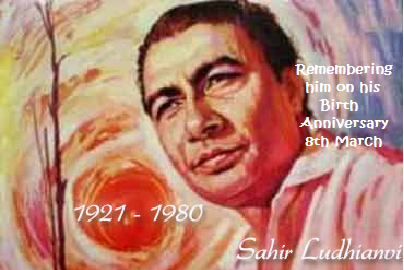
REMEMBERING SAHIR LUDHIANVI ON HIS BIRTH CENTENARY

Today, 08 March, is the Birth Centenary of this great poet and Lyricist Sahir Ludhianvi. He was born on this day in 1921 to a Gujjar Muslim family in Karimpura, Ludhiana, Punjab.

I was born near Ludhiana too. Ludhiana was and is famous for its Hosiery mills. Many an Indian has gone all the way to London to buy a lovely looking cardigan, only to see from its label that it was manufactured in Ludhiana. Sahir is as popular, if not more.
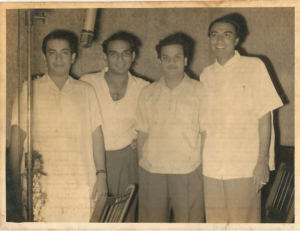
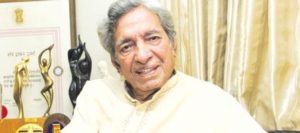
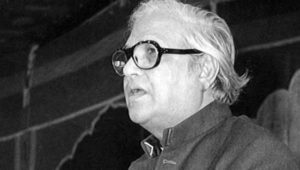
(Pic courtesy: scroll.in)

It is not my intention to summarise his life from birth (he was born as Abdul Hayee) until his end on 25 Oct 1980; his college days, love interests (he was romantically linked with Amrita Pritam and Sudha Malhotra).

I merelydesire to recall his poetry and songs that are close to my heart.

Poetry through rhyming has only limited choices; eg, Raat with barsaat, mulaqaat, saugat and baraat. However, the art lies in how a poet and lyricist uses such rhymes. Sahir was, indeed, a great one in this respect.

Here is how I describe this prowess of his:

अच्छी शायरी वो काफिया है जो दिल में उतर जाए,
एक तसव्वुर है जो रात को भी सेहर बनाए।
साहिर को मिली थी वो जादू की कलम*,
पढ़ने वाला यकायक यहां से उस पार पहुंच जाये।

(*After all Sahir was his takhallus (pen-name described him as ‘Magician’)

Let’s take a fine example of this imagination.

I take you to the 1952 Guru Dutt movie Jaal with  SD Burman having composed this unforgettable song of his in Raag Kafi; Hemant Kumar‘s voice fills the atmosphere with requisite enchantment and enigma:

पेड़ों की शाखों पे सोयी सोयी चांदनी,
तेरे ख़्यालों में खोयी खोयी चांदनी,
और थोड़ी देर में थक के लौट जाएगी,
रात यह करार की फ़िर कभी ना आयेगी,
दो एक पल और है यह समान,
सुन जा दिल की दास्तान….

A similar flight of imagination was used in 1960 Pyare Lal Santoshi movie Barsaat Ki Raat starring Bharat Bhushan and Madhubala; a song composed by Roshan in Raag Kalyan:

हाय वो रेशमी ज़ुल्फ़ों से बरसता पानी
फूल से गालों पे रुकने को तरसता पानी
दिल में तूफ़ान उठाते हुए
दिल में तूफ़ान उठाते हुए जज़बात की रात
ज़िंदगी भर नहीं भूलेगी वो बरसात की रात

Now that we are talking about Zindagi (Life), we might as well acknowledge that he had mastery to present the truths of Life.

Take this one from the 1961 Dev Anand movie Hum Dono, composed by Jaidev (also from Ludhiana) in Raag Gara. I consider these as his best and most stinging lines:

कौन रोता है किसी और की खातिर ऐ दिल,
सबको अपनी ही किसी बात पे रोना आया
कभी खुद पे कभी हालात पे रोना आया
बात निकली तो हर एक बात पे रोना आया।

Take this song from 1955 Subodh Mukherjee movie Munimji starring Dev Anand and Nalini Jaywant; SD Burman having composed:

जीवन के सफ़र में राही, मिलते हैं बिछड़ जाने को
और दे जाते हैं यादें, तनहाई में तड़पाने को
जीवन के सफ़र…

Let’s go towards Duniya or Zamana songs; songs that are his signature songs wherein he gets to air the ills of the society.

The first one is from the 1957 Guru Dutt movie Pyaasa starring Guru Dutt and Waheeda Rehman. This was the last movie in which SD Burman composed his songs before that fell apart. These are surely among his best lyrics:

ये महलों, ये तख़्तों, ये ताजों की दुनिया
ये इनसां के दुश्मन समाजों की दुनिया – २
ये दौलत के भूखे रिवाज़ों की दुनिया
ये दुनिया अगर मिल भी जाये तो क्या है – २

हर एक जिस्म घायल, हर एक रुह प्यासी
निगाहो में उलझन, दिलों मे उदासी
ये दुनिया है या आलम-ए-बदहवासी
ये दुनिया …

जहाँ एक खिलौना है इनसां की हस्ती
ये बस्ती है मुर्दा-परस्तों की बस्ती
जहाँ और जीवन से है मौत सस्ती
ये दुनिया …

जवानी भटकती है बेज़ार बनकर
जवां जिस्म सजते है बाज़ार बनकर
जहाँ प्यार होता है व्यापार बनकर
ये दुनिया …

ये दुनिया जहाँ आदमी कुछ नहीं है
वफ़ा कुछ नहीं, दोस्ती कुछ नहीं है – २
जहाँ प्यार कि कद्र ही कुछ नहीं है ये दुनिया …

Let’s now go to the 1965 Ram Maheshwari movie Kaajal. His songs were composed by Ravi. This one depicts a bad man trying to prove himself as a virtuous man and these are really extraordinary lyrics:

अच्छों को बुरा साबित करना दुनिया की पुरानी आदत है,
इस शय को मुबारक चीज  समझ माना के बहुत बदनाम है यह
छू लेने दो नाजुक होंठों को…

When it came to matters of Love and Romance, he wrote extraordinary lyrics. Sample this from this 1963 M Sadiq movie Taj Mahal (whose song Jo wada kiya got him the first out of two Filmfare awards that he received):

पाँव छू लेने दो फूलोँ को इनायत होगी,
वर्ना हमको ही नहीं इनको भी शिकायत होगी

Or take this from the 1957 BR Chopra movie Naya Daur starring Dilip Kumar and Vyjayanthimala (OP Nayyar having given his signature horse-trot beat to the song):

आ: दिल कहे दिलदार मिला, हम कहें हमें प्यार मिला – २
र: प्यार मिला हमें यार मिला, एक नया संसार मिला – २
आ: आ …, आस मिली अरमान मिला
र: ओ …, जीने का सामान मिला
दोनो: मिल गया एक सहारा, ओ ओ ओ ओ
माँग के साथ तुम्हारा …

But, more than the Romantic songs and duets, he excelled in songs with sadness and deprivation.

I start with giving you this unforgettable song (my all time favourite) from the 1956 GP Sippy movie Chandrakanta starring Bharat Bhushan and Bina Rai. This should rank among the best songs of Mohammad Rafi, composed by N Dutta in Raag Bhimpalasi Tal Dadra:

मैं वो नग़मा हूँ जिसे प्यार की महफ़िल न मिली
वो मुसाफ़िर हूँ जिसे कोई भी मन्ज़िल न मिली
ज़ख्म पाएं हैं बहारों की तमन्ना की थी मैं ने चाँद सितारों …

The 1964 Ved Madan movie Gazal had this extraordinarily beautiful and soulful number from Mohammad Rafi. The occasion is for Sunil Dutt to read out (or sing) a Sehra on the wedding of his beloved Meena Kumari to Rehman. It is certainly among the most memorable lyrics of Sahir Ludhianvi:

मैने जज़बात निभाए हैं उसूलों की जगह (२)
अपने अरमान पिरो लाया हूँ फूलों की जगह
तेरे सेहरे की …
तेरे सेहरे की ये सौगात किसे पेश करूँ
ये मुरादों की हसीं रात किसे पेश करूँ?

We have had quite a few of Sahir’s songs sung by Mohammad Rafi. Lets look at other singers.

There was this beautiful number sung by Manna Dey for the 1965 Yash Chopra movie Waqt; Ravi having composed it in Raag Pilu, Tal Dadra: Ai meri johra zabeen, tujhe maloom nahin. However, my favourite is this one sung by Talat Mahmood for the 1955 Bimal Roy movie Devdas starring Dilip Kumar in the title role with Vyjayanthimala playing the courtesan Chandramukhi and Suchitra Sen playing his beloved from childhood days: Parvati or Paro:

किसको खबर थी
किसको यकीन था,
ऐसे भी दिन आयेंगे,
जीना भी मुश्किल होगा और मरने भी ना पाएंगें

हम जैसे बर्बाद दिलों का जीना क्या और मरना क्या,
आज तेरी महफिल से उठे कल दुनिया से उठ जायेंगें

In this one stanza song, Sahir narrated the crux of the complete story of Devdas penned by Sharat Chander Chattopadhyay.

Lets turn to his hymns now.

First one is from the 1965 film Kaajal. Ravi composed it in Raag Darbari Kanada:

तोरा मन दर्पण कहलाये
भले बुरे सारे कर्मों को देखे और दिखाए

Sahir used scriptures very well in this to portray how God resides in us in our Mind and that we are as good or as bad as we think.

Hum Dono had this beautiful bhajan that was often played on Doordarshan and A.I.R. when the issue of communal harmony came up:

अल्लाह तेरो नाम इश्वर तेरो नाम
सबको सन्मति दे भगवान

Then, some of the best ever qawwalis in Hindi movies were penned by him such Na to karwaan ki talaash hai, composed by Roshan.

Today is the International Women’s Day and Death Anniversary of the First Lady of Indian Cinema: Devika Rani who was also the first ever recipient of the highest in cinematic excellence: the Dadasaheb Phalke Award.

Sahir’s father abandoned his mother Sardar Begum since he was basically of lustful nature. Sahir looked after his mother. He had this to say about Aurat or woman:

औरत ने जनम दिया मर्दों को, मर्दों ने उसे बाज़ार दिया
जब जी चाहा कुचला मसला,
जब जी चाहा दुत्कार दिया

तुलती है कहीं दीनारों में,
बिकती है कहीं बाज़ारों में
नंगी नचवाई जाती है,
ऐय्याशों के दरबारों में
ये वो बेइज़्ज़त चीज़ है जो, बंट जाती है इज़्ज़तदारों में

In the end I am not going to give you what everyone else gives: मैं पल दो पल का शायर हूँ, पल दो पल मेरी कहानी है since I don’t believe that applies to him.

I am going to give you a non film ghazal, a favourite of mine:

हवस-नसीब नज़र को कहीं क़रार नहीं
मैं मुन्तिज़र हूं मगर तेरा इन्तज़ार नहीं

हमीं से रंग-ए-गुलिस्तां हमीं से रंग-ए-बहार
हमीं को नज्म्-ए-गुलिस्तां पे इख्तयार नहीं

अभी न छेड़ मोहब्बत के गीत अए मुतिरब
अभी हयात का माहौल ख़ुशगवार नहीं

तुम्हारे अह्द-ए-वफ़ा को अहद मैं क्या समझूं 
\ुझे ख़ुद अपनी मोहब्बत का ऐतबार नहीं

न जाने कितने गिले इस में मुज्तिरब हैं नदीम
वो एक दिल जो किसी का गिलागुसार नहीं

गुरेज़ का नहीं क़ायल हयात से लेकिन
जो सोज़ कहूं तो मुझे मौत नागवार नहीं

ये किस मक़ाम पे पहुंचा दिया ज़माने ने
कि अब हयात पे तेरा भी इख्तयार नहीं

His political views coincided with Nehru’s. Here is what he wrote on Nehru’s death, something that is applicable to him too especially on his centenary:

Jism ki maut koi maut nahin hoti
Jism mit jaane se insaan nahin mar jaate.

Sahir will never die.
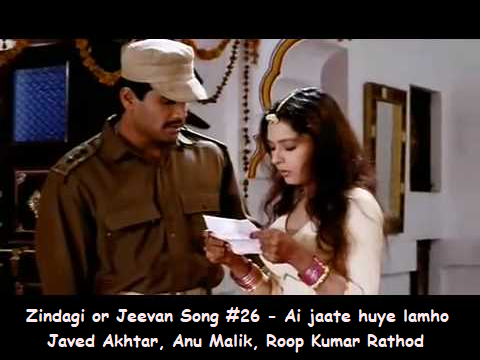
ZINDAGI OR JEEVAN SONG #26 – AI JAATE HUYE LAMHO

Zindagi or Jeevan Songs Series

I started this series on my Facebook group Yaad Kiya Dil Ne on 18 Oct 20. Since then, many other members have put up these songs. Here, I shall be giving you one of my own, per day.

I hope you liked my choice for Song #25 – Tere naam ka deewana in Zindagi or Jeevan Songs series. Let’s start with Song #26.

Song #26
Ae jaate hue lamho zara thehro
Theme-word: Mujhako hai zindagi ki kasam

Waqt Hai Ke rukta Nahin

Herman Wouk’s The Caine Mutiny was one of the earlier navy novels that I read (such books and movies were responsible for my decision to join the Indian Navy) had this beautiful quote: “Wasted hours are just as painful in the beginning as in the end; only, in the end, it is more obvious.”

So, if most of you look back at this year much later, it would become obvious why we want to shut down this group, which, in its concept, is the best of Music/Songs groups on Facebook.

We let the grains of sand pass through our fingers and do nothing except to share shibboleths that the group is important to us.

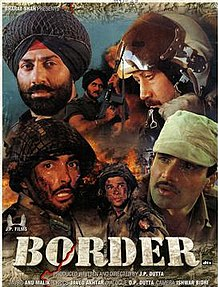
Border – 1997 Film

Films regarding patriotism and valour of the armed forces makes the makers laugh all the way to the bank. Being a member of the armed forces, seeing some of them, I too get carried away that perhaps they really feel for the brave jawans. Far from it.
JP Dutta was no different. He made this film about the Battle of Longewala in the 1971 Indo-Pak War and had all the lements that Chetan Anand had about the Indo-China War of 1962″ Haqeeqat. This included even songs. For example, if Haqeeqat had a song about (not) getting mail from home, viz, Main ye soch kar uske dar se utha tha, Border followed suit and had its own: Sandeshe aate hain.

Naturally, desh prem theme is so strong that the movie won Best Film and Direction awards for JP Dutta both at the National and Filmfare levels besides various other awards.

Clichés

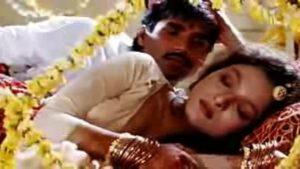
One of the clichés for war time movies is that on the honeymoon night (the focus of Hindi movies is always love) a telegram is received calling him to border. Somehow, wherever the loving couple is, the men from his unit find him to deliver the telegram (thank God that the Indian Postal authorities have now done away with the telegram and Hindi film makers will have to find some other way of appearing the poor guy consummating his wedding).
This cliché in Border is about Sunil Shetty as Bhairon Singh Shekhawat enjoying his honeymoon with his wife Phool Kanwar (Sharbani Mukherjee) when this wretched telegram is received. He is in a hurry to join duty. However, Jawed Akhtar, Anu Malik and Roop Kumar Rathod think they have enough time to squeeze in an emotional song (people who are watching the films often have to be egged along the right emotions!) And hence, this song.

Nevertheless, since it is the job of the movie makers to make such songs, they become good at it and even this is a fine and memorable song.

Lyrics

ऐ जाते हुए लम्हों ज़रा ठहरो ज़रा ठहरो
मैं भी तो चलता हूँ ज़रा उनसे मिलता हूँ
जो एक बात दिल में है उनसे कहूं
तो चलूं तो चलूं हूं हूं हूं हूं
ऐ जाते हुए लम्हों …

ज़रा ठहरो ज़रा ठहरो
उनके चेहरे की ये नरमियां
उनकी ज़ुल्फ़ों की ये बदलियां
उनकी आँखों के रोशन दिये
उनके होंठों की ये सुर्खियां
सब उनके हैं जलवे मैं चलने से पहले
साँसों में आँखों में ख्वाबों में यादों में
और इस दिल में तुमको छुपा के रखूं
तो चलूं तो चलूं …

मैं कहीं भी रहूं ऐ सनम
मुझको है ज़िंदगी की कसम
फ़ासले आते जाते रहे
प्यार लेकिन नहीं होगा कम
जिन्हें चाहूं जिन्हें पूजूं
उन्हें देखूं उन्हें छू लूं
ज़रा बातें तो कर लूं
ज़रा बाहों में भर लूं
मैं इस चाँद से माथे को चूम लूं
तो चलूं तो चलूं …

My Own Poetry

Chalo Intezaar Karte Hain

तू भी देखना एक ऐसा भी दिन आएगा,
आंसुओं से मेरे तेरा दिल पिघल जाएगा

मेरी ना श से तुझे कोई शिक्वा ना होगा
तेरे दिन तो क्या जहान संवर जाएगा

प्यार और इश्क़ मुझे करना ही ना था
घुट घुट रोज़ मुझे मरना ही ना था

अब सोचता हूँ क्यों चला गया वहां
तेरी राहों से मुझे गुज़रना ही ना था

सोचा था ज़िन्दगी का हमसफ़र मिला है
मेरी तनहा रातों का सहर मिला है

हम जिसे पीते रहे दवा जान के, ऐ दिल,
अब पता चला के ज़हर मिला है

खैर ग़म- ऐ-इश्क़ की कोई तो होगी मंज़िल
यह बेवफा निकली, यह हर वक़्त रही संगदिल

यह ज़िन्दगी तो रो रोके गुज़ार दी हमने
आने वाली ज़िन्दगी शायद ना हो मुश्किल

चलो इंतजार करते है! चलो इंतज़ार करते हैं!
ठोकर खा चुके हैं फिर भी प्यार करते हैं

तेरे वादे पे तो तमाम उम्र गुज़र गयी लेकिन
हम अब मौत की वफ़ा का ऐतबार करते हैं|

The Song

Ladies and gentlemen, please enjoy: Ae jaate hue lamho zara thehro…

I hope you enjoyed my choice for Song #26 in the series.

Please await Song #27 –  O palanhare, nirgun aur nyare.

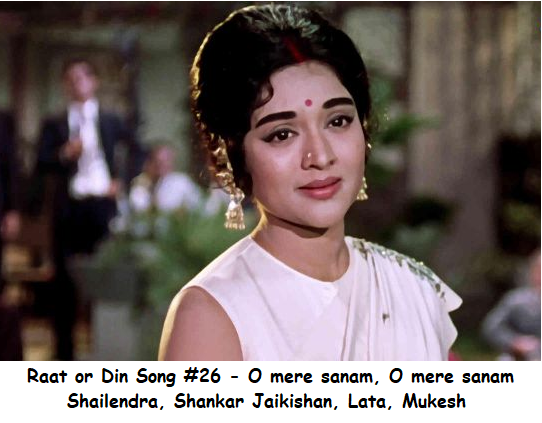
RAAT AUR DIN SONG #26 – O MERE SANAM, O MERE SANAM

I started this series on my Facebook group Yaad Kiya Dil Ne on 18 Aug 20. Since then, many other members have put up these songs. Here, I shall be giving you one of my own, per day.

This is the Song #26 in the series. I hope you liked Song #25 – Zikr hota hai jab qayamat ka.

Song #26
O mere sanam, O mere sanam
Theme-word: Jis din se huye ek duje ke, Is duniya se anjaan hain ham

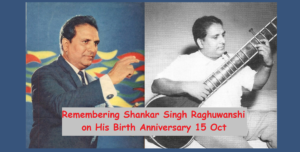
Shankar Singh Raghuwanshi

So strong was the bonding between Shankar Singh Raghuwanshi and Jaikishan Dayabhai Panchal that they were never addressed singly; they were always known as Shankar Jaikishan. Jaikishan was seven years younger to Shankar and died 16 years earlier and yet the Music Director’s name continued being Shankar Jaikishan.
There was never an attempt to separate them or have a tiff between them. They emerged as the best music duo the Hindi films ever saw; so much so that if you came across a popular tune or song, it was most likely that Shankar Jaikishan would have composed it. Some of their songs have remained at the top of popularity charts all these years such as Baharo phool barsao and Teri pyaari pyaari surat ko.

Today is the birth anniversary of Shankar. It is not my attempt to think of them as seaparately and yet, we all know that whilst Bhairavi was a favourite raag of Jaikishan (so much so that he named his daughter Bhairavi), Shivaranjani was the favourite of Shankar.

And hence this song. See how many gods are involved: Shankar, Kishan, Bhairavi, Shivaranjani. No wonder that the duo ruled the music world. It is my assessment that they will continue to do so.

Raag Shivaranjani

Raag Shivaranjani is a Raag that belongs to Kafi Thaat. The mood of the raag is Karuna Rasa (pathos) that suited both Shakeel and Ravi very well. However, the MDs who had this as their favourite (both of them as opposed to Bhairavi that was favourite of Jaikishan only) were Shankar Jaikishan. Some of their popular numbers in this Raag are: Awaaz deke hamen tum bulao, Baharon phool barsao, Dil ke jharokhe mein tujhako bithakar, Jaane kahan gaye woh din, and O mere sanam.
Some of the popular numbers of other composers in this raag are: Banake kyun bigada re, Dhak dhak karne laga, Kahin deep jale kahin dil, Mere naina sawan bhaadon, Mujhe kuchh kehna hai, Rimjhim ke geet sawan gaaye, Sawan aaye sawan jaaye, Tere mere beech mein, and Yaad teri aayegi.

Shivaranjani’s Jati is Audhav-Audhav, that is pentatonic in both ascent (Aaroha) and descent (Avaroha);Madhyam and Nishad are the swar that are varjya, Gandhar is Komal. Rest all are shuddha swar. This raag and Bhopali are similar except that in Bhopali, even Gandhar is shuddha whereas it is Komal in Shivaranjani.

The raag is to be normally performed at midnight.

Why would SJ Compose This Song in Shivaranjani?

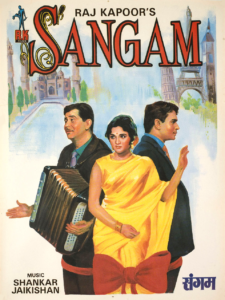
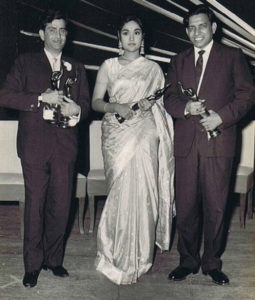
The main thing is Karuna ras. It is, as seen by me, the best song of the 1964 Raj Kapoor movie Sangam that portrayed a Love Traingle between Rajendra Kumar, Vyjaynthimala and Raj Kapoor. She used to love Rajendra Kumar and vice versa. However, Raj Kapoor swept her off her feet and so compulsive and obsessive was his love (Bol Radha bol sangam hoga ke nahin? and O mehbooba) that she married him.
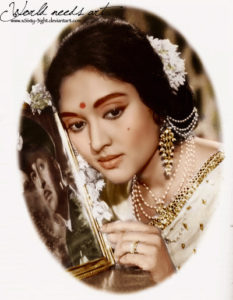
Once married, she was a typical Hindu wife of those days (there is only one love and life; ie, with my husband. Meena Kumari portrayed the same in Dil Ek Mandir with the triangle being between Rajendra Kumar, Meena Kumari and Raaj Kumar).

However, just like Raaj Kumar in Dil Ek Mandir, here Raj Kapoor had doubts after marriage; especially after he finds love letters exchanged between Rajendra Kumar and Vyjayanthimala (Ye mera prem patr padh kar Tum hainran na hona).

He couldn’t wait to express hi distrust with Dos dost na raha.

Life became a misery for Vyjayanthimala. In this song, she expresses her abiding love for her husband Raj Kapoor and talks about the sacredness of the relationship despite the earlier (and now terminated) love affair.

Shailendra

Raj Kapoor, Vyjayanthimala and Shailendra

I would like to say that a lot of credit for the song should come to Shailendra too. Just like his other songs (eg, Madhumati song with the line Main nadiya phir bhi main pyaasi) there is element of ruefulness in the song; total Karuna in lyrics too:

ओ मेरे सनम ओ मेरे सनम
दो जिस्म मगर एक जान हैं हम
एक दिल के दो अरमान हैं हम
ओ मेरे सनम ओ मेरे सनम

तन सौंप दिया, मन सौंप दिया
कुछ और तो मेरे पास नहीं
जो तुम से है मेरे हमदम
भगवान से भी वो आस नहीं – २

जिस दिन से हुए एक दूजे के
इस दुनिया से अनजान है हम
एक दिल के दो अरमान हैं हम
ओ मेरे सनम ओ मेरे सनम

सुनते हैं प्यार की दुनिया में
दो दिल मुश्किल से समाते हैं
क्या गैर वहाँ अपनों तक के
संग भी ना आने पाते हैं – २
हमने आखिर क्या देख लिया
क्या बात है क्यों हैरान है हम
एक दिल के दो अरमान हैं हम
ओ मेरे सनम ओ मेरे सनम

मेरे अपने, अपना ये मिलन
संगम है ये गंगा जमुना का
जो सच है सामने आया है
जो बीत गया एक सपना था – २
ये धरती है इन्सानों की
कुछ और नहीं इन्सान हैं हम
एक दिल के दो अरमान हैं हम
ओ मेरे सनम ओ मेरे सनम

Vyjayanthimala

Hats off to Raj Kapoor for having made a movie wherein, like Bimal Roy’s Madhumati, Vyjayanthimala is the main protagonist of the movie. Here, in the end, she rues being tossed about between the two bosom pals: Rajendra Kumar and Raj Kapoor.
This is a party scene. And Vyjayanthimala being the best dancer in Hindi movies, ever, has danced in amny parties. However, here she took her acting and histrionics a few notches higher by posing with dignity, elegance and self-pity.

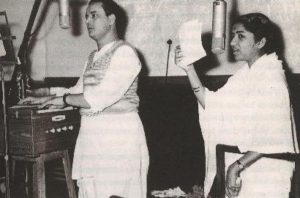
Lata Mangeshkar – Mukesh

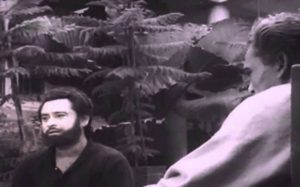
I could have given this song also in the Beautiful Duets series but that’s not my style. Lata sang for Vyjanthimala and Mukesh has always been the singing voice of Raj Kapoor in his movies.
The Song

Ladies and gentlemen, please enjoy on the birth anniversary of Shankar, a song penned by Shailendra and composed by Shankar Jaikishan for the 1964 Raj Kapoor movie Sangam: O mere sanam, O mere sanam…

I hope you liked my choice of Raat or Din Song #26.

Please await Raat or Din Song #27- Do hanson ka joda.

RRR SONG #6 – KHUSHI DO GAHDI KI MILE NA MILE

RRR Songs (Songs of Regret, Repentance and Ruefulness)

I started this new series on 17 Jan 21 on my Facebook Group Yaad Kiya Dil Ne. My efforts failed to involve people in writing their own stuff about songs and music rather than copying and pasting from here and there or worse, just sharing url of songs from YouTube. Hence, I had decided to give the group a burial that it deserved rather than making it like thousands of groups on Facebook about songs with nothing unique about them at all.

I hope you liked RRR Song #5: Chandni raaten pyaar ki baaten. Here is the next song:

Song #6
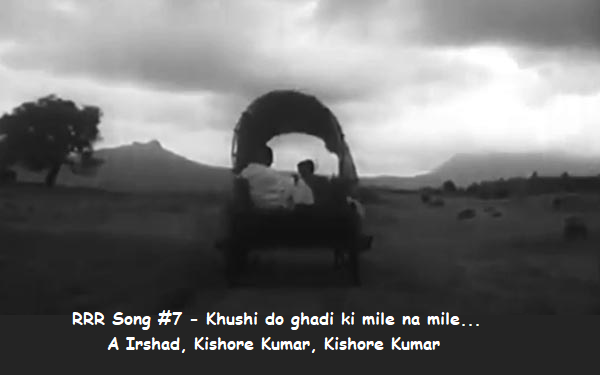
Khushi do ghadi ki mile na mile

Kishore Kumar All The Way

Just four days ago I took up Koi lauta de mere beete huye din. That was from his movie Door Gagan Ki Chhaon Mein, a movie that he produced and directed and wrote the story of. He starred in the movie too and had his son Amit act in the movie as his mute son after he, Kishore Kumar, returned after doing his time as a soldier. What is more, he was the Music Director of the movie and we still fondly the songs of the movie including Aa chal ke tujhe main le ke chalun.

Door Ka Rahi that he made seven years later, in 1971, was also written, produced and directed by him, starred him and his son Amit (besides his elder brother Ashok Kumar and his daughter in the movie Tanuja). He was also the music director of the movie and composed and sang most of the songs:
  1. Beqraar dil gaaye jaa.
  2. This song: Khushi do ghadi ki (my favourite).
  3. Jeevan se na haar.
  4. Chalti chale jaaye zindagi. (Hemant Kumar).
  5. Panthi hoon main us path ka.
  6. Main ek panchhi matwala (sung by his son).
  7. Mujhe kho jaane do.
  8. Ek din aur aa gaya. (Maana Dey)

Except for Chalti chali jaaye zindagi penned by Shailendra, all the others were penned by Irshad, this being one of the four movies in which he penned songs.

Why is This a Favourite?

Because of the lyrics. These reflect my own emotions and this is how I feel about closing down the group:

खुशी दो घड़ी की, मिले ना मिले
शमा आरज़ू की, जले ना जले
खुशी दो घड़ी की …

रहगुज़र में कई मन्ज़िलें भी मिलें (२)
देख कर एक पल, दम लिया फिर चले
खुशी दो घड़ी की …

हर कदम पर नए मर्हले थे खड़े (२)
हम चले दिल चला, दिल चला हम चले
खुशी दो घड़ी की …

My Own Poetry

BAHUT DIYA DENE WAALE NE MUJHAKO

कैसे कैसे कभी इस दिल में अरमान थे,
कुछ ऐसे जज़्बात जिनसे हम अनजान थे।

शुरू शुरू में तो ऐसा लगता था हमें,
क़दमों तले सातों आसमान थे I

यह भी एहसास हुआ कई बार हमें,
बाहों में अपने दोनों जहान थे I

मिलने की खुशी चंद घंटों की थी,
ना मिलने से हम कितने परेशान थे।

हम मजबूर इस तरह हुए हालात के हाथों,
कभी ग़मगीन और कभी हम पशेमान थे।

ज़िन्दगी की राहों में हमदर्द तो नहीं मिले,
पर हर मरहले पे देखा खड़े हैवान थे।

हौले हौले हमने देखा एक अजूबा,
हमारी तरह लोग भी ज़िन्दगी से हैरान थे।

जहाँ भी गए लोगो की भीड़ थी लेकिन,
दिलों के रास्ते पूरी तरह सुनसान थे।

वक़्त बीत गया, ज़िन्दगी पीछे रह गयी,
दो चार घड़ी इस जगह हम मेहमान थे।

कल आएगा, नए कारवां होंगे, पर कैसे भूलें,
इस धरती पे हम भी कभी इंसान थे।

भगवान, फिर भी तेरे सजदे में है रवि,
जो कुछ भी पाया सब तेरे एहसान थे।

This Song

Ladies and gentlemen, please enjoy: Khushi do ghadi ki mile na mile…

I hope you liked Song #6 in this series.

Please await Song #7: Main ye soch kar uske dar se utha tha.

ZINDAGI OR JEEVAN SONG #25 – TERE NAAM KA DEEWANA

Zindagi or Jeevan Songs Series

I started this series on my Facebook group Yaad Kiya Dil Ne on 18 Oct 20. Since then, many other members have put up these songs. Here, I shall be giving you one of my own, per day.

I hope you liked my choice for Song #24 – Tora man bada paapi in Zindagi or Jeevan Songs series. Let’s start with Song #25.

Song #25
Tere naam ka deewana tere ghar ko dhundhta hai
Theme-word: Jaan-e-wafa o jaan-e-jigar, ye zindagi hai to ek safar, Is safar mein ek musafir humsafar dhundhta hai

Anand Bakshi – Laxmikant Pyarelal

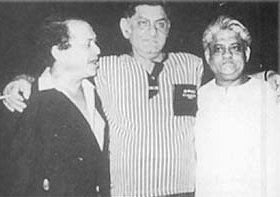
They paired together in a record 302 movies. One would thing that quantity was at the expense of quality. Amazingly, they continued having quality and popularity of their songs. They came together for the 1964 movie Mr X In Bombay with that great Kishore Kumar song: Mere mehboob qayamat hogi. Their last movie together was the 1992 movie Aashiq Awara. In these 29 years, Anand Bakshi wrote 1680 songs for them. That makes it nearly 58 songs per year and nearly 5 songs per month!
Suraj Aur Chanda – 1973 Movie

(Courtesy: Cinestaan.com)

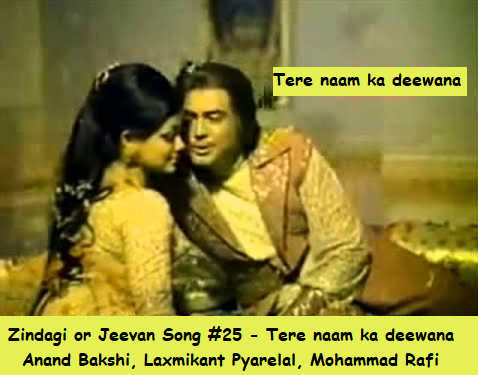
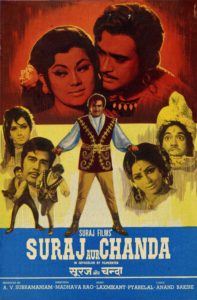
This movie from where I have taken this song was directed by T Madhava Rao (Madhav Rao in the poster) and starred Sanjeev Kumar, Rita Haskar (credited as Meeta in the poster), Sujit Kumar (Sujeet Kumar in the poster) and Bindu. Sanjeev Kumar is Suraj in the movie and Rita Haskar is Chandavati and thus the name of the movie.

Mohammad Rafi

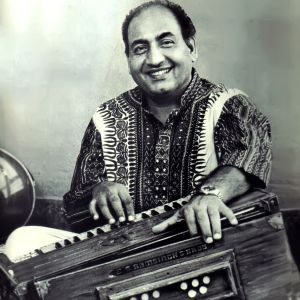
Mohammad Rafi sang some really beautiful songs for Laxmikant Pyarelal starting with their first movie together: Parasmani (Woh jab yaad aaye bahut yaad aaye) and followed by Dosti (Chahunga main tujhe saanjh savere.
I love this song. One, for its excellent lyrics, two for its beautiful composition, three for its outstanding rendition by Mohammad Rafi and four by a carefree (his style) acting by Sanjeev Kumar as if he was cut out for this role (his characteristic).

Lyrics

तेरे नाम का दीवाना तेरे
घर को ढूंढता है
इस नजर पे दिल फ़िदा है
उस नजर को ढूंढता है

आवाज़ दिल की पहचान ले
मै कौन हु तू ये जान ले
इक रात का सितारा इक शहर
को ढूंढता है
तेरे नाम का दीवाना तेरे
घर को ढूंढता है

जाने वफ़ा ो जाने जिगर
ये ज़िन्दगी तो है एक सफर
इस सफर में एक मुसाफिर
हमसफ़र ढूंढ़ता है
तेरे नाम का दीवाना तेरे
घर को ढूंढता है

फलों में जैसे ही रंग ो फूल
मुझको छुपाले आँखों में तू
मेरा दिल तड़प तड़प कर
दिल वॉर को ढूंढ़ता है
तेरे नाम का दीवाना तेरे
घर को ढूंढता है

My Own Poetry

I am giving you my first ever Love Poem that I wrote at the age of 16 years:

TU

एक मुद्दत से तमन्ना थी जिसे कहने की,
बात वो अब भी मैं कह नहीं पायूँगा सनम,
ज़िंदा हैं अश्क़ अब भी जो बहाये मैंने,
मैं उन अश्कों मैं कभी बह नहीं पायूँगा सनम I

याद आएँगी मुझे खामोश ओ मजबूर रातें,
अपने ही आप से मैं करता रहा था बातें
सोचा था अब तेरे दीदार को ना तरसूँगा कभी
जो न मुझे मिल सका उस प्यार को ना तरसूँगा कभी
सोच कर फिर वही मायूस सा हो कर सोचा
बिन तुम्हारे मैं रह भी ना पायूँगा सनम
वो बात अब भी मैं कह नहीं पायूँगा सनम I

मेरे बारे में कभी तुमने भी ये सोचा होगा
ये भी एक और दीवाना है दीवानो की तरह
मैं जो रौशन हूँ सियाह रात में शमा की तरह
मेरा परवाना है यह भी परवानो की तरह
सोच कर तूने इतना तो सोचा होता:
इतने सितम मैं सह भी ना पायूँगा सनम
वो बात अब भी मैं कह नहीं पायूँगा सनम I

खुद को मुझसे इतना भी ना तू दूर समझ
अपने परवाने को इतना भी ना मजबूर समझ
मैं अगर चाहूँ तो इतनी भी है ताक़त मुझ में:
याद को तेरी मैं इक तू ही बना सकता हूँ
इक तो तू है जो मेरी हर बात को समझे वहशत
अपनी तू को मैं हर इक बात सुना सकता हूँ
तुझको सजाना चाहूँ तो ज़ुल्फ़ भी छूने नहीं दे
अपने अरमानो से तेरा हर अंग सजा सकता हूँ
गम नहीं अब जो तू लाख भी रूठे मुझसे
अपनी तू को मैं जब चाहे मना सकता हूँ I

The Song

Ladies and gentlemen, please enjoy: Tere naam ka deewana tere ghar ko dhoondhta hai…

I hope you enjoyed my choice for Song #25 in the series.

Please await Song #26 –  Ai jaate huye lamho zara.

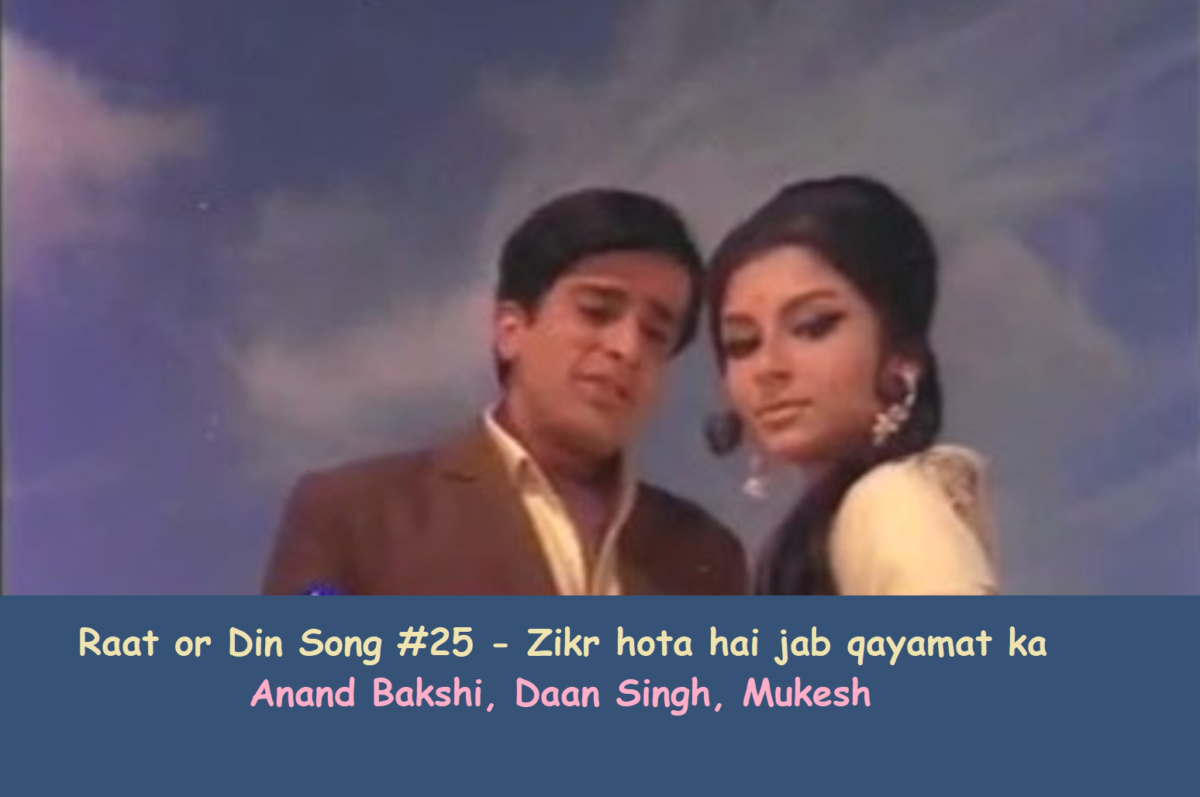
RAAT AUR DIN SONG #25 – ZIKR HOTA HAI JAB QAYAMAT KA

I started this series on my Facebook group Yaad Kiya Dil Ne on 18 Aug 20. Since then, many other members have put up these songs. Here, I shall be giving you one of my own, per day.

This is the Song #25 in the series. I hope you liked Song #24 – Tumhi mere mandir, tumhi meri pooja.

Song #25
Zikr hota hai jab qamat ka
Theme-words: Both Din and Raat appear in the later part of mukhada: Tu jo chahe to din nikalta hai, Tu jo chahe to raat hoti hai

Bad Acting, Bad Singing, Bad Direction and yet…

It has been some time since I started looking at songs with each aspect taken into consideration separately and not as a whole package just because the song was a success.

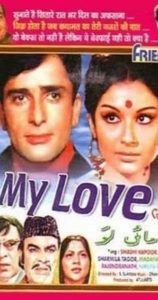
This song is from the 1970 S Sukhdev movie My Love starring Shashi Kapoor and Sharmila Tagore. It was penned by Anand Bakshi, composed by Daan Singh, sung by Mukesh and enacted by Shashi and Sharmila.
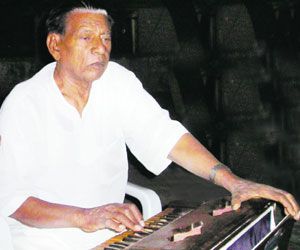
First of all, Anand Bakshi’s lyrics are simply beautiful and equally beautifully composed by Daan Singh.

Daan Singh was born five years after Hasrat in Jaipur. He was from a musical family; his father was a Khayal singer. He was trained by no less a musician as Khemchand Prakash. And yet except for this movie songs and a handful of other movies, he never emerged big. This movie was his pinnacle with this song and Woh tere pyar ka gham.
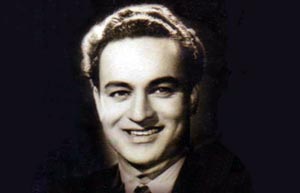
These songs are the genre’ of Mukesh and yet I feel he didn’t give his best in this; it somehow falls short of his usual sterling singing.
And then, surely Shashi Kapoor and Sharmila could have come up with matching and not dumb acting. S Sukhdev also has to bear the blame as he let this bad acting pass. Kamal Bose gave us some beautiful cinematography in Bandini and Sujata. Here, he falls short in this song.

Hence, the song basically belongs to Anand Bakshi and Daan Singh.

Lyrics

ज़िक्र होता है जब क़यामत का तेरे जलवों की बात होती है
तू जो चाहे तो दिन निकलता है तू जो चाहे तो रात होती है
ज़िक्र होता है जब …

तुझको देखा है मेरी नज़रों ने तेरी तारीफ़ हो मगर कैसे
के बने ये नज़र ज़ुबाँ कैसे के बने ये ज़ुबाँ नज़र कैसे
ना ज़ुबाँ को दिखाई देता है ना निग़ाहों से बात होती है
ज़िक्र होता है जब …

तू चली आए मुस्कुराती हुई तो बिखर जाएं हर तरफ़ कलियाँ
तू चली जाए उठ के पहलू से तो उजड़ जाएं फूलों की गलियाँ
जिस तरफ़ होती है नज़र तेरी उस तरफ़ क़ायनात होती है
ज़िक्र होता है जब …

तू निग़ाहों से ना पिलाए तो अश्क़ भी पीने वाले पीते हैं
वैसे जीने को तो तेरे बिन भी इस ज़माने में लोग जीते हैं
ज़िन्दगी तो उसी को कहते हैं जो गुज़र तेरे साथ होती है
ज़िक्र होता है जब …

Exceptional lyrics indeed.

My Own Poetry

This one is called, hold your breath:

Har Taraf Tera Jalwa

फिर मुझे पुकारा है…..
तेरी चाहत ने, तेरी आहट ने
तेरी आवाज़ ने, दिल के साज़ ने
तेरी धड़कन ने, तेरी उलझन ने
तेरी साँसों ने, तेरे अश्कों ने
तेरी आँखों ने, तेरे होंठों ने
तेरे हाथों के गरम छूने ने
तेरी याद ने, तेरी हसरत ने
तेरे प्यार ने, तेरी उल्फत ने
तेरे दर्द ने, तेरे ज़ख़्म ने
तेरे हसीन ख्यालों के वहम ने
तेरी हंसी ने, तेरे रोने ने
मेरे ज़हन में तेरे होने ने
तेरी आँखों की मधुर मुस्कान ने
तेरे दिल में उमढ़ते तूफ़ान ने
तेरी आहों ने, तेरी राहों ने,
मेरे आगोश में उलझी बाहों ने
तेरे लबों से थिरकते गीत ने,
जो मिल के बनाया उस अतीत ने
उन वादीयों ने जो हमारे संग बहकती थी
उस कोयल ने जो हमें देख चहकती थी
उन फूलों ने जिस में तेरे प्यार का रंग था
उन हवाओं ने जिनका हमें संग था
उन बातों ने जो कभी ना होती थी खत्म
उस अदा ने जिसने ढाया था मुझपे सितम
तेरी मस्ती ने, तेरी हस्ती ने,
तेरी गलियों ने, तेरी बसती ने
तेरी खुशबु ने, तेरे खवाब ने
ऐ मेरे चाँद, तेरी माहताब ने
हर तरफ शोर है, फुसफुसाहट है
हर तरफ तेरे क़दमों की ही आहट है
मेरा बस एक ही सवाल तुझसे है रूबरू:
“किस की मैं सुनूँ और किस की ना सुनूँ?”

The Song

Ladies and gentlemen, please enjoy: Zikr hota hai jab qayamat ka…

I hope you liked my choice of Raat or Din Song #25.

Please await Raat or Din Song #26- O mere sanam, O  mere sanam.


BEAUTIFUL DUET #25 – JEET HI LENGE BAAZI HUM TUM

Beautiful Duet Series

I started this series on my Facebook group Yaad Kiya Dil Ne on 23 Aug 20. Since then, many other members have put up these songs. Here, I shall be giving you one of my own, per day.

Last time, I gave you Beautiful Duet #24 – Deewana mastana hua dil. So here, then, is the next one:

Song #25
Jeet hi lenge baazi hum tum

Goosepimples Song for Me

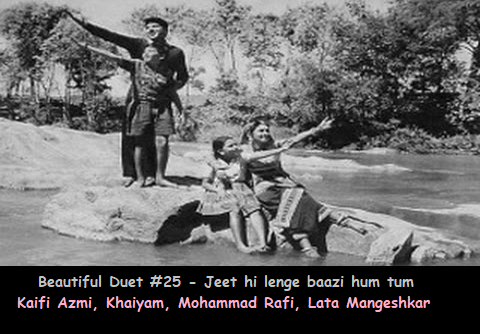
I don’t know about all of you but it is a song that always brings out goosepimples in me. Most childhood songs that are sung or heard later in life have that effect on all of us. However, this one is special since she (Lata for Tarla Mehta) joins in after the first stanza sung by Mohammad Rafi for Dharmendra brings up memories of their childhood.

This is what Love is all about; a quiet resolve despite all the odds. I can take adequate pride in saying that Lyn and I represent that kind of Love. Take today for example; the entire day was spent in INHS Asvini, 50 Kms away, trying to find solution to her drooping neck during her Alzheimer’s Disease condition. And yet, at the end of the day, when we return, I choose to put up this song whose lyrics inspire us:

रफ़ी: जीत ही लेंगे बाज़ी हम तुम, खेल अधूरा छूटे न
प्यार का बंधन, जन्म का बंधन, जन्म का बंधन टूटे न

मिलता है जहाँ धरती से गगन, आओ वहीं हम जाएं
तू मेरे लिये, मैं तेरे लिये – २
इस दुनिया को ठुकरायें – २
दूर बसा ले दिल की जन्नत – २
जिसको ज़माना लूटे ना, प्यार का बंधन

लता: मिलने की खुशी ना मिलने का गम, खत्म ये झगड़े हो जाएं
तू तू ना रहे, मैं मैं ना रहूँ – २
इक दूजे मैं खो जाएं – २
मैं भी ना छोड़ूं पल भर दामन – २
तू भी पल भर रूठे ना, प्यार का बंधन …

All that I ever wanted was Lyn, all that she ever wanted was me and so on.

My Own Poetry

Here is my own poem representing this resolve, written four and half years ago:

Hum Ek, Hamari Ek…

हम एक, हमारी एक……….. ज़िन्दगी,
कभी एक दूजे की, कभी खुदा की बंदगी I
पैंतीस साल पहले जो मांगी थी दुआ,
उसी का तो अब तक है सिलसिला,
नज़रों का एक होना तो सुनते आये थे,
पर यहाँ तो दिल, ख्वाब, सब एक हुआ I

हम एक, हमारी एक ………….पहचान,
एक दूसरे में बस्ती है अपनी जान I
गरीब थे हम, पर बने रहे अमीर,
हम ही तो थे कल के राँझा और हीर,
दोस्तों ने जिन्हे हमें धनि बनाया,
कहा: “यही तो हैं प्यार की तस्वीर” I

हम एक, हमारी एक ……….. कोशिश,
क्या खूब बनी प्यार की बन्दिश I
ज़िन्दगी में आये कई चढ़ाव उतार,
हम एक संग पहुंचे उनके पार,
ऐसे ही बनी रहे हमारी छोटी सी ज़िन्दगी,
ऐसे ही बना रहे हमारा छोटा सा परिवार I

हम एक, हमारी एक ………. दास्तान,
तू मेरा जहान, मैं तेरा जहान I
कई बरस बाद, हम हवा में समा जाएंगे,
किसी को फिर नज़र नहीं आएंगे,
पर फिर भी देखना लोग भूलेंगे नहीं,
जब प्यार का ज़िक्र हो, हम याद आएंगे I

हम एक, हमारी एक ……… फ़रियाद,
प्यार हमारा बना रहे, मरने के भी बाद I

The Song

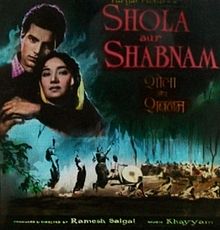
This is the main song of the 1961 Ramesh Sehgal movie Shola Aur Shabnam starring Dharmendra, Tarla Mehta and M Rajan as a triangle. Dharmendra and Tarla were childhood lovers. Dharmendra plays Ravi in the movie! Tarla is Sandhya (By herself, absence of Ravi or Sun). They separate.
Many years later Ravi, in his poor condition finds employment with his friend Prakash (M Rajan). Prakash is to be married to Sandhya! And that’s when Ravi comes into their lives again.

Ladies and gentlemen, please enjoy: Jeet hi lenge baazi hum tum….

I hope you liked my choice of Beautiful Duet #25.

Please await Beautiful Duet #26- Ek pyar ka naghma hai.

RRR SONG #5 – CHANDNI RAATEN PYAR KI BAATEN

RRR Songs (Songs of Regret, Repentance and Ruefulness)

I started this new series on 17 Jan 21 on my Facebook Group Yaad Kiya Dil Ne. My efforts failed to involve people in writing their own stuff about songs and music rather than copying and pasting from here and there or worse, just sharing url of songs from YouTube. Hence, I had decided to give the group a burial that it deserved rather than making it like thousands of groups on Facebook about songs with nothing unique about them at all.

I hope you liked RRR Song #4: Kabhi kisi ko mukammal jahan nahin milta. Here is the next song:

Song #5
Chandni raaten pyar ki baaten kho gayi jaane kahan?

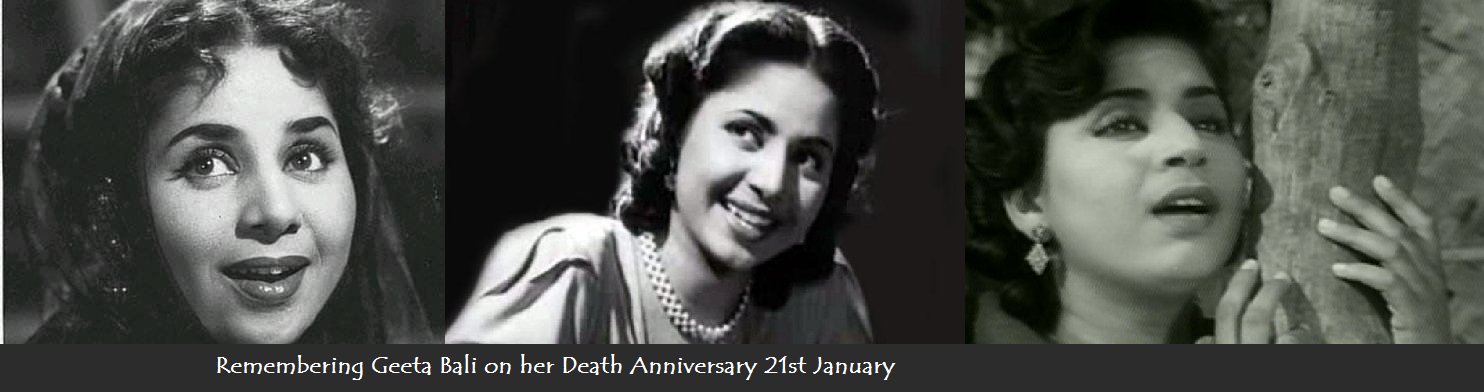
Remembering Geeta Bali on Her Death Anniversary 21 Jan

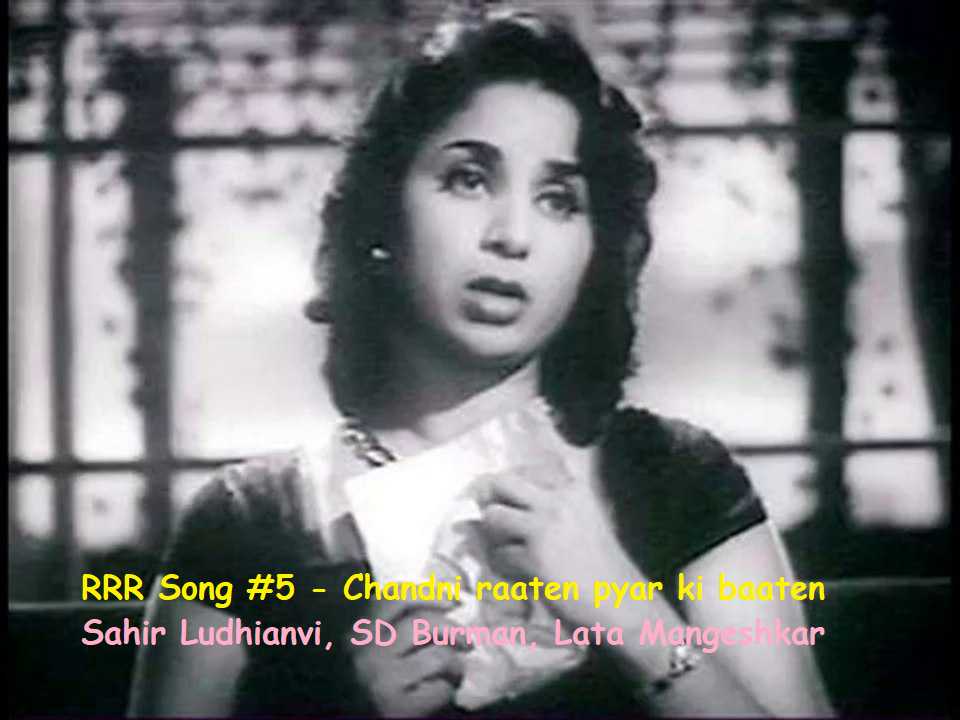
She died at the age of 35 years only. She had acted in about 70 movies in about ten years of her career as heroine that started with the 1946 (she was 16 years old then) movie Badnaami.
Incidentally, I started my Raat or Din Songs series with her Saari saari raat teri yaad sataye.

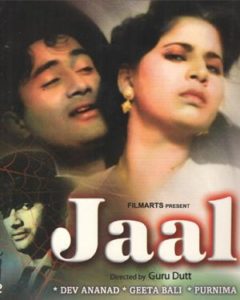
Jaal – 1952 Movie

This was one of her best roles and the movie has got the most beautiful song of Sahir Ludhianvi on the composition of SD Burman in Raag Kafi: Ye raat ye chandni phir kahan.
Geeta Bali was Maria (the same name as Julie Andrews in Sound of Music), the daughter of Carlos (KN Singh) in Goa. Tony Fernandez (Dev Anand) arrives from Bombay. He is a slick and suave person. Maria and Tony fall in love with each other thanks to the extraordinary seductive appeal of Tony (as in the song Ye raat ye chandni phir kahan).

Little did she know that Tony is a cheat. And hence this song. As beautiful lyrics here as the male version:

(यहाँ मत गाइये)ये रात ये चाँदनी फिर कहाँ
(यहाँ मत गाइये) सुन जा दिल की दास्तां

====== संगीत=======

चांदनी रातें प्यार की बातें
खो गयी जाने कहाँ
चांदनी रातें प्यार की बातें
खो गयी जाने कहाँ

(यहाँ मत गाइये)ये रात ये चाँदनी फिर कहाँ
(यहाँ मत गाइये) सुन जा दिल की दास्तां

आती है सदा तेरी टूटे हुए तारों से
आहट तेरी सुनती हूँ खामोश नज़ारों से
भीगी हवा, उदी घटा कहती है तेरी कहानी
तेरे लिये बेचैन है शोलों मे लिपटी जवानी
सीने मे बल खा रहा है धुआं,
सुन जा दिल की दास्तां

(यहाँ मत गाइये)ये रात ये चाँदनी फिर कहाँ
(यहाँ मत गाइये) सुन जा दिल की दास्तां

चांदनी रातें प्यार की बातें
खो गयी जाने कहाँ

=====अंतराल संगीत======

My Own Poetry

TU NAHIN TO CHANDNI RAAT KYA KARE?

चांदनी रात है पर तूं मेरे साथ नहीं,
बात तो कुछ है लेकिन वह बात नहीं।

भीगी फिजायें छू लेती हैं आके रुखसार,
उनसे क्या हो जब दिल में बरसात नहीं।

एक ज़माना था शाम ओ सेहर मिलते थे हम,
अब कभी मिलें ऐसे तो हालात नहीं।

लहरे उठती हैं उठ के चली जाती हैं,
दिल की धड़कन को बढ़ा दें इनकी औकात नहीं।

पेड़ों की छाओं में बैठे भी तो क्यूं हो जादू,
ठहरे कैसे ये समां जब हाथ में तेरा हाथ नहीं।

नज़रें रह रह के ढूंढती हैं तेरी नज़रें,
कहाँ है तू इतनी तो अंधेरी रात नहीं।

कैसे अब प्यार हमारा मुकाम तक पहुंचे,
ना तो तुम से न मुझ से जब शुरुआत नहीं।

हम नहीं मिलते यह ज़माने की है पाबंदी,
क्यूं कहती हो, रवि, तेरे दिल में जज़्बात नहीं।

The Song

Geeta Bali had many songs sung for her by Geeta Dutt. However, here she has Lata Mangeshkar singing for her and it is simply great.

Ladies and gentlemen, please enjoy: Chandni raaten pyar ki baaten…

I hope you liked Song #5 in this series.

Please await Song #6: Khushi do ghadi ki mile na mile.

ZINDAGI OR JEEVAN SONG #24 – TORA MAN BADA PAAPI

Zindagi or Jeevan Songs Series

I started this series on my Facebook group Yaad Kiya Dil Ne on 18 Oct 20. Since then, many other members have put up these songs. Here, I shall be giving you one of my own, per day.

I hope you liked my choice for Song #23 – Log peete hain ladkhadate hain in Zindagi or Jeevan Songs series. Let’s start with Song #24.

Song #24
Tora man bada paapi sanwariya re
Theme-word: Tu sangdil hai teri zindagi mein pyar nahin

Happy Birthday Helen Anne Richardson 21 November

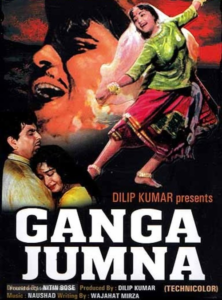
Finally, now with the Best Lyricist: Shakeel Badayuni and that also from Dilip Kumar’s own production Gunga Jumna that set a new standard for the hero. Many have copied this role of Dilip Kumar; one of them being Amitabh Bachchan by his own admission.
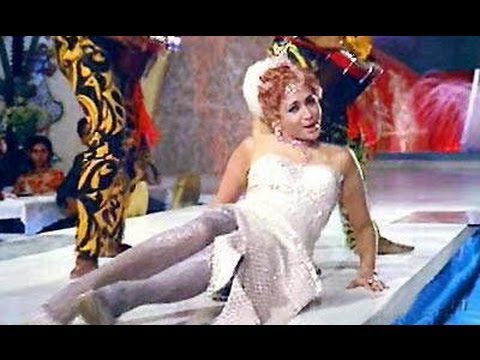
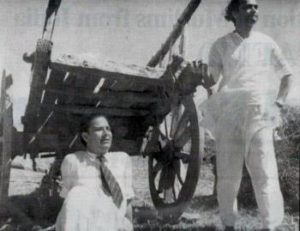
In the last two posts: Raat or Din Songs and Beautiful Duets Series. I had mentioned how Helen had redefined dancing in the movies starting with her Mera naam Chin Chin Chu in 1958 Shakti Samanta movie Howrah Bridge. I also mentioned that since she was a natural dancer, she became adept at other genres of dancing including even classical.

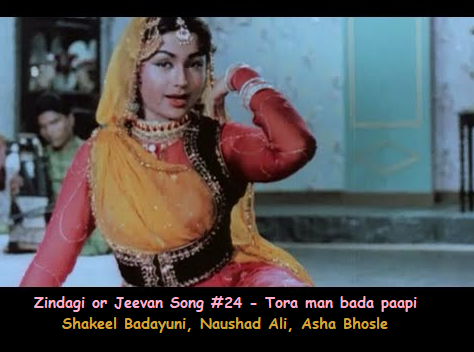
Now I have thought of a song in which she was a typical Indian courtesan.

Gunga Jumna

This 1961 movie was produced by Dilip Kumar who took Nitin Bose to direct it. The movie starred Dilip Kumar as Gunga, his brother Nasir Khan as Jumna and Vyjayanthimala as his love angle.

Shakeel Badayuni and N aushad Ali

The movie’s songs were penned by Shakeel Badayuni and composed by Naushad and the songs and the dialogues penned by Wajahat Mirza were in sync in that wide spread use of Awadhi dialect was there. The only song that was in Hindi won the Best Children’s song since it was sung by a teacher (Abhi Bhattacharya): Ansaaf ki dagar pe.

Have a look at the lyrics of this song:

आ मतलब का तू मीत बेदर्दी गरज़ की राखे प्रीत
दुखिया मन को घायल करना समझे तू अपनी जीत

तोरा मन बड़ा पापी साँवरिया रे
मिलाए छल-बल से नजरिया रे
तोरा मन बड़ा …

तू संगदिल है तेरी ज़िन्दगी में प्यार नहीं
तेरे चमन में है सब-कुछ मगर बहार नहीं
तुझे क़सम है न यूँ मुस्करा के देख हमें
तेरी नज़र का भी ज़ालिम कुछ ऐतबार नहीं
हाँ मिलाए छल-बल से …

सितमगरों की इनायत से बेरुख़ी अच्छी
जो तेरे साथ ना गुज़रे वो ज़िन्दगी अच्छी
गरज़ का यार है मतलब का तू है दीवाना
न तेरी दोस्ती अच्छी न दुश्मनी अच्छी
हाँ मिलाए छल-बल से …

जहाँ में हो जिसे जीना वो तुझसे दूर रहे
जो मरना चाहे वो आकर तेरे हुज़ूर रहे
ये क्या गज़ब है कि हम आह करके हों बदनाम
तू लाख ज़ुल्म करे फिर भी बेक़सूर रहे
हाँ मिलाए छल-बल से …

The song was sung by Asha Bhosle for Helen.

Beauty of this Song and Dance

In the movie there is a beautiful song and dance picturised on the greatest Bharat Natyam dancer in Hindi movies: Vyjayanthimala. And then, we had to have a dance by Helen as a courtesan who is accomplished in Cabaret. But, look at the way she delivered! In a movie with a dance by Vyjayanthimala, Helen still could make a place for herself in a dance that was not her forte’!

Raag Pahadi

It is the raag of my home place in Himalayas. It is not difficult for any one of you to think of this song as Pahadi since Pahadi is also a dhun and not just a raag. The Tal is the commonest: Kaherava.

Ladies and gentlemen, please enjoy: Tora man bada paapi sanwariya re…

I hope you enjoyed my choice for Song #24 in the series.

Please await Song #25 –  Tere naam ka deewana.

RAAT AUR DIN SONG #24 – TUMHI MERE MANDIR, TUMHI MERI POOJA

I started this series on my Facebook group Yaad Kiya Dil Ne on 18 Aug 20. Since then, many other members have put up these songs. Here, I shall be giving you one of my own, per day.

This is the Song #24 in the series. I hope you liked Song #23 – Poochho na kaise maine raen bitayi.

Song #24
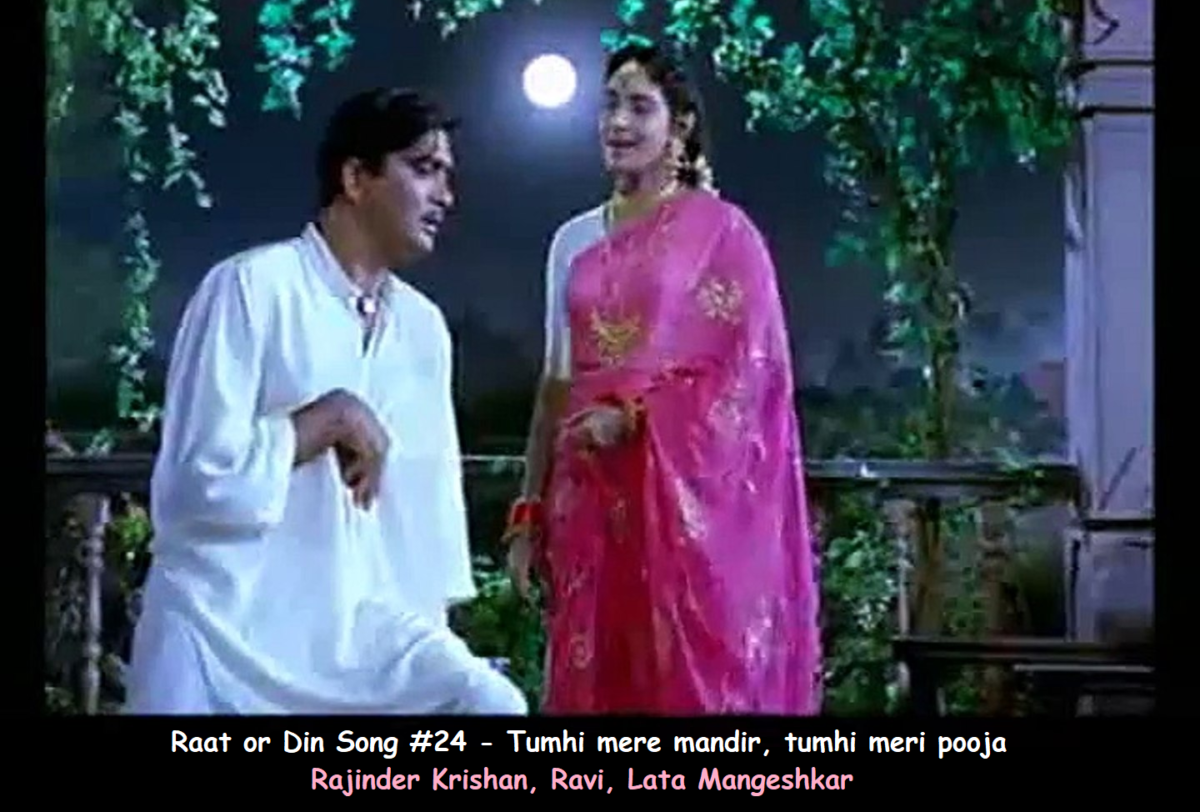
Tumhi mere mandir, Tumhi meri pooja
Theme-word: In the last stanza: Bahut raat beeti chalo main sula doon

Devotion of a Wife and Sri Guru Granth Sahib (SGGS)

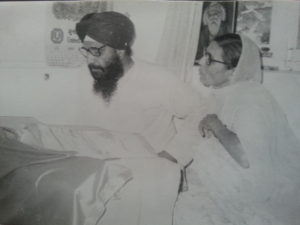
My dad and mom reciting from SGGS

SGGS is my favourite book. I learnt Punjabi only so that I could read it. On my birthday in 1985, one year after my father died in a jeep accident, my mother presented a copy of SGGS to me. Here is one basic thing that I learnt:

As written by Sri Guru Nanak, God is to be worshipped as a woman would her husband; God is to be seen as your kant, suhaag etc. I was able to see that Sri Guru Nanak felt that the worship of a woman of her husband is the purest form of worship. I read SGGS everyday. If you too have read then you would know that this simile is given by Guru Nanak at innumerable places in SGGS.

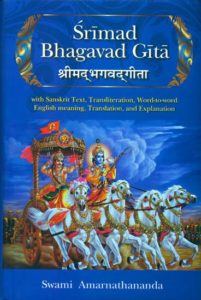
Devotion of a Wife and Sri Bhagawat Gita (SBG)

SBG, most of you already know, went one step further. It made relationships stand on their head; as per SBG, the only correct relationship is that of Love (since Radha was not even married to Krishna in the worldly sense). Her devotion for Him ensures that Her name is taken even before His; you always call them Radhe Krishan and never Krishan Radhe!
I wrote a piece only on this topic and for those of you who are interested (a person like Lata Gandhi would never be since in the time and effort taken by me to write one post she can write a dozen and share in dozen groups; which we have sworn not to do in this group) you may read it here:

THE MOST IMPORTANT RELATIONS AND RELATIONSHIP(S)

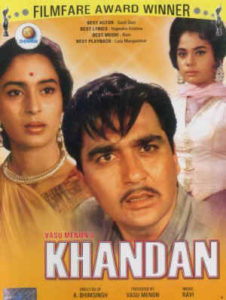
Khandan – 1965 Movie

The movie was directed by A Bhimsingh who directed predominantly Tamil movies especially for AVM Productions. This movie was remake of Tamil movie Bhaaga Privinai starring Sivaji Ganesan.
Sunil Dutt is Govind in the movie and Nutan is Radha. Due to an electric shock Govind gets paralysed. And yet, the devotion of Radha to Govind is exactly how you would find in SGGS or SBG. There is great Beauty that comes with True Love. She is loaded in gold in the movie but, you soon realise that the best ornament she wears is that of Love.

The Popularity of This Song

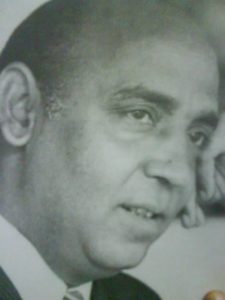
Rajinder Krishan

All lyricists of that era were rooted in scriptures; so, indeed was Rajinder Krishan. His lyrics remind you of the actual scene between Radha and Krishan.

Of course, Ravi composed this song so well that as soon as it was played people wanted to listen to it again and again. Lata’s singing is simply beautiful.
But, I feel that one reason for the popularity of the song is Nutan. She displays the emotions of the song so well that lyrics and notes come alive with her histrionics. The song belongs to her just as Krishna belonged to Radhe.

My Own Poetry

I shall take only one word of the song “Mandir” and tell you in my poem as to where to find this “Mandir”. I wrote this when I watched a scene in Calcutta:

Temple of God

“Hurry”, said the man from his rickshaw seat,
“Else, we would be late for the Mangal Pooja”.
His wife tugged nervously at the flowers,
She had gathered as an offering to the gods.
Her face was red with accusation,
Not just against the frail rickshaw puller,
But also against her husband,
“I told you not to hire this man,
He hardly has strength to pull,
Let alone pull with speed.
We shall have the curse of the gods
For being late for the Pooja”.

The City of Joy,
Mother Theresa’s adopted city,
Was as unkind to the rickshaw puller,
As ever it used to be;
He could have been a slave under the British yoke.
Pot holes and filth on streets were not enough
To chastise the rickshaw puller;
It had rained heavily and hence,
He stood behind the pulling bar
In knee deep squalid water.
He had promised his family of three children
And an ailing wife, food,
After two days of starvation.

Their hope of meals, on the seat behind him,
Blasphemed him with all their might
For making them late for the prayers.
I saw the sweat on his muscles,
I saw the wetness of his brow
As he tried in vain to get the wheels
Out of the unseen ditch.
I thought how wretched was the man,
How cruel was life for him;
Could anything be worse?

And then,
And then, I looked at the couple on the seat.
Fuming and fretting,
Cursing and abusing,
Little did they know,
How close they really were,
To your temple, O God!

The Song

Ladies and gentlemen, please enjoy: Tumhi mere mandir, tumhi meri pooja…

तुम्हीं मेरे मंदिर, तुम्हीं मेरी पूजा, तुम्हीं देवता हो
कोई मेरी आँखों से देखे तो समझे, कि तुम मेरे क्या हो
तुम्हीं मेरे मंदिर, तुम्हीं मेरी पूजा, तुम्हीं देवता हो

जिधर देखती हूँ उधर तुम ही तुम हो
न जाने मगर किन खयालों में गुम हो
मुझे देखकर तुम ज़रा मुस्कुरा दो
नहीं तो मैं समझूँगी, मुझसे ख़फ़ा हो
तुम्हीं मेरे मंदिर, तुम्हीं मेरी पूजा, तुम्हीं देवता हो

तुम्हीं मेरे माथे की बिंदिया की झिल-मिल
तुम्हीं मेरे हाथों के गजरों की मंज़िल
मैं हूँ एक छोटी-सी माटी की गुड़िया
तुम्हीं प्राण मेरे, तुम्हीं आत्मा हो
तुम्हीं मेरे मंदिर, तुम्हीं मेरी पूजा, तुम्हीं देवता हो

बहुत रात बीती चलो मैं सुला दूँ
पवन छेड़े सर्गम मैं लोरी सुना दूँ
तुम्हें देखकर यह ख़याल आ रहा है
कि जैसे फ़रिश्ता कोई सो रहा है
तुम्हीं मेरे मंदिर, तुम्हीं मेरी पूजा, तुम्हीं देवता हो

I hope you liked my choice of Raat or Din Song #24.

Please await Raat or Din Song #25- Zikr hota hai jab qayamat ka.

BEAUTIFUL DUET #24 – DEEWANA MASTANA HUA DIL

Beautiful Duet Series

I started this series on my Facebook group Yaad Kiya Dil Ne on 23 Aug 20. Since then, many other members have put up these songs. Here, I shall be giving you one of my own, per day.

Last time, I gave you Beautiful Duet #23 – Tere mere milan ki ye raina. So here, then, is the next one:

Song #25
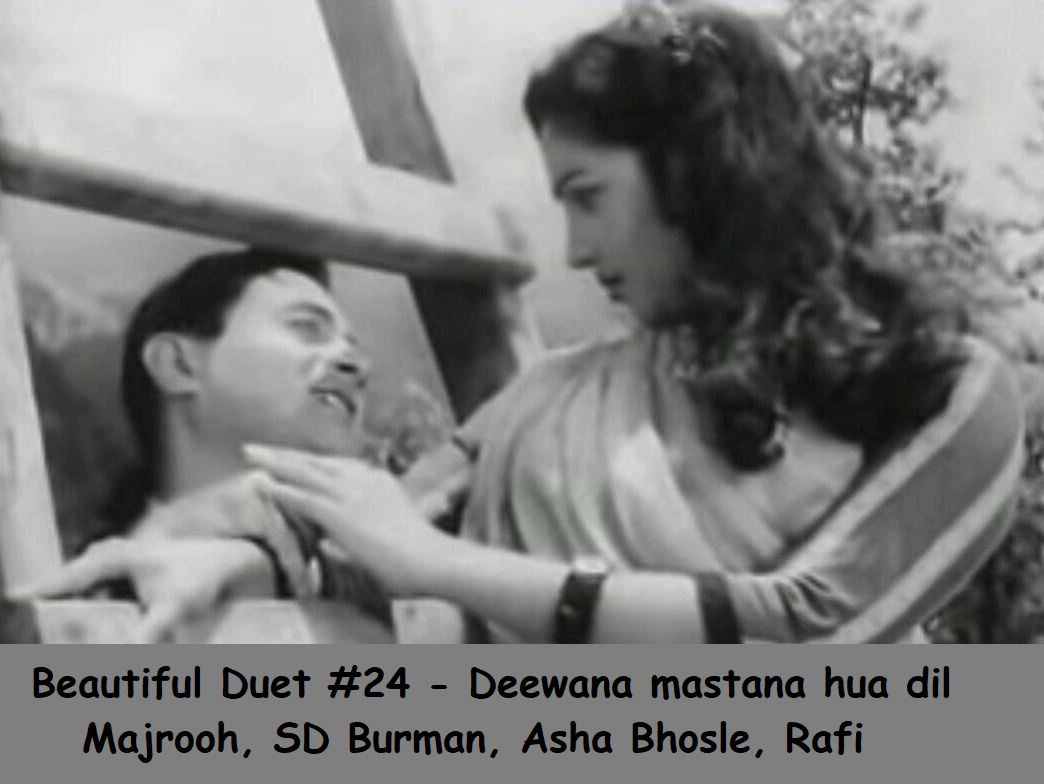
Deewana mastaana hua dil jaane kahan hoke bahar aayi

A Different Chemistry with Dev Anand

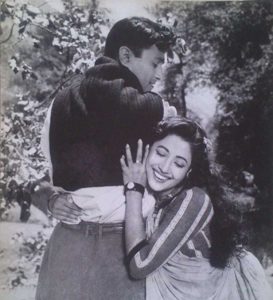
Dev Anand always had beautiful chemistry with his heroines. Here in this movie Bambai Ka Babu he is with Suchitra Sen. He loves her but, since he has accepted to feign as the lost son of a rich man, she happens to be his sister!
This is how it came about:

In Bombay, he accidentally killed a villain during a fist fight. He ran away from police to Joginder Nagar in Himachal Pradesh. There, a cunning bloke asks him to feign as the lost son of a rich man so that they (Dev Anand and this bloke) can divide the loot of the rich man between themselves. Suchitra Sen is the daughter of this rich man and hence she happens to be his sister for all practical purposes. To cut a long story short he has to sacrifice his love for the sake of the parents whose son (it comes out later) was accidentally killed by him.

So, two things happen in the song:

The setting is that of Joginder Nagar; a most beautiful hill station.

Their chemistry is between a brother and a sister. When he closes her eyes in the second stanza, she has a momentary distrust but then she feels that her brother has joined him in a general song of happiness and joy and there is nothing more to it than that.

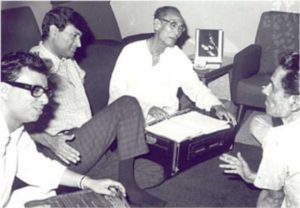
Sachin Dev Burman – Asha Bhosle and Mohammad Rafi

SD Burman composed many songs that appeared to be in raaga but came very close to the raagas only.
Asha Bhosle starts enjoying the bahar (spring) in the hills and goes through sargam as well. When Rafi joins in for Dev Anand, she teases him that he won’t be able to sing as well. However, not only that he sings better (after all Rafi!) but sings the sargam too.

All in all, SD Burman couldn’t have asked for better singers to achieve what he wanted to.

Lyrics

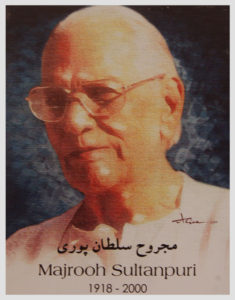
This was a 1960 movie; three years after Sahir broke up with SD Burman and hence Majrooh was very much in the saddle
Ladies and gentlemen, please enjoy: Deewana mastana hua dil…

आशा: आआ आ आ …
प म ग म रे ग प म ग म, आआ आ …
सा नी ध प म ग रे सा नी नी नी …
दीवाना, मस्ताना, हुआ दिल,
जाने कहाँ होके बहार आई

तन को छुए, छुए घट काली
छेड़े लहर, लहर मतवाली
तन को छुए …
ओ हो तन को छुए, चुए घट काली
छेड़े लहर, लहर मतवाली
बात कोई अन्जानाअ
दीवाना, मस्ताना, हुआ दिल,
जाने कहाँ होके बहार आई

ओ हो हो कुछ अनकही, कहे, मेरी चितवन
बोले जिया, लिखे मेरी धड़कन, कुछ अनकही …
ओ हो हो कुछ अनकही, कहे, मेरे चितवन
बोले जिया, लिखे मेरी धड़कन
एक नया अफ़साना …

रफ़ी: दीवाना, मस्ताना, हुआ दिल,
जाने कहाँ होके बहार आई
ओ ओ ओओ
जाने कहाँ होके बहार आई

रफ़ी: ओ हो ओ सावन लगा, मचल गए बादल
आशा: देखूँ जिसे, हुआ वही पागल
रफ़ी: सावन लगा, मचल गए बादल
आशा: देखूँ जिसे, हुआ वही पागल
रफ़ी: कौन हुआ दीवाना …
आशा: दीवाना, मस्ताना हुआ दिल
रफ़ी: दीवाना मस्ताना हुआ दिल
आशा: जाने कहाँ होके बहार आई आ आ आ …
रफ़ी: जाने कहाँ होके बहार आई
हो ओओ, जाने कहाँ होके बहार आई
आशा: आ आ आ, जाने कहाँ होके बहार आई

I hope you liked my choice of Beautiful Duet #24.

Please await Beautiful Duet #25- Jeet hi lenge baazi hum tum.

RRR SONG #4 – KABHI KISI KO MUKAMMAL JAHAN NAHIN MILTA

RRR Songs (Songs of Regret, Repentance and Ruefulness)

I started this new series on 17 Jan 21 on my Facebook Group Yaad Kiya Dil Ne. My efforts failed to involve people in writing their own stuff about songs and music rather than copying and pasting from here and there or worse, just sharing url of songs from YouTube. Hence, I had decided to give the group a burial that it deserved rather than making it like thousands of groups on Facebook about songs with nothing unique about them at all.

I hope you liked RRR Song #3: Hamsafar saath apna chhod chale. Here is the next song:

Song #4
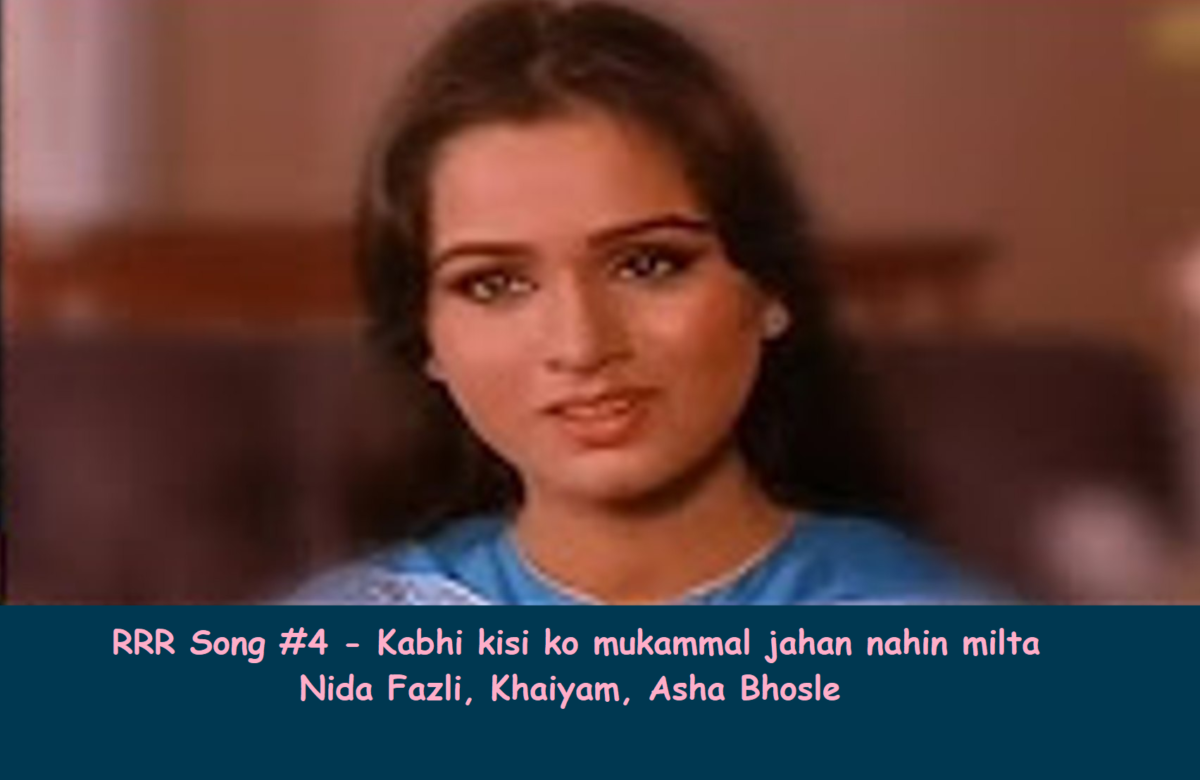
Kabhi kisi ko mukammal jahan nahin milta

A Reality of Life

All virtues on earth are relative. A few years ago I wrote a piece called Absolute Virtue . Some of you who are interested can go through it.

The fact is that there is only one Absolute and He is God; all the others have all virtues in relative terms.

There is merit in this too since all our difficulties are relative too and transient at that just as all good things that happen to us.

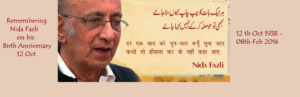
However, in this song, Nida Fazli and the gentlest of composers Khayyam, have made it look like that it is sad and soulful.
Look at the lyrics of this song of Regret and Ruefulness:

कभी किसिको मुकम्मल जहा नही मिलता
कही जमी तो कही आस्मा नही मिलता

जिसे भी देखिए वो अपने आप मे गुम है
जूबा मिली है मगर हुंजुबा नही मिलता

बुज़ा सका है भला कौन वक्त के शोले
ये ऐसी आग है जिस मे धुआ नही मिलता

तेरे जहाँ मे ऐसा नही के प्यार ना हो
जहा उम्मीद हो इसकी वाहा नही मिलता

Reality of YKDN Too

It is as relative and transient as anything else in this world. The way the world has been made, जिसे भी देखिए वो अपने आप मे गुम है. As Sahir said: कौन रोता है किसी और की ख़ातिर ऐ दोस्त, सबको अपनी ही किसी बात पे रोना आया.

My Own Poetry

I am giving you another perspective (I delve in Philosophy a great deal):

JAHAN TO MUKAMMAL HI HAI

दुनिया में जब खामियां नज़र आती हैं,
सोचते हैं रब्ब ने मुकम्मल जहान क्यूं नहीं बनाया?
खुद तो खुदा तकमील की मूरत हैं,
फिर चीज़ों और लोगों में खोट क्यूं भरवाया?

और तो और सब कुछ उनकी तखलीक में फानी है,
सबको दाइम भी तो बना सकते थे।
सब कुछ चंद रोज़ के लिए जैसे बहता पानी है,
मुस्तकिल बनाने से खुदा क्यूं डरते थे?

सबसे पहले तो एक बात की सबको पहचान है,
खुदा की कायनात तो करोड़ों सालों से यहीं है।
सिर्फ इसलिए के हम सब चंद रोज़ के मेहमान हैं,
क्यूं हम कहते हैं खुदा की खुदाई मुस्तकिल नहीं है?

जो कुछ दिखता है हमें फ़ानी खुदा की खुदाई में,
वो सिर्फ एक सूरत से दूसरी बदलता है,
जैसे सूरज या चांद दिखता है अंगड़ाई में,
यूं कि कभी ढलता है और कभी निकलता है।

जब हमें हर शय के दाइम होने का हो एहसास,
फ़िर हमें पहचान होती है खुदा की खुदाई की।
सब सराब है जो है हमारी इद्राक के पास,
मन की आंखें खोल के समझ आती है सच्चाई की।

It’d take a little time to sink in!

The Song

Yes, it was sung by Bhupinder Singh in the 1981 movie Ahista Ahista. However, I am giving you the Asha Bhosle version.

Please enjoy: Kabhi kisi ko mukammal jahan nahin milta…

I hope you liked Song #4 in this series.

Please await Song #5: Chandni raaten pyar ki baaten kho gayin jaane kahan.

ZINDAGI OR JEEVAN SONG #23 – LOG PEETE HAIN LADKHADATE HAIN

Zindagi or Jeevan Songs Series

I started this series on my Facebook group Yaad Kiya Dil Ne on 18 Oct 20. Since then, many other members have put up these songs. Here, I shall be giving you one of my own, per day.

I hope you liked my choice for Song #22 – Babuji dheere chalna in Zindagi or Jeevan Songs series. Let’s start with Song #23.

Song #24
Log peete hain ladkhadate hain
Theme-word: Khush hain sab aur khushi nahin milati, Zinda hain Zindagi nahin milati

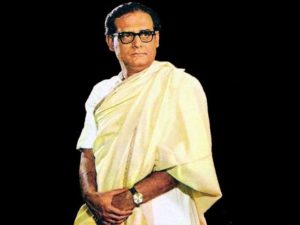
Hemant Kumar on Hemant Kumar

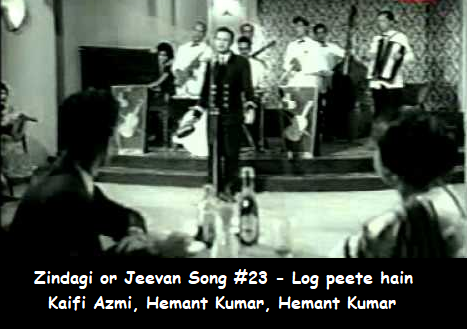
The other day (22 Nov to be exact) whilst giving you a song: Beqraar karke hamen youn na jayiye (Zindagi ki raahen ajeeb hain) in this series, I had brought out how well Hemant Kumar sang on his compositions. Beqraar karke is one. Jab jaag uthe armaan is another. These are both penned by Shakeel. However, even with Kaifi Azmi, he created similar magic, eg, Ye nayan dare dare.
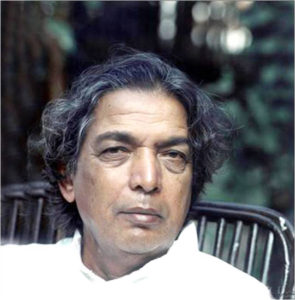
This is another such song.

Kaifi Azmi

You have to give it to Kaifi for one unique attribute he had, which is, that he was able to bring out the strongest emotions through minimum words. Take Ye nayan dare dare, for example:
रात हसीं ये चाँद हसीं
पर सबसे हसीं मेरे दिलबर
और तुझसे हसीं?
और तुझसे हसीं तेरा प्यार
तू जाने ना
ये नयन डरे डरे ..

Take another one from Hanste Zakhm:

दिल की नाज़ुक रगें टूटती हैं
याद इतना भी कोई न आए
आज सोचा …

He was the master at it. Look at the lyrics of this song and you’d agree that he could bring out the maximum in minimum words:

लोग पीते हैं लड़खड़ाते हैं
दिल से दुनिया का ग़म मिटाते हैं
एक हम हैं के तेरी महफ़िल में
प्यासे आते हैं प्यासे जाते हैं

खुश हैं सब और ख़ुशी नहीं मिलती
ज़िंदा हैं ज़िन्दगी नहीं मिलती
जल रहे हैं चराग में दो के
और कहीं रोशनी नहीं मिलती
रौशनी का फरेब खाते हैं
प्यासे आते हैं प्यासे जाते हैं
लोग पीते हैं लड़खड़ाते हैं

महकी महकी हुयी फ़ज़ा को सलाम
बहकी बहकी हुई हवा को सलाम
इन बहारों से तो भली है ख़िज़ाँ
इन बहारों की हर अदा को सलाम
जिनमें सौ ज़ख्म मुस्कुराते हैं
प्यासे आते हैं प्यासे जाते हैं
लोग पीते हैं लड़खड़ाते हैं

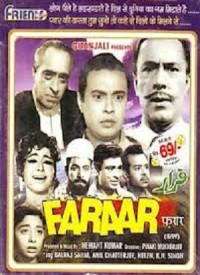
Faraar – 1965 Movie

It was a Pinaki Bhushan Mukherjee movie and hence he took Anil Chatterjee as a hero as merchant navy officer Shankar Choudhry. One night whilst returning home from club he brings home an injured man Shekhar (Jagdev) to be seen by his dad, a doctor. He also informs Neela his sister who falls in love with this man. When Shekhar recovers, Shankar notices a change in his sister Neela. And then Shekhar is shot and the story becomes a murder mystery.
Shankar (Anil Chatterjee) enacts this song on his ship.

My Own Poetry

Zindagi Kya Kya Sikhati Hai

क्या अजब हकीकत है यह दोस्तो:

खुशी बढ़ती है बांटने से,
दर्द बांटने से घटता है,
गमगीन हों तो वक़्त बोझ है,
मुस्कराते बस यूं ही कटता है।

लेने से दौलत नहीं बढ़ती,
देने से हम होते हैं अमीर,
वो क्या गरीब जो किसी का ग़म खरीदे,
वो क्या अमीर जो बेच डाले ज़मीर?

क्या फायदा उस सच का,
जो किसी की ले ले जान,
क्यूं नफ़रत करें उस झूठ की,
जो आदमी को बना दे इंसान?

बहुत बोझ मिलते हैं उठाने को,
उठता नहीं बोझ गुनाहों का।
लोगों से तो नज़रें बचा लोगे,
क्या करिए अपनी अंदरूनी निगाहों का?

जो दूसरों के चुराएं ख्यालात,
वो तो बहुत मकबूल हैं,
वो बेचारे अकेले फिरते हैं
जिनकी अपनी तखील और असूल हैं।

सुनने देखने पे भी दोस्तो,
न करना कभी उसका यकीन,
जो मीठी मीठी बातें करे,
पर हो सांप ए आस्तीन।

The Song

Ladies and gentlemen, please enjoy: Log peete hain ladkhadate hain…

I hope you enjoyed my choice for Song #23 in the series.

Please await Song #24 –  Tera man bada papi.

BEAUTIFUL DUET #23 – TERE MERE MILAN KI YE RAINA

Beautiful Duet Series

I started this series on my Facebook group Yaad Kiya Dil Ne on 23 Aug 20. Since then, many other members have put up these songs. Here, I shall be giving you one of my own, per day.

Last time, I gave you Beautiful Duet #22 – Jodi hamari jamega kaise jaani. So here, then, is the next one:

Songs #23
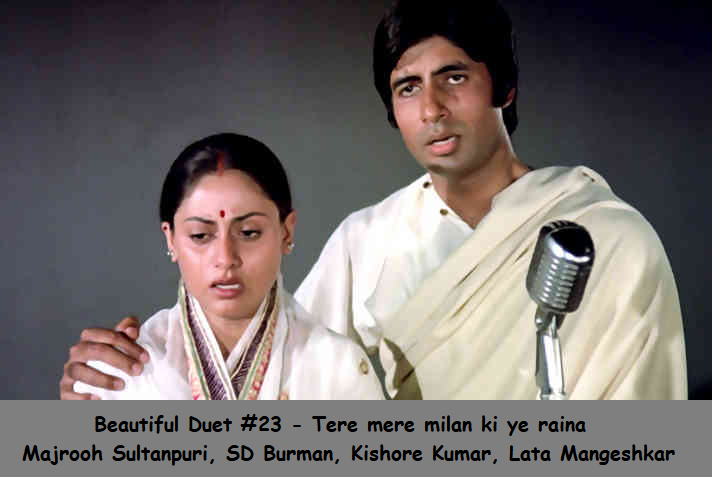
Tere mere milan ki ye raina

Remembering Majrooh Sultanpuri and SD Burman on Their Birth Anniversaries 01 October

Majrooh First

He was the reluctant lyricist. He was the son of a police officer in Sultanpur in UP. He was a poet but instigated into writing lyrics for Hindi films (now bastardadised as Bollywood) songs by Jigar Moradabadi.
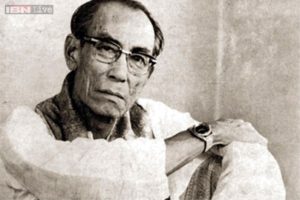
Once he got going, he made some of the most memorable songs in his very first movie: the 1946 AR Kardar movie Shahjehan, a fictional love story in the times of the emperor Shahjehan. Naushad composed the songs and Kl Saigal sang most of them. KL Saigal was so impressed with his songs that he selected one to be played at his funeral: Jab dil hi toot gaya, Hum jee ke kya karenge?

Majrooh was the first lyricist ever to be given the Dadasaheb Phalke award.

Sachin Dev Burman

From the royal family of Tripura, Sachin Dev Burman not only gave us remarkably beautiful compositions and music but also gave us a son who became as much, if not more, of a genius as he became: Rahul Dev Burman.
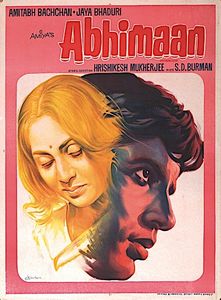
Whereas Raj Kapoor selected Shankar Jaikishan to make music in his movies, Dev Anand selected SD Burman. So strong was their bonding that Sachin da proudly proclaimed that his middle name was also the name of his favourite hero Dev Anand.

Majrooh and SD Burman paired together

As soon as SD Burman broke up with Sahir Ludhainvi (after 1957 movie Pyaasa), Majrooh stepped in to fill the gap and gave us music for example in ‘Paying Guest’, ‘Nau Do Gyarah’, ‘Kala Pani’, Manzil’, ‘Solva Saal’, ‘Bombai Ka Baboo’, ‘Baat Ek Raat Ki’, ‘Jewel Thief’ and ‘Teen Deviyan’.

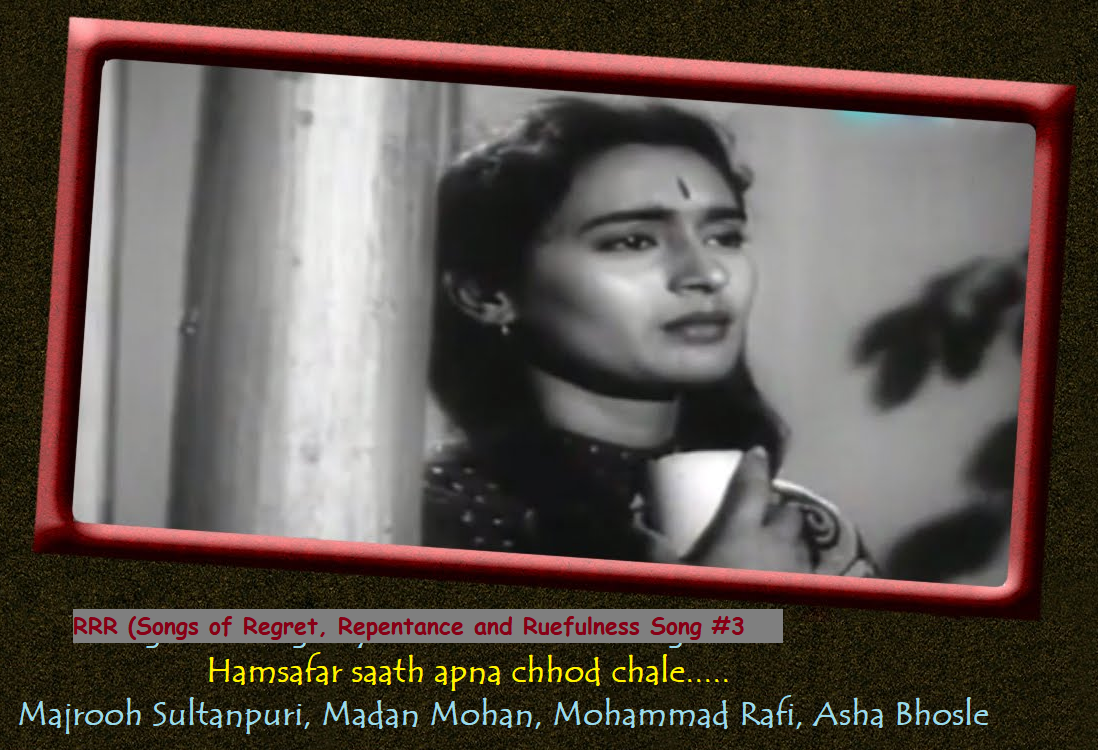
Abhimaan – 1973 Movie

People still regard 1973 movie Abhimaan as their best SD Burman got the Filmfare Award for it). Have a look at the songs they created:
1.”Ab To Hai Tumse Har Khushi Apni”Lata Mangeshkar

2.”Loote Koi Man Ka Nagar”Manhar Udhas, Lata Mangeshkar

3.”Meet Na Mila Re Man Ka”Kishore Kumar

4.”Nadiya Kinare”Lata Mangeshkar

5.”Piya Bina Piya Bina”Lata Mangeshkar

6.”Tere Mere Milan Ki Yeh Raina”Lata Mangeshkar, Kishor 7.”Teri Bindiya Re”Mohammad Rafi, Lata Mangeshkar

The movie’s plot enabled all these songs. Amitabh sees Jaya (She too won the Filmfare Award) singing Nadiya kinare and instantly falls in love with her. Once married, he encourages her to sing professionally until he finds she obtains much more popularity than him. And that’s where Abhimaan came in. It takes him time to swallow pride and accept her as better singer.

This song is sung by them when Abhimaan melts.

Lyrics

तेरे मेरे मिलन की ये रैना
नया कोई गुल खिलायेगी
तभी तो चंचल हैं तेरे नैना
देखो ना
देखो ना, तेरे मेरे मिलन की ये रैना

(नन्हां सा गुल खिलेगा अँगना
सूनी बइंयाँ सजेगी सजना) – २
जैसे खेले चंदा बादल में
खेलेगा वो तेरे आंचल में
(चंदनिया गुनगुनायेगी) – २
तभी तो चंचल हैं तेरे नैना, देखो ना …

(तुझे थामे कई हाथों से
मिलूंगा मदभरी रातों में) – २
जगा के अनसूनी सी धड़कन
बलमवा भर दूंगी तेरा मन
(नई अदा से सतायेगी) – २
तभी तो चंचल हैं तेरे नैना, देखो ना …

Ladies and gentlemen, please enjoy a most beautiful song sung by Kishore Kumar and Lata Mangeshkar: Tere mere milan ki ye raina…

I hope you liked my choice of Beautiful Duet #23.

Please await Beautiful Duet #24- Deewana mastana hua dil.

RRR SONG #3 – HAMSAFAR SAATH APNA CHHOD CHALE

RRR Songs (Songs of Regret, Repentance and Ruefulness)

I started this new series on 17 Jan 21 on my Facebook Group Yaad Kiya Dil Ne. My efforts failed to involve people in writing their own stuff about songs and music rather than copying and pasting from here and there or worse, just sharing url of songs from YouTube. Hence, I had decided to give the group a burial that it deserved rather than making it like thousands of groups on Facebook about songs with nothing unique about them at all.

I hope you liked RRR Song #2: Koi lauta de mere beete huye din. Here is the next song:

Song #3
Hamsafar saath apna chhod chale

A Duet as RRR Song

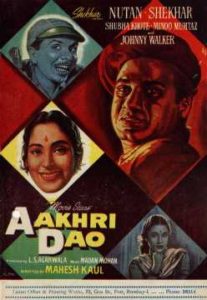
Yes, this a duet between Mohammad Rafi and Asha Bhosle. It is picturised on the lead actors of the 1958 Mahesh Kaul movie Aakhri Dao: Shekhar and Nutan. However, the song only brings out their emotions silently; they don’t lip-sync it.

Who Does the Song Belong to?

Who would the song belong to more than anyone else? I would say the honours are to be divided between the lyricist Majrooh Sultanpuri for coming up with remarkably beautiful words that go straight into your heart; composer Madan Mohan for coming up with a super slow composition in Raag Gara, Tal Dadra, as if he knew that people need to pause and take in the beautiful lyrics; singers Mohammad Rafi and Asha Bhosle who made it look like as if the words don’t come out of the throat but from the heart and finally actress Nutan who came up with better histrionics here than she did in most other similar songs including Anaadi’s Tera jaana. That leaves only Shekhar. But, those who have seen the movie and the song would know that he was actually the weak point.

The Movie

Lets start with the movie itself. Regrettably, some of the movies having exceptionally beautiful songs were not just weak movies but had weak plots too. Aakhri Dao was one of them. The story was about a misunderstanding between the hero (Shekhar as a car mechanic) and the heroine (Nutan; all we know is she goes to a dance class) which makes them each think that the other is rich. They start loving each other but of course there are circumstances and a villain. Nutan’s dad owes some Rs. 5000 to the villain, which Shekhar tries to repay by asking for a loan first, then by gambling and losing it all and then goes on to steal from none other than Nutan’s dad. Of course npone of this works and he finally agrees to marry TunTun for the meagre amount. The song is sung at the betrothal of Shekhar.
There was another great song in the movie: Tujhe kyaa sunaaun main dilruba tere saamne mere haal hai, which Shekhar actually lip syncs to Nutan. Naturally, she looks as stunned as some of Anil Dhawan’s actresses did. Hindi movies actually excelled in some of the worst guys (in acting) singing some of the best songs (you should listen to the songs lip synced by Manoj Kumar to see this phenomenon). The saving grace is that Nutan is there to render respectability to the song in the same manner Sadhana was there for Manoj Kumar in Lag jaa gale se phir yeh haseen raat ho na ho.

Raag Gara, Tal Dadra

I am merely a beginner in the world of Indian classical music and my interest is limited to its effect on Hindi songs. The raaga that I know least about is Raag Gara though it fascinates me no end. It is another thing that the second of my Raaga based songs of the day was composed in Raag Gara, Tal Kaherava: Unake khayaal aaye to aate chale gaye. Raag Gara, of course, boasts of some of the best songs in Hindi movies:

  1. Mohe panghat pe Nandlal.
  2. Deewana Kehke Aaj.
  3. Unke khayal aaye.
  4. Jab jab tumhein bhulaya.
  5. Jo guzar rahi hai mujhpe.
  6. Guzre hain aaj ishq mein.
  7. Aapki nazaron ne samajha.
  8. Aise to na dekho.
  9. Kabhi khud pe.
  10. Phir woh bhuli si yaad.

Raag Gara belongs to Kafi Thaat. It is traditionally sung in second half of morning although Bhatkhande didn’t specify any time of the day for this Raaga. Gara is one of the family of Raagas derived from folk melodies and entered classical music in concert with Thumri. The closest resemblance of the raag is to Jaijaivanti, a raag devised by Shri Tegh Bahadur, the 9th Guru of the Sikhs.

The Jati of Raag Gara is Shadhav – Sampurna; in Avroha Rishab is Varjya.

Amongst the songs that I gave you above, the songs that come close to this composition by Madan Mohan are: Ravi’s Deewana keh ke aaj mujhe phir pukaariye and Jaidev’s Kabhi khud pe kabhi halaat pe rona aaya; both being in the same Tal Dadra.

Madan Mohan

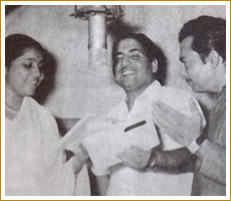
Madan Mohan brought out the best in Lata’s singing. However, surprisingly, in this song, he has Asha Bhosle accompanying Mohammad Rafi in the duet.


Madan Mohan was born on 25 Jun 1924 at Erbil, Iraqi Kurdistan, where his father Rai Bahadur Chunilal was working as an Accountant General with the Kurdistan Peshmerga forces. Madan Mohan spent the early years of his life in the Middle East. After 1932, his family returned to their home town of Chakwal, then in Jhelum district of Punjab, British India. He joined the Army as a Second Lieutenant in the year 1943. He served there for two years until end of World War II, when he left the Army and returned to Bombay to pursue his musical interests. In 1946, he joined the All India Radio, Lucknow as Programme Assistant, where he came in contact with various artists such as Ustad Faiyaz Khan, Ustad Ali Akbar Khan, Begum Akhtar, and Talat Mahmood.

He was very fond of singing, and so in 1947 he got his first chance to record two ghazals penned by Behzad Lucknawi, Aane Laga Hai Koi Nazar Jalwa Gar Mujhe and Is Raaz Ko Duniya Jaanti Hai. Soon after, in 1948 he recorded two more private ghazals penned by Deewan Sharar, Wo Aaye To Mahfil Mein Ithlaate Huye Aaye and Duniya Mujhe Kahti Hai Ke Main Tujhko Bhoolaa Doon. In 1948, he got his first opportunity to sing a film duet Pinjare Mein Bulbul Bole and Mera Chhotasa Dil Dole with Lata Mangeshkar under composer Ghulam Haider (composer) for the film Shaheed (1948 film), though these songs were never released or used in the film. Between 1948 and 1949, he assisted music composers SD Burman for Do Bhai, and Shyam Sundar in Actress and Nirdosh.

As Music Director, he scored his first big break with the film Aankhen (1950 film) in 1950. He was soon to emerge as a music director par excellence especially for ghazals. Indeed, music director OP Nayyar once said about Madan Mohan that two of his ghazals were better than all that OP Nayyar composed. Some of the best songs of Lata Mangeshkar (she fondly called him “Madan Bhaiyya”) were composed by him on the lyrics of Raja Mehdi Ali Khan and Rajinder Krishan.

Some of my favourite songs of Madan Mohan are: Aaj soch to aansu bhar aaye, Betaab dil ki tamanna yehi hai, Tum jo mil gaye ho (Hanste Zakham 1973), Aapke pehlu mein aa ke ro diye, Naino mein badra chhaye, Jhumka gira re, Tu jahan jahan chalega (Mera Saya 1966), Aapki nazaron ne samajha, Hai isi mein pyaar ki aabru, Vo dekho jala ghar kisi ka (Anpadh 1962), Aapko pyaar chhupane ki buri aadat hai, Tere paas aake mera waqt nikal jaata hai (Neela Akash 1965), Agar mujhase mohabbat hai, Main nigaahen tere chehre se hatayun kaise (Aap Ki Parchhayiyan), Ai mere dil mujhe bata de (Bhai Bhai 1946), Ari vo shokh kaliyon muskara dena vo jab aayen (Jab Yaad Kisi Ki Aati Hai 1967), Baad muddat ke yeh ghadi aayi, Haal-e-dil youn unhe sunaya gaya, Jab jab tumhe bhulaya tum aur yaad aaye, Kisi ki yaad mein duniya ko jhain bhulaye huye, Main teri nazar ka saroor hoon, Phir wohi shaam wohi gham wohi tanhaayi hai, Teri aankh ke aansu pi jaayun, Wo chup rahen to mere dil ke daag jalate hain (Jahan Ara 1964), Hamare baad mehfil mein (Baghi 1953), Bainya na dharo O balma, Ham hain mataa-e-kuchcha-e-bazaar ki tarah, Mai ri main kaase kahun, Tumse kahun ik baat (Dastak, 1970), Bairan neend na aaye mohe (Chacha Zindabad 1959), Basti basti parbat parbat gaata jaaye banjara, Chand madham hai aasman chup hai, Dekh tere Bhagwan ki haalat (Railway Platform 1955), Bhooli hui yaado mujhe itna na satayo, Vo bhooli dastaan lo phir yaad aa gayi (Sanjog 1961), Chanda ja re ja re, Main to tum sang nain mila ke (Manmauji 1962), Chhadi re chhadi kaise gale mein padhi, Dil dhoondata hai fursat ke, Ruke ruke se kadam (Mausam 1975), Chhod kar tere pyar ka daaman, Jao hamane dastaan apni sunaayi, Lag jaa gale ke phir, Naina barse rimjhim rimjhim, Shokh nazar ki bijliyan (Woh Kaun Thi 1964), Do dil toote do dil haare, Doli chadate hi Heer ne bain kiye, Milo na tum to ham ghabraayen, Ye duniya ye mehfil mere kaam ki nahin (Heer Ranjha 1970), Ham chal rahe the wo chal rahe the (Duniya Na Maane 1959), Ham pyar mein jalane waalo ko chain kahan (Jailor 1958), Hamsafar saath apna chhod chale, Tujhe kya sunayun main dilruba (Aakhri Dao 1958), Hamse aaya na gaya, Kaun aay mere man ke dwaare, Meri veena tum bin roye, Tu pyar kare ya thukraye (Dekh Kabira Roya 1957), Har taraf ab yahi afsaane hain, Hai tere saath meri wafa main nahin to kya (Hindustan Ki Kasam 1973), Hoke majbuur mujhe usne bhualaya hoga, Kar chale ham fida, Khelo na mere dil se, Main ye soch kar uske dar se, Zara si aahat hoti hai (Haqeeqat 1964), Husn haazir hai mohabbat ki saza paane ko, Is reshmi paazeb ki jhankar ke sadake, Tere dar pe aaya hoon (Laila Majnu 1976), Ik haseen raat ko dil mera kho gaya, Kabhi ai haqeeqat-e-muntazar, Sapano mein agar mere (Dulhan Ek Raat Ki 1966), Ishq ki garmi-e-jazbaat kise pesh karun. Mere mehboob kahin aur mila kar mujhase, Naghma o sher ki saugat, Rang aur noor ki baraat (Ghazal 1964), Jaa jaa re jaa saajna, Jaana tha hamse door, Unako ye shikayat hai, Youn hasaraton ke daag (Adalat 1958), Kabhi na kabhi kahin na kahin koi na koi to aayega, Mujhe le chalo aaj us jagah, Sawan ke mahine mein (Sharaabi 1964), Koi shikwa bhi nahin koi shikayat bhi nahin (Neend Hamari Khwab Tumhaare 1966), Main paagal mera manwa paagal (Aashiyana 1952), Meri yaad mein tum na aasnu bahana (Madhosh 1951), Na tum bewafa ho na ham bewafa hain (Ek Kali Muskaaye 1958), Sapne mein sajan se do baaten, Do ghadi wo jo paas aa baithe (Gateway Of India 1957), Teri aankhon ke siwa duniya mein rakha kya hai (Chirag 1969), Tumhari zulf ke saaye mein shaam kar loonga (Naunihaal 1967), Tu mere saamne hai teri zulfen hain khuli (Suhagan, 1964), and Vo jo milate the kabhi hamsase deewano ki tarah (Akeli Mat Jaiyo 1963).

Majrooh Sultanpuri

On my Facebook page Lyrical, I covered Lyricist #5: Majrooh Sultanpuri under my Remembering Great Lyricists series. I have kept my favourite Shakeel Badayuni out of this series since I already have a number of articles and tributes on him.

Majrooh is the fifth of our lyricists who was a contemporary of Shakeel Badayuni. Out of all these six (*including Shakeel), three have been from Uttar Pradesh, which says something about that region producing some great poets and lyricists.

Majrooh Sultanpuri was born on 01 Oct 1919 as Asrar ul Hassan Khan in a Tarin Pashtun family, in Sultanpur, Uttar Pradesh. His father was an officer in the police department, but, preferred to send his son for traditional madrasa (Urdu school) rather than provide him with English schooling.

He tried his hand at being a quack until he was noticed in a mushaira in Sultanpur.

He was a disciple of the great Urdu poet Jigar Moradabadi. When he visited Bombay in 1945 to participate in a mushaira, the director Abdul Rashid Kardar noticed him and invited him to write for the movies. Majrooh turned it down as he looked down upon movies! He was persuaded through his mentor Jigar Moradabadi and then there was no turning back.

Many traditionalists of the Urdu literature, however, felt that Majrooh sold his soul to the Hindi films and that he could have emerged a great poet in the likeness of Ghalib and Jigar.

The takhalus Majrooh means “injured” or “wounded”.

Majrooh was awarded, in 1993, the highest award – Dadasaheb Phalke award – for his lifetime contribution towards lyrics and poetry. He was the first lyricist ever to be given that award. For the film Dosti, that made Laxmikant Pyarelal famous, he was awarded the Filmfare Best Lyricist Award for the song: Chahunga main tujhe saanjh savere.

For someone who didn’t want to join Hindi movies, Majrooh emerged as a natural lyricist, very popular, very romantic and enchanting.

Many of Majrooh’s songs are of Dil vil pyaar vyaar main kyaa jaanu, Baahon mein chale aao, Bangle ke peechhe, Ye raaten ye amusam nadi ka kinaara, and Dekho mausam kyaa bahaar hai. However, some of his lyrics are still comparable to Shakeel’s such as Hui shaam unaka khayaal aa gaya, Woh jo milate the kabhi, Rahe na rahe ham, Chhupa lo youn dil mein pyaar mera, Tu kahe agar jeevan bhar main geet sunaata jaayun, Mujhe dard-e-dil ka pata na tha, Hamaare baad ab mehfil mein afsaane bayaan honge, and the great song on eyes: Teri aankhon ke siwa duniya mein rakha kyaa hai.

My Own Poetry

NA KHELO MERE DIL SE

ना खेलो मेरे अरमानो से, मेरे जज़्बातों से,
मेरे उदास दिनों से, मेरी सुनसान सियाह रातों से,
मुझे आदत सी पड़ गयी है रूखेपन की,
ना उलझायो मुझे प्यारी और मदहोश बातों से।

कुछ नहीं होगा, रहने दो मुझे तन्हा ओ बेज़ार,
ना ललचाओ माज़ी की सुहानी मुलाकातों से।
ज़िन्दगी सेहरा बन गयी है, और तुम अभी भी,
दिल की धरती सींच रहे हो कल की बरसातों से

मेरा कोई दोस्त, हमसफर, महबूब नहीं है,
ना बांधो मुझे झूठे रिश्तों से, फरेबी नातों से।
गमों के, अश्क़ों के, तनहाईयों के ख़ज़ाने दिए बेहद,
अब और ना बहलाओ वादा – ए – सौगातों से।

ज़मीन से आसमान, आसमानो से ज़मीन पे पटका यकायक,
हैरान रह गया हूँ तुम्हारी जादूगरी करामातों से।
हर सितम सहते रहे, तेरी बेवफाई का सनम,
आह भी ना निकली तेरा नाम गुनगुनातों से ।

The Song

Ladies and gentlemen, please enjoy Mohammad Rafi and Asha Bhosle sing a composition of Madan Mohan in Raag Gara Tal Dadra on the lyrics of Majrooh Sultanpuri a song from the 1958 Mahesh Kaul movie Aakhri Dao: Hamsafar saath apna chhod chale….

र : हमसफ़र साथ अपना छोड़ चले
रिश्ते नाते वो सारे तोड़ चले
हमसफ़र साथ …

आ : हमसफ़र साथ अपना छोड़ चले
रिश्ते नाते वो सारे तोड़ चले
हमसफ़र साथ …

र : रासता साफ़ था तो चलते रहे
साथ हँसते रहे मचलते रहे
मोड़ आय तो मूँह को मोड़ चले
हमसफ़र साथ …

आ : सपने टूटे पड़े हैं राहों में
दर्द की धूल है निगाहों में
दिल पे क़दमों के नक़्श छोड़ चले
हमसफ़र साथ …

र : जब उन्हें हमसे प्यार ही न रहा
रोयें क्या, इन्तज़ार भी न रहा
हम भी दामन को अब निचोड़ चले (that’s why the group is closing)
हमसफ़र साथ …

I hope you liked Song #3 in this series.

Please await Song #4: Kabhi kisi ko mukammal jahan nahin milta.

Follow

Get every new post delivered to your Inbox

Join other followers:

error

Enjoy this blog? Please spread the word :)

RSS
Follow by Email
YouTube
YouTube
Set Youtube Channel ID
LinkedIn
Share
WhatsApp
Copy link
URL has been copied successfully!