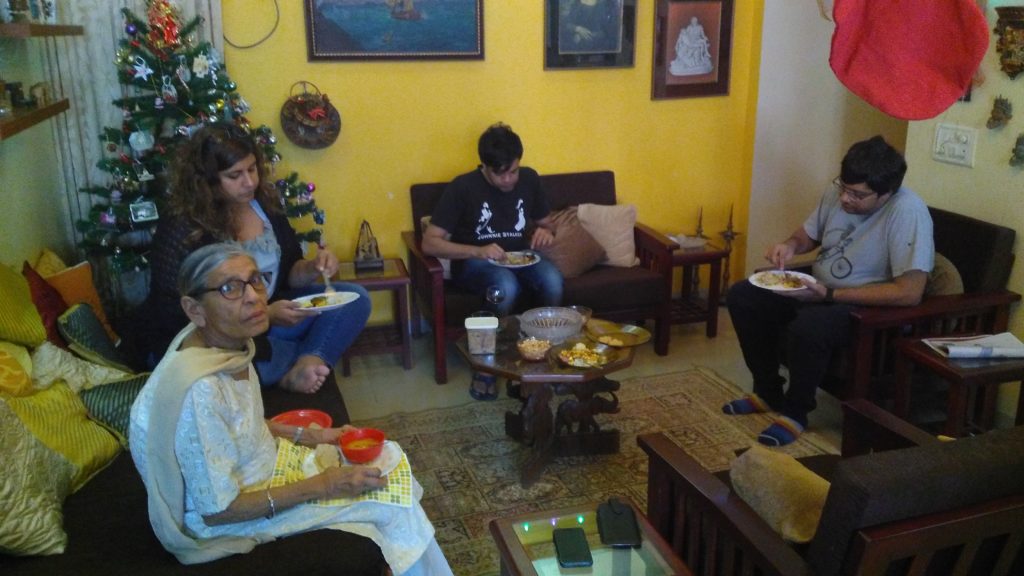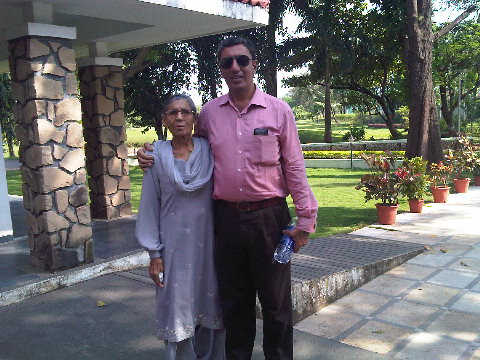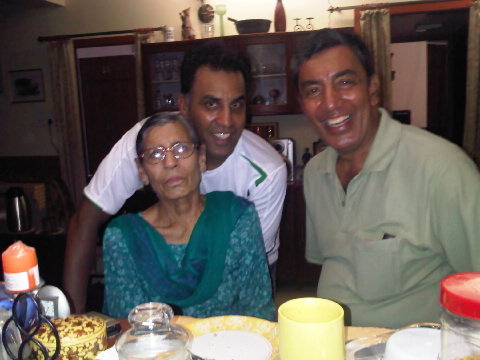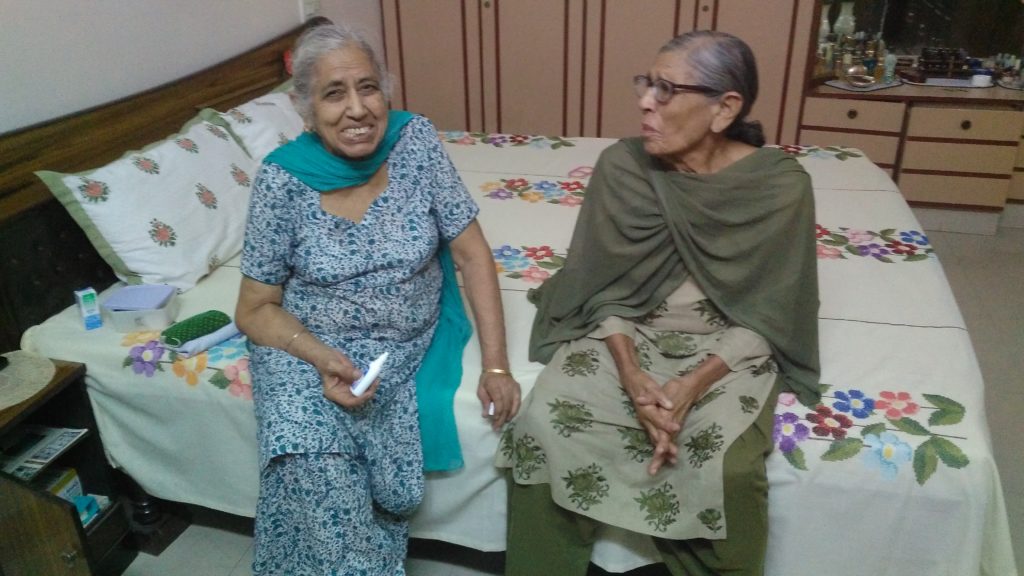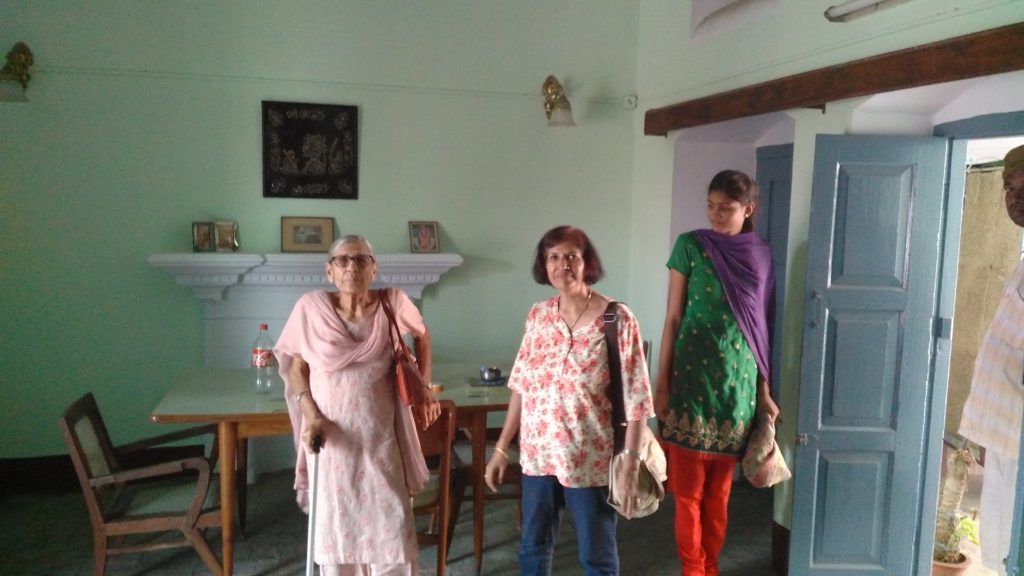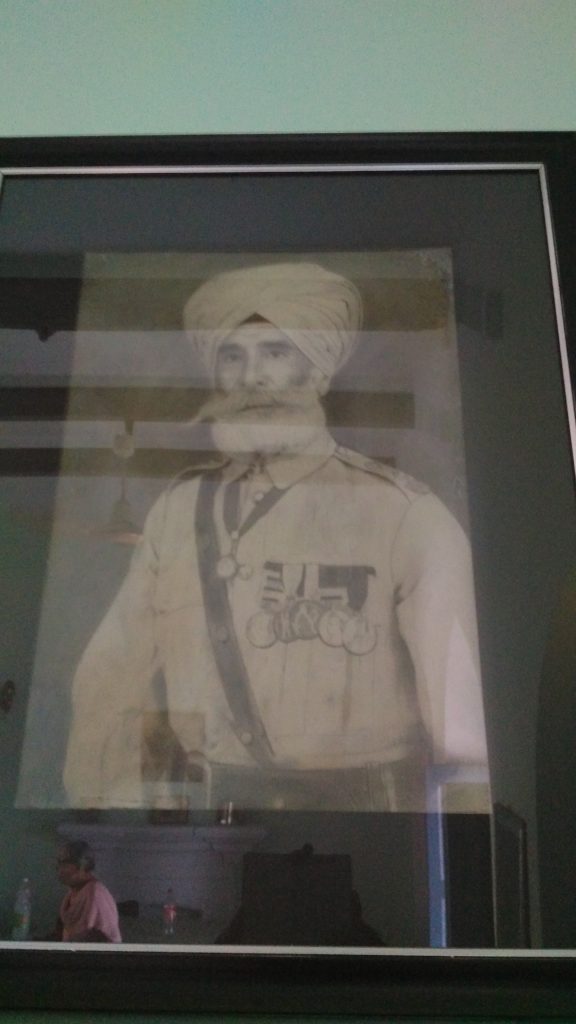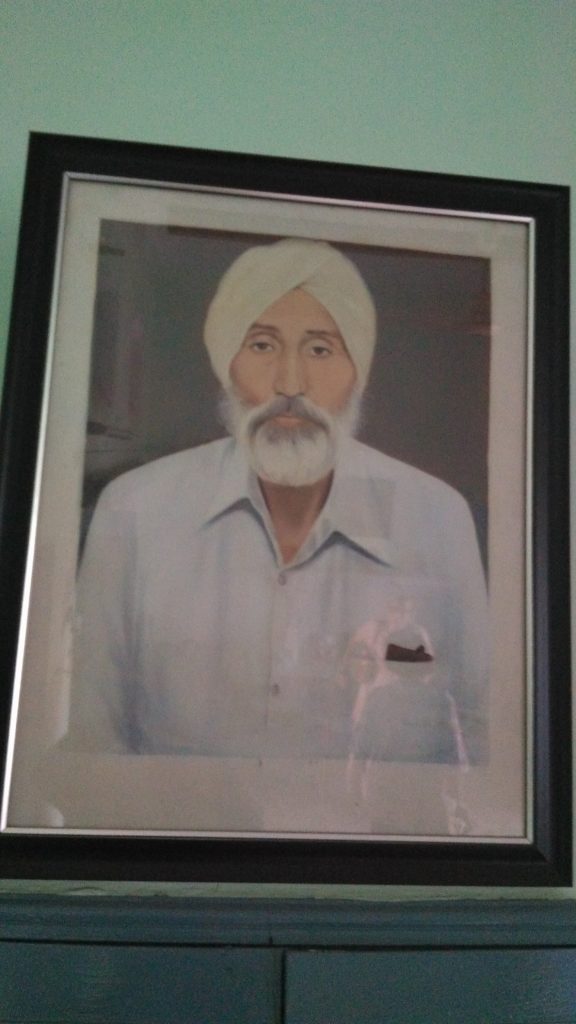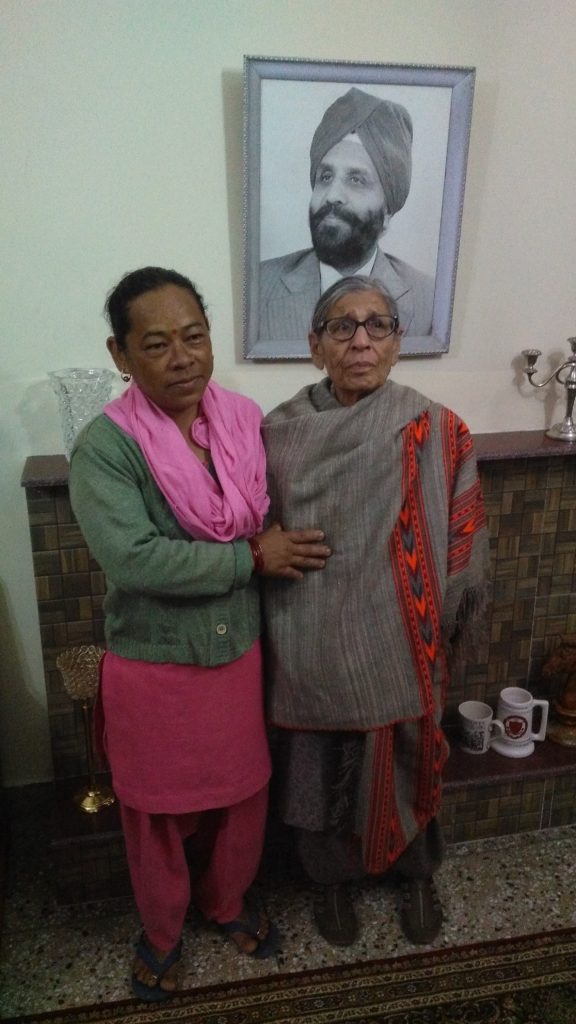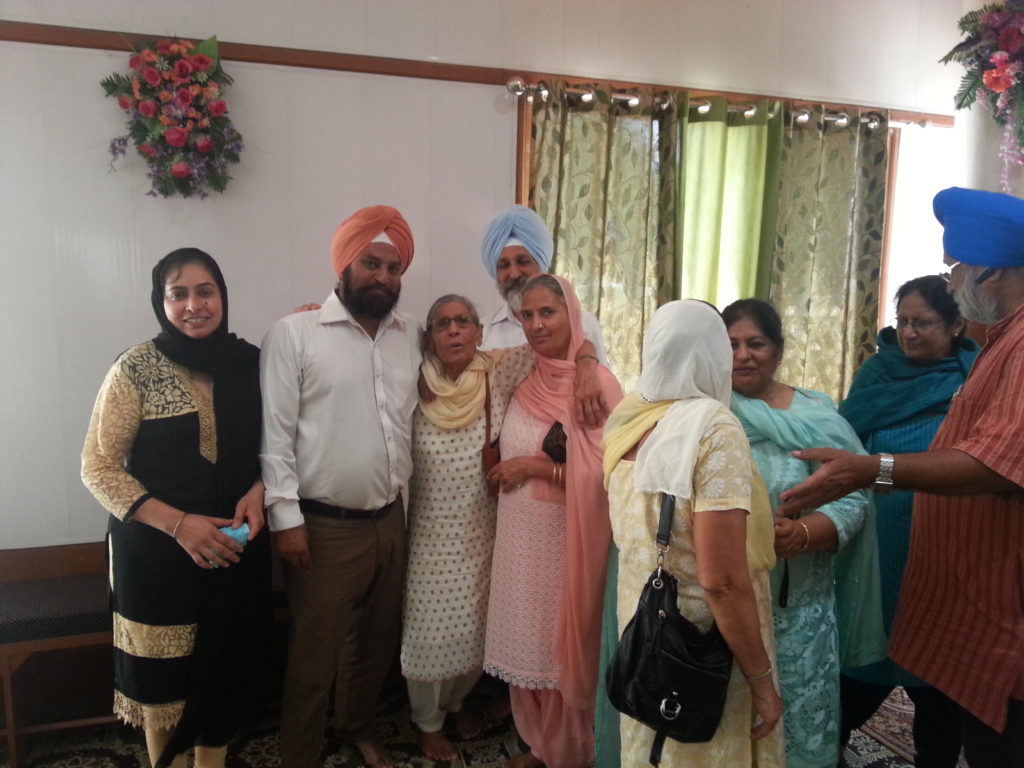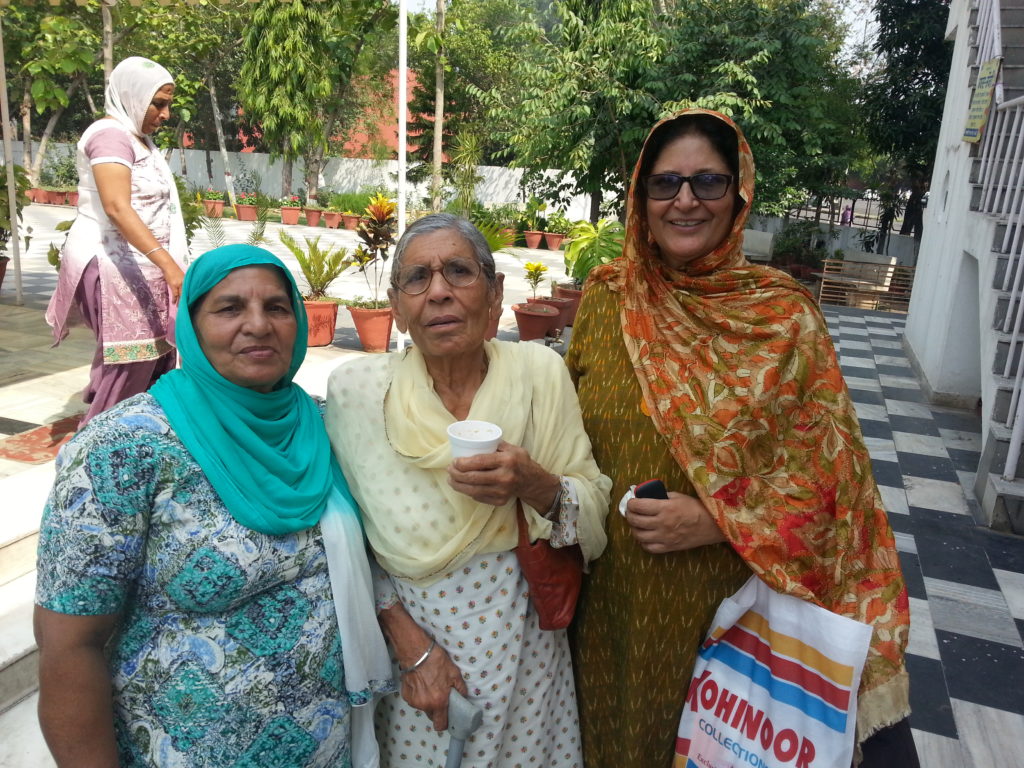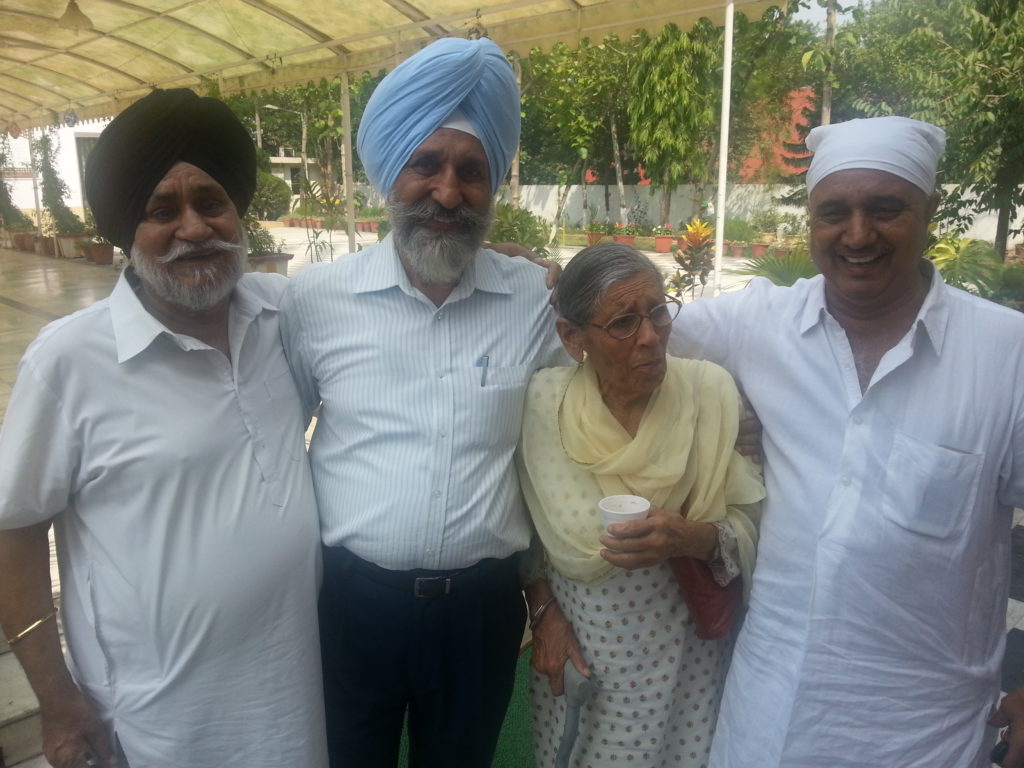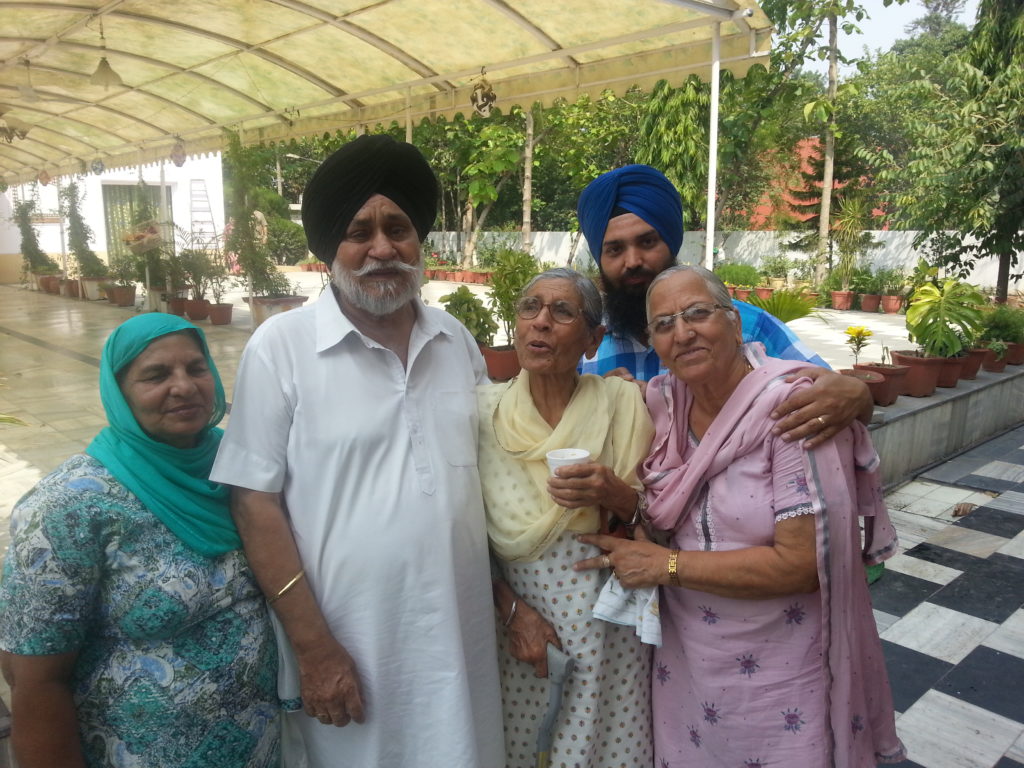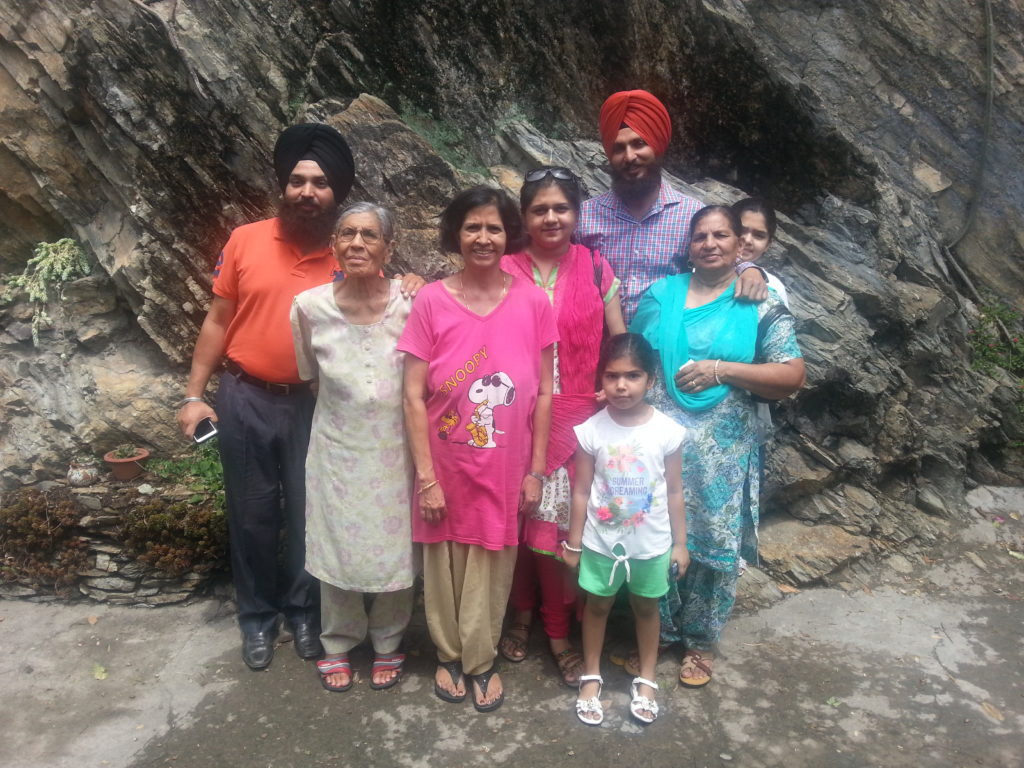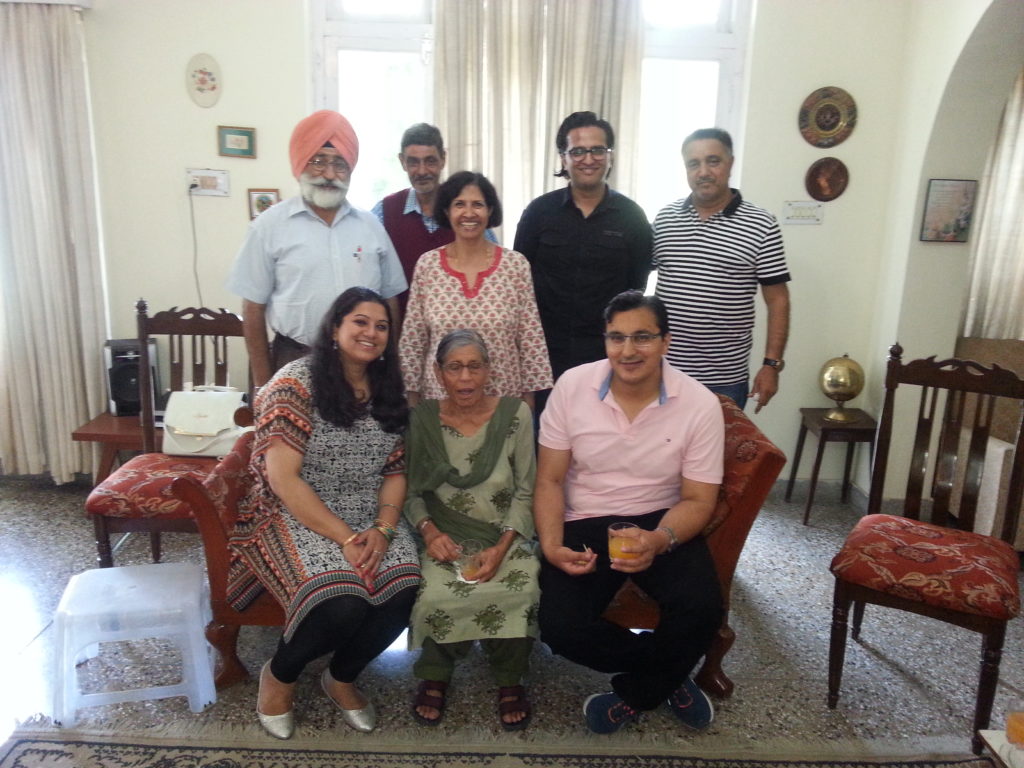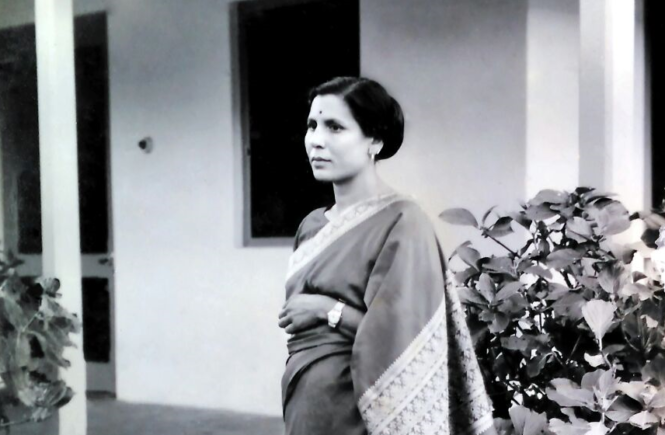
NOW THAT I HAVE FINISHED BURNING MY MOTHER….

Seven years ago I wrote an article on my mother titled ‘Seventy-Eight Not Out‘. The last three lines of the article were:

“We are not going to be deterred by the steepness of the climbs. We shall gleefully look back after conquering each one. You are seventy-eight not out and you will be not out until the end of the match!”

On the 9th of August, the match ended for her.

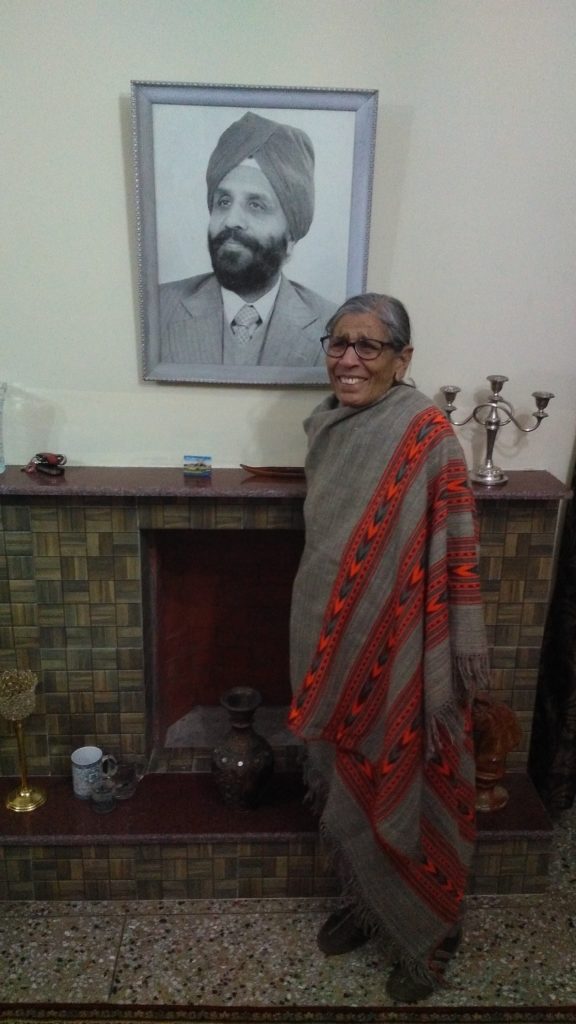
She ascended from earthly life to eternal life, bestowed upon her by God Himself. The doctors at Indira Gandhi Medical College Hospital (formerly Snowdon Hospital) Shimla  declared the end of her earthly life at about 8:40 AM. That’s because procedurally they have to get an ECG done and get a straight-line before announcing it. However, I, who was closest to her when she went, heard it from her, in her feeble and yet lucid voice, at about 8 AM: “Pitaji, beeji, main aa rahi haan” (Father, mother, I am coming (to you)).
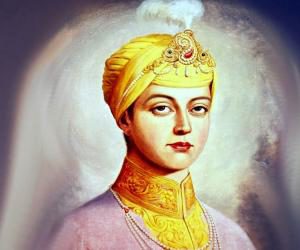
Pitaji and Beeji had named her after the eighth guru of the Sikhs: Guru Har Krishan Ji, sometimes referred to as Guru Hari Krishan ji. Guru ji was born to the seventh Guru of the Sikhs, Guru Har Rai ji and his wife Krishan Devi (Sulakhni). Some of my friends who are closest to me do underestand my love for Lord Krishna or Krishan, the name that is prominently there in my mother’s name, and in the name of the eighth guru and both his parents.
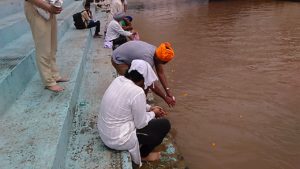
After she was burnt on her funeral pyre on the 10th Aug afternoon, the next morning my mamaji, my younger brother JP, my elder son Arjun and I collected her mortal remains from the same pyre, and dispersed them in the river Sutlej at Gurudwara Patal Puri, Kiratpur Sahib. Coincidentally, the Guru after whom my mother was named, was born at Kiratpur.
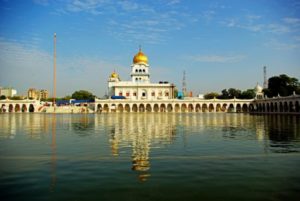
Gurudwara Bangla Sahib in Delhi, the site of Guru Harkrishan ji tending to the cholera and smallpox stricken people (Pic courtesy: discoversikhism.com)

Now, why have I laboured to bring out these coincidences? Simple, the Guru after who she was named, became a guru at the age of just five years. He had the body and heart of a child. However, his mind was fully grown in that he could recite fluently from the scriptures including the Bhagvad Gita. He was so sacrificing that when he toured Delhi, he found people suffering from cholera and smallpox. Unmindful of his personal safety, he tended to the sick (Gurudwara Bangla Sahib stands at that site) personally and tirelessly, caught smallpox himself and died before the age of eight years; thereby, not just being the youngest guru of the Sikhs but also the one who had the shortest tenure.

My mother had similar attributes. She had the innocence of a child, mind of an intellectual and spiritual, and an overwhelming self-sacrificing nature. All her life was spent in caring for others. She would forgive easily and very often prayed for and wished well even her detractors and enemies. I was, for instance stunned, when those people who have encroached on our land and have dragged us into protracted and difficult court cases had a sadness in their house and my mom said, “Kaka, jaa ke puchh ke aayin je ohna nu kisi help di lodh hove” (Son, go their and enquire if they require any help).

How does it affect me now that my mother is not physically with me? I can think of a number of ways.

The first and the foremost is that the place Whispering Winds, Kandaghat belongs to her and shall always belong to her. It is not just a question of mere ownership of assets by law. For example, in many cases, the assets of the husband automatically pass it to the widow and the children on his demise; which happened with her and us on 01 May 1984 on dad’s death by accident. It is actually much more than that. Dad decided to make their house in this place whereat, to start with, there was nothing: no houses, no connectivity, no resources. Mom stayed in a tent for a number of months until the ground-floor rooms of the house were ready (it took almost an year to be constructed). She supervised the complete construction and found answers to all the problems – small and big – that came up during construction. There were no local buses during those days. She would somehow stop a long-distance bus, go up to Solan (a distance of 15 kms), get the labourers from there by bus and get on with the construction.
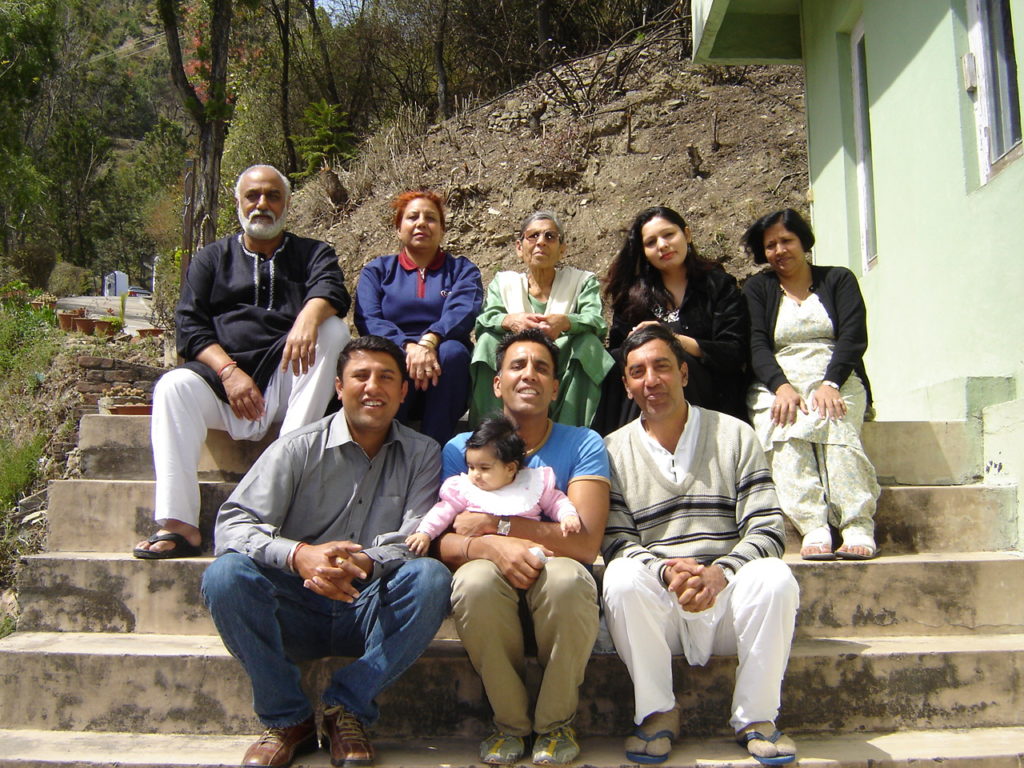
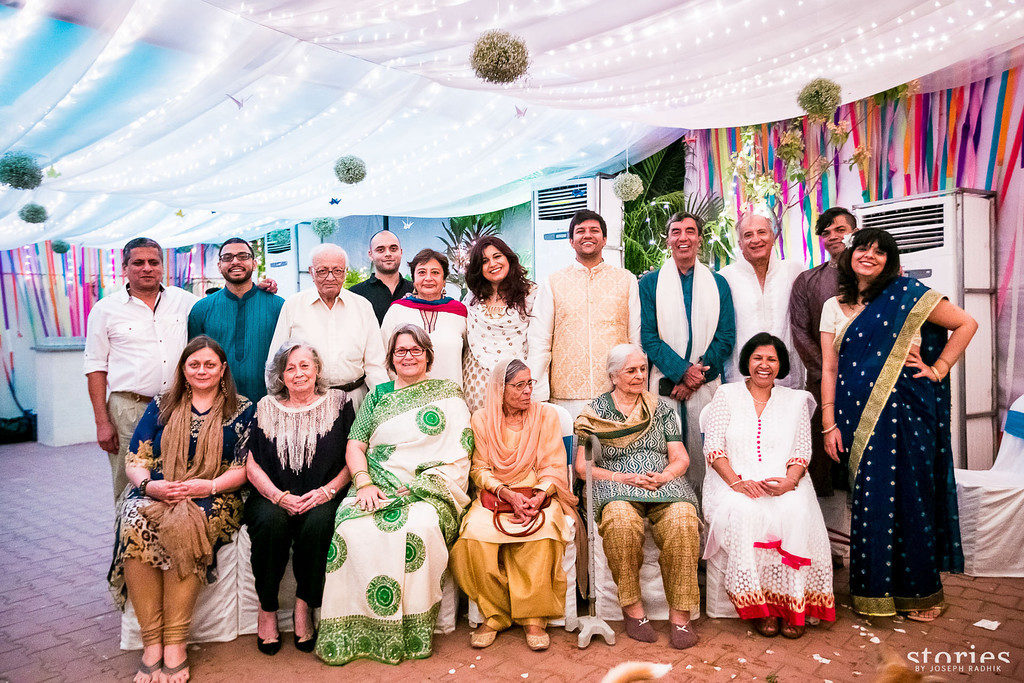
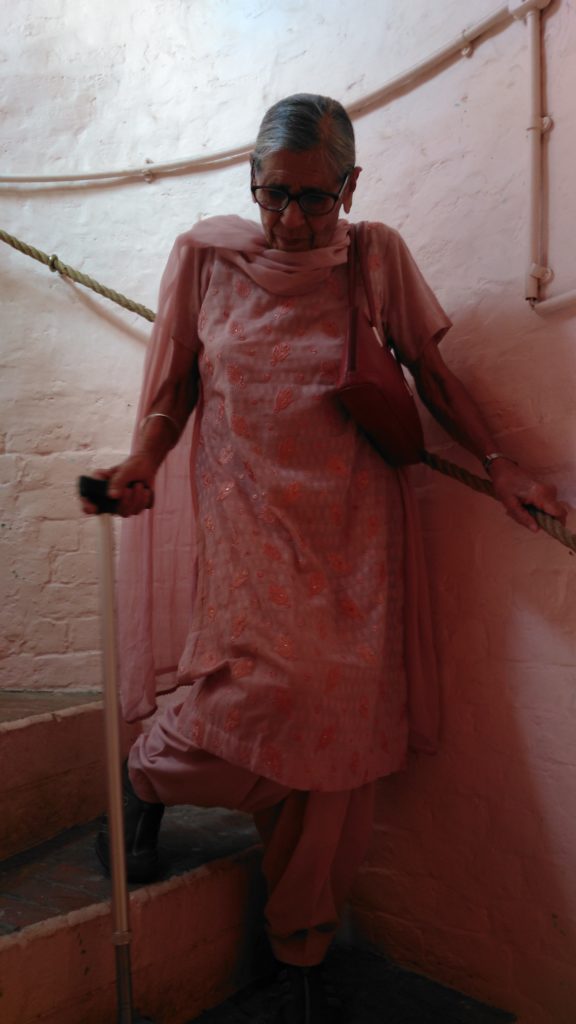
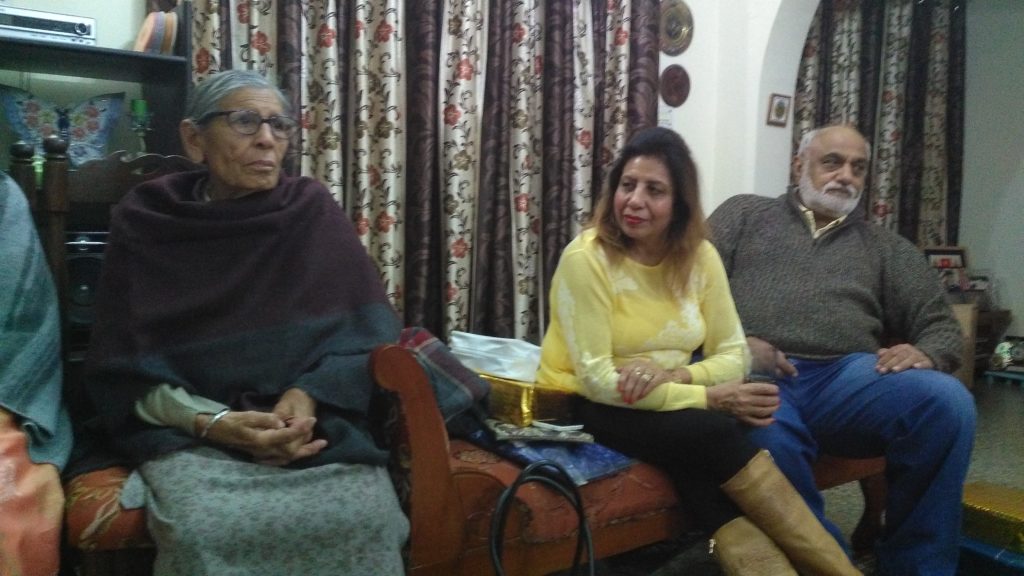
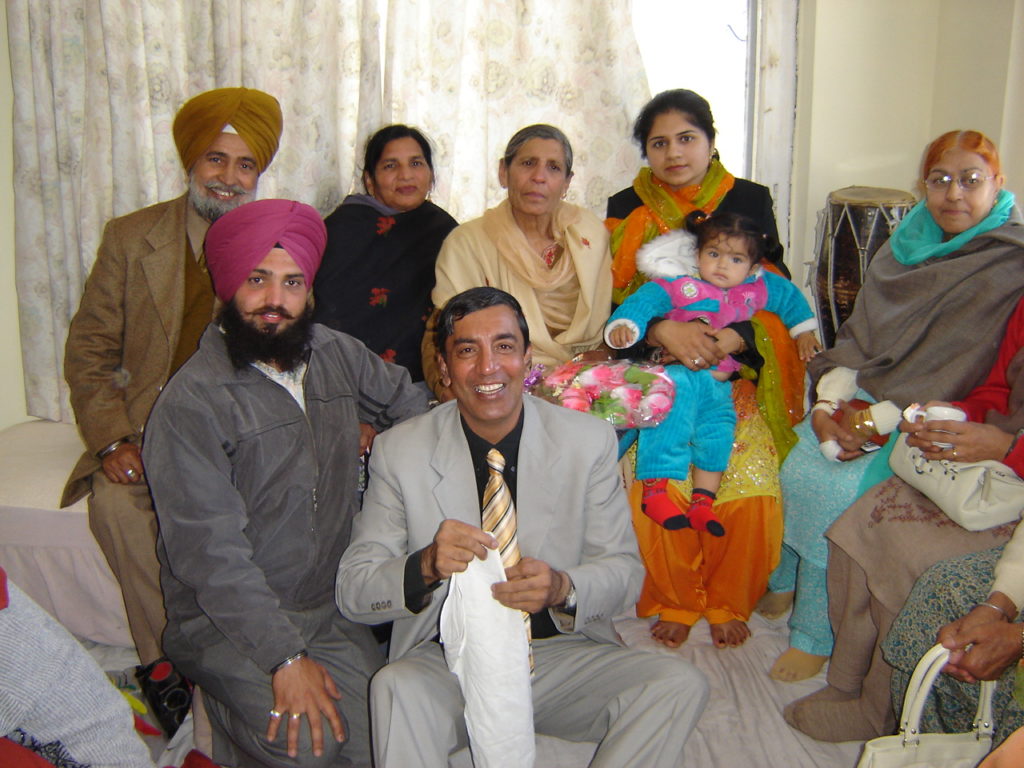
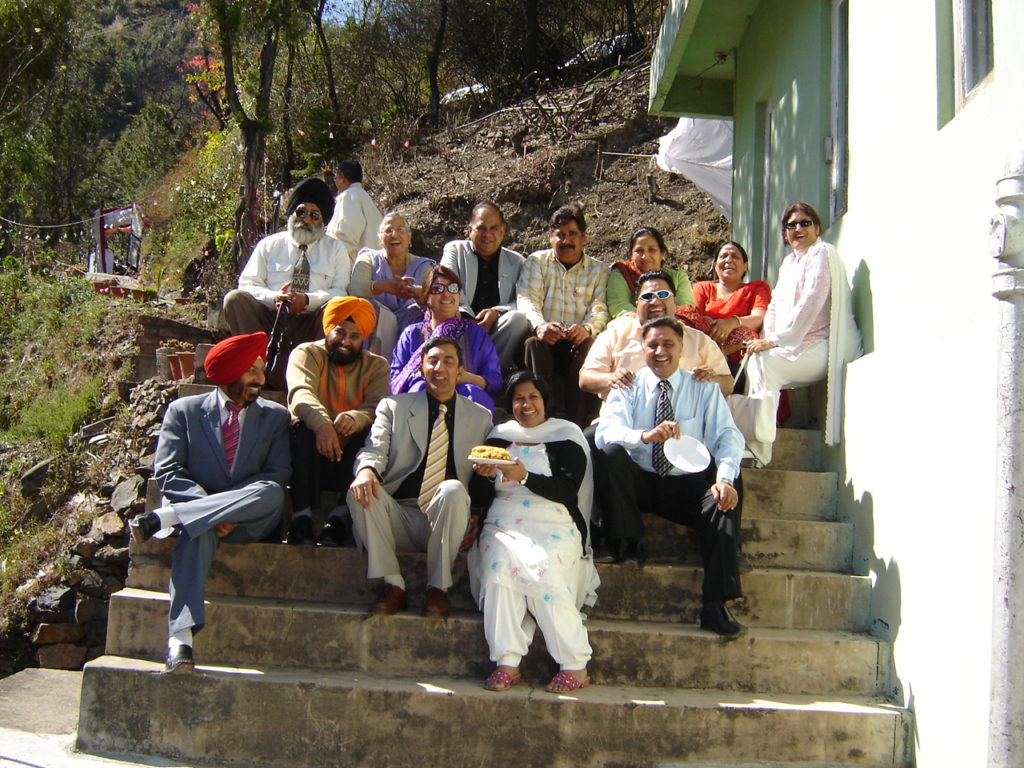
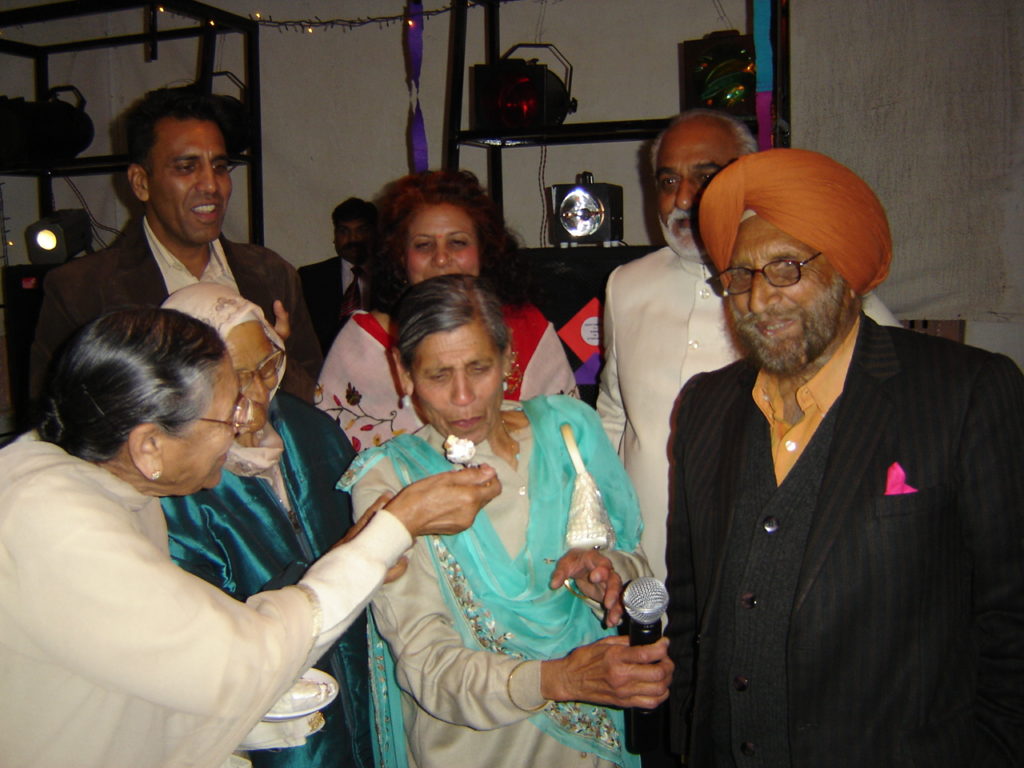
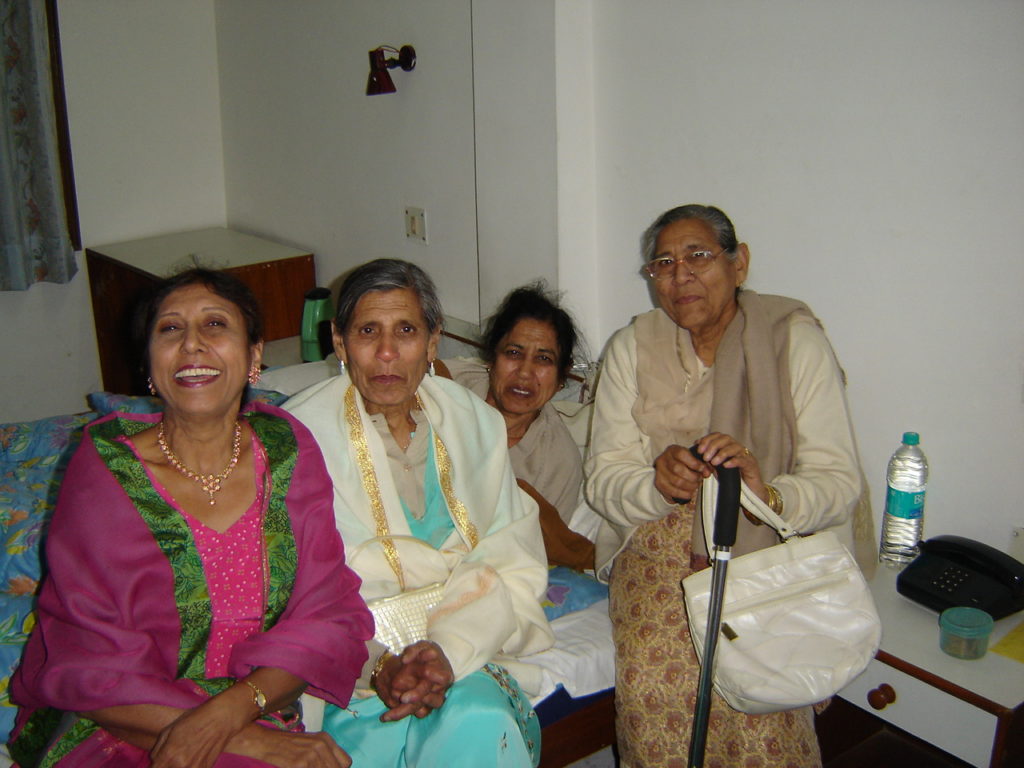
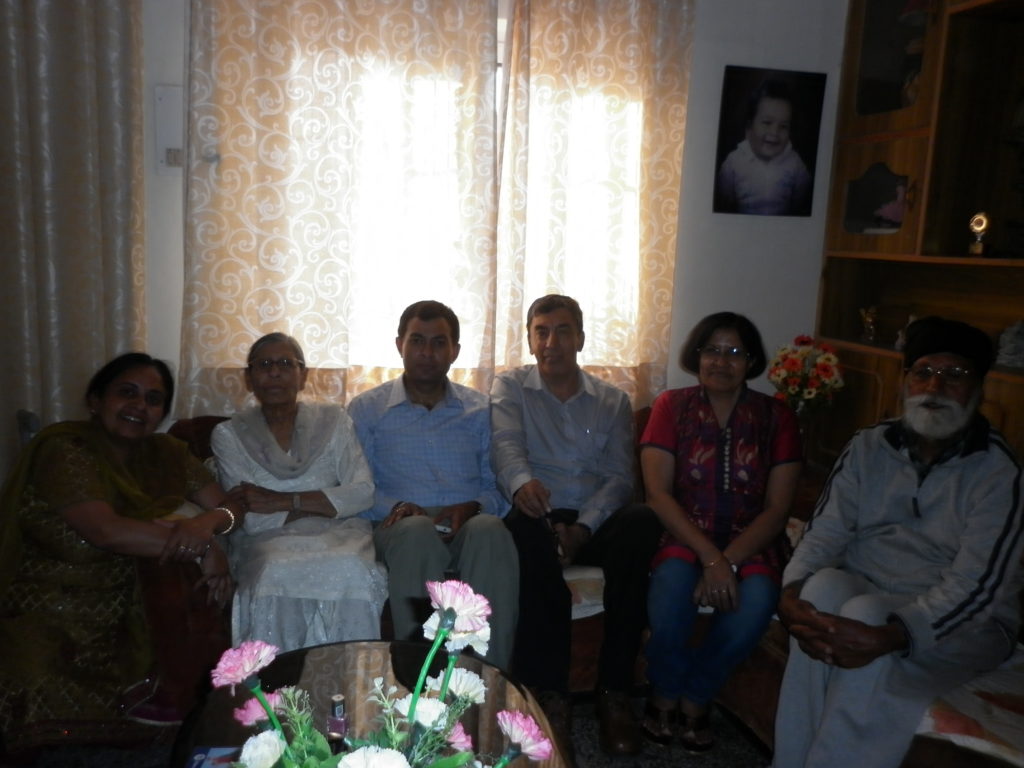
Mom with all of us at Whispering Winds, Kandaghat on her 75th birthday on 15th Mar 2007 (Picture taken by my nephew (sister’s younger son) Ankit and hence he is missing from the picture)

The other day I got the bathrooms of the house renovated for the first time after 39 years. The demolition people found it very tough to break down existing tiles etc because mom had personally ensured that the correct ratios of sand and cement and the best materials were used. At the age of 85 years (at the time of her demise), she knew exactly where and in which storehouse what was kept. Just to give an example, I got some of the doors replaced by aluminium framed glass sliding doors. Initially, when these were hard to slide, the fitter suggested that these should be greased. I was at that time making a dozen trips to the market to get this or that. I had just returned from getting something that the plumbers wanted from the hardware store and hence didn’t want to go again to get grease. Just on a hunch I asked my mom if we had some grease at home. Here is how she did loud thinking, “Kaka, jadon saada mushroom project chalda si (in 1983 to 87; for heavens sake, 30 years ago!), tanh asin motoran nu grease dinde si. Guddi (our maid-servant), dekhin gaay de uppar waale kamre wich ik kaale dabbe wich grease payi hovegi” (Son, when we ran the mushroom project (in 1983 to 87), we used to grease the motors. Guddi, please see in the room above the cows room and you will find grease in a black box). Ours is a large house with many disparate linked outhouses. My mom knew precisely where anything and everything was stored. It would be hard for anyone of us to emulate that since none of us had the kind of involvement that she had.

The second is her larger than life presence in my life. For the last thirty-three years, five years more than one-third of her life on earth, she was constantly with me. There was a somewhat reversal of roles in that in addition to being my mother, she became my baby to look after. When I was in the active service of the Indian Navy, there were months when she lived alone at Kandaghat and I spent everyday of my leave with her. However, after retirement in end Feb 2010, she was also constantly and physically with me. Everywhere we went, we went together. Her strong character, will and grit ensured that rather than being my weakness, she was indeed a strength. Whilst I executed all the works in our house in Kandaghat, she did more than her bit, physically and morally. I could turn to her for sane and cool-headed advice, especially under difficult and trying situations. My father was nearing retirement when he died of an accident. He had taken bank loan to start a mushroom project. My mother and I struggled to run the project to pay back the mounting loan. When I joined the Navy, dad had bought a housing plot for me in Ludhiana. I sold it off to partly pay back the loan. Its market price is in crores now since it is in a posh locality in Ludhiana. She put in all the physical effort to run the project. Mushroom is a fast perishable commodity and grows in flushes rather than at a constant daily supply. We faced gigantic problems of marketing mostly due to the avarice of the middle-men (the bane of all agricultural and horticultural marketing in India).
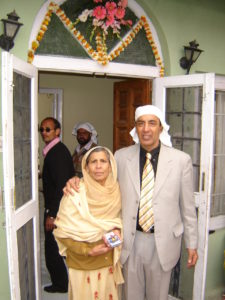
The long and short of it is that in everything I did I banked on her advice and guidance and vice-versa. That thread has broken now and  I have to prepare myself to face the world alone. In my favourite song on Maa, the one whose lyrics are most appropriate to describe her (Tu kitani achhi hai, tu kitani bholi hai, pyaari pyaari hai, O maatuu kitanii achchhii hai tuu kitanii bholii hai
pyaarii-pyaarii hai o maa.N o maa.N; penned by Anand Bakshi, composed by Laxmikant Pyarelal and sung by Lata Mangeshkar), there are my favourite lines that describe my emotions towards my mom:

Ye jo duniya hai, ye ban hai kaanton ka,
Tu phulwari hai….
(This world that is there, is a forest of thorns,
You are a flower garden….)

Having mom besides me made me stronger to face upto challenges that life threw at us.
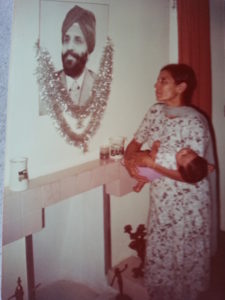
The third is the horde of memories that we made together. My mom had the remarkable ability to take things in her stride and I am proud to say that she has passed on some of it to me. Lyn and I were blessed with our elder son Arjun within a day of my dad’s bhog (prayer meeting) on 13th May 1984. Even in her extreme tragedy of having lost her husband in an accident, she quickly shifted to looking after Arjun and my wife Lyn (short for Marilyn).

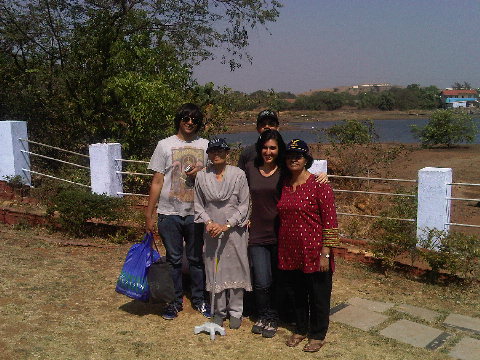
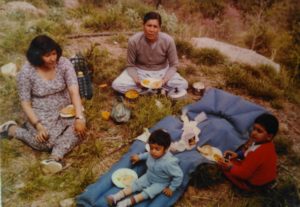
Arjun brought great joy to her as she looked at him as if God compensated her in some measure for having prematurely taken her husband away. When Arun too was born, two and half years later, her hands were full. We really made great memories together and tried to get over the sadness of dad’s untimely demise. In the accompanying picture you see us together having a picnic in our own orchard at Whispering Winds, Kandaghat.
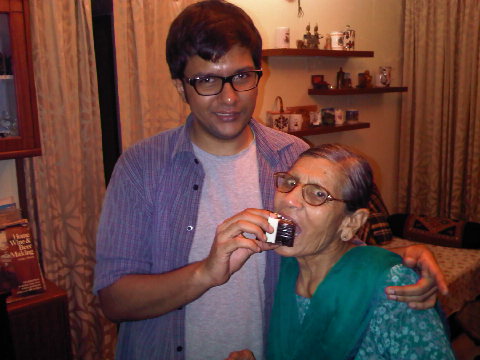
This is too short an article to give you all the memories that I collected with my mom in the last thirty-three years after my dad’s demise. I am giving you some select ones culminating in the two Yaad Kiya Dil Ne meets in 2016 and 2017 wherein she was the darling of our Facebook group on songs and music (Please read: ‘Yaad Kiya Dil Ne Group Meet At Whispering Winds, Kandaghat‘) I have to live with those memories now and have nothing more to add to them.
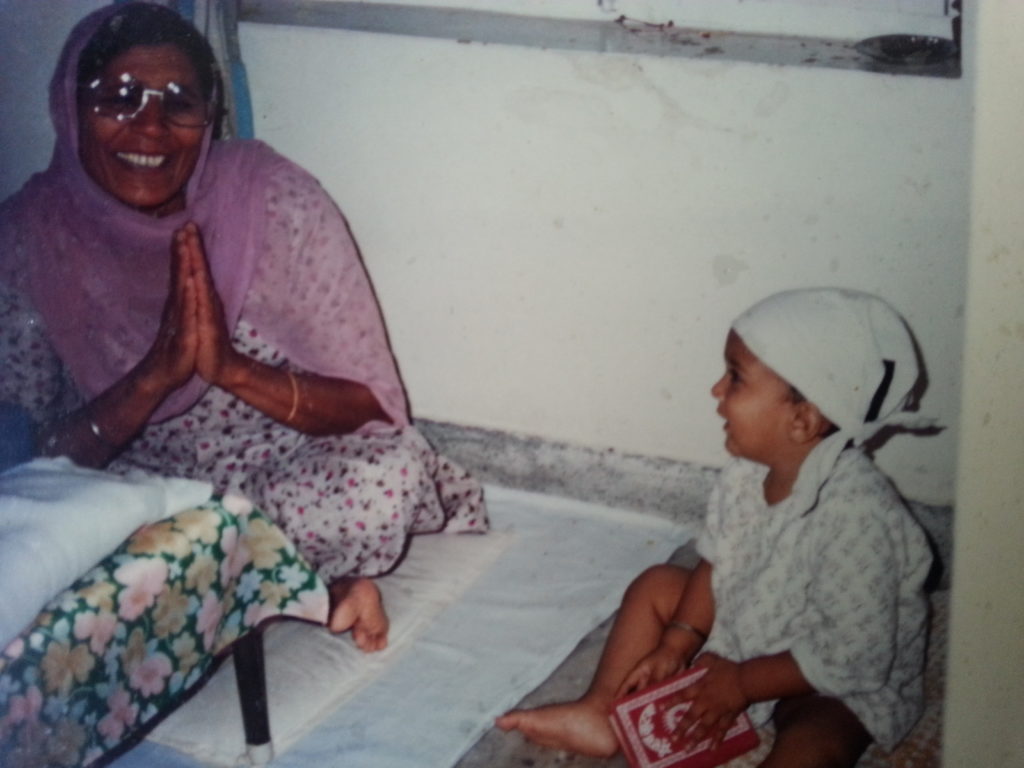
The joy of prayers together with Arjun in the home gurudwara at Whispering Winds, Kandaghat
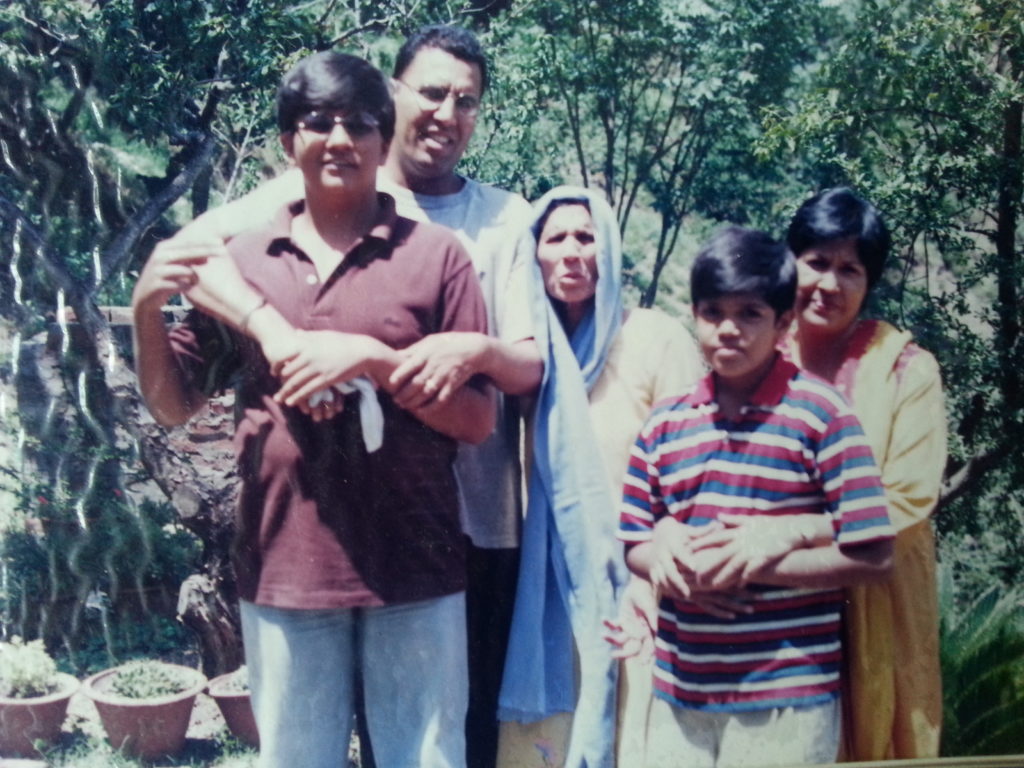
One of those occasions when JP, my younger brother’s visit coincided with ours

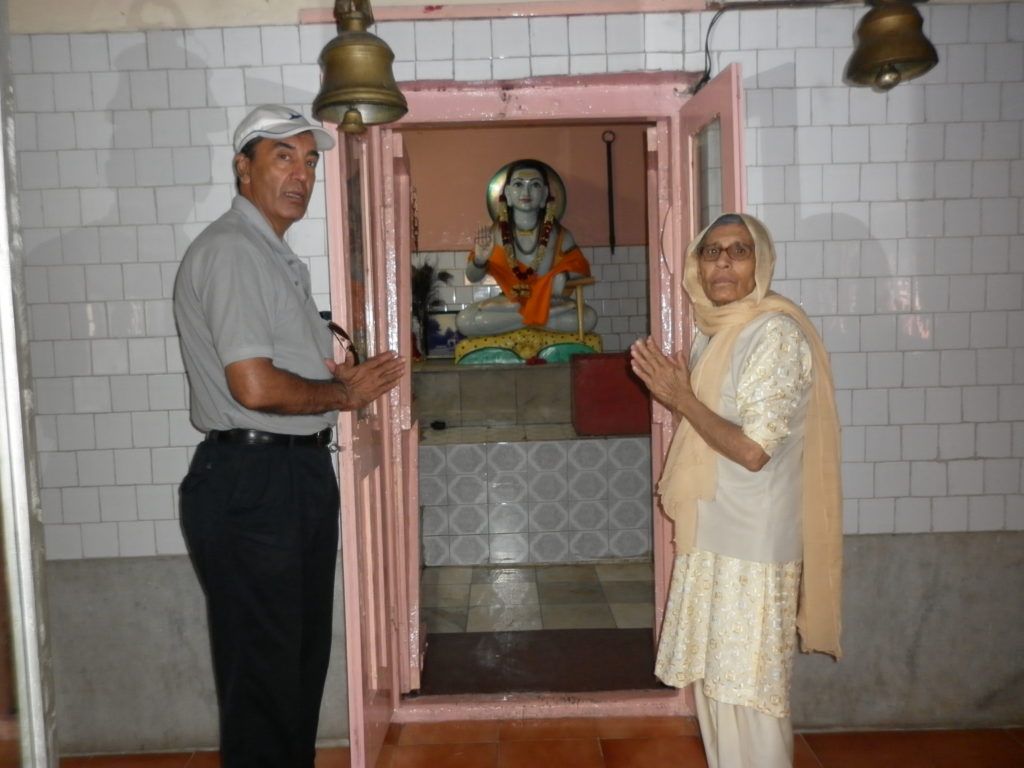
It was merely four years ago, in May 2013 that she preferred to walk the steep steps to Shiva Mandir in Chail rather than reach all the way by car:
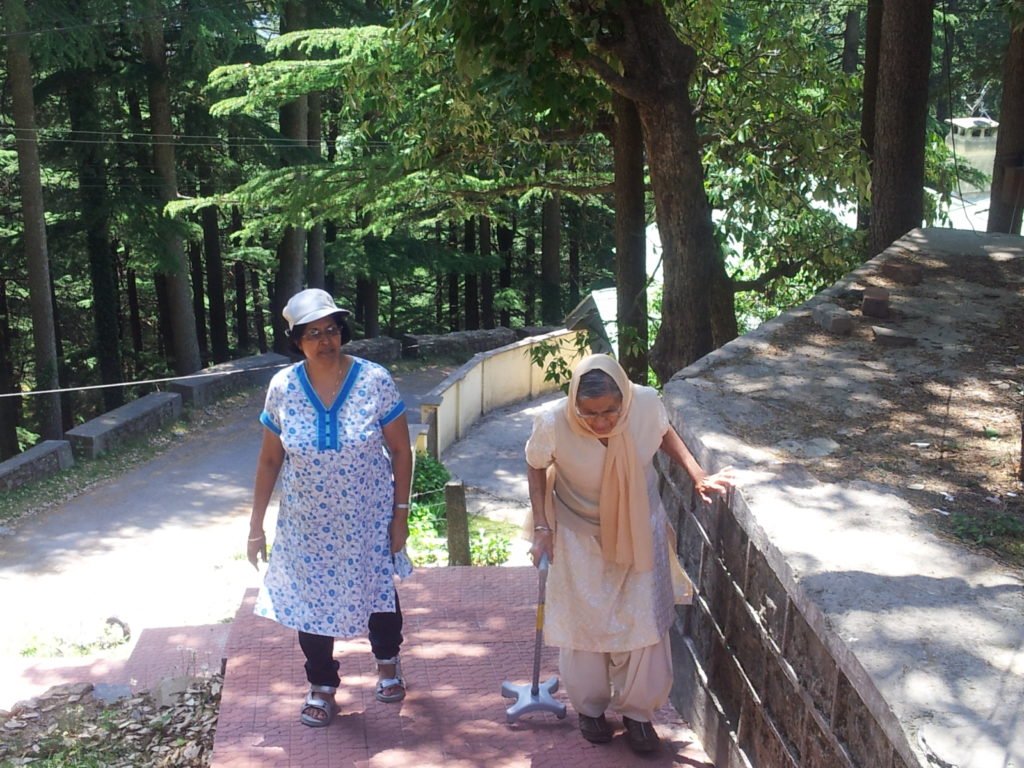
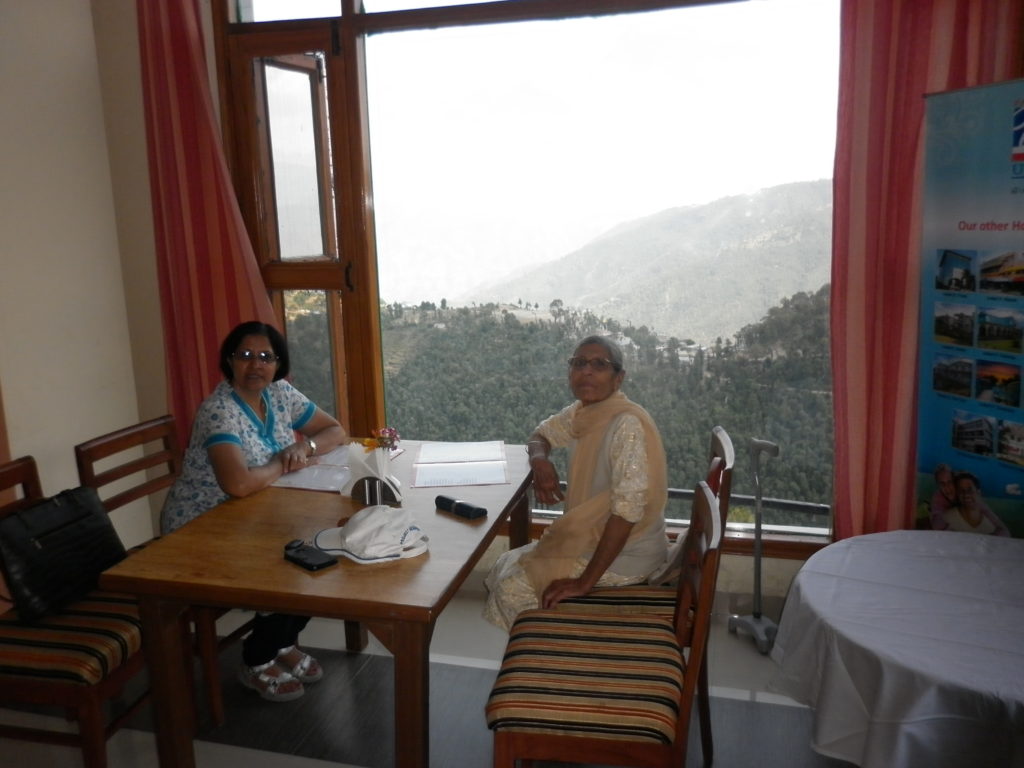
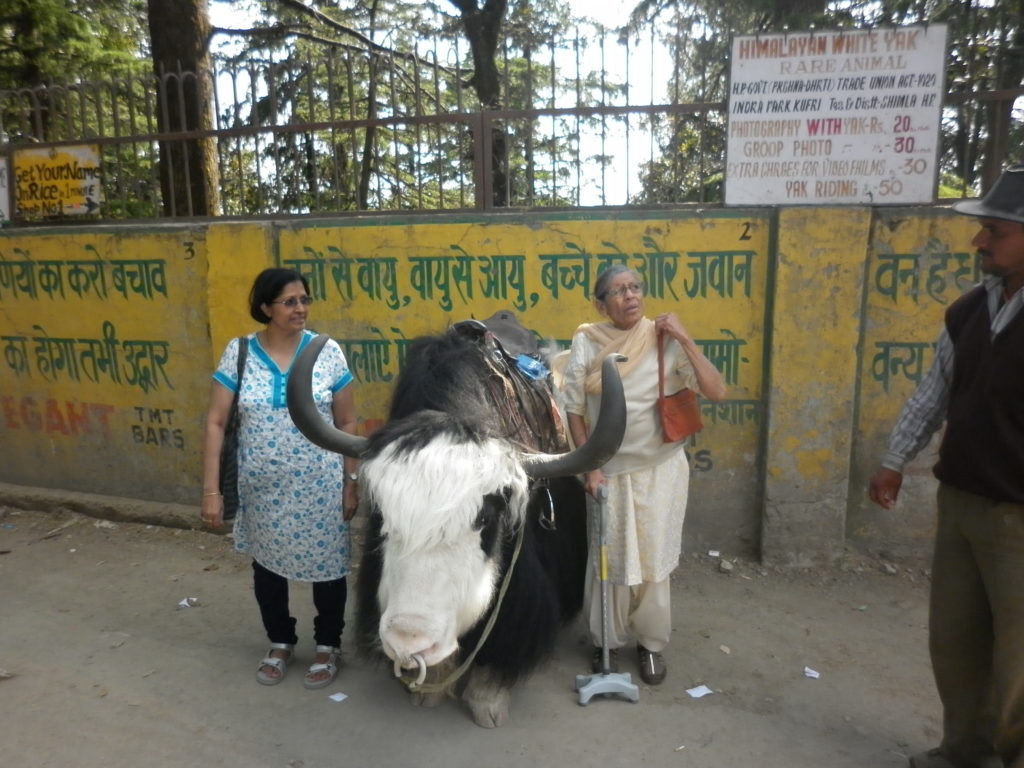
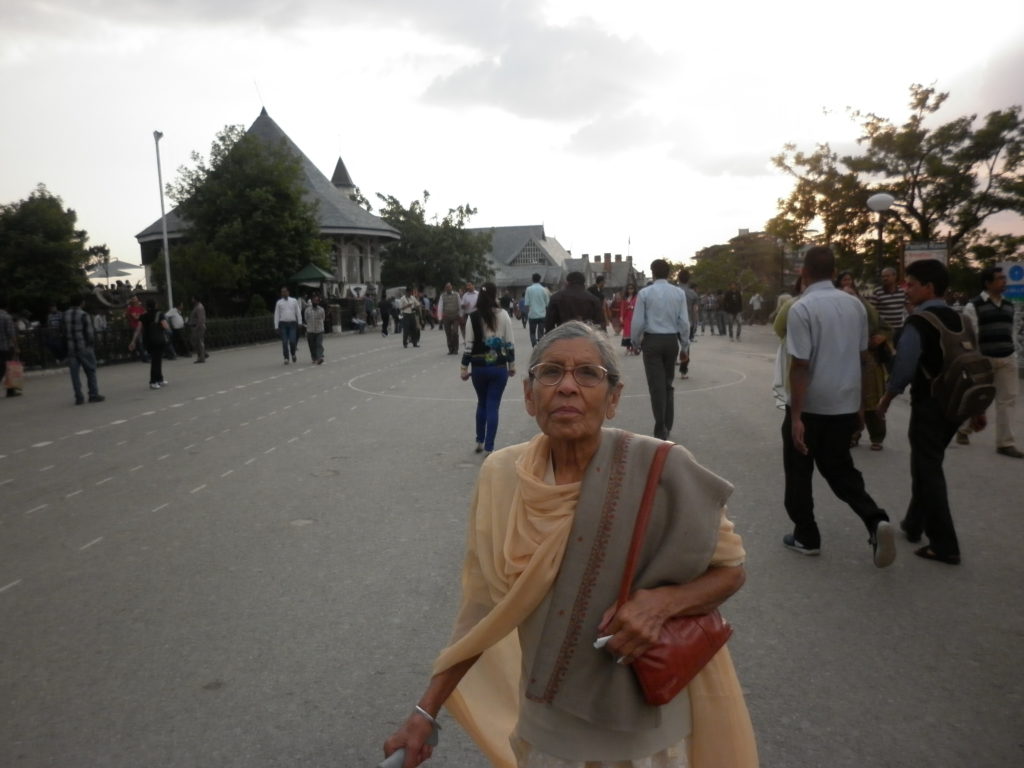
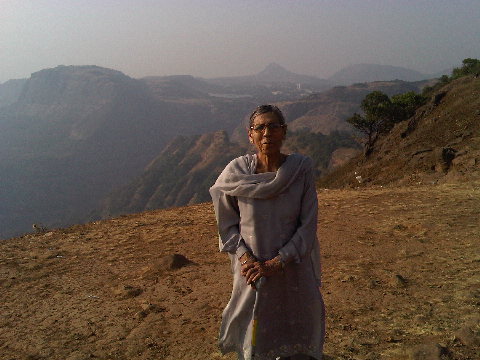
It was a tough and long day for her at the age of 81 years since we went to Chail, Kufri and Shimla and came back late in the evening but she not only took it in her stride without complaints, she said she enjoyed it. That was the last time she had visited these places:
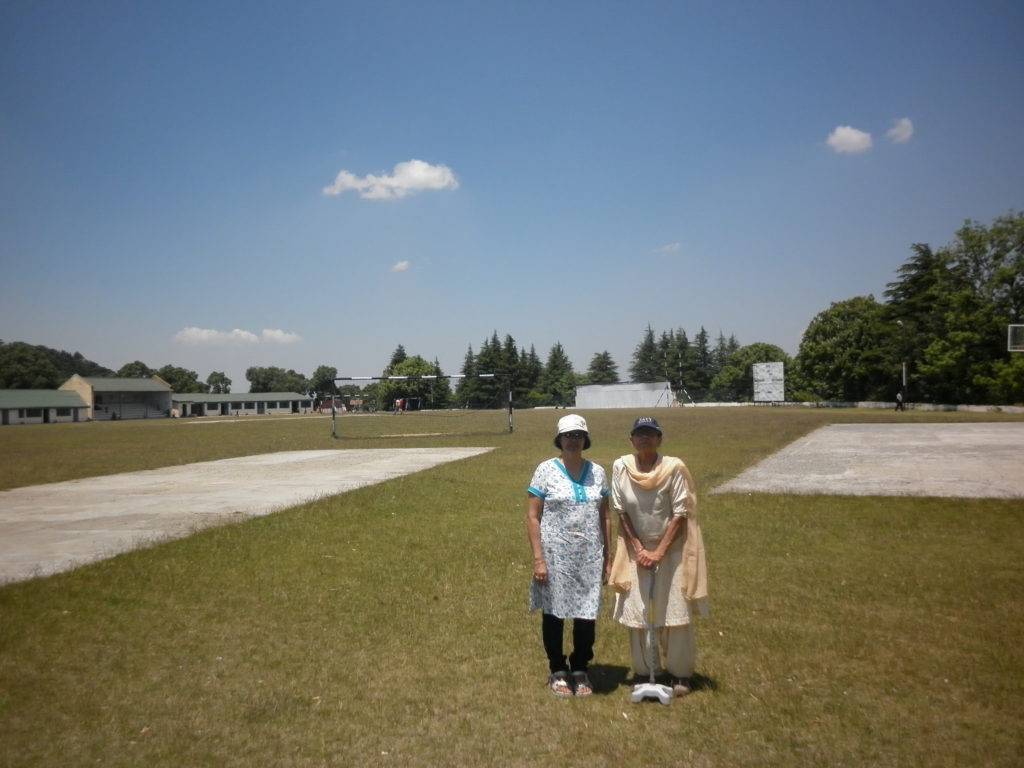
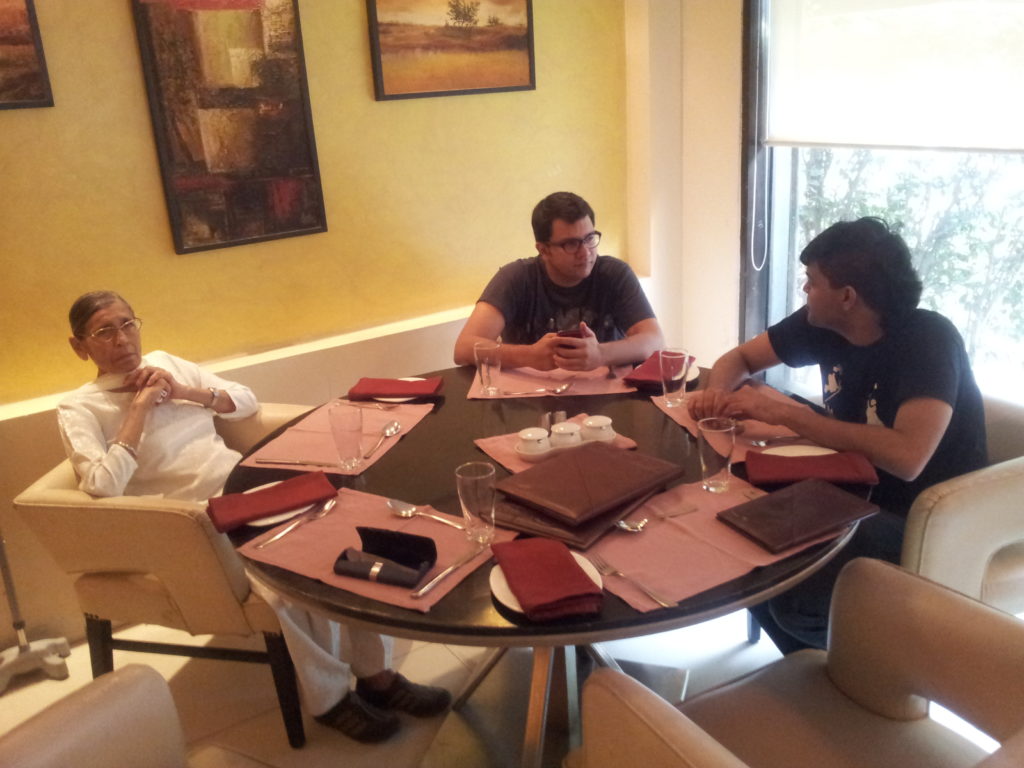
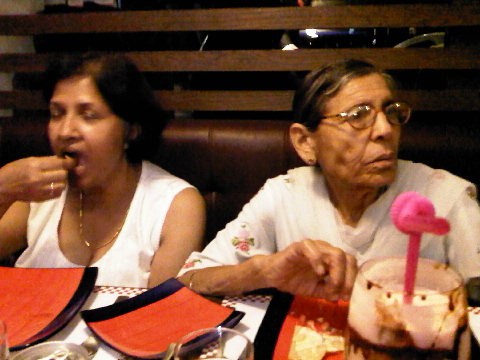
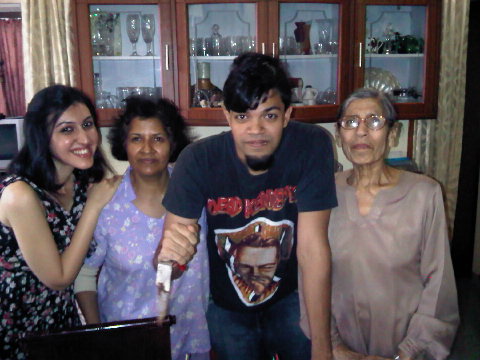
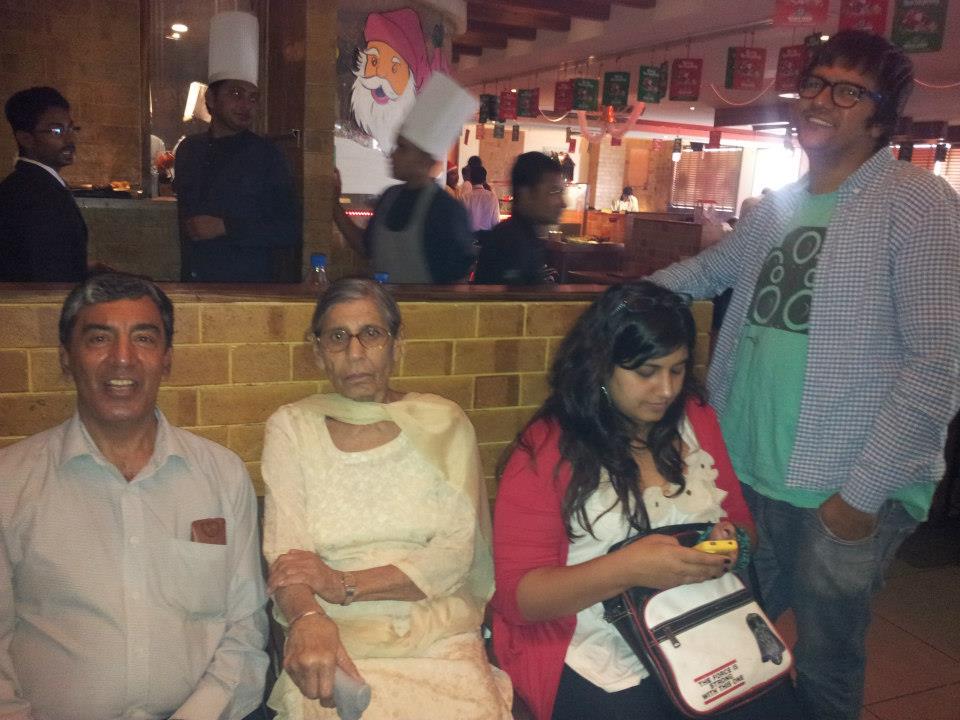
After I retired from the Navy in Feb 2010, she shifted with us in our house in Jal Vayu Defence Enclave, Kharghar, Navi Mumbai and we had a great time having guests at home, birthdays, Christmases, and visiting nearby places like Lonavala. Everywhere wer went, we went together including movies and restaurants.
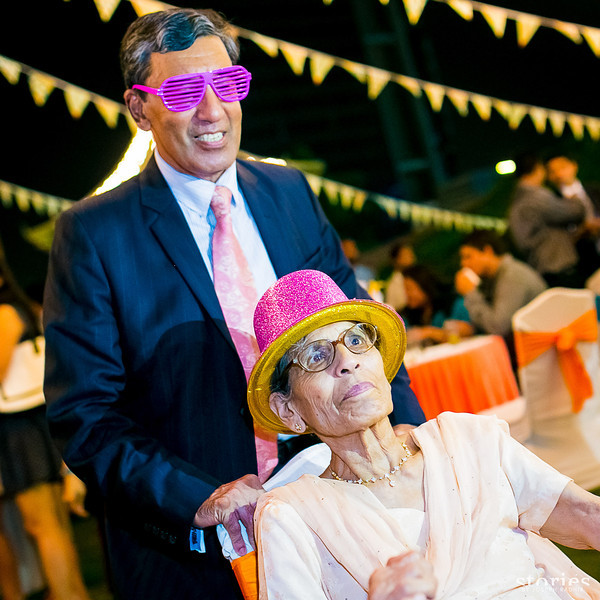
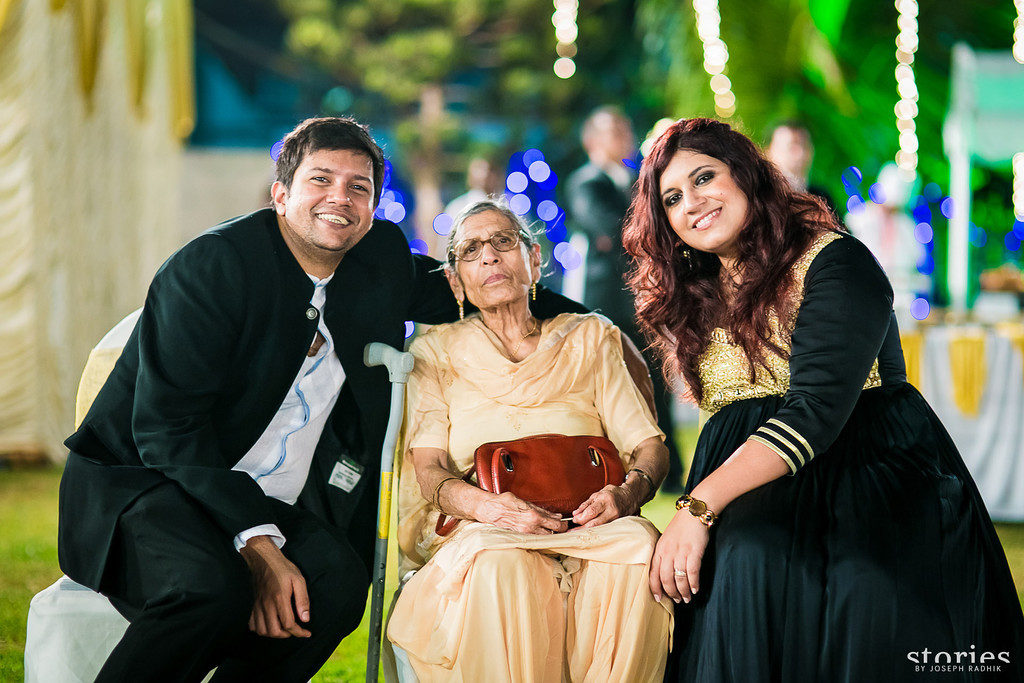
She was at her best during Arjun and Samira’s wedding on 08 May 14. I know that this one function made her walk on clouds:
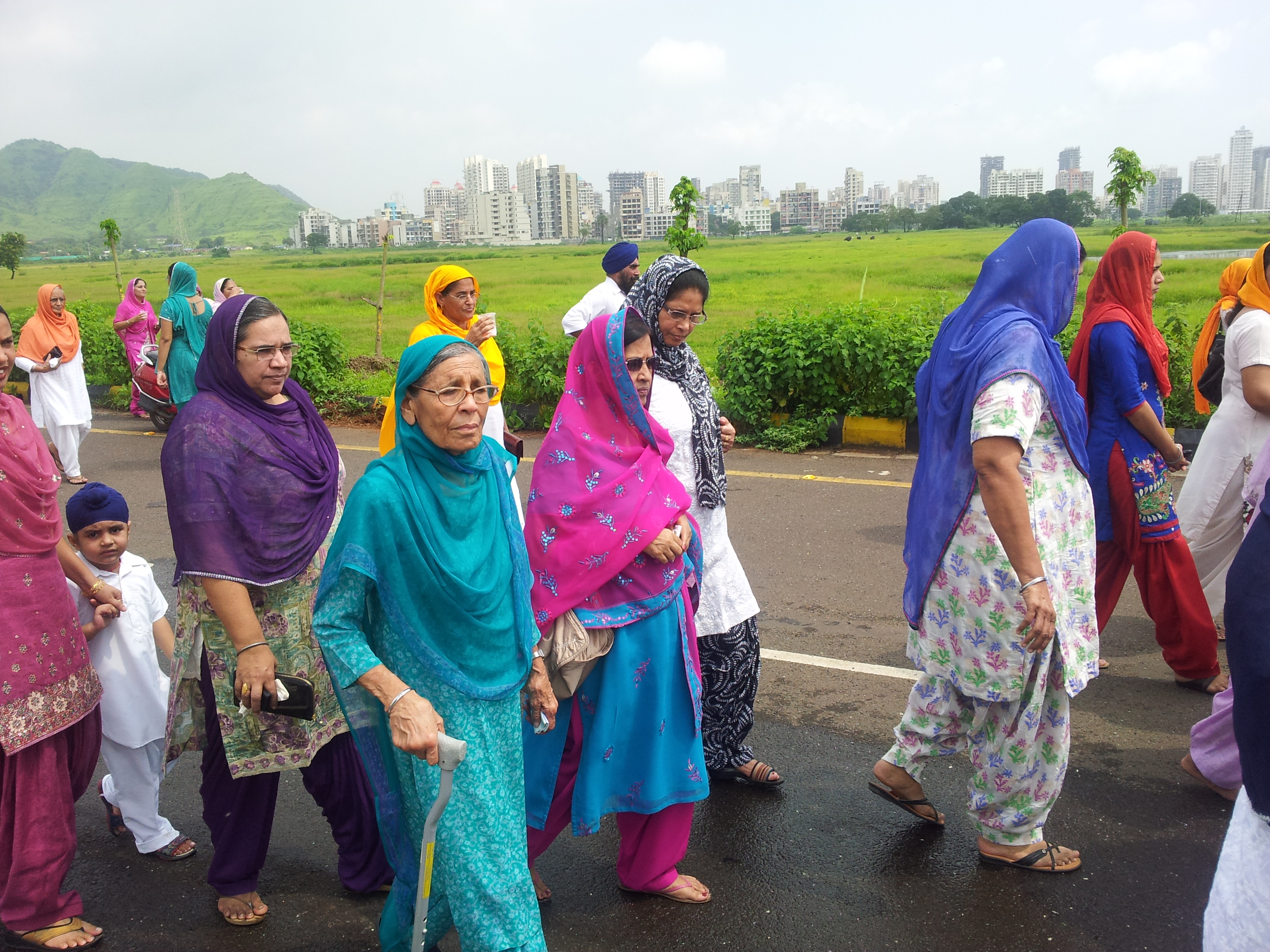
During the inauguration of Kharghar’s Gurudwara on 01 Sep 2013, she surprised everyone by walking all of nearly four kms around the Central Park for Prabhat Pheri (Morning Procession). This was possible because she loved to walk and until April this year, when we returned to Kandaghat for the summers, she would walk 1.5 Kms everyday in the mornings:
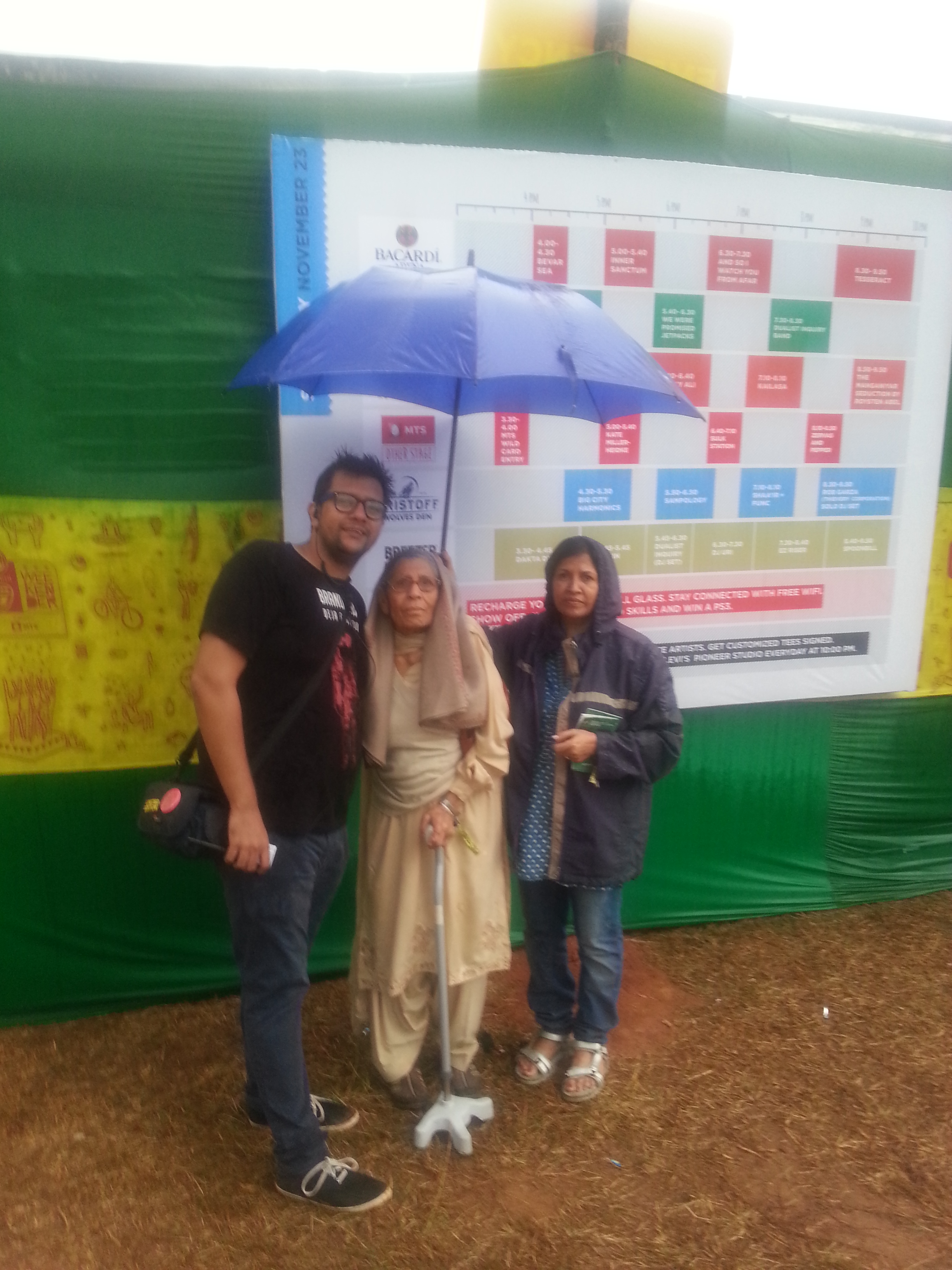
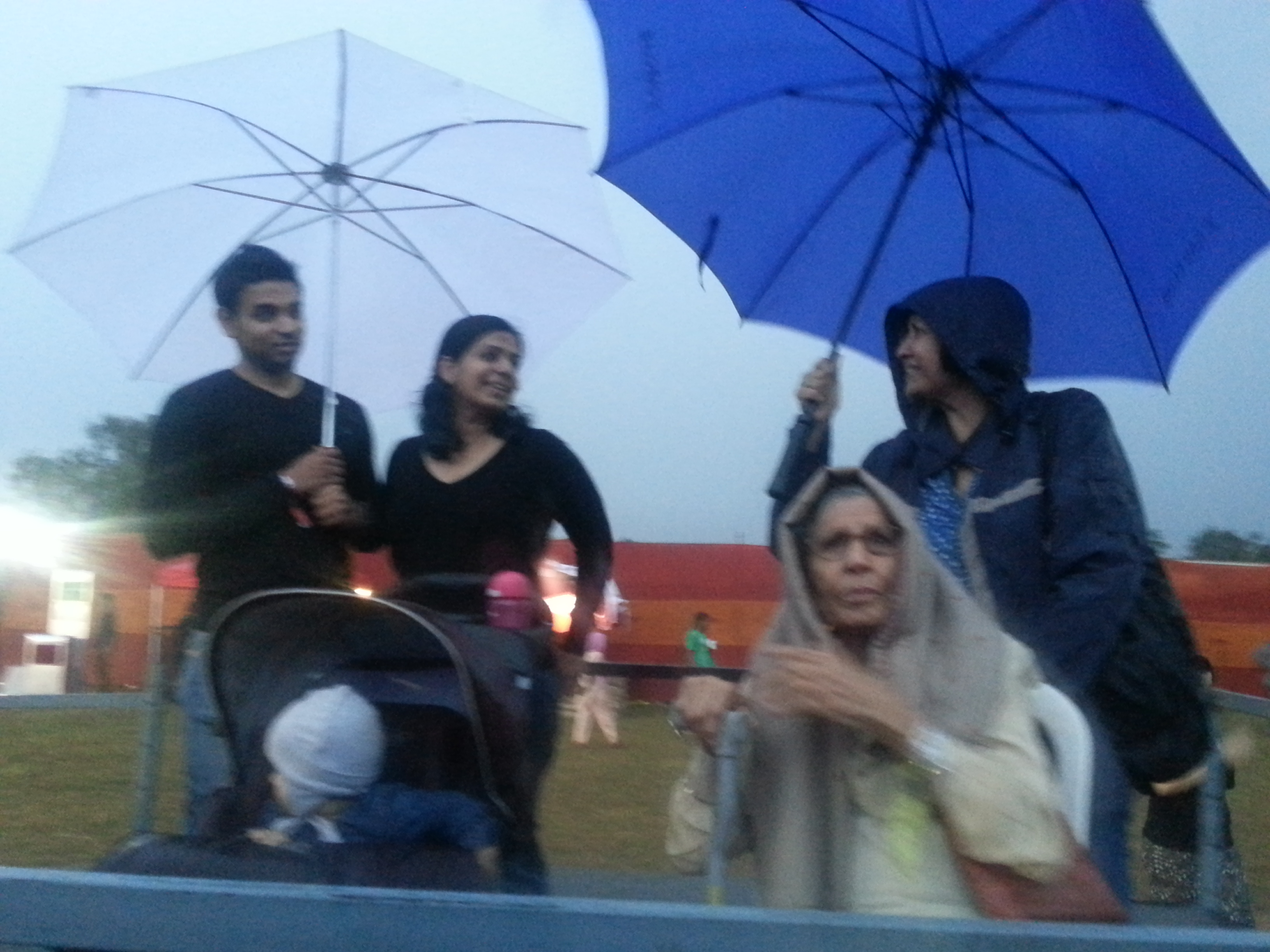
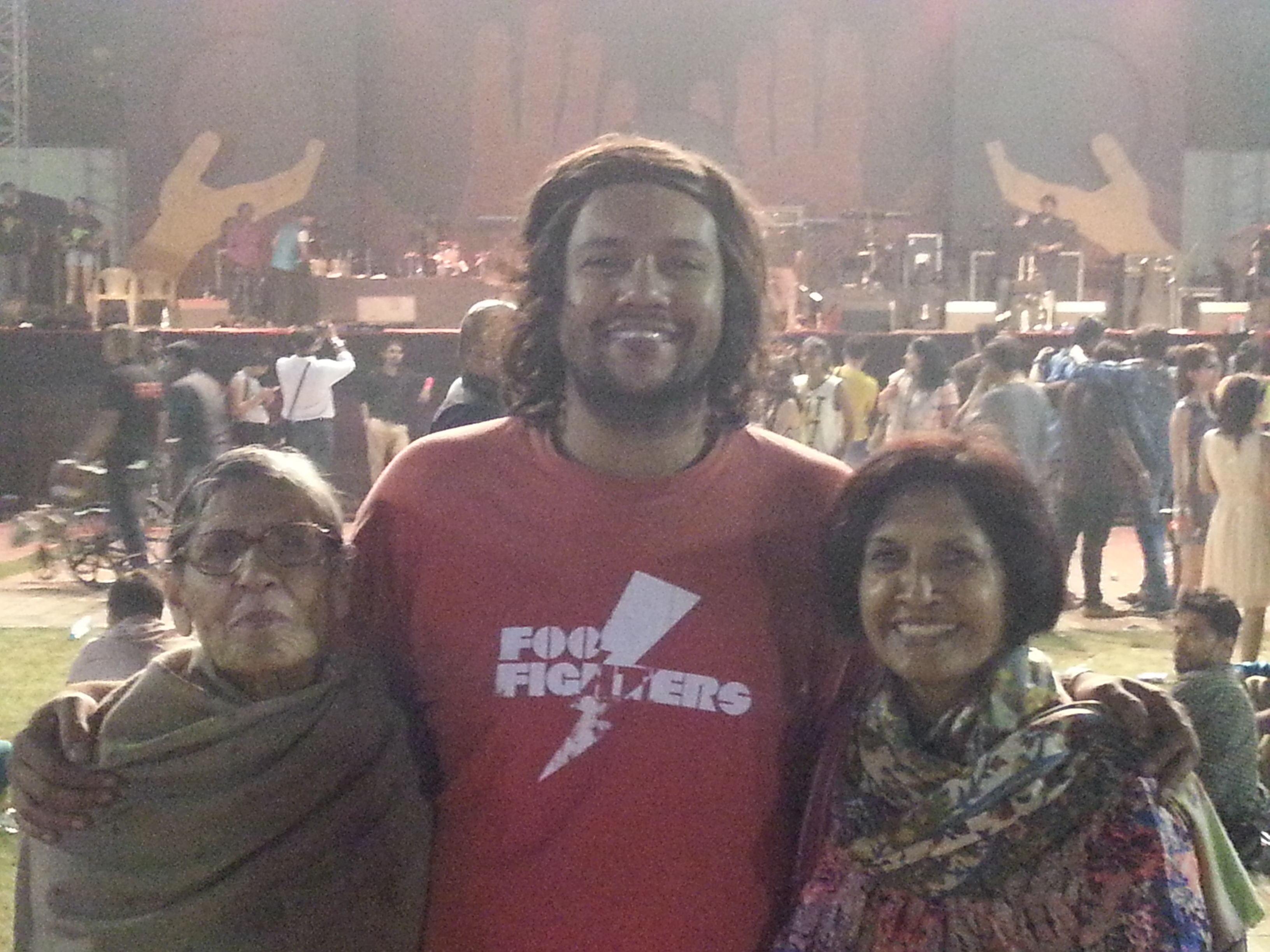
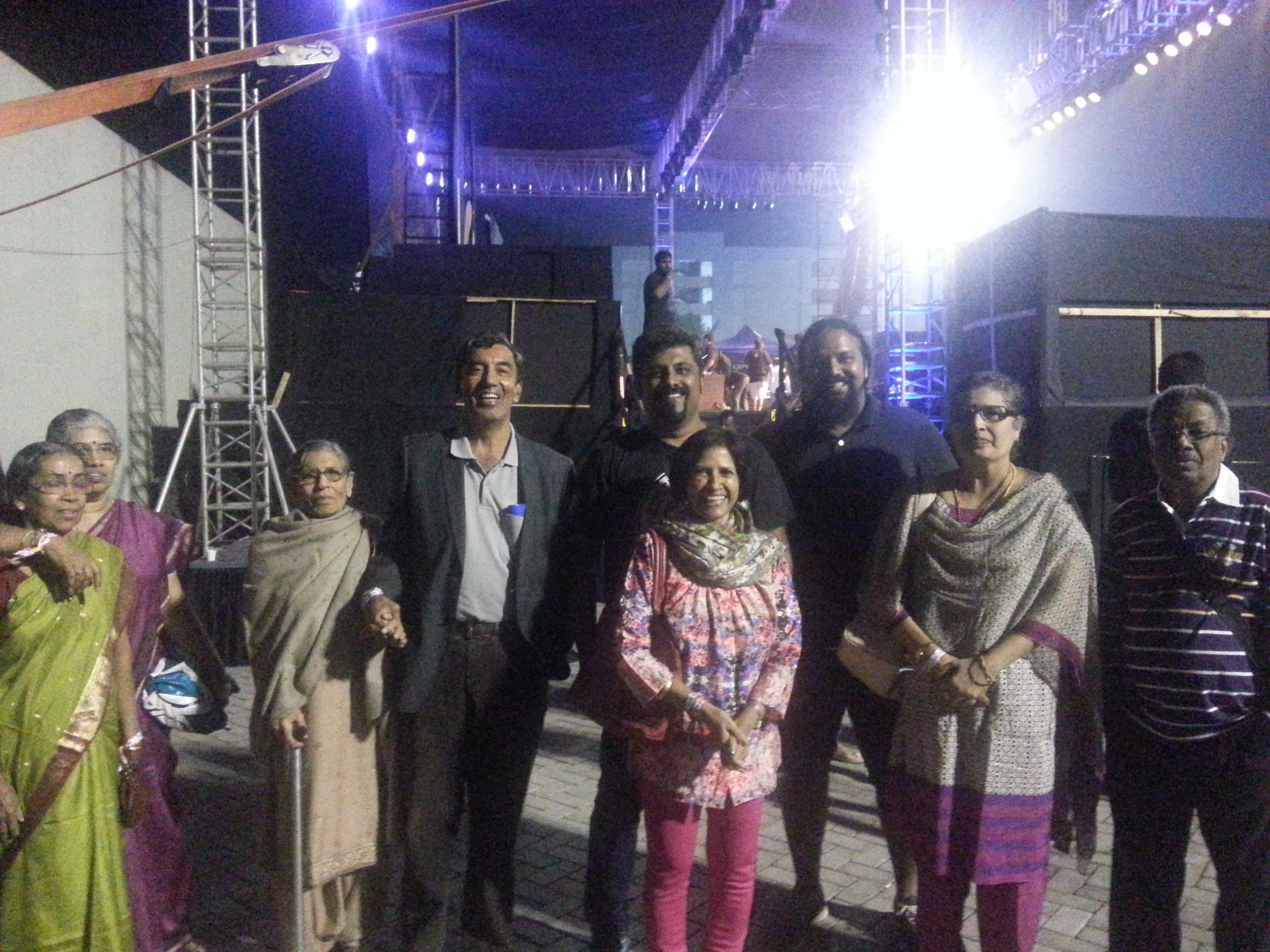
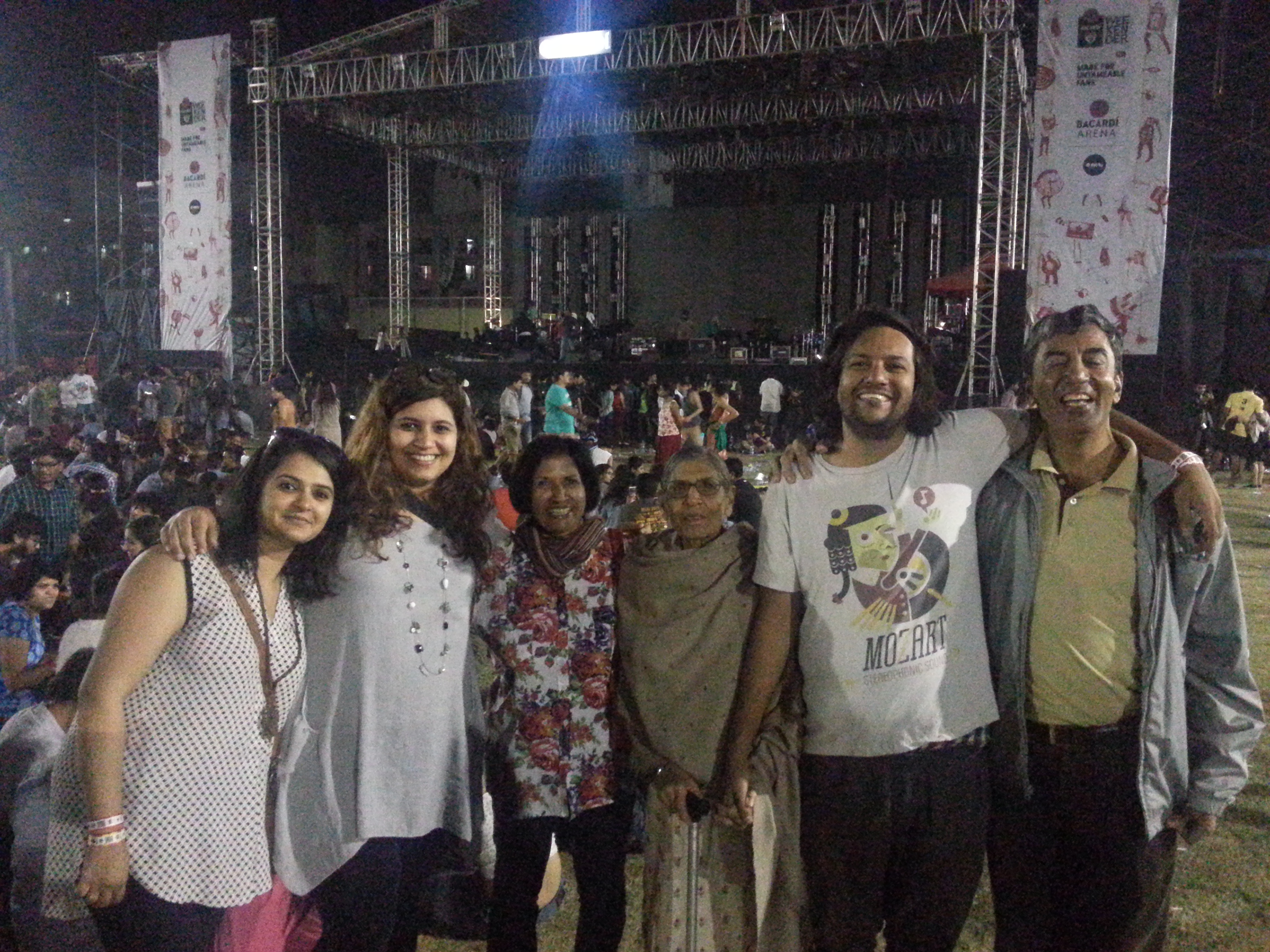
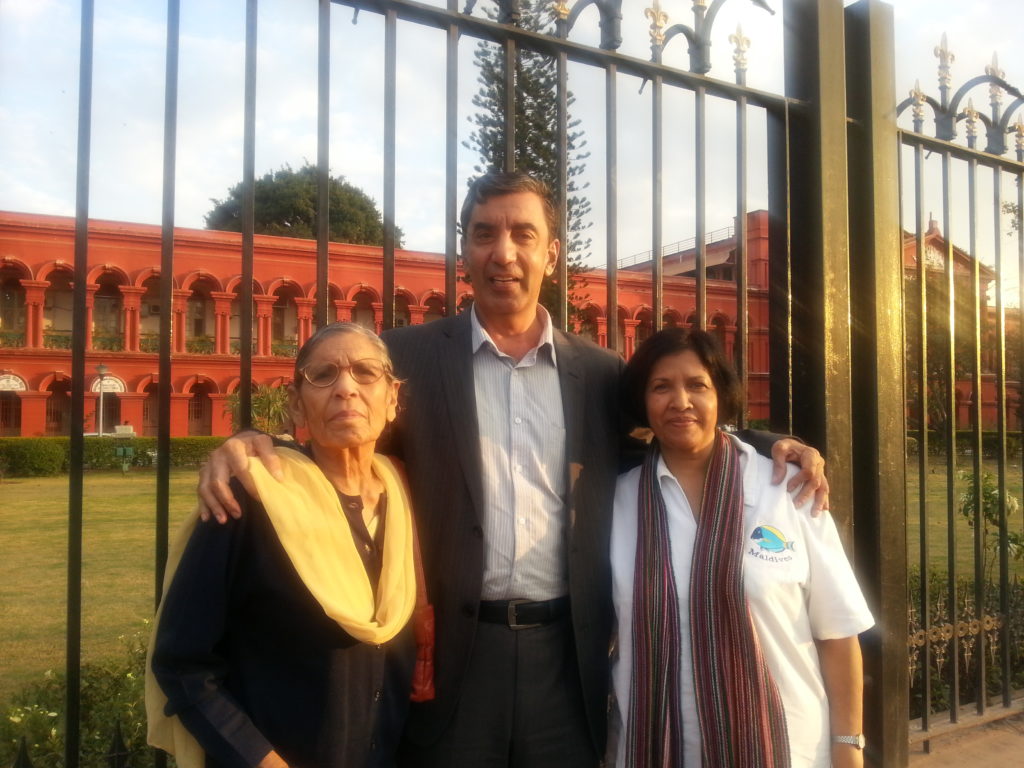
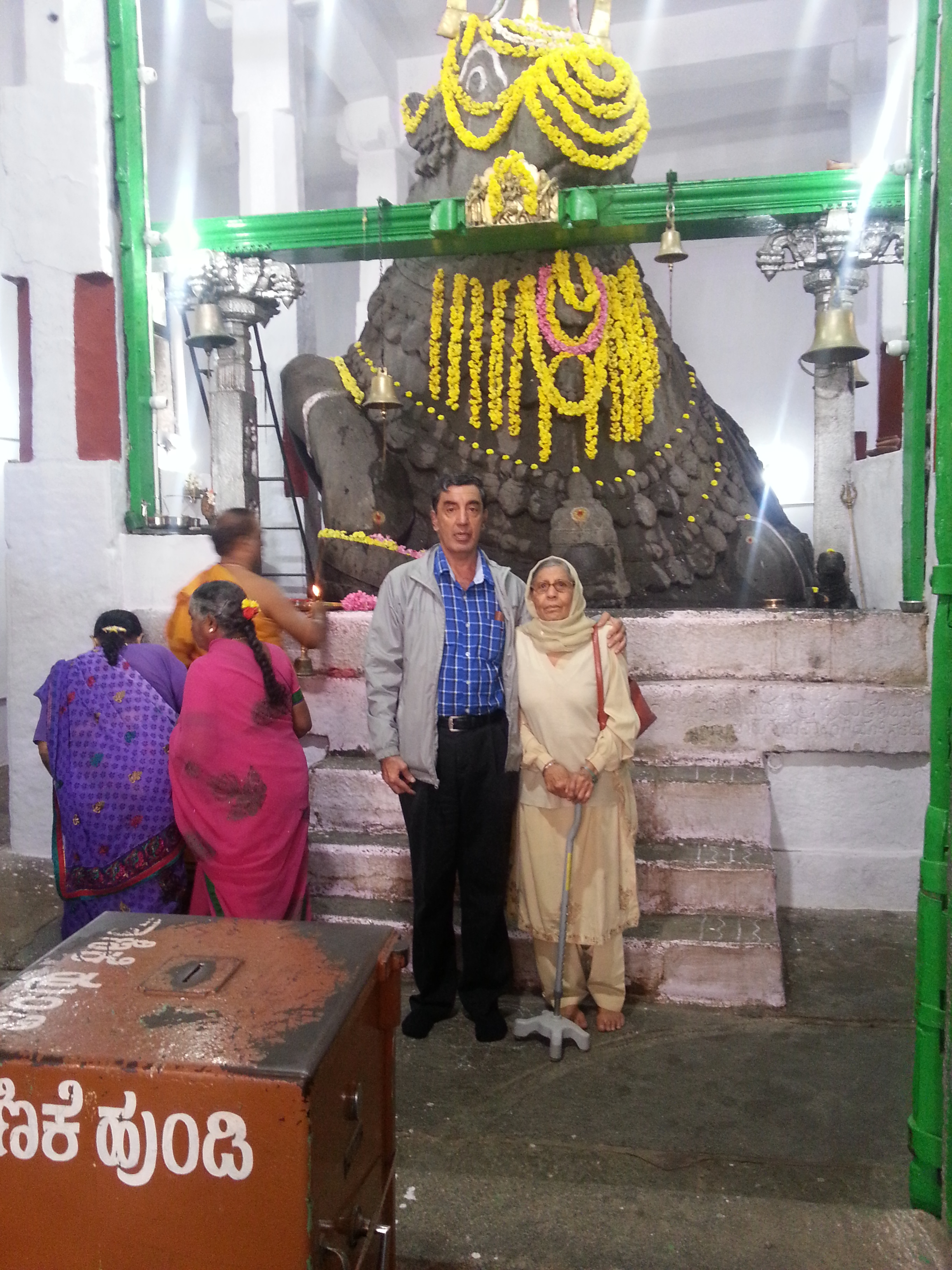
Mom also said that she would like to attend Arjun and Samira’s company’s NH7’s Bacardi Weekenders (Music Fests). In the years 2014 and 2015, she attended the fests in Bangalore and Pune respectively. Despite all the crowds and in Bangalore the weather being bad, she enjoyed the experiences, as you can make out from the following pictures:
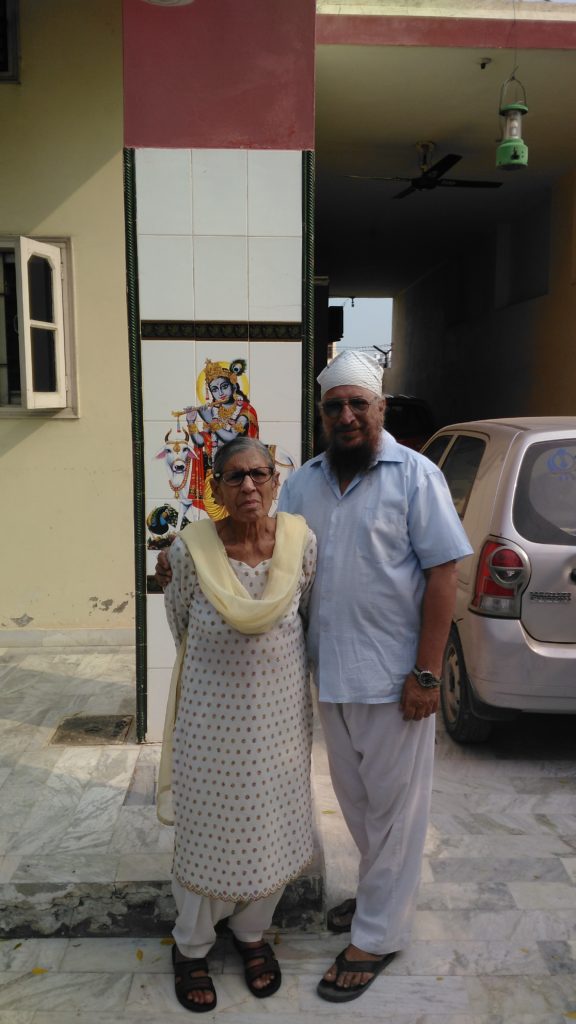
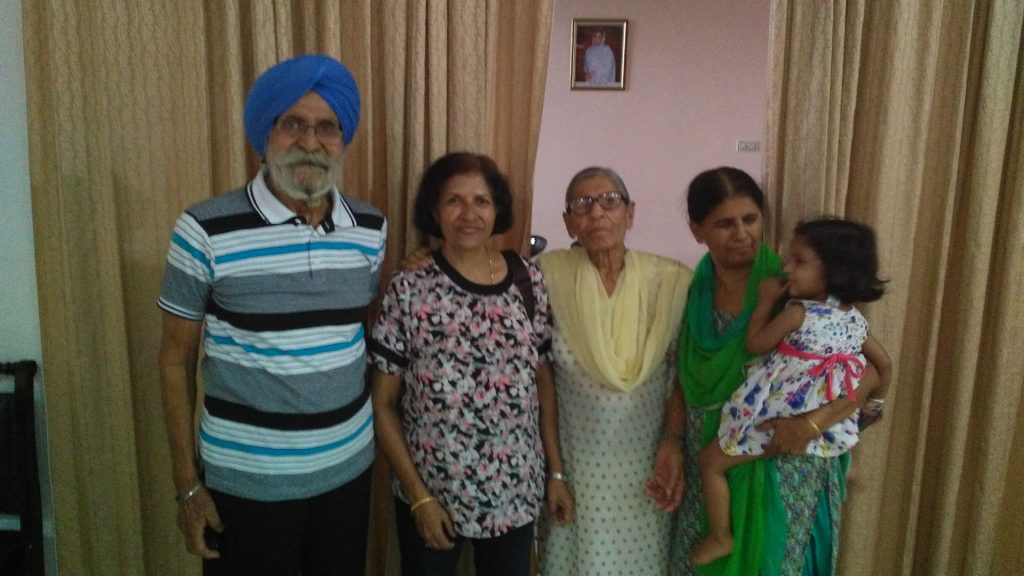
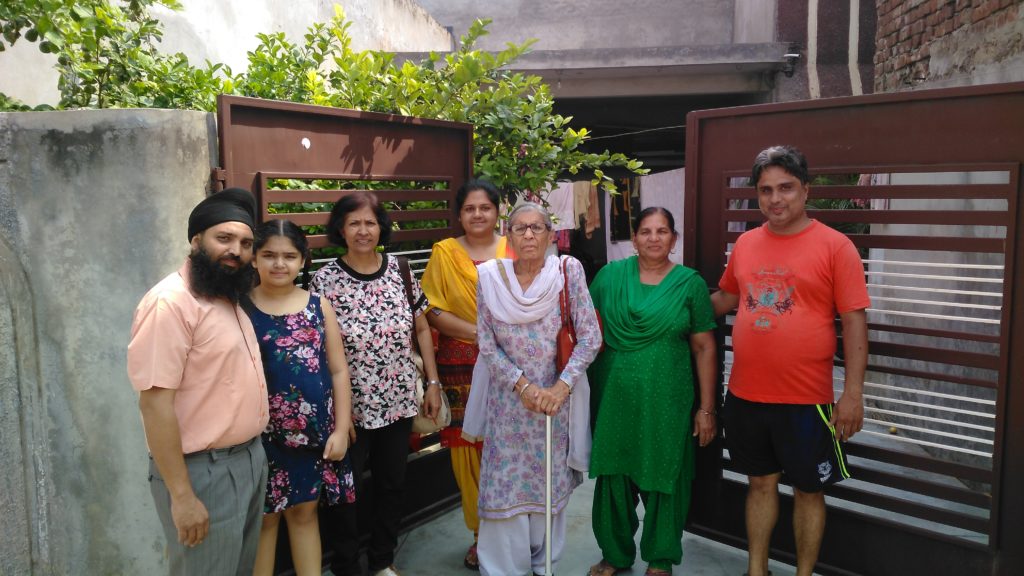
My mother was the most spirited person I have come across; she was the life of the gathering and no one could have ever suspected her failing health that would lead to her demise so suddenly. Looking back, all of us close to her, now feel that perhaps she knew that time was running out for her. So, last year (2016) starting the month of September, she did two things: first, she went on a tour of Punjab to meet relatives including her elder sister Raj Bans Kaur in Ludhiana and younger sister Surinder Kaur in Nawanshahr. During this visit, she also went to her parents’ (Pitaji’s and Beeji’s) place in village Urapur near Nawanshahr in Punjab:
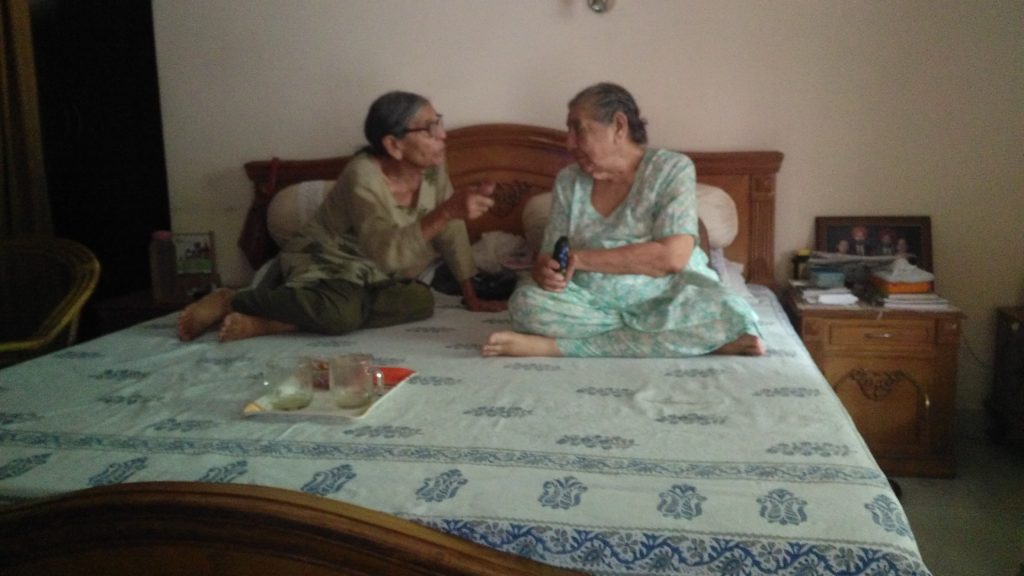
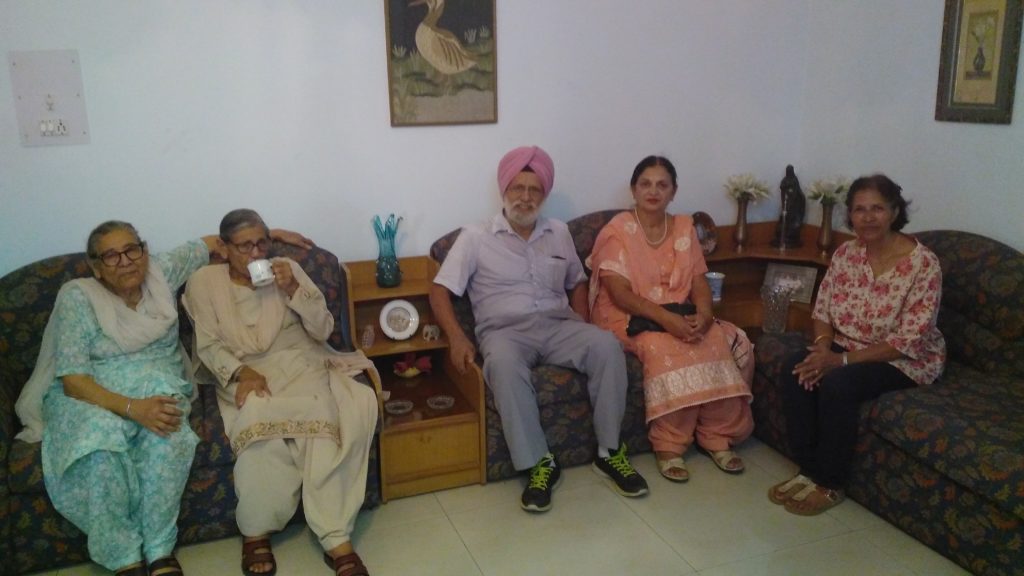
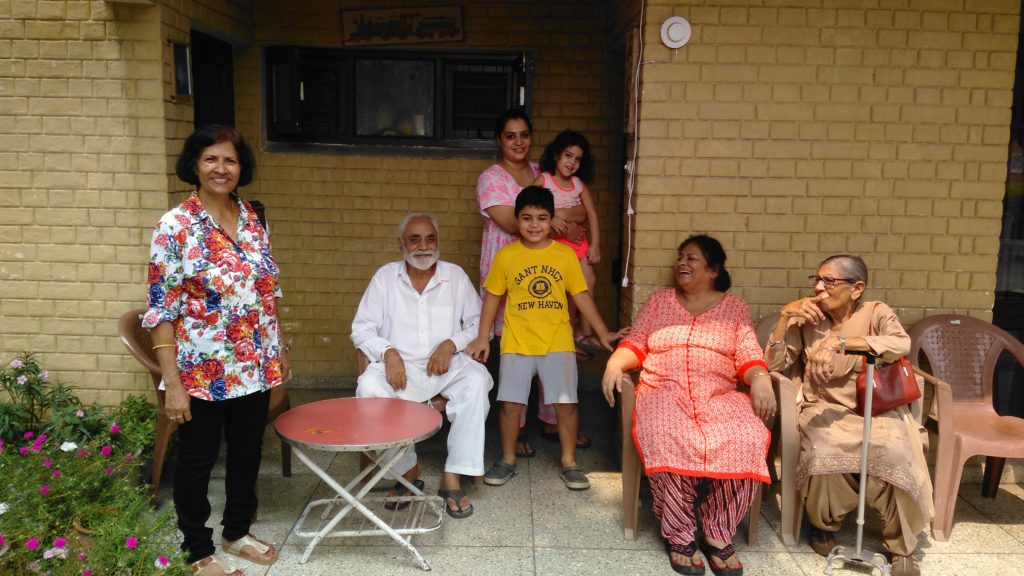
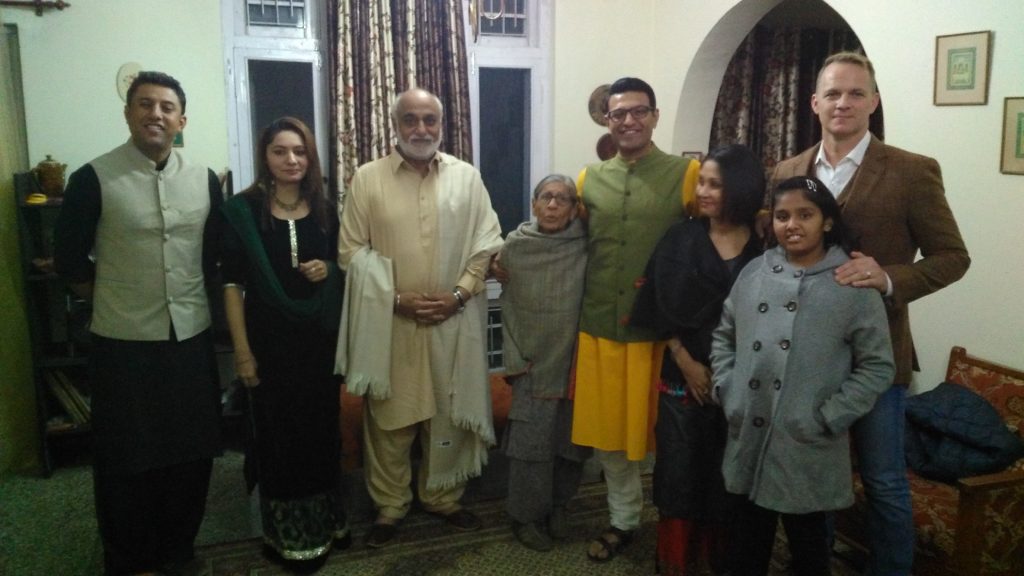
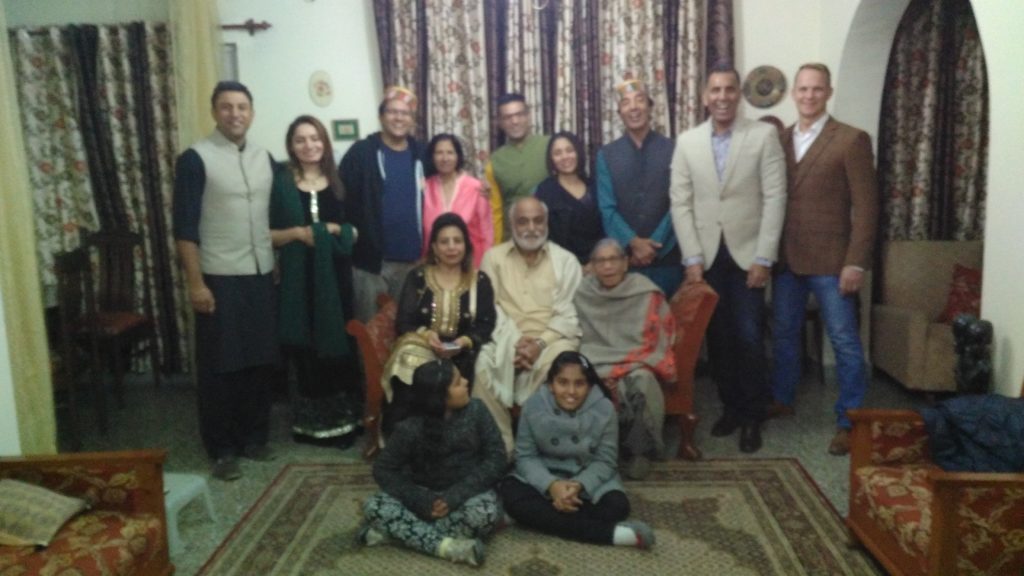
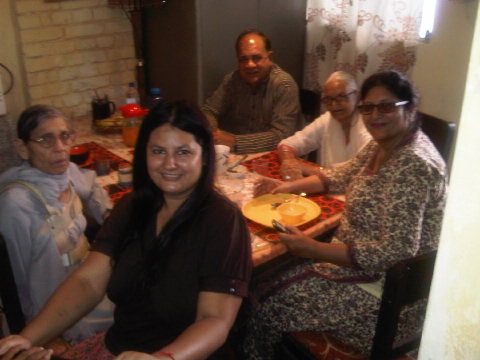
She insisted on having the larger family over for Diwali at Kandaghat last year. My sister Mona, her husband Maharaj, their two sons Ankur and Ankit with Ankur’s wife Simran and two daughters Mohiraa and Noor, my younger brother JP and his partner Chuck, my wife Lyn and son Arjun attended the get-together. This was the last Diwali at which she was physically present:
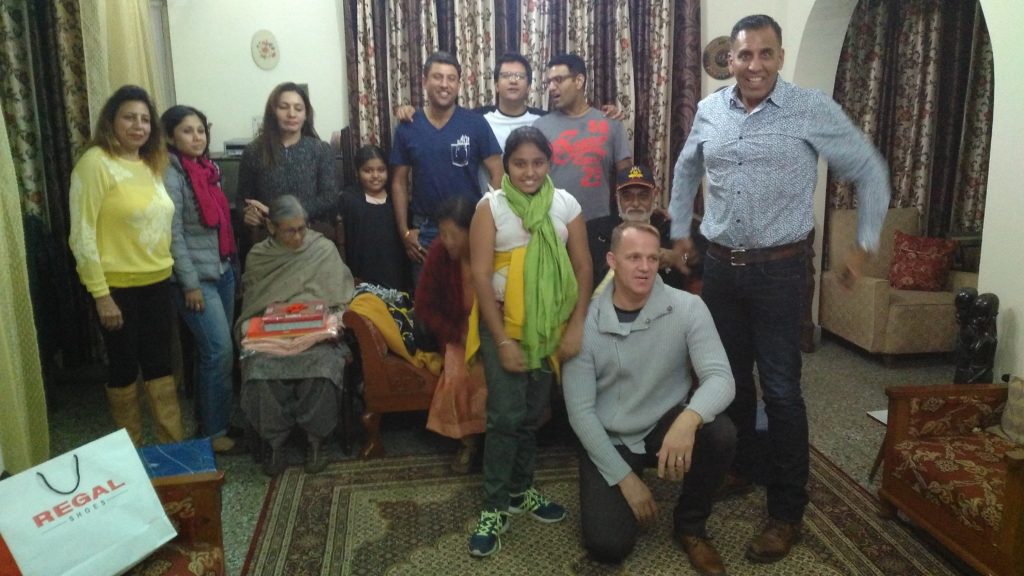
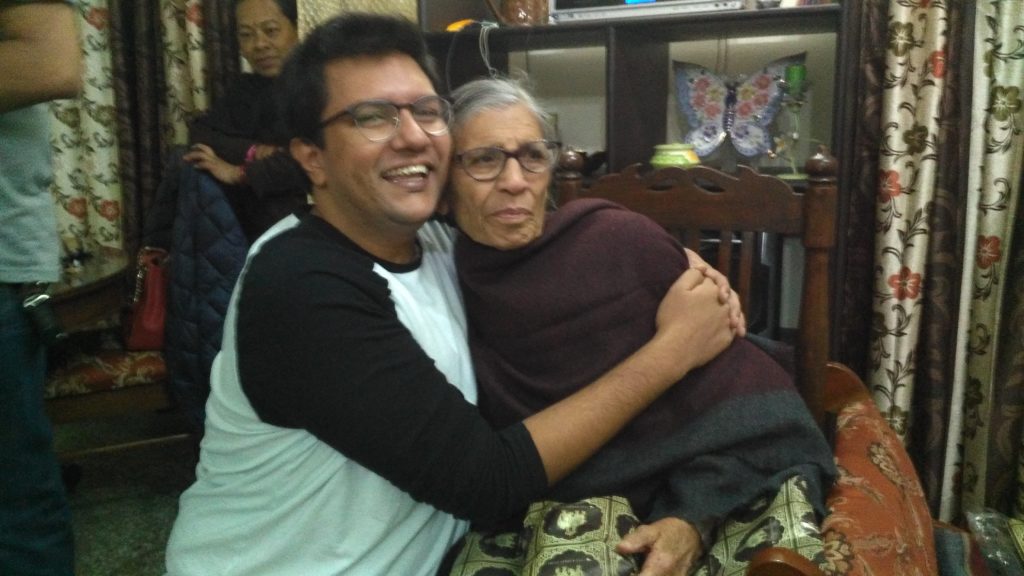
The fourth is that my mother was the connect between me and the larger family both on her side as well as on my dad’s side. I had been away to the Navy for long and hadn’t seen many of them for years. She, on the other hand, rejoiced in meeting relatives just as my dad did when he was alive. In my dad’s and mom’s memories, I intend keeping in touch with all these relatives who were so close to both of them.
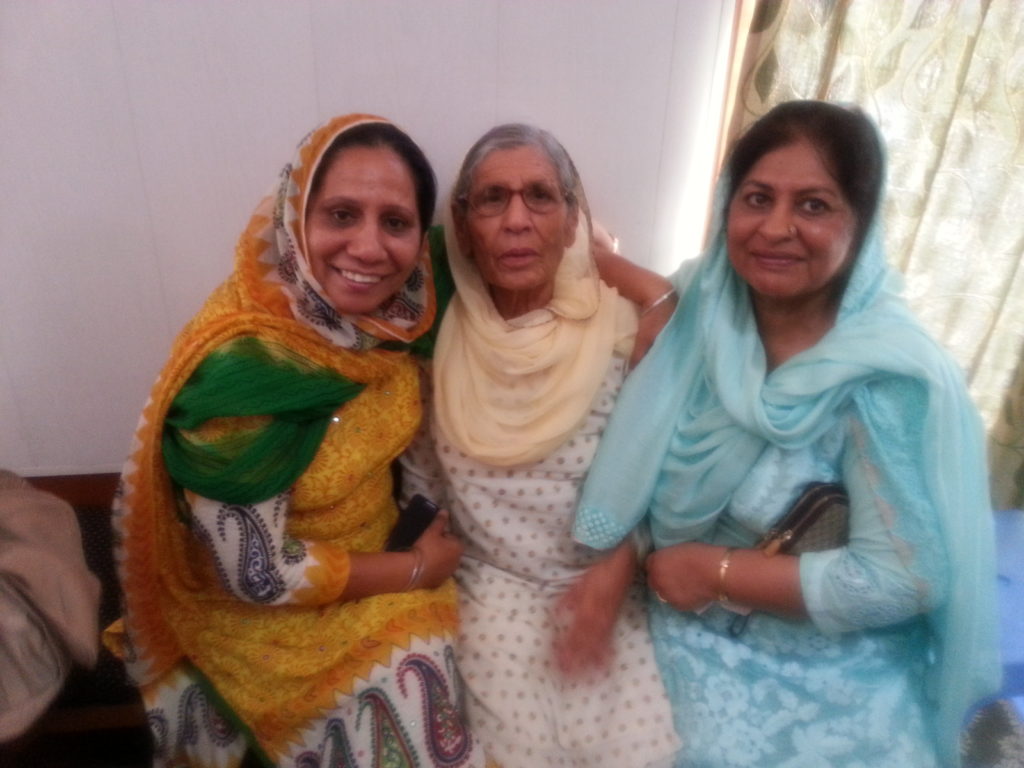
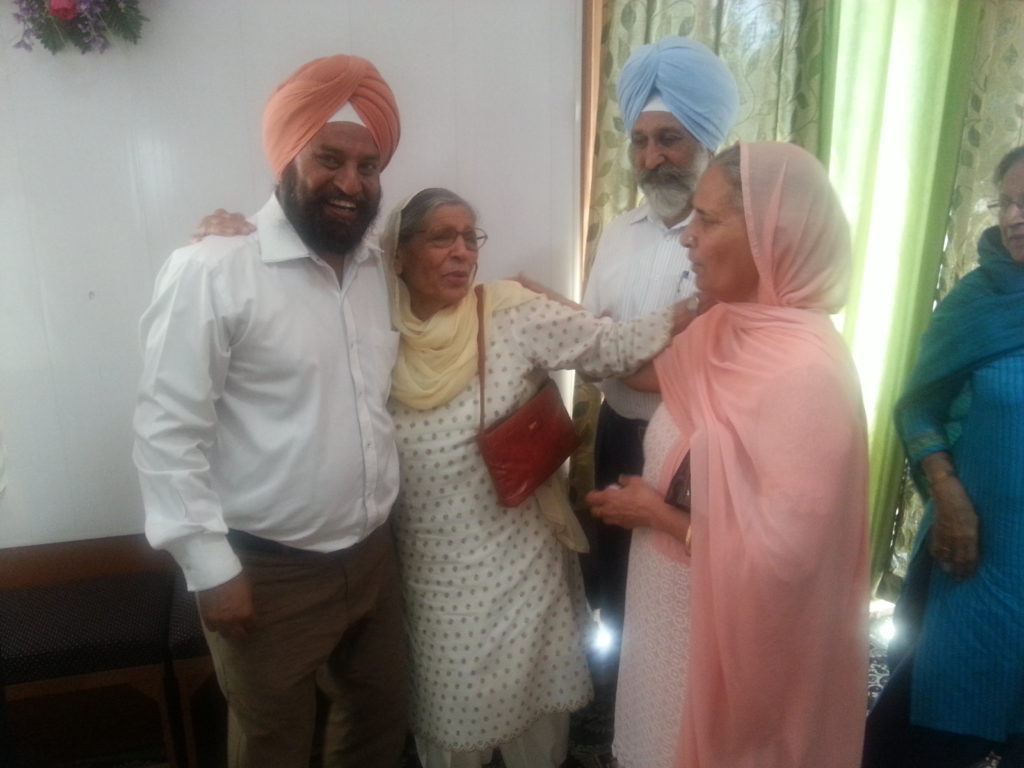
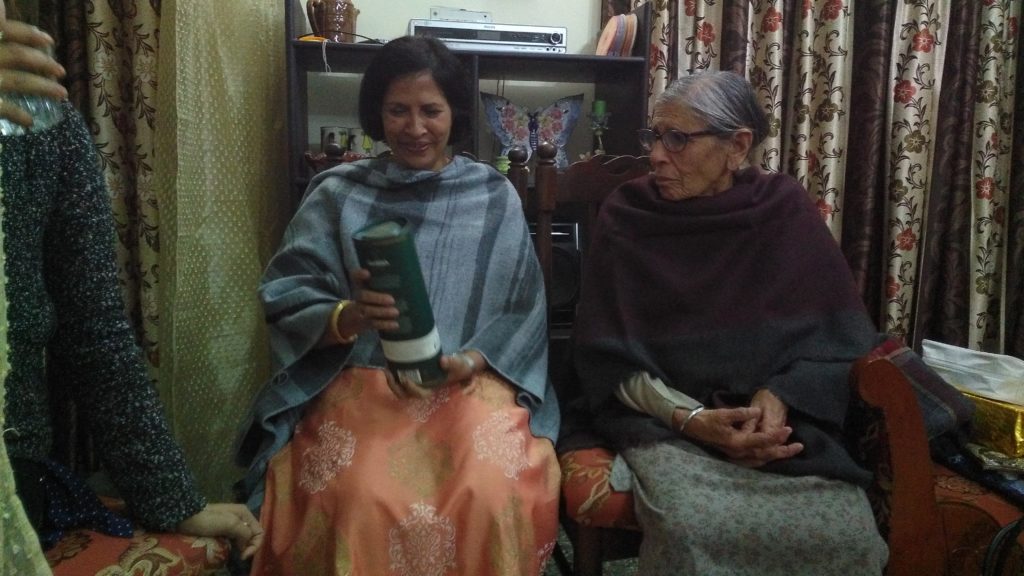
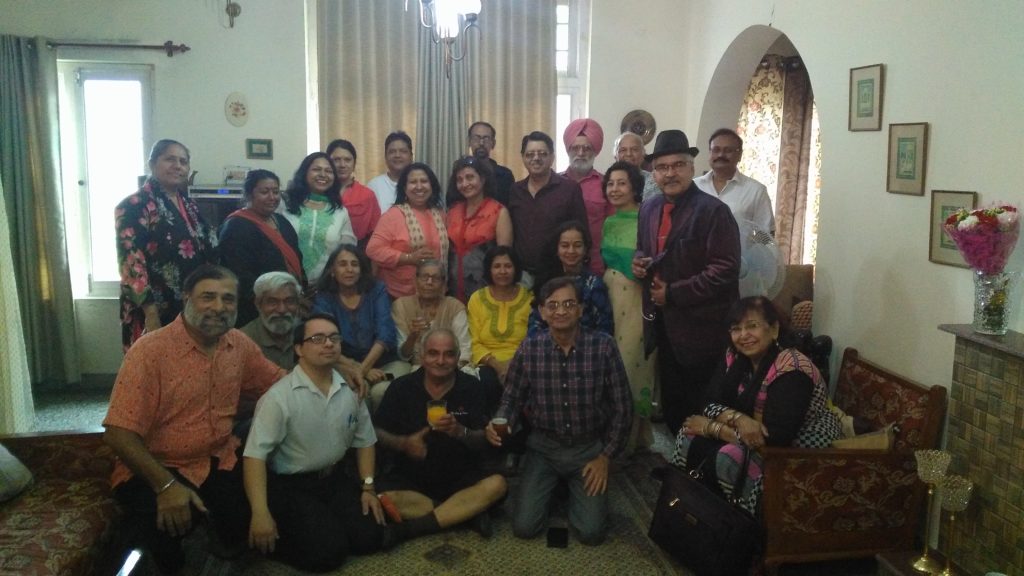
From the last year onwards, we started having Annual Meets of my Facebook Music Group ‘Yaad Kiya Dil Ne’ at Kandaghat. She liked my music friends and in turn all of them were captivated by her. Here are some of the pictures of this year’s meet:
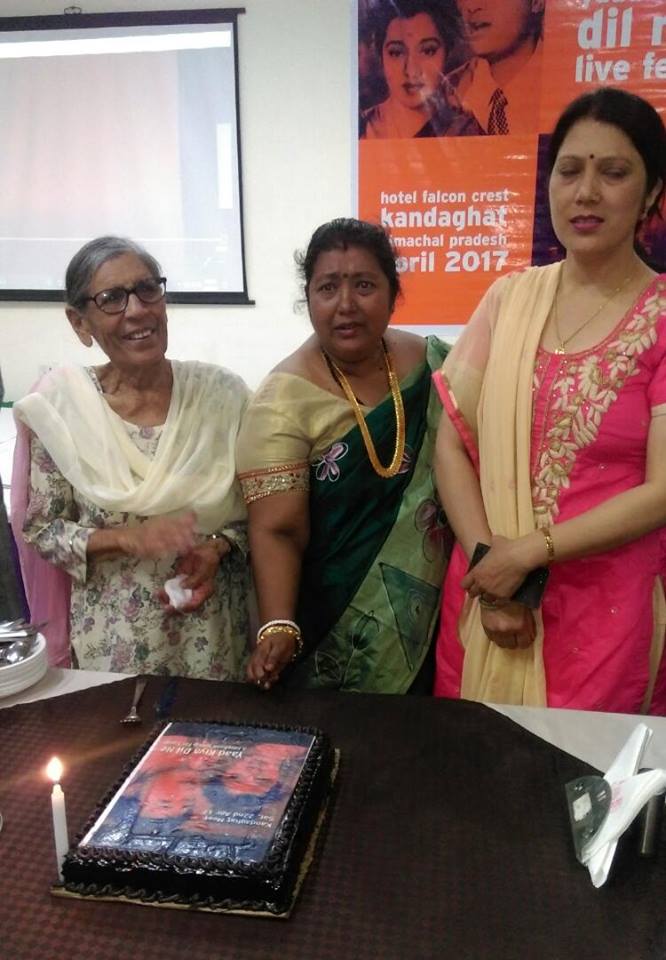
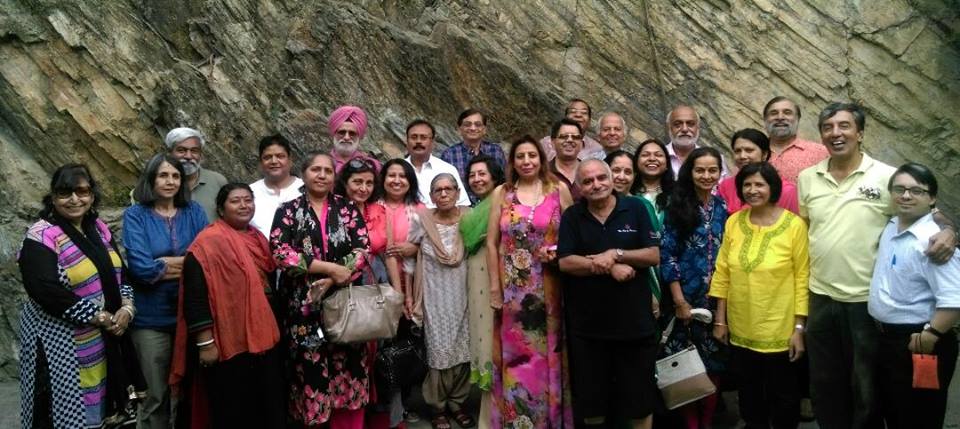
In the last years YKDN Meet, Raj Dutta put up a video about the meet with the song: Woh bhooli daastan lo phir yaad aa gayi (That forgotten tale, lo, once again I recall it). I had asked him to take it off because it sounded so ominous. However, today, when mom has suddenly left us, its lyrics echo in my mind as the most appropriate to remember mom by. These were penned by Shimla boy Rajinder Krishan (Krishan being in my mom’s name too!) and composed by Madan Mohan. Lata Mangeshkar sang it in the movie Sanjog (Coincidence):

https://www.youtube.com/watch?v=_ZSmIJo6h5c

I particularly like the lines:

बड़े रंगीन ज़माने थे, तराने ही तराने थे
मगर अब पूछता है दिल, वो दिन थे या फ़साने थे
फ़क़त इक याद है बाकी, बस इक फ़रियाद है बाकी
वो खुशियाँ लुट गयी लेकिन, दिल-ए-बरबाद है बाकी
कहाँ थी ज़िन्दगी मेरी, कहाँ पर आ गयी
वो भूली …
(There were colourful times, there were songs,
But now my heart asks, those were the days or merely fables,
Only a memory remains now, only a prayer remains now,
All those joys are over now, only deserted heart remains,
Where was my life (at one time), where it has reached now?
That forgotten tale….

The difference is that this tale would never be forgotten as long as I live.
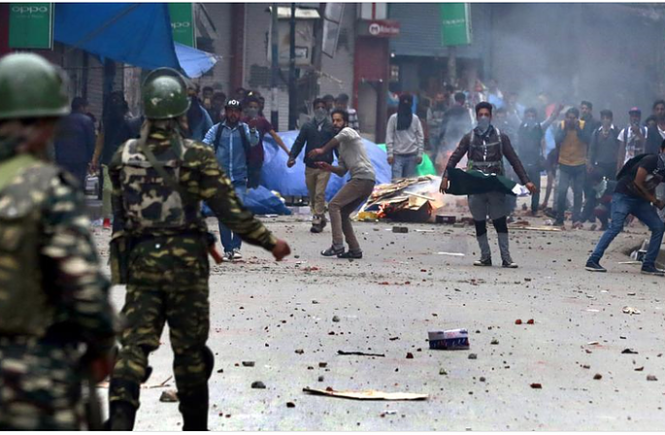


THEY ALSO SERVE WHO HAVE STONES PELTED ON THEM

Mary (curiously an anagram of Army, the institution being discussed here today) of Magdala (a city on the southwest coast of the Sea of Galilee) or just Mary Magdalene was being stoned by a mob because of her sins (particularly adultery; the Army doesn’t have adultery, it has infantry) and that’s the time Jesus came to her rescue and said, “The first stone should be cast by one who hasn’t sinned”. One by one, as per the gospel, they all went home and left her alone. Later, she was witness to Christ’s Crucifixion and Resurrection.

In sharp contrast, we have any number of Indians and Indian political parties who indulge in stone-pelting (physically and figuratively on the national media, for example) against the Indian Army and some of them rejoice in this carefully acquired hobby. Jesus, and for that matter Mohammad, Rama, Buddha, Nanak and others all keep quiet. It is not them but the Army that is being crucified.

The dark humour is in the fact that some of them are the same people who cannot exist in those hostile situations even for a minute without the army directly or indirectly protecting them. However, at the quickest opportunity they take up such issues (without understanding them at all) as repeal of AFSPA or Armed Forces Special Powers Act.

And what is or are the sins that the Army has committed to earn this opprobrium? I can think of a few; you are welcome to add more:

  • It is ensuring the territorial integrity and sovereignty of our nation and that’s not to the liking of the vested interests that would like to see this great nation being broken up into fragments.
  • Through elaborate, exhaustive and nerve-racking training, its men and women have become shining examples of discipline, valour, uprightness and patriotism, the very attributes that stand in the way of people who revel in chaos, avarice, cowardice and ill acquired comforts.
  • It has values that the countrymen hold dear and there is a dire need to bring it down to the gutter that some of these people find themselves in. “Will teach these holier-than-thou b____s not to try to be different“.
  • It has been victorious in very war that was thrust on it and come out in flying colours in any task or situation it was asked to handle. “It is high time these s.o.b.’s taste defeat” (“what do they think of themselves?”)
  • It believes in the tenet of ‘selfless-service’, which is ‘foreign’ to self-aggrandizing lot.

In all this, no one has ever thought of the scenario wherein the army says (not that it ever would, with its self-imposed restraint and discipline): “Enough is enough; let them fend for themselves in all situations other than foreign-aggression.” (Please read: Long Time No War, for example)

The politicians and bureaucrats have a quick-fix solution to anything and everything by calling the armed forces to handle internal situations that have been caused by the acts of omission and commission of those who should have been directly responsible for handling those situations. In my essay ‘Identification Of Friend Or Foe In Indian Maritime Scenario’, I had brought out how the Indian Navy was wrongly blamed for the failure to prevent 26/11 Mumbai Attacks and how, post that, it is the only leading navy in the world made responsible for coastal security. Having been made responsible, the Indian Navy personnel even went about conducting census of fishermen in the coastal states to bring a modicum of order in the near chaotic scenario that prevailed. They presented this data to local authorities whose job it was to conduct such census.

The joke going around in the naval circles was and is: ‘Anytime you see water, think of us‘.

It is the same with the army on land.

Recently, my wife and I undertook a trip to Kaza in Spiti district of Himachal Pradesh from our home place in Kandaghat. Roads were alright up to Rampur Bushair, Jhakri and Karcham. But, from there onwards it was an ordeal. There were only three kinds of roads: the good and wide metalled roads (about 10 percent); roads that could be distinguished from khuds and nallahs with a little closer scrutiny; and finally, what I call as environmentally friendly roads: ie, no change from their original condition before the roads were constructed.

In many places, after Powari and Reckong Peo, we came across army jawans having been placed at really bad stretches of roads. Their purpose? Hold your breath – to prevent injury to people from falling and shooting stones!
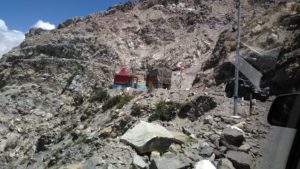
You don’t find humour in this? Well I find enormous humour in this: these are the same people that people pelt or hurl stones at and these are the valiant men who think nothing of risking their own lives to keep you from getting injured and/or killed!
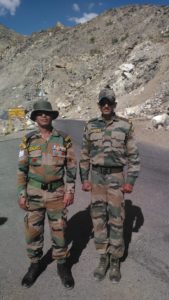
These are the kind of valiant men (my friends Durga Dutt and Amit Kumar Rana) on which stones are pelted and yet they think of only saving the pelters from injury.

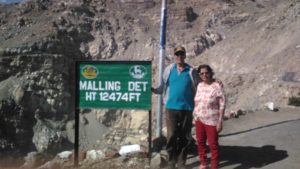
We had lunch with the army at a palce called Sumdo (we cross over from Kinnaur district to Lahoul and Spiti district there). The place is free of all vegetation and there are bald ills (the distant ones had still snow on them). When we were driving back to Malling, we found a Malling Detachment of army men, being posted there in a hilly road of shooting stones, to keep people safe when it is not even their task to do so.

They offered my wife and I hot tea and Good-Day biscuits and said, “Saab thak gaya hoyega” (Saab must be tired).


I didn’t know whether to laugh or cry. I am giving you my first unadulterated reaction (and please forgive me if it is a little unparliamentary language):

“Bloody ungrateful countrymen”.

P.S. One of the WhatsApp messages going around is about one of our countrymen complaining to the waiter about stones in the rice-pulao he had ordered. The waiter clarified: “It is Kashmiri pulao, Sir”.


NAVY, THE SILENT SERVICE THAT VERY FEW UNDERSTAND

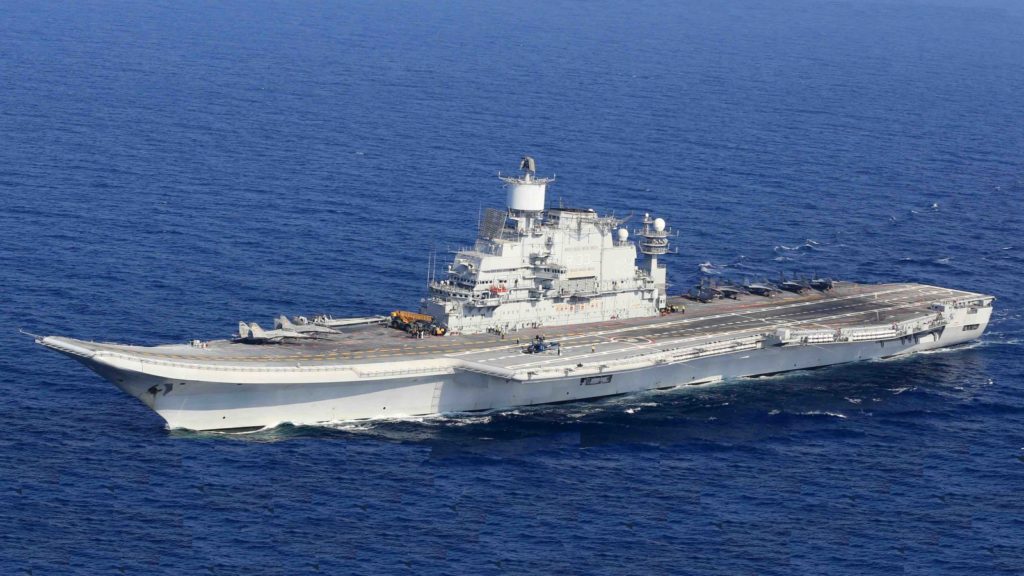
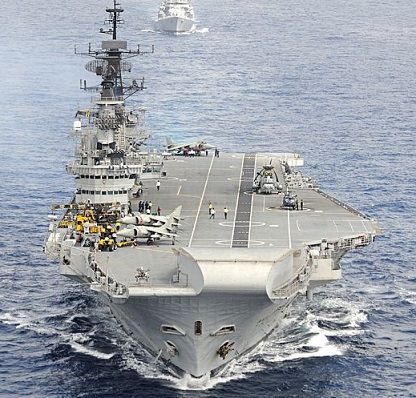
Now that we are less than two days away from decommissioning Indian Naval Ship Viraat, the world’s oldest warship in active service, perhaps it is time that we take in how huge are things at sea in comparison to what we are used to ashore.

I remember when I was undergoing the Army Higher Command Course in 1996-97 and it was being discussed how two-third of India’s energy imports are in the Gulf of Kachchh (GoK), within easy reach of the Pakistan Navy and Pakistan Air Force, it was discussed as to why should we have these imported there? Why couldn’t we transport it “by lorries” etc to safer places? When I mentioned that a lorry carried up to about 20 tons of fuel and that an average VLCC – just one VLCC that is (VLCC – Very Large Crude Carrier) – being received at GoK ports was anything between 100000 tonnes to 250000 tonnes, this was the first time that their minds were exposed to something as large as this.

A VLCC at a Single Buoy (or Point) Mooring in GoK

There is, therefore, no shame in admitting that one is almost totally at sea whilst discussing matters of the sea. Even some of the Navy guys don’t understand the enormity of things of another branch or department.

Take the case of a ship at sea wanting to exercise with a submarine that she had met by chance encounter. The submarine signaled back, regretting her inability to do so since ‘she was charging her batteries‘. At this, the ship signaled to the submarine that she would approach close to her and batteries could be transferred to the ship for charging by her.

Didn’t understand the joke? Well, a submarine displaces about 2000 tonnes. Roughly about one-fourth to one-third displacement of the submarine is due to her propulsion batteries. These are the batteries that the submarine charges whilst on surface or at periscope depth so as to provide her with underwater propulsion. And, the CO of the ship was asking her to transfer them to the ship for charging! A submarine’s battery is not a small, unitary device like a car battery, but a massive collection of huge individual cells gathered in a large compartment in the lower section of the hull!

Cut-up view of the Russian Kilo-Class submarines (Indian Sindhughosh class) Observe the rows of batteries at the bottom (Pic courtesy: defense-update.com)

Viraat is a light aircraft carrier (only about 25000 tonnes). Yet she carries with her, in the form of her flight deck only, about 3 acres of Indian sovereignty wherever she goes. And she has done this, until 23 Jul 2016, when she sailed last, 1,094,215 kilometers of passage around the globe (Vikrmaditya is about twice her tonnage and more than 4 acres of flight deck). Viraat is about a quarter of a kilometre long and you add another about 60 metres for Vikramaditya! Anything between 28 to 33 feet of the ships are underwater. Vikramaditya, for example, has 22 decks (equivalent to ‘storeys’ of a building).

INS Vikrmaditya (Pic courtesy: jeffhead.com)

However large a ship may be, it can never match the enormity of the sea. Ask a pilot, for example, and he would tell you that at sea, landing on Viraat appears to be like landing on a match box.

In one of the theatre-level exercises, being the Director of Maritime Warfare Centre, I and my staff were in the Control Centre and also asked to analyse the exercise. One of the ships (my ex ship Ganga) sent a report from sea of not just detecting (on radar) Viraat, but actually sighting (imagine sighting with naked eyes) Viraat at close quarters. The CO asked his ship’s company to come up on the upper decks and they not just saw Viraat but some of them took pictures too!

We married the tracks in MWC and found that Viraat was 180 Nautical Miles away at that time. And yet, even in the debrief, Ganga CO insisted that they ‘saw’ Viraat!

This is just one example of ‘illusions‘ we see at sea.

You can’t blame an Awkward Sentry who didn’t come to know that the ship had sailed off in my earlier post Awkward Sentry.

Ladies and gentlemen, it is high-time that we start learning about the silent service, the Indian Navy, the fifth largest Navy in the world that is about to decommission the oldest active warship in the world: INS Viraat.

CHEST PAIN!

When I was a Lieutenant (another common-sounding rank with the Army and hence eligible to be called ‘Lieutenant (I.N.)’ by them (Please read ‘Captain (I.N.), Is It A Rank?’), I once reported with Chest Pain after playing a game of squash racquets. I was in an establishment called INS Agrani (Navy’s Leadership School for Petty Officers), in Coimbatore. I reported to the No. 6 Air Force Hospital there (as I go along, you will see how mine was a totally tri-service experience). I had assumed, with my ignorance-is-bliss-attitude that chest pain was like any other pain; eg, pain in the throat, leg, hip, arm and head. Little did I know that docs, friends and relatives go into a tizzy as soon as you utter the words chest pain. Before you can say anything else, Medical Specialists and Cardiologists take positions around you like fielders in the slips in a cricket match; telling you how you should reduce stress levels, how to put a pillow under your head and how to take life easy and just as it comes.

After I survived the first onslaught by the concerned docs, I was sent on sick leave to my home station Shimla in a medical category so low that one had to be on one’s knees to find the ruddy category.

Anyway, Shimla’s Military Hospital, at that time, didn’t have a qualified cardiologist (apparently people in hill stations have very sturdy hearts) and at the end of my leave I was asked to report to Army Hospital, Delhi Cantt for my re-categorization.

This was the biggest eye-opener experience for me. The Medical Ward was full of officers who had reported with Chest Pain. I learnt that all of them were getting their houses made in NOIDA and reporting with Chest Pain ensured free boarding and lodging in Delhi. The docs in the Army Hospital were following a don’t-trouble-us-and-we-shall-do-likewise policy. Officer-patients at night would tell grateful tales (for me horrid tales in my condition) of how they had stayed there for months without being seen by a doctor.

Chest pain ensuring free boarding and lodging

I made a lot of noise and Colonel D (I better not give the full name), the Cardiologist, agreed to see me on the next day of my reporting to the hospital. In the hospital, I discovered that even Brigadiers and Generals were scared of him and waited patiently outside his clinic cum office for hours altogether. If Colonel D would get annoyed, he could spoil an officer’s otherwise brilliant future by finding something wrong with his ECG or worse, a murmur in his heart.

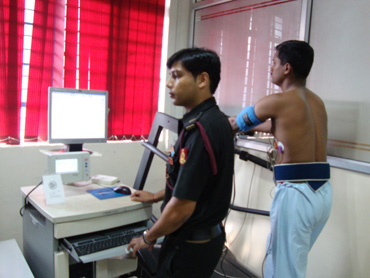
After being sobered by such tales, I entered his office with trepidation and he asked me to bare the upper part of my body and lie on an examination table behind a screen. One Medical Assistant came and put jelly at various spots on my chest and after that went through the process of attaching the leads of the ECG at the jellied spots. These kept coming off as I breathed in and out; the breathing having become harder with the scare of the procedure and anxiety about the outcome.

Anyway, I maintained my calm with the visions of my Medical Category finally rising to its original lofty height. Just at the time when the MA was going to call Colonel D to have a look at me, some docs entered the room with reams and reams of ECGs.

Colonel D enquired from them if these were the ECGs of a very sick patient Subedar Swaran Singh. Through the slits in the screen I noticed that they all nodded agreement.

Colonel D took the first ECG and said, “I see some improvement from the last one.” At this they gave him more and more ECGs and he nodded encouragingly that the patient’s condition was indeed improving. Finally, when they finished showing him the last one, Col D enquired, “So, how’s the patient now?”

At this, one of them solemnly said, “Sir, the patient died this morning; we are still trying to figure out why.”

My breathing stopped altogether. For once the ECG leads on my chest stood their position and stopped falling off.

Epilogue: I got my category of a healthy young man after undergoing several tests such as TMT and sitting in a Decompression Chamber. I continued having a T-inversion in my ECG all throughout my life and even now. However, I cannot tell you enough how mortified I was that I would have suddenly improved ECG like Swaran Singh, and then conk off without anyone knowing why.

ADIEU PATRICK DESYLVA – MY DOCTOR, FRIEND AND AN ANGEL

Even though I am married to a Catholic, I never considered 13 to be an unlucky number. From now onwards, I have reason to hold it as an unfortunate day. For it is on this day in this month (February) that I lost my doctor, friend and God’s own angel on earth: Patrick DeSylva. He was (it is difficult to think of him in the past tense) special – very special – and it was shocking to get the news on last Monday evening that God wanted Patrick to be nearer to Him than we wanted him.

My Association with Him

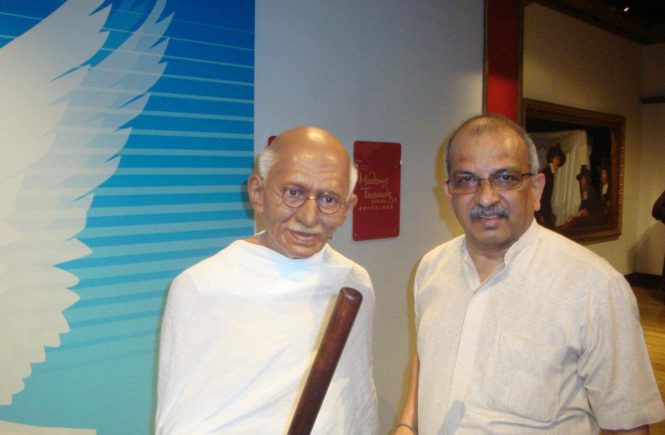
They say that people come into your life for a reason. Long back I was convinced that Patrick (Paddy as some of us called him) came into my life to prove to me that whilst I thought God was unkind to me for having given me a life-long disease Psoriasis, He was most kind by giving me an outstandingly reliable doctor, guide and advisor whom, on one plane I could hold affectionately as a friend and on another plane look up to him almost as a saint sent on earth by God to do His work (If you see his picture above with the wax statue of Mahatma Gandhi when he, Patricia and Rohit (wife and son) visited Hongkong in May 2012, it would not be surprising to see more than slight resemblance). Patrick was indeed Mahatma to all his patients. Desylva was his surname; it could have been Nightingale, for, even as a very senior doctor in the Navy’s Hospital in Mumbai, Asvini, he would personally attend to patients’ (both officers and sailors) lesions and other skin afflictions.

I became his patient in 1994 when I was second-in-command on INS Viraat. His clinic was in the old building next to the gate. He was a Surgeon Lieutenant Commander at that time. It was the first time I had seen such large crowds of patients waiting. Later, I was to know that even if there were other dermatologists, people preferred to wait for him to see them. He took cuttings of my nails to rule out fungal growth and asked me to carry out an RA Factor Test to rule out Rheumatism and soon he diagnosed it as Psoriasis with Arthropathy.

As I saw more and more of him, I was to realise that despite the shock of my life-long affliction, God had compensated me by giving me the best doctor ever. His presence, his talking to me and his prescribing medicines and advice to me, all were always reassuring. In nearly two decades of my being with him (though I kept getting transferred all over and he too did the same), there were many instances when, however busy he was, I went to see him just to be reassured and not to obtain any medicines or treatment. He probably knew it but never looked edgy or gave me less importance. And, later when I compared notes, I found that there were hundreds with whom he was into such arrangement.

Amongst many memories of his, I shall take out two, just to tell you what sort of doctor he was. In the year 1995, I got my first attack of Urticaria (Hives). I drove to Asvini, at night, for emergency treatment. He was not even on duty; but, within no time he was there attending to me. It is as if he had left a word that he should be called for any of his patients.

The second incident is even more poignant for me. When Patrick’s own condition deteriorated, which finally led to his demise (it was sometime in 2009-10 that he was diagnosed with Parkinson Disease), I had to start seeing another dermatologist. However, three years ago, when I was admitted to Asvini for severe gastritis, I found him visiting me at my bedside having been brought there on a wheel-chair. Whilst I talked to me, he stared somewhere at a distance. However, at one point there was a flicker of recognition. Little did I know that that would be the last flicker of recognition that I would see in him.

Patrick’s Career

Patrick was born on 17th March 1955. Coincidentally, Patricia (Puttu), his wife also has birthday on the same date. He was a student of St Theresa High School, Bandra from Jun 1960 to Apr 1971. He joined St Xavier’s College in June 1971 for BSc (Chem) (Honours) and graduated in Oct 1975. Soon thereafter, he got selected for Army Medical Corps (AMC) and graduated from AFMC (Armed Forces Medical College, Pune) Grad School in June 1980. He specialised in Dermatology thereafter and that’s how I saw him from 1994 onwards. Patrick was so fond of his AFMC roots that he never forgot to wish his colleagues and friends from there on the AFMC Day on 04 August. And this continued even after his Parkinson Disease (PD) had progressed extensively. He retired as a Surgeon Commodore. I was waiting to see him as a Commodore. But, sadly, PD came along and put a sudden end to his career and life. We all have to bow to God’s will. However, one still fails to understand why God would give Parkinson to someone like him. All of us entertained fervent hopes of Patrick’s full recovery. Here is what a friend, Glen Ferro, wrote to him on FB on 30th Mar 2016: “Hey Paddy. Have been meaning to talk with you and share my written testimony with you. God healed me of CANCER- NHL 3rd stage high grade diagnosed in 2007.
If you sms or WhatsApp or post me your email address I could send you the soft copy. If HE did it for me HE can do it for you. Godbless.” Alas.

Personal and Family Life

Patrick’s is a very closely knit and private family and I have Patricia’s permission to intrude and share a few photographs, when I told her that without this my tribute for him won’t be complete. I must begin by acknowledging that Puttu always stood by him in this entire period of trial that God made them go through. I have seen them occasionally in social gatherings including at our house in Ahilya building, before I retired in Feb 2010. She exhibited enormous courage, love and compassion to renew memories with him by visiting places even when his condition worsened.

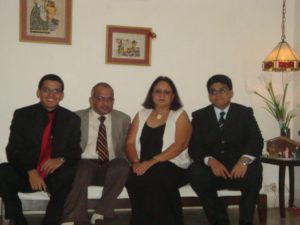
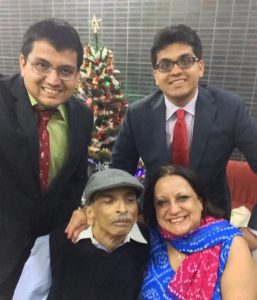
Patrick completed his specialisation from AFMC in June 1986. Before that, on the 6th day of May 1986, he and Patricia married in Pune. Rohit was born on 25 Mar 1987 (I am thankful to Rohit for having put up the accompanying lovely picture yesterday). Nikhil, the younger son was born on 24 Nov 1988 in Kochi. Both grew up to be handsome, loving, intelligent and well-mannered children in the likeness of their parents. Indeed, every year, for Christmas, we all looked forward to seeing the family picture, next to the X-Mas tree. Here is one each from the happier days (year 2010, before the PD started having effect on him) and the last one in Dec 2016:

Being a doctor, Patrick would have known how the PD would start affecting him together with dementia and depression. Hence, after he joined the Facebook on 29th Mar 2009 (having been prodded into joining by a friend Rita Villaneuva), many of his posts were full of his scores on online video games such as Burst the Bubbles, Mindjolt, Angry Birds, and Zombie Frenzy, so as to keep his mind active. I took my son Arun to see him once (Arun has been a video gaming champ); Patrick and him happily discussed video games.

On his 60th birthday on 17th March (Puttu has her birthday on the same day. She is four years younger)

We would wish them on their birthdays (same day: 17th March); sometimes Patrick on Patricia’s timeline and vice-versa. Both would very graciously respond to the birthday greetings. It was a treat to receive his message despite the shakiness and slowness of his movements due to PD. How we all prayed for him.

And all the while, slowly but relentlessly the disease progressed though there were occasions and moments when it didn’t look like the disease had any effect on him whatsover. The 12th Dec 12, whilst attending Rohit’s graduation convocation, appeared to be one such day:

All the cheer that this brought in his life was soon wiped away  when Patrick lost his father in March 2013; as it is Parkinson Disease has the symptoms of anxiety, dementia and depression. In 2012, the family (mostly because of Puttu’s resolve and dedication) kept a brave face by visiting Hongkong, Macau and Shenzhen (Guangdong) in June of that year. Anyone looking at the pictures can’t believe that he is suffering from a dreadful disease:

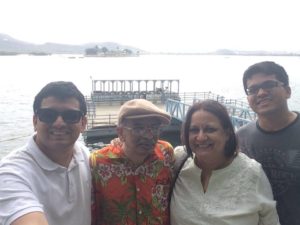
The most poignant picture (poignant now that Patrick has left us) is of them visiting Udaipur to celebrate their 30th wedding anniversary on 6th May 2016. The picture is representative of Puttu’s, Rohit’s and Nikhil’s desire to see him as happy as possible. Indeed, there is another picture of them going to Goa together to celebrate his 60th birthday.
Patrick that We Would Remember

Whatever be his patient’s circumstances, Patrick always talked to them with a smile that started slowly (almost imperceptibly) around his lips but soon spread to his face and to the faces of his patients. He always brought hope to all of us even though in the end he landed himself in a hopeless condition. Patrick was an epitome of that small minority who hide their own pains in order to bring cheer to others.

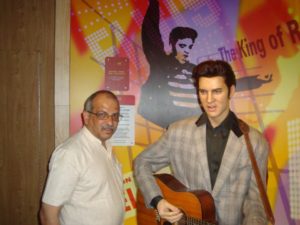
We were at Vice Admiral Lowe’s house once (not too many years back) and Patrick took up a guitar and it surprised me (I didn’t know about this attribute of his) to hear him play and sing a lively song. Honestly, he appeared more appealing to me than Elvis. How was I to know that Patrick would leave us early like his singing idol did?


Patrick was deeply religious. What about comparison to Saint Patrick, the Apostle of Ireland? Saint Patrick’s Day is observed on 17th March, which is Parick’s (Paddy’s) birthday and the day when Saint Patrick died. It is difficult for me to get over the interpretation that on the day when one saint died, another was born. Here is a family picture on the Saint Patrick’s Day in 2016, less than a year before Paddy died:


Dear Patrick, knowing you, I won’t be surprised that you would have got to work in heaven too; after all people require to be cared for everywhere and you are always there to provide a helping hand. Since I have enough evidence with me that you would have, I have to tell you that my Psoriasis requires to be attended to again and like all your patients, I wish to be seen only by you.

Please don’t fail (you never did) all of us.

MARRIED TO THE MOB!

Ladies and gents, guys and gals,

Did any of you see this rip-roaring American comedy starring Michelle Pfeiffer and Matthew Modine? Michelle Pfeiffer did the role of her lifetime as Angela de Marco, wife of gangster Frank “The Cucumber” de Marco. Matthew Modine acted as Agent Michael “Mike” Downey, the undercover FBI agent assigned the task of investigating her mafia connections.

So, you have understood the name but must be wondering what has this got to do with my Facebook Group ‘Humour In And Out Of Uniform’ or HIAOOU for short? Well, if you look at the poster, you will read the words: “They’re her family….. whether she likes or not”!

And now you’d start seeing the connection! We have any number of these young, wistful girls who marry armed forces officers because they are impressed by the uniform, smartness and the daring. Star-stuck, they keep dreaming of the time they would be alone with the husbands….however, the mob never leaves the husband. It takes sometime for it to sink with them that the mob is the family.

My wife and I, for example, married in love (some of you must have seen and read some of my posts about us, eg, ‘Lyn And I – Scene By Scene’ and ‘Navy Couples – Made For Each Other (A Valentine’s Day Post’). I cautioned her that during our wedded life, friends may land up home any time; but, I don’t suppose the full impact of it registered with her…….well, until, they actually landed up! As I offered them drinks and told her to come up with some small-eats, she whispered to me, with more than a slight edge: “But, we’ve had our dinner long time ago.” After 35 years of being with the ‘family…..whether she likes or not’, this initial comment of hers appears downright naive to her only, now! She can now hold classes for ‘young, wistful girls marrying armed forces officers‘ with this opener: “Decades before Airtel got this ad, the faujis knew that ‘Har ek friend zaroori hota hai‘. There is nothing like rustling up left-overs for the friends; your husbands and they would demand the best. So, you ought to be prepared at all times.”

Now the other side!

I was posted as a bachelor officer in Navy’s Leadership School for Sailors: INS Agrani in Coimbatore and CRJ was our XO (Second-in-command). A few of us (four to be exact) were bachelors and, in the nights, we raided married officers houses in rotation. None of the ladies needed any classes to understand how to treat us; they were the epitome of hospitality, affection and generosity.

One day, CRJ, in order to (re)establish authority as XO (second-in-command is after all second-in-command!) told us in mock-anger that we created too much ruckus in his house during our last raid. He was, otherwise, the sweetest of the souls and so was Mrs. J. We, the bachelors, had a conference and decided that probably Mrs. J didn’t like our boisterous nature and hence CRJ’s bemoaning. So, we decided, (as in naval slang) ‘with immediate effect‘, to skip CRJ’s house during raids.

Ladies and gents, this continued for two weeks. We raided every other house but CRJ’s. After this period, we were urgently summoned to CRJ’s office. As we entered, he closed the door behind us and then – hold your breath – he broke down completely! He said Mrs. J had been berating him every night with, “The gang has stopped coming to our house only. You must have told them something bad. Shame on you. Have you forgotten your days as a bachelor? Now, do something before we are permanently ostracised.”

And so the cycle continues!
Today you are the ‘Mob’, tomorrow, you are ‘Married’!

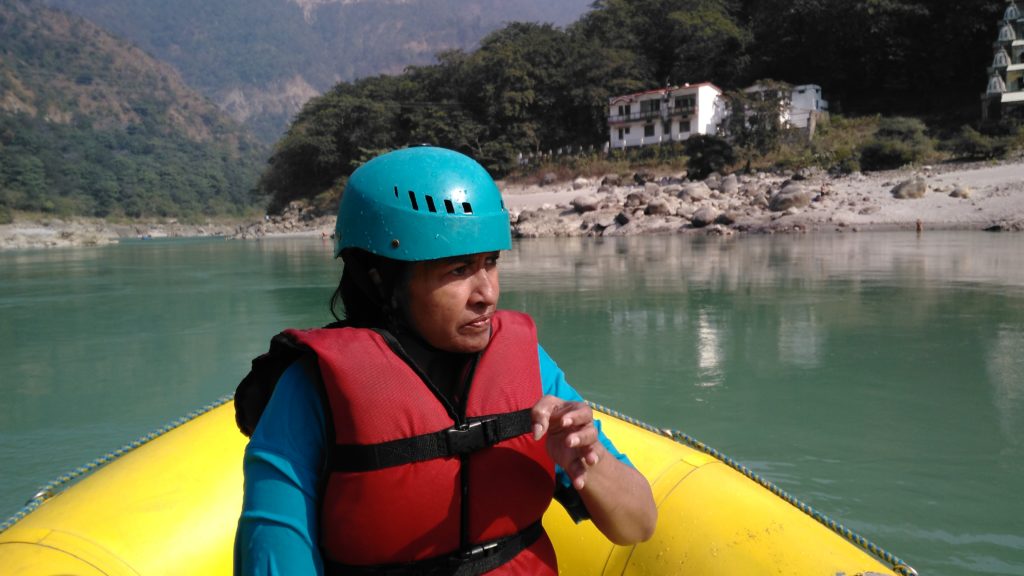
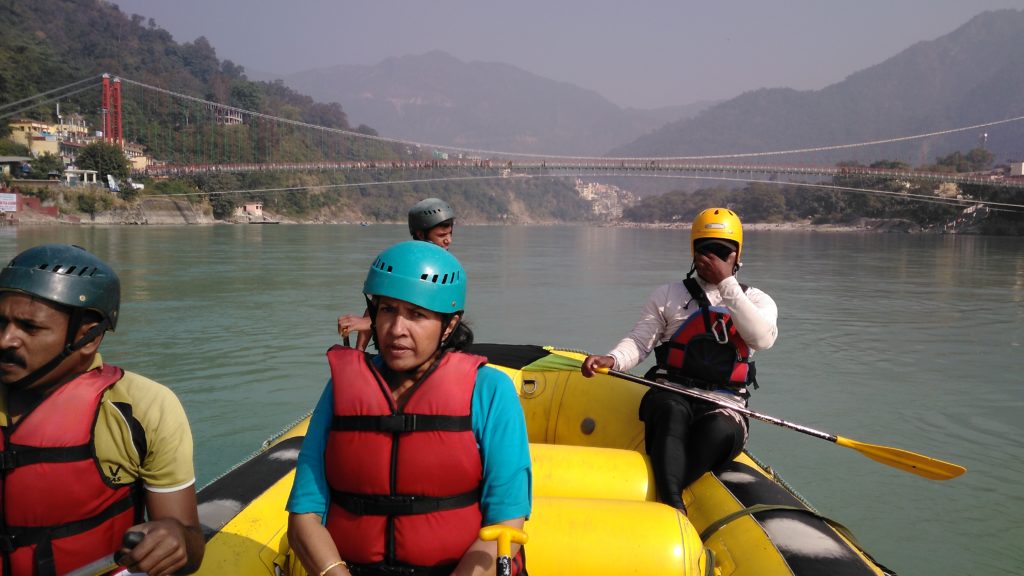
RIVER RAFTING DOWN THE GANGES

I had never done this before even though I always wanted to. I have spent 37 years in the Navy; but, that’s like a person joining the air force on the strength of his having travelled on the upper deck of a double-decker bus.

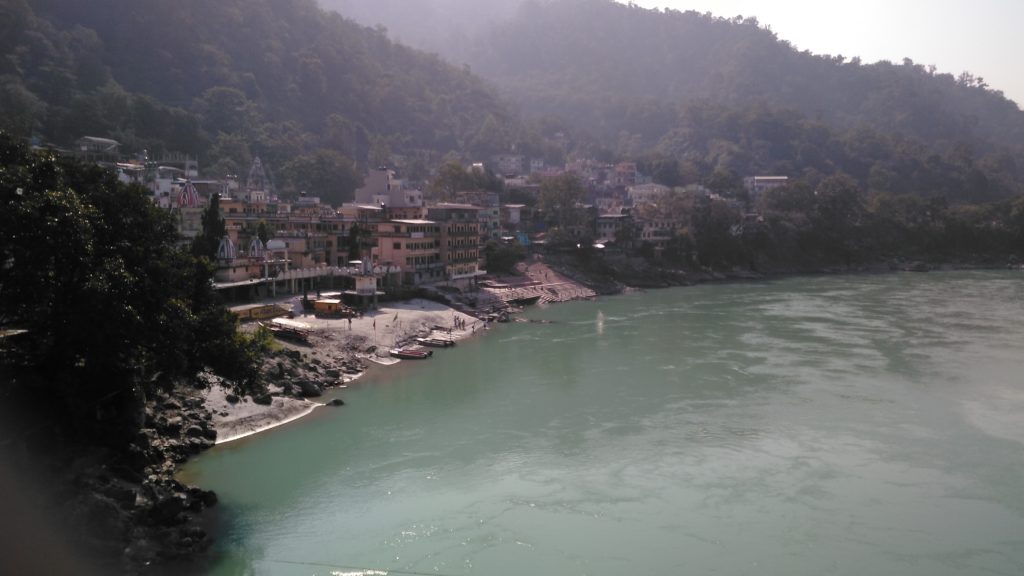
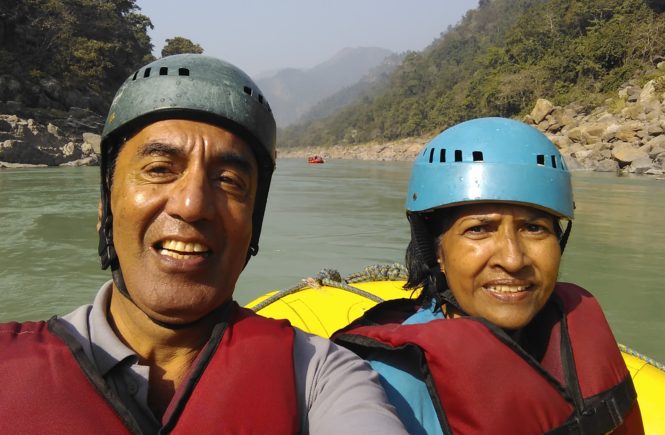
My wife and I were visiting Haridwar and Rishikesh after our Course Get-together at Dehradun. The day before attempting to make true our fantasy we visited the place called Shivpuri (23 Kms from Rishikesh towards Badrinath), the launching ground of most river rafting done in that area except for the really intrepid ones who go much further up the river.

img_20161119_110739img_20161119_111424

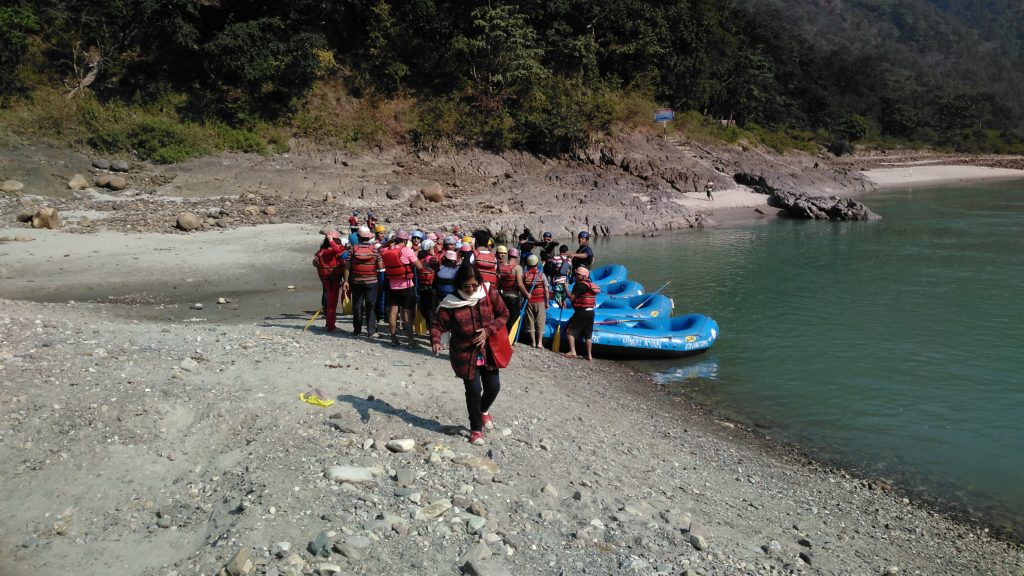
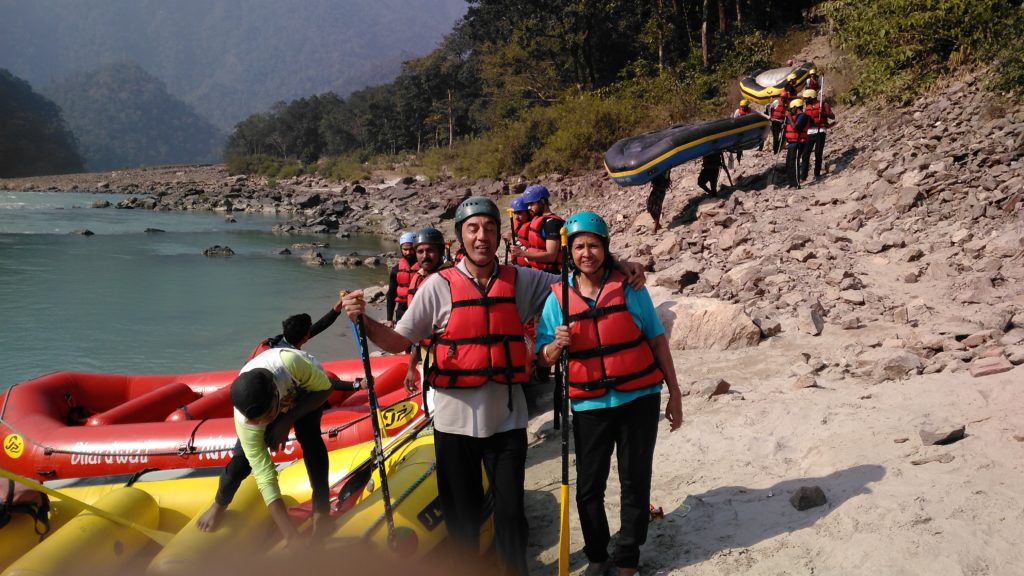
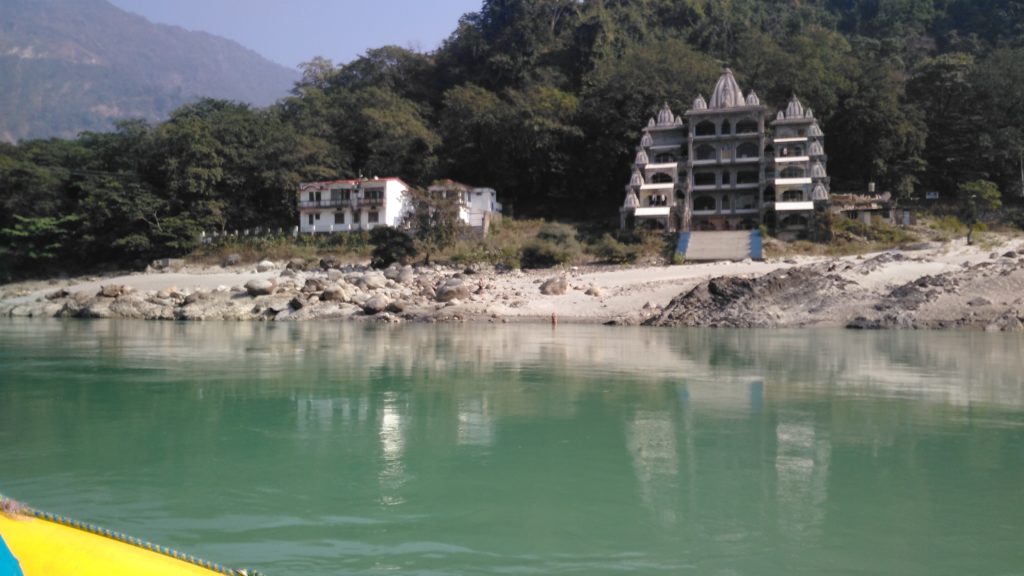
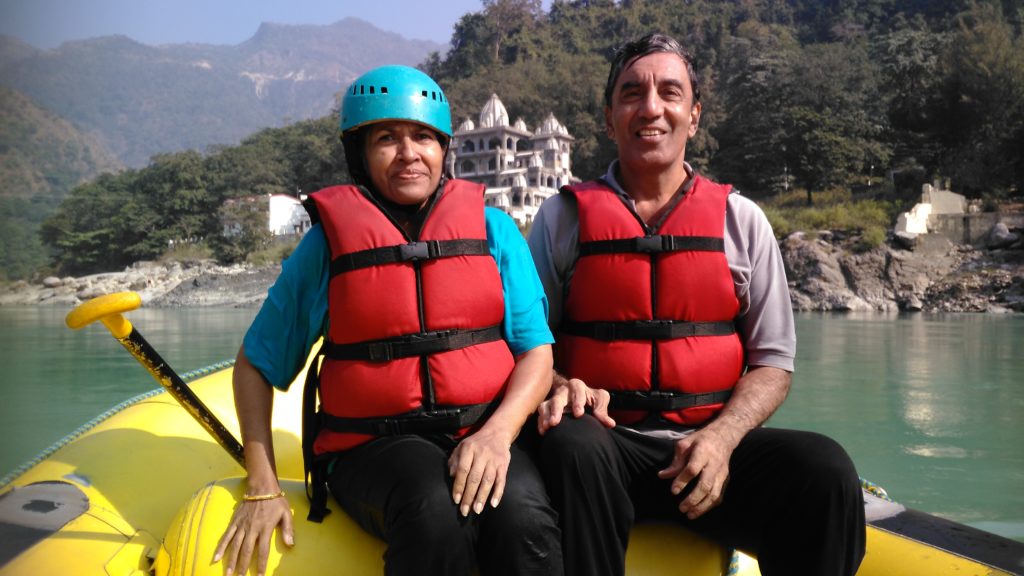
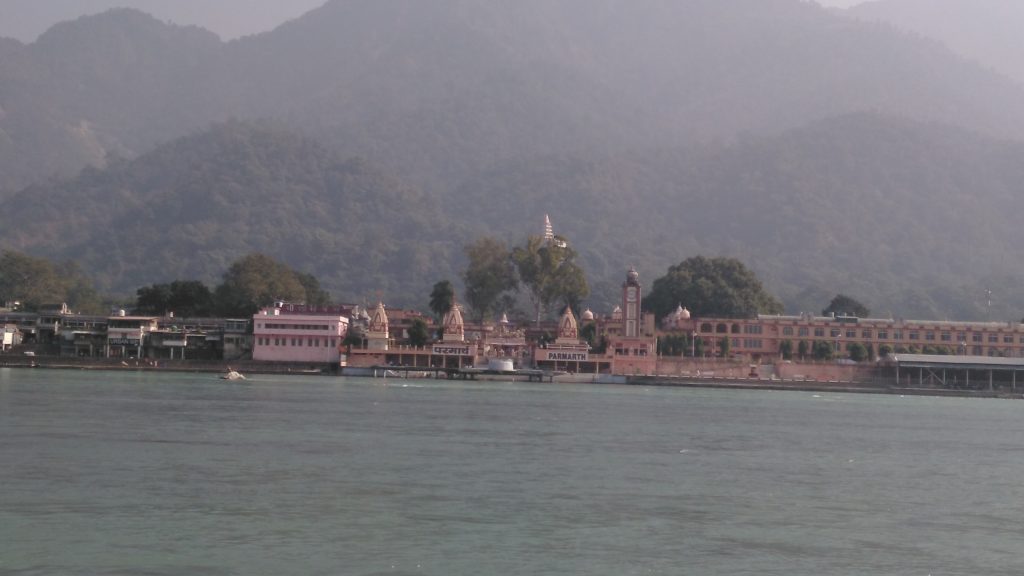
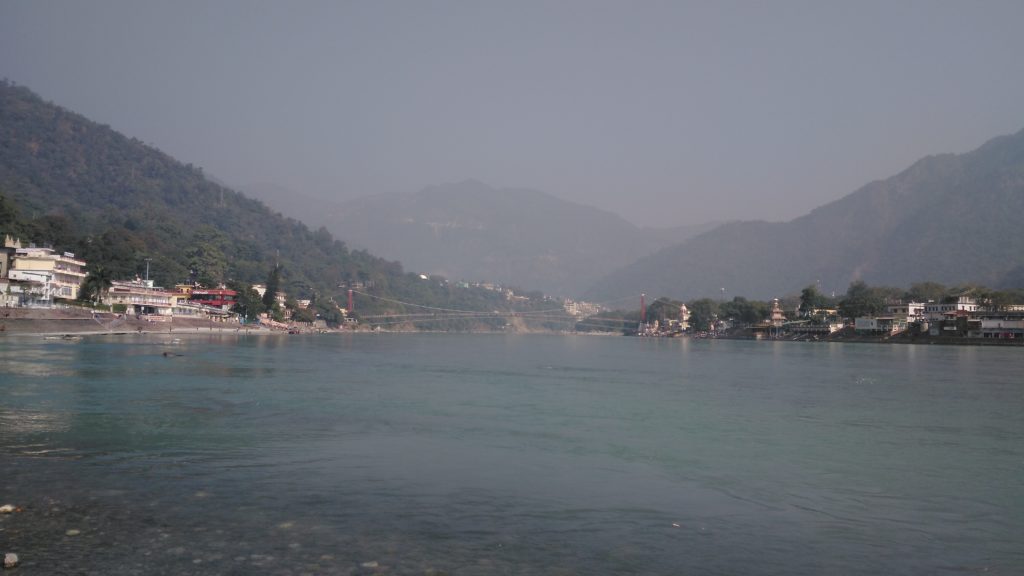
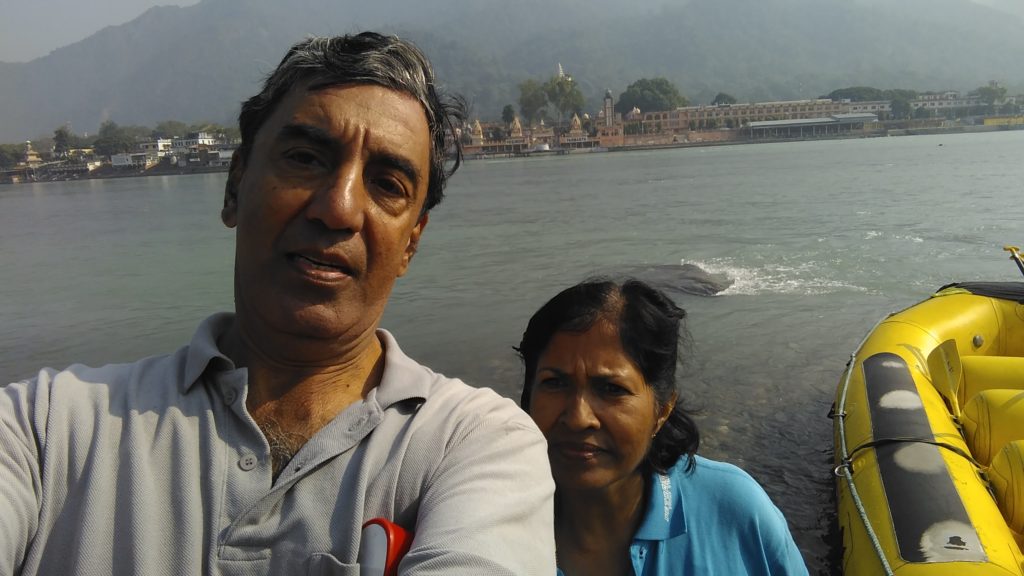
Next day, we decided that we had to undertake a rapid quickly enough so as to get over the fear rather than launch ourselves from this location. So we went a kilometre further up and came to this spot:img_20161120_100243 img_20161120_100250 img_20161120_102806 img_20161120_105204

We were staying with the army at Raiwala and with their help, it wasn’t difficult to book the rafts at reasonable prices. There are of course a number of rafting operators readily available charging you as little as Rupees 500 per head and about Rupees 3000 for the entire raft. We had a little difficulty because on the morning of our adventure, the operator told me that we (my wife and I) were both on the other side of sixty and regulations permitted him to permit people up to 38 years of age to undertake the rafting. He somberly added that a few years back a qualified rafting guide had lost his life when the raft toppled (capsized) in a rapid. Even the Wikipedia talks about whitewater rafting as extreme sports that may result in fatality.

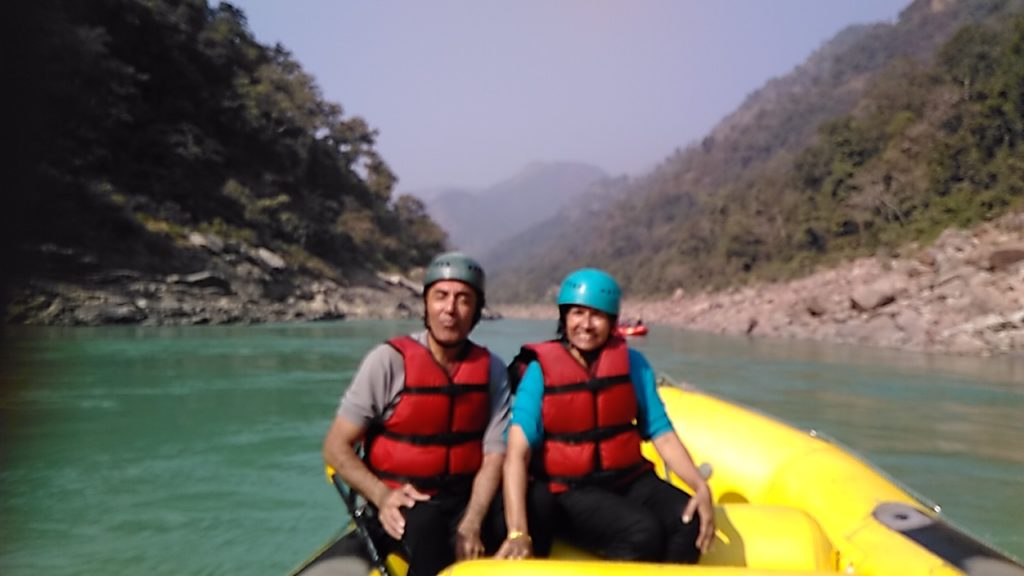
Lyn (short for Marilyn) and I however convinced the operator that we would be very very careful. With me being from the Navy, our guide soon gained confidence and I negotiated one of the rapids standing up in the raft. I also enjoyed jumping in the river and swimming.

img_20161120_111711 img_20161120_113719

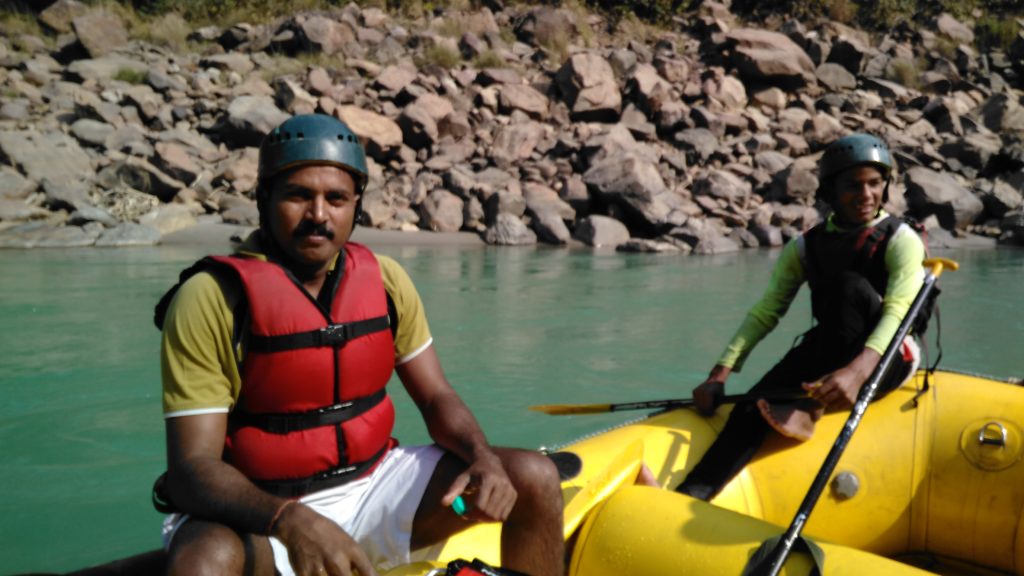
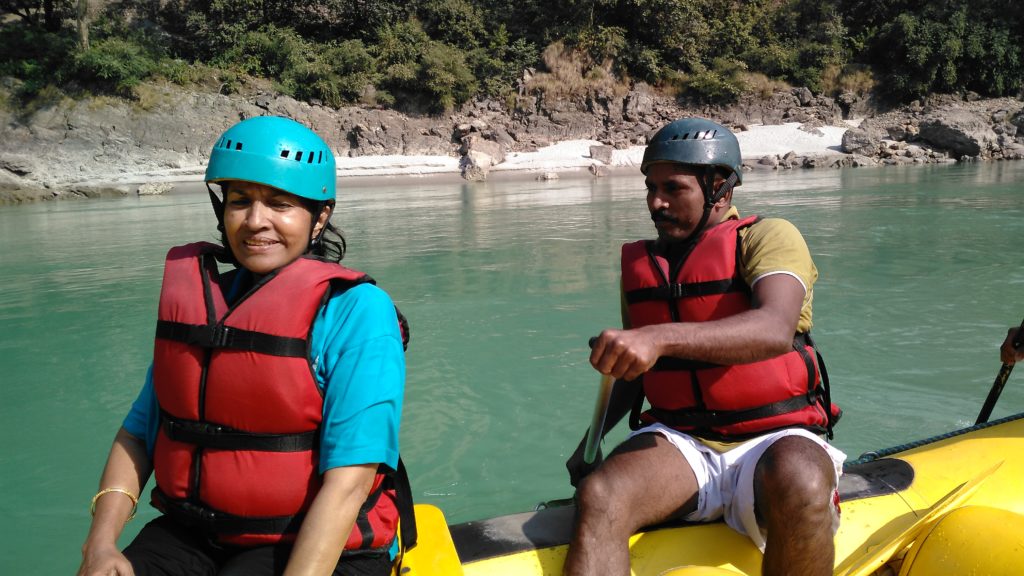
Lyn and I with a person from the army (Parmeswaran) to help us and our guide (Aryan) and his assistant soon formed a reliable team (the primary spirit of the rafting) and trusted one another with our lives. I learnt that the international rafting association, the governing body of rafting anywhere classifies the rapids into six classes with Class 1 being those rapids that require slight manoeuvering, with small rough areas, and not requiring  anything more than basic skills to the most dangerous rapids being of Class 6 with risk of serious injury and death being very high. But then, if there is no risk, there is no fun (Please read my: ‘The Lure Of Going On A Limb’ after my rappelling experience). They say only the most tortuous paths lead to the most beautiful destinations and in case of whitewater rafting, it is very true.

img_20161119_113921 img_20161119_115925 img_20161119_115928

There are of course a number of rapids by the time you get to the destination (Ram Jhoola at Rishikesh) and one of the fearful ones is called Roller Coaster. Here is a video made by me of other rafts going through this rapid (whilst you are in the raft and negotiating it, clicking videos is the last thing that you’d want to do. Hence, I don’t have videos of our negotiating these rapids):

Here is the first of the rapids called ‘Camel Top’ that we negotiated (the video is shot by me of another boat doing the same thing):

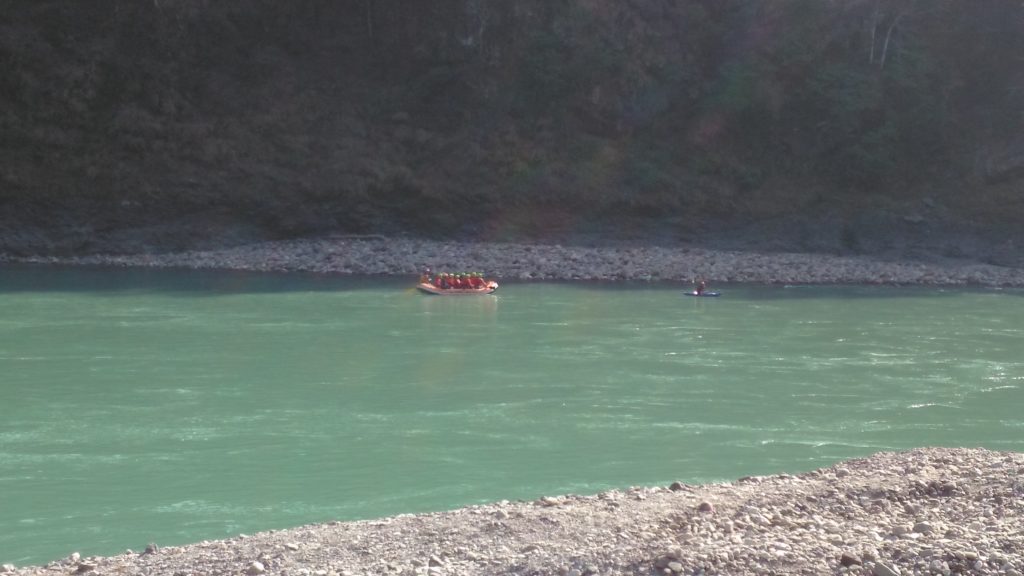
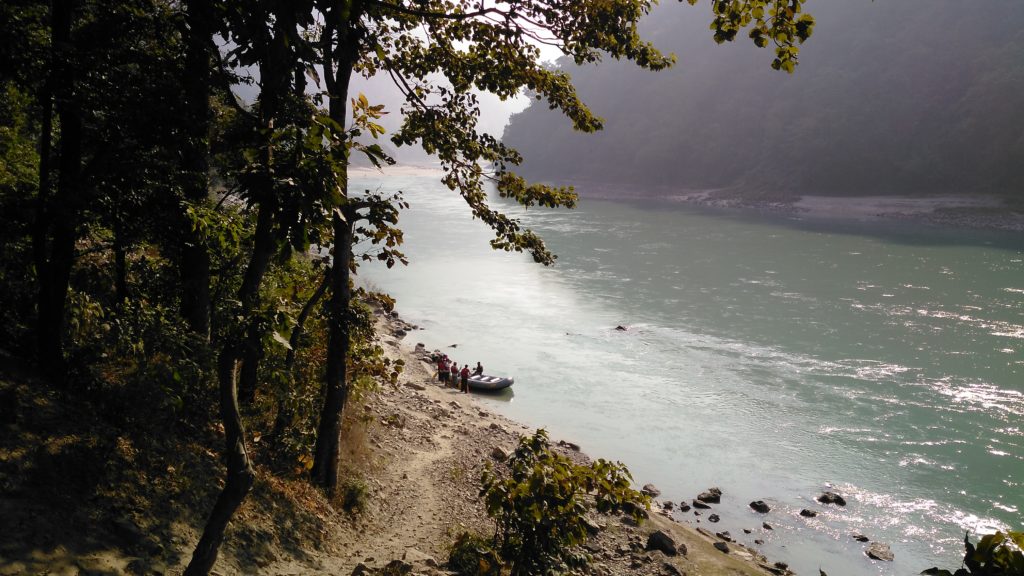
It is not just the rapids that give you thrill. Every once in a while you come across calmer waters (of course with strong under currents) and then you get to look out and admire the scenery and your other mates in the raft:

img_20161120_113942 img_20161120_114053 img_20161120_114055 img_20161120_115435 img_20161120_121305 img_20161120_121308 img_20161120_121400

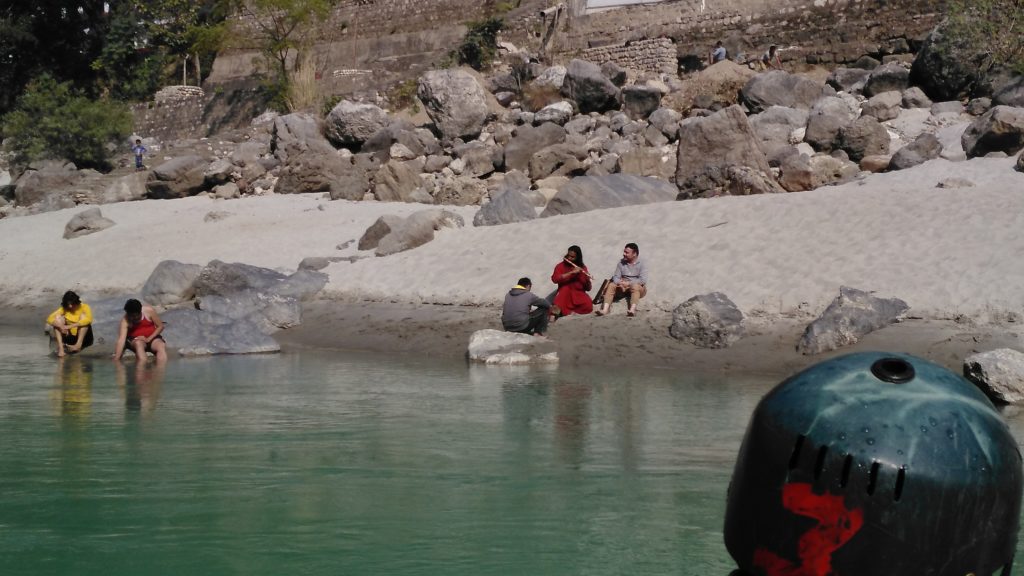
In the above pics, you would have noticed a man on the bank, in maroon robes playing on the flute. He was playing the popular arti Raghupati Raghav Raja Ram. My video couldn’t capture the notes but I could capture the atmosphere:

Whilst paddling through the rapids, the technique that we used more often than not was to continue with the momentum as much as possible by rapid paddling called punching. High siding (leaning out as much as possible on the higher side in order to right the raft going through the rapid) was used only once or twice and we didn’t use low siding at all. For a navy-man, who has done these enough at sea in a sailing boat, there was nothing new, however. I must, at this stage, have a word of praise for my partner, my wife, for not just the daring but enjoying the adventure thoroughly:

img_20161120_115419 img_20161120_115824

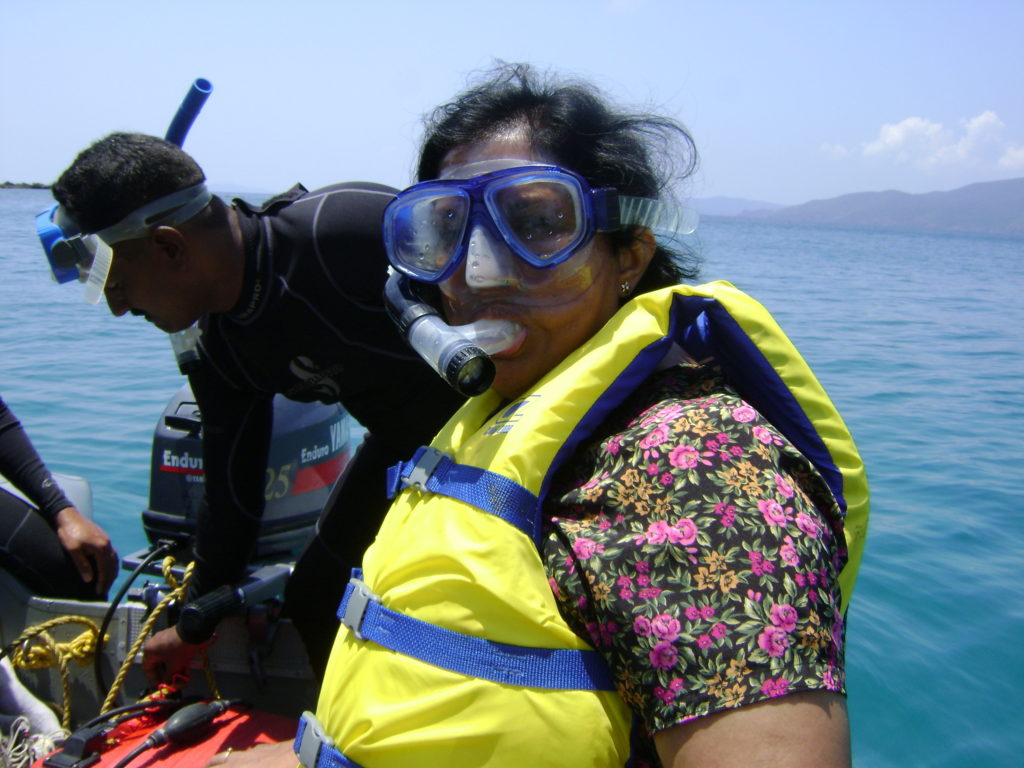
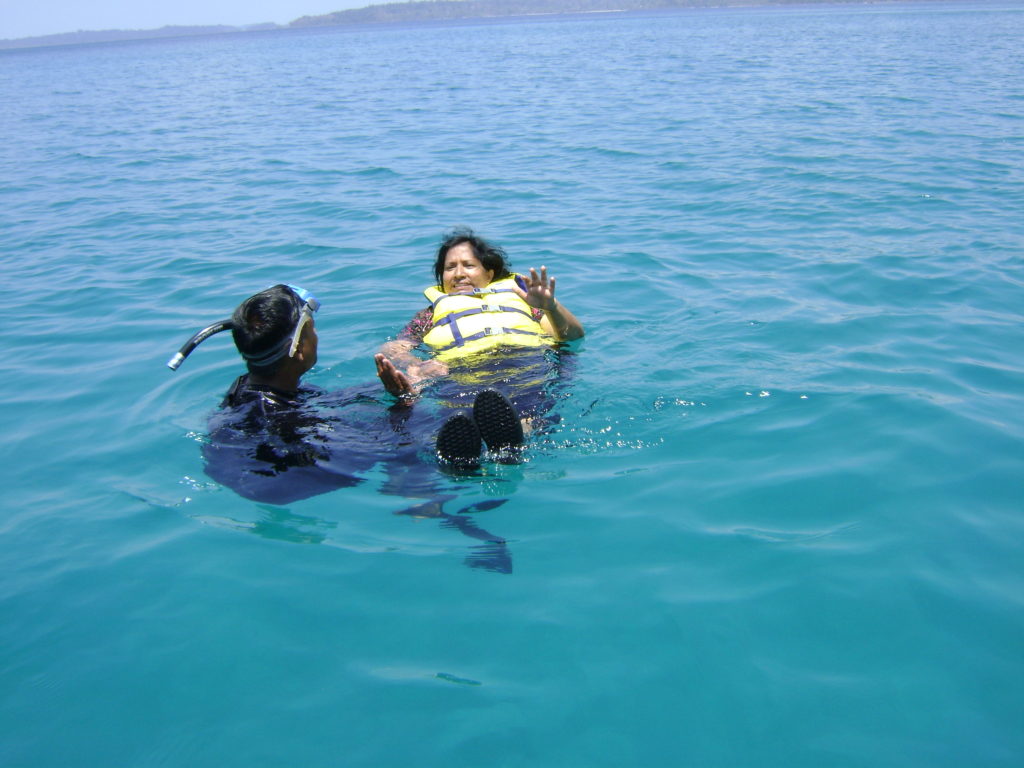
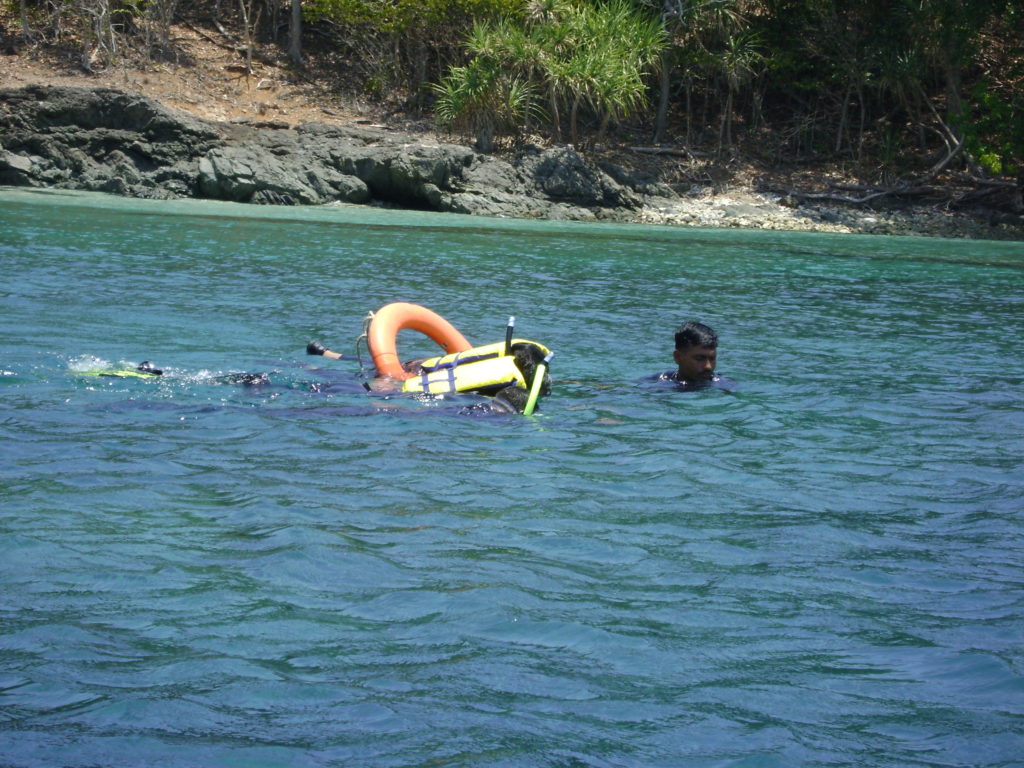
I was reminded of the time, seven years ago, when we went to Andaman and Nicobar islands and I offered her to do snorkelling with me in Chidhiya Tapu. She was apprehensive of lowering herself into the sea because she doesn’t know swimming. However, after she learnt the technique and saw the beautiful choral underwater, she didn’t want to get out:

dsc03128 dsc03129 dsc03134 dsc03138 dsc03140

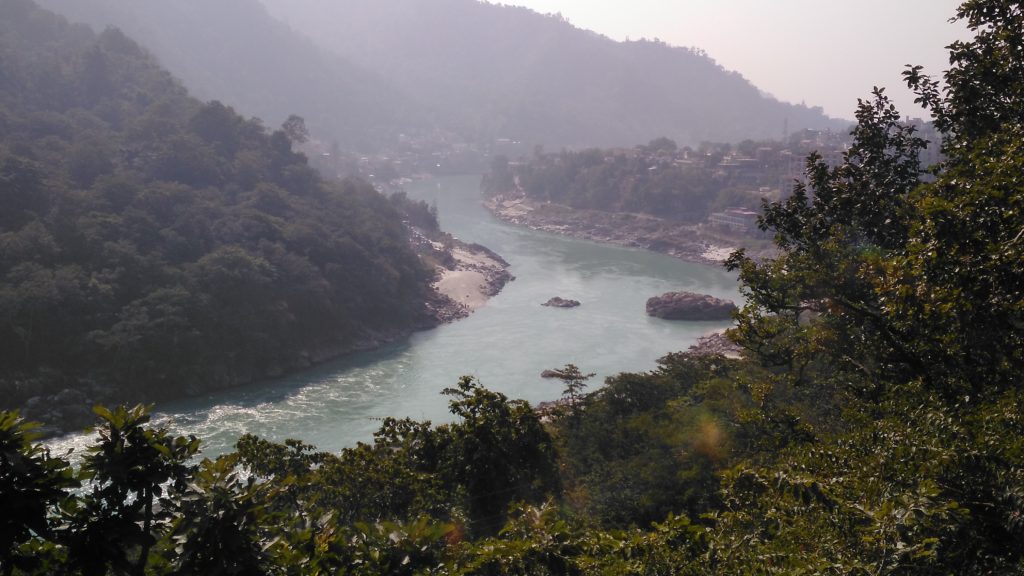
Rafting can actually be that kind of fun and more. One doesn’t ever want it to get over. It is like going through the river of life with all its ups and downs, dangerous and risky times, calm and happy occasions and of course the joy of having been there and done that.

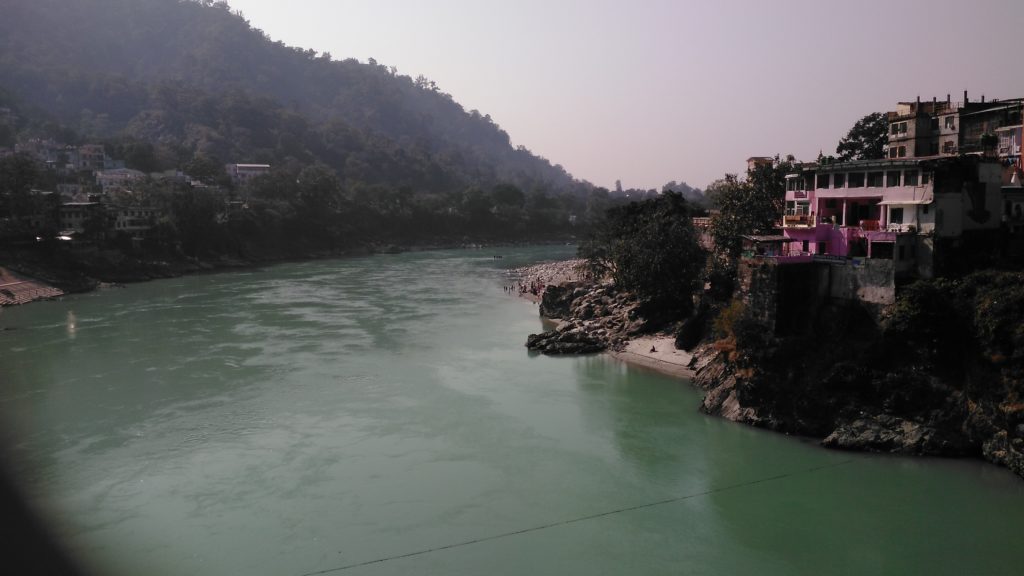
Soon we had crossed the last of the rapids called Doble Trouble, the name having derived from the rocks in the middle of the river, dividing the river into two. At this point we started seeing first the Laxman Jhoola and then our destination the Ram Jhoola:

We had had an experience of a lifetime and as we saw the Ram Jhoola and the places around, wanted it to go on and on and never finish:

img_20161120_124044 img_20161120_124103 img_20161120_124740 img_20161120_124747 img_20161120_124812

The notes of the final part of the aarti of the evening before for Gange Maa echoed in our hearts and ears and we felt fortunate that Ganga Mata (Mother Ganga) gave us the opportunity to be with her and witness her kindness, loveliness and enchantment even if for just two and half hours:

Be part of this enchantment and do this adventure at least once in your life. As far as my wife and I are concerned, it has prepared us for bigger and greater adventures.

Zindagi na milegi dobara (You can’t get your life again).

“I Hate Your Blog, I Don’t Know Why”

Some of your friends who don’t exactly say it but mean it nevertheless remind you of people who are quite at home with stray dogs but cannot stand your pet-dogs. Why this strange-sounding simile? Well, on social-media discussions, the same people, would quote from little known, pedestrian authors and indeed from recirculated internet stuff that goes by the misnomer of ‘knowledge’, but readily ignore your well researched essay. There must be some psychology, some reasons behind this secret hatred for blogs. Let me examine some of these.

1. Mujhe Bhi Kuchh Kehna Hai (I too have something to say). In an essay titled ‘All Photographers And Writers, No Viewers And Readers’, I brought out that the biggest two techno-social changes that have affected our lives in the last decade or so are that everyone is a photographer and everyone can write and instantly publish. Hence, there is nothing unique or extraordinary about anyone who writes or clicks pictures. Lets take the latter first; if someone puts up pictures of his family trip to London, you can put up pictures of your trip to Rio. “London is really a destination where people used to go in the last century; it is time that these commoners now learn to go to more exotic locales. But, frankly, they don’t have it in them; for them, London is still abroad“. Now, let’s get to writing blogs: “What’s so special about what he has written? I don’t have time, else, I could have written ten such articles and with better English and humour”. If you ever visit largest Indian Blogging site Indiblogger, you will discover that they maintain a ranking of blogs dependant upon people voting for blog posts. And who are the people who vote? Well, other bloggers. Everyone, therefore, follows the tenet: ‘You scratch my back, I scratch yours‘.

2. Ghar Ki Murgi Dal Barabar (Home-grown chicken is worth (lowly) dal (cereal) only). Ah, the time when we used to read the brilliant stuff of really intelligent men and women in newspapers and magazines. Somehow the stuff that the boy or the girl next door writes does not sound that erudite or good. It is almost like discovering your son paints as good as Picasso or Rembrandt! How can that be? Yes, we want social media revolution to change governance in the country, our surroundings, world politics and community religion. However, our next door blogger doesn’t have the calibre to take on anything even close to it. In any case, having heard and read him a few times, we already have good knowledge of what he/she is going to say.

(Carton courtesy: allthingslearning.wordpress.com)

3. Quantity Has Made Quality Suffer. You can gather all kinds of arguments to support your theory. One of them is that delightful cuisine cannot be made for millions. Yes, blue jeans was an invention that changed the way masses dressed and really well to do people spent their lifetime. thereafter, in Levis. However, you cannot go to a gourmet dinner dressed in blue jeans, can you? Naturally, as seen by you since you make all the arguments to suit your bias, quality has certainly suffered now that everyone who has Internet can publish. In the words of the Urdu poet:

Barbad gulistaan karne ko to ek hi ullu kaafi tha,
Yahan..har shaakh pe ullu baitha hai anjam-e-gulistan kya hoga?

(For destroying the wonderful garden, even one owl is sufficient,
Here there is an owl on each branch, wonder what would happen to the garden?)

4. I Know The Author Well; He/She Can’t Write For Nuts. Whilst with the author in a novel, newspaper or periodical there was no personal linkages, more often than not, with a blogger, you are one to one. Hence, your mind works overtime to remember how he was a nincompoop when you were with him in school or college or elsewhere. He couldn’t make a sentence in English properly. Then there is another bigger problem, which is, that one reads so that one can quote in good company. People are taken aback when you suddenly quote a verse of Coleridge or some other quote of say, Tolstoy. But, imagine trying to impress a company by saying that your friend, the blogger wrote it. Naturally, you can’t even impress people by quoting him/her. Perhaps, if it makes a lot of sense, you can say Vikram Seth said it! In any case, who would have read all that Seth wrote?

5. Who Has The Time? The race for time is similar to Mumbai traffic or for that matter traffic in any other Indian city. Once, when a motorist overtook me in very slow moving traffic, by hook or crook, and I came parallel to him at the next traffic lights, I lowered my window and asked him, “भाई साहिब, मान लो आप मुझसे दो तीन मिनट पहले अपने ठिकाने पर पहुँच जाओगे; पर उस दो तीन मिनट में आप करने क्या वाले हैं?” (Brother, supposing that you reach your destination two or three minutes ahead of me; but, what exactly are you going to do in those two or three minutes). He laughed and laughed and said, “क्या करें? आदत पढ़ गयी है?” (What to do? It has become a habit). The same people who complain about lack of time spend hours solving the Sudoku.

6. He Is Only Promoting His Blog. In a way, unless you believe in literary masturbation, you write so that people would read. You don’t make any money writing your blog; however, they make it look like as if blogs are similar to prostitution in which you woo your clients by selling your body and soul. Recently, I had this experience when a friend used these exact words to win an argument that he was otherwise trying to win through profanity.

(Cartoon courtesy: paintermommy.com)

7. I Can’t Be Forced Into Reading Anything; I Choose To Read What I Want To. For heavens sake, our choices over a period of time are dwindling. With the onslaught of advertisements, we don’t ever have a choice of what we buy and use; we don’t have a choice in government making even though we vote election after election: many of us don’t have a choice of partner for life,and so on. At least, let me exercise choice in reading what I want to read rather than being forced to read something sent by a friend.

8. Why Can’t He Write ‘Short-and-Sweet’? Most highly popular blogs have just a picture or two or a quote or a paragraph of recirculated stuff. People immediately identify with such stuff. Such stuff also meets the demands of some of the reasons that I have given above, especially lack of time. A few years ago I started a number of groups on Facebook on various themes ranging from ‘Laugh With The Punjabis‘ and ‘Humour In And Out Of Uniform‘ to ‘Yaad Kiya Dil Ne‘ (a group for sharing music) and ‘Main Shayar To Nahin‘ (a group for sharing poetry). I insisted that people would write as per the theme of the group, write original, and steer clear of posting greetings, religious messages, political messages, and other such nonsense. I wrote my experiences in an essay titled: ‘Want To Start A Facebook Group? Have A Reality Check‘. Soon, all groups on Facebook become Friends Circles wherein everything and anything is posted. No one reads serious poetry either written by friends or by recognised poets, for example. People are happy to write, like and comment on such gibberish as:

जब तुम्हारी याद आती है तो बहुत दर्द होता है,
जब दर्द होता है तो तुम्हारी याद आती हैI

This is short and sweet. I accessed this site and found this s & s piece had 453 likes and 117 comments.

There you are: I have tried to find reasons as to why blogs are hated and disliked. If you are a blogger and you have some other reasons to add, please go ahead and share in the comments.

'It's so refreshing to meet someone who doesn't blog.' (Cartoon courtesy: jantoo.com)
(Cartoon courtesy: jantoo.com)

SHE WILL GET ME SOME TIME, I KNOW – A CONFESSION

What a long-lasting affair?
What a long wait for her?
She has been chasing me
Ever since I was a boy
Perhaps she liked my daring even then
Dangling from rocks
Diving into a raging river naked
To flirt with her
Even when I didn’t know swimming.

During my youth
She knew she had got me
On many an occasion
When I was careless, reckless
But, only nearly
I flirted, she came closer
I never wanted to capitulate totally
But, now that I am confessing
I might as well tell all.

The fact is, being a woman
She too flirted with me
Knowing I was going to marry
Another woman; she didn’t care
On that night, when next morning
My wife was going to join me
I was drunk and I drove my bike
And she sat as pillion
Clutching and feeling me everywhere.

As some sense came into me
And more because I was married
I started keeping distance
Barely acknowledging her presence
Even when I could see her from a distance
And anyone could have seen me
In her bewitching eyes
Waiting to get me
Waiting to hold me in her arms.

I became more careful
More artful about hiding our affair
She was forever in my heart
In my conscious mind
When I retired, she again came closer
I will get you, she whispered publicly
She was as young as when
I was a little boy
And I was the one who had become old.

Secret Love

How long can I resist her?
Her love has grown, but, mine
Mine has nearly died
I don’t flirt with her anymore
I want to run away from her
To a quiet, secluded place
Where she can’t find me
I admire her patience, though
A lifelong wait to have me.

A number of times she’s beckoned me
I too am adamant not to give in
She has everything ready
The flowers, the music, the feast
But can’t she sense, though she’s young
She is not even half as adorable
As when I flirted with her in my youth?
Can’t she sense I don’t
Want to be hers anymore?

Doesn’t she know
I don’t want her anymore?
I love my wife, my kids
My family, my friends
And she doesn’t even fit in
All daring has left me now
I even cross the road
When the walk light is green
I don’t want her anymore.

Shouldn’t she too abandon
The plans to wed me?
Knowing I have become a good guy
Brushing my teeth, twice a day
Taking my pills regularly
Shunning all excitement and evil stuff
For the good of my heart.
Look for someone else, my love
I actually want to live.

misty mort 3

VETERANS’ OBSESSION WITH MEDICAL ISSUES AND ECHS

Now that I have joined the Veterans’ community six years ago (We wear a badge to that effect in all our gatherings; we in the armed forces have always taken badges so seriously that many of us gave up our lives to earn two inches of ribbon and a badge (medal)), I find that not only that ailments are a constant companion with most of us, talking about our ailments is an irresistible hobby.

Here is how two Veterans meet:

Veteran 1 (heartily): Nice to see you, buddy (it is almost an exclamation at finding him still alive).
Veteran 2 (equally heartily): Nice to see you too, ole chap (“I am also stunned that you can still be seen”).
Veteran 1 (coming straight to the important issue): So how is your gall-bladder these days? (This in the tone of one inquiring about a close family member).
Veteran 2 (wistfully, as if missing the loss): I had it removed. How is your Psoriasis?
Veteran 1 (as if talking about a pet dog): Behaving. I have to keep visiting Asvini. But, it is great fun meeting all the old friends there.

Veterans are at, what the author James Michener used to call as, the age of metal; that is, silver in their hair, gold in their teeth, and lead in their walk (though James used a more disparaging term).

Hence, whatever be the original topic of discussion between them, it is dexterously steered to the most significant issue of ailments and solutions. I am reporting an actual conversation (the names ain’t actual):

Veteran A: I heard the good news about your daughter Nalini getting married last month.
Veteran B: Yeah, she and Vikas are quite happily settled in the USA.
Veteran A: USA is the place to be. What does Vikas do?
Veteran B: He is a doctor.
Veteran A: A doctor, is it? Somehow the best of our doctors have all gone abroad. The other day I went to Asvini to see a urologist; this b—-r didn’t know his ass from his elbow and I had gone all the way from Kandivli to see him.
Veteran B: You are telling me? I had gone to get medicines for my cardiac condition and this chap was simply clueless. On top of that, at the ECHS clinic they didn’t have the requisite medicines after making me – a cardiac patient – wait in the queue for over an hour.
Veteran A: Ahh ECHS. They never have the medicines and the guys there talk so rude too. I keep telling them, “Wait till you retire beta; then you will know“.

ECHS or Ex-Servicemen Contributory Health Scheme is the second most favourite topic with us. Gone are the days when we used to be fitness freaks and talk at length about climbing this hill or that or trekking or going for cross-country runs. Earlier, our contribution towards our post-retirement health was to pay in advance for the treatment. Now, it is to go from pillar to post fetching medicines.

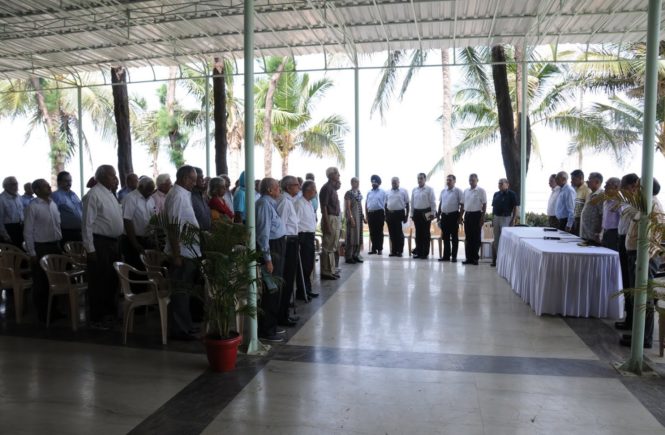
In the Annual General-body Meetings (AGMs) of the Navy Foundation, just about the only agenda items are those related to ECHS. It appears that happiness is spelt with a capital E; the moment we have sorted out all our ECHS problems, this bird called Happiness would sit on our window-sill and tweet our favourite tunes. Have a look at one of the AGMs in progress with this singular agenda point in various garbs:

In AGM after AGM we listen intently to how "in the near future" our ECHS problems would be sorted out.
In AGM after AGM we listen intently to how “in the near future” our ECHS problems would be sorted out.

With all our focus on medical and ECHS issues, one would feel that most veterans would look frail and ailing and as the saying goes one foot in the grave and other on a banana peel. Surprisingly, the number of octogenarians honoured every year during the AGMs is rather large:

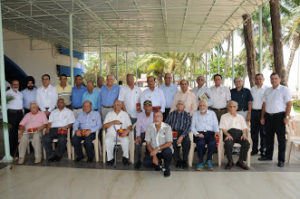
(Octogenarians of 2015 AGM with the Navy Foundation (Mumbai) office-bearers.

Perhaps all the running around to get ECHS and medical issues sorted out and to obtain the treatment and medicines actually keeps them fit! They fully deserve the memento that’s given to them:

Memento given to honour the octogenarians.

This year the AGM was held in Lonavala. At the end of energetically discussing all the ECHS problems, our dedicated and forever witty Secretary informed the members that there is indeed good news: the Command Headquarters have informed the Navy Foundation that they would send a wreath (free of cost) for any veteran kicking the bucket and in case he is a gallantry award winner, then a bugle would be sent to play at his funeral. Needless to say this brought unrestricted smile to the faces of all veterans. Wow, a wreath and (in the case of lucky ones) a bugle!

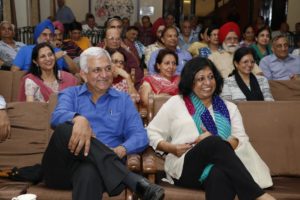
If you see in the picture ladies smiling more than the men, it is because they would actually hear the bugle!
If you see in the picture ladies smiling more than the men, it is because they would actually get to hear the bugle!

Life in the armed forces, for the veterans, was full of challenges and joys. Life after the armed forces is still full of challenges and joys. However, the most welcome and joyous part of the armed forces, as laid out for us, is death ushered in with flowers and bugles.

THE MOST IMPORTANT RELATIONS AND RELATIONSHIP(S)

Origins of Emotions and Relations

I find Human Evolution as a very fascinating subject. Humans or homo sapiens, as we see them around now, at some point of history of primates, separated themselves from the apes (hominids). Genetic studies bring out that the history of primates is older than 85 million years ago. There have been many theories (in the absence of recorded history we have either theories or gospel (word of mouth)) regarding the Evolution of Man, the foremost or the most accepted being the Darwinian theory. All these theories explore only the anatomical aspects; for example, the origin of man standing and walking on two feet and legs (bipedalism). Nothing has yet brought out the evolution of emotions and relationships, except in gospel. And that is the aspect that fascinates me most. For example, who was the first man or woman to fall in love? Or was it at the great ape stage or even earlier? When, how and why did the first man get angry and who triggered those emotions in him?

First Man

From emotions, relations and relationships are just the next logical steps, provided there has been some logic in evolution of these things. It is quite reasonable to assume that relations as we see them today have undergone dynamic changes in the thousands of years of evolution. Even if we believe gospel, for example, and assume that Adam and Eve were the only homo sapiens that were sent on Earth, their procreation, in terms of today’s relations would have produced only brothers and sisters. It would have stopped any further evolution of human-kind if they had considered procreation between brothers and sisters as sinful.

Family and Genes

It would be easy to consider that family and genes (both related to heredity) wouldn’t be exclusively human concepts. As humans, we are told (by sages and spiritual/religious leaders) that a feeling of I, My, Mine is the biggest obstacle that keeps us from true happiness and God (Sri Guru Granth Sahib refers to it as haume’) (Please read ‘Debatable Philosophies Of Life’). I had argued it out in the essay (that I have quoted above) that a feeling of myness is the most natural feeling in primates. No one needs to teach it even to apes and animals; they are naturally rejoicing in and protective of their progeny. So strong is this myness that it is imprinted on our genetic cells over generations; for example, we belong to a larger family having similarity of genes (heredity).

Even at that all-encompassing relationship of myness, it would be interesting to imagine the origin of specific familial relations, say, between father and son, husband and wife, uncles, aunts, brothers and sisters.

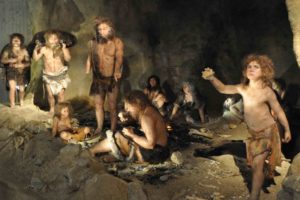
When did the concept of familial relations originate? (Pic courtesy: io9.gizmodo.com)

Blood Relations

Just as we have seen in the story of Adam and Eve, the concept of familial relations too has gone innumerable changes and modifications to arrive at the present accepted concept. The fact is that the present accepted concept is just a majority concept and is certainly not universal. In certain races or religions, for example, marriages are to take place within the family of blood relations only.

I have covered the concept of Religion and God in my essay ‘Whose God Is It Anyway?’ Lets, therefore, only ponder the concept of blood relations. It has become an important concept in legal circles and various tests are defined to prove blood relations. It would be easy to understand that the concept draws heavily from sexual reproduction (a physical phenomenon) and has nothing to do with one’s beliefs, biases and proclivities. Most often than not you don’t have to prove that you are brother and sister, mother and son, father and daughter. However, if inheritance, as seen by the law is at stake, you may have to prove that. It is another thing that at one time all of us may have belonged to one family. But, then, historically, as families became larger and larger, the concept of blood relations became narrower.

Human Relations Beyond Blood Relations

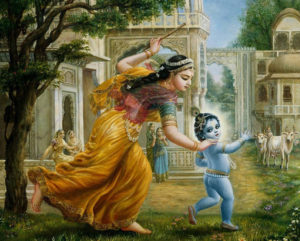
The fact is that increasingly human relations and relationships have become significantly more important than blood relations. One of the first ones to help propagate this concept was Lord Krishna. Even those who feel these tales are merely mythological (and have little historical basis), we are here talking about a concept that originated in India, which for the first time, more than 3000 years before Christ, made sacred a relationship beyond blood relation, even if forced by events or imagined events of that era. I am talking about the relationship between mother and child. Krishna was born to Devaki, the wife of Vasudeva. During the wedding of Krishna’s parents there was a prophecy that the eighth son of Devaki would kill the cruel Kansa. Since this prophecy was announced in the presence of Kansa (Devaki’s brother), he killed six sons that were born to Devaki. The seventh one Balarama escaped death by being transferred to the womb of Vasudeva’s other wife Rohini. Krishna escaped death by Vasudeva, his father, carrying him across Yamuna to his foster mother Yashoda (a wife of Nanda). In Hindu scriptures, Yashoda, the foster mother (not a blood relation) is far more important and revered than Devaki. In tales of Krishna-Leela, his childhood spent with Yashoda, is the most important period of episodic enchantment. Yes, this is not recorded history but gospel. However, this is the first time (even in folklore) that anyone called a relationship far more important than blood relation; the relationship of pure love that is.

Yashoda, the foster mother of Krishna playing with him (Pic courtesy: www.iskconbangalore.org)

Two important things to note here are (whether or not it is historical) is that the concretisation of the concept of blood relations in later-day India and the legal wranglings to prove blood relations (for inheritance) have radically moved away from this concept. This is all the more ironical since the Law itself has been an evolution over centuries and not something writ in stone. And the other follows from the first one itself, which is that even those who believe in Krishna, move the courts to prove blood relations. Hence, religion is not a way of life all the way but merely a philosophy of convenience; we believe in some parts and ignore others that stand in the way of pragmatism.

Husband – Wife Relationship

In Hinduism there is no relationship more sacred than the one between Krishna and Radha; so much so that Radha Krishna is considered as one name rather than a combination of two. And yet, though the concept of marriage was prevalent in that period (such as Devaki marrying Vasudeva; Krishna’s parents, that is), Krishna and Radha never married.

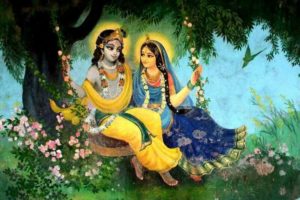
Some four thousand years (or more) after Krishna was believed to have been born to Devaki and Vasudeva, the Sanskrit poet Jayadeva (recorded history) wrote a famous poem Gita Govinda in the 12th century AD, and then the spiritual love between Radha and Krishna became the subject of intense folklore. Hence whilst Krishna is shown not as deity but God Himself, Radha, His devotee, is shown as the embodiment of love by a devotee towards God. The Hindus raised this Love by Radhe as even more important than God Himself (Krishna). And that’s why it is always Radha Krishna or Radhe Krishna and never Krishna Radha.

Radhe Krishna

Human and God Relationship

The Adi Granth, the predecessor of present day Guru Granth Sahib, was compiled by the fifth Guru of the Sikhs – Guru Arjan Dev – in the sixteenth century. Thereafter, every Guru added something to it. The tenth and the last Guru, Guru Gobind Singh (whose name was one of the names of Krishna) didn’t add anything of his own but added all 115 hymns of his father Guru Teg Bahadur. In the year 1708, he decreed that after him there won’t be a human Guru but the Sikhs are to consider Guru Granth Sahib as their Guru.

The relationship between a devotee and God has been described in the Guru Granth Sahib by the first Guru – Guru Nanak – and curiously, it has drawn from the Radhe Krishna relationship: of between a wife and her husband. Guru Nanak portrayed the love of a suhagan (wife) for her husband as the purest form of devotion. He, of course, stressed upon the adornments for the suhagan being not material things like gold jewellery and diamonds but purity of heart and thoughts.

Take the case of Meerabai (born 1498). Meera Bai was born into a Rathore (Rajput) royal family of Kudki district of Pali, Rajasthan. Although born a princess, she renounced everything and became a devotee of Lord Krishna and considered herself married to Him. Since she flouted social and familial norms, she was persecuted by the society and especially by her in-laws. However, she didn’t desist from her chosen path. The Hindu scriptures, considering Devotee-God relationship as the one between wife and husband (Radhe Krishna), have widespread mention of the bhakti of Meera for Krishna as her husband, more than four thousand years after Krishna lived on earth.

More than four thousand years after Krishna, Meera again embodied the relationship between Devotee and God as being between wife and husband (Pic courtesy: lovekanha.blogspot.com)

Evolution of Modern Thought Process on Relations

Various rituals have been evolved over centuries to cement husband-wife relationship, the origin of all other familial relations.

The Saptapadi (Sanskrit for seven steps/feet), is the most important ritual of Vedic Hindu weddings, and represents the legal part of Hindu marriage. Sometimes called Saat Phere (seven rounds), couple conduct seven circuits of the Holy Fire (Agni), which is considered a witness to the vows they make to each other.

The Sikhs have Anand Karaj (blissful union introduced by Guru Amar Das (the third Guru) and involves four circuits around the Guru Granth Sahib (four lavan). Here God’s embodiment in the form of Guru Granth Sahib is considered witness to the holy marriage.

There are rituals in various other religions and castes most of them having some embodiment of God (such as agni, Guru Granth Sahib, Bible and other holy documents) as witness to the sacred marriage.

Guru Nanak, in his famous ‘Gagan mein thaal….’ arti in Jagannath Puri exhorted people to directly worship God (contained in His naam) rather than through any embodiment of God or deity (he refused to offer arti to Lord Krishna being only a deity when God Himself could be approached directly. Please read: ‘Nanak Shah Fakir – The Movie And Its Message‘). Curiously, this is one common element of all religions: they all know and feel that there is One God but the only real God is what they worship and all others are merely deities.

So the point is that the process of marriage is merely a ritual. Even if you want to make your marriage as sacred (marriages are, as is talked about in most religions and beliefs, made in heaven and then you are together for several lives (janam janam ka saath), merely chanting the name of God whilst accepting a person as your partner should be adequate for all purposes except for inheritance for which you have to legally prove your marriage.

Talking about dynamism or forever evolving concept of relationships, on the lighter side, in Mumbai (they must be elsewhere too) I have come across many couples whose male partners started off being Rakhi-Brothers (not blood brothers) (especially to widows) and who finally married their Rakhi Sisters.

Continuing with the lighthearted approach towards relations, I remember this anecdote of a divorced husband having to pay the bringing-up charges for his son (as part of alimony) until adulthood. On the first of every month, the son used to come calling at his blood father’s house, collect the alimony and go. On the first of a month just before the son’s 18th birthday, the father derisively told him, “Well, go back and tell your mother I am not your father anymore.” At this the son responded, “Mom wanted me to tell you that you never were”. Light-hearted alright, but that opens our eyes to the so called blood relations.

More and more people are now moving away from the religious rituals of weddings and for the purpose of legality of marriages for inheritance and other purposes getting married in courts (My son Arjun and daughter-in-law Samira did. Please read ‘Loveapalooza Arjun And Samira’s Lifetime Music Fest‘). Love is the strongest thread that need to be tied in order to complete the nuptials. Please recall that Guru Nanak, being a Hindu at that time, refused to wear the holy thread Janeyu as he said that no material symbols could replace oneness with God in thoughts.

Have the Hindi Movies Got it Right?

I am a fan and you would have seen it extensively in my blog posts. Whether or not the Hindi movies have got it right in other aspects of the movies, as far as evolution of relationships is concerned they seem to have kept pace and in many cases, several paces ahead.

Let me just give you three cases.

The first one is that of 1972 Shakti Samanta movie Amar Prem (Immortal Love) starring Rajesh Khanna and Sharmila Tagore. The film portrays the decline of human values and relationships (in blood relations, that is; Sharmila Tagore’s uncle sells her off as a courtesan) and contrasts it by presenting an outstanding example of a boy’s innocent love (Rajesh Khanna legally married to a wife who doesn’t care for him at all) for the same courtesan. A song about the decline of these relationships and double standards of people is a favourite of mine. It was penned by Anand Bakshi and composed by RD Burman in Raag Khammaj, Tal Kaherava. You must go through the lyrics in order to get the full meaning of these in the wake of discussions on relationships so far:

(kuchh to loga kahe.nge, logo.n kaa kaama hai kahanaa
chho.Do bekaara kii baato.n me.n kahii.n biita naa jaae rainaa ) – 2
kuchha to loga kahe.nge, logo.n kaa kaama hai kahanaa

kuchha riita jagata kii aisii hai, hara eka subaha kii shaama huii – 2
tU kauna hai, teraa naama hai kyaa, siitaa bhii yahaa.N badanaama huii
phira kyuu.N sa.nsaara kii baato.n se, bhiiga gaye tere nayanaa
kuchha to loga kahe.nge, logo.n kaa kaama hai kahanaa
chho.Do bekaara kii baato.n me.n kahii.n biita naa jaae rainaa
kuchha to loga kahe.nge …

hamako jo taane dete hai.n, hama khoe hai.n ina ra.ngaraliyo.n me.n – 2
hamane unako bhii chhupa chhupake, aate dekhaa ina galiyo.n me.n
ye sacha hai jhuuThii baata nahii.n, tuma bolo ye sacha hai naa
kuchha to loga kahe.nge, logo.n kaa kaama hai kahanaa
chho.Do bekaara kii baato.n me.n kahii.n biita naa jaae rainaa
kuchha to loga kahe.nge 

The second one is this 1969 Asit Sen movie Khamoshi (Silence) starring Rajesh Khanna and Waheeda Rehman. She is a nurse in the hospital where he is admitted with mental disorder caused by having been deceived in love by his beloved he wanted to marry. This song penned by Gulzar and composed by Hemant Kumar says it all as far as relationships are concerned; it suggests that the only true relationships are those of love:

Hamane dekhii hai un aa.Nkho.n kii mahakatii Kushabuu
haath se chhuu ke ise rishto.n kaa ilzaam na do
sirf ehasaas hai ye ruuh se mahasuus karo
pyaar ko pyaar hii rahane do koii naam na do
hamane dekhii hai un aa.Nkho.n kii mahakatii Kushabuu
haath se chhuu ke ise rishto.n kaa ilzaam na do
hamane dekhii hai

Pyaar koii bol nahii.n, pyaar aavaaz nahii.n
ek Kaamoshii hai sunatii hai kahaa karatii hai
na ye bujhatii hai na rukatii hai na Thaharii hai kahii.n
nuur kii buu.Nd hai sadiyo.n se bahaa karatii hai

sirf ehasaas hai ye ruuh se mahasuus karo
pyaar ko pyaar hii rahane do koii naam na do
hamane dekhii hai un aa.Nkho.n kii mahakatii Kushabuu
haath se chhuu ke ise rishto.n kaa ilzaam na do
hamane dekhii hai

muskuraahaT sii khilii rahatii hai aa.Nkho.n me.n kahii.n
aur palako.n pe ujaale se jhuke rahate hai.n
ho.nTh kuchh kahate nahii.n, kaa.Npate ho.nTho.n pe magar
kitane Kaamosh se afasaane ruke rahate hai.n

sirf ehasaas hai ye ruuh se mahasuus karo
pyaar ko pyaar hii rahane do koii naam na do
hamane dekhii hai un aa.Nkho.n kii mahakatii Kushabuu
haath se chhuu ke ise rishto.n kaa ilzaam na do
hamane dekhii hai

Surprisingly, the third one that I am giving is also from a Rajesh Khanna movie: the 1971 Hrishikesh Mukherjee movie Anand (Bliss). The song in which the truth about relationships occurs was also sung by Hemant da in Bengali. Here, it was penned by Yogesh and composed by Salil Chowdhury. Here are very meaningful lines about relationships:

Kahii.n to ye, dil kabhii, mil nahii.n paate
Kahii.n se nikal aae, janamo.n ke naate

Love is the Greatest Relationship

Three months back I wrote an essay titled ‘Love – The Greatest Feeling On Earth‘. The relationship of Love is indeed the greatest relationship. And, it need not be between a husband and wife. Look at the relationship that a soldier has for the motherland (a son’s dedication for Bharat Mata). He is prepared to give his life for her and often does. There is a relationship of love between us and animals. Take this about our dog Roger and us:

Roger and Us1


The most important relation or relationship is not by virtue of rituals and ceremonies but what a person actually means to you. Rituals and ceremonies are for societal and legal purposes, for example for inheritance. And why should inheritance be the consideration in relationships since after you are gone, you don’t own anything anymore? As Shakeel Badayuni wrote:

Yeh zindagi ke mele,
Duniya mein kam na honge,
Afsos ham na honge.

You can go narrower and narrower in relations and relationships. The fact is that every man is a variation of yourself and you are indeed related to every person on earth by the colour of his or her blood. If you want to seek more refinement in this God made relationship, you can seek a relationship of Love.

Today happens to be the canonisation of Mother Teresa. She is now onwards Saint Teresa of Calcutta. Here is the relationship that made that possible:

Relationship of Love


AS IF WE OTHERWISE RESPECT MEDAL WINNERS

One oft-repeated comment that I received on my ‘Olympics Are Biased Against Indians’ has been that I should write a fresh one for the just concluded Olympics. The article, people wrote, is hilarious; but, they want a fresh one too. So here it is, not during but after the Olympics. It is not hilarious but in my own straight-bat manner, I have tried to hit the nail on the head.

Whenever we as Indians discuss and debate any issue, just like in Arnab Goswami’s telly debates, we divide ourselves into we versus they; we are the good people with best interests of the country with us and they are the evil, inefficient, and corrupt lot who are hell-bent to take the country backwards. Shobha De, for example is us and the politicians and ministers who didn’t let Sakshi (a Bronze Medal winner in wrestling in Rio Olympics) speak in her own felicitation function (because they wanted to grab the limelight themselves) are they. And, these we and they keep changing places depending upon the flavour of the day; for, if there is one word that describes Indians, it is opportunists. We ain’t good competitors; but we are good opportunists. All of us.

‘One reason for evil to last is for good men to do nothing about it’. This should lead us to realise that not just they but we too are responsible for the situation we are in.

Nearly a year back I wrote an article in this blog titled: ‘Indians – Poor In Record – Keeping; Armed Forces No Exception’. In this, amongst other things, I had brought out that after the 1999 Kargil War, the citation for Grenadier Yogendra Singh Yadav, who received the highest military gallantry award that the country had to offer – the Param Vir Chakra, that is, read that he was being awarded this medal posthumously. The poor Grenadier went on record saying that he didn’t want a medal that killed him even when he was still alive. This is how much we cared about the medal given for the highest in gallantry. Reacting to this article, some of my army friends emotionally brought out that this happens in fog of war. For heavens sake we are talking about the highest gallantry award and the army didn’t know whether the recipient was dead or alive.

We Are Like That Only. There are no we versus they. All of us including me are to be blamed. I remember the time when the Anna Hazare movement was at its peak. Everyone expected that once we would sort out the corrupt politicians and bureaucrats through such instruments as Lokpal Bill, India would suddenly emerge as a corruption free nation. We conveniently forgot our own involvement in making the babus and netas corrupt and our penchant to seek short-cuts to success through greasing palms of these worthies.

We are indeed like that only.

Thus, before and during the Olympics, it is made to appear that medal-winners are worthy of our respect and emulation, except that we don’t seem to be having many.

First, lets take a quick count of medals won by us in all the Olympics so far. The modern version of Summer Olympics started in 1896 and India sent just one athlete Norman Gilbert Pritchard (later as Hollywood actor Norman Trevor) to the second of those in the year 1900. He won two Silver medals. But, he was of British parentage, born in Calcutta and in 1905 went to settle in Britain.

We didn’t send a team until the sixth Olympics in 1920 when a team of six men (four athletes and two wrestlers) and two managers participated. We drew a blank. We drew a blank again in 1924 when we sent a team of 14 (seven athletes and seven tennis players) with one manager.

Our first Olympic Gold came in the year 1928, in the eighth Olympics, when we sent a team of 21 (seven athletes and 14 hockey players with the manager GD Sondhi. We won the hockey finals. We won the hockey gold for the next five Olympics in succession. Hockey also helped us get our first Olympic Gold as an independent nation in the 1948 London Olympics.

The first Indian (and not of British parentage who just happened to be born in India when India was under the British) to win an individual medal was in the the twelfth Olympics, the 1952 Summer Olympics in Helsinki. Khashaba Dadasaheb Jadhav won a wrestling bronze in the Bantam Weight category. Despite his sterling performances in national events he nearly missed a berth for the Helsinki Olympics due to nepotism, the bane of Indian sports. He didn’t bow down to corruption in Indian sports but appealed to Maharaja of Patiala, himself a sports enthusiast. The Maharaja felicitated his entry in Olympic trials where Jhadav defeated his opponent who was otherwise billed to go to Olympics!

Jadhav in the centre in Helsinki Olympics 1952 (Pic courtesy: www.karad.mazegav.com)

What was the honour bestowed on him being the first Indian individual medal winner in Olympics? None, since he had earned the ire of the officials. Three years after the Helsinki Olympics, he joined as a sub-inspector in police. He continued winning domestic competitions. He was also a wrestling coach. He served in the police for 27 years and retired as Assistant Police Commissioner and since he had learnt to fight in wrestling, they made him fight for his pension. He was a pariah of the sports federations and thus neither a Padma Shri nor any riches were bestowed on him. He died of a tragic accident in 1984. In the last few years of his life and until his death, he was a poor man. That is India’s first individual medal winner. Do you think any industry in India, any organisation, any philanthropist supported him? The answer is none.

The last Olympics before India became independent were held in 1936 in Berlin and our team size was 27 competitors (four athletes, three wrestlers, one Burmese weight-lifter, and a hockey team of 19) and three officials including manager G D Sondhi. As soon as we became independent, our team size bulged to 79 and from 3 sports and we suddenly started taking part in ten sports. In 1952 Helsinki Olympics, for the first time we sent 3 women. Thus, after their inception in 1896, it is only in the twelfth Olympics that we sent women (there were no Olympics held in 1916 due to World War I and 1940 and 1944 due to World War II).

In Hockey, we have won a total of 11 medals including 8 Golds, 2 Silver and 1 Bronze. In individual medals, thanks to the deplorable treatment meted out to Khashaba Dadasaheb Jadhav, our next individual medal came only in 1996 (23rd Olympics) when Leander Paes won a Bronze in Tennis (men’s Singles). Leander Paes competed in consecutive Olympics from 1992 to 2016 making him the only tennis player in the world to have participated in seven Olympics.

He has been bestowed with many awards. He has received the Rajiv Gandhi Khel Ratna award, India’s highest sporting honour, in 1996–97; the Arjuna Award in 1990; the Padma Shri award in 2001 and its 3rd Highest Civilian Award the Padma Bhushan in January 2014 for his outstanding contribution to tennis in India.

At this juncture let me bring out that there is money in tennis and cricket. Yuvraj, for example, instantly won a crore rupees for hitting six sixes in an over. The reason is that both these sports are well suited for advertisements in between the overs and the games and there are huge advertisement budgets and sponsorships involved in both the games.

Compare these with an event that both our men and women have been winning since its inception in 2004, the Kabaddi World Cup, that is. So far, there have been seven world cups for men and three for women (since 2012). We have won all the seven golds for men and all the three golds for women. But, have a look at the women waiting for and finally getting into an auto-rickshaw after winning the World Cup:


(Pic courtesy: www.sportskeeda.com)

If you go on the net or check the newspapers, you would get to see our former sports persons who brought glory to the nation languishing in poverty. Here are a few of those pics:

I am not going to fill this entire blog with numerous stories of neglect of sports persons even after they made the country proud.

Lets take one of the most famous: Shankar Lakshman who was the goalkeeper of the Indian team in the 1956, 1960 and 1964 Olympics, that won two gold medals and one silver medal. He was the first goalkeeper to become Captain of an international hockey team and was awarded the Arjuna award and the Padma Shri by the Indian government. He was Captain of the Indian team which won the gold in the 1966 Asian Games. After missing the selection for the 1968 Olympics, Lakshman quit hockey. He remained with the Army, retiring in 1979 as a Captain of the Maratha Light Infantry. He lived the final years of his life in poverty, and died in 2006 after suffering gangrene in one leg, in Mhow.

Shankar Laxman, the Indian hockey goalkeeper, with whom we won two Golds and one Silver died in poverty
Shankar Lakshaman, the Indian hockey goalkeeper, with whom we won two Golds and one Silver died in poverty

Lets take just one more case, that of Sita Sahu. This intrepid 15-year-old at the time of 2011 Special Olympics at Athens won for the country two Bronze medals: in 200 m relay race and in 1600 m race. What does she do now? She still lives in abject poverty and sells golgappas and paapdi chaats.

Sita Sahu, winner of two Bronze medals at Special Olympics in Athens in 2011, selling golgappas and chaats to survive

In our characteristic style we blame the netas and the babus and the self-serving officials of sports federations in India, very sure in our minds that we ourselves have no role to play in this rot. And then we blame the money spinning games of cricket and tennis for the neglect of other sports.

Who goes to see the cricket and tennis matches? We do. Who goes and spends hours and days watching tamasha (spectacle) at the IPL? We do. Indian sports persons have won a total of only 28 medals in all the Olympics so far that include two of Norman Pritchard and 11 of Hockey; a miserable 15 medals in 28 Olympics. Six of these were won in London Olympics and two in Rio. This means that we just had seven individual medals to our credit in 26 Olympics.

Five years ago, I wrote an article titled ‘Indians Bartering Character For Prosperity’. I concluded the article with the following words:

“At the present juncture, I am sorry to say, we are doomed to be what we bemoaned at one time: ‘a rich country inhabited by the poor’; except that now, poor is defined as ‘poor in character‘.

Everyone of us has to bring in (and do so proudly) discipline in our individual and collective lives.”

Lets face it; we love tamasha (spectacle) whether in sports or in religion or in anything we do. Everything has to be seen in money terms. IPL interests us because it is a media-made tamasha, that makes us feel great just like three hours spent watching a Hindi movie takes us away from the reality of the squalor and misery that we still live in.

And if we feel that the political leaders are responsible for this mess, think again. Who elects them? We do.

During the height of Anna Hazare movement, I wrote several articles as to why the movement would fail unless we are involved in clearing the mess and not leave it to them to do so. My only poem in Punjabi (my mother tongue) was ‘Anne Na Raho (Don’t Remain Blind)’ bringing out our own responsibility in electing the right people and not just toss a coin and vote or not to wait at all.

And, mind you, we are talking about medals won in sports. As a nation we don’t have respect for those who won gallantry medals at the risk of their lives or often sacrificing their lives for the country.

Here is a spectacle of veterans returning their medals in protest against the non-implementation of One Rank One Pension. Who cares? We don’t.

Veterans returning their hard-earned medals during an OROP Rally (Pic courtesy: timesofindia.indiatimes.com)

Next time, following the advice of our former and most respected President: Dr. APJ Abdul Kalam, rather than pointing finger at the political bosses and some other officials, lets point a finger at ourselves and begin with ourselves to set things right. Lets take a pledge, for example, that we shall desist from such tamasha as IPL and encourage our athletes and other sportsmen, even if the current entertainment value of watching them is little.

Lets all win together and not make it look like that they are us if they win and they are they if they lose.


HELL IN THE JVDE (KHARGHAR) – A ‘WAR’ MOVIE IN THE MAKING!

First of all, what is JVDE (Kharghar), you are bound to ask me? Well, it stands for Jal Vayu Defence Enclave (Kharghar), an AFNHB (Air-Force Navy Housing Board) colony in Kharghar, Navi Mumbai (Please read: ‘Jal Vayu Defence Enclave Kharghar – How Can It Become The Best Colony?’).

Secondly, why do I have to write posts about this colony? It is simply because after retirement from the Indian Navy in end Feb 2010 I made this colony my home for the rest of my life and whatever happens here affects me in a huge manner.

Thirdly, why this queer title of the post: ‘Hell In The JVDE (Kharghar) – A ‘War’ Movie In The Making!’? Let me explain:

I saw this 1968 World War II film titled Hell In The Pacific (starring Lee Marvin and Toshirō Mifune, the only two actors in the entire film) in the New Empire theatre in South Bombay in a matinée show after I became a commissioned officer in the Indian Navy. The film is a story of two military men, an American pilot and a Japanese navy captain, marooned on an uninhabited Pacific island, who, in order to survive, must accept their differences and work together, despite their two countries being at war.

Hell_In_The_Pacific

The film was entirely shot in the Rock Islands of Palau in the north Pacific Ocean, near the Philippines in the Philippine Sea. A curious historical factual coincidence was that somewhere near there, on an island, an American and a Japanese soldiers were actually discovered many years after the war; they kept plotting against each other many years after the World War II ended since on that island they had no means of knowing that the war had been called off.

In real life too, both actors served for their respective countries during the Pacific War. Marvin, who was in the US Marines, was wounded and received the Purple Heart during the Battle of Saipan in 1943. Mifune served in the Imperial Japanese Army Air Service.

And now, perhaps you will understand the title of the post. Retired IAF and IN personnel, despite my best efforts and those of my other well-meaning colleagues, are still at war with one another in JVDE (Kharghar) and they ain’t on a remote island! Who is to tell them that the hostilities have been called off? And that, now, they must work together for the well-being and survival of JVDE (Kharghar).

The following scene from the movie could very well be between the previous MC (Managing Committee of JVDE who were voted out last year) holding by throat the new MC (duly elected) and not allowing it to do its assigned job. What does the previous MC have to gain by it? Well, the same that the British had to gain by their crafty policy of ‘Divide and Rule’.

(Photo courtesy: cinezinekane.com)

Last month, the previous MC guys, in a bid to prove that though they didn’t fight the (re)elections for the MC last year, they were indeed the God’s gift to JVDE during their tenure, called for a calling-attention Special General Body Meeting (SGM) of JVDE. The agenda was only one; which is, that the new MC was doing enormous harm by not following the confrontational and spy versus spy approach of the previous MC, which had successfully made disharmony as the way of life in the Society. It was a sheer wastage of time for all of us since they were hell-bent on proving by rhetoric what is against the commonsense of majority of the members.

I had broken my silence of the last few years during that SGM and reminded these members that the number one issue concerning our Society is to actually restore peace and harmony, trust and camaraderie. I was supported by an unambiguous voice vote. Undeterred, the JVDE rabble-rousers immediately after the SGM, renewed and even doubled their efforts to disrupt normal functioning of the Society. As far as they are concerned, every plan and effort of the new MC has to be somehow countered and opposed. Every issue of JVDE has to be connected with the single-point agenda of the last MC, that is, the so-called Encroachment Issue. So far, they have made all out efforts to link Fire Safety of the buildings and the Land Conveyance Deed to the Encroachment Issue. This has been done so as to justify the five years of their tenure that they dissipated on this non-issue to the exclusion of any other scheme for the welfare of the Society.

Take the case of this rabble-rouser group’s strident opposition to Rain Water Harvesting (RWH) on Terraces of the buildings. They already know that it would actually solve the rampant leakages problems in buildings for which in the five years of their tenure they were able to do nothing. They have already sensed the danger to their relevance as rabble-rousers and hence have started an all out campaign not to let it happen.

Two buildings: Tulip and Daffodil (all buildings in JVDE have been named after flowers not knowing that there are people in the Society forever in love with thorny issues) are due for major repairs and hence the works committees of these buildings had approached the present MC for installation of RWH with twin aims: One, it would result in rain water harvesting, which buildings in Mumbai and Navi Mumbai are increasingly undertaking so as to get over perpetual water shortages. And two, the shed over the terraces would keep the terraces dry and prevent the perpetual leakages the top floors face due to bad design and construction. Have a look at the pictures below and remember that since the original construction of JVDE buildings and until now we have not been able to arrest the leakages in buildings; the number two issue facing the Society (the first being restoration of Peace, Harmony, Trust and Camaraderie), that the previous MC wasn’t able to do a fig about because of focus on only one issue: the so called encroachments.

Rain Water Harvesting

Rain Water Harvesting1

Of course, there are many other measures to keep the terraces clean and dry, in addition to the above. However, the intransigence of some of the members of the previous MC (they actually want the focus to return to a single point agenda of the so-called encroachments) is keeping the present MC from implementing any of these plans.

Time has therefore come in the society whence most of us (if not all of us) must abandon the earlier path chosen by the previous MC of confrontation, mistrust, hostility and suspicion (and doing nothing else) and think in terms of being participants with the present Managing Committee for the well-being of the Society.

I am, by no means suggesting (since some of the rabble-rousers are adept at twisting every word of others) that there should be no opposition to the ideas and plans of the Managing Committee. We should debate and discuss, in civilized fashion, all significant issues of the Society. However, we should shun the highly disruptive approach adopted by some of these people who have vested interests in ensuring peace, harmony and well-being don’t ever return to JVDE.

Let us all join hands in ensuring that ‘Hell In The JVDE (Kharghar) – A ‘War’ Movie In The Making!‘ is stopped here and now and bring home to the handful of rabble-rousers that their disruptive methods are not appreciated and won’t succeed.

P.S. Please do feel free to give your comments below. When the comments on my last article were published, the rabble-rousers had this to say to me: “All favourable comments to your article are by those who have encroached upon common-spaces in the buildings”. However, I publish all comments, whether favourable to me or not, except when comments become rhetoric and even longer than the article itself!

MAN ABOUT THE HOUSE

No, this article is not about the 1970s British sitcom by the same name. Nowadays, in Mumbai, for example, it is common to see a man sharing a house with two single women (all students or all in their early careers); the women preferring the man’s presence for safety and security. However, in the 70s sitcom, starring Richard O’Sullivan, Paula Wilcox and Sally Thomsett, it was considered a very daring idea.

This article is about the fantasy that the wives in the armed forces have about having their husbands home and what actually happens when this dream is realised.

If you read my piece titled ‘Selfing’ – An ‘Evolutionary’ Way For Navy Wives? , you would have known (if you ain’t from the Navy, that is; else, you would have known without any articles reminding you) that any further neglect of wives by their husbands would eventually force the wives into doing everything by themselves. The husbands are so busy sailing and doing (or not doing) a motley of things on the ships and in the offices that the wives are virtually on their own.

From the comments on that post by my friends I could make out that the situation is no different in the other two armed forces. The percentage of husband’s contribution in the running of the households in the armed forces is what was believed to have been discovered by Aryabhata in the fifth century AD: Zero.

The armed forces personnel’s wives are, therefore, always day-dreaming that a day would come when their husbands would retire (like I did six years ago) and be a man about the house, helping her tackle a number of things that she had hitherto been tackling all by herself.

And, God, satisfied with her relentless prayers, gives her her heart’s desire. He is retired from the Navy and at home, finally.

As she walks by his side, tugging at his shirt-sleeve, and happily tripping over his feet, she wants the whole world to take notice of the fact that finally her husband is all hers and not married anymore to her sauten (a Hindi word that translates into co-wife or the other wife): the Navy.

The entire evening and the night is spent in wistfulness. Late in the night, she, as she revels in his presence in the bed next to her, is filled with those what-if feelings. “What if”, she thinks, “The Navy guys could finish their day’s work at some earthly hours and then I could’ve had more of him”. It starts a chain of thoughts, “What if the Navy would retire its officers early so that they could be of some use to their wives and children?” And so on.

The next morning she is already in the kitchen when he saunters along. “You should have stayed in bed”, she tells him, “I would bring tea for you in the bed”. He ignores it by saying, “No, no, no and no. I don’t want to do that now that I have retired. I want to help, something that I missed doing with all the work the Navy gave me…….ah, what do I see here? A leaking tap.”

She: “You don’t have to worry about that, darling. During the forenoon, the plumber will be coming to set it right”.
He: “Plumber? Plumber? When I, your husband, am around? No, no, no and no (looks like he loves this expression that has been borrowed from his Fleet Commander when he used to suggest he could go on leave). For what do you think I bought that complete plumber’s kit including wrenches of all sizes during my foreign cruise? I shall have this leak behind us within no time.”

how-to-fix-a-leaky-tap

She has that look of foreboding on her face, but he, with the sweep of his hand, reassures her: “Darling, do you know anything about NBCD and DC? No, you don’t? Well, NBCD is Nuclear, Biological, Chemical, Defence and DC is Damage Control. We have exercised these on the ships any number of times. A leaking faucet is nothing. Just watch me for a minute and you would know that a Navy man is a plumber, electrician, carpenter, painter, odd-job-man, all rolled into one.

She watches him as he fiddles with the wrench and soon there is water everywhere. To end a long story short, she has to make an emergency call to the Society office to stop all water to the building and send the plumber immediately to arrest leak from a badly broken pipe.

(Pic courtesy: www.flickr.com)
(Pic courtesy: www,flickr.com)

She feels thankful that there was nothing wrong with the cooking gas stove, lest he should have offered to help there too. It could have been serious.

It takes her hours to clear up the mess, what with his helping suggestions on how to clean up. By this time, the jhaadu-bota (broom and mop) bai (maidservant) comes along and the retired husband’s helpful suggestions are now directed at her, through the wife, “You know, darling, during the annual inspection of ships, it was the favourite of the Fleet Commander to lift up the carpets and find dust underneath. I lifted up our drawing-room carpet and found tons of dust under that. I am sure the bai is doing a magnificent job but, I think, I should tell her where all the dust normally settles….”

He has endless suggestions for the cooking maid too, “From very young age in the Navy, ever since I was an AOOD (Assistant Officer of the Day), I have been tasting food in the sailors galleys so that they would get wholesome, well cooked, delicious food. We are experts in this area too. Abhi dekho amma, tum ne kya kiya? Tumane gas on karke pan chadha diya par tumahaare baaki samaan ready nahin. Gas waste jaa raha hai. Ise pehle band karo…..(Now look here, amma, what you did? You turned on the gas and put on a pan but the rest of your stuff is not ready. Gas is being wasted. First turn it off…”

And to the jhaadu-bota bai, “Dusting ghar ke liye bahut zaroori cheez hai. Hamaare ship mein to jo achha dusting karta tha, hum use inaam dete the….dekho wahan chhoot gaya….arre pehle sookhe kapade se aur phir geele kapade se karo na….aur brass shells ko daily brasso karo (Dusting is very essential for the house. On my ship the one who used to do dusting well, I used to give him an award….see, you left some dust there….you should first try a dry mop and then a wet one…. and brass shells need to be shined with brasso everyday)”

(Cartoon courtesy: www.cartoonstock.com)

And in the children’s room, “What do we have here? Watching Television? During our days (another favourite expression of the Fleet Commander), television was allowed only for half an hour each day…..in fact, if I recall correctly, we didn’t have television at all….So what? Napoleon didn’t have television, Nelson didn’t have, Kanhoji Angre didn’t have, Kunjali Marakkar never heard of it….and they still became great…”
And during all this, she goes about doing her work like any other day….not really like any other day since she couldn’t play the music of her choice because he listened to his songs. As it is those stupid Hemant Kumar songs don’t make any sense to her; but, he insisted on playing them over and over again and as loud as they could get. And she decided that if he were to play zindagi kitani khoobsurat hai (How beautiful life is), one more time, she would tell him!

All the helping that he has done the whole day, assisted by the beer in the afternoon and his favourite Navy rum in the night, whilst listening to those idiotic songs, makes him tired and he goes to sleep early with the resolve that next day he’d sort out more things in and around the house.

Late in the night, as she lies awake in her side of the bed, she whispers to God, “God, I had a good thing going for me all this while and I didn’t know about it. Now, do me a favour: Find him a job….. urgently, PLEASE.”

(Cartoon courtesy: www.cafepress.com)

LIFE IS INTERESTING BECAUSE OF WEIRDOS

This article is written in jest only. When we were in the Navy, many of us were at the receiving end of a number of these weirdos’ intended or unintended jest. It is, therefore, alright to recall some of their eccentricities in sheer nostalgia. When you get a rotten tooth pulled out, you sometimes miss the slow ache the tooth used to cause and your tongue goes to the void every-time and feels its absence.

A Weirdo is a person whose dress or behaviour seems strange or eccentric. When I was in the Navy, I came across many such persons; I am sure every profession or group has at least one such person.

It is, sometimes, awkward and embarrassing to deal with weirdos. Many a times, it is downright frustrating. However, in all cases, life is interesting because of weirdos; there is always something to talk about, something to bemoan, something to be amused about.

Why am I reminded of him today? Well, recently (on the 31st May to be exact), we have a new Chief of the Naval Staff. Admiral Sunil Lanba is not a weirdo. I am reminded of the weirdo who nearly made it to the CNS. His weirdness became even more acute when he came to know that he was nearly there (by that unique navigation expression called: time and space) and yet so far (by his predecessor CNS having been kicked out by the last BJP government and thus upsetting the apple-cart or the succession plan for him).

When you become very very senior in the armed forces, succession-plan becomes your favourite plan and you would do anything to have this plan, at least, go your way (like General VK Singh did; please also read: Army Chief’s Age – The Other Issues; Hats Off To General VK Singh; and Indian Army Before And After Operation Vijay). In the last sentence, if you would have noticed, I used the expression ‘at least‘; thereby implying that all your other plans are likely to be thrown out of the porthole the moment you swallow the anchor. This is actually true since most armed forces persons are good at reinventing the wheel (Please read Reinventing The Wheel, Armed Forces Style).

This gentleman, rich in the puss that oozed out of his super-ego, in the OK Corral Model, placed himself in the center of the one-up position (quadrant) with everyone, called by Eric Berne and several other transactional analysis people as: I am OK, You are not OK position. When he talked to any of his men and women, they were made to feel smaller than worms.

He had a reason for every one of his eccentricities. A la Kejriwal style (many years before Kejriwal became a phenomenon), this gentleman had his entire command divided into just two kinds of people: those who were facing Boards of Inquiry and Courts Martial for such serious crimes as having taken a few kgs of extra chicken for themselves or for their ships; and those who conducted these BoIs and CMs (whilst awaiting their own turn for sitting on the other side). He gave the reason for each one of these: ‘If I can’t trust him with chicken, how can I trust him in war?’

Another of his fads was to investigate (more torturous than the Spanish Inquisition) from which of the Ship’s Funds were Greeting Cards paid for; which he termed as “utterly wasteful expenditure”. Most of us had learnt the hard way never to send him any greetings whatsoever. However, youngsters sometimes didn’t know about such embargoes. One of my young commanding officers once sent him a New Year Greeting card. I was immediately summoned to his office to participate in the Inquisition. It went like this:

Rich-in-puss: “What’s this?” (he asked pointing derisively towards the offending card on the table)
Me (Poor in everything including puss): “Looks like a greeting card, Sir”. (I silently prayed that it should be none of my men/women. God, didn’t listen to me that day.)
Rich-in-puss: “It is a New Year greeting card sent to me by your CO_____”.
Me (with resolve): “Give me sometime, Sir. I shall investigate and find out”.

He dismissed me with the sway of his hand, which I was quick to translate as: you can’t be trusted to find out even the most basic things; but, nevertheless, go and do your bit whilst I conduct my independent investigation into this very serious misdemeanour.

Just one hour later I was back. It was obvious from the expression on his face that his independent investigators had also given him similar report. I mentioned to him with unconcealed glee that CO____ had actually purchased the greeting cards with his own money.

My glee was short-lived when I heard him thus, “It is still utter wasteful expenditure. We are living in a country that doesn’t have resources to feed millions of poor or to give them shelter. And here we have CO____ indulging in such ostentatious splurging of money as to send greeting cards. Put a stop to this immediately.”

After returning to office, it was now my turn to summon CO____. I told him: “When the greeting mood ever overwhelms you, as it does with so many human beings who are humane, you should send these to people in all corners of the world but never – please say after me N-E-V-E-R, never – to the C-in-C or any of his friends or kith and kin, near or distant. I also have to discuss the forthcoming sailing and exercise programme with you. But, first let this important lesson sink in with you and we could discuss those relatively less important issues after the sailing tomorrow.”

The Rich-in-puss had indefatigable energy though. Let us say you are CO of a Seaward Defence Boat (SDB) and your SDB is deployed for patrol in the Palk Bay. Lets say you, during this patrol, start feeling really important as a CO with nothing between you and the skies, nothing around and below you but the sea. Suddenly you hear a whirring sound. Lo and behold a Chetak helicopter hovers over you. Who do you see winching down from the helo? You guessed it; the C-in-C himself to remind you of your smallness. As you go to bed that night, one thought that calls for your attention, like the whirring of the helicopter is: there is no escape from God and C-in-C; He is everywhere.

One such incident took place with me too. One day I had an ex colleague of mine who had flown into the port with his Islander aircraft. I was going to sail with my flotilla. I arranged with D to have an Islander sortie with us to exercise  avanguard  procedure with us (to provide attack information to my missile boats; they with their low freeboards being unable to get target information at long ranges on their own radars). We exercised with D for many runs. At the end of the day, since my ETA (Expected Time of Arrival) at the port was drawing close, I altered the course of the Flotilla to head home. D still had some more time with us. Hence, I instructed D on the net, to provide us with target information in the direction of the port. He insisted on targets in the opposite direction. I thought he was not understanding my intention and hence, over the net, I used my call-sign as Senior Officer to direct him to go the other way. To my frustration, he used a strange call-sign to tell me that he was going ahead with the earlier targets. We went through the call-sign book and found it was C-in-C’s. D told me later that he was on the runway, about to take off for us, when he saw C-in-C’s car approaching. C-in-C got into the other seat and breezily told him, “Lets go”!

Islander aircraft of the Indian Navy

I was reminded of a lady complaining to the lift operator, after pressing the button for the lift several times, “Where have you been?” And the lift-operator replying, “Ma’am, where can you go in a lift?” Similarly, we in the Fleet and the Flotilla, were never too far from the Rich-in-puss.

In the definition of a weirdo in the beginning, I had said that Weirdo is a person whose dress or behaviour seems strange or eccentric. You would have noticed that I concentrated only on the behaviour. Here is about the dress.

The dress that was his favourite was Dress #8 or white shorts and shirt and white stockings for officers and blue stockings for sailors. Before he made this dress compulsory for all ships and submarines, the daily orders would read ‘Dress for the Day’ as ‘No.8s/8As’, the latter being with white trousers. Hence. there was a choice given. Rich-in-puss felt that giving choice was akin to losing total control, a la Asrani, the angrezon-ke-zamaane ka jailer in the 1975 movie Sholay. Hence, personnel had no choice but to be wearing it day after day. He himself wore it except whilst sleeping and bathing. Once he called on the Governor of Tamilnadu, Justice M Fathima Beevi, dressed in his shorts, shirt and stockings. She was totally scandalized, she not being used to the nautical manner of dressing. Her tenure lasted for four and half years. She declined to meet any other navy officer during this period lest she should be exposed to further mortification.

Weirdos generally have other outstanding attributes. People like me, for example, grudgingly admitted that he had elephantine memory, remarkable intelligence, professionalism and all other qualities that make great leaders. However, it is a fact that we do remember weirdos more for their idiosyncrasies than for those other attributes. In this particular case, except for the fact that he totally destroyed you in case you ever differed with him, he didn’t mean any other harm to you.

During his farewell, he gave the Command an empty bottle of champagne, glass-cased. He said this was the same bottle that he had with his officers when it was rumoured that he wasn’t making it to a Rear Admiral from a Captain!

Indeed, life is interesting because of weirdos.


Follow

Get every new post delivered to your Inbox

Join other followers:

error

Enjoy this blog? Please spread the word :)

RSS
Follow by Email
YouTube
YouTube
Set Youtube Channel ID
LinkedIn
Share
WhatsApp
Copy link
URL has been copied successfully!