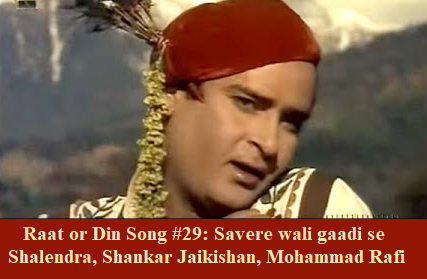
I started this series on my Facebook group Yaad Kiya Dil Ne on 18 Aug 20. Since then, many other members have put up these songs. Here, I shall be giving you one of my own, per day.
This is the Song #29 in the series. I hope you liked Song #28 – Ek din bik jaayega.
Song #29
Savere wali gaadi se chale jayenge
Theme-word: Yeh mela do ghadi ka do dinon ki hai bahar
Remembering Shammi Kapoor on His Birth Anniversary 21 Oct
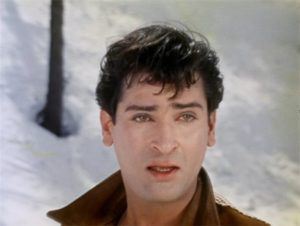 With this, I would have posted all three songs from my ongoing series as tribute to Shammi Kapoor on his Birth Anniversary: Zindagi or Jeevan Song, Beautiful Duet and now Raat or Din Song.
Kashmir Valley Again
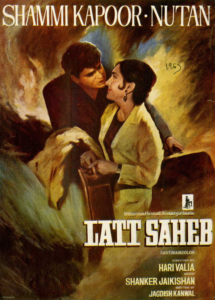 I have given you first two songs from Kashmir Ki Kali and the third is from the 1967 Hari Walia movie Latt Saheb, also shot in Kashmir.
The movie starred Shammi Kapoor as Jangu whose mother Lalita Pawar keeps fearing for his safety; indeed, she gets a premonition that he’d die after Dussehra. He does nothing to assuage his mother’s fears; eg, he fights with and kills a man-eating tiger, and rescues his employer’s daughter Nikki (Nutan) twice whilst risking his own life. Nikki starts loving him that brings the worst in Prem (Prem Chopra) who was promised her hand by her father. Anyway, Shammi Kapoor plods on, including in this song about the transience of life. Later, the same mother wishes he’d be dead!
Shailendra, Shankar Jaikishan and Mohammad Rafi
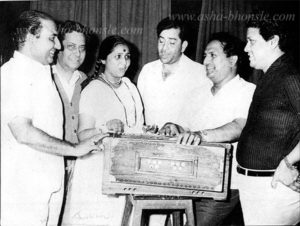 Shailendra wrote the lyrics in such a way so that they can be taken at the light-hearted level of Shammi Kapoor and yet have very deep meaning. He used the same simile as Shakeel Badayuni had used many years earlier in the title song of Mela: Ye zindagi ke mele duniya mein kam na honge, Afsos ham na honge.
Mohammad Rafi’s singing in the characteristic style of Shammi Kapoor is really good; at all times you feel Shammi Kapoor is singing and not Rafi.
Look at the greatness of the lyrics:
सवेरे वालि गाड़ी से चले जायेंगे -४
कुछ ले के जायेंगे
हो कुछ दे के जायेंगे
सवेरे वालि गाड़ी से चले जायेंगे -२
( ये मेला दो घड़ी का दो दिनों की है बहार
समय की बहती धार कहती जाती है पुकार ) -२
पुकार हाय हाय हाय-हाय
महमान कब रुके हैं कैसे रोके जायेंगे -२
कुछ ले के जायेंगे
हो कुछ दे के जायेंगे
सवेरे वालि गाड़ी सवेरे वालि
को: सवेरे वालि गाड़ी से चले जायेंगे -२
र: ( मिलो तो मिलो प्यार से बोलो तो मीठी बात
हमारे बड़े भाग हुई तुमसे मुलाकात ) -२
मुलाकात हाय हाय हाय
मिलेगा कुछ तो दिल जो यहाँ खो के जायेंगे
कुछ ले के जायेंगे
हो कुछ दे के जायेंगे
सवेरे वालि गाड़ी हाँ सवेरे वालि होय-होय
को: सवेरे वालि गाड़ी से चले जायेंगे -२
र: ( निशानी कोई प्यार की तो छोड़ जायेंगे
कहानी कोई प्यार की तो जोड़ जायेंगे ) -२
तो जोड़ जायेंगे हाय हाय
बनेंगे किसी के किसी के हो के जायेंगे
कुछ ले के जायेंगे
हो कुछ दे के जायेंगे
सवेरे वालि गाड़ी सवेरे वालि
को: सवेरे वालि गाड़ी से चले जायेंगे -२
कुछ ले के जायेंगे
कुछ दे के जायेंगे
सवेरे वालि गाड़ी से चले जायेंगे
हो सवेरे वालि गाड़ी से चले जायेंगे
My Own Poetry
I have taken the title from a dialogue in the Rajesh Khanna movie Anand:
“Babumoshai, Zindagi Aur Maut Uparwale Ke Hath Hai Jahanpanah”
जाने कब सांस रुक जाए, गर्म खून हो जाए सर्द?
यह जो महल हमने बनाये हैं, कब हो जाएँ गर्द?
जाने कब फरमान आ जाए मौत के शेहन-शाह का?
कौन जाने कहाँ है मुकाम ज़िन्दगी की राह का?
तिनका तिनका बटोर कर बनाया है जो आशियां,
हमसफ़र ओ रहबरों का बढ़ता हुआ ये कारवां,
कठपुतलियां हैं सब, जाने किस को वह उठा ले?
आज, कल या परसों, कब, कैसे, कहाँ?
मजबूरी ओ उदासी ने बाँध दिए हैं हाथ,
दोस्तों और आशिकों का है पल दो पल का साथ;
अभी तो सुहाना दिन है, रंग है और नूर है,
जाने कब बन जाए यह सियाह अँधेरी रात?
आज हमारी बज़म से जाने कहाँ वह जाते हैं?
कल हम ज़ुबान थे, आँख अब चुराते हैं,
मेला है भाई, भीड़ में भी सब अकेले हैं,
दुनिया यूँ ही चलती है, लोग आते हैं, जाते हैं I
यही हकीकत है तो आता है ख्याल मन में,
क्यों ना खुशियों के बूटे उगाएं दिल के आँगन में?
दोस्ती हो सबसे दुश्मनी का नाम ही न हो,
सब ही खुश आमदीद हों अपने नशेमन में I
ज़िन्दगी मिल जुल के प्यारी ओ हसीन हो,
दोस्तों की यादें खूबसूरत और रंगीन हों,
ज़िन्दगी ज़िंदादिली से जियें हम ऐसे,
के मौत को भी हमारी ज़िन्दगी पर यकीन हों I
ज़ेहन में न रंजिश किसी के वास्ते हो,
“छोटी सी ये दुनिया, पहचाने रास्ते” हों,
वफायें हों, जफाओं से कोई नाता ही न हो,
दिल में गर्माहट हर किसी के वास्ते हो I
मौत के फ़रिश्ते को पुर उम्मीद मिलें हम,
वक़्त आने पे हमारे हँसते हुए निकले दम,
छोड़ जाएँ खुशियां सब अपनों के लिए,
न आंसू हों, न पशेमानी, न ख़ौफ हो, न ग़म I
ऐ खुदा, तेरा ‘रवि’ हर दम तैयार हो,
मुस्कराते ले जाना, न के जब बिमार हो,
जीते जी मेरे अपनों का हो घर संसार,
मेरे मरने पे भी उनकी ज़िन्दगी में बहार हो I
The Song
Ladies and gentlemen, please enjoy a song sung by Mohammad Rafi for Shammi Kapoor in the 1967 movie Latt Sahib; Shailendra having penned the song and Shankar Jaikishan having composed it: Savere wali gaadi se chale jayenge…
I hope you liked my choice of Raat or Din Song #29.
Please await Raat or Din Song #30- Jab raat nahin katati.
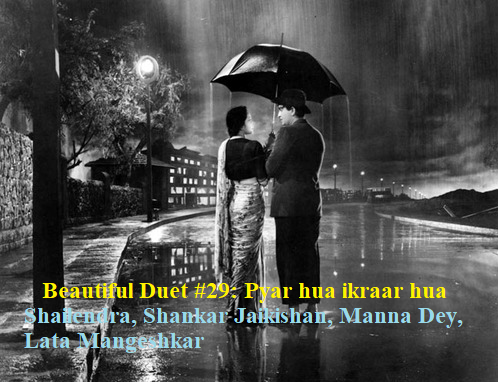
 In the Raat Or Din Song #59 today: O mere sanam, O mere sanam, I brought out how Shankar Jaikishan were and are never thought of separately. This happened even after Jaikishan left us early (not yet 42 years when he died on 12 Sep 1971) and the name of the Music Director continued being Shankar Jaikishan.
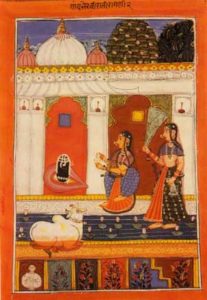 Raag Bhairavi is the basic raag of the Bhairavi Thaat. Bhairavi makes use of all the komal swars, Rishabh, Gandhar, Dhaivat, Nishad. When singing compositions in Bhairavi raag, the singers however take liberty to use all the 12 swars. Bhairavi raag is named after the shakti or feminine aspect of the cosmic life force, which is personified as a consort to Lord Shiva. Bhairavi is a powerful raag filled with devotion and compassion. Its Jati is Sampurna – Sampurna, which means all seven swar (heptatonic) both in Aaroha and Avaroha. In a concert Bhairavi is usually the concluding raaga since it is supposed to cure mistakes of the earlier performances. Hence, if a concert has started at night (which is usually the case), Bhairavi would be played in the wee hours of the morning.
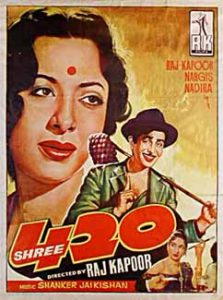 It is from the 1955 Raj Kapoor film Shree 420 starring him in the title role with the heroine of 17 of his movies, Nargis opposite him.
 Until Sameer (Anjaan’s son) came on the scene as a Lyricist, Anand Bakshi had been the most versatile lyricist in Hindi movies. With Laxmikant Pyarelal alone, he wrote songs for 302 movies, with another hundred or so with RD Burman.
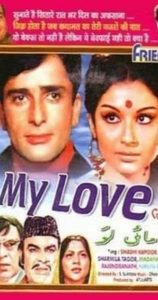 Here, Anand Bakshi, writing for Shashi Kapoor in the 1970 S Sukhdev movie My Love (with Sharmila Tagore) blames his broken heart in Love to his Destiny. Indeed, he adds that if it hadn’t been this sorrow, it would have been some other but he was destined to face sorrows!
 At first, a few words about its composer Daan Singh (1927-2011). He was one of the most neglected music directors of Hindi films, yet he composed many everlasting melodies, especially the ones with Mukesh.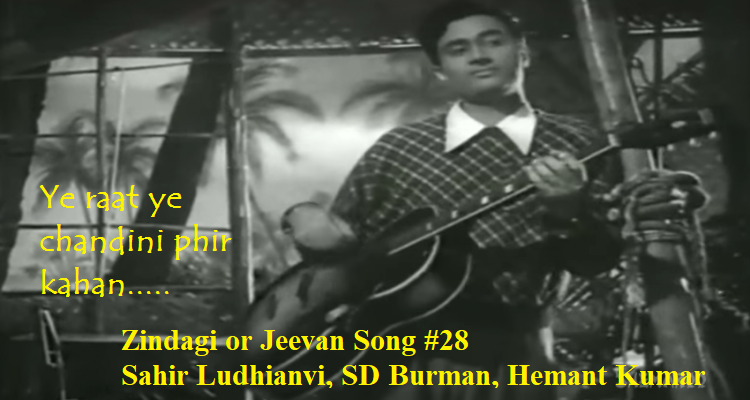
 This was a negative role by Dev Anand (not a good guy but a con-man Tony) and the only movie in which the director Guru Dutt used religion (Catholic faith of Goan fisherwoman Maria played by Geeta Bali (superbly portrayed by her) to resist the seduction of Dev Anand as the deceitful man Tony Fernandez.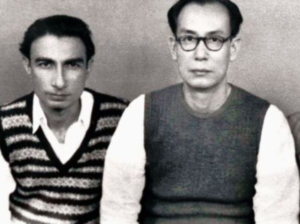
 Hemant Kumar sang only 17 songs (duets included) that were picturised on Dev Anand. And yet, each one is unforgettable. Chup hai dharti, chup hai chand sitaare, Teri duniya mein jeene se to behtar hai ke mar jaayen, and Hai apna dil to awaara are some that easily come to mind in addition to the two that I have mentioned.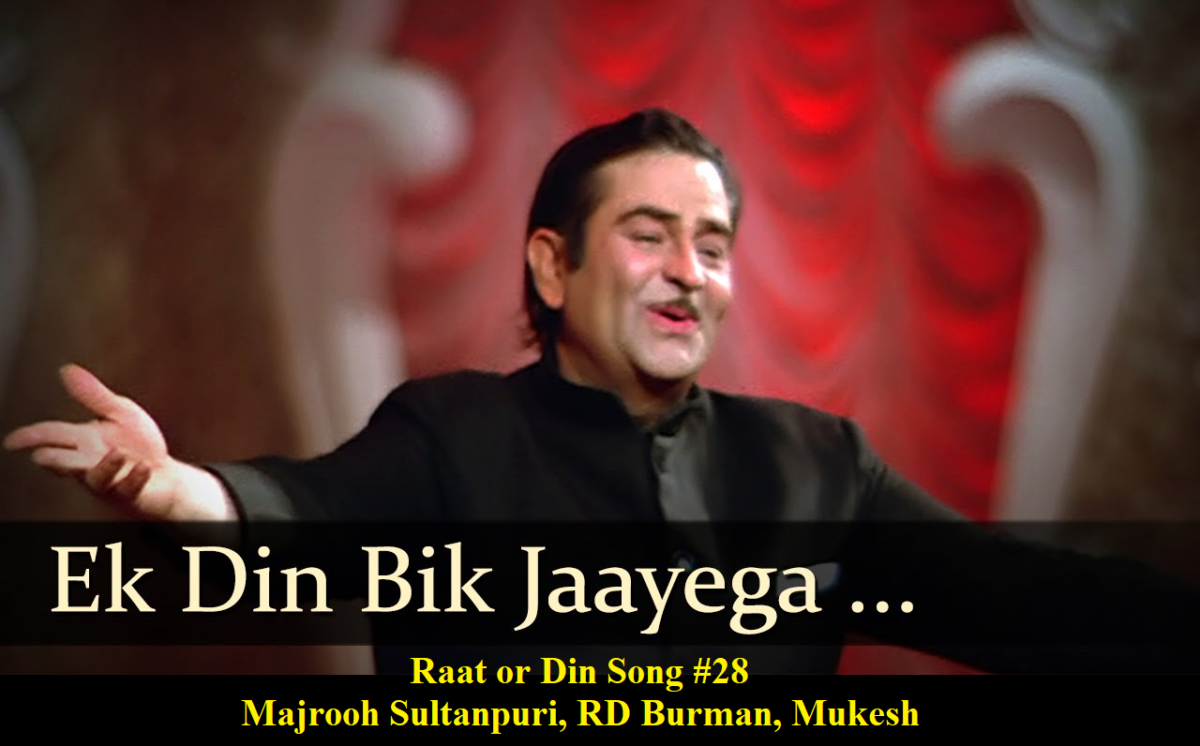
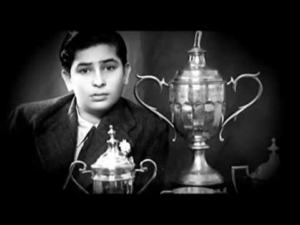 Prithviraj Kapoor introduced Raj Kapoor in the 1935 Debaki Bose movie Inquilab, at the age of only ten years. The movie had Kidar Sharma as a set painter and bit role, also procured through Prithviraj Kapoor. He was so grateful to Prithviraj Kapoor that when he directed his first movie Neel Kamal in 1947 (the longest run by Madhubala in this movie whilst singing a song!), he took Raj Kapoor as the hero in his debut role as hero.
 Twenty eight years later, at the age of nearly 51 years, Raj Kapoor was still going strong after having spent 41 years of acting in Hindi movies. The name of the movie was Dharam Karam, a movie produced by Raj Kapoor and directed by his song Randhir Kapoor.
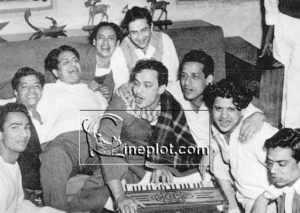 Prithviraj Kapoor initially and then Raj Kapoor set up a team in Hindi movies that made the best movies and songs: Shankar Jaikishan as Music Director, Hasrat Jaipuri and Shailendra as Lyricists, KA Abbas as story teller, Radhu Karmakar as cinematographer and so on.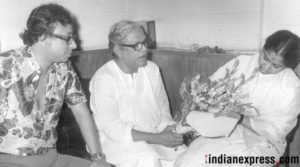
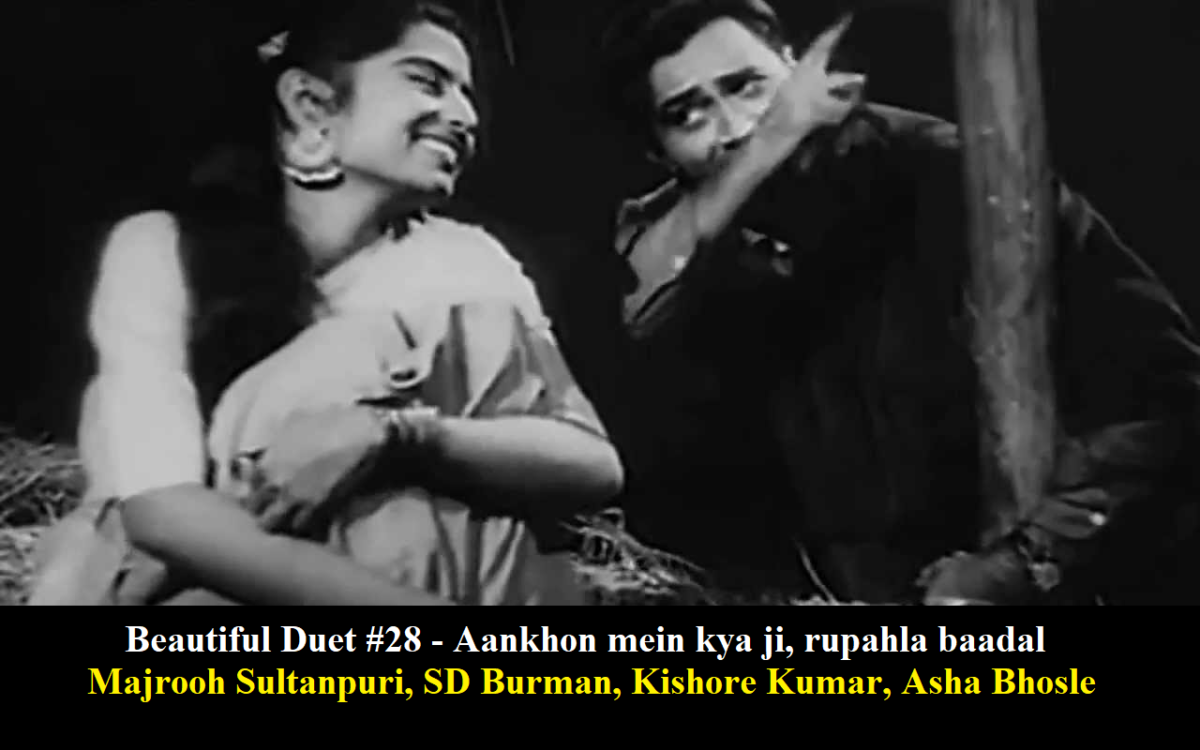
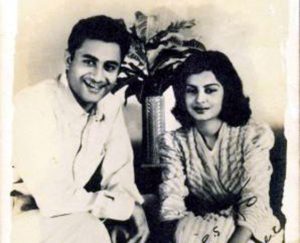 If that song displays the chemistry between Dev Anand and Kalpana Kartik (nee’ Mona Singha) (she did her college time in Shimla’s St Bede’s College whilst Dev Anand was a student of Government College, Dharamshala. Surely, the hills lent them their charm and spontaneity).
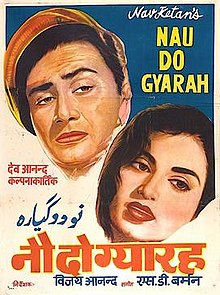 It was an important movie in Hindi films. This was the debut directorial attempt by Dev Anand’s brother Vijjay Anand who proved to be as good a director as Dev Anand was as an actor or brother Chetan Anand was as Director.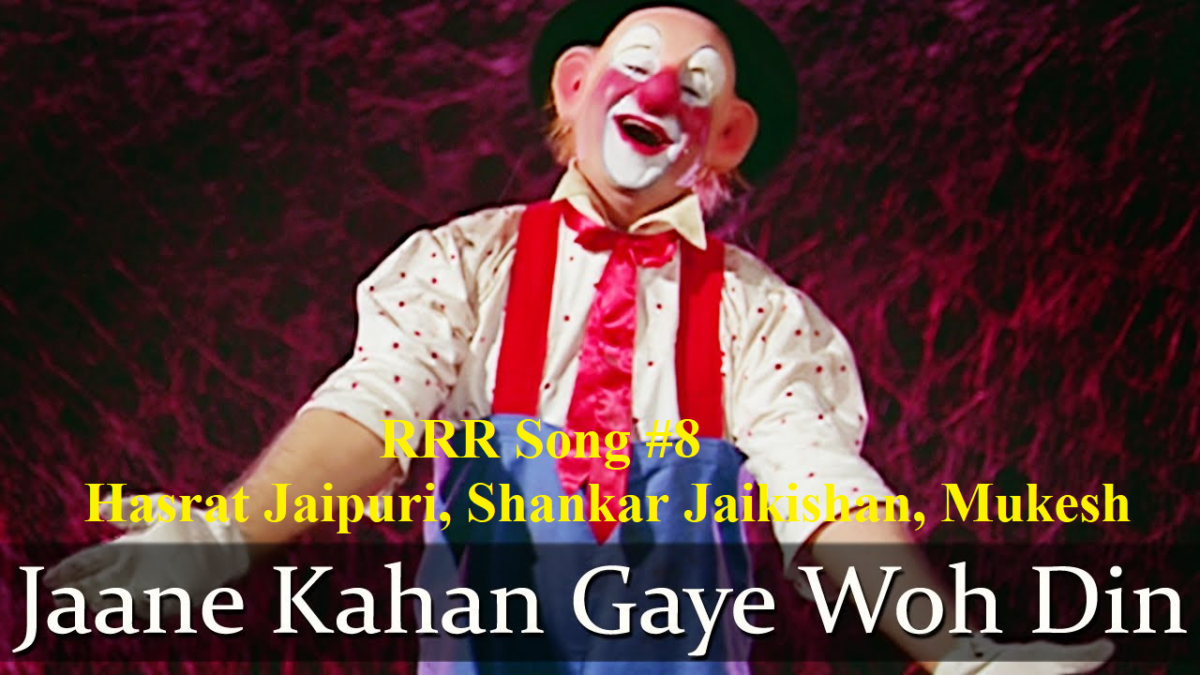
 These are exactly the emotions portrayed by Hasrat Jaipuri in this 1970 movie Mera Naam Joker that was produced and directed by Raj Kapoor on a story by KA Abbas. The song instantly became a super hit as were the other songs of the movie. The movie didn’t do commercially very well. However, later, it is recognised as one of the most iconic movies of Raj Kapoor.
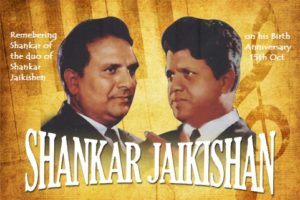 Shankar Jaikishan were very well versed with raagas and went beyond some of the raagas to compose their songs. Of course, the raag that was their (Jaikishan’s) favourite was Bhairavi. There are movies in which they have composed as many as four songs in this pious raag.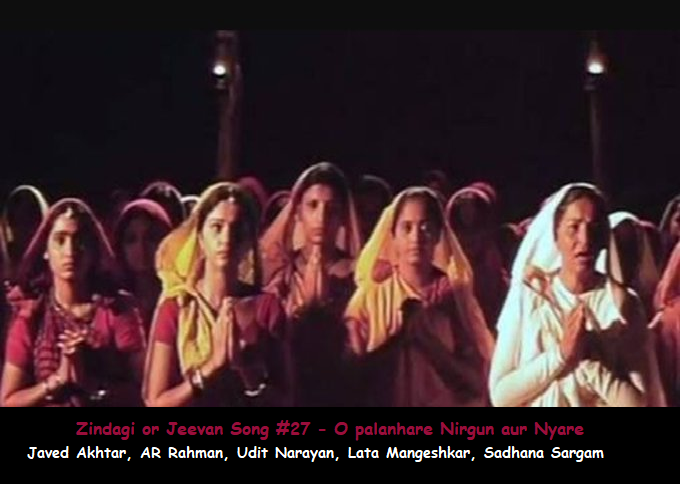
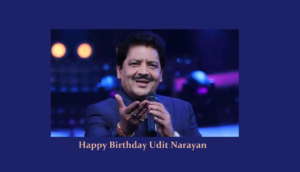 He was born on this day in 1955, The 1980 movie Unees Bees was a milestone for him since he got to sing with Mohammad Rafi. Later, he also got a chance to sing with Kishore Kumar.
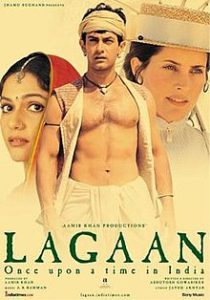 Coincidentally, even this song is from an Aamir Khan production Lagaan and picturised on Aamir Khan and Gracy Singh. He got to sing with Lata Mangeshkar and Sadhana Sargam.
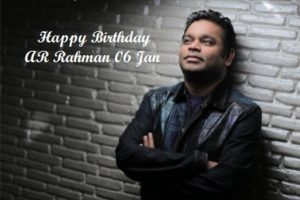 Since the time AR Rahman came on the scene as Music Director and Composer, he has not only won more awards than any other MD in history but also his compositions have transcended all boundaries of music; both classical (raaga based) and others.
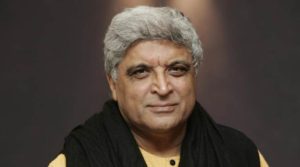 In this one, on the lyrics of Javed Akhtar, he has come up with a tune that portrays not only the emotions of the villagers as supplicants (the only right way to petition God) but a quiet faith that God would listen to them. Whilst the hymn is being sung, the mood shifts from desperation and despondency to silent confidence. All credit to AR Rahman for a composition that would convey this.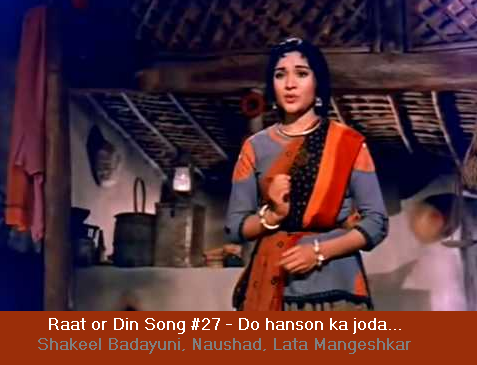
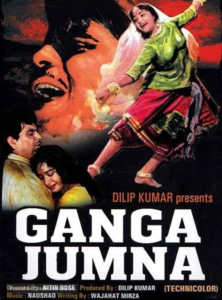 All in all, the 1961 movie Ganga Jumna became an iconic movie indeed. I saw it in a matinee show in Vasco when I had already joined the Navy and observed that people sang every song together with the actors and spoke most dialogues too.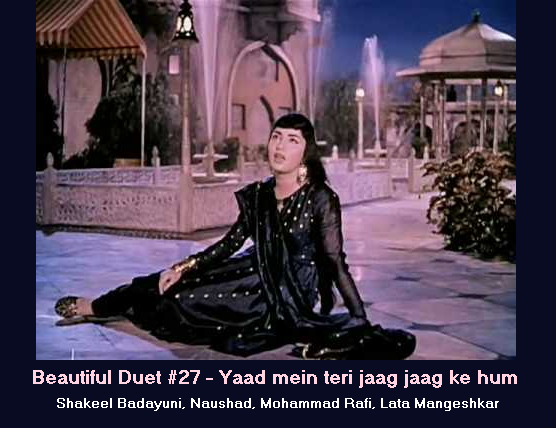
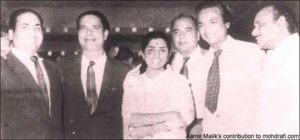 The 1963 Harnam Singh Rawail movie Mere Mehboob has what I feel is the best ever written not just by Shakeel Badayuni but the best song ever: Mere mehboob tujhe meri mohabbat ki kasam. It was sung separately (not as a duet) by both Rafi for Rajendra Kumar and Lata Mangeshkar for Sadhana. That was in Raag Jhinjhoti and an outstanding Raat Or Din Song. However, I can never put it up.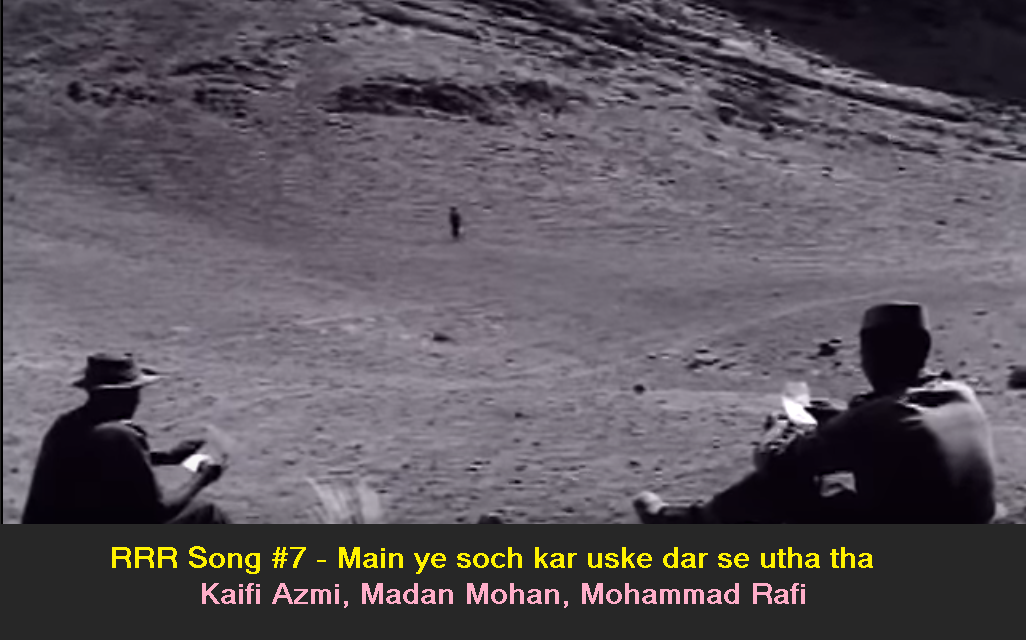
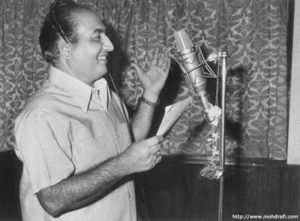 When you actually listen to Mohammad Rafi you are bound to say, for the nth time, that there was no one like him and no one is going to be. He was the god of songs. All of us have our favourites such as Hemant and Mukesh and yet we know, there is no comparison with Rafi. The other day I mentioned that Lata ji (my favourite female singer) was the delight of the composers, especially Shankar Jaikishan. She delivered exactly what was expected of her. Mohammad Rafi was several steps ahead of her in that he showed the composers how much more they could expect from him, every time. When he died, in Bombay, at the age of just 55 years, all composers admitted that they had still not exploited Rafi’s complete capabilities. Achha hai kuchh le jaane se dekar hi kuchh jaana.
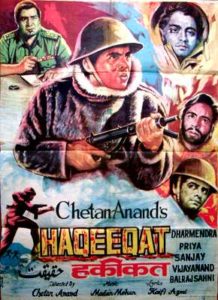 Take this song from Chetan Anand’s 1964 movie Haqeeqat explaining the debacle of 1962 Sino Indian War. Madan Mohan, the best composer ever for songs with pathos and agony, was trying in this song a new concept in that the song was like a free flowing poem, without traditional and recurrent mukhada and antaras. He actually asked Kishore Kumar and Manna De to sing it and then, disappointed, he turned, once again, to Mohammad Rafi.
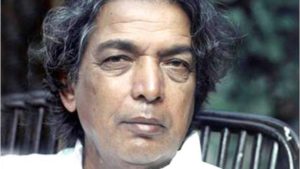 Of all the lyricists that I know of, Kaifi Azmi mastered the art of giving vent to the most intense and most powerful emotions through simplest words. One author who did that is my favourite: Ernest Hemingway. Likewise, taste this from Kaifi in Hanste Zakhm: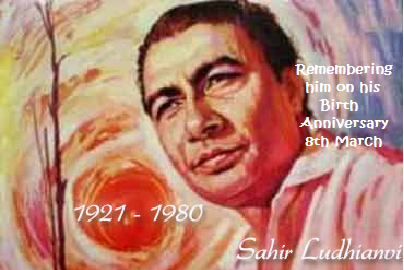
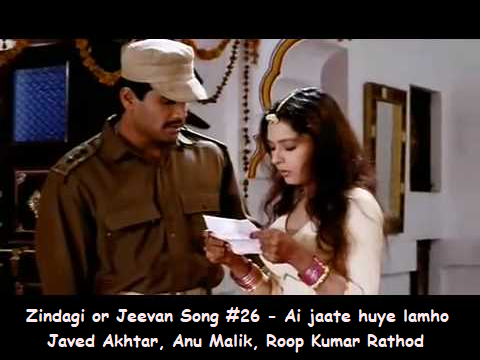
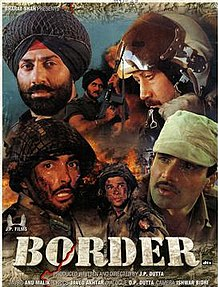 Films regarding patriotism and valour of the armed forces makes the makers laugh all the way to the bank. Being a member of the armed forces, seeing some of them, I too get carried away that perhaps they really feel for the brave jawans. Far from it.
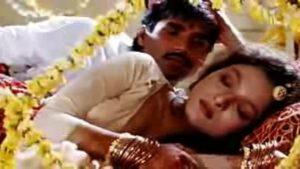 One of the clichés for war time movies is that on the honeymoon night (the focus of Hindi movies is always love) a telegram is received calling him to border. Somehow, wherever the loving couple is, the men from his unit find him to deliver the telegram (thank God that the Indian Postal authorities have now done away with the telegram and Hindi film makers will have to find some other way of appearing the poor guy consummating his wedding).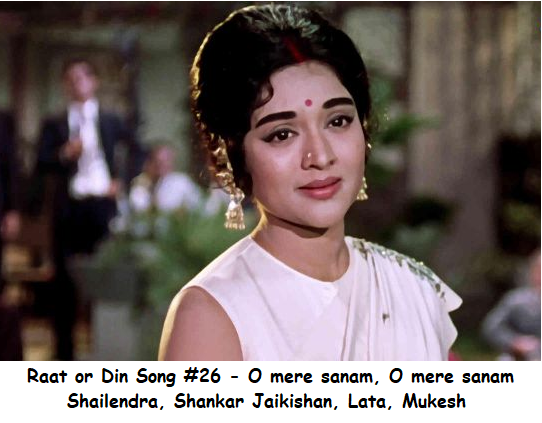
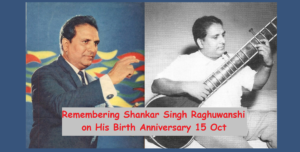
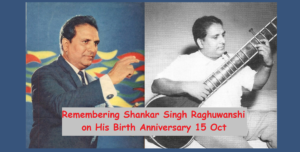 So strong was the bonding between Shankar Singh Raghuwanshi and Jaikishan Dayabhai Panchal that they were never addressed singly; they were always known as Shankar Jaikishan. Jaikishan was seven years younger to Shankar and died 16 years earlier and yet the Music Director’s name continued being Shankar Jaikishan.
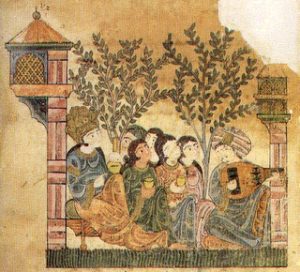 Raag Shivaranjani is a Raag that belongs to Kafi Thaat. The mood of the raag is Karuna Rasa (pathos) that suited both Shakeel and Ravi very well. However, the MDs who had this as their favourite (both of them as opposed to Bhairavi that was favourite of Jaikishan only) were Shankar Jaikishan. Some of their popular numbers in this Raag are: Awaaz deke hamen tum bulao, Baharon phool barsao, Dil ke jharokhe mein tujhako bithakar, Jaane kahan gaye woh din, and O mere sanam.
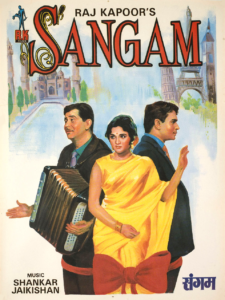 The main thing is Karuna ras. It is, as seen by me, the best song of the 1964 Raj Kapoor movie Sangam that portrayed a Love Traingle between Rajendra Kumar, Vyjaynthimala and Raj Kapoor. She used to love Rajendra Kumar and vice versa. However, Raj Kapoor swept her off her feet and so compulsive and obsessive was his love (Bol Radha bol sangam hoga ke nahin? and O mehbooba) that she married him.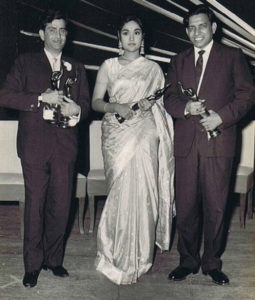
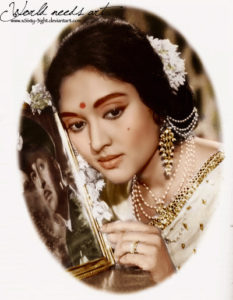 Hats off to Raj Kapoor for having made a movie wherein, like Bimal Roy’s Madhumati, Vyjayanthimala is the main protagonist of the movie. Here, in the end, she rues being tossed about between the two bosom pals: Rajendra Kumar and Raj Kapoor.
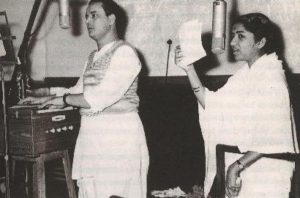 I could have given this song also in the Beautiful Duets series but that’s not my style. Lata sang for Vyjanthimala and Mukesh has always been the singing voice of Raj Kapoor in his movies.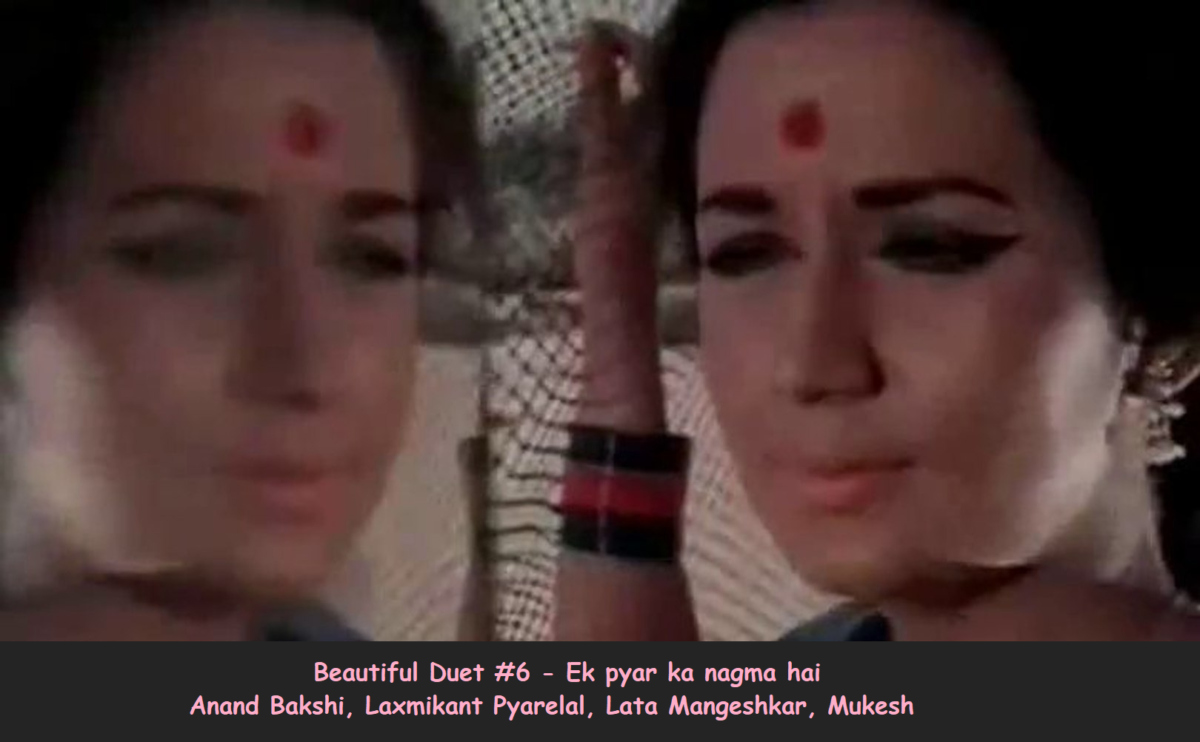
 Santosh Anand started his career as Lyricist with Purab Aur Paschim in the year 1970. That movie was, of course, produced and directed by Manoj Kumar. This song of the 1972 movie Shor, also produced and directed by Manoj Kumar, has been his most popular song. It was composed by Laxmikant Pyarelal and made full use of violin, the first instrument that Pyarelal learnt from his Goan guru Antony Gonsalves (Pyarelal paid him tribute by having a song on him in Amar Akbar Antony). Santosh Anand received two Filmfare Awards since then: the 1974 one for Roti Kapada Aur Makaan song Main na bhoolunga and 1982 one for Prem Rog song Mohabbat hai kya cheez.
 Both the songs for which he received Filmfare Awards were composed by Laxmikant Pyarelal.