THE BEST OF ‘YAAD’ SONGS

Love is a many splendoured feeling; even if you don’t get anything out of Love (eg, the 1955 movie Udan Khatola’s song written by Shakeel Badayuni: “Muhabbat ki raahon mein chalna sambhal ke; yahan jo bhi aaya gaya haath mal ke” (Walk cautiously on the paths of Love; anyone who walked this way, lost everything), you at least get Yaad (Memory or Rememberance). Indeed, poets of yore, thought of Yaad as a person. In this the best is Raja Mehndi Ali Khan who wrote for the 1965 movie Bekhabar(Out of Touch or Devoid of Reality) as folows:Phir teri yaad naye geet sunane aayee
Dil ki duniya mein naye deep jalane aayeeYe khayalon mein bhi khwabon mein bhi tadpati hai
Muskurati huyee ye keh ke chali aati hai
Main tujhe ishq ke sholon se bachane aayee
Phir teri yaad naye geet sunane aayeeYaad-e mehboob idhar aa main tujhe pyar karoon
Tu agar jaan bhi mange to na inkar karoon
Ek diwane se kyun pyar jatane aayee?
Phir teri yaad naye geet sunane aayee
(Once again your memory has come with a new song,
She has come to light new lamps in the world of my heart.

She makes me miserable in my thoughts, in my dreams,
Smilingly, she approaches me with these words:
“I have come to protect you from cinders of love”

My beloved’s Memory, come, I shall make love to you,
If you ask me for my life, I shall not flinch to say ‘No’
Why have you come to express Love to a Crazy-in-Love?)

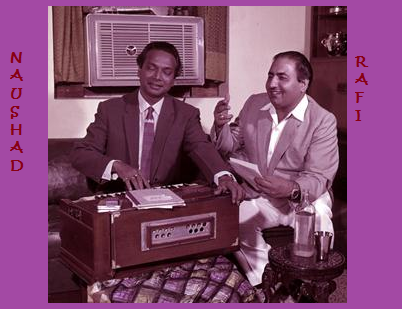
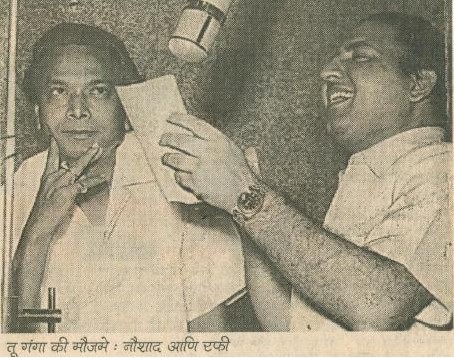
Is this my best choice? As always, the best actually is Mere Mehboob by Shakeel, my favourite lyricist (Read The Best Of Old Hindi Songs – Rafi, Shakeel, Naushad And Dilip Kumar Together) I can’t, however, put it up being too sacred a song to be put up on this blog:

Yaad hai mujhako meri umr ki pehli vo ghadi
Teri aankhon se koi jaam piya tha maine
Meri rag rag mein koi barq si lehraayi thi

Jab tere marmari haathon ko chhuya tha maine

(One only has to imagine the scene:
I remember that first time of my life
I drank from the wine-glass of your eyes
In every sinew I had an electric feeling
When I held the marble of your hands)

However, here is Mohammad Rafi’s rendition of Phir Teri Yaad:

https://www.youtube.com/watch?v=_SF3p6BETxo

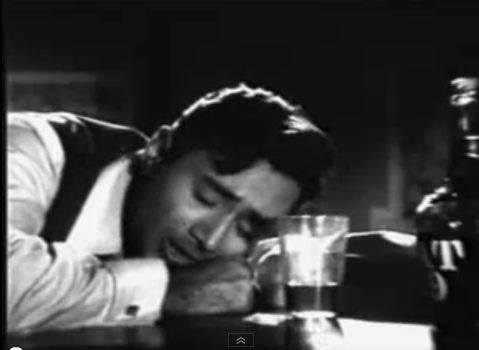
Hemant Kumar Mukhopadhyay has been my favourite singer. He was born in Varanasi but shifted to Calcutta, His was a life given to music having recorded his first song for All India Radio in 1933. His first album in Bengali was released in 1937 and since then there was no looking back. All his songs transport you instantly into the world of the song. Here is my favourite Yaad song for the 1960 movie Manzil. The lyrics are by Majrooh Sultanpuri and music by SD Burman. No one knew how to act like a Sharabi (drunkard) better than Dev Anand (he acted in the movie by this name):

Rajinder Krishan was born in a Punjabi Duggal family in Jalalpur Jattan in Gujarat and then shifted to my hometown Shimla. His interest in poetry made him participate in many poetry competitions in Shimla and then, in mid 1940s, he shifted to Bombay to become a screenwriter. His first screenplay was for the 1947 movie Janta. He won a jackpot of Rupees 46 Lakhs in horse racing and became very rich. However, richer than all his riches was his poetry. He wrote this Yaad song for the 1961 movie Sanjog for which Madan Mohan gave music and Mukesh sang. The song is “Bhooli hui yaadon mujhe itna na satayo; ab chan se rehne do mere paas na aayo”.

Daman mein liye baitha hoon toote hue taare,
Kab tak main jiyunga inhi khvaabon ke sahare,
Diwaana hoon ab aur naa diwaana banao
Ab chan se rehne do….

https://www.youtube.com/watch?v=vslBZB58SGI

Suraiya Jamaal Sheikh was popularly known as Suraiya and sang many beautiful songs for the Hindi films in 1940s and 50s. She was born in Gujeranwala, Punjab (now in Pakistan). She sang Rajinder Krishan’s song ‘Yaad aa raha hai dil ko bhoola hua zamaana’ for the 1949 movie Amar Kahani that starred her. Please read the superb lyrics:

Yaad aa rahaa hai dil ko
Bhoola huaa zamaanaa

Har shay pe zindagi thi har cheez par jawaani
Aaankhon mein ik kahaani honthon pe ik taraanaa
Yaad aa rahaa hai dil ko….

Unaki adaayen dil ko ab yaad aa rahi hain
Chupake se unakaa aanaa aur mujhako choom jaanaa
Yaad aa rahaa hai dil ko..

Dil ko khabar nahin thi ban jaayegaa kisi din
Do dil kaa muskuraana rone kaa ek bahaanaa
Yaad aa rahaa hai dil ko…

Unfortunately I couldn’t find the song video by itself. However, here is the audio of the song:

 Talat Mehmood was born in Lucknow (UP) on 24th Feb 1924. He was the most famous singer of ghazals in the Hindi movies and had a unique style of his own. He started singing the ghazals of great Urdu poets such as Daag, Mir, Jigar at the age of 16 on All India Radio in Lucknow. In 1941 he cut his first disc with HMV. He was very handsome and also acted in thirteen movies from Rajlaxmi in 1949 to Sone Ki Chidiya in 1958 opposite Nutan. Meri yaad mein naa tum aansoo bahana is one of his best songs for the 1951 movie Madhosh starring Manhar and Meena Kumari. Raja Mehdi Ali Khan provided the lyrics and Madan Mohan Kohli the music. Raja Mehdi Ali Khan was born in Karimabad in what is now Pakistan and his first film as Lyricist was Do Bhai in 1946. Madan Mohan was a contemporary of Raja Mehdi Ali Khan having been born on 24 Jun 1924 in Baghdad, Iraq. He joined the army and was commisioned in 1943. However, his love for music claimed him and he got his first big break in the Hindi movies in 1950 movie Aankhein. There was no looking back after that. Listen to this Yaad song put together by the three of them:

https://www.youtube.com/watch?v=DUGjgk29cp4

 Alright, now it is time to get back to Mere Mehboob; though not really the title song. I have written enough about Shakeel, Naushad and Rafi and hence I don’t have to do it again. And what can you write abaout Lata Mangeshkar, the most versatile female singer in the Hindi movies industry, who has sung more than 50,000 songs in various languages and has received every conceivable award including Padma Bhushan, Padma Vibhushan, Bharat Ratna and Dadasaheb Phalke Award. Indeed, from 1980s she has opted out of receiving any Filmfare annual award so as to give encouragement to young emerging singers. The song Yaad mein teri jaag jaag ke ham raat bhar karvatein badalte hain is a beautiful number:

As the name suggests Majrooh Sultanpuri was born in Sultanpur in UP in 1919. Between 1946 and 2000 (when he died) he earned a name for himself as the finest avant-garde poet of Urdu language. Some of his songs are: Babuji dheere chalna, Achha ji main haari, Ai dil mujhe aisi jagah le chal, Dekho mausam kya bahaar hai, and Humein tumase pyaar kitna. Roshan, the music director, was born on 14 Jul 1917 in Gujeranwala, Punjab (now in Pakistan) and was the father of actor, director Rakesh Roshan and music director Rajesh Roshan, and grandfather of actor Hritik Roshan. He came to Hindi movies in 1948 and composed some delectable music until he died in Nov 1967. The song Aapne yaad dilaya to mujhe yaad aaya is a duet between Rafi and Lata and is in the 1962 movie Aarti. Enjoy:

 Lets move on to the versatile and lovable Shailendra. He was born in Aug 1923 and died in Dec 1946 at a very young age. He joined Indian Railways and came to Bombay in 1947 where in a poetry recitation the great Raj Kapoor noticed him. Rest is history. He paired with Shankar Jai-Kishan and wrote some of the most beautifully romantic songs for Raj Kapoor that were invariably sung by Mukesh. Here is an unforgettable Yaad song from the 1959 movie Kanhaiyya starring Raj Kapoor and Nutan. The song is: Yaad aayi aadhi raat ko. Enjoy:

https://www.youtube.com/watch?v=xF52Y3CQmXQ

Shailendra paired with Shankar Jai-Kishan to write some very soulful numbers for Dil Ek Mandir starring Rajendra Kumar, Meena Kumari and Raj Kumar. This one is an all time favouite of mine:

Yaad na jaae, beete dinon ki
Jaake na aaye jo din, dil kyun bhulaaye, unhen
Dil kyun bhulaaye
Yaad na jaaye …

Din jo pakheruu hote, pinjare mein main rakh detaa
Paalataa unako jatan se
Moti ke daane detaa
Seene se rahataa lagaaye
Yaad na jaaye …

Tasveer unaki chhupaake, rakh duun jahaan ji chaahe
Man mein basi ye suurat
Lekin mite na mitaaye
Kehane ko hain vo paraaye
Yaad na jaae …

https://www.youtube.com/watch?v=2On9ix8wy9w

Indeed, that’s the theme of this article: Yaad doesn’t ever leave you.

As we come to the end of the article, you must be wondering how many really good Yaad song I have left out. Well, I can’t go on and on and it is pretty late in the night. Here is the song from the 1959 movie Satta Bazaar and you can’t help keep singing it whenever you hear it. Gulshan Bawra wrote the lyrics and Kalyanji Anandji provided the music. My favourite singer Hemant da paired with Lata ji to sing one of the best Yaad songs that leaves you with a lump in your throat. The song is ‘Tumhein yaad hoga kabhi hum milenge‘; it is picturised on Suresh and Vijaya Choudhury:

Yaad never dies. Yaad takes us back to those times that were. As JM Barrie wrote, “God gave us memories so that we might have roses in December.” The lyricists, music directors and most singers of that era are no more but the roses are still here, as fresh as ever.

FINALLY – MAN OVERBOARD

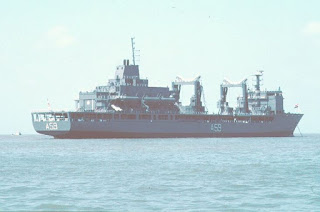
I was commanding the Fleet Tanker Aditya in the year 2001. I had a boss who was very understanding, kind and encouraging; but, I had my boss’s boss who was a terror. The latter had made no secret of his desire to see me land squarely in the gooey stuff. So, he tried sending me into orbit at the slightest pretext. It would have given him immense satisfaction if I would make some blunder or the other so that he would feel vindicated that I didn’t deserve to be given command of a catamaran let alone of a major warship. Therefore, throughout my tenure I had the Damocles sword hanging on my head and it made me very uncomfortable indeed. His spies were everywhere to give him the ‘good news‘ of my failure so that he could finally rejoice and have his I-told-you-so smirk.

Aditya, the Fleet Tanker I commanded

In an earlier appointment, he had me punished for having complained about a Fire-fighting system not operational since its commissioning; he, through his minions, turned the tables on me by proving that actually the system became non-ops by my having done something to it. It was the kind of stuff that Franz Kafka became famous in depicting or Vijay Tendulkar tried to satirically bring out in the unforgettable movie ‘Jaane Bhi Do Yaaro‘, in which the complainants suddenly found themselves behind bars as accused or convicts. But, this man was undeterred by such comparisons. After a Board of Inquiry a Show Cause Notice has to be issued within three months. His came to me more than six months later. He circumvented it by writing to me (I still have that letter), “It was issued six months back but due to a clerical lapse it didn’t reach you.” When it comes to respect for law, some of the senior officers in the armed forces have a simple tenet, “Hum God nahin hain; per God se kam bhi nahin hain.” (I am not a God but I am no less than a God).

On another occasion he ordered an unlawful and unethical Board of Inquiry whose charge read, “To investigate lapses, if any, on the part of the officer”. What was the trigger for this? Well, my successor had been guilty of wrongful destruction of classified documents. He felt that if he could somehow find something against me too, it would make his day. In short, he was gunning for me with vengeance.

The tales of his eccentricity and megalomania are legends in the Navy; he simply removed anyone – like a fly in his coffee – who made the unpardonable mistake of disagreeing with him on anything. In the inimitable Wodehouse style, he’d raze such a person to the ground and jump on his remains in hobnobbed boots. Now that we have a curious drama unfolding before our eyes about the date of birth of the Army Chief, I keep reminding myself that I have already seen the worst in skullduggery by a very senior officer. Others are just pale imitations of the original, that is, him.

The long and short of it was that, throughout my tenure as the Commanding Officer, life hung from a thin string that could snap anytime. His way to quarantine me (as if I were a leper) was to always keep me at anchorage or sailing so that I could never rest or attend to maintenance of the ship. All holidays were invariably spent at sea by my crew (ship’s company in the naval parlance) and to give credit where it is due, my officers and sailors kept chins up and never complained or let me down. Once he had his minions chemically examine a slick of oil in the dockyard so that should it come out that it had originated from Aditya he could chew me.

Despite all this I enjoyed my command as any officer of the Executive Branch in the Navy would do. I was, however, always on guard throughout the innings like a die-hard batsman.

Finally, my tenure was coming to an end without incident and I had started congratulating myself. On my last sailing with the Fleet I was to take my successor for OJT (On Job Training). During this sailing, as if the urgent prayers of my boss’s boss were overwhelming the gods, everything that could go wrong went wrong. I had a minor fire on board, a case of steering failure, fuelling rig failure etc. Still everything was under control.

On the night before returning to home port, I was on the Bridge of the ship until late in the evening busy with all the Fleet exercises. The Fleet Commander passed his night instructions. I read through these and gave appropriate orders to my own ship’s company and then came down to have my dinner. I had just stepped into my cabin when I heard an urgent announcement, “Man Overboard, Man Overboard.”

A Man Overboard is one of the biggest nightmares of a Navy man. All Officers of the Watch know the procedure by heart. I rushed to the bridge and asked the Fleet Commander’s permission to act independently and manoeuvre to recover the man. As I performed the Williamson Turn (made famous by an USNR officer John Williamson in 1947), so as to retrace the ship’s track, I had two thoughts in my mind: one, why did it have to happen to me at the fag end of my command? and two, how could a man fall overboard from such a large ship that is steady as a rock (172 metres and tonnage comparable to a light aircraft carrier when fully loaded)? A Williamson turn looks as follows: the first helm is towards the direction of the fallen man so as to keep the stern and hence the propellers away from the man:

This is left handed Williamson Turn for a man having fallen on Port side; it can be right handed for a man overboard on Starboard side

In the meantime we went through the other drills, eg, keeping a boat ready with a diver. I silently prayed that the man should be alive. As we retraced the track, the powerful searchlight from the signalling projector illuminated the surface of the sea in the ahead sector. And finally, we saw a head bobbing in the swell. We approached closer and started lowering the boat. It was taking time and we were afraid that the man might lose his life. The Senior Engineer of the ship (a qualified diver) asked my permission to dive straight from the ship into the water and save the man. I weighed the pros and cons and considering that a boat was already being lowered, I gave him permission.

In the meantime, the Fleet staff had been constantly asking me to provide SITREP (Situational Report). What followed was simply comical. It came out that nearly 50 nautical miles into the sea, there was a fishermen recovering his fishing net by jumping directly into the sea. Soon we saw his boat about a cable away. My ship’s Lifeguard Sentry at the quarterdeck had done the right thing by throwing lifebuoy for him and then raising the ‘Man Overbaord’ alarm. Why couldn’t the bridge see him and his boat? Well, the Indian fishermen at sea, many times, don’t use any light and are difficult to spot in the dark (they are also so small a target that the radar won’t pick them up too). Those who have the notion that the navy and the coast guard would be able to “seal our maritime borders against such threats as Kasab coming to our shores by a small boat”, have no idea of the mammoth task.

We gave some food stuff and cigarettes to the fishermen and soon we were on our way; having denied my boss’s boss the last opportunity to fix me. When I went to call on him just prior to his retirement, he told me, “Perhaps in your case my staff misguided me.” I wished he had not lied at least on my last meeting with him.

Finally…….Man Overboard.

THE NUMBERS GAME

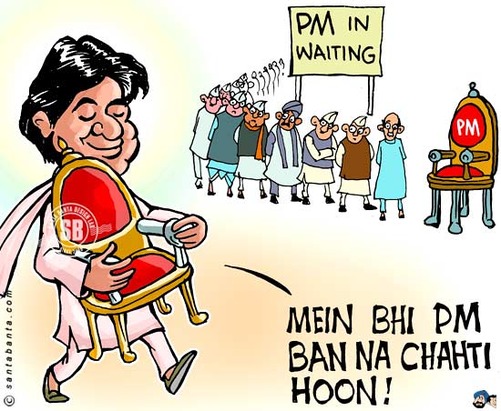
Man is a social animal; it is thus natural for him to crave for acceptance in society and excel. All our virtues are relative: there is no absolute virtue that we have (Read my post: Absolute Virtue): it is always in comparison to others. Rare are the people who can be happy  by themselves rather than as happy as such and such or happier than he or she. For others, nowadays, it is pure and simple ‘Numbers Game‘ in every sphere of the life. There is no real litmus test of quality. No one has the time.When a person gets elected, for example, in a democracy, it is taken for granted that he is the best suited for the job. In India at least (and I am sure it must be the case elsewhere too), the majority bestows on this person, so elected, to become arrogant about the power that he enjoys. Yes, the majority acceptance gives him powers that, say, Vincent Van Gogh won’t have enjoyed during his lifetime. Power is derived from influence: how many got converted, how many are in agreement, how many like it? (Read my post Like or Why Read When You Can ‘Like’?) In the Christian community, for example, one of the criteria of the effectiveness of a priest is the number of people he is able to convert.

The Numbers Game is ingrained in our systems. Do you remember the time when we used to put show ‘Stamp Collection’ as a hobby? When you had collected about ten thousand of them you could join the real league irrespective of whether you had any rare ones or not. However, despite the numbers, the rare ones actually mattered; a small minority knew its worth. But, then came the modern times and the Social Media; the Numbers Game became the raison d’etre’ of all of us. A few decades back Prannoy Roy came on the television and proved that a certain small swing of, say, 2.45 percent, made a party, say Congress, come to power (I have already explained what ‘power‘ means). I have explained elsewhere that the government in power enjoys as little as 9 percent of the electorate’s votes (Read my post: How Proud Should We Be Of The Indian Republic at 62?). Hence this swing of 2.45 percent, say, does matter a lot.

Courtesy: Jack Rabbit

On the Social Media, one enjoys power by accumulating larger number of friends, followers, likes, comments, shares. This Numbers Game is some sort of a race. TV channels nowadays routinely Break News (Read my Breaking News – Indian Style); for them TRPs is a pure Numbers Game and they would go to any extent to get those numbers right. My friend Hans Sunny from Atlanta, USA is an unparalleled wit I have discovered. However, he recently complained that in comparison to what he puts up, certain girls have to just put up something inane such as ‘Took a bus ride after a long time today’ and they would be assured of at least five dozens likes and three dozens comments. I hadn’t observed it but when I did I found his observation as true as his wit. What could be the reason? Could it be that women were called weaker sex and not heard of earlier but now, in a generational reversal of roles, anything they say is more intelligent, wittier, classier, more unique and spicier? Don’t believe me? Well, how do you account for a certain Madrasan, Raag Shahana and all that, taking the country by storm with her views on Delhi boys in an open letter (Voyeurism of An Open Letter Versus Sane Thoughts)?

For the bloggers community there is a forum in India called IndiBlogger. All its criteria for judging good writing is based on nothing but numbers; and they claim it is fully automated. A post for this forum is an ‘auto detection’ of a blog’s RSS feed; you could write a stanza of four lines and you can write volumes, both are just one post. There are any number of so called Prolific Writers totally adept at this Numbers Game; whose frequency of posting is ‘Excellent’ or ‘Very Good’. IndiBlogger also tells you that one’s Indiblogger Ranking (In addition to Alexa traffic ranking, Moz rank and incoming links) is also dependent upon a ‘Secret Ingredient’ (or “funky stuff that he would like to keep secret“). It doesn’t require knowledge of Rocket Science to know that the so called ‘Secret Ingredient’ is the RSS feed of comments on one’s post; the more the comments, the better the writing. Indeed, on a sub forum called ‘IndiVine’ one is made to believe that if only seven people have voted for you and about 140 have voted for another, the writing of the latter is 20 times better.

Curiously, many people who vote on other people’s posts, in quid pro quo, either leave the URL of their own post in the comments or brazenly demand of the others to vote for them in return (“You scratch my back after I scratch yours“)

Popularity contests are alright as long as we remember that popularity contests often don’t reflect attributes other than those that appeal to masses. Some great Hindi songs such as ‘Mere Mehboob’ never made it to top of the charts in Binaca Geetmala but we still call them the greatest of the oldies. As Lalu Prasad Yadav said when a prima facie case was established against him in ‘fodder scam’, “Iska faisla to janata ki adalat karegi” (This will now be decided in people’s court), knowing well that people in majority are fickle and can be easily swayed.

Courtesy: Anglo Indian Portal

Until we re-establish ourselves as a society where quality matters, the Numbers Game assures the success of such jamborees as reality shows; the person who gets the most votes is the best singer, most accomplished writer, best actor, best poet and best everything. We blind ourselves to The Pitfalls Of Majority Rule.

India is the world’s second most populous country. Do we win the most medals in Olympics? Do we have the best ideas that change the world? Is our cricket team, a product of the richest (because more people pay to watch matches and ads) cricket council in the world always the topper; quite the reverse.

I wonder what would be the Moz rank and Alexa traffic ranking of Tagore’s writings in comparison to ‘Choli ke peechhe kya hai’.

POCKET-MAAR AND I

If the title sounds like another version of ‘King and I’ so be it; I had goosebumps on being face to face with Mr. Smooth Fingers. It wasn’t anything like I had ever imagined: my first experience at being pick-pocketed or nearly pick-pocketed. I didn’t even feel a thing. A hand brushed the right side of my bottom and stayed there just a wee bit longer than the casual brush; and my first reaction was that someone had misunderstood my realtionship status and was trying to make a pass. The next moment my back-pocket, heavy with the burden of my wallet felt lighter. It had all my credit cards, Driving License, PAN Card, ECHS ((Defence) Employees Contributory Health Scheme) card – indeed everything that helps me proveto others who I am. I won’t have minded if someone had taken my Service Discharge Certificate for having done nearly 35 years of commissioned service in the Indian Navy because, on retirement, that didn’t help me get a ration card or a bank account (“sorry we don’t accept this as the proof of your residence or date of birth or anything; but if you have a copy of your credir card bill, or your electricity bill, that is acceptable”. Now that the Army Chief has tried to prove that his DoB as given in his Service Records is not correct, this Service Discharge Certificate, henceforth, will have even less value).

Courtesy: fs.fed.us

My reflex action, the kind the armed forces are famous for, came in handy and I caught the arm that made my pocket lighter. The comparison with ‘King and I’ ceased. This young boy of about fourteen was as far removed from Yul Brynner as you can get; and I was no Anna either. As we alighted from the train in a mad rush of humanity, he would have never imagined that someone would catch him. There was a brief look of pity and defeat on his face (no remorse though) but the next instant he had fully recovered, “Your wallet was falling, Sir; I caught it. You are lucky. Else you could have lost it. Next time, Sir; you must carry it in the front pocket. You may like to give me a small reward.” He rattled out breathlessly as if he had rehearsed this escape route a thousand times.

It was smart and credible. I laughed my guts out if only because I remembered having buttoned my rear pocket and there was no question of the wallet negligently falling out. I pocketed the wallet with my other hand and told him that I would certainly reward him. “No, not the Police Station”, he told me pitifully, “The police would take money from both of us. That’s the way they sort out disputes. Why don’t you buy me a meal?”

Once again, this was ridiculous. This young boy after his unsuccessful attempt at pick-pocketing was demanding a meal of me as if he had actually done me a favour. He was a great actor and having acted in and directed a few plays myself, I admired his impromptu performance. “All right, lets go. But, no running away until we both have finished.” “Promise”, he said with the sincerity of the movie-goers at the rendition of the national anthem before the show.

We settled with our eats: he with a vegetarian combo and a large Pepsi and me with Mac Chicken Nuggets and a coffee. His opener instantly made me feel guilty, “Apun aapke bete ke maafiq lagta kya?” (Do I look like your son?). He told me that his father was a shoe-shiner opposite Mumbai CST Station (“Bapu ghabraya apun ko dekhke; maine signal diya ahl ij well” (My father was frightened to see me with you. I signalled to him all is well)

“What about your mother”, I asked him. He told me she was a maid-servant in a rich family. He sipped his Pepsi and strated his monologue. I shall skip the bambaiya and the translation and give only the gist. He said the art of pick-pocketing was dying down; during his father’s days, it was considered a great blot on the career (he actually pronounced it ‘carrier‘) of a pocket-maar if he’d ever come anywhere close to getting caught. “Today”, he said, “my career is not really ruined because you caught me. We have been told to avoid policemen (easily distinguishable by their sloppiness and paunch) and faujis (armed forces personnel) (easily distinguishable by thier haircuts and smart looks). Indeed, we respect the faujis. One of my friends once picked the pocket of a fauji. He found nothing other than an I-card. An Armed Forces I-card can be sold for more than a Lakh Rupees, but, we are opposed to it on principle. But, you don’t see the Netas (politicians) having any principles. They are the biggest pocket-maars; and then stash away money in foreign banks.”

He considered the property dealers and land-developers as equally big pocket-maars, the doctors and engineers, Brihanmumbai Municipal Corporators who have make loads of money by giving contracts about road-repairs to fraudulent contractors year after year when janata (public) suffers. A guy in his chawl (slum) got killed when a dumper went over him after his motorcycle toppled in a pot-hole during monsoons. What about the police? “Apun mehnat ka kamai khata hai aur vo behan-c–d police wala; khali peeli apun se hafta leta pocket maarne ka. Vo chor nahin hai kya?” (We earn our living with hard work, but that sister f—–r, he receives his cut from us for pick-pocketing. Isn’t he a thief too? He told me that his blood boils to see people like them making money by underhand means and still get a standing in the society.

Courtesy: ideachampions.com

After that we started some quick Qs and As; a sort of rapid-fire round. What got him into being a pocket-maar? “Family tradition”, he told me. How big was he when he got into it; I shouldn’t have asked him, already knowing the answer made famous by A Bachchan, “Bus youn samjhiye ke jabse hosh sambhala hai apne pairon pe khade hain.” (Well, since the time he became old enough to think, he is been on  his two feet). What about the necessary skills? These are, he said, passed down the generations: smooth fingers, sharp blade to rip a bag in a bus or train and take out ladies purses etc, engaging the victim in conversation, creating adequate confusion, run-away acts, techniques of chain snatching, removing watches, cell phones, and other precious items. What about the girls, I asked? Well, he said, they are now getting to be more successful than the boys, “Bahut chaalu cheez hai ladki log. Mard ke pocket mein haath rakhta to saala bahut khus hota; aur bh—i ka bahut dance karke pocket marvaata” (Girls are very street smart. They keep their hand on a man’s pocket and he feels good and then it is easy to fleece him when he is dancing).

He translated my continued interest into my acquiescence for his having a swirl ice-cream cone. He took my money, went to the counter, paid for and collected the ice cream, and then rejoined me on the table. He narrated an incident whence he stole a man’s cellphone. There was his wife’s number saved and then the ba—–d had a string of girls that he was trying to patao (deceive with promises). He phoned each one of them in the night from the man’s phone and told them about the man’s deeds. None of them even knew that he was married. His advice to them was to do something honourable like becoming a pocket-maar and not bring disrepute to their families by falling for a crook.

My last question to him was what he did in his spare time. I was not at all prepared for the answer: he studied in an evening school (School on Wheels) and he hoped to become a doctor, “Pocket maar daakter nahin, sahib, per imaandaar dakter. Pocket maar hamari majboori hai; dhanda nahin in logon ke maafiq” (I don’t want to become a pocket maar doctor though; pick-pocketing is my compulsion not a vocation like these people.

He parted and I sat silently to watch him all the way to find his next victim at Mumabi CST. His opening words still ring in my ears, “Apun aapke bete ke maafiq lagta kya?”

DORI

All characters in this story are imaginary and bear no resemblance to anyone dead or alive. All incidents except historic incidents are fictitious. Names of places are actual but are only incidental to the story and not purported to convey specificity of places, police station etc………

Chewing the end of the pencil, he used to sit on a rock under the pine trees, and try to write poems and his other thoughts. The vistas of his mind used to open up just as the exquisite valley would open below him when the white curtain of the mist would part. His eyes would never get tired of the ravishing beauty of the hills, especially after the rains. Many years later, when Suraj would sit in front of a computer screen, in his two room flat in Chandigarh, he’d think of how imaginative his world was in Dharamshala, a town in Northern Indian state of Himachal (An abode of snow) in comparison to the computer world. Unlike watching it on YouTube, when a song would play in his mind, he’d imagine the scene with every line as if he had the power to direct it.The name Dharamshala translated to ‘a spiritual dwelling’ and Suraj believed in the meaning of the word. He was crazy, he thought. When his friends would play pithhoo, gilli-danda and football, he was to be seen dangling his legs blithely from the rock – his rock – reading a book or scribbling in his note book. His note-book was the best friend that he had; he could pour his heart out to it. It wasn’t dated and hence it couldn’t be called a diary, but it was dear to him and he could write even the most secret of his thoughts in it. He kept it hidden under his clothes in his wardrobe, where, he thought, no one would ever look.

He loved the town of Dharamshala and particularly the redolence of pines and the summer flowers. But, he didn’t like a number of things about his surroundings. His dad, he felt, was a carbon copy of Hitler – a strict disciplinarian, though minus the hair-brush moustache. Suraj could never figure out why his father thought he had sired a duffer, with intelligence worse than that of a donkey. One of the favourite pastimes of his dad was to indulge in “discussions” with Suraj regarding the latter’s future plans. Most often than not, these discussions, such as the way they were – one sided and peremptory – always led to heated arguments. And then, his father would take it out on his mother for not being concerned about bringing him up in a manner in which “brilliant children” with “great future” were to be brought up.

Generally, his mother would maintain a stoic silence whilst being on the receiving end of his father’s frustration at not having a son who was at all interested in “becoming something” but having one who wasted time on day-dreaming. But, once in a while, she’d talk back, however meekly, and question his father’s correctness in blaming her for everything including even snafus in his office. On those occasions, it would invariably result in a shouting-match (or shouting-mismatch since his mother was no match for his father in screaming). Frequently, it ended up with his father beating her up black and blue and she sobbing into the late hours of the night. On those occasions Suraj would cower in his bedroom and think of what he could do to improve his mother’s ill treatment.

Suraj had other thoughts as well. Lately, after he came of age, he would lie in bed and let his hand and imagination play with the instrument of his desire. His favourite imaginary scenes with his imaginary consorts were those whence the risk of discovery would be the greatest. For example the scene that brought him to peaks of ecstasy was being crouched up with her in empty classroom and just about escaping discovery by the principal on his rounds. Once or twice, such flights of fancy or fantasy had resulted in avoidable stains on his bed sheet. He had to go to the toilet to bring a wet towel and try to wipe away the stains of – what he thought as – his depravity. Imagining that “brilliant” young boys with “great futures” would never stoop as low as to masturbate would fill him with tonnes of guilt he found too heavy to carry. However, on other moments, he had to admit that his occasional sojourns into the world of his carnal desires provided him not only with escape from his wretched surroundings but also gave him an engine to see how far his imagination could go.

One day, Suraj got his matriculation exam results. He had spent a lot of time pouring over his books in the preparatory period, burning the proverbial midnight oil. However, the results were not matching his imagination simply because the teacher had expected answers as given in the book, whereas Suraj had used his prolific ingenuity. Even whilst answering History related questions, his mind always worked on what could have been. For example, the teacher had underlined in red his complete answer to the question: name the events leading to the partition of India and formation of Pakistan. The question carried only 5 marks out of 100 but, Suraj had written a complete essay about how people and communities and nations react when faced with compulsions, biases, and mob mentalities. He had become so engrossed in his theory that he had omitted to write the specifics of Indian National Congress, Muslim League, Jinnah, Gandhi and Nehru. His exposition – which the teacher called ‘composition‘ and ‘figment of imagination’ – was read out in the class and everyone jeeringly laughed.

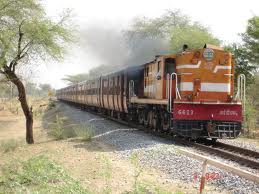
The train was now going over a bridge. He had got into it at Vadodara at about 9 PM. He would reach New Delhi at 8:30 AM. Rajdhani Express connected New Delhi, the national capital, with various state capitals, eg, Kolkata Rajdhani that connected capital of West Bengal with New Delhi. His was the Mumbai Rajdhani that had started from Mumbai at 4:40 PM. The train was going at a steady speed of about 120 kmph; all appeared to be well.

Suraj’s father was a man of action. Jeering, taunting, mocking etc appeared to him as pursuits of idle minds. He was not averse to using his heavy hands and thrash the daylights out of Suraj for his consistently low marks. Late in the night, as Suraj lay in his bed, with bruised ego and lips, he avoided the demands of his carnal desires and just lay there thinking. An idea sprouted in his mind and refused to go away. In every which way he looked at it, it appeared to appeal to his rebellious mind.

He started stealing petty cash from his father’s wallet and from the wardrobe where his mother kept her jewellery, clothes and money. One day, he had enough to take him to the city of Chandigarh. In the night he packed a bag. The excitement of starting a new life and running away from his wretched one kept him awake the whole night. He had planned to leave at about 5 AM when no one would even see him as he would open the front door noiselessly. However, at some point in the night, he had dozed off and when he got up it was already 5:30. He quickly went through his morning ablutions, making as little sound as possible and then lowered the bolt from the front door. Just as the door opened, he felt a rustle behind him. It was still dark; and there stood behind him an apparition. He nearly died of fraught; but, on closer look, it turned out to be his mother in her sky-blue nightie. He loved her a lot but knew not what he could do for her. Once, when his dad was about to hit her, he held his father’s hand and got thrashed with her. Her looks changed from surprise to pity to resignation. Her looks said, “Go, son; you have a life ahead of you“. He left with a heavy heart.

He had been to Chandigarh earlier but now it was abode of his choice. He searched for and found Ranjit’s house. Ranjit was a friend from his earlier visits. He was smart, suave, lanky boy, with sprightly stride; everything that Suraj wanted to be. Ranjit helped him search for a room at Rupees two hundred per month and gave him dinner. Ranjit had made several abortive attempts to get past SSB (Services Selection Board) and join the armed forces as generations of his family had done. He was, however, as much a dreamer as Suraj and played on guitar songs that Suraj wrote. One of the best that Suraj wrote was: ‘I Will Follow You‘; all their friends liked the song and concluded that Suraj and Ranjit had a great future ahead in a music group. However, the music scene in India, especially for Western pop music, was dismal as a career option. Still, they sang their favourite song together in parties with such words as:

Wherever you go, I will follow you.
In high or in low, I will follow you,
I love you and so, I will follow you

During one of these parties, Suraj met Rehana, daughter of a retired Major. She simply came close to Suraj and cooed in his ear, “I will follow you“. Suraj initially thought of her as being an invasion in his private world. But she had many winning ways. One of these was that she could wink alternately with both her eyes; which, instead of looking vulgar appeared innocent. Then, knowing that he had run away from home, she would bring small gifts for him such as helpings of plum cake that her mother had made. She also lent him all of two hundred rupees as the first month’s rent. They also went to see a movie in Jagat theatre ‘Pakeezah‘ (Pure) and mentioned to Suraj that she too was Pakeezah. They returned to his room after the show and very clumsily, since he had no experience whatsoever, made her let go of her physical Pakeezah status. Whilst he was a nincompoop, he noticed that she was some sort of an expert and guided him about what and where. He thought of it as her ebullient nature of putting her complete heart and soul into anything that she wanted to do. It was the same with her paintings; if she imagined a naked man, she would paint the imagined Adonis boldly and without inhibition.

His father searched for and found him one day and tried to take him back but all his emotional blackmail including the one about his mother being ill failed. Suraj told him that he never missed anything about Dharamshala. He lied, of course, because he actually missed his spot under the pines where he wrote some of his secret poems about birds, skies, sun and moon, and of course the sea. His father left with the ominous, “I know one day you’d realise your mistake and come back.” Suraj had no intention of doing so. If at all, he wanted to go to sea: “Join the Navy see the world; Join the Navy meet the girls“. However, he had poor eye-sight (Rehana helped him get his eyes tested and get him a pair of spectacles) and was rejected in the SSB at Meerut. One of Ranjit’s and his common friends, Taranjeet, had his father in the Railway recruitment board. He was made to appear in a test and was selected as a Locomotive Driver recruit. He was to however undergo training at Ambala, a training that would last for nearly two months.

He had halted the train at Ratlam at 45 minutes past midnight. The Assistant Driver Suresh Kumar was a Malyali and very good at all auxiliary equipment of the electric engine and in calling out the signals, which he confirmed audibly and mechanically. An idea occured to Suraj to drop Suresh at Ratlam only but then he knew that Suresh would report to the authorities and he would surely be stopped from carrying out his plan some eight hours away. So when Suresh wanted to dash across and get some cigarettes, he told him to get some cigarette for him too and proceeded with his job despite his inner turmoil. Suresh raised his eyebrow at Suraj’s request for cigarettes since he had never seen his senior smoke.

Only he knew how hard he worked (something his father would have never suspected him of doing) and how hard it was not to be in constant touch with Rehana, his love, his life. He’d take a bus to Ambala, about an hour away and return to Chandigarh in the evening. It would have been cheaper to stay in Ambala but then he would become a successful locomotive driver without the driving force of his life: Rehana. Their love-making was great too and rarely did he have the need to use his towel as a mop for removing signs of his solo exploits.

The prospect of becoming the driver of a locomotive appealed to him. (“God”, he thought, “What a name? Nobody would have had more loco a motive than his”.)He would have preferred going on the seas to distant places; but, since he couldn’t do that because of his eyesight (“Why couldn’t they check my inner sight?” he thought) he had to resign himself to doing it on land. He thought of the railway track as something that was intended to channelise his wanton energies whilst off-training and off-work he could get into his bird mode and fly. His songs about love and Rehana had become more sacred and secret but still his friends would get to hear some new song or the other and tease Rehana about being in relationship with “a useless, good-for-nothing poet“. She would laugh with them but she thought of him as the world’s best poet. She told them that if a Ravi could join the railways and become a great music composer in the Hindi films; one day, they would see her Suraj too as a great lyricist.

The LR training was tough. LR is a Learning Road training for about two months. The separation from Rehana became longer and he hardly had any time to write. However, the day the training got over and he was made an Assistant Driver was the most joyous day of his life. He could have travelled back to Chandigarh in plain civvies but he wanted to surprise her. He travelled in his khakis. They had a party after the party that Ranjit and friends had arranged for him. In the wee hours of the morning as she lay in the crook of his arm, both still awake, he whispered to her that now that he was a man and a bread-winner they could get married.

Her father, Major Ismail Mohammad was gentle with them: he told them, very calmly and clearly to get rid of the hare-brained idea as quickly as possible. “What do you think you are doing? Enacting a scene from Bobby“. He won’t hear of any other arguments, “If you are good friends, just stay so without complicating matters. I have been in an armed force of India that is totally secular. But, you have no idea of how our society looks at inter caste marriages.” They took a bus to Dharamshala. His mother gushed over him and Rehana but his father was his old cantankerous self and passed the imperial judgement, as always, “Over my dead body.”

They came back and consulted their dear friend Ranjit who had become a Contractor supplying spares to the railways. Ranjit said with wisdom much ahead of his age, “Of course, you can get married in mind; but, you will require to face the society and have things like ration card. Let me see what I can do.”

Ranjit arranged for them to be married in a mandir (temple) and then took them to the Chandigarh Municipality Office to get the marriage registered. Photographs were taken and they were both married. The landlord of his room decided to honour them by holding a ‘Langar’ (Community meals after recitation from the holy book of the Sikhs Sri Guru Granth Sahib) for the whole colony. Sardar Charan Singh, the landlord and his wife (no one knew her name but called her as Bibiji) did a bit of ceremony for them to enter their room.

Suresh was looking at him oddly. He had a reason too as he watched Suraj take a puff on the cigarette he had lit for him. Suraj was standing near the door and smoking, his mind racing with the train. He thought of a thousand people sleeping peacefully in the train. They would only be worried about if the train would be on time. None of them could have even imagined what Suraj had already thought. He tried to imagine the lives of all these people placed in his hands; young kids with their mothers, old men, executives, high society women in First AC compartments. Would they have ever thought….he puffed at the cigarettes to quieten his mind.

The probationary period was both an ordeal and fun. He was to be an Assistant Driver of Goods Trains; a Grade C driver that is. It was boring to take rakes and rakes behind him and go at steady speed without seeing anyone for long hours. However, it was still fun looking out and seeing fields, trees, birds, cattle, rivers, rivulets, hills, plains, monuments etc. He had started writing again. He worked very hard to qualify as a Driver but his senior liked another boy Raj whose dad was also in the railways. Also, Suraj had not shown much inclination at being party to the corruption in the railways; something that Ranjit told him was rampant since Ranjit was on the receiving end of it. Hence, people around him were quite wary of him. Indeed, rather than talking ill of the corrupt railway officials, they had already started talking about holier-than-thou Suraj. He was always on the other side of arguments and discussion.

Finally, after he was long overdue he became a Driver. He wanted to change over to Passenger trains but there was a long wait. There were favours to be done; money to be paid underhand and he wasn’t up to it. He had to travel great distances and sometimes away from Rehana for many days (this depended upon the schedule – a Link in railway parlance). He graduated from writing about her and their love to his reactions to what he saw: rampant poverty and rag pickers, people’s civic sense, corruption and the country losing its very soul. The nation had been galvanised as a cohesive force in 1971 War with Pakistan under the mercurial Prime Minister-ship of Indira Gandhi. But, he couldn’t understand how the same Indira Gandhi could lose her balance and impose another Emergency on the people for almost two years from June 1975 for a selfish reason that her own election was challenged in a court. These were very tough times. People didn’t understand that a train being late is not the fault of the driver alone but of the complete system. Even though he was the driver of a goods train, he was under tremendous pressure and could hardly meet Rehana. She had taken a teacher’s job in a school and she supplemented her income by selling her paintings. She often told him, when after doing his mandatory 8000 kms per month he would return to her, that being a woman and alone in the Indian society wasn’t easy. Also, Sardar Charan Singh had come home to tell her that some people had started talking about it that she wasn’t a wife at all but a keep or mistress. He also said that though earlier dormant, the communal forces of pre-independence were surfacing again and everyone was passing remarks about their not joining any religious or political group or organisation and generally keeping to themselves.

The fact was that Suraj had learnt to keep by himself when faced with violence at home. Now, he and Rehana had made a choice to keep to themselves when faced with Indian society becoming increasingly more corrupt and violent – A Dangerous Place. In 1984 Indira Gandhi was shot dead by her own bodyguard Beant Singh in retaliation against her ordering the Army Operations (known as Operation Blue Star) at Golden Temple in Amritsar.

Finally, after a long wait he was assigned to Passenger Trains. His duty was on the Amritsar to Ambala local sector and since he was not on Mail or Express trains he had to stop at all stations and his train had the least priority. He had all the time in the world to hear all the news from everyone and the gory details of the massacre of Sikhs in Delhi. He started writing about these things in addition to his poetry and songs. He couldn’t help Rehana much during her pregnancy during those days but, fortunately, he was given leave in December when she had to deliver. Just as they had predicted, it was a baby girl and they named her Dori. Everyone commented upon the strange name Dori but his their near friends understood that she had bound them in another thread (Dori).

He took out his wallet and looked at their recent picture, Rehana, Dori and he on an outing in Yadavindra Gardens at Pinjore; the picture was taken in front of Rajasthani Mughal style Sheesh Mahal. Dori was as tall as both her parents and was a very beautiful girl indeed with sharp features. If only he could save her, he thought with regret.

A few years later when he applied for becoming a Mail or Express Train Driver, he was told that his performance needed to be improved. He had published a lot of his poems and articles in the Railways journal as well as elsewhere and had annoyed a lot of people, including his seniors. To his utter horror he discovered that they held his writings against him as dereliction of duty, i.e., by writing during his duty time. The trigger for this was because one of his poems was published in the Illustrated Weekly of India and all his colleagues and seniors were simply jealous.

Meanwhile he was more and more witness to the wrong-doings everywhere, the sycophancy, the juggling of accounts etc. For example, they asked him to sign for an inflated quantity of diesel which he refused to do. Also, they were fed up with him for never filling up wrong claims of overtime etc in which the Accounts people had their cut. His relationship with the Guards, at the best of times, were suspect since the latter was at times, in collusion with the Train Superintendent, at the front end of corruption.

There was hardly any part of India he wasn’t sent to since the drivers with ‘pull‘ were always given easy Links and kept close to their home town. On many of these journeys he thought of the pine trees and his favourite rock. When his father died, the news came to him as a telegram since he didn’t have a phone at home. He rushed home and attended the funeral and took a long leave to be at home with his mother and take Rehana and Dori with him. His mother told him that his father had forgiven him but ego had prevented him from calling him back home. His mother got very fond of Rehana and Dori and made a huge fuss when they left for Chandigarh. Finally, she extracted a promise from them that one or the other would visit her with frequency not exceeding two months.

It was difficult to get a name like Dori registered. At the school they insisted on knowing her religion, caste etc. Both Suraj and Rehana felt that whilst they prayed to Ishwar and Allah in their own manners, they couldn’t impose either religion on her until she was big enough to study various religions and choose herself. Finally, the teacher refused to admit an “irreligious” student in his school, irrespective of the fact that Rehana taught in the same school. Suraj and Rehana were to make their first difficult choice. Each insisted that it should be the other’s religion, even if only on paper. Finally, in order to settle the issue, for the first time in his life, Suraj told a lie that her father, Major Ismail Mohammad, before he died, had taken a vow from him that the religion of their child would be Islam. If it weren’t for the fact that Suraj never lied even under great stress, she won’t have believed him. Dori was admitted in the school as a Muslim.

He halted the train at Kota at precisely 20 minutes past three AM. He had five hours left to put his plan into action. Yes it could be done. He had to first get rid of Suresh, his assistant and then he’d have the train to himself to do what he wanted with it. There was the Guard, Hoshiar Singh, to be thought about operating the Emergency brake but he was sure that by the time Hoshiar would realise something was wrong he would have accomplished what he wanted to do.

Even though the Railways have a well laid out progression policy but his rectitude stood in his way. It had taken him years to be promoted from C Grade (Goods Trains) to B Grade (Local Passenger Trains) to A Grade (Long Distance Passenger Trains) to finally A Special Grade for Mail, Express and Super fast trains. His contemporaries had made it in half the time.

Dori was the apple of his and Rehana eyes. His mother too had come closer to Dori. She, therefore, grew up in a very loving environment. Unlike Suraj who was suspicious of everyone Dori grew to be trusting. After matriculation she chose to prefer a career in medicine. She did her Pre-Medical in Chandigarh but had to go to Medical College in Amritsar to pursue her medical studies. She was unlike her father even in studies and scored the maximum marks everywhere. She, therefore, saved her parents the mortification of giving money underhand to get a seat in a medical college. In any case she knew that her father would never even think of it let alone approve of that.

On the day she left them to go to the Medical College in Amritsar, her father published his first book of poems. These were the best fifty poems out of three decades of writing. It took so long because the publishers refused to publish it unless he gave their reader underhand money. He wanted to title it simply ‘India as Seen by a Railway Driver’; but, the publishers laughed at it and finally agreed to publish it under the title: ‘Scattered Verses’. The cover carried his picture in his Driver’s uniform, which made Rehana and him very proud indeed.

It was coming closer now. The train slowed down near Swai Madhopur and Bayana and was approaching Mathura. His plan had to take place between Mathura and New Delhi, in less than three hours time. He was unusually quiet that night. Suresh had tried his best to engage him in conversation but had eventually given up. Bayana signals too were sighted, called and repeated but Suresh was already suspecting that something was amiss especially when Suraj lit his fifth cigarette of the night.

Dori had passed out of the Medical College too with top grades. She was selected to pursue Cardiology as her specialisation, She was the happiest thing in Suraj’s life; someone who would counterbalance his attitude towards corruption, thuggery, communalism, despair that had set up in the lives of majority Indians. Being different from majority people Suraj and Rehana were always at a disadvantage since not just good things in life, even morality in India came to be seen as what the majority wanted. And majority, as Suraj knew, had not displayed any discipline in their individual and collective lives. In the meantime, there was no hope for the country. Its much touted growth was a mirage. Suraj had come across many cases of people hurling themselves under trains in total despondency and he had often wondered what made people take their lives and those of their fellow beings. To top it all nepotism and corruption had become ways of life. Somewhere along the line, gradually but surely, the politicians, in their vested interests and vote-bank considerations had divided the society along communal lines. Whilst one major party was doing it overtly, the other major party, in the name of ‘secularism‘ was often playing with fire and appeasing minorities.

As they approached Mathura, he ordered Suresh to slow down the train. They read out the signal and passed the station at a slower speed of about eighty. The time was coming closer. It was still not bright enough being winters. Having started from Mumbai on the 25th January, the train was to arrive at New Delhi at 8:30 AM on the morning of India’s 63rd Republic Day. The President would be getting ready to take the salute and soldiers would be marching down the Rajpath together with all other signs of a vibrant India.

The day when Dori became a full-fledged doctor was the best day of Suraj’s life. The three of them celebrated it by being together, by themselves, the way they liked it most. They went by cable car across the Ghaghar river at Timber Trail hotel at Dhali, on the way to Shimla, and spent the whole day looking down from the Shivalik hill at the city of Chandigarh. Suraj was again reminded of the captivating scene from his rock in Dharamshala looking down at the valley spreading out to scores of kilometers during clear visibility days. They hugged each other and took turns in taking pictures on his digital camera. Rehana was very beautiful but Dori had exceeded her mother’s beauty.

Her first posting was in a village near Ropar. She took up a room to stay with another friend from the same batch: Komal. It was destined, Dori thought, that they be together since all through their six years of Medical training they were together.

Fed up of India’s rampant corruption, Anna Hazare had started his movement to ask for a strong Lokpal Bill in parliament. Suraj had felt that the parliamentarians would never let such a bill be passed since how can the thieves be asked to check their own thievery? The movement however inspired many young people and Dori was one of them. They were fired with the zeal to see an India free of not only free of corruption but have a more participative government affording rights to its people as enshrined in the Indian constitution.

Getting rid of Suresh between Mathura and Faridabad wasn’t difficult at all. As they went over a bridge, Suraj simply kicked him out. Suresh must have been so surprised that he didn’t even scream. In any case, being an air-conditioned train, no one would have seen or heard him. It was another hour and a half to reach Faridabad and then the train was to go at slower speed to reach New Delhi through a series of signals. What would they think after the crash? Possibly, they would like to check his Muslim connection through Rehana. But, they won’t be able to find her. He had made sure of that. It would be days later that they’d discover her body. They would finally reach the conclusion that it was one of the terror organisations: SIMI or LeT or perhaps the Maoists had claimed him because of his pro-poor views, often published. They would never know. Even the PM had spoken about it that some of the so called ‘law and order’ problems that the country faced (eg, Maoist related) were actually problems of poor governance. And, what governance could you expect from the self serving masters whom the constitution had actually given the moniker of ‘public servants’? Ha.

The India Against Corruption procession was largely peaceful. However, two men from the parties not supporting Anna Hazare movement had deliberately set two Punjab Roadways buses on fire. Suddenly, there was a procession gone horribly wrong. There was stampede to get away from there with people sensing trouble. The police thought of this as an uncontrolled riot and resorted to lathi-charge and bursting of tear-gas shells. Those who didn’t or couldn’t run away were rounded up and hustled into buses and taken to Police Station.

Suraj slowed the train at Faridabad. He had less than an hour to go to put his plan in action. It was just a matter of gaining a few minutes by maintaining speed higher than recommended. He would be asked to stop at the ‘outer’ whilst the train on already on the platform cleared away. At such close range none of the safeties won’t work. How often in the manuals and in practice he had gone over the Emergencies and the Fog conditions that are prevalent around Delhi in winter months. He had gone over the drills of Automatic Blocks (train speeds to be restricted to 30 kmph) and Absolute Blocks (train speeds to be reduced to 60 kmph) several times and the procedure for erecting sand bag barriers for a train with the driver being incapacitated. Many times, in the thick fog if he couldn’t see a Stop signal, they would explode small detonators to bring his attention to a Stop Signal. However, as per his plan, the ignoring of the Stop signal would be done at such late stage that they won’t be able to do anything about it; even Hoshiar Singh as the Guard won’t be able to help with the Emergency Break. He would thus approach a train already at the station with great velocity. The explosion as the two trains would collide would be tremendous. Happy Republic Day. India, of Ambedkar’s dreams: a Sovereign Socialist Secular Democratic Republic providing Justice, Liberty, Equality and Fraternity to all its citizens irrespective of caste, creed, religion.

Suraj clenched his fists everytime he thought of India’s downright corrupt police and now increasingly corrupt judiciary. As far as the police was concerned, all incidents are invariably incidents from which they can make some underhand money, be it rape, robbery, theft, traffic accidents or even murder. Initially, when Dori and Komal were rounded up they were handled by women constables. But, in the police station there was a sleazy sort of atmosphere. According to the police, anybody who entered the police station had done something wrong and hence needed to be taught a lesson not to indulge in such things in future. None of the police stations in the country has a system of dealing with sensitive matters with sensitivity. The SHO on duty asked them to wait whilst he dealt with petty thieves and ruffians. His way of dealing with them was reinforcement of his being a superior authority passing judgement over people’s morals and values. The system had emboldened him to accept bribes openly. Dori watched this for sometime. Not being used to such open exhibition of corruption (immediately after an anti-corruption rally) she approached the SHO boldly to tell him that she had seen him accept money from the petty thieves and that she was going to report.

He looked at her with exaggerated calm and asked her name. She told him that her name was Dori. “Ah”, he said, continuing with his exaggerated restraint, “Dori, you want me to check your mori (hole)”. She moved to slap him and he held her hand with great force and he suddenly became challenging, “Show me your ID card”. She showed him. He glanced over it with depraved interest and suddenly his eyes lit up, “Muslim? No wonder you burnt two buses and I caught you red-handed.” She was shocked at the turn of events and took out her cellphone to call her father and her friends. He snatched the phone from her and slapped her hard, “Now listen to me Dori with mori; I have enough witnesses and evidence to put you behind bars for several years.”

By this time, Komal had got into action and started protesting loudly and banging her fists on the table that all this was illegal and her friend, a news reporter, would write about it and ruin him. He looked at Komal with renewed and contemptible interest and told the constables on duty to bring the two girls into the inner room for “further investigation“.

The train was passing at slow speed at Tughlaqabad. There was thick fog earlier but it appeared to be clearing up. He called out the signals to himself and repeated. A thought went through his mind about the passengers in the train; they would have to be sacrificed for no fault of theirs. But, he reasoned philosophically that, many times, people are victims of circumstances for no fault of theirs. In order to get over the advance guilt of mass murder, he took out Dori’s letter for the umpteenth time to read about the incidents before, during and after the “further investigation”. Once again, he went over the explicit details of not just the gang-rape but also the drunken laughter of the lecherous policemen. When they tore the clothes away Dori screamed, “Leave me you bastard; I could be your sister”. And the policeman responded leeringly in Punjabi with double-entendre, “Main tanh anna haan; mainu kuchh nazar nahin aaunda” ( I am Anna (blind); I can’t see anything)

Dori came back to her room well past midnight having been dropped there by a policeman in a jeep. He was one of the many who carried out the “investigation“. She was too weak to walk but somehow she opened the door and went inside. She stumbled to the desk and took out sheets of paper and started writing. Her mind was made up about what she was going to do. She reasoned in the letter that she didn’t expect to get justice; no, not in present day India. They would suspend the SHO and the team and an inquiry would start, like all other inquiries in India. The media would go into various angles of the story -sleaze and all – and everyday break-news about some new fact having been unearthed. A national debate would ensue for a few days about the treatment of women in India. And then, a minister or two would come out with statements implying that the women deserved to be molested due to provocative clothes they wear. Rape had killed her bodily and mentally but media and ‘further investigation’ would, she asserted in her letter, kill her many times over.

The train was passing Okhla now. He could hardly see the signals now; not so much because of residual fog but because of swelling tears in his eyes that made his glasses misty. They had discovered the mutilated body of his daughter from the railway track in the morning, having been hit by a train that had gone over her. He rushed to Ropar from Chandigarh with Rehana. Rehana had gone into coma after seeing her bundle of joy having been reduced to pieces of flesh, bones and dried blood. Suraj received the body from the mortuary after signing the requisite papers. They arranged for burial at the cemetery in Chandigarh. It is only when they went to the village to get back her belongings that he found the letter tucked in his book of poems called ‘Scattered Verses’. He instinctively knew that his daughter would have left her last communication to him there. The police had ransacked the place earlier but surely they wouldn’t have looked in her books. It would have required them hours to ransack hundreds of books to find the letter. “Dear Pa”, the letter began and ended with, “I know you love me immensely and would find it hard to continue with life without me. But, I beseech you to do so. Our country, our world, is changing, and the bird called Hope would make our lives better, fuller, more just and equitable. Gradually, you won’t even miss me.”

Finally, they had reached the “outer” at New Delhi. He called out the stop signal and repeated it but instead of stopping, he suddenly picked up speed…..the Dori that held his life had broken…..
ARMY CHIEF’S AGE – THE OTHER ISSUES

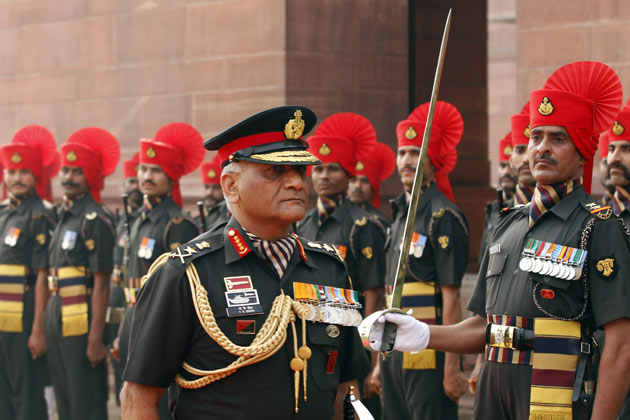
Herman Wouk remarked in Caine Mutiny, “Wasted years are as painful in the beginning, as in the old age; only, in the end it becomes more obvious.” Likewise, when General VK Singh joined the Indian Army some four decades back, he would have never thought that the question of his becoming younger or older by a year would become the subject of an urgent debate in a nation forever starved of debates on such insignificant but sensational issues. I am reminded of the time when Maharashtra was facing unprecedented suicides of farmers in Vidharbha. Its Home Minister, one RR Patil, was concerned about bar girls corrupting the lives of men in and out of Mumbai. Similarly, for those (mainly from the retired armed forces community) who are now putting up defence of the Chief of the Army Staff and commenting on the continued deterioration of civil-military relations, I have only one question to ask: Is this the right method of trying to teach a lesson to the gargantuan bureaucracy? Are we at our strongest when we try to make a purely personal matter into one of civil-military relations? We didn’t sort out civil-military relations when the government withdrew President’s pleasure in the case of Admiral Vishnu Bhagawat who was trying to fight an unequal battle with the bureaucracy that had become all too powerful; is this then the right jumping board to plunge into these matters? Is the belated realisation of the correctness of his date of birth of such significance to the health of our armed forces that we feel this is the litmus test of their importance?

No? Then, lets look into the other facets of the case. I am not taking sides or commenting on the merits of the case. All I am saying is that we haven’t exactly covered ourselves in glory that we, in India, have such poor record keeping that an Army officer rises to the level of the Chief and just before his retirement he wants to sort out whether he is one year younger or older; an issue that he has not been able to sort out for four decades but kept on becoming more and more senior “under coercion“. The only parallel I can draw is this curious case in Azamgarh, Uttar Pradesh, a few years back (the case was reported in Time magazine). In this district, in order to grab the property of their older relations, the unscrupulous elements would show the older relations dead, get a death-certificate made and then usurp the property. The old men, still alive, would go from one government office to another showing the proof of their being alive, that is, they, themselves in flesh and blood. However, the offices would reject their demands on the ground that without a birth-certificate, they had only the death-certificate to rely on. These unfortunate oldies then formed a ‘Society of the Living Dead’ to fight for their cause. Shocking? Well the reverse is equally true. There are any number of dead in India who are still receiving pension and hence each one of the pensioners is required to render a Life Certificate every year. A person was found in a jail for nearly thirty years since the records regarding his being jailed went missing.Is this what life in India means: a life from one certificate to the other? The media – in the name of transparency everywhere including in defence matters – loves to unearth such details as would scandalise the maximum people so that its TRPs would keep on the upward path. It has, therefore, taken upon itself to ‘not to consider Defence Forces as holy cows‘. As a result, the more demeaning facts about this erstwhile holy cow it can bring out, the more it feels it has done its whistle-blower job. Hence, for example, without even understanding the nature of maritme domain awareness, it labels the Indian Navy as inefficient when a derelict ship like MV Pavit gets grounded on the Juhu beach. It is only when someone professional explains them the facts that the media understands the poverty of its own thoughts. However, like we saw in the case of Radiia Tapes, the media is unlikely to admit that it has elements within its bastion that are as corrupt – if not more – than the corruption that they take pains to expose. The media, thererfore, is playing to the gallery bringing out facts, unearhted on a daily basis, on the age of the Army Chief.

Hence, we don’t expect or hear it from the media that, in India, it is not just Birth and Death certificates that are suspect (General VK Singh’s birth as well matriculation certificates are not products of defence record keeping; but, of bureaucratic record keeping of the country). In this bureaucratic record-keeping, perpetually, at the villages and cities level, we have never-ending court-cases arising out of land ownership. We haven’t been able to sort out the land revenue records. Our data of SC/ST/OBC etc, at best, is suspect. The planning commission data on poverty, electricity distribution, deaths in disasters, famine-hit areas; in short, you name it, everything is suspect. The other day, we read it in the papers that even the data about our industrial growth and eventually GDP is suspect.

Who gains by such suspect certification and data? Any guesses? The General, by his one act of commission or omission may just be interfering with the carefully laid-out succession plan of the Indian Army; but, it is mind boggling how such certification and data is used in India to siphon off funds, to derive power and influence, and to manipulate the stock-exchanges and economy.

We recently have UIDAI (Unique Identification Authority of India) battling with reams of data but with hardly any means available to check the veracity of such personal data. It is only computerising the entire process, but, one’s Unique ID and data associated with it, are still based on suspect certification and data at village and city levels; and is as suspect as any other data produced by our bureaucratic structures.

As far as the General age is concerned, in my characteristic impudence, I am reminded of my school-days joke about this young boy being asked by the bus conductor to tell his age (children between 5 to 9 years were permitted to travel on half-ticket). He, quite truthfully, replied, “I am eight now and ten when I get off the bus”. Regrettably, the players involved do not have the school-boy’s truthfulness: the General, the armed forces’ community, the bureaucracy, and the media.

PUNJABIS – THE WAY WE ARE

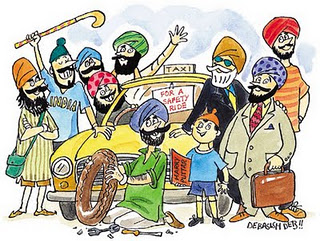
 Punjabis hain bahut great,
Ek beer ka de do inko crate,
Phir dekho kaise hota hai,
Inka ego inflate.
Pic courtesy: jokesprank.com

Punjabis are really great,
They have free love and hate,
Jab vada vo karte hain,
To nibhaate hain at any rate.

Punjabis are really great,
BA, MA aur matriculate,
No beating around the bush please,
Come to the point straight.

Punjabis are really great,
Matters nahin karte complicate,
“Don’t teach us the difficult way,
Why can’t you simplificate?”

Punjabis sachi hote hain great,
Ye detail hai thodi intricate,
No beating around the bush please,
Come to the point straight.

Punjabis hain bilkul great,
Even when in any state,
Thodi inki praise kar do,
Aur badh jaata hai inka weight.

Pic coutesy: thedesignershub.com
 Punjabi hote hain kaafi great,
Please don’t try to imitate,
They fight their way through,
Agar sitaution ho jaaye create.

Punjabis are really great,
Yeh unka hai etiquette,
Jiyo aur jeene do yaaro,
Life karo na suffocate.

NO IFS AND BUTTS – BOTTOMS ARE IMPORTANT

The first blog post of the year 2012 for me should be making me look ahead. However, in this post, I am looking behind or rather looking at behinds; or, as the Indians call it – at the back sides.

And all this is because of an end-of-the-year snippet in the newspaper that a certain Natalie Thomas has insured her bottom for a huge amount. The reason? She is paid for checking the softness of beds in hotels in London; and like Lata Mangeshkar insuring her throat, Natalie too has insured that part of her body that makes her do what she is good at. She said she enjoys doing what she is doing and we shouldn’t be surprised.

It is an asset to have a sensitive behind. One of the definitions of a smart-ass is: a person who can sit on a cone of ice-cream and tell you what flavour it is.

Kissing or paying lip-service to another person’s behind, rear, bottom or back side is the highest form of devotion, flattery or subservience. I am reminded of an instructor tutoring the boy-scouts about survival techniques in the jungles. Inevitably, the subject veered around to snakes and more particularly snake-bites. The instructor told the boy-scouts that in case of snake-bite they should immediately put their mouth to the position of the bite and suck out all the venom and spit it out. The scouts wanted to know what if the snake bites in a place that cannot be reached by their mouths. “That’s simple” said the instructor, “You should ask a friend to suck out.” There was a last persistent doubt by one of the scouts, “What happens if a snake bites at the bottom.” And the instructor replied, “That’s when you come to know who your friends are.”

Then there is the story of a woman having met with an accident. A part of her cheek got mutilated and after the wound got healed she required skin transplant to make it look alright. Her husband offered to donate his skin and the doctor, in order that the husband shouldn’t sacrifice his own looks for that of his wife’s, took the skin from his bottom to be transplanted on his wife’s face. Later, the office mates asked him if it was painful for him to donate his skin. “Yes” confirmed the man, “But, I do get my kicks every time my mother-in-law kisses my wife on the cheek”.

Women, always have had this curious advantage in having a shapely butt. An actress of yore, Ava Gardner, was arguing with the cameraman that he never showed her best side. “How can I” retorted the cameraman, “You are always sitting on it?”

A few years back  JeLo or Jennifer Lopez had taken cognisance of having been voted the most shapely butt. She, from all counts, appears to be proud of the title she had won. She was such a successful star that employing her butt for testing the softness of beds won’t have occured to her.

At one time a woman would have been the butt of jokes to be praised for her bottom. However, nowadays, it is seen as a great compliment. Gone are the days when such limericks as following were prevalent:

A girl from Madras,
Had a beautiful ass;
Not rounded and pink,
As you probably think
It was grey, had long ears, and ate grass.

Nowadays, an ass means an ass of the rounded and pink variety.

Many actresses have got their butts insured exactly like the soft-bed-tester Natalie Thomas. Many actresses privately feel that if it hadn’t been for their behinds, they wouldn’t have been where they are: at the top of popularity charts. Men have a fascination for the women’s butts. That’s the bottom-line. Most men agree that a rear view is not so rare these days and keeps them raring to go.

By the same reasoning, hundred percent of Indian politicians should also get their bottoms insured since being a certain kind of holes is their calling. Indeed, they should do it at the time of campaigning for elections since, the statistics of Indian democracy bring out that if you lack in your ability of being this certain kind of hole, the chances of your getting elected are next to nil.

Babus in government offices also make use of those parts of the body for which Natalie Thomas gets paid so heavily. As they sit on their bottoms, the files on their desks and cupboards become bigger and bigger stacks; and, it often appears that the only reason they sought the job was to have a piece of government furniture support the most precious part of their bodies.

Chair or gaddi is important in Indian politics and babudom. Its occupant gets enormous powers. Many of the occupants when asked to get their bottom out of the gaddi would do anything to keep it there as long as they can. For this if they have to kiss the bottoms of the voters in their constituency, it is all for good cause.

mayawati-political-cartoons.img

To end a long story short, the motto ‘be kind to your behind’ has now been modified to: ‘be kind to all behinds’ because a hindsight is always better than foresight.

A PLAY TITLED ‘NEW YEAR’

Cardboard cutouts of crepuscular birds
Silently flap their wings
In a jagged arrowhead
Over chaos, despondence, carnage
Riding into the dusk of 2011.
End of Act I; thank God it’s over.
The audience awaits the next Act
That would miraculously usher in:
A nation riding on wings of Hope
Justice, Equality, Dignity, Amity, Knowledge.

Act II; oh, how we awaited it?
Suddenly, there are no tears,
No poor and naked,
No hopeless suicides,
No communal violence
No rapes, no child molestations
No loot, no guns, no bombs.
No Hindus, Muslims, Christians and others
Telling us that their god is the only real God.

Suddenly, a tinsel sun is lowered on stage,

And glimmers over a ‘clear stream of reason’
Leading its way slowly but surely
Into the dreary desert sand of dead habit’
And young children waving tricolors
Appear singing, “Jai Hind”
To accompaniment of a gentle flute.

As a dazed audience starts leaving
From gallery, stalls and aisles;
The oft repeated comments,
In the applause, are:
“If a play called ‘New Year’
Can usher in all this,
Why can’t we stage it everyday?”

NEW YEAR RESOLUTIONS

I wrote in an article (‘Happy New Year’) in this blog on 1st of January this year, that there is actually nothing New about the New Year and that this is, as indeed is Time, an invention of man to end one’s worries, habits, biases, proclivities, unhappinesses, mistakes, and sadnesses and thus begin afresh with a new resolve and of course new worries, habits, biases etc.Hence, it is not difficult to conclude that the best use of the so called New Year is to make Resolutions. These are not written in stone like the Ten Commandments but these are the ones which give us hope (about ourselves) and fresh strength to put a little order in our messed up lives.
However, lets not get carried away by the lofty resolutions. Experience teaches us a lot. If we have been running the Sprint in about 33 seconds for the last several years, the New Year Resolution is not going to help us to break the world record. It is, therefore, helpful to read the signs of the experience and see what each of the resolutions actually means after a few hours/days:
1. I will not drink anymore
  • Until I get up at least.
  • I will not drink any less either.
  • I will not drink unless I have company.
  • I like my company.

2. I will not worry unnecessarily

  • No one has my circumstances.
  • I am little more conscientious. How can it be called worrying?
  • Someone has to worry.
  • In any case I don’t worry about small things.

3. I will be regular with walks and calisthenics

  • Once in a fortnight is fairly regular, isn’t it?
  • What’s the use? She doesn’t come to the gym/walks anymore?
  • 90 kgs is still less than 100, isn’t it?
  • I have seen the fittest getting heart-attacks.

4. I will be more forgiving

  • As soon as I have finished breaking the SOB’s teeth.
  • Gandhi wasn’t so practical, you know.
  • You have no idea what she did to me.
  • I have tried this. He thought it was my weakness.

5. I will become more punctual

  • Alright, but how about improving traffic, bus and train services?
  • Me, the only one? Sitting alone in office, function, date?
  • There are people who slip in much after me.
  • Is there a fire?

6. I will become more positive

  • You can’t be a lotus in filth.
  • I am just being realistic.
  • Glass half full? Have you seen the muck in the water?
  • Who invented the parachute?

7. I will be more charitable

  • You think the b____s are poor because of me?
  • I have worked for every penny that I have.
  • They misuse these funds all the time.
  • People just show off with charity.

8. I will not waste time on unproductive activities

  • Our group on facebook is quite intellectual.
  • I am a thinking man.
  • Some people are so unsocial.
  • Sudoku is good for the brain.

9. I will spend more time with the family

  • I would but the kids don’t want me.
  • Our last holiday in Matheran was a disaster.
  • There is a generation gap.
  • They actually want to be left alone.

10. I will not lose my temper even with unreasonable people

  • Is it only for me? What about the other party?
  • One should call a spade a spade. I am only being factual.
  • I never start an argument.
  • There is always a limit, you know.

I think one reason that the New Year Resolutions don’t work is because we let the Mind do most of the thinking. We should, once in a while, let the heart be in control. It may just work.

THE BEST OF OLD HINDI SONGS – RAFI, SHAKEEL, NAUSHAD AND DILIP KUMAR TOGETHER

How proud I am that I lived in an era when Mohammed Rafi sang the songs whose lyrics were written by Shakeel Badayuni, music composed by Naushad and Dilip Kumar enacted those songs? There are other great lyricists such as Hasrat Jaipuri, Sahir Ludhianvi and Majrooh Sultanpuri. Similarly, there are other great music composers such as Ravi, Hemant Kumar, Salil Choudhury, Shanker-Jai Kishen, and Laxmikant Pyarelal. However, this article is only about the greatest ever quartet of Rafi, Shakeel, Naushad and Dilip Kumar being together.

The best musical trio ever: Naushad, Rafi, Shakeel – I would give anything to meet them

Sadly, out of the four, the first three are no more except Dilip Kumar who celebrated his 89th birthday on the 11th of Dec. Mohammed Rafi died three and half decades ago (31 Jul 1980) at the age of 56. If he were alive, he would have celebrated his 87th birthday on 24th of Dec.Similarly, Naushad who died on 5th May 2006 would have been 92 on 25th of Dec. Can you imagine that the three of them had their birthdays this month? Shakeel didn’t even reach the age of 54: born on 3rd Aug 1916, he died on 20 Apr 1970

As far as songs not including the complete quartet are concerned, by far the number one song in Hindi movies has been the 1963 movie Mere Mehboob’s title song. Its lyrics are the finest written by Shakeel and Naushad has given the most heart-touching music. Rafi’d rendition is the best ever. But I am not putting it here because instead of Dilip, the film had Rajendra Kumar.

Once again you are bound to ask me: what about ‘Suhani raat dhal chuki’ from 1949 Dulari. Once again it has Shakeel-Naushad and Rafi but not Dilip Kumar. I think by this time you get the point hat this article is all about.

Let me begin with the oldest of the four: Shakeel of the village Badayun in UP. Initially he started as a shayar (poet) but moved in 1944 to Bombay to find a career in films. He met Naushad. During those days shayars were full of songs about upliftment of society. But Shakeel chose to write about love and Naushad liked his romantic poetry immediately and signed for AR Kardar’s 1947 movie Dard. The songs were a hit especially Afsana likh rahi hoon. Shakeel had arrived in the Hindi film industry with a bang. Shakeel wrote for Ravi, Burman, Hemant Kumar, C Ramachandra etc too but his favourite always was his first: Naushad. Unlike shayars of that era, Shakeel didn’t drink. However, he died young at 53 years of age in diabetes related problems.

The greatest lyricist of Hindi movies. He wrote Mere Mehboob

Naushad was the next younger, having been born three and a half years after Shakeel. However, he was in Hindi film industry as an independent music director for close to seven years before he paired with Shakeel. He too was from UP; the city of Lucknow famous for its old Urdu etiquette and refinement. Naushad was the most versatile music director the industry ever saw. His genre was to base his music on classical raagas. His career spanned more than six decades. He was awarded the Dadasaheb Phalke award in 1981 and Padam Bhushan in 1992.

The Greatest with the Greatest – Naushad with Mohammad Rafi

Next is Dilip Kumar who is still alive having been born as Muhammad Yusuf Khan in Peshawar (now in Pakistan) on 11 Dec 1922. Satyajit Ray called him the ultimate method actor. He too began his career in the same year as Shakeel did. He was the first actor to win Filmfare Best Actor Award; ultimately he won the highest number, ie, eight, an honour that he shares with Shah Rukh Khan. He was awarded the Padam Bhushan in 1991, Filmfare Lifetime Achievement Award in 1993 and Dadasaheb Phalke Award in 1994. He remained a good friend of Shakeel and Naushad.

Dilip Kumar – there hasn’t been a better actor than him in Hindi films

The youngest was Rafi, born on 24 Dec 1924 in village Kotla Sultan Singh near Amritsar in Punjab. He has sung nearly 8000 songs including 112 in non Hindi and 328 non filmy private songs. He too started his career in Hindi movies in 1944 and became a contemporary of the other three. However, his career lasted nearly half of Naushad’s. He, however, had started singing at the age of 13. He sang 149 songs for Naushad. Other than Hindi and Urdu (the languages of the Hindi songs), he has sung songs in Konkani, Bhojpuri, Orya, Punjabi, Bengali, Marathi, Sindhi, Gujarati, Kannada, Tamil, Maghi, Maithili, Assamese, English, Persian, Spanish, and Dutch. His genre too was Hindustani and he was reputed to have moulded his voice to suit the character of the actor. I do not consider myself qualified to describe his talent. He is simply God of Hindi songs and there would never be a time when I shall not want to hear a song sung by Rafi.

The gretest Hindi films singer ever – Rafi was also the most humble

The first of the movies in which the quartet was together was the 1948 Mela. Its title song Yeh zindagi ke mele duniya mein kam na honge afsos hum na honge is still the standard in Urdu poetry. Taste this:
Duniyaa hai mauj-e-dariyaa, qatare ki zindagi kyaa
Paani mein mil ke paani, a.njaam ye ke paani
Dam bhar ko saans le le, ye zindagi …

The next movie of the quartet was 1951 movie Deedar. The song that I love the most is a duet between Rafi and Lata:
Dekh liya maine kismet ka tamaasha dekh liya.
Milakar bhi rahaa main mushkil mein
Milane ka natijaa dekh liyaa
1952 Aan became a super-hit movie of that time. It was produced and directed by the legendary Mehboob Khan. Amongst all the song that best describes the theme of the movie, ie, a poor villager Dilip Kumar overcoming the pride (Aan) of the princess Nadira is Maan mera ehsaan arey nadaan ke maine tujhse kiya hai pyaar. Enjoy:

Two years later the great Mehboob Khan got the quartet toegther again for the movie Amar. The song close to my heart is the bhajan ‘Insaaf ka mandir hai ye bhagwan ka ghar hai‘. Just imagine all four Muslims getting together and making a mandir (Hindu temple) song. This was the essential greatness of the society, the movies and songs of that era: people of all communities participated in hymns of all religions. Two years earlier, for Baiju Bawra, Shakeel-Naushad-Rafi had combined to make one of the best Hindu bhajans: ‘Man tadpat Hari darshan ko aaj’.

The next movie of the quartet was the 1955 movie Uran Khatola that was produced by Naushad. The story-line was about a plane that crashed near an isolated town that is ruled by women. I have a problem now. There are so many good songs in this movie that I don’t know which one to select. There are, eg, Na toofan se khelo, na sahil se khelo’, ‘Hue ham jinake liye barbaad’ and ‘O door ke musaafir’. My choice is Mohabbat ki raahon mein chalna sambhal ke. It is about the hopelessness of love. There are these immortal lines in the song:

Hamen dhoondhati hain, bahaaron ki duniyaa
Kahaan aa gaye ham, chaman se nikal ke.

And if you can see better acting than Dilip Kumar, do let me know.

Then there was a five year period in which no movie of the quartet together were released though there were others for them to accept movies separately. It was worth the wait. The 1960 Mughal-e-Azam, written by Kamal Amrohi (amongst others. Kamal went on to make his own classic Pakeezah a few years later) and directed by K Asif. It was the biggest box office hit ever (Rupees 133 Crores after adjusting for inflation) until Sholay broke its record. The movie was about the love affair between Prince Salim (who went on to become Emperor Jehangir) and Anarkali. The movie belonged to Lata Mangeshkar who bagged the best and most popular songs like ‘Mohe panghat pe Nandlal’, ‘Mohabbat ki jhooti kahani pe roye’, and ‘Jab pyaar kiya to darna kya’. Rafi had only one important song but it became very famous: ‘Zindabaad, zindabaad; ai mohabbat zindabaad’. Enjoy:

The year 1960 also saw the light-hearted Kohinoor; a movie with Dilip Kumar and Meena Kumari. Dilip Kumar had, by this time, earned the reputation of a Tragedy King with movies like Devdas and had actually gone into depression with the intensity of his roles. This movie was, therefore, to break the monotony of tragic roles. He won the Filmfare Best Actor award for this too. The movie had two very beautiful duets: ‘Chalenge teer jab dil par’, and ‘Do sitaaron ka zameen per hai milan’ and Rafi’s ‘Koi pyaar ki dekhe jadugari’ and ‘Zara man ki kewadiyaa khol’. My choice is: ‘Madhuban mein Radhika naach re‘, one of the best songs sung by Rafi:

Just a year later, in 1961, was released Dilip Kumar’s musical romance with Vyjantimala in the shape of Ganga Jamuna. Asha Bhonsle sang ‘Tora man bada paapi’, and Lata sang ‘Na maanu, na maanu na maanu re dagabaaj tori‘ and the all time hit song ‘Dhundo dhundo re saajna mere kaan ka baala’. However, Rafi’s Nain lad jainhe to manavaa mein kasak hoibe kari showed the rustic dancing by Dilip at its best. Here it is then:

We had to wait for another three years until 1964 to find the quartet again in Leader starring Vyjantimala once again opposite Dilip Kumar. The duet ‘Ek Shahenshah ne banwa ke hasin Taj Mahal’ was famous. But the movie belonged to Rafi with songs such as ‘Apni aazaadi ko hum’, ‘Hamin se mohabbat hamin se ladaayi’ and ‘Tere husn ki kya taareef karun’. I am, however, putting up ‘Mujhe duniya waalo shraabi na samjho’ if only to see Dilip in a drunken stage and Rafi matching the drunken voice in his singing:

One year later, the quartet was back again with the movie ‘Dil Diya Dard Liya‘ based on Emile Bronte’s ‘Wuthering Heights; this time with some of the best songs that Mohammad Rafi has sung. Dilip acted opposite Waheeda Rehman. Rafi’s songs that became famous and are still famous are: ‘Koi saagar dil ko behlaata nahin’, ‘Dilruba maine tere pyaar mein’, and a duet with Asha Bhosle, ‘Sawan aaye na aaye’. My choice is an all time favourite of mine: ‘Guzre hain aaj ishq mein‘. I adore these lines:

O bewafaa teraa bhi youn hi toot jaae dil
Tu bhi tadap-tadap ke pukaare haay dil
Tera bhi saamnaa ho kabhi gam ki shaam se

Two years later, the quartet were back in the super-hit movie Ram Aur Shyam. The theme of twins separated at birth and united later in life made its debut and continue unabated for many years. The movie had a soul-stirring song by Rafi: Aaj ki raat mere dil ki salaami le le‘. Enjoy:

We could see the quartet for the last time in 1968 movie Sunghursh. The movie about thugee (conning) in Varanasi was based on a story by Jnanpith Award winner Mahasweta Devi; and starred Dilip Kumar and Vyjantimala. Rafi sang: ‘Jab dil se dil’ and ‘Ishq Diwana’; but, Dilip’s rustic dancing was once again to be seen in Mere pairon mein ghungroo‘:

Well folks that is all from me for the quartet of Shakeel Badayuni as lyricist, Naushad Ali as Music Director, Mohammad Rafi as singer and Dilip Kumar as an actor with all four being together. How I wish that era had never ended. But, like Shakeel wrote in Mela: ‘Ye zindagi ke mele duniya mein kam na honge, afsos hum na honge’.

INDIA AND PAKISTAN – CAN WE LIVE WITHOUT BEING ENEMIES?

India and Pakistan are like two separated brothers, for example, in a Manmohan Desai movie. A time will come when we will pull the sleeves of our shirts back and reveal the common tattoos that our parents had got etched for us before we parted company or were separated by a tumultuous cyclone or earthquake; and Manmohan will exult, “Bhaiyya or Bhaaji” to Zardari and the latter will, in euphoric denouement scream, “Bhaii jaan”.But, until then, we hurl rockets, bombs, artillery shells, accusations, abuses, brickbats at each other with a regularity that would put rising and setting of the sun to shame. The following anecdote describes it aptly:

A Pakistani and an Indian were travelling together from Dubai to London and by quirk of fate (just like the quirk of our Geography) had seats next to each other; the Indian had the isle seat and the Pakistani had the middle seat. After take off when the aircraft had settled at the cruising altitude the Pakistani was about to press the overhead button for calling the hostess when the Indian turned to him and said, “Now what are you doing that for? I am just going to the washroom; on the way back I will fetch you what you want.” The Pakistani told him that he wanted a coke. This being a long flight the Indian had taken off his jutties (slip on ethnic shoes) and he tip-toed to the washroom and the pantry and brought the Paki a can of coke. In his absence, the Paki had picked up the left jutti and had deposited a big blob of his spittle into it.

Pic Courtesy: CHUP! – Changing Up Pakistan

After some time the Paki had the desire to spit in the right jutti too. So he proceeded to press the overhead call button hoping that the Indian would fall for the ploy; and sure enough the Indian did and went to get another coke for the Pakistani.

It came to be time to land at Heathrow and in preparation for the landing, the Indian started putting on his juttis. As he slipped his feet in the Indian realised straightway as to what the Pakistani had done. So he turned to the Pakistani and said, “India and Pakistan are two great nations and civilisations. We have common heritage and can be great friends. Hence, it is not understood, why we keep spitting in each other’s juttis and cokes.”

Pakistanis are busy teaching ‘Hate India and Indians’ in their madrassas (Islamic schools) so much so that even their once great friends (but now not so great friends) Americans have taken notice of that. The think-tanks, media, movie-makers etc on both sides of the divide are busy churning out stories about how the other party has gone rogue and how “our love and consideration” can bring them back to good sense and decent friendly behaviour.

Pic Courtesy: The Internationalist

After the break-up of the USSR, Henry Kissinger wrote in an essay in Time magazine that having an enemy in the USSR (the Iron Curtain etc) provided focus to the NATO; both for the industry and the defence forces. Without USSR, such a focus would be missing. Arguably, a similar focus seems to exist between India and Pakistan. You only have to witness a cricket or hockey match between the two nations to see the intensity or extent of this focus. Our governments would really have to concentrate on good governance without the comic relief of accusations and counter accusations between the two nations. That people die and considerable blood and money is spilled whilst retaining this enmity only adds to the focus. There is a race, a competition in everything, which assumes ludicrous proportions. If they shower hospitality over us we have to somehow outdo them and vice versa.

Pic Courtesy: Viewstonews

There is a great opportunity that has come our way post second of May when, just as we in India guessed, ranted, expected and proclaimed, Osama Bin Laden was found living in luxury in Pakistan itself in Abbottabad with the Pakistan Army almost guarding his house and pretending to be unaware of his presence there. As expected, the US has tried to be tough with Pakistan and, as expected, the chasm between Pakistan and the US is increasing since then. Our opportunity is that the two countries can now get back to sorting out matters between ourselves without intervention and mediation that we were averse to but which Pakistan wanted. Hopefully Pakistan would have probably learnt its lesson that those who mediate or intervene don’t do so out of love or consideration for us but out of – what they call – their strategic interests; one of which is, though not expressed in such blunt words, that conflicts are the stuff that armed industries love – their motivation and indeed their raison d’être.

Pic Courtesy: Anil Kalhan

The other opportunity that has come our way is the current tussle that is going on betwen the army and the civil government in Pakistan post memogate scandal. Curiously, the tussel is not to take over the reins of the country but to give to the other party the first choice in ruling the country; knowing very well that the rule (whether of the civil government or the army) is bound to fail under the uncertain environment that Pakistan faces post disinterest/dienchantment by the US.

I can explain this with this game we used to play when we were in our primary school. Two contenders would keep a kerchief on the ground between them and the contenders would circle around, getting into a position to grab the kerchief and run without being tagged by the other. Often, when they were hesitant, a third party would grab the kerchief leaving both the ontenders high and dry.

Pic Courtesy: Ring Time Pro Wrestling

Now, what if India were to think strategic (for a change) and give the kerchief to the civilian government and make arrangements that it is not tagged by the army? It would be easy to assure the Pakistan government that we would together not allow the kerchief to be taken by a third party.

Else, I can visualise the frightening scenario a number of years later when Pakistan breaks up and instead of one adversary we have to contend with a few of them.

SEASON’S GREETINGS – 2011

Dear Friends,

Christmas is here again,
And so is New Year,

I go down memory lane,
And share our news here.

After retirement we made home,
In Kharghar, Navi Mumbai.
It’s neither Paris, nor Rome
Nor even London or Shanghai.


But it is our home and hence,
We are always in love with it,
It would give us joy immense,

When you honour us with a visit.


We have with us, my mother,
And it’s great blessing indeed.

To have at the table none other,
Than who gave me my first feed.


Arjun, our elder lives on his own,
He has emerged as a critic,
No, folks, don’t grunt or groan,
It’s only of Western & Pop music.


Arun, the younger is in Hyderabad,
As an animator in Rhythem & Hues,
Yes, mohawk is still his hair fad,
And he often blows our fuse.


Lyn, God bless, is as sweet,
As when we were newly wed,
To taste her cooking is still a treat,
She keeps us happy and well fed.


We miss our Roger dear,
The youngest of our boys,
He is not with us this year,
To share our smiles and joys.
(But, he will always be with us)


So that is about all of us,
We hope to hear from you, dear,
We wish you a very Merry Christmas
And a Happy New Year.

With lots of love, regards and best wishes,
Mom, Lyn, Arjun, Arun, Roger and Me

SULAGTE AANSU

वो लौटा रहें हैं मेरा सामान,
और जला रहे हैं सब कुछ,
मेरी आरज़ू है सितमगर
मेरे अश्क भी जला दें

ताके दिल के समुन्दर में
वो तूफ़ान फिर ना उभरे;
जो मरहले खड़े थे
उन्हें ठोकर से मिटा दें

काश हम ना होते वो ना होते,
और ये आरज़ू ना होती
तेरी आँखों में जो सरूर था
वो सरूर भी हटा दें

मैं भूल गया हूँ सब कुछ,
तेरे प्यार की नज़र में
मेरी कौन सी है मंजिल
मुझे कुछ तो अब पता दें

अब दिल न हो, प्यार ना हो,
और ना रहे उनकी यादें,
कोई उनसे जाके कह दे,
मेरी हस्ती ही मिटा दें

Vo lauta rahe hain mera saamaan,
Aur jala rahen hain sab kuchh,
Meri araz hai sitamgar
Mere ashq bhi jala dein.

Taa ke dil ke samunder mein
Vo toofan phir na ubhre.
Jo marhale khade the
Unhein thokar se mita dein.

Kaash hum na hote vo na hote,
Aur ye aarzoo na hoti,
Teri aankhon mein jo saroor tha,
Vo saroor bhi hata dein.
 Main bhool gaya hoon sab kuchh,
Tere pyaar ki nazar mein.
Meri kaun si hai manzil,
Mujhe kuchh to ab pata dein.
Ab dil na ho, pyaar na ho,
Aur naa rahein unki yaadein,
Koi unse jaake keh de,
Meri hasti hi mita dein.

NH7 BACARDI WEEKENDER – ROAD TO HEAVEN

This is not an expert’s coverage of the NH7 Bacardi Weekender at Pune (from 18 to 20 Nov 11). That I am sure Arjun S Ravi would have done in NH7 and Indiecision and some of his coverage was live too. Nor are the photographs in the article even one tenth of the professional excellence, clarity and story-telling quality of Kunal Kakodkar’s. This is an ordinary music lover’s response at being amongst the music loving crowd during the music fest in Nov 11.NH7 Bacardi Weekender this year was simply great in its organisation, crowd response, and the gigs that participated. One can listen to the music and the songs on You Tube and one’s best hi-tech music system. But, there is nothing like the Live Experience. It is electric. It transports you into another world of excitement, love, ecstasy and happiness.

Papone and the East India Company at the Dewarist Stage

This year was probably the best assembly of gigs in an Indian music fest. There were five stages in all at the same Laxmi Lawns: The Dewarist, The Other Stage, Pepsi Dub Station, Eristoff Wolves Den, and Bacardi Black Rock Arena. The organisers need to be congratulated for having put up the stages, and the programme so meticulously. Arjun told me that most of it was done by his friend Dhruv and his team.

A view of the on-site admin office – Arjun and friends operated from here
Whilst the stages buzzed with music and crowd frenzy the organisers “quietly” (???) went ahead with their job

In addition to the music gigs, what makes an even like this special are organising and ensuring participation by the crowds; for example, the flea market selling anything from memorabilia to T shirts, hair dos, caps, hats, trinkets.

A happy visitor at the Flea (not free) market

Then there are food and drinks stalls and…hold your breath, a Tattoo Pavilion.

One of the many watering holes. The pictures collage at the rear wall is by Kunal Kakodkar and all the pics were lit at night

Even though the crowds were huge (when Imogen Heaps had the stage about 700 people had to be sent back due to no place available for the crowds to even stand), these were managed very well. At the parking lot, there was complete order. One of the newspapers brought out at the end of the fest that the policemen on duty had nothing to do since the crowds were so well behaved. They were in there to have a good time and they were genuine music afficiondos. Have a look at the total orderliness even at the entrance despite the ‘bouncers’ frisking everyone for drugs etc:

Entrance to the music fest

We enjoyed the music, the ambience, the young foot-tapping crowds with their lovely, colourful hair dos and head gear. To our surprise we found that Anna Hazare is the rage with the youngsters and Gandhi caps were the most preferred headgear:

An Anna Hazare Designer cap
This group of girls were always in these hats
A nice blue hair-do
Some more colours

As you entered the fest arena they gave you a Guide Book to the facilities there and a Pocket Guide. Both were very beautifully done and provided complete information about the stages, the programme, the artistes, flea markets, food stalls, watering holes etc. Here is Lyn holding one of these Guide Books:

A Gibson stall in the fest

Let me now give you a glimpse of  the Food stalls and the Tattoo shops in the Tattoo Republic

The armed forces bands play the Tattoo!
The atmosphere at the food-stalls

Before I go on to the music, the real reason for the fest, let me give you glimpses of riot of paints and colours:

Lyn trying to merge with the paintings.

As far as Music was concerned, there was so much to choose from. On the first day, Friday, the 18th Nov, there were three live stages: Eristoff Wolves Den, Pepsi Dub Station, and Eristoff Club Invasion. The gigs that played included Sky Rabbit (formerly Medusa), Midival Punditz, Ash Boy, Dualist Inquiry, Basement Jaxx, Jatin Puri, and DJ Swaggamuffin. Here is a pic of Sky Rabbit in action:

Sky Rabbit (formerly Medusa)

The second day was a delectable treat of music: On the Dewarists stage there were, amongst others Imogen Heap and Raghu Dixit. How did it go? Well, even though the crowds filled the lawns fully, they were not really on the grounds; most often than not they were airborne. Bacardi Black stage had, amongst others, Tough on Tobacco, Pentagram, and Blackstratblues. Eristoff Wolves Den stage had Reggae Rajahs.

The third day was sadly the last day. There were gigs like Scribe, King Creosote, Swarathma, Papon & the East India Company, Bhayanak Maut and Indian Ocean. In the end, another treat awaited the fans in the shape of Weekender All Stars on Bacardi Together stage.

See how neatly the organisers had worked out everything:

A Directions Map from the Guide Book


And an ‘Out of Toon’ Guide to the fest
And from these ‘before’ pictures, lets go to the pics of crowd frenzy, the vibrations, the rhythemic jumps, screams of joy and charged up atmosphere:

When the last of the gigs, Indian Ocean played there was not an inch of ground left to stand on. Well, no one was standing anyway. People were air borne most of the time. Lyn and I found a good vantage point to watch Indian Ocean live. Halfway through a girl tapped me from behind and said with becoming pleading, “Sir, you are tall you can watch from anywhere, can I come in front?” What would you have done? I did the same. She stood next to Lyn and watched and I felt like a boy scout having done my good deed for the day.

Lyn not allowing her place near the stage to be taken by anyone

There was a treat waiting for Lyn and I at the end of Indian Oceans performance. We could meet the versatile Rahul Ram of Indian Ocean and even take pics with him; all this courtesy Arjun:

Lyn and me with Rahul Ram of Indian Ocean

For Lyn and me another great and warm feeling was to be with Arjun; he lives music, breathes music. His friends say about him that other than music nothing registers in his mind.

Arjun looking satisfied with the response to NH7 Weekender and Lyn looking happy that Arjun is satisfied

The last item was the All Gigs Together and….like one often did with a long novel just before the ending, you didn’t want it to end.

The last item: Weekender All Stars – jampacked

On return, we were on the Expressway back to Mumbai and the only thought in our mind was: The real expressway (to heaven) was in Laxmi Lawns, Magarpatta City, Pune, from 18 to 20 Nov.

Follow

Get every new post delivered to your Inbox

Join other followers:

error

Enjoy this blog? Please spread the word :)

RSS
Follow by Email
YouTube
YouTube
Set Youtube Channel ID
LinkedIn
Share
WhatsApp
Copy link
URL has been copied successfully!