THE BEST SAD SONGS OF DEV ANAND

When I wrote about Dev Anand in another article Hindi Songs And The Age of Innocence, I wrote about Dev Anand who had the toothy smile, tilted walk, and a way of being totally at ease with his heroines, especially those who sang those light-hearted, lilting and melodious duets with him. However, there was another Dev Anand in the Hindi movies; the sad, lonely, forlorn Dev Anand, forever looking for love, companionship, togetherness and happiness. Just like he did in his chirpy roles, Dev Anand excelled in melancholic roles too. Lyricists must have loved to write such numbers for him because he enacted them so well. Some of these songs, the sad songs, that is, came about by his acting in movies to prove his talent after an unsuccessful romance with a singer – actress Suraiya who was bigger than him in the Hindi movies and hence rated before him in the credits of the movies. They acted in seven movies together from 1948 (Vidya) to 1951 (Sanam). She fell in love with him and wanted to marry him but her mother opposed the match because they were of different religions: Hindu boy and Muslim girl.

Just as it happens in the movies, Suraiya fell in love with him whilst shooting one of Vidya’s songs ‘Kinare kinare chale jayenge’. She fell in water whilst enacting the number. Dev Anand, forever chivalrous, jumped right after her and saved her from drowning.
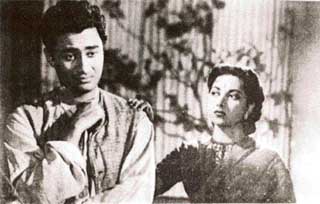
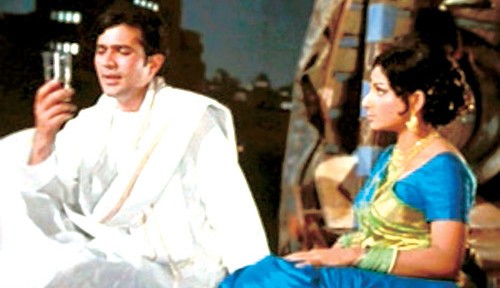
Dev Anand and Suraiya

It is not known whether Dev Anand’s perfection in lugubrious roles was as a result of unsuccessful love affair or not, but, the lyricists and directors seemed to have worked on the theme very well for him. Indeed, there is a 1963 movie Kinare Kinare with Dev Anand opposite Meena Kumari. The title song of the movie ‘Chale jaa rahe hain mohabbat ke maare; kinaare, kinaare; kinaare, kinaare’ is one such desolate song.

However, my effort tonight is to give you not just the best sad songs of Dev Anand but also to give you songs that seem to ask the questions ‘What have I got of my own?’; ‘Is it worth wandering through the world without love and happiness?’ and ‘Why can’t I have a single friend, love, companion and mate in the world?’

Here goes then. The songs that I give you all ask these questions; they are all the top sad songs of Dev Anand; but they are not in any particular order – either chronologically or in their popularity or in excellence. The first song is from the 1960 movie Bambai Ka Babu in which Dev Anand acted opposite a young Suchitra Sen. The story was written by Rajinder Singh Bedi and hence you could expect an out of the ordinary story; and yes it was because the story hinted at incest between Dev and Suchitra. The film was directed by Raj Khosla (remember him in such movies as C.I.D., Kalapani, Ek Musafir Ek Hasina, Do Badan, Do Raaste, Mera Gaon Mera Desh, which, some say, inspired Sholay. Majrooh Sultanpuri wrote these lyrics but the actual life in the lyrics was put by Sachin Dev Burman (who gave music for most of Dev Anand movies and thus took his favourite hero’s name as his middle name) and heart with Mohammad Rafi’s passionate singing. The song is ‘Saathi na koi manzil, diya hai na koi mehfil’:

In the 1963 movie Sharabi (Drunkard), Dev Anand excelled himself in a melancholic role. The movie had Raj Rishi writing the story and screen-play and as director too. Keshav (Dev Anand) lives a poor lifestyle in a small town in along with his ailing father, Dinanath, mother, and a much younger sister, Munni. He is an alcoholic but after the passing of his father promises to abstain completely, much to the relief of his mother as well as his sweetheart, Kamala (Madhubala), as well as her businessman dad, Laxmidas, who arranges his employment at his Coal Mine, and arranges for them to get married . Less than a week before the marriage, Laxmidas cancels it and Keshav relapses and his mother threatens to leave the town, and even Kamala refuses to speak with him. Shortly thereafter Laxmidas, on his deathbed, gets Kamala to promise to marry someone else, while Keshav, blacklisted by the entire community is well on his way to self-destruction as well as endangering lives of hundreds of coal mine workers.

The movie had some of the saddest songs of Dev Anand; eg, ‘Mujhe le chalo phir aaj us gali mein’, ‘sawan ke mahine mein’ and this number: Kabhi na kabhi, kahin na kahin, koi na koi to aayega’. Lyrics are by Rajinder Krishan who wrote the maximum lyrics for Madan Mohan and music is by the latter:

The name of this 1956 movie is Funtoosh and in this to help Dev Anand express these feelings of despair and despondence are Sahir Ludhianvi, SD Burman and Kishore Kumar. Dev Anand acted opposite Sheila Ramani. The movie was inspired by Meet John Doe, which was a Frank Capra movie about a man agreeing to impersonate a non-existent person who said he was committing suicide in political protest. The number ‘Dard hamara koi na jaane, Apni garaj ke sab hai deevaane, Kisake aage rona roye, des praaya log baigaane Dukhi man mere sun mera kehhana is the one I have chosen for you since it meets the theme that I have set for the evening:

Two years before the above song and the movie was Dev Anand in and as Taxi Driver. This 1954 movie was directed by his brother Chetan Anand, who directed quite a few of his movies under the banner of Navketan Films. Dev Anand acted opposite his would be wife Kalpana Kartik. The movie, if watched, offers a nostalgic journey through Bombay of 1950s. Same combination of Sahir Ludhianvi with SD Burman in this song too but this time it is Talat Mehmood singing this forlorn number. Maayusiyon kaa majmaa hai dil mein, Kya reh gaya hai is zindagi mein; Rooh mein ham dil mein dhuaan; Jaayen to jaayen kahan kis ko kahen apna yahan?

Talking about Talat Mehmood, who can ever forget this disconsolate number by him for Dev Anand in 1963 movie Kinare Kinare on similar theme? Nyay Sharma wrote the lyrics and Jaidev composed the music. Mere Malik kya kahoon teri duyaayon ka fareb, Mujh pe youn chhaya ke mujhako ghar se beghar kar diya. Dekh li teri khdaai, bus mera dil bhar gaya:

I know all this while you have been waiting for this song from Hum Dono on similar theme and, ladies and gentlemen, how can I ever forget it? Hum Dono has, as depicted by the name, Dev Anand in double role opposite Nanda and Sadhan. Music director Jaidev came up with some of his best music and songs in this movie, many of them having been penned by Sahir Ludhianvi and sung by Mohammad Rafi, who had such magic in his singing that he could actually step into the soul of actors for whom he sang. There were songs like: Abhi na jaayo chhod kar, allah tero naam, main zindagi ka saath nibhata chala gaya and this great number with the ending stanza: Kaun rota hai kisi aur ki khaatir ai dil, Sabako apni hi kisi baat pe rona aaya; Kabhi khud pe kabhi halaat pe rona aaya.

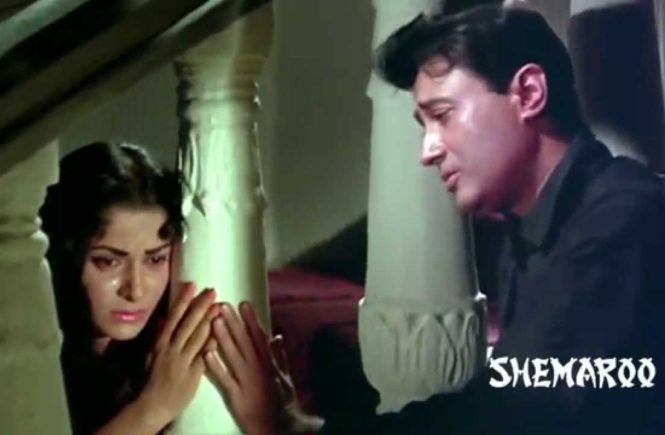
Yes, Dev Anand was popular for his light hearted songs, especially his being totally at home with his heroines in duets, but, he was also outstanding in melancholic roles. Here is one with my favourite singer Hemant Kumar in Manzil. Dev Anand and his childhood love Nutan, are separated at the hands of fate. Thinking that Dev is scandalising his relationship with her, she confronts him at a function where Dev is being honoured as a composer. What follows in the confrontation scene is drama, dialogue, acting, and picturisation at its peak. Dev and Nutan simply excel in their roles. One cannot but mention the classic song ‘Yaad aa gayin woh nashili nigahen’, composed by maestro S D Burman and penned by Majrooh Sultanpuri. Main in zakhmon ko seeke, Kya karun hosh mein jeeke: Yaaro tham lena tham lena meri baahen Yaad aa gayin vo nasheeli nigaahen. I have given for you the scene leading to the song so that you may see their acting at their best.


As late as in 1973, Dev Anand sang on the same theme in Joshila. The movie was directed by Yash Chopra who was ever fond of making movies with a triangle. In this movie the triangle was between Dev Anand, Hema Malini and Rakhi. Dev Anand is imprisoned for a murder that he didn’t commit but it was pinned on him by the evidence of the same witness whose life and honour he had tried to save. The movie, therefore, opens with this song by Dev Anand in the prison. The combination of Sahir, SD Burman and Kishore was the most abiding combination for Dev Anand. Enjoy the song: Kiska rasta dekhe ai dil ai saudaayi, Meelon hai khaamoshi, barson hai tanhaayi…

Lets get back to Sharaabi and I am now going to put up the most romantic and beautiful number sung by Dev Anand: ‘Mujhe le chalo phir aaj us gali jahan se main betaabiyan le ke aaya’. An equally good song from this movie is ‘sawan ke mahine mein, ik aag si seene mein, lagti hai to pi leta hoon, do chaar ghadi ji leta hoon’. However, this one is special to me. Rajinder Kishan, Madan Mohan and Mohammad Rafi have together not just created a song but a complete era; an unforgettable era of such adorable pulchritude that you feel like helping Dev Anand to go back in time and live his love life again…this time with happy ending:

I shall do grave injustice if I don’t choose this number in the top ten sad songs of Dev Anand. The 1965 movie Guide is regarded as a classic, the best of Dev Anand. It was directed by Vijay Anand and starred Waheeda Rehman opposite Dev Anand. The story was by RK Narayan about a man with whom nature conspires to make him a great swamy, after he is betrayed by a woman whom he thought he had won in love from her husband who neglected her. The name Guide, therefore, applied on two planes; one in reel life where Dev Anand as Raju was a tourist guide; and the other as a Guide for the villagers who were dying of hunger and thrust and take him as a saint with miraculous powers. On another plane, Guide is all about finding the guide within ourselves to direct us towards a path of goodness and sacrifice. Once again SD Burman has given outstanding music on Shailendra’s lyrics. ‘Pyaar mein jinake, sab jag chhoda, aur hue badnaam,
Unake hi haathon, haal hua ye, baithe hain dil ko thaam,
Apane kabhi the, ab hain paraaye’. One more reason for selecting this is to bring out the great melancholic singing:

Shall we end tonight with the 1958 movie Kaala Pani? And why not? Majrooh Sultanpuri penned some of the best songs for Dev Anand movies that were composed by Sachin Dev Burman. The scene here is farcical since Dev Anand only wants to play to the good sense of the courtesan Nalini Jaywant so as to get to the secret about his father’s disappearance. He borrowed the song, the tunic, the baton and the cap from his room-mates. Nevertheless, it is a great sad number of Dev Anand.  Tum to naa kaho ham, khud hi se khele, Duube nahin ham hi youn, nashe mein akele, Sheeshe mein aapako bhi utaare chale gaye. Ham bekhudi mein tumako pukaare chale gaye.
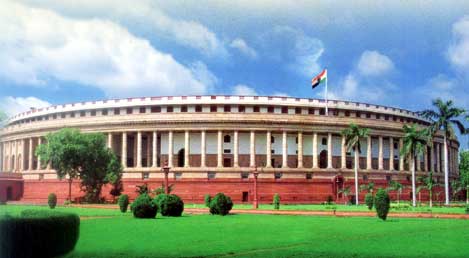
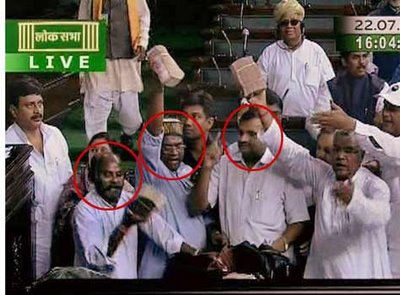
SD Burman composed it in Raag Chayanat, Tal Kaherava and see how beautifully Mohammad Rafi delivered:

I have given you the top ten sad numbers of Dev Anand on the theme: what have I got of my own? Should you feel your list is different or I have forgotten your favourite number on the theme, please do write.

“Kaun rota hai kisi aur ki khatir ai dil,
Sabko apni hi kisi baat pe rona aaya”

WHO SHOULD RULE INDIA?

Less than a week back, the Chief Justice of India, Shri SH Kapadia cautioned that judges should not rule the nation. He said, “Judges should not govern this country. We need to go by strict principle. Whenever you lay down a law, it should not interfere with governance. We are not accountable to people. Objectivity, certainty enshrined in the basic principles of the Constitution has to be given weightage.” He said this whilst delivering a lecture on ‘Jurisprudence of Constitutional Structure’ at the India International Centre at New Delhi.

This got me thinking: who should actually rule India? Over a period of time I have made a short list of those who shouldn’t. Here goes:

1. Judges. They can’t be ruling India for the reasons given in Justice Kapadia’s speech. Before the British gave us a central legal system based on Indian Penal Code in 1860 and Indian Evidence Act in 1872, India’s justice system was based on laws as given in The Arthashastra dating back to 400 BC and Manusmriti dating back to first century AD. Indeed, the caste or religion based codes of laws, eg, Hindu code of laws and Muslim code of laws were prevalent even after independence. Then there were – what is known as – customary laws. It is taking India a very long time indeed to become a civilized nation whose people respect the rule of the law. Many archaic laws and rules took considerable time in changing with changing times. Amongst other reasons, we have rampant political exploitation of the masses and thus – as came out in the infamous Shah Bano case – even after four and half decades of independence, we are nowhere near a uniform, easily understood civil laws. Everything is left to interpretations, technicalities and the like. Folklore says that it is better to sort out things between the people themselves rather than going to police, judges and lawyers. All these three categories are not averse to taking money from both the parties and prolonging the cases until the grandchildren of the original contenders opt for compromise (to sort out things between themselves). Then there are certain categories of people in India who consider themselves above the law. When a politician is charged with scams worth crores of rupees, he/she initially says it is “political vendetta” but later says, “Iska faisla to ab janata ki adalat hi karegi” (Only people’s court (mob mentality?) can now decide on this. You may feel that it is contempt of the court to even make a statement like that. However, since the politician feels that he is above the law, he has scant respect for the courts or the judiciary except for those who are on his payroll. India faces another problem in that, for a long time in history, the Judiciary, the Executive, and the Legislature were the same person. It is taking us a long time to get out of this. Our people are, by nature lawless, indisciplined, and prone to taking short-cuts.The reason for me to tell you this reality about the justice system in India is that our judges have hands-full (in more ways than one). We have lakhs of cases rotting in the courts for decades. Our people require newer laws every passing day but have scant regard for laws already enacted. In such a scenario, where is the time, energy, inclination etc for judges to rule the nation. If they are able to sort out the judicial mess we are currently in, that itself is too much to hope for.

2. Military. Sorry, we are very clear about this; we don’t want military to govern India. We don’t want to become like Pakistan. From the time of independence when our Prime Minister Pt. Jawaharlal Nehru had this obsessive mania about keeping military far removed from governance to this year’s ‘exposure’ in a reputed Indian daily turning a routine movement of troops from Mathura and Hissar to New Delhi as likely design by Army under General VK Singh to take over governance of the country, our politicians and people at large have this unexplained mortal fear that one day military would take over the country. We ourselves call military to fill up lack of governance in many parts of the country, which we conveniently cover up by a term we have specifically coined for this purpose, viz, “law and order situation”. But, let alone giving the military a modicum of say in matters of governance, we disdainfully question even Armed Forces Special Powers Act in such states where we expect military to thanklessly sort out mess caused by politics and lack of governance. The armed forces chiefs are now 13th in the Order of Precedence in our nation. When Admiral Joshi took over as the 21st Chief of the Indian Navy, The Times of India, used to giving six column ‘news’ for Yuvraj having hit six sixes in an over, gave it as a small news on page 15. Indeed, Delhi Varsity or St. Stephen’s College not promoting Unmukt Chand, the Captain of the Under 19 team winning world cup, making it a bigger news. Our nation is now in a state that our cricket team winning a match is bigger news than the armed forces winning skirmishes, battles and wars against the enemy; many a times losing their lives (“the ‘b——-s’ are paid for it, so what’s the big deal?”) No, Sir, military should never be allowed to rule India.

3. Politicians. They should, if you really ask most people, be actually ruling India provided they are not corrupt or criminal. Regrettably, there is no other variety of this animal found in India. He or she has proved the English saying wrong, which ended with ‘but, you can’t befool all the people all the times’. There are many who have written volumes about how did the Anna Hazare movement ‘India Against Corruption’ fail; and why a strong Jan Lokpal Bill is still not around the horizon. My reason is simple: how can the corrupt be asked to make a Bill that curtails their own powers and take punitive action against themselves? It is like asking the thieves to lay down traps for themselves. Another big reason for the IAC to have failed is because it was wrong to assume that in our country only the politicians and big-wigs are corrupt. India is at an unfortunate period of time in history when people at large are corrupt and opportunistic; there is a race to somehow become richer, more powerful and more influential. In a democracy people not only get the government that they vote for; they get the government that they deserve. We can never expect and trust such politicians elected by such people to rule India.

4. Babus or Bureaucrats. Many people feel that when the British gave independence to India, it wasn’t complete independence as such. They had already created something called a Babu or a Saheb who, they were sure, would keep India from competing with England or rest of the world. As Winston Churchill said, “If the British left, India will fall back quite rapidly through the centuries into the barbarism and privations of the Middle Ages. If India becomes Independent power will go into the hands of rascals, rogues and freebooters. All Indian leaders will be of low caliber and men of straw. They will have sweet tongues and silly hearts. They will fight among themselves for power and India will be lost in political squabbles.” What an accurate prophecy? By endowing India with the scourge of babudom, in one stroke, the British curtailed the power of India by several centuries. The makers of the Constitution of India defined a term called ‘civil-servant’ or ‘public-servant’. I have finished living nearly six decades in this country; I haven’t yet come across a single babu or bureaucrat who regards himself as a ‘servant’ of the people or in ‘service’ of the nation or public. If you, dear reader, have come across these species kindly mention his/her address in the space provided for comments.

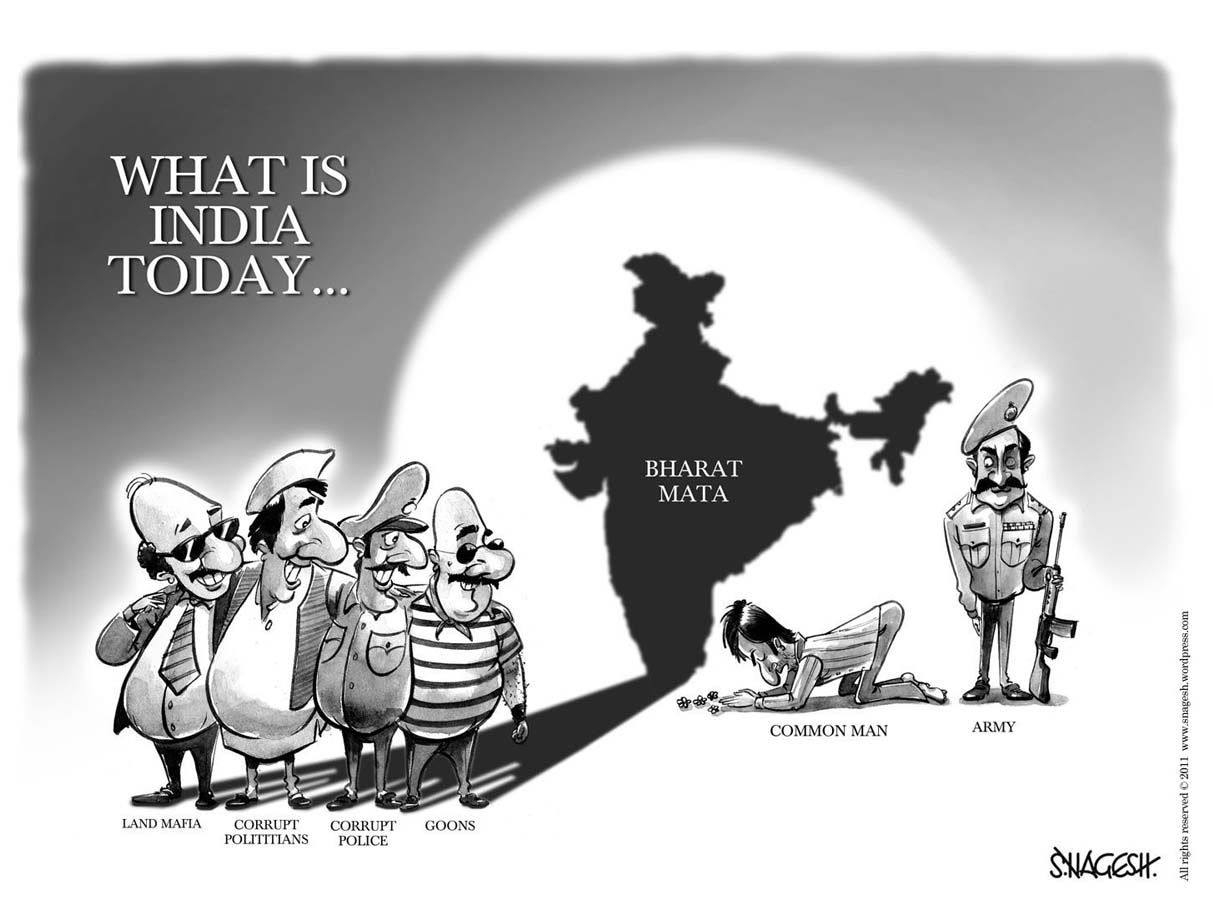
5. Police. No, Sir, we don’t want to become a police state. In 1948, after India became independent, the erstwhile Imperial Police was replaced by the Indian Police. If at one time we used to hear horrible stories about the excesses of the Imperial Police, we had no idea of what our police was going to do to us. Over a period of time, the police by itself and through political and bureaucratic interference, became completely corrupt. As an example, after 26/11, one of the recommendations of the Experts Committee was to have 6000 networked cameras installed at important points in the city. The city policemen, used to taking bribes as with the rest of their ilk, are more fearful of the cameras than the potential terrorists. Indeed, the terrorists know that they don’t have to fear being caught red-handed on the cameras because the police and the babus would make sure that the cameras even if installed would never function. The Indian Police is in dire need of reforms but it suits the politician, the bureaucrat, and the police itself, to continue pussy-footing on the reforms. Police have largely garnered powers to themselves and whilst the Director Generals are now equated higher than C-in-C’s of the armed forces, one has lost count of how many DGPs are there in each state. How can such people be trusted to rule India?

Courtesy: snagesh.com

6. Industrialists. Even though, after independence, mainly to prove ourselves as a society forever fired by the need and zeal to see upliftment of and empowerment of people, we selected a socialist model of economy for ourselves, we soon realised that it was only making poor poorer. So, Manmohan Singh, the great spin doctor, came up with ‘reforms’ and we resumed being a capitalist society that we always were. Capitalism is an economic system that is based on private ownership of the means of production and the creation of goods or services for profit. Look back in the last few decades and you will see the truth of this statement. Recently, whether it was 2G spectrum allocation, or Coal Mining auctions, or even Common Wealth Games, the common wealth of the people quickly went into the hands of ‘private ownership’. As the infamous Radiia tapes brought out there is now an unholy nexus between the politician, industrialist and the media. When John Kenneth Galbraith said, “Under capitalism, man exploits man; under communism, it is just the opposite”, he wouldn’t have ever known how true would it be for India. Irrespective of the type of the economy, in India, the industrialist, in cahoots with the politician (from whom he has to get crores of rupees even to fight elections), makes sure that the goose of the common man is cooked. Quite a few of them have now come out openly in support of Corporate Social Responsibility (CSR) and some like WIPRO’s Azim Premji have donated crores for welfare projects, but it is still miles to go before we can think of an industrialist in India fired by philanthropic intents rather than profit making plans. In such a scenario, it would be asking too much of them to rule the country.

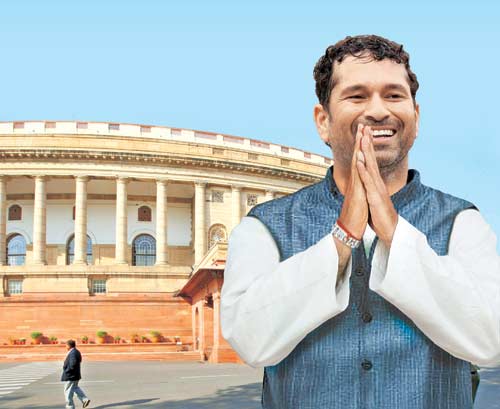
7. Filmstars, Godmen and Cricketers. carried away by their mass-appeal, some people of these categories dream of or are nominated to enter politics, eg, Dhirendra Brahmachari, Hema Malini and Sachin Tendulkar. Some others such as Anna Hazare and Baba Ramdev dream of changing the corrupt system; but, if you ask the corrupt politician he too would tell you that the ‘realities of politics’ made him corrupt whereas earlier he wasn’t. Ruling or governing India is not merely showmanship. These categories of people can pull the masses but what exactly can they promise them other than dance and drama, religious mantras and sixes? No, ladies and gentlemen, these won’t do to rule India.

Sachin Tendulkar as Rajya Sabha member (Pic courtesy: thoughtfulindia.com)

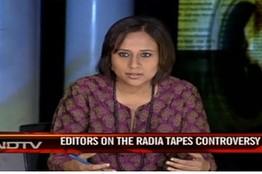
8. Media Personnel. At first glance they appear to be ideally suited to rule the nation; more so, when on debates on telly and talk-shows, they project themselves as the only people who have any idea of how to rule or govern the nation. However, look a little closer and deeper and you will find that they too have been rendered unfit for the job. Even as respected a figure as Padam Shri Barkha Dutt, as seen in the Radiia Tapes, was not beyond degeneration of soul for earthly gains. Collectively or individually, they haven’t shown great penchant for what is good for India. Being slaves of TRPs and industrialists and foreign powers who control the media, they ain’t expected to be more than watch-dogs and poodles of the people who feed them.

Barkha Dutt of NDTV on Radia Tapes (Courtesy: blogs.wsj.com

What’s the Choice? We started off with Justice SH Kapadia telling us that judges shouldn’t rule India. But, in the end, we are left with no choice as to who should rule India. We require the following in men and women chosen to rule India:

  • He or she (henceforth, when I say ‘he’, it would mean both) should place country above his or her own interests and those of his or her family, friends and cronies.
  • He should realise that in our constitution there is a term called ‘Civil Servant’ or ‘Public Servant’ but there is no term called ‘Public Ruler’.
  • The only power sharing formula (our politicians are constantly working on these) he works out would be with people.
  • He would instil discipline, nationalism, religious tolerance, uprightness and honesty in the people through personal example.
  • Every decision taken by him would have people of India as its basic concern.
  • He would make India a corruption free, equitable society.

Any takers? Instead of ruling India, how about serving India and Indians? If you have any suggestions of your own, please feel free to pen them down.

GIVING AWAY MEMORIES

After retirement we moved into a small two-bedroom flat in a far suburb of Mumbai; this is as big as the one that I could afford after being an officer in the Navy for close to 37 years. In my last house whilst still in the Navy, my wife and I took months to sort out things and pack. We knew that we had to give away lot of stuff that we had accumulated. This invariably used to happen with our frequent postings in the Navy.

I saw this 1957 Hindi movie with my parents; one of the earliest ones that I saw with them. The movie was named ‘Bhabhi‘ (brother’s wife) starring Balraj Sahni and Nanda. Rajinder Krishan wrote these most appropriate verses:

[lineate]Toone tinaka tinaka chun kar nagri ek basaai,[/lineate][lineate]Baarish mein teri bheegi palken dhoop mein garmi khaai,[/lineate]Gum na kar jo teri mehnat tere kaam na aayi[lineate]Achha hai kuchh le jaane se dekar hi kuchh jaana[/lineate][lineate]Chal udja re panchhi ke ab ye des hua begana[/lineate]

[lineate](O’ bird, twig by twig you picked a complete nest of a world[/lineate][lineate]Rain wet your brow, and sun made you sweat[/lineate][lineate]Don’t rue that you couldn’t enjoy the fruit of your labour.[/lineate][lineate]It is better to give and go then to take and leave[/lineate][lineate]Fly away bird, now this place is not yours anymore)[/lineate]

So, as we move house, what do we finally end up giving away? Most often we give away junk that was only gathering moss, mildew and dirt. This would include all those notes and dockets from the Staff College that I’d assumed I couldn’t ever do without and which, I had never cared to read even once after leaving the Staff College. Then there would be those mementoes of “love and affection” given to me at farewells without any particular emotion other than the relief at seeing me go. However, like the Master Card ad, there would still be a lot of things that we’d wince if we had to give them away; those things that money can’t buy; because there are so many memories attached to them.

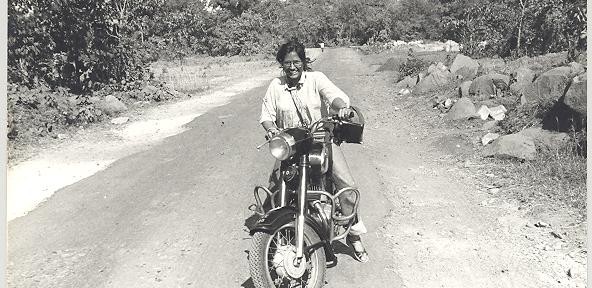
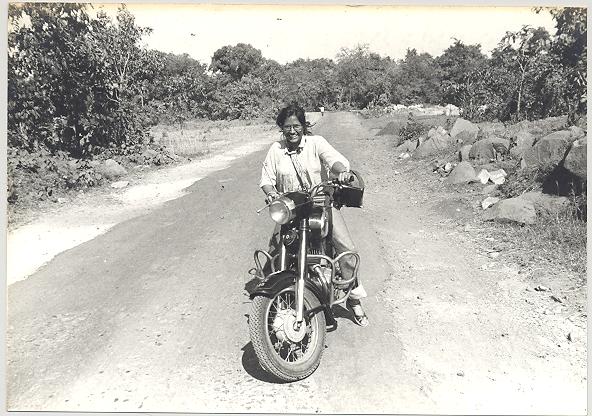
It is not my intention to bore you with a list of such things. I know each one of us has a list of such dear and precious things. However, I shall give you some examples of what it means. I gave away the first vehicle that I ever owned: a Yezdi 250 cc mobike. I still remember the number: KEE 438. I bought the mobike in the year 1980 when, as a lieutenant in the Navy, I was undergoing my specialisation course in communications and electronic warfare at Navy’s Signal School in Cochin (now Kochi). My would-be-wife was at Coimbatore and I made many a trip up and down between Cochin and Coimbatore on this bike during its (my?) running-in period. Once, on a long weekend, we went to Coonoor together.

When she visited Bombay where I got posted, we decided to go to Goa on – we called it – our donkey. One officer had named his bike ‘kilometer eater’; but, we were quite happy about calling it donkey for not only carrying our weights but many other things (for example, at one time we carried a complete cooking gas cylinder on it since waiting for the delivery boy would have been too much). What a trip it turned out to be. We returned from the Navy Ball at about 1 AM and suddenly, without any plan, I asked Lyn if she wanted to visit Goa. Knowing my capricious moods, she was fearful of asking me “when” but, I solved that problem for her by saying, “Tomorrow morning”. We got up at 5 AM, hurriedly packed up a rucksack and off we went “for a few days”, which finally turned out to be almost a month.

Oh, to be young again. Love teaches you togetherness and we were not in any hurry to reach anywhere. We clicked pics, admired the scenery and I even tried to teach her driving. Together with our donkey, we owned the world. Here is Lyn on the Bombay-Goa highway as it used to look in 1980 (not that it is better 32 years later):

We reached Belgaum at about 10 PM and that’s the time Lyn asked me if we should finally find a shelter for the night. At about midnight we found the Military Engineering Services Inspection Bungalow (MES IB). The Major-in-Charge saw our blackened faces (with the soot from the lorries), gave us a room and had only one request: “Please have breakfast with us before leaving tomorrow morning.” We were wondering why; but, the mystery was solved over breakfast. Apparently, just before they turned in for the night, the Major’s wife had a debate with her husband that the spirit of adventure was dying down in the armed forces. Just then we landed up.

The three of us: Lyn, donkey and I, had a most adventurous Bombay-to-Goa trip and stay in Goa. On the way back, we loaded our donkey on a ship (for 90 bucks) and returned to Bombay.

Our donkey instinctively understood us and never gave us any anxious moments. When Arjun, our elder son was born in 1984, that was the first vehicle he rode, perched up between Lyn and me. For one year after Arun was born in end 1986, we still managed on donkey with Arun held in her arms by Lyn and Arjun sitting on the fuel tank. God always gave us enough; in the year 1988 I was sent to Spain on duty and I returned with enough money to buy a car. Good bye, donkey. He went for 3500 rupees. All of us were saddened to see him go and the children even cried. I took solace in Sahir Ludhianvi’s lyrics:

[lineate]Jiyo to aise jiyo jaise sab tumhaara hai;[/lineate] [lineate]maro to aise ke jaise tumhaara kuchh bhi nahin.[/lineate]

(Live in such a way as if everything belongs to you; but die as with nothing belonging to you)

During our days there used to be a song by Trini Lopez with the title: ‘What have I got of my own?’ In the end, life and particularly life in the navy with its frequent transfers has taught me how true are these words:

https://youtube.com/watch?v=ICeHLkaolyI%3Ffs%3D1

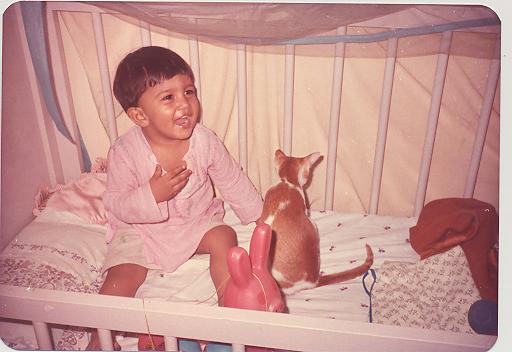
Then there was this playpen we got for Arjun. He was never alone there; he was there with his cat and toys. It was large, painted lavender and Lyn even made a mosquito-net for it. The front side could be slid down for helping the baby in and out and, though large, it even had wheels to move it around. Arjun used to love being inside it; the problem was that Lyn and I hadn’t made peace about not having him with us on our own bed. The Friday movies on the doordarshan and Benjamin Spock had prompted us to spend Rupees 1000 in getting this cot cum playpen. Arjun, in the vein of most babies who won’t be neglected, knew when exactly to wail endlessly during our watching the movie on doordarshan that used to start at 7:30 PM. Once evening, when a repeat of Rajesh Khanna’s Anand was to be aired, we planned to play with him in the afternoons so much so that at the appointed hour, Arjun would be fast asleep in the cot-cum-playpen. The movie began and we watched about 30 minutes of it without any interruptions from Arjun. However, both of us knew that our minds were elsewhere. Finally, I uttered what Lyn wanted to hear all the while, “Go and get Arjun; it is no fun watching the movie without him keeping us from watching it.” We moved to Delhi in 1987 and the cot went with us. Arun couldn’t use it initially because we didn’t have a house; we lived in one room with all our baggage lying around us in unopened boxes. When we finally got a big enough house to open the cot-cum-playpen for Arun, it was time for posting; this time for undergoing Staff Course in Coonoor (Nilgiris). We finally had to give it away without Arun using it much. However, we still wistfully remember the fun it used to be to put first Arjun and then Arun there in the first world that was entirely their own:

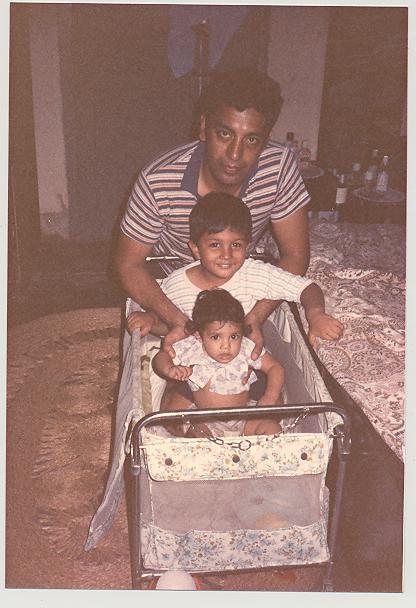
In the meantime, when it wasn’t possible to open the cot, we had to buy a smaller one for the smaller one. Lo and behold, even the elder one used to like me taking them for a ride in this cot-cum-pram-cum-swing (it had a stand from where it could be hung and the baby rocked to sleep). This was even greater fun for them than the playpen since they could put their toys in it and push it around the house. It was sad to see it go. But, then the relief was that the children didn’t require it anymore.

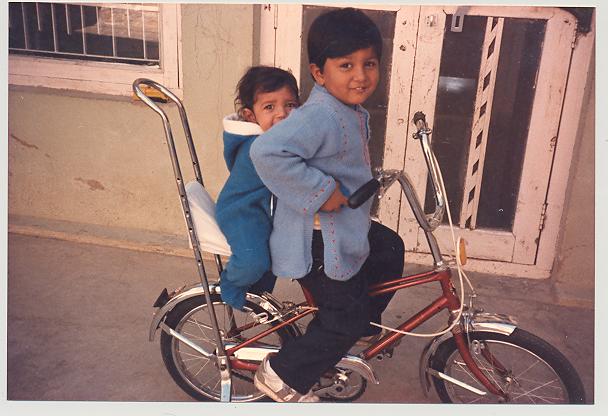
What a lot of fun they had on this cycle for a few years. Arjun felt like a big boy taking his younger brother around and telling him reassuringly, “Don’t worry; I am a safe driver”.

It was nice to see Arjun grow into a boy on this cycle from an infant. But, our heart was in our mouths when we had to give it away:

I remember giving away my complete collection of Hemant Kumar’s songs on audio cassettes, my PG Wodehouse Books, my collection of Readers Digests, flower pots that had started looking deliciously verdant just when the transfer orders came, photo frames and even paintings each one of those had a story to tell. Would the new owner have guessed how much we paid in terms of minutes of our lives (and not money) in maintaining them, cherishing them and looking after them?

Curiously, there were also things that we didn’t feel a thing about losing; electronic stuff, eg, music systems, televisions, fridges, clothes, shoes and the like. This only goes to prove that things acquire life of their own because of priceless memories attached to them and not because of their money-value. I still miss our first telly: Dyanora 14″ B&W portable, though.

The other day I read a story by a fellow blogger Anupam Patra who writes very imaginatively. In the story a man gave away his eyes to his killer’s son. That got me thinking how can giving away anything inanimate be so hard or difficult?

As Elton John sang in ‘Talking Old Soldiers’:

[lineate]Just ignore all the others;[/lineate] [lineate]you got your memories….[/lineate]

Finally, the pictures – both in the sepia and on the mind’s screen – are still with me; the memories are never given away. I can still relive even my own childhood without any of the material things associated with it let alone that of my children.

Mujhe ab bhi yaad hai kitana ameer tha main…..jab paani mein mere jahaz chalte the (I still remember how rich I was then….when my ships used to ply in the waters):

GODS MUST BE CRAZY

[lineate]
She was black
And fast and feline
“Stop” I screamed,
“Don’t cross and spoil my day”.
She heard me
Looked at me innocently
And stopped as if rooted.
“Now what?” her shining eyes seemed to ask.
“Don’t you remember”, I asked her,
“The first time you cast your spell,
It augured ill for me
I nearly failed in my exam.”
[/lineate]
 
[lineate]
She cooed sweetly,
They always do.
‘Practised innocence’ I thought.
“And the second time”
I continued, and in response she only sweetly purred,
“I nearly got me killed.”
Her eyes shone
She looked lovely.
[/lineate]
 
[lineate]

Just then a huge dog came
And looked at her menacingly.
She gave me a look
And made a dash
Without sharing any more of her
Looks and thoughts with me.
The dog went after her
In determined chase.
[/lineate]
 
[lineate]
But, what she shared
Was enough for me.
Each one of us have
Survival instinct against all threats
If you ain’t clever, cunning, deceiving
Against the larger dog in your life
You are finished.
[/lineate]
 
[lineate]

A snake is born out of an egg
And left to fend for itself
Without the parents nurturing it even once.
Poison is all that it has to survive.
It is limbless
No hands to ward off danger
No legs to kick and run.
Human beings are born differently,
But, are we really so different?
It is a cat and mouse game:
The survival of the fittest.
[/lineate]
 
P.S. Three days back, a man in Nepal bit a snake to death; angry at having been bitten by the snake.

INDIBLOGGER AND I – REALITY CHECK

I joined Indiblogger about two years back; indeed soon after I started blogging. It, willy-nilly got me in the habit of worrying about the popularity of my site: Alexa rank, Moz rank and ranks higher and better than those in the armed forces (Read ‘Blogging – Race or Stampede’). Today, after I finished 75000 pageviews, I wanted to do a reality check of how much Indiblogger has helped me to stay afloat. I was stunned when I got the results:

  • I put up 145 posts on Indivine.
  • I got 2288 pageviews. This makes it an average of 15.7 pageviews per post.
  • Indibloggers, therefore, accounted for merely 3.05 percent of my total pageviews.

The sober inference that I drew from this confirmed my earlier suspicion that Indiblogger is all about ‘You scratch my back, I scratch yours’. For al practical purposes it is a popularity contest, an election, in which others vote for you with the hope that you’d vote for them too. If, for some reason, you omit to vote for them, that’s the end of their interest in your posts. Imagining and saying that all 2288 pageviews from my fellow bloggers would be for the purpose of reading my posts would really be too much. Just like the Indian democracy, one is happy that others voted; but, whether they voted on issues or otherwise is a moot question.

Courtesy: gillettsggg.blogspot.com

Having said that, I agree with a fellow blogger Jayashree that I discovered some great bloggers through the portal of indiblogger and not many of them were actually having very high on the Indi Rank. Without the indiblogger directory, I won’t have even known that these bloggers existed.

I have this deep desire to connect with the younger writers; to know what ideas they have, their emotions, expressions, aspirations, critiques, likes, dislikes. Here is what my ‘Reality Check’ has brought home to me: most younger people have values, love India, have very fine expression (many times better than mine) and are passionate about writing. As Jayashree predicted, I like their comments even on someone else’s posts. I have to be profoundly thankful to Indiblogger for discovering there are others who like to discover play of words and search for newer ideas.

On the subject of new ides; I must acknowledge that Indiblogger helped me to get interesting ideas from other blogs, some of which were very practical and appealing.

Therefore, I’d still keep posting, still keep searching for newer, better, more ineresting blogs and shall be grateful to Indiblogger that voting or no voting, it is fun being a part of it.

I like Indiblogger motto: I blog; therefore I am. But, the more befitting would be:

I blog; therefore, I discover other blogs and people.

Blogging is a great discovery of not only what lies within me but within other bloggers too.

Congratulations Jayshree for your having got another award: The Liebster Award. Thank you also for passing it on to me. However, as I wrote earlier, I am not into this sort of thing. Since, you asked me to repeat on my blog (what I wrote as a comment on yours in response to your Liebster query about 11 things that I feel would make a happy and fulfilling life), I am doing it now. For the other readers, let me tell you that as soon as the question was put to me by her, I wrote it down (in about ten minutes) as it came and I am reproducing here without any editing:

I don’t know what to say since it is not something that I am used to. Thanks for thinking so high of my blog. I am going to respond to your ‘Eleven things required for a happy and fulfilling life’ without too much of thinking. Here it goes:

#1. Good health. Without this, all others are but impracticable.

#2. Enough. All the money in the world cannot buy it. I have copied this from Joseph Heller’s response to Kurt Vonnegut, when the latter brought out the opulence in a billionaire’s party they were attending. Joseph said, “But, I have something that the b doesn’t have. I have enough.”

#3. Friends. If you are happy without friends, you must be abnormal. A man was nearing hundred and he boasted, “I don’t drink, womanise, smoke, don’t like music and friends….and in a few months time I shall be celebrating my 100th birthday.” At this, one reporter had a simple thing to ask, “How?”

#4. Simplicity. A complicated or complex life is not worth having even if you have tons of it…it weighs on you.

#5. Music. A life without music is…..well, life without music. Music is simply the soul of life.

#6. Imagination. An idiot is the happiest. However, if you can see and perceive beauty in God’s world, in the simplest of things that He or She or even It made, life can e suddenly most enriching, most satisfying.

#7. Ability to Listen. There is no point in having music if you can’t listen, can’t feel. Remember Wordsworth?

“The stars of midnight shall be so dear
For her and she shall lean her ear
In many a secret place:
Where rivulets dance their wayward round,
And beauty born of murmuring sound,
Shall pass into her face.”

#8 Gratefulness. God, (or whosoever you want to thank), thank you for giving me the gift of yet another day, for eyes to see, for ears to listen and for heart to feel.

#9 Love. This is not listed low. It is the essence of all the points above. Life can NEVER be fulfilling if one goes through life without loving. As they say, it is better to have loved and lost than not to have loved at all.

#10 Work. You have to find something that your hands can do: write, row, dig, paint, cook, anything. However, if you are work less, you are sans happiness.

#11 Outreach. If you can’t reach out to people who have less than you, you cannot be happy. There is great happiness in giving. It lessens your burden. As the Bible says, “I lamented I had no shoes until I saw a man who had no feet.”

Jayashree, when I started writing about ten minutes ago, I didn’t even know if I could finish eleven. I am not going to edit or even read back….since the most fulfilling life is one without regrets…I have no regrets that I have missed out many seemingly impressive things from my list.

Unsaid response from Jayashree: Thank you, sunbyanyname; I am glad after all these months you got the spellings of my first name right.

“GIVE THEM MOBILE”

There is hardly anyone who is not familiar with the infamous utterance of Marie Antionette during a famine in France whilst her husband Louis XVI was the monarch. When it was brought to her notice that people didn’t have bread to eat, she responded, “Qu’ils mangent de la brioche” (Let them eat cake).

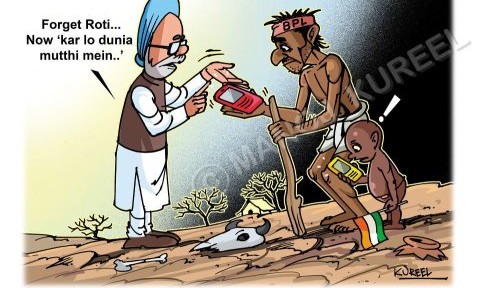
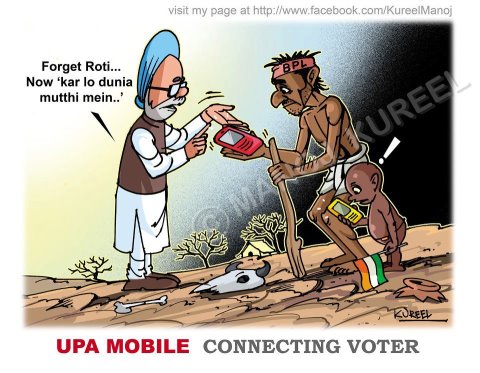
It is said that this story of the princess is apocryphal and that she didn’t say so. It is said Jean Jacques Rousseau is the one who attributed these words to her in his autobiography ‘Confessions’. However, Queen Sonia Gandhi actually used these words for the poor rural people, knowing pretty well that they don’t have food to eat, “Give them mobile phones”. I am reproducing Kureel Manoj’s cartoon on the subject, which says more than any words:

Courtesy: Kureel Manoj

Here are the facts that I picked up from Wikipedia:

“A study by the Oxford Poverty and Human Development Initiative using a Multi-dimensional Poverty Index (MPI) found that there were 650 million people (53.7% of population) living in poverty in India, of which 340 million people (28.6% of the population) were living in severe poverty, and that a further 198 million people (16.4% of the population) were vulnerable to poverty. A startling 421 million of the poor are concentrated in eight North Indian and East Indian states of Bihar, Chattisgarh, Jharkhand, Madhya Pradesh, Orissa, Rajasthan, Uttar Pradesh and West Bengal. This number is higher than the 410 million poor living in the 26 poorest African nations.”

Source: Wikipedia

What’s he use that the UPA wants to put these mobiles to? It is said that giving mobiles to the poor will make government policies to be easily disseminated to them through mass sms. Once again I am reminded of a man trying to sell a transistor radio to a Soviet farmer. The farmer kept resisting it. Finally, the man said, “Look at it this way comrade; with this you can be in any part of USSR and still be able to hear Moscow.” The farmer responded, “No I don’t want it; but do you have something by which Moscow can hear us?”

Why is there so much of disconnect between the people and the government that they choose? I brought it ou in an article on the 2011 Republic Day ‘How Proud Should We Be Of Indian Republic at 62?‘ that we ain’t really a functional democracy. That’s the reason why the above figures from UN 2009 report doesn’t compare well with our “stupendous GDP growth”? Just consider that the richest 10 Indians have 10 percent of GDP between themselves; and the richest 50 Indians have 30 percent of GDP. Politicians are known to have multiplied their income 1100 times in 5 years of their “rule” and decide on ridiculous figures such as Rs. 22 per day to decide whether or not a person is Below Poverty Line. This is a huge challenge. Many government policies such as ‘subsidy’ are meant for the BPL. However, such policies don’t reach their intended targets and funds are siphoned off elsewhere.

Here is an eye-opener about the value of an Indian life:

Infant Mortality Rate is the number of deaths of infants up to one year of age per 1000 live births. Singapore has only 2.60 deaths (average of five years of data released by UN last year) per 1000 whereas India has 60.82. So whilst Singapore is #1 in the world, India at 150 (out of 194 countries) is tucked in between Bangladesh and Ghana ahead of it and Eritrea and Zimbabwe below us. Aamir Khan’s Satyamev Jayate is trying to make us aware of the real problems that are our challenges as opposed to politicians and vested interests telling us that we are nearly there as a super power and hence our people require mobile phones so hat they can be educated about the “glorious achievements” of the governments in India since independence.

As the elections draw closer, such doles from the “rulers” in exercise of their “powers” shall become more and more frequent. I don’t suppose following would then be beyond the scope of the government and the other parties.

Party A Man: Sir, Sonia ji is thinking of giving mobile phones to the rural population. This would be of great disadvantage to us because hey would be smsing the government campaign in the garb of educating people all the while.

Party A Boss: If I were you I won worry about that too much. Phones need to be charged periodically. Fortunately there is no electricity in the villages and hence people won’t be able to use them.

Party A Man: But Sir, we should have a Plan ready of our own. People are fed up of receiving blankets, sarees, TV sets and bicycles jus before the elections. We must promise them something different. Chandarbabu Naidu even distributed the CDs of his government’s glorious achievements.

Party A Boss: Let me think; how about giving them one year free subscription to our latest magazine ‘Hoodwinking People All The Time’; or two free tickets to Canary Islands or Isle of Man?

Party A Man: Brilliant Sir; to a select few, eg, the Panchayats etc we can even give cars. They won’t be able to use them like UPA’s mobiles because hey don’t have roads and buying even a litre of fuel would make them jump above the Poverty Line and hence ineligible for retaining the cars.

Elsewhere:

Party B Boss: Have you come up with a suitable counter to UPA’s mobile policy.

Party B Worker: Yes saar; we intend to promise the people Induction Cookers and Neon Signs to put in each village announcing our party’s new policies.

Party B Boss: You will have to give them gensets too to run these on.

Truly, it is going to be a challenge to win the elections by average candidates in view of high-tech gizmos being offered to the common man by the “rich” parties. One party is even thinking of offering people downloadable video on ‘Exotic Recipes for the Common Man’.

The people’s goose is almost cooked.

HAPPY FRIENDSHIP DAY

दोस्ती सिर्फ तब ही नहीं जब फूल हैं
दोस्ती सिर्फ तब ही नहीं जब गले में  हार है
दोस्ती सीखने का कोई advanced स्कूल नहीं है
दोस्ती तो सिर्फ मोहब्बत है और प्यार है
दोस्ती में हम चाहे कुच्छ भी ना बोलें
दोस्ती में गुफ्तगू के ज़रिये हज़ार हैं
दोस्ती के गरम रहते हैं हरदम शोले
दोस्तों  को तो बस अपनी दोस्ती का खुमार है
आज Friendship Day का भी क्या हसीन  दिन है यारो
बारिश का दिन है और आज रविवार है
यानी  जैसे दोनों चंद्रमुखी और पारो
देवदास   पे  मर मिटने  को तैयार हैं
सब मेरे दोस्तों के लिए  लिखता हूँ अभिवादन
ये  sunbyanyname का अहम् इकरार है
सूरज के निकलने  का ना भी बने साधन
रवि  तो तुम पे जाने निसार है
हमारी दोस्ती रहे सलामत आज भी और हमेशा
दोस्तों के बिना जीना दुश्वार है
आज के दिन मेरे सब दोस्तों के नाम ये संदेशा:
आप हैं तो रौशन मेरा संसार है
खुदा  तुम्हें देदे अपनी सारी खुदाई
आपकी दोस्ती पर मुझे ऐतबार है
काश दोस्ती में ना लिखी हो कभी भी जुदाई
जब तक जान पे अपना इख्तियार है
Happy Friendship Day सब दोस्तों और यारो
आज के दिन तो दोस्ती की बहार है
इक नज़र हम पे दोस्ती की मारो
जहाँ तुम हो वहां ही करार है

HINDI SONGS AND THE AGE OF INNOCENCE

Recently, when Rajesh Khanna died, after a long illness, we reminisced about his being a super-star during the Era or Age of Innocence in the Hindi movies. What exactly can be age or era of innocence? One thing is clear that it was an era different from the present era.I am not chronicling the life and movies of Rajesh Khanna. Paeans have been and would be written and sung about his overpowering image in the movies. During the height of his popularity, in 1970, when the movie Aan Milo Sajna was released, there was a duet he sang with Asha Parekh: the duet starts with she (playback by Lata Mangeshkar) declaring, “Achha to hum chalte hain” (Okay, I shall take your leave now) and he (playback by Kishore Kumar) asking: “Phir kab miloge?” (When will I meet you again?). Eligible girls in the movie hall would sing back in unison: “Jab tum kahoge” (Whenever you say). Such was the popularity of Rajesh Khanna.Kaka, as he was affectionately called, is no more and as he seems to sing: ‘Achha to hum chate hain’; we ask him again and again, “Phir kab miloge?”
The article is about the Age of Innocence in the Hindi movies and I shall try to concentrate on three really good actors that we lost in a span of less than one year: Shammi Kapoor just one day prior to the last Independence Day at the age of nearly 80: Dev Anand who left us on 3rd Dec last year, still young at the age of 88; and Rajesh Khanna who left us a fortnight back at the age of 69.Take Rajesh Khanna’s Amar Prem (Immortal Love), for example. It is a 1972 movie directed by Shakti Samant. If it has resonance with eternal love between two ideal lovers, you are wrong; the love depicted in the movie was the innocent love of a man (Rajesh Khanna) for a courtesan (Sharmila Tagore). The movie brings out how our society thrives on pretensions and deception and being judgmental of those who don’t overtly show such pretensions (and covertly embrace decadence).
Anand Bakshi’s lyrics were extremely apt and subtly hard-hitting, eg, “Tu kaun hai tera naam hai kya Sita bhi yahan badnaam hui.”. Rajesh Khanna and Sharmila Tagore both underacted superbly.

The movie had some excellent songs which surprisingly (because these were serious and not lilting) became quite popular. For example, Raina beeti jaaye, shyam na aaye; Ye kya hua, kaise hua, kab hua: Chingaari koi bhadake; and this one which I have selected for you portraying the theme of the movie: Kuchh to log kahenge, logon ka kaam hai kehna(People will find something to say; they always do). The music is by Rahul Dev Burman.

https://youtube.com/watch?v=95UdAo4JdJI%3Ffs%3D1

AGE OF INNOCENCE in the Hindi movies is nostalgically remembered by all of us. At one time in the Hindi movies (before we bastardised them by calling them Bollywood movies) it wasn’t the done thing to be direct about such emotions as Love. Do you remember a very young Sharmila Tagore singing in 1964 movie Kashmir Ki Kali: ‘Muhabbat jo karte hain vo, muhabbat jatate nahin; dhadakane apne dil ki kahin kisi ko sunaate nahin. Maza ka raha jab ke khud kar diya ho muhabbat ka izehaar apni zubaan se?”

Kashmir Ki Kali too was a Shakti Samant movie. Lyrics were by SH Bihari and music by OP Nayyar. A young Shammi Kapoor (son of a rich father) acts opposite a younger Sharmila Tagore (who sells flowers for a living). Hats off to Omkar Prasad Nayyar, born in Lahore on 16 Jan 1926 when Lahore was in undivided India. He started his career in Hindi movies  in 1949 by composing background score for the movie Kaneez. He must be having a record for the highest number of hit songs for any movie that he composed music for, eg, Aar Paar, Tumsa Nahin Dekha, Phir Wohi Dil Laya Hoon, CID, Mr and Mrs 55, Naya Daur, Howrah Bridge,Phagun, Jaali Note, Mere Sanam and Dus Lakh. Meanwhile, enjoy this hit number from Kashmir Ki Kali: Isharon isharon se dil lene waale bata yeh hunr tune seekha kahan se? None of OP Nayyar’s songs were sung by Lata Mangeshkar. This one is a duet between Mohammad Rafi and Lata’s sister Asha Bhosle:

https://youtube.com/watch?v=HxZyRkqo0r0%3Ffs%3D1

Shammi Kapoor was the middle one of the three sons born to Prithviraj Kapoor, the elder one being Raj Kapoor and younger one being Shashi Kapoor. Prithviraj was a leading light of theatre in Calcutta and Shammi Kapoor (born Shamsher Raj Kapoor) had his early education in Calcutta, later moving to Bombay. His playboyish image got honed in movies like Tumsa Nahin Dekha and Dil Deke Dekho. However, he always wanted to do serious roles. His most memorable serious role came in 1970 movie Pagla Kahin Ka where he played a mentally deranged person who by his innocence brought home the contrast that others in society were even more deranged than him. His song in the movie ‘Tum mujhe youn bhula na payoge’ is simply ungorgettable. However, I am presenting to you songs representative of Age of Innocence and I can’t find a better song for Sahmmi Kapoor on this theme than this one from the 1964 movie Brahmachari for which he got his first Filmfare Best Actor award. Of course, two years before his death Shammi Kapoor got the coveted Phalke Legend Actor Award by the Dadasaheb Phalke Academy but Brahmachari award must have been close to his heart. Brahmachari song is representative of the theme of the movie: Shammi Kapoor being an orphan looking after umpteen orphan children against all odds. The great Shailendra got the Best Lyricist award for this song and the incomparable duo of Shankar Jaikishan the best music director for the film. Mohammad Rafi got Filmfare award for another song ‘Dil ke jharokhe se’ but, undoubtedly, the best song in the movie was Main gaaoon tum so jaao:

Lets shift to the great and the ‘youngest’ actor in the Hindi movies Dev Anand. His death at the age of 88 came as a great shock to all of us for the simple reason that we were first expecting him to grow and look old and then only die. Who can ever forget that toothy smile and the becoming way of shaking and tilting one side of his torso whilst looking at you with twinkling eyes? Dev Anand got his first filmfare award for the 1958 movie Kalapani that he produced. This song that Dev Anand enacted opposite the effervescent Madhubala is so innocent both in lyrics and in acting that it really is an anthem for the Age of Innocence. Lyrics are by Majrooh Sultanpuri and music by Sachin Dev Burman; the pair was together in many of Dev Anand movies. Here it is then: Achha ji main haari chalo maan jaayo na:

https://youtube.com/watch?v=g2rFmmdUIbQ%3Ffs%3D1

The 1969 movie Aradhana (worship) presents two roles of Rajesh Khanna, one as Arun in love with Vandana (Sharmila Tagore); he sings a song to her from the adjoining road when she is in a train to Darjeeling reading an Alistair MacLean novel. The song became a superhit song ‘mere sapno ki rani kab aayegi tu’. It was rated as the amongst the ten most songs of Hindi movies. They don’t get married but as a result of their having taken shelter in rain where he seduces her with the song ‘Roop tera mastana’, she becomes pregnant. He is an IAF pilot just like Raj Kapoor in Sangam. However, unlike Raj Kapoor, he is actually killed.

Vandana’s family abandons her and she is forces to work as a nanny for her own son Suraj who is adopted by a childless couple. Vandana is stalked by Shyam (Manmohan) and is nearly raped but her own son Suraj arrives and stabs his uncle to death in order to save her. When the police arrives, Vandana takes the blame upon herself and spends time in the jail whilst Suraj grows into the likeness of his dad Arun (Rajesh Khanna).

What a story it was. Suraj too becomes an IAF officer (weren’t they obsessed with IAF pilots at that time, the ultimate macho man with Ray Ban glasses?) and falls in love with Renu (Farida Jalal).

During those days, as I brought out in the Kashmir Ki Kali song earlier, acknowledgement of love was not direct and in-your-face like these days. Here is Suraj asking Renu a series of questions so that somehow she’d acknowledge being in love with him. Anand Bakshi wrote the lyrics with music by SD Burman. Rafi and Lata have sung for Suraj and Renu respectively: Baagon mein bahar hai?

https://youtube.com/watch?v=78JhA_TJvBI%3Ffs%3D1

Before I turn to songs by other actors and actresses and singers on the Age of Innocence, lets have just one more song of Dev Anand, one of the three great and inimitable actors that we lost during the course of last one year.

Look at and hear this duet and tell me where all do you see innocence: is it in the mischievous smile of Dev Anand? Is it in the shy enthusiasm of Kalpana Kartik or is it all over there in the loving atmosphere or is it in all these things? This duet should be representative of that era; the era which can only be called the golden era or the age of innocence.

The duet has all the bests in it. First of all the movie Nau Do Gyaraah was produced by Dev Anand and was the directorial debut of his brother Vijay Anand (do you remember Kala Bazaar, Guide, Johnny Mera Naam, Jewel Thief, Haqeeqat, Kora Kagaz and Teesri Manzil?). Majrooh Sultanpuri wrote some of his best lyrics for the movie such as Hum hain rahi pyaar ke, dhalti jaaye chunariya, Kali ke roop mein. SD Burman gave music for most Dev Anand movies and gave superb music for this movie too. Finally, that was the era of the duets and there is nothing to beat Asha Bhosle pairing with Kishore Kumar. Enjoy Aankhon mein kya ji:

https://youtube.com/watch?v=edqh8JLnV7s%3Ffs%3D1

Age of innocence wasn’t just about Love only; it was about good conduct, good manners, trusting, lack of cunning and deceit except in the villain. A number of songs (thousands) came up during that era celebrating innocence. I give you just a few of them.

What can be more innocent than this song I have selected for you? The name of the movie is Anari (Naive). It came during an era when Innocence and Naivete were desirable virtues and not looked down upon. Indeed, cleverness and cunning were not considered smart as these are today. Anari is a 1959 Bollywood film directed by Hrishikesh Mukherjee. The film stars Raj Kapoor, Nutan, Motilal and Lalita Pawar. The music was by Shankar Jaikishan and the lyrics by Hasrat Jaipuri (just one song, ie, Ban ke panchhi gaaye pyaar ka taraana) as well as Shailendra (both lyricists and music directors being regular in Raj Kapoor films). Among the few movies that Lalita Pawar played a positive role and Motilal a role with shades of grey. Raj Kapoor is the innocent hero of the movie who falls in love with a maidservant played by Nutan. Little did he know that she is the daughter of the person who gave him employment when he couldn’t make a living through trading and painting. His landlady played by Lalita Pawar dies of poisoning and now Raj must prove his innocence – not his Chaplinesque innocence but real one. Just see in this song how Nutan chides Raj Kapoor for being so naive as not to understand the atmosphere or the aura of love. The title of the song is: Vo chand khila vo taare hanse, ye raat ajab matvaali hai; samajhane vaale samajh gaye hain, naa samajhe vo anari hain:

https://youtube.com/watch?v=OvtU5FYxK-c%3Ffs%3D1

Anari was a 1959 movie directed by Hrishikesh Mukherjee. Raj Kapoor and Nutan look so fresh and – you guessed it – innocent that one misses that era when it didn’t pay to be clever and cunning. Another song from the movie is the anthem of innocence and Shailendra got the Best Lyricist award for this song just as Raj Kapoor got the Best Actor award for the movie. Mukesh, who has sung most of Raj Kapoor’s songs, got the best singer award for this movie. Also, the best ever music duo of Shanker Jaikishan got the Best Music Director award for the movie. The song is also my facebook profile song. Enjoy this anthem of innocence; the answer to Nutan asking Raj Kapoor why is he so naive. The song says: sab kuchh seekha humne na seekhi hoshiyari:

https://youtube.com/watch?v=d1BIf0PN5x4%3Ffs%3D1

Balika Badhu (The Girl Wife) is a 1976 Hindi film produced by Shakti Samanta and directed by Tarun Majumdar. The film is based on the Bengali novel by the same name by Bimal Kar, about a young girl who is married before she is old enough to understand what marriage is all about, against the backdrop of Indian freedom struggle. Gradually she and her school-going husband grow as a couple and begin to love one another. The film was previously made into a Bengali film, Balika Badhu (1967), starring Moushumi Chatterjee, by Tarun Majumdar himself. This romantic comedy drama stars Sachin with Rajni Sharma, Asrani, A. K. Hangal, Asit Sen, Paintal and Om Shivpuri. The music is by R. D. Burman and lyrics by Anand Bakshi, who penned several hits in the film including “Bade Achchhe Lagte Hain…”, which was singer Amit Kumar’s first hit and featured on the Binaca Geetmala annual list 1977. Enjoy:

https://youtube.com/watch?v=3pN7sITXVyk%3Ffs%3D1

The one is really dear to me. It is by my favourite lyricist Shakeel Badayuni with my favourite singer/music director Hemant Kumar. The song is from the 1962 movie Bees Saal Baad. The movie was Hemant all the way: it was produced by him and he sang some of the best songs in the movie such as Bekraar karke humen youn na jaayiye and Zara nazron se keh do ji. Here is the plot: After a lusty Thakur rapes a young girl, she kills herself. Thereafter, the Thakur is killed by what the local people call the girl’s vengeful spirit. Then the Thakur’s son is also killed in a similar way. Thereafter the brother of the Thakur is also killed. The grandson of the Thakur, Kumar Vijay Singh (Biswajeet) returns from abroad to claim his ill-fated legacy. He is warned to stay away from the grounds that have killed his ancestors, but he intends to find out who or what is behind the killings, and hires a private detective, Gopichand Jasoos (Asit Sen). Kumar meets with Radha (Waheeda Rehman), the daughter of the local doctor, Ramlal Vaid (Manmohan Krishan), and both eventually fall in love. Then a man is found dead wearing the clothes of Kumar Vijay, and Kumar Vijay must now decide to stay away from his new residence, or continue to live there, and fear for his life everyday until death. With such a plot, where does innocence enter here? Well, listen to a young Waheeda Rehman singing this number. Going with the mystery of the plot, Lata Mangeshkar got the Filmfare award for ‘Kain deep jale kahin dil’. However, I would go for this number anytime: sapne suhaane ladakpan ke:

https://youtube.com/watch?v=AReakaj_bW8%3Ffs%3D1

Here is a very young Saira Bano in 1961 movie Junglee made famous by Shammi Kapoor with his wild yaahoo chahe koi mujhe koi junglee kahe. This girl is touched by love for the first time and she is stepping from girlhood to womanhood. Hasrat Jaipuri has captured her feelings so well in his lyrics and the best ever music duo Shanker Jai Kishan have given the kind of music that speaks excitedly of her transition. Innocence indeed: ja ja ja mere bachpan, kahin jaa ke chhup nadaan:

https://youtube.com/watch?v=OnBJLHyQxxs%3Ffs%3D1

Before I end, just one last song from the Age of Innocence. Teesri Kasam (Third Oath) is a 1966 film based on a short story, ‘Mare Gaye Gulfam’ by Phanishwarnath Renu. The film stars Raj Kapoor and Waheeda Rehman. Music of the film was by the famed duo of Shankar – Jaikishan.

The film was so much ahead of its time that it flopped at box office. Directed by Basu Bhattacharya, Teesri Kasam is an unconventional film that portrays the society of the rural India and simplicity of villagers. The whole film was shot in Araria, Bihar. Hiraman (Raj Kapoor) is a bullock cart driver with conservative traditional values. While smuggling illegal goods on his bullock cart and close escape from police, Hiraman takes vow (first Kasam) to never carry illegal goods again in his cart. While transporting bamboo for timber trader on his bullock cart, he is beaten by two men when their horses are upset by bamboos of Hiraman’s cart. After that incident, Hiraman takes another vow (second Kasam) to never carry bamboo again in his cart. One night, Hiraman is asked to carry Hirabai (Waheeda Rehman), a nautanki dancer as a passenger to the 40 miles distance to the village fair. As they travel together Hiraman sings to pass time and tells her the story of the legend of Mahua. As the journey progresses, Hirabai is mesmerized by Hiraman’s innocence and his simple philosophy of life. Hiraman in return sees her as an angel of purity. Once they reach the village fair, Hiraman joins with his band of bullock cart drivers and Hirabai joins the nautanki company. Hirabai asks Hiraman to stay at village fair for a few days to see her dance. Hirabai arranges free passes for Hiraman and his friends to see nautanki on every night as long as village fair runs. As Hiraman attends nautanki, he becomes aware that other people see her as a prostitute and it disturbs him. He tries to shield and protect her from society. The bond between two grows stronger as the days pass at the fair. He gets involved in fights with local people who speak badly about her and her profession. Hirabai tries to make him understand the harsh reality of her life. Hiraman asks her to leave her profession and start living a respectable life. Hirabai refuses to leave her acting career. Depressed, Hiraman leaves village fair and returns to his village. In the mean time, Hirabai understands Hiraman’s unselfish love. Hirabai meets Hiraman and reveals her past secret that she had been already sold and she was no longer a virgin beauty. Hirabai returns to her hometown. After seeing Hirabai going away from his life, Hiraman takes third vow (teesri Kasam) to never carry a nautanki company dancer again in his cart This song written by Shailendra Singh depicts the innocence of Hiraman: sajan re jhoot mat bolo khuda ke paas jaana hai:

https://youtube.com/watch?v=tY50kphA4-k%3Ffs%3D1

Finally, lets have a look at what Age of Innocence meant for the western people. It is the name of Edith Wharton’s novel published in 1920, which won the 1921 Pulitzer Award. The Age of Innocence centers on an upper-class couple’s impending marriage, and the introduction of a woman plagued by scandal whose presence threatens their happiness. In 1993 it was made into a Hollywood movie by Columbia Pictures.

Taste the first three stanzas of this song titled ‘Age of Innocence’ and try to think where Innocence has gone:

I can’t be compromising in my thoughts no more
I can’t prevent the times my anger fills my heart
I can’t be sympathizing with a new lost cause
I feel I’ve lost my patience with the world and all

And all the politicians and their hollow promises
And all the lies, deceit and shame that goes with it
The working man pays everything for their mistakes
And with his life too if there was to be a war

So we can only get one chance, can we take it?
And we only got one life, can’t exchange it
Can we hold on to what we have, don’t replace it
The age of innocence is fading like an old dream

Don’t we all miss the Age of Innocence?

LOVE AND A THREE LETTERED WORD

It sprang through woods and grass
Lively and playful
Now here, now there;
Through rains and clouds
Through sun and moon.
It braved rivulets and torrents
Birds and feral animals.
Everyone said:
How lovely it is
Like a new sprout
Like a young deer;
It looks so beautiful,
It looks so tender;
Lets call it Love.
She saw it too
In my eyes.
She heard it,
In my breathing.
Her eyes whispered to me:
“Love is all I wanted,
Thank you for giving it to me.”
We floated on clouds,
We swam in the sky
We walked on petals
And etched our names on the breeze.
We made melodies
We vowed, we cooed,
We laughed, we danced.Then one day
Just as unexpectedly as Love

A three lettered word came between us
And ruined our lives and us.
She was the first to utter it
She got obsessed with it
And I still rue its origin.
Courtesy: sat.collegeboard.org
I should have seen
The look in her eyes
When, through pouted lips
She uttered it for the first time
It hung between us
And I knew she’d want it more and more
She just relished its sound.I still remember the time

When she whispered it;
It was demanding, it was urgent
She couldn’t have waited.
How I long for our love before it,
Before she murmured it with a sigh
The three lettered word called, “Why?”

OLYMPICS ARE BIASED AGAINST INDIANS


Another Olympics and yet another time we are thrilled as a nation to have got one Bronze. We compete with such nations as Azerbaijan, Slovakia, Serbia and Mongolia whilst the nation with whom we are made to (or expected to) compete in GDP growth, greatness etc, ie, China, tops the medal tally. After every dismal performance we are filled with renewed zeal: “Agli baar chhodenge nahin” (next time we shall not leave them) (Read ‘We Are Like That Only’). However, when next time comes, we again bemoan collectively that the rules and umpires or referees or judges just didn’t favour us; there appears to be conspiracy against the Indian civilisation.

I have been like all the others denigrating the Indians for their poor performance, lack of focused approach, discipline, sports infrastructure and competitive spirit of our young men and women. But, lately I have started to earnestly examine the ‘conspiracy theory’. Lo and behold; the conclusion that I have reached is that there is adequate evidence to support the charge.

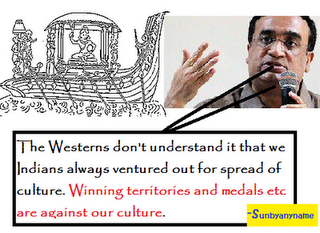
First of all, Olympics are totally opposite of our culture of “peaceful co-existence”; how can we be competing against anyone to win Gold, Silver or Bronze? Once in a blue-moon someone with ‘anti-Indian’ tendencies can stoop so low as to win a Gold, Silver or Bronze in shooting (a la Abhinav Bindra, Rajyavardhan Rathore and Gagan Narang) or in boxing like Vijender Singh; but, we discourage such greed for “material things”. For us, participation is more important than winning. Indeed, as a matter of interest, the expenditure on participation of scores of officials and non-players in the Indian contingent is never allowed to exceed the total sum of money spent on our former President’s foreign jaunts. That’s the kind of respect that we have for our head of state.

Naturally, the Westerns always take advantage of our cultural moorings and devise such lowly games where winning medals is all that counts. We, Indians have values. Winning somebody else’s precious metals is not for us when we have enough of our own. Indeed, we are stashing a large percentage of these in foreign banks and vaults. Also, we have very stringent Customs Regulations; we guide our players not to bring imported precious metals as there would be heavy duty on it. We made an exception for Sachin Tendulkar’s Ferrari and landed up in avoidable controversy.

Most games in Olympics are against our civilizational values and we in India lay a lot of store for values. Can’t we have some realistic games suited for Indian conditions? Can’t we have games that suit our natural ability and talent? Here are some that I suggested to Mr. Jacques Rogge, the President of International Olympic Committee:

Me. Mr. President, I suggest that a game called ‘Traffic Decathlon’ be added from the 2020 Olympics that may be held in New Delhi. We could have a driver from each participating country being given a over-burdened lorry without adequate brakes and lights and asked to go on an Indian highway.

JR. Sounds interesting; what would be the rules?

Me. Aha, Sir, ‘Rules’ is a totally western concept, alien to us. We shall let the contestants make their own rules.

JR. Alright; but the challenge would be if they have to reach somewhere; simply being on a highway won’t do.

Me. No, no, Sir; once again, reaching somewhere is a Western concept; being ahead of the other vehicle by hook or by crook is the object of the game. And, Sir, you have no idea of the “challenge” in this; trust me.

JR. Fine; I shall put this before IOC. Let me hear your other suggestions.

Me. Sir, this is a brilliant game that we play in India; it is an adult version of ‘hide-and-seek’ or ‘treasure hunt’. In this a large sum of public money just vanishes from under the noses of the authorities and they form themselves into committees and go looking for it….

JR. ….and the one who finds it, is the winner, is it?

Me. I am afraid, Sir, you are still looking at things from a western perspective. The money is never to be found. Looking for it is great fun though and everyone has a rollicking time. Many a times we spend more money looking for the disappeared money than the original amount.

JR (catching on): And I guess here too there will be no rules.

Me. Bingo, Sir. Here is another: In this game a complete locality is flooded – as it happens with us during rains – and a team has to reach across a stretch of road.

JR. Doesn’t sound very exciting; any Olympian swimmer should be able to do that.

Me. You think so, Sir? Once again the competitors would not have any idea of where the open manholes and drains are and whether or not live electric cables are submerged.

JR. Oh, I see. Any more new games, especially for women?

Me. Ok, Sir; now this is the ultimate test of any contestant’s ability. In this a contestant is asked to look at our overcrowded local train and asked to board the train and alight at another station without loss of limb or life or gold chain or without being molested.

JR. What’s the point of this game?

Me. The point, Sir, is free amusement of the males who are otherwise bored with life.

JR. I like this because at least the goal of the game is clearly stated. What does the woman have to defend herself?

Me. There is something called pepper-spray, Sir, but points will have to be minused if someone uses it.

JR. Alright, I think you have given me some good ideas. Now, tell me one last one that should have a lot of excitement and challenge.

Me. Okay Sir; I don’t know if the foreign teams can really practise it in the next eight years; our people have vast experience. This is called ‘Sprint to Touch Congress High Command’s Feet’. You can be in any part of the country but you have to accomplish it before your rivals can do so. There is real challenge in it; you can either lose something called kursi (chair or seat) or win it. We have been practising it since independence waiting for our glorious moment in the Olympics.

JR. Bravo, this is really adventurous, like the Afghan sport of Buzh Kashi. But tell me, Sunbyanyname, if Indians are so good at all these really tough games then how is it they don’t win many medals in Olympics?

Me. Simple, Sir, it is against our culture to compete or contest and ask for material things. As an example, Sir, when British came to India we decided that we’d rather fight with each other than against our beloved guests from a foreign land. One, Nawab of Oudh, for example, in relentless pursuit of spreading Indian culture, kept up with music and poetry whilst the British took over his entire kingdom.

We Indians really love our culture and are ready to do anything to preserve and display it. Ask Ms Madhura Honey who walked in front of the entire Indian contingent at the opening ceremony of Olympics at London. She spread Indian culture in blue jeans and red shirt and became far more important than the contestants. That’s the way we always have it: anyone and everyone is more important than the contestants. She is going to be our mascot for the 2020 Olympics in case we win the bid to host them at Delhi.

BORN FREE? SATYAMEV JAYATE? LETS WORK TOWARDS IT

In my last article in Philosophy section of the blog, I wrote about ‘How Unbiased Or Innocent Can We Become?  The article had this quote from Swami Vivekanand near the end: “Therefore we see at once that there cannot be any such thing as free-will; the very words are a contradiction, because will is what we know, and everything that we know is within our universe, and everything within our universe is moulded by conditions of time, space and causality. … To acquire freedom we have to get beyond the limitations of this universe; it cannot be found here.” I concluded, therefore, that with the influences acting on our consciousness or sub-consciousness from ages and during our lives, we can never be absolutely unbiased or innocent. At best, we can be more or less unbiased or innocent than others.

Lets now descend from the stratosphere to ground reality. The fact is that perhaps never before in Indian society we were less free than we are at present; both physically and in our thinking. Satyamev Jayate, the serialised programme by Aamir Khan, is all about individual and collective freedoms and desirable restrictions thereon; for example, in the last episode, it was brought out that the unrestricted littering and pollution of water sources in India need to be checked. However, it is my firm belief that changes in societies and individuals come from within, as a response to the perceived environment. Individuals think of these changes; but, finally, they require people’s support to bring about the changes. Sometimes only they are forced upon us; such as cleanliness drive after plague in Surat or need for coastal security after 26/11 attack in Mumbai. However, such changes have limited sustainability; as soon as the threat posed by the incident recedes, we go back to our routine way of doing things.

So, what this article seeks to do is to make us aware of some of the significant issues and suggest ways out. In each one of his episodes, Aamir Khan invariably brings out about individuals and organisations that are doing a yeoman service to get over the problems. This article is a small contribution to increase awareness.

Freedom or Right to be Born and Live. We have a very high Infant Mortality Rate in India. The infant mortality rate (IMR) is the number of deaths of infants under one year old per 1,000 live births. This rate is often used as an indicator of the level of health in a country. The infant mortality rate of the world is 49.4 according to the United Nations and 42.09 according to the CIA World Factbook. As per the list of countries by infant mortality rate from the 2011 revision of the United Nations World Population Prospects report, by five years averages, India ranks at 150 in 194 countries with an IMR of 60.82. Our ranking is tucked in between that of Bangladesh and Ghana on top of us and Eritrea and Zimbabwe below us. Singapore has the lowest IMR with just 2.60 deaths per thousand. Since our death rate is 6.4 deaths per 1000, our IMR is about ten times. This means that in India ten times more children die before attaining the age of one than the number of deaths in other ages.

It would still have been alright to be complacent about these statistics. However, when the incidence of Female Infanticide is added to these, it should make us sit up and take notice. Some activists, including as brought out in an Aamir Khan’s Satyamev Jayate episode, believe that India’s 2011 census shows a serious decline in the number of girls under the age of seven – activists fear eight million female foetuses may have been aborted between 2001 and 2011.  I brought out the plight of being an Indian Woman in an early article ‘Is There Reason To Celebrate Women’s Day in India?’ and how female foetuses were discovered in a well in Patiala. Wikipedia, however, holds that these claims are controversial and that the 2011 census birth sex ratio in India, of 917 girls to 1000 boys, is similar to 870-930 girls to 1000 boys birth sex ratios observed in Japanese, Chinese, Cuban, Filipino and Hawaiian ethnic groups in the United States between 1940 to 2005. They are also similar to birth sex ratios below 900 girls to 1000 boys observed in mothers of different age groups and gestation periods in the United States. I don’t agree. I feel that Female Infanticide is prevalent in India in significant numbers and even if a girl-child exercises the Right to be Born, she soon starts praying that she would be dead.

Look at the picture below. It is from the television serial on Colors channel. The series were titled ‘Na Aana Is Des Laado‘ (Don’t Come to this World Girl). It premiered on 9th March 2009, much before Aamir Khan brought it out on SJ. The story deals with the social evil of Female infanticide, and concentrates on the problems faced by women in a male-dominant world.

A scene from Colors serial ‘Na Aana Is Des Laado’

Solution. Being born is a gift of God; to live depends upon our conditions. As a society we have to realise that life starts much before the actual birth and that female infanticide is murder. A child should be allowed to be born irrespective of its sex. After having been born, it should get adequate nourishment and health-care so as to live. We keep talking of an emerging great power called India. It is total hogwash if 6 percent of Indian children die within a year of being born and millions of female foetuses are discarded because our society has little use for women. We cannot change the entire country; but, we can certainly change the way we look at things in our own families and immediate neighbourhood. Others will have as much value for Indian lives – both male and female – as we have for our own lives. Six percent IMR doesn’t suggest we value Indian lives too much.

Freedom to Choose Religion. This is a very touchy subject with us. Just like during the elections when we see that there are people whose votes have been already cast, we have our religion already chosen for us even before birth. After that, even in the kindergarten admission form ‘Religion’ has to be specified. This continues during our lives for all admission forms and other applications. Whose religion is it? It is that of our parents and their parents? We cannot dare to go outside the ambit of the religion chosen for us by our parents. We have no idea whether other religions are good or bad (actually ‘bad’ is not even an option; we are talking about religion and not potatoes or appliances); but, we are somehow told that absolute and blind loyalty to our religion is the stuff that separates us from pagans or beasts. It is therefore an acceptable thing to break the legs of or burn the house of a person who is perceived to be desecrating our religious symbols or monuments. Our religion itself might just be teaching us to look at all human beings with kindness; but, to hell with that. It is the religious practice or rituals that are more important to us. Hence, we are prepared to do irreligious things, even to kill, in order to defend our religion that our parents chose for us and about whose virtues we simply have had no idea. Some loyalty this.

Courtesy: wallpaper.diq.ru
Solution. Organised religion became the need when human beings started living in communities to be better prepared to protect themselves from animals, disease and vagaries of nature. Now that people live in cities, towns and villages, better equipped to defend themselves than many centuries ago, orgaised religions have started dividing people and are easy prey to machinations of hordes of godmen and politicians. We should, therefore, consider making religion more private than public and vulgar display of blind loyalty. Also, if all religions believe that we are God’s children, it cannot be that God as a father would look kindly on his Muslim or Christian or Hindu children and send others to rot in hell. God loves us all. (Read ‘Whose God Is It Anyway?‘)

Freedom to Live Anywhere in the Country. Now this sounds rather easy and doesn’t look like an issue at all; especially since Aamir Khan has not (yet) talked about it being an issue. Let me, therefore, give you a few facts. Two years back, in response to a PIL (Public Interest Litigation), the Supreme Court of India ruled that an Indian has an inherent right to settle down anywhere in the country. Now, why would you require a Supreme Court ruling on it? A few years back, in an election rally, I heard the Chief Minister of my home-state make an unlawful and unconstitutional statement saying, “Himachal is for Himachalis only.” Similarly, the goons of MNS want us to believe that only ‘sons-of-soil’ have the right to settle down in Maharshatra. A RAND study, a few years back, concluded that within the next two decades India would be divided into at least 50 states. Why are we becoming so parochial? Who is profiting from dividing us? This time it is not really a “foreign-hand” that is manipulating us. This time, just like pre-independence days when British ruled over us by following a ‘Divide and Rule’ policy, our own politicians too have learnt how to manipulate people by dividing them along religious, geographical, linguist and casteist lines. So, whilst earlier we lost our independence to the British, now we have lost it to the politicians. The states are now becoming more and more isolated from the concept of a united India. Within the states and cities we already have colonies of Muslims, Sikhs, Biharis, Bengalis etc. Three years back a Muslim was refused permission to buy a flat in a predominantly Hindu building in Pune. Many a times any opposition to these parochial ideas are met with threats of or actual killings.

Solution. Parochialism of this nature is anti-Indian. We have to publicly and individually shun it. We have to focus on the concept of one India rather than being divided into various regions. If we don’t do so, very soon we shall have anti-social and anti-national elements ruling over us. As an example, Maoists writ now runs large in about one third of the districts of our country. For any movement to succeed, people have to stand up to the nonsense dished out by politicians who take up the patronage of colonies and regions based on parochial interests. We, as people of free India, must stand against these. Lets ask of our candidates in the next elections that we would vote for them only if they undertake not to divide us further. As a small step, all vehicle registration plates, by law, are to be based on “modern Hindu-Arabic numerals and Roman alphabets”. Lets shun those that are in local script; these are illegal.

Courtesy: team-bhp.com

Freedom to Choose Government. “Aha, here we got you” you are bound to say, “India is the largest democracy in the world and we choose governments on the average of every five years.” Think again. Do you really exercise a choice? Is it really functional democracy? One and a half years back, on the occasion of our 62nd Republic Day I brought out in an article ‘How Proud Should We Be Of Indian Republic at 62?‘ that an elected representative in our country represents, on an average, about 9 percent of the electorate (people of voting age who are registered voters). This means that a good 90 percent of the electorate haven’t elected him/her. However, when he/she enters the parliament he starts using such arrogant words as ‘supremacy of the parliament’ (mind you not ‘supremacy of the people’ but that of his seat of “power“). And these 9 percent voters; how did they elect him/her? The only issues that he brought out to them during his/her messy election campaign were those of caste, religion, and vituperation of the other candidates and parties. Think again; what choice did you exercise whilst electing him/her? Did you exercise your choice of ‘none of the above’? Or, most likely, you only chose what appeared to be the least harmful of a band of rogues? If you did you are amongst the lucky few who actually went to vote and after going there found that your name is actually on the voters’ list (a tall order in case you happen to vote conscientiously and not enmass as people in the politically patronaged colonies do) and your vote has not already been cast after you have reached the voting booth.

Courtesy: rediff.com

Solution. We require a truly representative government in India; one where we actually exercise a choice. It wouldn’t come about unless the thinking middle-class wakes up and hold the representatives accountable. Please remember after the 26/11 Mumbai attacks, when the middle class took out candle light marches for the victims and stridently took the elected representatives to task for complete absence of security, Colaba, the constituency where the attacks took place, recorded the lowest voter turn out of just 37 percent. Most middle class voters enjoy the three-four days holidays that they get for voting. Simple solutions then: One, ensure your name is on the voters’ list; two, ensure that you vote; three, lets have a strong enough movement to get ‘none-of-the-above’ choices included in the voters pad; four, vote conscientiously and not as an ad hoc choice at the spur of the moment.

Freedom to Choose Life Partner. India is a country where until recently we had the prevalence of Sati. A widow was expected to jump into the funeral pyre of her dead husband since it was considered that after the husband was dead, the wife had no right to continue living. And who was her husband? Did she choose him? No, for heaven’s sake, what are you talking about? Many of the Indian girls are still married when they are children (see pic below). The parents decide who she should get married to; of what religion and caste are the governing factors. It is the same with boys; he dare not marry anyone outside the ambit laid by the parents and the community. In many cases, should the boy and the girl decide to exercise choice, the future that awaits them is that of complete ostracising and also of death. With the increased expectancy of life, the couple is expected to spend the next five decades or more together but both of them do not exercise choice for fear of parents, relatives and khap-panchayats. In majority of the cases, the boy’s family either demands dowry directly or makes it clear that the girl will be happier if her parents provide something for her; eg, “Humein kuchh nahin chahiye, jo kuchh hai aap apni ladki ko de sakte hain.” (We don’t need anything; you are free to give anything to your daughter though)

Prevalence of child marriage (Pic courtesy: asianews.it)
Solution. Life is unique and life is precious. The happiness of our children lies in providing them the freedom to choose life partners. Dowry and other considerations of caste and community should be shunned. The only way to change the society is if we do it with our children and start with ourselves and our families.

Freedom of Expression. This is a very sensitive subject with us. From ostracism of MF Hussain to Mamta Bannerji getting after people with vengeance who were making cartoons of her, we are certainly losing patience and becoming more rigid in our approach. It is not just James Laine’s ‘Hindu King in Islamic India’ but, nowadays, increasingly large number of movies and books are found objectionable by communities and vested interests; many of these without either seeing the movie or reading the book. It is true that freedom of expression should be responsibly used; however, I am talking about more and more people in our society being pseudo loyalists and jingoists. We are gradually becoming a society where fear prevails and true expressions remain suppressed for ages.

Laine burning (Courtesy: patwardhan.com)

Solution. We should be proud of the pluralism of India. Even when foreign kings came to India and ruled over us, we didn’t require armies and senas to protect our beliefs and ideas. In the end, ideas conquer because of the strength of the ideas and not because of the authorities or senas protecting these. What we need is a society more tolerant of others’ ideas. As Winston Churchill said, “I do not agree with you but I shall defend to the hilt your right to say your thing.”

Right to Privacy. Lets face it: we are too many of us. There is no way we can let people by themselves; everything is public, everything is everywhere. In this, the role of the present day Indian media is to be abhorred. Imagine sending a microphone down to Prince having fallen into a 40 metres hole and asking him, “Kaisa lag raha hai tumhen?” (How do you feel being down there?). Similarly, telling us live what is happening every minute to the innards of Pramod Mahajan after having been shot by his brother, I would think it is invasion of privacy. Listening to people’s calls, e-mails, messages in the name of tightening security is also invasion of privacy. There is nowhere to go these days. Young boys and girls in love are frequently hassled by the police. All your sensitive information is public knowledge. India has emerged the capital of the world for white collar crimes such as stealth of banking data of people and credit card details. Similarly, the police feels that they can stop anyone anywhere and start harassing ordinary citizens in order to show their “supreme power”. Any number of promoters ring you up and sms you any number of times to advertise their products. You won’t find directions on the road as to how to reach the airport, hospital or railway station but you will find large hoardings telling you how far and where the next MacDonald is. Whether or not you want to participate in a religious festival, since these are largely celebrated on roads and public places you end up participating in these against your choice. You cannot dare to speak against the noise levels. We have simply lost privacy.

Loss of Privacy (courtesy: wearethebest.wordpress.com)

Solution. This will take a long time to come in India beset as we are with the problems of terrorism both from across the border and home grown. The law enforcing agencies feel that they have a right to pry into people’s private lives and people on their own feel helpless. Some of them even ask what’s the big deal about it? Possibly, we can start asserting individual’s right to privacy in awareness campaigns. The more people talk about it, the more will be the compulsion to do away with privacy. As far intrusions into privacy of individuals by communities are concerned, includind intruding by unwanted and illegal noise, we can start with ourselves, our children and our families and perhaps the movement will grow.

Freedoms We Can Do Without. Having given vent to some of the desirable freedoms that we should have as Indians and the ones that we are still far from having, let me now make a short list of freedoms that we have ascribed to ourselves but which encroach upon others’ rights and freedoms. We should restrict these so called ‘freedoms’:

The first one of these is the freedom to have sex with everyone and everywhere without consideration of age and circumstances. The instance of incest in our country is as high as 49 percent. Many very young lives have been scarred for life with our people’s inability to control sexual urges. Rapes are on the increase and Delhi has now earned the dubious distinction of being the ‘Rape Capital of the World’.

The second is freedom to use the roads every which way. The other day a foreigner asked me to describe traffic in India. I have written a lot on the subject in this very blog. But, in order to cut a long story short, here was my reply: In India you would do well to understand that on our roads we have all types of vehicles and non-vehicles at all times in all directions at all times. Can’t we individually and collectively bring some order into it?

The third is our uncontrollable urge to litter; the freedom that we feel our forefathers have won for us. The result is that our houses, colonies, roads, public places, anywhere and everywhere, look shabby, full of paan stains, with mounds or heaps of filth. Diseases and epidemics result from this unchecked pollution especially of all our water bodies. However, we don’t want to bring in even an iota of discipline in our civic lives.

Lastly, we can do away completely with the freedom to consider public moneys and properties as our own. From netas to common man, everyone is now part of the great Indian corruption scene; it is all to do with shortcuts to get ahead in life somehow. We Indians have really lost our soul. (Read ‘Indians – Bartering Character For Prosperity‘)

Fortunately for us having touched rock bottom there is no way to go but up. Lets work towards it.

Satyamev Jayate.

DESPERATE JEALOUS WIVES

As soon as I started writing articles in my blog, I wrote one titled ‘Loose Emotions’. In this I brought out that the deadliest Loose Emotion for women is Jealousy or Envy. Recently (just two days back) a Nigerian businessman  by the name of Uroko Onoja realised the hard way (or soft way, whichever way you look at it) that having sex with his youngest wife of a pack of half dozen would evoke the jealousy of five others and they would demand the same treatment. Now, I know, all those medical books that we used to read about in our school days used to tell us that no one can ever die of sex since the body has its own safety valve. However, if there is a great gap between intent (forced on by a pack of five desperate women) and capability, it can be fatal. Do you remember the school time joke of ‘Big chief, no shit’ (from a region close to Onoja’s)? Finally, after the doctor kept increasing the laxative dose, it was ‘Big shit, no chief’. A similar thing happened with Uroko Onoja.


Nigerian Uroko Onoja realised polygamy may not be as attractive as it appeared (Courtesy: bvinews.com)

Men will never know how desperate jealous wives can get. Some of them, like Onoja, die before they can learn. John Wayne Bobbitt realised it when he was still alive but most men in John Wayne’s condition, won’t really call themselves ‘alive‘. John married Lorena on 18 Jun 1989 (her maiden name was Gallo and the pronunciation of it should have cautioned John). However, John, oblivious of what waited for him, flaunted his infidelities with other women to Lorena. On the night of 23 Jun 1993, when he thought he would do to Lorena in his apartment in Virginia what he was subjecting the other women to, he had no idea his fun would be cut short. And mind you, if it hadn’t been for the police doggedly searching for the severed fun (or should it be spelled with a g?), and reuniting him with his instrument of desire, he could have claimed to have the world’s fastest sex change.

During the trial, it came out that Lorena was not only jealous because of John carrying his acts outside the Virginia apartment, but also because she claimed that he derived all the orgasmic ecstasy from their conjugal enactments whilst leaving her high and dry.

Many a man has come across the jealous wife imagining woh (As in ‘Pati, Patni Aur Woh‘ (Husband, Wife and She)) even when none existed. Like the wife who used to spot different shades of hair on her husband’s coat in the evenings and concluded that he was having affairs, one after the other, with a blond, brunette and redhead. One evening, she couldn’t spy out a single hair on his coat and she bemoaned, “Gawd, he has now started dating bald women too.”

Two and a half months back, I brought out in an article titled ‘Jill The Ripper And Satyamev Jayate’ that, in London, they now suspect that Jack the Ripper was a DJW (Desperate Jealous Wife) Lizzie Williams who was so fed up of the infidelities of her husband that she targeted all those who she thought had affairs with her husband.

The English playwright and poet William Congreve in his 1697 tragi-drama ‘The Morning Bride’ wrote: “Heaven has no rage like love to hatred turned, Nor hell a fury like a woman scorned,”

I know the question foremost in the minds of Indian men would be, “Nigeria, yes; America, yes; but is there anyway the bushfire would reach India?” My advice is ‘don’t take chances’ . For example, Sections 97 to 106 of the Indian Penal Code (IPC) deal with the ‘Right of Private Defence’; but, there is no section dealing with the ‘Right of Defence of Privates’. Gouging eyes of the other women is become passe‘ these days. The other methods of teaching lessons to men, as described above, are becoming more common now.

An Indian Saint called Vidya (Knowledge) Balan (Young) (Or ‘Knowledge for the Youth) had this advice to give men in The Dirty Picture, “Tujhe holi khelneka bohot shauk hai lekin teri pichkari mein dum nahin hai.” (You like to play Holi but your ‘Fountain Gun’ isn’t loaded).

Alas Uroko Onoja, the Nigerian Businessman, like other men, realised that the Pichkari cannot remain loaded forever. In other words, during school-days, we used to learn the main difference between Dark and Hard: the difference is that it can stay dark the whole night long.

बीवी का नया नाम

हम बीवी को बुलाते थे जान, चाँद, सनम और रानी,
पर एक दिन सर के ऊपर से निकल गया पानी
नाम हमारे दिमाग में आये चार सौ अस्सी
और बीवी का नाम बड़े सोच के रखा “रस्सी”

“कया अजब नाम है?”  सोचा होगा आपने
आज तक ऐसा नाम नहीं रखा किसी के  बाप ने
“इसके क्या माईने हैं कुछ तो ससमझाईये
हमें  बुझारतों में इस तरह ना उलझायिये”

हमने कहा, “इसमें बुझारत की क्या बात है?
“रस्सी” का मतलब बिलकुल साक्षात है:
यह जल जाती है पेर बल नहीं जाता
हमारी मेहबूबा का भी कल नहीं जाता”

“वो कल जब माईके में उन्का राज था
भाई काम करते थे और इनको ना कोई काज था
अब पति करता है  दिन रात इनकी सेवा
और ये खाती हैं मखमल पर बैठ के मेवा”

“मेरी गरदन में बड़े प्यार से पड़ जाती है
अच्छे भले मुलाजिम की जान निकल जाती है
हुमने सोचा था यह बनेगीं प्यार की डोरी
पर इन्हों ने रस्सी बनके की जोरा  जोरी”

Courtesy: heysko.com
यारो अगर बीवी भी बन जाये गले में फंदा
और तुम रहना चाह्ते हो इस जहान में ज़िन्दा
डोरी को कभी ना बनने दो रस्सी या संगल
तभी रहेंगे तुम्हारे  दिन व रात मंगल

BLOGGING – RACE OR STAMPEDE?

The Webster dictionary describes the word ‘Stampede’ as: “A sudden panicked rush of a number of horses, cattle, or other animals“. Lately, however, the description has also come to include people, eg, “There was a stampede at the temple on the hill. When reports last came in, 23 people had died and two were in critical state in the hospital.” The four key words are: sudden, panic, rush, animals. Why, oh why, do bloggers indulge in it? Where is the panic? Why the rush? Who are the animals? What is the suddenness, haste, hurry? Where is the race?


Courtesy: sipseystreetirregulars.blogspot.com

When I retired from the Navy in end Feb 2010, I picked up a job on the civvie-street and discovered that people are steeped in, what is known as, corporate culture. They work, and work, and then – just to break the monotony – work some more. Your status and actual power that you command is often meausred in terms of how late you work in the nights in the office. Since I am in the Energy business, I find it rather ironical that we should ourselves be dissipating so much of energy to save the world or India from an energy crisis. So, whilst in the Navy, I worked five-day weeks, on the civvie-street I had no choice but to work six-days-in-seven like the rest of the corporate guys and gals and then spend the sabbath day with the family. This would really make mind dull, I thought to myself. The question that came to me was how to keep body and soul together in this mad race? And then I saw a little light across the tunnel of my mind: write, it said; let creative energies flow. It would rejuvenate those little brain cells that are dying due to old age and inactivity. A blog was thought by me as the equivalent of sudoku; it would give me enormous joy to do it at a leisurely pace without having to beat the world record in speed.

Strange are the ways of the bloggers, though. Little did I realise that I would get out of one race and get into another. Race is at least something orgainised with everyone hurrying in one direction. Blogging scene, I soon realised, is like a stampede and that’s how I started with Webster’s.

What went wrong? Well, how can you pinpoint what goes wrong in a stampede? However, I shall try to do a small analysis. Here goes:

Initially when I wrote a few of the cognoscenti read it and either called me or mailed me about the quality or lack thereof of my writing. One sabbath day, when I had a little time to myself, I started wondering what other blogs looked like. I typed out the word ‘blog‘ on google search and landed up with 10,560,000,000 results. I realised that if I had to go through these it is quite possible that my great grand children would have come to the end of the search. So, I tried to become narrow-minded and typed ‘Indian Blogs’. This produced 286,000,000 results. As I scrolled down, I came across something called indiblogger. I clicked on the link. Looking back, I am reminded of the second standard boy of a primary school who accidentally presses an innocuous looking red button during his school’s visit to a nuclear reactor. Just like him, I din’t know I had started something I would find it difficult to control. Indiblogger url is http://www.indiblogger.in/. Why ‘in’ I asked myself at that time? Now I know the answer: it is ‘in’ because there is no way out.

Indiblogger has Indian bloggers vying with each other to obtain popularity through a simple, scientifically proved tenet that can be expressed as: ‘you scratch my back, I scratch yours’. There are bloggers and fans, or writers and readers – all cyclic, all within a loop. In short, when A writes a blog, B is a reader and when B writes, A is the reader. This is a very fine arrangement since otherwise blogging is like an Indian regional political party, say, Akali Dal in Punjab; to start with there was one combined Akali Dal with one leader on top. Then, a suppressed potential leader thought of splitting the party into two, with the faction loyal to him having his name’s first letter as a suffix to the original party name, eg, Akali Dal (S). This fissionable process continued until they landed up with more parties and leaders than partymen. Fortunately, Indian bloggers have potentially as many readers as writers.

Indibloggers also remind you of two rabbits being chased by foxes; after running some distance the he-rabbit turned to the she rabbit, “Should we keep running or should we just stop for a while and try to outnumber them?” Indian bloggers are in a stampede to outnumber the others in number of posts, votes and comments. This process is simplified by indiblogger by giving you an indirank dependent upon MozRank. which “represents a link popularity score. It reflects the importance of any given web page on the Internet. Pages earn MozRank by the number and quality of other pages that link to them. The higher the quality of the incoming links, the higher the MozRank.” Then there is Alexa Rank, which brings out the global ranking of your site in comparison to other sites based on its popularity. Then there is ‘External Juice Passing marks’. Then there is frequency of posting to judge whether you are a rabbit or a fox. In case you are like me, enjoying writing at leisurely pace, indiblogger is more likely to tell you that “your blog is starting to appear neglected”. All this for a simple hobby of writing for pleasure? Hardly, sirs and ma’ams; writing and reading for pleasure is for the nincompoops. Indibloggers behave like drivers in India; the idea is to somehow be ahead of the driver adjacent to you. Now, at this juncture if someone were to ask the indibloggers or the drivers as to where are they headed, you are likely to receive he response, “Why should we worry about that? I started at a ranking of A; and now, after three years, I am at 2A. I must be getting somewhere.” Philosophically and culturally we are Indians; for us the journey is more important than the destination.

The result of the stampede is that bloggers ‘promote‘ other blogs and ‘comment’ and ‘vote’ as if it is a contest or election. The idea is to offer a tit for tat. It is not rare to find fellow-bloggers commenting on your blog without reading it at all and – this is a must – leaving the url of their own article in the comment to enable you to scratch their back too.

The dynamics of the race or the stampede are such that it is sacrilege to question it. It is like telling a driver who cuts lanes that it won’t help. For 37 years I was in the Navy and I had to make peace with ranks and promotions. Indiblogger has brought it home to me that others care about these even more than we did. And, most indibloggers are more at sea than we were.


Courtesy: magical-marketing.com

Many blogs actually appear like the social media such as facebook. The blog post is as small as the status on facebook, followed by dozens of comments by friends and back-scratching hopefuls, as if repeating the words of the popular song from the 1973 Hindi movie:
A: Mujhe kuchh kehna hai (I have something to say).
B: Mujhe bhi kuchh kehna hai (I too have something to say)


Carry on fellow indibloggers; some of the rewards of the blogging are reaching me too:


LOVE BEYOND THE PAIN

Don’t love me, O’ sweet, when we meet,
For there is less
Glee in achieving than in yearning.
From here it’s alluring,
The scent of your tress;
I get my joys in burning,
In pining, in longing
And in sorrow,
And waiting for each tomorrow.

I don’t want to strangle my dreams to death,
You, alone, sit in my dream castle
On an island in a grieving river;
And far below
In a dark dungeon I am thrown.
I reach out my hands without catching ye,
Ye outside smile at me.
And, lo! I wish not my hands were free.

Courtesy: sweet-tea-theology.com
I shall wait…wait till the pains are so much,
That they burn themselves in their own scars,
The waters of grieving river’d calm down,
The cell would break its own bars.
Then you and I’ll live away from town,
In a small hut by a joyous brook.
We’d work, we’d eat, we’d play the deep
Game of love,
And thus at last we’d sleep.
Follow

Get every new post delivered to your Inbox

Join other followers:

error

Enjoy this blog? Please spread the word :)

RSS
Follow by Email
YouTube
YouTube
Set Youtube Channel ID
LinkedIn
Share
WhatsApp
Copy link
URL has been copied successfully!