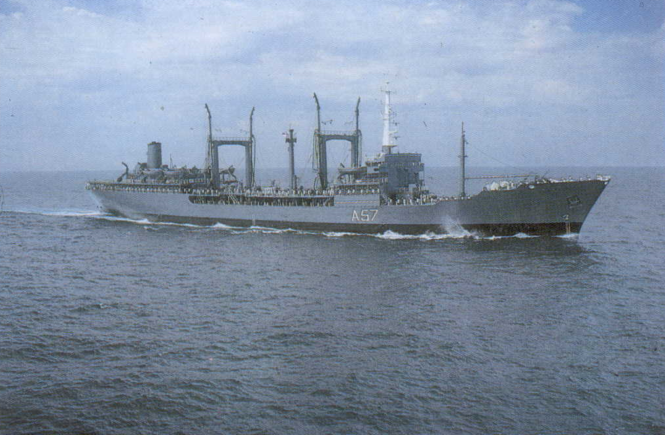
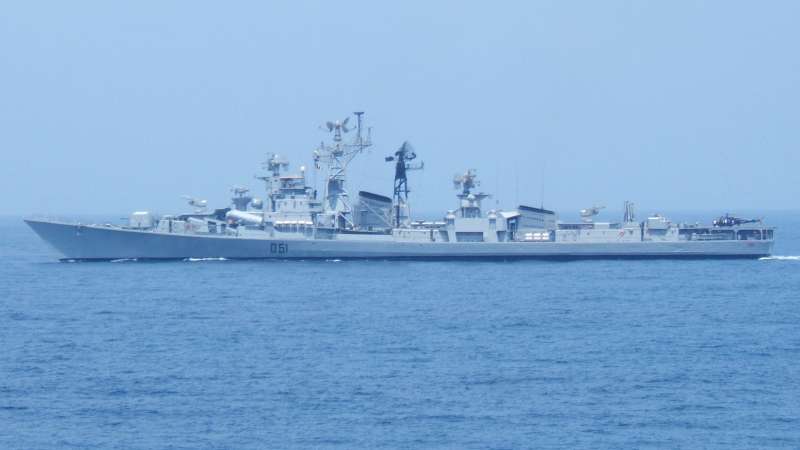
My wife and I went for the decommissioning functions of Indian Naval Ship Viraat on 5th and 6th of March 2017. We clicked more pictures in these two days than during my entire tenure as the Ship’s Commander in 1994-95. Our pictures were still better and more relevant than, for example, Times of India publication Mirror that showed the jetty with three Delhi class destroyers next to it and Guard of Honour in readiness to receive the Chief of the Naval Staff; and no picture of about to be decommissioned oldest active warship in the world: Viraat.
One of the first few pictures that we took was in front of the legendary Sea Harrier, the V/STOL (Vertical/Short Take Off And Landing) strike fighter aircraft that served the Indian Navy between Dec 1983 and when they operated last from Viraat on 06 Mar 2016 (exactly one year before Viraat herself was decommissioned).
Sea Harriers formed a squadron called INAS 300 or White Tigers. Having served on Viraat, I can assure you that there was nothing more beautiful than to see these White Tigers taking off and landing on Viraat (Please also read: ‘Pussy-Cat, Pussy-Cat, Where Have You Been?’).
I have been airborne as a passenger in many an aircraft, both civil and military. I have also been airborne without aircraft, on a few occasions, because of drinking with friends. However, if not airborne, at least to be in the cockpit of a Sea Harrier was my desire and fascination. And, on Viraat, it happily came my way, when one of the pilots offered to show me a Sea Harrier in the hangar complete with my sitting in the cockpit.
Part II – There Is Never A Dull Moment!
I had chosen the hour for my personal education of Sea Harrier on a forenoon at sea when I thought nothing would be happening. I was wrong. There is always something happening and Ship’s Commander is always required to handle one or the other situation.
There was, therefore, an announcement for me to report to the Captain on the Bridge. These announcements are heard everywhere on the ship except when your ears are muffed to avoid noise of machinery and aircraft in the hangar!
After about five minutes (the time it would have taken for me to reach the Bridge from my cabin), the announcement was repeated, “Ship’s Commander requested Bridge, Captain”. The ear-muffs that I wore in the cockpit of Sea Harrier were very effective and this announcement too was not heard.
And now, the Captain asked OOW (Officer of the Watch) to make an announcement: “Do you hear there? This is the OOW speaking. Anyone knowing the whereabouts of Ship’s Commander, report to the Bridge immediately.”
Sea Harrier was a beautiful piece of machinery and my total attention being on that, even that announcement was missed.
Finally, the Captain picked up the Broadcast mike himself and made, what he felt was ominous announcement of the missing Ship’s Commander. There are hundreds of methods by which you can die on a ship; Man Overboard is only one of them. For example, if you enter a closed compartment, you can die of lack of air or of inhaling poisonous gases and there are safety procedures about how to enter such compartments. One small mistake and you are gone.
No one thought of looking for me in the hangar; the Ship’s Commander hardly has any business there.
Viraat hangar after decommissioning on 6th March 17. This is where I was in the cockpit of a Sea-Harrier when I was presumed to be missing.
I finished satisfying my desire of being in a Harrier and then ambled up to the Bridge unmindful of the panic caused by my absence.
Part III – Mixed Feelings
The Captain was relieved to see me and so were other officers and personnel. There was general euphoria about the Commander having been resurrected, nearly 2000 years after a certain JC did from his tomb.
In the evening when the HODs gathered in my cabin for usual tea and shakarparas, one of them commented tongue in cheek, “You failed us, Sir; we were happy that you went missing so that we won’t have to join you for the Mass PT next morning on the Flight Deck”!
It started in early twentieth century. The industrial era had brought with it problems of aspiring needs of milling populations. Amongst these, the one problem that came to fore was oppression of women and gender inequality. For the first time in the year 1908, 15000 women marched through the streets of New York demanding equality with their male counterparts. This led to National Women’s Day being held on 28th Feb or last Sunday of the month. In 1910 a second International Conference of Working Women was held in Copenhagen and following the success of it, it was announced that IWD would be held on 19th March. In 1913 following discussions, International Women’s Day was transferred to 8 March and this day has remained the global date for International Women’s Day ever since.
Remembering Devika Rani on Her Death Anniversary and Sahir Ludhianvi on His Birth Anniversary, 08 March
I have a Facebook Group called ‘Yaad Kiya Dil Ne’ for serious music lovers (not the ones who just copy-paste You Tube urls of songs and clap their hands for a job well done). In this group, besides monthly thematic music fest, we pay tribute to actors, singers, lyricists and composers involved with the making of the songs.
It is only appropriate (a magnificent coincidence) that we should remember these two icons: Devika Rani and Sahir Ludhianvi on this important day, the International Women’s Day (08th March). IWD is the day for remembering the social, economic, cultural and political achievements of women. We shall be doing so for Devika Rani. We shall also recollect what Sahir wrote about women.
Devika Rani
Devika was the first lady of the Indian Cinema (not just Hindi movies) who was active in the Indian movies from 1928 to 1943 and who chose to live life her own way. My wife and I, on our visit to Kulu and Manali last September, went out of our way to visit the Roerich Art Gallery and Roerich House in Naggar, about 25 Kms from Manali.
Please have a look at the accompanying pictures, a remembrance of our visit. In their house, her room and her prized possessions (including a type-writer) have been maintained exactly as they were. Then there is a separate Devika Rani and Svetoslav Memorial:
She was born on 30th March 1908 in Waltair (Andhra Pradesh) as Devika Rani Choudheri to Colonel MN Choudheri, IMS (Indian Medical Services) and Mrs. Leela Choudheri. She came from a distinguished family. She was the grand-niece of Nobel laureate Rabindranath Tagore. Her father rose to become the first Indian Surgeon General of Madras.
Her schooling was in London. She graduated in Arts from there, specialising in textile designing and architecture. She had started work as a textile designer in London when she met Himanshu Rai, who was instrumental in her joining his films production unit and contribute towards Indian films.
In 1929, at the age of 21 years, she married Himanshu Rai. Initially, she assisted him in only production related activities such as Art Direction and Costume Designing. However, in 1933, she debuted as an actress in his movie Karma, in which their kissing scene is still regarded as one the longest kissing scene in Indian movies (of more than four minutes). After her schooling in London, she had done courses in acting and music at he Royal Academy of Dramatic Art and the Royal Academy of Music. However, after joining hands with Himanshu Rai, during a visit to Germany, inspired by their methods of film-making, she enrolled for a film-making course at Universum Film AG studio in Berlin. She also took an advanced course in Acting.
Himanshu Rai then started the famous films studio called Bombay Talkies, the second oldest movie studio in the Indian movies and also the best equipped. Himanshu started the studio in the year 1934 and she continued running it after his death in 1940. In 1935, Bombay Talkies first production Jawani Ki Hawa was launched. It starred Devika Rani and Najm-ul-Hassan, and was shot fully on a train.
During the making of the movie Jeevan Naiya, her second film with the hero Najm-ul-Hassan, she eloped with him. Her husband Himanshu Rai, having spent a lot of money on that movie already, was going to be in ruins.
Ashok Kumar’s uncle Sashadhar Mukherjee, who was an assistant sound-engineer at Bombay Talkies got in touch with Devika Rani and Najm and convinced Devika to return to Himanshu. Two of the reasons he was able to convince her is relevant on this International Women’s Day: One, in India, at that time, it was next to impossible to get legal divorce; and two, women who eloped were regarded as prostitutes and also disowned by their own families. Thus she was made to be convinced that she won’t ever get divorce from Himanshu and marry Najm.
She, therefore, did the next best thing. Through Sashadhar Mukherjee she sought and obtained financial independence from her husband as a condition for her return. Another condition was that he would pay entirely the expenses for running the house. And, lo and behold, Himanshu agreed to this, in order to save face in society and to prevent his studio from going bankrupt. Today, when we celebrate IWD again and remember how wretched are the lives of Indian women (Please read ‘Is There Reason To Celebrate Women’s Day In India?’ which is what I wrote on the eve of IWD seven years ago and one of my first essays after I formed this blog), please remember that Devika Rani was gutsy enough to do this in 1936.
On her return, Himanshu Rai dropped Najm-ul-Hassan altogether and got Ashok Kumar, Sashadhar Mukherjee’s cousin (later Joy Mukherjee’s father) to do the role. This marked the debut of Ashok Kumar’s long career in the movies.
She made a number of movies with her co-star of Jeevan Mrityu Ashok Kumar. Their 1936 movie Achhut Kanya is still considered iconic.
I am giving you a song from the movie Achhut Kanya of 1936 that was penned by JS Kashyap (known by his nickname Natawa) and sung by Devika Rani and Ashok Kumar (during those days there was no playback singing and actors and actresses sang their own songs). Saraswati Devi (the second Hindi and Indian female music director after Jaddan Bai; Usha Khanna, the living female MD is the third one) composed the song.
The song is all about her saying that she is a free bird and he saying that he would have her. Finally, he succeeded in that Sashadhar and Ashok Kumar started another film studio called Filmistan and she had no support to continue running Bombay Talkies. She had to thus give up films.
Please enjoy: Main ban ki chidhiya ban ke ban ban bolun re….
(de: mai.n ban kii chi.Diyaa ban ke ban ban boluu.n re
a: mai.n ban kaa panchhii ban ke sa.ng sa.ng Doluu.n re) – 2
de: (mai.n Daal Daal u.D jaauu.N
nahii.n paka.Daa_ii mai.n aauu.N) – 2
a: (tum Daal Daal mai.n paat paat
bin paka.De kabhii na chho.Duu.N
sa.ng sa.ng Doluu.n re ) – 2
de: ban ban boluu.n re
de: mai.n ban kii chi.Diyaa ban ke ban ban boluu.n re
a: mai.n ban kaa panchhii ban ke sa.ng sa.ng Doluu.n re
de: mai.n ban kii chi.Diyaa ban ke ban ban boluu.n re
a: sa.ng sa.ng Doluu.n re
In 1944, she quit film idustry and in 1945 she married Russian painter Svetoslav Roerich, son of Russian artist Nicholas Roerich. That’s how Lyn and I visited their house in Nagger (Manali). Both Roerich and Devika were favourites of Jawahar Lal Nehru and the gallery has quite a few photos of them together. During her stay in Manali, Devika Rani made a few documentaries on wildlife, which are dutifully kept in the gallery. She died of bronchitis in 1994—a year after Roerich died—in Bangalore.
In 1958, Devika Rani was awarded the Padma Shri, India’s fourth highest civilian honour. In 1969, when the Dadasaheb Phalke Award was instituted (the highest award for films in India), she became its first proud recipient. In the year 1990, USSR honoured her with Soviet Land Nehru Award. Finally, in Feb 2011, a postage stamp honouring her was released by the Government of India.
Sahir Ludhainvi
Sahir (Magical) Ludhianvi was born on this day in 1921 as Abdul Hayee. His mother, left on her own, her estranged husband and Sahir’s father, and hence, she forfeited willingly any claim over her husband’s assets. Sahir and his mother stayed together though the father, after remarrying, made abortive attempts to obtain custody of the son.
I am presently engaged (on my Facebok Page Lyrical) in paying tribute to Sahir and hence do not want to write about him at great length here.
Suffice it to say that having seen the deprivation of his mother, Sahir was full of feelings for women: his mother and the two that he was romantically inclined with Amrita Pritam (Punjabi writer and poet) and Sudha Malhotra (Singer).
I have, in my tribute on Lyrical, already covered the 1958 movie Sadhana, a BR Chopra movie that starred Vyjayanthimala as a prostitute whom Sunil Dutt’s mother (Leela Chitnis) finally had to accept as his wife.
After the 1957 Guru Dutt movie Pyaasa, after doing 18 movies together, Sahir had parted ways with SD Burman and was making songs with many different music directors. N Dutta (also known as Datta Naik) was a prominent Music Director with whom Sahir worked in more movies than with others (you might remember their Dhool Ka Phool with the famous songs: Na ye Hindu banega na musalmaan banega, and Dhadakne lgi dil ke taaron ki duniya).
Here is a song that both of them created in Sadhana and the song after 49 years is still representative of how we treat women in Indian society. Its lyrics are amongst the most powerful lyrics that Sahir ever penned (Indeed, this was the starting song of my tribute to him; I having jumped many years to give this song).
It is just a coincidence (on IWD) that Vyjayanthimala won the Best Actress award for her role in the movie.
Please enjoy: Aurat ne janam diay mardon ko….
aurat ne janam diyaa mardo.n ko, mardo.n ne use baazaar diyaa
jab jii chaahaa kuchalaa masalaa, jab jii chaahaa dutkaar diyaa
tulatii hai kahii.n diinaaro.n me.n, bikatii hai kahii.n baazaaro.n me.n
na.ngii nachavaaii jaatii hai, aiyyaasho.n ke darabaaro.n me.n
ye vo beizzat chiiz hai jo, ba.nT jAtI hai izzatadaaro.n me.n
mardo.n ke liye har zulm ravaa.N, aurat ke liye ronaa bhii khataa
mardo.n ke liye laakho.n seje.n, aurat ke liye bas ek chitaa
mardo.n ke liye har aish kaa haq, aurat ke liye jiinaa bhii sazaa
jin hoTho.n ne inako pyaar kiyaa, un hoTho.n kaa vyaapaar kiyaa
jis kokh me.n inakaa jism Dhalaa, us kokh kaa kaarobaar kiyaa
jis tan se uge kopal ban kar, us tan ko zaliil-o-khAr kiyaa
mardo.n ne banaayii jo rasme.n, unako haq kaa faramaan kahaa
aurat ke zindaa jal jaane ko, kurbaanii aur balidaan kahaa
qismat ke badale roTii dii, usako bhii ehasaan kahaa
sa.nsaar kii har ek besharmii, gurbat kii god me.n palatii hai
chakalo.n me.n hii aa ke rukatii hai, faako.n me.n jo raah nikalatii hai
mardo.n kii havas hai jo aksar, aurat ke paap me.n Dhalatii hai
aurat sa.nsaar kii qismat hai, fir bhii taqadiir kii hotii hai
avataar payambar janatii hai, phir bhii shaitaan kii beTii hai
ye vo badaqismat maa.N hai jo, beTo.n kii sez pe leTii hai
Finally, here is something from my Page: Make Your Own Quotes in which I make and publish quotes and encourage others to do so:
Now that we are less than two days away from decommissioning Indian Naval Ship Viraat, the world’s oldest warship in active service, perhaps it is time that we take in how huge are things at sea in comparison to what we are used to ashore.
I remember when I was undergoing the Army Higher Command Course in 1996-97 and it was being discussed how two-third of India’s energy imports are in the Gulf of Kachchh (GoK), within easy reach of the Pakistan Navy and Pakistan Air Force, it was discussed as to why should we have these imported there? Why couldn’t we transport it “by lorries” etc to safer places? When I mentioned that a lorry carried up to about 20 tons of fuel and that an average VLCC – just one VLCC that is (VLCC – Very Large Crude Carrier) – being received at GoK ports was anything between 100000 tonnes to 250000 tonnes, this was the first time that their minds were exposed to something as large as this.
A VLCC at a Single Buoy (or Point) Mooring in GoK
There is, therefore, no shame in admitting that one is almost totally at sea whilst discussing matters of the sea. Even some of the Navy guys don’t understand the enormity of things of another branch or department.
Take the case of a ship at sea wanting to exercise with a submarine that she had met by chance encounter. The submarine signaled back, regretting her inability to do so since ‘she was charging her batteries‘. At this, the ship signaled to the submarine that she would approach close to her and batteries could be transferred to the ship for charging by her.
Didn’t understand the joke? Well, a submarine displaces about 2000 tonnes. Roughly about one-fourth to one-third displacement of the submarine is due to her propulsion batteries. These are the batteries that the submarine charges whilst on surface or at periscope depth so as to provide her with underwater propulsion. And, the CO of the ship was asking her to transfer them to the ship for charging! A submarine’s battery is not a small, unitary device like a car battery, but a massive collection of huge individual cells gathered in a large compartment in the lower section of the hull!
Cut-up view of the Russian Kilo-Class submarines (Indian Sindhughosh class) Observe the rows of batteries at the bottom (Pic courtesy: defense-update.com)
Viraat is a light aircraft carrier (only about 25000 tonnes). Yet she carries with her, in the form of her flight deck only, about 3 acres of Indian sovereignty wherever she goes. And she has done this, until 23 Jul 2016, when she sailed last, 1,094,215 kilometers of passage around the globe (Vikrmaditya is about twice her tonnage and more than 4 acres of flight deck). Viraat is about a quarter of a kilometre long and you add another about 60 metres for Vikramaditya! Anything between 28 to 33 feet of the ships are underwater. Vikramaditya, for example, has 22 decks (equivalent to ‘storeys’ of a building).
INS Vikrmaditya (Pic courtesy: jeffhead.com)
However large a ship may be, it can never match the enormity of the sea. Ask a pilot, for example, and he would tell you that at sea, landing on Viraat appears to be like landing on a match box.
In one of the theatre-level exercises, being the Director of Maritime Warfare Centre, I and my staff were in the Control Centre and also asked to analyse the exercise. One of the ships (my ex ship Ganga) sent a report from sea of not just detecting (on radar) Viraat, but actually sighting (imagine sighting with naked eyes) Viraat at close quarters. The CO asked his ship’s company to come up on the upper decks and they not just saw Viraat but some of them took pictures too!
We married the tracks in MWC and found that Viraat was 180 Nautical Miles away at that time. And yet, even in the debrief, Ganga CO insisted that they ‘saw’ Viraat!
This is just one example of ‘illusions‘ we see at sea.
You can’t blame an Awkward Sentry who didn’t come to know that the ship had sailed off in my earlier post Awkward Sentry.
Ladies and gentlemen, it is high-time that we start learning about the silent service, the Indian Navy, the fifth largest Navy in the world that is about to decommission the oldest active warship in the world: INS Viraat.
I have a Facebook Group on Humour in the Indian armed forces titled ‘Humour In And Out Of Uniform’ (the acronym HIAOOU has become a popular greeting between the members of the group close to 25000). The group encourages original anecdotes concerning humour. Even after more than three years of its inception, the group gets, on an average four to five original posts everyday.
Sometimes, of course, I get more than my hands full (in order to discourage spam and nonsensical posts, I have instituted pre-approval of admins for all posts; my course mate Balasubramaniam Mariappan and I are the admins).
This post came about when recently there was a spate of posts; we were inundated:
I am reminded of this lady complaining to another, “I don’t know what’s wrong with my husband? On Sunday I made carrots; he relished them and told me so. On Monday, I made carrots; he found them very tasty. On Tuesday, he appreciated my carrots. On Wednesday, he liked them. On Thursday, he said they were alright. On Friday, he suddenly picked up the dish of carrots and threw it down. I can’t understand him”!
And pray, why was she serving him carrots with such devotion? Simple, she had received them in Entitled Rations or RIK (Rations in Kind)!
These Rations in Kind introduced in 1979-80 for the armed forces personnel, changed the lifestyle of services officers forever. Here is a scenario that actually happened many times:
Let’s say you got fed up of eating brinjals at home because RIK issue centre suddenly gave you 2.5 Kgs of brinjals. So, you rang up your best friend’s wife, “Nisha, Lyn and I are coming over to have dinner at your place.” Chances were that Nisha too would serve you brinjals; having received them too from the RIK. There was no getting away from brinjals and RIK!
Now, of course, in the Navy at least, we have sorted out the quality of rations. At one time, these were generally of such poor quality that we thought of ways and means of getting rid of them. It is about that time that I was made member of a board for fixing rates of fresh provisions from the local market. I am a communicator and hence very well conversant with the security classifications in the Navy. In routine communications, the highest that we go to is CONFIDENTIAL (Please also read ‘Armed Forces’ Penchant For Secrecy’). However, to my shocked surprise, the proceedings of this board were marked ‘SECRET’ by the ASC guys and the President of the Board, a Colonel. I laughingly told my wife, that evening, about how ludicrous I found that proceedings of board to decide on rates of provisions should be ‘SECRET’. She told me that that afternoon only she had got the rations from the RIK and she understood as to why they won’t want anyone to know that we were getting such poor rations. There was thus some method in the madness of the ASC guys, after all.
On one occasion, my wife was complaining about the poor quality of RIK in a gathering of ladies. She particularly mentioned about carrots being of poor quality. There was this Admiral’s wife who added her two bit how half of them were mildewed. Lyn later told me at home that RIK issue centre should at least supply the right stuff to Admiral’s houses. She was taken aback when I told her that Admirals were not actually entitled to these rations!
(Pic courtesy: knowandamans.com)
Rations are not the only things that are uniform in the uniformed armed forces. Most of us visit the same places and pick up similar things; eg, from Srinagar and North-East. Hence, give or take a few things here and there, most drawing rooms look alike.
In the Navy, for example, at one time, you would find Mauritius sofa sets in many drawing rooms and centre tables made from ‘Paduak’ – Andaman’s well known, premier wood, especially from Chatham Saw Mill in Port Blair.
In ‘The Best Songs Of Sahir Ludhianvi – Part I’, I gave you two dozen songs. Initially, I started with a favourite of mine: Aurat ne janam diya mardon ko, mardon ne use bazaar diya, from the 1958 BR Chopra movie Sadhana. I soon settled with giving you his songs chronologically from Thandi hawayen, lehrake aayen (from 1951 movie Naujawaan) to Ab woh karam karen yaa sitam main nashen main hoon (from 1955 movie Marine Drive).
In ‘The Best Songs Of Sahir Ludhianvi – Part II’, I gave you two songs more than two dozens as I wanted to finish with the songs of 1957 Guru Dutt classic Pyaasa in one part only (the last song was ‘Aaj sajan mohe ang laga lo’). This was the last and the 18th movie when Sahir Ludhianvi paired with SD Burman. Of course, the Part II we had started with ‘Ye baharon ka sama’ from the 1955 Dev Anand, Geeta Bali movie Milaap.
Let me reiterate that I am a lyrical man; words of the songs are often the most important part of the songs for me. Indeed, on the Facebook I have a page titled ‘Lyrical’ to honour and pay tribute to various lyricists. I have several (almost a dozen) posts on my blog on my favourite lyricist and poet Shakeel Badayuni. The following posts about Sahir Ludhianvi have been reconstructed from the same page. Sahir was given the moniker of being the People’s Poet. As we go along, you would know why.
Lets proceed further into the world of Sahir Ludhianvi’s songs.
Song #51
Youn to hamane lakh haseen dekhe hain….
After taking up songs of 1957 movies Bade Sarkar, Naya Daur, and Pyaasa, it would come as a pleasant surprise that the year 1957 wasn’t yet over for Sahir.
(Poster courtesy: Wikipedia)
Thank God he wasn’t Sameer. Else he would have done at least another dozen movies in 1957. In actuality, he did only one more: Tumsa Nahin Dekha, a movie produced by Shashadhar Mukherjee and directed by Nasir Hussain before the latter latched on to Asha Parekh, which happened only in 1960. The movie starred Shammi Kapoor (even Joy Mukherjee wasn’t big enough for Shashadhar Mukherjee to take on as hero!), Ameeta and Pran.
Sahir was the original lyricist for the movie but after writing the title number he opted out and the remaining songs were penned by Majrooh. OP Nayyar composed the songs and used his famous horse-trot beat!
Please enjoy Mohammad Rafi sing: Youn to hamane lakh haseen dekhe hain….
uf ye nazar uf ye adaa
kaun na ab hogaa fidaa
zulfe.n hai.n yaa badaliyaa.n
aa.Nkhe.n hai.n yaa bijaliyaa.n
jaane kis kisakii aaegii sazaa
yuu.N to hamane laakh ha.nsii.n dekhe hai.n …
tum bhii ha.nsii.n rut bhii ha.nsii.n
aaj ye dil bas me.n nahii.n
raaste Kaamosh hai.n
dha.Dakane madahosh hai.n
piye bin aaj hame cha.Dhaa hai.n nashaa
yuu.N to hamane laakh ha.nsii.n dekhe hai.n …
tum na agar bologe sanam
mar to nahii.n jaae.nge ham
kyaa parii yaa huur ho
itanii kyuu.N maGaruur ho
maan ke to dekho kabhii kisiikaa kahaa
yuu.N to hamane laakh ha.nsii.n dekhe hai.n …
Song #52
Raat bhi hai kuchh bheegi bheegi….
Happy Birthday Waheeda Rehman
Day before yesterday, when we broke off, we took up just one song (the only song penned by Sahir Ludhianvi) of the 1957 movie Tumsa Nahin Dekha. It is the title song of the movie and has OP Nayyar’s composition.
A scene from Mujhe Jeene Do (courtesy: cineplot.com)
In the films for which Sahir penned songs, we just covered the 1957 movie Pyaasa starring Waheeda Rehman. The next of her starrers for which he penned songs was the 1963 movie Mujhe Jeene Do!
It was the second of the movies that was a Sunil Dutt production after his first (under his banner Ajanta Arts): Yeh Raastey Hain Pyaar Ke, which was on the story of Commander Nanavati, though the movie denied it. I wrote about it a few days back.
The movie was directed by Moni Bhattacharjee, who, if you recall, was Assistant to Bimal Roy in several movies such as 1953, Parineeta, 1953, Do Bigha Zameen, 1954, Biraj Bahu, 1958, Yahudi and 1958, Madhumati. Mujhe Jeene Do was his second independent directorial effort after Usne Kaha Tha, three years before that.
Sahir’s lyrics were composed by Jaidev:
1. Nadi Naare Na Jao Shyam Pai Padoon – Asha Bhosle
2. Ab Koi Gulshan Na Ujde – Mohd. Rafi
3. Tere Bachpan Ko Jawani Ki Dua – Lata Mangeshkar
4. Mohe Na Yoon Ghoor Ghoor Ke Dekho – Lata Mangeshkar
5. Raat Bhi Hai Kuch Bheegi Bheegi – Lata Mangeshkar
6. Moko Peehar Mein Mat Chhed – Asha Bhosle
7. Maang Mein Bhar Le Rang Sakhi Re – Asha Bhosle
And, you already know the three songs that I am giving you on the birthday of the Living Legend Waheeda Rehman tonight.
Lets take the first one (in no specific order).
This one has Waheeda’s sensuousness oozing out in every dance step, in every gesture. Today’s heroines would bring out such sensuousness with as less clothes as possible. However, Waheeda is fully clothed. Please recall, that in her first movie C.I.D., a Guru Dutt movie directed by Raj Khosla, when Raj Khosla wanted her to appear in skimpy clothes, she turned it down. Her maiden movie and she risked annoying the director! Waheeda, in this song, brings out that superb histrionics (and not bawdy actions) would convey much better than anything else.
Hats off to our ‘Raat’ and ‘Chand’ poet and lyricist (these were his strong points in several songs including Ye Raat ye chandini phir kahan of Jaal): Sahir Ludhianvi for adding to the sensuousness with his beautiful lyrics.
Please enjoy a favourite of mine: Raat bhi hai kuchh bheegi bheegi….
raat bhii hai kuchh bhiigii-bhiigii
chaa.Nd bhii hai kuchh maddham-maddham
tum aao to aa.Nkhe.n khole.n
soii huii paayal kii chham chham
kisako bataae.n kaise bataae.n
aaj ajab hai dil kaa aalam
chain bhii hai kuchh halkaa halkaa
dard bhii hai kuchh maddham maddham
chham-chham, chham-chham, chham-chham, chham-chham
tapate dil par yuu.n giratii hai
terii nazar se pyaar kii shabanam
jalate hue ja.ngal par jaise
barakhaa barase ruk-ruk tham-tham
chham-chham, chham-chham, chham-chham, chham-chham
hosh me.n tho.Dii behoshii hai
behoshii me.n hosh hai kam kam
tujhako paane kii koshish me.n
dono.n jahaa.N se kho gae ham
chham-chham, chham-chham, chham-chham, chham-chham, raat ..
Song #53
Nadi naare na jaayo Shyam payiyan padun….
Happy Birthday Waheeda Rehman
Mujhe Jeene Do, the 1963 Waheeda Rehman starrer for which Sahir penned the songs, came six years after the earlier Waheeda starrer for which he penned songs: the 1957 movie Pyaasa.
It was the third movie on dacoit theme after Jis Desh Mein Ganga Behti Hai (the Raj Kapoor’s 1960 movie though the hero wasn’t the dacoit but Pran was), and Ganga Jamuna (Dilip Kumar’s 1961 movie in which he was forced to become a dacoit) and was as popular as the other two.
If the first song that I gave you from the movie: Raat bhi hai kuchh bheegi bheegi was sung by Lata Mangeshkar, this was sung by Asha. The composition happened to be that of Jaidev, again.
Please enjoy: Nadi naare na jaayo Shyam payiyan padun….
nadii naare na jaao shaam paiyaa.N pa.Duu.N
paiyaa.N pa.Duu.N shaam paiyaa.N pa.Duu.N
nadii naare na jaao shaam paiyaa.N pa.Duu.N
nadii naare jo jaao to jaibe karo
biich dhaare na jaao shaam paiyaa.N pa.Duu.N
biich dhaare jo jaao to jaibe karo
us paare na jaao shaam paiyaa.N pa.Duu.N
us paare jo jaao to jaibe karo
sa.ng savatiyaa na laao shaam paiyaa.N pa.Duu.N
sa.ng savatiyaa jo laao to jaibe karo
hamase na milaao, shaam, paiyaa.N pa.Duu.N
nadii naare na jaao shaam paiyaa.N pa.Duu.N
Song #54
Tere bachpan ko jawani ki dua deti hoon….
Happy Birthday Waheeda Rehman
In the last song from the 1963 movie Mujhe Jeene Do (I jumped five years ahead in this coverage of Sahir Ludhianvi songs so as to have a Waheeda Rehman starrer with his songs on her birthday today), she sings the song for her child that depicts the name of the movie: Mujhe Jeene Do. Both of Sunil Dutt’s productions (under the banner Ajanta Arts): Yeh Rastey Hain Pyar Ke and Mujhe Jeene Do had stories by his best friend: Aghajani Kashmeri.
It was a lovely story indeed. Waheeda as courtesan Chameli and Sunil Dutt as dacoit Jernail Singh fell in love (he sees her for the first time in the song and dance Raat bhi hai kuchh bheegi bheegi) and eventually have a son. Sunil Dutt is about to be captured by the police and sends her away with the son to the village. Instead of giving shelter to her and the son, mobs attack her!
This song, therefore, depicts her mixed feelings: joy at having become a mother (any woman would be) and anxious for the safety of her child. Sahir depicted both the contradicting emotions in his lyrics so well that I regard this as the best song of the movie from the time I saw the movie as a boy.
Lata has sung this so well. Once again, it is Jaidev’s composition.
Please enjoy: Tere bachpan ko jawani ki dua deti hoon….
“This song is sung by a mother (Waheeda) to her child as a “lori”. The father (Sunil Dutt) is a “daaku” and is on the run from the law. Hence the entire family is constantly in hiding, moving from place to place hoping to remain undetected. This song is basically an expression of how the sins of the parents visit the children.
The “dard” and softness in Lata’s voice as she sings this song makes it one of the most moving songs I have heard.”
tere bachapan ko javaanii kii duaa detii huu.N
aur duaa deke pareshaan sii ho jaatii huu.N
mere munne mere gulazaar ke nanhe paudhe
tujhako haalat kii aa.ndhii se bachaane ke liye
aaj mai.n pyaar ke aa.nchal me.n chhupaa letii huu.N
kal ye kamazor sahaaraa bhii na haasil hogaa
kal tujhe kaa.nTo.n bharii raaho.n pe chalanaa hogaa
zi.ndagaanii kii ka.Dii dhuup me.n jalanaa hogaa
tere bachapan ko javaanii …
tere maathe pe sharaafat kii koI mohar nahii.n
cha.nd hote hai.n muhabbat ke sukuun hii kyaa hai.n
jaise maao.n kii muhabbat kaa koI mol nahii.n
mere maasuum farishte tuu abhii kyaa jaane
tujhako kis-kisakii gunaaho.n kii sazaa milanii hai
diin aur dharm ke maare hue i.nsaano.n kii
jo nazar milanii hai tujhako vo khafaa milanii hai
tere bachapan ko javaanii …
be.Diyaa.N leke lapakataa huaa kaanuun kaa haath
tere maa.N-baap se jab tujhako milii ye saugaat
kaun laaegaa tere vaaste khushiyo.n kii baaraat
mere bachche tere a.njaam se jii Darataa hai
terii dushman hii na saabit ho javaanii terii
khaak jaatii hai jise sochake mamataa merii
usii a.njaam ko pahu.nche na kahaanii terii
tere bachapan ko javaanii …
Song #55
Tang aa chuke hain kashmakash e zindagi se ham…..
Ladies and gentlemen, yesterday being the birthday of my favourite heroine Waheeda Rehman, I jumped several years ahead to give you songs from 1963 movie Mujhe Jeene Do whose songs were penned by Sahir Ludhianvi. Only about three days back we had finished with songs of 1957 Guru Dutt movie Pyaasa that starred her.
Tonight, lets get back to chronological sequence.
The next movie for which he composed songs was the 1958 GP Sippy movie Lighthouse that starred Ashik Kumar and Nutan.
Once again (the fifth time since the 1951 Punjabi movie Baalo) N Dutta composed the songs:
Geeta Dutt and Mohammad Rafi recording Aa aa chhori aa (Pic courtesy: i.ytimg.com)
1 “Aa Aa Aa Chhori Aa Aa Aa Ja Ja Ja Chhora Ja Ja Ja” Geeta Dutt, Mohammed Rafi
2 “Tang Aa Chuke Hain Kashmakash E Zindagi Se Ham” Asha Bhosle
3 “O Kis Jagha Jayen” Asha Bhosle
4 “Naino Se Naina Laage” Asha Bhosle
5 “Chima Chima Chimchima” Asha Bhosle
6 “Gumba Rumba Gelo” Mohammed Rafi, Suman Kalyanpur
7 “Tu Kaala Main Gori Balam Tori Mori BahalaAb Kaise Jamegi” Asha Bhosle, Mohammed Rafi
We shall be taking up the song #2 whose title is the same as the famous Mohammad Rafi song in 1957 movie Pyaasa as also the first stanza. Here in Lighthouse it was sung by Asha Bhosle for Nutan.
Please enjoy: Tang aa chuke hain kashmakash e zindagi se ham…..
ta.ng aa chuke hai.n kashmakash-e-zindagii se ham
Thukaraa nA de.n jahaa.N ko kahii.n bedilI se ham
ta.ng aa chuke
lo aaj hamane to.D diyaa, rishtaa-e-ummId – 2
lo ab kabhI gilaa nA kare.nge kisii se ham
Thukaraa nA de.n jahaa.N ko kahii.n bedilI se ham
ta.ng aa chuke
gar zindagii me.n mil gaye phir ittafaaq se – 2
puuchhe.nge apanaa haal terI bebasI se ham
Thukaraa nA de.n jahaa.N ko kahii.n bedilI se ham
ta.ng aa chuke
o aasamaan vAle kabhI to nigaah kar – 2
ab tak ye zulm sahate rahe khaamoshI se ham
Thukaraa nA de.n jahaa.N ko kahii.n bedilI se ham
ta.ng aa chuke
ta.ng aa chuke hai.n kashmakash-e-zindagii se ham
ta.ng aa chuke
##
the last verse was simplified again from the original:
##
allaah re fareb-e-mashIyat ke aaj tak
duniyaa ke zulm sahate rahe khaamoshii se ham
##
[##mashIyat##=the will of god]
another good one from the same ghazal is:
##
maayuusii-e-maal-e-mohabbat nA puuchhiye
apano.n se pesh aaye hai.n begaanagii se ham
[maal=termination, also, consequence]
https://www.youtube.com/watch?v=qxXlzwxF1XM
Song #56
Woh subah kabhi to aayegi…
When we were boys and girls in our teens, late teens that is, we have all read Fyodor Dostoevsky’s immortal novel, Crime and Punishment. Some of us, like me, still have a personal copy of the gripping novel.
(Poster courtesy: Wikimedia)
The 1958 movie Phir Subah Hogi was based on this novel, was produced and directed by Ramesh Saigal and starred Raj Kapor and Mala Sinha.
Sahir penned the following songs that were composed by Khaiyyam:
1. “Woh Subah Kabhi To Aayegi” Mukesh 02:05
2. “Aasman Pe Hai Khuda, Aur Zameen Pe Hum” Mukesh 02:31
3. “Woh Subah Kabhi To Aayegi” Mukesh, Asha Bhosle 03:38
4. “Chin-O-Arab Hamara” Mukesh 03:28
5. “Phir Na Kije Meri Gustakh Nigah Ka Gila” Mukesh, Asha Bhosle 03:23
6. “Jis Pyaar Mein Ye Haal Ho” Mohammad Rafi 03:55
7. “Do Boonden Sawan Ki” Asha Bhosle 04:04
The song #4 “Chin-O-Arab Hamara, Hindustan Hamara, Rahne Ko Ghar Nahin Hain, Saara Jahan Hamara” sung by Mukesh and picturised on Raj Kapoor, became very popular yet controversial and was very close to being banned then.
However, the best song was naturally the title song.
Please enjoy: Woh subah kabhi to aayegi….
vo subah kabhii to aayegii, vo subah kabhii to aayegii
in kaalii sadiyo.n ke sar se, jab raat kaa aa.nchal Dhalakegaa
jab ambar jhuum ke naachegii, jab dharatii naGame gaaegii
vo subah kabhii to aayegii …
jis subah kii khaatir jug-jug se,
ham sab mar-mar ke jiite hai.n
jis subah kii amR^it kii dhun me.n, ham zahar ke pyaale piite hai.n
in bhuukhii pyaasii ruuho.n par, ek din to karam faramaayegii
vo subah kabhii to aayegii …
maanaa ke abhii tere mere in aramaano.n kii, kiimat kuchh nahii.n
miTTii kaa bhii hai kuchh mol magar,
inasaano.n kii kiimat kuchh bhii nahii.n
inasaano.n kii izzat jab jhuuThe sikko.n me.n naa tolii jaayegii
vo subah kabhii to aayegii …
daulat ke liye ab aurat kii, ismat ko naa bechaa jaayegaa
chaahat ko naa kuchalaa jaayegaa, gairat ko naa bechaa jaayegaa
apanii kaalii karatuuto.n par, jab ye duniyaa sharamaayegii
vo subah kabhii to aayegii …
biite.nge kabhii to din aakhir, ye bhuukh aur bekaarii ke
TuuTe.nge kabhii to but aakhir, daulat kii ijaaredaarii kii
ab ek anokhii duniyaa kii, buniyaad uThaaii jaayegii
vo subah kabhii to aayegii …
majabuur bu.Dhaapaa jab suunii, raaho.n me.n dhuul na phe.nkegaa
maasuum la.Dakapan jab ga.ndii, galiyo.n me.n bhiikh naa maa.Ngegaa
hak maa.Ngane vaalo.n ko, jis din suulii na dikhaaii jaayegii
vo subah kabhii to aayegii …
Song #57
Chiin-o-Arab hamara, Hindostaan hamara….
Controversial or not, about to be banned or not, we take up this Mukesh song from the 1958 movie Phir Subah Hogi based on Fyodor Dostoevsky’s immortal novel: Crime and Punishment.
Sahir and Khaiyam with Rafi
Thanks to Khaiyyam, it is as gentle a composition as that of the title song: Woh subah kabhi to aayegi that we took up before this.
How well it suits Sahir to write such rebellious lyrics.
Bismil@Delphi’s comments: –
“This song is a very very clever take-off of Iqbal’sTarana-e-milli. Just to show what a clever parody this is of Iqbal, the first verse of Taraanaa-e-milli goes as follows:
Chiin-o-arab hamaaraa Hi.ndostaa.N hamaaraa
Muslim hai.N ham vatan hai saaraa jahaa.N hamaaraa
The real beauty of the first verse is that it turns around Iqbal’s
arguably communal and national hymn into a cry of of the
oppressed and anguished that is neither communal nor
chauvinist nor nationalist, but internationalist. Parts are also
recognizable as being borrowed from Iqbal’s hymn of Indian
nationalism, “Taraana-e-Hind”. Some of the references are
easily identifiable, especially to Indians who know
“saare jahaa.N se achchhaa”.
e.g. Ai aab-e-rud-e-Ganga, vo din yaad hai tujhako
Utaraa tere kinaare jab kaarawaa.N hamaaraa?
To which the parody goes “sa.Dako.n pe ghuumataa hai ab kaarawaa.N hamaaraa”
or the final line to “saare jahaa.N” which most people don’t
know, goes as follows: “‘iqbal’ ko_ii maharuum apanaa nahii.n jahaa.N me.n
Maa’luum kyaa kisii ko dard-e-nihaa.N hamaaraa”
Here, of course, it is “milatii nahii.n majoorii,
Maa’luum kyaa kisii ko dard-e-nihaa.N hamaaraa”
or, from taraana-e-milli, the line goes:
Ai gulistaan-e-andalus, voh din yaad hai tujhako
Thaa terii Daaliyo.n me.n jab aashiyaa.N hamaaraa?
Contrast that with “fuuTapaath bambaii ke hai.n aashiyaa.N hamaaraa”
Overall, it seems that the song takes a somewhat dim view of
the lofty and grandiose nationalism of Iqbal by presenting some
home-truths about real present day life.”
kholii bhii chhin gaI hai, benche.n bhii chhin gaI hai.n
sa.Dako.n pe ghuumataa hai ab kaaravaa.N hamaaraa
jebe.n hai.n apanii khaalii, kyo.n detaa varanaa gaalii
vo santarii hamaaraa, vo paasabaa.N hamaaraa
chiin-o-arab hamaaraa …
jitanii bhii bilDi.nge.n thii.n, seTho.n ne baa.NT lii hai.n
fuTapaath bamba_ii ke hai.n aashiyaa.N hamaaraa
sone ko ham kalandar, aate hai.n borii bandar
har ek kholii yahaa.N hai raazadaa.N hamaaraa
chiin-o-arab hamaaraa …
patalaa hai haal-e-apanaa, lekin lahuu hai gaa.Dhaa
phaulaad se banaa hai, har naujavaa.N hamaaraa
mil-julake is vatan ko, aisaa sajaaye.nge ham
hairat se mu.Nh takegaa saaraa jahaa.N hamaaraa
chiin-o-arab hamaaraa …
Song #58
Aaj kyun hamase parda hai….
We just finished with two songs from the 1958 movie Phir Subah Hogi wherein Sahir Ludhianvi combined with Khaiyyam to make songs.
A scene from the 1958 movie Sadhana in which Vyjayanthimala was a prostitute.
That brings us to the 1958 BR Chopra film Sadhana starring Vyjayanthimala and Sunil Dutt. You would recall that the first song of Sahir that I took up in this recall was from this movie: Aurat ne janam diya mardon ko.
Vyjayanthimala who was the heroine of BR Chopra’s 1957 movie Naya Daur took up the offer of this role as soon as she read the script. BR Chopra’s younger brother Yash Chopra, who later made a good name for himself as a director, was the Assistant Director of the movie.
Datta Naik or N Dutta once again paired with Sahir to make the folowing songs:
1 “Aurat Ne Janam Diya Mardon Ko” Lata Mangeshkar Feature actress Vyjayanthimala 05:48 Sahir Ludhianvi
2 “Kahoji Tum Kya Kya Kharidoge” Lata Mangeshkar Mujras on actress Vyjayanthimala 04:10 Sahir Ludhianvi
3 “Aaj Kyon Humse Parda Hai” Mohammed Rafi, Bhupinder Singh Picturisation on actress Vyjayanthimala 04:59 Sahir Ludhianvi
4 “Tora Manva Kyon Ghabraye” Geeta Dutt Featuring actress Vyjayanthimala, Leela Chitnis and Sunil Dutt 04:34 Sahir Ludhianvi Female version
5 “Tora Manva Kyon Ghabraye” Mohammed Rafi Featuring actress Vyjayanthimala, Leela Chitnis and Sunil Dutt 04:34 Sahir Ludhianvi Male version
6 “Sambhal Aye Dil” Mohammed Rafi, Asha Bhosle Featuring actor Vyjayanthimala and Sunil Dutt 03:27 Sahir Ludhianvi
7 “Aise Vaise Thikane Pe Jana Bura Hai” Lata Mangeshkar Featuring the lead pair 05:53 Sahir Ludhianvi
The film has the theme of rehabilitation of the prostitutes. The story in brief is that Professor Mohan’s (Sunil Dutt’s) mother Leela Chitnis would like to see her son getting married. But, he is forever dilly-dallying. Suddenly, Leela Chitnis becomes terminally ill and Mohan brings a woman Rajni (Vyjayanthimala) as his make-believe wife. Leela Chitnis likes Rajni a lot and even entrusts her with the family jewels. It is at this stage that they find that she is actually a prostitute.
This song or qawwali song by Mohammad Rafi, S Balbir and chorus is actually very poignant. She wants to leave the life that has been forced on her but her erstwhile clients won’t leave her. Each word that they sing pierces her heart. You have to give it to Sahir for coming up with such lyrics.
Please enjoy: Aaj kyun hamase parda hai….
aaj kyo.n ham se pardaa hai, pardaa hai jii
aaj kyo.n ham se pardaa hai -3
aaj kyo.n ham se pardaa hai pardaa hai jii
aaj kyo.n ham se pardaa hai
teraa har ra.ng hamane dekhaa hai
teraa har Dha.ng hamane dekhaa hai
paas aakar bhii tujhako dekhaa hai
duur jaakar bhii tujhako dekhaa hai
tujhako har tarah aazamaayaa hai
paake khoyaa hai khoke paayaa hai
a.Nkha.Diyo.n kaa bayaa.N samajhate hai.n
dha.Dakano.n kii zabaa.N samajhate hai.n
chuu.Diyo.n kii khanak se vaaqif hai.n
jhaa.Njhano.n kii jhanak se vaaqif hai.n
naaz-o-a.ndaaz jaanate hai.n ham
teraa har raaz jaanate hai.n ham – phir ?
aaj kyo.n ham se pardaa hai pardaa hai jii
aaj kyo.n ham se pardaa hai …
dil dukhaane se faayadaa kyaa hai
mu.Nh chhupaane se faayadaa kyaa hai
ulajhii-ulajhii laTe.n sa.Nvaarake aa
husn ko aur bhii nikhaarake aa
narm gaalo.n me.n bijaliyaa.N lekar
shoK aa.Nkho.n me.n titaliyaa.N lekar
Song #59
Sambhal ai dil tadapane or tadpaane se kyaa hoga….
The last song from the 1958 movie Sadhana that I am giving is a classic duet between Mohammad Rafi and Asha Bhosle singing for Sunil Dutt and Vyjayanthimala respectively.
She has resigned to her fate and hence she doesn’t want to go to his house or in his heart since she knows she will never be accepted because of her being a prostitute. He loves her beyond words and wants her in his life. Indeed, in this movie, Sunil Dutt, in the end, argues in her favour with his mother so effectively that she finally accepts her.
Hindi movies obsession with prostitutes being good girls who had been forced either by evil people or circumstances was made into several movies. Some of them which did very well were: Adalat, Mamta, Umrao Jaan, Pakeezah and Amar Prem.
Once again composition is that of N Dutta.
Please enjoy: Sambhal ai dil tadapane or tadpaane se kyaa hoga….
aa: sa.Nbhal ai dil
sa.Nbhal ai dil ta.Dapane aur ta.Dapaane se kyaa hogaa
jahaa.N basanaa nahii.n mumakin vahaa.N jaane se kyaa hogaa
sa.Nbhal ai dil
ra: chale aao
chale aao ke ab mu.Nh pherake jaane se kyaa hogaa
jo tum par miT chukaa is dil ko tarasaane se kyaa hogaa
chale aao
aa: hame.n sa.Nsaar me.n apanaa banaanaa kaun chaahegaa
ye masale phuul se joban sajaanaa kaun chaahegaa
tamannaao.n ko jhuuThe Kvaab dikhalaane se kyaa hogaa
jahaa.N basanaa nahii.n mumakin vahaa.N jaane se kyaa hogaa
sa.Nbhal ai dil
ra: chale aao
tumhe.n dekhaa tumhe.n chaahaa tumhe.n puujaa hai is dil ne
jo sach puuchho to pahalii baar kuchh maa.Ngaa hai is dil ne
samajhate buujhate anajaan ban jaane se kyaa hogaa
chale aao
aa: sa.Nbhal ai dil
jinhe.n milatii hai.n Kushiyaa.N vo muqaddar aur hote hai.n
jo dil me.n ghar banaate hai.n vo dilabar aur hote hai.n
ummiido.n ko khilaune deke bahalaane se kyaa hogaa
jahaa.N basanaa nahii.n mumakin vahaa.N jaane se kyaa hogaa
sa.Nbhal ai dil
ra: chale aao
bahut din se thii dil me.n ab zubaa.N tak baat pahu.Nchii hai
aa: vahii.n tak isako rahane do jahaa.N tak baat pahu.Nchii hai
ra: jo dil kii aaKarii haq hai vahaa.N tak baat pahu.Nchii hai
baat pahu.Nchii hai
aa: jise khonaa yaqiinii hai use paane se kyaa hogaa
jahaa.N basanaa nahii.n mumakin vahaa.N jaane se kyaa hogaa
sa.Nbhal ai dil
ra: chale aao
Song #60
Raat bhar ka hai mehmaa.n a.Ndheraa…..
In the beginning of 1959, the very first movie that Sahir wrote the songs for was Sone Ki Chidiya. Guess what? This was only his fourth movie with OP Nayyar after Bade Sarkar in 1957 and this was the last time that they combined.
Sahir was a rare lyricist. Most people believe that first the lyrics are written as per the screen-play and then the music directors compose. The fact that I learnt during a meet of the Shankar Jaikishan Foundation was that about ninety percent of the times, the MDs had tunes and they wanted the lyricist to write the lyrics for the tunes. Sahir wanted it the other way round.
The writer the movie’s story was none other than Ismat Chugtai who later came into prominence with his story of MS Sathyu’s film Garam Hawa. The story in Sone Ki Chidiya was about an impoverished orphan who is first abused by her extended family, and then exploited after she becomes popular and wealthy. The movie starred Nutan, Talat Mehmood and Balraj Sahni.
OP Nayyar with Mhammad Rafi (Pic courtesy: mohammadrafi.com)
Sahir and Op Nayyar, being together for the fourth and the last time, made the following songs:
1. Aaj kii raat bahut garm hawaa chalatii hai.
2. Bekas kii tabaahii ke saamaan hazaaro.n hai.n.
3. Chhuk chhuk chhuk chhuk rel chale.
4. Raat bhar kaa hai mehamaa.n a.Ndheraa.
4. Pyaar par bas to nahii.n hai meraa, lekin phir bhii.
5. Sach bataa tuu mujh pe fidaa.
6. Sayyaa.N jabase la.Dii hai.n tose a.Nkhiyaa.N.
Lets take up the inspirational song sung by Mohammad Rafi and Asha Bhosle: Raat bhar ka hai mehmaa.n a.Ndheraa…..
maut kabhii bhii mil sakatii hai lekin jiivan kal na milegaa
marane vaale soch samajh le phir tujhako ye pal na milegaa
( raat bhar kaa hai mehamaa.n a.Ndheraa
kisake roke rukaa hai saveraa ) -2
raat jitanii bhii sa.ngiin hogii
subah utanii hii ra.ngiin hogii
Gam na kar gar hai baadal ghaneraa
kisake roke rukaa hai …
lab pe shikavaa na laa ashq pii le
jis tarah bhii ho kuchh der jii le
ab ukha.Dane ko hai Gam kaa Deraa
kisake roke rukaa hai …
yuu.N hii duniyaa me.n aa kar na jaanaa
sirf aa.Nsuu bahaakar na jaanaa
musuraahaT pe bhii haq hai teraa
kisake roke rukaa hai …
( aa ko_ii mil ke tadabiir soche.n
sukh ke sapano.n kii taabiir soche.n ) -2
jo teraa hai vahii Gam hai meraa
kisake roke rukaa hai …
https://www.youtube.com/watch?v=NufQfRt0uCQ
Song #61
Pyar par bas to nahin hai mera lekin phir bhi…..
Last night we had started taking up songs of 1958 movie Sone Ki Chidiya that was the last of the four movies in which Sahir Ludhainvi paired with OP Nayyar to make songs. We had taken up just one song: Raat bhar ka hai mehman andhera.
Here is the second song of the movie that I wanted to give you. It is in the gentle voice of Talat Mehmood and it has been a favourite of mine since my boyhood days.
Pyar par bas to nahin hai song picturised on Talat Mahmood and Nutan in 1958 movie Sone Ki Chidiya
Please enjoy: Pyar par bas to nahin hai mera lekin phir bhi…..
pyaar par bas to nahii.n hai meraa, lekin phir bhii
tuu bataa de ke tujhe pyaar karuu.N yaa naa karuu.N
mere Kvaabo.n ke jharokho.n ko sajaane vaalii
tere Kvaabo.n me.n kahii.n meraa guzar hai ke nahii.n
puuchh kar apanii nigaaho.n se bataa de mujhako
merii raato.n ke muqaddar me.n sahar hai ke nahii.n
pyaar par bas to nahii.n hai …
kahii.n aisaa na ho paao.n mere tharraa jaae.n
aur terii maramarii baaho.n kaa sahaaraa na mile
ashk bahate rahe khamosh siyaah raato.n me.n
aur tere reshamii aa.nchal kaa kinaaraa na mile
pyaar par bas to nahii.n hai …
Song #62
Mere nadim mere humsafar udas na ho…….
With that we enter the year 1959 for Sahir’s songs.
(Poster courtesy: Hamara Forums)
The first one in which he penned songs was GP Sippy movie Bhai Bahen starring Daisy Irani, Rehman and Johnny Walker.
Sahir and N Dutta created the following songs (the first one was penned for the movie by Raja Mehdi Ali khan):
1 “Saare Jahan Se Achha Hindustan Hamara” Asha Bhosle
2 “Mere Nadim Mere Humsafar Udas Na Ho” Sudha Malhotra
3 “Uth Jayenge Jaha Se Hum Yu Hi Rote Rote” Sudha Malhotra
4 “Beta Dar Mat Dar Mat” Mohammed Rafi
5 “Jate Jate Isharo Se Maar Gayi Re” Geeta Dutt, Mohammed Rafi
6 “In Ujale Mahalo Ke Tale” Asha Bhosle
7 “O Chhokri Wo Tu Hai” Suman Kalyanpur, Mohammed Rafi
8 “Mere Dil Mat Ro” Lata Mangeshkar
9 “O Bacho Sun Lo Baat” Asha Bhosle
Sahir was later romantically involved with the singer Sudha Malhotra. Lets listen to her sing: Mere nadim mere humsafar udas na ho…….
mere nadim mere humsafar udas na ho
kathin sahi teri manzil magar udas na ho
mere nadim mere humsafar
har ek talash ke raste me mushkile hai magar
har ek talash murado ke phool lati hai
hazar chad sitaro ka khun hota hai
to ek subha fizao me muskurati hai
mere nadim mere humsafar udas na ho
kathin sahi teri manzil magar udas na ho
mere nadim mere humsafar
kadam kadam pe chatane khadi rahe lekin
jo chal nikalte hai dariya to fir nahi rukte
hawaye jitna bahi takraye andhiya ban kar
magar ghatao ke parchangh kabhi nahi jhukte
mere nadim mere humsafar udas na ho
kathin sahi teri manzil magar udas na ho
mere nadim mere humsafar
jo apne khun ko pani bana nahi sakte
vo zindagi me naya jang la nahi sakte
jo rasto ke andhaire se har jate hai
vo manzilo ke ujalo ko pa nahi sakte
mere nadim mere humsafar
The second movie of 1959 for which Sahir penned songs was Char Dil Char Rahen. After the 1952 movie Dorahaa (and now double the number of paths!), this was the second time that he paired with Anil Biswas.
(Poster courtesy: WebMall India)
This movie was produced and directed by Khwaja Ahmad Abbas and starred both Raj Kapoor and Shammi Kapoor, with Meena Kumari and Ajit.
The story encompasses three love stories that run simultaneously. The background of the movie is a construction of a crossroad with 4 roads and all people are related to the road that is being built and are involved. How the love stories unfold forms the crux of the movie.
Full cast of the movie is:
Raj Kapoor as Govinda
Ajit as Dilawar
Shammi Kapoor as Johnny Braganza
Meena Kumari as Chavli
Kumkum as Stella D’Souza
Nimmi as Pyari
Anwar Hussain as Nawab Saab
David Abraham as Ferreira
Nana Palsikar as Pujariji
Achala Sachdev
P. Jairaj as Nirmal Kumar
Rashid Khan
Kumari Naaz (as Baby Naaz)
Sahir made the following songs with Anil Biswas:
1. I.ntazaar aur abhii (Jab main kehati huu.N).
2. Kachchii hai umariyaa korii hai chunariyaa.
3. Koii maane na maane magar jaan\-e\-man.
4. Nahii.n kiyaa to karake dekh.
5. Qadam qadam se dil se dil (saathii re).
6. Stella O Stella, tera Johnny tha ab taq akela.
7. Char dil char rahen.
I.ntazaar aur abii was sung by Lata Mangeshkar and picturised on Raj Kapoor, Shammi Kapoor, Meena Kumari and Nimmi.
Please enjoy: Jab main kehati huu.N…..
jab mai kahti hun, ke ek roz huzur ayege
to dil ye kahta hai, ki ek din to zarur ayege
intzar aur abhi, aur abhi, aur abhi
intzar aur abhi, aur abhi, aur abhi
intzar aur
sanjh ki lali, sulag sulag kar ban gai kali dhul
aye na balam bedardi, mai chunati rah gai phul
intzar aur abhi, aur abhi, aur abhi
intzar aur abhi, aur abhi, aur abhi
intzar aur
rain bhai,vo chhal ankhiyan me chubhne lage tare
desh me mai paradesan ho gai, jab se piya sidhare
jab se piya sidhare
intzar aur abhi, aur abhi, aur abhi
intzar aur abhi, aur abhi, aur abhi
intzar aur
Song #64
Zindagi bhar nahin bhuulegi wo barsaat ki raat….
Happy Valentine’s Day Remembering Madhubala on Her Birth Anniversary
There were only two Madhubala movies for which Sahir Ludhianvi penned songs: the 1953 movie Armaan and the 1960 movie Barsaat Ki Raat.
Just before this we took up a song of the 1959 movie Char Dil Chaar Rahen in which Sahir paired with Anil Biswas, the second movie that they did together after 1952 Doraaha. Hence, you would know that songs of the 1953 movie Armaan have already been taken up here.
Therefore, today, on Madhubala’s Birth Anniversary and Valentine’s Day, lets take up three of the songs of the movie Barsaat Ki Raat picturised on her.
Before that, let me remind you that 1957 Guru Dutt movie was the last time (18th time) that Sahir paired with SD Burman in nine years.
Hence, in the second movie of 1960 for which he wrote songs, Sahir paired with Roshan. By the way, even in the first one Babar too, he paired with Roshan and in that we have one of Rafi’s classics: Tum ek baar mohabbat ka imtihaan to lo.
The famous brief encounter between Madhubala and Bharat Bhushan which made the song and the movie Barsaat Ki Raat possible
Barsaat Ki Raat was directed by PL Santoshi and starred Madhubala with Bharat Bhushan, KN Singh (as Madhubala’s father), Shyama and Mumtaz Begum.
The movie has the best songs of Sahir ever. Indeed, the title song is considered as equivalent of Shakeel Badayuni’s all time best: Mere Mehboob. Just as mere mehboob, the song barsaat ki raat has been sung by both the lead actors.
If Naushad composed his in Raag Jhinjhoti, Roshan composed his in Raag Kalyan, Tal Kaherava. By the way, you have to give to Sahir that his song preceded Shakeel’s by three years.
We would be listening to the version sung by both Mohammad Rafi and Lata Mangeshkar.
Please enjoy: Zindagi bhar nahin bhuulegi wo barsaat ki raat….
zi.ndagii bhar nahii.n bhuulegii vo barasaat kii raat
ek a.njaan hasiinaa se mulaakaat kii raat
zi.ndagii bhar nahii.n bhuulegii …
haay vo reshamii zulfo.n se barasataa paanii
phuul se gaalo.n pe rukane ko tarasataa paanii
dil me.n tuufaan uThaate hue
dil me.n tuufaan uThaate hue haalaat kii raat
zi.ndagii bhar nahii.n bhuulegii …
Dar ke bijalii se achaanak vo lipaTanaa usakaa
aur phir sharm se balakhaake simaTanaa usakaa
kabhii dekhii na sunii aisii ho
kabhii dekhii na sunii aisii tilismaat ki raat
zi.ndagii bhar nahii.n bhuulegii …
surkh aa.nchal ko dabaakar jo nicho.Daa usane
dil pe jalataa huaa ek tiir saa chho.Daa usane
aag paanii me.n lagaate hue
aag paanii me.n lagaate hue jazabaat ki raat
zi.ndagii bhar nahii.n bhuulegii …
mere naGmo.n me.n jo basatI hai vo tasvIr thI vo
naujavAnI ke hasI.n Kvaab kI tAbIr thI vo
aasmano.n se utar aaI thI jo raat kI raat
zi.ndagii bhar nahii.n bhuulegii …
Duet Version
[lataa:]
zi.ndagii bhar nahii.n bhuulegii vo barasaat kii raat
ek a.njaan musaafir se mulaaqaat kii raat
zi.ndagii bhar nahii.n bhuulegii
haay jis raat mere dil ne dha.Dakanaa siikhaa
shoKh jazabaat ne siine me.n bhaDakanaa siikhaa
merii taqadiir me.n nikharii huii, ho
merii taqadiir me.n nikharii huii saramaat kii raat
zi.ndagii bhar nahii.n bhuulegii
dil ne jab pyaar ke ra.ngiin fasaane chhe.De
aa.Nkho.n aa.Nkho.n ne vafaao.n ke taraane chhe.De
soz me.n Duub gaii aaj vahii
soz me.n Duub gaii aaj vahii naGhamaat kii raat
zi.ndagii bhar nahii.n bhuulegii
[rafii]
ruuThanevaalii!
ruuThanevaalii merii baat pe maayuus naa ho
bahake bahake Khayaalaat se maayuus naa ho
khat_ma hogii naa kabhii tere, ho
khat_ma hogii naa kabhii tere mere saath kii raat
zi.ndagii bhar nahii.n …
Song #65
Maine shayad tumhen pehle bhi kahin dekha hai…..
Happy Valentine’s Day
Remembering Madhubala on Her Birth Anniversary
We have started taking up songs of the second and the last movie: the 1960 movie Barsaat Ki Raat in which Sahir Ludhianvi penned songs for a Madhubala movie.
We just took up the title song, the version picturised on her.
Here is a list of songs that Sahir and Roshan put together:
1. “Zindagi Bhar Nahi Bhoolegi Woh Barsaat Ki Raat” Mohammad Rafi 4:26
2. “Garjat Barsat Sawan Aayo Re” Suman Kalyanpur & Kamal Barot
3. “Main Ne Shayad Tumhein Pehlay Bhi Kahin Dekha Hai” Mohammad Rafi
4. “Mujhe Mil Gaya Bahana Teri Deed Ka” Lata Mangeshkar
5. “Nigah-e-Naaz Ke Maron Ka Haal Kya Hoga- A Qawwali song” Asha Bhosle, Sudha Malhotra, Shankar Shambhu, S. D. Batish & Chorus 8:43
6. “Na Tau Karvaan Ki Talash Hai – A Qawwali song” Mohammad Rafi, Sudha Malhotra, Asha Bhosle, Manna Dey 12:03
7. “Yeh Hai Ishq Ishq – A Qawwali song” Mohammad Rafi, Manna Dey, Sudha Malhotra, S. D. Batish & Chorus
8. “Ji Chahta Hai Choom Loon Teri Nazar Ko Mein -A Qawwali song” Asha Bhosle, Sudha Malhotra, Balbir, Bande Hasan & Chorus
9. “Zindagi Bhar Nahin Bhoolegi Woh Barsaat Ki Raat” Lata Mangeshkar & Mohammad Rafi
Lets take up the second song, which Roshan composed in Raag Pilu, Tal Kaherava. Madhubala’s expressions, sitting in the audience are really very beautiful.
Please enjoy Mohammad Rafi sing: Maine shayad tumhen pehle bhi kahin dekha hai…..
mai.n ne shaayad tumhe.n pahale bhii kahii.n dekhaa hai
ajanabii sii ho magar gair nahii.n lagatii ho
vaham se bhii jo ho naazuk vo yakii.n lagatii ho
haay ye phuul saa cheharaa ye ghanerii zulfe.n
mere shero.n se bhii tum mujhako ha.nsii.n lagatii ho
dekhakar tumako kisii raat kii yaad aatii hai
ek Kaamosh mulaaqaat kii yaad aatii hai
jahaa.N me.n husn kii Tha.nDak kaa asar jagataa hai
aa.nch detii huI barasaat kii yaad aatii hai
jisakii palake.n merii aa.Nkho.n pe jhukii rahatii hai.n
tum vahii mere Kayaalo.n kii parii ho kii nahii.n
kahii.n pahale kii tarah phir to na kho jaaogii
jo hameshaa ke liye ho vo khushii ho kii nahii.n
Song #66
Maayus to hoon vaade se tere….
Happy Valentine’s Day
Remembering Madhubala on Her Birth Anniversary
In the last song’s description, I had given a list of songs of the movie, as copied from Wikipedia. They didn’t give in those nine songs what I regard as the best song of the movie in the quality of its lyrics.
Madhubala listening to Bharat Bhushan singing Barsaat Ki Raat on the radio
Unfortunately in the movie except for the title song, none others have been lip-synced by Madhubala since he was the poet in the movie and she fell in love with him. And yet, her expressions can be noticed in the songs.
This one came about when Madhubala’s father KN Singh, the Suprintendent of Police of Hyderabad forbade her to see Bharat Bhushan, a poor poet, when he (KN Singh) had plans of marrying her in a ‘good’ family.
So, the poor guy (Bharat Bhushan) is waiting for her to come for the tryst and she is caged in her room.
In addition to the quality of the lyrics, Roshan needs to be congratulated for having used the blacksmith’s hammering sounds in the music of the song.
Once again the singer is Mohammad Rafi.
Please enjoy: Maayus to hoon vaade se tere….
maayuus to huu.N vaade se tere
kuchh aas nahii.n kuchh aas bhii hai
mai.n apane Kyaalo.n ke sadake
tuu paas nahii.n aur paas bhii hai
maayuus to huu.N …
hamane to Kushii maa.Ngii thii magar
jo tuune diyaa achchhaa hii diyaa
jis Gam kaa ta_aalluuq ho tujhase
vo raas nahii.n aur raas bhii hai
mai.n apane Kyaalo.n ke …
palako.n se larajate ashqo.n se
tasviir jhalakatii hai terii -2
diidaar kii pyaasii aa.Nkho.n ko
ab pyaas nahii.n aur pyaas bhii hai
mai.n apane Kyaalo.n ke …
Song #67
Dhadakne lage dil ke taaron ki duniya….
Alright, ladies and gentlemen, after that slight detour for Madhubala’s birth anniversary and Valentine’s Day when I put up three songs from her 1960 movie Barsaat Ki Raat, the second and last movie after the 1952 movie Amaanat for which Sahir penned lyrics, lets get back to chronological coverage.
We had just finished taking up songs of Char Dil Char Rahen in which Sahir paired for the second time with Anil Biswas.
(Poster courtesy: JungleKey.in)
His next movie was the 1959 movie Dhool Ka Phool. It was the second film of BR Chopra after Naya Daur. For the first one too Sahir had penned the songs and OP Nayyar composed them. In this film, N Dutta took over compositions. They made the following songs together:
1. “Apni Khatir Jeena Hai” Mahendra Kapoor, Sudha Malhotra, Chorus
2. “Daman Mein Daag Laga Baithe” Mohammed Rafi
3. “Jhukti Ghata Gaati Hawa” Asha Bhosle, Mahendra Kapoor
4. “Jo Tum Muskura Do” Asha Bhosle, Mahendra Kapoor
5. “Kase Kahoon Man Ki Baat” Sudha Malhotra
6. “Tere Pyaar Ka Aasra Chaahta Hoon” Lata Mangeshkar, Mahendra Kapoor
7. “Tu Hindu Banega Na Musalman Banega” Mohammed Rafi
8. “Tu Mere Pyar Ka Phool Hai” Lata Mangeshkar
We shall be taking up three of them and all tonight. Lets take the first one whose tune N Dutta copied from a Polish marching tune. It is duet between Asha Bhosle and Mahendra Kapoor.
Please enjoy: Dhadakne lage dil ke taaron ki duniya….
A: dha.Dakane lage dil ke taaro.n kii duniyaa
m: jo tum muskuraa do
A: jo tum muskuraa do
m: sa.nvar jaae ham bekaraaro.n kii duniyaa
jo tum muskuraa do
A: jo tum muskuraa do
m: jo tum muskuraa do, bahaare.n ha.Nse.n
sitaaro.n kii ujalii kataare.n ha.Nse.n
A: jo tum muskuraa do, nazaare ha.Nse.n
javaa.n dha.Dakano.n ke ishaare ha.Nse.n – 2
dha.Dakane lage…
m: havaa me.n ke Kushabuu kii a.Nga.Daaiyaa.N
ye aa.Nkho.n pe zulfo.n kii parachhaaiyaa.N
A: ye mastii ke dhaare ubalate hue
ye siino.n me.n tuufaa.n machalate hue – 2
dha.Dakane lage …
m: ye bojhal ghaTaa_e.n barasatii huii
ye bechain ruuhe.n tarasatii huii
A: ye saa.Nso.n se shole nikalate hue
badan aa.Nch khaakar pighalate hue – 2
dha.Dakane lage…
Song #68
Tu Hindu banega na Musalmaan banega, insaan ki aulad hai insaan banega….
BR Chopra’s 1959 movie, whose songs we are taking, starred Jubilee man Rajendra Kumar, Mala Sinha, Nanda, Ashok Kumar and Manmohan Krishna.
I saw the movie with my parents when I was a boy. And this coming song was the reason why they took me along; my parents belief in secularism being strong.
N Dutta standing to the right of Sahir Ludhianvi
It has been sung by Mohammad Rafi on a composition by N Dutta, the same N Dutta who people said was a weak point in movies; here he seemed to have done very well indeed. This one he composed in Raag Bhairavi, Tal Dadra.
Sahir needs to be congratulated again for excellent, powerful and very meaningful lyrics.
Please enjoy: Tu Hindu banega na Musalmaan banega, insaan ki aulad hai insaan banega….
tuu hindu banegA nA musalamAn banegaa
insaan kI aulAd hai insaan banega
kudarat ne to banAI thI ek hI duniyA
hamane use hindU aur musalamAn banAyA
tuu sabake liye aman kA paigaam banegA
insaan kI aulAd hai insaan banegA
ye din ye ImAn dharam bechane vAle
dhan-daulat ke bhUkhe vatan bechane vAle
tuu inake liye maut kA ailaan banegA
insaan kI aulAd hai insaan banegA
Song #69
Tere pyaar ka aasra chahata hoon….
And the last song of the 1960 BR Chopra movie Dhool Ka Phool that I have for you is the song that became so famous that it has been copied in many different movies (eg between Asha Parekh and Joy Mukherjee in Phir Wohi Dil Laya Hoon). Mala Sinha as Meena Khosla and Rajendra Kumar as Mahesh Kapoor are in the same college and are taking part in a poetry recitation competition. Through their individual recitations they express and admit love for each other. It is another thing that as the story takes a turn, Mahesh disowns a son born through a pre-marriage alliance with Meena and actually gets married to Nanda (Malti). Indeed, that’s how the previous song Tu Hindu banega na Muslamaan banega.
This one has been sung by Lata Mangeshkar and Mahendra Kapoor.
N Dutta composed it in Raag Pilu, Tal Kaherava.
Please enjoy: Tere pyaar ka aasra chahata hoon….
tere pyaar kaa aasaraa chaahataa huu.N
vafaa kar rahaa huu.N vafaa chaahataa huu.N
hasiino se ahad-e-vafaa chaahate ho
ba.De naasamajh ho ye kyaa chaahate ho
tere narm baalo.n me.n taare sajaa ke
tere shokh kadamo.n me.n kaliyaa.n bichhaa ke
mohabbat kaa chhoTaa saa mandir banaa ke
tujhe raat din pUjanaa chaahataa huu.N, vafaa …
zaraa soch lo dil lagaane se pahale
ki khonaa bhii pa.Dataa hai paane ke pahale
ijaazat to le lo zamaane se pahale
ki tum husn ko pUjanaa chaahate ho, ba.De …
kahaa.N tak jiye.n terii ulfat ke maare
guzaratii nahii.n zindagii bin sahaare
bahut ho chuke duur rahakar ishaare
tujhe paas se dekhanaa chaahataa huu.N, vafaa …
mohabbat kii dushman hai saarii khudaaii
mohabbat kii taqadiir me.n hai judaaii
jo sunate nahii.n hai.n dilo.n kii duhaaii
unhii.n se mujhe maa.Nganaa chaahate ho, ba.De …
dupaTTe ke kone ko mu.Nh me.n dabaa ke
zaraa dekh lo is taraf muskuraa ke
mujhe lUT lo mere nazadiik aa ke
ki mai.n maut se khelanaa chaahataa huu.N, vafaa …
galat saare daave.n galat saarii kasame.n
nibhe.ngii yahaa.N kaise ulfat ki rasme.n
yahaa.N zindagii hai rivaazo.n ke bas me.n
rivaazo.n ko tum to.Danaa chaahate ho, ba.De …
rivaazo.n kii paravaah naa rasmo.n kaa Dar hai
terii aa.Nkh ke faisale pe nazar hai
balaa se agar raastaa purkhatar hai
mai.n is haath ko thaamanaa chaahataa huu.N, vafaa …
Song #70
Mere bhaiyya ko sandesha phunchana….
His next film of 1959 was Didi, in which once again (for the eighth time) he paired with Datta Naik or N Dutta. The movie starred Sunil Dutt, Shubha Khote and Jayshree.
The movie had the following songs:
1. Mere bhaiyya ko sandesha pahunchana.
2. Tum mujhe bhool bhi jaao to ye haq hai tumako.
3. Hamne suna tha ek hai Bharat.
4. Bachcho tum taqdeer ho kal ke Hindustan ki.
5. Pyar hi mujhe darkar hai.
6. Mamaji ke rocket par.
We shall be taking up three of them and it is not difficult to guess which ones.
First lets begin with this bhai behan song that became quite popular. Lata Mangeshkar sang it.
Please enjoy: Mere bhaiyya ko sandesha phunchana….
mere bhaiyya aaa
mere bhaiyya ko sandesha pahuchana
mere bhaiyya ko sandesha pahuchana
re chanda teri jyot badhe
ho re chanda teri jyot badhe
mere bhaiyya ko sandesha pahuchana
re chanda teri jyot badhe
ho re chanda teri jyot badhe
door nagar mere bhaiyya ka deraa
door nagar mere bhaiyya ka deraa
beech mein parbat nadiyaa
ho beech mein parbat nadiyaa
tujhe pahunchte ik pal laage
tujhe pahunchte ik pal laage
mujhe pahunchte sadiyaan
ho mujhe pahunchte sadiyaan
mere dil ki duaayen le jaanaa
mere dil ki duaayen le jaanaa
re chanda teri jyot badhe
re chanda teri jyot badhe
mere bhaiyya ko sandesha pahuchana
mere bhaiyya ko sandesha pahuchana
re chanda teri jyot badhe
ho re chanda teri jyot badhe
jug jug chamke tu ambar par
jug jug chamke tu ambar par
roop ghate na teraa
ho roop ghate na teraa
tu hai mere bhaiyya jaisaa
tu hai mere bhaiyya jaisaa
tujh saa bhaiyya meraa
haan haan tujh saa bhaiyya meraa
aaj tu hi gale se lag jaanaa
aaj tu hi gale se lag jaanaa
re chandaa teri jyot badhe
ho re chandaa teri jyot badhe
mere bhaiyya ko sandesa pahuchana
mere bhaiyya ko sandesa pahuchana
re chanda teri jyot badhe
ho re chanda teri jyot badhe
Song #71
Tum mujhe bhool bhi jaao to yeh haq hai tumako….
Of course, with the kind of bhai-behan song that I gave you just now, it is not difficult to guess that I saw the movie with my parents.
Now we come to the second song from the 1959 movie Didi. I didn’t know at that time that the song was the beginning of a romantic alliance between Sahir Ludhianvi and Sudha Malhotra, the singer.
Its lyrics are powerful, in the same mould as those of Shakeel Badayuni’s, full of irony.
The actress is Shubha Khote, in love with Sunil Dutt.
N Dutta composed it in Raag Pahadi, Taal Dadra. The male part has been sung by Mukesh. Lyrics are signature Sahir lyrics.
Please enjoy: Tum mujhe bhool bhi jaao to yeh haq hai tumako….
tum mujhe bhul bhi jao to ye haq hai tumko
meri bat aur hai maine to mohabbat ki hai
tum mujhe bhul bhi jao to ye haq hai tumko
mere dil ki mere jazabat ki kimat kya hai
ulajhe-ulajhe se khyalat ki kimat kya hai
maine kyu pyar kiya
tumne na kyu pyar kiya
in pareshan savalat ki kimat kya hai
tum jo ye bhi na batao to ye haq hai tumko
meri bat aur hai maine to mohabbat ki hai
tum mujhe bhul bhi jao to ye haq hai tumko
zindagi sirf mohabbat
nahi kuchh aur bhi hai
zulf-o-rukasar ki jannat
nahi kuchh aur bhi hai
bhukh aur pyas ki mari hui is duniya me
ishq hi ek haqikat nahi kuchh aur bhi hai
tum agar ankh churao to ye haq hai tumko
maine tumase hi nahi to mohabbat ki hai
tum agar ankh churao to ye haq hai tumko
tumko duniya ke gam-o-dard se
furasat naa sahi
sabse ulafat sahi mujhse hi mohabbat na sahi
mai tumhari hun yahi mere liye kya kam hai
tum mere hoke raho ye meri qismat na sahi
aur bhi dil ko jalao ye haq hai tumko
meri bat aur hai maine to muhabbat ki hai
tum mujhe bhul bhi jao to ye haq hai tumko
https://www.youtube.com/watch?v=reaf0SWnzHc
Song #72
Bachcho tum taqdeer ho kal ke Hindustan ki….
We started with Bhai-Behan song from the 1959 movie Didi: Mere bhaiyya ko sandesha pahunchana and then moved to Sudha Malhotra and Mukesh song: Tum mujhe bhool bhi jaao to yeh haq hai tumako. And now we listen to the third and last song from this movie tonight. It is a children’s song sung by Mohammad Rafi and Asha Bhosle and picturised on Sunil Dutt, Shubha Khote, Honey Irani and Daisy Irani.
The song was a favourite of Indian PM Jawahar Lal Nehru (His birthday 14th Nov is celebrated as Children’s Day)
Please enjoy: Bachcho tum taqdeer ho kal ke Hindustan ki….
bachho tum taqadir ho kal ke hindustaan ki
baapu ke vardaan ki neharu ke armaan ki
bachho tum taqadir ho kal ke hindustaan ki
baapu ke vardaan ki neharu ke armaan ki
achcho tum taqadir ho
aaj ke tute khandaharo par tum kal kaa desh basaoge
jo ham logo se na huaa vo tum kar ke dikhlaoge
tum nanhi buniyaade ho, tum nanhi buniyaade ho
duniyaa ke naye vidhaan ki
bachho tum taqadir ho
din-dharam ke naam pe koi bij phut kaa boye naa
jo sadiyo ke baad mili hai vo aazadi khoye naa
har mazahab se unchi hai, har mazahab se unchi hai
kimat insaani jaan ki
bachho tum taqadir ho
phir koi jaichand na ubhare phir koi jaafar na uthe
gairo kaa dil khush karne ko apno par khazar na uthe
dhan-daulat ke laalach me, dhan-daulat ke laalach me
tauhin na ho imaan ki
bachho tum taqadir ho
naari ko is desh ne devi kah kar daasi jana hai
jisko kuchh adhikaar na ho vo ghar ki raani mana hai
tum aisa aadar mat lena, tum aisa aadar mat lena
aad ho jo apmaan ki
bachho tum taqadir ho
rah na sake ab is duniyaa me yug saramayadari kaa
tumako jhandaa laharana hai mehnat ki sardaari ka
tum chaaho to, tum chaaho to
badal ke rakh do kismat har insaan ki
bachho tum taqadir ho kal ke hindustaan ki
baapu ke vardaan ki neharu ke armaan ki
bachho tum taqadir ho
https://www.youtube.com/watch?v=OcJV5xgdNTI
Ladies and gentlemen, with that I finish with Part III of the best songs of our fourth lyricist (not in any order): Sahir Ludhianvi. I hope you liked my selection. We have reached only up to the year 1959 and have a long way to go. Please await following parts.
‘Around The World’ was a 1967 is a Bollywood romantic comedy that starred Raj Kapoor and Rajshree. It was the first 70 mm movie in India and took the audience on a tour around the world together with Raj Kapoor. The song ‘Around the world in eight dollars’ referred to the number of dollars, or an equivalent foreign currency, that an Indian was allowed, by GoI rules, to obtain by converting rupees into foreign currencies. unbelievable? Well, that was the situation in 1967.
I had my first and second foreign visits in the Navy in the year 1974, on Delhi (as a Cadet) and on Tir (as a Midshipman) respectively. When abroad, Navy personnel are given a Daily Allowance in foreign currency and on return we face Customs Clearance in the same manner as people face whilst returning from abroad, say, by air. The only difference is that these men in whites (just like us) are willing to allow us a little extra provided they are convinced the items are for home-use only. In my later life, I talked to a few of them and they told me that our own procedures and authorities are even stricter than theirs and hence when they arrive on board for the Customs Clearance, they are prepared to have a good time themselves, which is sharp contrast to the pulls and pushes, deception and chicanery that they are subjected to elsewhere and on everyday basis.
My second CO on INS Talwar: KMS Rajan (as gentlemanly as they come; God rest his soul) once won a prize (in Navy Ball raffle): a return ticket for two on board MV Chidambram plying between Chennai (that time still called Madras) and Singapore. That time Captain Rajan told me that the amount of smuggling that people indulged in was to be seen to be believed. He said people carried back huge suitcases and boxes. The procedure at the Custom Clearance was for these men to kinda forget one of these there (as a gift for the Custom people). He told me that when he and his wife disembarked with just a small suitcase, all kinds of officials descended on them. Just like in the chaotic traffic on our roads, the one who follows traffic rules is actually a menace; similarly, it appeared that they were suspecting that KMS Rajan was probably smuggling gold or diamonds.
I remember this news item in Feb 1985 about MV Chidambram having fire on board in which 11 people died. It was said that the ship had long ago outlived its safe life; however, vested interests had kept it afloat.
I also remember my first purchase abroad was a fishing rod complete with a few accessories such as reel and hooks. I wrote the actual worth of the rod, as a Midshipman on INS Tir, and paid a duty of Rupees 125 on it. The rod is still there with me in Kandaghat. Whenever I sat down for angling, I willed the fish to get caught, silently telling them that I was probably the only honest fisherman in the world (Well, the other one was the fisherman who, returning home after his abortive full-day fishing expedition, went to a fish shop and bought fish and then asked the vendor to throw it to him since he was going to tell his wife, honestly, that he caught it!)
By the time I became a commissioned officer I too had learnt the tricks of the trade. On Ganga, for example, I was responsible for the Custom Clearance of the ship together with PMC (President Mess Committee) of the Wardroom Mess: the ship’s Cdr E. After downing his fifth large one, one of the Custom Officers showed me a Custom Declaration Form of a sailor. It read: Three-in-one Music System cum Camera cum VCR – Rupees 250. He said, “We are used to drinking large quantities of Scotch. I am never so drunk that I can’t make out that they haven’t yet made Music Systems with Camera and VCR. I dutifully (what an expression!) got the form changed through the sailor. Thirty years later, though, we all carry these in our pockets; they still don’t cost Rupees 250.
Despite all our so – called smartness, we in the armed forces are still bimbos. I learnt it when four of us were going on a deputation to Spain. There was this IFS officer who I met at the airport who was also going to Spain. I found that whilst we were going via Frankfurt, this one was going via Dubai. I sympathised with him that he couldn’t get a proper connection. He said he had asked for the one via Dubai whereat he would spend the whole day, do shopping, leave the stuff there with receipts of having paid for on that date and collect them on the way back as ‘used items‘ during his deputation in Spain!
Like Keats’ quote about Beauty being his most famous quote, similarly, the most famous quote of William Shakespeare, the 16th century poet and playwright (the greatest in English literature) is:
“What’s in a name? that which we call a rose By any other name would smell as sweet.”
It was in his most famous play: Romeo and Juliet.
Neither Keats nor Shakespeare served in the armed forces. If they had, they would have known that any discussion on names is Much Ado About Nothing or in simpler (armed forces) words: Just hot gas.
After retirement, I met many a sailor, especially when I had to interview them about jobs in Reliance (wherein I had a job myself). They would tell me about the ships that they served on. In order to get the dates right, frequently I would ask them about the names of their Captains. Guess what? Most of them would remember their Captains as “Captains” and tell me many things about him, except the name; eg, “Our Captain was a very kadak (tough) man but, Sir, dil bahut hi saaf (Very clear heart)”. With that description, they would hope that I would know who he was. Bill Shakespeare would have probably called it ‘Comedy of Errors’, but, I having similar background as the sailors, straightway understood.
You fondly remember many people in the armed forces not by the names their parents gave but how you called them when you served with them. For sailors, a Captain is a God and you don’t start calling God names!
As Signal Communication Officer, the first ship I served on was INS Talwar (the old Whitby class anti-submarine frigate that we had got from the British but later converted by Indian innovation (jugaad) into an SSM (Ship to Ship Missiles) capable platform by retrofitting four P15 missiles from the OSA-M missile boats (the ones that attacked Karachi on 04 Dec 1971 in the most daring surprise attack anywhere in the world) on to the ship).
Ship’s Engineer Officers are called EOs on smaller ships (frigates and below) and Cdr Es on larger ships (destroyers and above). EO, on a ship, is normally assisted by a relatively junior engineering officer called ‘Senior Engineer’, affectionately referred to as ‘Senior’. ‘Senior’ is generally the officer who you would call for various reasons ranging from ‘ship making black smoke’ (not healthy for engines as well as a give-away) to ‘fresh water having not been opened in bathrooms even for ten minutes’.
We had this ‘Senior’ on board, who, after leaving the ship, got transferred to New Delhi. He was even more affectionate than most. I was going to pass through New Delhi during my next leave and hence planned to meet him there. I told him on the phone (landline) my arrival details. He, of course, came to receive me at the railway station and we went to his house.
Dinner was to be late (when two former shipmates meet, dinner has to be late in order to give Hercules XXX Rum a chance; else, it goes waste and armed forces can ill afford wasteful expenditure of anything). All throughout, I kept calling him ‘Senior’.
At about midnight, when the rum-to-blood level, in our bodies, was suitably restored to our former days, ‘Senior’ had a brain wave and asked me, “Sir, I left Talwar more than seven months ago. Why are you still calling me ‘Senior’? You can call me by my name now”.
I was startled. I thought and thought and thought and was surprised that ‘Senior’ wasn’t his ‘actual name’ and then told him the truth, “But, ‘Senior’, I don’t really recall your name.”
By that time, we were called by his wife for dinner.
Next day, he drove me to the railway station (to catch my onward train to Kalka) and when the train was about to leave, he handed me a slip of paper. I opened the slip and there it was, his name: SK Sharma!
This was published in the Navy Foundation Magazine ‘Quarterdeck’ 2014.
Bimal Roy’s 1961 movie ‘Kabuliwala’ had its story adapted from a story by the same name by Nobel Laureate Rabindra Nath Tagore. The movie was directed by Hemen Gupta who had been private secretary to Netaji Subhash Chandra Bose. The movie had a famous number sung by Hemant Kumar: Ganga aaye kahan se, Ganga jaaye kahan re. Families of the commissioning crew of the second of the Godavari class (modified Leander class) ships, named after India’s holiest river, INS Ganga, must have sung the opening lines of this song many times during the one and a half years after commissioning that I remained on board as Signal Communication Officer.
Ganga was in a hurry everywhere, even to be commissioned. Normally, ships of a class follow their pennant numbers sequentially from the first one of the class. But, Ganga would have none of it. After F20, Godavari, it suddenly overshot F21, Gomati and got commissioned as F22 on 30th December 1985.
Visiting a ship before commissioning fills you with strange feelings. We used to visit her regularly at Mazagon Docks. A ship being commissioned is not unlike a baby being born; gradually it takes shape in its mother’s womb, the yard, and then slowly starts kicking around. For me it was a prolonged association with the Godavari class since I was a part of her Trials Team at WATT (B) (Weapon Acceptance And Trials Team (Bombay)) and undertook the trials of communication and electronic warfare compartments, and harbour and sea trials of the equipment. The CO designate, Captain KK Kohli, wanted the ASW Officer MS Shekhawat and I to continue in WATT as long as possible and we undertook most of our own trials and ensured we got the best. We even put through some much needed modifications.
But the comparison to a new born baby ceases a few days before commissioning. It now becomes like the rehearsal of a play. I have directed and acted in a few and hence I am aware that on the night before the final staging, you can’t believe you have finally got the act together. Similarly, in our case, we were to be commissioned by the Prime Minister Shri Rajiv Gandhi on the 30th Dec 1985. On the night of 29th/30th Dec, we couldn’t believe Ganga would finally be commissioned the next day. There were cables lying around, last minute painting to be done, woodwork wasn’t yet over and there was dust, confusion and overalled men everywhere.
However, came the dawn of 30th and everything was suddenly ship-shape: the brass gleamed, the floors were waxed and shining, and there was sudden freshness and neatness around. On the morning of 30th, as I reached on board in ceremonial rig, I felt that the ship was, in this respect too, exactly like the holy river Ganga: it remains holy and sacred, hiding in its depth all that’s thrown in it.
This was the second ship after Godavari whose commissioning I watched at close quarters. For men in uniform, commissioning signifies the transformation of the ship from mere skeleton and flesh put together by the Yard to having its heart and soul put into it by the men who are going to have it as a second home, sail on her and take her the harm’s way.
This distinction is as curious as it is fascinating. The men who build the ship work under challenging conditions. One slip by them in, say, welding, can result into serious incidents and fatalities. They too have a sense of belongingness with the ship over (in our case) years of pre-commissioning period; a period when there is no power, no air-conditioning, no water, no order and nothing good to look at. And yet, as soon as the ship is commissioned, we tend to forget them and reason it out with ourselves that the ship didn’t belong to those “uncouth”, “grimy”, “paan-chewing” and “bidi-smoking” workers and supervisors.
I was much younger then, restless and impatient and admittedly didn’t have these emotions that I have now. But, later, when I commanded INS Aditya, the Fleet tanker, as the second Commanding Officer, I sailed her to GRSE (Garden Reach Shipbuilders and Engineers) for her GRDD (Guarantee Repairs and Dry Docking). As we approached the berth in the Yard, the entire workforce that had built the ship and commissioned it just about a year ago watched her on her homecoming from all nooks and corners of the Yard. Many of the ordinary workers and foremen visited the ship so as to share in the pride of having built the longest ship (172 metres) that could negotiate the Hoogly river.
Returning to Ganga’s commissioning, after the commissioning warrant was read out by the Captain and the ship’s commissioning pendant, national flag and naval ensign broke out, we stepped on board and felt that now she was she, a living being, pulsating with the power of machinery and weapons. The Indian designers had done wonders; she was the second ship of her tonnage (3600 tons of standard displacement) to carry two large Seaking 42B Helicopters on board that gave her tremendous advantage in ASW and anti-ship warfare. The ship was fitted with the latest and wholly indigenous Composite Communication System (CCS), a feather in the cap of Bharat Electronics and indigenous APSOH Sonar. It was the first ship in the Indian Navy to have Selenia IPN 10 Combat Data System as also INMARSAT. Together with its weapons of four P22 anti-ship missile launchers, one OSA-M SAM launcher, two 57mm anti-ship, anti-shore twin guns, two ILAS3 triple launchers for A244S ASW torpedoes, and four AK230 AA guns, it carried a deadly punch. We felt proud to step on board.
As the Captain escorted the Prime Minister for a walk around the ship, we were closed up on the equipment in our compartments. I was on INS3, the latest Electronic Warfare system from Selenia, Italy. My heart-beats were increasing as Shri Rajiv Gandhi approached the EW Compartment on the back of the Ops Room. I briefly explained the equipment to him and even after nearly three decades, I still remember the question he asked me, “Can it detect and jam frequency-agile radars?” All of us were used to the perception of our political leaders not knowing anything much about matters of defense. But, here, we had a PM, who asked a most relevant question about a complex electronic system. After the morning commissioning ceremony my chest was already bursting with pride. After hearing his question, it literally ballooned.
After the PM and VIPs and other visitors left, finally we had the ship to ourselves. The Commanding Officer brought his old mother on board and took a picture with her; there was a combined picture of the commissioning crew. By evening when we had the commissioning cocktails on board, we already had the sense of ownership.
The Prime Minister’s association with the ship didn’t end there. One year later, we took him and Smt. Sonia Gandhi for their visit to the Andaman & Nicobar islands. They also visited and interacted with the officers in the wardroom and the sailors on the quarterdeck. Ganga’s helo-deck accomplished a record number of helicopter sorties during their visit.
I still remember, the first sortie by Seaking that the PM and Smt. Sonia Gandhi took. She was at his arm all the time as a shy wife. Before going in, one of the crew gave them the Mae Wests to wear. Shri Rajiv Gandhi dutifully donned his but Smt. Sonia Gandhi declined, came closer to him and said, “He is my life-saver; I shall cling to him.”
Now, many years later, when lots of water has flown in its namesake, the holiest of the rivers, Ganga; operations and exercises that she has participated in, foreign shores that she has touched, I still remember the first time we sailed on her, when she was still not commissioned. In the afternoon, when I came down for lunch (to be had from a cardboard box), there was frantic announcements for me to come up on the bridge. When I finally ran up, panting, the CO asked me how much time it would take me to learn Greek. I told him that my brother was learning Latin and got a smattering of it in about two months. Greek, I told him would be even tougher and may take at least three months. “Ah” he told me, “You mean to say that it would take us three months time to understand the signal our Signal Yeoman has received from Rajput on the Signaling Light.”
I marveled at the fast one that he had pulled on me. But, we also knew the task at hand. We toiled and sweated in the next few months to make hers one of the finest ship’s companies in the Fleet. The ship named after India’s holiest rivers soon became one of the best in the Fleet and we felt proud to be so named on commissioning.
When I was a Lieutenant (another common-sounding rank with the Army and hence eligible to be called ‘Lieutenant (I.N.)’ by them (Please read ‘Captain (I.N.), Is It A Rank?’), I once reported with Chest Pain after playing a game of squash racquets. I was in an establishment called INS Agrani (Navy’s Leadership School for Petty Officers), in Coimbatore. I reported to the No. 6 Air Force Hospital there (as I go along, you will see how mine was a totally tri-service experience). I had assumed, with my ignorance-is-bliss-attitude that chest pain was like any other pain; eg, pain in the throat, leg, hip, arm and head. Little did I know that docs, friends and relatives go into a tizzy as soon as you utter the words chest pain. Before you can say anything else, Medical Specialists and Cardiologists take positions around you like fielders in the slips in a cricket match; telling you how you should reduce stress levels, how to put a pillow under your head and how to take life easy and just as it comes.
After I survived the first onslaught by the concerned docs, I was sent on sick leave to my home station Shimla in a medical category so low that one had to be on one’s knees to find the ruddy category.
Anyway, Shimla’s Military Hospital, at that time, didn’t have a qualified cardiologist (apparently people in hill stations have very sturdy hearts) and at the end of my leave I was asked to report to Army Hospital, Delhi Cantt for my re-categorization.
This was the biggest eye-opener experience for me. The Medical Ward was full of officers who had reported with Chest Pain. I learnt that all of them were getting their houses made in NOIDA and reporting with Chest Pain ensured free boarding and lodging in Delhi. The docs in the Army Hospital were following a don’t-trouble-us-and-we-shall-do-likewise policy. Officer-patients at night would tell grateful tales (for me horrid tales in my condition) of how they had stayed there for months without being seen by a doctor.
Chest pain ensuring free boarding and lodging
I made a lot of noise and Colonel D (I better not give the full name), the Cardiologist, agreed to see me on the next day of my reporting to the hospital. In the hospital, I discovered that even Brigadiers and Generals were scared of him and waited patiently outside his clinic cum office for hours altogether. If Colonel D would get annoyed, he could spoil an officer’s otherwise brilliant future by finding something wrong with his ECG or worse, a murmur in his heart.
After being sobered by such tales, I entered his office with trepidation and he asked me to bare the upper part of my body and lie on an examination table behind a screen. One Medical Assistant came and put jelly at various spots on my chest and after that went through the process of attaching the leads of the ECG at the jellied spots. These kept coming off as I breathed in and out; the breathing having become harder with the scare of the procedure and anxiety about the outcome.
Anyway, I maintained my calm with the visions of my Medical Category finally rising to its original lofty height. Just at the time when the MA was going to call Colonel D to have a look at me, some docs entered the room with reams and reams of ECGs.
Colonel D enquired from them if these were the ECGs of a very sick patient Subedar Swaran Singh. Through the slits in the screen I noticed that they all nodded agreement.
Colonel D took the first ECG and said, “I see some improvement from the last one.” At this they gave him more and more ECGs and he nodded encouragingly that the patient’s condition was indeed improving. Finally, when they finished showing him the last one, Col D enquired, “So, how’s the patient now?”
At this, one of them solemnly said, “Sir, the patient died this morning; we are still trying to figure out why.”
My breathing stopped altogether. For once the ECG leads on my chest stood their position and stopped falling off.
Epilogue: I got my category of a healthy young man after undergoing several tests such as TMT and sitting in a Decompression Chamber. I continued having a T-inversion in my ECG all throughout my life and even now. However, I cannot tell you enough how mortified I was that I would have suddenly improved ECG like Swaran Singh, and then conk off without anyone knowing why.
This was published in the Navy Foundation Magazine ‘Quarterdeck’, 2015 issue:
I have had the rare distinction, in the Indian Navy, of having been the Director of all three Maritime Warfare Centres (MWCs) and the College of Naval Warfare (CNW; now NWC or Naval War College). To the best of my knowledge, the Navy hasn’t had another officer who was given all these appointments together. If I count the time I spent in Spain for writing the operational specifications of Action Speed Tactical Trainer (Vizag), a little more than one-fourth of my time in the Navy has been spent in training others in tactics, operations and strategy.
Until the time I left the Navy in end Feb 2010, with the exception of two officers: VAdm SCS Bangara and VAdm P Chauhan, no one commanding these operational training units in the Western Naval Command (the sword arm of the Navy as we fondly call it) ever made it to their next ranks (indeed, these two officers too made to their next ranks in spite of being posted there and not because of it). However, these institutes continue to do yeoman service to the professional upbringing of officers of the executive branch.
My repeated tenures in MWCs reminded me of this classical violinist giving a solo-performance on stage. Every time he finished, someone from the audience shouted: Encore and so the violinist played the piece again. After these encores happened a number of times, the exasperated violinist shouted back, “Encore, encore, encore; just how many times you want me to re-play the piece?” At this, one man in the audience shot back, “Until you get it right”. I don’t know whether I finally got it right or not, but, after Feb 2010, I did not hear any more encores.
Why Tactical Trainers? The fact is that it is really very expensive being at sea; it is much costlier training at sea. When I was the Ship’s Commander of the aircraft carrier Viraat, a quick calculation brought home the point to me that it was costing the nation Rupees Two Crores a day to have her at sea. If we now start adding to it other costs such as for having other ships, aircraft and submarines at sea, and the cost of missiles and other ammunition, one would know the extent of how really expensive it is. And if now we add to these figures the cost of mistakes including lives that may be lost due to such mistakes, we come up with costs that are simply forbidding. Tactical Trainers are, therefore, excellent and very cost-effective alternatives to going to sea. General Patton’s “The more you sweat in peace, the less you bleed in war” aptly sums up the rationale of the Tactical Trainers; indeed, that was the motto of one of the MWCs I commanded, written in large letters above the Large Scale Display (LSD).
In Vizag’s ASTT (Action Speed Tactical Trainer) and MWC (Mumbai), I was able to sell the idea to the Fleet Commanders and their staff to even try out their FXPs (Fleet Exercise Programmes) in the Tactical Trainer with the Ship’s command teams before proceeding to sea so that precious time at sea won’t be wasted on such signals as ‘Where are you going?’ and ‘Read Back your station’. The FXPs could then concentrate on more professional aspects.
Maritime Warfare Centre (Vizag) was the first of the MWCs I was the Director of on my return from Spain where I helped to develop the system (It was known as ASTT (V) or Action Speed Tactical Trainer (Vizag) then).
MWCs conduct training and games at varied levels: from the operators level to the highest operational level as in Shiksha series. Games for operators are generally procedural including communication procedures.
A major tactical game between Blue and Red normally takes about two days of setting up and testing. A typical game starts with briefings by Blue and Red OsTC (Officers in Tactical Command) of their respective forces. The MWC staff would normally not interfere with the concepts and tactics being tried out. However, they would assist in verifying the soundness of plans and their conformity with existing concepts and tactics.
Control Room of MWC (Mumbai). Control Room is at the rear end of the auditorium.
When the ships’ command teams with their operators occupy the cubicles allotted to them, the MWC Control Team begins the game. MWC Control Team is forever concerned about progressing the game in such a way so that not only the conops and tactics as planned are tried out but also that appropriate lessons are learnt. Hence, they would run the game at various speeds (including 16 times normal speed) and also jump to pre-defined game times. Often the actual encounter or engagement between the forces is not as significant as the actions and events leading up to it. Sometimes, a game is frozen to give the OsTC chance to re-appreciate the situation.
A common debrief is held at the end of the game. As the game is replayed for the benefit of the forces, screen shots are presented of important situations and the Control and forces can exchange views on what, where, how and why of situations. MWCs have Subject Matter Experts (SMEs) on every field and they guide and advise the Command Teams on desired improvements and lessons learnt.
A debrief in progress in MWC (Mumbai). Don’t think I am sleeping; I am praying that all would go well!
MWCs are also employed for analyzing, briefings and debriefings of major exercises such as SPRINGEX, SUMMEREX and TROPEX. All the tracks of all units taking part in the exercise – ships, aircraft and submarines – are reproduced on ASTT as per the reports received from the units and all encounters and engagements are analysed. The hot wash-ups and debriefs of these exercises often comprise big-wigs from Naval and Command Headquarters. These are very challenging tasks for the MWC staff as often the time available after all narratives and tracks arrive is not more than 36 hours before a hot wash-up is held. On the morning of the debrief you stand at the podium bleary-eyed and fatigued but satisfied as a cow who has been milked for enormous quantities. The trick, during the debriefs, is not just to keep yourself awake but also to keep everybody’s attention through clever use of humour and even apt cartoons so that desired lessons learnt will sink in with alacrity. MWC staff has to also keep strict impartiality and objectivity. One has to also keep the auditorium cool since heated discussions often follow the debrief by MWC.
In one of the exercises, curiously, a major ship of Red force, insisted that they had not only detected Viraat (of the opposite Blue force) on radar but had visually sighted it (“clear lower decks was sounded and the entire ship’s company saw Viraat”) when Viraat was as many as 380 nautical miles away. Even after the tracks were shown, the ship insisted that they had seen Viraat. Then there was another time when a ship, in her narrative, single-handedly demolished the complete opposite fleet whereas our analysis showed that she came nowhere near engagement ranges.
Incidents like these are fascinating enough to conclude that there are many who like to do during debriefs what they couldn’t do at sea.
I also endeavoured to help utilize MWCs for limited war-gaming of new concepts and tactics either thought about by MWC staff or by INTEG (Indian Naval Tactical Evaluation Group). During my tenures we did considerable brainstorming and used to not only question the validity of old tactics and concepts but also come up with new ones. One of our recommended concepts was later adopted by the Fleet as viable concept and changed the way we looked at carrier formations. This made us very happy and satisfied. Another significant paper of MWC (MB) was presented in the Commander’s Conference, accepted and approved in totality and that’s how the Indian Navy started with the institution of a Doctrine and Concept organization called MDCC (Maritime Doctrine and Concept Centre) under the FODC (Flag Officer Doctrines and Concepts). We at MWC felt proud that a concept devised by us was adopted navy-wide.
Since MWCs have large auditoria to seat about 120 to 140, these were also utilized to host visiting dignitaries of India and abroad. We learnt a lot from these interactions, whether it was debriefs of Malabar series of exercises with the US Navy or even with the PLA (Navy) Chief Admiral Wu Shengli. The latter helped me in having a most successful visit of the NHCC (Naval Higher Command Course), when I was director, CNW to China (the first of its kind ever).
That brings me to my tenure in CNW (the College of Naval Warfare). I was there as a Director for nearly three years before my retirement. I had decided, on joining, to raise the level of training (of mainly operational art and strategy) by a few notches. This is despite not having even one fourth of the officers as directing staff. To give you a feel of how scarce the staff was, I am reminded of the visit of Lieutenant General Mohanty, the then Commandant of Army War College (at Mhow, MP). He said that he had heard a lot of the quality of training at CNW and wanted to visit and see for himself. As his car arrived at the portico, two of my officers (from the executive branch) stood next to me to receive him. Later, whilst having coffee with me in my office, he expressed a desire to “meet the rest of your officers”. When I told him that there was no “rest” and had seen them all at the portico, he nearly fainted out of disbelief. Between one DS (the other being a sort of XO) and me we managed the complete NHCC and never made the student officers feel they were was anything wanting. We conducted seminars, panel discussions and invited the very best to deliver talks to them including Ambassadors and even the former President Dr APJ Abdul Kalam.
Student officers of Naval Higher Command Course enacting a parody of Peloponnesian War during an Alumni Meet
During my tenure we introduced the study of the Peloponnesian War for the NHCC. I invited former Navy Chief Admiral Arun Prakash to deliver a talk to the officers on the War (of course before all talks, the officers are prepared to receive these talks appropriately through self-study, presentations between themselves and by the DSs (in this case me and one more). A few days before Admiral’s talk, I met him in Varuna Mess in New Delhi. He was re-reading books on Peloponnesian War that he had last read when he was a student at NWC, USA. He said having a smattering of the subject was one thing but facing bright students of the rank of Captain (and equivalents in the Army, IAF and CG) required in-depth study. When he delivered his talk, the extent of his preparation was evident. I saw Deputy Chiefs, Fleet Commanders and other senior officers arriving at CNW to deliver talks with assiduous preparation. I think that’s the real strength of this fine institute of highest training in the Navy; the felt need by senior hierarchy to prepare the officers for higher responsibilities.
It was extremely satisfying to get the feedback from the students after leaving CNW. I met one of them in Naval War College, Rhode Islands, USA, when I accompanied the CNS for the Sea Power Symposium there. He was undergoing the Naval Command Course there and he openly admitted that he learnt more and better at CNW than there. Another former student phoned me after completing his NDC (National Defence College) course and told me with pride that he conveyed to the Commandant of NDC that the level and quality of speakers at CNW was much higher than even at NDC.
With the resources (including officer manpower) that we had, it was a tough going both in MWCs and CNW. However, the best reward that you ever get is accolades like these from those that you helped train. These are enough to last a lifetime considering that – as the saying goes – men give their lives in battle for merely two inches of ribbon.
Even though I am married to a Catholic, I never considered 13 to be an unlucky number. From now onwards, I have reason to hold it as an unfortunate day. For it is on this day in this month (February) that I lost my doctor, friend and God’s own angel on earth: Patrick DeSylva. He was (it is difficult to think of him in the past tense) special – very special – and it was shocking to get the news on last Monday evening that God wanted Patrick to be nearer to Him than we wanted him.
My Association with Him
They say that people come into your life for a reason. Long back I was convinced that Patrick (Paddy as some of us called him) came into my life to prove to me that whilst I thought God was unkind to me for having given me a life-long disease Psoriasis, He was most kind by giving me an outstandingly reliable doctor, guide and advisor whom, on one plane I could hold affectionately as a friend and on another plane look up to him almost as a saint sent on earth by God to do His work (If you see his picture above with the wax statue of Mahatma Gandhi when he, Patricia and Rohit (wife and son) visited Hongkong in May 2012, it would not be surprising to see more than slight resemblance). Patrick was indeed Mahatma to all his patients. Desylva was his surname; it could have been Nightingale, for, even as a very senior doctor in the Navy’s Hospital in Mumbai, Asvini, he would personally attend to patients’ (both officers and sailors) lesions and other skin afflictions.
I became his patient in 1994 when I was second-in-command on INS Viraat. His clinic was in the old building next to the gate. He was a Surgeon Lieutenant Commander at that time. It was the first time I had seen such large crowds of patients waiting. Later, I was to know that even if there were other dermatologists, people preferred to wait for him to see them. He took cuttings of my nails to rule out fungal growth and asked me to carry out an RA Factor Test to rule out Rheumatism and soon he diagnosed it as Psoriasis with Arthropathy.
As I saw more and more of him, I was to realise that despite the shock of my life-long affliction, God had compensated me by giving me the best doctor ever. His presence, his talking to me and his prescribing medicines and advice to me, all were always reassuring. In nearly two decades of my being with him (though I kept getting transferred all over and he too did the same), there were many instances when, however busy he was, I went to see him just to be reassured and not to obtain any medicines or treatment. He probably knew it but never looked edgy or gave me less importance. And, later when I compared notes, I found that there were hundreds with whom he was into such arrangement.
Amongst many memories of his, I shall take out two, just to tell you what sort of doctor he was. In the year 1995, I got my first attack of Urticaria (Hives). I drove to Asvini, at night, for emergency treatment. He was not even on duty; but, within no time he was there attending to me. It is as if he had left a word that he should be called for any of his patients.
The second incident is even more poignant for me. When Patrick’s own condition deteriorated, which finally led to his demise (it was sometime in 2009-10 that he was diagnosed with Parkinson Disease), I had to start seeing another dermatologist. However, three years ago, when I was admitted to Asvini for severe gastritis, I found him visiting me at my bedside having been brought there on a wheel-chair. Whilst I talked to me, he stared somewhere at a distance. However, at one point there was a flicker of recognition. Little did I know that that would be the last flicker of recognition that I would see in him.
Patrick’s Career
Patrick was born on 17th March 1955. Coincidentally, Patricia (Puttu), his wife also has birthday on the same date. He was a student of St Theresa High School, Bandra from Jun 1960 to Apr 1971. He joined St Xavier’s College in June 1971 for BSc (Chem) (Honours) and graduated in Oct 1975. Soon thereafter, he got selected for Army Medical Corps (AMC) and graduated from AFMC (Armed Forces Medical College, Pune) Grad School in June 1980. He specialised in Dermatology thereafter and that’s how I saw him from 1994 onwards. Patrick was so fond of his AFMC roots that he never forgot to wish his colleagues and friends from there on the AFMC Day on 04 August. And this continued even after his Parkinson Disease (PD) had progressed extensively. He retired as a Surgeon Commodore. I was waiting to see him as a Commodore. But, sadly, PD came along and put a sudden end to his career and life. We all have to bow to God’s will. However, one still fails to understand why God would give Parkinson to someone like him. All of us entertained fervent hopes of Patrick’s full recovery. Here is what a friend, Glen Ferro, wrote to him on FB on 30th Mar 2016: “Hey Paddy. Have been meaning to talk with you and share my written testimony with you. God healed me of CANCER- NHL 3rd stage high grade diagnosed in 2007.
If you sms or WhatsApp or post me your email address I could send you the soft copy. If HE did it for me HE can do it for you. Godbless.” Alas.
Personal and Family Life
Patrick’s is a very closely knit and private family and I have Patricia’s permission to intrude and share a few photographs, when I told her that without this my tribute for him won’t be complete. I must begin by acknowledging that Puttu always stood by him in this entire period of trial that God made them go through. I have seen them occasionally in social gatherings including at our house in Ahilya building, before I retired in Feb 2010. She exhibited enormous courage, love and compassion to renew memories with him by visiting places even when his condition worsened.
Patrick completed his specialisation from AFMC in June 1986. Before that, on the 6th day of May 1986, he and Patricia married in Pune. Rohit was born on 25 Mar 1987 (I am thankful to Rohit for having put up the accompanying lovely picture yesterday). Nikhil, the younger son was born on 24 Nov 1988 in Kochi. Both grew up to be handsome, loving, intelligent and well-mannered children in the likeness of their parents. Indeed, every year, for Christmas, we all looked forward to seeing the family picture, next to the X-Mas tree. Here is one each from the happier days (year 2010, before the PD started having effect on him) and the last one in Dec 2016:
Being a doctor, Patrick would have known how the PD would start affecting him together with dementia and depression. Hence, after he joined the Facebook on 29th Mar 2009 (having been prodded into joining by a friend Rita Villaneuva), many of his posts were full of his scores on online video games such as Burst the Bubbles, Mindjolt, Angry Birds, and Zombie Frenzy, so as to keep his mind active. I took my son Arun to see him once (Arun has been a video gaming champ); Patrick and him happily discussed video games.
On his 60th birthday on 17th March (Puttu has her birthday on the same day. She is four years younger)
We would wish them on their birthdays (same day: 17th March); sometimes Patrick on Patricia’s timeline and vice-versa. Both would very graciously respond to the birthday greetings. It was a treat to receive his message despite the shakiness and slowness of his movements due to PD. How we all prayed for him.
And all the while, slowly but relentlessly the disease progressed though there were occasions and moments when it didn’t look like the disease had any effect on him whatsover. The 12th Dec 12, whilst attending Rohit’s graduation convocation, appeared to be one such day:
All the cheer that this brought in his life was soon wiped away when Patrick lost his father in March 2013; as it is Parkinson Disease has the symptoms of anxiety, dementia and depression. In 2012, the family (mostly because of Puttu’s resolve and dedication) kept a brave face by visiting Hongkong, Macau and Shenzhen (Guangdong) in June of that year. Anyone looking at the pictures can’t believe that he is suffering from a dreadful disease:
The most poignant picture (poignant now that Patrick has left us) is of them visiting Udaipur to celebrate their 30th wedding anniversary on 6th May 2016. The picture is representative of Puttu’s, Rohit’s and Nikhil’s desire to see him as happy as possible. Indeed, there is another picture of them going to Goa together to celebrate his 60th birthday.
Patrick that We Would Remember
Whatever be his patient’s circumstances, Patrick always talked to them with a smile that started slowly (almost imperceptibly) around his lips but soon spread to his face and to the faces of his patients. He always brought hope to all of us even though in the end he landed himself in a hopeless condition. Patrick was an epitome of that small minority who hide their own pains in order to bring cheer to others.
We were at Vice Admiral Lowe’s house once (not too many years back) and Patrick took up a guitar and it surprised me (I didn’t know about this attribute of his) to hear him play and sing a lively song. Honestly, he appeared more appealing to me than Elvis. How was I to know that Patrick would leave us early like his singing idol did?
Patrick was deeply religious. What about comparison to Saint Patrick, the Apostle of Ireland? Saint Patrick’s Day is observed on 17th March, which is Parick’s (Paddy’s) birthday and the day when Saint Patrick died. It is difficult for me to get over the interpretation that on the day when one saint died, another was born. Here is a family picture on the Saint Patrick’s Day in 2016, less than a year before Paddy died:
Dear Patrick, knowing you, I won’t be surprised that you would have got to work in heaven too; after all people require to be cared for everywhere and you are always there to provide a helping hand. Since I have enough evidence with me that you would have, I have to tell you that my Psoriasis requires to be attended to again and like all your patients, I wish to be seen only by you.
(Vinod Mohindra is a profilic poet in Hindi and a friend. On their wedding anniversary, I too tried my hand at some Hindi poetry to wish them.)
कोई आप जैसा नहीं लिख सकता, विनोद जी, लेकिन आज आप जैसे शब्दों में आप ही का अभिनन्दन है:
विनोद तो विनोद* हैं, और सविता हैं सविता#,
उन्ही के उजाले में विनोद जी की बनती है हर कविता।
बधाई हो आप दोनों को, सालगिरह के शुभ अवसर पर।
ह्रिदय में बहती है आपके प्यार की मंगल सरिता@।
हमारे दिलों पे रोज़ रहती है, आप की ही छवि,
सविता जी नूर हैं, और आप ठहरे कवि,
तमन्ना है यह दिन सैंकड़ो वर्ष आता रहे,
हर वर्ष आपके लिए लिखे आपका भाई रवि।
ईशवर खुशियों के ख़ज़ाने आपके लिए भरपूर रखे,
आपके प्यार में पहले प्यार का सरूर रखे,
दोस्तों को अपनी रचनाओं से ऐसे ही आप लुभाते रहें,
ग़मों की आग को आपसे हरदम दूर रखे।
विनोद के लिए हो सविता, सविता के लिए विनोद,
भगवन, आपसे YKDN$ वाले करते हैं अनुरोध,
ऐसे ही बनाये रखना इस प्यारी और मधुर जोड़ी को,
मन स्वच्छ और कोमल हो, कभी ना आये क्रोध।
(*Humour, Light hearted) (#Sun और bright) (@stream) ($ Facebook group called ‘Yaad Kiya Dil Ne’)
Vinod to Vinod* hain, aur Savita hai Savita#,
Unhi ke ujaale mein Vinod ji ki banati hai har kavita.
Badhaayi ho aap dono ko, saalgirah ke shubh avsar par.
Hriday mein behati hai aap ke pyaar ki mangal sarita@.
Hamaare dilon pe roz rehati hai, aap hi ki chhavi,
Savita ji noor hain, aur aap thehre kavi,
Tamanna hai yeh din sainkdo varsh aata rahe,
Har varsh aapke liye likhe aapka bhai Ravi.
Ishwar khushiyon ke khazaane aapke liye bharpur rakhe,
Aapke pyaar mein pehle pyaar ka saroor rakhe,
Doston ko apni rachnaayon se aise hi aap lubhaate rahen,
Ghamon ki aag ko aapse hardam door rakhe.
Vinod ke liye ho Savita, Savita ke liye Vinod,
Bhagwan, aapse YKDN$ waale karte hain anurodh,
Aise hi banaaye rakhna is pyaari aur madhur jodi ko,
Man swachh aur komal ho, kabhi naa aaye krodh.
At the height of one-upmanship between the Americans and the Soviets, they would send uninvited observers for each other’s naval exercises. These would be in the form of ships, submarines or aircraft. The submarines were the most dangerous. They would surface in the midst of a rival ships formation, making the formation to suddenly alter course to avoid collision. Observing this, the submarine would signal: “Chicken! Chicken!” on its signalling projector.
Sometimes, serious accidents took place because of such disdain for each other. We, in the Indian Navy too, since Navy operates in international waters, have faced such close to dangerous buzzing by both Soviet and Americal planes. In the 1980s, when the Indian Navy shifted tack from acquiring old British ships to having new Kashin-II class destroyers that were built by the Soviets for us, the kind of snooping to know about the platforms became intense. One of the British ships visited Mumbai during those days and was docked at the commercial docks (Ballard Pier) close to our own Naval jetties. Divers from their ship attempted to espy on the underwater fittings (Sonar domes etc) of the Kashin-II class destroyer (we called them simply Rajput class, named after the first of those ships: INS Rajput).
The first of the Kashin-II destroyers of the Indian Navy: INS Rajput (Pic courtesy: ShipSpotting.com)
Marking and Counter-marking are the words used nautically for what an observer/intrider does and what a ship designated by the rival force does to keep the Marker under close surveillance. These terms, as you would have guessed, have been taken from Football (eg, man to man).
I was on INS Ganga when we were sent to observe Pakistan Navy’s annual Sea Spark exercise. PN had six refurbished Gearing Class destroyers at that time named, Shahjahan, Tariq, Taimur, Tughril, Alamgir and Tippu Sultan. It was nice to see all six operational during the exercise.
PNS Tughril, an ex Gearing class destroyer of the US Navy
Tughril was directed to be a counter-marker to us and it was literally on our tail throughout, sometimes dangerously close. It interfered with our navigation on numerous occasions. At one point it was very close to us and it was one of the five times in the day (as Sunnis do) for Namaz. We could see the entire ship’s company, wherever they were, on their haunches for Namaz and we were wondering who was running the ship so close to us.
After the first phase of Sea Spark got over, we traversed South to fuel from the tanker INS Shakti commanded by Captain Frank Richard Clarke. During abeam fueling, the ships are connected by a fueling hose and hence only about 100 to 160 feet apart. It requires skillful navigation by both ships to maintain precise stations so close. A fueling run lasts for more than an hour and in case of an aircraft carrier, it would be hours before ships disengage. Here is a much later day picture of a US Ship and Japanese Ship alongside INS Shakti for replenishment:
File:USS Theodore Roosevelt and JS Fuyuzuki sail alongside INS Shakti (the new one by the same name) during a replenishment (Pic courtesy: Wikimedia Commons)
As we on Ganga, took so station on Starboard (right) side of Shakti, we suddenly noticed Tughril having taken up station at equal distance on port side of Shakti.
INS Ganga
Tughril signalled to Shakti: Can I have some fuel too?
Captain Clarke signalled back to him, tongue in cheek: Yes, but you will have to pay in US Dollars.
Promptly Tughril signalled: I thought Indian Navy accepted Roubles only.
In that brief exchange, the realities of those times were succinctly conveyed.
And now, 32 years later, they are Trumped by the US!
I have not written a full-length essay on Indian Navy’s most revered officer: Admiral Ronald Lyndsale Pereira, Chief of the Naval Staff from 01 March 1979 to 28 Feb 1982. My training period included, I have had an acquaintance with him for less than nine years of his active service and thereafter even more occasionally until 14 Oct 1993 when he died at the age of 70. I have repeated an anecdote about his sterling leadership from Hugh Gantzer’s ‘The Golden Book of Delhi’ when he was the Captain of the cruiser INS Delhi (ex HMS and later HMNZS Achilles) in ‘Leadership In The Navy – Past, Present And Future’, one of the earliest essays on this blog. However, I would like to bring out that the persona of Ronnie Pereira transcended the dimension of Time and officers who joined the Navy, even after me, could and can feel his aura. When I posted this on my Facebook Group ‘Humour In And Out Of Uniform’, one of my friends, Rishi Raj Singh wrote: “In Dec 15, a fine colony of 26 flats as Part of Married Accommodation Project (MAP), was inaugurated at Port Blair, a Tri-Services Command which all of us are aware of. It was named ‘Pereira Enclave’. It shows the respect he had from all the three Services. I had the honour to be the first occupant of a ground floor house, overlooking the runway.” And, Rishi Raj Singh would have never served with Ronnie Pereira anywhere.
Similarly, respect for this great officer transcended the narrow confines of the service that he belonged to: Indian Navy. I am giving a link to a beautiful, humorous, adorable and exhaustive article about this ex Navy Chief by an IAF officer (Wing Cdr Unni Katha, VSM (Retd)) published in a tri-services magazine Salute: ‘Remembering Ronnie’ in Apr-May 2013.
The Lambretta scooter mentioned in the article that he drove after retiring as the Chief of Naval Staff found its way from his home ‘At Last’ in Bangalore to one in Coonoor when I was undergoing Staff Course in 1990 (I did it belatedly as a Commander, having been sent abroad and told to do my bit in DOT (Directorate of Tactics)).
My wife’s cousin Trevor Mendez used to run a car and two-wheeler mechanic’s garage next to the DSSC (Defence Services Staff College in Wellington (Coonoor) (I am sure many of you must have been to this kind-hearted, bearded soul, always to be found with a cap). Admiral Pereira used to bring his scooter there for repairs and later a car. Trevor told me that he had become hard of hearing from his left ear after having met with an accident in Bangalore. And this scooter and later his car had been purchased through loans.
What did he do with all the money that he should have saved (after all he retired as the CNS)? Here is an incident told to me by his Flag Lieutenant BR Sen (now Commodore Bhaskar Sen, Retd, and member of my Facebook group ‘Humour In And Out Of Uniform’ wherein I published this post), when he was the CNS, to give you a hint:
Admiral Pereira often used to come out of his office and pace in the corridor. One day he met a Master Chief Petty Officer who happened to be a ship-mate of his (Read Wg Cdr Unni Katha’s article and you would know that he never forgot faces and names). He saw that the sailor was looking a little worried and asked him for the reason. The Master Chief told him that his daughter was to be married and he had applied for a loan of Rupees Five Thousand from the INBA (Indian Naval Benevolent Association) and after days of running around he had still not got the money.
Admiral Pereira brought him to his office, took out his cheque book (of the bank whose branch was in the South Block), wrote out a cheque for Rupees Five Thousand, gave it to him, wished him the best and sent him a happier man.
After the sailor left, there was frantic call from the Admiral for Bhaskar Sen: “Flags, can you hop across to the bank and check if I have that much money in my account?” Fifteen minutes later, Sen came back and reported that the Admiral had a little more than that and hence the sailor won’t be disappointed.
Admiral Pereira loved his men much more than he loved any material gains for himself.
He visited us in Coimbatore when I was posted there as a young instructor in the Leadership School. He paid for everything that he asked for, his mess bill, his wine bill and presented me (his Liaison Officer) with a pair of cuff-links, which, knowing him, would have been paid for by him.
Trevor’s caution to me about his hearing handicap served me right whenever I interacted with him during my Staff Course. I met him on a few occasions at Trevor’s and then in the DSSC canteen where he came to buy liquor.
One day, after our appointments (transfers after the course) were out I met him outside the canteen. He was quick to see me looking a little sad. “Son”, he boomed, “What’s happened? You look down and out”. I told him about my transfer to Vizag where I didn’t want to go. “Oh, don’t be” he told me, “It can’t be such a bad place. Now, let me see when was I in Vizag?”
“You were the Fleet Commander there” I told him wryly.
“Oh, yes, I was”, his eyes gleamed when he continued, “Wonderful place, Vizag; all happy memories, except one….there was this C-in-C there….”
“Admiral Kulkarni” I blurted out.
“Yes, that’s right, Admiral Kulkarni. He used to be always treading on my toes: ‘do this’ ‘don’t do this’…. one day, I marched into his office and told him: ‘C-in-C Sir, you mind the Command and I shall mind the Fleet’. Believe you me, son; after that we never had any problems……wonderful place, Vizag; you will enjoy….now cheer up….that’s better, that’s my boy”.
Most of us keep thinking of problems and these keep becoming bigger and bigger. Admiral Pereira solved these quickly by meeting them head-on.
How many of us, would?
When I was posted in Naval Headquarters in the years 1987 to 1990, after 5 to 8 years of his having been the Navy Chief, tales of Admiral Pereira were still fresh when we used to meet in INS India Wardroom or Kotah House Ante Room. Before that, I remember having attended his farewell in Western Naval Command Mess when he was being posted out as C-in-C of the Command to take over as Vice Chief of the Naval Staff at Naval Headquarters, New Delhi. Even though he was the C-in-C, there wasn’t any separate farewell for him; I am sure he would have ruled it out as wasteful expenditure of time and money. It was also Rear Admiral Kirpal Singh’s farewell from the Navy that night and one more officer’s farewell. Ronnie Pereira’s farewell speech was short and humorous. He said, “As a Commander, I told my girl (Mrs. Phyllis Pereira, married to him since 1952): ‘that’s probably my highest rank (because of my straight-talk). And then surprisingly I was promoted to become Captain….and so on, and now I am going to take over as Vice Chief. The lesson, therefore, is never be afraid to say your bit. If you have it in you to become senior, no one can stop you.”
I do remember that after he took over as the Chief of the Naval Staff (after his short tenure as VCNS), he wrote a personal letter to all commanding officers in which he bemoaned the ‘Zero Error Syndrome’ that was creeping into the Navy. He brought out that he wanted officers to be encouraged to come up with innovative ideas without overly worrying about failures. Three and half decades later, how I wish they had listened to him.
These days, we routinely bemoan how the politicians and the bureaucrats (the netas and the babus) have gradually and relentlessly downgraded the status of the armed forces personnel. From the tales that heard in Naval Headquarters, I would like to believe that one person who withstood this onslaught was Admiral Ronnie Pereira. Even though he left five years before I joined, some of his tales in NHQ had become legends (if anyone knows better, please correct me in the comments of this blog since for me these are second or even third hand accounts):
#1. I believe, on the eve of the Commanders Conference, a protocol guy from the PMO’s office came to NHQ to see for himself last-minute arrangements particularly seating plan. There was no seat, he observed, for Sanjay Gandhi. Adm Pereira told him that none was necessary. This guy left in a huff but was back in half an hour with: “The PM desires that there should be a seat for Shri Sanjay Gandhi”. “Alright” said Admiral Pereira, “Tell her to choose between him and me for the conference.”
#2. We were at that time deciding on the integral helicopters on ships of Godavari class. The final choice was to be Aerospatiale Super Puma (French) or Sea King (British). Some of you would recall how the ministry favoured one over the other; it was in the media. When the file was routed to the Financial Advisor, he had made a detailed note on the tactical advantages of one over the other. Admiral Pereira had thumped him by a note whose import was: ‘When the file is routed to you, it is for ensuring the financial canons are adhered to. Leave the tactics to the experts.”
Here is another endearing quality of his that wasn’t emulated sadly. As soon as he hung up his boots, he never interfered in the working of the Navy in any manner; no succession plan wranglings, no controversial utterances, nothing.
When we were in the DSSC, one of my seniors’ Syndicate was given an MRP (Minor Research Project) on Maritime Strategy. They thought it would be a great idea to obtain Admiral’s views on various subjects as also on the distasteful jockeying to become the Chief that was in the news all the time.
The Syndicate fixed an appointment with him at his residence in the evening. He offered them a drink and they started chatting. More and more drinks flowed and everyone warmed up to talking to the great man. Finally, they returned almost totally sozzled close to midnight. I asked my senior SP Singh sir about Admiral’s views about Maritime Strategy and other matters. He said after some time no one remembered what had they gone to him for. His aura, the easy camaraderie, the warmth of his hospitality and personalised treatment were more of a treat than any officious talk.
After he died on 14 Oct 1993, Mrs. Phyllis Pereira received hundreds of letters from officers and men of the three services. She disclosed that many of them hadn’t ever been his contemporaries.
People like Ronnie Pereira achieve a certain timelessness and hence become unforgettable.
Did any of you see this rip-roaring American comedy starring Michelle Pfeiffer and Matthew Modine? Michelle Pfeiffer did the role of her lifetime as Angela de Marco, wife of gangster Frank “The Cucumber” de Marco. Matthew Modine acted as Agent Michael “Mike” Downey, the undercover FBI agent assigned the task of investigating her mafia connections.
So, you have understood the name but must be wondering what has this got to do with my Facebook Group ‘Humour In And Out Of Uniform’ or HIAOOU for short? Well, if you look at the poster, you will read the words: “They’re her family….. whether she likes or not”!
And now you’d start seeing the connection! We have any number of these young, wistful girls who marry armed forces officers because they are impressed by the uniform, smartness and the daring. Star-stuck, they keep dreaming of the time they would be alone with the husbands….however, the mob never leaves the husband. It takes sometime for it to sink with them that the mob is the family.
My wife and I, for example, married in love (some of you must have seen and read some of my posts about us, eg, ‘Lyn And I – Scene By Scene’ and ‘Navy Couples – Made For Each Other (A Valentine’s Day Post’). I cautioned her that during our wedded life, friends may land up home any time; but, I don’t suppose the full impact of it registered with her…….well, until, they actually landed up! As I offered them drinks and told her to come up with some small-eats, she whispered to me, with more than a slight edge: “But, we’ve had our dinner long time ago.” After 35 years of being with the ‘family…..whether she likes or not’, this initial comment of hers appears downright naive to her only, now! She can now hold classes for ‘young, wistful girls marrying armed forces officers‘ with this opener: “Decades before Airtel got this ad, the faujis knew that ‘Har ek friend zaroori hota hai‘. There is nothing like rustling up left-overs for the friends; your husbands and they would demand the best. So, you ought to be prepared at all times.”
Now the other side!
I was posted as a bachelor officer in Navy’s Leadership School for Sailors: INS Agrani in Coimbatore and CRJ was our XO (Second-in-command). A few of us (four to be exact) were bachelors and, in the nights, we raided married officers houses in rotation. None of the ladies needed any classes to understand how to treat us; they were the epitome of hospitality, affection and generosity.
One day, CRJ, in order to (re)establish authority as XO (second-in-command is after all second-in-command!) told us in mock-anger that we created too much ruckus in his house during our last raid. He was, otherwise, the sweetest of the souls and so was Mrs. J. We, the bachelors, had a conference and decided that probably Mrs. J didn’t like our boisterous nature and hence CRJ’s bemoaning. So, we decided, (as in naval slang) ‘with immediate effect‘, to skip CRJ’s house during raids.
Ladies and gents, this continued for two weeks. We raided every other house but CRJ’s. After this period, we were urgently summoned to CRJ’s office. As we entered, he closed the door behind us and then – hold your breath – he broke down completely! He said Mrs. J had been berating him every night with, “The gang has stopped coming to our house only. You must have told them something bad. Shame on you. Have you forgotten your days as a bachelor? Now, do something before we are permanently ostracised.”
And so the cycle continues!
Today you are the ‘Mob’, tomorrow, you are ‘Married’!
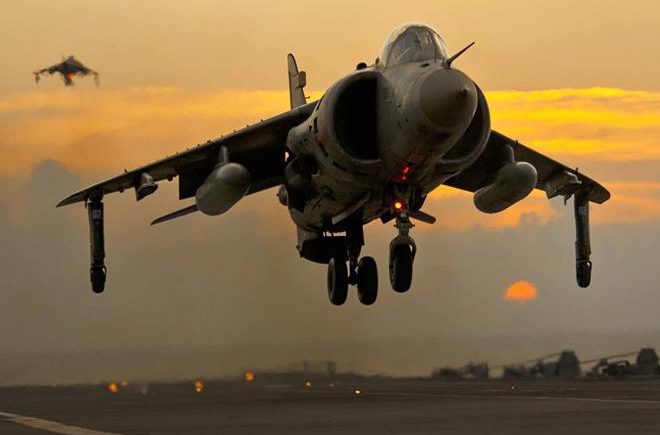
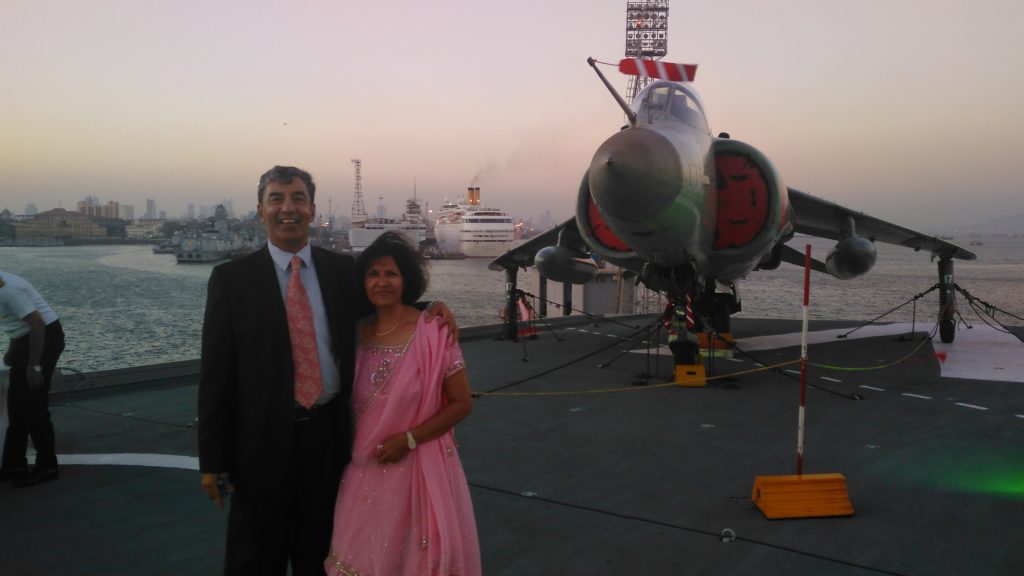
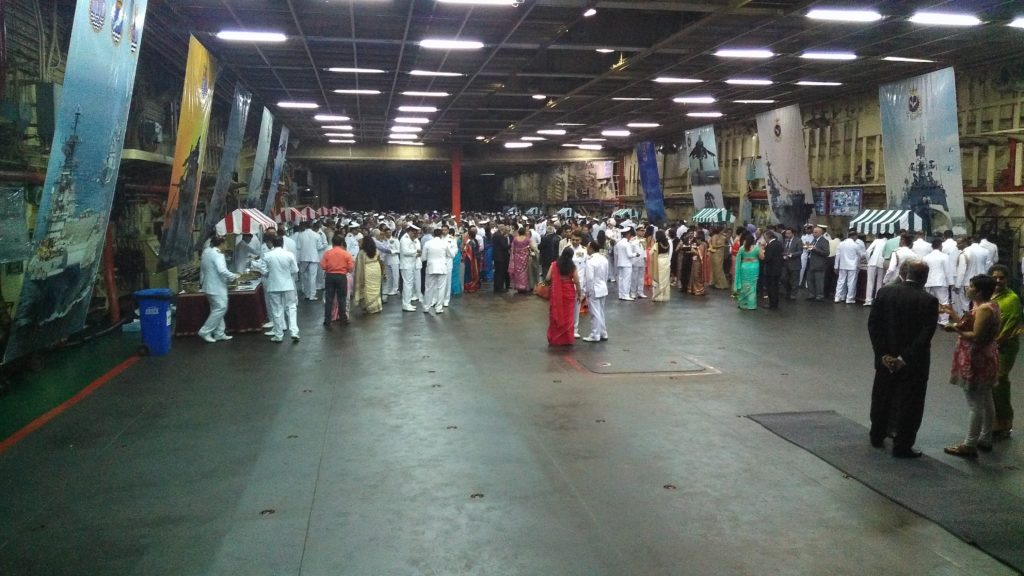
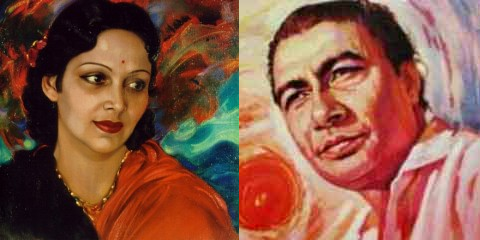
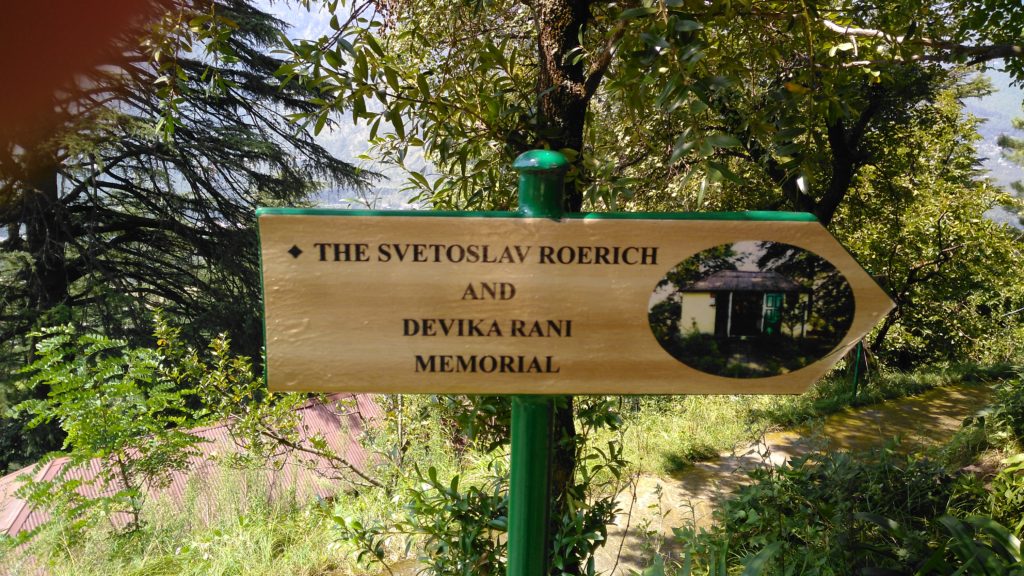
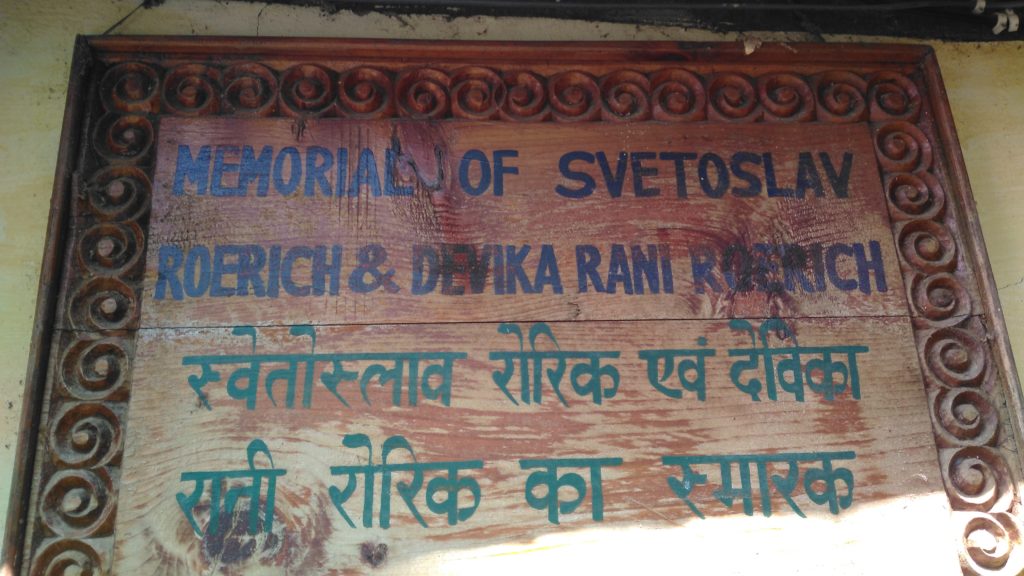
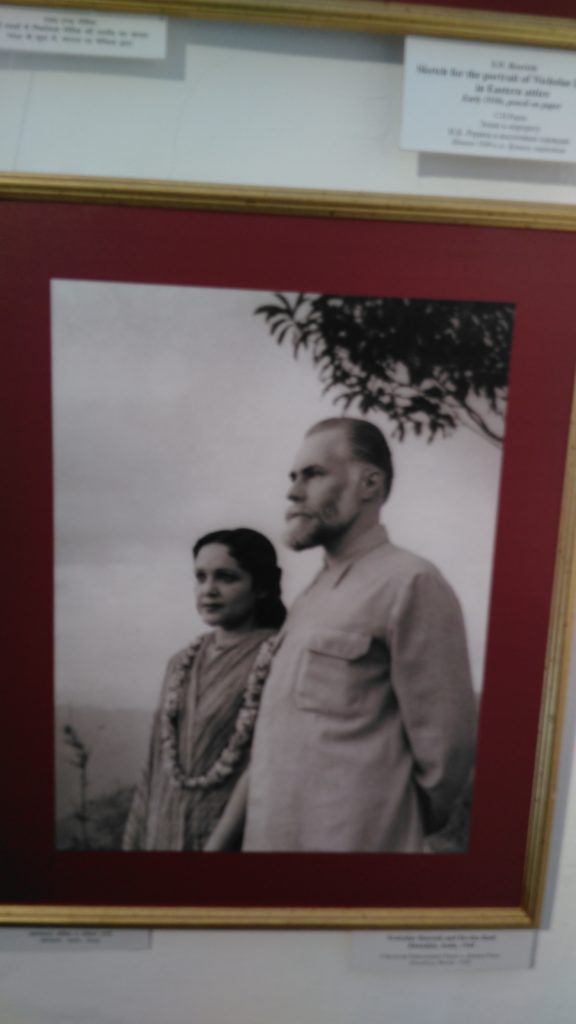
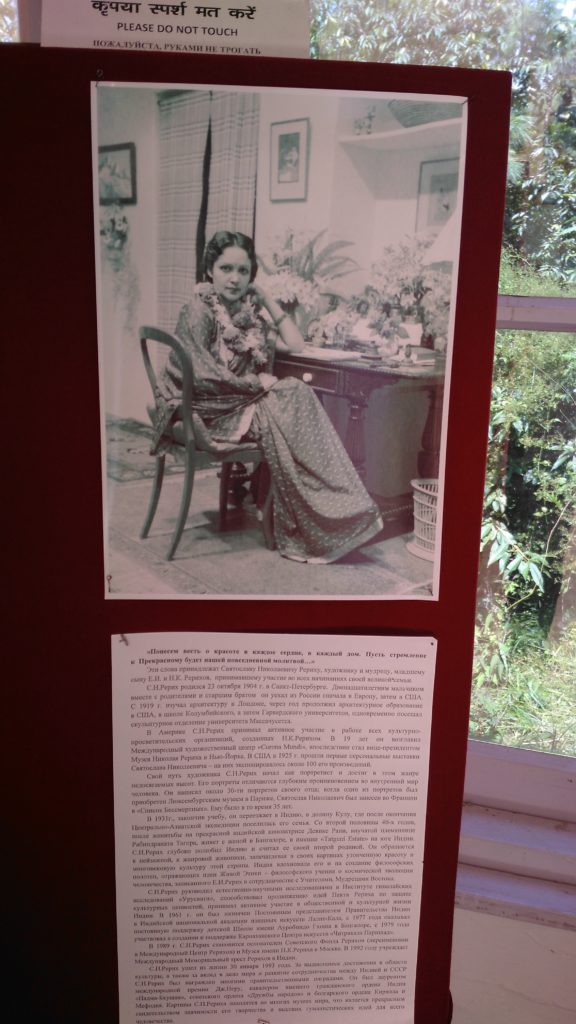
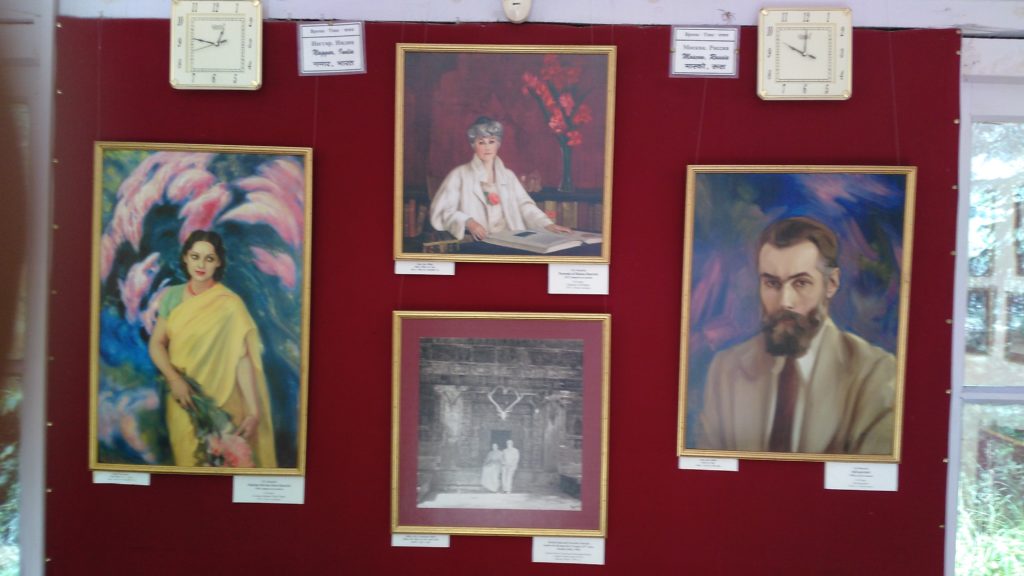
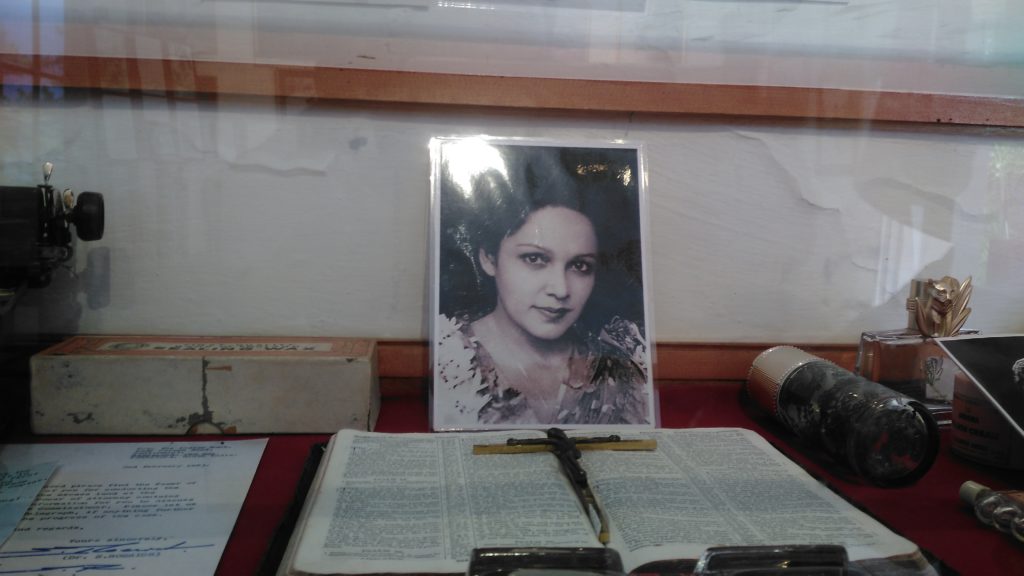
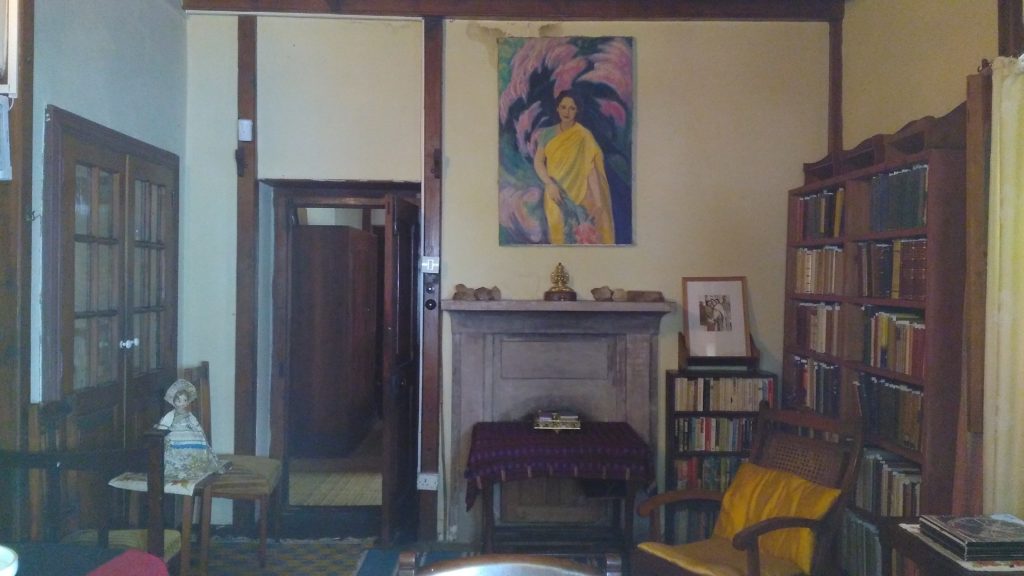
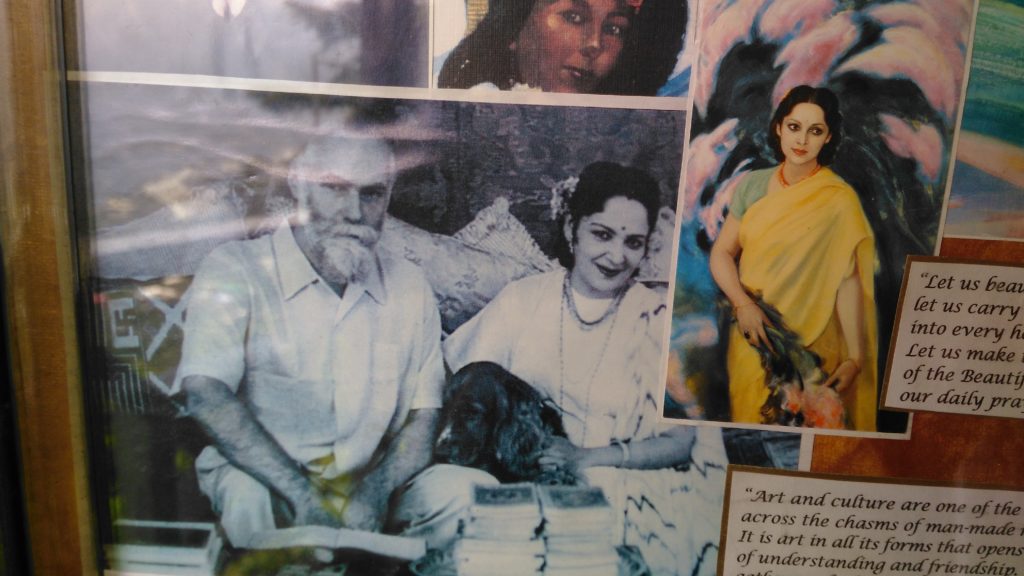

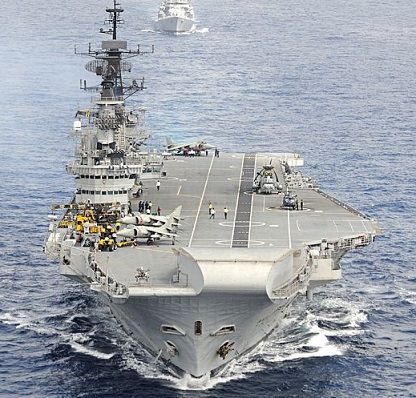

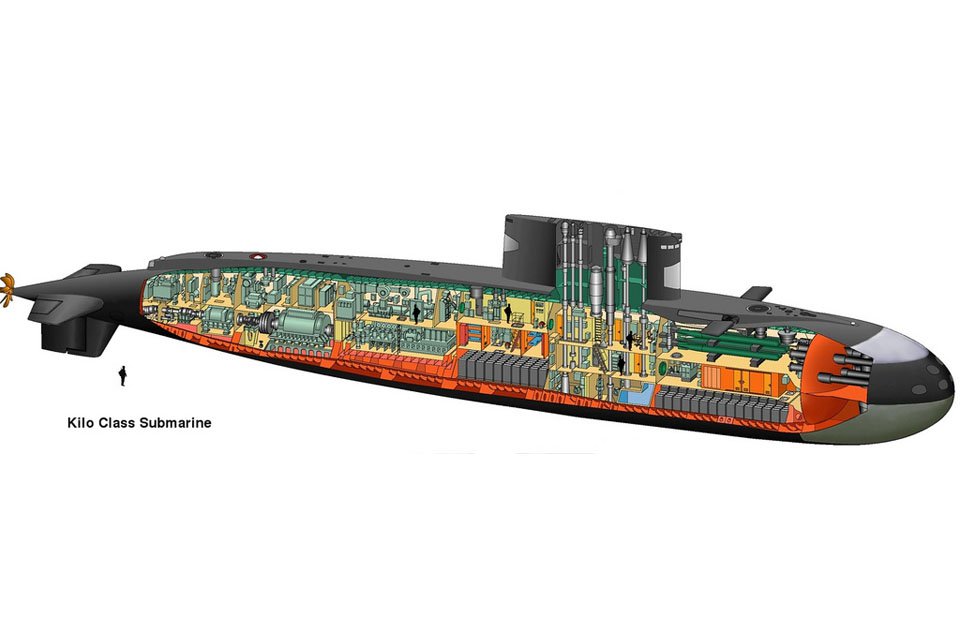
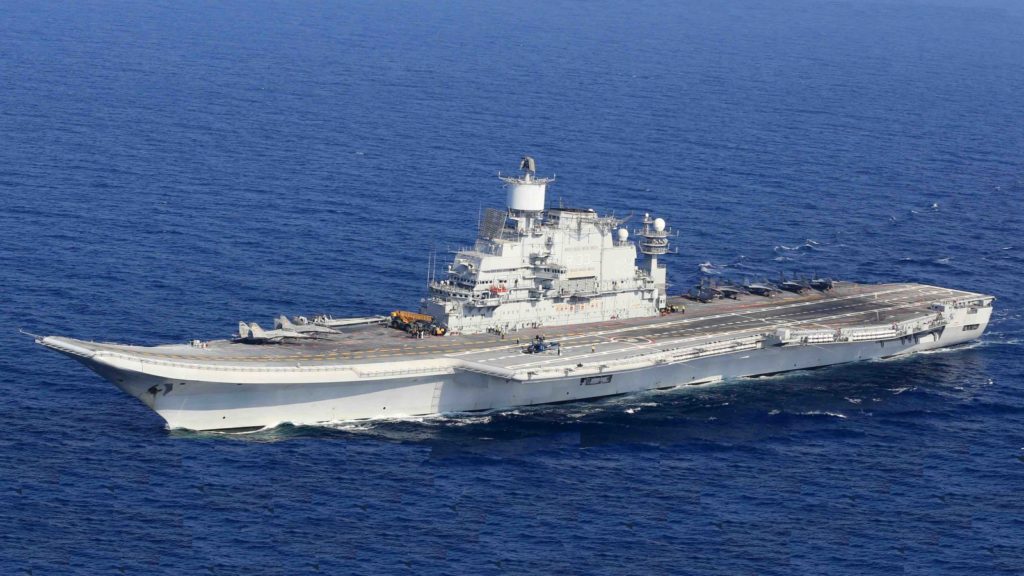

 I am reminded of this lady complaining to another, “I don’t know what’s wrong with my husband? On Sunday I made carrots; he relished them and told me so. On Monday, I made carrots; he found them very tasty. On Tuesday, he appreciated my carrots. On Wednesday, he liked them. On Thursday, he said they were alright. On Friday, he suddenly picked up the dish of carrots and threw it down. I can’t unders
 Let’s say you got fed up of eating brinjals at home because RIK issue centre suddenly gave you 2.5 Kgs of brinjals. So, you rang up your best friend’s wife, “Nisha, Lyn and I are coming over to have dinner at your place.” Chances were that Nisha too would serve you brinjals; having received them too from the RIK. There was no getting away from brinjals and RIK!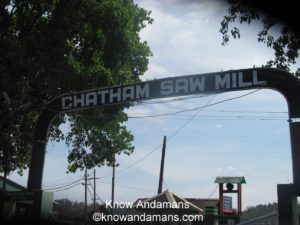
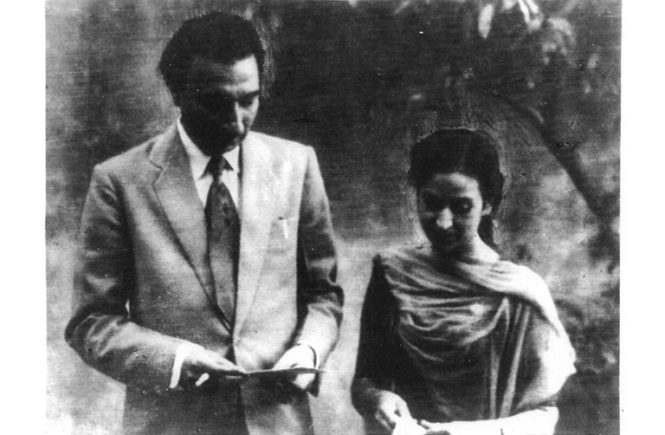
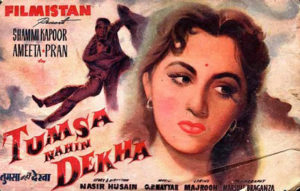
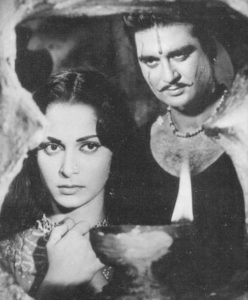
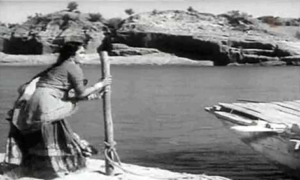 If the first song that I gave you from the movie: Raat bhi hai kuchh bheegi bheegi was sung by Lata Mangeshkar, this was sung by Asha. The composition happened to be that of Jaidev, again.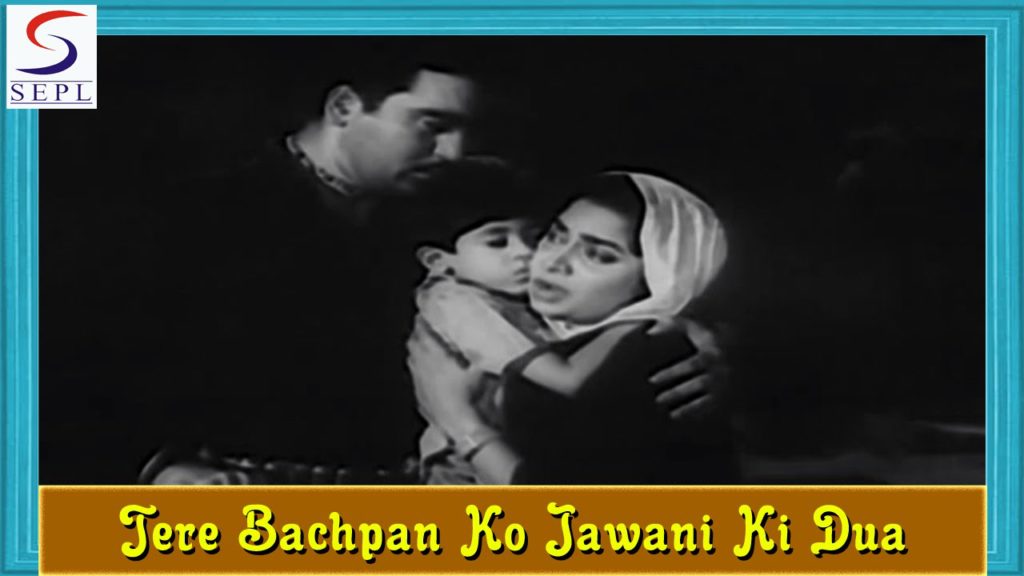

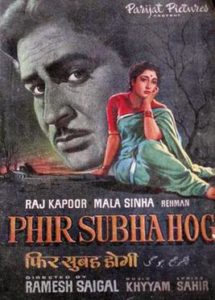
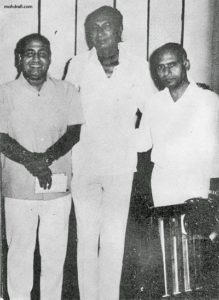
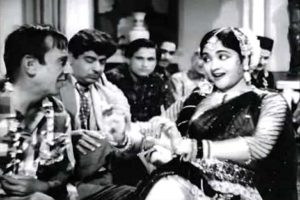
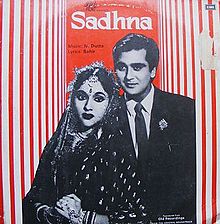 Hindi movies obsession with prostitutes being good girls who had been forced either by evil people or circumstances was made into several movies. Some of them which did very well were: Adalat, Mamta, Umrao Jaan, Pakeezah and Amar Prem.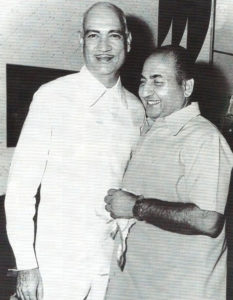
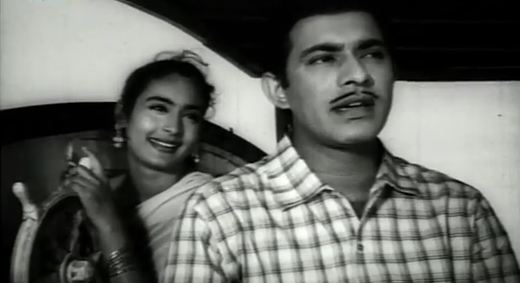
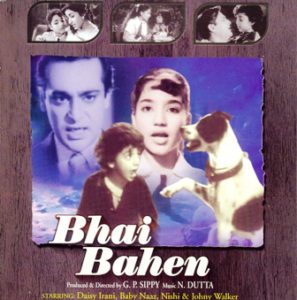
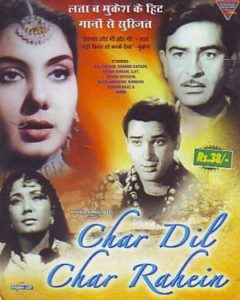
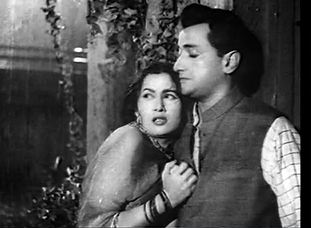
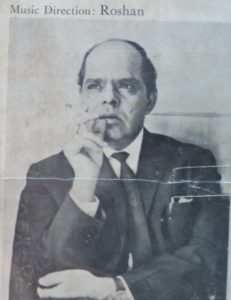 Here is a list of songs that Sahir and Roshan put together: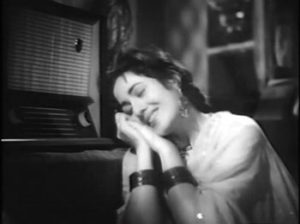
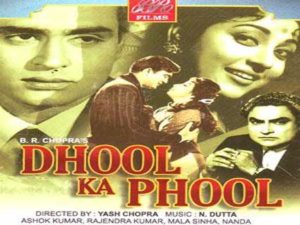
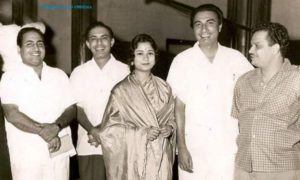
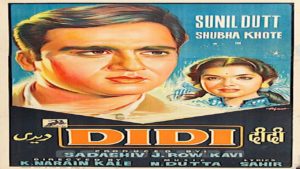 His next film of 1959 was Didi, in which once again (for the eighth time) he paired with Datta Naik or N Dutta. The movie starred Sunil Dutt, Shubha Khote and Jayshree.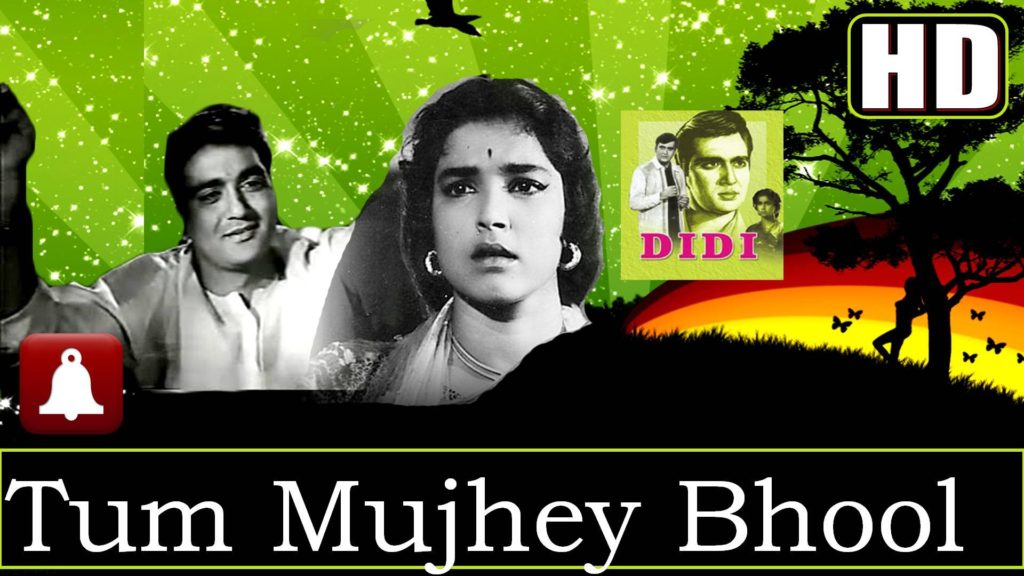
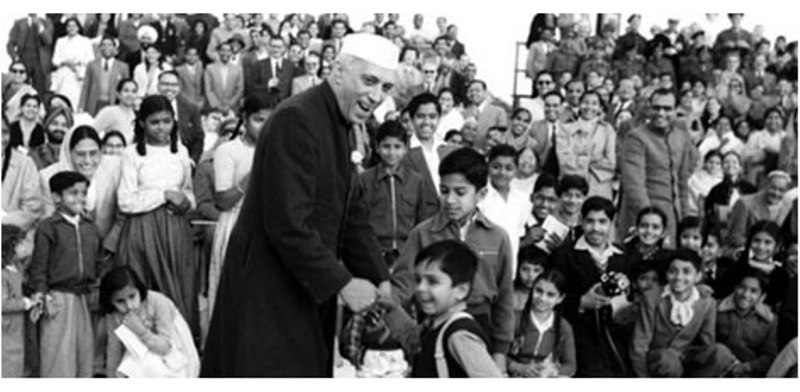


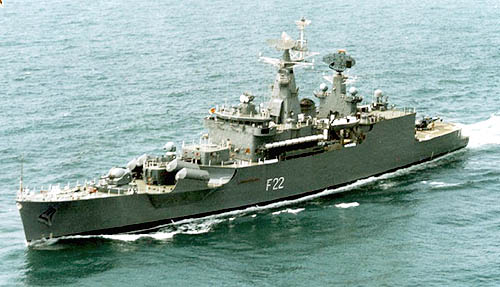

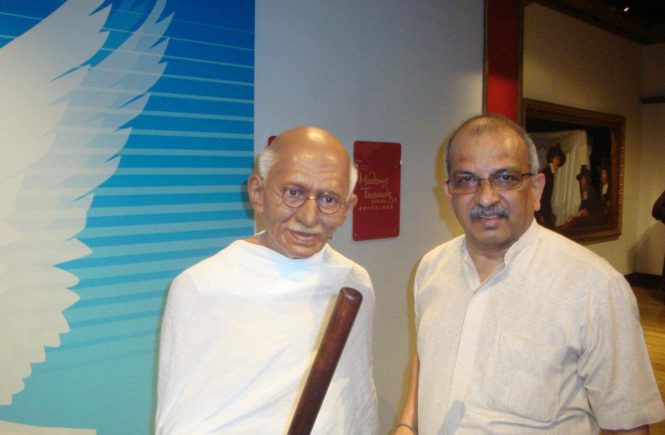
 AFMC (Armed Forces Medical College, Pune) Grad School in June 1980. He specialised in Dermatology thereafter and that’s how I saw him from 1994 onwards. Patrick was so fond of his AFMC roots that he never forgot to wish his colleagues and friends from there on the AFMC Day on 04 August. And this continued even after his Parkinson Disease (PD) had progressed extensively. He retired as a Surgeon Commodore. I was waiting to see him as a Commodore. But, sadly, PD came along and put a sudden end to his career and life. We all have to bow to God’s will. However, one still fails to understand why God would give Parkinson to someone like him. All of us entertained fervent hopes of Patrick’s full recovery. Here is what a friend, Glen Ferro, wrote to him on FB on 30th Mar 2016: “Hey Paddy. Have been meaning to talk with you and share my written testimony with you. God healed me of CANCER- NHL 3rd stage high grade diagnosed in 2007.
 Patrick completed his specialisation from AFMC in June 1986. Before that, on the 6th day of May 1986, he and Patricia married in Pune. Rohit was born on 25 Mar 1987 (I am thankful to Rohit for having put up the accompanying lovely picture yesterday). Nikhil, the younger son was born on 24 Nov 1988 in Kochi. Both grew up to be handsome, loving, intelligent and well-mannered children in the likeness of their parents. Indeed, every year, for Christmas, we all looked forward to seeing the family picture, next to the X-Mas tree. Here is one each from the happier days (year 2010, before the PD started having effect on him) and the last one in Dec 2016:
 The most poignant picture (poignant now that Patrick has left us) is of them visiting Udaipur to celebrate their 30th wedding anniversary on 6th May 2016. The picture is representative of Puttu’s, Rohit’s and Nikhil’s desire to see him as happy as possible. Indeed, there is another picture of them going to Goa together to celebrate his 60th birthday.
 We were at Vice Admiral Lowe’s house once (not too many years back) and Patrick took up a guitar and it surprised me (I didn’t know about this attribute of his) to hear him play and sing a lively song. Honestly, he appeared more appealing to me than Elvis. How was I to know that Patrick would leave us early like his singing idol did?