Before I begin today, let me tell you about the Annual Navy Veterans Lunch hosted by the C-in-C (West) that Lyn and I attended four days ago, on Sunday the 26th Nov 17 that is. I was pleasantly surprised to know many people access my blog daily for these songs and also those in Raaga Based Songs of the Day series. It also came out that people know me more as Sunbyanyname than my real name. Thank you for your abiding interest, ladies and gentlemen.
The nineteenth day of songs in this series.
In the last eighteen days, we have taken up songs of nine male singers: Talat Mahmood, Manna Dey, Kishore Kumar, Mohammad Rafi, Mukesh, Hemant Kumar, Mahendra Kapoor, SD Burman and KL Saigal. We also took up songs of nine female singers: Lata Mangeshkar, Asha Bhosle, Suman Kalyanpur, Shamshad Begum, Geeta Dutt, Uma Devi (Tun Tun), Suraiya and Zohrabai Ambalewali and Sudha Malhotra.
Tonight, we shall take up a song of our tenth male singer: Pankaj Mullick and the song is my most favourite: Tere mandir ka hoon deepak jal raha, a bhajan.
Pankaj Mullick was one of the first few of Indian Cinema personalities who was awarded the highest: the Dadasaheb Phalke Award. As a matter of interest, the award was introduced in 1969 and was won by Devika Rani, the first lady of Indian Cinema. In 1970, it went to Birendranath Sircar (founder of two production companies International Filmcraft and New Theatres) followed by Prithviraj Kapoor in 1971. That makes Pankaj Mulick the fourth ever recipient of this award in 1972.
Pankaj Mullick was a composer, music director, one of the earliest playback singers and he also acted in a few movies. He was born in Calcutta on 10 May 1905 and he died on 19 Feb 1978. An important turning point in his life came when, after finishing his studies, he came in contact with Dinendranath Tagore, who was Rabindranath Tagore’s great-nephew. This led to Pankaj Mullick’s lasting interest in Rabindra Sangeet. Rabindranath Tagore, in turn, grew fond of him, and soon Mullick became known as one of the leading exponents of Tagore’s songs.
Some of my favourite songs that Pankaj Mullick either composed or sang are: Aayi bahaar aaj aayi bahaar (Doctor, 1940), Ai qaatib-e-taqadiir mujhe itnaa bata de, Do naina matwaare tihaare (Sung by KL Saigal on his composition in Meri Behan, 1944), Chale pawan ki chaal (an all time favourite from Doctor, 1941, sung and composed by him on Kavi Pradeep’s lyrics), Duniya rang rangeeli baba (Dharmatama, 1938), Jeevan naiya behati jaaye (beautiful song on the lyrics of Ali Sardar Jafri for Zalzalaa, 1952), Karun kyaa aas niraas bhayi (Kl Saigal in Dushman, 1939), Mehak rahi phulwari hamaari (Doctor, 1941 again. Incidentally, Pankaj Mullick also acted in the movie), Main kyaa jaanu jaadu hai (KL Saigal in Zindagi, 1940), Pawan chale zor lahar machaaye shor (again from Zalzalaa but penned by Satya Kumar; it was a Dev Anand starrer), Piya milan ko jaana (an all time favourite of mine from Kapala Kundala, 1939. It was Pankaj Mullick all the way as Lyricist, Composer, Singer and Actor), Ye kaun aaj aaya savere savere (lyrics by Munshi Arzoo, sung and composed by Pankaj Mullick, 1940. He acted in the movie too), Jab chaand mera nikala chhayin thi ghataayen (Non-film, penned by Faiyyaz Hashmi and composed by F Casanovas), Kaun des hai jaana baabu (Mukti, 1937; once again Pnkaj Mullick all the way), and Ye raaten ye mausam hasna hasaana (Non film, another all time favourite).
Piya milan ko jaana, one of my all time favourites of Pankaj Mullick. Song was penned, composed, sung and acted on by Pankaj Mullick in Kapala Kundala, 1939. Leela Desai shared the lead with him in the movie
Not many people know that Pankaj Mullick sacrificed his own interests in favour of KL Saigal. For example, the 1944 movie Meri Behan songs that I have listed above were actually recorded in the voice of Pankaj Mulick and he was already playing the lead role in the movie. Half way through, BN Sircar, the owner of New Theatres (I have already told you above that Sircar received the Dadasaheb Phalke Award two years before Pankaj Mullick) asked Pankaj Mullick to let KL Saigal sing the songs and be the lead actor in the movie. Pnakaj Mullick was more famous than KL Saigal at that time but he gracefully agreed.
The song Tere mandir ka hoon deepak was penned by Pt. Madhur. He was a writer, lyricist and producer. He wrote the following movies’ stories: Tulsidas (1954), Banjarin (1960), Parasmani (1963) and Mahabharat (1965). Some of his popular songs are: Chanda re mori patiya le jaa and Ek baar dharti pe aake dekh Bhagwan (Banjarin, 1960), Duniya ye duniya Toofan Mail, Rona hai bekaar pagli (Song sung by Kanan Devi in Jawab, 1942 on the composition of Kamal Dasgupta), Ho chand chamka andhere mein aaj hai (Humayun, 1945; song sung by Shamshad Begum on the composition by Ghulam Haider), Sanjh bhaye ghar aaya panchhi (Sanyasi, 1945; song composed by Naushad and sung by Shaam Kumar), Suno ji pyaari koyaliya bole (Also from Sanyasi, 1945 but sung by Zohrabai Ambalewali and Amar), and Zaara bolo kyaa logi is dil ka kiraaya (Song sung by Mukesh and Kusum and composed by Firoz Nizami in Us Paar, 1944).
The most popular song penned by Pt. Madhur was picturised on Kanchan Kamini and Manhar Desai in 1960 movie Banjaran and sung by Lata and Mukesh
The bhajan that I am giving you (this is the first song in the series that is a bhajan and a non-film one at that) is sung for Lord Krishna and talks about deep and abiding devotion to Him. In the first stanza, the devotee (Pankaj Mullick) asks the Lord if He is a stranger to the devotee’s ache for Him; if he is new to Him? In the second stanza, the devotee is longing to obtain just one glimpse of Krishna. The third stanza is by far the best. The devotee wants to change his destiny with that of Krishna’s Bansuri (Flute) since she is so close to the Lord.
Curiously, all the favourites of Krishna are in the lyrics of the song: the Kadamb tree in the second stanza, the Jamuna river in the last stanza, and thje Batasha sweet in the first stanza. Naturally, the song has lyrics that have been penned by Pt. Madhur who knew the history well. On top of that, Pankaj Mullick’s singing and composition not just bring out the dard of the devotee but instantly take you to the scenes that Krishna was popular for.
Please enjoy Pankaj Mullick sing on his own composition a non-film bhajan: Tere mandir ka hoon deepak jal raha….
तेरे मन्दिर का हूँ दीपक जल रहा
आग जीवन में मैं भर कर जल रहा, जल रहा
तेरे मन्दिर का हूँ दीपक जल रहा
क्या तू मेरे ददर् से अन्जान है
तेरी मेरी क्या नयी पहचान है
जो बिना पानी बताशा ढल रहा
आग जीवन में मैं भर कर …
इक झलक मुझ को दिखा दे साँवरे, साँवरे
मुझ को ले चल तू गधुम की छाँव रे, साँवरे
और छलिया आ आ आ
और छलिया क्यों मुझे तू छल रहा
आग जीवन में मैं भर कर …
मैं तो क़िसमत बाँसुरी के बाँछता
एक धुन से सौ तरह से नाचता
आँख से जमुना का पानी डल रहा
आग जीवन में मैं भर कर …
Bhajans are and have been my favourite genre of songs. I must be really passionate about this that I have always chosen this over Pankaj Mullick’s Piya milan ko jaana. Lord Krishna is not just our most beloved avatar of God but also close to my heart. There must be something that makes people of all ages, sex, religions and positions in life reach out to Him, long for Him and go through the pain (dard or peedha) of not having a glimpse of Him. I guess amongst various reasons for it, one prominent one is that Krishna as avatar of God is not on a high platform in heavens but lived the life in ordinary human form. All His extraordinary abilities run parallel with his ordinary, humane antics.
The bhajan is my favourite song of this great singer and composer. Another great, Lata Mangeshkar, paid tribute to Pankaj Mullick by singing the same bhajan on Pankaj Mulick’s composition. In the following video, Lata’s tribute starts from minute 3:14:
In the last seventeen days, we have taken up songs of nine male singers: Talat Mahmood, Manna Dey, Kishore Kumar, Mohammad Rafi, Mukesh, Hemant Kumar, Mahendra Kapoor, SD Burman and KL Saigal. We also took up songs of eight female singers: Lata Mangeshkar, Asha Bhosle, Suman Kalyanpur, Shamshad Begum, Geeta Dutt, Uma Devi (Tun Tun), Suraiya and Zohrabai Ambalewali. Naturally, stage is set up for taking up our ninth female singer.
Tonight, we shall take up a song of our ninth female singer: Sudha Malhotra.After the failed love affair with Amrita Pritam, Sahir Ludhianviturned toSudha Malhotrafor loving support and she ended up singing many songs penned by him. This is one of them.
Sudha was born in Kurukshetra (now in Haryana) in 1954. Thanks to music director Ghulam Haider who discovered her as a child artiste, she sang her first song for Dilip Kumar starrer Arzoo at the age of 14. The song was milaa gaye nain. She was hailed as the next singing sensation in the country after Lata Mangeshkar. But then, at the height of her career, she suddenly left film industry after her marriage to Giridhar Motwani whose family owned the Chicago Radio Mike Company. Before her marriage she was romantically linked with Sahir Ludhainvi as far as grapevine is concerned. He had approached her for a song in 1959 movie Bhai Bahen. This led to this romantic linkage which was neither denied nor affirmed by the couple. However, the film industry was rife with rumours of his calling on her early mornings, which was chided by the industry as ‘morning alarm call’. She, however, admitted that the attention that he showered on her resulted in her getting unprecedented success. Some of my favourite songs of Sudha Malhotra are: Awaaz de raha hai koi asmaan se (Gauhar, 1953; song penned by Shakeel Badayuni), Ganga ki reti pe bangla chhavay de (Mirza Ghalib, 1954), Hari tum meri raakho laaj Hari (Dekh Kabira Roya, 1957), Kaise kahun man ki baat (Dhool Ka Phool, 1959), Manmohan mein ho tumhi (Kaise Kahoon, 1964; also penned by Shakeel Badayuni), Mohabbat ki dhun beqraaron se poochho (Dil-e-Nadaan, 1953; also penned by Shakeel), and Salaam-e-hasrat qabool kar lo (Babur, 1960).
Lets turn to Sahir Ludhianvi, the lyricist of this song. Of course, many of his songs were indicative of the situation between him and Sudha Malhotra. For example, this one from 1959 movie Didi. All that one has to do is to ascribe male lines to female and vice-versa and it fits in well with them. It was also rumoured that the Gumraah song Chalo ek baar phir se ajnabi ban jaayen hum dono was indicative of the ceasing of their affair after she married Motwani. But, then, such was the persona of Sahir Ludhianvi that many situations in the movies were supposedly based on his life: Pyaasa, Kabhi Kabhi are two examples. As far as my favourites penned by him are concerned, there are quite a few. However, here is a shorter list: Aaj ki raat piya dil na todo, Tadbeer se bigadi hui taqdeer bana le (Baazi, 1951), Aap aaye to khayaal-e-dil-e-nashaad aaya, Chalo ek baar phir se, Ye hawa ye fiza (Gumrah, 1963), Abhi na jaao chhod kar, Kabhi khud pe kabhi halaat pe rona aaya, Main zindagi ka saath nibhaata chala gaya (Hum Dono, 1961), Ashqon ne jo paaya hai (Chandi Ki Deewar, 1964), Ai meri zohra zabeen, Chehre pe khushi chha jaati hai, Aage bhi jaane na tu, Ham jab simat ke aap ki baahin mein aa gaye (Waqt, 1964), Aurat ne janam diya mardon ko (Sadhana, 1964), Baabul ki duyayen leti jaa, Tujhako pukaare mera pyaar (Neelkamal, 1968), Bhool sakta hai bhala kaun (Dharamputra, 1961), Dhadakne lage dil ke taaron ki duniya, Tere pyaar ka assra chahta hoon (Dhool Ka Phool, 1959), Dil ki umange hain jawan, Jeewan ke safar mein rahi (Munimji, 1955), Dukhi man mere sun mera kehna (Funtoosh, 1956), Duniya kare sawaal to hum jawab dein, Log kehte hain tum se kinara kar lein, Sab mein shaamil ho magar (Bahu Begum, 1967), Door reh kar na karo baat (Amanat, 1975), Zindagi bhar nahin bhoolegi, Maayus to hoon waade pe tere, Na to karvaan ki talaash hai (Barsaat Ki Raat, 1960), Ham aapki aankhon mein, Tang aa chuke hain kashmakash zindagi se ham, Jinhe naaz hai Hind par woh kahan hain, Jaane kya tune kahi, Sar to tera chakraaye, Jaane wo kaise log the jinake pyaar ko pyar mila (Pyaasa, 1957), Husn haazir hai muhabbat ki saza paane ko (Laila Majnu, 1976), Iswar Allah tere naam sabako snmati de bhagwan (Naya Rasta, 1970), Jaayen to jaayen kahan (Taxi Driver, 1954), Jaan-e-bahaar husn tera bemissal hai (Pyar Kiya To Darna Kya, 1963), Jise tu qabuul kar le, Kisako khacar thi kisako yakeen tha (Devdas, 1955), Jo waada kiya wo, Paaon chhu lene do, Zurm-e-ulfat pe hamen log saza dete hain (Taj Mahal, 1963), Kabhi kabhi mere dil mein khayal aata hai, Main pal do pal ka shayar hoon (Kabhi Kabhi, 1976), Laaga chunari mein daag, Nigahen milane ko ji chahta hai (Dil Hi To Hai, 1963), Maang ke saath tumhaara, Ude jab jab zulfen teri, Ye desh hai veer jawano ka (Naya Daur, 1957), Mehfil se uthh jaane waalo, Phool gendwa na maaro (Dooj Ka Chand, 1964), Mera tujhase hai pehle ka naata koi (Aa Gale Lag Jaa, 1973), Tora man darpan kehlaaye, Chhu lene do naazuk hontho ko, Mere bhaiya mere chanda mere anmol ratan (Kajal, 1965), Mujhe gale se laga lo bahut udaas hoon main (Aaj Aur Kal, 1963), Na tu zameen ke liye hai na aasman ke liye (Dastaan, 1972), Parbaton ke pdho par shaam ka basra hai, Tum chali jaogi parchaayiyan reh jayengi (Shagoon, 1964), Pyaar par bas to nahin hai mera, Raat bhar ka hai mehmaan andhera (Sone Ki Chidhiya, 1958), Rang aur noor ki baraat kise pesh karun (Ghazal, 1964), Teri duniya mein jeene se behtar hai ke mar jaayen, Chup hai dharti chup hain chand sitaare (House No. 44), Thandi hawaayen lehra ke aayen (Naujawan, 1951), Tum ek baar mohabbat ka imtihaan to lo (Babur, 1960), and Ye raat ye chandini phir kahan (Jaal, 1952).
Kabhi khud pe kabhi halaat pe rona aaya is regarded by me as the best lyrics that he penned. It featured in Hum Dono, a movie with double-role of Dev Anand
Perhaps it would be better to go through my posts on Sahir Ludhianvi:
Lets turn to the composer of this song:Sudha Malhotra herself. Actually, the music director of the movie was N Dutta who had worked with Sahir Ludhainvi in as many movies as Sahir did with SD Burman before the two broke up in 1957 after Pyaasa. However, N Dutta fell ill during the film’s making and then Suhda Malhotra came forward and helped with this song. Isn’t it a great coincidence that the song was composed by her in the raaga of my home-place: Pahadi and Tal Dadra? She actually made it into a memorable song.
The movie from which the song of this post has been taken is the 1959 movie Didi. The movie was directed by K Narayan Kale and produced by Sadashiv J Row Kavi. This was a remake of an iconic Marathi Movie “Vahininchya Bangadya”. A famous Telugu version also was made in the name of “Vadina Gajulu”. Didi was a story of brother-sister love, but NOT in a tear-tear way but in a very hilarious way. The main roles were done by Sunil Dutt and Shubha Khote(a perinnial sister of the Indian screen). This was also one of the rare films in which the Parsi sisters Honey and Daisy Irani were acting together and both were as boys.
Please enjoy Sudha Malhotra sing (with Mukesh): Tum mujhe bhool bhi jaao to ye haq hai tumako, meri baat aur hai maine to mohabbat ki hai….
सुधा: तुम मुझे भूल भी जाओ तो ये हक़ है तुमको
मेरी बात और है मैंने तो मुहब्बत की है
मेरे दिल की मेरे जज़बात की कीमत क्या है
उलझे-उलझे से ख्यालात की कीमत क्या है
मैंने क्यूं प्यार किया तुमने न क्यूं प्यार किया
इन परेशान सवालात कि कीमत क्या है
तुम जो ये भी न बताओ तो ये हक़ है तुमको
मेरी बात और है मैंने तो मुहब्बत की है
तुम मुझे भूल भी जाओ तो ये हक़ है तुमको
मुकेश: ज़िन्दगी सिर्फ़ मुहब्बत नहीं कुछ और भी है
ज़ुल्फ़-ओ-रुख़सार की जन्नत नहीं कुछ और भी है
भूख और प्यास की मारी हुई इस दुनिया में
इश्क़ ही एक हक़ीकत नहीं कुछ और भी है
तुम अगर आँख चुराओ तो ये हक़ है तुमको
मैंने तुमसे ही नहीं सबसे मुहब्बत की है
तुम अगर आँख चुराओ तो ये हक़ है तुमको
सुधा: तुमको दुनिया के ग़म-ओ-दर्द से फ़ुरसत ना सही
सबसे उलफ़त सही मुझसे ही मुहब्बत ना सही
मैं तुम्हारी हूँ यही मेरे लिये क्या कम है
तुम मेरे होके रहो ये मेरी क़िस्मत ना सही
और भी दिल को जलाओ ये हक़ है तुमको
मेरी बात और है मैंने तो मुहब्बत की है
तुम मुझे भूल भी जाओ तो ये हक़ है तुमको
Hindi movie industry has a number of love-affairs in real life that have been as famous and fascinating as some of the others in reel-life. Sahir Ludhainvi’s attraction for Sudha Malhotra was the subject of many rumours after the unrequited affair that he had with Punjabi poetess Amrita Pritam. I not only think of this song as the one about another affair that didn’t fructify. I also think of the most beautiful lyrics of this song that destiny directed that the object of his love should compose since the music director N Dutta fell ill. And Sudha not just sang it with passion but put her heart and soul into composing it in my favourite raaga and dhun Pahadi. The song often gives me goosebumps when I listen to it.
Raaga Based Song of the Day:Aapki yaad aati rahi raat bhar…. Raag Bhairavi, Tal Hinch
Today is the eighty-sixth post in the series on Raaga Based Songs of the Day. As already planned, I had kept Bhairavi for special treatment until the end after giving you the first song in Bhairavi on the 11th day: Babul mora naihar chhooto hi jaaye (Please see: ‘Raaga Based Song Of The Day #11’) I gave you songs in many other raagas and now when we approach our 100th song, I am into repeating some of the important raagas. I have given you a few songs composed by Shankar Jaikishan (Jaikishan had Bhairavi as his favourite raaga). Today, I give you a special one composed by Jaidev.
Before I do, let me reiterate that I am primarily a Lyrics person. My interest in music and raagas is only to the extent of their adding to the emotions expressed through the lyrics. The purists would tell you, with enough justification, that in the Indian Classical Tradition, the instruments were made to express emotions without any lyrics. I agree but it is merely a question of my passion. A painter can do away with both lyrics and notes and tell you that a painting is worth thousands of words and notes. And finally, a spiritual person can do away with all thoughts to merge with his Parmatma: no words, no notes, not even thoughts. One has to search for one’s starting point; my starting point is lyrics and has always been.
Let me, therefore, start with the poet of this great ghazal. His name was Makhdoom Mohiuddin, or Abu Sayeed Mohammad Makhdoom Mohiuddin Khudri. He was born in the village of Andole in Medak district, Hyderabad State on 04 Feb 1908. Most Urdu poets of that era (with the exception of my favourite Shakeel Badayuni) were part of the Marxist political movement in India and Progressive Writers Union. Makhdoom Mohiuddin, indeed, founded the Progressive Writer’s Union in Hyderabad, was active in Marxist movements, and in 1946-47, was in the forefront of Telengana Rebellion against the Nizam of Hyderabad. The then-ruler of Hyderbad, Mir Osman Ali Khan, had issued orders to kill him for awakening people for freedom and the abolition of Nawab (“princely”) rule. He soon earned the sobriquet of Shayar-e-Inquilab (Poet of Revolution) and is honoured as a freedom fighter. He is best known for his collection of poems entitled Bisat-e-Raqs (“The Dance Floor”), for which he was awarded the 1969 Sahitya Akademi Award in Urdu.
Here is what Mir Ayoob Ali Khan wrote about him in The Times of India (Hyderabad edition) on 16 Aug 2015 in an article titled ‘Makhdoom – Poet of Labour and Love’:
“Several years ago Ali Sardar Jafri made a documentary on Makhdoom. The character of Makhdoom was played by Irrfan Khan and music scored by Jagjit Singh. It gave some insight into the man and his passions but that it was too little. What still lacks is a well-researched book on him, especially in English that narrates his complete story, not bits and pieces that we find in Urdu.”
His ghazals have been used in Hindi films. Some of these are: Ik chameli ke mandve tale (for the 1964 movie Cha Cha Cha), Aap ki yaad aati rahi raat bhar (Gaman, 1978), and Phir chhidi raat baat phoolon ki (Bazaar, 1982).
The ghazal, Aap ki yaad aati rahi raat bhar has a history of its own. Makhdoom Mohiuddin breathed his last on 25 Aug 1969.Faiz Ahmad Faiz, another Marxist revolutionary, another notable member of Progressive Writer’s Union, and recipient of Pakistan’s highest civilian award Nishan-e-Imtiaz, wrote the following in Makhdoom’s memory:
“Makhdoom ki yaad mein”–Faiz Ahmed Faiz
“Aap ki yaad aati rahi raat bhar” chaandni dil dukhaati rahi raat bhar
The night was haunted by your memories
And the moonlights made my heart bleed all night long
A fragrance kept changing its body all night
And a portrait kept singing all night long
phir sabaa saaya-e-shaakh-e-gul ke talay koi qissa sunaati rahi raat bhar
And again, in the shades of blossomed tree
A gentle breeze narrated some tales all night long
jo na aaya use koi zanjeer-e-dar har sadaa par bulaati rahi raat bhar
The chains of the courtyard, with every call,
Sought him, who did not turn up, all night long
eik ummeed se dil behalta raha ik tamanna sataati rahi raat bhar
A hope kept my heart at bay
And a desire kept burning within all night long
Naturally, Faiz being a more accomplished poet, penned his tribute even better than Makhdoom’s, as many feel. However, the fact is that the original still belongs to Makhdoom.
We have completed eighty-five days of Raaga Based Songs of the Day. Our first post in the series was titled ‘Raaga Based Song Of The Day #1’ and the song was a Mohammad Rafi and Lata Mangeshkar song from the 1970 Shakti Samanta movie Pagla Kahin Ka: Tum mujhe youn bhula na paoge. It is in Raag Jhinjhoti, Tal Kaherava.
Our eighty-fifth post or the last post was titled ‘Raaga Based Song Of The Day #85’ and the song was a Mukesh song from the 1966 Abhi Bhattacharya (Shailendra production) movie Teesri Kasam starring Raj Kapoor and Waheeda Rehman: Duniya banane waale kya tere man mein samayi. It is in Raag Bhairavi, Tal Kaherava.
In the last eighty-five days of sharing Raaga based songs of the day, I have given you songs based on Raag Jhinjhoti, Gara, Bhimpalasi, Madhuvanti, Shivaranjani, Bihag, Pahadi, Sarang, Pilu, Bhairavi, Khammaj, Charukesi, Kalyan or Yaman, Desh, Malgunji, Kirwani, Kedar, Bageshri, Megh Malhar, Bhupali, Ahir Bhairav, Malkaush, Mand, Adana, Kafi, Rageshri, Jaunpuri, Tilang, Janasammohini, Chayanat, Shuddha Kalyan, Gaur Sarang, Jogiya, Asavari, Maru Bihag, Durga, Lalit, Puria Dhanashri, Bhinna Sahdja, Sohani, Multani, Patdeep, Jaijaiwanti, Tilak Kamod, Hemant, Basant Mukhari, Gujri Todi, Kalavati, Hamir, Bhatiyar, Gawati, Shyam Kalyan, Gorakh Kalyan, Madhamat Sarang, Manj Khammaj, Darbari Kanada, Vibhas, Shankara, Bahar, Nand and Mian Ki Malhar; making it a total of 61 raagas. The raagas that have been repeated so far are Pahadi, the raaga of my home place in the Himalayas, Maru Bihag, Raag Kirwani, Jhinjhoti, Bhairavi, Gara, Basant Mukhari, Malkauns, Bhairavi, Mand and Sohani. Today, I am repeating Raag Bhairavi for the eighth time.
Today’s ghazal has been sung by Chhaya Ganguly on the lyrics of Makhdoom Mohiuddin and composition by Jaidev. As I said, it is in Raag Bhairavi, Tal Hinch. The song is picturised on Smita Patil in the 1978 Muzaffar Ali movie Gaman, in his own production.
Incidentally, Jaidev who won the National Film Award for Best Music Direction in 1979 for his work and for the Song Aap ki Yaad Aati Rahi, Chhaya Ganguly won a National Film Award for Best Female Playback Singer.
(Pic courtesy: Saregama)
Lets know a little more about them in reverse order. First, the singer Chhaya Ganguly.She is best described by the expression: ‘A Forgotten Voice’. Indeed, this is how The Indian Express described her in an article on 20 Apr 2014 in its New Delhi edition. The occasion was her performance as a part of 21st Ustad Chand Khan Music Festival presented by Sursagar Society in New Delhi. And to think that she actually won the National Award for her singing this ghazal. She could have pushed to remain centre stage for years. But, instead, she chose to remain in the background in a most self effacing manner.
Chhaya Ganguli trained with ghazal singer Madhurani, whom she met through Jaidev, who composed Gaman’s score. She also sang the ballad “Piya Piya” for Jaidev in Trikon Ka Chauttha Kon (1983).
As if shy of her success, Ganguli took a long break from films, returning in 1990 for the Amol Palekar film Thodasa Roomani Ho Jaayen. The title track, composed by Bhaskar Chandavarkar, captures a great return to form by her.
Her songs in non-film albums include filmmaker and composer Muzaffar Ali’s Husn-e-Jaana (1997) and Paigham-e-Mohabbat (2000). She sang the poems of Ahmad Faraz, Ibn-E-Insha, Nazeer Akbarabadi and Mir Taqi Mir. One of her most popular Sufi songs is “Zihaal-e-Miskin” from the album Husn-e-Jaana. She sings the poetry of Amir Khusro with passion.
Jaidev Verma, the composer and music director was born on 03 Aug 1919 in Nairobi. He was brought up in Ludhiana. At the age of 15 years he ran away to Bombay to become a film star. As a child-star he acted in eight films for Wadia Film Company. It was Prof Barkat Rai in Ludhiana who had initiated him into music. Later, in Bomaby, he learnt music from Krishnarao Jaokar and Janardan Jaokar. Unfortunately, he had to leave his budding films career to return to his family after his father’s blindness. He assumed the sole responsibility to look after his family. After his father died, in 1943 he left for Lucknow to learn music under Ustad Ali Akbar Khan.
He started his career in Hindi films after Ali Akbar Khan took him as his assistant for Navketan Films Aandhiyan (1952) and Hum Safar. He was the first music director to have won three National Awards.
Some of my favourite songs composed by Jaidev are: Ab koi gulshan na ujade ab watan aazad hai, Nadi naare na jao Shyam, Raat bhi hai kuchh bheegi bheegi, Tere bachpan ko jawani ki dua deti hoon (Mujhe Teene Do, 1963); Abhi na jao chood kar, Allah tero naam, Kabhi khud pe kabhi halaat pe rona aaya, Main zindagi ka saath nibhaata chala gaya (Hum Dono, 1961); Chand akela jaaye sakhi ri, Koi gaata main so jaata (Alaap, 1977); Chale jaa rahen hain mohabbat ke maare kinaare kinaare, Dekh li teri khudayi bas mera dil nhar gaya, Jab gham-e-ishq sataata hai to has leta hoon (Kinaare Kinaare, 1963); Dil ne tadap tadap ke tadpaana sikha diya (Faasla, 1974); Di deewane shehr mein (Gharaunda, 1977); Jaise suraj ki garmi se (Parinay, 1974); Tu chanda main chandini (Reshma Aur Shera, 1971); and Ye dil aur unaki nigaahin ke saaye (Prem Parbat, 1973).
(Pic courtesy: India Today)
A word about the actress, Smita Patil, on whom the song is picturised. Having been born on 17 Oct 1955 in Poona, she graduated from the Film and Television Institute of India and debuted in Shyam Benegal’s Charandas Chor in 1975. She soon became the favourite of Shyam Benegal. Her performances were often acclaimed, and her most notable roles include Manthan (1977), Bhumika (1977), Aakrosh (1980), Chakra (1981), Chidambaram (1985) and Mirch Masala (1985). Smita Patil was married to actor Raj Babbar.She died on 13 December 1986 at the age of 31 due to childbirth complications. Over ten of her films were released after her death. She won two National Awards for her roles in Bhumika and Chakra and three Filmfare Awards for her roles in Jait Re Jait, Umbartha and Chakra. For the intensity of her acting she was being hailed as a Meena Kumari in the making and then she died at a very young age of 31 years.
(Pic courtesy: Alchetron.com)
And lastly, lets know a little more about the producer and director of the 1978 movie Gaman: Muzaffar Ali. He was born on 21 Oct 1944 in Lucknow. is an Indian filmmaker, fashion designer, poet, artist, music-lover, revivalist, and social worker. Gaman (1978) was his first movie. He went on to direct Umrao Jaan (1981), Aagman (1982), Anjuman (1986), and Jaanisaar (2015). In the last movie he also acted as Meer Mohsin Ali. He was awarded the Padma Shri in 2005 and Rajiv Gandhi National Sadbhavana Award in 2014.
Before we actually take up the song, first, lets take up the value added learning of today. From the last five times onwards we started learning about some of the leading personalities in Indian Classical Music or Shastriya Sangeet. The first one that we took up was Ustaad Asad Ali Khan,thefinest Rudra Veena player in the country. Then we took up Pandit Hari Parsad Chaurasia, the greatest Bansuri player in the country. Then we talked about Ali Akbar Khan, the greatest Sarod player in the country. Then we took up Pandit Ravi Shankar, the greatest Sitar player in the world. And finally, we took up the greatest classical singer in the country (of Carnatic tradition): MS Subbulakshmi. Today, we shall take up the greatest classical singer in the country (of Hindustani tradition): Pandit Bhimsen Joshi.
(Pic courtesy: Cultural India)
Bhimsen Joshi was born on 04 Feb 1922 in Ron town of Gadag district of Karnataka. As a child itself he was fascinated by music and musical instruments such as harmonium and tanpura. His first music teacher was Agasara Channappa of Kurtakoti, who had trained with the veteran singer Inayat Khan. He learnt raagas Bhairav and Bhimpalasi from him. Bhimsen Joshi next went to Pandit Shyamacharya Joshi, who hailed from Bagalkot. It is through Pandit Shyamacharya that Bhimsen Joshi got his first break. Pandit Joshi had gone to Bombay to record songs for HMV and after recording a few he fell ill, returned to Bagalkot and asked Bhimsen Joshi to continue. This proved a majot breakthrough for Bhimsen Joshi.
He soon emerged as a singer of Khayal and for devotional songs such as Bhajans and Abhangas. If we look at the awards that he won, one can make out his career progression: Padma Shree in 1972, Sahitya Natak Akademi Award in 1976, Padma Bhushan and National Award for Best Male Playback Singer (for the film Ankahee in which Jaidev too won the National Award as Best Music Director) in 1985, Padma Vibhushan in 1999 and India’s highest civilian award Bharat Ratna in 2008.
The Addl. Secretary, Ministry of Home Affairs, Shri A.E. Ahmad giving away the Bharat Ratna Award to Pandit Bhimsen Joshi, at Pune on February 10, 2009. (Pic courtesy: netindian.in)
As I said, today’s song is in Raag Bhairavi, Tal Hinch.
Raagmala painting of Raag Bhairavi (Pic courtesy: Chandrakantha)
Raag Bhairavi is the basic raag of the Bhairavi Thaat. Bhairavi makes use of all the komal swars, Rishabh, Gandhar, Dhaivat, Nishad. When singing compositions in Bhairavi raag, the singers however take liberty to use all the 12 swars. Bhairavi raag is named after the Shakti or feminine aspect of the cosmic life force, which is personified as a consort to Lord Shiva. Bhairavi is a powerful raag filled with devotion and compassion. Its Jati is Sampurna – Sampurna, which means all seven swar (heptatonic) both in Aaroha and Avaroha. I have already told you that in a concert Bhairavi is usually the concluding raaga since it is supposed to cure mistakes of the earlier performances. Hence, if a concert has started at night (which is usually the case), Bhairavi would be played in the wee hours of the morning.
A pleasant sobering atmosphere full of love and piety is created with this raag and one feels so close to the Supreme. Its compositions include several Thumris, Bhajans, Ghazals, Songs etc. Since it is an ocean of immense possibilities the melodic combinations can include all the twelve notes with skill.
I am not giving you again a list of songs composed in Raag Bhairavi as I have already given you this adequate number of times, this being the eighth time I am giving you a song in this raag.
About Tal Hinch, I can do no better than put up the link to a video explaining this:
Lastly, a word about the movie from where this song (ghazal) has been taken by me. The 1978 movie Gaman was produced and directed by Muzaffar Ali and starred Farooq Sheikh and Smita Patil. Farooq Sheikh, the gentlest actor in Hindi movies left us on 27 Dec 2013 at the age of 65 and Smita Patil died young at 31 years on 13 Dec 1986. The film deals with the issue of futility of urban migration, using the story of migrant from Uttar Pradesh to Mumbai, who tries to find a foothold in his new life as a taxi driver. Farooq Sheikh as Ghulam Hasan, is from – hold your breath – Badayun in Uttar Pradesh (the town of my favourite lyricist and poet Shakeel Badayuni). He relocates to Mumbai and becomes a taxi driver through his friend Jalal Agha as Lallulal Tewari. He had to leave his ailing mother and wife Khairun (Smita Patil) behind in Badayun. And that’s how this song (ghazal) came about in the movie. With each note, word and each histrionic of Smita Patil the agony of the migration for better life from Uttar Pradesh to Mumbai comes through so lucidly.
Please enjoy in Raag Bhairavi, Tal Hinch: Aapki yaad aati rahi raat bhar…
आप की याद आती रही रात भर
चश्म-ए-नम मुस्कुराती रही रात भर
आप की याद आती रही …
रात भर दर्द की शमा जलती रही
ग़म की लौ थरथराती रही रात भर …
बाँसुरी की सुरीली सुहानी सदा
याद बनबनके आती रही रात भर …
याद के चाँद दिल में उतरते रहे
चाँदनी डगमगाती रही रात भर …
कोई दीवाना गलियों में फिरता रहा
कोई आवाज़ आती रही रात भर …
A forelorn lover kept wandering the streets
And a voice could well be heard all night long
We have intended to learn about Raaga based music whilst we entertain ourselves with Raaga based songs. So, lets, once again, take stock of our collective learning so far:
On the first day we learnt about the Raaga system devised by Pandit Vishnu Narayan Bhatkhande, which is the prevalent system in Hindustani Classical Music and based on ten Thaats.
On the second day we learnt about Tal or Taal.
On the third day we learnt about characteristics of Raagas that included Swar, Jati, Thaat, Arohana and Avarohana, Vadi, Samvadi and Pakad.
On the fourth day, we learnt about Sargam.
On the fifth day, we learnt about notations used in Indian classical music or simply Swar Lipi.
On the sixth day, we learnt about the Ras (sentiments) that Raagas evoke.
On the seventh day, we learnt about various types of Swar: Shuddha, Achal, Vikrut, Komal and Teevra.
On the eighth day, we learnt the parts of a composition in Indian Classical Music.
On the ninth day, we learnt the names of some of the popular instruments used in Indian Classical Music.
On the tenth day, we learnt about the sources of names of Raagas.
On the eleventh day, we learnt about why Bhairavi is the first raag to be taught to beginners and also why it is the last in a performance.
On the twelfth day, we learnt about Khammaj Thaat.
On the thirteenth day, we learnt about Tal Punjabi Theka or Sitarkhani.
On the fourteenth day, we learnt about Alap.
On the fifteenth day, we learnt about List of Raagas (Raagmala) in my favourite book: Sri Guru Granth Sahib.
On thesixteenth day, we learnt about tips for raaga identification.
On the seventeenth day, we learnt the basics of Gharana system.
On the eighteenth day, we learnt about Filmi Sangeet.
On the nineteenth day, we learnt about the commonest Tal in Raagas: Tintal.
On the twentieth day, we learnt about the Kafi Thaat.
On the twenty-first day, we learnt a little more in detail about the classification of Raagas.
On the twenty-second day, we learnt the essential differences between Bhairavi and Bhairav.
On the twenty-third day, we learnt a little more in detail about the Jati or Jaati of a raaga.
On the twenty-fourth day, we learnt details of Thaat Bilawal, the most basic thaat in the Bhatkhande’s system of raagas.
On the twenty-fifth day, we learnt about Tintal.
On the twenty-sixth day, we learnt in detail about the Raaga – Samay linkage.
On the twenty-seventh day, we learnt about Lehar.
On the twenty-eighth day, we learnt about the history of the Hindustani Music.
On the twenty-ninth day, we learnt about Dhrupad.
On the thirtieth day, we learnt about Rupaktal that I was introduced to, a few months back, by my friend Anand Desai.
On the thirty-first day, we learnt about Khayal.
On the thirty-second day, we learnt about Thumri.
On the thirty-third day, we learnt about Tappa.
On the thirty-fourth day, we learnt about Tarana.
On the thirty-fifth day, we learnt about Tal Dipchandi (Moghali).
On the thirty-sixth day, we learnt about Tabla.
On the thirty-seventh day, we learnt about Kirtan.
On the thirty-eighth day, we learnt about Pakhawaj.
On the thirty-ninth day, we learnt about Hori.
On the fortieth day, we learnt about Dadra.
On the forty-first day, we learnt about Kajri.
On the forty-second day, we learnt about Chaiti.
On the forty-third day, we learnt about Sarangi.
On the forty-fourth day, we learnt about Shehnai.
On the forty-fifth day, we learnt about Sarod.
On the forty-sixth day, we learnt about Bansuri.
On the forty-seventh day, we learnt about Ektal and Tanpura.
On the forty-eighth day, we learnt about Veena.
On the forty-ninth day, we repeated our learning of Veena with a small excitement added.
On the fiftieth day, we learnt about Dilruba/Esraj.
On the fifty-first day, we learnt about Jaltarang.
On the fifty-second day we learnt about Qawwali.
On the fifty-third day, we learnt about Sitar.
On the fifty-fourth day, we learnt about Surbahar.
On the fifty-fifth day, we learnt about Harmonium.
On the fifty-sixth day, we learnt about Santoor.
On the fifty-seventh day, we learnt about Swarmandal.
On the fifty-eighth day, we learnt about the Shruti Box.
On the fifty-ninth day, we learnt about Alankar.
On the sixtieth day, we learnt about singing in Aakaar.
On the sixty-first day, we learnt about the Classification of Indian Musical Instruments.
On the sixty-second day, we learnt a little about Carnatic Music.
On the sixty-third day, we learnt about Natya Shastra.
On the sixty-fourth day, we learnt about evolution of musical instruments in India down the ages.
On the sixty-fifth day, we learnt about Riyaaz.
On the sixty-sixth day, we looked at a list of Raagas in Hindustani Classical Music.
On the sixty-seventh day, we learnt about the health benefits of raagas.
On the sixty-eighth day, we learnt a little more comprehensively about the moods and emotions that raagas evoke.
On the sixty-ninth day, we learnt about a mobile application to help identify raagas.
On the seventieth day, we learnt about Melakarta Raagas.
On the seventy-first day, we learnt about Sangita Makarand.
On the seventy-second day, we learnt about TaalMala an Android application for personalized accompaniment of musical instruments during Riyaaz or even during Concert.
On the seventy-third day, we learnt about Indian Classical Ragas, an Android application for mobile phones.
On the seventy-fourth day, we learnt about Saregama Classical, another application for Classical Raagas.
On the seventy-fifth day, we learnt about a free online service available to learn Indian Classical Music.
On the seventy-sixth day, we learnt about List of Hindustani Classical Musical Festivals in India and Abroad.
On the seventy-seventh day, we learnt about List of Carnatic Musical Festivals in India and Abroad.
On the seventy-eighth day, we learnt about Jhaptal.
On the seventy-ninth day, we learnt about Ektal.
On the eightieth day, we learnt about Tivra Tal.
On the eighty-first day, we learnt about the greatest Rudra Veena player ever: Ustaad Asad Ali Khan.
On the eighty-second day, we learnt about the greatest Bansuri player alive: Pandit Hariprasad Chaurasia.
On the eighty-third day, we learnt about the best Sarod player in the country: Ustaad Ali Akbar Khan.
On the eighty-fourth day, we learnt about the greatest Sitar player in the world: Pandit Ravi Shankar.
On the eighty-fifth day, we learnt about the greatest Indian vocalist of Carnatic tradition: MS Subbulakshmi.
And today, on the eighty-sixth day, we not just learnt about the greatest vocalist of Hindustani tradition: Pandit Bhimsen Joshi but also learnt about Tal Hinch.
There is much more still to be learnt and enjoyed.
In the last sixteen days, we have taken up songs of eight male singers: Talat Mahmood, Manna Dey, Kishore Kumar, Mohammad Rafi, Mukesh, Hemant Kumar, Mahendra Kapoor and SD Burman. We also took up songs of eight female singers: Lata Mangeshkar, Asha Bhosle, Suman Kalyanpur, Shamshad Begum, Geeta Dutt, Uma Devi (Tun Tun), Suraiya and Zohrabai Ambalewali.
Tonight, we shall take up a song of our ninth male singer: Kundan Lal Saigal, not just the first Singing-Star in Hindi films but also the first Super-Star, much before Rajesh Khanna.
If you ask any person of my era, what is the commonest comment about Kundanlal Saigal that you are likely to hear. Only this: “My dad used to love his singing.” It was the same with my dad too. My dad’s favourite was Baabul mora naihar chhoto hi jaaye. I gave you that song as my first post on Raag Bhairavi in Raaga Based Songs Of The Day #11 since that is the finest example of Bhairavi in Hindi films songs.
So much is the popularity of this singer and actor that many people can’t imagine that he died on 18 Jan 1947 (at the age of 42 years only) when most people of our generation were not even born. He was born to Amarchand Saigal, a Tehsildar in the court of the Raja of Jammu and Kashmir. The singing influence on him was that of his mother Kesarbai Saigal. As a child he used to attend bhajans and kirtans with her. In his youth, he joined Remington Typewriter Company and had to travel all over India. In Shillong he came in touch with Mehrchand Jain who encouraged Saigal’s singing. In later years, KL Saigal credited Jain for having launched his career as a singer.
In the early 1930s, classical musician and music director Harishchandra Balibrought KL Saigal to Calcutta and introduced him to RC Boral who took an instant liking to his talents. Saigal was hired by BN Sircar’s Calcutta-based film studio New Theatres on a contract of Rs. 200 per month. There he came into contact with contemporaries like Pankaj Mullick, KC Dey and Pahari Sanyal.
Rest is history.
The first film in which Saigal had a role was the film Mohabbat Ke Ansu, followed by Subah Ka Sitara and Zinda Lash, all released in 1932. However, these films did not do very well. Saigal used the name Saigal Kashmiri for his first three films and used his own name Kundan Lal Saigal (KL Saigal) from Yahudi Ki Ladki (1933).
As a youngster, Lata Mangeshkar is alleged to have said that she wanted to marry KL Saigal after seeing his performance in Chandidas (1934).
Saigal picked up Bengali very well and acted in seven Bengali films, produced by New Theatres. Rabindranath Tagore first heard Saigal before giving consent for the first time to a non-Bengali singing his songs. Saigal endeared himself to the whole of Bengal through his 30 Bengali songs.
In Dec 1941 he moved to Bombay and in 1947, seven months before independence, he died. The over use of alcohol, which he took to in his later years, finally had its toll on him.
Parwana (1947) was his last film, released after his death, in which he sang under the baton of Khawaja Khurshid Anwar. The four songs which Saigal sang in Parwana are: “Toot gaye sab sapne mere”, “Mohabbat mein kabhi aisi bhi haalat”, “Jeene ka dhang sikhaae ja”, and “Kahin ulajh na jaana”.
Some of my favourite songs of KL Saigal are: Ai qaatib-e-taqadeer mujhe itnaa bata de, Do naina matwaare tihaare ham pe zulm karen (Meri Behan, 1944), Babul mora naihar chhooto hi jaye (Street Singer, 1938), Baag laga doon sajani, Barso re barso re, Diya jalayo jagmag jagmag (Tansen, 1943), Chaah barbaad karegi mujhe maaluum na tha, Gham diye mustaqil (Shahjehan, 1946), Duniya rang rangeeli baba (Dhartimata, 1938), Ek bangla bane nayaara (President, 1937), Kahe ko raad machayi (Lagan, 1941), Karun kyaa aas niraas bhaii (Dushman, 1939), Madhukar Shyam hamare chor (Bhakt Surdas, 1942), Main kyaa jaanu kyaa jaadu hai, and So jaa rajkumari so ja (Zindagi, 1940). Often as a singer-actor, KL Saigal played the title roles of the films in which he sang.
KL Saigal performing Ek bangla bane nyaara in the 1937 movie President
Presently, on my Facebook page Lyrical, I am engaged in covering Lyricist #5: Majrooh Sultanpuri under RememberingGreat Lyricists series. I have kept my favourite Shakeel Badayuni out of this series since I already have a number of articles and tributes on him. So far I have covered: Shailendra, Rajendra Krishan, Kaifi Azmi and Sahir Ludhianvi. I have a long way to go before I complete the thirty top lyricists of our era.
Majrooh is the fifth of our lyricists who was a contemporary of Shakeel Badayuni. Out of all these six (*including Shakeel), three have been from Uttar Pradesh, which says something about that region producing some great poets and lyricists.
Majrooh Sultanpuri was born on 01 Oct 1919 as Asrar ul Hassan Khan in a Tarin Pashtun family, in Sultanpur, Uttar Pradesh. His father was an officer in the police department, but, preferred to send his son for traditional madrasa (Urdu school) rather than provide him with English schooling.
He tried his hand at being a quack until he was noticed in a mushaira in Sultanpur.
He was a disciple of the great Urdu poet Jigar Moradabadi. When he visited Bombay in 1945 to participate in a mushaira, the director Abdul Rashid Kardar noticed him and invited him to write for the movies. Majrooh turned it down as he looked down upon movies! He was persuaded through his mentor Jigar Moradabadi and then there was no turning back.
Many traditionalists of the Urdu literature, however, felt that Majrooh sold his soul to the Hindi films and that he could have emerged a great poet in the likeness of Ghalib and Jigar.
The takhalus Majrooh means “injured” or “wounded”.
Majrooh was awarded, in 1993, the highest award – Dadasaheb Phalke award – for his lifetime contribution towards lyrics and poetry. He was the first lyricist ever to be given that award. For the film Dosti, that made Laxmikant Pyarelal famous, he was awarded the Filmfare Best Lyricist Award for the song: Chahunga main tujhe saanjh savere.
For someone who didn’t want to join Hindi movies, Majrooh emerged as a natural lyricist, very popular, very romantic without too deep poetry. I won’t like to compare him with Shakeel since Shakeel maintained the purity of Urdu lyrics and traditional Urdu poetry style.
Most of Majrooh’s songs are of Dil vil pyaar vyaar main kyaa jaanu, Baahon mein chale aao, Bangle ke peechhe, Ye raaten ye amusam nadi ka kinaara, and Dekho mausam kyaa bahaar hai. However, some of his lyrics are still comparable to Shakeel’s such as Hui shaam unaka khayaal aa gaya, Woh jo milate the kabhi, Rahe na rahe ham, Chhupa lo youn dil mein pyaar mera, Tu kahe agar jeevan bhar main geet sunaata jaayun, Mujhe dard-e-dil ka pata na tha, Hamaare baad ab mehfil mein afsaane bayaan honge, and the great song on eyes: Teri aankhon ke siwa duniya mein rakha kyaa hai.
The last one is from the 1969 movie Chirag. Hats off to Majrooh for writing this at the age of fifty! Hats off to Madan Mohan too for having composed it in Raag Jhinjhoti, the raag named after an apsara. There are two versions of this song: Mohammad Rafi singing for Sunil Dutt and Lata Mangeshkar singing for Asha Parekh.
The lyrics are exquisite and each word hangs on the notes of the composition like raindrops from green leaves.
Sunil Dutt lip-syncing to Asha Parekh Teri aankhon ke siwa duniya mein rakha kya hai. The song was penned by Majrooh and composed by Madan Mohan in raag Jhinjhoti and sung by Mohammad Rafi. The name of this 1969 movie is Chirag
The movie from which the song of this post has been taken is the 1946 movie Shahjahan. The movie was directed by Abdul Rashid Kardar and the song was composed by Naushad. These two personalities, one year later, launched the career of Shakeel Badayuni in their 1947 movie Dard and in the present series I have given you the first song of Shakeel in Hindi movies: Afsaana likh rahi hoon sung by Uma Devi who was to later become the comedienne Tun Tun (Please see: ‘Songs That Tug At Your Emotions – Song #14’).
In his very first movie, Majrooh Sultanpuri penned exquisite songs:
Jab dil hi toot gaya.
Chah barbaad karegi hamen maluum na tha.
Gham diye mustaqil.
Mere sapno ki rani ruhi, ruhi ruhi.
Jab usne gesu bikhraaye baadal aaye jhuum ke.
Kar leejiye chal kar meri jannat ke nazare.
Jawani ke daaman ko rangi bana le.
Aag lagi dil mein.
The songs of the movie became so popular (amongst the best ever sung by KL Saigal) that KL Saigal wanted Jab dil hi toot gaya to be sung at his funeral.
The movie’s story is a fictionalised account of an episode during the reign of Emperor Shajahan: “Circa the Mugal rule in Hindustan, Shahjahan, the present emperor is approached by one of his subjects, whose daughter, Ruhi, is so beautiful, that her suitors have killed her to-be grooms, as well as two of her brothers, who came to her aid. He now seeks the Emperor’s assistance. Appalled at this, the Emperor confers with his Queen, Mumtaz, and upon her advise asks the father to bring his daughter to be a guest of the palace, and it is from here that a suitor will be chosen by none other than his royal majesty himself. The father does as asked, but one of the Queen’s aide is troubled by Ruhi’s august presence, that she fears that the Emperor may take a liking to her, and make her his begum. She plots a devious scheme so that Ruhi is promised to get married to Shiraz. The matter gets quite complicated as Ruhi has already been promised to Sohail. The Emperor and his Queen are so perturbed by this situation, that both become ill. The situation is resolved when Sohail decides to give Ruhi up so that she can marry Shiraz – but not until Mumtaz tragically passes away. Devastated and heart-broken by her death, Shah Jahan feels that she can be made immortal by the building of a royal tomb, and asks Shiraz to come up with such a Mahal. Watch as events begin to unfold, that will finally give rise to one of the seven wonders of the world – The Taj Mahal.”
Paidi Jairaj who played Shiraz in the movie Shahjahan
The story of the movie was penned by Kamal Amrohi. It starred KL Saigal as Sohail, Rehman as Shahjahan, Ragini as Ruhi and Nasreen as Mumtaz. P Jairaj, who palyed Bahadur Shah Zafar in the movie Laal Qila played Shiraz. He was an Indian film superstar, director and producer known for his works primarily in Hindi cinema, Marathi and Gujarati language films, and Telugu theatre. In the year 1980, he was awarded the highest award in Indian Cinema: the Dadasaheb Phalke Award. Not many people know about it but Paidi Jairaj is the one who was involved in instituting Filmfare Awards in India.
Naushad Ali, the composer, lived between 25 Dec 1919 to 05 May 2006. He won only one Filmfare Award, for the music and songs of the 1952 Vijay Bhatt movie Baiju Bawra. However, he could have won many including for Mughal-e-Azam. Eventually, he was conferred with the highest, that is, Dadasaheb Phalke Award in 1982 and Padma Bhushan in 1992. He is credited with having brought in Raaga Based Songs in the movies and Baiju Bawra is a fine example of that. Various singers and lyricists (especially Shakeel Badayuni) looked up to him as a guide and mentor. For example, he encouraged Mukesh to have his distinctive style of singing rather than imitate KL Saigal. He launched the careers of quite a few of them such as Zohrabai Ambalewali and Uma Devi. As far as my favourite songs of Naushad are concerned, I have penned volumes in this blog on them. As an example, just go through: ‘The Best Of Old Hindi Songs – Rafi, Shakeel, Naushad and Dilip Kumar Together’.
(Picture courtesy: Film Heritage Foundation)
Before we take up the song, lets learn a little about Abdul Rashid Kardar, the director of this movie from where the song has been taken. He was the pioneer in establishing film industry in Bhati Gate, Lahore (later Pakistan). In 1924, the first silent film (11 years after Dadasaheb Phalke made his first silent movie: Raja Harishchandra),The Daughters of Todaywas released in Lahore at a time when the city only had nine operational cinema houses. Most of the films shown in theatres in Lahore were either made in Bombay or Calcutta, besides ones made in Hollywood or London. The Daughters of Today was the brain-child of GK Mehta, a former officer with the North-Western Railway, who had imported a camera into the country for this very project from London. He asked Kardar to assist him as an assistant director on the project and ended up giving Kardar his début role in his film as an actor. Muhammad Ismail, his friend and fellow calligraphist, accompanied Kardar in the making of the film. Kardar shifted to Calcutta in 1930 and after working in various production houses, he made his own Kardar Studios in 1940 (he shifted to Bombay in 1937) and started making films under the banner Kardar Productions. His 1946 film Shahjehan starred KL Saigal and the songs were by Majrooh (debut movie) and Naushad Ali. He worked with Naushad in a number of movies including the unforgettable Dil Diya Dard Liya starring Dilip Kumar, Waheeda Rehman and Pran.
Please enjoy KL Saigal sing: Jab dil hi tuut gaya….
जब दिल ही टूट गया, जब दिल ही टूट गया
हम जी के क्या करेंगे, हम जी के क्या करेंगे
जब दिल ही टूट गया – २
उलफ़त का दिया हमने, इस दिल में जलाया था – २
उम्मीद के फूलों से, इस घर को सजाया था – २
इक भेदी लूट गया, इक भेदी लूट गया
हम जी के क्या करेंगे, हम जी के क्या करेंगे
जब दिल ही टूट गया
(मालूम ना था इतनी, मुश्किल हैं मेरी राहें
मुश्किल हैं मेरी राहें ) – २
अरमां के बहे आँसू, हसरत ने भरीं आहें – २
हर साथी छूट गया, हर साथी छूट गया
हम जी के क्या करेंगे, हम जी के क्या करेंगे
जब दिल ही टूट गया
Imagine the songs of Majrooh Sultanpuri, in his very first movie; they became so popular that the great singing-star KL Saigal, the first super star of the Hindi movies, wanted that this song should be played at his funeral. Anyone who listens to this song is instantly reminded of his father. Also imagine that three of the personilities in this post were given the highest honour of Dadasaheb Phalke Award in later years: Majrooh Sultanpuri – the Lyricist, Naushad Ali – the Composer of this song and Music Director, and Paidi Jairaj – the actor – director for his portrayal of historical characters.
After Babul mora naihar chhooto ji jaye, this is the most popular song of KL Saigal and we kept listening to it during our childhood together with another great from the same movie: Gham diye mustaqil, itna naazuk hai dil ye naa jaana.
Raaga Based Song of the Day:Duniya banane waale kya tere man mein samaayi…. Raag Bhairavi, Tal Kaherava
A few days ago, I had mentioned that time had come for me to give you songs in the favourite raaga of Shankar Jaikishan (especially Jaikishan, who named his daughter Bhairavi, the name of his favourite raaga). Since then, I have given you, two of their compositions: Sab kuchh seekha hamane (the title song of Anaadi; please see: ‘Raaga Based Song Of The Day #79‘) and O sahama mujhe phoonk de (Aashiq; Please see: ‘Raaga Based Song Of The Day #81‘).
Mukesh and Raj Kapoor: the actor with his ‘singing voice’ (Pic courtesy: anuradhawarrier.blogspot.com)
Today’s song too has been sung by Mukesh,the singer of the last Raaga Based Song Of The Day #84 when we broke off on 20 Oct 17. Mukesh sang for many actors but no one more than Raj Kapoor who called him his ‘Singing Voice’. Some of the memorable songs that Mukesh sang for Raj Kapoor are: Aaja re ab mera dil pukaara, Zindaa hoon is tarah ke gham-e-zindagi nahin (Aah, 1953 and 1948), Aansu bhari hain ye jeevan ki raahen (Parvarish, 1958), Awara hoon (title song of 1951 movie Awara), Ai sanam jisane tujhe chand si surat di hai (Diwana, 1967), Begaani shaadi mein Abdullah deewana, Hontho pe sachayi rehati hai, Mera naam Raju gharaana anaam, Pyaar kar le nahin to phansi chad jaayega (Jis Desh Mein Ganga Behti Hai, 1960), Bhule se mohabbat kar baitha, Tum agar mujhako naa chaho to koi baat nahin, Tumhaari mast nazar gar idhar nahin hoti (Dil Hi To Hai, 1963), Dam bhar jo udhar moonh phere, Ham tujh se mohabbat karke sanama, (Awara, 1951), Dil ki nazar se, Kisi ki muskraahton pe ho nisaar, Sab kuchh seekha hamane (Anaadi, 1959), Dost dost na raha, Har dil jo pyaar karega, Mere man ki Ganga aur tere man ki Jamuna ka (Sangam, 1964), Hamane tujhako pyaar kiya hai jitana, Mujhe kehte hain Kallu Qawaal (Dulha Dulhan, 1964), Ik din bik jaayega maati ke mol (Dharam Karam, 1975), Jane kahan gaye woh dil, Jeena yahan marna yahan, Kehta hai Joker saara zamaana (Mera Naam Joker, 1970), Jaane na nazar pehchaane jigar (Aah, 1953), Khayalon mein kisi ke is tarah aaya nahin karte (Bawre Nain, 1950), Kuchh shair sunaata hoon main (Ek Dil Sau Afsaane, 1963), Mehtaab tera chehra, O shama mujhe phoonk de (Aashiq, 1962), Ramaiyya vastavaiyya (Shree 420, 1955), Mere toote huye dil se (Chhaliya, 1960), Mujhako yaaro maaf karna main nashe mein hoon (Main Nashe Main Hoon, 1959), Mujhe tumase kuchh bhi na chahiye, Ruk jaa o jaanewali ruk jaa, Yaad aayi aadhi raat ko (Kanhaiya, 1959), Sajan re jhoot mat bolo, Sajanvaa bairi ho gaye hamaar (Teesri Kasam, 1966), and Wo subah kabhi to aayegi (Phir Subah Hogi, 1958). With so many memorable songs no wonder that Raj Kapoor held Mukesh as responsible for his success as an actor.
Raj Kapoor, as a mother-hen, with his complete songs team (from L to R): Hasrat Jaipuri, Shankar Jaikishan, Shailendra
The lyricist Hasrat Jaipuri has been called as the King of Romance. He has given us the best of songs on Love and Romance. This is a philosophical song and hence an exception for him. He really put his heart and soul into the song. The movie wasn’t a success at post office. This broke his fellow lyricisr Shailendra’s heart to the extent that he took to heavy drinking, which ultimately led to his death. Hasrat addressed the present song to the Creator Himself and questioned Him in His motive in making the duniya (world). I often marvel at his bent of mind in the last stanza:
Priit banaake tuune jiinaa sikhaayaa, ha.nsanaa sikhaayaa,
Ronaa sikhaayaa
Jiivan ke path par miit milaae
Miit milaake tuune sapane jagaae
Sapane jagaake tuune, kaahe ko de dii judaaI
Kaaheko duniyaa banaaI, tuune kaaheko duniyaa banaaI
Indeed, this type of deep thinking is true of all songs of the 1966 movie Teesri Kasam.Shailendra had Basu Bhattacharya direct the movie. In later years (after the movie flopped at Box Office), people realised what a masterpiece it was. In any case, it won the National Award for Best Feature Film of that year. The film starring Raj Kapoor (there is a controversy about him delaying the film to ensure the success of his 1964 movie Sangam) and Waheeda Rehman is based on the short story Mare Gaye Gulfam by the novelistPhanishwarnath Renu. Mare gaye gulfam was also the title of a song in the movie and was also penned by Hasrat Jaipuri:
1.
“Aa Aa Bhi Jaa”
Shailendra
Lata Mangeshkar
5:03
2.
“Chalat Musafir”
Shailendra
Manna Dey
3:04
3.
“Duniya Bananewale”
Hasrat Jaipuri
Mukesh
5:03
4.
“Haye Ghazab Kahin Tara Toota”
Shailendra
Asha Bhosle
4:13
5.
“Maare Gaye Gulfaam”
Hasrat Jaipuri
Lata Mangeshkar
4:00
6.
“Paan Khaye Saiyan Hamaaro”
Shailendra
Asha Bhosle
4:08
7.
“Sajanwa Bairi Ho Gaye Hamar”
Shailendra
Mukesh
3:51
8.
“Sajan Re Jhoot Mat Bolo”
Shailendra
Mukesh
3:43
9.
“Lali Lali Doliya Mein Lali Re”
Shailendra
Asha Bhosle
3:11
10.
“Kissa Hota Hai Shuru”
Hasrat Jaipuri
Shankar-Shambhu
2:57
Music Director Shankar Jaikishan were called the ‘house musicians’ of Raj Kapoor since the latter was responsible for having given them a break with his 1949 movie Barsaat. In the movie before that (the debut movie of Raj Kapoor as a director, the 1948 movie Aah, Shankar Jaikishan were assistants to music director Ram Ganguly.Raj Kapoor had a tiff with Ram Ganguly and hence invited S-J for Barsaat. The rest is history. Until Jaikishan died on 12 Sep 1971, Shankar Jaikishan had won the Filmfare Award for Best Music Director eight times(including for Mera Naam Joker in 1972). Considering that the Filmfare Award for Best Music Director started in 1954, it makes them win the coveted award on an average of every alternate year. Raj Kapoor maintained a music bank of their compositions even after Jaikishan died and in his later movies used those compositions though the credit was given to music directors such as Laxmikant Pyarelal.
S-J emerged as the toppers in various genre of music such as raaga based songs, party songs, and dance numbers. Amongst all the raagas, Bhairavi was their (Jaikishan’s) favourite.
Their music and compositions for the 1956 Raja Nawathe film Basant Bahaar (surprisingly they didn’t get Filmfare Award for it as they were competing with their own Chori Chori) have some of their best raaga based songs:
1
Badi Der Bhai (Pilu)
Mohd. Rafi
2
Bhay Bhajana Vandana Sun (Mian ki Malhar)
Manna Dey
3
Duniya Na Bhaye (Todi)
Mohd. Rafi
4
Ja Ja Re Ja Balama (Jhinjhoti)
Lata Mangeshkar
5
Kar Gaya Re
Lata Mangeshkar, Asha Bhosle
6
Ketaki Gulab Juhi (Basant Bahar)
Manna Dey, Bhimsen Joshi
7
Main Piya Teri
Lata Mangeshkar
8
Nain Mile Chain Kahan
Lata Mangeshkar, Manna Dey
9
Sur Na Saje (Pilu)
Manna Dey
Shankar Jaikishan master-minded Ketaki gulab juhi chamkaban phule, a duet between Pandit Bhimsen Joshi and Manna Dey (singing for the hero Bharat Bhushan as Gopal). It is in Raag Basant Bahar and is considered one of the best raaga based songs in Hindi movies. The song too had lyrics by Shailendra.
We have completed eighty-two days of Raaga Based Songs of the Day. Our first post in the series was titled ‘Raaga Based Song Of The Day #1’ and the song was a Mohammad Rafi and Lata Mangeshkar song from the 1970 Shakti Samanta movie Pagla Kahin Ka: Tum mujhe youn bhula na paoge. It is in Raag Jhinjhoti, Tal Kaherava.
Our eighty-fourth post or the last post was titled ‘Raaga Based Song Of The Day #84’ and the song was a Mukesh song from the 1962 SN Tripathi movie Sangeet Samrat Tansen starring Bharat Bhushan in the title role and Anita Guha as his beloved Hansa: Jhumati chali hawa yaad aa gaya koi. It is in Raag Sohani, Tal Dadra.
In the last eighty-four days of sharing Raaga based songs of the day, I have given you songs based on Raag Jhinjhoti, Gara, Bhimpalasi, Madhuvanti, Shivaranjani, Bihag, Pahadi, Sarang, Pilu, Bhairavi, Khammaj, Charukesi, Kalyan or Yaman, Desh, Malgunji, Kirwani, Kedar, Bageshri, Megh Malhar, Bhupali, Ahir Bhairav, Malkaush, Mand, Adana, Kafi, Rageshri, Jaunpuri, Tilang, Janasammohini, Chayanat, Shuddha Kalyan, Gaur Sarang, Jogiya, Asavari, Maru Bihag, Durga, Lalit, Puria Dhanashri, Bhinna Sahdja, Sohani, Multani, Patdeep, Jaijaiwanti, Tilak Kamod, Hemant, Basant Mukhari, Gujri Todi, Kalavati, Hamir, Bhatiyar, Gawati, Shyam Kalyan, Gorakh Kalyan, Madhamat Sarang, Manj Khammaj, Darbari Kanada, Vibhas, Shankara, Bahar, Nand and Mian Ki Malhar; making it a total of 61 raagas. The raagas that have been repeated so far are Pahadi, the raaga of my home place in the Himalayas, Maru Bihag, Raag Kirwani, Jhinjhoti, Bhairavi, Gara, Basant Mukhari, Malkauns, Bhairavi, Mand and Sohani. Today, I am repeating Raag Bhairavi for the seventh time.
Today’s song has been sung by Mukesh on the lyrics of Shailendra and composition by Shankar Jaikishan. As I said, it is in Raag Bhairavi, Tal Kaherava. The song is picturised on Raj Kapoor as Hiraman in the 1966 Basu Bhattacharya movie Teesri Kasam, a Shailendra production.
Raj Kapoor – the greatest showman in Indian Cinema (Pic courtesy: The Economic Times)
At this stage, letss take up Raj Kapoor, the actor, producer and director. He was known as the greatest showman in Indian Cinema. He was born on 14 Dec 1924 in Kapoor Haveli in Peshawar (now in Pakistan). He died on 02 Jun 1988 at the age of 63 years. Before that, in 1987, he was conferred with the highest award in Indian Cinema: the Dadasaheb Phalke Award. In 1971, he was also awarded Padma Bhushan. He won three National Awards and eleven Filmfare Awards. Filmfare Lifetime Achievement Award is named after him. Raj Kapoor made 18 movies with Shankar Jaikishan as Music Director, Shailendra and Hasrat Jaipuri as lyricists. This Teesri Kasam song is with Waheeda Rehman. However, the actress with whom he acted in most movies (16 of them) was Nargis.
Awara Hoon, the title song of Raj Kapoor’s 1951 movie Awara was also penned by Shailendra, composed by Shankar Jaikishan in Raag Bhairavi and sung by Mukesh was a huge international hit. In a May 2013 BBC poll, the song was rated the second-greatest Hindi films song of all time. The popularity of “Awaara Hoon” led to the creation of localized versions of the song in Greece, Turkey, the Middle East, the Soviet Union, China, and Romania.
Lets get to the movie: Teesri Kasam. As I said, this 1966 movie was the first and last production of the lyricist Shailendra and directed by Basu Bhattacharya. Basu Bhattacharya started as an assistant to Bimal Roy in Madhumati and Sujata and later married Bimal Roy’s daughter Rinki. Some of his memorable movies are: Anubhav, Aavishkar, Sparsh, Aastha and Griha Pravesh. It is the story of a naive bullock cart driver Hiraman (Raj Kapoor) who falls in love with a dancer Hirabai (Waheeda Rehman) at nautanki, the popular folk theatre of the Bihar region. Hiraman takes two vows based on difficult situations in his life. After he meets and befriends Hirabai, a nautanki dancer, who is a passenger in his bullock cart, he takes a third vow never to get himself involved in such love again. And that’s why the name of the movie.
Before we actually take up the song, first, lets take up the value added learning of today. From the last four times onwards we started learning about some of the leading personalities in Indian Classical Music or Shastriya Sangeet. The first one that we took up was Ustaad Asad Ali Khan,thefinest Rudra Veena player in the country. Then we took up Pandit Hari Parsad Chaurasia, the greatest Bansuri player in the country. Then we talked about Ali Akbar Khan, the greatest Sarod player in the country. And finally we took up Pandit Ravi Shankar, the greatest Sitar player in the world.Today, we shall take up the greatest classical singer in the country (of Carnatic tradition): MS Subbulakshmi.
(Pic courtesy: The Hindu)
MS Subbulakshmi lived between 16 Sep 1916 and 11 Dec 2004. She was the first music personality to be awarded the highest award: the Bharat Ratna.She was also the first Indian musician to receive the Ramon Magsaysay Award, considered the Nobel Prize of Asia.
MS Subbulakshmi was born on September 16, 1916 in Madurai, to Veena player Shanmukavadiver Ammal and Subramania Iyer. Her grandmother Akkammal was a violinist. She started learning Carnatic music at an early age and trained in Carnatic music under the tutelage of Semmangudi Srinivasa Iyer and subsequently in Hindustani music under Pandit Narayanrao Vyas. She gave her first performance at the age of 11 in the year 1927. This was inside the 100 pillars hall of Rockfort temple in Trichurapalli.
By the age of seventeen, Subbulakshmi was giving concerts on her own, including major performances at the Madras Music Academy.
She travelled to London, New York, Canada, the Far East, and other places as India’s cultural ambassador. Her concerts at
Edinburgh International Festival of Music and Drama in 1963
Carnegie Hall, New York; the UN General Assembly on UN day in 1966
Royal Albert Hall, London in 1982
Festival of India in Moscow in 1987
were significant landmarks in her career.
As far as films are concerned, she acted in Tamil films in her youth, the 1938 movie Sevasadanam being her first one. She also played the male role of Narada in Savitri (1941) to raise money for launching Kalki, her husband’s nationalist Tamil weekly. Her title role of Meera in the 1945 film gave her national prominence. This movie was re-made in Hindi in 1947.
MS Subbulakshmi as Meera in the 1945 Tamil movie that was remade into Hindi in 1947
As I said, today’s song is in Raag Bhairavi, Tal Kaherava.
Raagmala painting of Raag Bhairavi (Pic courtesy: Chandrakantha)
Raag Bhairavi is the basic raag of theBhairavi Thaat. Bhairavi makes use of all the komal swars, Rishabh, Gandhar, Dhaivat, Nishad. When singing compositions in Bhairavi raag, the singers however take liberty to use all the 12 swars. Bhairavi raag is named after the Shakti or feminine aspect of the cosmic life force, which is personified as a consort to Lord Shiva. Bhairavi is a powerful raag filled with devotion and compassion. Its Jati is Sampurna – Sampurna, which means all seven swar (heptatonic) both in Aaroha and Avaroha. I have already told you that in a concert Bhairavi is usually the concluding raaga since it is supposed to cure mistakes of the earlier performances. Hence, if a concert has started at night (which is usually the case), Bhairavi would be played in the wee hours of the morning.
A pleasant sobering atmosphere full of love and piety is created with this raag and one feels so close to the Supreme. Its compositions include several Thumris, Bhajans, Ghazals, Songs etc. Since it is an ocean of immense possibilities the melodic combinations can include all the twelve notes with skill.
I am not giving you again a list of songs composed in Raag Bhairavi as I have already given you this adequate number of times, this being the seventh time I am giving you a song in this raag.
About Tal Kaherava, I told I have already told you adequately, this being the most commonly used Tal.
Please enjoy in Raag Bhairavi, Tal Kaherava: Duniya banane waale kya tere man mein samaayi….
tuu bhii to ta.Dapaa hogaa man ko banaakar,
tuufaa.n ye pyaar kaa man me.n chhupaakar
koI chhavi to hogii aa.Nkho.n me.n terii – 2
aa.Nsuu bhii chhalake ho.nge palako.n se terii
bol kyaa suujhii tujhako, kaaheko priit jagaaI
kaaheko duniyaa banaaI, tuune kaaheko duniyaa banaaI …
priit banaake tuune jiinaa sikhaayaa, ha.nsanaa sikhaayaa,
ronaa sikhaayaa
jiivan ke path par miit milaae – 2
miit milaake tuune sapane jagaae
sapane jagaake tuune, kaahe ko de dii judaaI
kaaheko duniyaa banaaI, tuune kaaheko duniyaa banaaI …
We have intended to learn about Raaga based music whilst we entertain ourselves with Raaga based songs. So, lets, once again, take stock of our collective learning so far:
On the first day we learnt about the Raaga system devised by Pandit Vishnu Narayan Bhatkhande, which is the prevalent system in Hindustani Classical Music and based on ten Thaats.
On the second day we learnt about Tal or Taal.
On the third day we learnt about characteristics of Raagas that included Swar, Jati, Thaat, Arohana and Avarohana, Vadi, Samvadi and Pakad.
On the fourth day, we learnt about Sargam.
On the fifth day, we learnt about notations used in Indian classical music or simply Swar Lipi.
On the sixth day, we learnt about the Ras (sentiments) that Raagas evoke.
On the seventh day, we learnt about various types of Swar: Shuddha, Achal, Vikrut, Komal and Teevra.
On the eighth day, we learnt the parts of a composition in Indian Classical Music.
On the ninth day, we learnt the names of some of the popular instruments used in Indian Classical Music.
On the tenth day, we learnt about the sources of names of Raagas.
On the eleventh day, we learnt about why Bhairavi is the first raag to be taught to beginners and also why it is the last in a performance.
On the twelfth day, we learnt about Khammaj Thaat.
On the thirteenth day, we learnt about Tal Punjabi Theka or Sitarkhani.
On the fourteenth day, we learnt about Alap.
On the fifteenth day, we learnt about List of Raagas (Raagmala) in my favourite book: Sri Guru Granth Sahib.
On thesixteenth day, we learnt about tips for raaga identification.
On the seventeenth day, we learnt the basics of Gharana system.
On the eighteenth day, we learnt about Filmi Sangeet.
On the nineteenth day, we learnt about the commonest Tal in Raagas: Tintal.
On the twentieth day, we learnt about the Kafi Thaat.
On the twenty-first day, we learnt a little more in detail about the classification of Raagas.
On the twenty-second day, we learnt the essential differences between Bhairavi and Bhairav.
On the twenty-third day, we learnt a little more in detail about the Jati or Jaati of a raaga.
On the twenty-fourth day, we learnt details of Thaat Bilawal, the most basic thaat in the Bhatkhande’s system of raagas.
On the twenty-fifth day, we learnt about Tintal.
On the twenty-sixth day, we learnt in detail about the Raaga – Samay linkage.
On the twenty-seventh day, we learnt about Lehar.
On the twenty-eighth day, we learnt about the history of the Hindustani Music.
On the twenty-ninth day, we learnt about Dhrupad.
On the thirtieth day, we learnt about Rupaktal that I was introduced to, a few months back, by my friend Anand Desai.
On the thirty-first day, we learnt about Khayal.
On the thirty-second day, we learnt about Thumri.
On the thirty-third day, we learnt about Tappa.
On the thirty-fourth day, we learnt about Tarana.
On the thirty-fifth day, we learnt about Tal Dipchandi (Moghali).
On the thirty-sixth day, we learnt about Tabla.
On the thirty-seventh day, we learnt about Kirtan.
On the thirty-eighth day, we learnt about Pakhawaj.
On the thirty-ninth day, we learnt about Hori.
On the fortieth day, we learnt about Dadra.
On the forty-first day, we learnt about Kajri.
On the forty-second day, we learnt about Chaiti.
On the forty-third day, we learnt about Sarangi.
On the forty-fourth day, we learnt about Shehnai.
On the forty-fifth day, we learnt about Sarod.
On the forty-sixth day, we learnt about Bansuri.
On the forty-seventh day, we learnt about Ektal and Tanpura.
On the forty-eighth day, we learnt about Veena.
On the forty-ninth day, we repeated our learning of Veena with a small excitement added.
On the fiftieth day, we learnt about Dilruba/Esraj.
On the fifty-first day, we learnt about Jaltarang.
On the fifty-second day we learnt about Qawwali.
On the fifty-third day, we learnt about Sitar.
On the fifty-fourth day, we learnt about Surbahar.
On the fifty-fifth day, we learnt about Harmonium.
On the fifty-sixth day, we learnt about Santoor.
On the fifty-seventh day, we learnt about Swarmandal.
On the fifty-eighth day, we learnt about the Shruti Box.
On the fifty-ninth day, we learnt about Alankar.
On the sixtieth day, we learnt about singing in Aakaar.
On the sixty-first day, we learnt about the Classification of Indian Musical Instruments.
On the sixty-second day, we learnt a little about Carnatic Music.
On the sixty-third day, we learnt about Natya Shastra.
On the sixty-fourth day, we learnt about evolution of musical instruments in India down the ages.
On the sixty-fifth day, we learnt about Riyaaz.
On the sixty-sixth day, we looked at a list of Raagas in Hindustani Classical Music.
On the sixty-seventh day, we learnt about the health benefits of raagas.
On the sixty-eighth day, we learnt a little more comprehensively about the moods and emotions that raagas evoke.
On the sixty-ninth day, we learnt about a mobile application to help identify raagas.
On the seventieth day, we learnt about Melakarta Raagas.
On the seventy-first day, we learnt about Sangita Makarand.
On the seventy-second day, we learnt about TaalMala an Android application for personalized accompaniment of musical instruments during Riyaaz or even during Concert.
On the seventy-third day, we learnt about Indian Classical Ragas, an Android application for mobile phones.
On the seventy-fourth day, we learnt about Saregama Classical, another application for Classical Raagas.
On the seventy-fifth day, we learnt about a free online service available to learn Indian Classical Music.
On the seventy-sixth day, we learnt about List of Hindustani Classical Musical Festivals in India and Abroad.
On the seventy-seventh day, we learnt about List of Carnatic Musical Festivals in India and Abroad.
On the seventy-eighth day, we learnt about Jhaptal.
On the seventy-ninth day, we learnt about Ektal.
On the eightieth day, we learnt about Tivra Tal.
On the eighty-first day, we learnt about the greatest Rudra Veena player ever: Ustaad Asad Ali Khan.
On the eighty-second day, we learnt about the greatest Bansuri player alive: Pandit Hariprasad Chaurasia.
On the eighty-third day, we learnt about the best Sarod player in the country: Ustaad Ali Akbar Khan.
On the eighty-fourth day, we learnt about the greatest Sitar player in the world: Pandit Ravi Shankar.
And today, on the eighty-fifth day, we learnt about the greatest Indian vocalist of Carnatic tradition: MS Subbulakshmi.
There is much more still to be learnt and enjoyed.
I shall pause here to thank you for the overwhelming response that I am receiving on this new series. Even though enormous research goes into the making of every post, especially in this series, it is still a work of love. It is due to the fact that these are actually the songs that have moved me all these years and all that I am doing is to open my own heart to you whilst those associated with the song – the singer, lyricist and composer – do it in their own inimitable ways.
In the last two weeks, we have taken up songs of eight male singers: Talat Mahmood, Manna Dey, Kishore Kumar, Mohammad Rafi, Mukesh, Hemant Kumar, Mahendra Kapoor and SD Burman. We also took up songs of seven female singers: Lata Mangeshkar, Asha Bhosle, Suman Kalyanpur, Shamshad Begum, Geeta Dutt, Uma Devi (Tun Tun) and Suraiya.
Tonight, we shall take up a song of our eighth female singer: Zohrabai Ambalewali, amongst the first generation of playback singers in Hindi films.
In my early childhood, I don’t think another song that impinged on my senses more than this. Those days were different; we won’t hear songs being played over and over again on various channels of radio and television. Even at that, I would say that this song was so popular that one could hear it everywhere. Bharat Ratna Lata Mangeshkar paid tribute to this song. Just about everyone seemed to sing it but no one could match the contralto or low voice range singing of Zohrabai Ambalewali.
(Poster courtesy: Wikipedia)
The song is from the 1944 movie Rattan, an Abdul Rashid Kardar production directed by M Sadiq, which starred Swaran Lata and Karan Dewan. The song Akhiyan milake jiya bharma ke chale nahin jaana was penned by DN Madhok and composed by Naushad. The songs of the movie made Naushad so famous that he started charging Rupees 25000 per movie. This was about one third of the production cost of the movie at that time. It is another fact that Swaran Lata, in an interview with Pakistan Television, claimed that the composition of this song was done by DN Madhok himself. The songs of the movie also made both the female playback singers Zohrabai Ambalewali and Amirbai Karnataki very famous. Here is a list of songs of the movie; the last song (duet) was equally popular:
“Jab Tum Hi Chale Pardes Laga Kar Theis” -Karan Dewan
“O janewale Balamwa” – Amirbai Karnataki and Shyam Kumar
“Jab Tum Hi Chale Pardes Laga Kar Theis”
“Pardesi Balma Baadal Aaya”
“Sawan Ke Baadalo Unn Se Yeh Jaa Kaho”- Zohrabai Ambalewali and Karan Dewan
Zohrabai Ambalewali was from Ambala in Punjab. She was a classical singer of Hindustani Music trained under Ghulam Hussain Khan and Ustad Nasir Hussain Khan. Subsequently, she joined the Agra Gharana. She started singing at All India Radio at the age of 13. Eventually she made her Hindi film debut as a playback singer with film Daku Ki Ladki (1933) with music by Pransukh Nayak. After initial years in Lahore-based film industry, she shifted to Bombay. As already mentioned, the movie Rattan’s songs made her famous. Some of the popular songs of Zohrabai Ambalewali are: Aankhon mein intezaar ki duniya liye huye (Caravan 1944), Ho meri baali umariya saanwariya (Nateeja 1947), Pardesi baalma saawan aaya (Rattan 1944), Rut rangeeli aayi chandini chhayi (Mirza Sahiban 1947), Shayad woh jaa rahe hain chhupkar meri nazar se (Mela 1948, Shakeel Badayuni), Suno ji pyaari kayaliya bole (Sanyasi 1945, also with Naushad), Udhan khatole pe udh jaayun (Anmol Ghadi 1946, Naushad), Ye raat phir na aayegi (with Rajkumari Dubey in Mahal 1949).
Zohrabai Ambalewali’s popular number Udhan khatole pe udh jaayun from the 1946 movie Anmol Ghadi, composed by Naushad on the lyrics of Tanvir Naqvi
Lets take up the lyricist DN Madhok at this stage. Just as Zohrabai Amablewali was one of the first generation of female playback singers, Dina nath Madhok was amongst the first generation of lyricists (1930s to 1950s). Kidar Sharma and Kavi Pradeep were the others. So fine was his art that he earned himself the sobriquet of Mahakavi Madhok. He started his career with the 1932 movie Radhey Sham and ended up penning about 800 songs. In addition he wrote screenplays and directed about 17 films including Baghdad Ka Chor (1934), Mirza Sahiban (1939), Biwamangal (1954) and Naata (1955). Here are some of my favourite songs penned by him: Aa ja balmaa raat andheri dar laage and Mere mundere na bol (Suraiya in 1947 movie Parwana), Aayi diwali aayi diwali (Zohrabai Ambalewali in 1944 movie Rattan), Beimaan tore nainva nindiya na aaye (Lata Mangeshkar in 1951 movie Taraana), Ham aankh macholi khelenge (Noorjahan, Khandan 1942), Ishq ka dard sohana (Vatsala Kumthekar, Ishaara 1942), Jab tum hi chale pardes laga ke thes (Karan Dewan, Rattan 1944), Jhuthe hain sab sapne suhaane (Manju, Rattan 1944), Kaagaz ki meri naav aur duur kinaara hai (Mukesh Suraiya, Do Dil 1947), Khamosh nigaahen ye sunaati hain kahaani (SD Batish, Daasi 1944), Madhukar Shyam hamare chor, Nis din barsat nain hamaare and Rain gayi ab huaa savera (KL Saigal, Bhakt Surdas 1942), Madhur Madhur ga re manwa and Panchhi bawra (Khursheed, Bhakt Surdas 1942), Meri zindagi mein tum kyun aaye (Suraiya, Goonj 1952), Mohe mera bachpan laa de (With Shakeel Badayuni in Kajal 1948; song sung by Suraiya), More sainya ji ne bheji chunari (Zohrabai Ambalewali, Pehle Aap 1944), Mohabbat ne kaise diye hamako dhokhe (Lata Mangeshkar, Oot Pataang 1955), Naa thamate hain aansu naa rukte hain naale (Mohammad Rafi, Meena Bazaar 1950), Naino mein naina mat dalo, and Pardesi baalma baadal aaya (Zohrabai Ambalewali, Jeewan 1944), O jaanewale baalmwa laut ke aa (Shaam Kumar and Amirbai Karnataki, Rattan 1944), Panghat pe more Shyam bajaaye muraliya (CH Atma, Bilwamangal 1954), Rum jhum barse baadarva (Amirbai Karnataki, Rattan 1944), Sawan ke baadlo unase ye jaa kaho (Zohrabai Ambalewali, Rattan 1944), Taare wahin hain chand wahin hai (Lata Mangeshkar, Anmol Ratan 1950), Tuut gaye sab sapne mere (KL Saigal, Parwana 1947), and Wo din kahan gaye bataa (Lata Mangeshkar, Taraana 1951).
DN Madhok’s Madhukar Shyam hamare chor was made famous by KL Saigal. It was also immortalised by Pandit Bhimsen JoshiUntitled 55.tif
Naushad Ali, the composer, lived between 25 Dec 1919 to 05 May 2006. He won only one Filmfare Award, for the music and songs of the 1952 Vijay Bhatt movie Baiju Bawra. However, he could have won many including for Mughal-e-Azam. Eventually, he was conferred with the highest, that is, Dadasaheb Phalke Award in 1982 and Padma Bhushan in 1992. He is credited with having brought in Raaga Based Songs in the movies and Baiju Bawra is a fine example of that. Various singers and lyricists (especially Shakeel Badayuni) looked up to him as a guide and mentor. For example, he encouraged Mukesh to have his distinctive style of singing rather than imitate KL Saigal. He launched the careers of quite a few of them such as Zohrabai Ambalewali and Uma Devi. As far as my favourite songs of Naushad are concerned, I have penned volumes in this blog on them. As an example, just go through: ‘The Best Of Old Hindi Songs – Rafi, Shakeel, Naushad and Dilip Kumar Together’.
(Picture courtesy: Film Heritage Foundation)
Before we take up the song, lets learn a little about Abdul Rashid Kardar, the producer of this movie from where the song has been taken. He was the pioneer in establishing film industry in Bhati Gate, Lahore (later Pakistan). In 1924, the first silent film (11 years after Dadasaheb Phalke made his first silent movie: Raja Harishchandra), The Daughters of Today was released in Lahore at a time when the city only had nine operational cinema houses. Most of the films shown in theatres in Lahore were either made in Bombay or Calcutta, besides ones made in Hollywood or London. The Daughters of Today was the brain-child of GK Mehta, a former officer with the North-Western Railway, who had imported a camera into the country for this very project from London. He asked Kardar to assist him as an assistant director on the project and ended up giving Kardar his début role in his film as an actor. Muhammad Ismail, his friend and fellow calligraphist, accompanied Kardar in the making of the film. Kardar shifted to Calcutta in 1930 and after working in various production houses, he made his own Kardar Studios in 1940 (he shifted to Bombay in 1937) and started making films under the banner Kardar Productions. His 1946 film Shahjehan starred KL Saigal and the songs were by Majrooh (debut movie) and Naushad Ali. He worked with Naushad in a number of movies including the unforgettable Dil Diya Dard Liya starring Dilip Kumar, Waheeda Rehman and Pran.
(Pic courtesy Flickr)
M Sadiq, the director of the highly successful movie Rattan from where this song has been taken was born on 10 Mar 1910 in Lahore and died on 03 Oct 1971 in Lohore. He was a director, writer and producer. Some of the other movies that he directed are: Jeewan (1944), Dak Bangla (1947), Anmol Ratan (1950), Shabaab (1954), Chaudhvinh Ka Chand (1960), Full Moon (1961), Taj Mahal (1963), Bahu Begum (1967) and Noorjehan (1967).
(Pic courtesy: Flickr)
Swaran Lata, the actress on whom this song is picturised, was born in a Siyal Khatri Sikh family in Rawalpindi. Her debut movie was the 1942 movie Awaaz. She married Nazir Ahmed, a famous actor, director and producer at that time. She converted to Islam at that time and assumed the name of Saeeda Bano. At the time of partition of India in 1947, she migrated to Pakistan with her husband after leaving everything they owned in Bombay. They started the Pakistani Film Industry from a scratch. By the time she shifted to Pakistan, in five years she had acted in as many as 16 Hindi movies. Her first movie in Pakistan was the 1948 movie Sachai. She was known as the Tragedy Queen much before Meena Kumari was so dubbed. This was mainly due to her emotional dialogue delivery. It is a delight to see her enact the song: Akhiyan milake jiya bharma ke.
And finally, Karan Dewan (Dewan Karan Chopra), the actor driving the tonga to whom Swaran Lata lip-syncs this song sung by Zohrabai Ambalewali. He was another Singing-Star. The movie Rattan was produced by his brother Jaimini Dewan under Kardar Productions. His song in the movie Jab tum hi chale pardes became popular. In a way, this movie was a defining movie for him too. He worked in the movies from 1941 to 1979. He married Manju, a character actress in Rattan, who too sang a song in the movie. He acted opposite Meena Kumari in 1948 movie Piya Ghar Aaja.
(अखियाँ मिलाके जिया भरमा के
चले नहीं जाना, (हो चले नहीं जाना – २) ) – २
जाओ तो जाने ना दूंगी मैं रस्ता रोक लूंगी – २
हो सैंया के पैंय्या पड़ जाऊंगी रोके कहूंगी – २
अखियाँ मिला के …
आहों के बदले आहें लेना जी दगा नहीं देना – २
हां नैन भरे ना रोए रोए दिल ये कहे ना – २
अखियाँ मिला के …
जाने का नाम न लो राजा जी दिल बैठा जाए – २
हां देखो जी देखो दुखी दिल की परे ना हाय – २
अखियाँ मिला के …
First of all what can you say about a movie (Rattan) which was the defining movie of so many involved with the making of this song? Naushad Ali became a much sought after music director because of this movie. Zohrabai Ambalewali (the singer), DN Madhok (Lyricist), Swaran Lata and Karan Dewan (the lead actors) all became popular because of this movie and particularly because of this song. Here isLata Mangeshkar’s tribute to Zohrabai Ambalewali for this song:
The song takes me back to that era when songs made or marred the movies and the success of this song and others in the movie Rattan made the movie itself successful. As I said, Naushad Ali started demanding Rupees 25000 per movie, which was one third of the production cost of the movie.
The song takes me back to my childhood days that I relive over and over again.
I am back after a few days break necessitated due to my course reunion at my home place: Kandaghat.
In the last two weeks, we have taken up songs of eight male singers: Talat Mahmood, Manna Dey, Kishore Kumar, Mohammad Rafi, Mukesh, Hemant Kumar, Mahendra Kapoor and SD Burman. We also took up songs of six female singers: Lata Mangeshkar, Asha Bhosle, Suman Kalyanpur, Shamshad Begum, Geeta Dutt and Uma Devi (Tun Tun).
Tonight, we shall take up a song of our seventh female singer: Suraiya; a singing star.
In my other series: Raaga Based Songs Of The Day, we took up another song by the same singing star Suraiya on the tenth day (Please see: ‘Raaga Based Song Of The Day #10’): Dhadakte dil ki tamanna ho mera pyaar ho tum.
(Poster courtesy: Wikipedia)
The 1949 movie Bari Bahen, from where this song has been taken, was a DD Kashyap movie. In addition to the direction, he wrote the screenplay too and was also the producer. The songs of the movie were penned by Rajinder Krishan and Qamar Jalalabadi. This one was by the latter. the songs as well as dialogues of the movie. The song was composed by Husnlal Bhagatram. Hindi movies first music duo. The movie starred Suraiya in the title role with Geeta Bali as her younger sister. The movie was all about the sacrifices of Suraiya as Badi Bahen for her sister who was in love with a rogue (Pran) and that led to her (Suraiya) causing massive misundertanding with her own lover Rehman. This song is Suraiya singing it for Rehman before the misunderstanding.
The earlier Suraiya song that I mentioned to you about above, was from the 1961 Lekhraj Bhakri movie Shama that had Nimmi in the title role and Suraiya as Roshan Ara. Both were in love with a poet Parvez or Parwana played by Vijay Dutt. Nimmi as Shama had a heartbreak (Dil gham se jal raha hai par dhuaan na ho) when she arranges his marriage with Suraiya as Roshan Ara. Indeed, in the song Dhadakane dil ki tamanna ho mera pyaar ho tum both give vent to their feelings of love for him in the same voice of Suraiya!
Nevertheless, who does the song remind you of most? I would say: Suraiya. Suraiya died on 31 Jan 2004, at the age of nearly 75 years, a spinster. And it is not that she didn’t want to get married. Her love affair with actor Dev Anand started with working together for the 1948 movie Vidya. Their love affair, one of the most intense love-affairs in the history of Hindi films, lasted for three years. In those three years, she willingly let go of singing many a song in her movies to Lata Mangeshkar so that she could spend more time with Dev Anand. The two of them were paired in seven films together; Vidya (1948), Jeet (1949), Shair (1949), Afsar (1950), Nili (1950), Do Sitare (1951) and Sanam (1951), all of which were successful at the box office. In all these movies’ credits, her name was shown before Dev Anand’s since she was a bigger star than him. The movie Vidya had a popular song: Kinaare kinaare chale jayenge. During the shooting of the song in the river, her boat capsized. And who do you think rescued her? Well, Dev Anand did and it was a story in the making in real life as well as in reel life. By the time they came to their fourth movie Afsar, they were so much in love that Dev Anand proposed to her with a diamond ring that cost all of Rupees 3000, a huge sum during those days. Her maternal grandmother, who didn’t like the alliance, threw the ring into the sea. During the shooting of Rana Pratap’s film Jeet, both Dev Anand and Suraiya, with the help of the film cast and crew, namely Durga Khote (actress), Dwarka Divecha (cinematographer) and others, had made plans for marriage in a temple, and elopement, but at the last minute, an assistant director, jealous of their marriage, informed Suraiya’s grandmother, who dragged her home from the scene. Speaking to journalist Sheila Vesuna, Suraiya said: “Eventually, my grandmother succeeded in separating us. Dev was deeply hurt and offended by my lack of courage. But I was afraid for him. In retrospect, I don’t think anything would have happened if I’d been bold enough. But I was terrified of my grandmother. And was heartbroken. But time is the greatest healer.” Here are pictures of the love bitten couple in their heydays before their love was cruelly broken by a domineering grandmother:
Some of my favourite songs of Singing – Star Suraiya are:Aap se pyaar hua jaata hai and Mast aankhon mein sharaarat kabhi aise to na thi (Shama 1961), Chahat ka bhulana mushkil hai (Khiladi 1950), Chale din ki duniya barbaad karke and Dil dhadake aankh mori phadke (Dard 1947, Shakeel Badayuni’s debut film), Dil-e-naadan tujhe hua kyaa hai, Rahiye ab aisi jagah, Aaah ko chahiye, Nuktacheen hai gham-e-dil, and Ye naa thi hamari kismat (Mirza Ghalib 1954), Hamen tum bhuul baithe ho and Kyaa cheez hai mohabbat koi mere dil se puuchhe (Shair 1949, another Shakeel Badayuni song), Ho ho ho chandini raat hai (Dak Bangla 1947), Holi khele Nandlala Birj mein (Maashooqa 1953), Il bewafa ki yaad ne tadapa ke maar daala (Char Din, 1949, Shakeel), Ik teri nazar ik meri nazar and Khushiyon ka zamaana beet gaya (Amar Kahani 1949), Jab se chale gaye hain wo zindagi zindagi nahin (Natak 1947), Jab tum hi nahin apne duniya hi begaani hai (Parwana 1947), Kaagaz ki meri naav aur duur kinaara hai (Do Dil 1947), Kinaare kinaare chale jaayenge (Vidya 1948), Man more hua matwaala and Nain deewane ik nahin maane (Afsar 1950), Mohabbat badha kar judaa ho gaye (Dastan 1950), Mujhe tumase mohabbat hai (Do Sitaare 1951), Nigaahen kyun milaayi thi agar youn chhod jaana tha (Lal Kunwar 1952), O duur jaanewaale (Pyaar Ki Jeet, 1948), Rahi matwaale tu chhed ik baar (Waris 1954), Raaton ki neend chheen li aankhon ke intezaar ne (Shokhiyan 1951), Tera khayal dil se bhuallaya na jaayega and Tuu mera chaand main teri chandini (Dillagi 1949, Shekeel), Tum man ki peedha kya samajho (Jeet 1949), Ye kaisi ajab dastaan ho gayi hai (Rustom Sohrab 1963), and Zara thehro main haal-e-dil suna luun (Inaam 1955).
Suraiya enacting Aapse pyaar hua jaata hai on her own singing in 1961 movie Shama
Lets turn to the lyricist Qamar Jalalabadi now. He was born as Om Prakash Bhandari on 09 Mar 1917, in the town of Jalalabad, near Amritsar in Punjab. To become a lyricist in Hindi movies he arrived in Pune in 1940s (he had started writing Urdu poetry at the age of seven). He wrote his first lyrics for the Pancholi Pictures movie Zamindar in which his song Duniya mein gareebon ko araam nahin milta, sung by Shamshad Begum became quite famous. You would recall his 1958 movie Howrah Bridge songs that sky-rocketed his career particularly Aaiye mehrabaan baithiye jaane jaan and Mera naam Chin Chin chu. Some of my favourite songs of Qamar Jalalabadi are: Chhaliya mera naam chhalna mera kaam, Chhota sa baalma, Dam dam digha digha mausam bigha bigha, Dekh ke teri nazar beqraar ho gaye, Deewano se mat puuchho, Din hai suhaana aaj pehli tareeq hai (That used to be played on Radio Ceylone on first of ewvery month), Ik dil ke tukade hazaar huye, Ik pardesi mera dil le gaya, Jab raat nahin katati, Main bewafa nahin huun tere pyaar ki kasam, Main soya akhiyan meeche, Main to ek khwaab hoon, Mere tuute huye dil se koi to aaj ye puuchhe, O duur jaane waale wada na bhool jaana (Suraiya in Pyaar ki Jeet 1948), Phir aane laga yaad wohi pyaar ka mausam, Phir tumhaari yaad aayi hai sanam, Piya piya na laage mora jiya, Rafta rafta woh hamare dil ke armaan ho gaye, Teri raahon mein khade hain dil thaam ke, Tum ruuthh ke mat jaana, Tumhin mere meet ho tumhin meri preet ho, Tu hai mera prem devta, and Ye kaisi ajab daastan ho gayi hai. I also like him due to his secularism in that he would quote from Bhagwad Geeta and Bible as much as he did from Koran.
Madhubala and Bharat Bhushan in Phagun enacting Qamar Jalalbadi’s Piya piya na laage mora jiya
Husnlal Bhagatram were not just one of the first music director in Hindi movies but also the first duo. They trained Shankar Jaikishan, Laxmikant Pyarelal, Khayyam and singer Mahendra Kapoor. They were born in Village Kahma, Jalandhar, Punjab in the Batish family. Husanlal was an accomplished violinist and a good classical singer and Bhagatram was an ace harmonium player. They were the brothers of the famous composer of the 40’s, Pandit Amarnath, and both worked as his assistants. They gave their first hit with ‘Do dilon ko yeh duniya milne bhi nahin deti’ sung by Manju. Some of my favourite songs of Husnlal Bhagatram are: Abhi to main jawan hoon, Bhagwan tumhaari duniya mein kyun dil thukraaye jate hain, Chand sitaare karte ishaare, Do dilon ki ye duniya, Ik dil ke tukade hazaar huye, Jo tum badle jahan badla, Kabhi panghat pe aa ja, Khushiyon ke zamaane aaye dil pyaar ke gaane gaaye, Mera dil tod kar jaane wale, Mohabbat ke dokhe mein koi na aaye, O duur jaane wale, Shaam-e-bahaar aayi kar ke singaar aayi, Thukra ke hamen chal diye begaana samajh kar, and Yaad aa raha hai dil ko bhoola huaa zamaana.
1951 movie Afsana song composed by Husnlal Bhagatram and picturised on Kuldeep Kaur and Pran. Gaafil Harnalvi was the lyricist
वो पास रहें या दूर रहें
नज़रों में समाये रहते हैं
इतना तो बता दे कोई हमें
क्या प्यार इसी को कहते हैं
छोटी सी बात मुहब्बत की
और वो भी कही नहीं जाती
कुछ वो शरमाये रहते हैं
कुछ हम शरमाये रहते हैं
मिलने की घड़ियाँ छोटी हैं
और रात जुदाई की लम्बी
जब सारी दुनिया सोती है
हम तारे गिनते रहते हैं
वो पास रहें या दूर रहें
नज़रों में समाये रहते हैं
इतना तो बता दे कोई हमें
क्या प्यार इसी को कहते हैं
Some of us have this impression that film-stars are the favoured lot whose real lives reflect the glamour, pomp and show of the tinsel world. The fact is that they are people like us. Suraiya’s dream of marrying her lover Dev Anand was shattered by her domineering maternal grandmother. She was so much in love with him that she never married in her lifetime. She craved to be with him on the sets of their movies so much that she even let go recording songs that were offered to her in favour of Lata Mangeshkar. People can think of many of her songs reflecting her situation with Dev Anand. I have chosen this though in the movie she sang it for Rehman. The song brings out the joy and excitement of first love in a girl’s life. The last stanza truly portrays what she must have felt about Dev Anand:
मिलने की घड़ियाँ छोटी हैं
और रात जुदाई की लम्बी
जब सारी दुनिया सोती है
हम तारे गिनते रहते हैं
In the mukhada of the song Suraiya asks:
इतना तो बता दे कोई हमें
क्या प्यार इसी को कहते हैं?
Yes, indeed, it is Love but in some cases it doesn’t lead anywhere. I get goose pimples every time I listen to the song.
The last time I wrote about Kandaghat, my home place, was on 31 Mar 2012 (Please read: ‘Home Is Where The Heart Is – Kandaghat In Shimla Hills‘). As far as I am concerned, it is the most beautiful place on earth. In the month of June, my wife and I visited Rampur, Jhakri and Sarahan (all in Rampur Bushair district); Sangla Valley, Banjara Camps, Chitkul, Karcham, Powari, Reckong Peo, Kalpa, Pooh, and Nako (all in Kinnaur); Sumdo, Gue, Tabo, Dhanker and Kaza (all in Lahaul Spiti). These are really very beautiful places (write-ups about them coming up shortly). When we returned to our house in Kandaghat, it was drizzling and we found that our village Ded in Kandaghat (Kandaghat Tehsil has 269 villages as per the 2011 Census) looked equally beautiful.
Last week, my wife and I climbed the hill on the North-West of our house and were able to discover the most beautiful Kandaghat that we had never seen before. The occasion was the first birthday of the son of our Up Pradhan (Deputy Head) (our village in Ded (it is exactly One and half kilometres from Kandaghat and hence the name) is in Mahi Panchayat) of Mahi. We could climb up to Mahi by car, a distance of about 5 Kms from our place.
So we reached Mahi, parked our car, looked around, up and down
We looked around because the weather was heavenly, with low clouds and fog, moisture and freshness and because of these the already beautiful scenery was covered with alluring enchantment. We looked down because we could see our house – Whispering Winds – from there:
And we looked up because we had a fair bit of climb to do to reach Laik Ram’s village Kudhar:
We passed through some of the prettiest sights, made even more fascinating because of the mist and slight drizzle. Have a look at what and who we saw on the way:
In the third picture on top, you must have seen a man carrying a gunny-bag and a large basket of vegetables down on his back. Well, just 1000 to 1500 feet from our house Whispering Winds on the National Highway 22 (with easy access to amenities), everything from those villages has to be carried either manually or on mule-back. And then, two questions would arise: One, why would anyone want to live there when it is so inaccessible? And two: How is life there? I shall answer both these as I go along.
First, the air is clean and pure. Second the land is fertile and third the schools, primary health centres and community centres are within easy reach.
This is a common sight in Himachal in general and Kandaghat villages in particular – there are schools, primary health centres and community centres everywhere
As we neared the village Kudhar, we could hear enchanting sounds of community singing. In the hills people join in to celebrate all events and festivals together without worrying about whose party is it in the first place. For example, I have seen the same people in the local gurudwara that I would have seen in the mandir.
Here is the one year old boy whose birthday we had climbed the hill to attend, with his proud and still so simple parents:
We took time out from the celebrations to look around and discovered a different Kandaghat than we had ever seen. The villagers had built a temple on a cliff with steep and – due to the rain – slippery steps leading up to it. One slip and one can go down a thousand feet. One could see the hills of Shimla, Chail, the Air Force Navy Housing Board Colony (with red-roofed houses), HUDCO (Himachal Urban Development Corporation) Colony (with green roofed houses), the road leading from Kandaghat to Shimla, Mahendra Resorts, Bahara and Jaypee Universities.
Getting back from the temple was a sigh of relief that with the grace of God we could return in one piece. Laik Ram had invited over a thousand people and they all had bhoj (lunch) there.
The best part of seeing these beautiful places and meeting such beautiful people was that the return trip offered as much picturesque sights as the trip up there.
Before I end this photo essay, I hope you have been able to observe the following, amongst other things:
Whilst on the main highway people have littered extensively by chucking things from the buses, cars etc, these villages are clean. Even when there was a party in progress of more than a thousand people you couldn’t see heaps of garbage everywhere.
There is easy availability of electricity, water, solar lights, clean air etc.
The views all round are just beautiful.
Himachal is beautiful not just in those places that are declared as tourist destinations but everywhere, especially in the villages.
You could see my place Whispering Winds from various angles.
You could see the National Highway as well as the UN Heritage Train Track.
I have whetted your appetite for seeing more of this beautiful state.
Even though all songs in the series are eminently suitable to tug at our emotions, this is very very special to me. And it is not so much because of the singer with whom I have been starting the description of every song that I have shared so far. This song is special because it is the first song in Hindi movies of my favourite lyricist and poet Shakeel Badayuni.
The other contemporary poets and lyricists wrote; but, I feel Shakeel never wrote anything. I feel Shakeel reeved flowers of various shades and hues in a garland and put them around stars and moon. I feel he chiseled words until he achieved perfection. I feel that being a natural poet and lyricist of Love, he had dard and aansu as his close partners who probably used to play hide-n-seek with him whenever he used to pick up his pen to write.
कैसे कोई लिखे जज़्बात शकील के अलफ़ाज़ में,
हर किसी को नहीं मिलते तार दर्द – ए – साज़ के I
इश्क़ मोहब्बत ग़म ओ आंसू उनके हम जुबां थे,
दिल को झंझोटते थे बेकस आवाज़ में I
सागर में गोताखोर जैसे मोती ढून्ढ लेता है,
वह भी तराश लेते थे हकीकत दिल – ए – राज़ में I
कभी जब वह फ़िज़ाएं और बहारें बयान करते थे,
एक बेक़रारी छुपी रहती थी हुसन – ए – नाज़ में I
कैसे कोई लिखे जज़्बात शकील के अलफ़ाज़ में,
मीलों का फ़र्क़ है सबके और उनके अंदाज़ में I
Nigar Sultana performing Jab raat hai aisi matwali in K Asif’s Mughal-e-Azam. Shakeel’s immortal lines: ‘Aaj aisi baharen aayi hain, kal jinake banenge afsaane’. The irony (I have dubbed Shakeel as the ‘King of Irony’) was that Anarkali (Madhubala) for whom the song was being sung was going to be thrown into dungeon after spending a night with her lover: Prince Salim by Emperor Akbar.
What an outstanding coincidence it is that Shakeel Badayuni’s first song in the movies should be for a movie titled Dard? No one knew ‘Dard’ better than him; eg, इस दर्द की मारी दुनिया में, मुझसा भी कोई मजबूर न हो; जिस तरह ख़ुशी से दूर हूँ मैं, यूँ कोई ख़ुशी से दूर न हो (1949 movie Paras), and हम नहीं वो जो ग़म-ए-इश्क़ से घबरा जाएँ, हो के मायूस ज़ुबाँ पर कोई शिकवा लाएँ; चाहे कितना ही बढ़े दर्द-ए-जिगर, अपने होंठों को सिए जाएँगे I तुम हमें प्यार करो या न करो, हम तुम्हें प्यार किए जाएँगे (1964 movie Kaise Kahoon). Even though Uma Devi (later comedian Tun Tun) sang the song as a woman, if one changes the song into a male song, it would be very much like Shakeel writing for himself.
Nanda performing Shakeel’s Tum hamen pyaar karo ya na karo; one of those rare occasions when Shakeel paired with SD Burman (1964 movie Kaise Kahoon)Shakeel Badayuni with his mentor Naushad Ali
Naushad Ali, the composer, was the guide and mentor of Shakeel Badayuni. Naushad gave Shakeel a break in AR Kardar’s 1947 movie Dard thereby ending days of destitution for the latter and his large family. This fact was never lost on Shakeel. Even though Shakeel worked for many other composers such as Ravi (two of his three Filmfare Awards) and Hemant Kumar (the third Filmfare Award for Kahin deep jale kahin dil), he owed his unshakeable loyalty to Naushad. The duo was together for more number of years and movies than any other duo in Hindi movies and together they produced outstanding music. In his dying days, when Shakeel was suffering from tuberculosis, Naushad paid him ten times his fees. This was because Naushad would be tilted more in favour of values than money. One incident that comes to mind is when K Asif desperately wanted Naushad to create music for his Mughal-e-Azam and approached him with a suitcase full of money. Naushad was so annoyed with it that he threw the suitcase and K Asif out of his house. K Asif later apologised and that’s how Naushad worked for him. Surprisingly, whilst everyone loves Naushad’s music even now, he received only one Filmfare Award (for 1954 movie Bauju Bawra). In 1981, however, the highest award in Indian Cinema, the Dadasaheb Phalke Award, was conferred on him.
The songs of Baiju Bawra, put together by Shakeel and Naushad Ali are some of the most memorable songs in the Hindi movies. Both, ‘Man tadpat Hari darshan ko aaj’ (Raag Malkauns, Tal Tintal), and ‘O duniya ke rakhwale’ (Raag Darbari Kanada, Tal Kaherava) are amongst the best bhajans and best raaga based songs in Hindi movies. Naushad Ali is credited with bringing in raaga based songs in the movies and Shakeel supported him eminently in many of these.
Similarly, the songs of Mughal-e-Azam are so popular even after 57 years of the movie’s release. Recently, a Shapoorji Pallonji stage production, directed by Feroz Abbas Khan made big news with the original songs and dances from the movie. During the time when Khan was putting together the stage-play, Akademi did a tribute to the production in the making. Here is one of the dances:
Lets talk a little about the singer Uma Devinow. As with many singers of that era, she knocked at the door of Naushad Ali to be given a chance to sing in the movies. He listened to her and immediately signed her up. She made her debut as a solo playback singer in Nazir’s Wamiq Azra (1946). However, soon she had signed a contract with director AR Kardar and that’s how she sang for his 1947 movie Dard. So successful was this song – Afsana likh rahi hoon – for her that a gentleman from Delhi approached her and got married to her solely on the basis of this song. They had two daughters and two sons. This man whom she called Mohan died in 1992.
Uma Devi’s Kahe jiya dole for 1948 Mehboob Khan movie Anokhi Ada starring Surendra and Naseem Bano. Once agin the song was put together by Shakeel Badayuni and Naushad AliUma Devi as Tun Tun in her first movie as comedienne: Babul
She had a very sucessful singing career until singers like Lata Mangeshkar and Asha Bhosle arrived on the scene. And then her career went into tail spin because she had a limited vocal range. Naushad Ali then suggested to her to take up acting because of her bubbly nature. She thus emerged as Hindi movies first comedienne. It was her fervent desire that she should act in her first movie with Dilip Kumar. Naushad Ali made that too posible for her and the first movie that she acted as a comedienne was the 1950 Dilip Kumar starrer Babul.
The movie from where I have taken this song is the 1947 Abdul Rashid Kardar movie: Dard that starred Munnawar Sultana, Suraiya, Nusrat and Husn Bano. Munnawar Sultana’s name in the movie was Suraiya and Suraiya’s name was Hamida. Munnawar Sultana (a nawab’s daughter) and Suraiya (a poor village girl) both were in love with Nusrat who played Dr Iqbal. Shakeel Badayuni and Naushad created the following songs in the movie:
1
“Afsana Likh Rahi Hoon”
Uma Devi
2
“Aaj Machi Hai Dhum”
Uma Devi
3
“Yeh Kaun Chala Yeh Kaun Chala”
Uma Devi
4
“Betaab Hai Dil Dard-E-Mohabbat Ke Asar Se”
Uma Devi, Suraiya
5
“Beech Bhanvar Men Aan Phansa Hai”
Suraiya
6
“Dil Dhadke Aankh Meri Phadke”
Suraiya
7
“Hum Thay Tumhare Tum Thay Humare”
Suraiya
8
“Chale Dil Ki Duniya Barbaad Kar Ke”
Suraiya
9
“Yeh Afsana Nahin Zalim Mere Dil Ki Haqeeqat Hai”
Shamshad Begum
10
“Ham Dard Kaa Afsana Duniya Ko Suna Denge”
Shamshad Begum
(Photo courtesy: Film Heritage Foundation)
Before we actually take up the song, a word about Abdul Rashid Kardar. He was the pioneer in establishing film industry in Bhati Gate, Lahore (later Pakistan). In 1924, the first silent film (11 years after Dadasaheb Phalke made his first silent movie: Raja Harishchandra), The Daughters of Today was released in Lahore at a time when the city only had nine operational cinema houses. Most of the films shown in theatres in Lahore were either made in Bombay or Calcutta, besides ones made in Hollywood or London. The Daughters of Today was the brain-child of GK Mehta, a former officer with the North-Western Railway, who had imported a camera into the country for this very project from London. He asked Kardar to assist him as an assistant director on the project and ended up giving Kardar his début role in his film as an actor. Muhammad Ismail, his friend and fellow calligraphist, accompanied Kardar in the making of the film. Kardar shifted to Calcutta in 1930 and after working in various production houses, he made his own Kardar Studios in 1940 (he shifted to Bombay in 1937) and started making films under the banner Kardar Productions. His 1946 film Shahjehan starred KL Saigal and the songs were by Majrooh (debut movie) and Naushad Ali. He worked with Naushad in a number of movies including the unforgettable Dil Diya Dard Liya starring Dilip Kumar, Waheeda Rehman and Pran.
अफ़सान लिख रही हूँ (२) दिल-ए-बेक़रार का
आँखोँ में रंग भर के तेरे इंतज़ार का
अफ़साना लिख रही हूँ
जब तू नहीं तो कुछ भी नहीं है बहार में
नहीं है बहार में
जी चाहता है मूँह भी
जी चाहता है मूँह भी न देखूँ बहार का
आँखोँ में रन्ग भर के तेरे इंतज़ार का
अफ़साना लिख रही हूँ
हासिल हैं यूँ तो मुझको ज़माने की दौलतें
ज़माने की दौलतें
लेकिन नसीब लाई
लेकिन नसीब लाई हूँ इक सोग़वार का
आँखोँ में रन्ग भर के तेरे इंतज़ार का
अफ़साना लिख रही हूँ
आजा कि अब तो आँख में आँसू भी आ गये
आँसू भी आ गये
साग़र छलक उठा
साग़र छलक उठा मेरे सब्र-ओ-क़रार का
आँखोँ में रन्ग भर के तेरे इंतज़ार का
अफ़साना लिख रही हूँ
(सोग़वार (Saugawar) is the opposite of Khushgawar)
When you are in love, which is the moment that you cherish most? Naturally, when you first saw your love, felt those vibrations coming from her/him to you, when your heart said yes, he or she is the one for me. Similarly, if you are in love with Shakeel’s poetry and lyrics, the way I am, you would cherish his first song in the movies. It has everything that makes you go back in time and freeze that moment when greatness, like a sprout, was just being born.
Today, let me begin by thanking those of you who have commented either here on the blog or elsewhere about how much you have liked this new series.
Today, we take up a song by our fifth female singer after Lata Mangeshkar, Asha Bhosle, Suman Kalyanpur, and Shamshad Begum: Geeta Dutt whose birth anniversary was day before yesterday. Surprisingly, as seen by me, the lyrics of her debut song in the movies (1947 movie Do Bhai), Mera sundar sapana beet gaya (Penned by Raja Mehdi Ali Khan and composed by SD Burman) were representative of the last years of her life. She married the director of Baazi (1951) Guru Dutt, on 26 May 1953 and on 10 Oct 1964 he killed himself after an overdose of alcohol and sleeping pils. As the song brings out: “Meri prem kahaani khatam hui, mere jeevan ka sangeet gaya”. Geeta Dutt became totally listless after her husband’s death (they were wedded for eleven years only), ran into financial difficulties, took to alcohol and finally died of liver cirrhosis in 1972, at the age of 41 years (Guru Dutt had died at the age of 39 years). The middle stanza of her first song, at the age of 17 years was:
ओ छोड़ के जाने वाले आ दिल तोड़ के जाने वाले आ आँखें असुवन में डूब गयीं हँसने का ज़माना बीत गया मेरा सुन्दर सपना बीत गया
Geeta Dutt, husband Guru Dutt and son Arun during happier days
I have been giving you Raaga Based Songs of the Day (eg, ‘Raaga Based Song Of The Day #52’) for the last nearly three months now. Many of you, who know your music well, have at times pointed out that a particular song, though ostensibly close to one raaga has traces of other raagas or has deviated substantially from the chosen raaga. I have readily admitted that, pointing out that it is not the job of the film songs composers to stick to the purity of any raaga. Their job is to produce tunes that would be popular and would tug at the emotions of the listeners.
With that in mind, I started a new series twelve days ago to give you songs that tug at your emotions even when they are not based on any raagas.
These are the songs that stay in the creases of your mind long after you last heard them, somewhat like the strains of the song of The Solitary Reaper by William Wordsworth.
I also feel that these are the songs that make you wonder whether the lyrics influenced you more or the composition or is it the composition that made you look at the beauty of the lyrics?
The first of these was put together by lyricist Shailendra and composer Salil Chowdhury and singer Talat Mahmood for the 1957 Dulal Guha movie Ek Gaon Ki Kahani starring Talat Mahmood, Mala Sinha and Abhi Bhattacharya: Raat ne kyaa kyaa khwaab dikhaaye(‘Songs That Tug At Your Emotions – Song #1‘).
Our last one, that is the eleveth one, was put together by lyricist Rajendra Krishan, composer C Ramchandra and singer Shamshad Begum for the 1949 HS Rawail movie Patanga starring Nigar Sultana and Gope: Mere piya gaye Rangoon (‘Songs That Tug At Your Emotions – Song #12‘).
Today, we shall take up this unforgettable song from the 1959 Guru Dutt movie Kaagaz Ke Phool that starred Guru Dutt and his favourite heroine Waheeda Rehman. The song itself is picturised on both of them in his studio as a director in the movie. The song was put together by Kaifi Azmi as lyricist, SD Burman as composer and Geeta Dutt as singer.
Geeta Dutt was Geeta Roy before she married Guru Dutt. He was the young dashing director of 1951 movie Baazi, his debut movie as a director. She was famous much before him as Geeta Roy. Indeed, hats off to her characteristic style of singing that she could convert a Sahir Ludhianvi ghazal (Tadbeer (through deliberation) se bighadi hui taqdeer (destiny) bana le) into a lilting and feisty song; of course credit has to be shared with Sahir Ludhianvi. Two years later when she married Guru Dutt, he gained but decline started in her career. The reason was that he wanted her to sing only for his productions. At the same time, he wasn’t totally hers especially after Waheeda Rehman arrived on the scene. So she took to drinking heavily to get over the let-down. This affected her singing so hugely that SD Burman who was looking for an alternative to Lata Mangeshkar had to finally give up.
One Geeta (Geeta Roy) singing for another (Geeta Bali) in 1951 Guru Dutt movie Baazi: Tadbeer se bigadhi hui taqdeer bana le.
The worst of it was that she had to sing playback for her husband’s passion: Waheeda Rehman. Take this song for example from Kaagaz Ke Phool. He is married in the movie and a director. He takes her, a no body, to do Paaro in his movie Devdas. Gradually, they fall in love. Their situation is impossible because Guru Dutt has a daughter (Baby Naaz) from his marriage (that has not been annulled) and this daughter is determined to keep her parents together. Think of how close his reel life was to real life. By the way, killing themselves became some sort of fad with such highly talented and highly sensitive people. Take into consideration that their eldest son Tarun, who directed Rekha in 1984 movie Bindiya Chamkegi, also committed suicide in 1985, 21 years after his father did.
Look at the ignominy that Geeta Dutt suffered: the other day I mentioned that Waheeda Rehman’s debut song in the movies was sung by Shamshad Begum: Kahin pe nigaahen kahin pe nishana (1956 Guru Dutt production and Raj Khosla movie C.I.D.) The fact is that Geeta Dutt actually sang Waheeda’s debut song in the movie: Jaat kajan hai deewane. However, the song was censored because of its double entendre that suggested that Waheeda Rehman as a prostitute was selling her wares.
From the time of starting with 1947 movie Do Bhai‘s song: Mera sundar sapna beet gaya to her 1971 Basu Bhattacharya movie Anubhav‘s songs composed by Kanu Roy (Meri jaan mujhe jaan na kaho meri jaan, Koi chupake se aake, and Mera dil jo mera hota), Geeta Roy and later Geeta Dutt gave us some very memorable, sensuous and eminently romantic songs in the movies. Some other favourites of mine are: Na ye chand hoga and Chand ghatane laga raat dhalne lagi (Shart; song also sung by hemant Kumar but with different stanzas), Jai Jagdish Hare (Anand Math; also with Hemant Kumar), E ri main to prem deewani, Ghunghat ke pat khol and Main to Giridhar ke ghar jaayun (Meera bhajans in Jogan), Ai dil mujhe bata de (Bhai Bhai), Jaane kahan mera jigar gaya ji, and Thandi hawa kaali ghata aa hi gayi jhuum ke (Mr & Mrs 55), Bachpan ke din bhi ky adin the (with Asha Bhosle in Sujata), Dekh ke akeli mujhe barkha sataye (Baazi), Dil ki umange hain jawan (Munimji), Jaa jaa jaa jaa bewafa, Ye lo main haari piya hui teri jeet re and Sun sun sun sun zaalima (Aar Paar), Jaane kya tune kahi (Pyaasa), Kaisa jaadu balam tune daara (12 O’ Clock), Khayalon mein kisi ke is tarah aay nahin karte (Bawre Nain), Koi duur se awaaz de chale aayo and na jaayo sainya chhuda ke baiyan (Sahib, Bibi Aur Ghulam), Mera naam chin chin chu (Howrah Bridge), and Rimjhim ke taraane leke aayi barsaat (Kaala Bazaar). Perhaps the song that should be her legacy, in lyrics at least, is the Do Bhai (1947) movie song: Yaad karoge ik din hamako yaad karoge).
Geeta Roy singing the song: Yaad karoge ik din hamako yaad karoge live on BBC.
What can be the greatest tribute to Geeta Dutt? I think nothing can be greater than Lata Mangeshkar singing the song that I have selected for you: Waqt ne kiya kya haseen sitam, as a tribute to Geeta Dutt:
I have already, in my posts, said enough about the composer of this song: Sachin Dev Burman. Incidentally, although he was the composer and music director of choice for Dev Anand movies, he was so for Guru Dutt movies. The commonality came about because Guru Dutt directed movies for his great friend Dev Anand under the banner Navketan Films. Even at that there were movies that were not dev Anand starrers for which SD Burman composed, eg, Pyaasa, Kaagaz Ke Phool, and Sahib Bibi Aur Ghulam and the songs of these are amongst his most memorable:
SD Burman composed songs for Guru Dutt’s 1957 iconic movie Pyaasa, some of the best songs of Mohammad Rafi like this one: Ye duniya agar mil bhi jaaye to kyaa hai?
Finally, the lyricist of the song: Kaifi Azmi. I have as many as three blog posts on him: ‘The Best Songs Of Kaifi Azmi – Aa Great Lyricist And Poet’, ‘Part II’ and ‘Part III’. He was the only famous lyricist whom I heard live in a mushaira (in my college Govt College Dharamshala). I have found his poetry and lyrics so powerful that I wonder how could he write these in such simple words. In this song, for example, by using the expression बुन रहे हैं दिल ख़्वाब दम-ब-दम he laid bare the feelings of lovers, out of marriage, when his first marriage hadn’t succeeded; and he did it so easily without using volumes and without resorting to grandiose words.
Before I give you the song: waqt ne kiya, I must tell you about her Baazi (1951) song: Aaj ki raat piya dil na todo. It is in my favourite Raag Pahadi, Tal Dadra (Please see: ‘Raaga Based Song Of The Day #7’). It is actually songs like these that made her immortal.
(Poster courtesy: Wikipedia)
As I said, today’s song is from the 1959 Guru Dutt movie Kaagaz Ke Phool, which is the first Indian film in Cinemascope, and also the last one directed by Guru Dutt.The film is said to have been inspired by Guru Dutt’s association with Gyan Mukherjee, and to pay homage to Mukherjee. Mukherjee was a famous 1940s director whose Kismet (1943) made him a household name. The life and subsequent failures of Mukherjee, whom Guru Dutt had joined in 1950, influenced him deeply. However, the song and the movie also, in great parts, represent on reel Guru Dutt’s own story in real life.
Please enjoy Geeta Dutt sing: Waqt ne kiya kya haseen sitam….
वक़्त ने किया क्या हंसीं सितम
तुम रहे न तुम हम रहे न हम
वक़्त ने किया…
बेक़रार दिल इस तरह मिले
जिस तरह कभी हम जुदा न थे
तुम भी खो गए, हम भी खो गए
एक राह पर चलके दो क़दम
वक़्त ने किया…
जाएंगे कहाँ पूछता नहीं
चल पड़े मगर रास्ता नहीं
क्या तलाश है कुछ पता नहीं
बुन रहे हैं दिल ख़्वाब दम-ब-दम
वक़्त ने किया…
I think there are very few people who are not affected by the reel and real lives of Guru Dutt and Geeta Dutt, two of the most outstanding talents in Hindi films that were wasted because of their sensitivities leading to their excesses in their own ways that finally led to their untimely deaths. In between, we have Waheeda Rehman, the Living Legend, who was the cause of much heartburn for Geeta Dutt whose career went into sudden decline after her husband’s involvement with her. This song represents that confusion in their lives. The pain of the expressions of Waheeda Rehman, on screen, is nothing in comparison to the pain that Geeta Dutt brought to singing for her. Waheeda Rehman’s name in the movie was Shanti. Ironically, shanti (peace) was what Geeta Dutt lost forever after Waheeda Rehman came into her husband’s life. Seen from every angle: singing, lyrics, composition and cinematography (the play of shadows and lights), the song represents one of the best that Hindi movies had to offer. I am transported into another world everytime I listen to it.
Today, we take up a song by our fourth female singer after Lata Mangeshkar, Asha Bhosle and Suman Kalyanpur: Shamshad Begum.She was one of the first playback singers in the Hindi films industry. How early? Well, Madan Mohan and Kishore Kumar used to sing as chorus boys in her songs.
I have been giving you Raaga Based Songs of the Day (eg, ‘Raaga Based Song Of The Day #52’) for the last nearly three months now. Many of you, who know your music well, have at times pointed out that a particular song, though ostensibly close to one raaga has traces of other raagas or has deviated substantially from the chosen raaga. I have readily admitted that, pointing out that it is not the job of the film songs composers to stick to the purity of any raaga. Their job is to produce tunes that would be popular and would tug at the emotions of the listeners.
With that in mind, I started a new series eleven days ago to give you songs that tug at your emotions even when they are not based on any raagas.
These are the songs that stay in the creases of your mind long after you last heard them, somewhat like the strains of the song of The Solitary Reaper by William Wordsworth.
I also feel that these are the songs that make you wonder whether the lyrics influenced you more or the composition or is it the composition that made you look at the beauty of the lyrics?
The first of these was put together by lyricist Shailendra and composer Salil Chowdhury and singer Talat Mahmood for the 1957 Dulal Guha movie Ek Gaon Ki Kahani starring Talat Mahmood, Mala Sinha and Abhi Bhattacharya: Raat ne kyaa kyaa khwaab dikhaaye (‘Songs That Tug At Your Emotions – Song #1‘).
Our last one, that is the tenth one, was put together by lyricist Upendra, composer Dulaal Senand singer Suman Kalyanpur for the 1959 unreleased movie Black Prince: Nigaahen na phero chale jaayenge hum (‘Songs That Tug At Your Emotions – Song #11’).
Today, we shall take up a song from the 1949 HS Rawail movie Patanga that starred Nigar Sultana, Shyam, Yakub and Gope. The song itself is picturised on Nigar Sultana and Gope. The song was put together by Rajendra Krishan as lyricist, C Ramchandra as composer and Shamshad Begum as singer. The male voice on the phone in the prelude of the song is that of C Ramchandra though there are people who have contested it. I am forever grateful to the director Harnam Singh Rawail as he directed the 1963 movie Mere Mehboob, which has the best song of the combination of my favourites Shakeel Badayuni, Naushad Ali and Mohammad Rafi: Mere mehboob tujhe meri mohabbat ki kasam.
Shamshad Begum,as I have already said here, was one of our first playback singers. She was born on 14 April 1919 in Lahore. Most of you who know your history would recall that the day prior to that was the day of the Jallianwala Massacre in Amritsar, just 50 Kms from the place where she was born. She was from a conservative Muslim family. Two events in her life went against the family traditions. One was, when her uncle, impressed by her voice, took her, at the age of 12 years only, to cut records with musician Ghulam Haider and he signed her up for twelve songs with similar facilities that he gave to major singing stars. Her father Miya Hussain Baksh made peace with her singing on a condition that she would record her songs in burqa and never allow herself to be photographed. The second was even worse. At the age of 13 years she fell in love with a Hindu, Ganpat Lal Batto, and married him within two years (those days marriages, especially for girls used to be early). The rest of her biography reads like a Hindi film story. Her love life and her career boomed, courtesy the famous director Mehboob Khan (founder of Mehboob Studio in Bandra, Mumbai and maker of such movies as Andaz (1949), Mother India and Son of India) who brought her to Bombay. But then, fate played its cruel card in 1955 when her husband met with an accident and died. Shamshad Begum was so much in love with him that the shock of losing him made her listless and withdrawn. She preferred to become a recluse rather than continue with her singing in films. Shamshad Begum was one singer who opted out of her singing at the height of her popularity. For her, family life was more important than popularity.
Shamshad Begum receiving Padma Bhushan in 2009 from the President Smt. Pratibha Patil (Pic courtesy: The Independent)
Mehboob Khan first made her sing in his 1943 movie Taqdeer (the debut movie of Nargis) (She had, just to remind you, started singing for Ghulam Haider for Khazanchi when she was only 12 and Khandan one year later). She sang nine out of the ten songs of the movie Taqdeer composed by Rafiq Ghaznavi. She was an overnight celebrity in Bombay now. Even though Mehboob Khan took up singing stars such as Noorjahan, Surendra and Suraiya for his 1946 movie Anmol Ghadi, she also sang Udan khatole pe ud jaayun with Zohrabai Ambalewali. She came in touch with composer Naushad Ali in that movie and that started a very fruitful professional relationship. For example, she sang with Lata Mangeshkar in 1949 Mehboob Khan movie Andaz: Dar na mohabbat karle, a song composed by Naushad. Indeed, Naushad, in an interview, admitted that initially it was Shamshad Begum’s singing that made him famous as a composer. She was much in demand by other composers at this stage and the present song is from the movie Patanga, released in the same year as Mehboob Khan’s Andaz and the composer was C Ramchandra.
The song Dar na mohabbat kar le sung by Lata Mangeshkar and Shamshad Begum in the 1949 Mehboob Khan movie Andaz
Some of my favourite songs of Shamshad Begum are: Badhi mushkil se dil ki beqraari ko qaraar aaye (Naghma), Bachpan ke din bhula na dena and Chaman mein reh ke veeraana (Deedar), Buujh mera kya naam re and Kahin pe nigaahen kahin pe nishaana (the debut song of Waheeda Rehman) ( both from C.I.D.), Chhod babul ka ghar and Milate hi aankhen dil hua deewana kisi ka (Babul), Dukh bhare din beete re bhaiya, Gaadi waale gaadi dheere haank re, Holi aayi re Kanhaai and Pi ke ghar aaj pyaari dulhaniya chali (Mother India), Duur koi gaaye dhun ye sunaaye (Baiju Bawra), Ek do teen aaja mausam hai rangeen (Awaara), Ham gham ka fasaana duniya ko suna denge (Dard, Jaate jaate ek nazar bhar dekh lo (Qawali Ki Raat), Kabhi aar kabhi paar laaga teer-e-nazar (Aar Paar), Kajra mohabbat waala (Kismat), Main bhnwara tu hai phool ye din mat bhool (Mela), the debut movie of my favourite lyricist Shakeel Badayuni), Reshami salwar kurta jaali ka (Naya Daur), Sainya dil mein aana re (Bahaar), and Teri mehfil mein kismat aazma kar ham bhi dekhange (together with Lata Mangeshkar in Mughal-e-Azam).
Vyjayanthimala enacting Shamshad Begum’s Sainya dil mein aana re in BahaarRajendra Krishan holding his child, with C Ramchandra
Lets now take up Lyricist Rajendra Krishan and Composer C Ramchandra. Rajendra Krishan shares his birthday with me: 6th June. He too spent his youth in Shimla. I have as many as four blog-posts on him; and not because of these coincidences or because he won Rupees 64 Lakhs as Jackpot in horse-racing (Please see: ‘The Best Songs Of Rajendra Krishan, The Richest Lyricist’, ‘Part II’, ‘Part III’ and ‘Part IV’). Some of Lata Mangeshkar’s best songs have been penned by him and composed by Madan Mohan. The best thing about him was that he could pen both serious and sad songs such as Anarkali songs: Mohabbat aisi dhadkan hai, Ye zindagi usi ki hai, and Zindagi pyaar ki do chaar ghadi hoti hai as well as Westernised Songs, for example in Bhagwan Dada’s Albela (Shola jo bhadake, Sham dhale khidaki tale, and Dil dhadake nazar sharmaaye). His Jahan Ara songs (Main teri nazar ka saroor hoon, Teri aankh ke aansu pi jaayun, and Phir wohi shaam wohi gham wohi tanhaayi hai) and Adalat Songs (Unako ye shikayat hai hai ke ham kuchh nahin kehte, Youn hasraton ke daag mohabbat mein dho liye, and Jaana tha hamase door) are in sharp contrast with his, for example, Padosan songs (Ek chatur naar and Mere saamne wali khidaki mein). Some of my other favourites of his are in Dekh Kabira Roya (Meri veena tum bin roye, Hamase aay ana gaya, Kaun aaya mere man ke dwaare), Nagin (All songs including Jaadugar sainya), Main Bhi Ladaki Hoon (Chanda se hoga wo pyara), Manmauji (Chanda ja, and main to tum sang nain mila ke) and Nai Roshnai (Kis tarah jeete hain ye log bata do yaaro).
Some of Rajendra Krishan’s best songs are in Nargis starrer Adalat such as this one: Youn hasraton ke daag.
Ramchandra Narhar Chitalkar or C Ramchandra lived between 12 Jan 1918 and 5 Jan 1982. Whatever I said about Rajendra Krishan is true for him as well; ie, he could compose super slow sad songs (Tum kyaa jaano tumhaari yaad mein ham kitana roye) to those Shola jo bhadake type Albela songs. In addition, he could compose real classical music and songs for movies such as V Shantaram’s Navrang (Tu chhupi jain kahan, Are jaa re jhat natkhat, and Shyamal shyamal baran). C Ramchandra covered himself in glory by composing Kavi Pradeep’s Ai mere watan ke logo, which later became the signature song of the woman and singer he loved: Lata Mangeshkar. In addition to composing, he sang a number of songs with her. Here is one of them for the 1955 Dilip Kumar and Meena Kumari movie Azaad, one of my favourites:
Meena Kumari and Dilip Kumar performing Kitana haseen hai mausam for the 1955 movie Azaad; a song sung by Lata Mangeshkar and C Ramchandra.
As I said, today’s song is from the 1949 Harnam Singh Rawail movie Patanga starring Nigar Sultana, Shyam, Yakub and Gope. The song is picturised on Nigar Sultana and Gope, sung by Shamshad Begum, on the lyrics of Rajendra Krishan and composition by C Ramchandra.
Please enjoy Shamshad Begum sing: Mere piya gaye Rangoon….
Man talking on phone: Hello,हिन्दुस्तान का देहरादून?
Hello,मैं रंगून से बोल रहा हूँ
मैं अपनी बीवी रेनुका देवी से बात करना चाहता हूँ
हां हां
श: मेरे पिया; हो मेरे पिया गये रंगून
किया है वहाँ से टेलीफ़ून
(तुम्हारी याद सताती है – २) जिया में आग लगाती है
मेरे पिया गये रंगून किया है वहाँ से टेलीफ़ून
(तुम्हारी याद सताती है)- २ जिया में आग लगाती है
चि: (हम छोड़ के हिन्दुस्तान (बहुत पछताये – २) – २
हुई भूल जो तुमको साथ ना लेकर आये – २
हम बर्मा की गलियों मैं और तुम हो देहरादून
(तुम्हारी याद सताती है – २) जिया में आग लगाती है
श: (मेरी भूख प्यास भी खो गये (गम के मारे- २) – २
मैं अधमुई सी हो गई ग़म के मारे – २
तुम बिन, साजन, जनवरी फ़रवरी बन गये मे और जून
(तुम्हारी याद सताती है – २) जिया में आग लगाती है
C: (अजी तुमसे बिछड़के हो गये (हम सन्यासी – २) – २
खा लेते हैं जो मिल जाये रूखी सूखी बासी – २
अजी लूंगी बाँध, के करें गुज़ारा भूल गये पतलून
(तुम्हारी याद सताती है – २) जिया में आग लगाती है
This Shamshad Begum song’s popularity doesn’t appear to be in any danger of fading away even after 68 years of its release. The same is the case with the singer despite her going into isolation after her husband’s untimely death in an accident when she was only 36 years old. I liked the way, the common people in India rhymed Teliphoon and Rajendra Krishan did well to rhyme it with Rangoon (Yangon), the capital of Burma. Burma and Rangoon always had fascination for us. This year Vishal Bhardwaj’s Rangoon was released starring Saif Ali Khan, Shahid Kapoor and Kangana Ranaut. Here in this song, it is not merely rhyming with Teliphoonn, but, the mention of Rangoon adds enigma to the song; viz, why would anyone go there considering that the grave of the Last Mughal Emperor in India is in Rangoon and he was exiled there by the British. All in all the song has a certain nostalgia about it, a strange pull, that connects what is believed to be a remote and arcane place (Rangoon/Burma) to Indian culture. We also cannot forget that our most loved cabaret dancer in the movies: Helen was born in Burma.
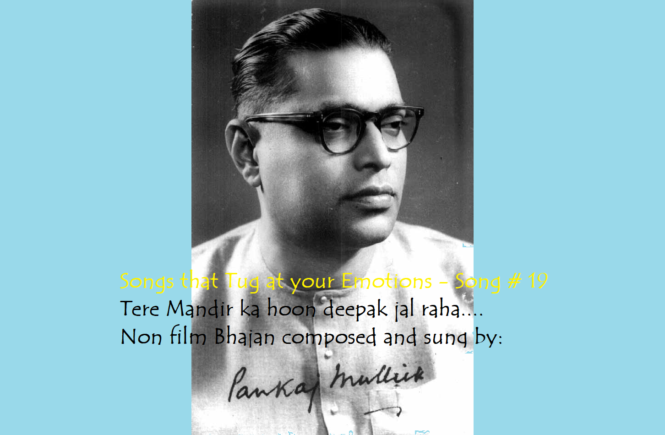
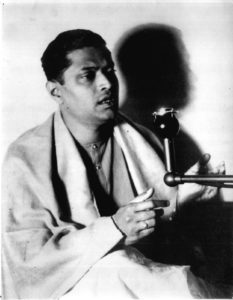 Pankaj Mullick was one of the first few of Indian Cinema personalities who was awarded the highest: the Dadasaheb Phalke Award. As a matter of interest, the award was introduced in 1969 and was won by Devika Rani, the first lady of Indian Cinema. In 1970, it went to Birendranath Sircar (founder of two production companies International Filmcraft and New Theatres) followed by Prithviraj Kapoor in 1971. That makes Pankaj Mulick the fourth ever recipient of this award in 1972.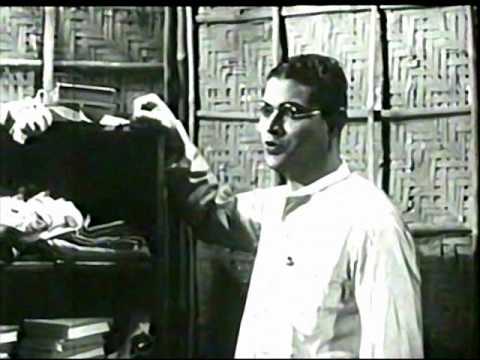
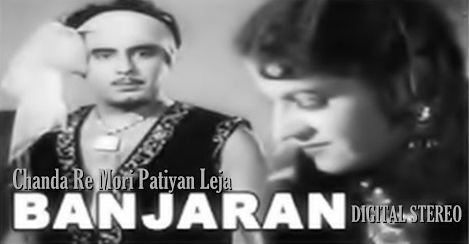
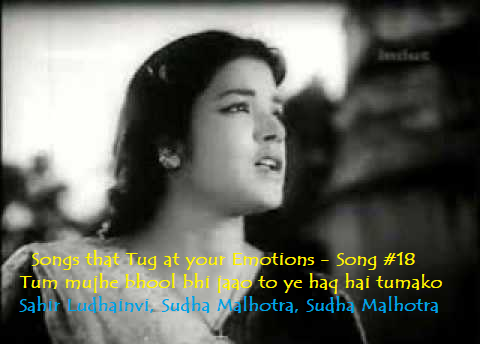
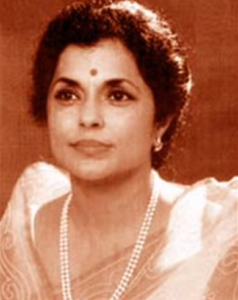
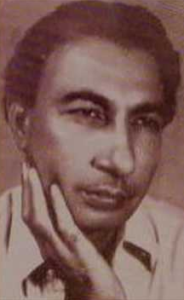 Lets turn to Sahir Ludhianvi, the lyricist of this song. Of course, many of his songs were indicative of the situation between him and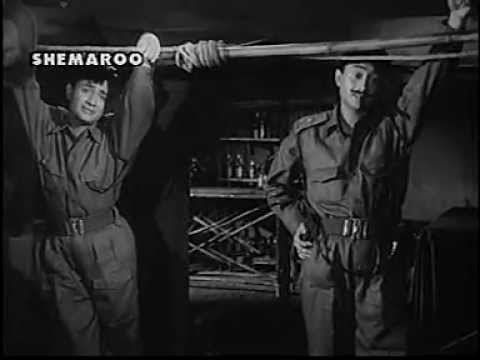
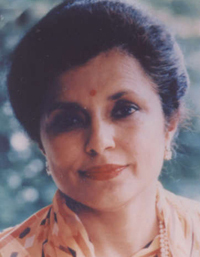 Lets turn to the
 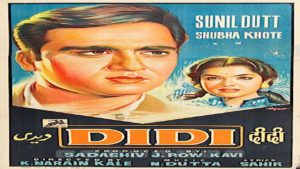 The movie from which the song of this post has been taken is the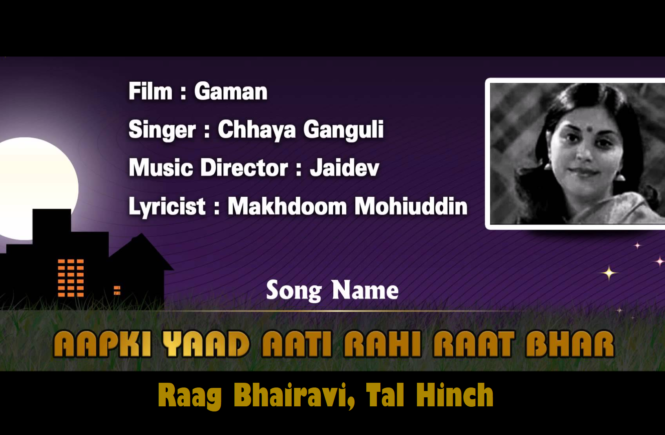
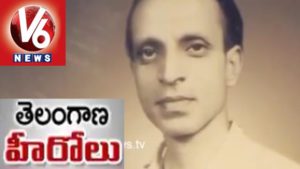 Let me, therefore, start with the poet of this great ghazal. His name was
 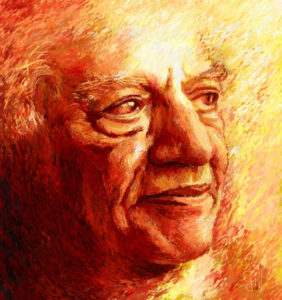 The ghazal, Aap ki yaad aati rahi raat bhar has a history of its own.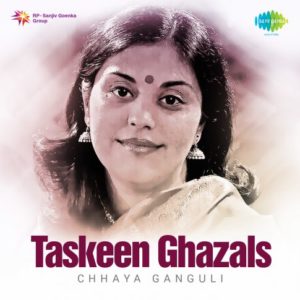
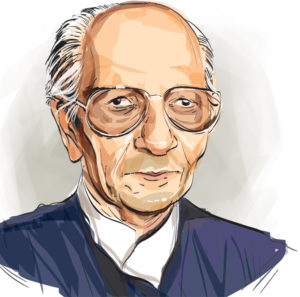 Jaidev Verma
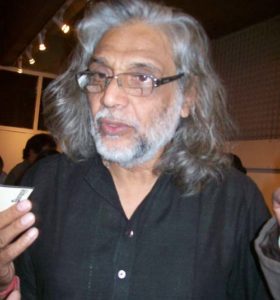
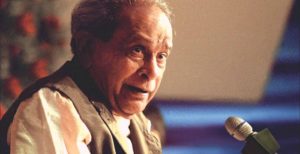
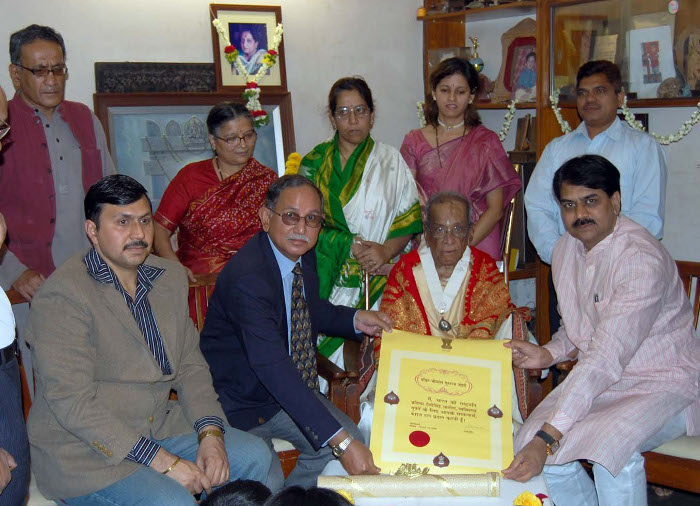
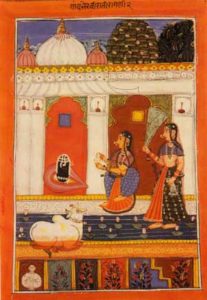
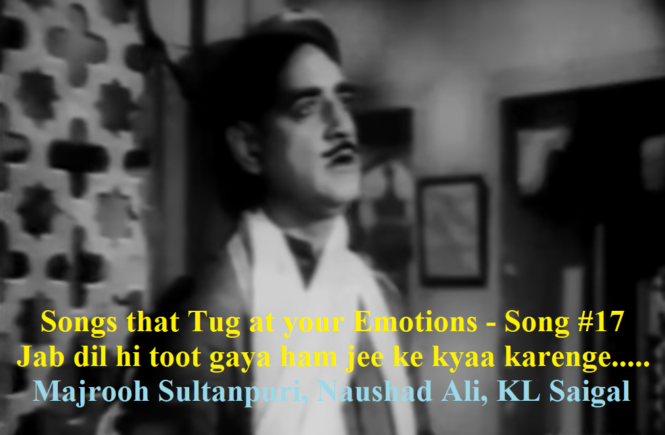
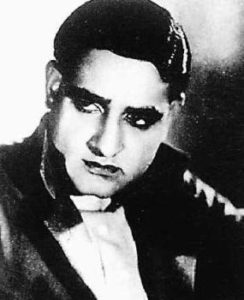 If you ask any person of my era, what is the commonest comment about
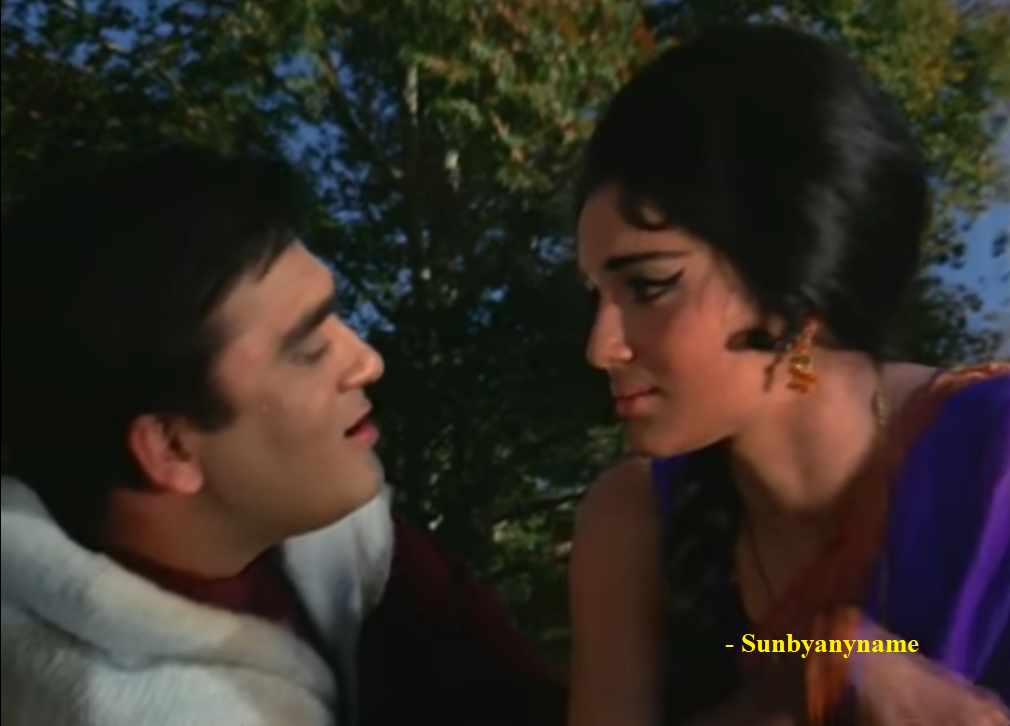
 The movie’s story is a fictionalised account of an episode during the reign of Emperor Shajahan: “Circa the Mugal rule in Hindustan, Shahjahan, the present emperor is approached by one of his subjects, whose daughter, Ruhi, is so beautiful, that her suitors have killed her to-be grooms, as well as two of her brothers, who came to her aid. He now seeks the Emperor’s assistance. Appalled at this, the Emperor confers with his Queen, Mumtaz, and upon her advise asks the father to bring his daughter to be a guest of the palace, and it is from here that a suitor will be chosen by none other than his royal majesty himself. The father does as asked, but one of the Queen’s aide is troubled by Ruhi’s august presence, that she fears that the Emperor may take a liking to her, and make her his begum. She plots a devious scheme so that Ruhi is promised to get married to Shiraz. The matter gets quite complicated as Ruhi has already been promised to Sohail. The Emperor and his Queen are so perturbed by this situation, that both become ill. The situation is resolved when Sohail decides to give Ruhi up so that she can marry Shiraz – but not until Mumtaz tragically passes away. Devastated and heart-broken by her death, Shah Jahan feels that she can be made immortal by the building of a royal tomb, and asks Shiraz to come up with such a Mahal. Watch as events begin to unfold, that will finally give rise to one of the seven wonders of the world – The Taj Mahal.”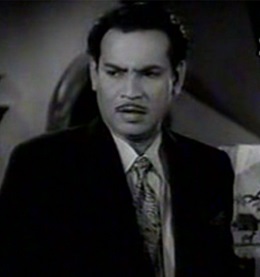
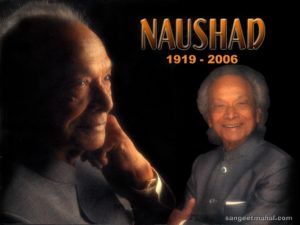 Naushad Ali,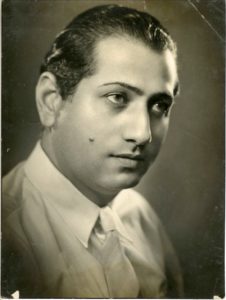

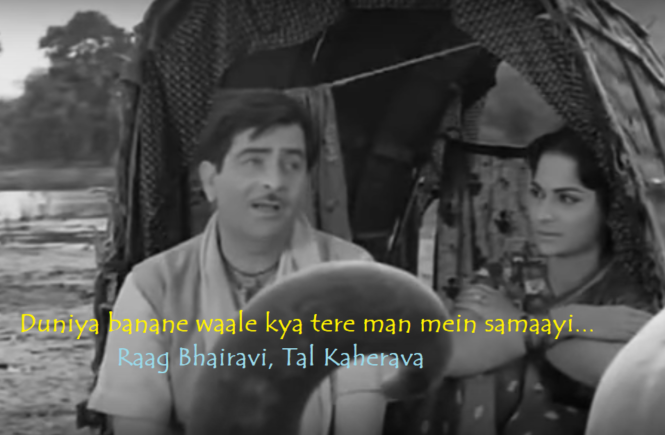
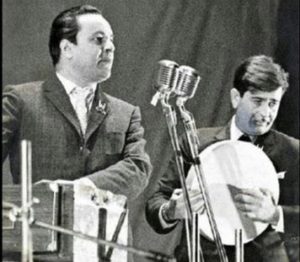
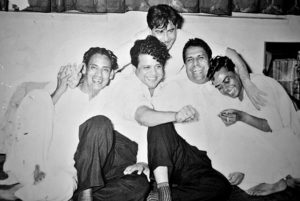
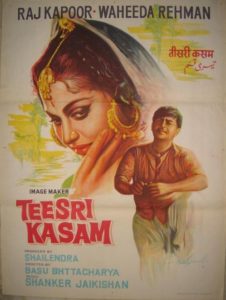 Indeed, this type of deep thinking is true of all songs of the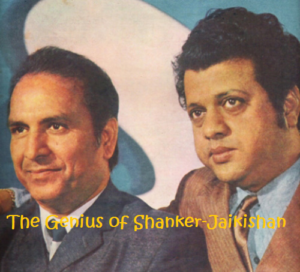
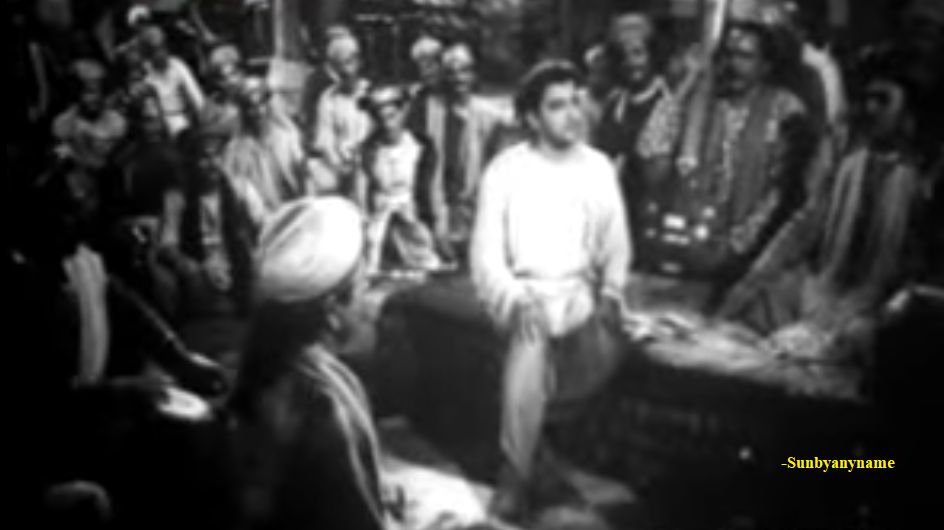
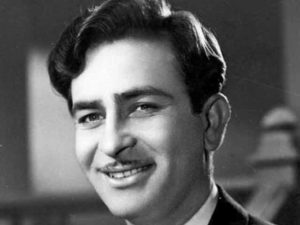
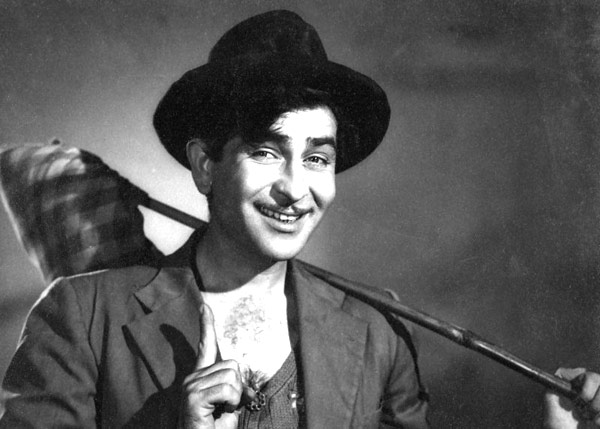
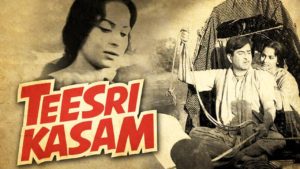 Lets get to the movie: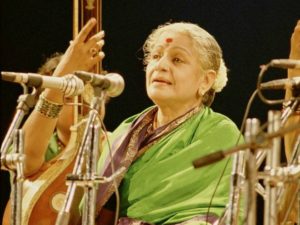
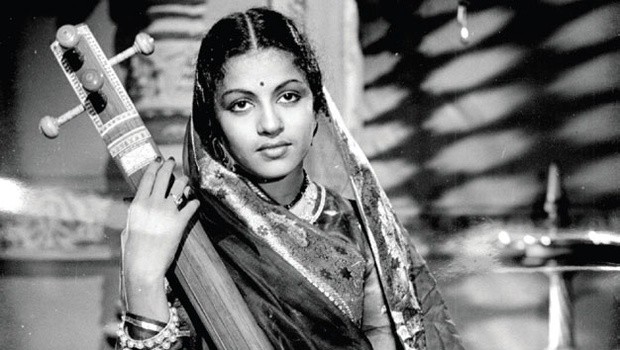

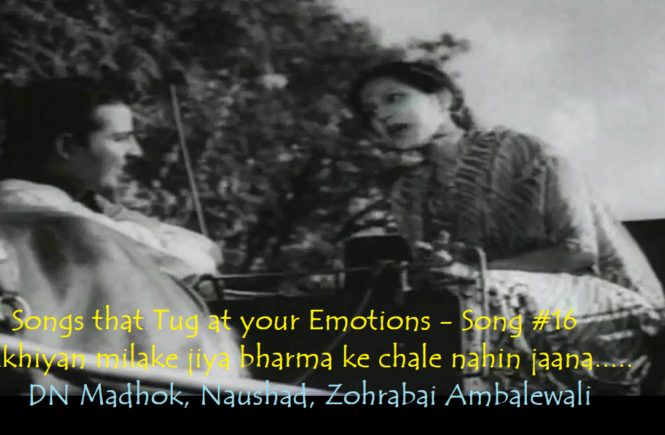
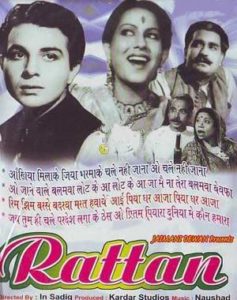
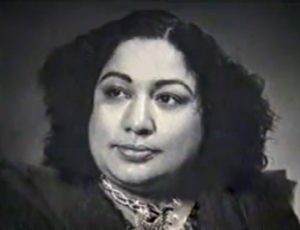
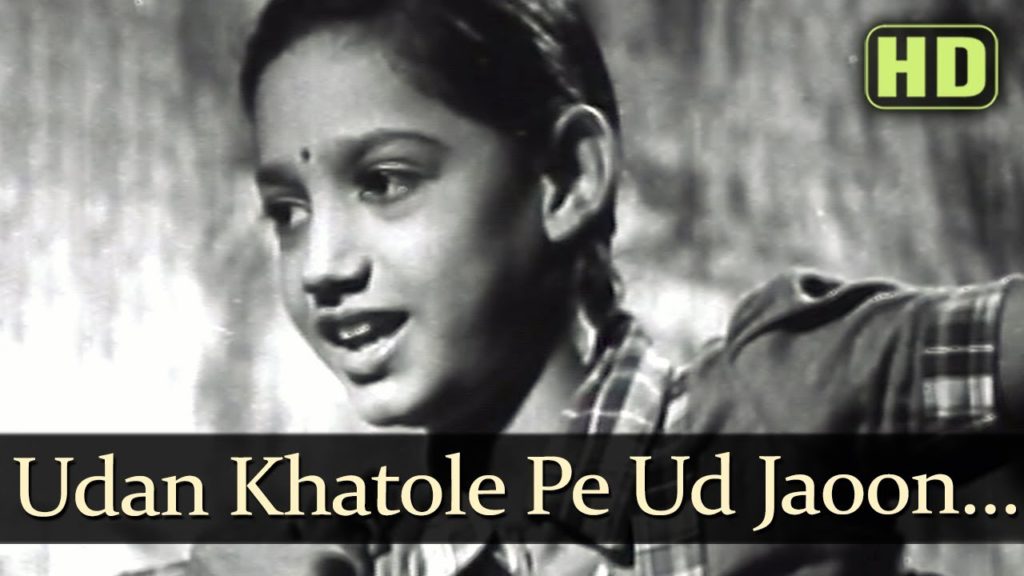
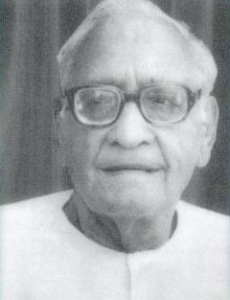 Lets take up the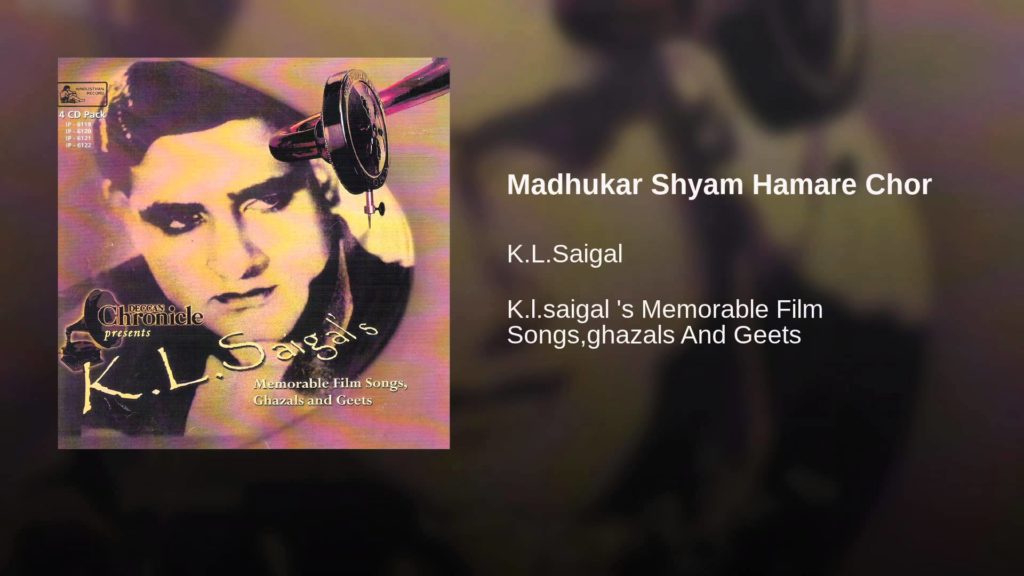
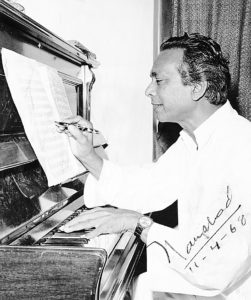

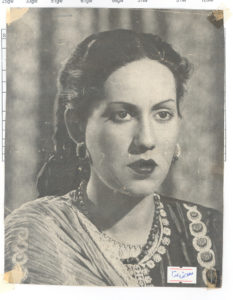
 And finally,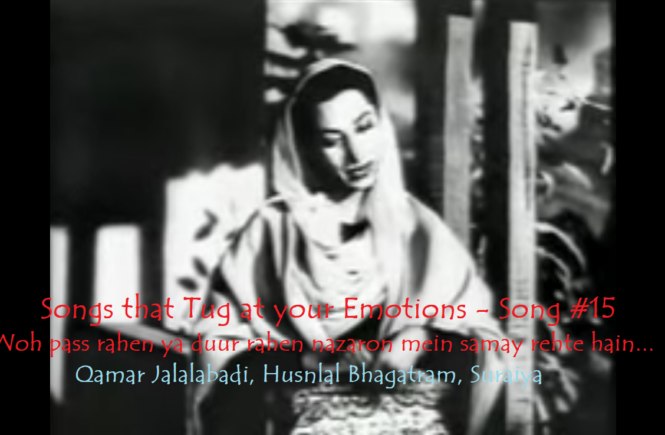
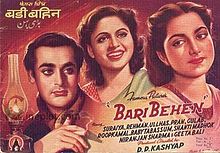
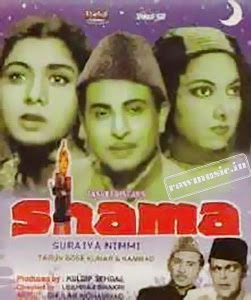 The earlier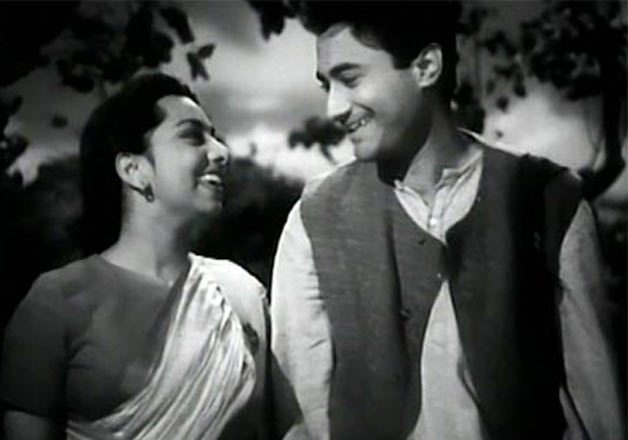
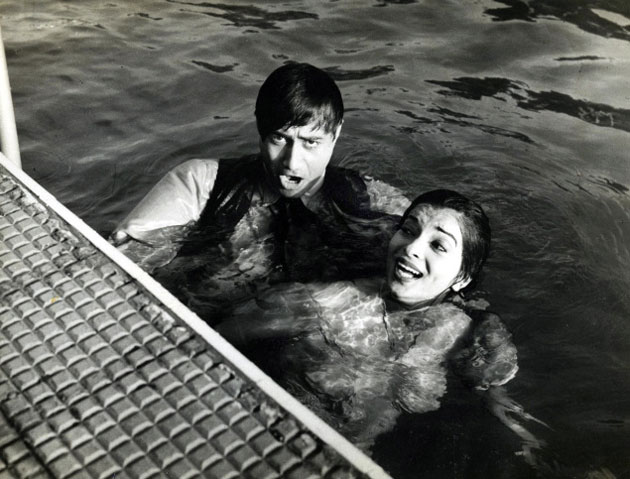
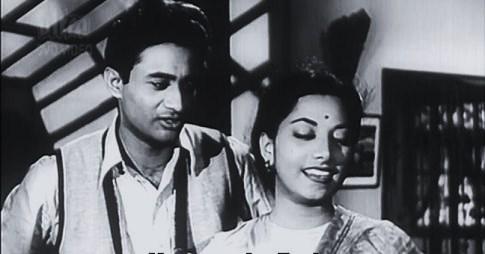
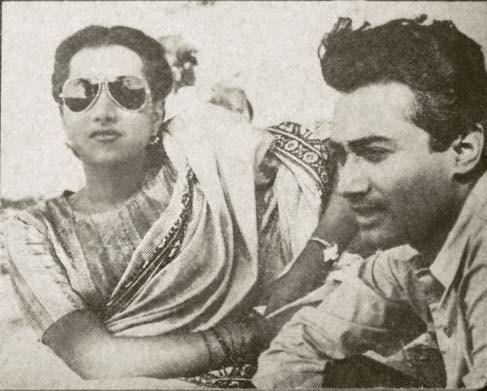
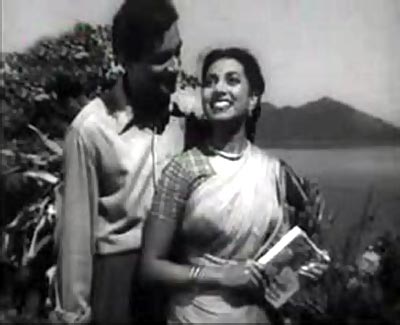
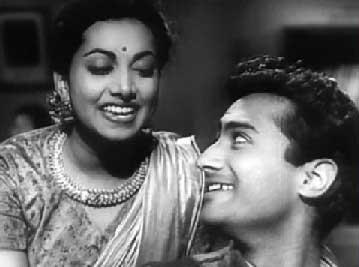
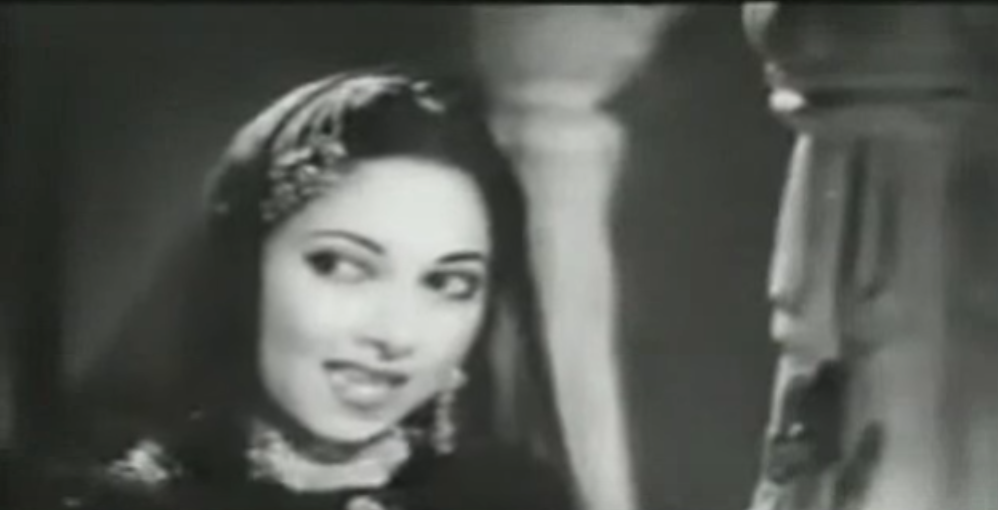
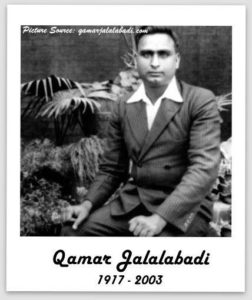 Lets turn to the lyricist
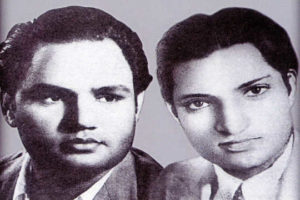
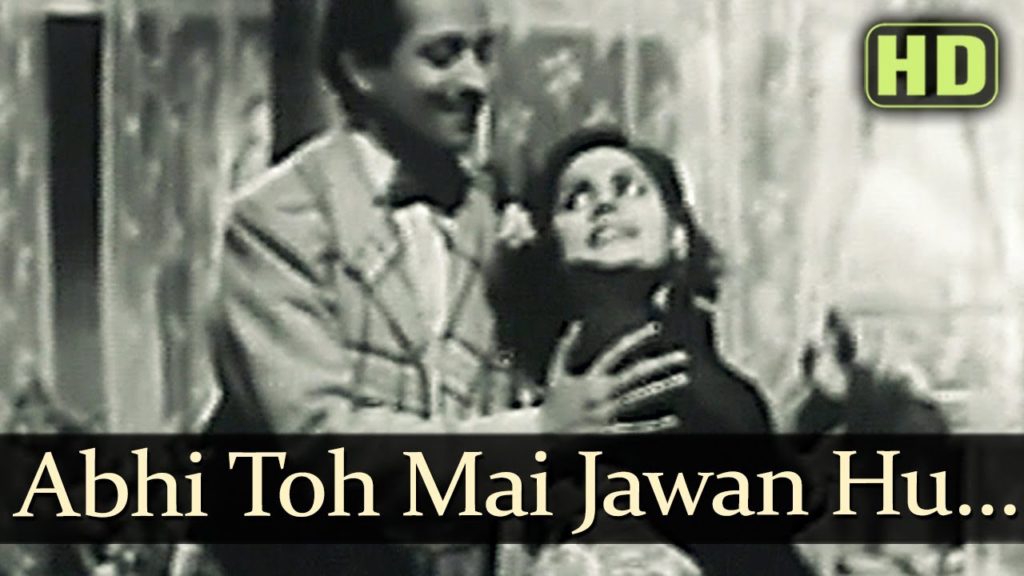
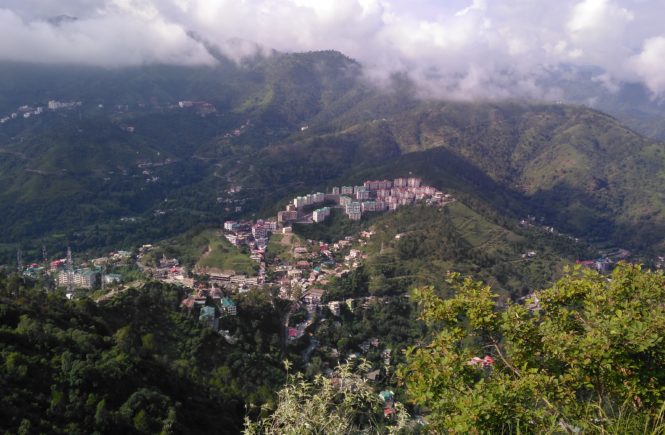

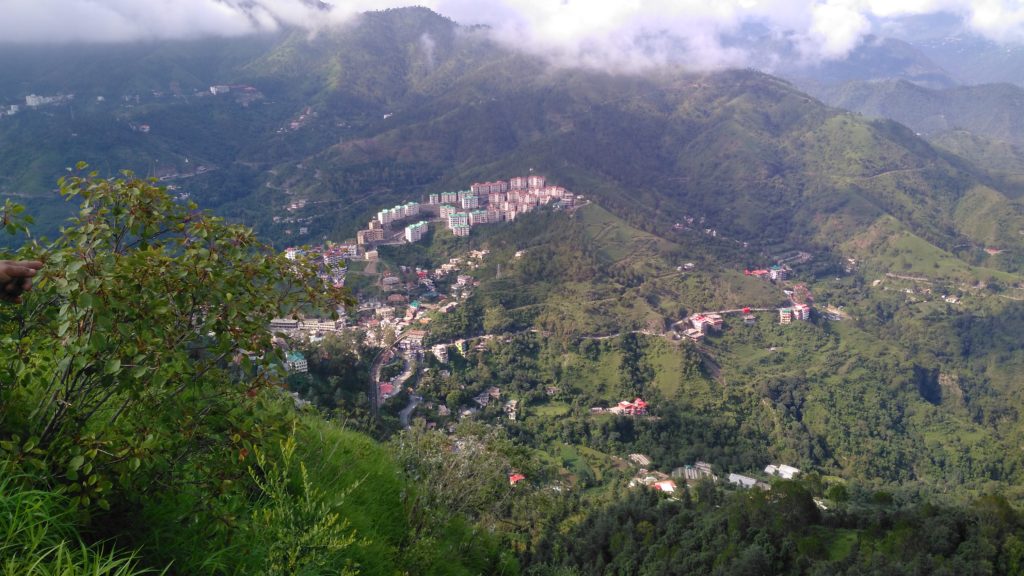
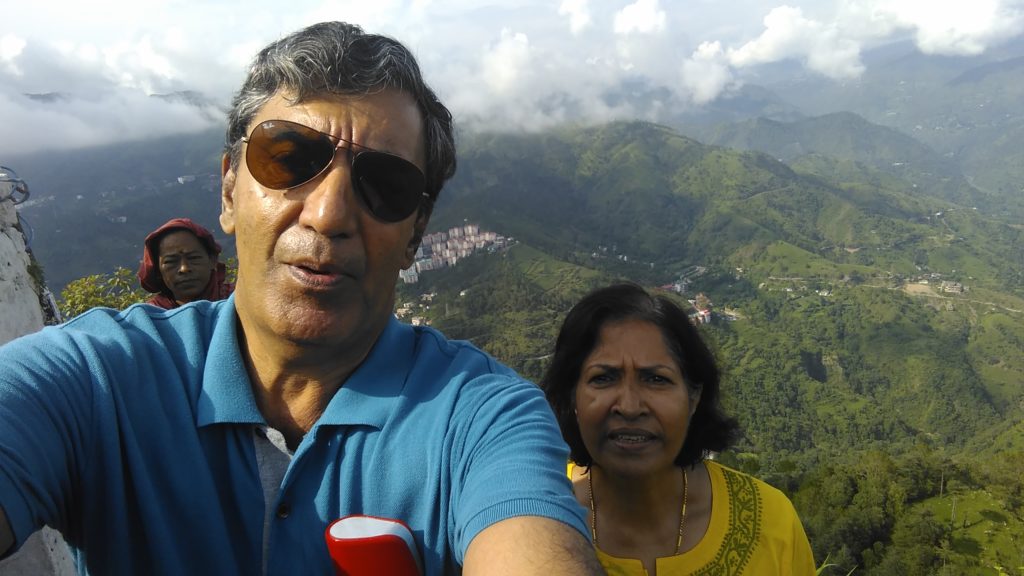
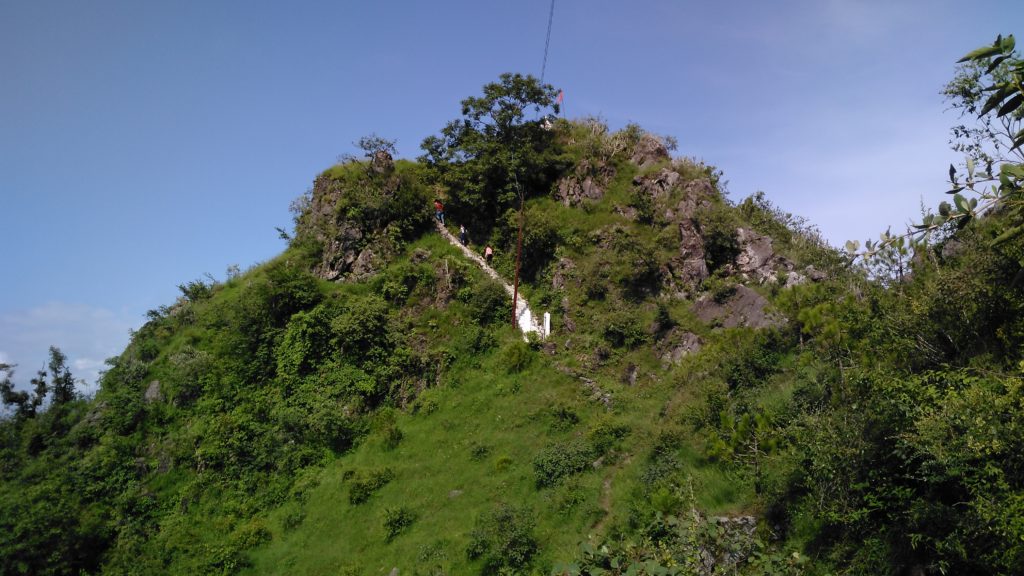
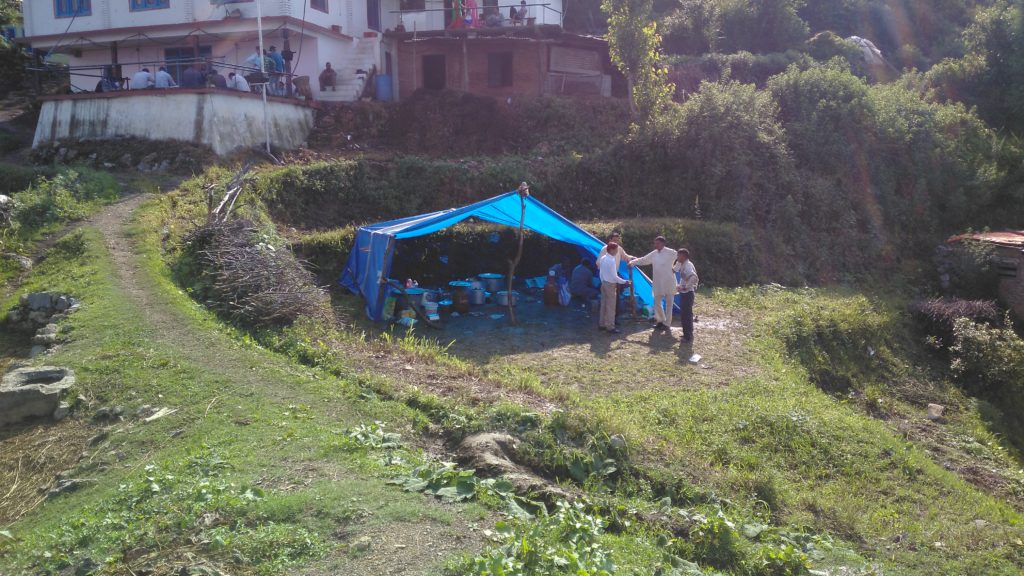
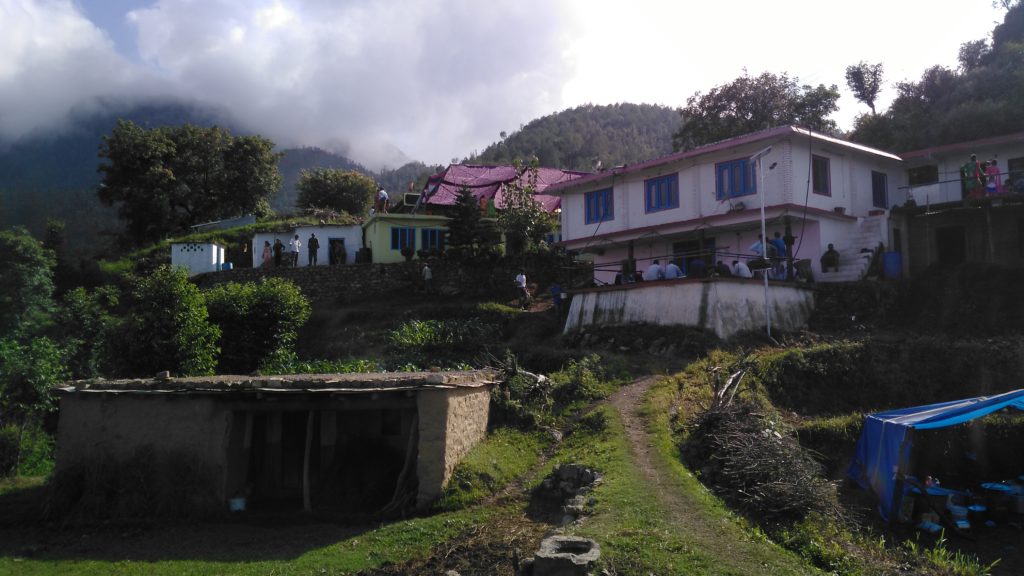
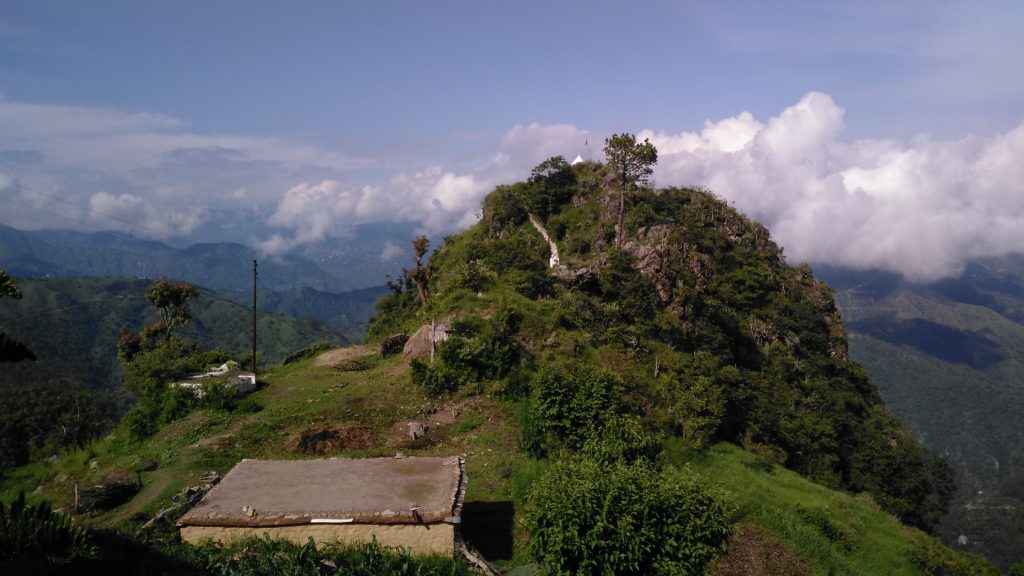
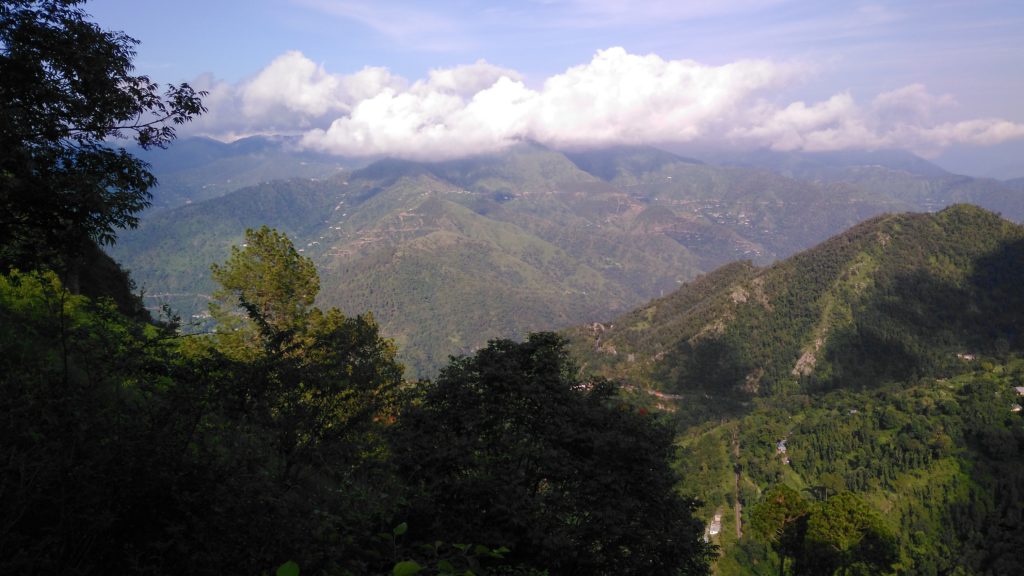
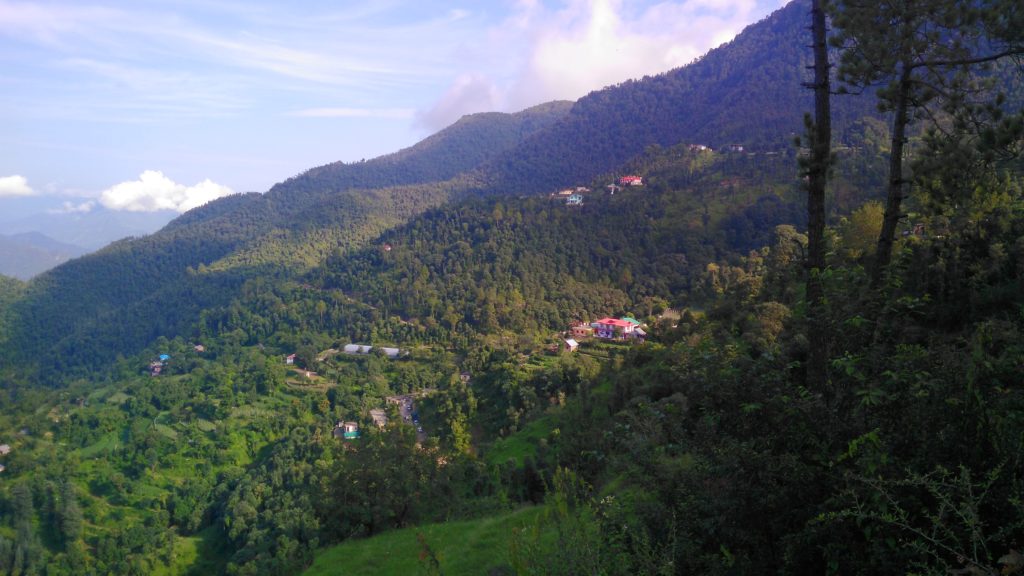
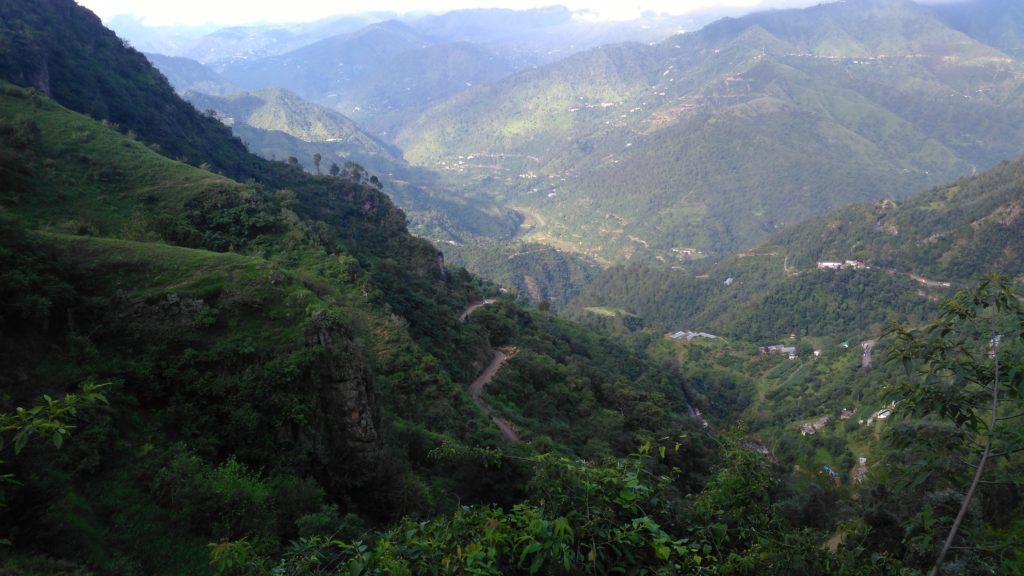
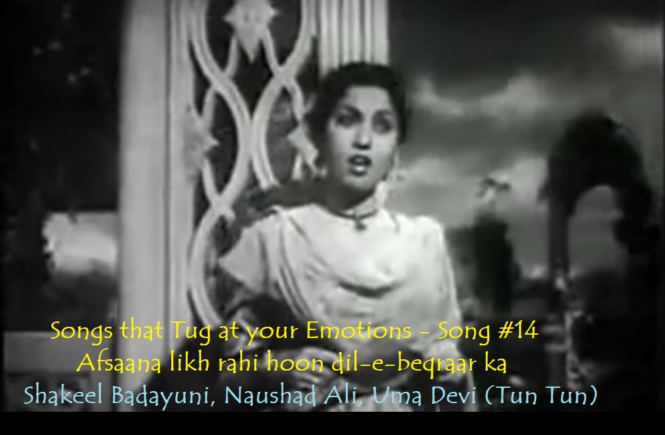
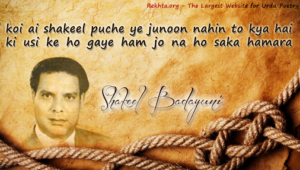 The other contemporary poets and lyricists wrote; but, I feel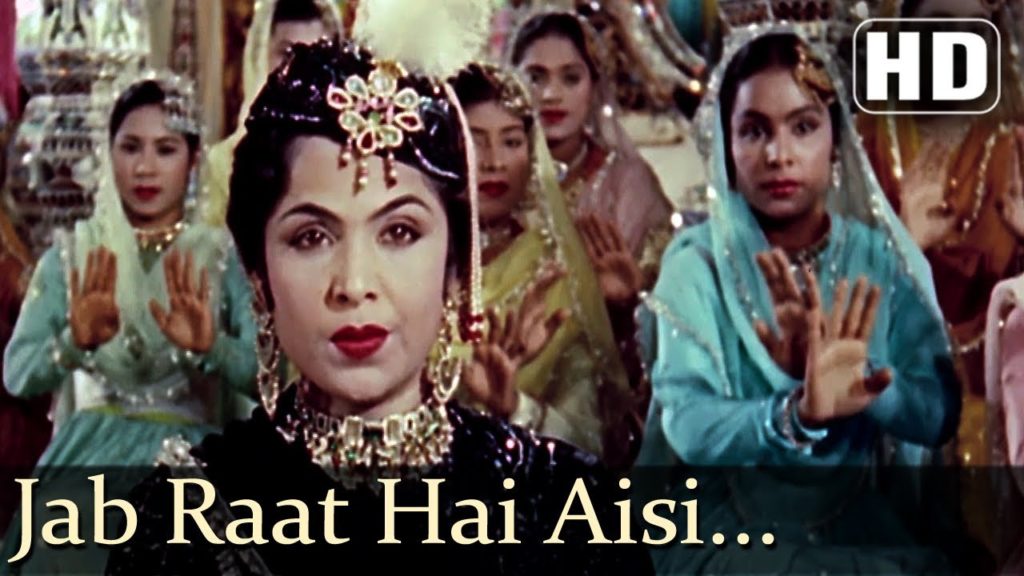
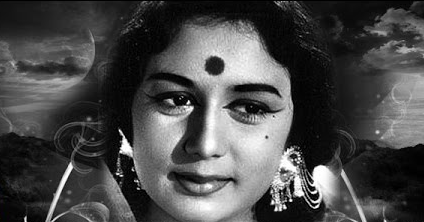
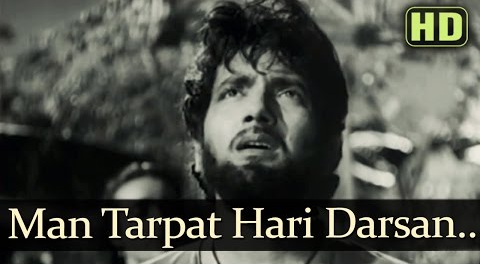
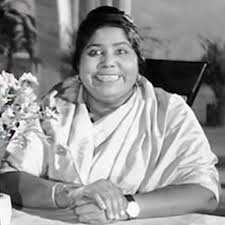 Lets talk a little about the singer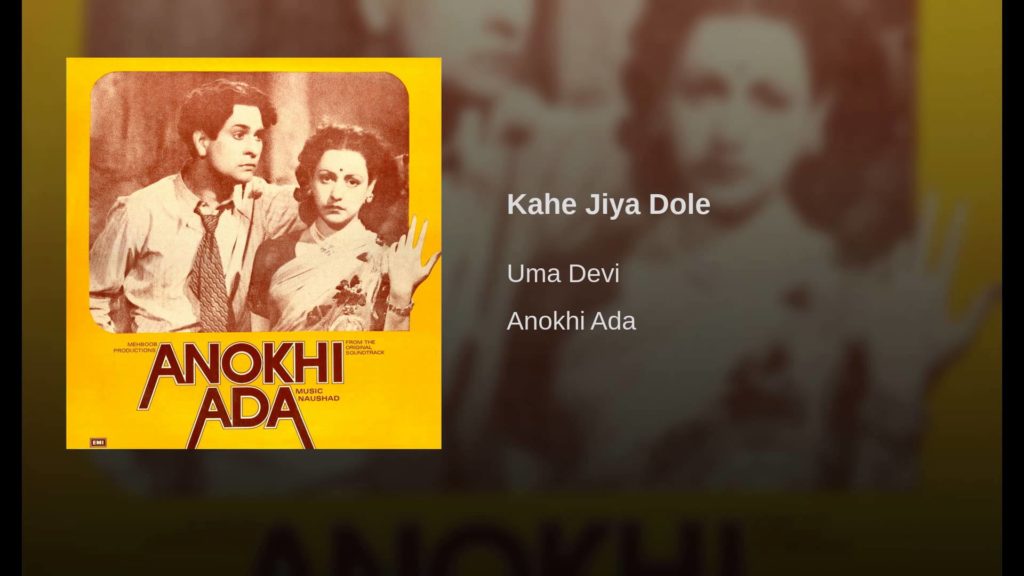
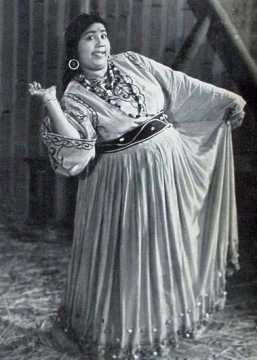
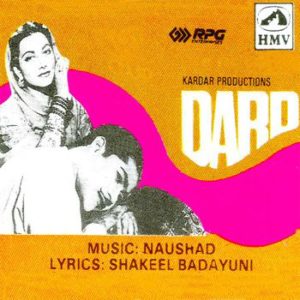 The movie from where I have taken this song is the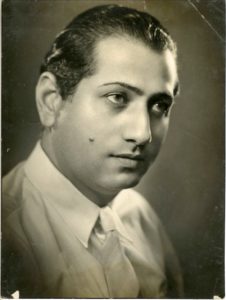
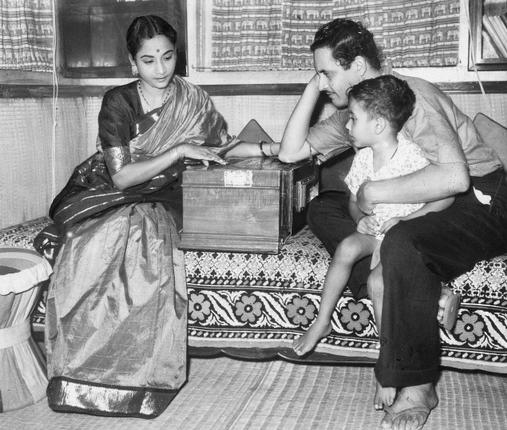
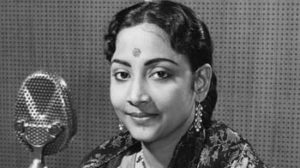
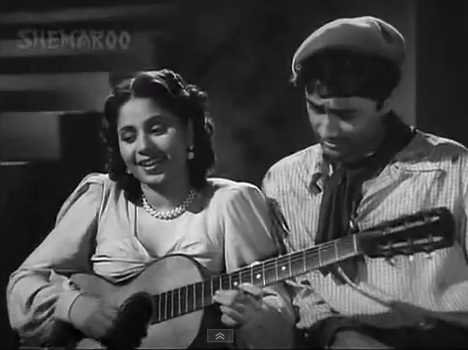
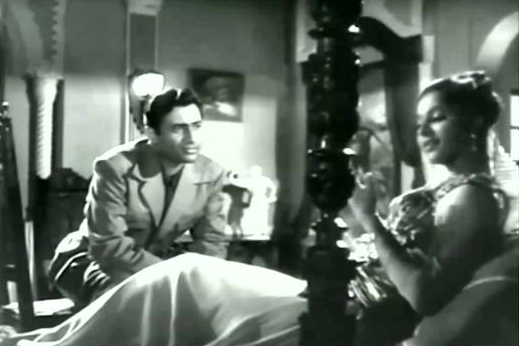
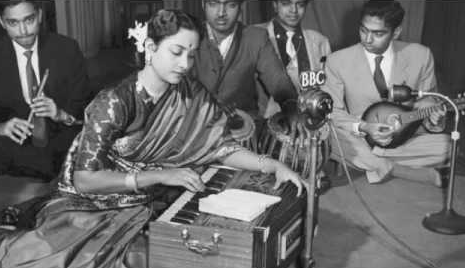
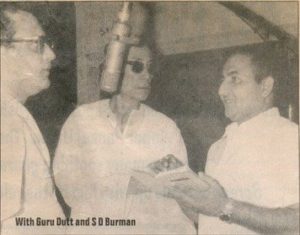 I have already, in my posts, said enough about the composer of this song: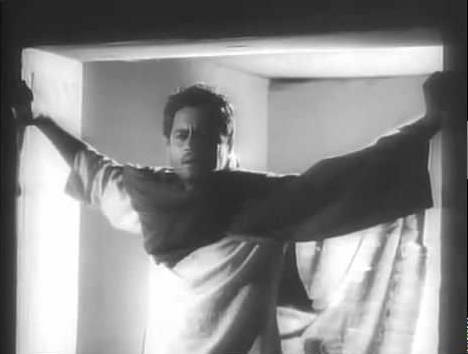
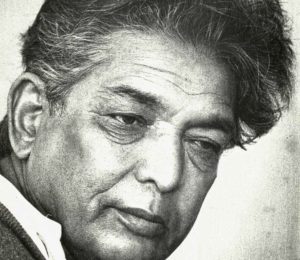 Finally, the lyricist of the song: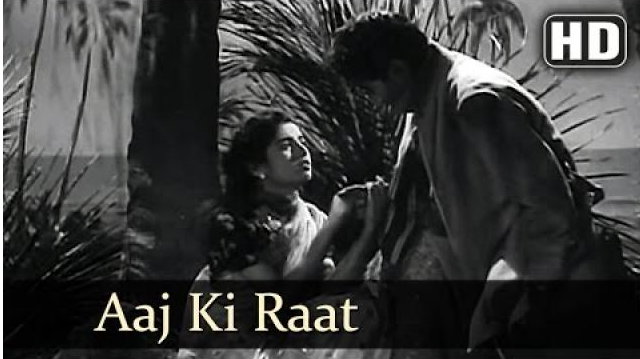
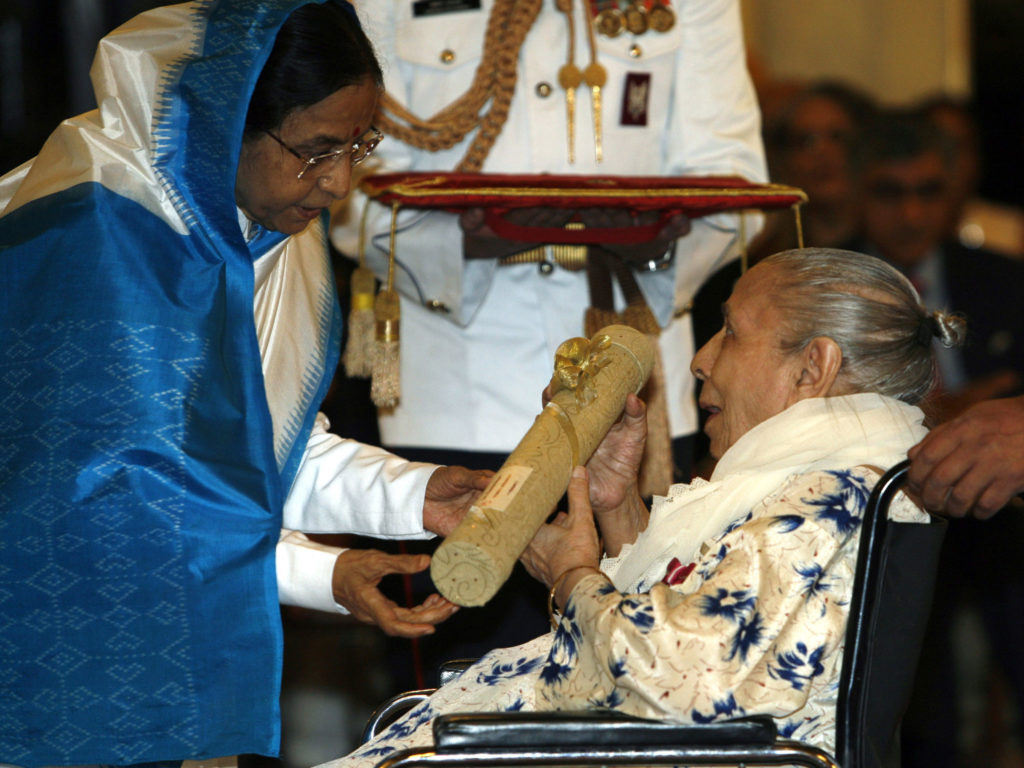
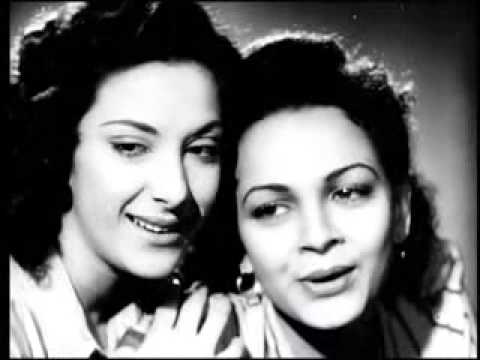
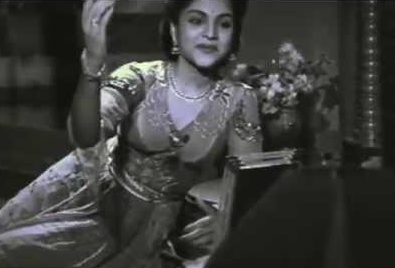
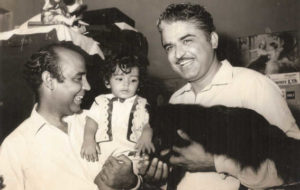
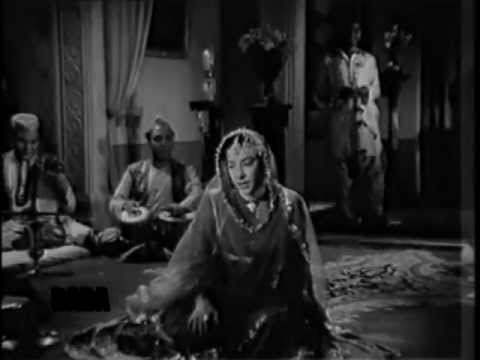
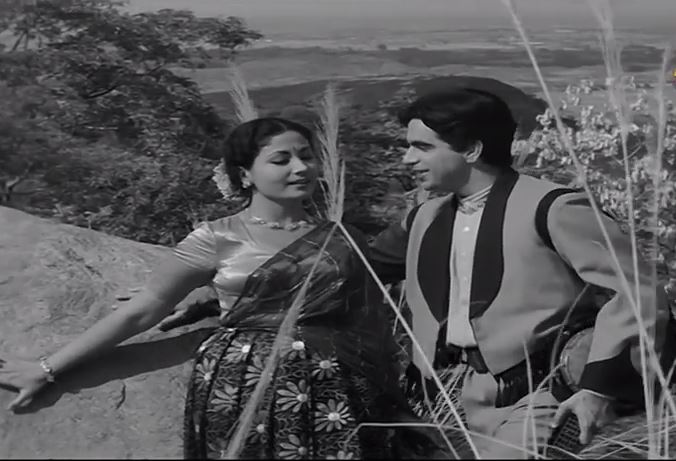
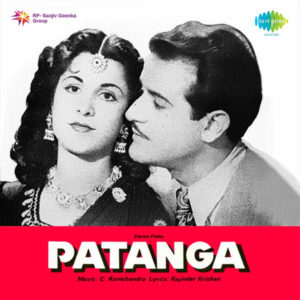 As I said, today’s song is from the 1949 Harnam Singh Rawail movie Patanga starring Nigar Sultana, Shyam, Yakub and Gope. The song is picturised on Nigar Sultana and Gope, sung by Shamshad Begum, on the lyrics of Rajendra Krishan and composition by C Ramchandra.