RRR Songs (Songs of Regret, Repentance and Ruefulness)
I started this new series on 17 Jan 21 on my Facebook Group Yaad Kiya Dil Ne. My efforts failed to involve people in writing their own stuff about songs and music rather than copying and pasting from here and there or worse, just sharing url of songs from YouTube. Hence, I had decided to give the group a burial that it deserved rather than making it like thousands of groups on Facebook about songs with nothing unique about them at all.
I hope you liked RRR Song #2: Koi lauta de mere beete huye din. Here is the next song:
Song #3
Hamsafar saath apna chhod chale
A Duet as RRR Song
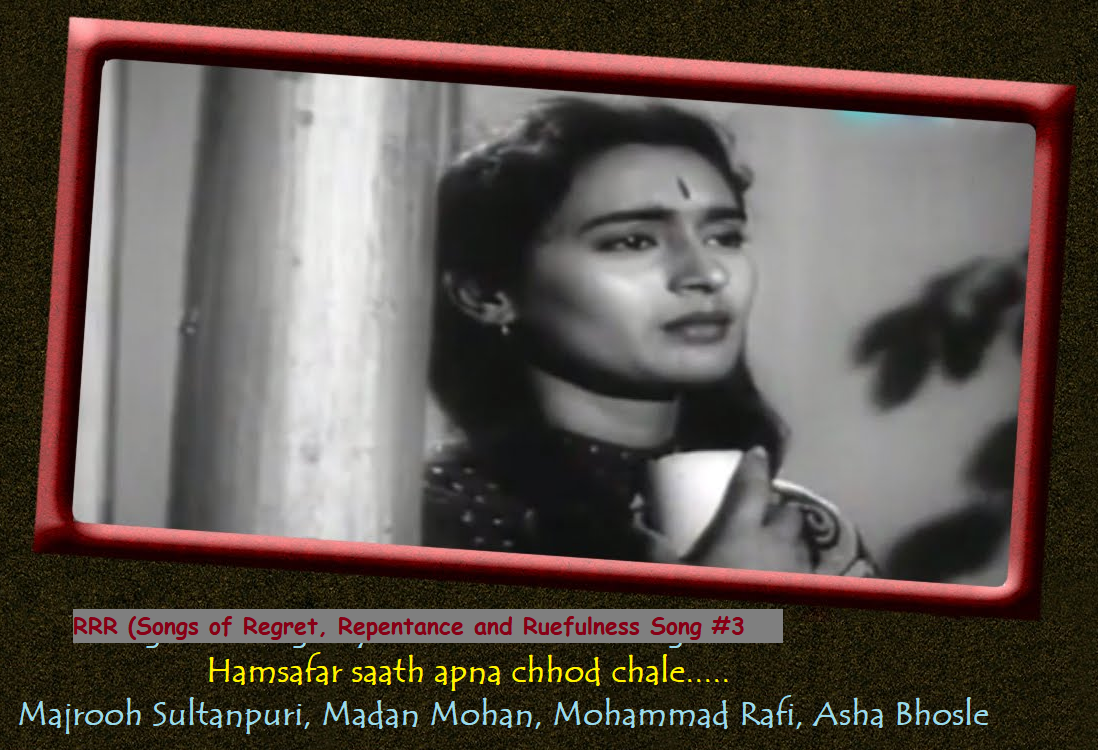
Yes, this a duet between Mohammad Rafi and Asha Bhosle. It is picturised on the lead actors of the 1958 Mahesh Kaul movie Aakhri Dao: Shekhar and Nutan. However, the song only brings out their emotions silently; they don’t lip-sync it.
Who Does the Song Belong to?
Who would the song belong to more than anyone else? I would say the honours are to be divided between the lyricist Majrooh Sultanpuri for coming up with remarkably beautiful words that go straight into your heart; composer Madan Mohan for coming up with a super slow composition in Raag Gara, Tal Dadra, as if he knew that people need to pause and take in the beautiful lyrics; singers Mohammad Rafi and Asha Bhosle who made it look like as if the words don’t come out of the throat but from the heart and finally actress Nutan who came up with better histrionics here than she did in most other similar songs including Anaadi’s Tera jaana. That leaves only Shekhar. But, those who have seen the movie and the song would know that he was actually the weak point.
The Movie
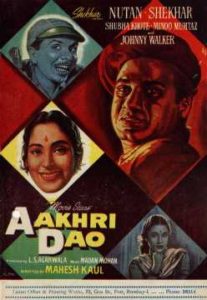 Lets start with the movie itself. Regrettably, some of the movies having exceptionally beautiful songs were not just weak movies but had weak plots too. Aakhri Dao was one of them. The story was about a misunderstanding between the hero (Shekhar as a car mechanic) and the heroine (Nutan; all we know is she goes to a dance class) which makes them each think that the other is rich. They start loving each other but of course there are circumstances and a villain. Nutan’s dad owes some Rs. 5000 to the villain, which Shekhar tries to repay by asking for a loan first, then by gambling and losing it all and then goes on to steal from none other than Nutan’s dad. Of course npone of this works and he finally agrees to marry TunTun for the meagre amount. The song is sung at the betrothal of Shekhar.
There was another great song in the movie: Tujhe kyaa sunaaun main dilruba tere saamne mere haal hai, which Shekhar actually lip syncs to Nutan. Naturally, she looks as stunned as some of Anil Dhawan’s actresses did. Hindi movies actually excelled in some of the worst guys (in acting) singing some of the best songs (you should listen to the songs lip synced by Manoj Kumar to see this phenomenon). The saving grace is that Nutan is there to render respectability to the song in the same manner Sadhana was there for Manoj Kumar in Lag jaa gale se phir yeh haseen raat ho na ho.
Raag Gara, Tal Dadra
I am merely a beginner in the world of Indian classical music and my interest is limited to its effect on Hindi songs. The raaga that I know least about is Raag Gara though it fascinates me no end. It is another thing that the second of my Raaga based songs of the day was composed in Raag Gara, Tal Kaherava: Unake khayaal aaye to aate chale gaye. Raag Gara, of course, boasts of some of the best songs in Hindi movies:
- Mohe panghat pe Nandlal.
- Deewana Kehke Aaj.
- Unke khayal aaye.
- Jab jab tumhein bhulaya.
- Jo guzar rahi hai mujhpe.
- Guzre hain aaj ishq mein.
- Aapki nazaron ne samajha.
- Aise to na dekho.
- Kabhi khud pe.
- Phir woh bhuli si yaad.
Raag Gara belongs to Kafi Thaat. It is traditionally sung in second half of morning although Bhatkhande didn’t specify any time of the day for this Raaga. Gara is one of the family of Raagas derived from folk melodies and entered classical music in concert with Thumri. The closest resemblance of the raag is to Jaijaivanti, a raag devised by Shri Tegh Bahadur, the 9th Guru of the Sikhs.
The Jati of Raag Gara is Shadhav – Sampurna; in Avroha Rishab is Varjya.
Amongst the songs that I gave you above, the songs that come close to this composition by Madan Mohan are: Ravi’s Deewana keh ke aaj mujhe phir pukaariye and Jaidev’s Kabhi khud pe kabhi halaat pe rona aaya; both being in the same Tal Dadra.
Madan Mohan
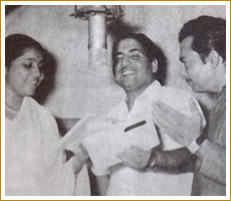 Madan Mohan brought out the best in Lata’s singing. However, surprisingly, in this song, he has Asha Bhosle accompanying Mohammad Rafi in the duet.
Madan Mohan was born on 25 Jun 1924 at Erbil, Iraqi Kurdistan, where his father Rai Bahadur Chunilal was working as an Accountant General with the Kurdistan Peshmerga forces. Madan Mohan spent the early years of his life in the Middle East. After 1932, his family returned to their home town of Chakwal, then in Jhelum district of Punjab, British India. He joined the Army as a Second Lieutenant in the year 1943. He served there for two years until end of World War II, when he left the Army and returned to Bombay to pursue his musical interests. In 1946, he joined the All India Radio, Lucknow as Programme Assistant, where he came in contact with various artists such as Ustad Faiyaz Khan, Ustad Ali Akbar Khan, Begum Akhtar, and Talat Mahmood.
He was very fond of singing, and so in 1947 he got his first chance to record two ghazals penned by Behzad Lucknawi, Aane Laga Hai Koi Nazar Jalwa Gar Mujhe and Is Raaz Ko Duniya Jaanti Hai. Soon after, in 1948 he recorded two more private ghazals penned by Deewan Sharar, Wo Aaye To Mahfil Mein Ithlaate Huye Aaye and Duniya Mujhe Kahti Hai Ke Main Tujhko Bhoolaa Doon. In 1948, he got his first opportunity to sing a film duet Pinjare Mein Bulbul Bole and Mera Chhotasa Dil Dole with Lata Mangeshkar under composer Ghulam Haider (composer) for the film Shaheed (1948 film), though these songs were never released or used in the film. Between 1948 and 1949, he assisted music composers SD Burman for Do Bhai, and Shyam Sundar in Actress and Nirdosh.
As Music Director, he scored his first big break with the film Aankhen (1950 film) in 1950. He was soon to emerge as a music director par excellence especially for ghazals. Indeed, music director OP Nayyar once said about Madan Mohan that two of his ghazals were better than all that OP Nayyar composed. Some of the best songs of Lata Mangeshkar (she fondly called him “Madan Bhaiyya”) were composed by him on the lyrics of Raja Mehdi Ali Khan and Rajinder Krishan.
Some of my favourite songs of Madan Mohan are: Aaj soch to aansu bhar aaye, Betaab dil ki tamanna yehi hai, Tum jo mil gaye ho (Hanste Zakham 1973), Aapke pehlu mein aa ke ro diye, Naino mein badra chhaye, Jhumka gira re, Tu jahan jahan chalega (Mera Saya 1966), Aapki nazaron ne samajha, Hai isi mein pyaar ki aabru, Vo dekho jala ghar kisi ka (Anpadh 1962), Aapko pyaar chhupane ki buri aadat hai, Tere paas aake mera waqt nikal jaata hai (Neela Akash 1965), Agar mujhase mohabbat hai, Main nigaahen tere chehre se hatayun kaise (Aap Ki Parchhayiyan), Ai mere dil mujhe bata de (Bhai Bhai 1946), Ari vo shokh kaliyon muskara dena vo jab aayen (Jab Yaad Kisi Ki Aati Hai 1967), Baad muddat ke yeh ghadi aayi, Haal-e-dil youn unhe sunaya gaya, Jab jab tumhe bhulaya tum aur yaad aaye, Kisi ki yaad mein duniya ko jhain bhulaye huye, Main teri nazar ka saroor hoon, Phir wohi shaam wohi gham wohi tanhaayi hai, Teri aankh ke aansu pi jaayun, Wo chup rahen to mere dil ke daag jalate hain (Jahan Ara 1964), Hamare baad mehfil mein (Baghi 1953), Bainya na dharo O balma, Ham hain mataa-e-kuchcha-e-bazaar ki tarah, Mai ri main kaase kahun, Tumse kahun ik baat (Dastak, 1970), Bairan neend na aaye mohe (Chacha Zindabad 1959), Basti basti parbat parbat gaata jaaye banjara, Chand madham hai aasman chup hai, Dekh tere Bhagwan ki haalat (Railway Platform 1955), Bhooli hui yaado mujhe itna na satayo, Vo bhooli dastaan lo phir yaad aa gayi (Sanjog 1961), Chanda ja re ja re, Main to tum sang nain mila ke (Manmauji 1962), Chhadi re chhadi kaise gale mein padhi, Dil dhoondata hai fursat ke, Ruke ruke se kadam (Mausam 1975), Chhod kar tere pyar ka daaman, Jao hamane dastaan apni sunaayi, Lag jaa gale ke phir, Naina barse rimjhim rimjhim, Shokh nazar ki bijliyan (Woh Kaun Thi 1964), Do dil toote do dil haare, Doli chadate hi Heer ne bain kiye, Milo na tum to ham ghabraayen, Ye duniya ye mehfil mere kaam ki nahin (Heer Ranjha 1970), Ham chal rahe the wo chal rahe the (Duniya Na Maane 1959), Ham pyar mein jalane waalo ko chain kahan (Jailor 1958), Hamsafar saath apna chhod chale, Tujhe kya sunayun main dilruba (Aakhri Dao 1958), Hamse aaya na gaya, Kaun aay mere man ke dwaare, Meri veena tum bin roye, Tu pyar kare ya thukraye (Dekh Kabira Roya 1957), Har taraf ab yahi afsaane hain, Hai tere saath meri wafa main nahin to kya (Hindustan Ki Kasam 1973), Hoke majbuur mujhe usne bhualaya hoga, Kar chale ham fida, Khelo na mere dil se, Main ye soch kar uske dar se, Zara si aahat hoti hai (Haqeeqat 1964), Husn haazir hai mohabbat ki saza paane ko, Is reshmi paazeb ki jhankar ke sadake, Tere dar pe aaya hoon (Laila Majnu 1976), Ik haseen raat ko dil mera kho gaya, Kabhi ai haqeeqat-e-muntazar, Sapano mein agar mere (Dulhan Ek Raat Ki 1966), Ishq ki garmi-e-jazbaat kise pesh karun. Mere mehboob kahin aur mila kar mujhase, Naghma o sher ki saugat, Rang aur noor ki baraat (Ghazal 1964), Jaa jaa re jaa saajna, Jaana tha hamse door, Unako ye shikayat hai, Youn hasaraton ke daag (Adalat 1958), Kabhi na kabhi kahin na kahin koi na koi to aayega, Mujhe le chalo aaj us jagah, Sawan ke mahine mein (Sharaabi 1964), Koi shikwa bhi nahin koi shikayat bhi nahin (Neend Hamari Khwab Tumhaare 1966), Main paagal mera manwa paagal (Aashiyana 1952), Meri yaad mein tum na aasnu bahana (Madhosh 1951), Na tum bewafa ho na ham bewafa hain (Ek Kali Muskaaye 1958), Sapne mein sajan se do baaten, Do ghadi wo jo paas aa baithe (Gateway Of India 1957), Teri aankhon ke siwa duniya mein rakha kya hai (Chirag 1969), Tumhari zulf ke saaye mein shaam kar loonga (Naunihaal 1967), Tu mere saamne hai teri zulfen hain khuli (Suhagan, 1964), and Vo jo milate the kabhi hamsase deewano ki tarah (Akeli Mat Jaiyo 1963).
Majrooh Sultanpuri
On my Facebook page Lyrical, I covered Lyricist #5: Majrooh Sultanpuri under my Remembering Great Lyricists series. I have kept my favourite Shakeel Badayuni out of this series since I already have a number of articles and tributes on him.
Majrooh is the fifth of our lyricists who was a contemporary of Shakeel Badayuni. Out of all these six (*including Shakeel), three have been from Uttar Pradesh, which says something about that region producing some great poets and lyricists.
Majrooh Sultanpuri was born on 01 Oct 1919 as Asrar ul Hassan Khan in a Tarin Pashtun family, in Sultanpur, Uttar Pradesh. His father was an officer in the police department, but, preferred to send his son for traditional madrasa (Urdu school) rather than provide him with English schooling.
He tried his hand at being a quack until he was noticed in a mushaira in Sultanpur.
He was a disciple of the great Urdu poet Jigar Moradabadi. When he visited Bombay in 1945 to participate in a mushaira, the director Abdul Rashid Kardar noticed him and invited him to write for the movies. Majrooh turned it down as he looked down upon movies! He was persuaded through his mentor Jigar Moradabadi and then there was no turning back.
Many traditionalists of the Urdu literature, however, felt that Majrooh sold his soul to the Hindi films and that he could have emerged a great poet in the likeness of Ghalib and Jigar.
The takhalus Majrooh means “injured” or “wounded”.
Majrooh was awarded, in 1993, the highest award – Dadasaheb Phalke award – for his lifetime contribution towards lyrics and poetry. He was the first lyricist ever to be given that award. For the film Dosti, that made Laxmikant Pyarelal famous, he was awarded the Filmfare Best Lyricist Award for the song: Chahunga main tujhe saanjh savere.
For someone who didn’t want to join Hindi movies, Majrooh emerged as a natural lyricist, very popular, very romantic and enchanting.
Many of Majrooh’s songs are of Dil vil pyaar vyaar main kyaa jaanu, Baahon mein chale aao, Bangle ke peechhe, Ye raaten ye amusam nadi ka kinaara, and Dekho mausam kyaa bahaar hai. However, some of his lyrics are still comparable to Shakeel’s such as Hui shaam unaka khayaal aa gaya, Woh jo milate the kabhi, Rahe na rahe ham, Chhupa lo youn dil mein pyaar mera, Tu kahe agar jeevan bhar main geet sunaata jaayun, Mujhe dard-e-dil ka pata na tha, Hamaare baad ab mehfil mein afsaane bayaan honge, and the great song on eyes: Teri aankhon ke siwa duniya mein rakha kyaa hai.
My Own Poetry
NA KHELO MERE DIL SE
ना खेलो मेरे अरमानो से, मेरे जज़्बातों से,
मेरे उदास दिनों से, मेरी सुनसान सियाह रातों से,
मुझे आदत सी पड़ गयी है रूखेपन की,
ना उलझायो मुझे प्यारी और मदहोश बातों से।
कुछ नहीं होगा, रहने दो मुझे तन्हा ओ बेज़ार,
ना ललचाओ माज़ी की सुहानी मुलाकातों से।
ज़िन्दगी सेहरा बन गयी है, और तुम अभी भी,
दिल की धरती सींच रहे हो कल की बरसातों से
मेरा कोई दोस्त, हमसफर, महबूब नहीं है,
ना बांधो मुझे झूठे रिश्तों से, फरेबी नातों से।
गमों के, अश्क़ों के, तनहाईयों के ख़ज़ाने दिए बेहद,
अब और ना बहलाओ वादा – ए – सौगातों से।
ज़मीन से आसमान, आसमानो से ज़मीन पे पटका यकायक,
हैरान रह गया हूँ तुम्हारी जादूगरी करामातों से।
हर सितम सहते रहे, तेरी बेवफाई का सनम,
आह भी ना निकली तेरा नाम गुनगुनातों से ।
The Song
Ladies and gentlemen, please enjoy Mohammad Rafi and Asha Bhosle sing a composition of Madan Mohan in Raag Gara Tal Dadra on the lyrics of Majrooh Sultanpuri a song from the 1958 Mahesh Kaul movie Aakhri Dao: Hamsafar saath apna chhod chale….
र : हमसफ़र साथ अपना छोड़ चले
रिश्ते नाते वो सारे तोड़ चले
हमसफ़र साथ …
आ : हमसफ़र साथ अपना छोड़ चले
रिश्ते नाते वो सारे तोड़ चले
हमसफ़र साथ …
र : रासता साफ़ था तो चलते रहे
साथ हँसते रहे मचलते रहे
मोड़ आय तो मूँह को मोड़ चले
हमसफ़र साथ …
आ : सपने टूटे पड़े हैं राहों में
दर्द की धूल है निगाहों में
दिल पे क़दमों के नक़्श छोड़ चले
हमसफ़र साथ …
र : जब उन्हें हमसे प्यार ही न रहा
रोयें क्या, इन्तज़ार भी न रहा
हम भी दामन को अब निचोड़ चले (that’s why the group is closing)
हमसफ़र साथ …
I hope you liked Song #3 in this series.
Please await Song #4: Kabhi kisi ko mukammal jahan nahin milta.
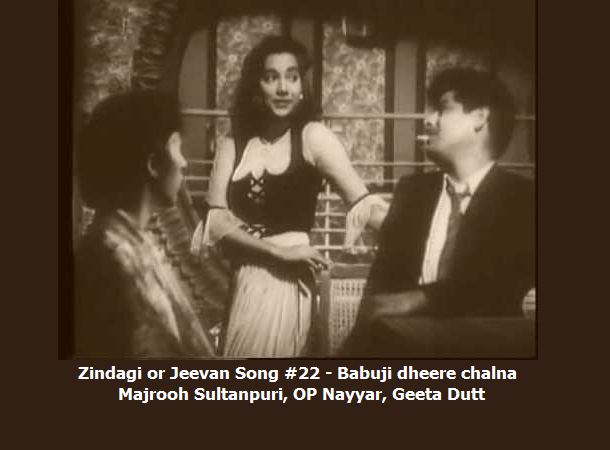
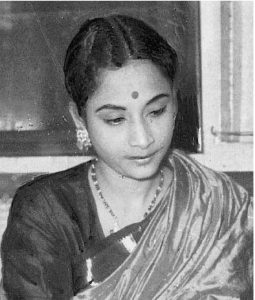 She was born on this day in 1930 as Geeta Ghosh Roy Chowdhury. Though it was K Hanuman Prasad who took her under his patronage, trained her and made her sing in his 1946 movie Bhakta Prahalad, she got her biggest break with SD Burman in Do Bhai, the same year. All the songs were penned by Raja Mehdi Ali Khan who was not yet 17 years old at that time. SD Burman, to an untrained, rank outsider gave as many as six songs to sing including Mera sundar sapna beet gaya and Yaad karoge ek din hum ko yaad karoge.
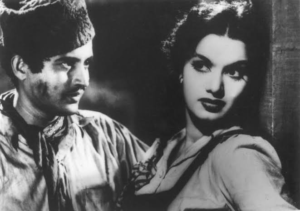 She married Guru Dutt on 26 May 1953 and this movie, directed by her husband, was released on 09 Jul 1954. It starred Guru Dutt, Shyama, Johnny Walker (a must in all Guru Dutt movies) and Shakila (on whom in a tavern this song was picturised).
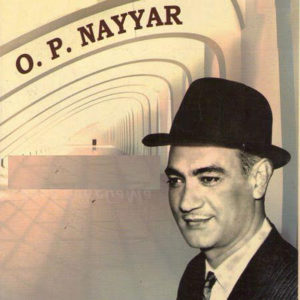 Majrooh Sultanpuri penned the lyrics and, as I said, OP Nayyar composed them: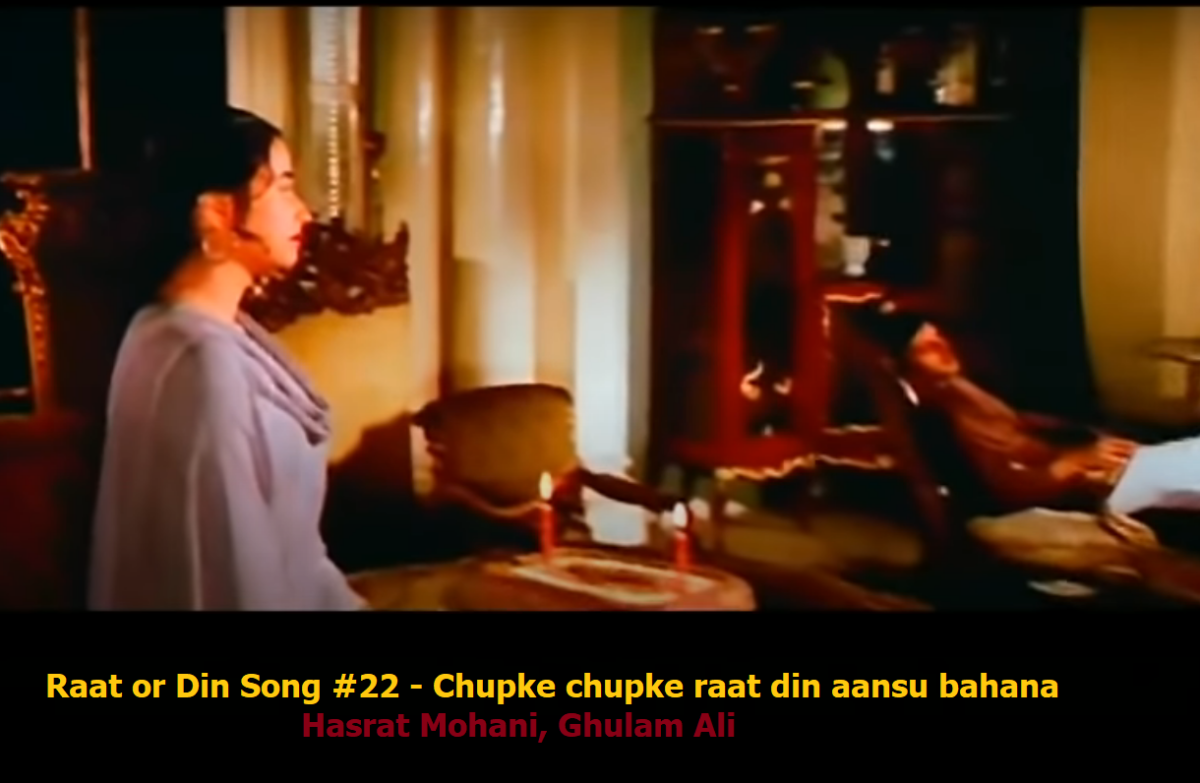
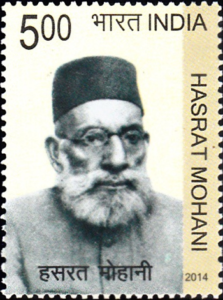 He might not have been as popular in Hindi movies as the other Hasrat – the one from Jaipur in Rajastan. This Hasrat, as the name suggests, was from the town of Mohan in Unnao district in North West Province, now in Pakistan.
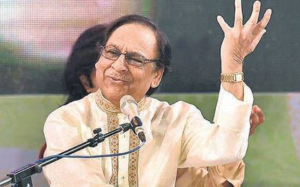 Ghulam Ali, a disciple of Ustad Bade Ghulam Ali Khan, is a Pakistani singer of Patiala Gharana. His ghazals, especially written by Indian poets, have been very popular in the sub-coninent. This is a favourite with me and so is Hungama kyun barpa thodi si jo pi hai penned by Akbar Allahabadi.
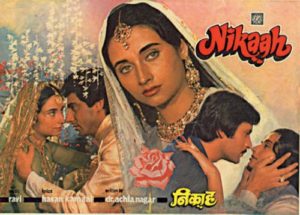 Salma Agha (she won the best female singer for the ghazal Dil ke armaan aansuyon mein beh gaye in the same movie) was married to Wasim (Deepak Prashar) after an affair with Haider (Raj Babbar).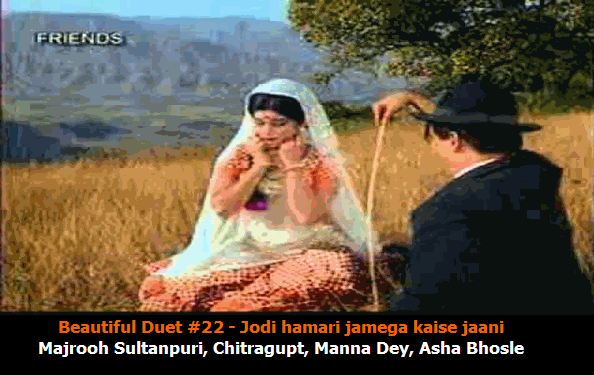
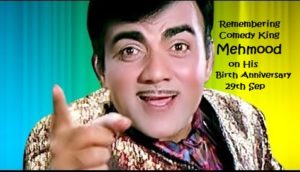 He was born on this day in 1932.
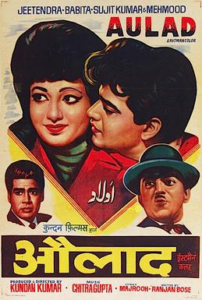 This song is from Kundan Kumar’s 1968 movie Aulad starring Jeetendra and Babita and Mehmood and Aruna Irani.
 Of course, Manna Dey sang for Mehmood in his put up Anglicised role and Asha Bhosle for typical village belle Aruna Irani. The song was shot in Goa that got its name from Go or Cow but loves to be seen in borrowed Portuguese culture.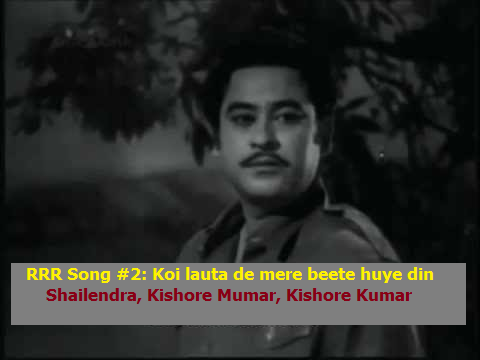
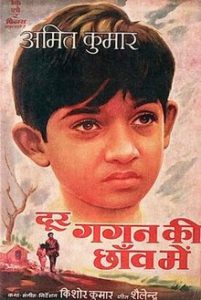 I take the help of this song penned by Shailendra and composed and sung by Kishore Kumar in the 1964 movie Door Gagan Ki Chhaon Mein that was written, produced and directed by Kishore Kumar:
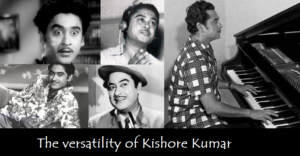 He could truly be called an One Man Army or One Man Industry. Take the movies that he made: this and Door Ka Rahi. Instead of trying to make them as commercial successes, he preferred to make them as reflection of his inner self, his quest for an eternal world.
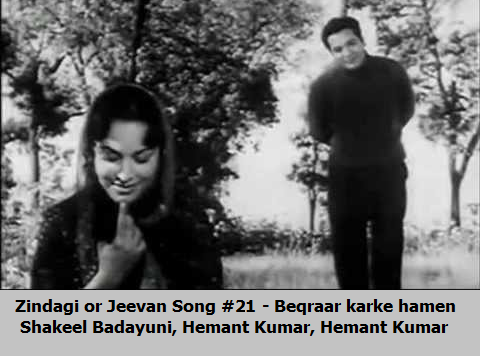
 No matter who and where you are; you do deserve a song by Shakeel Badayuni, every now and then. And this is from the 1962 Biren Nag Film Bees Saal Baad for whose song Kahin deep jale kahin dil Shakeel received his third (of the only hat-trick in Hindi movies) Filmfare Award for Best Lyricist and Lata Mangeshkar received Best Playback Singer (Female) Award.
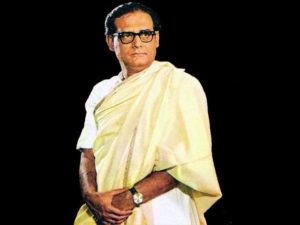 Hemant Kumar was one singer who would at the fastest transport you to the world of the lyrics of the song. So, if he sang Sahir’s Pedon ki shaakhon pe soyi soyi chandini, or Kaifi’s Raat haseen ye chand haseen tu sabse haseen mere dilwar, your imagination donned wings and you didn’t hear him from far; you were already there at the scene of the song (even if you had never seen the video!)
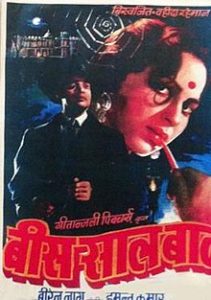 The movie was based on Arthur Conan Doyle’s Sherlock Holmes story The Hound of Baskervilles. It starred Biswajeet and Waheeda Rehman in the lead roles. It was the most super hit movie of 1962 thanks, to a great extent to Shakeel – Hemant Kumar songs.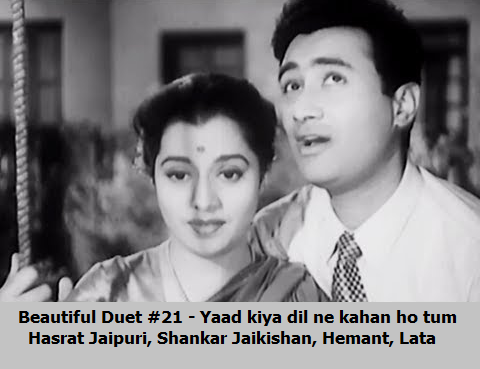
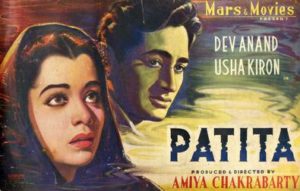 However, here we are with the title song of the group from the 1953 Amiya Chakrabarty movie Patita starring Dev Anand and Usha Kiran, both of whom feature in this truly iconic song that we shall never be able to get out of our system. Hemant Kumar sang for Dev Anand and Lata ji sang for Usha Kiran.
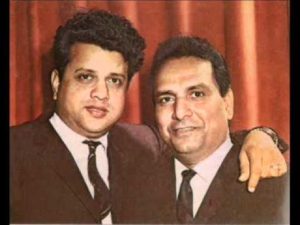 The song was penned by my behna Kishwar Jaipuri’s dad Hasrat Jaipuri and composed by the duo who were the best in the world. Even after so many years, Hasrat ji and Shankar Jaikishan ji never fail to wow us. This song, of course, is very special to this group and not just a beautiful duet. Each word is imprinted on our hearts; each word fills us with precious memories; each note touches the chords of our hearts: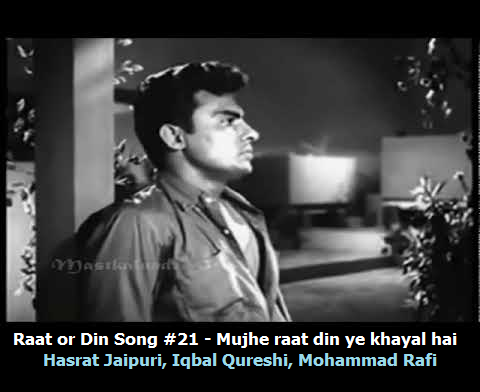
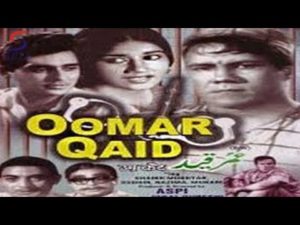 This movie Oomar Qaid, a movie of 1961, has Aspi Irani directing it and Mohan Choti, Helen, Sheikh Mukhtar, Mukri, Nazima and Sudhir in the lead roles.
 The song with very beautiful and expressive lyrics was penned by Kishwar Jaipuri’s father Hasrat Jaipuri and composed most beautifully by Iqbal Qureshi. It is simply the best and most memorable song of the movie.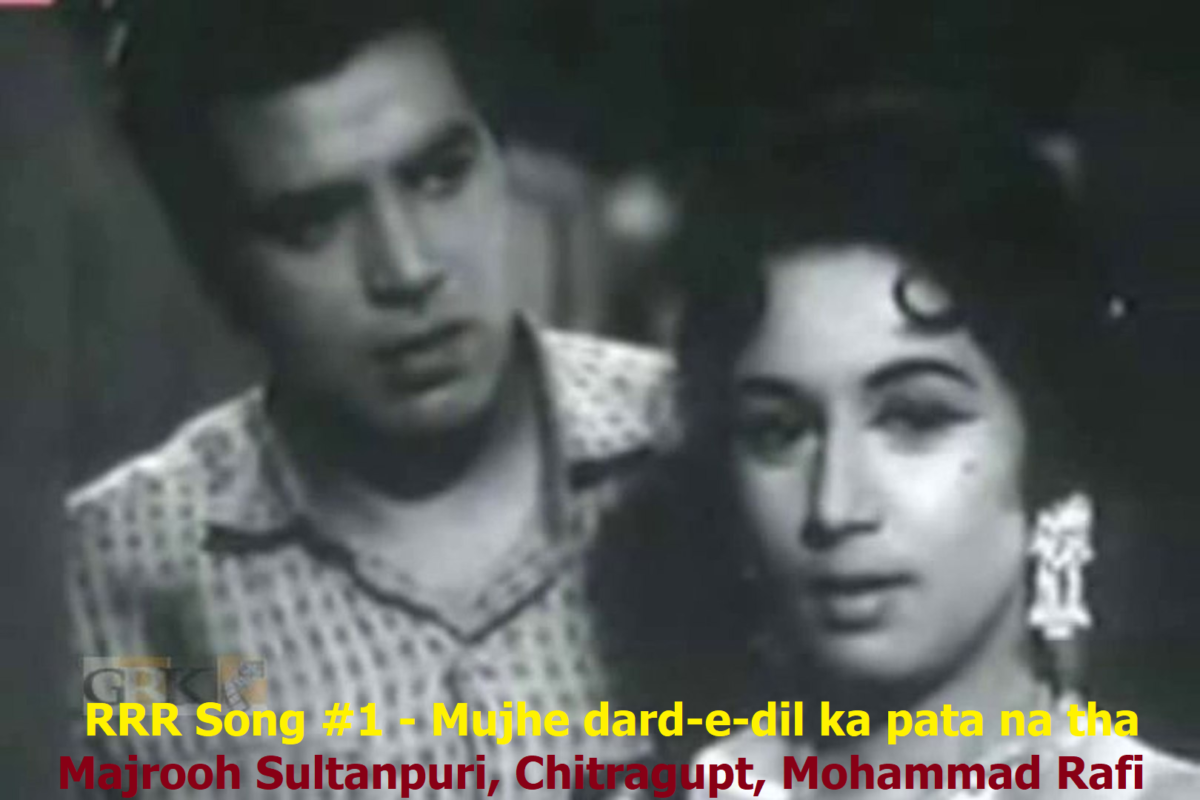
 After making my more than a dozen groups and pages, I have spent more time on YKDN than on any other group or page. Hence, I can be excused saying it with Majrooh Sultanpuri:
 This movie was directed by Phani Majumdar for the primary reason that sometime or the other I shall be able to use this as an RRR Song. Thank you Phani, thank you Majrooh, thank you Chitragupt and thank you Mohammad Rafi. If you guys hadn’t given me this song, I won’t have known how to start my RRR Series.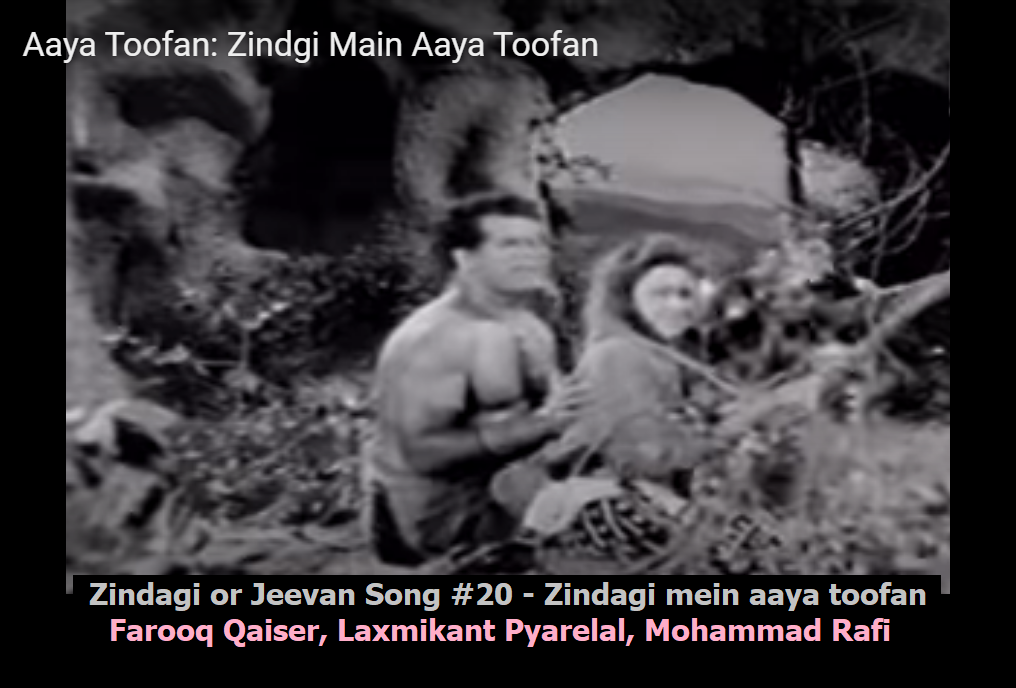

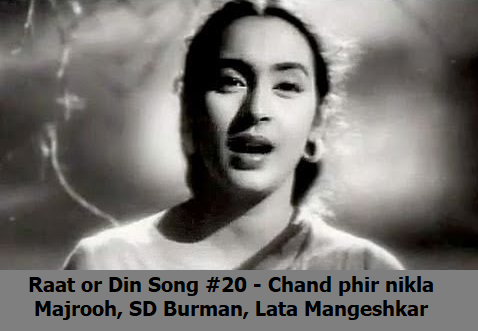
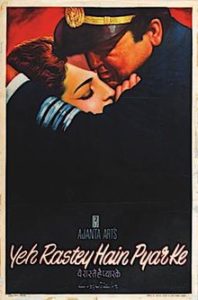 RK Nayyar’s 1963 movie Yeh Raaste Hain Pyar Ke was based on the case of navy Commander KM Nanavati who returned from sailing and shot dead the lover of his wife.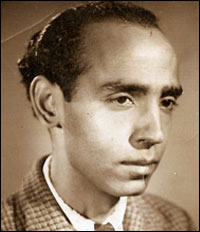
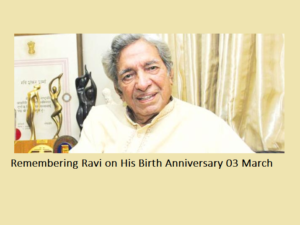 One can call it an unforgettable song both for its lyrics that silently touch your heart in many ways and its sensitive handling by Ravi. Here are the lyrics for you to appreciate: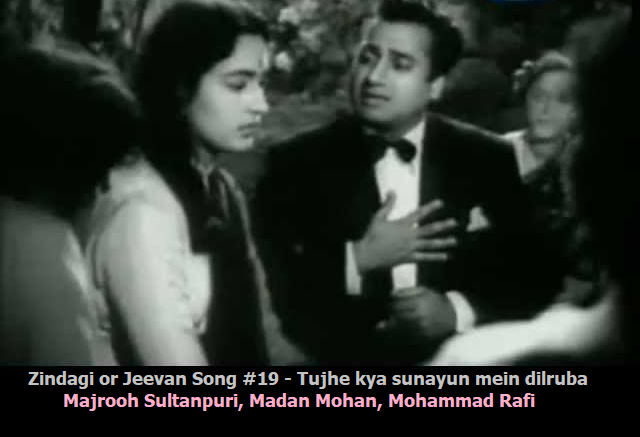
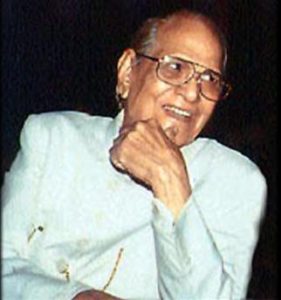 Majrooh was from that part of Uttar Pradesh that produced some of the greatest lyricists in Hindi movies: Kaifi from Azamgarh, Shakeel from Badayuni and he himself from Sultanpur. Many many years later, politically, it was said that the winners in UP normally made the government at the centre. That was the effect of people in that part of the world both poetically and politically.
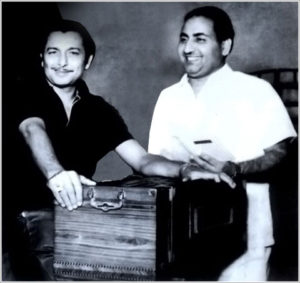 With such beautiful lyrics, who is there to compose them? Well, the maestro: Madan Mohan himself. Recall what he did to Kaifi’s Main ye soch kar uske dar se utha tha? He transformed already great lyrics into something totally sublime. He did the same here.
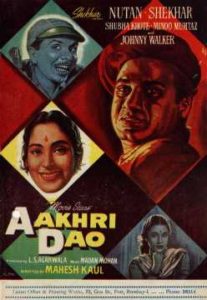 And now for the other relatively insignificant details. The song is from the 1958 Mahesh Kaul movie Aakhri Dao starring Nutan and Shekhar. He has been asked to sing in a picnic party and he sings, not to everyone, but only to her. She is uncomfortable with the revelation of his love for her in such intense words in front of everyone. You should see the way she looks and the way others, especially Shammi, looks at her.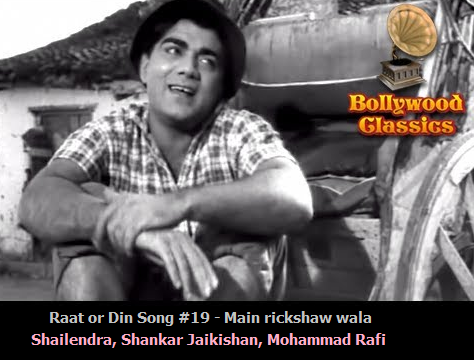
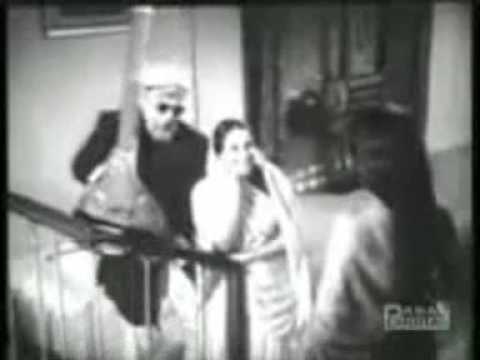
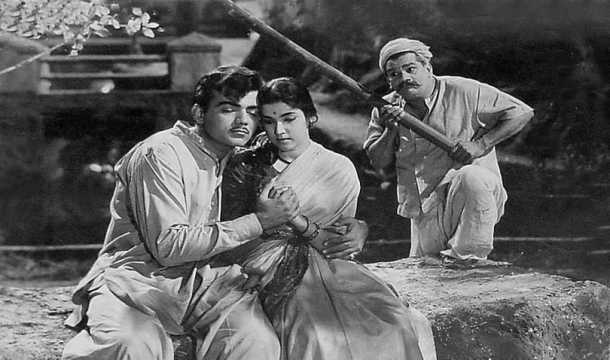
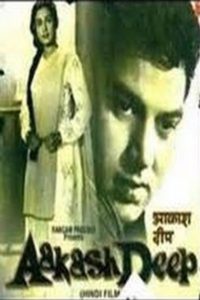
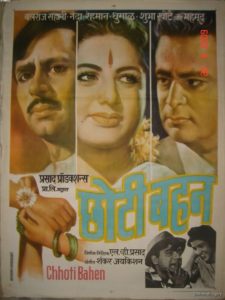 This movie was directed by Prasad and starred Nanda in the title role, supported by Balraj Sahni, Rehman, Mehmood and Shobha Khote. I already talked about their duet: Main rangeela pyar ka rahi.