It took centuries for languages to be evolved, And come to their present elegant levels; All of us are in one way or the other involved, Some of us are angels and other devils. Nevertheless, language defines who we are, A polished person or a lout at the local bar.
You may pretend to be an envied socialite, But if you have a crude and abusive tongue, Something about you doesn’t appear to be right, You give the impression of being highly strung. Language defines who we really are, A polished person or a lout at the bar.
You can frequently hide your evil thought, But when you speak you give out the truth, Your expression can easily show your secret spot, Of being a charlatan or simply uncouth. Language defines who you really are, A polished person or a lout at the bar.
So why not pay attention to what we speak and write, And leave the gutter language in the gutter? Our language should always be a delight, And not something that the rogues would utter. Language defines who we really are, A polished person or a lout at the bar.
The guy who bemoans ‘Forwards’ is also the one who forwards these blithely? That’s the lure of the ‘Forwards’. Everyone falls prey to them sometime or the other. Everyone complains; everyone is excited to receive ‘Likes’ on ‘Forwards’.
First of all we like the ring about the word. It is a modernistic – well – forward thing to do. Imagine, if these were actually to be called ‘retards‘ (some of these are actually that only). We’d feel ashamed to share these. However, with ‘Forwards’, we have the feel-good factor of belonging to a generation that is in with new and exciting trends.
Why Are Forwards Attractive?
Lets look at some of the other things that make these attractive.
First and foremost is the ease of sharing these. Initially, WhatsApp encouraged people to forward videos, images and messages without much restriction. But, then governments (the people who are convinced that you elected them to control your lives) stepped in to restrict and monitor. Even with the present restrictions by WhatsApp, for example (of forwarding to not more than five contacts or groups at a time), you can still forward these to thousands of people without any cost to yourself except that of your time. But that’s less than five minutes most of the times.
Second is the absence of ownership. Most of these don’t carry any mark of the original author. Earlier, we used to hope that people reading our ‘forwards’ would regard us as ‘original’ authors or creators of the forwards. Now that WhatsApp has started inserting the word ‘forwarded’ with such messages, we hope to be regarded as their ‘original’ discoverers on the net with ‘painstaking research’ that we often want to be known for.
These have fuzziness of origin. This bestows on us forwarders great advantages. In case our friends are floored by it, we can share some more views on the subject. Conversely, we can disassociate with these altogether by saying, “Yaar, it is only a ‘forward’.” Now imagine if you were to share your friend’s original writing or creation (how we hate these); you would be bracketed with the views for no fault of yours.
These enable Delinking from the grammar. Most ‘Forwards’ make mockery of the grammar and the language in which they are expressed. You can totally delink from it. Lets say, you have to write something original (what a calamity). You have to be careful about language, grammar and so many other things including the correctness of the facts. Now, that would be painful. However, in a ‘Forward’ sab kuchh chalta hai (everything is fair). Most often than not, if you ain’t sure, you can replace the suspect word with an emoji. Or better still, if someone points out incorrectness of something, you can respond with an emoji and let him or her figure out what you meant.
These are not taxing on the brain. With the modern emphasis on fast food and instant gratification, ‘Forwards’ provide light reading and viewing. These go well with our own (acquired) reasoning: “As it is the ruddy life is complicated these days. I don’t want to read Dostoevsky or Franz Kafka on social media. I just want to get away from the humdrum of life (which is about eighty percent of my free time; but, I don’t want to say it).”
Take blogs (acronym for Web Logs), for example. There are any number of SEO (Search Engine Optimisation) organisations that would teach you not to write great articles but to write those (dumb ones) that would be popular on the net. Most bloggers, therefore, become net-savvy and technical-savvy rather than writing-savvy.
Forwards don’t ask questions. Now this a great relief and advantage. Your friends who write original articles (the minority, that is) would nag you with such questions as, “I wrote a piece on China’s Maritime Strategy; I hope you read it?” Now, perforce, you have to read the damned thing and give opinions one way or the other (you can’t imagine responding to someone’s views on China’s Maritime Strategy with an emoji). A ‘Forward’ on the other hand can be just ignored when you are hard pressed for time (which is most of the times).
Forwards make you more popular. If you are one of the old-fashioned guys who actually delves into original writing after spending hours researching it, you are vaguely admired and respected by a few. The others respond to your so-called original writings in somewhat similar manner as they do to Mumbai Rains. Which is, that rains are most welcome when they start, say in mid June (“Ah, rains, so refreshing”). However, by mid July everyone is fed up of them. By mid August, you are praying frequently that there won’t be any more rains. In sharp contrast, ‘Forwards’ are like those light squalls that are welcome anytime, anywhere.
My own original writings, for example, hardly ever get me any comments except from a handful of people. However, my ‘brilliant Forwards’ are often (if not invariably) commented upon.
The ‘original authors and creators’ of ‘Forwards’ are really bright people. The guy who is essaying with something original has much to learn. However, “the ‘original authors and creators’ of ‘Forwards’ are highly professional people who are skilled to write what they write. It is such a pleasure reading them.”
Forwards, like Religion, do not carry time stamps. They are like Tennyson’s Brook; they go on forever. In contrast, original writings, even blogs, carry time stamp. When you re-re-re-discover a ‘Forward’, you can start to get likes and comments as if it is just out of the oven.
What are the disadvantages, if at all, of ‘Forwards’?
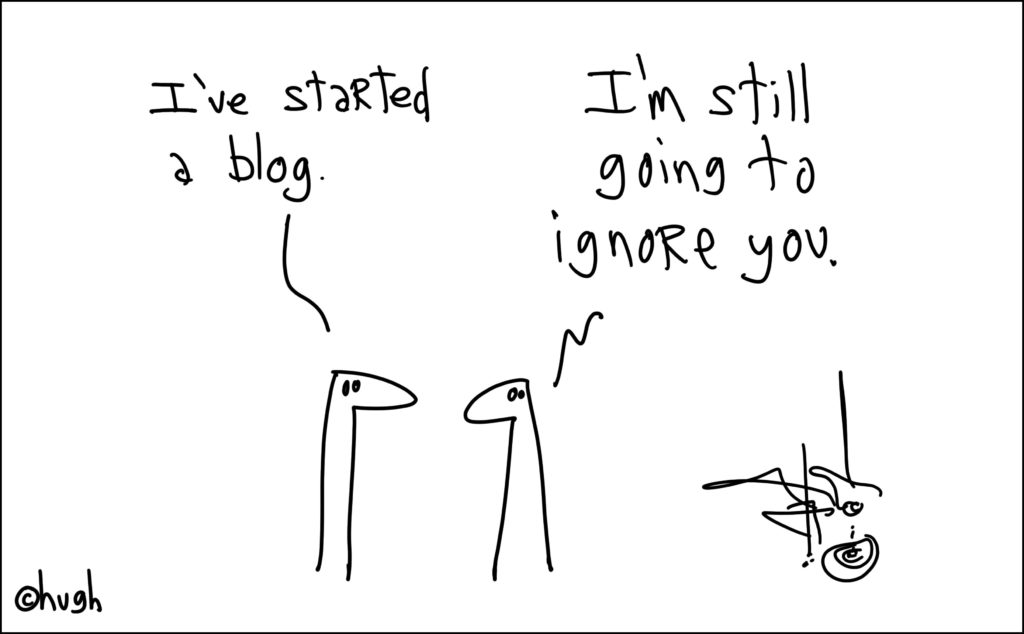
It has been proved that out of all the people on earth, Indians indulge in ‘Forwards’ more than others. More than five years ago, in a piece titled ‘Indian Media And the Dumbing Down Of The Indian Society‘, I had brought out how the media falls head over heels to keep the society dumbed-down. What is true of the media is also true of the social media. ‘Forwards’ keep you from any serious writing, reading, research, thought and innovation. Yes, you emerge as a ‘Master of Forwards’ (MF) whereas you should be a MA or PhD.
(Cartoon copied from https://m.dailyhunt.in)
Popularity at the expense of quality is another Indian trait. In our system of democracy, we expect the dumbest of the people to rule the country simply because they obtain majority votes. The intellectuals, innovators, writers, authors, scientists etc hardly have any say.
They spread rumours. Most ‘Forwards’ appear very authentic but do not stand scrutiny of factual examination. Like Religion, the more they spread, the more following they get and obtain a degree of respectability. Finally, the danger starts when people start quoting them as ‘authentic information’.
They produce clones. Do you remember at one time people used to have tailor-made clothes? Then came blue-jeans and sizes that would fit vast numbers of people. We did away with that uniqueness that God bestowed upon each one of us. That was in clothes. With ‘Forwards’ we are going to do with thoughts too. Very soon people would start looking like emojis.
Social interactions are all about ‘influencing’ people. I would rather influence minds that can respond with unique and original thought processes rather than minds that have been conditioned to resemble vegetables by relentless barrage of ‘Forwards’.
Today is Guru Purnima, the day to pay homage to one’s teacher or Guru.
I was born a Sikh. Hence, as commanded by our tenth Guru Gobind Singh ji, we have the living body of Guru in the form of Sri Guru Granth Sahib ji at home. That is obvious. As I go along, I shall mention how it helped me to be guided by SGGS ji.
Another obvious ones are my parents. Both my dad and my mom taught by their example. As I go along I shall mention these too. Their influence in making the person I became is immeasurable.
However, today, on Guru Purnima day, I have chosen to pay homage to my biggest Guru: Scarcity. No, not Adversity but Scarcity. Adversity is a state of mind; scarcity is only a physical condition. In doing so I am paying homage to my parents too.
Like most Sikhs, I read from the SGGS ji daily. When I was small, my dad insisted that we as a family sit together, once a day, to pray. I learnt that being poor at heart was a virtue. We didn’t have to adapt this principle. We were poor and not just at heart. One reason for it was that my dad and mom didn’t expect and accept anything from anyone. My dad worked in the horticulture department in Himachal (a North Indian hilly state). After he died, I discovered that he had paid for everything that he received from the department: fruits, canned and bottled stuff. And yet, dad was the richest person that I ever came across. He gave freely.
In my first ever class in a school (Government Primary School, Kandaghat, Himachal), one day (as told by my mom) I returned home and apologetically asked my mom if we had any money. Mom was fearful that I fancied some toy or sweet. She asked: “Bubble (for some reason I was nicknamed this by my dad), kaade waaste paise chahide ne?” (Bubble, what do you require money for?) And I replied fearfully, “Fees deni hai.” (To pay (school) fees).
Dad and mom gave us the best education, schooling and life possible. Our style of living and my dad’s passion for giving freely to people belied the scarcity we felt at home. He was a great follower of ‘Atithi devo bhava‘ (The guest is akin to God). The best at home was always given to the guests. My mom was publicly embarrassed by my dad in case she neglected to give the guests something she felt would add to perennial scarcity. For example, lets say, dad had got some sweets and she thought of not serving to the guests, dad would say in front of the guests, “Kyun mithai nahin khilani ehna nu?” (Why are you not serving the sweets to them?)
I sincerely believe God loved my parents. He always gave them enough; I don’t know how and where from it came, but it was always there. In my later life, I felt, God loved my wife and I too for we too had enough. Just a few years before retiring from the Indian Navy, I gave us an Archie’s plaque on our anniversary, which read: ‘We don’t have much but we have each other.”
Dad and mom worked very hard. Before, they could have even the remotest semblance to plenty, my dad died in a jeep accident. The kind of scarcity that we were driven into was to be seen to be believed. As an example, mom and I sold empty bottles, newspapers and other junk at home to pay off a creditor. Then, I have brought a cooking gas cylinder from 16 Kms away by bicycle so as to save the bus-fare.
My parents and scarcity taught me some invaluable lessons. Today, on Guru Purnima day I shall try to put these down:
Unshakable Belief in God. Sri Guru Grant Sahib ji has this thought on numerous occasions. In the very early part of SGGS one comes across this one from our fifth Guru Arjan Dev ji in Raag Goojari:”Kahe Re Man Chitweh Udham Ja Aahar Har Jio Dharia
(O my mind, why you keep on worrying about livelihood, when God Himself is taking care of it.
(this does not mean that one should not work for a livelihood. What this means is that one should make the honest effort but not worry about the results).Sael Pathar Meh Jant Upaye Ta Ka Rijak Aage Kar Dharia”
(Look, even for those creatures He created in rocks and stones (tiny worms), He provided their livelihood in advance (even before they were born).
There is repeated mention in SGGS ji about the uselessness of worrying. At the end of the SGGS ji, the ninth Guru says this in one of the Slokas:
Chinta – Taki keejiye jo anhoni hoei,
(You should worry if something unexpected or impossible is going to happen. The true meaning of this is that everything is as ordained by God and we are His children. Why should we worry when He would have thought of the best for us).
And look at what he (Gur Tegh Bahadur ji) says in the next line of the sloka:
Eh marg sansar ka, Nanak thir nahin koei”
(The world has been created in such a way that nothing is forever)
My maternal grandparents have great faith in their Hari Babaji (a devotee of Lord Krishna). Once when they approached him in adversity for advice, he wrote:
“Achhe din bhi nahin rehate, bure din bhi nahin rehate. Sainyam rakhiye. Sab theek hoga.” (Good days don’t last, bad days don’t last. Keep self-restraint. Everything would work out right)
My dad went several steps ahead; he had done an akhand paath (continuous reading from start to end) of SGGS ji almost entirely on his own. He believed that God and he existed for each other. His favourite hymn was:
“Jo maange thakur apne te soii soii deve,
(Whatever you ask from Him, He gives)
Nanak, das mukh se jo bole eehaan uhaan sach hove.”
(Whatever God’s servant speaks (in prayer), one way or the other it becomes true)
What about my mom? Well, in my entire life with her I never saw her ask for anything because she felt that Waheguru already knew her needs more than her and would provide without asking.
What about me? I believe my dad and mom were God. Actually, it is not right to use the past tense for God; they are God. And I believe they are still teaching me.
Value of Things. When you have plenty, you take many things for granted. However, scarcity teaches you to value whatever you have. More than anything, you learn the value of enough. Suddenly you become very very rich. You preserve. You don’t waste. Just three days before my mom went to the hospital for the last time last year she went to the kitchen (almost crawled there because she was barely able to walk) and taught our maidservant how to make ghee from the milk-cream so that it wasn’t wasted.
Scarcity Makes One Stronger. The most beautiful aspect of scarcity is that instead of making one weaker, it actually makes one stronger. Imagine that someone is trying to hurt or punish you by depriving you of something. However, you already have come through deprivation and you know how to go through it. The scheming guy is made to look small and like an idiot. When I was in school I read through a book called ‘Lights Along The Shore’. It was about a Christian priest in Stalinist Russia, sent to a concentration camp in Siberia. In order to humiliate him and break his will, he was asked to clean ten latrines everyday. In the night he thought and thought how to get out of the imposed humiliation. By the morning he had the solution: he started cleaning twenty of his own free will.
Character. I believe dealing with scarcity made me a charactered person, ethical and disciplined. For example, I never owe anything to anyone; I repay as soon as possible. In the month of April this year we had a get-together of my music group Yaad Kiya Dil Ne. Everyone was to contribute his/her share. There is a person five times richer than me. Despite dozens of reminders he didn’t pay even though he had the maximum guests. I won’t ever call upon myself such dishonour.
There is Always a Way Out. Scarcity teaches you that nothing is impossible. If you look at it the right way, with a calm mind, there is always a solution. A person who has dealt with scarcity is unlikely to get defeated by a situation.
Empathy. A person who has dealt with scarcity learns to have empathy for others who are going through bad situations even after he himself has got out of it. My father had this habit of feeling for others and give to them; it has percolated down to all three of us children.
Humility and Modesty. It also follows that even after one gets out of scarcity (for example now I have), one is never haughty or arrogant about it. One learns to be humble, modest and grateful: “God, you put me in a situation to give me some valuable lessons and tools how to get out of it. Now, God, with your help, I am out of it. Make me humble enough to realise that without your help I couldn’t have managed even a fraction of it.
In the end, I can say with adequate pride and confidence that Scarcity taught me more than Plenty would have. God and my parents (there is, like I said, no difference between the two) facilitated this learning. Sri Guru Granth Sahib ji, as ordained, has always been the trigger to such learning.
At my bedside there is a copy of a book ‘Miracles of Ardas*’ written by the Himalayan Legend, Padma Bhushan and Arjuna Award winner mountaineer Captain (of the Indian Navy) MS Kohli. It too keeps reminding of my dad’s favourite hymn from Sri Guru Granth Sahib ji:
These poems are for my close friend Maj Vishwas Mandloi’s delightful group of tipplers called i-peg. One has to raise a toast to the committed lot for their single-minded aim of spreading cheers!
As Time moves on, there are instances when we would love to have frozen a past event or even a moment for posterity. On the other hand, we just let it go without (at that time) realising its true value. Lets say some sixth sense would tell us that a particular moment that we are uncomfortable about or even find detestable would bring us the greatest happiness in future, won’t we preserve it with more wistfulness than the attitude of get-it-over-with-ASAP that we often have?
Let me give you an example. We are sitting in the classroom. The teacher is going on and on whilst we look outside the window. Everything else outside appears more interesting. We want to complete our schooling as quickly as we can so as to get over the boring stuff and get on with some real stuff that makes life worth living. Now, if someone was to tell us that 90 percent of the people when asked about nostalgic moments of their lives mention school-time as the number one, won’t we have enjoyed those moments more?
Here is what a mother told her son who was making faces at her cooking: “Relish it, son. Years later you would be telling your wife how good it was in comparison to her cooking.”
When I was a young officer in the Navy, I remember having seen this movie called The Final Countdown. It was in the year 1980. The movie was directed by Don Taylor and starred Kirk Douglas as Captain Matthew Yelland, Commanding Officer of USS Nimitz, which had sailed from Pearl Harbour, in 1980, for a training sortie in the Pacific. The ship had a civilian observer on board: Warren Lasky, played by Martin Sheen. The ship passed through a strange storm-like vortex and suddenly went back in time to 6th Dec 1941, a day before the Pearl Harbour Attack by the Japanese Fleet. Even though the ship had gone back in time, it had all its armament, sensors and aircraft on board as in the present day (1980). Gradually, as the events unfolded, the ship and its crew realised that they had been transported back in time and that with the modern facilities available on board, just one ship, USS Nimitz, was enough to take on the entire Japanese Fleet that had wreaked havoc in Pearl Harbour on that fateful day. Captain Yelland had to decide whether to destroy the Japanese fleet and alter the course of history, or to stand by and allow history to proceed as normal. Nimitz launched a massive strike force against the incoming Japanese forces, but before it could reach the enemy armada, the time – storm returned. After a futile attempt to outrun the storm, Yelland recalled the strike force, and the ship and the aircraft returned to 1980 safely. History was unaltered.
The movie was a fine example of how we can’t alter the past with the wisdom and capabilities of today. Every moment that we live has actually gone forever and there is no way one can alter it.
Many people have this fantasy about seeing their own funeral by traveling back in time even after death and seeing people cry and miss them and pour out their love that they never got the feel of when alive. Urdu poets have written volumes about consoling the love of their lives after death. Why just Urdu poets? Even the great Punjabi singer (greatest?) Asa Singh Mastana sang this ghazal about seeing mourners after his death: Jadon meri arthi utha ke chalange, mere yaar sab gunguna ke chalange (When they carry me in my funeral procession, all my friends would walk humming in sadness).
That’s why the New Year is so attractive; it, and every passing year, allows us to look at the past with the wisdom and capabilities of today. We rejoice in the nostalgia of our childhood and schooling, even forgetting those times when we wanted to fast-forward and get-it-over-with.
Even a person with average intelligence can make out that there is nothing really new in the new year. Each day is a new day caused by the rotation of the earth around its axis. This rotation, completed in 24 hours, makes the Sun appears on the horizon in the East and makes it set in the West, Who made the New Year? We made it. Who made Time? We made it; imagine your landing on some other planet or star that doesn’t rotate around its axis in 24 hours of the earth. What do you call this new Time? Does it have a relationship with Time on Earth? Just like Time varies around the earth (if it is New Year in Japan, it would be another six and half hours before it is New Year in India), now imagine it in the universe. Is it the same time of the day, or even day or year or century in, say, Venus?
Why should we worry about the universe? Ain’t we content about living on earth without having to worry about what happens elsewhere? The short answer is No, we ain’t. Just as Columbus sailed to discover India, we have ventured out to other celestial bodies to see if they are like us. When a mountain climber was asked, “Why did you climb this mountain?” his response made a lot of sense to me, at least: “Because, it is there.”
Imagine a scenario, say 500 years (Earth Years, that is) from now, when the following announcement is made on the Radio Station in Space: “We wish our listeners on Earth a Happy New 2518, on Mercury the continuation of unendable long winter, on Jupiter…….”
The scriptures are very fond of saying that God made Man in His own likeness. He gave the best to Man except, it appears, the ability to alter his past. But, hey, look again and you will know that even that is possible! Have I gone mad? Or madder than I normally am? Well, here goes:
The scriptures erred in one significant point and that is that we must live the present moment and not to live in the past (Please read: ‘Debatable Philosophies Of Life’). Actually, there is no present moment, you can’t live it. By the time you can even think of living it, it becomes past. Your past is, therefore, the most significant period of your life. However old the past is – one moment to several years – we always look at the past with the wisdom and capability of today or the next moment.
Hence, if your past is indeed the most significant period of your life, why not make it more beautiful, more memorable? You know you have to live with your memories more than with your hopes and aspirations (which too are indeed children of your past!). Dissipate all your energies and – hold your breath – time in making it beautiful and memorable. It is in your hands.
Once you make your past beautiful, it is attractive and welcome to recall it.
If you have done so, you would rue burning the effigy of the passing year. You would automatically say: Yes, 2018 would be very beautiful but 2017 was also beautiful; I didn’t want it to end.
And I am saying it despite my having lost my mother – the most precious part of my life – in 2017. She and I made exceedingly rich memories that would never die.
Lastly, ladies and gentlemen, if in the so called new year you are going to do nothing new, isn’t it wasted exactly in the same manner as the past year? Hence, just think of at least one thing new that you would do in the new year that you hadn’t ever done before. Good luck.
Think………………..that’s the biggest gift that God has given us. The second biggest being that He made every moment new and not just the new year.
Mary (curiously an anagram of Army, the institution being discussed here today) of Magdala (a city on the southwest coast of the Sea of Galilee) or just Mary Magdalene was being stoned by a mob because of her sins (particularly adultery; the Army doesn’t have adultery, it has infantry) and that’s the time Jesus came to her rescue and said, “The first stone should be cast by one who hasn’t sinned”. One by one, as per the gospel, they all went home and left her alone. Later, she was witness to Christ’s Crucifixion and Resurrection.
In sharp contrast, we have any number of Indians and Indian political parties who indulge in stone-pelting (physically and figuratively on the national media, for example) against the Indian Army and some of them rejoice in this carefully acquired hobby. Jesus, and for that matter Mohammad, Rama, Buddha, Nanak and others all keep quiet. It is not them but the Army that is being crucified.
The dark humour is in the fact that some of them are the same people who cannot exist in those hostile situations even for a minute without the army directly or indirectly protecting them. However, at the quickest opportunity they take up such issues (without understanding them at all) as repeal of AFSPA or Armed Forces Special Powers Act.
And what is or are the sins that the Army has committed to earn this opprobrium? I can think of a few; you are welcome to add more:
It is ensuring the territorial integrity and sovereignty of our nation and that’s not to the liking of the vested interests that would like to see this great nation being broken up into fragments.
Through elaborate, exhaustive and nerve-racking training, its men and women have become shining examples of discipline, valour, uprightness and patriotism, the very attributes that stand in the way of people who revel in chaos, avarice, cowardice and ill acquired comforts.
It has values that the countrymen hold dear and there is a dire need to bring it down to the gutter that some of these people find themselves in. “Will teach these holier-than-thou b____s not to try to be different“.
It has been victorious in very war that was thrust on it and come out in flying colours in any task or situation it was asked to handle. “It is high time these s.o.b.’s taste defeat” (“what do they think of themselves?”)
It believes in the tenet of ‘selfless-service’, which is ‘foreign’ to self-aggrandizing lot.
In all this, no one has ever thought of the scenario wherein the army says (not that it ever would, with its self-imposed restraint and discipline): “Enough is enough; let them fend for themselves in all situations other than foreign-aggression.” (Please read: ‘Long Time No War‘, for example)
The politicians and bureaucrats have a quick-fix solution to anything and everything by calling the armed forces to handle internal situations that have been caused by the acts of omission and commission of those who should have been directly responsible for handling those situations. In my essay ‘Identification Of Friend Or Foe In Indian Maritime Scenario’, I had brought out how the Indian Navy was wrongly blamed for the failure to prevent 26/11 Mumbai Attacks and how, post that, it is the only leading navy in the world made responsible for coastal security. Having been made responsible, the Indian Navy personnel even went about conducting census of fishermen in the coastal states to bring a modicum of order in the near chaotic scenario that prevailed. They presented this data to local authorities whose job it was to conduct such census.
The joke going around in the naval circles was and is: ‘Anytime you see water, think of us‘.
It is the same with the army on land.
Recently, my wife and I undertook a trip to Kaza in Spiti district of Himachal Pradesh from our home place in Kandaghat. Roads were alright up to Rampur Bushair, Jhakri and Karcham. But, from there onwards it was an ordeal. There were only three kinds of roads: the good and wide metalled roads (about 10 percent); roads that could be distinguished from khuds and nallahs with a little closer scrutiny; and finally, what I call as environmentally friendly roads: ie, no change from their original condition before the roads were constructed.
In many places, after Powari and Reckong Peo, we came across army jawans having been placed at really bad stretches of roads. Their purpose? Hold your breath – to prevent injury to people from falling and shooting stones!
You don’t find humour in this? Well I find enormous humour in this: these are the same people that people pelt or hurl stones at and these are the valiant men who think nothing of risking their own lives to keep you from getting injured and/or killed!
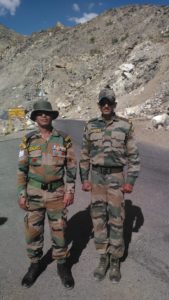
These are the kind of valiant men (my friends Durga Dutt and Amit Kumar Rana) on which stones are pelted and yet they think of only saving the pelters from injury.
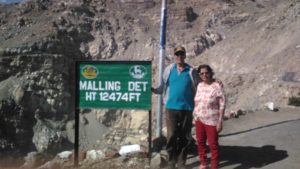
We had lunch with the army at a palce called Sumdo (we cross over from Kinnaur district to Lahoul and Spiti district there). The place is free of all vegetation and there are bald ills (the distant ones had still snow on them). When we were driving back to Malling, we found a Malling Detachment of army men, being posted there in a hilly road of shooting stones, to keep people safe when it is not even their task to do so.
They offered my wife and I hot tea and Good-Day biscuits and said, “Saab thak gaya hoyega” (Saab must be tired).
I didn’t know whether to laugh or cry. I am giving you my first unadulterated reaction (and please forgive me if it is a little unparliamentary language):
“Bloody ungrateful countrymen”.
P.S. One of the WhatsApp messages going around is about one of our countrymen complaining to the waiter about stones in the rice-pulao he had ordered. The waiter clarified: “It is Kashmiri pulao, Sir”.
Whenever I talk to civilians and indeed non-navy men, one of the biggest chasms that I have to cross is the minds-gap between us. It doesn’t easily sink in with people that seas are open in access, they have no visible boundaries, and hence there are gigantic problems of identification at sea especially when it comes to small fishing craft, the kind that ten terrorists from Karachi travelled in from Karachi to launch an attack on Mumbai on 26 Nov 2008 (26/11). With every inch of land owned by either governments or people and some having more than two competing claims, another thing that doesn’t easily soak in is that seas are largely unowned and anyone can be anywhere.
Most of the fishing in our waters is unregulated despite all efforts to bring in regulation post 26/11. Post 26/11 it was decided that all boats more than 20 m in length would be fitted with Automatic Identification System (AIS) and all boats would be registered and would have colour coding system to enable quick identification. Additionally, and all crews would have identification cards. Sounds great? Well, the closest analogy that comes to mind is that of a careful and safe Indian driver: he drives carefully and safely for about ten kilometres after witnessing an accident.
Somewhere in the vicinity of Jakhau (on the Northern side of Gulf of Kachchh in Gujarat), when the Indian minesweeper on which I was serving in 1976, used to come closer to fishing vessels and enquire about their identity, some of the vessels would first hoist a Pakistani flag and then when our identity would be revealed to them through our talk on the loud-hailer, they would quickly replace it with an Indian flag. The scenario continued without much variation for decades. After regular patrols started from both sides, many a fishermen (number in hundreds) on both sides of the IMBL (International Maritime Boundary Line) found themselves in prisons of the opposite side. Again, it is extremely difficult for non-navy people to realise that a line drawn on the map doesn’t actually manifest itself at sea and in the absence of familiar features that you find on the land (such as fence, wall, rock, pillars and sign-boards), it is difficult for the fishermen to even realise that they have crossed this invisible line of IMBL.
Early this month I was talking to research scholars of Punjab University studying to obtain Master of Philosophy degree; most of them being from Army background. When I told them that the Indian Navy wrongly got blamed for having allowed Kasab & co. to traverse the sea-route from Karachi to Mumbai which resulted in Mumbai attacks known as 26/11 attacks, most of them were up in arms against me. They said that it was an attack on the nation by foreign armed terrorists using the sea-route and hence the failure to detect and stop them should be pinned on the Navy. I brought out to them that in the like manner, the failure to prevent the attack on Indian parliament (the very seat of the Indian democracy), on 13th Dec 2001, perpetrated by terrorists of LeT and JeM, should have been pinned on the Indian Army since it was a land-based attack. Similarly, following the same reasoning, the failure to detect and prevent bicycle-bomb attacks in Jaipur, on 13th May 2008, should be pinned on the Mechanised Infantry, bicycle being a mechanised vehicle.
Firstly, a knee jerk reaction of the government post 26/11 made the Indian Navy the only leading navy in the world stuck with the responsibility of coastal security. Secondly, with both the target boats and the investigators constantly moving at sea, the only real identification would be whilst leaving and entering harbours. Post 26/11, in two joint exercises carried out in April and June 2009, by the Indian Navy, Coast Guard, Police and Customs, they were able to check the identities of only 300 and 1000 boats respectively. On land too, you don’t check the identities of vehicles by chasing them on highways, roads, streets, fields et al; you do so at choke points such as Toll Plazas, Barriers, Check-Points and the like.
What about Automatic Identification System transponders for the fishing boats so as to help provide quick identification at sea (in almost the same manner as IFF (Identification Friend or Foe) does it for aircraft? Well, two news items would be indicative of the progress made. First is a news item in the Times of India (ToI) on 12 Jul 2009 by Vishwa Mohan: ‘AIS transponders now made must for all fishing vessels’. And seven years later, here is a news item in the Indian Express on 09 Jun 2016: ‘Centre plans to install tracking devices on fishing vessels’; “With Home Minister Rajnath Singh set to chair a meeting on coastal security with CMs of nine coastal states and four Union Territories in Mumbai on June 16, government sources said modalities of implementing a crucial project to install automatic identification system transponders in all small fishing vessels could be finalised at the meeting.” In short, eight years after the Mumbai attacks, modalities to install AIS transponders were still to be finalised.
First of all, 100% installation of AIS on all craft is still to be implemented. Secondly, no technical means can provide warning of an intent in advance. One has to remember that one is looking for just one boat in thousands and lakhs that would have turned rogue from innocuous and innocent fishing boats earlier. To illustrate this point, lets look into MV Kuber, a vessel hijacked by Kasab and co. off Porbandar in international waters. Now, lets say this scenario was to replicate in future after 100 percent fitment of AIS. This innocuous and innocent fishing vessel having turned rogue would still give an AIS signal of a friendly and no-threat vessel.
Whilst on this subject, one curious fact that escaped most people’s attention was the news item that the master of Kuber, Amarsinh Solanki, was in a Pakistani prison just six months prior to his vessel having been hijacked by Kasab and co. Was it, therefore, just a coincidence that his vessel was the one that was hijacked at the appointed hour? Doesn’t that make identification of such a rogue craft and its intent even more confused? Isn’t that a pointer towards keeping an eye on the fishing community on the whole, an exercise beyond the scope of a maritime agency like the Indian Navy? Would Fishermen’s I-Cards and registration of all boats under the Merchant Shipping Act (MS Act) help? Yes, these would, if one remembers that such I-Cards and Registration cannot be checked at sea. Also, that most fishing boats use migrant labour who keeps changing frequently.
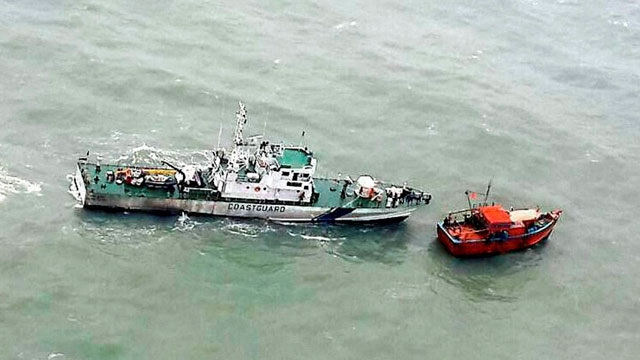
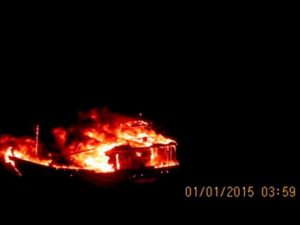
Take the incident of 31st Dec 2015 when a Pak boat carrying explosives blew itself up when challenged by a vessel of the Indian Coast Guard off the coast of Gujarat.
(Picture released by the ICG post the incident of 31 Dec 15/01 Jan 16)
“The coast guard had received a specific intelligence alert on December 31 that a fishing boat from Keti Bunder near Karachi was planning some kind of an operation in the Arabian Sea.”
“Based on the input, a Dornier aircraft undertook a sea-air coordinated search and located the fishing boat. The ship patrolling in the area was diverted and intercepted the unlit boat around midnight of December 31,” the spokesperson said.
Imagine the effort required to intercept just one boat at sea.
“Parrikar had added that the Centre would ensure “99.99%” protection against 26/11-type incidents by timely detection. “How do you pull the needle out of the haystack? Zero tolerance to error is the most important in this project.””
The ironical point here is that even a preventive success story brought out the gigantic difficulties involved in identification and interception and that the answer lies in national will pertaining to “zero tolerance to error” is the only answer to pulling “the needle out of the haystack?”
We must also remember the fact that Coast Guard DIG B K Loshali was sacked for making the following remark on 16 Feb 2016 whilst addressing a gathering of Coast Guard officers and Larsen & Toubro officials during the launch of an interceptor boat (the remark was video taped and reported by the Indian Express: “Let me tell you. I hope you remember 31st December night. I was there at Gandhinagar and I told at night, blow the boat off. We don’t want to serve them biryani.”
Identification of Friend or Foe in Indian Maritime scenario and preventing repeat of 26/11 attacks are, therefore, mammoth tasks that require not just technical means but enormous coordination between many different agencies and, more than anything else, a national will to handle the aftermath of preventive efforts in international waters.
It started in early twentieth century. The industrial era had brought with it problems of aspiring needs of milling populations. Amongst these, the one problem that came to fore was oppression of women and gender inequality. For the first time in the year 1908, 15000 women marched through the streets of New York demanding equality with their male counterparts. This led to National Women’s Day being held on 28th Feb or last Sunday of the month. In 1910 a second International Conference of Working Women was held in Copenhagen and following the success of it, it was announced that IWD would be held on 19th March. In 1913 following discussions, International Women’s Day was transferred to 8 March and this day has remained the global date for International Women’s Day ever since.
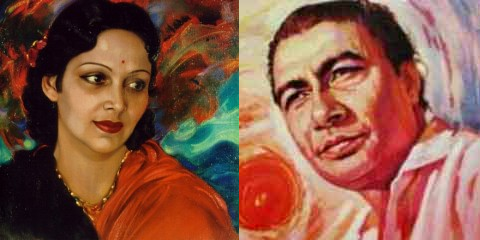
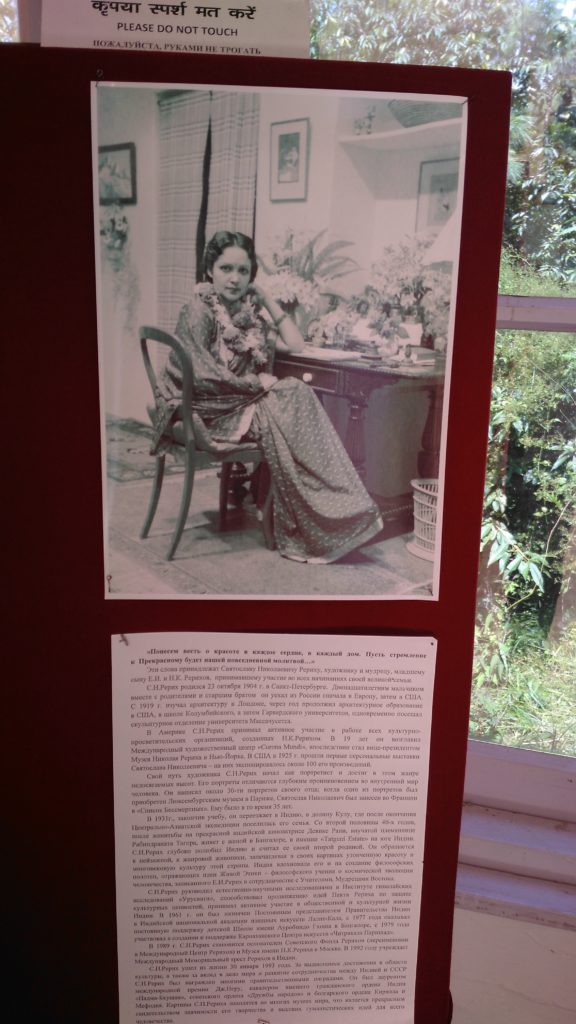
Remembering Devika Rani on Her Death Anniversary and Sahir Ludhianvi on His Birth Anniversary, 08 March
I have a Facebook Group called ‘Yaad Kiya Dil Ne’ for serious music lovers (not the ones who just copy-paste You Tube urls of songs and clap their hands for a job well done). In this group, besides monthly thematic music fest, we pay tribute to actors, singers, lyricists and composers involved with the making of the songs.
It is only appropriate (a magnificent coincidence) that we should remember these two icons: Devika Rani and Sahir Ludhianvi on this important day, the International Women’s Day (08th March). IWD is the day for remembering the social, economic, cultural and political achievements of women. We shall be doing so for Devika Rani. We shall also recollect what Sahir wrote about women.
Devika Rani
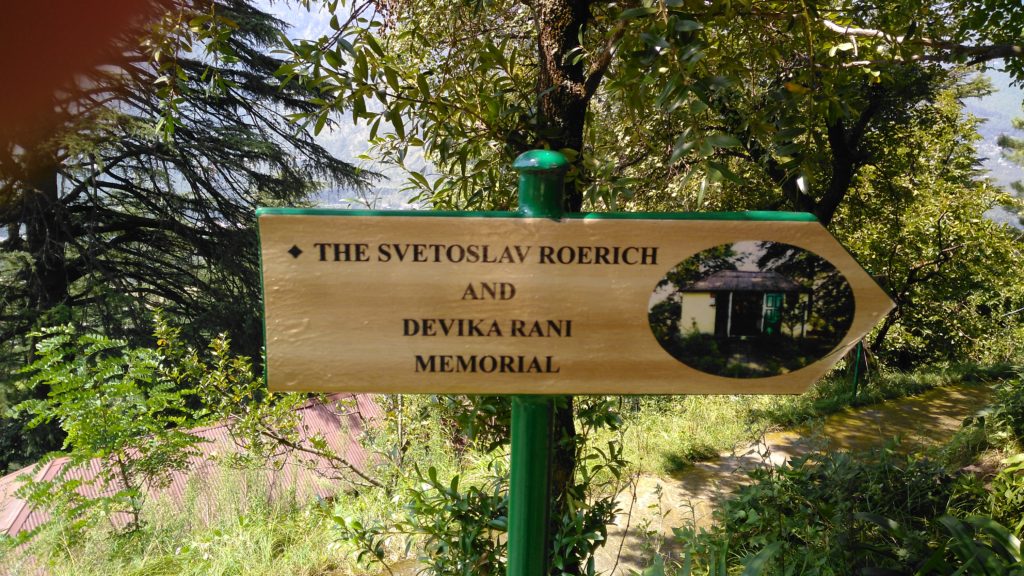
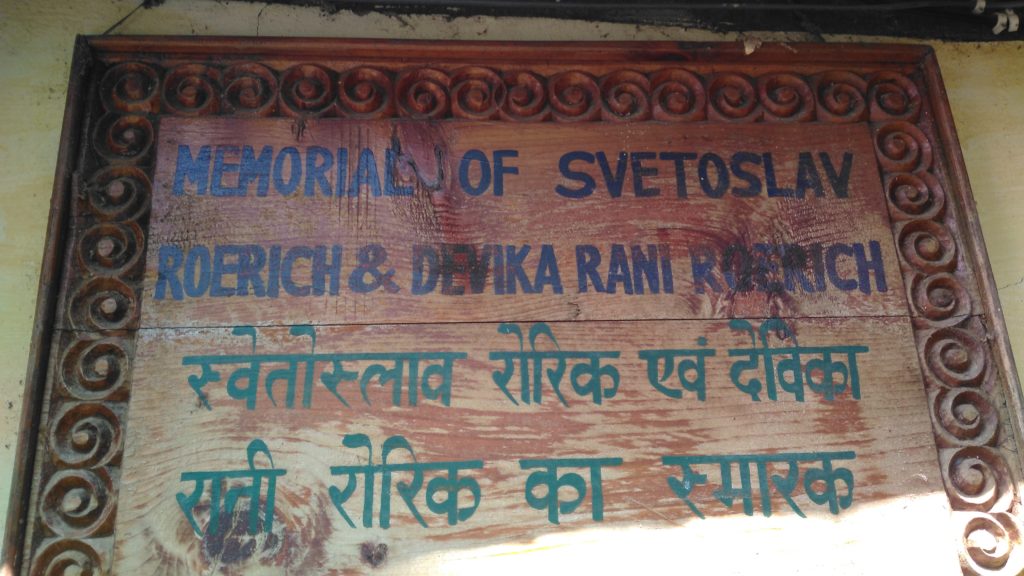
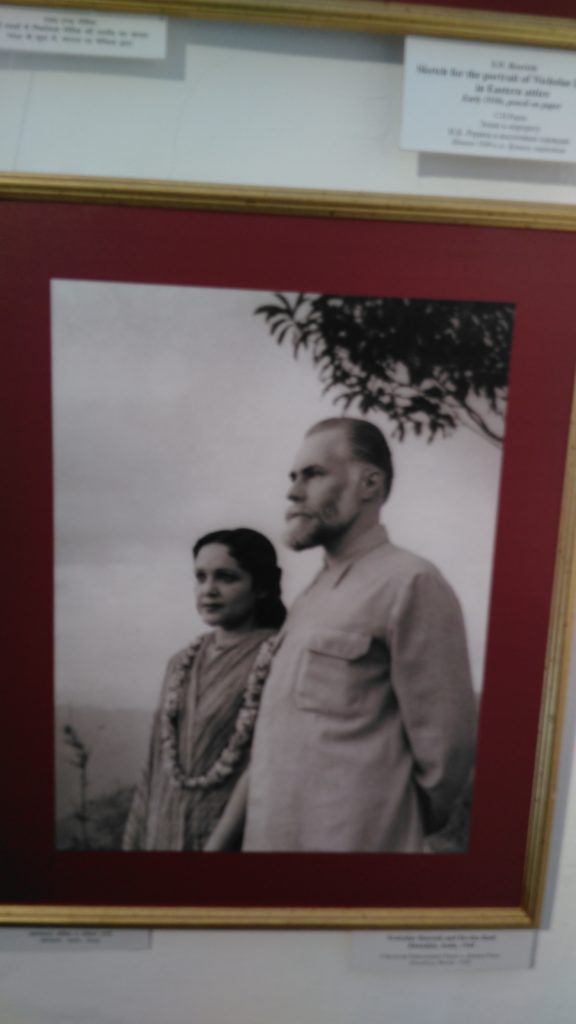
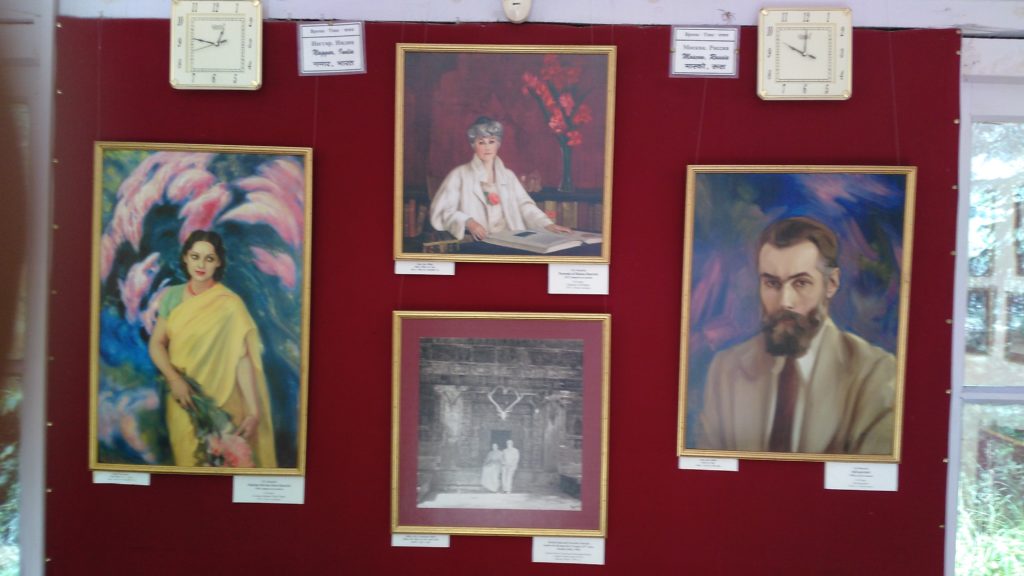
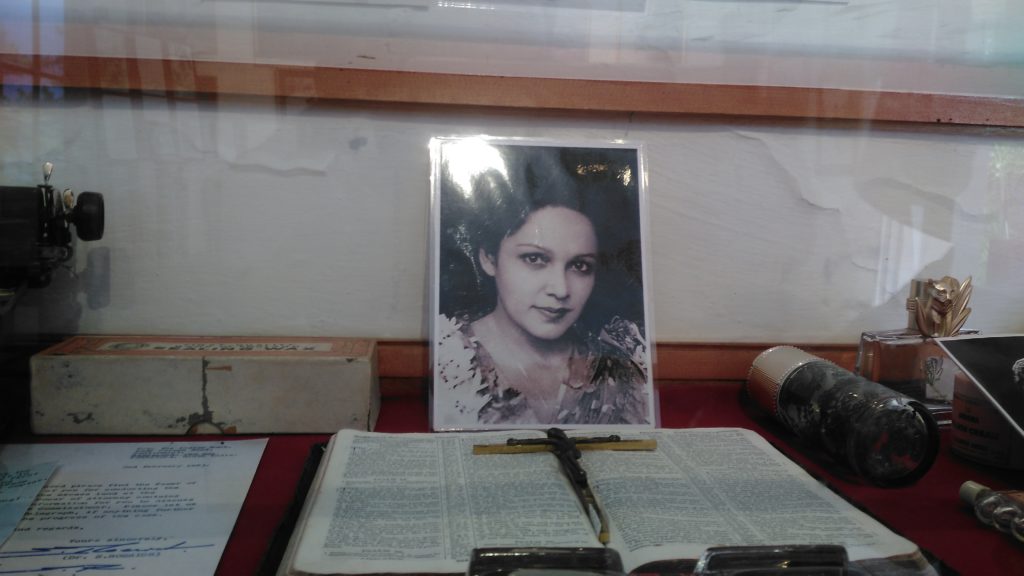
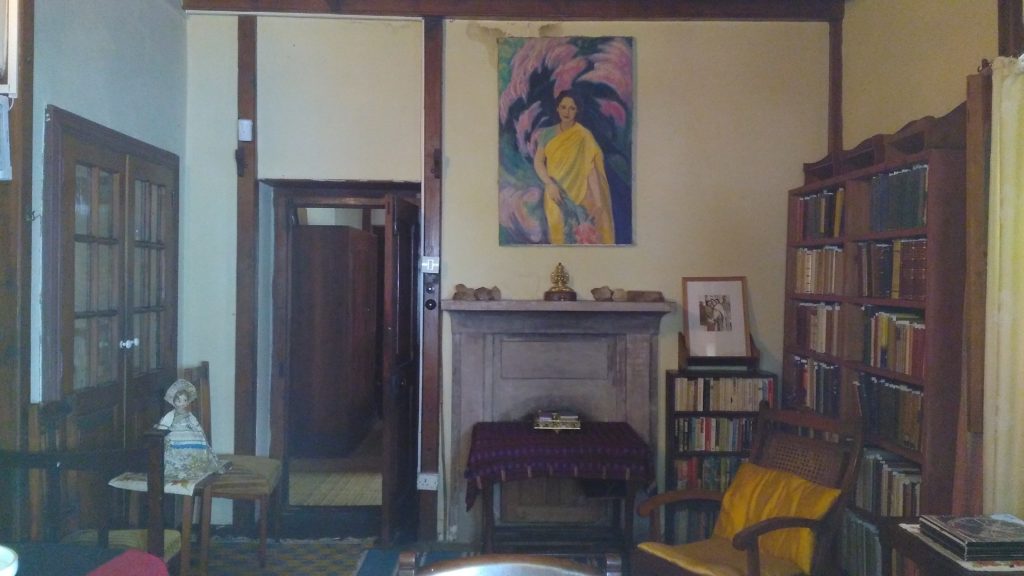
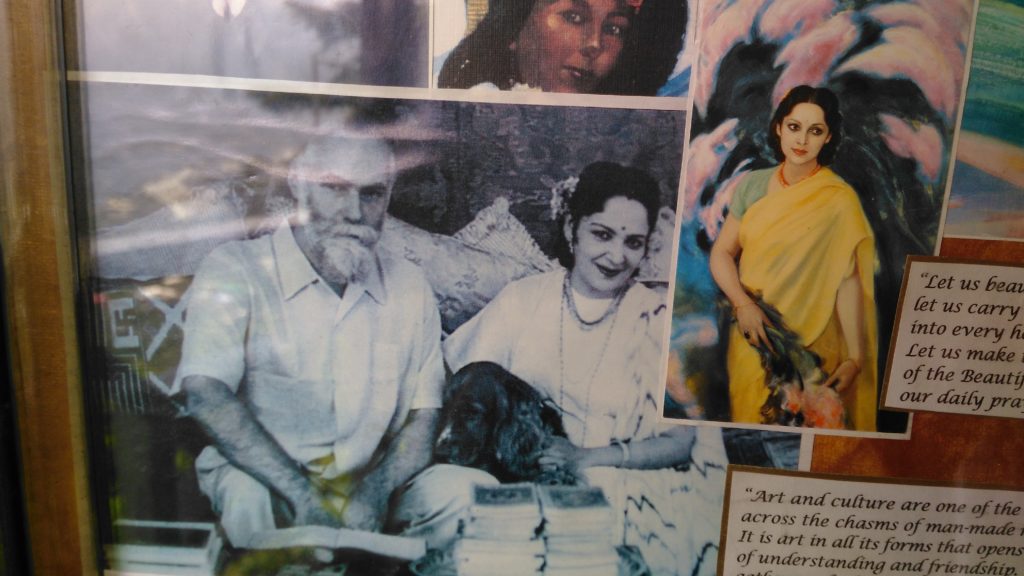
Devika was the first lady of the Indian Cinema (not just Hindi movies) who was active in the Indian movies from 1928 to 1943 and who chose to live life her own way. My wife and I, on our visit to Kulu and Manali last September, went out of our way to visit the Roerich Art Gallery and Roerich House in Naggar, about 25 Kms from Manali.
Please have a look at the accompanying pictures, a remembrance of our visit. In their house, her room and her prized possessions (including a type-writer) have been maintained exactly as they were. Then there is a separate Devika Rani and Svetoslav Memorial:
She was born on 30th March 1908 in Waltair (Andhra Pradesh) as Devika Rani Choudheri to Colonel MN Choudheri, IMS (Indian Medical Services) and Mrs. Leela Choudheri. She came from a distinguished family. She was the grand-niece of Nobel laureate Rabindranath Tagore. Her father rose to become the first Indian Surgeon General of Madras.
Her schooling was in London. She graduated in Arts from there, specialising in textile designing and architecture. She had started work as a textile designer in London when she met Himanshu Rai, who was instrumental in her joining his films production unit and contribute towards Indian films.
In 1929, at the age of 21 years, she married Himanshu Rai. Initially, she assisted him in only production related activities such as Art Direction and Costume Designing. However, in 1933, she debuted as an actress in his movie Karma, in which their kissing scene is still regarded as one the longest kissing scene in Indian movies (of more than four minutes). After her schooling in London, she had done courses in acting and music at he Royal Academy of Dramatic Art and the Royal Academy of Music. However, after joining hands with Himanshu Rai, during a visit to Germany, inspired by their methods of film-making, she enrolled for a film-making course at Universum Film AG studio in Berlin. She also took an advanced course in Acting.
Himanshu Rai then started the famous films studio called Bombay Talkies, the second oldest movie studio in the Indian movies and also the best equipped. Himanshu started the studio in the year 1934 and she continued running it after his death in 1940. In 1935, Bombay Talkies first production Jawani Ki Hawa was launched. It starred Devika Rani and Najm-ul-Hassan, and was shot fully on a train.
During the making of the movie Jeevan Naiya, her second film with the hero Najm-ul-Hassan, she eloped with him. Her husband Himanshu Rai, having spent a lot of money on that movie already, was going to be in ruins.
Ashok Kumar’s uncle Sashadhar Mukherjee, who was an assistant sound-engineer at Bombay Talkies got in touch with Devika Rani and Najm and convinced Devika to return to Himanshu. Two of the reasons he was able to convince her is relevant on this International Women’s Day: One, in India, at that time, it was next to impossible to get legal divorce; and two, women who eloped were regarded as prostitutes and also disowned by their own families. Thus she was made to be convinced that she won’t ever get divorce from Himanshu and marry Najm.
She, therefore, did the next best thing. Through Sashadhar Mukherjee she sought and obtained financial independence from her husband as a condition for her return. Another condition was that he would pay entirely the expenses for running the house. And, lo and behold, Himanshu agreed to this, in order to save face in society and to prevent his studio from going bankrupt. Today, when we celebrate IWD again and remember how wretched are the lives of Indian women (Please read ‘Is There Reason To Celebrate Women’s Day In India?’ which is what I wrote on the eve of IWD seven years ago and one of my first essays after I formed this blog), please remember that Devika Rani was gutsy enough to do this in 1936.
On her return, Himanshu Rai dropped Najm-ul-Hassan altogether and got Ashok Kumar, Sashadhar Mukherjee’s cousin (later Joy Mukherjee’s father) to do the role. This marked the debut of Ashok Kumar’s long career in the movies.
She made a number of movies with her co-star of Jeevan Mrityu Ashok Kumar. Their 1936 movie Achhut Kanya is still considered iconic.
I am giving you a song from the movie Achhut Kanya of 1936 that was penned by JS Kashyap (known by his nickname Natawa) and sung by Devika Rani and Ashok Kumar (during those days there was no playback singing and actors and actresses sang their own songs). Saraswati Devi (the second Hindi and Indian female music director after Jaddan Bai; Usha Khanna, the living female MD is the third one) composed the song.
The song is all about her saying that she is a free bird and he saying that he would have her. Finally, he succeeded in that Sashadhar and Ashok Kumar started another film studio called Filmistan and she had no support to continue running Bombay Talkies. She had to thus give up films.
Please enjoy: Main ban ki chidhiya ban ke ban ban bolun re….
(de: mai.n ban kii chi.Diyaa ban ke ban ban boluu.n re
a: mai.n ban kaa panchhii ban ke sa.ng sa.ng Doluu.n re) – 2
de: (mai.n Daal Daal u.D jaauu.N
nahii.n paka.Daa_ii mai.n aauu.N) – 2
a: (tum Daal Daal mai.n paat paat
bin paka.De kabhii na chho.Duu.N
sa.ng sa.ng Doluu.n re ) – 2
de: ban ban boluu.n re
de: mai.n ban kii chi.Diyaa ban ke ban ban boluu.n re
a: mai.n ban kaa panchhii ban ke sa.ng sa.ng Doluu.n re
de: mai.n ban kii chi.Diyaa ban ke ban ban boluu.n re
a: sa.ng sa.ng Doluu.n re
In 1944, she quit film idustry and in 1945 she married Russian painter Svetoslav Roerich, son of Russian artist Nicholas Roerich. That’s how Lyn and I visited their house in Nagger (Manali). Both Roerich and Devika were favourites of Jawahar Lal Nehru and the gallery has quite a few photos of them together. During her stay in Manali, Devika Rani made a few documentaries on wildlife, which are dutifully kept in the gallery. She died of bronchitis in 1994—a year after Roerich died—in Bangalore.
In 1958, Devika Rani was awarded the Padma Shri, India’s fourth highest civilian honour. In 1969, when the Dadasaheb Phalke Award was instituted (the highest award for films in India), she became its first proud recipient. In the year 1990, USSR honoured her with Soviet Land Nehru Award. Finally, in Feb 2011, a postage stamp honouring her was released by the Government of India.
Sahir Ludhainvi
Sahir (Magical) Ludhianvi was born on this day in 1921 as Abdul Hayee. His mother, left on her own, her estranged husband and Sahir’s father, and hence, she forfeited willingly any claim over her husband’s assets. Sahir and his mother stayed together though the father, after remarrying, made abortive attempts to obtain custody of the son.
I am presently engaged (on my Facebok Page Lyrical) in paying tribute to Sahir and hence do not want to write about him at great length here.
Suffice it to say that having seen the deprivation of his mother, Sahir was full of feelings for women: his mother and the two that he was romantically inclined with Amrita Pritam (Punjabi writer and poet) and Sudha Malhotra (Singer).
I have, in my tribute on Lyrical, already covered the 1958 movie Sadhana, a BR Chopra movie that starred Vyjayanthimala as a prostitute whom Sunil Dutt’s mother (Leela Chitnis) finally had to accept as his wife.
After the 1957 Guru Dutt movie Pyaasa, after doing 18 movies together, Sahir had parted ways with SD Burman and was making songs with many different music directors. N Dutta (also known as Datta Naik) was a prominent Music Director with whom Sahir worked in more movies than with others (you might remember their Dhool Ka Phool with the famous songs: Na ye Hindu banega na musalmaan banega, and Dhadakne lgi dil ke taaron ki duniya).
Here is a song that both of them created in Sadhana and the song after 49 years is still representative of how we treat women in Indian society. Its lyrics are amongst the most powerful lyrics that Sahir ever penned (Indeed, this was the starting song of my tribute to him; I having jumped many years to give this song).
It is just a coincidence (on IWD) that Vyjayanthimala won the Best Actress award for her role in the movie.
Please enjoy: Aurat ne janam diay mardon ko….
aurat ne janam diyaa mardo.n ko, mardo.n ne use baazaar diyaa
jab jii chaahaa kuchalaa masalaa, jab jii chaahaa dutkaar diyaa
tulatii hai kahii.n diinaaro.n me.n, bikatii hai kahii.n baazaaro.n me.n
na.ngii nachavaaii jaatii hai, aiyyaasho.n ke darabaaro.n me.n
ye vo beizzat chiiz hai jo, ba.nT jAtI hai izzatadaaro.n me.n
mardo.n ke liye har zulm ravaa.N, aurat ke liye ronaa bhii khataa
mardo.n ke liye laakho.n seje.n, aurat ke liye bas ek chitaa
mardo.n ke liye har aish kaa haq, aurat ke liye jiinaa bhii sazaa
jin hoTho.n ne inako pyaar kiyaa, un hoTho.n kaa vyaapaar kiyaa
jis kokh me.n inakaa jism Dhalaa, us kokh kaa kaarobaar kiyaa
jis tan se uge kopal ban kar, us tan ko zaliil-o-khAr kiyaa
mardo.n ne banaayii jo rasme.n, unako haq kaa faramaan kahaa
aurat ke zindaa jal jaane ko, kurbaanii aur balidaan kahaa
qismat ke badale roTii dii, usako bhii ehasaan kahaa
sa.nsaar kii har ek besharmii, gurbat kii god me.n palatii hai
chakalo.n me.n hii aa ke rukatii hai, faako.n me.n jo raah nikalatii hai
mardo.n kii havas hai jo aksar, aurat ke paap me.n Dhalatii hai
aurat sa.nsaar kii qismat hai, fir bhii taqadiir kii hotii hai
avataar payambar janatii hai, phir bhii shaitaan kii beTii hai
ye vo badaqismat maa.N hai jo, beTo.n kii sez pe leTii hai
Finally, here is something from my Page: Make Your Own Quotes in which I make and publish quotes and encourage others to do so:
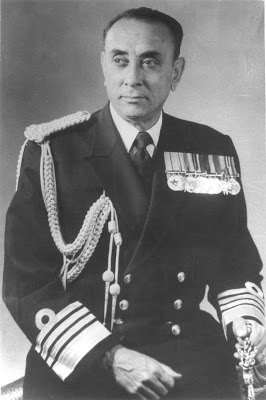
I have not written a full-length essay on Indian Navy’s most revered officer: Admiral Ronald Lyndsale Pereira, Chief of the Naval Staff from 01 March 1979 to 28 Feb 1982. My training period included, I have had an acquaintance with him for less than nine years of his active service and thereafter even more occasionally until 14 Oct 1993 when he died at the age of 70. I have repeated an anecdote about his sterling leadership from Hugh Gantzer’s ‘The Golden Book of Delhi’ when he was the Captain of the cruiser INS Delhi (ex HMS and later HMNZS Achilles) in ‘Leadership In The Navy – Past, Present And Future’, one of the earliest essays on this blog. However, I would like to bring out that the persona of Ronnie Pereira transcended the dimension of Time and officers who joined the Navy, even after me, could and can feel his aura. When I posted this on my Facebook Group ‘Humour In And Out Of Uniform’, one of my friends, Rishi Raj Singh wrote: “In Dec 15, a fine colony of 26 flats as Part of Married Accommodation Project (MAP), was inaugurated at Port Blair, a Tri-Services Command which all of us are aware of. It was named ‘Pereira Enclave’. It shows the respect he had from all the three Services. I had the honour to be the first occupant of a ground floor house, overlooking the runway.” And, Rishi Raj Singh would have never served with Ronnie Pereira anywhere.
Similarly, respect for this great officer transcended the narrow confines of the service that he belonged to: Indian Navy. I am giving a link to a beautiful, humorous, adorable and exhaustive article about this ex Navy Chief by an IAF officer (Wing Cdr Unni Katha, VSM (Retd)) published in a tri-services magazine Salute: ‘Remembering Ronnie’ in Apr-May 2013.
The Lambretta scooter mentioned in the article that he drove after retiring as the Chief of Naval Staff found its way from his home ‘At Last’ in Bangalore to one in Coonoor when I was undergoing Staff Course in 1990 (I did it belatedly as a Commander, having been sent abroad and told to do my bit in DOT (Directorate of Tactics)).
My wife’s cousin Trevor Mendez used to run a car and two-wheeler mechanic’s garage next to the DSSC (Defence Services Staff College in Wellington (Coonoor) (I am sure many of you must have been to this kind-hearted, bearded soul, always to be found with a cap). Admiral Pereira used to bring his scooter there for repairs and later a car. Trevor told me that he had become hard of hearing from his left ear after having met with an accident in Bangalore. And this scooter and later his car had been purchased through loans.
What did he do with all the money that he should have saved (after all he retired as the CNS)? Here is an incident told to me by his Flag Lieutenant BR Sen (now Commodore Bhaskar Sen, Retd, and member of my Facebook group ‘Humour In And Out Of Uniform’ wherein I published this post), when he was the CNS, to give you a hint:
Admiral Pereira often used to come out of his office and pace in the corridor. One day he met a Master Chief Petty Officer who happened to be a ship-mate of his (Read Wg Cdr Unni Katha’s article and you would know that he never forgot faces and names). He saw that the sailor was looking a little worried and asked him for the reason. The Master Chief told him that his daughter was to be married and he had applied for a loan of Rupees Five Thousand from the INBA (Indian Naval Benevolent Association) and after days of running around he had still not got the money.
Admiral Pereira brought him to his office, took out his cheque book (of the bank whose branch was in the South Block), wrote out a cheque for Rupees Five Thousand, gave it to him, wished him the best and sent him a happier man.
After the sailor left, there was frantic call from the Admiral for Bhaskar Sen: “Flags, can you hop across to the bank and check if I have that much money in my account?” Fifteen minutes later, Sen came back and reported that the Admiral had a little more than that and hence the sailor won’t be disappointed.
Admiral Pereira loved his men much more than he loved any material gains for himself.
He visited us in Coimbatore when I was posted there as a young instructor in the Leadership School. He paid for everything that he asked for, his mess bill, his wine bill and presented me (his Liaison Officer) with a pair of cuff-links, which, knowing him, would have been paid for by him.
Trevor’s caution to me about his hearing handicap served me right whenever I interacted with him during my Staff Course. I met him on a few occasions at Trevor’s and then in the DSSC canteen where he came to buy liquor.
One day, after our appointments (transfers after the course) were out I met him outside the canteen. He was quick to see me looking a little sad. “Son”, he boomed, “What’s happened? You look down and out”. I told him about my transfer to Vizag where I didn’t want to go. “Oh, don’t be” he told me, “It can’t be such a bad place. Now, let me see when was I in Vizag?”
“You were the Fleet Commander there” I told him wryly.
“Oh, yes, I was”, his eyes gleamed when he continued, “Wonderful place, Vizag; all happy memories, except one….there was this C-in-C there….”
“Admiral Kulkarni” I blurted out.
“Yes, that’s right, Admiral Kulkarni. He used to be always treading on my toes: ‘do this’ ‘don’t do this’…. one day, I marched into his office and told him: ‘C-in-C Sir, you mind the Command and I shall mind the Fleet’. Believe you me, son; after that we never had any problems……wonderful place, Vizag; you will enjoy….now cheer up….that’s better, that’s my boy”.
Most of us keep thinking of problems and these keep becoming bigger and bigger. Admiral Pereira solved these quickly by meeting them head-on.
How many of us, would?
When I was posted in Naval Headquarters in the years 1987 to 1990, after 5 to 8 years of his having been the Navy Chief, tales of Admiral Pereira were still fresh when we used to meet in INS India Wardroom or Kotah House Ante Room. Before that, I remember having attended his farewell in Western Naval Command Mess when he was being posted out as C-in-C of the Command to take over as Vice Chief of the Naval Staff at Naval Headquarters, New Delhi. Even though he was the C-in-C, there wasn’t any separate farewell for him; I am sure he would have ruled it out as wasteful expenditure of time and money. It was also Rear Admiral Kirpal Singh’s farewell from the Navy that night and one more officer’s farewell. Ronnie Pereira’s farewell speech was short and humorous. He said, “As a Commander, I told my girl (Mrs. Phyllis Pereira, married to him since 1952): ‘that’s probably my highest rank (because of my straight-talk). And then surprisingly I was promoted to become Captain….and so on, and now I am going to take over as Vice Chief. The lesson, therefore, is never be afraid to say your bit. If you have it in you to become senior, no one can stop you.”
I do remember that after he took over as the Chief of the Naval Staff (after his short tenure as VCNS), he wrote a personal letter to all commanding officers in which he bemoaned the ‘Zero Error Syndrome’ that was creeping into the Navy. He brought out that he wanted officers to be encouraged to come up with innovative ideas without overly worrying about failures. Three and half decades later, how I wish they had listened to him.
These days, we routinely bemoan how the politicians and the bureaucrats (the netas and the babus) have gradually and relentlessly downgraded the status of the armed forces personnel. From the tales that heard in Naval Headquarters, I would like to believe that one person who withstood this onslaught was Admiral Ronnie Pereira. Even though he left five years before I joined, some of his tales in NHQ had become legends (if anyone knows better, please correct me in the comments of this blog since for me these are second or even third hand accounts):
#1. I believe, on the eve of the Commanders Conference, a protocol guy from the PMO’s office came to NHQ to see for himself last-minute arrangements particularly seating plan. There was no seat, he observed, for Sanjay Gandhi. Adm Pereira told him that none was necessary. This guy left in a huff but was back in half an hour with: “The PM desires that there should be a seat for Shri Sanjay Gandhi”. “Alright” said Admiral Pereira, “Tell her to choose between him and me for the conference.”
#2. We were at that time deciding on the integral helicopters on ships of Godavari class. The final choice was to be Aerospatiale Super Puma (French) or Sea King (British). Some of you would recall how the ministry favoured one over the other; it was in the media. When the file was routed to the Financial Advisor, he had made a detailed note on the tactical advantages of one over the other. Admiral Pereira had thumped him by a note whose import was: ‘When the file is routed to you, it is for ensuring the financial canons are adhered to. Leave the tactics to the experts.”
Here is another endearing quality of his that wasn’t emulated sadly. As soon as he hung up his boots, he never interfered in the working of the Navy in any manner; no succession plan wranglings, no controversial utterances, nothing.
When we were in the DSSC, one of my seniors’ Syndicate was given an MRP (Minor Research Project) on Maritime Strategy. They thought it would be a great idea to obtain Admiral’s views on various subjects as also on the distasteful jockeying to become the Chief that was in the news all the time.
The Syndicate fixed an appointment with him at his residence in the evening. He offered them a drink and they started chatting. More and more drinks flowed and everyone warmed up to talking to the great man. Finally, they returned almost totally sozzled close to midnight. I asked my senior SP Singh sir about Admiral’s views about Maritime Strategy and other matters. He said after some time no one remembered what had they gone to him for. His aura, the easy camaraderie, the warmth of his hospitality and personalised treatment were more of a treat than any officious talk.
After he died on 14 Oct 1993, Mrs. Phyllis Pereira received hundreds of letters from officers and men of the three services. She disclosed that many of them hadn’t ever been his contemporaries.
People like Ronnie Pereira achieve a certain timelessness and hence become unforgettable.
A news item, at the end of the year 2016, from a small village called La Joya in Mexico is probably manifestation of a phenomenon that has had far-reaching effects that the world has seen lately, in the fields of popularity, talent and fame. The invitation for ‘quinceanara‘ party or coming-of-age party of a 15 years old Rubi Ibarra by her father Crescencio went viral (the expression used in the Internet age for something that spreads with the speed of the viral fever from person to person). Whilst Crescencio meant by the words: Everyone is invited, people in the neighbouring communities, the local event photographer who posted the invitation video on Facebook omitted to mention that. The result: everyone landed up for the birthday party. The media and social media, both domestic and international, covered it as the event of the year.
Rubi Ibarra, not seen, arrives at the site of a mass that is part of her down-home 15th birthday party, surrounded by a horde of journalists and a drone flying overhead, in the village of La Joya, San Luis Potosi State, in Mexico, on Monday, December 26, 2016. Photo: AP
Five years ago, at the end of the year 2011, we had a variation of this phenomenon in India. A Tanglish (a hybrid of Tamil and English) song titled ‘Why this Kolaveri Di?‘ The song was sung by Dhanush on his own lyrics and composed by Anirudh Ravichander. Outside Tamil films, no one would have heard of them, not even the name of the 2012 psychological thriller simply called: ‘3’ (the shortest name of a movie in the world!). However, the success of this song on YouTube made it phenomenal (here is it from Wikipedia):
“Upon release, the hashtag #kolaveri topped the Indian trends in Twitter on the evening of 21 November 2011. Within a week of the official release of the video, it received more than 3.5 million views on YouTube, more than 1 million shares on Facebook, while trending in India on Twitter the whole time. By 30 November 2011, it had more than 10,500,000 YouTube views. By the start of 2012, it had crossed 30 million YouTube views. The song and versions of it account for more than 75 million of YouTube’s total views. The song became the top downloaded song on mobile with 4,100,000 downloads within the first 18 days of release.”
Dhanush, the singer, was invited as a guest of honour by the Prime Minister. Various parodies of the song also became viral (You can read my own parody: ‘Why This Valentine Valentine Di?’ on the subject of opposition to celebrating a foreign fest in India). Here is the song for you, again: Why this Kolaveri, Di? (Why this killing rage girl?):
What do these two phenomenal events tell us? Simply this that there is – what I term as – democratisation of talent – and one can be a star overnight. First, lets compare it with the olden times:
Even if one were very talented, it would be years before one became popular or achieved fame. William Shakespeare, the greatest author in English language, for example, during his years of struggle, used to go incognito to various bookshops in London, asking for his plays, so as to influence demand for his works. There are many factual stories of actors around the world who paid (instead of being paid) for acting in movies and plays before they became famous.
And, very few became popular and famous. For authors, poets, playwrights, speakers and actors, one had to wait for years before their works were noticed; sometimes merely by fluke. Ordinary people – except for the rare ones who made big – couldn’t even dream that someone, other than in their immediate and local community, would see or read the product of their art or skill. Overnight success was a rare occurrence. As an example, in the 16th century, just think of an ordinary street play in Bengal becoming famous all over India, let alone world-wide or for that matter a bard in say, Punjab.
Similarly, amongst the great speeches of the world, we only had to read about great personalities delivering these and at best we could read the text unless parts of such speeches found their way into some documentary or movie.
Nowadays, everyone, is a writer, actor, speaker, singer, photographer, poet and playwright (‘All Photographers And Writers, No Viewers And Readers‘). And if you have talent, suddenly the social media makes you famous without your having to stand on your head to be noticed. Everyone of us, for example, sees a number of videos everyday of unknown authors, actors, speakers and singers. As another example, earlier ordinary people would not have access to worldwide listeners and viewers until platforms like TED Talks made it possible. Recently, we heard an Indian Army major convincing us of the rationale of deploying army in Kashmir.
One of the valid critical observations on this phenomenon is that media-savvy people (that being their only talent) can make themselves or others famous who have little or no talent. Conversely, there are still many talented people still to be discovered. I have only this to say to it that any new video game that you buy also has a cheat program. In democracy, talent would sometimes suffer because it is based on majority acceptance and majority is not always the best judge of the quality of art, skill or talent.
However, the chances of ordinary but talented men and women being watched everyday by millions have increased manifold. How many of us, for example, listened live to Beatles or Mohammad Rafi or seen live great dancers like Gene Kelly? However, these days, ordinary but talented singers and dancers reach us on the telly, cellphones and other devices and we watch with bated breath to see their talent on, say, America’s Got Talent or Sa Re Ga Ma; literally millions of us, many more than those who watched the famous and the popular in the olden days.
What about the dilution of real talent due to this democratisation of talent? Well, there are both sides of the coin here. The good view is that excellence is pegged even higher than earlier since you can instantly see who are better and worse. The reverse view is that popularity often gets the mask of fame and excellence.
Lastly, whilst it is easy to be Good these days, it is equally easy to be Bad and Evil. One can learn, in fairly easy steps on the net, how to make a molotov cocktail or even a dirty bomb. Similarly, one can visit darknet or tor browser with impunity leaving no footprints to be traced whilst engaged in sinister things.
However, with some exceptions, I feel that democratisation of talent is a good thing, indeed. Whilst we, keep saying, largely erroneously, that God made all men and women equal (Please read: ‘Debatable Philosophies Of Life’ that I wrote on the last day of last year), the fact is that those who were born with silver spoons in their mouths often achieved success, fame and popularity. However, now, there is the beginning of an effort to make all men and women equal. Who knows, a time will come, when evolutionary changes would make everyone equally good singer, writer, actor, player or speaker?
And then, perhaps, everyone would be invited for and attend everyone’s party rather than being asked, just by accident: “Are you going to Rubi’s party?“
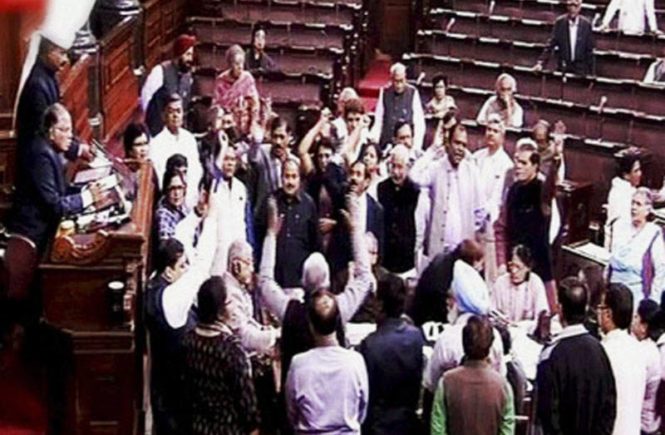
Finally, last week, we had Shri Pranab Mukherjee, telling the Indian parliamentarians that continued disruption of parliament by the opposition to protest against demonetisation is not acceptable at all. He reminded them that the ways of the street are ill-suited for the parliament and that crores of rupees are wasted when the parliament is disrupted in this manner.
The fact is that the Congress has been so used to ruling the country that it has come close not to believe in democracy at all. Hence, whenever it loses elections, it wants to believe that the people have made a terrible mistake in electing an alternative and that the country should get back to being ruled by it as quickly as possible. And, if the people can’t do it on their own, it would leave no stone unturned to facilitate conditions for its rightful return to ruling the country. In this it has been helped by various factors:
The country-wide movement against the imposition of Emergency in the country by Prime Minister Indira Gandhi after Allahabad court found her guilty of electoral malpractices although succeeded in installing a non-Congress government (Janata Government) for the first time in 1977, it lasted for only two years due to various factors such as internal squabbles, and the Hindu-Muslim riots due to external machinations by the Congress trying to portray that it was the only secular front in the country and that the country was doomed if it was to go the RSS way.
Generations of bureaucrats in the government have obtained reflected glory, power and influence by being as loyal to Congress governments as wazirs have been to the rajas. The Congress kept them in good humour soon as it was elected or re-elected to power. This arrangement worked so fine that I remember when in 1978 the first non-Congress was formed in Maharashtra, there was a news item that brought out that the babus, loyal to generations of Congress MLAs, didn’t let the newly elected non-Congress MLAs to transact any meaningful business.
Successive Congress governments shared the largesse with a number of think-tanks in the capital and elsewhere who mastered the art of pleasing their masters by carefully concocted theories that only secular (read Congress led) government would be the country’s saviour. And this, even after it facilitated the massacre of thousands of Sikhs in the capital and elsewhere after Indira Gandhi was killed by her own security-guard, a Sikh. Predictably, after Modi government was installed, Congress engineered the people’s movement against intolerance. At this juncture, it was helped in no mean measure by the Hindu revanchists who translated BJP victory as their licence to have a Hindu rashtra with supremacy of cow and other purely religious ideas. (Please read: ‘Is Communal Disharmony A Challenge To India’s March To Greatness?’ that I wrote in Feb 2015).
And just a week before I write, there is a newspaper item about Prime Minister Modi directly reaching out to the people since, he says, he is not allowed to speak in the parliament. It seems that the governments in India and the opposition take turns in denigrating the parliament. It also appears that the Indian parliamentarians take the word opposition very seriously and feel compelled to oppose anything and everything that the other party or front proposes, even if the idea was mooted by them in the past.
Why does the opposition feel compelled not to let the government duly elected by the people to function thereby questioning democracy as well as people’s verdict? I think the precedence of obtaining independence by disobedience movement engineered by Mahatma Gandhi goads it to employ similar tactics against all rulers as the father of the nation employed against the British. That we are already an independent country doesn’t direct it to change tactics more readily suitable and even acceptable in a functioning democracy. Hence, many a times, the opposition doesn’t mind putting the ruling party or even the nation to shame internationally as long as it can score points with the voters as an opposition. Consider the following:
In order to infuse new thought in a stalemated Indo-Pak diplomacy, when the BJP PM, Atal Bihari Vajpayee, started a Sada-e-Sarhand (Call of the Frontier) Delhi-Lahore Bus on 19 Feb 1999 (on the inaugural day as the world watched agog, the Prime Minister Vajpayee traveled by the bus to attend a summit in Pakistan and was received at Wagah Border by Pakistan PM Nawaz Sharif), the opposition, as soon as the Kargil War started, protested on Delhi streets by displaying a large rubber-inflated bus, upside down. Even some of its own party men felt that it was in very poor taste; it showed as if it hated the enemy of the country less than the BJP:
(Pic courtesy: India Today)
In order to prove that despite people’s verdict a non-Congress government wasn’t qualified (read experienced; since the only party that had any experience of ruling the country was the Congress), when Vajpayee government took over, it rejoiced in onions (staple food for the poor in the country) being made scarce by hoarders loyal to it and put his government to shame for mishandling the onion-crisis in 1998. The BJP, having quickly learnt from the opposition (Congress) how to bring the government to heel on the issue of onions, returned the favour in 2013:
BJP workers protest onion price rise in 2013
After the Uri terror attack on 18 Sep 16, the opposition took the Modi government to task for not coming equal to its pom-pomed speeches when it was in opposition to the effect that if voted to power it would teach a lesson to Pakistan if it indulges in proxy-war that it had got used to. So, on 29 Sep 16, eleven days after the terror attack at Uri that killed 19 Indian soldiers, Indian Director General of Military Operations (DGMO) Lt Gen Dilbir Singh declared it in a press statement that the Indian Army had made a preemptive strike against “terrorist teams” who were preparing to “carry out infiltration and conduct terrorist strikes inside Jammu and Kashmir and in various metros in other states.” (Please read: ‘Cross- LOC Surgical Counter-Terrorism Strikes, A New Indian Psyche And Resolve?’) Seeing this as a national issue of high-import internationally, the opposition (led by Congress) initially declared full support to the government, but later relentlessly made a mockery of the government for its false assertion. What was the trigger? The BJP government tried to get credit for the surgical strikes so as to sway the voters in the largest Indian electoral state of Uttar Pradesh. In retaliation, the Congress very quickly showed the government and hence the nation in poor light globally (Please also read: ‘ “India Retaliates” – The Aftermath And The Consequences’).
After the so called ‘Surgical Strikes’ by the Modi government, the Congress and any number of think-tanks that it had so assiduously promoted during its tenures (which I mentioned in the beginning of this essay) including retired armed forces officers, claimed that such strikes had been carried out many times earlier too under Congress rule except that the Congress never talked about it in national interest (Ha! Ha! How the average Indian hopes that sometime or the other the political parties (all of them) would actually be guided by national interests and not electoral gains).
The Congress led opposition ensured that the complete winter session of the parliament was a wash-out on the issue of protesting against demonetisation of high-value currency notes of 1000 and 500 rupees, announced by PM Modi on the night of 08 Nov 16. That its Manmohan Singh government had mooted this in 2012 was soon forgotten. As far as Modi government is concerned, it took enormous credit for the courage to go in for demonetisation in order to rid the country of corruption and cross-border terrorism conveniently forgetting that in 2012, when in opposition, it had opposed it tooth and nail on the issues of distressing the common man and doing nothing to net the big fish who would, in any case, find ways and means to circumvent such demonetisation.
It can be seen with these examples that there is no consistent policy with any of our major political parties. The only consistent policy that it has is to denigrate the other party for whatever it does even if when it was in power it did or mooted exactly what it is opposing now. It ridicules the government when it is in opposition to have come up with some hare-brained idea but, finds merit in the same idea when it comes to power.
Who suffers? We, the people of India, suffer irrespective of who is in power and who is in opposition. And, this suffering is in many different ways:
First of all, our political polarisation makes us divided as people as we or they; either you are with us or against us. The politicians of all hues and parties rejoice in such divide and rule policy that was mastered by our erstwhile rulers: the British, and now perfected by our own rulers. The real issues facing our country are lost track of when we make everything into political or worse, electoral issues (Please read ‘How Proud Should We Be Of Indian Republic At 62?’ an essay written by me on Republic Day in 2011 and bringing out how Indian democracy and elections work and make us at the bottom of human growth indices.)
Such polarisation also ensures that we are unable to discuss the merits or otherwise of issues without taking sides. The debate on the television is all about the opposition holding a charge against the government about their wrong-doings and the government spokesperson bringing out that the opposition, when they were in power, did worse. It is as if all is forgiven and forgotten in the light of the misdeeds of the previous government.
Take the present issue of demonetisation for example. The country is divided squarely into mainly two types of people: the Modi-Bhakats (Disciples or Worshippers of Modi who feel that even at times when people are put into extreme hardships, Modi can’t do any wrong and will ultimately lead us all to pots-of-gold as soon as achhe-din (good days) are ushered in) and the Congress-Bhakats (Disciples or Worshippers of Congress) who feel that the sooner the nation returns to Congress rule and normalcy, the better. Very few have discussed, at any length, the merits or demerits of it objectively and whether there were other and better means available to achieve the same objective. Indeed, the objective (or the goal post) itself is still not clear: from tackling corruption to cashless society, the goal-past has been frequently shifted.
Granted that corruption in our society has reached such gargantuan proportions that some extreme measures were required, why is it that the Modi-Bhakats are silent about Modi government having exempted political parties from any adverse effects of possession of 1000 and 500 rupee notes? Doesn’t it realise that the mother or gangotri of all corruption in India is funding of political parties? Doesn’t it make mockery of the claim of Modi government that the travails undergone by the common man due to demonetisation would be well worth it since it would largely do away with corruption?
The common man, therefore, always makes sacrifices and the big fish (such as the political parties) laugh all the way to the bank or wherever they store their money, at his cost.
I would want the Modi government to be given a chance to prove its credentials. I salute the people’s verdict in its favour in the last Lok Sabha elections in April-May 2014. Afterall, before that the country had been plunged into a morass of almost total corruption, inefficiency, hopelessness and cynicism. The majority voted Modi into power to bring about a change. However, most Indians tend to forget that once brought into power the Prime Minister or the government ceases to represent only those (often as little as 9 percent of the electorate; please see these calculations in the article quoted earlier: ‘How Proud Should We Be Of Indian Republic At 62?’ ) that voted for him or it. The PM or the government when in power represents and is answerable to all the people of the country who have every right to discuss every issue on its own merit, without taking sides. For example, however fond I may be of Modi’s promise to bring about changes, as a retired defence forces person, I can never forget the fact that he and his government allowed the armed forces personnel to be denigrated, publicly abused and assaulted on the issue of OROP? How can I forget that whilst finding faults with the Congress for superseding LtGen SK Sinha in favour of Gen AS Vaidya, it did exactly the same with LtGen Bipin Rawat superseding two others?
In all these issues, follies and announcements, this time, though, there are bigger stakes. The people gave Modi government a clear majority to bring the country out of the pit of hopelessness that it had plunged into before him. If he fails and/or made to fail, we have a revolution waiting around the corner that is likely to be bloody, brought about by the people who are fed up of all governments and oppositions in the country; whose numbers include the vast majority of Indians.
Lets hope the government and the opposition keep this ominous warning in mind whilst blithely reducing every issue that the country faces into crass politics.
क्या अजब है मेरे देश में ये पैसे का खेल?
अमीर की बद-अमली ग़रीब रहा है झेल I
आज़ादी के वक़्त से वह खड़ा है कतार में,
कोई तो होगा कभी किसी भी सरकार में,
जो उसके दिन भी वैसे ही बदल डाले,
जैसे नेताओं के बदलते हैं एक ही चुनाव में I
क्या अजब है मेरे देश में ये पैसे का खेल?
बद उनवान को नहीं, ईमानदार को मिली है जेल I
यह वोटों और नोटों वाले आम आदमी को पूजते हैं,
पर अकेले में तो यह भगवान् को भी लूटते हैं,
कहो इनसे कभी यह भी ख़ुदा के ही बन्दे हैं,
इनके महल बनाने में जिनके हाथ पैर सूजते हैं I
क्या अजब है मेरे देश में ये पैसे का खेल?
इनसानियत ओ इख्लाकियत की जैसे लगी हुई है ‘सेल’ I
“ग़रीबी हटाओ” “जम्होरीअत बचाओ” के नारे बहुत सुन लिए,
जागते सोते इन्साफ-ओ-खुशहाली के ख्वाब बहुत बुन लिए,
अब इंक़लाब आने का माहौल बना जाता है,
इन्तेख़ाब आते गए और हर दफा खुदगर्ज़ ही चुन लिए I
क्या अजब है मेरे देश में ये पैसे का खेल?
अमीर की बद-अमली ग़रीब रहा है झेल I
(Pic courtesy: news18.com)
Kya ajab hai mere desh mein ye paise ka khel?
Ameer ki bad-amli gareeb raha hai jhel.
Azaadi ke waqt se woh khada hai qataar main,
Koi to hoga kabhi kisi bhi sarkaar mein,
Jo uske din bhi waise hi badal daale,
Jaise netaayon ke badlate hain ek hi chunaav mein,
Kya ajab hai mere desh mein ye paise ka khel?
Bad unwaan ko nahin, imaandaar ko mili hai jail.
Yeh voton aur noton waale aam aadmi ko poojte hain,
Par akele mein to yeh bhagwaan ko bhi lootte hain,
Kaho inse kabhi yeh bhi khuda ke hi bande hain,
Inke mahal banane mein jinke haath pair soojte hain.
Kyaa ajab hai mere desh mein ye paise ka khel?
Insaaniyat o ikhlaqiyat ki jaise lagi hui hai ‘sale’.
“Gareebi hataao” “Jamhoriyat bachaao” ke naare bahut sun liye,
jaagte sote insaaf-o-khushaali ke khwaab bahut bun liye;
Ab inqlaab aane ka mahaul bana jaata hai,
Intekhaab aate gaye aur har dafaa khudgarz hi chun liye.
Kyaa ajab hai mere desh mein ye paise ka khel?
Ameer ki bad-amli gareeb raha hai jhel.
Some of your friends who don’t exactly say it but mean it nevertheless remind you of people who are quite at home with stray dogs but cannot stand your pet-dogs. Why this strange-sounding simile? Well, on social-media discussions, the same people, would quote from little known, pedestrian authors and indeed from recirculated internet stuff that goes by the misnomer of ‘knowledge’, but readily ignore your well researched essay. There must be some psychology, some reasons behind this secret hatred for blogs. Let me examine some of these.
1.Mujhe Bhi Kuchh Kehna Hai (I too have something to say). In an essay titled ‘All Photographers And Writers, No Viewers And Readers’, I brought out that the biggest two techno-social changes that have affected our lives in the last decade or so are that everyone is a photographer and everyone can write and instantly publish. Hence, there is nothing unique or extraordinary about anyone who writes or clicks pictures. Lets take the latter first; if someone puts up pictures of his family trip to London, you can put up pictures of your trip to Rio. “London is really a destination where people used to go in the last century; it is time that these commoners now learn to go to more exotic locales. But, frankly, they don’t have it in them; for them, London is still abroad“. Now, let’s get to writing blogs: “What’s so special about what he has written? I don’t have time, else, I could have written ten such articles and with better English and humour”. If you ever visit largest Indian Blogging site Indiblogger, you will discover that they maintain a ranking of blogs dependant upon people voting for blog posts. And who are the people who vote? Well, other bloggers. Everyone, therefore, follows the tenet: ‘You scratch my back, I scratch yours‘.
2. Ghar Ki Murgi Dal Barabar (Home-grown chicken is worth (lowly) dal (cereal) only).Ah, the time when we used to read the brilliant stuff of really intelligent men and women in newspapers and magazines. Somehow the stuff that the boy or the girl next door writes does not sound that erudite or good. It is almost like discovering your son paints as good as Picasso or Rembrandt! How can that be? Yes, we want social media revolution to change governance in the country, our surroundings, world politics and community religion. However, our next door blogger doesn’t have the calibre to take on anything even close to it. In any case, having heard and read him a few times, we already have good knowledge of what he/she is going to say.
3. Quantity Has Made Quality Suffer. You can gather all kinds of arguments to support your theory. One of them is that delightful cuisine cannot be made for millions. Yes, blue jeans was an invention that changed the way masses dressed and really well to do people spent their lifetime. thereafter, in Levis. However, you cannot go to a gourmet dinner dressed in blue jeans, can you? Naturally, as seen by you since you make all the arguments to suit your bias, quality has certainly suffered now that everyone who has Internet can publish. In the words of the Urdu poet:
Barbad gulistaan karne ko to ek hi ullu kaafi tha, Yahan..har shaakh pe ullu baitha hai anjam-e-gulistan kya hoga?
(For destroying the wonderful garden, even one owl is sufficient,
Here there is an owl on each branch, wonder what would happen to the garden?)
4. I Know The Author Well; He/She Can’t Write For Nuts. Whilst with the author in a novel, newspaper or periodical there was no personal linkages, more often than not, with a blogger, you are one to one. Hence, your mind works overtime to remember how he was a nincompoop when you were with him in school or college or elsewhere. He couldn’t make a sentence in English properly. Then there is another bigger problem, which is, that one reads so that one can quote in good company. People are taken aback when you suddenly quote a verse of Coleridge or some other quote of say, Tolstoy. But, imagine trying to impress a company by saying that your friend, the blogger wrote it. Naturally, you can’t even impress people by quoting him/her. Perhaps, if it makes a lot of sense, you can say Vikram Seth said it! In any case, who would have read all that Seth wrote?
5. Who Has The Time?The race for time is similar to Mumbai traffic or for that matter traffic in any other Indian city. Once, when a motorist overtook me in very slow moving traffic, by hook or crook, and I came parallel to him at the next traffic lights, I lowered my window and asked him, “भाई साहिब, मान लो आप मुझसे दो तीन मिनट पहले अपने ठिकाने पर पहुँच जाओगे; पर उस दो तीन मिनट में आप करने क्या वाले हैं?” (Brother, supposing that you reach your destination two or three minutes ahead of me; but, what exactly are you going to do in those two or three minutes). He laughed and laughed and said, “क्या करें? आदत पढ़ गयी है?” (What to do? It has become a habit). The same people who complain about lack of time spend hours solving the Sudoku.
6. He Is Only Promoting His Blog. In a way, unless you believe in literary masturbation, you write so that people would read. You don’t make any money writing your blog; however, they make it look like as if blogs are similar to prostitution in which you woo your clients by selling your body and soul. Recently, I had this experience when a friend used these exact words to win an argument that he was otherwise trying to win through profanity.
(Cartoon courtesy: paintermommy.com)
7. I Can’t Be Forced Into Reading Anything; I Choose To Read What I Want To. For heavens sake, our choices over a period of time are dwindling. With the onslaught of advertisements, we don’t ever have a choice of what we buy and use; we don’t have a choice in government making even though we vote election after election: many of us don’t have a choice of partner for life,and so on. At least, let me exercise choice in reading what I want to read rather than being forced to read something sent by a friend.
8. Why Can’t He Write ‘Short-and-Sweet’? Most highly popular blogs have just a picture or two or a quote or a paragraph of recirculated stuff. People immediately identify with such stuff. Such stuff also meets the demands of some of the reasons that I have given above, especially lack of time. A few years ago I started a number of groups on Facebook on various themes ranging from ‘Laugh With The Punjabis‘ and ‘Humour In And Out Of Uniform‘ to ‘Yaad Kiya Dil Ne‘ (a group for sharing music) and ‘Main Shayar To Nahin‘ (a group for sharing poetry). I insisted that people would write as per the theme of the group, write original, and steer clear of posting greetings, religious messages, political messages, and other such nonsense. I wrote my experiences in an essay titled: ‘Want To Start A Facebook Group? Have A Reality Check‘. Soon, all groups on Facebook become Friends Circles wherein everything and anything is posted. No one reads serious poetry either written by friends or by recognised poets, for example. People are happy to write, like and comment on such gibberish as:
जब तुम्हारी याद आती है तो बहुत दर्द होता है,
जब दर्द होता है तो तुम्हारी याद आती हैI
This is short and sweet. I accessed this site and found this s & s piece had 453 likes and 117 comments.
There you are: I have tried to find reasons as to why blogs are hated and disliked. If you are a blogger and you have some other reasons to add, please go ahead and share in the comments.
Exactly a week back, on the day (29th Sep 16, Thursday) when our DGMO declared to a euphoric nation the fact of the Indian Army conducting what he called as “tactical surgical strikes to neutralise terrorists who were ready to sneak into our country and attack us”, I penned a piece titled: ‘Cross-LOC Surgical Counter-Terrorism Strikes, A New Indian Psyche And Resolve?’ .
The news headlines were all about ‘India STRIKES’ and ‘India Retaliates’ and so on. We felt proud of our army and the government for having given a befitting response to Pakistan for relentlessly waging a proxy-war against India.
I myself went on record saying that perhaps we have learnt a lesson 825 years after Prithviraj Chauhan refused to learn it in 1191 after winning the First Battle of Tarain against Mohammad Ghori. Little did I and like-minded people know that we Indians are adept at snatching defeat from the jaws of victory.
I am painfully aware of how we are used to putting our foot in our mouth viz-a-viz our neighbour (Please read: ‘Indians Poor In Record-Keeping; Armed Forces No Exception’). However, what made me call it a seminal change in Indian psyche was the fact that unlike the neighbouring rajahs of Prithviraj Chauhan in 1192, the opposition in the immediate aftermath of the declaration of surgical strikes stood resolutely behind the army and the government.
Presently (just a week later), if you google ‘Surgical Strikes by India’, you are likely to run into headlines such as ‘India fails to sell surgical strikes’ and ‘Surgical farce blows up in India’s face’.
Lets look at the events as the aftermath of our spectacular declaration on 29th Sep and see what went wrong.
The Uri attack takes place on 18th Sep 16 (19 soldiers die) and the opposition (they take the moniker very seriously and feel duty-bound to oppose everything that the government does) takes the government to the mat for “inaction”. The opposition reminds the PM, Shri Narendra Modi that whilst in opposition he roared like a lion and immediately after the Uri attack, he is silent about any retaliatory strikes.
So the government, after ten days of Uri attack, allows a tactical military response and the military declares it in so many words; nothing more, nothing less. The opposition, sensing the mood of the country supports it “whole-heartedly”.
Both parties go to sleep and wake up the next day with changed feelings (or unchanged feelings of ‘back to politics; thank you military for that small distraction‘).
The government supporters see in this tactical military response an opportunity to lionise the PM for an unprecedented slap in the face of Pakistan (indeed a large number of cartoons with PM’s hand imprinted on the face of Pakistan do the rounds on the social media. The government supporters’ response is largely understood for taking credit for a purely tactical military response. After-all the government is the one that permitted this response and allowed it to be announced. Purely military analysts have brought out that the government permitting the strike to go through and announcing it to the world were even more damaging to our friends across the border than the strikes themselves. However, the opposition’s response is ludicrous to say the least:
a. “We supported it ‘whole-heartedly’ without ever seeing the proof”. Ha!Ha! What was the compulsion to support it?
b. “We ourselves conducted many cross-LOC surgical strikes but never pom-pomed these as great achievements”!
c. “And now that we see the damage being done to our chances in UP elections, we demand to see the proof of these strikes”.
I am really not amazed by the level of debate and discussion of the ‘uninformed‘. I am really amazed at the levels to which the so called ‘informed‘ have gone, such as:
a. “A purely military ‘strategy’ to sort out India-Pak problem is bound to fail” (Ha! Ha! Who told them that ‘surgical strikes’ are a ‘strategy’? But, I guess they have their pet argument and lose no opportunity to air it even if it is not an appropriate one, given the circumstances. The circumstances are that the DGMO not just declared these as tactical response but reiterated that we have no intent to convert this into a strategy. He insisted, on the other hand that we don’t have plans to continue these strikes in future.
b. “An eye for an eye makes the whole world blind. We should be prepared for retaliation”. This is another pet response, which takes for granted that after conducting the strikes we were likely to rejoice until struck by them.
The fact of the matter is that:
a. We have the fifth largest army in the world and it has an openly declared ‘military strategy‘ of avoiding war by deterrence.
b. Continued incidents like Pathankot and Uri bring out that this deterrence is not being taken seriously and circumvented by proxy war.
c. We conduct a ‘tactical‘ strike to reassert this deterrence.
d. Political signaling either adds or subtracts from such strategic deterrence. The kind of signaling that we have let out in the aftermath of the strikes has, I am afraid, further weakened the deterrence; how can you take a nation seriously whose leaders convert everything into electoral issue and are not above playing with the pride of the nation for electoral gains? You can imagine the damage caused by this signaling by taking into account that one of the opposition (Kejriwal) is now a national hero in Pakistan!
e. If you then conclude that we are ‘self-sufficient nation‘ and have our own ‘indigenous enemy‘ rather than depending upon the enemy across the border to roger us, we are not too far off the mark.
f. And to think that we are a nuclear nation. Most (if not all) of nuclear deterrence actually revolves around ‘signaling’.
So when the opposition and the ‘informed‘ think-tanks and so called strategists make a mockery of Indian Army’s well-conceived and well-executed surgical strikes, it is not a victory for them; it is our collective defeat as a nation. Lets get back to expecting more proxy-war attacks from them, more killings of innocents, and bemoan as a nation and ask the US or Nawaz Sharif to rein in Pak Army, and gather signatures to declare Pak a terror-sponsor (as if our experience teaches us – and please permit me to use strong words for once – that the moment we call a whore a whore, she immediately stops whoring!)
As if political wrangling over the surgical strikes is not enough, we have any number of these peaceniks who recommend the Gandhian philosophy of offering the other cheek too if someone slaps us on one. These are the worthies who openly declare that soldiers are meant to die since they are paid to do so and that they (the soldiers) wilfully chose the profession of arms (no one forced them).
It must be very lonely being a soldier in our country. He fights his own battles and wars.
Mu’izz ad-Din Muhammad Ghori, also known as Muhammad of Ghor, was a Sultan of the Ghurid Empire (The Ghurids were a Persian dynasty from Ghor region that is presently in Afghanistan). The dynasty was originally Buddhist but they converted to Sunni Islam after the conquest of Ghor by Mahmud of Ghazni in 1011 (Kashmir, Doab, Rajasthan and Gujarat were never conquered by Mahmud of Ghazni and remained Hindu dynasties). Mahmud of Ghazni specialised in extreme cruelty, treachery, looting and plunder and extended his empire in the north-western part of Indian sub-continent. He was particularly devoted to the spread of Islam and the tales of his demolitions of Hindu temples can still be seen in many dilapidated structures.
Despite all the cruelties and plunders done in the region by Mahmud of Ghazni, Pak military named its short-range ballistic missile as Ghazanvi missile to honour (!) Mahmud of Ghazni.
The foundation of Muslim rule in India was however laid by Muhammad Ghori. He extended the Ghurid Empire to Delhi and then all the way to Bengal (present day Bangladesh) and greater part of Indian peninsula.
During his conquest of Hindustan, in 1191, Muhammad Ghori captured Bhatinda and planned to take over the neighbouring kingdom of Prithviraj Chauhan. In the First Battle of Tarain (now near Thanesar in Haryana), he was roundly defeated by Prithviraj and was seriously wounded. The Rajput king declined to conduct a hot-pursuit of the retreating Muhammad Ghori’s army as it was considered against the accepted norms of battle that Rajputs believed in.
Mu’izz ad-Din Muhammad Ghori and his army, however, didn’t suffer from any of these armed conflict ethics. So, in the Second Battle of Tarain, in 1192, they defeated Prithviraj’s army through guile and deceit (Prithviraj’s army was used to battle between sunrise and sunset whereas Muhammad Ghori’s army carried out successful surprise attacks pre-dawn). Also, since Prithviraj had fought against all his neighbouring Hindu kingdoms, none of them came to his rescue even though he called for help. Prithviraj was defeated, captured and finally executed.
Pak military named three of its medium-range ballistic missile Ghauri-I, Ghauri-II and Ghauri-III, in the memory of Mu’izz ad-Din Muhammad Ghori.
The conquest of India by an Islamic Sultan led to, in the ensuing centuries, large-scale forced conversions of Indians. It also coincided with the defeatist attitude by Indians so much so that many Indians fondly recall the greatness and splendour of the Islamic rulers including the Taj Mahal and the Lal Qila.
The last of the Mughals: Bahadur Shah Zafar surrendered to British forces led by Maj William Hodson on 20th Sep 1857 and thus ended the Mughal Empire in India.
The British too not just enslaved us but ensured that in our mindset we would remain enslaved forever. Even after acquiring independence, we had the defeatist attitude that many things such as railways and post & telegraph were done better by the British and that we have to bow to the superior workmanship, doctrine and principled ways of doing things of our erstwhile rulers.
With this national psyche our resolve to do things decisively, on our own, went down gradually until it was literally in our shoes.
The Indian armed forces, on the other hand, refused to have this defeatist attitude and gloriously proved themselves in all wars except in the 1962 war with China wherein Pandit Jawahar Lal Nehru considered his becoming a statesman more important than the national strategic interests and succumbed to this honed defeatist attitude and thus ensured our defeat even before the war.
Many historians believe that in 1191, after decisively defeating Mohammad Ghori, had Prithviraj Chauhan carried out a hot-pursuit of the retreating defeated army, perhaps the events that followed later could have been avoided.
Last night, ladies and gentlemen, after 825 years of this tactical mistake by Prithviraj Chauhan (By the way, we named our own SRBM Prithvi. Though it means Earth, but, the fact is that we still adhered to the disciplined and principled way of fighting adopted by Prithviraj Chauhan), our gallant armed forces crossed the LOC and did what Prithviraj should have done to Mohammad Ghori after the First Battle of Tarain.
Terrorists don’t follow rules taking a cue from the tactics of Muhammad Ghori. But, we had a national psyche of restraint despite repeated attacks by the Pak supported terrorists. Our countrymen often wondered what would be the limit of our self-imposed restraint. The Americans, on the other hand, exercised what they termed as Right of Self-Defence thousands of miles away by carrying out relentless drone strikes against terrorist hide-outs in Waziristan.
Last night’s surgical strike, I feel, is a seminal change in Indian psyche and perhaps the beginning of the end to our slavish and defeatist attitude of centuries. As I listen to the news I find all opposition parties (coming out of the mould of the neighbouring Hindu kings of Prithviraj Chauhan) supporting Narendra Modi’s government and saluting the Indian army for a precision, successful and effective cross-LOC surgical strike that should have been first conducted years back.

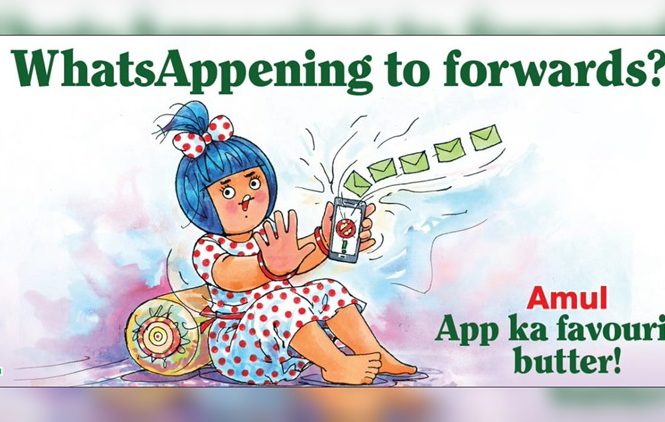
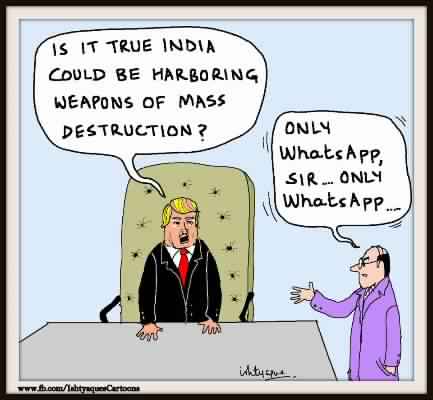
 Dad and mom gave us the best education, schooling and life possible. Our style of living and my dad’s passion for giving freely to people belied the scarcity we felt at home. He was a great follower of ‘Atithi devo bhava‘ (The guest is akin to God). The best at home was always given to the guests. My mom was publicly embarrassed by my dad in case she neglected to give the guests something she felt would add to perennial scarcity. For example, lets say, dad had got some sweets and she thought of not serving to the guests, dad would say in front of the guests, “Kyun mithai nahin khilani ehna nu?” (Why are you not serving the sweets to them?)
 My dad went several steps ahead; he had done an akhand paath (continuous reading from start to end) of SGGS ji almost entirely on his own. He believed that God and he existed for each other. His favourite hymn was:

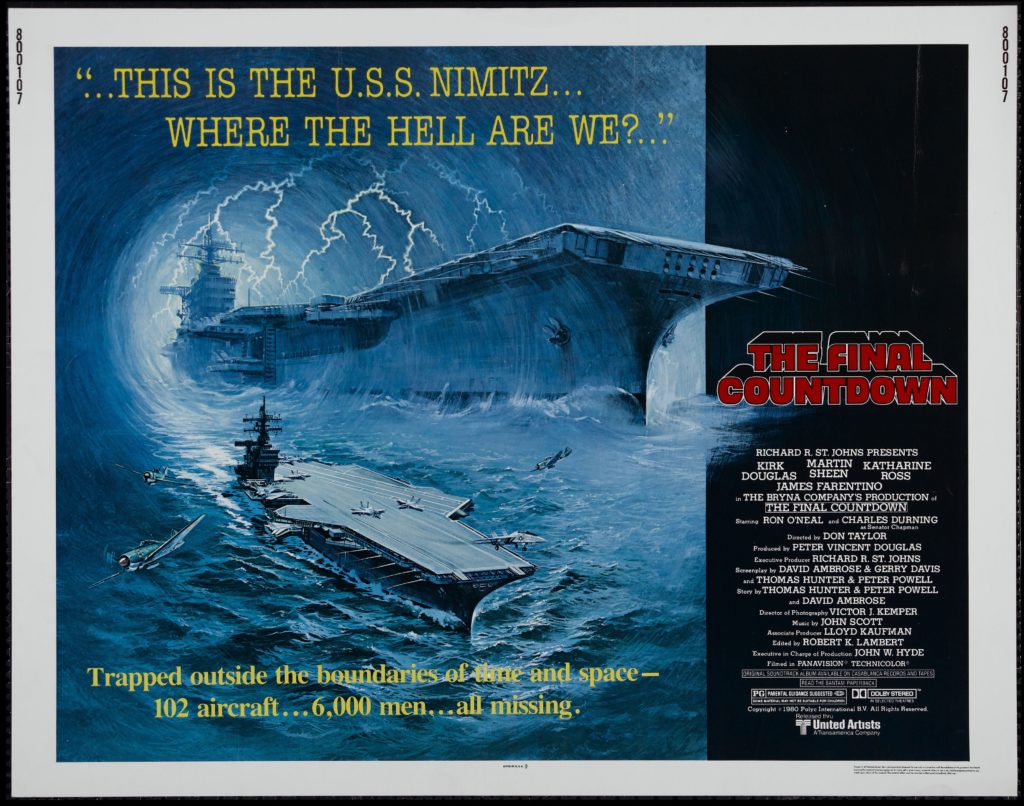
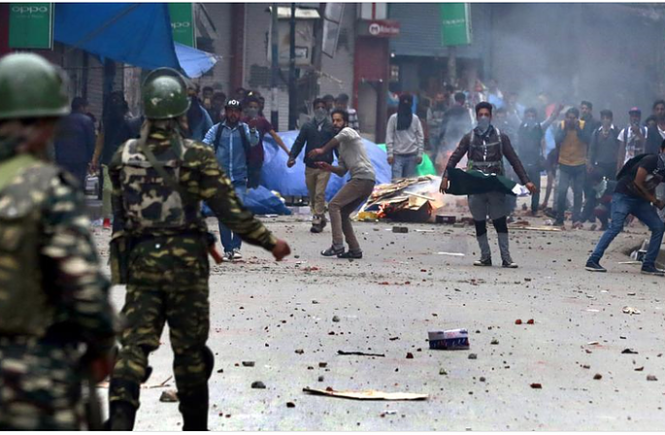
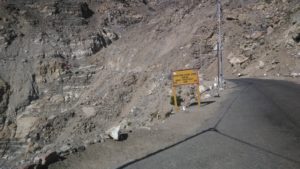 In many places, after Powari and Reckong Peo, we came across army jawans having been placed at really bad stretches of roads. Their purpose? Hold your breath – to prevent injury to people from falling and shooting stones!
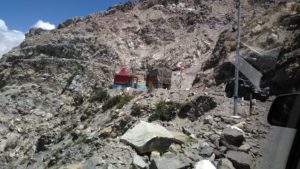 You don’t find humour in this? Well I find enormous humour in this: these are the same people that people pelt or hurl stones at and these are the valiant men who think nothing of risking their own lives to keep you from getting injured and/or killed!