ALL PHOTOGRAPHERS AND WRITERS, NO VIEWERS AND READERS

The biggest two techno-social changes that have happened in the last decade or so have affected our lives in a huge manner. Thanks to these two changes, everyone is a photographer now and everyone can write and publish.

People of this generation, who are already used to these two, won’t even know how difficult it used to be in the past.

Lets take photography first. At one time, as you see in various galleries and museums, only the royal people used to have their photographs taken. The camera – an equipment weighing about 5 to 8 kgs – used to be covered with a black cloth so as to save the film from unintended exposure. No one was well versed to take pictures except skilled photographers. Even after these photographers became available to general public; firstly, the cost was well beyond the reach of anyone except the upper crust; secondly, between clicking (actually it was not even clicking but a calculated exposure by removing the cap of the lens) and developing and printing a photograph a great deal of time would pass; and thirdly, because of the first two, there was nothing like photography on the move such as travel photography or even of events like picnics and birthdays.
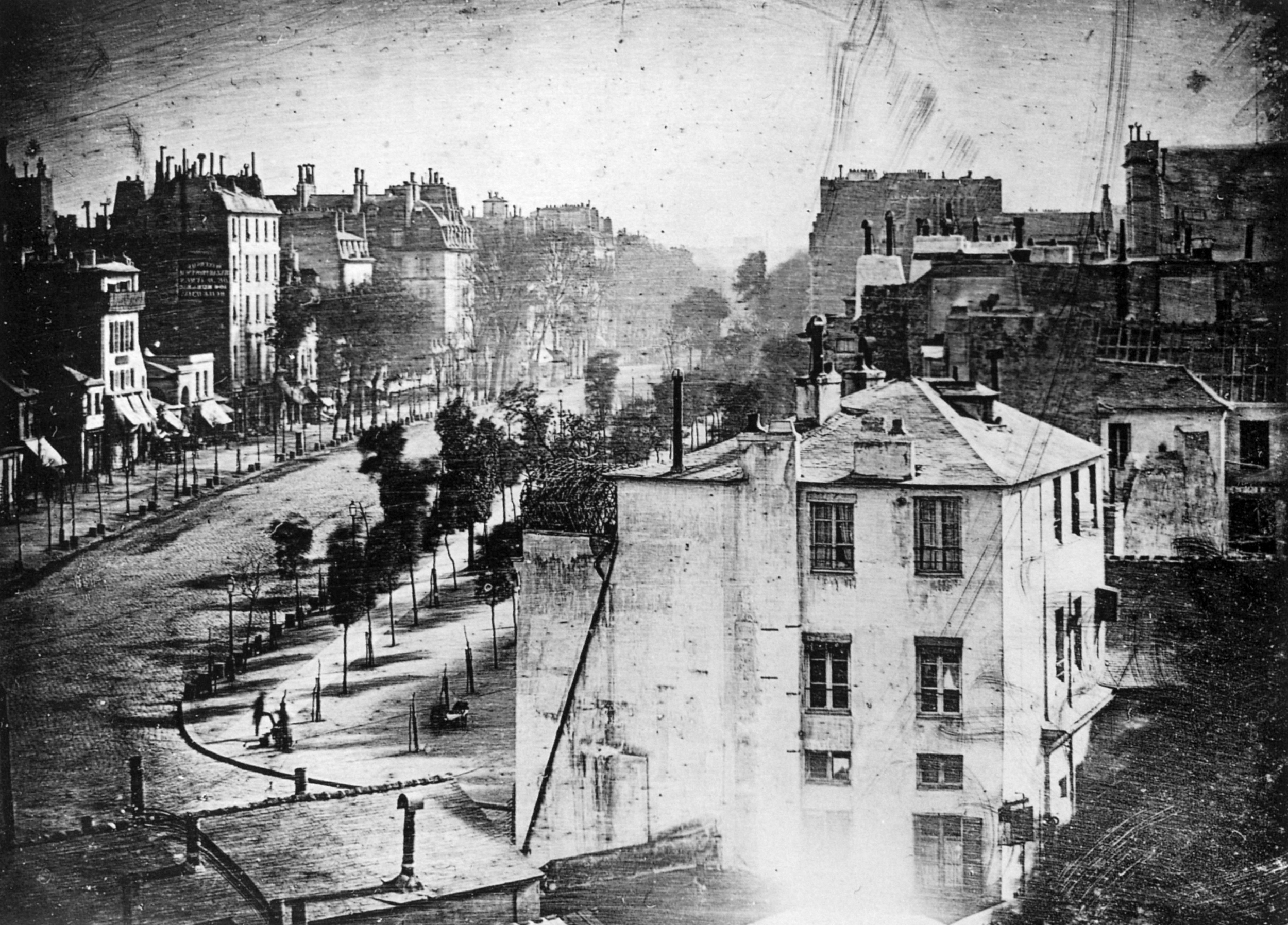
(Photo and following caption courtesy: https://en.wikipedia.org/wiki/History_of_photography "Boulevard du Temple", a daguerreotype made by Louis Daguerre in 1838, is generally accepted as the earliest photograph to include people. It is a view of a busy street, but because the exposure time was at least ten minutes the moving traffic left no trace. Only the two men near the bottom left corner, one apparently having his boots polished by the other, stayed in one place long enough to be visible.
(Photo and following caption courtesy: https://en.wikipedia.org/wiki/History_of_photography
“Boulevard du Temple”, a daguerreotype made by Louis Daguerre in 1838, is generally accepted as the earliest photograph to include people. It is a view of a busy street, but because the exposure time was at least ten minutes the moving traffic left no trace. Only the two men near the bottom left corner, one apparently having his boots polished by the other, stayed in one place long enough to be visible.

Even after the cameras became smaller and gradually SLR (Single Lens Reflex; that is looking at the subject through the same lens through which a picture was to be taken rather than through a view-finder mounted atop the camera), there were only limited pictures (generally 12) that one could click after settings that included weather, speed, exposure etc because of the limitation of camera roll that had to be installed in the camera with great care so as to avoid unintended exposure. One would know about the results of one’s efforts only after the entire roll got over and you went to a photo-studio to have the roll developed and printed.
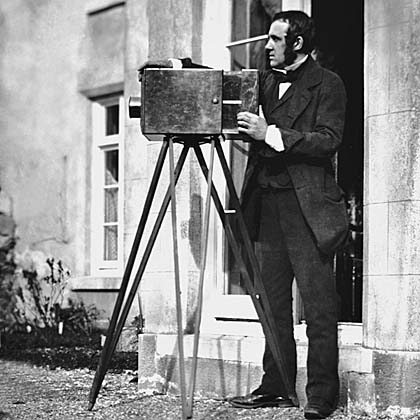
(Photo courtesy: www.culture24.org.uk showing the picture of a man operating one of the first cameras)

You invited friends and relatives to view your photo albums but rarely shared copies with them unless they featured in the photos. Even at that, to ask photo studio to make copies of specific numbers of photos was frustrating since many times due to reel loading problems, the number occurred atop two adjoining photos.

Even after the digital cameras came up, for the first few years these were so frightfully expensive that they were beyond the reach of the common man.

(Photo courtesy: www.mir.com.my; One of the earliest batch of Leica M3 chrome double stroke model, 1954 model. Here is a lovely illustrative photo of how a typical early Leica M3 camera body looks like. It has slightly cornered top-plate, all early M3 features. Note the lack of viewfinder frame pre-selector lever near the lens mount. Year: 1954 w/Serial No. 70031x. Expected to be pricey in such a condition - to satisfy your curiosity, true enough this unit had an auction price approaching EUR10K !)
(Photo courtesy: www.mir.com.my; One of the earliest batch of Leica M3 chrome double stroke model, 1954 model. Here is a lovely illustrative photo of how a typical early Leica M3 camera body looks like. It has slightly cornered top-plate, all early M3 features. Note the lack of viewfinder frame pre-selector lever near the lens mount. Year: 1954 w/Serial No. 70031x. Expected to be pricey in such a condition – to satisfy your curiosity, true enough this unit had an auction price approaching EUR10K !)

And then suddenly, every phone has a camera, everyone is taking photographs and selfies. Earlier, a video camera used to be carried on the shoulder of a qualified videographer; now, people are taking your videos when you are not even aware. Paparazzi is reportedly a nuisance phenomenon and one of the reasons behind Princess Di’s untimely demise in an accident.
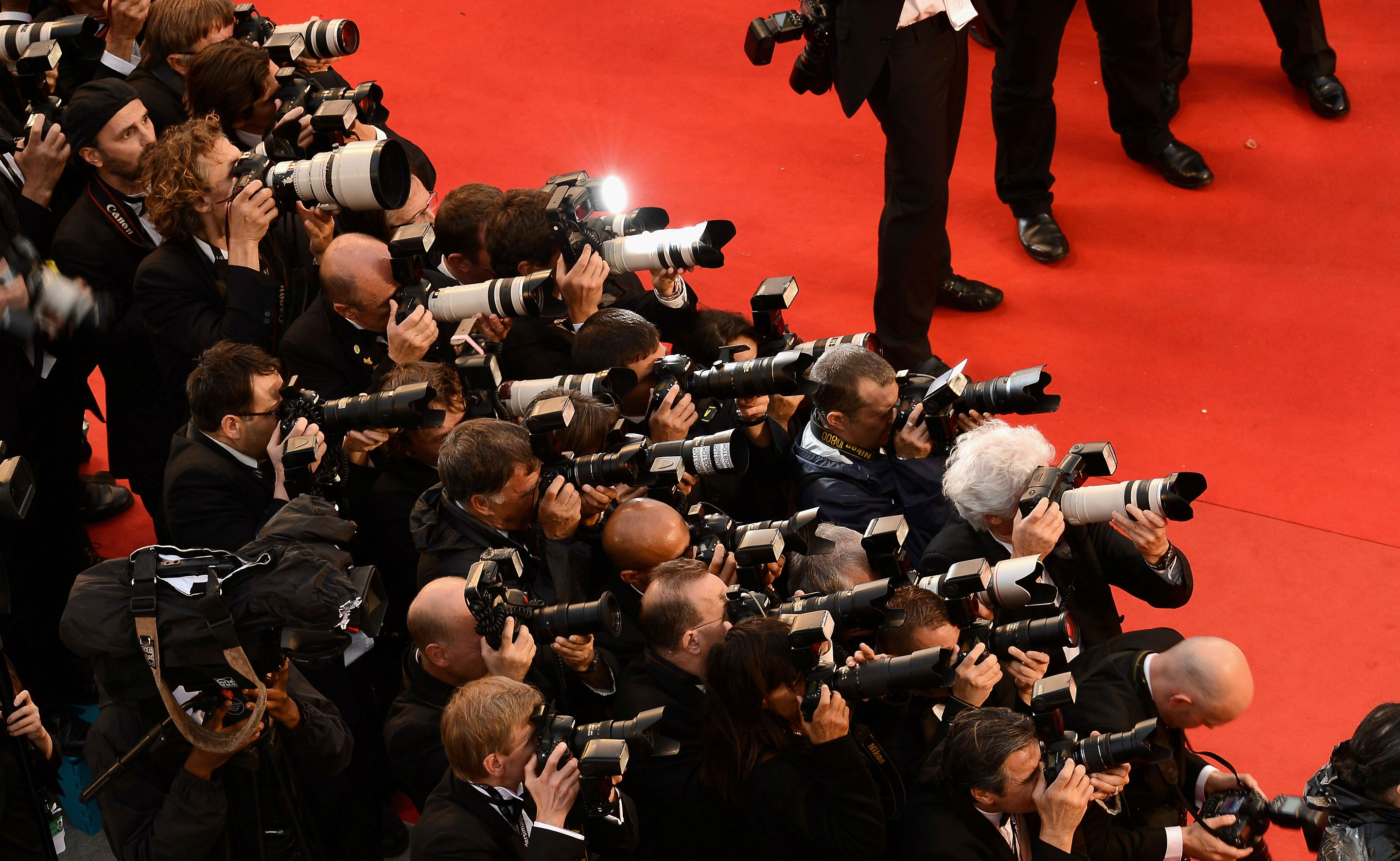
(Paparazzi - The Privacy Killer; Pic courtesy: en.docsity.com)
(Paparazzi – The Privacy Killer; Pic courtesy: en.docsity.com)

People are posting live pictures and videos on social media such as Facebook and Whatsapp. A number of jokes have come up because of this tendency. In a cartoon, for example, in a building people are advised as follows:

‘IN CASE OF FIRE, IMMEDIATELY LEAVE THE BUILDING THROUGH MARKED ESCAPE ROUTES AND NOT WAIT TO TAKE PICTURES AND SELFIES.’

With these millions of pictures on the net, some personal family pictures and others like Google Images, to get people’s attention to view them is quite a task. Various innovative means are thought of to attract people’s attention. One method on Facebook is to tag people in the post with photographs. These people would get notifications such as: “ABC commented on your picture”. You then hope like hell they would see “their picture”. Another method is to give them an attractive and catchy title. For instance, an Income Tax hoarding had an attractive skimpily dressed female with the huge sign that said SEX. As you walked closer, the hoarding said, “Now that we got your attention, we’d like to tell you that the last date for filing Income Tax Return is 30th July”.

Even at that, to get people to see your 349 pictures of your pet dog or 127 of your granddaughter’s mundan ceremony is as difficult as say getting people to see a play titled Swadeshi. There is also this big danger that if people see yours, then they consider you are obliged to see the 292 pictures of their outing to Borivali National Park, which has failed to get your attention since you have been there any number of times anyway.

What about writing? Well, the scene is no different; it is even worse. At one time, to be published was Herculean task. You wrote and wrote and wrote and sent your stuff to newspapers and magazines. They didn’t even respond. Once in a blue-moon, if your letter to the editor got published, it was a much curtailed and edited version of what you wrote.

Nowadays, there are any number of places where you instantly post the fruits of your fertile mind. Indeed, many people do so mindlessly. I have come across people who have written more poems in a year’s time than Wordsworth would have written in his lifetime. I have also come across a blogger who regularly writes two to three articles in a day. Then there are others, who write a paragraph of three to four sentences and call it an article or blog post.

Surprisingly, the more laconic your post or article is, the more people like it and comment on it. It is, they observe, easier to read. Also, mediocrity and even nonsense sell much better than any erudite or intelligent stuff. A few months back, I started a Facebook Group called Main Shayar To Nahin. Initially, there was great enthusiasm to share shair-o-shairi (the cheaper the better and more popular) and we were adding members by dozens. A few examples:

Bahut dard hota hai jab tum yaad aate ho,
Dard hone se phir tumhaari yaad aati hai”.

“Tanhaayi mein tumhaari yaad aati hai,
Kyaa kahun behisaab aati hai
Kuch tere aane se pehle, sanam
Kuchh tere jaane ke baad aati hai!”

“Dard ki hadd paar ho gayi tere intezzar mein,
Kyaa yehi silaa mila mujhe tere pyaar mein?”

I googled the first one and found nearly a Lakh members of that group in which such cheap poetry is shared. Each such shair has hundreds of likes and comments. And, in contrast, the moment I asked in our group to share good quality poetry of Ghalib, Faiz, Shakeel, Firaq, Daag etc, first of all very few people took the trouble to do it and secondly there were hardly any people interested in them, to like or to comment.

Social media like Facebook, Twitter and Whatsapp have an adverse effect of ADS or Attention Deficit Syndrome. No one is interested in a well-researched, well-written article. It has to be something catchy, meant for the dumbos and presented so slick that people fall for those three or four lines that you write. The idea is to enable them to respond since they are authors and writers in their own right. I have had people commenting on my articles copy pasting something that I would have written many months ago in the hope that I too would be suffering from ADS and would have forgotten that it was I who wrote it.

On the Indiblogger, which is a forum for Indian Bloggers, there is a policy of you scratch my back and I scratch yours. In this policy, people would vote and comment on your posts if you vote and comment on theirs. People have discovered that for this MAD (Mutual Assured Dalliance), they don’t really have to actually read anything at all and even if they read they don’t have to pay attention. This is somewhat similar to a minister having asked his secretary to prepare a 20 minutes speech for him and discovering that the speech actually took an hour. He complained to the secretary. She investigated and found that the speech was only 20 minutes long but the minister had read out the two carbon copies too that she had given him to be on the safe side. If you think it is far-fetched, you would do good to remember that our External Affairs Minister Shri SM Krishna recently read out the wrong speech at the United Nations; that of the Portuguese minister!

On Facebook, there is a button called ‘Like’ (Please also read ‘Like’ on this blog). It has answer to all our problems regarding reading anything at all. No matter how long it would have taken the author to write his stuff, you can press Like in less than a second and be done with. You routinely come across people who Like dozens of posts in less than a minute (Please also read ‘Why Read When You Can Like?’).

Various companies profit from this ADS of people at large. They write voluminous Terms and Conditions for their services. Just at the time when you are about to make payment and gain access, you get a message to tick the box to the effect that you have read, understood and agreed with their terms and conditions. You quickly do so without reading anything at all. In any case, if you were to actually read everything you would probably have to log-in all over again. Forget about the transient Internet. Have you ever read the reverse of your dry – cleaner’s receipt or courier consignment receipt or any other receipt? If you actually read through you’d be surprised that the companies, in their terms and conditions, have washed their hands off everything and the total onus of the correctness of their services is on you. Your Internet service-provider’s Terms and Conditions, for example, have nothing whatsoever in your favour even if their services are disrupted for lengthy durations. It is the same with Credit Card companies. Here, you even sign for ‘Our terms and conditions are subject to change’. I used to get a lot of calls from Credit Card companies promising me one Credit Card or the other. I started asking them to provide me with a signed copy of their Terms and Conditions. All calls stopped.

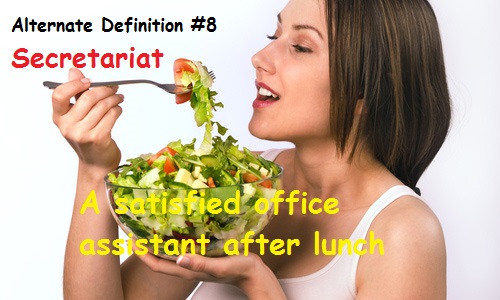
As far as your writings are concerned, you can master various ploys to make people read your stuff. One of the best employed was by the boss telling the secretary, “Mark this TOP SECRET; I want everyone in the office to read it.” But, beyond the ploys, finally it is consistency that pays off. If you have a small niche audience that reads your stuff, you should be happier than if you have had hundreds of Likes.

In the end also remember what Sahir Ludhianvi penned for a song in the Dev Anand movie Hum Dono. He would have never thought one day Sunbyanyname would relate this to social media where everyone is a photographer or writer but there are no viewers or readers:

Kaun rota hai kusi aur ki khaatir, ai dil?
Sabako apani hi kisi baat pe rona aaya
.”
(Who weeps for the sake of someone, O my heart?
Everyone weeps remembering something of their own.)

It is also worth keeping in mind the harsh reality that despite increased techno-social means available in the present world (that’s how I started this essay), the more people you meet on the net, the more alone you are.

It gives immense happiness to read your own articles or to see your own pictures at some later stage in your life when you look at them as another person.
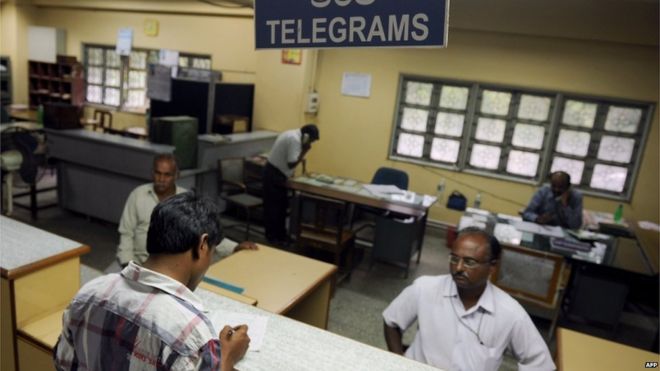
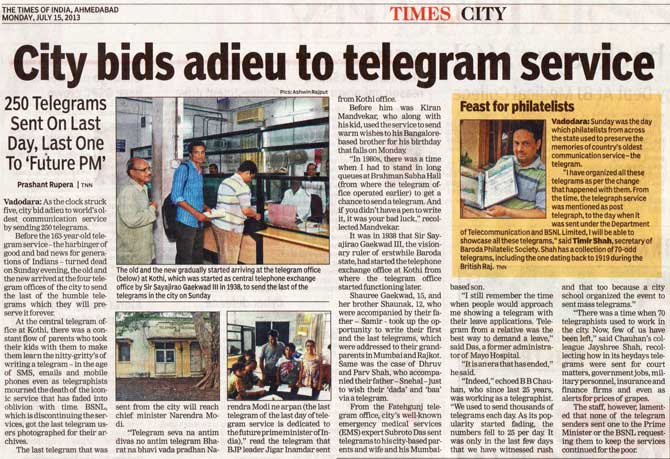
NOSTALGIA ABOUT TELEGRAMS

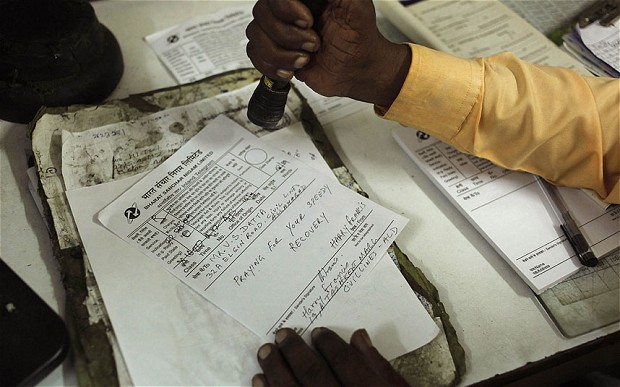
On the 15th of July 2013 we bade adieu, in India, to the 163 years old Telegram service in India. It was started by the British East India company between Calcutta and Diamond Harbour in 1850. Four years later it was made availabe to the general public.

Telegram news

It was, for a century and half, the fastest means of communication available to the common man in India and elsewhere in the world. As soon as the use of sms, Internet and Whatapp became more widespread, the demise of Telegram was just around the corner.

Telegrams

Telegram_2618017b

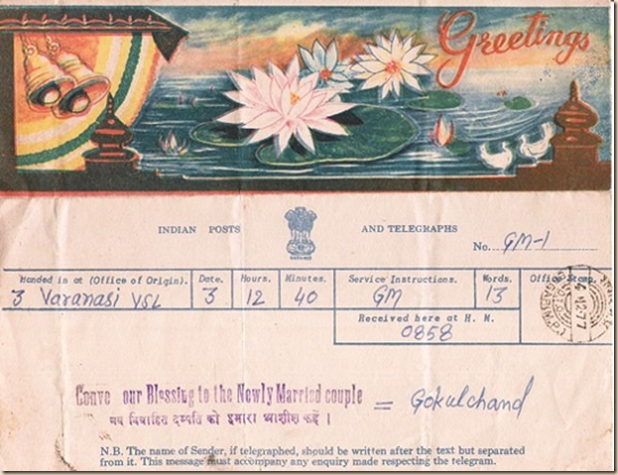
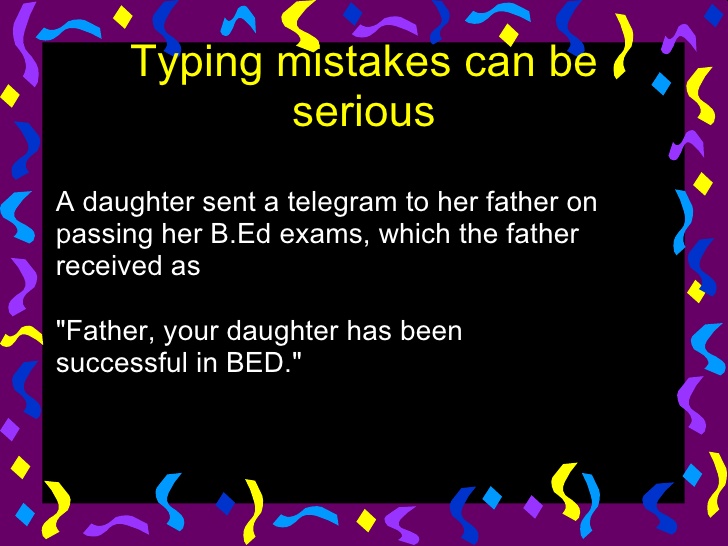
Telegrams used to be the harbinger of news both good and bad, happy and sad. Many a times, due to garbled transmission or reception or both or because of sender’s mistake, unintended situations would arise. It could be as comical as mix up of Greeting Telegram numbers wherein you had intended to convey ‘Congratulations on a well deserved success’; but, the recipient got it as ‘Congratulations on the new arrival’ or ‘May God shower His choicest blessings on the newly-weds.’ Or as serious as ‘Wife expired’ when you had meant to send ‘Happy Independence Day’ message. Such mix-ups had resulted in great sadness and heartburn for people until clarification arrived.

Telegram Greeting

I know the case of a fauji who finally managed leave from a forward posting from where he hadn’t got leave for a long time. He sent a telegram to his wife: ‘Got leave. Reaching home 29th’. When he reached home, he found his wife in bed with another man. He was furious; but, the mother-in-law calmed him by saying she’d check up the reason for her strange conduct. Sure enough, by evening, the mother-in-law had checked and found the reason and triumphantly announced to him, “I knew there would be a simple explanation; she never got your telegram.”

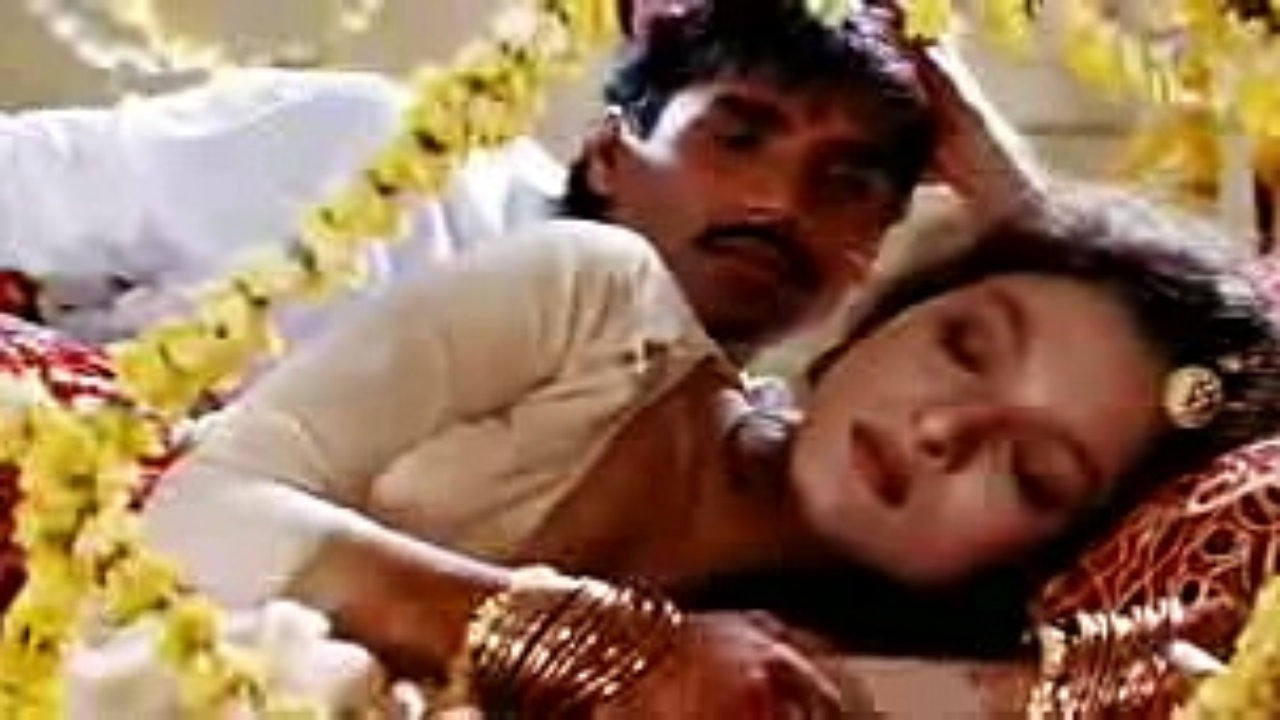
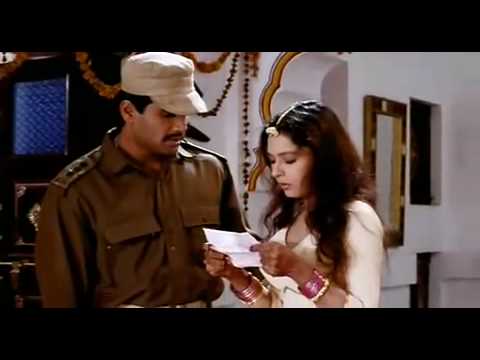
In the Hindi movies, telegrams for just-married faujis used to be delivered to them on their honeymoon nights when they would have just lifted the ghunghat of their newly wedded wives. The only message of the telegram would be asking him to report to border since war had broken out. India has fought five wars with its neighbours Pakistan and China. But, if these telegrams were to be believed, everytime a fauji wedded in a movie,  especially,  if it was a love-marriage that the family elders hadn’t approved of,  a war would breakout at about midnight. Irrespective of how far the sender’s place was, there would be jonga waiting to take him to the war with the wife standing in the doorway of their house bidding him a tearful goodbye.  Some would even run behind the jeep barefeet and remind him that Love was what they had between themselves and War was between the two countries and he, over a period of time, shouldn’t get these facts mixed up. One telegram had the power to shatter their dreams. One telegram spelt the difference between Love and War. I give you two consecutive scenes from the Hindi movie Border: the honeymoon scene and the dressing up for reporting to unit scene after the telegram:

Border

Border Telegram

In my case, I wasn’t called to the border, but, was sent to Andaman & Nicobar islands with the then Prime Minster Rajiv Gandhi and his Italian wife Sonia embarked on my ship Ganga. Their togetherness was at the cost of my and my Indian wife Lyn’s togetherness when she was expecting our second child. The news of our younger son Arun arriving was sent by her as a telegram which was received in Communication Centre (COMCEN) at Mumbai, who in turn broadcast the message and the ship received it. In my forenoon watch, the CO read out the message to me and I closed my eyes and said a silent prayer for them whilst thanking God that He made Life and He made Telegrams.

Unlike our Army counterparts, manpower in the Navy has always been scarce and hence not only that most naval personnel serve far away from their homes, they get leave with great difficulty and reluctance. Many innovative means are devised to first obtain leave and then to ask for extension. One of the telegrams received on my ship from a sailor’s family read: MOTHER SERIOUS. COME HOME FOR DIWALI. There was another similar one received on a sister ship: FATHER BREATHING HIS LAST AWAITING YOUR ARRIVAL FOR CHRISTMAS.

The most innovatively genuine Telegram received asking for extension of leave by a sailor was on board Vikrant where I was initially posted after my Subs Courses. This had us in splits. It read: REQUEST EXTENSION 15 DAYS, WIFE NOT YET SATISFIED. After everyone had vented feelings ranging from extreme anger to pity, the XO (whose Christain motto was ‘It is better to be kind than right’), sent the following historic telegram: EXTENSION GRANTED UNTIL WIFE SATISFIED.
image

This XO was decidedly a soft XO. There was a hard-boiled-egg of an XO who was aporoached by a sailor for leave having received a telegram from his wife that read: EXPECTING OUR CHILD. COME HOME URGENTLY. The XO read the telegram, opened his table drawer and pulled out another telegram that read: DON’T SEND SOHAN SINGH LEADING SEAMAN ON LEAVE DURING MY DELIVERY AS HE IS A DRUNKARD AND WON’T BE OF ANY HELP.

Naturally,  the first telegram received by Sohan Singh was redundant in view of second telegram received by XO from Sohan Singh’s wife. Sohan Singh was about to leave resignedly when his inner conscience goaded him to tell the truth, “Sir, you and I are the world’s best liars; you see, Sir, I am not even married.”

Now that BSNL has stuck the death knell of the Telegram, I am sure life would have undergone a sea change for Indians in general and for our faujis and sailors in particular. What would Diwali, Holi, Christmas, Pongal would be without FATHER EXTREMELY SERIOUS telegram?

PROCRASTINATION WAS MY HOBBY NUMBER ONE UNTIL…

When I was small, I used to wistfully look at the hobby selection of my friends. Some were good at stamp collection and had friends in distant corners of the world exchanging philately. During our childhood days, we used to have a candy called Fruitex that had stamps just under the wrapper. People would spend days, months and years collecting stamps from Magyar Posta, USSR and countries whose names we couldn’t pronounce.

Then there were others who liked gardening, photography, travel, poetry, writing, singing. One was into collecting coins too. I too wanted to have a hobby. Poetry and writing suited me most and I liked them. However, the one hobby that I really liked to spend much of my time on was Procrastination. “Don’t put off until tomorrow that which you can do today”, the scriptures taught me that. But, the thought of procrastinating things was far too attractive a temptation not to be tried out. In any case I argued that I could do all those things better tomorrow what I could do today.

Procrastination

The thought of lazily spending the day without much care about doing anything was my vision of an idyllic world. The man who invented the wheel was my ideal; life could go on and on, round and round, without too much of effort. One number that had attraction for me was Beatles’ Let It Be. Another favourite ditty of mine was:

And Noah, he often said to his wife,
Whenever he sat down to dine,
“I don’t care where the water goes,
If it doesn’t get into the wine”.

image

First of all the ring of the word itself held fascination for me: a Pro word like Progress, Promotion, and Prophylactic unlike those stupid, senseless Anti words such as Antipathy, Anticipation and Antibiotics. Secondly, the last part of the word is spelt as ‘n-a-t-i-o-n’ and I felt that I was doing my duty to the country by being an avid follower of ‘Procrastination’. In this I had healthy competition from our judges and lawyers, politicians and babus; for years, these worthies have been serving the nation by procrastinating everything. Our countrymen too, used to such inherent delays, have angrily questioned, for example, as to what was the flaming hurry in recently hanging a terrorist after merely twenty-two years of trial?

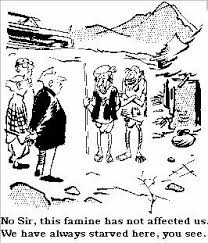
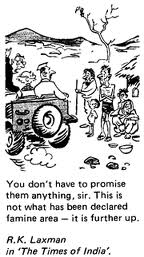
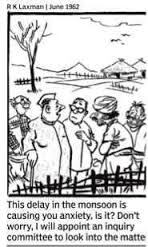
But then, a hobby is different from a vocation or way of life with some of our authorities. RK Laxman’s cartoons about such procrastination brought us untold mirth. In one of these, a politician visits his village constituency after several years of promising them water and electricity. The poor villagers were so excited that in another decade or so someone or the other from the government would look at the promise and see feasibility.image

The government of India (irrespective of political parties) turned out to be my biggest competitor in procrastination. As the Republic was constituted on 26 January 1950, it declared India to be a sovereign, socialist, secular, democratic republic, assuring its citizens of justice, equality, and liberty, and endeavours to promote fraternity among them. The words “socialist” and “secular” were added to the definition in 1976 by the 42nd constitutional amendment (mini constitution). Where are we 65 years later? Are we making any serious attempts to provide justice, equality, liberty, socialism and secularism? Are we promoting any fraternity among people? Quite the opposite. But, the future is bright and in another hundred years or so our politicians would have actually delivered. Until then, they would keep arguing about what constitutes poverty.image

My next competitors were the judges and lawyers and all those connected with providing justice to our countrymen. I had such a lot of competition from them that I knew that however hard I tred I could never emerge as the champion of procrastination in comparison to them. I used to think that the primary aim of our judicial system was to provide livelihood to lawyers and judges and other court officials. Now I know that it is the only reason. Procrastination is a way of life with them. Most of what they do in terms of providing justice is to give you another date of hearing. There are cases in our courts that were started in the times of present litigants parents and grandparents. Imagine if a perpetrator of terror in India’s leading city was convicted after 22 years, how much longer land and other civil dispute cases would take? Thanks to procrastination by the Indian courts, most Indians now believe in divine justice.

All those involved with the implementation of something called OROP (One Rank One Pension) for the Indian Armed Forces – the same Armed Forces that, in 1971, took only 12 days to sort out the problem of East Pakistan – deserve a Lifetime Achievement Award for their excellence in this hobby of procrastination. I could never match their skills.

Our bureaucrats or babus art in procrastination put me in total awe of them. They weild power through this art. The more they procrastinate the richer they become because people are ready to pay underhand for anything that would make our bureaucratic process – reputed to rank amongst the slowest in the world – faster. Aporopriately, this money is called speed-money. Lets say, you want to start a small factory manufacturing pipes for irrigation. Excellent idea. But, you want to start it during your lifetime itself! Problem. In order to obtain all the clearances, if you are so idealistic as to cringe from paying speed-money your factory would be a pipe-dream.

Our engineers and contractors involved in providing public infrastructure such as roads translate their hobby of procrastination into making more and more money. Projects that were to originally cost A-crores, due to their inimitable skills at procrastination eventually cost A x 10 and in some cases A x 20.

Your neighbourhood friendly doctor literally prolongs your illness as long as his/her felt need of having burgeoning bank-balance is not met. Your cure is always just around the corner.image

Something called Investigation or Inquiry in India still ranks amongst the highest form of procrastination; order one and you as a neta or babu is free from the burdens of responsibility or accountability for decades.

With this kind of stiff competition, I finally realised that I cannot get anywhere in my hobby. There are Masters of Procrastination who have been doing it for generations without much competition.

I took to writing and poetry and music. Next, I am thinking of stamp-collection!

DOING THINGS WITHOUT APPARENT PURPOSE OR REASON

Seeing the quality and popularity of my blog posts,  people frequently ask me to write and publish books. In addition to love for my writing, I know that they mean well by suggesting that I do something about my ever dwindling financial resources. When I left the Navy after nearly 37 years, I didn’t have much and I didn’t even covet much. I also know that they feel that the posts ought to be read by wider audiences.

My biggest concern is that I do not want to get into a rut wherein the quality or even acceptability of something that I am passionate about is to be measured in terms of money earned or readership.

There must be something that we do that is not done with a purpose, intent, end or aim in mind. However, in our current national and community thinking all tasks and engagements must have a specific purpose or reason. We even call into question God’s accountability and use such phrases as: “All the money that I donated to the temple fund appears to have been wasted since our son still couldn’t get admission in medical college” or “Yes, God answered our prayers in getting mataji’s health back. But, out of rupees 10000 that I paid as chadhawa (offering to God), God appears to have given back only about 2000 rupees worth”.

A few years back I started trying my hand at the game of golf. Since I am fond of open spaces (Please also read: ‘Walk Or Gym? I Like It In The Open’), I liked walking on greens, through bunkers and woods chasing a small white ball. However, soon many of my friends started teasing me, “So, you have decided to become an Admiral? This is the sure shot way.”

It must be a world-wide phenomenon; but, it is much pronounced in India. Everything has to lead to something. You can’t have friends unless they can be of some use to you when the chips are down. Indeed, many people actually think of friendship as an investment. Similarly, political people, babus, doctors, lawyers etc have to be nurtured assiduously with the purpose of providing some return when needed.

Children’s education too is seen as an investment. There has to be some return else it is not worth making him or her an engineer or even well read or well educated.

After retirement from the Navy, I started this blog with the idea of giving vent to my creative energies. It was supposed to be a leisurely pursuit. However, then I made the mistake of joining Indiblogger (Please also read ‘Blogging – Race Or Stampede?‘). Soon I was hooked on to monthly ranking: mozRank, Alexa rank, frequency of posting, and external juice passing links and the like and then it became as banal as anything that we do in our life.

The other day, I was reading this light-hearted take on blog writing: ‘It is like various stages of prostitution; first you start doing it for fun, then for your intimate friends, thereafter for wider circle of friends and acquaintances but finally you start doing it for money. My writing is still at the first stage and I am – as they say in McDonald’s  ad – I’m lovin’ it.

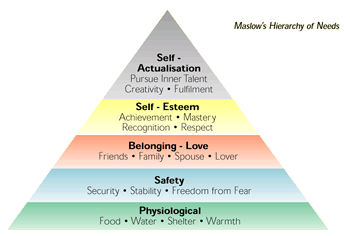
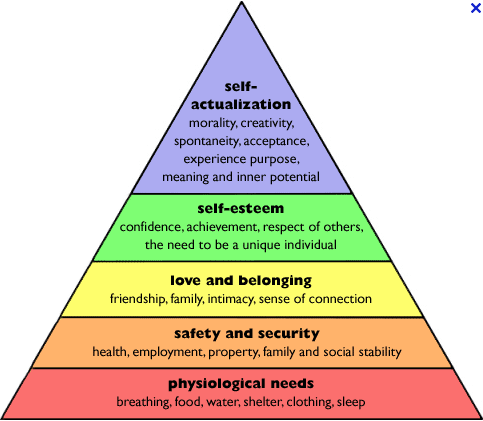
Yesterday, once again, I was taking a class with the young executives of my company on Leadership and Team Building. In yet another talk, I reminded them about Abraham Maslow’s Hierarchy of Needs. In the pyramid, at the base, are the Physiological Needs, going up to Safety Needs, Love and Belonging Needs, Esteem Needs and finally Self Actualisation Needs. Privately I was thinking that we Indians are almost perpetually at the bottom of the pyramid, doing things only to satisfy some basic need or the other. There is always a purpose for doing anything.

MaslowIs there no time when we would do things because of passion, a fire that burns inside, a quest that needs to be quenched? Is there no time when we would be like the avid mountaineer who was asked why did he have to climb a
mountain and he replied, “Because it is there”?

(Pic courtesy: skreened.com)

There is no price that can be placed on a smile; and, if you can smile inwardly, without any apparent reason, it is priceless indeed. A mother does it so often with her child and doesn’t ever count the number of likes and comments her child gets or her ranking in the world because of him.

Your pet does it and you do it for your pet; you read a number of articles about how having a pet is good for you. But, those are after you have got him or her.

Love is not a reasoned emotion and yet, it is the greatest of human emotions.

INDIAN NAVY IS THE ONLY LIFE THAT I HAVE KNOWN AND SEEN

There must be thousands like me in the armed forces of India; we join at a very young age (I was 19 when I joined the Naval Academy or NAVAC at Cochin (now called Kochi) in 1973) and retire when we do not have much life left to see (I retired in end Feb 2010 as Commodore at the age of 56). The other day, on Facebook, I saw security executives in my present corporate where I work celebrating four years (to them it appears a long time with the present trend of job-hopping) of having been there in the same industry. I spent 37 years in the Indian Navy and I could have celebrated this feat nine times over!

I was given the President’s Commission on 01 July 1975 and just a few days back my course-mates and I greeted one another on having completed 40 years of commissioned life. At the time of joining, some of my course-mates were suave, smart, confident and in with the naval way of life. To me, it was all very strange (if I were a girl, I would have been called Alice irrespective of what my parents would have named me!). One or two of the course-mates even appeared to have been from a different planet; one still appears thus. I must have been the most awkward and unlike a Labrador, the least trainable.

What fascinated me about the Navy? The short answer is books and movies; I lapped them up during my boyhood days and imagined myself standing on the deck of a ship like, say, Willie Keith in Caine Mutiny or George Ericson in The Cruel Sea. I also had this strange wanderlust and hence going to sea was as far as I could get from the hills of Himachal where I had been for all my childhood and boyhood years. Now that I have retired from the Navy though the sea is still as fascinating (Please read ‘The Lure Of The Sea’), my next fascination is about matters of philosophy and meta-physics (you will find my writings on these in the Philosophy section of this blog)

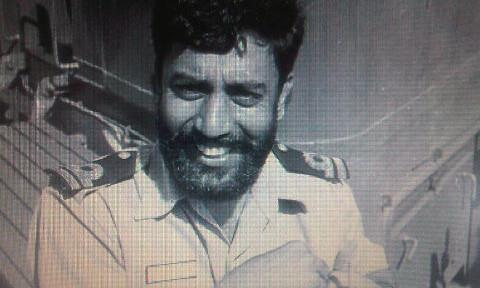
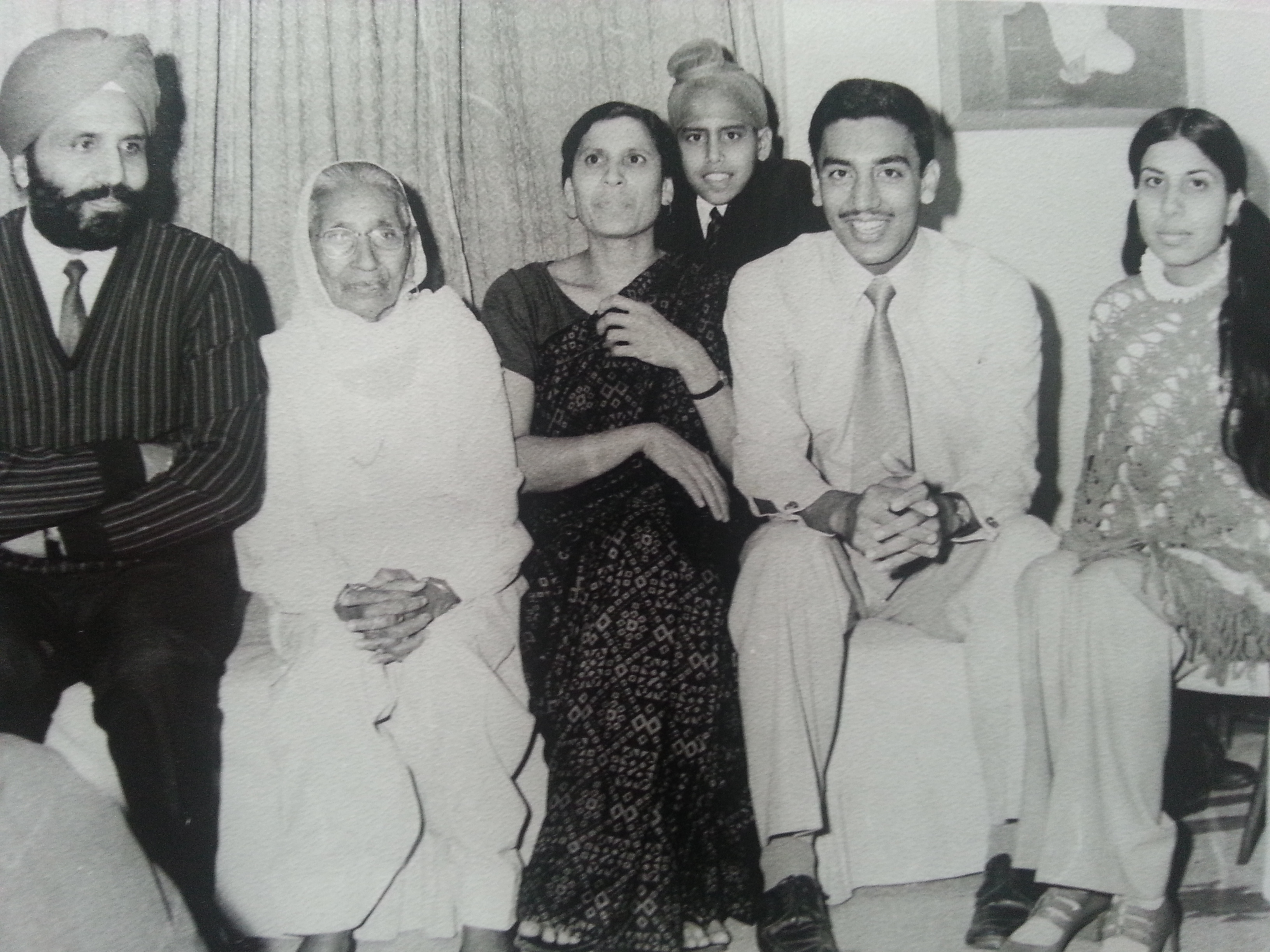
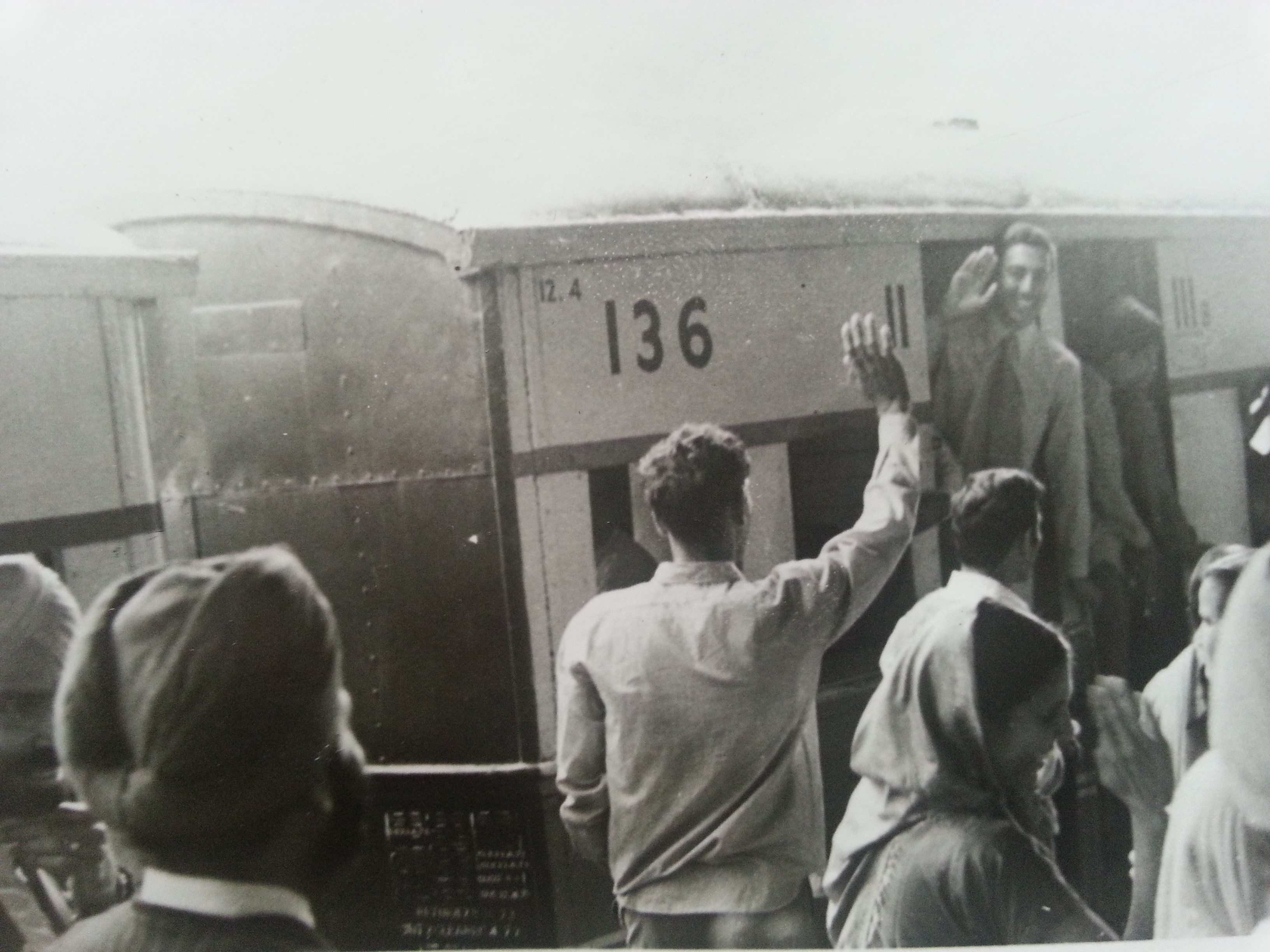
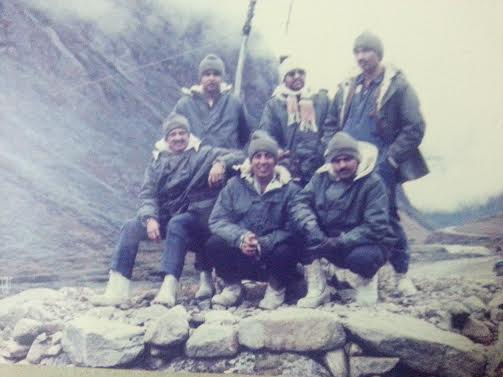
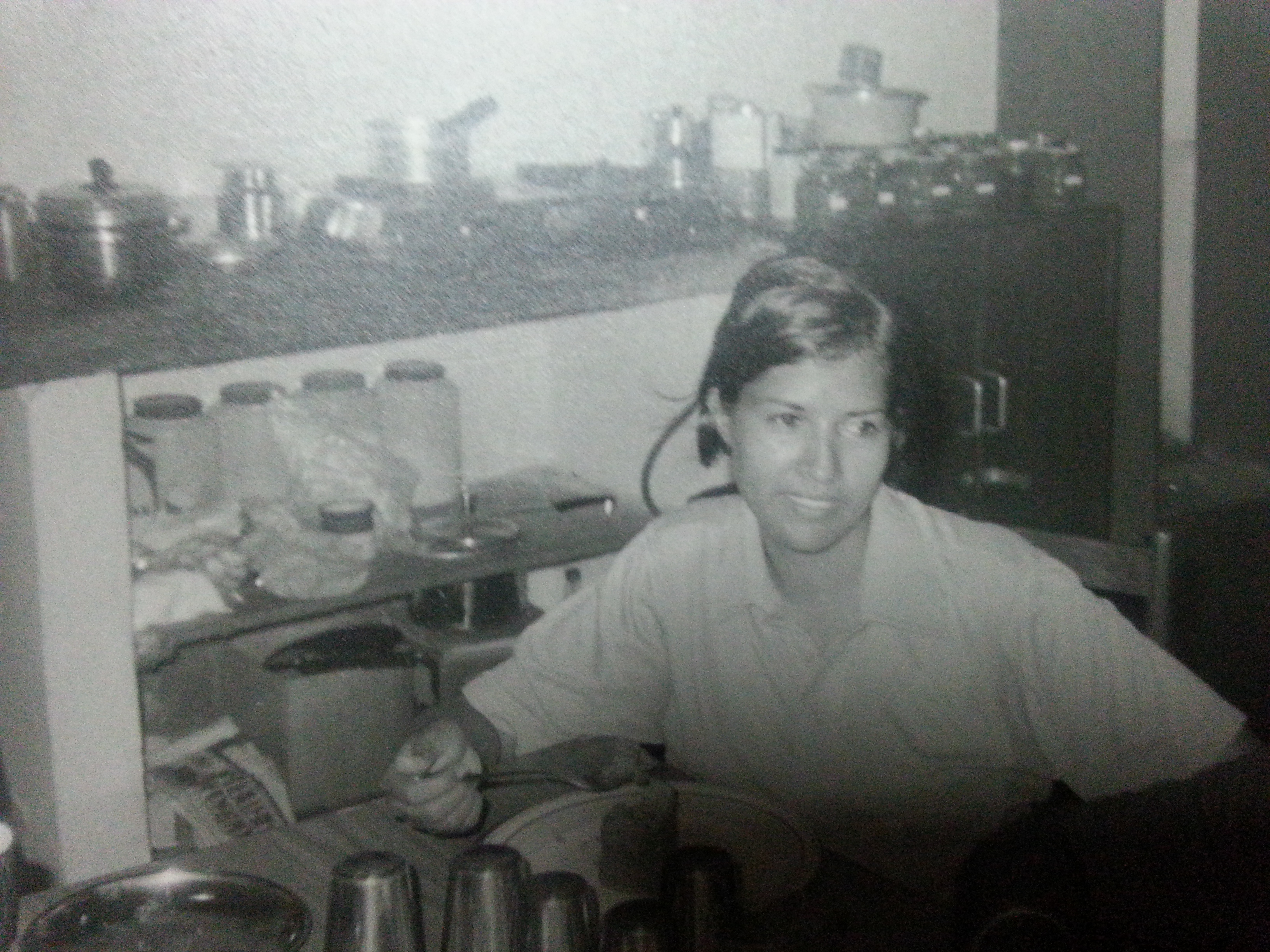
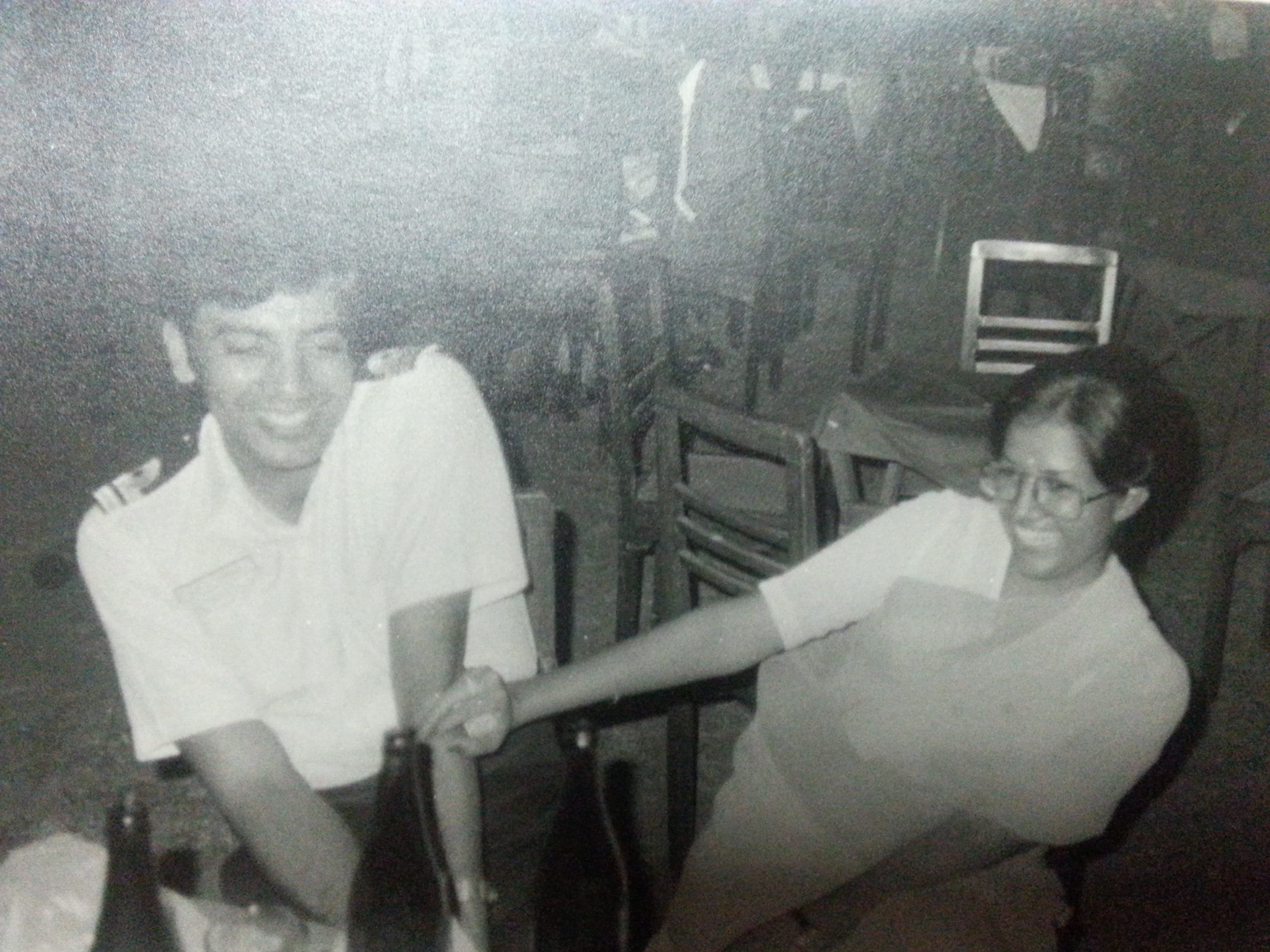
So, one fine day, from my home-station in Simla (now spelt Shimla), in May 1973, I took a train to Cochin to be trained (tough job for them!) to become an Indian Navy officer. Here are the last two pictures with my people before Navy claimed me:

20150625_103124

20150625_103147

You must have seen two things in the above pictures: the short hair-cut that I supported in preparation for the Naval life and the huge smile. As soon as I landed up at Cochin they modified both. The journey to Cochin from Simla had taken only two and half days and how much my hair would have grown in less than three days? However, the urgency with which I was taken to the barber (barbarian?) made it seem like I was some hirsute sadhu who had emerged from the caves in the hills after long hibernation. I couldn’t believe the mirror when this barbarian had finished with me; all resemblance to a wantonly college-going teenager was gone forever. My snake-leather belt, large brass buckle and my bell-bots were all gone. Even civvies for us were the muftis with a neck-tie. Uniform became a way of life in profession, in spare time, in thoughts and even in sub-consciousness.

The next were my seniors who appeared to be direct descendants of Goebbels; they made me wipe my smile as if it was an ugly scar. One of them got used to ragging me with a simple monosyllable word repeated ad-inifinitum (one of the two in his extensive vocabulary; the other being No). An intelligent conversation with him went like this:

A: Why didn’t you report to me yesterday?
Me: Sir, I broke my leg.
A: So?
Me: I reported to the hospital.
A: So?
Me: They put my leg in a cast. It is still in the cast as you can see.
A: So?

“So, Sir, I prayed whole night to God to make me a bird” I wanted to add, “But, then He told me I would have to do without a brain because He had given you the bird(‘s)-brain.”

I also found out that neither my seniors nor any of the staff at NAVAC respected time of the day or night; one could be asked to do front-rolls immediately after dinner or do somersaults in the middle of the time. I was also to learn, at great cost to my dignity (or whatever remained of it) and physique that during war we may have to change various rigs in less than a minute each time lest the enemy should steal advantage over us. And, in order to prevent enemy from seeking this advantage, those of us who couldn’t finish rig-changing in a minute’s time had to go through the kind of torture that the enemy would have unleashed on all.

These staff and seniors, totally bereft of even the remotest traces of civility, made me do things that were well beyond my own endurance and stamina and against my loudest protestations. For example, they predicted that if they threw me in the deep end of the swimming pool, I would automatically learn swimming. I knew it was impossible and I tried my best to tell them so. However, they insisted on the correctness of their theory. Lo, and behold, after a few dunkings and after my having drunk gallons of chlorinated water, it is they who were proved right and I automatically learnt swimming. Late at night in my bed I formed the opinion that it wasn’t correct that God listened to the godly and righteous people; He also listened to such devils.

In likewise manner, I automatically learnt many a thing and discovered newer limits for my own endurance and stamina.

I learnt, for example, that one could go to sleep whilst standing erect on the bridge of Cadet Training Ship Delhi with binoculars in hand tied to a lanyard around the neck.

I also learnt about Relativity of Time; four hours spent in the club (Officers Institute) in the drunken company of my course mates would pass in a jiffy; whilst the same four hours during the middle watch on the ship appeared like four years.

To add to the misery of training days was the naval lingo that had quaint feel about it. One had to say “Aye aye Sir” if one wanted to say “Yes Sir”; port for left, starboard for right, and “very good” whilst acknowledging a report even if the report was about an impending collision.

I remember seeing the Daily Orders for the first time and laughed that even in an official document personnel were called by their nicknames such as Popti for our physical training instructor until it was explained to me after considerable front-rolling and bend-stretches that it wasn’t Popti but PO PTI (Petty Officer Physical Training Instructor).

Armed forces are, I gradually learnt, always training. Many years later, when I was the Director of Maritime Warfare Centre at Mumbai (I am the only officer who has been Director of all three MWCs in the Navy involved in tactical operational training of Command teams), the motto on the Large Screen Display in the auditorium was by General Patton: ‘The more you sweat in peace, the less you bleed in war’. Armed forces, therefore, are always sweating.

On Cadet Training Ship INS Delhi, our only contact with the civilian world was to be taken for what was called RWR (Road Walk and Run) along the Marine Drive in Bombay. What a world awaited us, we thought; Bombay, the dream city of Hindi films (not yet bastardised to ‘Bollywood’) and glamour, the city of marines and window to the rest of the world, the city of money, and the city of possibilities. And when I finally joined it, honestly, there was this air about us that put us on a pedestal. During those days, you rubbed shoulders with the elite and they were dying to be seen with you. During my Acting Sub Lieutenant days, we could sit in the Ante Room and enjoy the company of Nutan and Tanuja. A video of those days is going around showing really big film stars, singers and music directors attending the Navy Ball.

Forty years back, I remember, I had gone in uniform to receive a senior officer at Bombay Central. After receiving him, as I stood in the queue for a cab to take me back to my ship INS Himgiri, a cop who was directing people into cabs, beckoned me at the end of the queue, stopped the next cab for me, put me into it, without any protest or demurring from anyone ahead of me in the queue. It felt really nice being a uniformed naval officer.

And what about going abroad? For a boy from a small town in Himachal, who was awed by walking and running along the Marine Drive in Bombay, stepping on a foreign shore was ecstasy indeed. Our CO said we were to be ambassadors of our great country and as I covered in ‘Foreign Jaunts’, it felt great to be in the naval-diplomatic role wherever we went. Many decades later, in the year 2001, as the Indian Navy organised its International Fleet Review in Mumbai, the motto selected by them was ‘Bridges of Friendship Across the Seas’. I remember our visit to Odessa in erstwhile USSR (now in Ukraine) on Himgiri, my second ship as a commissioned officer after three weeks on Vikrant in harbour. The official reception was held on the second evening. All the lovely Russian damsels attending the reception asked us why the officers were not attending the reception. We were flummoxed until the mystery unfolded. In foreign shores, sailors go on shore leave in uniform whereas officers go out in civvies. Some of these damsels, fascinated by naval uniforms, gave company to some of the sailors over drinks, dancing and dinner. When they inquired from these sailors the meaning of two crossed anchors badges on their sleeves, the sailors responded that they were officers (conveniently forgetting to add that they were Petty Officers!) and hence permitted to wear uniform ashore whereas the other ranks had to perforce go out in civvies.

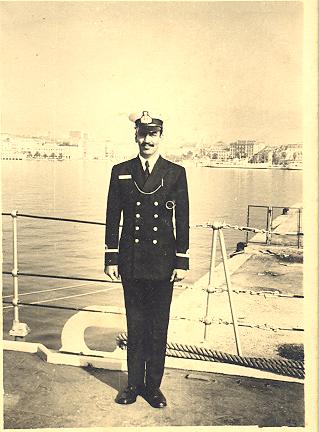
In Split, erstwhile Yugoslavia, my first foreign visit as an officer

The fascination for naval uniform abroad was to be seen to be believed. I have seen in real life and in pictures people stopping to have their pictures clicked with men in uniform.

During the training period and in our formative years in the Navy, we almost totally forgot about our families. My only sister, for example, got married when I was a cadet, holy-stoning the decks of INS Delhi (erstwhile HMS Achilles that took part in the famous Battle of the River Plate against German battleship Graf Spee, together with HMS Ajax and HMS Exeter. The movie was shot in 1956 and the ship had already been transferred to us in 1958. During the shooting an aerial photo shoot was to be redone because when the reel was developed, it came out that a Sikh sailor, complete with his turban, had come out on the upper deck of Delhi!). I never attended her marriage or any other marriage; I was married to the Navy.

We did manage to fall in love and get married (Please read ‘Lyn And I – Scene By Scene‘); but, the Navy proudly and correctly told our wives that Navy happened to be our first love and they could, at best, be Number Two. The wives themselves had no doubt and never tried to be Numero Uno in our lives. Strangely, the ladies too learnt the ropes through the automatic process that I mentioned above. Whilst we had learnt quick rig-changing, my wife learnt the art of quick packing and unpacking both on permanent as well as temporary duties. They also automatically learnt how to get the best from MES (Military Engineering Service); for example, how many incandescent bulbs of what wattage they were entitled to in exchange for how many. They waited endlessly for us to return to harbour; only to see us off again on another mission, which, they complained the newspaper man and the dhoodhwalla knew all about; but, which “thanks to your stupid secrecy norms, you don’t tell us”.

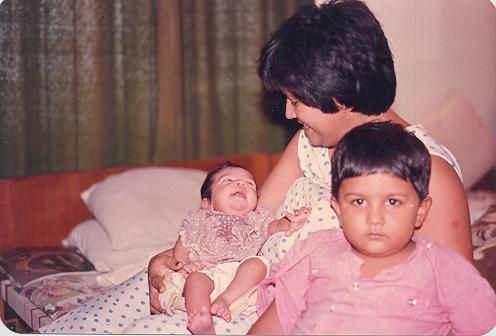
Our first child, Arjun, was born immediately after my father’s untimely death in an accident and hence under trying circumstances. Our second child, Arun, was born when I was away for a month to Andaman and Nicobar islands on my ship INS Ganga with Prime Minister Rajiv Gandhi and his Italian wife Sonia embarked. Lyn, my wife, walked to the hospital, quickly delivered and returned home so as to look after the first one too. Now that we were raising a family – and in my case, under most difficult conditions (as you would have gathered from the blog ‘Lyn And I – Scene By Scene’) – for the nth time, the automatic process came in handy. Both the children too became fiercely independent (Read ‘Diminishing Dad‘), capable and accomplished almost entirely on their own. The other day, my erstwhile coxswain of INS Aditya, a retired Petty Officer, brought his daughter for selection in ICSI (Institute of Company Secretaries of India) run institute called CCGRT (Centre for Corporate Governance Research and Training). She is from a small town in Andhra and just 12th standard pass. She had to compete against graduates and diploma holders but she easily got selected, thanks to the automatic learning process of the armed forces.

During our days there was a joke about a naval officer’s involvement with his family (I believe the joke is still prevalent). A naval officer was asked how big his two children were. He pointed out with his hands, not vertically, but horizontally. This was rather quaint way of bringing out the size of his children and he was asked to explain. He responded, “I see them in the bed only; when I leave in the morning they are still in bed, when I return late at night, they have already gone to bed.”

Naval families 'automatically' grow up and learn to stand on their own feet.
Naval families ‘automatically’ grow up and learn to stand on their own feet.

Ask a naval officer as to what are his most nostalgic experiences in the Navy. With very few exceptions, he would answer:

#1, the Midshipman Tenure. It was a rank unique to the Navy when one was not quite a commissioned officer yet and also not a cadet. This lasted for only six months whereas we would have wanted it to last a lifetime; you’d start getting some perks of being and officer and yet not too much of responsibility. Indeed, in the naval slang a Midshipman used to be called Snotty as he would be frequently wiping his nose on his sleeve. Our Midshipman tenure was on INS Tir, an erstwhile River Class Frigate of the Royal Navy; and we had a ball, even though we had to do hot-bunking (the number of bunks in our mess being much less than the number of Midshipmen on the premise that a certain number would be on duty by rotation all the times).

#2, the Command of a Ship, Submarine or Aircraft. A Commanding Officer is next to God. Indeed, as the old timers used to say: “Ham God nahin hain, par, God se kam bhi nahin hain.” (I am not God; but I am no less than God). The responsibility that the nation places on a CO of a ship, submarine or aircraft at sea is as mammoth as the unfettered powers given to him; you can’t afford to make mistakes; people’s lives are dependent on you. During our training years we used to wonder how the CO, even whilst asleep in his cabin, instinctively knew what revolutions the ship did by the sound of the engines and whether we were headed into danger. Two decades later when I commanded my own ship, I realised that it comes to you automatically.

#3, to be given an official transport (vehicle). Ahh, for this, during our days, one had to be a very senior officer! And then, the moment this honour (Read: Navy And Staff Cars) was bestowed on you, you sat at the left rear of an Ambassador car, saluted back with a flourish all those who saluted you and failed to recognise your erstwhile friends lest they should ask you to share the prized possession.

Nearly 37 long years went as if in a jiffy. And before you can pause, the Navy retires you. Three days after I retired from the Navy on 28th Feb 2010, I wrote a blog ‘I Flew Over The Cuckoo’s Nest – Did I?’ in which I concluded “I have no desire to fly over the cuckoo’s nest. The loony bunch is family, for heaven’s sake.” There is nowhere to go. Five years later, after working in India’s largest corporate, there is still nowhere to go; Navy is the only home I knew, the only life I had.

We hadn’t seen any life on civvie street at all. The civilians must be smart in their own ways; after all they command large organisations, governments and countries, whereas all that we do is to command ships, submarines and aircraft. However, frankly, I haven’t met anyone half as smart as a naval officer! In my case, in the Naval Academy, in the Ante Room, I distinctly remember that we waited for someone smart to switch on the television as one, we hadn’t seen one before; and two, with its complex sounding controls such as Contrast, Brightness, V hold and H hold, people would laugh at us if we didn’t know how to get a picture that didn’t jump on the screen. Years later, we were handling with ease, the most complex Electronic Warfare and Action Information systems. The Navy lets you learn all these – well, by now even you know the process – automatically.

Navy was life, a system that used to work; and I know it still works. We were always responsible and accountable for all our actions and non actions; except perhaps during our Midshipmen days. And then you are faced with the lack of discipline and accountability to that extent wherein people die and no one is to be blamed; wherein brand new bridges collapse and no one is accountable; wherein after 40 years of promises and more promises, we still don’t have an OROP (One Rank One Pension) and everyone assures you it would be there shortly.

A Navy man is totally at home when he is at sea as I wrote in Lure of the Sea. But, the moment he is out, he pines for the sea, the only life he’s had.

HAMARA NAVAL DRAMA

Now that after retirement I am employed in a corporate, I am able to see the difference in work culture: you have people specifically for specific duties as given in their JDs or Job Descriptions. In the armed forces, one is expected to do everything as and when the need arises; and many a times someone else’s job too. No one tells you how; you learn as you go along. If the armed forces were to be a play or drama, there is rarely a prepared script or dialogues or plot; you ad-lib the entire thing. People’s lives are at stake, at times, and hence you better get your role right; the first time itself without any rehearsals. For example: “That over there is Tiger Hill. Now get it vacated of intruders.”

Why did I think of the Navy as a drama or a play when I was in active service? Well, come to think of it, even life is like that. But, I had one more reason: my fondness for acting and directing honed from my school and college days. In the NAVAC or Naval Academy, on the positive side, I was much in demand for plays and skits, even extempore ones during camps. On the negative side, I recall that a boxing bout between me and my course mate was stopped by the referee on the ground that whilst the entire thing looked very impressive complete with wincing and all that, he was sure that we should stop acting and get on with real boxing for a change. Actual blood and bruises followed after that and then only our officers and instructors were happy. Histrionics have their time and place elsewhere in the Navy, I learnt.

One such opportunity came my way when I was posted to Navy’s Leadership School at INS Agrani in Coimbatore. One fine day, our CO called a senior colleague and me to his office and said a letter had arrived from Southern Naval Command at Cochin for us to field a team at the Annual Dramatic Championship. He said the responsibility for taking this task on rested on my shoulders since I was the junior most officer posted there. He said my colleague Amarjit Bajwa would help me out.

Bajwa and I took our task rather seriously and that night discussed our strategy over several bottles of beer that continued till wee hours of the morning. In our drunken stupor a brainwave hit us; which is, that in order to enact a play, we require a script. So, next day we started searching in our library for play scripts. We found that the library was loaded with books on current affairs, history, poems, stories and the like; however, there was not a single play. In the next few days, we ransacked various libraries in and around Coimbatore; but we couldn’t find a suitable play.

We even went to the Staff College Library in Wellington by Bajwa’s Bullet mobike. But, it appeared that whilst in real – life in the armed forces, everybody is acting, there was a dearth of good play-scripts to help out people acting on stage.

After these expeditions, we involved a few sailors in doing a play. Various problems came our way. One prominent one was that most of the play scripts had some female cast. Our tall Regulating Petty Officer (Naval Police) was persuaded by us to put on a saree and shifting his role from being a terror in office to being a terror at home. But, somehow even the donning of Saree made no difference to his austere and upright naval police looks.

We tried a few sailors for their suitability in various roles and found that they were typically suited only for one role!

Dejected, one day, I performed various roles for Bajwa that I had performed in school and college and some that I would have wanted to do. In his no-nonsense mood, he wasn’t tickled. In one of these, I made him sit on a bench complete with his turban and beard. But imagining him as a girl, I approached him with a large sunflower, and wearing a tapori cap and started a dialogue that I had heard in one of Sunil Dutt’s movies, “Dilo dildaar, gulo gulzaar, ahd-e-bahaar, rango khumaar, film star, mallika-tarunnam, malika-e-jahan….” Before, I could finish with “….roop ki raani, baharon ki mallika…” Bajwa had given up on me as a gone case nut.

The date for staging the play was getting closer and it had come to last one week. Let alone rehearsing the play for a prestigious event, we hadn’t even selected a play. That day Bajwa was so annoyed with me that he could have eaten me alive.

That night, I wrote the script for a three-act-play titled Hamara Drama. Whatever we had done in search and preparation for the play was put in the first two acts. In the last act, Bajwa and I were sitting dejected that we still didn’t have a play and that everything had failed. And then yet another brainwave occurred to me and I tell him, “Why don’t we present our search for a suitable play and a cast as a play…is mein khushi hai, gham hai, bebasi hai, suspense hai, comedy hai, tragedy hai….aur kahin kahin to paagalpan bhi hai…hahahaha…hahahaha..exactly like our navy life..” The play ended there with a freeze shot. Bajwa and I, until the last day, kept adding to the dialogues in order to make them more satirical and comical.

When we went to Cochin for presenting the play, our hearts sank seeing the plays of other establishments. Each one of them had elaborate sets, cast, background music and other props. We had nothing. But, now, at that late stage could do nothing about it.

Ours was the last play on the second day. Each play was to be one hour’s duration with ten minutes given for changing sets. During our preparation time, Bajwa and I were sitting with the audience in uniform. When the curtain opened, we got up from the audience and performed on stage. It was a riot. The audience roared with every dialogue. For example, at one stage, I told Bajwa that I could do the famous Rajesh Khanna’s Anand movie dialogue, “Babu moshaye, ye zindagi ek rang manch hai aur ham sabb ismein kaam karne wali kathputliyan; in kathputliyon ki dore ooper waale ke haath mein hai. Kab, kahan, kaise kis kis ko uthana hai ye koi nahin jaanata…ha, ha, ha…ha, ha, ha..” And Bajwa asked me on stage, “But, what has this got to do with the naval audience?” And then I told him that we could modify it…and I enacted the modified dialogue:

Babu moshaye, yeh navy ek rang manch hai aur hum sabb is mein kaam karne waale afsar ya sailor. Ham sabaki dore DOP (Directorate of Personnel) ke haath mein hai. Kabb, kaise, kahan kis kis ka transfer ho jaaye yeh koi nahin jaanata..ha, ha, ha…ha, ha, ha...”

I espied C-in-C and his wife in the front row having side-splitting laughs. It was difficult to proceed from one dialogue to the other throughout the play as the laughter and applause won’t die down. No one could believe we could actually present a play, a humorous take on how we did things in the Navy or for that matter in the armed forces.

The jury was unanimous in voting for Hamara Drama as the Best Play and yours truly as the Best Actor.

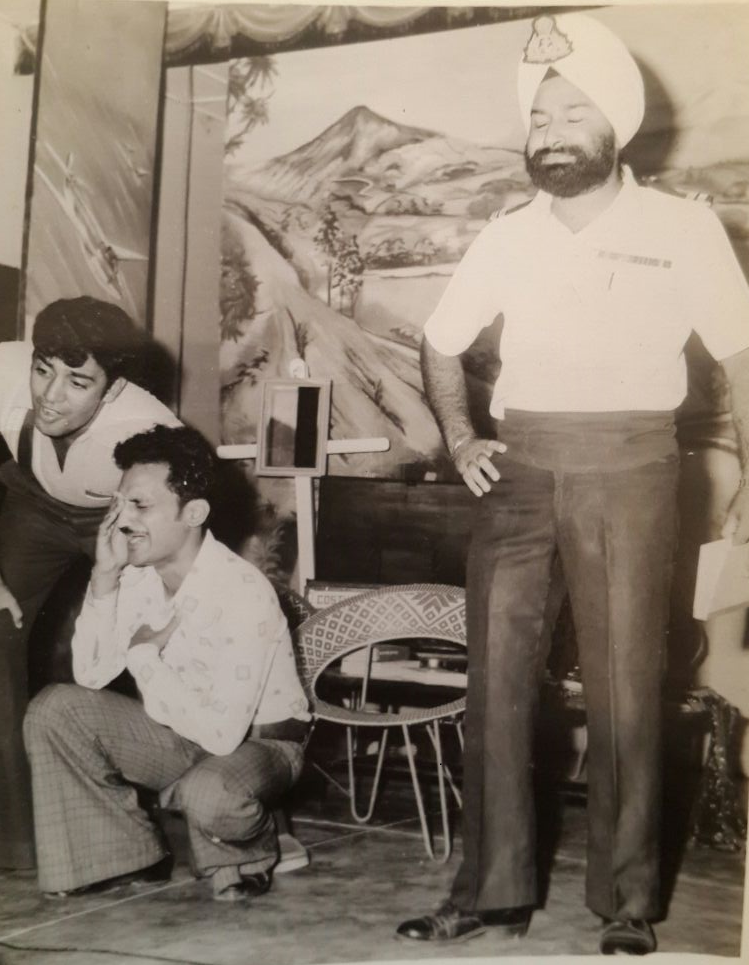
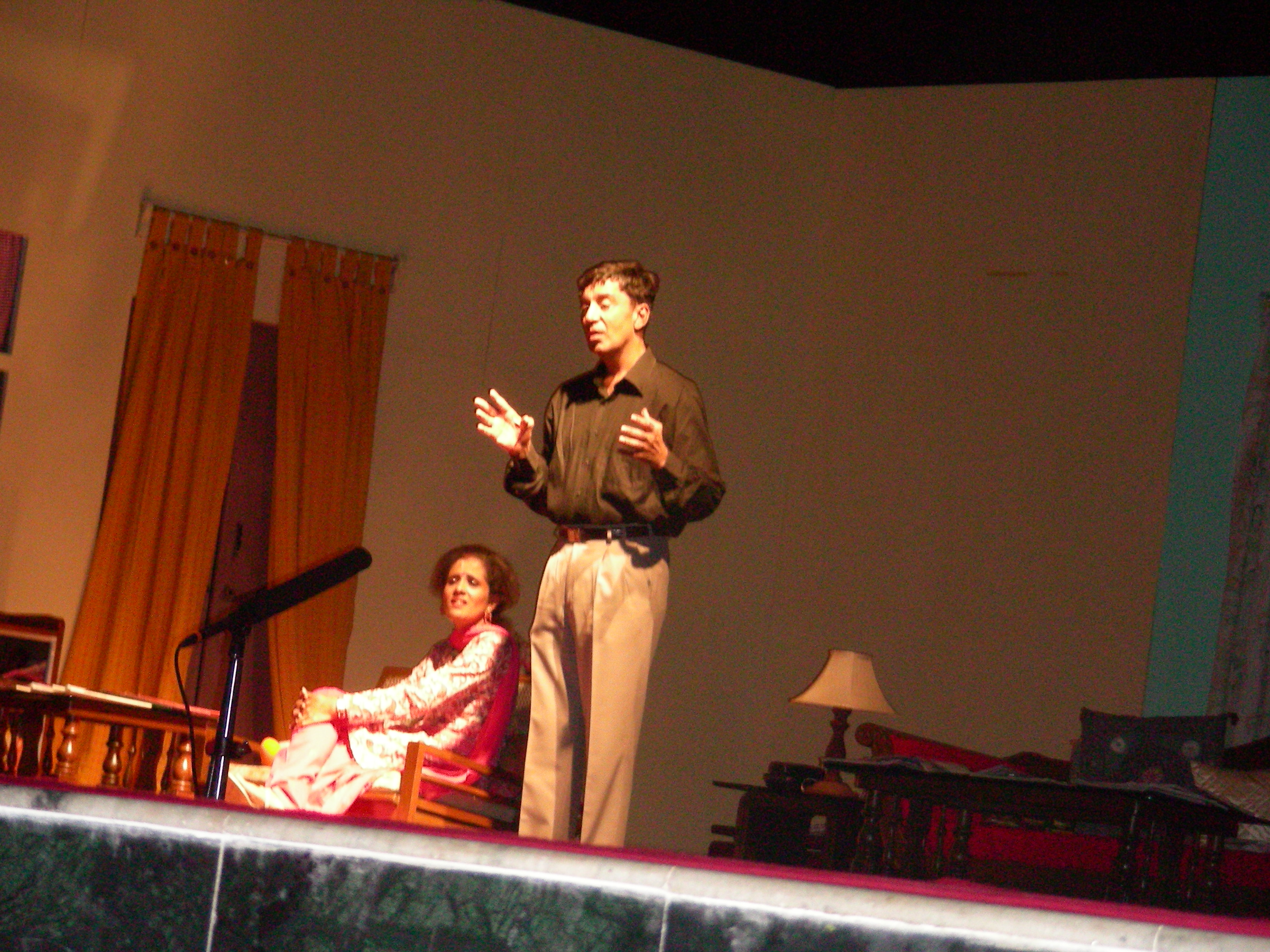
Some pictures of the play are still there with me but they are lying in my home-station Kandaghat in the baggage yet to be unpacked, after my retirement in Feb 2010. I shall, subsequently, put them up when I visit Kandaghat next. In the meantime, Bajwa could persuade his wife Jaya to search in his baggage and find some pictures (he himself is on his ship at sea). She was able to find one and I am putting it up:

Hamara Drama1
Persuading one of our sailors to showcase his talent in Hamara Drama. The background prop was from the play preceding ours!

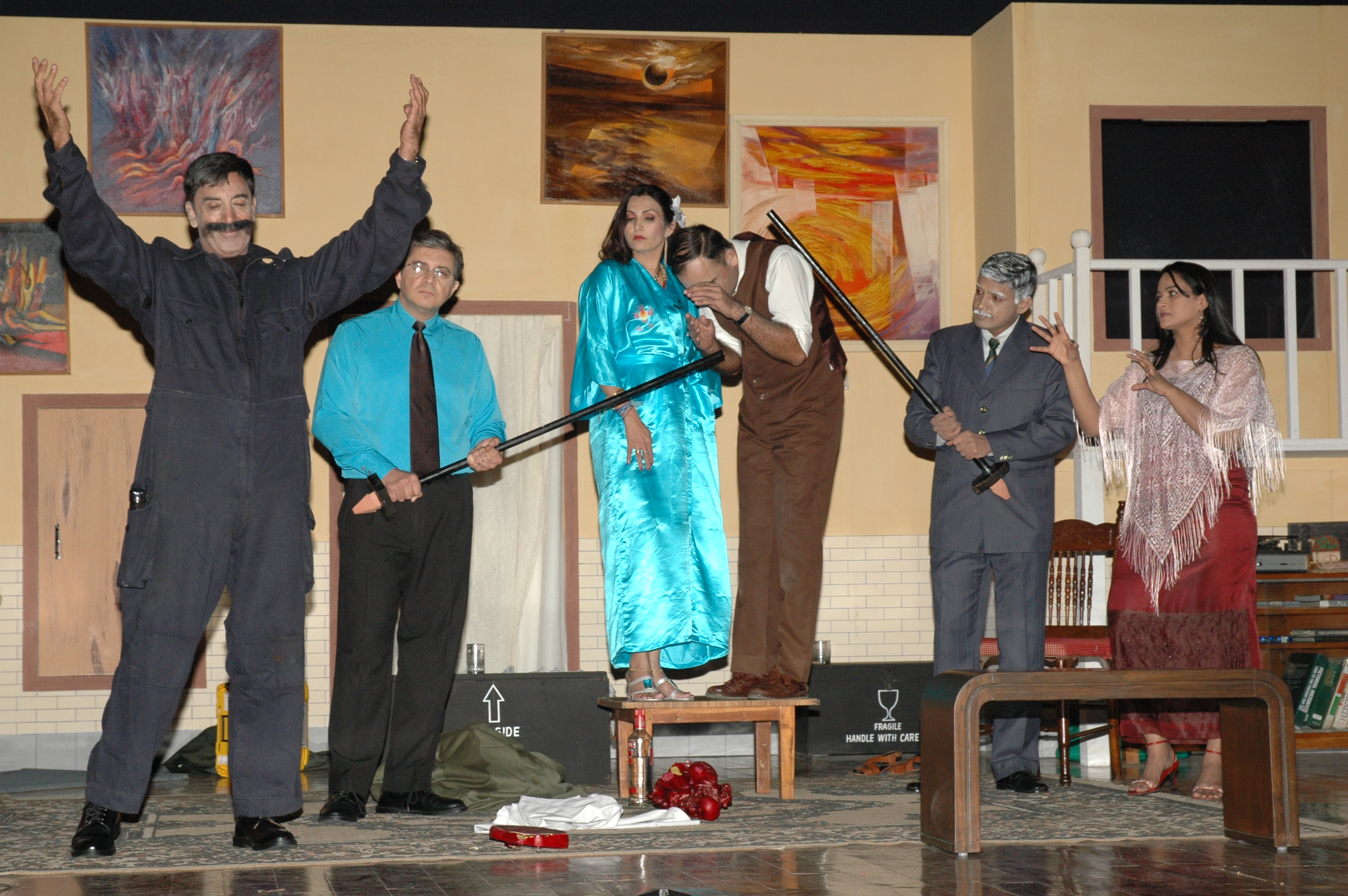
Many years later, in the year 2003, I directed the inaugural play in Mulla Auditorium in Mumbai. The Chief of the Naval Staff was the Chief Guest. My son Arjun acted in it. I adapted it from a Moliere’s play and called it Suddenly In The Park. Navy is a life’s drama in which your families are also acting and involved!

I did many other plays. For example, in Peter Shaffer’s farcical play called Black Comedy, I was Schuppanzigh, the German electrician, sent to repair the fuse since the entire play is as if performed in the dark.

After repairing the fuse, I as Schuppanzigh move to the light switch, saying "God said: "Let there be light!" And there was, good people, suddenly — astoundingly — instantaneously — inconceivably — inexhaustibly — inextinguishably and eternally — LIGHT!"
After repairing the fuse, I as Schuppanzigh move to the light switch, saying “God said: “Let there be light!” And there was, good people, suddenly — astoundingly — instantaneously — inconceivably — inexhaustibly — inextinguishably and eternally — LIGHT!”

I also directed and acted in Mahesh Dattani’s play on incest called ’30 Days in September’. The fauji audiences are normally used to only two type of plays: comedies and suspense-dramas. We were not sure how the audience would view a serious play on incest. Our C-in-C summed up the response by saying, “If Mahesh Dattani had been present tonight at the staging of his play by this team, he would have really felt proud. I was, of course, the bad guy, the perpetrator of incest. For many months after the staging of the play, women and girls, in naval residential areas would scream and run for cover after seeing me.

30 days in september

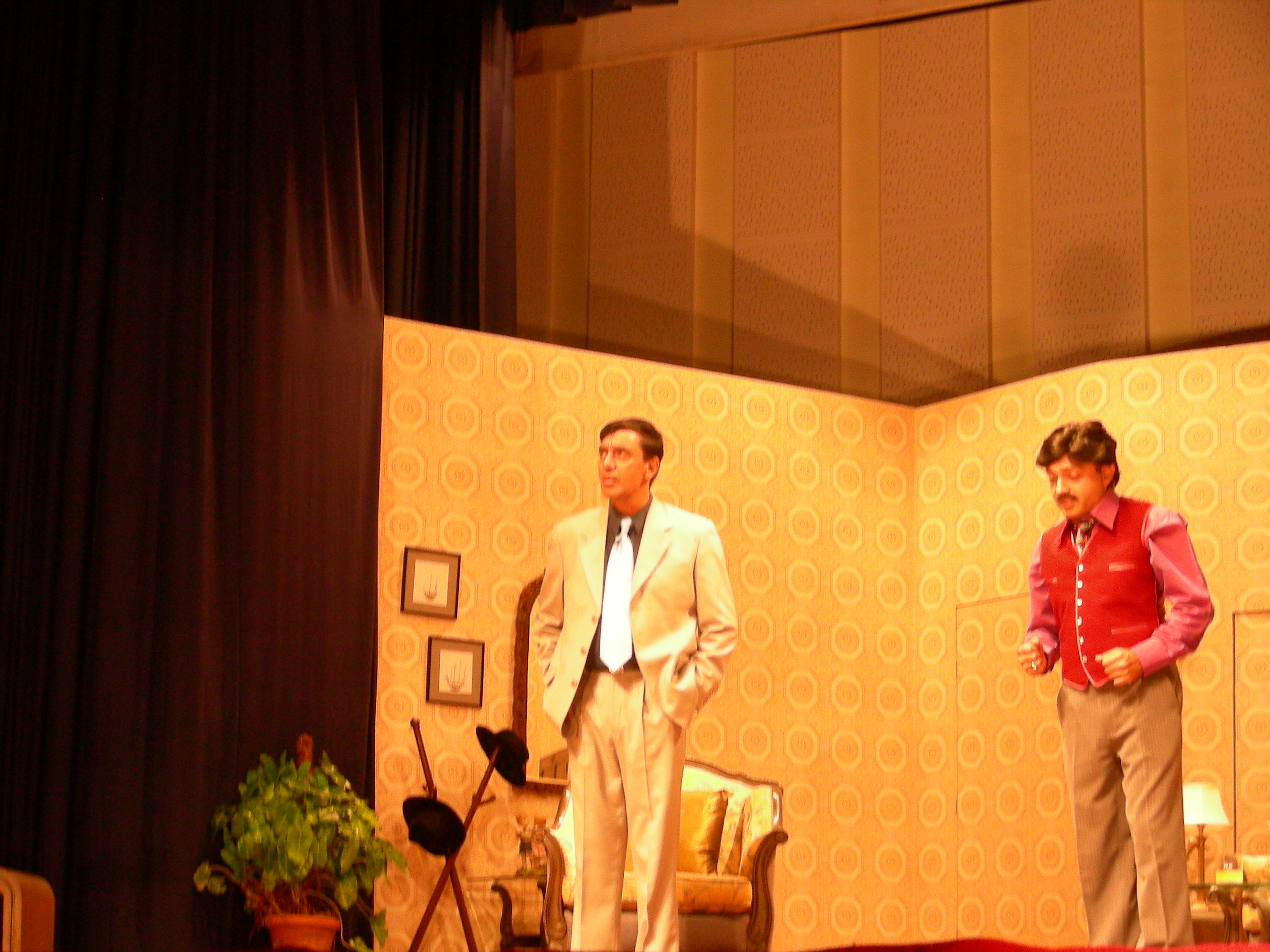
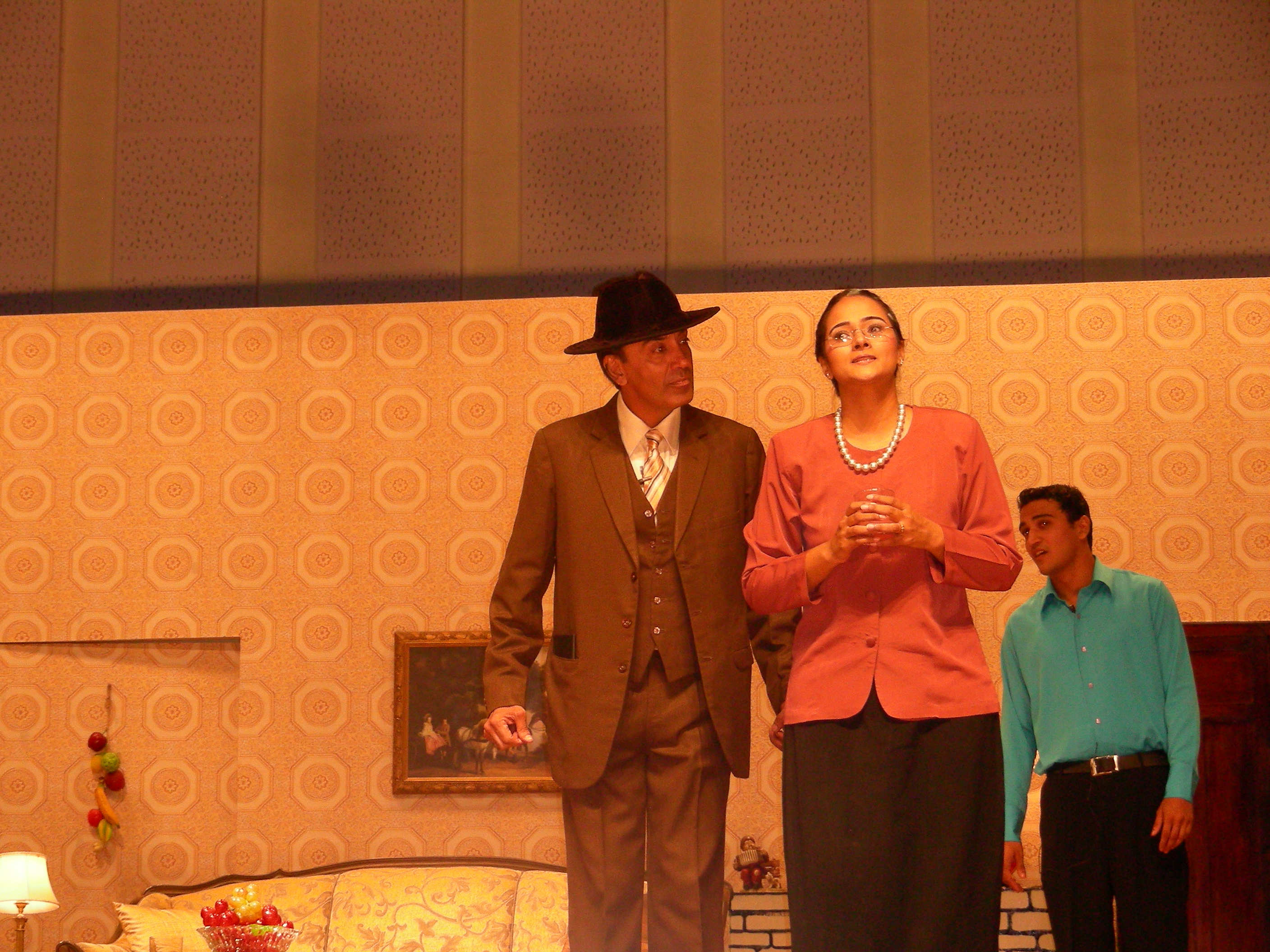
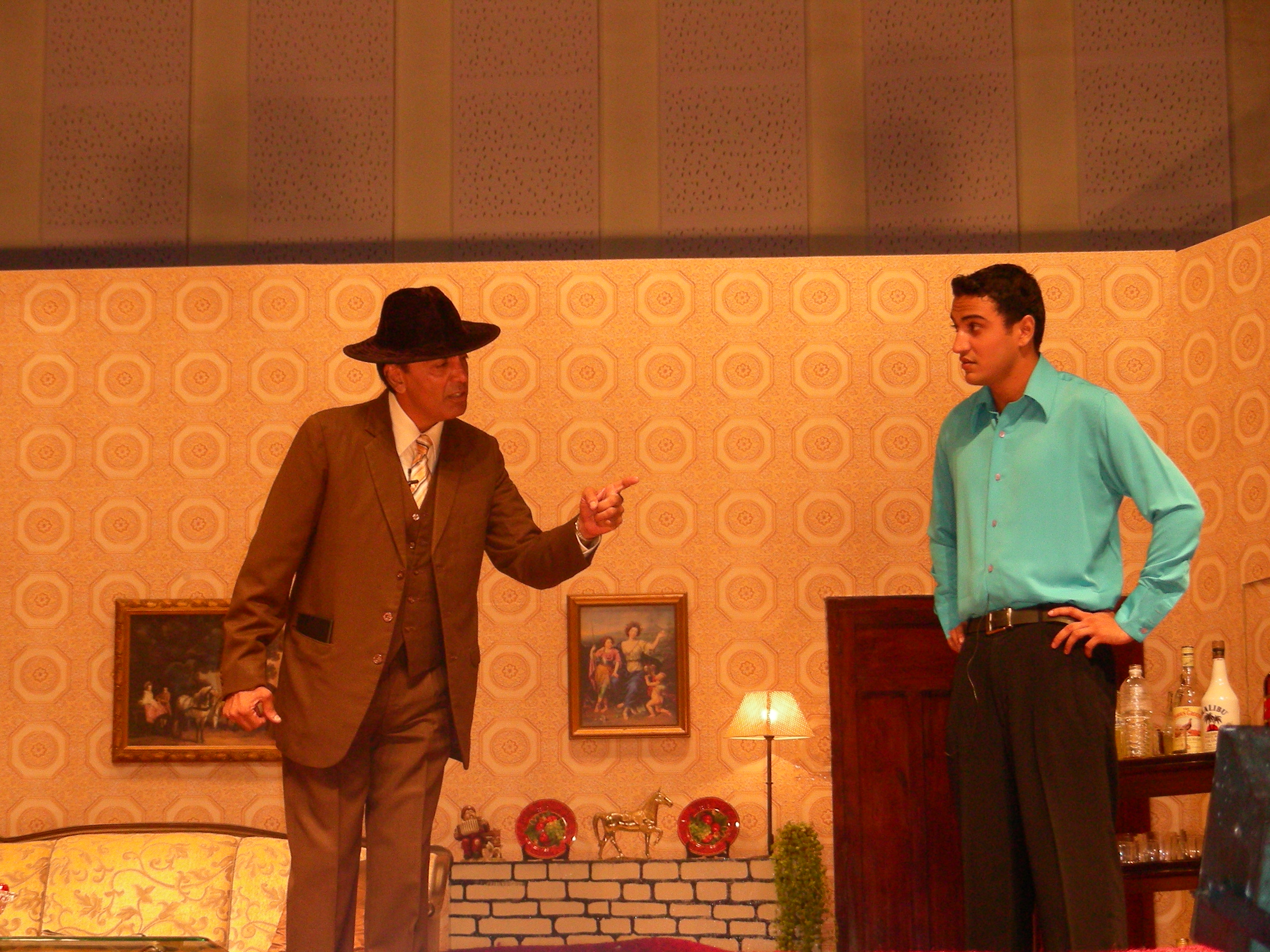
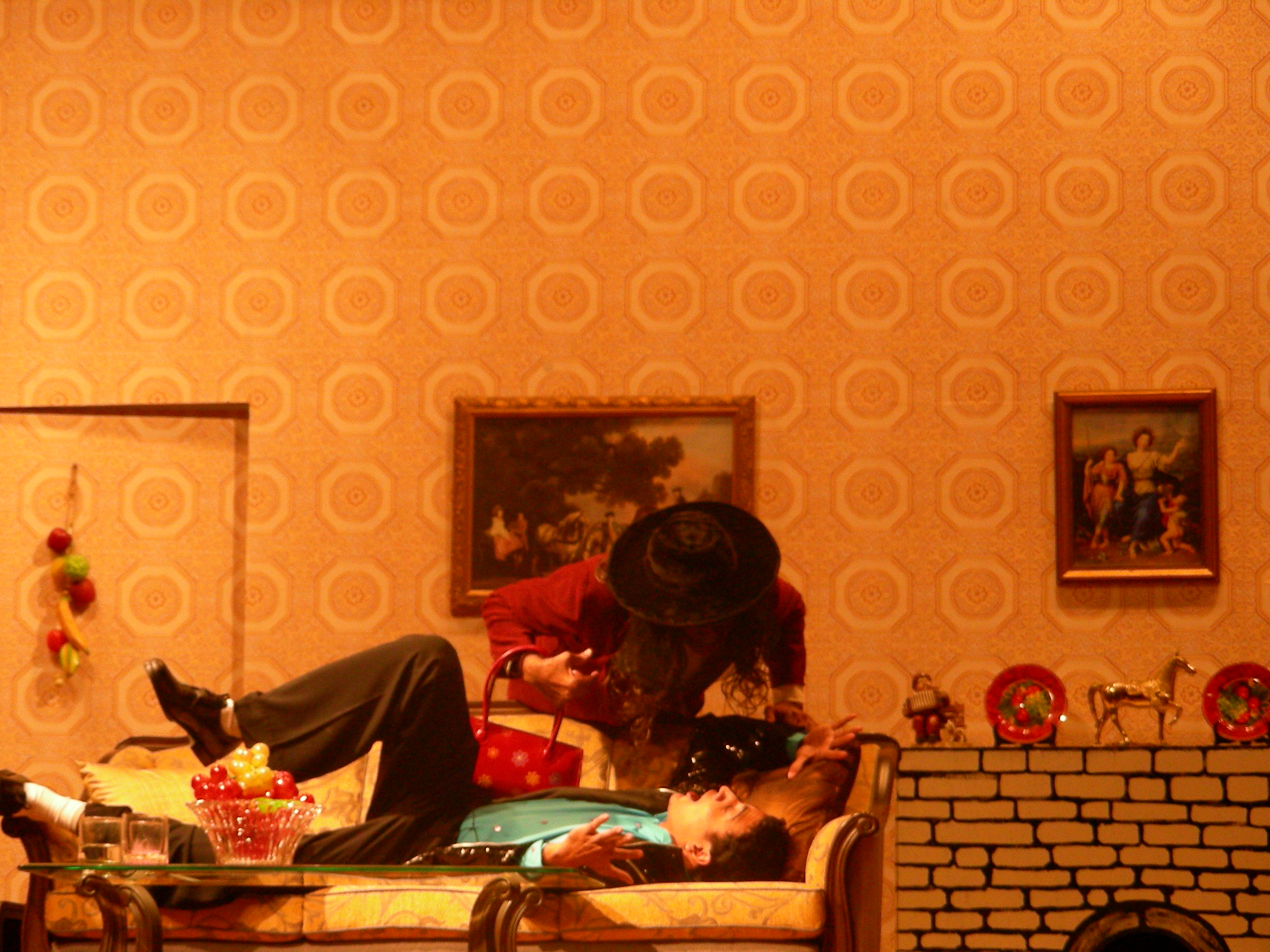
The last one I did was in 2007, a Neil Simon play called ‘Come Blow Your Horn’. I also acted as the father of Alan and Buddy Baker. Just before the curtains, Aunt Gussie who was all the while only talked about made her appearance. The only problem was that we hadn’t got anyone to do Aunty’s role. So, after my last appearance as father, I quickly changed my clothes and make up and appeared as Aunt Gussie!

Me as father Baker with my elder son Alan Baker, who lives the life of a playboy.
Me as Mr. Baker with Mrs Baker. Our younger son Buddy is seen in the background
Come Blow Your Horn3
Me berating the younger son Buddy Baker for having been spoiled under the influence of his elder brother Alan.

In the final scene of this three act play me appearing as Aunt Gussie with Buddy, the spoiled brat

In the final scene of this three act play me appearing as Aunt Gussie with Buddy, the spoiled brat

That was true reflection of what Navy is all about; we change roles together with the situation; and, we do absolutely strange roles that people least expect us to do. We don’t ever say we ain’t ready for a particular role.

We also do many roles on the stage but not half as difficult or strange as in real life.

Babu moshaye, yeh Navy ek rangmanch hai…..

FITNESS FREAK

They look at my gaunt frame and ask:
“What keeps you so fit and lean?”
I tell them try to look inside the mask,
And see all the running I have seen.

When I was small I used to run,
From poverty, violence and abuse,
The taunts of my classmates were no fun,
It almost made me a recluse.

They teased me for my long hair,
Since I was born and brought up as a Sikh,
Horrible jokes they cracked on me,
Sexist, racist, I could take my pick.

At home, we always had “discussions”
My dad’s favourite subject,
Anger and abuses were the concomitants,
I used to run away in fear abject.

In studies there were these smarties,
Who always knew more than I did;
I used to race away from them,
Until my face from them I hid.

I joined the Navy at an early age,
It was indeed a dream come true;
Here I could be at peace with myself,
And the seas: black, green and blue.

But some men there that I met,
Were suave, clever and cunning;
They were skilled in pretense and deceit
And I soon resumed my running.

Fitness Freak

I made a lot of friends, but I know,
There were some that I’ve had,
I had to quickly run from them
For they made me lonely and sad.

I’ve had my share of wise men,
The so called pseudo-intellectuals;
I ran away as far as I could,
Since they were neither real nor factual.

I ran away from gathering riches,
By means that were suspect;
And hence I stayed poor at heart,
I raced from being abject.

On retirement, I didn’t have much,
But I had my running shoes,
So I kept fit by running away from
All those who often talk loose.

I joined the social media
Blog, Twitter, Whatsapp and Facebook,
But I often run away from those
Who post by hook or crook.

I have listed a few things above,
But this isn’t a list complete;
Greed, mobs, falsehood and unfairness,
Are others that make my legs fleet.

There, that’s my exercise regime,
That I follow without pause and break;
All the running keeps me in good shape,
Though I may not do it for fitness’s sake.

So, if there is one advice that I can give,
For the health of body and mind:
‘Live life, love life, love all you can,
But there are things that you must leave behind.’

‘Run away from them as fast as you can,
Don’t ever regret their loss,
Listen to everyone, and yet,
Love yourself and be your own boss.’

TALKING OLD ‘FAUJIS’

Today I attended my sixth Annual General Meeting and lunch of the Navy Foundation, Mumbai Chapter. Once again, I was reminded of this old song by Elton John titled ‘Talking Old Soldiers’. When you read the lyrics and at the end of it listen to Elton John sing the song, you would realise why I get reminded of this:

Why hello, say can I buy you another glass of beer
Well thanks a lot that’s kind of you, it’s nice to know you care
These days there’s so much going on
No one seems to want to know
I may be just an old soldier to some
But I know how it feels to grow old

Yeah that’s right, you can see me here most every night
You’ll always see me staring at the walls and at the lights
Funny I remember oh it’s years ago I’d say
I’d stand at that bar with my friends who’ve passed away
And drink three times the beer that I can drink today
Yes I know how it feels to grow old

I know what they’re saying son
There goes old man Joe again
Well I may be mad at that I’ve seen enough
To make a man go out his brains
Well do they know what it’s like
To have a graveyard as a friend
`Cause that’s where they are boy, all of them
Don’t seem likely I’ll get friends like that again

Well it’s time I moved off
But it’s been great just listening to you
And I might even see you next time I’m passing through
You’re right there’s so much going on
No one seems to want to know
So keep well, keep well old friend
And have another drink on me
Just ignore all the others you got your memories
You got your memories

[embedplusvideo height=”467″ width=”584″ editlink=”http://bit.ly/1FMRF7e” standard=”http://www.youtube.com/v/GE2MmwUbC_E?fs=1″ vars=”ytid=GE2MmwUbC_E&width=584&height=467&start=&stop=&rs=w&hd=0&autoplay=0&react=1&chapters=¬es=” id=”ep9130″ /]

Elton John wrote the lyrics together with Bernie Taupin. Whilst the entire song has lyrics that invoke nostalgia and many old ‘faujis‘ would identify with these, here are some words that are said in regret:

No one seems to wants to know…

That’s what happens when you retire from the armed forces. You join a wonderful territory called Oblivion where no one disturbs you. You are by yourself.

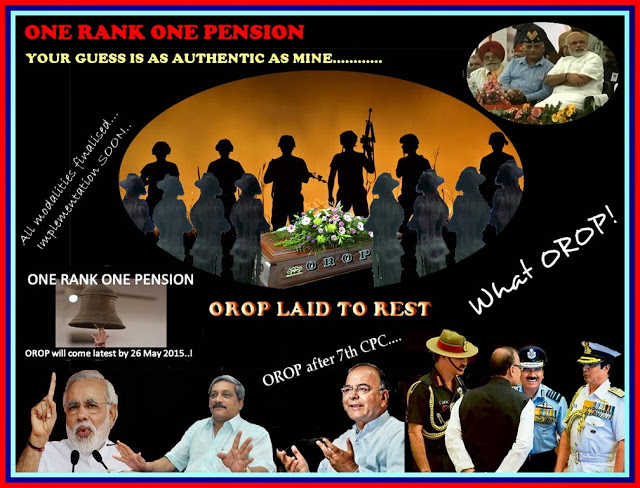
We are having an endless debate in the media and elsewhere about something called OROP (One Rank One Pension). As usual, both political fronts, ie, NDA (led by BJP) and UPA (led by Congress) are vying with each other to bring out, rightly or wrongly (mostly wrongly, I am sure) how the other front has been responsible for the delay in implementing this for the last many decades. Horrible jokes and cartoons are going around. One of these is about a veteran going through a graveyard and suddenly held by his leg by a hand coming out of the grave and a ghostly voice asking, “OROP aa gaya kyaa?” (Has the OROP (finally) arrived?)

(Pic courtesy: exairforce.blogspot.com)

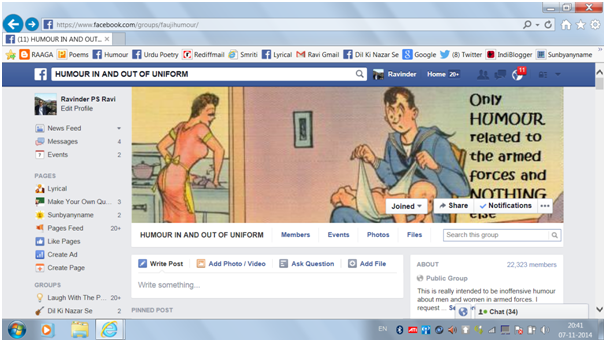
Veterans in my Facebook Group called ‘Humour In And Out Of Uniform’ (HIAOOU) routinely bring out how soldiers are respected in every other country except in India wherein everyone pays lip-service but leaves them in their exclusive territory ‘Oblivion‘.

With this background, lets take stock of yet another AGM of the Navy Foundation; I am sure it is like any other ‘Talking Old ‘Faujis‘ Forum. We didn’t touch the OROP since adequate heat is already being generated about it elsewhere; I believe the Energy companies are seriously contemplating whether they can light up a few cities by converting such heat into electricity. Our most important issue was another four letter acronym called ECHS (Ex-servicemen Contributory Health Scheme); this joke brings us as much mirth as OROP. Indeed, whilst pensioners post 2006 are indeed a happy lot as compared to pre-2006 period, ECHS is one issue that has all of us as hapless victims. ECHS brings home the sad fact to all of us that there are Rules and Regulations and beyond them more Rules and Regulations and beyond them more. The other ‘R’ that you are looking for: ‘Relief’, that is, is lost in these other R’s and R’s. There are experts who have figured out some of these rules and regulations. For others, ECHS rules and regulations act as an index of the health of the ex-servicemen; if you can figure out majority of these, you are fit and do not require any treatment!

Every AGM starts with ECHS and ends with ECHS. The future is bright. Once all the empanelment is complete and the latest R’s and R’s implemented, ECHS would start being beneficial and less tedious, if not downright insulting. Officers who are still in service and somewhat responsible for ECHS invariably assure us that they are doing everything within their means to ensure ECHS becomes effective. However, as veterans we must understand that one, nothing is in their hand and two, whatever little powers they had to purchase medicines have also been usurped by the bureaucrats by a latest order dated 30th April 2015.

Where is humour in this? Well, it is in the fact that about ten of the veterans were given mementoes for having become octogenarian. This means that despite the inadequacies of ECHS veterans do live long. Perhaps the long wait for OROP doesn’t let them go. Many veterans would have become seriously ill but knowing that they would then be at the mercy of ECHS keeps them feeling fit.

What are the other earth-shaking issues of the Talking Old ‘Faujis‘? Here is a really important one (Ha!Ha!): Auto-rickshaws should be allowed by patients visiting ECHS clinics right up to the clinics and not stopped at the gate! This point would be discussed with the Command authorities to understand their point of view and if possible be implemented in due course of time.

Another very significant (Ha!Ha!) point was brought out that to call widows of ex-servicemen as widows is rather demeaning and the veterans must think of a more respected word to describe their status! Someone suggested ‘Wives of Late Veterans’. This was seriously contested by some veterans who arrived late for the AGM and had missed most of the proceedings. They said they weren’t always late but hadn’t reckoned for the traffic conditions. Hence, to single them out for reproach wasn’t called for! Over drinks, I made a suggestion that Hinglish could be used to describe the widows of veterans. Since the retired officer is called Veteran; perhaps his widow could be called Veterani.

The best point of the AGM was a gem indeed:

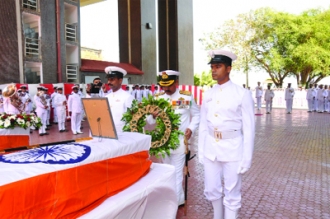
The venerable secretary of the Navy Foundation announced that arrangements have been worked out with the Command that when a veteran conks off, two sailors in uniform would be deputed by the Command to lay wreath on his/her mortal remains; and, in case he/she is a gallantry award winner, the Command would arrange for a Guard of Honour at his/her funeral.

The ‘R’ of Relief that eludes the ECHS has finally been provided in the form of a wreath and bugle at the death of a veteran.

Wreath Laying Ceremony for victims of INS Sindhuratna Mishap (Pic courtesy: www.dailypioneer.com)

There was a Ghazal Singer who sang during the drinks and lunch. Most ‘Talking Old ‘Faujis’ however preferred the sound of guzzle (of beer and gin) rather than of ghazal.

We await the next AGM and Annual Lunch for more of ‘Talking Old ‘Faujis‘. We are secure in our knowledge that at least we have earned a flower-wreath after decades of being in the Navy. My former CO on Ganga used to say, “In the Navy, brickbats travel upwards; bouquets travel downwards.” After thirty years, I understood what he was trying to say.

WHY DO WE SOMETIMES CRY LISTENING TO OLD SONGS?

Why do we sometimes cry listening to our favourite old songs?

Last night, I got the desire to see 1952 iconic movie Baiju Bawra after five decades. As each song was played from ‘Jhule mein pawan ke aayi bahaar’ as Gauri and Baiju grow up, to ‘Tu Ganga ki mauj’, ‘Door koi gaaye’, ‘Insaan bano’, Bachpan ki mohabbat ko, ‘Mujhe bhool gaye saanwariya’, ‘Man tadpat Hari darsan ko aaj’ and ‘O duniya ke rakhwaale’; I felt the eyes and heart becoming more and more moist.

(Pic courtesy: en.wilepedia.com)

Why do we cry when we listen to old favourites? Is it because of our own memories associated with the movie and the songs? Is it because of mixed feelings: one of joy that we lived in the same era as Shakeel Badayuni (Lyricist) and Naushad Ali (Music Director) and Mohammad Rafi lived in; and other of sadness that they aren’t there now. As far as Shakeel Badayuni is concerned, I have several posts on him in my blog and all are very popular since I can see in the blog stats (eg, ‘Shakeel Badayuni – The King Amongst Lyricists And Poets – Part I’ and ‘Part II’, ‘Another Tribute To Shakeel Badayuni In The Month Of His Death Anniversary’, and ‘Immortal Ghazals Od Sahkeel Badayuni – Part I’). However, arguably the greatest Music Director of our era: Naushad Ali, is mentioned by me in only two blog-post on him (‘The Best Of Old Hindi Songs – Rafi, Shakeel, Naushad and Dilip Kumar Together’ and ‘Immortal Songs of Mughal-e-Azam’; in both the cases clubbing him together with Shakeel Badayuni)

Why do we cry? Oh, I will give anything to have those movies and songs again; flute was an essential instrument, there was simplicity, there was innocence and there was as Badshaah Akbar said in the movie: Azmat!

I was thrillrd to see that credits to Ustaad Amir Khan and DV Paluskar ranked ahead of playback singers Rafi, Lata and Shamshad Begum.

Why do we cry?

Does anyone have the answer? Well, I posed this question in my Facebook Group ‘Yaad Kiya Dil Ne’ (I had to make this group when in the last group ‘Dil Ki Nazar Se’ people started putting up frivolous posts. All my groups, on the other hand, are based on the principle of mutual-learning than merely groups for entertainment and socialising). Here are the responses from some of my friends on the group.

1. Nitin Shringarpure “Poetry is the spontaneous overflow of Powerful feelings. It takes its origins from the emotions recollected in tranquillity” William Wordsworth, “Same is the thing with crying”.

2. Surekha Saini Well my reason for crying is a bit stupid. ..when I listen to these songs I start relating myself to the character n feel the same pain through lyrics n music the character must be feeling in that situation. …n I cry every time when I listen to. .Mann tadpat Hari darsan ko aaj…and..O duniyaa ke rakh wale. ..from my childhood so no chance of memories related to the songs…I mentioned both poetry n music. ..as a child I used to cry with no reason but now its lyrics n poetry n of course singing. ..n if I relate myself to the character means movie n the storyline come naturally. ..until I understand the film thoroughly how can I relate myself to the character. …actually mera dil mere dimag se jyada kaam karta hai. …

3. Raj Dutta When ever our Soul wishes to have a bath…it takes the body and the brain though a memory trip facilitated by sense organs mostly eyes and ears…the brain does some chemical locha and triggers and squeezes the tears ducts…moistening your eyes and sinuses…And lo the Soul is fresh again…sentimentally and temperamentally formatted…But my late eldest Tayyaji never wept even on the demise of his near and dear ones…When I once asked him the reason He in a shayrana andaz said, “Bahut roya hoon Ghame zindagi mein, Ab toh ansuon ne bhi mujhe bhula diya hai”…He had taken part in WW II.

Raj Dutta then put up a Pakistani song by Rahim Shah to explain this:

https://youtube.com/watch?v=KyHanHl5X30%3F

This only means one thing that the very songs that we rued kept us away from storyline and “avoidable” at that time when we used to see movies as children and teenagers, are actually the most wonderful memories of the movies of that time. And remember how we used to compare with Hollywood matter-of-fact, “professionally made” “no nonsense and no songs” movies?

There is no better way to express emotions than through poetry.

Tears are also seen as a ‘release’ of emotions. Indeed, at deep and traumatic shocks, the docs get worried if the affected person does not cry. There are many theories about crying. One lovely one was given to us by Mukesh through Anand Bakshi and Laxmikant Pyarelal in 1967 movie Milan:

Mubaarak ho sab ko samaa ye suhaanaa
mai.n khush huu.N mere aa.Nsuo.n pe na jaanaa
mai.n to diivaanaa diivaanaa diivaanaa – 2

Hazaaro.n tarah ke ye hote hai.n aa.Nsuu
agar dil me.n Gam ho to rote hai.n aa.Nsuu
khushii me.n bhii aa.Nkhe.n bhigote hai.n aa.Nsuu
inhe.n jaan sakataa nahii.n ye zamaanaa
mai.n khush huu.N mere aa.Nsuo.n pe na jaanaa
mai.n to diivaanaa diivaanaa diivaanaa – 2

The other is the 1964 movie Hamrahi song put together by Hasrat Jaipuri and Shankar Jaikishen and Rafi for Rajendra Kumar:

Ye aa.Nsuu mere dil kii zubaan hai.n -2
mai.n ro_uu.N to ro de.n aa.Nsuu
mai.n ha.Ns duu.N to ha.Ns de.n aa.Nsuu
ye aa.Nsuu mere dil kii zubaan hai.n -2

Aa.Nkh se Tapakii jo chi.ngaarii, har aa.Nsuu me.n chhabii tumhaarii
chiir ke mere dil ko dekho, bahate lahuu me.n priit tumhaarii
ye jiivan jaise sulagaa tuufaan hai
ye aa.Nsuu mere dil ki zubaan hai.n -2
mai.n ro_uu.N to ro de.n aa.Nsuu
mai.n ha.Ns duu.N to ha.Ns de.n aa.Nsuu
ye aa.Nsuu mere dil kii zubaan hai.n -2

So then why did the eyes start becoming moist with the very first song: Jhule mein pawan ke aayi bahaar even though the song is nice, happy and romantic song in the movie Baiju Bawra?

Here are the responses:

Ritu Soni I cry sometimes because I connect with the lyrics and music to a very emotional and personal level and sometimes I cry as I feel where all this has gone.. The simple beautiful people and life.

Manju Saigal Mittal Tears r just an expression of emotion I think!

Surekha Saini Ravi ji. …its not necessary that u cry only when you feel sad or hurt…Hum log jab anandit hote hain tab bhi to aankhe chhalakti hain. …Ab main. ..Mann tadpat Hari darsan ko aaj. ..pe kyon roti hun….may be its my desire to see God…reason for crying while listening to a song varies person to person. ..
Vipan Kohli Much has been written by Surekha ji Raj Ritu Soni and Nitin Shingarpure about tears. Here’s Hindi poem on tears. I don’t know who wrote it but it appealed to me the moment I read it.

आंसू छंद नहीं होते हैं
आंसू नियम नहीं होते हैं


भावों की अनुभूति है आंसू, कभी ख़ुशी कभी गम होते हैं..
मैंने देखे सुख के आंसू, हंसते गाते झिलमिल आंसू

दुःख मे भी देखे हैं आंसू, दर्द भरे रोते से आंसू..
हुई बिदाई जब बिटिया की, छलक पड़े आँखों से आंसू

गौरव के पल आने पर भी, बह निकले आँखों से आंसू..
कभी किसी की मृत्यु हुई जब, बरबस बहते देखे आँसू

खुशियों के अवसर पर भी तो, रुक न सके आँखों मे आंसू..
दरिया कभी बनाते हैं आंसू, मोती सम पलकों मे आंसू

जार-जार रोते हैं आंसू, बार-बार आते हैं आंसू..
दिल ने जब भी रोना चाहा, सुख गए आँखों के आंसू

प्यार जहां इनको मिल पाया, छलक गये आँखों से आंसू..
सुख में भी आँखों मे आंसू, सूरदास के बहते आंसू

ऊँच -नीच का भेद न करते, नर-नारी के आते आंसू..
प्रियतम की चाहत है आंसू,
माँ नयनो मे ममता आंसू
भाई बहन का प्यार हैं आंसू,
जीवन का श्रृंगार है आंसू..

At this stage, Amit Lambah and Maj Vishwas Mandloi took opportunity to post some Aansu songs (the group is meant for that) such as:

“Teri aankh kay aansoo pii jaoon aisi meri taqdeer kahan”

“Tukde hain mere dil kay aye yaar tere aansoon, dekhey nahin jaate hain dildaar tere aansoo.”

“Rona kabhi nahi rona …chahe toot jaye koyi khilona”

I, therefore, realised that whilst I was looking for reasons as to why does one cry listening to old favourites, everyone has own reasons for the same. This thought itself was covered so nicely by Sahir Ludhianvi (I regard this as his best) in the 1961 Hum Dono’s most beautiful song:

कभी ख़ुद पे, कभी हालात पे रोना आया
बात निकली, तो हर इक बात पे रोना आया

हम तो समझे थे कि हम भूल गए हैं उनको
क्या हुआ आज, ये किस बात पे रोना आया

किस लिये जीते हैं हम किसके लिये जीते हैं
बारहा ऐसे सवालात पे रोना आया

कौन रोता है किसी और की ख़ातिर ऐ दोस्त
सबको अपनी ही किसी बात पे रोना आया

Vipan Kohli, at this stage, put up a most beautiful Punjabi song by Jimmy Shergil: Rona Chadita Mahi Mahi

Raj Dutta wasn’t to be left behind and put up: Aaj bahut roya main….

https://youtube.com/watch?v=qqd4RyezpP0%3F

Here is a moistening of eyes of different nature as a tribute to all my friends on YKDN: Yaaro mera saath nibhaao roz aisi mehfil kahan:

Yaro mera sath nibhao roj aisi mahfil kaha
bhig jaye aaj palke aao hase itna
yaro mera sath nibao roj aisi mahfil kaha
bhig jaye aaj palke aao hase itna

rahe na kuch aaj sab luta do
dilo me jitna hai pyar baki
rahe na kuch aaj sab luta do
dilo me jitna hai pyar baki
rang ho jitne bhi yahi saja do
hogi na kal ye bahar baki
hasi ke chirag jalao ho gayi raat jawan
bhig jaye aaj palke aao hase itna
yaro mera sath nibao roj aisi mahfil kaha
bhig jaye aaj palke aao hase itna

kisi liye koi luta to gham kya
jine ko ek ye khushi bahut hai
kisi liye koi luta to gham kya
jine ko ek ye khushi bahut hai
mile na mile ek sanam ki bahe
mujhe tumhari basti basti bahut hai
dekho aise dur na jao pyar ka yahi hai sama
bhig jaye aaj palke aao hase itna
yaro mera sath nibao roj aisi mahfil kaha
bhig jaye aaj palke aao hase itna
aao hase itna aao hase itna

And since it was the death anniversary of Talat Mehmood and since Patita is the movie of the title song of the group, I put up one more reason why aansu jhalak jaate hain.

Please enjoy: Hain sabase madhur woh geet jinhe…

हैं सबसे मधुर वो गीत जिन्हें, हम ददर् के सुर में गाते हैं
जब हद से गुज़र जाती है खुशी, आँसू भी छलकते आते हैं
हैं सबसे मधुर वो गीत

(पहलू में पराये दर्द बसाके, हँसना हँसाना सीख ज़रा
तू हँसना हँसाना सीख ज़रा ) – २
तूफ़ान से कह दे घिर के उठे, हम प्यार के दीप जलाते हैं
हम प्यार के दीप जलाते हैं
हैं सबसे मधुर वो गीत …

(काँटों में खिले हैं फूल हमारे, रंग भरे अरमानों के
रंग भरे अरमानों के ) – २
नादान हैं जो इन काँटों से, दामन को बचाये जाते हैं
दामन को बचाये जाते हैं
हैं सबसे मधुर वो गीत …

(जब ग़म का अन्धेरा घिर आये, समझो के सवेरा दूर नहीं
समझो के सवेरा दूर नहीं ) – २
हर रात की है सौगात यही, तारे भी यही दोहराते हैं
तारे भी यही दोहराते हैं
हैं सबसे मधुर वो गीत …


HAIN SABSE MADHUR WO GEET -TALAT MEHMOOD…

Manik Lakhkar Chava Awwww…. long discussion. Ravi, there is and can not be any remote control. One feels like crying… aansu bahane dijiye. Cry for some one with some one… the drop of pearls are too valuable…. for you, me for every one.

Evani Leela Aansoo aanaa matlab aatma parmatma ko chu rahi hai. Jab dil se dil ke taar juDte hain to jo bridge banta hai, wohi aansoo hote hain. Jab koi drishya dekha, kuch suna, kuch mehsoos kiya, kisi ki uaad aayi, koi kitab yaa kahani paDhi to aanssoo bhi chalakte hain, muskaan bhi khilti hai. Inn donon par jab sanyam nahin hai to samjho hum uss paramatma ke kareeb hain.

Evani Leela Phoolon ki khushboo bhi aapko rulasakti hai khushi se, bachon ki kilkaari bhi rulasakti hai. Manik Lakhkar Chava se poochiye jab humne inki poti par geet post kiye to kyon royi. Humne jab anniversary lar geet post kiye to kyon aansoo chalke?

Evani Leela Aansoo aur muskaan donon par jab hamara vash na rahe to hum saamne wale ke dil ke ander samaa gaye. Isi liye jab geetkaar ke shabd humen rulate hain to iska matlab hai, woh geetkaar hamare dil mein ufar gaya aur usne woh kaha jo hum khud kehna chahte the. Jab woh shabd hum tak pahunchte hain to hamare dil ke taaron mein jhankaar hoti hai. Wohi niyam sangeet ke liye bhi laagoo hota hai.

Amit Lambah “Jo hamne dastaan apni sunayii aap kyon roye….hamara dard o gham hai yeh issay kyon aap sehte hain, yeh kyun aansoo hamare aapki aankhon se behte hain….. qayamat aapke ashkon ne dhayi aap kyon roye .jo hamne dastaan aoni sunayi…..naa yeh ansoin rukke to dekhiye phir hum bhi ro denge, hum apne ansoo on mein chaand taaron ko dubbo denge, fanaah ho jayegi saari khudaayi aap kyon roye…

Evani Leela Maine ek baar ek choti si kahaani paDhi thi, jismein do sceintist shukr grah par pahunchte hainn wahan par ek hi praani dikha jo ek talab mein tair raha tha. Use ek sceintist ne dekha aur use chune ki koshish ki.par woh haath na aakar door door tairta …See More

This started another round of Aansu songs with Vipan Kohli suggesting that we have a Flash Fest on Aansu

Maj Vishwas Mandloi Jo hamne dastaan apni sunayi … aap kyu roye …

https://www.youtube.com/watch?v=Zf3RhMt_ljU

I reminded them that the other day Surekha Saini commented how at one time she was jealous of my comments on Evani Leela’s posts and comments.

“Now, take this post itself. All of us, in answer to the question ‘Why Do We Cry With Our Favourite Songs?‘ thought of this as an oopurtunity to put up Aansu songs. Some even suggested that we have an Aansu Fest here itself. Not Evani Leela. She responded with ‘dil se’ (something that she does in all her posts and comments, beautifully and brilliantly, in the wee hours of the morning after all the dust had settled down, as to why do we cry.

Now, you will understand, brothers and sisters, this special relationship of not just brother and sister but of love, dard, empathy, and emotions. I remember the time about two years back when her description of a song would be one or two words: eg, Song#1 and the first word of the song such as Aansu. However, I saw in her someone special, someone who feels deeply. The result is for all of you to see.

Evani Leela came up with a gem, at this stage that Aansu and Muskaan are two sides of the same coin. In her own words: “Maine yehi mehsoos kiya ki aansoo aur muskaan sikke ke do pehlu hain. Kisi bhi tarf dekgo sikke ki value kum nahin hoti. Haan yeh baat alag hai ki humari aankhen num hon to tapasya doosron ke aansoo pee saken to paramatma ka vardaan.

She put up a beautiful song by Shailendra from the 1959 Raj Kapoor Movie Anadi:

किसी की मुस्कुराहटों पे हो निसार
किसीका दर्द मिल सके तो ले उधार
किसीके वास्ते हो तेरे दिल में प्यार
जीना इसी का नाम है
किसी की …

(माना अपनी जेब से फ़कीर हैं
फिर भी यारों दिल के हम अमीर हैं ) – (२)
मिटे जो प्यार के लिये वो ज़िन्दगी
जले बहार के लिये वो ज़िन्दगी
किसी को हो न हो हमें तो ऐतबार
जीना इसी का नाम है

(रिश्ता दिल से दिल के ऐतबार का
ज़िन्दा है हमीं से नाम प्यार का ) – (२)
के मर के भी किसी को याद आयेंगे
किसी के आँसुओं में मुस्कुरायेंगे
कहेगा फूल हर कली से बार बार
जीना इसी का नाम है

So, ultimsately, I had dozens of excellent replies as to why do we cry when we listen to old favourite songs.

We feel for the era gone by: our own as well as the era of the song, we feel for the Lyricists, Music Directors, Singers and Actors of those movies. We relive their emotions. We are touched by the simplicity and innocence in people as there used to be (Read: Hindi Songs And The Age of Innocence). There are many valid reasons.

I think, there is one more reason; and that is the great longing to belong (both emotionally and poetically) and call something one’s own: my own thoughts with which I relate to others who have similar (if not identical thoughts); someone who can understand my state of mind; something that I can call my own.

I am past sixty years of age now. And yet, at the end of  six decades of going through this world, are friends my own? No. Are relatives my own? No. Are my children I can call my own? No. Is there something I can call my own? Hardly. Songs and poetry are something that helped me build my own private world. I cry when I am reminded of this world, however small, where I was I and I am still I

I was in school when Trini Lopez’s number by the name What Have I Got Of My Own? was released. I later heard the song from pop-singer Ajit during Summer Festival in Shimla.

The lyrics of the song went like this:

What have I got of my own, my own?
What have I got of my own?

The castles I build when I lie in the sand,
Belong to a king in a fairy tale land.
The treasures I find, when I dream in my sleep,
Are gone in the dawn. not a thjng I can keep.
What have I got of my own, my o~own?
What have I got of my own?

The stars all belong high in heaven above.
My heart belongs to the one that I love.
The rivers that flow all belong to the sea.
What have I got that belongs to me?
What have I got of my own, my o~own?
What have I got of my own?

I hope someday before too long
My heart will sing a happy song.
I’m tired of being lonely, unhappy and sad.
I wanna have the things that other men have.
What have I got of my own, my o~own?
What have I got of my own?

Solo interlude

If I could choose one thing forever to hold,
I know I would never choose diamonds or gold.
Just give me one true love to be mine alone,
Then I’ll have all the things of my own, my own.
What have I got of my own?

I was embarking on my journey through life and hence everything appeared within reach, everything was to be owned, to belong.

Four and half decades later, I am not too sure if anything at all belongs to me. Of course religion and scriptures tell me that finally when we go, we don’t take anything with us. And yet, there is this innate desire to own, to possess, to relate to; to be a little more precious than a speck of dust.

My own.

What have I got of my own?

I cry when I realise that just like Baiju Bawra, Naushad, Shakeel and Rafi; everything will pass away and even the memories would get blurred. As Shakeel, Naushad and Rafi voiced in the 1948 movie Mela:

ये ज़िंदगी के मेले, दुनिया में कम न होंगे
अफ़सोस हम न होंगे

इक दिन पड़ेगा जाना, क्या वक़्त, क्या ज़माना
कोई न साथ देगा, सब कुछ यहीं रहेगा
जाएंगे हम अकेले, ये ज़िंदगी …

दुनिया है मौज-ए-दरिया, क़तरे की ज़िंदगी क्या
पानी में मिल के पानी, अंजाम ये के पानी
दम भर को सांस ले ले, ये ज़िंदगी …

होंगी यही बहारें, उल्फ़त की यादगारें
बिगड़ेगी और चलेगी, दुनिया यही रहेगी
होंगे यही झमेले, ये ज़िंदगी …

These personalities are still being remembered at least by some one like me who relives their and my own era through their songs.

Who would ever think of me….. a katra (drop of water) in the river?

LADIES’ STAFF COURSE!

The other day when I put up here yet another post about our staff course (I think the post was ‘The Great Wanderlust In Staff College’, one of the ladies mentioned that I must bring out a post regarding the parallel ‘staff course’ that goes on in DSSC (Defence Services Staff College). This one involves the ladies, that is.

His name was Selvaraj. Before long many of the DHs (Desperate Housewives) had enrolled for his baking, cooking and chocolate making classes. Initially, after the ladies tried their hand at it on their own at home (that is, without the baker cum cook cum magician showing them how to), we would get bread that could be used to drive nails in the walls. However, gradually, they improved. In the end, if you can make out a psc (passed staff course) officer by his penchant for making simple things complicated, pssc (passed Selvaraj’s staff course) ladies can be made out from the excellence of their baking and chocolate making skills. So years later when an officer and his wife (“good lady” as our Army counterparts call her!) invite you for dinner and you get the distinct aroma of home-baked breads followed by chocolates after dessert, you are bound to ask (directing the question neutrally between the two of them): “When did you complete your staff course?” Post dinner conversation then would assuredly be about Selvaraj and his varied skills.

I hope the Staff College has honoured the services of Selvaraj (that have made significant contribution towards the grooming of “good ladies” of the army and (possibly) wicked ones of the navy and the air-force) by erecting a small memorial shaped like a chocolate wrapped in shining coloured paper tied with golden or silver thread or ribbon.

Anyway, let me get back to the narrative.

We were out for about ten days for FAT (Forward Area Tour) to the North East. At one time it used to be towards J&K but then, our “friendly neighbour to the North West” (that is how we used to refer to Pakistan during Staff Course! As I mentioned, we excelled in making simply things complicated) decided to ‘bleed us by a thousand cuts’; and it was decided that going closer to our “friendly neighbour to the North East” provided us with greater hope of returning alive. We took off from Coimbatore (A&EHU (Aircraft and Engine Hauling Unit, Sulur to be exact) and landed in Bagdogra. As soon as we started negotiating the NE hills, we became familiar with one land slide or the other and many a times, life did hang from a thin thread. For example, we were stuck on a precipitous road because there was a land-slide ahead. And then a huge rock decided to dislodge itself from the hill and came down on our convoy (if you recall from a previous anecdote ‘Bridging The Gap In Staff College’ our foursome was busy at Bridge when this happened). As per eye-witnesses’ account, it is only at the last-minute that the rock decided to alter course from directly heading towards disrupting our Bridge game and our lives and pass precariously between our one tonner and a three tonner behind us. It was, as you say so often in the armed forces, touch and go.

FAT1

Here is a picture of some of my pals during the FAT:

FAT2

So with these kinds of hair-raising experiences, we were now headed back to DSSC and the talk started about “lady wives” or “good ladies“. One of the Army course mates (he is an excellent singer) broke into: “Chala jaata hoon kisi ki dhun mein…” (I keep going singing her tune….) and we all joined in. One of the stanzas is translated into:

[lineate][/lineate]That world will be so different[lineate][/lineate]When she’d come near me, I swear[lineate][/lineate]She would, at times, try to free her arms from mine[lineate][/lineate]And then, at times, she’d embrace me;[lineate][/lineate]She’d come into my arms, holding all kinds of dreams for me.[lineate][/lineate]


We were young and honestly the thought of reuniting with our loved ones was becoming stronger by the moment. One of the Army officers started painting the scene of his reunion distinctly: “She’d be clad in her best saree, with large vermilion bindi (dot on the forehead), holding a pooja thali (prayer plate), waiting for me at the door itself…..”

(Pic courtesy: m.inmagine.com)

And then we disembarked from the buses and headed home with our rucksacks and bags. I can patch up the story of others later; but, here was the scene at my home:

Both Arjun and Arun were at home watching Micky Mouse cartoons on the telly and our maid Regina was busy in the kitchen. But, there was no sign of Lyn. A & A said she’d be returning home any time (it was seven in the evening) as she was wont to do almost everyday.

After Lyn returned at about 9 PM (late for a hill-station like Coonoor), then the story came out.

Most of the ladies in the ‘Staff Course’ of Selvaraj’s cooking and baking classes had formed a group. Every evening, one lady by rotation would invite all the others to demonstrate her newly acquired culinary skills. The ladies had a feast every evening for ten days of our FAT. They knew about our return that evening and hence had organised a valedictory feast and that’s why it continued till 9 PM. Sorry, she said, but most often than not flights and buses arrived late and 9 PM wasn’t that much of a waiting for the men.

Next day, as we compared notes, all the other officers confirmed that they went through similar waits.

And that included the army officers whose “good ladies” were imagined to be waiting for them with pooja thalis, in red sarees and vermilion bindis.

Thankfully for Selvaraj we didn’t meet him on that night; else, we would have taught him a thing or two about cooking and baking.

WE INDIANS, NEVER TOO FAR FROM THE HUMDRUM OF LIFE

We have all studied Abraham Maslow’s pyramid of needs when we were in the school. We know that at the basic level are the Physiological needs, ie, needs of Food, Water, Shelter etc. As Abraham Maslow points out, only when the needs at one level are met that you can go up to the next higher level. To illustrate this, we had a Punjabi anecdote about a beggar being taught maths. He was asked: “Do ate do kinne hunde ne?” (How much is two plus two?) Promptly he replied: “Chaar rotiyan” (Four rotis).

I sometimes feel that however much we, as Indians, try to get to higher levels of needs: Safety Needs, Belongingness Needs, Esteem Needs and Self-actualization Needs, something constantly pulls us down to the Basic Needs.

Need Pyramid

A few months ago I put up an article extolling the virtues of walking outdoors as opposed to working out in a gym (Please read ‘Walking Or Gym? I Like It In The Open’). If you read the article, you would find that I have brought out that being one with the Nature, observing the sky, birds, flowers, hills, trees and breathing in fresh air would tilt the scale in favour of walks in the open anytime in comparison to being in the gym. The article has lovely pictures of all that I observe during the walks even though I walk very fast. Kharghar, in Navi Mumbai, is where I stay and I love these walks.

Many others, I mentioned, also walk and be with nature, dawn, breeze and surroundings.

However, two years back, a village woman spread a sheet on the pavement and started selling vegetables. Of course, walks were forgotten and people started buying vegetables. Seeing this success, now we have a full fledged vegetable and fruit bazaar at that spot. People now come for walks only so that they can buy fruits and vegetables.

20150315_085704 20150315_085715 20150315_085724

I can imagine shops or kiosks selling screwdrivers, hammers, pliars etc outside fun parks such as Esselworld or Imagica. In India, these would do booming business. I can also actually imagine us Indians going to see the Taj Mahal and returning home after buying “really cheap and fresh vegetables and fruits” from pavements outside one of the Seven Wonders of the World.

Life goes on. We are never too far from the humdrum of life; not even for half an hour of morning walks.

I am reminded of Santa coming home after office and telling Preeto: “Preeto aaj maine 10 rupaiye bacha liye“. (Preeto, I saved 10 rupees today)

Preeto: “Vo kaise?” (How’s that?)


Santa: “Main bus ke beeche bhaaga aur bhaag bhaag kar office pahunch gaya“. (I ran after a bus and ran all the way to the office)

Preeto: “Paagal ho ji aap; taxi ke peechhe bhaagate to 100 rupaiye bach jaate“. (You are mad; if you’d run after a cab, we could have saved 100 rupees)

Imagine the same Santa coming home after buying 1kg of apples during his morning walk and saving all of five rupees; and Preeto telling him if he had purchased 10 kgs each of aaloo (potatoes) and pyaaz (onions) he could have saved up to 30 rupees.

Sample of conversation between two Kharghar ladies:

Lady One: “Pichhale char paanch dino se aap morning walk ke liye nahin aati, kyun?”

(For the last few days you haven’t been coming for walks, why?)

Lady Two: “Maine achhe rates par poore hafte ki subji khreed li. Khatam ho jaaye, phir aati hoon aur khreedane ke liye.”
(I have bought vegetables for the next one week. When they finish, then I shall come (for walks) to buy more)

Lady One: “Aa jayo naa, good quality ke cheekhu aaye hain…”

(Do start coming for walks again; good quality cheekhus (Sapota plums) have arrived in the market)

Or, taste this imaginary talk between two Kharghar men:

Man1: “Ham jahaan jaate hain mar kha ke aate hain“. (Wherever I go, I get beaten)

Man2: “Ham jahan jaate hain mar ket lagate hain“. (Wherever I go, I start a market)

Mera Bharat Mahaan!

Overheard a Kharghar man telling another: “Subah walk ke bahut fayade hain: Aloo pyaaz market se do rupaiya saste milte hain aur apples to paanch rupaye saste. Hamaare pitaji kaha karte the: ‘morning walks are very healthy’. Pitaji ko kaise pata yahan market khulane waali hai?” (Morning walks are very useful: Potatoes and onions are all of Rupees two rupees (per kilo) cheaper than the market and apples are five rupees cheaper. My father used to tell me: ‘morning walks are very healthy. How did my father know here (in Kharghar) they are going to start a (fruits and vegetables) market on the pavement?

I told the above to a few of my friends. They made light of it by invoking multi-tasking. Oh yeah? It is the same multi-tasking that makes us busily talking on the cell phones and even sending sms and whatsapp messages whilst driving; or playing video games whilst watching a movie in a multiplex.

One of the Golf jokes is about a funeral procession with a Golf-bag kept on a cortege. A passer-by remarked that the deceased must have been a great aficionado of Golf. One of the mourners said, “It is the funeral of his wife; he has a foursome immediately after the match.” In the case of we, Indians, the funeral procession could have carried a shopping-bag for buying fruits and vegetables.

One of the Hagar the Horrible cartoon showed Hagar in his full battle armour leaving his house and proclaiming to Helga: “I am going to invade England. Glory, honour and riches await me.” And Helga telling him, “On your way out, can you take the garbage-pail for emptying in the drum?”

For the Normans it might have been just a cartoon. For us Indians, it is a way of life.

P.S. I am contemplating shifting to quiet and peace of the gym as opposed to walks in the open.

LYN AND I – SCENE BY SCENE

Scene By Scene
(Long Story and Hence Only Selected Scenes)

Scene I

I was posted at Navy’s Leadership School at Agrani (to be pronounced as ug-ruh-nhi meaning ‘Leading’; and not as something that is translated as fire-queen that everyone mis-pronounces it always) from 1978 to 1980. I met Lyn for the first time in Coimbatore wherein INS Agrani is situated. Her charming ways touched the chords of my heart and the tinkle of heavenly music they created hasn’t stopped resonating even now. Her smile was and is the sound of glockenspiel; her talk breathlessly exciting; and she was and is simplicity personified. Once when I teased her for being fat, she pointed to a buffalo and asked, “As fat as that, is it?” Her naiveté readily disarms any attempts to show her down and I stopped doing it even in jest long time back.

We had been talking on the phone and seeing each other as often as we could. In Jan 1980, we went by train to Palghat and spent an entire day at the dam picnicking. By evening,  we returned by train to Coimbatore. At the exit, a railway official wanted to see our tickets. I proudly exhibited our return tickets.  It came out that those tickets were for passenger trains whereas we had returned by an Express. Even though I showed my Navy I – Card too to the official, he fined us all of 100 rupees (a large sum during those days). He made out a receipt for the fine in the name of – hold your breath – Lieutenant and Mrs. RPS Ravi. We still possess that receipt as the first ‘official‘ acknowledgement of our intent.

Scene II

She was apprehensive of my leaving her in 1980 to attend the Long C (Communications) course at Signal School, Cochin. But, I made up for it by visiting her as often as I could. I had bought a Yezdi 250 cc, KEE 438, from M/s Tharakan & Co, and I not only visited her on this mobike (in later years we called it ‘donkey’ since it not just carried us but many other household things including cooking gas cylinders), but also took her to Coonoor on it whereat we spent an entire weekend with her aunty Daisy (who was a teacher to Vyjayanthimala). Everyone thought of us as a married couple. And this at a time when people still looked down on love – marriages. As an aside I can tell you that recently one of the TED Talk Speakers in my company Reliance sent me a link to his talk on how to discover uniqueness in yourself. I wrote back to him that I must be a living example of uniqueness: I chose my own name rather than family name; I chose my career (Navy) as far removed from parental expectations as possible; I chose my own religion (I was born a Sikh); I chose my own life-partner. When our children came into the family, I helped them discover their own uniqueness (Read: Diminishing Dad).

Scene III

After the Long course, my posting came to INS Talwar in Bombay. There were no cellphones during those days. She had, therefore, communicated by letter her apprehension that as physical distance increased between us, I would forget about her. So, on 24th March 1981, I took the morning train from Cochin to Coimbatore whereas the rest of the coursemates travelling to Bombay were to travel by evening train passing through Coimbatore at 10 PM. Good friend AS Bajwa took her and me to a temple where the priest married us – me a Sikh and she a Catholic but married in a Hindu temple. In the afternoon, we went to the district court and got our marriage registered.

In the night before the train pulled out of Coimbatore station, I asked her if she was apprehensive of us anymore. She knew she had a gentleman to spend the rest of her life with.

I joined the rest of my course mates in the train on my wedding night and gave them sweets. They wanted to know what was the occasion. I told them I had got married. No one could believe it. One or two of them even suggested that I was pissed even before having a drink with them.

On Talwar in 1981 in Sanyas before Lyn joined me!

Scene IV

It took me six months to get a temporary accommodation in Naval Coastal Battery (NCB) Worli. And then I called her over to Bombay to join me.

I had nothing with me. I went to Indian Naval Canteen Service (Gol canteen) and bought the following on IPP (Instalment Payment Plan):

Six steel dining plates.
Six steel side plates.
Six each steel spoons, forks, knives, bowls and glasses.
One twin burner gas chullah.
One plastic bucket and mug.
One tawa.
One frying pan.
Two other pans.
Two steel pateelah.
One 165 ltr Godrej Gold fridge.
Three plastic containers to keep sugar, tea and salt.
Six pearl-pet bottles.

Lo and behold, I had a functional house going! In the next one year I paid all the instalments! Bajwa was promoted to become a LtCdr on the day before she arrived. So we drank and drank to celebrate his promotion as also to signify the end of my bachelorhood six months after our wedding. At one O’ clock in the night, Bajwa and I went to Oberoi hotel to have coffee and that’s when I told him that when I would take my wife home, I couldn’t even offer her tea since I had neglected to buy sugar. So, Bajwa spread a paper napkin on the table, emptied out the hotel’s sugar pot, bundled the napkin and gave to me. I then told him that I was going to receive my wife and I hadn’t got any flowers.  He convinced me that buying flowers from the hotel’s shop would ruin my plans for the first month of marriage. He, with great ceremony,  took out the single rose from the table vase and handed it to me to receive Lyn with.

Receiving Lyn at Bombay VT with the Rose taken from Oberoi Hotel restaurant Samarkand's vase,
Receiving Lyn at Bombay VT with the Rose taken from Oberoi Hotel restaurant Samarkand’s vase,

And that’s how we went to receive Lyn at Bombay VT at 6 AM.

At Worli Sea Face together after six months of marriage.

Our one room house in NCB Worli!

It was a one room house (not one room BHK, but just one room) Some of the items that I bought for kitchen are seen!
First Navy Ball together as wedded couple!

Scene V

My dad hadn’t given his consent for the wedding. So one day I wrote to him about how we got married. The last line of my letter read: “We haven’t got much; but we ain’t poor.”

As my mom read out the letter to him – and my mom told this to me later – he thumped his chest with pride and said, “That’s my son. No one in our family was ever poor and no one would ever be.”
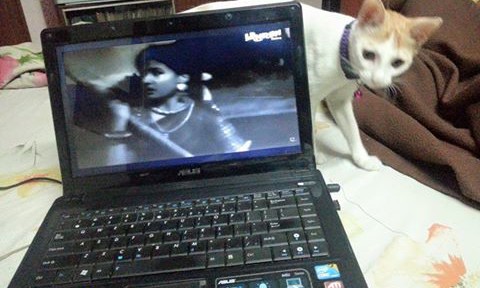
On the 12th of Dec 1982 we were married (again) in Kandaghat in the manner in which dad and mom wanted in front of our larger family.

Finally re-married on 12th Dec 1982 in traditional way

Here is a picture of the reception on the night of 12th Dec 1982:

27

Scene VI

In Aug 1983 I was to go to Rome for the second year in succession to accept an Electronic Warfare system. And, I told Lyn that I would take her. She said we didn’t have money (we never had). I told her I would apply for a loan from my DSOP Fund (Defence Services Officers Provident Fund) on the all encompassing clause, “Urgent domestic requirement necessitating inescapable expenditure”. It is another story how I got her passport made, visas for Italy and France done and ticketing done in less than a week’s time. It is yet another story that she nearly travelled alone (she was to travel from Bombat whilst I was to join from Delhi after obtaining government sanction and the babus there nearly botched it up). But then all’s well that ends well and we visited Italy, France and England for three weeks on a shoe-string budget of just Rupees 20000 including her two way fare. In Paris, for example, we stayed in a Youth Hostel at equivalent of five dollars per head!

Crossing the English Channel (a trip on shoe-string budget)

Scene VIl

Arjun was conceived during this trip and born on 14th May 1984. On 1st of May, my world crashed; my father died in a jeep accident on a morning when in the evening, he and my mom were going to travel to Bombay to be with us for Lyn’s delivery. There was a tussle between him and I as to where the delivery would take place. He insisted that the delivery should be in Lady Reading hospital Shimla performed by his trusted doctor Mrs. Anita Sood whereas I had told him that it would be in INHS Asvini. In the end, in his death, he won. It was as if when one candle was snuffed, another was kindled in the same family.
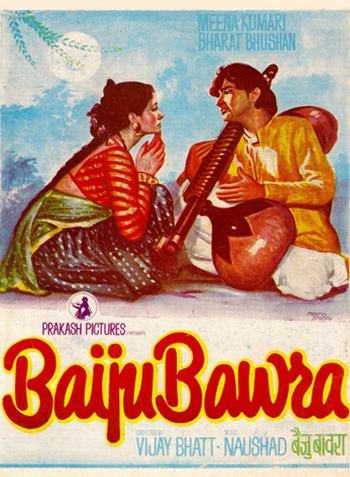
Arjun the joy of our life

Scene IX

Arun was born in even worse conditions. I was posted on Ganga and remembering the traumatic circumstances of Arjun’s birth, we planned Arun’s birth during the period when Ganga would be under a short refit in December. But then The PM Rajiv Gandhi and his wife Sonia decided to visit Andaman and Nicobar islands and the ship selected to take them there was Ganga. My CO said he couldn’t spare me during this period. Lyn therefore went entirely on her own (helped by Mrs Kohli and other ladies) to Asvini, quickly delivered Arun, and returned home to also look after Arjun who was barely two and a half at that time. We were on the 10th floor of Meena building and we prayed that the lifts which frequently broke down, would function for her going to hospital and return. I saw Arun a month after he was born. But then, I had seen my wife six months after we were married.
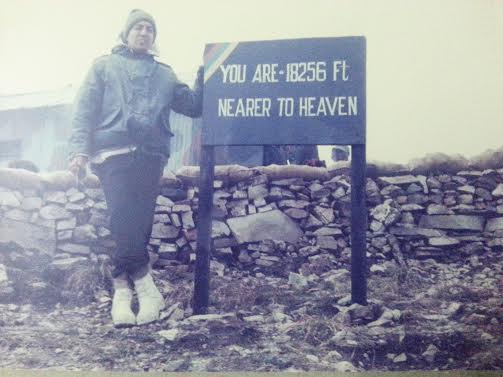
Arun, the ecstasy of our life

Scene X

Despite my dad consenting to get us married, I refused to take anything at all from him. Lyn’s parents were too poor to help us. But, we not just managed; we lived – you have guessed it – rich. On our 20th anniversary, 14 years ago, on this day, we bought us a gift from Archies: a wooden plaque with the inscription, “We don’t have much; but, we have each other”.

However, we were, are, and will always be rich. As my dad said no member of our family will ever be poor. As long as we are together, the flowers will grow and we have the riches of precious memories:20150210_143024

NAVY COUPLES – MADE FOR EACH OTHER (A VALENTINE’S DAY POST)

Part I

The title of this post sounds a bit parochial since it doesn’t include the other two services. Well, there is a reason. Read on.
When I was undergoing the Staff Course in Wellington (Nilgiris), in the Castle Quarters that we stayed in, there were three other houses: one belonging to an IAF officer and the other two to army officers. The IAF officer Thakurdesais and us occupied the ground floor whereas the Army officers, as always, were the upper-crust due to sahayaks that they had at their disposal. So, whilst Lyn and I did everything with our own hands, the army sahibs and ladies had a number of flunkies helping them. When the rations were delivered, for example, we stood in the queues with their sahayaks whilst they looked down on us from their balconies, sipping Nilgiri tea and biting on cocktail idlis.

I got posted to Naval Headquarters after that and after a few months of waiting, we were allotted a flat in SP Marg defence quarters. Our immediate neighbour was an Arty Colonel Surinder Singh.

Once, we were getting ready to go for an official party, when the door-bell rang and there stood Nachhinder, Col Surinder’s wife. Both Surinder and Nachhinder were very genial and excellent neighbours and we had a great thing going as neighbours and friends.

When Lyn opened the door, she had my uniform shirt in her hand since she was in the process of fixing stripes and other paraphernalia.

This gave Nachhinder an opportunity to rag me though I was not present. “Look at yourself, Lyn” she said in mock horror, “Your good for nothing husband has converted you into a flunkie. Call him. I shall teach him not to ill-treat the lady of the house”.

I was in an inside room but could clearly hear the conversation.
“He can’t come out now” replied Lyn with great finality.
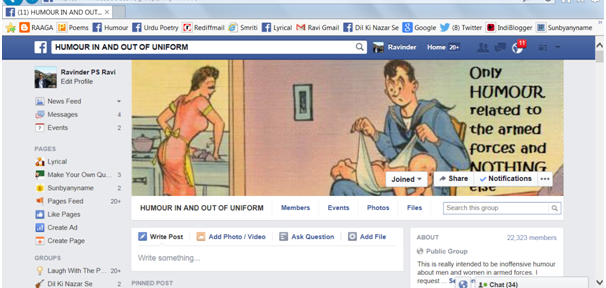
“Aha” ejaculated Nichhinder in mock scorn, “The laat-sahib is resting whilst you are doing all the menial work for him….”

“No” said Lyn, “He can’t come out now because he is ironing my saree”.

(Pic courtesy: imgkid.com)

P.S. Now, do you understand why navy couples are meant for each other?!

P.P.S. We also didn’t have much though in our hearts we were rich and still are. On one of our early anniversaries, we bought a plaque and hung it in the house. It gave us enormous happiness and satisfaction. It read: “We don’t have much but we have each other”. We tried to make up with Love what we lost because of not having flunkies and riches.

Part II

“SPECIAL” WEEKEND BREAKFAST

What is so “special” about a breakfast of Parathas, Sooji Halwa, Aloo Bhaaji, Dahi; you may ask?

10929963_10206027453546731_4142379992036969128_n

Well, only this that my wife and I made it together with our kitty Minnie helping as much as she could by excitedly jumping all around the kitchen.

Laajwaab?

When a meal is made together
By a husband and his wife
It is full of Love and Sweetness
The meal itself has Life.

What we make is not so important
The process is full of fun
Too many cooks spoil the broth, they say,
But, what if they cook like one?

It is the best way to start the day
Making a meal that’s so rare
It is a treat not just for the mouth
You pair, you care, you share.

Thanks Lyn for making life as beautiful as this breakfast together.

10991213_10206027452946716_2836361684837345390_n

BEST OF ‘MAKE YOUR OWN QUOTES’ – PART II

It has been less than two years since I put up in this blog ‘Best Of ‘Make Your Own Quotes’ ‘. In these 21 months since the post and 23 months since I started with the Facebook Page called ‘Make Your Own Quotes’, a lot has happened. One, from a membership of just 30 or so, the Page has a membership of nearly 500 now. Two, a number of (nearly 300) new Quotes have been started.

Why did I start with the page? As I mentioned in the introduction of the first post, “I noticed that on the Facebook and elsewhere, there is a great penchant about putting up Quotes. These range from quotes about Love, Friendship, Politics, Life; indeed about each and every subject. Whilst reading these quotes I was stuck by the realisation that somehow we have this feeling that the sages, saints and wise-people of the past had abundance of sane-advice on all kinds of subjects; but, by a curious quirk of fate, we ourselves and fellow citizens have nothing great to offer in terms of such advice. When I started analysing this, I reached the conclusion that there is nothing simpler than giving sane advice; the answer is really blowing in the wind; it is everywhere. We only have to gather these pearls around us and weave them in a garland”. That’s how I started this Facebook page called ‘Make Your Own Quotes’ with an introduction: “There is nothing simpler than giving sane advice; you don’t have to follow great teachers. Make your own quotes and let others follow you.”

This venture started on the 25th of Feb 2013 and very soon it would be two years old. I have received tremendous interest from friends in these Quotes and I am told that around the world these Quotes are being circulated in all kinds of garbs. I have nothing against these since I shall never be making this into a commercial activity.

I like all quotes on Facebook; these provide quick and easy solutions to life’s seemingly complex problems. I believe life is as simple as Facebook; what you get is dependant upon your “settings”.

I started off by giving tips to people on how to make their own quotes, eg,:

Great Quotes Tip #1: Compare Life, Love, Relationships etc to something mundane and infer “great” sounding advice out of it.Here is an (original example): “Friends should be like electricity wires; opposite poles, running parallel and lighting up lives by meeting”. For effect, inscribe this on a totally unrelated picture of, say, a Frog in a Pond. Wanna try your hand at it; go ahead….nothing is simpler! Try comparing Life to Beans!! Go ahead, now that you have joined this site, you will eventually follow your own quotes!!!

Here is therefore the second tranche of Best of ‘Make Your Own Quotes’.

Going into historical background of things has been a favourite subject with me. We have documented some of our history whereas most of the important one is in the form of gospel, ie, passed down from one to other without being written. However, one important aspect of the history is the history of not just the events but history of our emotions. This is important since it has been asserted that God is beyond emotions. So, how then did the first man or woman get these emotions?

First Man

Now this is totally tongue in cheek and about my life in the armed forces which are largely hierarchal and authoritarian:

Shit upwards

The subjects of God and Religion are close to my heart; both being the inventions of Man to keep sanity. I have written a number of articles about this in this blog. The most comprehensive is the one that tracks the origin of God and Religion, viz, Whose God Is It Anyway? I have argued that whilst we do need God, but Religion has to move away from being community activity to something personal. Here is a Quote about God:

God is what we thinkI continue to indulge in Alternate Definitions of words, as in the previous edition. Here is one on Secretariat:

Secretariat

Rains always bring out the romantic spirit in me. Here is one about the rains:

Walking in the rain

Here is another:

couple in rain

As we move into a world where we are in crowds and yet alone and lonely, I have frequently given quotes on this subject. Here is the first one:

OLYMPUS DIGITAL CAMERA

Here is another:

Loneliness in crowd

And yet another (though all these appeared at different times):

Loneliness Quote

And a penultimate one on the same subject:

Lonely and Sad

Finally, if we have ever examined sadness, we would have probably reached the same conclusion as me:

Sadness

I frequently bring out the comparisons between Faith and Science; and, my way of looking at it is that both are the same except that the differences are more entrenched in our minds than similarities. Taste the following:

Science and Faith

Whilst on this subject, I am often amused at the prevalent distinction between God-made and Man-made; it is as if the latter really have equal powers to make things as God!

Man Made

I also frequently indulge in the witty, humorous and the light-hearted. For that, I have a running series called ‘My Moments Of Madness’. Here is one such post:

If at first you dont succeed

Here is another:

Speed

And another:

Accident

Here is one in which I have even expressed ‘Hope’ after Life!:

Unpaid bills

Here is another funny one, addressed to God:

Battle of the Bulge

Another running series is Alternate Definitions. Some of these are merely punning on words; but, these would make you feel. Taste the first one about my specialisation or field of interest: Maritime (I spent 37 years in the Indian Navy and am retired now):

Marry Time

Every one of us have heard the word Anglicised. Here is my definition of it:

Anglicized

Lets take a few about the attributes of the Indians. First of all, we are really very filthy people and litter everywhere with abandon. Here is a take on that:

Contribution

Our traffic conditions are amongst the most chaotic in the world. Indeed, we kill more people on the roads than during wars. Here is a take on that:

Miscellaneous

And the third is the Indian Politics. But then, when I put it up, foreigners told me that it is the same in their country too:Politics

As I told you, I spent nearly 37 years in the Navy and hence sea is in my veins. There are several Quotes on this theme; the most popular of these was:

Sailor and Romance

Here is another one about the same romance of the seas:

Ship Sea and The Moon

Here is one about the sea itself and how it changed my life:

Sea

The four lettered word Life is a favourite topic with me. I give you a few quotes about this subject. Here is the first one:

Deceiving Life

Here is another:

Life in Things

And another since Life is such a vast subject:

Life is a Play

And yet another:

Life Live Love

This one about Life should make you think:

Live to love

And a last one about Life:

Living and Dreaming

Let me now give you three at random before finishing with this edition of Best of Make Your Own Quotes. There are, of course, many more and you can await the next edition. This one is about the limitation of Reason and Reasoning:

Reason

This one is being happy about what the sages and saints say; that is, Life is a Myth:

Myth

And to end this edition, here is a quote about my ability to make you look at God’s world differently:

Roses and Thorns

I am sure by now I have convinced you to subscribe to ‘Make Your Own Quotes’. What do you have to pay for the subscription? Nothing; not a cent, pence or paisa. It is totally free. All that you have to do is to like the Page and these Quotes would be delivered to your timeline automatically. You can, on the page, make your own Quotes and share these too with others too. Dozens of subscribers have done it already.

WANT TO START A FACEBOOK GROUP? HAVE A REALITY CHECK

So, you are keen to start a Facebook Group with a particular purpose, aim or theme in mind? Does the idea fascinate you because it would not only provide an outlet to your creativity; but, would also provide similar outlets to others and would be viewed as social service?

Sounds great; doesn’t it? Let me give you a reality check:

First of all, it is almost like the idea of starting a new Religion; it would be subject to so many interpretations and variations that eventually what emerges will have nothing much to do with the original concept, except perhaps the name.

And, that is because we are Indians and immediately and spontaneously resist any attempt, even mild ones, at being focussed and disciplined. How can, we silently ask, there be a group with a theme and aim when we are totally used to Chalta Hai approach in life and this CH approach has held us in good humour all these centuries? Please notice Indians in an aeroplane. Even after the announcement for fastening seat-belts, keeping seats upright and switching off cell phones; we don’t do any of these. We keep waiting for the air-hostess to come to us and personally point out. And then, we reluctantly do so, our looks indicating that she is only being a stickler to some archaic procedures. We are like that only (Read: ‘We Are Like That Only’).

We look at any attempt at regulation as being against and killing creativity. The result is that we don’t have a free society but we have a reckless one that is adept at taking short-cuts to suit its own interests and styles.

Majority of the Indians won’t have visited China. But, that doesn’t stop them from extolling the virtues of Indian “free”, “open” “liberal”, “democratic” and “fearless” society in comparison to China’s “draconian”, “closed”, and “autocratic” society wherein people live in perpetual fear. It would come as something of a shock that we, perhaps, live in greater fear than the Chinese in our everyday lives. For example, because of our chaotic, reckless and dangerous traffic conditions, when we leave our homes in the morning, we have no idea whether we shall return home alive. We never let go of our creative and free-flowing spirit (if not spirits) even on the road.

Our creativity Is also hugely appreciative of easy availability of everything on the Internet that we can copy and paste as our own. Take three of my Facebook groups, for example: ‘Humour In And Out Of Uniform’ (HIAOOU), ‘Laugh With The Punjabis’ (LWTP) and ‘Dil Ki Nazar Se’ (DKNS) to promote respectively humour about Indian armed forces,  humour about Punjabis, and love for old Urdu/ Hindi songs. The membership of the first two gradually reached 20000 each and the third one is at about 1500. In all three groups the number of people who write original posts is very small. Majority is copy-paste experts. Since the majority is like this, it appreciates copy-paste culture in others too. Hence, your original and painstakingly written post may fetch a dozen Likes,  but its copy-paste post, even if being repeated for the nth time, doesn’t fail to attract hundreds of Likes and Comments. This is real humour, the majority says; the kind that should be there instead of the “long, boring (originally written) posts”. Even though the cover picture of HIAOOU advises that the group is about ‘Humour related to Indian armed forces and nothing else’; most members feel that the group should be allowed to put up all humour and non-humour posts.

HIAOOU1

Irrespective of the name, aim and theme of the group started by you, we like to put up each and everything. Our favourite posts that find places in almost all groups are: Greetings especially Good Morning, Happy Diwali, Happy Holi etc; Motivational Quotes; Pictures and praise of religious places and symbols, god and goddesses; Pictures and praise of the armed forces (these have to be liked by everyone lest they should run the risk of being dubbed as unpatriotic); Posts that show they are modern enough to be empathic about such social issues as girl-child, women’s empowerment and child-labour (these never fail to get dozens of likes and comments since others too want to be seen in the same light), riddles (such as 2+2×3-4×2-2 is how much? Or if your brother’s aunt is married to your sister-in-law’s father, what is her relation with you?) and romantic shair-o-shairi, pictures and quotes. On my group Laugh With The Punjabis, for example, I keep enquiring from members who put up such posts, despite norms clearly spelled out in the pinned post,  whether such posts as that of gods and goddesses and girl-child are something to laugh about or at. But, that doesn’t stop the members from giving vent to such latent creativity.

LWTP1

In the end, most of the groups on Facebook just become friends’ circles wherein everything is fair game including “how are you, friends? “, “hope you have a great time”, “anyone from Shimla?” and “Add me”.

Then there are those who want to advertise free of cost. They put up ads about their products such as jewellery, shoes and even to like their pages and groups. Many of them flood your groups with dozens of such ads both as posts and comments and it would take you considerable time, sometimes hours, to get rid of these.

The new scourge on Indian Internet is pornography. Sexually oppressed and depressed Indian people have suddenly found virtual impunity in making profiles that are gay, lesbian, transgender, incestual, wife-swapping, cuckolds and open interests in such profound subjects such as Desi Gay Stories, Meri Bhabhi Ki —-, Hot Sisters and so on with explicit pictures. Whilst on the subject of profiles, my experience shows that almost half the Facebook profiles of Indians are either fake or have fake pictures; commonest being those of actors, actresses, foreigners, children, gods and goddesses, quotes, flowers and places.

On my group ‘Humour In And Out Of Uniform’, I tried to promote original writing of anecdotes since the Internet hardly had any material (including cartoons) on humour about Indian armed forces. But, I found that firstly there were very few takers and secondly even those who wrote originally decayed into writing on anything and everything and letting these pass as humorous posts. I then started a group, satirically titled Chalta Hai wherein such posts could be published. But, I should have known that the fun of putting up the forbidden stuff on a group with a specific purpose far outweighed the lure of putting it on a group wherein it is actually permitted. Hence, people kept on putting up Chalta Hai posts on HIAOOU and even tried to justify these. A senior member, for example,  is convinced that everything that happened in his tenure in the armed forces in India and abroad and in the civvie street is worthy of being chronicled in HIAOOU for the benefit of the youngsters who are looking up for leadership and guidance from the armed forces.

Chalta Hai2

With all this, your desired social-service of having a Facebook group suddenly becomes a punishment for you. You spend the whole day managing your groups, over and over again advising people to stick to norms (to the extent that they and you both start getting on each other’s nerves), removing and banning posts and members, getting into lengthy discussions with people as to why you removed a post/member without personally cautioning him and her (remember how they are used to being told by the air-hostess?), inducting and blocking members after checking their profiles, and hoping like hell there would be some time left for you to actually use your own creative spirit to write (the original purpose of starting the group). And all the while, the copy-paste artist spends all of fifteen minutes in doing his boy/girl-scout good act of posting his stuff and moving on to post the same in dozens of other groups that he/she has become members of. By the way, when I check profiles of members at induction I am surprised to see many of them being members of hundreds of groups.

Narayan Murthy in his address to students of the Jawahar Lal Nehru University at New Delhi entreated everyone to assimilate some of the attributes of Western societies wherein people invariably thought of the society before thinking of their own freedoms and liberties. But, we, in our Chalta Hai attitude, often consider ourselves as the centre of universe, and reason out how just our type of exceptions from the rules should be permitted.

Most Indians are also good at – nay experts at – giving advice (Read: ‘One Good Advice Deserves Another’). There are very few who mean well whilst rendering such advice; many of them use the medium of advice to gather as much attention for themselves as they can gather (after all, the very aim of Facebook is to seek attention, they reason out). So, whilst you need their active help to maintain your groups for the purpose for which they were created, these advisors would tell you that the simplest thing to do is to throw a person out who is putting up irrelevant and objectionable posts. They forget that you would have to spend hours reading all the posts even to decide which are the irrelevant posts. Ask them to help in this as co-admins and they would do the Mr. India act of becoming invisible.

What, then, are the solutions? You can try one of the following options:

  1. Close down your group or groups. This is easier said than done. On Facebook there is no such quick-fix option available to deactivate a group. You have to physically remove each and every member and then remove yourself and seek closure. Hence if your membership is large (in my case the total membership of my groups is close to a lakh), and you spend only 30 seconds for removing a member, you may spend as many as 50000 minutes of doing it, if you don’t take a break. This is as many as more than 800 hours or 35 days!
  2. You can restrict the membership of the group(s) to a manageable number and restrict entry by making it (these) either closed or secret groups. This defeats your original purpose of doing all-round social-service.
  3. You can change the setting of the group to ‘All posts to be approved by an Administrator’ prior to posting.
  4. You can increase the number of Administrators. This too is easier said than done since most of the advisors are actually very busy people who do not have sufficient time to do this public service. And in any case, if the norms are subject to individual interpretations (causing you chagrin in the first place), administrators’ duties then become another cause of individual interpretations.

So, finally, what are you left with? Perhaps have just one or two more trusted administrators and have the setting for posts to be approved by administrators prior to putting up. This is hard-work for the administrators but then it does away with all the heart-burn caused by removing posts, removing and blocking members, and being embarrassed by vulgar and pornographic posts being put up when you least expect them.

If you have any suggestion, please feel free to post it in the Comments below the post.

Thank you.

Follow

Get every new post delivered to your Inbox

Join other followers:

error

Enjoy this blog? Please spread the word :)

RSS
Follow by Email
YouTube
YouTube
Set Youtube Channel ID
LinkedIn
Share
WhatsApp
Copy link
URL has been copied successfully!