Guess what? Two weeks after the Cholesterol joke and cartoon, there will still be guys who have got it the first time. Somewhat similar to boys and girls who figure out how to masturbate, the guys who got it ‘the first time’ are excited and want to share with their friends not knowing that the guys are up to their necks with Chole and Sterol having the wrong spellings for Bhature.
What exactly is a Forward? Anything and everything that you or someone shares from the net, which is not your own writing, is a Forward. Such Forwards include nearly 100 percent of all Good Morning messages, jokes, cartoons, poems, songs, and even opinions such as political.
Knowing the kind of damage that these are doing to our society (dumbing down as never before) I wrote two essays:
We know about the dumbing down. We know about the enormous damage. But, as brought out in the essays, we find it very convenient to push the Forwards further. Indeed, some even take credit for having found them in the first place and hence being worthy of comment and appreciation. There is a sizable number of people who justify pushing Forwards through one argument or the other; eg, “These are harmless and easy way to start the day rather than having to go through other people’s Gyan (translated it means Knowledge but what we intend is Bullshit) early in the mornings.”
Forwards are also meant for people who are in a hurry (Fast Food types) and who just don’t have time for reading anything original. These are more than ninety percent of all people. WhatsApp, for them, is a quick way to socially connect and they don’t want to waste their time on reflection before commenting.
So then, we can conclude that the popularity and lure of Forwards are unlikely to die down. If hundreds of years after the advent of religion, people haven’t reflected upon whether it is still meaningful and sensible, they are unlikely to be swayed by arguments against WhatsApp Forwards. And currently, these Forwards are more attractive than Sermons on the Mount.
Therefore, we can at least have some rules about Forwards and that’s why this essay. Here are they:
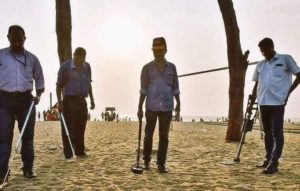
1. Verify the Facts before Pushing Forwards. Even though you are hard-pressed for time (it is another thing that you are almost perpetually on WhatsApp) you would find that verifying facts is always a revelation. For example, I came across a post about a popular song of the lyricist Shailendra that was claimed to have been used in a movie much earlier than it was known to us. On the second round of it being pushed, I merely rang up Dinesh, Shailendra’s son, and came to know that this post was a hoax. Take the recent case of Prime Minister Modi collecting garbage from a beach in Mamallapuram whereat he was to have an informal summit with the Chinese President Xi Jinping. People were impressed with the sincerity of the gentleman towards Swachh Bharat until three days later there were the following pictures pushed by the other party:
These pics were accompanied by a message that the PM was grandstanding for the mediawhereas the beach was already combed for garbage much earlier. Now the entire lot was swayed in the opposite direction until it was revealed by India Today that Karti Chidambaram had cleverly used the unrelated pictures above to show Modi down(Please read: ‘Fact Check: Karti Chidambaram posts unrelated image from Scotland with plogging pics of PM Modi‘). But, Karti Chidambaram must have convinced people – at least those who are die-hard fans of the Congress – that Modi is a fraud. There is, therefore, always a need to check the veracity of the facts enumerated in the Forwards. It doesn’t take too much time.
2. Caption the Videos being Forwarded. Nothing takes as much space in cellphone memory and as much of people’s time as plodding through videos only to find that either these weren’t worth seeing or, worse, you had already seen and downloaded these earlier. When you press down on the video and use the right arrow to Forward it, you have to now select up to five individuals or groups to forward it to. After you have selected these and press the Send arrow, it would go without any caption from you. However, if you Forward it from your Gallery, after selecting the people that you want it to be sent to and before you press the Send arrow, you have a choice to ‘Add a caption…’. At this juncture, you have the public duty to tell your recipients as to what this video is all about. About an year ago, I stopped looking at all videos without captions and I never forward videos without an introduction from me. Hence, if I am one of the recipients, it is even more important that you caption it. If you write an introduction about the video just before sending the video, that would suffice too.
3. Always Date Tag the Forwards and Check If A Forward is Still Current. Many posts are date and time dependent. These are not current for all times to come simply because you can push these at a date and time of your convenience. As an example, two days ago (12th Oct 2019), someone shared a post with the title: ‘Today is Mirza Ghalib’s 220th birthday. Lovely lines from Mirza Ghalib…’. This anniversary was on 27 Dec 2017 and naturally this post was considered current for nearly two years after the anniversary.
4. Reflect Before You Opine. You feel that there is an urgency to comment on a Forward lest you should miss the opportunity later. Your excuse is: “After all, I get thousands of posts everyday and I can’t be expected to reflect on issues.” This is exactly the mindset that makes the society dumbed down. Don’t post off-the-cuff remarks and something you only feel strongly about without knowing facts. Satisfy that you are adding value to the post and not just letting people know how astute you are. As an example, if someone has forwarded a post about some new facts that have surfaced about Einstein’s Relativity of Time Theory, your this comment is adding no value to it: “Ah, I just love Einstein. He was great. There was a time when I couldn’t sleep without reading a chapter of Relativity of Time. I would still read it if I could get a little more time. But, you know how times change.”
5. Don’t Comment on the Thumbnail Only but Read the Article and Comment. When we were in Staff College, we were required to write Book Reviews of nominated books and then present these in the Syndicate. One of the officers – call him Cdr A – presented a book review and it sounded great. Well, until, during questioning, the Syndicate DS brought out that he had merely copied the back cover of the book and hadn’t read the book at all. What was true for Cdr A is true for a large percentage of readers on Social Media. They comment on the thumbnail of the article without reading it at all.
6. Write Something of Your Own at Least Once in a While. Yes, with the Forwards you are winning a lot of popularity, eg, “Your Good Morning messages are really very beautiful.” However, do think if you ever wrote something of your own. Let me give you an example. There was a time when in the Navy we used to present in-house talent during the Navy Week Balls or for that matter even during stage-plays and cultural programmes. Nowadays, a lot of sponsored money is spent on hiring artistes from here and there including from the Hindi films industry (I don’t like the bastardized word: Bollywood). A lot of other people and I still long to have the sense of belonging by presenting or seeing in-house shows. Your Forwards have as little sense of belonging as those sponsored programmes.
That’s it from me, then. I am sure if we follow these simple rules, something can still be salvaged from Forwards.
Suddenly you find a friend is gone,
Of almost the same age as you.
Why couldn’t he live to see another dawn?
You look for but find no clue.
Life appears so uncertain,
You don’t know when it’d be curtain.
Why couldn’t God give us eternal life?
Why people have to prematurely die?
Why does He give us struggle and strife?
And make those left behind to cry?
No one has found answers to these,
You go like a candle snuffed in breeze.
However long you live, my friend,
Life would always appear to be short.
Whatever is given, you can’t extend,
This fact no one can distort.
So greet and enjoy each day,
As if it is the last of your stay.
There should be no unfinished tasks,
No reason to have regret.
And before the Angel of Death asks,
There should be no unpaid debt.
The fact of Life we all know,
One day we all have to go.
Whatever life is given to us,
We need to value each day.
Let it not be said we missed the bus,
In waiting for happiness to come our way.
Love and live and live and love,
And leave the rest to God above.
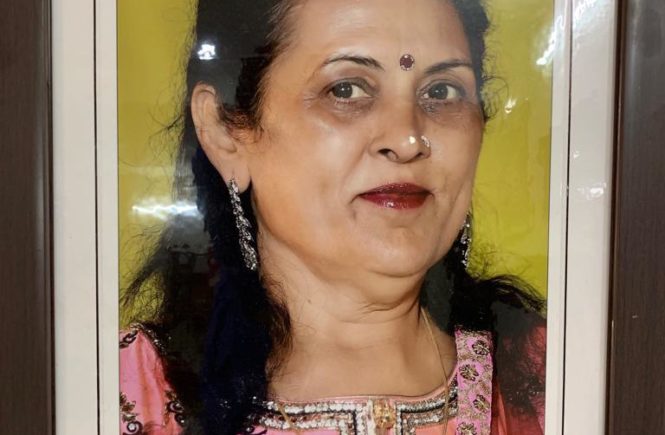
My sister Anju, in Kandaghat, left us suddenly and at a very young age on Wednesday, 23 Apr 19. Even though much younger to me, I always addressed her as ‘Deedi’. I penned the following after attending her funeral on 24th:
एक दीपक था जो बुझ गया, एक सांस थी जो थम गई। चलते चलते राही रुक गया, एक आंख थी जो नम हुई।
अंजू था नाम मेरी बहिन का, हजारों थे उसमें गुण। होटल* चलाना बहुत कठिन था, कभी इसकी कभी उसकी सुन।
पर उसने क्या संभाला समां, याद आती है उसकी मुस्कान। हर किसी से हंस हंस के मिलना, चेहरे पे ना आने देना थकान।
इतना कुछ करने के बाद, फिर घर को भी चलाना। साईं बाबा की करना फरियाद, और कीरतन में सबको नचाना।
कई बार ऐसा लगता था, दर्जनों होंगी अंजू की बाहें। हर काम उसे जचता था, हर तरफ थी उसकी निगाहें।
पर जबसे गया था समीर**, तबसे थी अंजू बहुत उदास, क्या खूब था उसका ज़मीर, जा पहुंची वह उसी के पास।
खोया है हम सब ने मिल के, एक इतनी प्यारी हस्ती को। मेरी तो बहिन थी दिल से, पर दुख पहुंचा है सारी बस्ती को।
साईं करे उन्हें रखे प्यार से, पूरे परिवार को संग हो यादों का, सनी और कुनाल ना हों बेकरार से, अंजू चिन्ह बने उनके इरादों का।
हम तुम्हें कभी न भूल पाएंगे, तुमसे ही कंडाघाट की शान थी। दिन और साल बदल जायेंगे, कहेंगे हमारी बहन हमारी जान थी।
*She ran the restaurant ‘Sunny’s Full Stop together with her husband Sunny.
**She lost her son Sameer within three days of his marriage last year. She never fully recovered from the tragic loss.
After God created a beautiful world, With rivers, hills, trees and flowers; He then created Music for us, To fill up our vacant hours.
And He said this would be one medium, To represent all possible emotions. In addition it would have all sounds on earth, Including those of skies and oceans.
And not just with the hearts of beings, He made Music to sync with one’s soul. Your life may be scattered here and there, But, Music would make it whole.
That’s why in notes of Music, You can often hear God speak to you. There is never a language barrier, Everything about Music is good and true.
All of us are born free,
They would like us to believe,
But as soon as we’d hear and see,
They send our freedom on leave.
The first to make us enslaved,
Is memory with which we are born,
Generations of data is engraved,
Love, Fear, Amity, Jealousy and Scorn.
Then we have our parents,
With own and embedded ideas in mind,
They think they’re God’s only agents,
To teach us things of every kind.
Good and Bad is thus imprinted,
With each of their instructions,
You do exactly how they hinted,
Or gave you specific directions.
Already a puppet, you go to school,
To lose more freedom to knowledge of past,
They control you by the Book of the Rule,
And you thought you’d become an iconoclast.
And then you find a job with salary,
Your being bonded is now complete;
Your boss, at your expense, plays to gallery,
And you realise what poison is another man’s meat.
And if there is still some freedom left,
It is time for you to tie the nuptial knot;
You are finally, of all independence, bereft,
That, on being born, you had, from God, got.
And I haven’t talked about fads and habits,
That imprison you in their tight grip.
You hop from one to other like rabbits,
As if you are on a controlled trip.
The society and government keep you on leash,
Not ever wanting you to fall off the line,
There is no way you can carve an independent niche,
Unless you suddenly get powers divine.
Of particular mention is the bureaucracy,
That controls you from birth to death certificate.
It doesn’t matter if you live in democracy,
Rules and regulations make you suffocate.
There is, thus, only one way to redeem your freedom,
It is to happily embrace the messenger of Death;
And get back to Heaven’s Kingdom,
On Earth you are enslaved to your last breath.
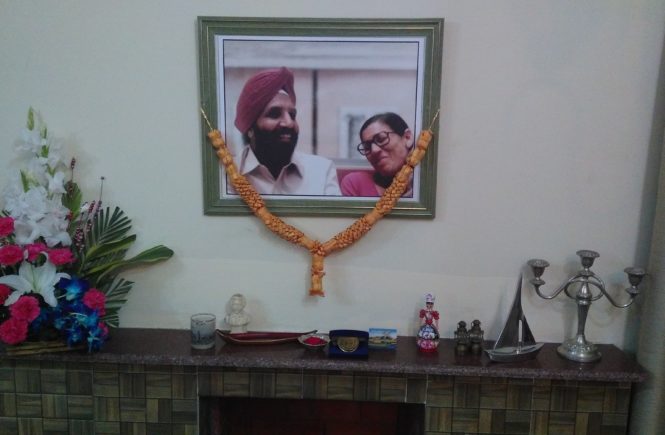
Our dad died of a jeep accident, just nine kilometres from our place: Whispering Winds in Kandaghat (Shimla Hills) (Please read: ‘Home Is Where The Hear Is – Kandaghat In Shimla Hills’) on the 1st of May 1984. Tomorrow, would be the thirty-fifth anniversary of that fateful day, a Monday, when he was on his way to Shimla to receive his promotion orders as Additional Director of Horticulture, Himachal Pradesh. On the same evening, he and our mom were to travel by train from Kalka to Shimla to be with us at Bombay for my wife’s first delivery.
When the phone-call came about his demise, I thought it would be dad telling us (for the nth time) about their programme (as was his habit). Our world was totally shaken.
The place whereat his jeep went down the hill at Kiarighat is the unlikeliest of the places for an accident: broad and level road with proper parapets. It was rumoured that he was put to death because of a number of reasons; the chief one being that he was fighting it out with the government against discrimination.
Racial, religious and regional discriminations are rampant in India even though, ostensibly, we portray ourselves as being proud of our pluralism. When I was small, in the Himachal town of Mandi, because of my long-hair (as a Sikh) I was subjected to constant jeering by my school mates. Some of it was just annoying whereas at times it was vulgar (“Jatta, O jatta, teri bhen da tatta” (O Jatt, balls to your sister) and dangerous (they tried to bury me alive once and I was saved at the last-minute when my father crossed the burial spot).
Dad too had to face similar wrath by those who feel that Punjabi speaking should stay in Punjab, Bengalis in Bengal and so on.
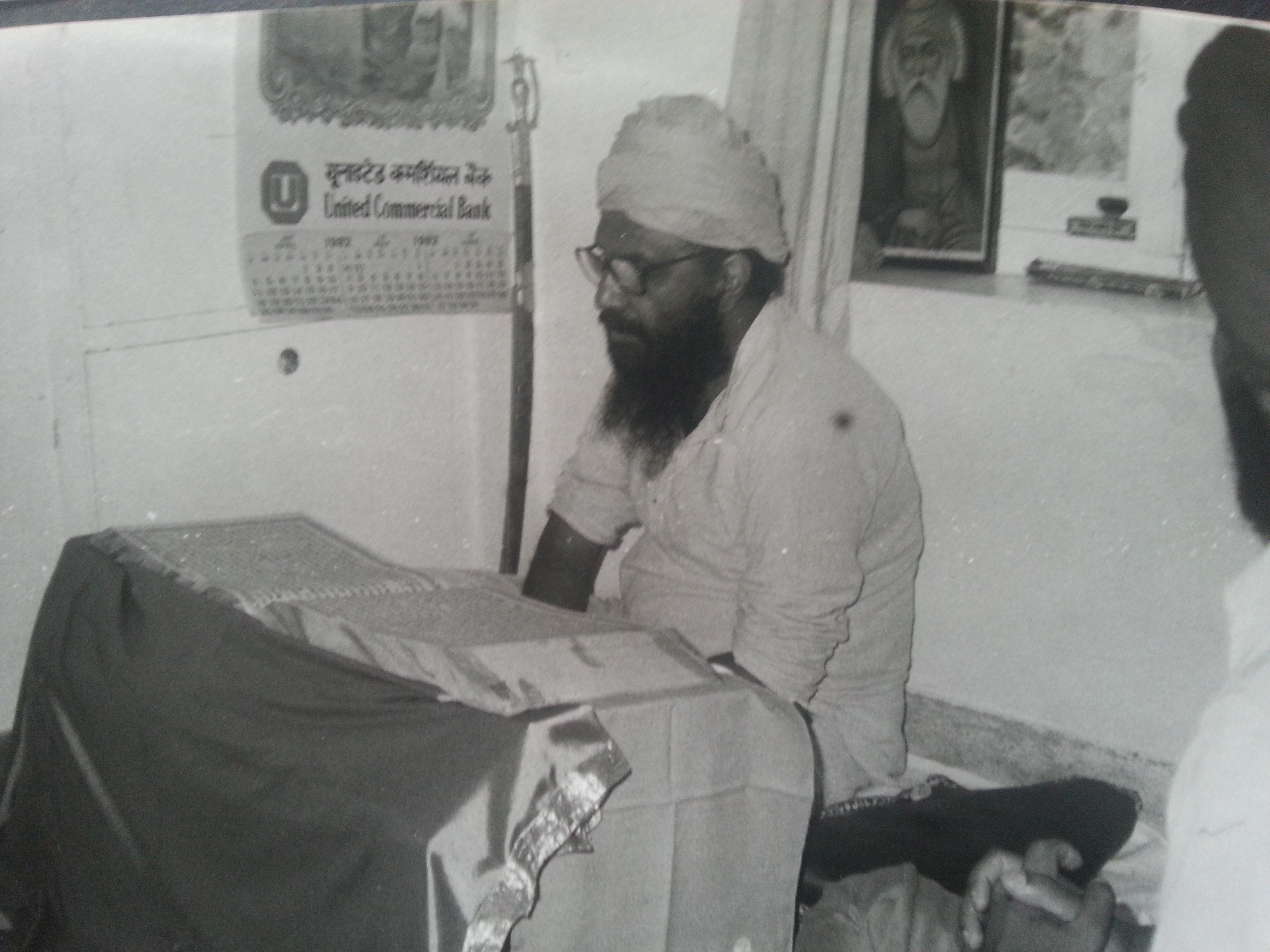
Our mom died last year on the ninth of August; she having outlived dad by nearly three decades. She used to have the Bhog (Completion of the entire reading) of Sri Guru Granth Sahib on the First of May every year. She would start reading a few months before. This time, it was left to me to do a Sadharan Paath (Daily reading of SGGS for about ten days) in his memory. It was five to six hours of reading at my speed. What kept me going was the fact that dad, just a few years before his demise, did an Akhand Paath (Non-stop reading of the SGGS until completion) on his own with my mom and I providing him short breaks only for ablutions:
Paath was not the only thing that we learnt from our dad. Here are a few of those things (not in any particular order):
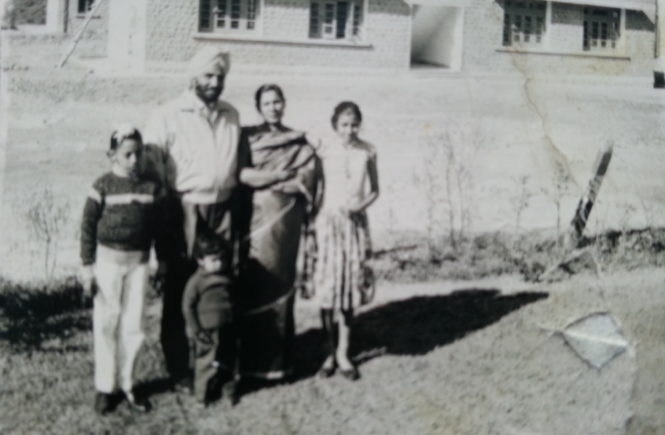
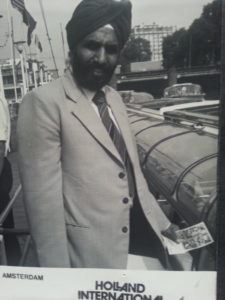
1. You Are As Rich As You Think You Are. Dad was a self-made man and hence never had too much of money. He was also a very proud man; he would rather give than take from others. Even at that, he gave the impression of being many times richer than what he was. He told me that his father had given him this blessing when he was still in college, “Mani, tu bahut paise kharchen” (Mani, you should spend a lot of money). My dad told me that he thought of his dad crazier than what I would have ever thought of my dad. It was because with his meagre resources, his father was giving him blessing to spend even more. It is only in later life that my dad understood his dad’s blessing: that he could spend only if he had and he could spend as long as he had. Grandad was an intellectual and a God-fearing man. What a brilliant blessing he gave my father and to credit to the latter, he followed it in toto. Here is on the tenth page of my favourite book: Sri Guru Granth Sahib ji (Raag Goojri Mehla 5):
kaahay ray man chitvahi udam jaa aahar har jee-o pari-aa. Why, O mind, do you plot and plan, when the Dear Lord Himself provides for your care?
sail pathar meh jant upaa-ay taa kaa rijak aagai kar Dhari-aa. ||1|| From rocks and stones He created living beings; He places their nourishment before them. ||1||
When dad died, we had next to nothing and yet we never forgot dad’s example of being rich.
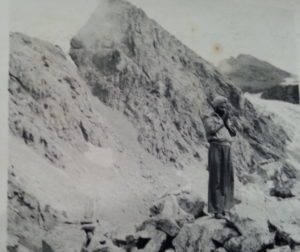
2. You Should Fear No One Except God. How could dad do it even though he often had people and circumstances ranged against him? It is because he maintained a clear conscience. He was in the horticulture department and we had a lot of fruits and fruit products coming home. I used to think that these were probably perks of the profession. After my dad died I found, amongst his papers a file in which he had been billed for everything that came home and receipts of having paid. He was a terror when he dealt with people (rigid on his principles) and yet other than being harsh whilst demanding standards and efficiency, he never did any harm to anyone. He had the same way of dealing with his superiors as with his juniors and I have seen and heard his superiors fearing him. Dad stood alone combating all his problems. It was only just before his death that I was saddened to know what he was going through. He never gave the impression that he had any problems. He often sang and I know that he fervently believed in this hymn:
Jis ke sir upar tu swami,
So dukh kaisa paave?
O Lord, one who is under Your protection (one who considers You to be above himself),
How can he experience any suffering (in life)?
Coincidentally, in the Yaad Kiya Dil Ne (my Music Group on Facebook) Group’s Annual Meet at Kandaghat, on 14th April this year, Pammi sang my dad’s favourite hymn that was penned by Sri Gobind Singh ji when he was in Machhivara Forest, alone and separated from everyone, whilst fighting against Aurangzeb:
Tell the beloved friend (the Lord) the plight of his disciples.
Without You, rich blankets are a disease and the comfort of the house is like living with snakes.
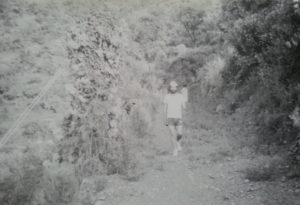
3. Nothing Is Impossible. It has been 35 years after his demise and yet I have never come across a man who believed in this more. If his heart was set on doing a thing, no one could stop my dad. When he constructed the house at Whispering Winds, Kandaghat, the local Panchayat declined to provide water connection so far away from the main town of Kandaghat (we are exactly one and half kilometres away and that’s why our village is called Ded). Undeterred, dad went about laying a pipe from the village Bawri (a water resource in the hills) and next day we had all the water we wanted. This connection is our main source of water even 39 years later. Following our example, the other houses have made similar connections. Fortunately the Bawri has enough for everyone.Two of the very good examples of following in the footsteps of our dad were provided by my younger brother JP. In Shimla, he had just finished learning roller skating when next he broke the world-record of non-stop skating. Later, he had just learnt bicycling when he bicycled all the way from his school (Lawrence School Sanawar) to Kanyakumari.
Dad won’t take No for an answer and always found a way out.
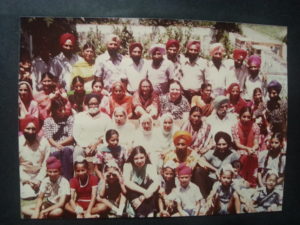
4. Family And Friends Are Important. Dad invariably took us along with him for picnics, get-togethers, visits etc. Even when he was hard on us, we knew he never planned anything without us. Similarly, he made friends easily and stood by them in their hour of need. He was a great party man and offered the best hospitality to all who visited us irrespective of their status in society. I recall that mom would be publicly embarrassed by him in case she wouldn’t have offered the best available at home to the guests. His sincerity and loyalty towards the larger family and towards his friends often saw him through situations that could be messy.
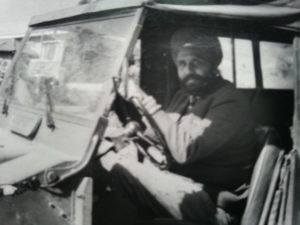
5. Never Lose Your Sense Of Humour. Dad had a sense of humour that never lift him. He would make fun of serious situations and consciously made them smaller than they were. He would often laugh out loudly and include everyone around him in the lighter side of the situation. Conversely, he would make some very insignificant (to us) things look very big. For example, whilst travelling with him, we had learnt after several shocks, that if he would suddenly say, “Oh, eh ki hogeya?” (Oh, what has happened now); we should know that he hadn’t run over something or that the vehicle had developed serious defect, but that we had suddenly crossed a milk-bar without stopping.
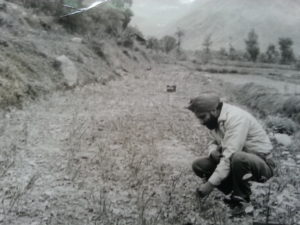
6. Never Mix Work With Pleasure. Dad’s full energies and time were utilised on whatever he was engaged in. If he was working, there was no way he could be expected to give less than his best. Conversely, when enjoying, work was farthest from his mind. I remember after I became a commissioned officer in the Indian Navy, I came home on my first leave unannounced, hoping to give him a pleasant surprise. Mom wasn’t at home. I kept my baggage with the neighbours and walked to dad’s office some five kms away. Dad was happy to see me, hugged me, and offered me a glass of fruit-juice. The time was about 2 PM and dad said we would go back together at the end of the day. Within about ten minutes, he was so busy in his work that he had forgotten all about me. It was only when we were going back home that he exchanged pleasantries.
7. Always Be Kind To The Lower Staff. Dad was large-hearted and invariably forgave his staff for even their worst lapses as long as these were honest mistakes. He would slang them until cows came home but I had seen this for myself that the staff had no doubts in their minds that he loved them. On the day that he died, rather than the driver picking him up from our home, dad was to pick up the driver since his house was between our house and Shimla where dad was headed. He was killed just a km short of the driver’s house.
Right now, even after thirty-five years of his demise, we still feel discrimination in our place. Someone who has flagrantly encroached on our land appears to be favoured by the authorities in the garb of being a local. However, with our dad’s principles that we inherited, we bat on regardless and fear no one but God.
Tomorrow, when we have the Bhog of the Sri Gur Granth Sahib, exactly how our mom used to do it for so many years after dad went away, we shall pray that we never falter on those principles that made dad what he was.
Dad, we still miss you but you are still alive with us.
On my first birthday, after I went away,
I know you will be miserable and sad,
But today I have something else to say,
I hope that would make each one glad.
Let me start with the eldest of you,
Mona’s husband our dearest Maharaj,
I always loved you, my son Linoo,
You were always the jewel in my taj.
Mona, you have always been a daughter,
That can make any mother proud,
We have shared together tons of laughter,
Sometimes subdued, at others loud.
I am not going to write for you much,
The one nearest, my dear son Ravi,
I know you can write anything as such,
After all, you were born (to me) a kavi.
That brings me to my bahu, my Lyn,
Who shared with me endless love,
I hope that brings, on your face, a grin,
When I shower blessings from above.
JP, my darling, my little “Sweet”,
You were always closest to my heart,
You were there whenever we could meet,
Even death can’t make us apart.
Chuck you came into our lives gently,
I really adored your attitude and skill,
You are smart physically and mentally,
Having you in family was always a thrill.
Let me turn to first of grand and great-grand, Ankur, Simran, Mohiraa and Noor,
Anywhere they went on sea and land, Nani‘s house was never too door (away).
Tiny and Ippy are my favourite darlings,
Can’t describe the joy of being with them,
Whenever they visited I developed wings,
One a diamond and the other a gem.
Samira and Arjunfilled me with elation,
When they tied their knot together,
I would have given them great celebration,
If they had visited Kandaghat ever.
That brings me to my youngest grandson,
One and only Arun-the-great,
There is no one like you under the sun,
You were really worth the wait.
Birthdays are special, I know,
You’d have wanted me to be there,
But look for me wherever you go,
And you’d find me everywhere.
And I would be waving at you, as always,
When you’d leave Whispering Winds, my abode,
Then, waiting for you to return on important days,
My eyes forever fixed on the road.
As Time moves on, there are instances when we would love to have frozen a past event or even a moment for posterity. On the other hand, we just let it go without (at that time) realising its true value. Lets say some sixth sense would tell us that a particular moment that we are uncomfortable about or even find detestable would bring us the greatest happiness in future, won’t we preserve it with more wistfulness than the attitude of get-it-over-with-ASAP that we often have?
Let me give you an example. We are sitting in the classroom. The teacher is going on and on whilst we look outside the window. Everything else outside appears more interesting. We want to complete our schooling as quickly as we can so as to get over the boring stuff and get on with some real stuff that makes life worth living. Now, if someone was to tell us that 90 percent of the people when asked about nostalgic moments of their lives mention school-time as the number one, won’t we have enjoyed those moments more?
Here is what a mother told her son who was making faces at her cooking: “Relish it, son. Years later you would be telling your wife how good it was in comparison to her cooking.”
When I was a young officer in the Navy, I remember having seen this movie called The Final Countdown. It was in the year 1980. The movie was directed by Don Taylor and starred Kirk Douglas as Captain Matthew Yelland, Commanding Officer of USS Nimitz, which had sailed from Pearl Harbour, in 1980, for a training sortie in the Pacific. The ship had a civilian observer on board: Warren Lasky, played by Martin Sheen. The ship passed through a strange storm-like vortex and suddenly went back in time to 6th Dec 1941, a day before the Pearl Harbour Attack by the Japanese Fleet. Even though the ship had gone back in time, it had all its armament, sensors and aircraft on board as in the present day (1980). Gradually, as the events unfolded, the ship and its crew realised that they had been transported back in time and that with the modern facilities available on board, just one ship, USS Nimitz, was enough to take on the entire Japanese Fleet that had wreaked havoc in Pearl Harbour on that fateful day. Captain Yelland had to decide whether to destroy the Japanese fleet and alter the course of history, or to stand by and allow history to proceed as normal. Nimitz launched a massive strike force against the incoming Japanese forces, but before it could reach the enemy armada, the time – storm returned. After a futile attempt to outrun the storm, Yelland recalled the strike force, and the ship and the aircraft returned to 1980 safely. History was unaltered.
The movie was a fine example of how we can’t alter the past with the wisdom and capabilities of today. Every moment that we live has actually gone forever and there is no way one can alter it.
Many people have this fantasy about seeing their own funeral by traveling back in time even after death and seeing people cry and miss them and pour out their love that they never got the feel of when alive. Urdu poets have written volumes about consoling the love of their lives after death. Why just Urdu poets? Even the great Punjabi singer (greatest?) Asa Singh Mastana sang this ghazal about seeing mourners after his death: Jadon meri arthi utha ke chalange, mere yaar sab gunguna ke chalange (When they carry me in my funeral procession, all my friends would walk humming in sadness).
That’s why the New Year is so attractive; it, and every passing year, allows us to look at the past with the wisdom and capabilities of today. We rejoice in the nostalgia of our childhood and schooling, even forgetting those times when we wanted to fast-forward and get-it-over-with.
Even a person with average intelligence can make out that there is nothing really new in the new year. Each day is a new day caused by the rotation of the earth around its axis. This rotation, completed in 24 hours, makes the Sun appears on the horizon in the East and makes it set in the West, Who made the New Year? We made it. Who made Time? We made it; imagine your landing on some other planet or star that doesn’t rotate around its axis in 24 hours of the earth. What do you call this new Time? Does it have a relationship with Time on Earth? Just like Time varies around the earth (if it is New Year in Japan, it would be another six and half hours before it is New Year in India), now imagine it in the universe. Is it the same time of the day, or even day or year or century in, say, Venus?
Why should we worry about the universe? Ain’t we content about living on earth without having to worry about what happens elsewhere? The short answer is No, we ain’t. Just as Columbus sailed to discover India, we have ventured out to other celestial bodies to see if they are like us. When a mountain climber was asked, “Why did you climb this mountain?” his response made a lot of sense to me, at least: “Because, it is there.”
Imagine a scenario, say 500 years (Earth Years, that is) from now, when the following announcement is made on the Radio Station in Space: “We wish our listeners on Earth a Happy New 2518, on Mercury the continuation of unendable long winter, on Jupiter…….”
The scriptures are very fond of saying that God made Man in His own likeness. He gave the best to Man except, it appears, the ability to alter his past. But, hey, look again and you will know that even that is possible! Have I gone mad? Or madder than I normally am? Well, here goes:
The scriptures erred in one significant point and that is that we must live the present moment and not to live in the past (Please read: ‘Debatable Philosophies Of Life’). Actually, there is no present moment, you can’t live it. By the time you can even think of living it, it becomes past. Your past is, therefore, the most significant period of your life. However old the past is – one moment to several years – we always look at the past with the wisdom and capability of today or the next moment.
Hence, if your past is indeed the most significant period of your life, why not make it more beautiful, more memorable? You know you have to live with your memories more than with your hopes and aspirations (which too are indeed children of your past!). Dissipate all your energies and – hold your breath – time in making it beautiful and memorable. It is in your hands.
Once you make your past beautiful, it is attractive and welcome to recall it.
If you have done so, you would rue burning the effigy of the passing year. You would automatically say: Yes, 2018 would be very beautiful but 2017 was also beautiful; I didn’t want it to end.
And I am saying it despite my having lost my mother – the most precious part of my life – in 2017. She and I made exceedingly rich memories that would never die.
Lastly, ladies and gentlemen, if in the so called new year you are going to do nothing new, isn’t it wasted exactly in the same manner as the past year? Hence, just think of at least one thing new that you would do in the new year that you hadn’t ever done before. Good luck.
Think………………..that’s the biggest gift that God has given us. The second biggest being that He made every moment new and not just the new year.
My mom’s Bhog (Antim Ardas) was supposed to be on the thirteenth day (tehranvi). However, that happened to be on Monday, the 21st Aug, and I thought of the convenience of family and friends and had it on Sunday, the 20th Aug.
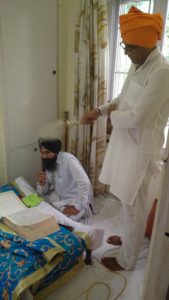
On the Friday, 18th Aug 17, we started with the Akhand Path (continuous reading from the Sri Guru Granth Sahib) for her at about 1141 hours. My mamaji (mom’s younger brother) came from NOIDA to hold my hand since Akhand Path requires enormous support effort. We did duties in rotation and barely had any sleep during the 48 hours of Akhand Path. Mamaji’s effort is many times more appreciable since he left in Delhi an ailing wife requiring urgent medical treatment. Also, for most people, the 75th Birthday is an important milestone of life. Mamaji’s happened to be on the 18th and coincided with the start of the Akhand Path for my mom and his sister. Much against his strident objections, we had a cake made for him and celebrated life as much as we bemoaned death.
My brother-in-law serving the lunch prepared by my sister to the Bhaijis
My sister Mona and brother-in-law Maharaj could make it before lunch on the next day since their elder son got admitted in the Command Hospital at Chandi Mandir. My sister is simply the best cook and hostess that I have come across. On the first day and night we had managed by ourselves. However, on the second day, she brought enormous and mouth-watering lunch for the Gurudwara Bhaijis since they have only suchcha khana made in desi ghee. Post that, she got busy preparing dinner for them.
Viru, my course-mate arrived from Gurgaon on Saturday evening to attend mom’s Antim Ardaas. Very thoughtfully she brought for the memory of my mom, a brass embossed and beautifully framed picture of the Golden Temple, Amritsar. He didn’t just buy it; he got it made on the way at Ambala and hence, even though he started from Gurgaon at 5 AM, he reached in the evening only.
JP, my younger brother, arrived from Edinburg (Scotland) for the second time in two weeks, for the bhog in the wee hours of Sunday morning. Whilst waiting for me and doing duty at the Akhand paath, I penned a few lines of Punjabi poetry as tribute to my mom. Later, at my mother’s Antime Ardas, at about 1230 hours, I, on behalf of my sister Mona, broher JP and our families, thanked the gathering for attending the Bhog for my mother, recalled her essential attributes and contribution and finally read out the poem I had penned just a few hours back. My coursemate Viru recorded the entire poem and I am putting up the video shot by him.
(Mata ji, eh saadi haalat hai,
tuhaade hun jaan tonh baad,
Dil wich ik udaasi hai,
Labaan te hai fariyaad.
Tussi jeevan ch jo kuchh keeta hai,
Amar rahegi tuhaadi yaad.
Saadi zindagi ch hardam rahega,
tuhaade pyaar da swaad.
Tussi aurat nahin ik devi ho,
Saanu miliya si tuhaada ashirwaad.
Faqr ate maan hai saanu is gal da,
Aseen haan ik devi di aulaad.
Eh jehdi jagah (Whispering Winds, Kandaghat ) tussi kayam keeti hai,
Hamesha rahegi eh abaad.
Dharam imaan di tussi moorat si,
Athhven paatshah ate tussi ho zindabaad.
Aapne bachchyan nu tussi chhad ke chale gaye,
Saanu changa nahin lagda aap ji tonh baad.
Jadd tussi bhi kisi tonh darde na si,
Phir kyun na hoyiye aseen bhi dar tonh azaad?
Saadh sangat je, chalo us maarg te chaliye,
Jis de si saade maa ji buniyaad.
Take hauli hauli is duniya wich,
Wadadi rahe changiyayi di tadaad.
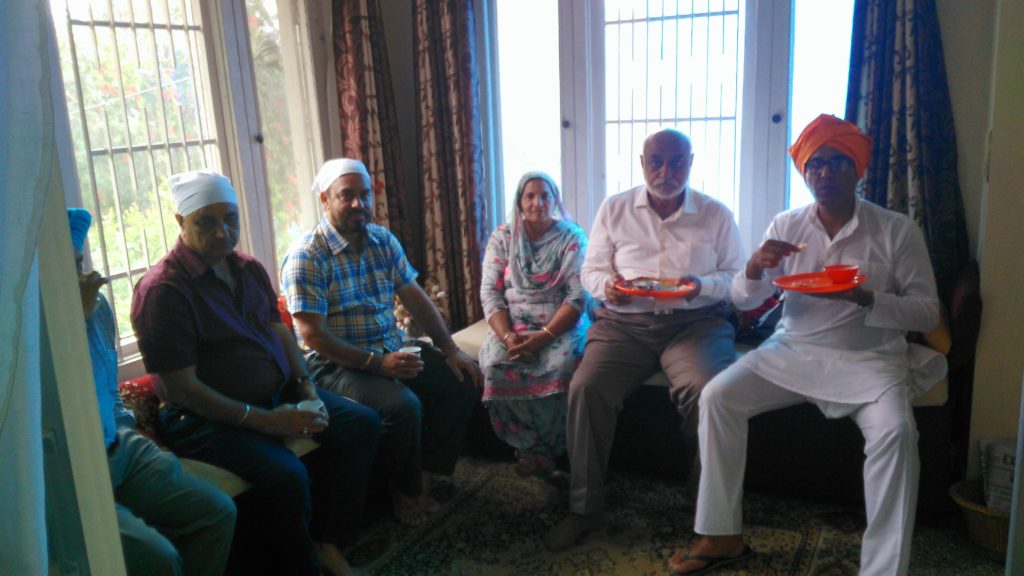
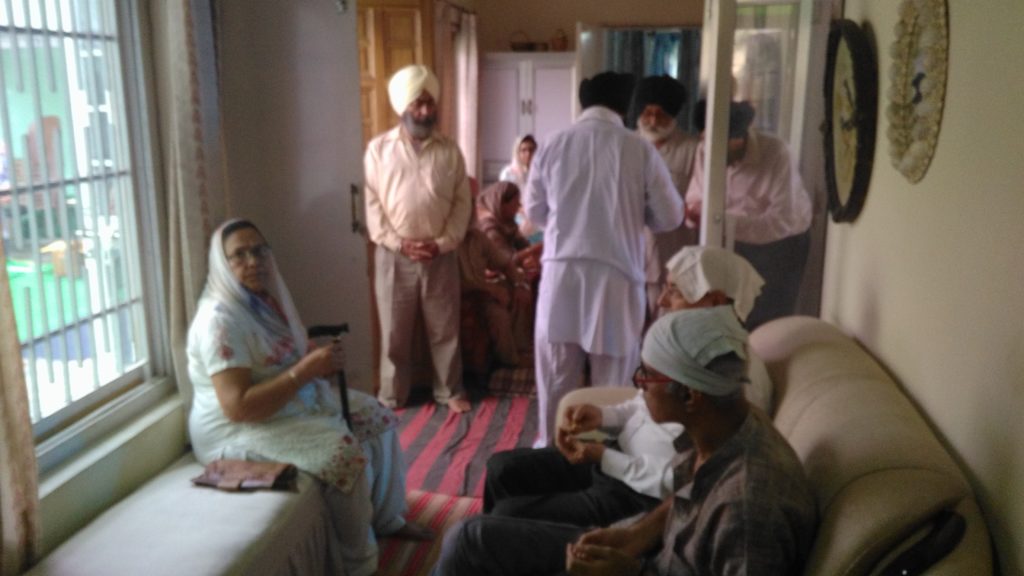
We soon had the family and friends arriving and we had the Samapati (End) of Akhand Paath at about 11 AM. We then shifted the Sri Guru Granth Sahib ji into the drawing-room when more and more people arrived:
All this while, I kept thinking how much mom would have enjoyed the family get-together if she was alive; she would have walked on clouds. Friends and relatives arriving at Whispering Winds, Kandaghat, always put her in the best mood; she actually enjoyed looking after and being with people.
The kirtan for her started and I think the Bhaijis did a very good job of it. It was dignified, on the sober and quiet side, melodious and meaningful; the kind that mom would have enjoyed thoroughly. Said Viru about it later:
“…..I have to say that I was immensely touched by the intensity and ‘fervour’ with which the family and you in particular turned the antim farewell for your dear mother into a remarkable ‘event’ that all (even the Irish) (the night before, Viru was telling me about the Irish Wake) could draw a lesson (I certainly have). from as to what a loving (albeit rather emotional) son must do for his parents. But, it’s like the chicken and the egg story…which one arrived first….love and emotions are also inextricably linked……take care and fair breeze through ‘Whispering Winds’.”
There were two only tributes: one was by me on behalf of the larger family. Amongst other things, I brought out how my mom was only one of my maternal grandparents children who was named after a guru: in her case, the eighth guru Sri Harkrishan ji. He was known as the Bal Guru since he took over at the age of just 5 years and died before the age of 8 years when he caught small-pox whilst looking after people in Delhi (at the spot whereat the present Bangla Sahib gurudwara stands) suffering from Cholera and small-pox, unmindful of his own safety. My mom, I brought out, had some of those virtues. I also brought out how after my dad’s death on 01 May 1984, mom lived in Whispering Winds, Kandaghat, like a sherni (lioness), not at all scared of staying alone or facing all the challenges when all the cards were stacked up against her.
Then there was tribute by Shri Mohan Goel, one of the locals from Kandaghat. Here is what he wrote and sang for her:
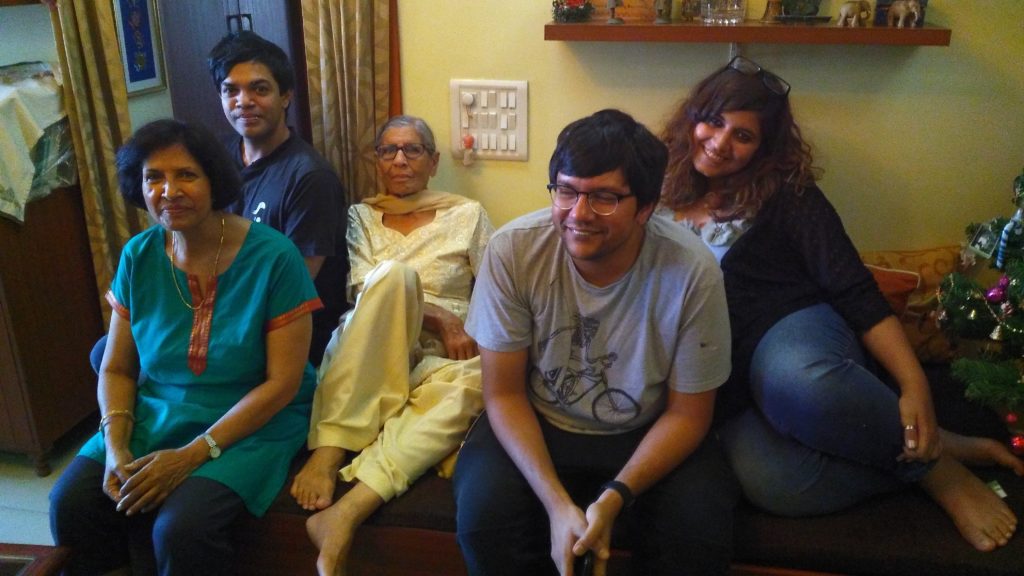
Most of our relatives could make it for the Bhog. Mr HS Pannu, my boss at my last job at Reliance, arrived all the way from Mumbai to attend the Bhog. Amongst the friends who visited, a number of friends from my music group Yaad Kiya Dil Ne visited: Viapn Kohli, Suman Saxena, Rakesh Aman Bhatia, Anindya Chatterjee and his wife Deepa and Jaswant Singh Lagwal and his wife Kavita. Just four months ago, mom was there attending the YKDN annual meet and now they were here at her last farewell. JP’s partner Chuck and friend David sent two of the prettiest bouquets of flowers for mom.
I was particularly touched by Mamaji’s daughter Amandeep (Mitu) arriving all the way from Delhi, by car, totally alone. From her childhood days she is polio stricken but that didn’t deter her from attending her loving masiji’s bhog.
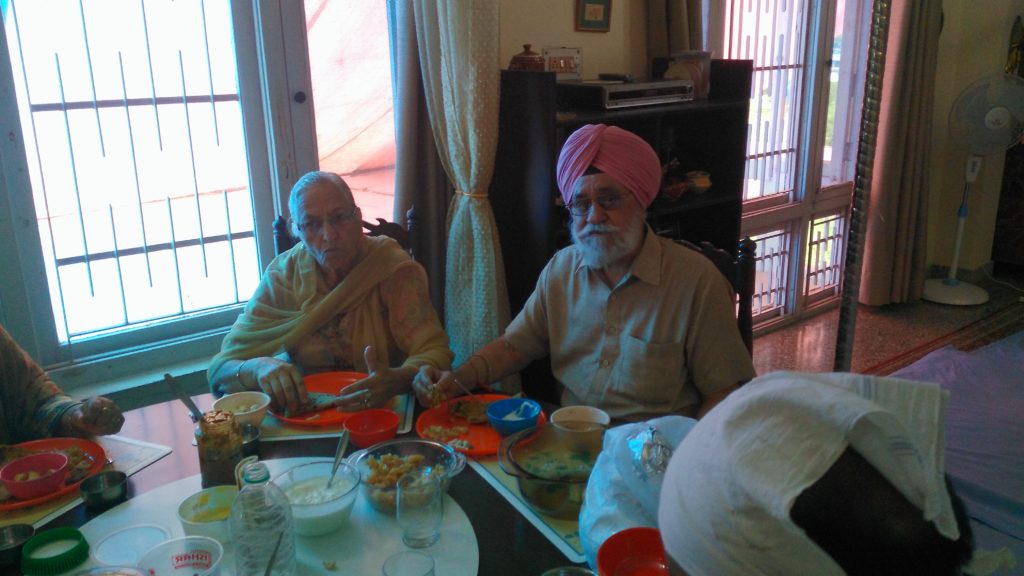
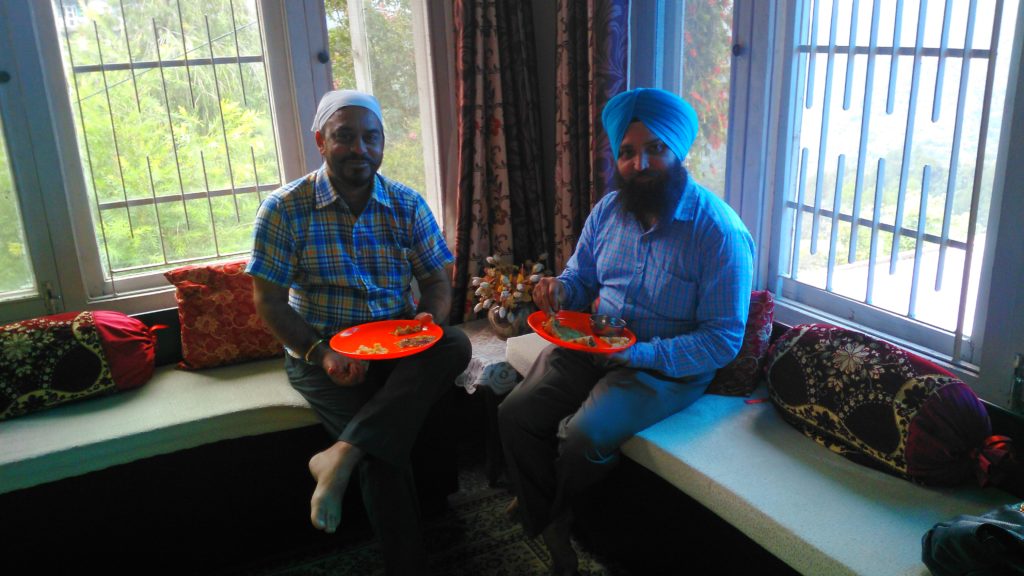
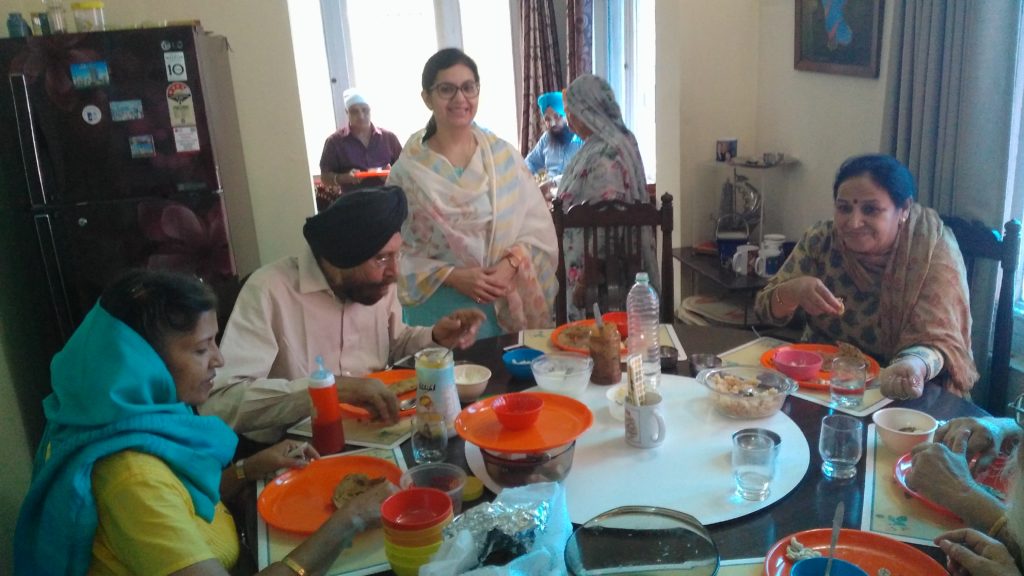
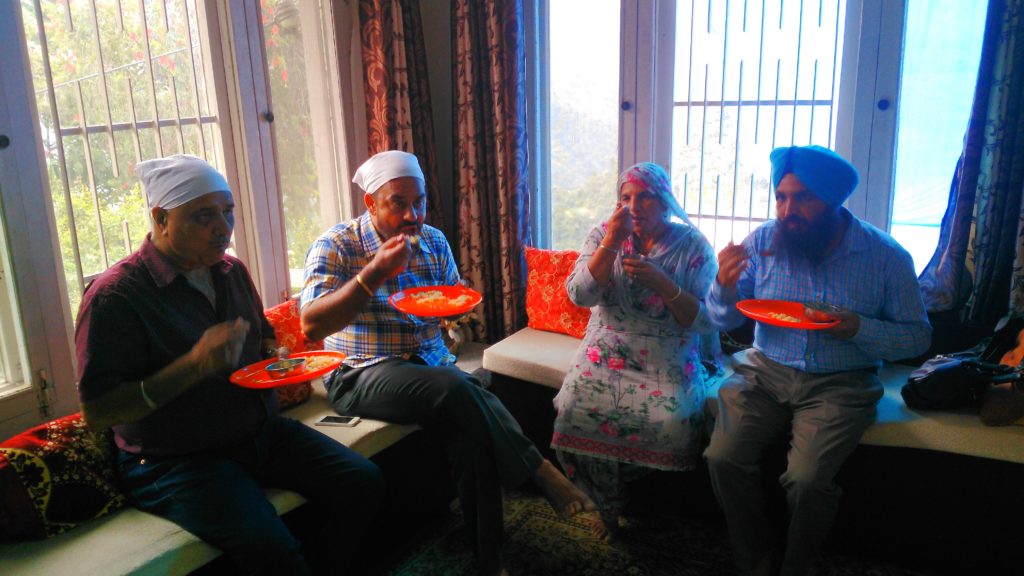
We had the langar after the bhog and then one by one everyone left. At night, just the three of us: my brother JP, my wife Lyn and I were at home. We would, of course, never be alone or lonely since my mother’s memories would always keep us company.
Antim Ardaas? For us, it is the beginning of another journey……a very intimate one indeed.


 a movie much earlier than it was known to us. On the second round of it being pushed, I merely rang up Dinesh, Shailendra’s son, and came to know that this post was a hoax. Take the recent case of Prime Minister Modi collecting garbage from a beach in Mamallapuram whereat he was to have an informal summit with the Chinese President Xi Jinping. People were impressed with the sincerity of the gentleman towards Swachh Bharat until three days later there were the following pictures pushed by the other party:

 ople’s time as plodding through videos only to find that either these weren’t worth seeing or, worse, you had already seen and downloaded these earlier. When you press down on the video and use the right arrow to Forward it, you have to now select up to five individuals or groups to forward it to. After you have selected these and press the Send arrow, it would go without any caption from you. However, if you Forward it from your Gallery, after selecting the people that you want it to be sent to and before you press the Send arrow, you have a choice to ‘Add a caption…’. At this juncture, you have the public duty to tell your recipients as to what this video is all about. About an year ago, I stopped looking at all videos without captions and I never forward videos without an introduction from me. Hence, if I am one of the recipients, it is even more important that you caption it. If you write an introduction about the video just before sending the video, that would suffice too.








 You Are As Rich As You Think You Are
 2. You Should Fear No One Except God
 3. Nothing Is Impossible.
  4. Family And Friends Are Important
 5. Never Lose Your Sense Of Humour.
  6. Never Mix Work With Pleasure.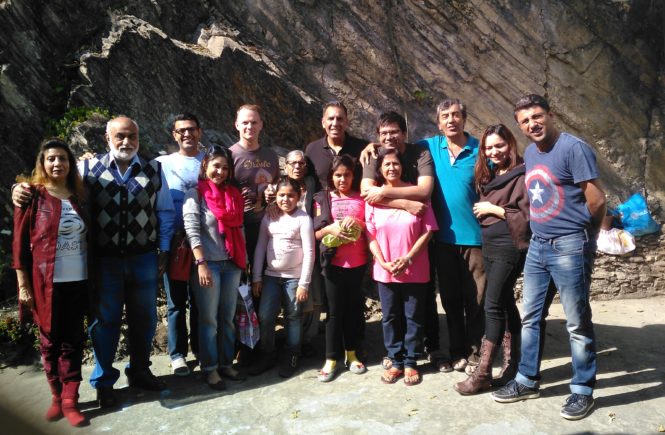



 On the Friday, 18th Aug 17, we started with the Akhand Path (continuous reading from the Sri Guru Granth Sahib) for her at about 1141 hours. My mamaji (mom’s younger brother) came from NOIDA to hold my hand since Akhand Path requires enormous support effort. We did
 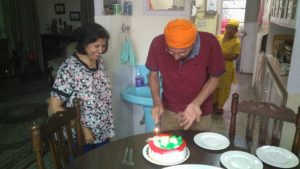 duties in rotation and barely had any sleep during the 48 hours of Akhand Path. Mamaji’s effort is many times more appreciable since he left in Delhi an ailing wife requiring urgent medical treatment. Also, for most people, the 75th Birthday is an important milestone of life. Mamaji’s happened to be on the 18th and coincided with the start of the Akhand Path for my mom and his sister. Much against his strident objections, we had a cake made for him and celebrated life as much as we bemoaned death.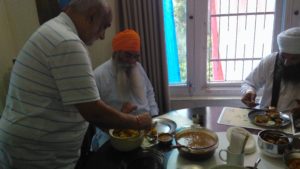
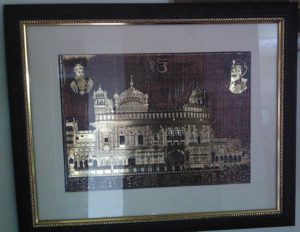 Viru, my course-mate arrived from Gurgaon on Saturday evening to attend mom’s Antim Ardaas. Very thoughtfully she brought for the memory of my mom, a brass embossed and beautifully framed picture of the Golden Temple, Amritsar. He didn’t just buy it; he got it made on the way at Ambala and hence, even though he started from Gurgaon at 5 AM, he reached in the evening only.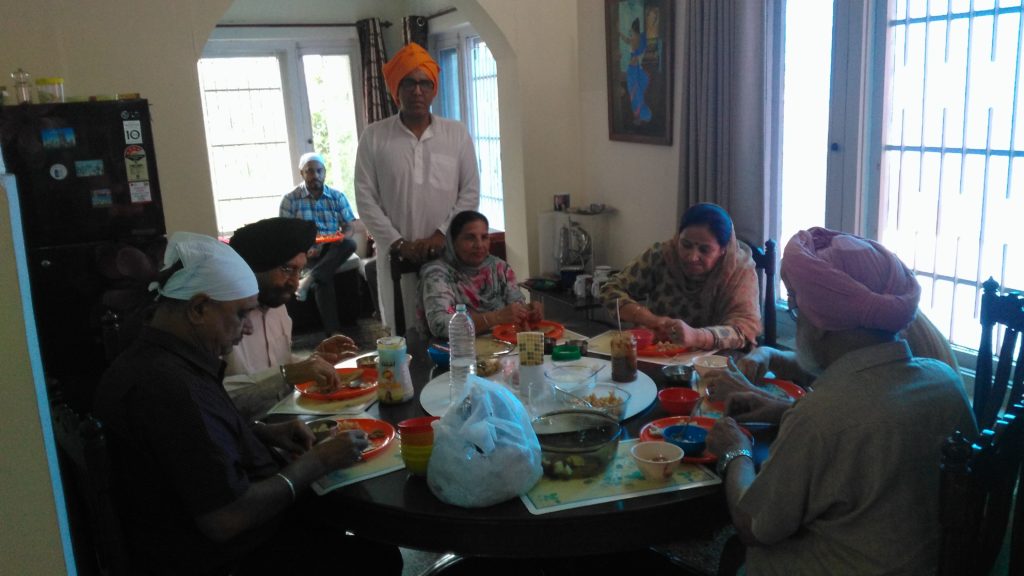

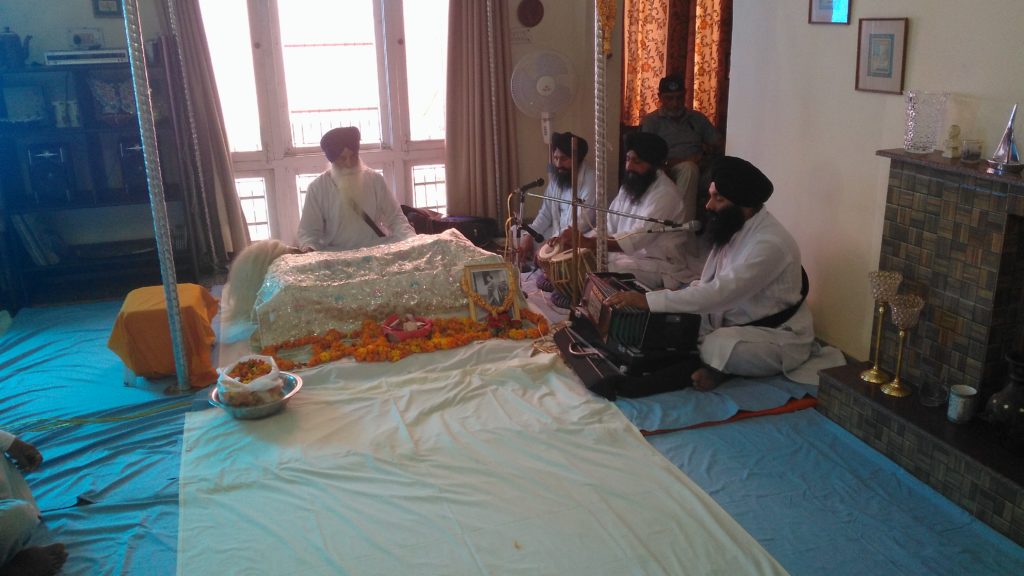
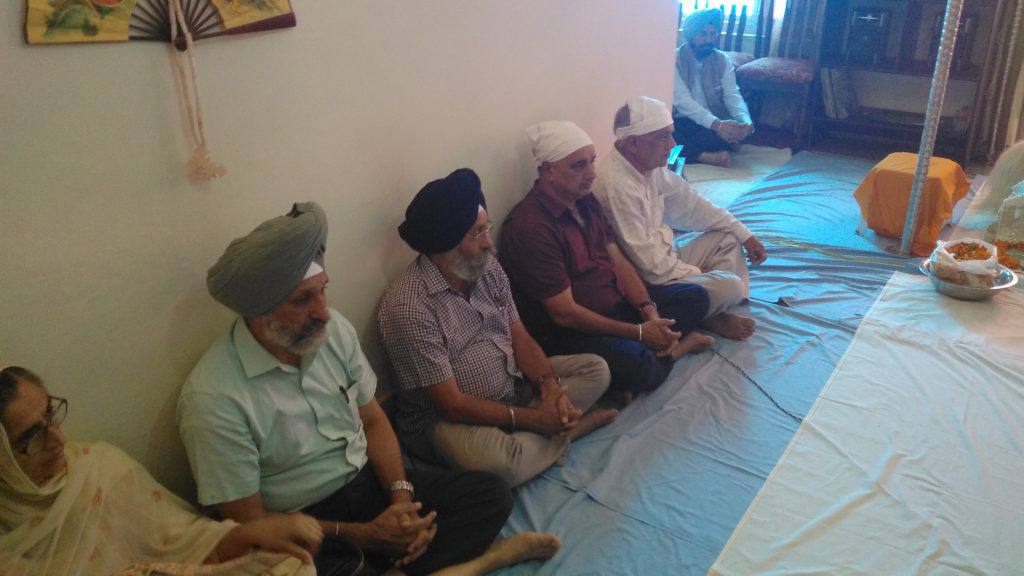
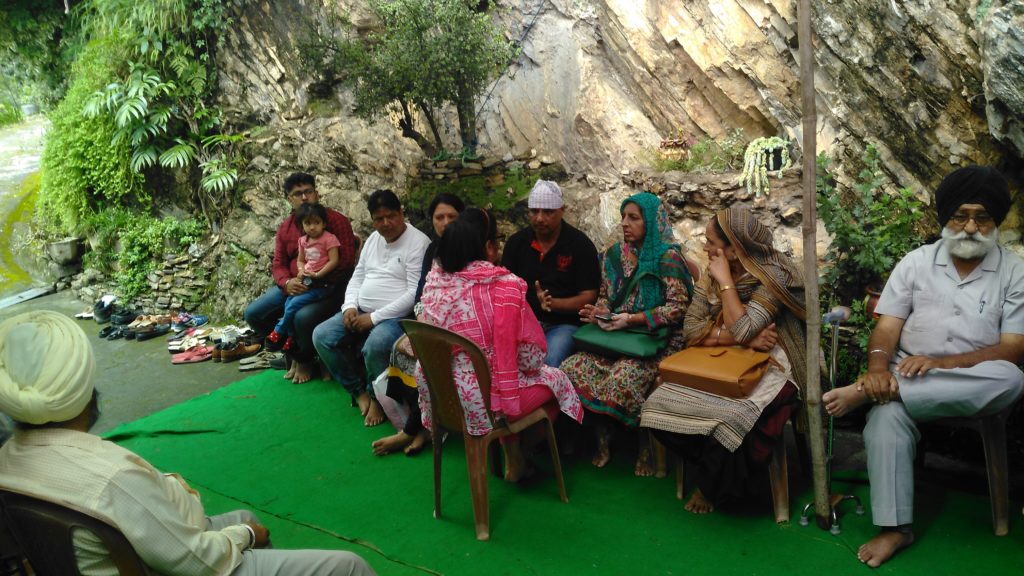
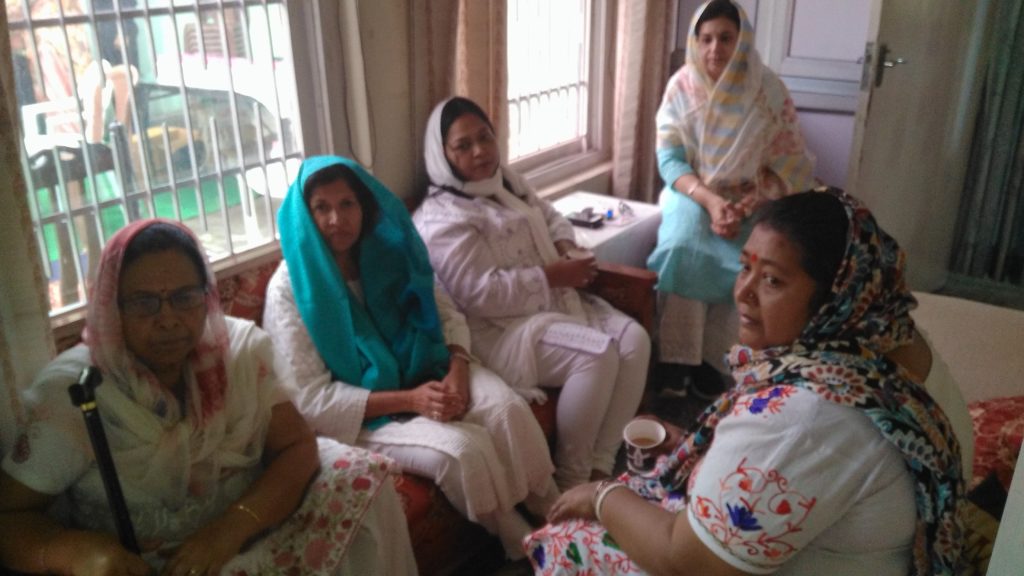
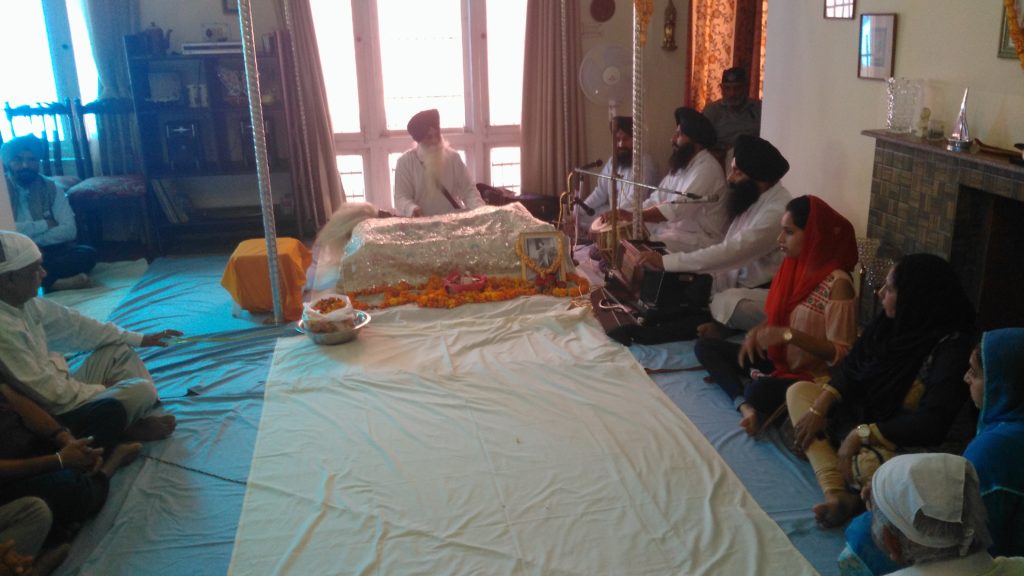
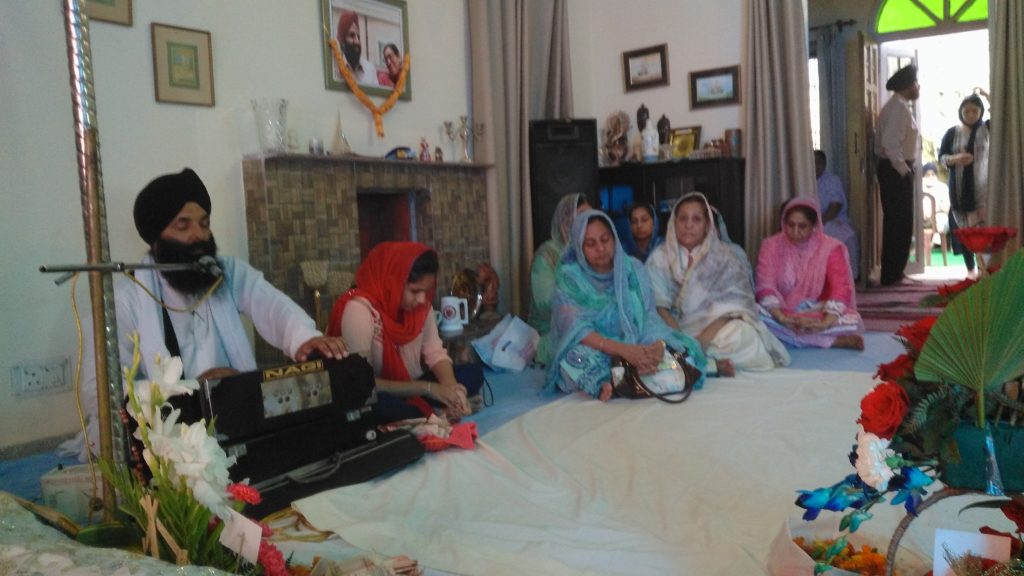
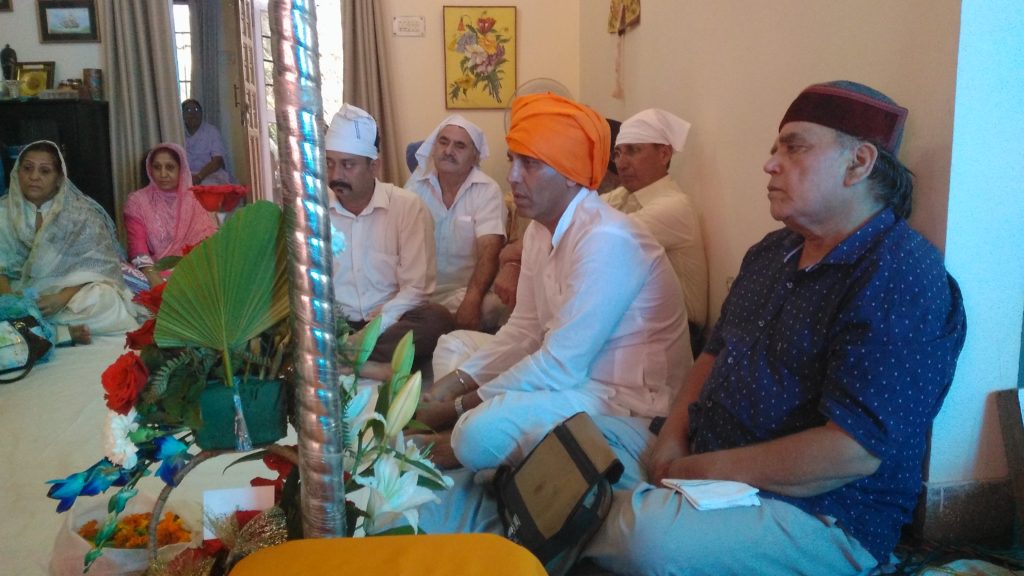
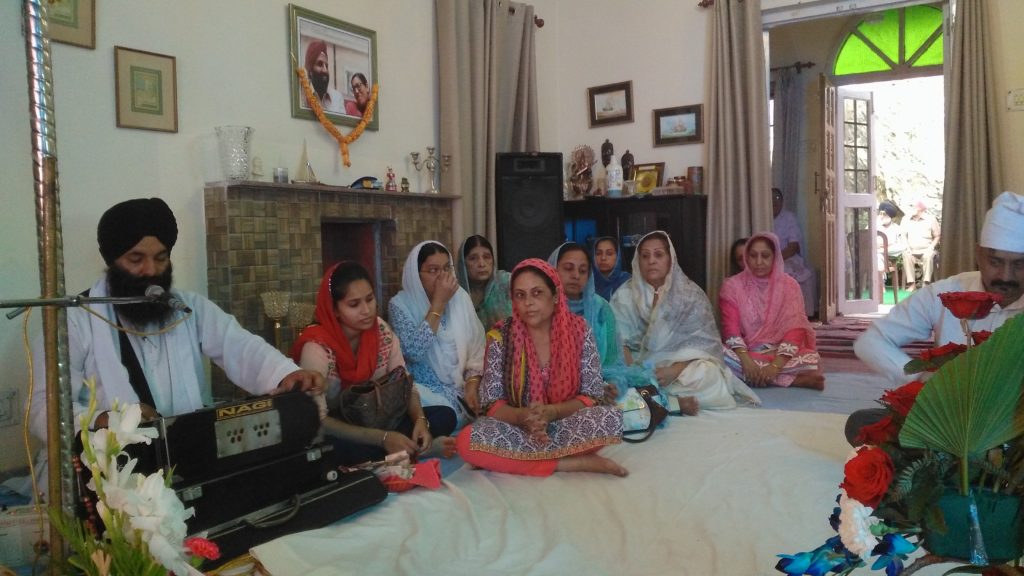
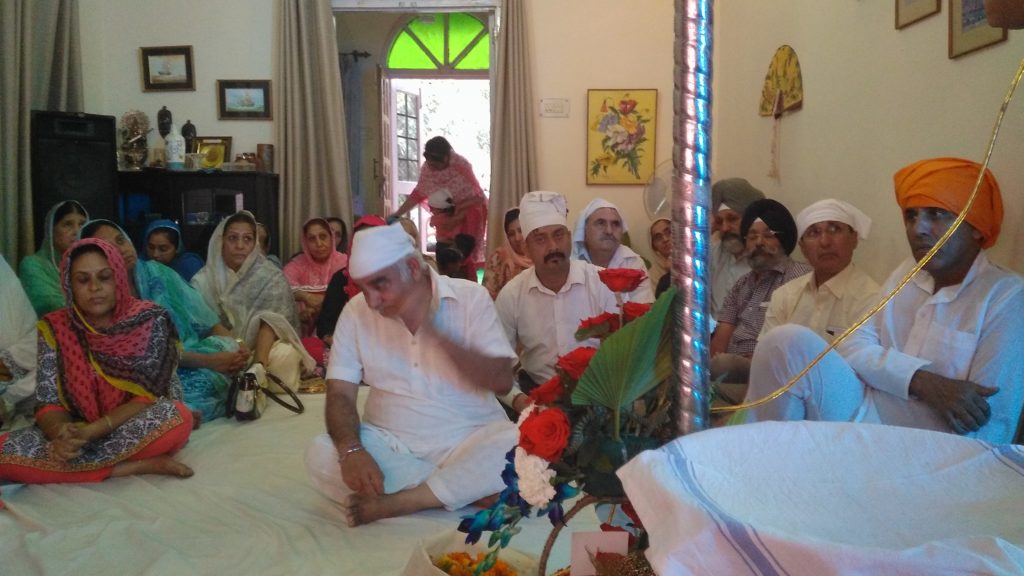
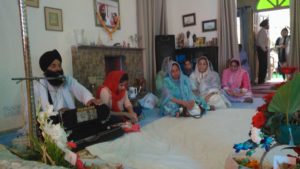 The kirtan for her started and I think the Bhaijis did a very good job of it. It was dignified, on the sober and quiet side, melodious and meaningful; the kind that mom would have enjoyed thoroughly. Said Viru about it later:
 at Reliance, arrived all the way from Mumbai to attend the Bhog. Amongst the friends who visited, a number of friends from my music group Yaad Kiya Dil Ne visited: Viapn Kohli, Suman Saxena, Rakesh Aman Bhatia, Anindya Chatterjee and his wife Deepa and Jaswant Singh Lagwal and his wife Kavita. Just four months ago, mom was there attending the YKDN annual meet and now they were here at her last farewell. JP’s partner Chuck and friend David sent two of the prettiest bouquets of flowers for mom.
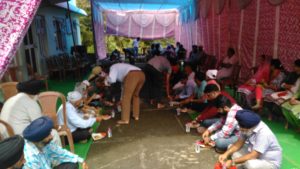 We had the langar after the bhog and then one by one everyone left. At night, just the three of us: my brother JP, my wife Lyn and I were at home. We would, of course, never be alone or lonely since my mother’s memories would always keep us company.