THE BEST SONGS OF RAJENDRA KRISHAN, THE RICHEST LYRICIST

I am a lyrical man; words of the songs are often the most important part of the songs for me. Indeed, on the Facebook I have a page titled ‘Lyrical’ to honour and pay tribute to various lyricists. I have several (almost a dozen) posts onĀ  my blog on my favourite lyricist and poet Shakeel Badayuni. The following posts about Rajendra Krishan have been reconstructed from the same page. Rajendra Krishan was considered the richest lyricist, writer and poet not only because he won a jackpot of Rupees 46 Lakhs in horse-racing.

Song #1
Mujhase mat poochh tere ishq mein kyaa rakha hai….

The era in which Shakeel Badayuni was active, belonged to Lyricists. Since the success of the movies’ success primarily depended upon their songs, and since songs were appreciated for their lyrics, the Lyricists were centre stage. One such lyricist of that era was Rajinder Krishan (he preferred to write his name with these spellings though his titles used various combos, the most frequent being Rajendra Krishan). I think of him as ‘Simla boy’ (my home station) since although he was born in Jalalapur Jatan (that part of Gujarat, which is now in Pakistan), his boyhood and early manhood was spent in Simla where he was a clerk in the elctricity department.

Rajendra Krishan1

I share another interesting thing with him, in that a quarter of century later after he was born, I too was born on the 6th of June!

Even before I was born, he left Simla (now Shimla) and came to Bombay (now Mumbai) to try his luck in the Hindi film industry that had shifted there from Calcutta (now Kolkata).

One of the first music directors that he was associated with as Lyricist (initially, he tried his hand as a screenwriter) was C Ramchandra.

The movie from which I have taken this song to tell you about matching lyrics with Shakeel Badayuni was the 1953 movie Anarkali (earlier he wrote lyrics for the songs of Amar Kahani (1949; with MD Husanlal Bhagatram), Albela (1951; with C Ramchandra), Araam (1951; with Anil Biswas) and Ladki (1953; with R. Sudarsanam and Dhaniram).

Ananrkali was his second movie with C Ramchandra. Initially the MD was Vasant Prakash and after his death C Ramchandra took over. Its 11 songs were penned by four lyricist: Rajinder Krishan penned four of them and the others were by Shailendra, Hasrat Jaipuri and Jaan Nisar Akhtar (Jawed Akhtar’s father).

Some of you would tell me that Rajinder Krishan’s best lyrics are to be found in Adaalat (1958) and Jahan Ara (1964). But, those we shall come to later. Lets get on with 1953 movie Anarkali.

The story is thew same as that of Mughal-e-Azam (which came later) and hence I shall not repeat that. Pradeep Kumar acted as Prince Salim, Bina Rai as the courtesan Anarkali in the court of Emperor Akbar and Noor Jahan as Nur Jehan.

I feel that Rajinder Krishan excelled in the lyrics of this song in the very early stages of his career. The third stanza is so exquisite that at least I am rendered speechless with its simple beauty.

One more thing. Seven years later, Shakeel and Naushad created the songs of Mughal-e-Azam and they became iconic. However, Anarkali songs are as fondly remembered as of Mughal-e-Azam.

Please enjoy: Mujhase mat poochh tere ishq mein kyaa rakha hai….

dil kii lagii hai kyaa, ye kabhii dil lagaake dekh
aa.Nsuu bahaake dekh kabhii muskaraake dekh
paravaanaa jal rahaa hai magar jal rahaa hai kyaa
ye raaz jaananaa hai to khud ko jalaake dekh

mujh se mat puuchh mere ishq me.n kyA rakhaa hai
ek sholaa hai jo siine me.n chhuupaa rakhaa hai

daag-e-dil daag-e-jigar daag-e-tamannaa lekar (2)
mai.n ne viiraan bahaaro.n ko sajaa rakhaa hai
mujh se mat puuchh

hai zamaanaa jise betaab miTaane ke liye (2)
mai.nne us yaad ko siine se lagaa rakhaa hai
mujh se mat puuchh

bhUlanevaale tujhe dard-e-muhabbat kii kasam (2)
mai.n ne is dard me.n duniyA ko bhulaa rakh hai
mujh se mat puuchh

Song #2
Shola jo bhadke…

The 1951 movie Albela was another one in which Rajinder Krishan paired with C Ramchandra to make some very memorable songs. The movie was written and directed by Bhagwan Dada who became famous for his moonwalk style of dancing in the movie. Geeta Bali acted opposite him. Two years after its Hindi release The film was later dubbed in Tamil as Nalla Pillai in 1953.

(Pic courtesy: wbmallindia)

Rajinder Krishan and C Ramchandra created the following songs:

1 Dil Dhadke Nazar Sharmaye Lata Mangeshkar Rajinder Krishan 03:07
2 Dheere Se Aaja Ri Ankhiyon Mein Lata Mangeshkar & Chitalkar Rajinder Krishan 03:21
3 Shola Jo Bhadke Lata Mangeshkar & Chitalkar Rajinder Krishan 03:31
4 Shaam Dhale Khidki Tale Lata Mangeshkar & Chitalkar Rajinder Krishan 03:42
5 Balma Bada Nadan Hai Lata Mangeshkar Rajinder Krishan 02:57
6 Deewana Parwana Lata Mangeshkar & Chitalkar Rajinder Krishan 04:58
7 Bholi Soorat Dil Ke Khote Lata Mangeshkar & Chitalkar Rajinder Krishan 03:54
8 Devta Mana Aur Pooja Lata Mangeshkar Rajinder Krishan 03:35
9 Qismat Ki Hawa Kabhi Naram Chitalkar Rajinder Krishan 03:53
10 Haseenon Se Muhabbat Ka Bura Anjaam Chitalkar Rajinder Krishan 02:59
11 Diwana Aagaya Lata Mangeshkar & Mohammed Rafi Rajinder Krishan 03:07
12 Teri Yaad Ne Mara Lata Mangeshkar & Chitalkar Rajinder Krishan 03:44

All songs of the movie became very popular. Shola jo bhadke was the most popular and has been recently remixed with Vidya Balan.

Please enjoy: Shola jo bhadke…..

Sholaa jo bha.Dake dil meraa dha.Dake
dard javaanii kaa sataae ba.Dh-ba.Dh ke

mahakii havaae.n bahake kadam mere
aise me.n thaam lo aa ke balam more
pattaa bhii kha.Dake to bijalii sii ka.Dake, dard …

pyaar ko mere kisane pukaaraa
dil me.n utar gayaa kisakaa ishaaraa
yaad ye kisakii laa_I paka.D ke, dard …

dekhaa jo tumako dard huaa kam
ab to na ho.nge tumase judaa ham

https://www.youtube.com/watch?v=FkXVfGi7QVg

Song #3
Chup chup khade ho

Badi Behan was only his second movie, after Amar Kahani, for which he wrote songs. He shared credit for writing songs for the movie with Qamar Jalalabadi; he wrote 5 of the 8 songs. Whilst Qamar penned Woh pass rahen ya door rahen, Rajinder too penned some really beautiful numbers. Husnlal Bhagatram, Hindi movies’ first music duo, composed the songs.

Husnlal Bhagatram, Hindi movies’ first music duo (Pic courtesy: Bollywooddirect)

Have a look a the list of the songs:

1 Ho Likhnewale Ne Likh Di Suraiya Rajinder Krishna
2 Bigdi Bananewale Suraiya Qamar Jalalabadi
3 Chup Chup Khade Ho Lata Mangeshkar & Premlata Rajinder Krishna
4 Woh Paas Rahe Ya Door Suraiya Qamar Jalalabadi
5 Mohabbat Ke Dhoke Mein Mohd. Rafi Rajinder Krishna
6 Jo Dil Mein Khushi Ban Kar Aai Lata Mangeshkar Rajinder Krishna
7 Chale Jana Nahin Lata Mangeshkar Rajinder Krishna
8 Tum Mujh Ko Bhool Jao Suraiya Qamar Jalalabadi

Please enjoy a very popular song of our days sung by Lata Mangeshkar and Premlata: Chup chup khade ho zaroor koi baat hai….

Chup-chup kha.De ho zarUr koI bAt hai
pahalI mulAqAt hai jI pahalI mulAqAt hai – 2
chup-chup kha.De ho …

(sAjan kI bAt par, gussA jo A gayA
zulfo.n kA bAdal, gAlo.n pe chhA gayA – 2 ) – 2
abhI-abhI din thA abhI-abhI rAt hai – 2
pahalI mulAqAt hai jI pahalI mulAqAt hai – 2
chup-chup kha.De ho …

(pahalI mulAqAt me.n, bAt aisI ho gaI
rAjA bhI kho gayA, (rAnI bhI kho gaI – 2 )) – 2
dono ko na patA chalA maze kI ye bAt hai – 2
pahalI mulAqAt hai jI pahalI mulAqAt hai – 2
chup-chup kha.De ho …

Song #4
Remembering Sadhana on Her Birth Anniversary
Love ka matlab hai pyaar….

Sadhana had left us on the Christmas morning of 2015. I started giving you these songs yesterday, 01 Sep 16; and today, 02 Sep happens to be her first birth anniversary after her demise. Today, I shall give you three songs of Sadhana penned by Rajinder Krishan.

As luck would have it, Rajinder Krishan penned the songs for Sadhana’s debut movie in 1960: Love in Simla (the place where Rajinder Krishan was working as a clerk before going to Bombay to join Hindi movies) that was produced by Sashadhar Mukherjee and hence starred his son Joy Mukherjee in the lead role. The movie was directed by RK Nayyar. He and Sadhana fell in love during the making of the movie and married thereafter.

Sadhana’s wedding picture with Ram Krishan Nayyar (Pic courtesy: cineplot.com)

Iqbal Qureshi composed the songs:

  1. “A Be Baby A A Ji” – Asha Bhosle, Mohammed Rafi
  2. “Alif Zabar Aaa Alif Zer Ae Alif Pesh O” – Mohammed Rafi, Sudha Malhotra
  3. “Dar Pe Aaye Hain” – Mukesh
  4. “Dil Tham Chale Hum Aaj Kidhar” – Mohammed Rafi
  5. “Dil Tham Chale Hum Aaj Kidhar v2” – Mohammed Rafi
  6. “Gaal Gulabi Kiske Hai” – Mohammed Rafi
  7. “Hasinon Ki Sawari Hai” – Mohammed Rafi, Suman Kalyanpur
  8. “Husnwale Wafa Nahi Karte” – Mohammed Rafi, Shamshad Begum
  9. “Kiya Hai Dilruba Pyar Bhi Kabhi” – Mohammed Rafi, Asha Bhosle
  10. “Love Ka Matlab Hai Pyar” – Mohammed Rafi, Asha Bhosle
  11. “Muskuraye Khet Payse Tarse Tarse” – Mohammed Rafi, Suman Kalyanpur
  12. “Wo Zindagi Ke Raaste” – Mohammed Rafi
Iqbal Qureshi with Mohammad Rafi

Please enjoy Mohammad Rafi and Asha Bhosle sing for Joy Mukherjee and Sadhana respectively: Love ka matlab hai pyaar….

l o v e love, love## kaa matalab hai pyaar
pyaar dilo.n kaa qaraar -2

baat ek nazar kii khel ek adaa kaa
gul khilaane vaalaa pyaar jho.nkaa havaa kaa
dil milaakar dil se dekho kyaa hai ra.ng-e-bahaar -2
##love## kaa matalab hai …

ek ha.Nsii ho.nTho.n pe ik hayaa aa.Nkho.n me.n
jo vafaa na ho to ye dil do gha.Dii kaa khumaar
##love## kaa matalab hai …

Kuubasuurat baate.n aur khud bhii hasii.n ho
tum bhii saare jahaa.N me.n kisii se kam nahii.n ho
husn dhokhaa aa.Nkh kaa hai aise dhokhe hazaar -2
##love## kaa matalab hai …

Song #5
Remembering Sadhana on Her Birth Anniversary
Main to tum sang nain milake….

Sadhana was established as a fine actress in her debut film itself that had songs penned by Rajinder Krishan. Two years later Rajinder Krishan repeated the magic for her 1962 movie Manmauji that starred Kishore Kumar opposite her. Rajinder Krishan paired with Madan Mohan, a pairing that created some of the best songs of Lata Mangeshkar. It is also a fact that some of Lata’s best songs have been lip-synced by Sadhana.

Rajinder Krishan always preferred to be low-profile. Here is a rare picture of his with Sadhana

Here is the list of songs created by Rajinder Krishan and Madan Mohan:

1 Mai Toh Tum Sang Nain Milake Lata Mangeshkar 03:31
2 Chanda Ja, Chanda Ja Re Ja Lata Mangeshkar 03:24
3 Zaroorat Hai Zaroorat Hai Kishore Kumar 04:25
4 Ek Thaa Abdul Rahamaan Kishore Kumar, Lata Mangeshkar 04:10
5 Murge Ne Jhooth Bola (Kamal Barot) Kamal Barot 03:07
6 Aaya Hai Kahan Se Pee Ke Lata Mangeshkar 03:31
7 Buraa Lagataa Hai Kishore Kumar 03:27
8 Murge Ne Jhooth Bola (Asha Bhosle) Asha Bhosle 01:36

The song Main to tum sang nain milake is one of the top songs of Lata for Sadhana, the top most being O sajana barkha bahaar aayi for the movie Parakh that was penned by Shailendra and composed by Salil Chowdhury.

Please enjoy: Main to tum sang nain milake….

mai.n to tum sa.ng, nain milA ke
hAr gaI sajanA, ho, hAr gaI sajanA
mai.n to tum sa.ng, nain milA ke
hAr gaI sajanA, ho, hAr gaI sajanA

kyU.N jhUThe se prIt lagAI – 2
kyU.N chhaliye ko mIt banAyA
kyU.N A.ndhI me.n dIp jalAyA
mai.n to tum sa.ng …

sapane me.n jo bAG lagAe
nI.nd khulI to vIrAne the
ham bhI kitane dIvAne the
mai.n to tum sa.ng …

nA milatI.n ye bairan a.NkhiyA.n
chain na jAtA dil bhI ne rotA
kAsh kisI se pyAr na hotA
mai.n to tum sa.ng …

Song #6
Remembering Sadhana on Her Birth Anniversary
Chanda ja, Chanda ja re ja….

The 1962 movie Manmauji that starred Sadhana and Kishore Kumar had another Lata Mangeshkar song that was penned by Rajinder Krishan and composed by Madan Mohan.

Rajinder Krishan, Madan Mohan and Lata Mngeshkar (pic courtesy: cinestaan.com)

Please enjoy: Chanda ja, Chanda ja re ja…

laa laa laa laa laa laa
chandaa jaa chandaa jaa re jaa re -2
kaahe aayaa hai akelaa tujhe maanuu.N alabelaa
mere piyaa ko bhii sa.ng le aa

chandaa jaa …

aa tujhako pahachaan bataa duu.N vo lagataa hai kaisaa
nadiyaa me.n mukh dekh le apanaa vo bhii hogaa waisaa
vo jo aaye to bi.ndiyaa sajaa duu.N
kaalii-kaalii ye laT bikharaa duu.N
meraa itanaa sa.ndesaa de aa

chandaa jaa …

dekh use kahanaa merii ni.ndiyaa ho ga_ii sautan merii
mere sa.ng-sa.ng bairan hogii baaT takat hai terii
chandaa denaa tuu merii gawaahii
ham dono.n hai.n pyaar ke raahii
bas itanaa to saath nibhaa

chandaa jaa …

Song #7
Dheere se aaja ri akhiyan mein…

On the first day, we had just started taking on songs of 1951 movie Albela and then since it was Sadhana’s first birth anniversary after her demise on 25th Dec last year, I took up three songs that he wrote for her movies.

Lets now take up the lullaby song of Albela: Dheere se aaja ri akhiyon mein that has been sung in the movie twice; once solo by Lata Mangeshkar and then as a duet with Chitalkar just singing the mukhada and Lata singing the rest. C Ramchandra composed it in Raag Pilu, Tal Dadra and here it is the version sung by Lata Mangeshkar.

Please enjoy: Dheere se aaja ri akhiyan mein…..

Dhiire se aajaa rii a.Nkhiyan me.n
ni.ndiyaa aajaa rii aajaa, dhiire se aajaa
chhoTe se nainan kii bagiyan me.n
nindiyaa aajaa rii aajaa, dhiire se aajaa

o …
lekar suhaane sapano.n kii kaliyaa.N, sapano.n kii kaliyaa.N
aake basaa de palako.n kii galiyaa.N, palako.n kii galiyaa.N
palako.n kii chhoTii sii galiyan me.n
nindiyaa aajaa rii aajaa, dhiire se aajaa
dhiire se …

o …
taaro.n se chhup kar taaro.n se chorii, taaro.n se chorii
detii hai rajanii cha.Ndaa ko lorii, cha.Ndaa ko lorii
ha.Nsataa hai cha.Ndaa bhii nindiyan me.n
nindiyaa aajaa rii aajaa, dhiire se aajaa
dhiire se …

Sad / Duet version
dhiire se aajaa rii a.Nkhiyan me.n
ni.ndiyaa aajaa rii aajaa, dhiire se aajaa
chhoTe se nainan kii bagiyan me.n
nindiyaa aajaa rii aajaa, dhiire se aajaa

o …
aa.Nkhe.n to sab kii hai.n ik jaisii
jaisii amiiro.n kii, gariibo.n kii vaisii
palako.n kii suunii sii galiyan me.n
nindiyaa aajaa rii aajaa, dhiire se aajaa
dhiire se …

o …
jagatii hai a.Nkhiyaa.N sotii hai qismat, sotii hai qismat
dushman gariibo.n kii hotii hai qismat, hotii hai qismat
dam bhar gariibo.n kii kuTiyan me.n
nindiyaa aajaa rii aajaa, dhiire se aajaa
dhiire se …

sholaa jo bha.Dake dil meraa dha.Dake
dard javaanii kaa sataae ba.Dh-ba.Dh ke

mahakii havaae.n bahake kadam mere
aise me.n thaam lo aa ke balam more
pattaa bhii kha.Dake to bijalii sii ka.Dake, dard …

pyaar ko mere kisane pukaaraa
dil me.n utar gayaa kisakaa ishaaraa
yaad ye kisakii laa_I paka.D ke, dard …

dekhaa jo tumako dard huaa kam
ab to na ho.nge tumase judaa ham

https://www.youtube.com/watch?v=8h94Qg1g-JI

Song #8
Sham dhale khidake tale…

Patrons of Lyrical would tell me that it has been a long time since I gave a song in the Raag of my home station: Raag Pahadi, that is. The fact is that I am holidaying here and Pahadi is never too far from me.

In this, in addition to the lyrics of Rajinder Krishan, one has to give to C Ramchandra that he gives a song like Shola jo bhadake with typical western instruments and next he gives a song in Raag Pahadi, both in the same movie Albela and both starring Geeta Bali and Bhagwan Dada.

And, to bring out the versatility of the singers too, this too has been sung by Lata Mangeshkar and C Ramchandra.

Please enjoy in Raag Pahadi and Tal Dadra: Shaam dhale khidaki tale tum seeti bajaana chhod do…..

la: shaam Dhale, khi.Dakii tale
tum siiTii bajaanaa chho.D do

chi: gha.Dii-gha.Dii khi.Dakii me.n kha.Dii
tum tiir chalaanaa chho.D do

la: roz-roz tum merii galii me.n
chakkar kyo.n ho kaaTate
ajii, chakkar kyo.n ho kaaTate
chi: sachchii-sachchii baat kahuu.N mai.n -2
ajii tumhaare vaaste, tumhaare vaaste
la: jaao, jaao, hosh me.n aao
yuu.N aanaa-jaanaa chho.D do -2

la: mujhase tumhe.n kyaa matalab hai
ye baat zaraa batalaao -2
chi: baat fakat itanii sii hai
ki tum merii ho jaao
aao aao tum merii ho jaao
la: aisii baate.n, apane dil me.n
ai saahib tum laanaa chho.D do -2

chi: chaar mahiine mehanat kii hai
ajii ra.Ng kabhii to laaegii -2
la: jaao-jaao jii yahaa.N tumhaarii
daal kabhii galane na paaegii
ajii daal kabhii galane na paaegii
chi: dilavaalo.n, matavaalo.n par tum
raub jamaanaa chho.D do
ajii raub jamaanaa chho.D do

shaam Dhale …

Song #9
Balma bada nadaan re…

I can put up another few songs of 1951 movie Albela. However, I end with this classic song that Geeta Bali sings for Bhagwan Dada when the naive guy from a poor family that he is (he has a double role in the movie; the other being rich and famous guy working in the same entertainment company wherein Pyarelal (Bhagwan Dada) found a job as a singer-dancer), he doesn’t understand that she has fallen in love with him.

Lata Mangeshkar sang this song on a composition by C Ramchandra.

Please enjoy: Balma bada nadaan re…

balamaa ba.Daa naadaan, re balamaa ba.Daa naadaan

bedad.rii sa.ng naataa laagaa
mere priit kaa bhaag na jaagaa
binatii karuu.N mai.n, pai.nyaa pa.Duu.N mai.n
ab to merii maan re
balamaa ba.Daa naadaan re …

bai.nyaa paka.Duu.N haath dabaa_uu.N
samajhat naahi kaise samjhaa_uu.N
laakh jatan kar, haar gayii mai.n
rogii ho gayii jaan re
balamaa ba.Daa naadaan re …

Song #10
Shukriya, shukriya, ai pyaar tera shukriya….

If Rajinder Krishan – C Ramchandra combine regaled us with their enchanting duets and delightful solos in 1951 movie Albela, in the movie Aaram starring Dev Anand, Madhubala, Pran and Talat Mehmood, the same year, Rajinder Krishan combined with Music Director Anil Biswas to give us some serious songs.

This one has been sung by Talat Mehmood and it is….well, typical Talat Mehmood.

Anil Biswas and Talat Mehmood

Please enjoy: Shukriya, shukriya, ai pyaar tera shukriya….

shukriyA, shukriyA ai pyAr terA, shukriyA
shukriyA, shukriyA
dil ko kitanA khUbasUrat Gam diyA, shukriyA
shukriyA ai pyAr terA …

A.Nkho.n ko A.NsU diye jo motiyo.n se kam nahI.n
dil ko itane Gam diye ki ab koI bhI Gam nahI.n
meharabA.n jo kuchh diyA achchhA kiyA, shukriyA
shukriyA ai pyAr terA …

zi.ndagI ko dard me.n DUbe tarAne de diye
hasarato.n ko ArazU ke khajAne de diye
ye navAzish hai terA kyA kyA diyA, shukriyA
shukriyA ai pyAr terA …

Song #11
Ye zindagi hai yo-yo….

I gave you a serious song from 1951 movie Aaram: shukriya shukriya ai pyaar tera shukriya. This doesn’t mean that the movie had only serious songs.

I remember this song was western and light-hearted and sung by Manmohan Krishna on Anil Biswas’s music.

Manmoham Krishna – the singer, actor

Here is a bet: I bet none of you will watch it only once, if you watch it at all. Anyone who would watch it just once, can send me a message with your email address and I shall send you a gift for having lost the bet. Your time is in the next three days,

In the meanwhile, please enjoy a song that we used to freak out on when we were small: Ye zindagi hai yo-yo….

ma : ye zindagii hai yo-yo -5
ye
zindagii hai yo-yo
ko : yo-yo yo-yo yo-yo yo-yo
ye zindagii hai yo-yo -4
ma : ye
zindagii hai yo-yo

ma : yo-yo kii beqaraarii hissaa hai zindagii kaa -2
yo-yo kii garadisho.n qissaa hai zindagii kaa
ko : qissaa hai zindagii kaa
ma : garadish to zahar piinaa (?)
jiinaa nahii.n hai pyaare
garadish me.n hii mazaa hai
ye kah rahii hai yo-yo
ko : ( garadish me.n hii mazaa hai
ye kah rahii hai yo-yo ) -2

ma : ye
zindagii hai yo-yo
ko : yo-yo yo-yo yo-yo yo-yo
ye zindagii hai yo-yo -4
ma : ye
zindagii hai yo-yo

ma : ( chhe.De ko_ii taraanaa
aur ko_ii ro rahaa hai ) -2
din-raat ik tamaashaa
duniyaa me.n ho rahaa hai
ko : duniyaa me.n ho rahaa hai
ma : jo kuchh bhii ho rahaa hai
hotaa rahegaa pyaare
chal tuu bhii aise jaise
ye chal rahii hai yo-yo
ko : ( chal tuu bhii aise jaise
ye chal rahii hai yo-yo ) -2

ma : ye
zindagii hai yo-yo
ko : yo-yo yo-yo yo-yo yo-yo
ye zindagii hai yo-yo -8
ma : ye
zindagii hai yo-yo

Song #12
Baat chalat naii chunari rang daari….

For the last song of the day, I move on to the 1953 romantic comedy film: Ladki. The film was an AVM production starring Vyjayanthimala, Kishore Kumar, Bharat Bhushan, Anjali Devi and Chittor V. Nagaiah.

The film’s music was directed by R. Sudarsanam and Dhaniram and they composed six songs in the movie.

I am going to give you a song now that would be very nostalgic for old-timers like me. It was sung by Geeta Dutt on a composition of R Sudarsanam and Dhaniram. They did it in Raag Bhairavi and Tal Tintal.

Some of you have guessed it by now and so here it is.

Please enjoy: Baat chalat naii chunari rang daari….

baaT chalat na_ii chunarii ra.Ng Daarii -2
he .a .a aiso hai bedardii banawaarii
baaT chalat

aiso hai niDar he rii bR^ij kaa gvaalaa
biich Dagar chherat matavaalaa
he more raam, he more raam, he more raam
araj na maane morii, deve re deve gaarii -2
ho .a .a aiso hai bedardii banawaarii
baaT chalat

karat ThaTholii he rii nand kaa chhoraa -2
dekh akelii raamaa Daalat Doraa
laaj kii maarii mar jaauu.N
kaisii ye khelii holii, mai.n to kachhu naa bolii
haay re bhigoyii cholii
nii saa ga ma pa dha nii saa re ga re saa nii dha
pa dha pa nii dha pa ma pa ma dha pa ma ga re saa
baaT chalat na_ii chunarii ra.Ng Daarii …

pa, pa dha pa dha ma pa ga ma pa
ma pa dha, ga ma dha nii saa,
re saa re nii saa dha nii, saa nii saa dha nii pa dha
nii dha nii pa dha ma pa ga ma re ga sa
nii saa ga ma pa dha nii dha saa, dha nii dha saa,
dha nii dha saa, dha nii dha saa

Song #13
Shaadi shaadi

In the same movie Ladki, there was another song that was sung by Kishore Kumar that became equally famous.

Please enjoy: Shaadi shaadi….

shaadii! shaadii! shaadii! shaadii! shaadii! shaadii!

a_ii a_iiyo

qisamat kii baat hai maalik ke haath hai (2)
qismat kii baat maalik ke haath jiivan kaa saath hai
shaadii! shaadii! shaadii!

sunataa hai sabakii jag kaa vo daataa
shaadii karaane me.n us kaa kyaa jaataa
– are bha_ii us kaa kyaa jaataa
duniyaa me.n dekho qadam qadam par koii na koii
koii na koii baaraat hai
qismat kii baat hai
qismat kii baat maalik ke haath
jiivan kaa saath hai
shaadii! shaadii! shaadii!

haay! gorii gorii kaalii kaalii
patalii kamar vaalii
illii-billii khaalii piilii
pyaarii pyaarii aa.Nkho.n vaalii
shaadii! shaadii! shaadii!

maalik ne chaahaa to apanii bhii hogii
jaisii bhii hogii achchhii hii hogii
– are bha_ii achchhii hii hogii
maalik ne chaahaa to apanii bhii hogii
jaisii bhii hogii achchhii hii hogii

bimalaa yaa kamalaa
amalaa yaa ramalaa
bholii ho bhaalii
yaa nakaharevaalii
bim bolii bimbalabolii
igalaapaa porii
gaa.Nv kii gorii naTakhaT chhorii
haath me.n ka.ngan kaan me.n baalii
karamo.n kaa khel jiivan kaa saath
maalik ke haath hai
shaadii! shaadii! shaadii!

haa.N! qismat kii baat maalik ke haath
jiivan kaa saath
shaadii! shaadii! shaadii!

Song #14
Ye zindagi usi ki hai…

Now that we are reminiscing about the year 1953, we have reached the Nandlal Jaswantlal movie Anarkali whose song Mujhase mat poochh mere ishq mein kya rakha hai was given by me as Song #1 on Day #1 as introduction to Rajinder Krishan’s music.

Anarkali preceded K Arif’s Mughal-e-Azam by seven years. Rajinder Krishan penned some of his finest songs for the movie and they all became iconic. Vasant Prakash composed just one song of the movie Aa Jaane Wafa, which was retained even though sung by Geeta Dutt when the new MD C Ramchandra wanted all female voiced songs to be sung by Lata Mangeshkar.

A. V. Meiyappan, Rajinder Krishan, Madan Mohan, Chitragupt and C Ramchandra (Pic courtesy: cinestaan.com)

Lets restart Ananrkali’s songs with this classic sung by Lata Mangeshkar and picturised on Bina Rai who acted as Nadira in the movie who was nicknamed Anarkali as a court-dancer in the court of Emperor Akbar and who Prince Salim (played by Pradeep Kumar) fell in love with.

This is the last song in her life Anarkali would sing before being buried alive in a wall for the crime of being in love with a prince.

Please enjoy: Ye zindagi usi ki hai jo kisi ka ho gaya….

ye zi.ndagii usii kI hai, jo kisii kaa ho gayaa
pyaara hii me.n kho gayaa, ye zi.ndagI …

ye bahAr, ye samA, kah rahA hai pyAr kar
kisI kI ArazU me.n apane dil ko beqarAr kar
zi.ndagii hai bevafaa…
zi.ndagii hai bevafaa, luuT pyaar kaa mazaa
ye zi.ndagI …

dha.Dak rahA hai dil to kyA, dil kI dha.Dakane.n nA sun
phir kahA.n ye fursate.n, phir kahA.N ye rAt-din
aa rahii hai ye sadaa…
aa rahii hai ye sadaa, mastiyo.n me.n jhuum jaa
ye zi.ndagI …

do dila yahaa.N na mila sake, mile.nge us jahaan me.n
khile.nge hasarato.n ke phuula, mauta ke aasmaana me.n
ye zi.ndagii chalii gaI jo pyaara me.n to kyaa huaa
ye zi.ndagii …

sunaa rahii hai daastaa.n, shamaa mere mazaara kii
fizaa me.n bhii khilI rahii, ye kalii anaara kii
ise mazaara mata kaho, ye mahala hai pyaara kaa
ye zi.ndagii …

ai zi.ndagii kii shaama aa, tujhe gale lagaauu.n mai.n
tujhii me.n DUba jaauu.n mai.n
jahaa.N ko bhuula jaauu.n mai.n
basa ek nazara mere sanama, alvidaa, alvidaa
alvidaa … alvidaa …
alvidaa … alvidaa …

Song #15
Zindagi pyaar ki do chaar ghadi hoti hai…

I am deleting a post of yesterday: Muhabbat aisi dhadkan hai since that was put up by mistake; the song having been penned by Hasrat Jaipuri.

I am replacing it with this one:

And the last song tonight is also from one of the best movies of Rajinder Krishan as lyricist, the 1953 movie Anarkali starring Bina Rai in the title role and Pradeep Kumar as Prince Salim (later to become Jehangir). He rebelled against his father Emperor Akbar for his love for a courtesan in his very court.

This is the song on Love even 63 years after the movie was made. C Ramchandra composed it. If the song reminds you of Lily of the Day, well that’s it. Life might be short but a life spent in Love is enough.

Rajinder Krishan with his son Rajiv and C Ramchandra (Pic courtesy: cinestaan.com)

Please enjoy Hemant Kumar sing a song that is the equivalent of Jab raat ho aisi matwaali to subah ka aalam kyaa hoga. It is poignant even though she smiles because as per her promise to Emperor Akbar, after spending the night with Prince Salim she would be put in the dungeon and then die: Zindagi pyaar ki do chaar ghadi hoti hai…

zi.ndagii pyaar kii do chaar gha.Dii hotii hai
chaahe tho.Dii bhii ho ye umr ba.Dii hotii hai

taaj yaa takht yaa daulat ho zamaane bhar kii
kaun sii chiiz muhabbat se ba.Dii hotii hai
zi.ndagii …

do muhabbat bhare dil khaak dha.Dakate ho jahaa.N
sabase lambii vo muhabbat kii gha.Dii hotii hai
zi.ndagii …

https://www.youtube.com/watch?v=HCViCUyk9-g

Song #16
Jaag dard-e-ishq jaag….

I have given you the following songs from the movie, penned by Rajinder Krishan so far:

1. Mujhase mat poochh mere ishq mein kyaa rakha hai – on Day #1 itself.
2. Ye zindagi usi ki hai – yesterday.
3. Zindagi pyar ki do chaar ghadi hoti hai – yesterday.

I am giving you now the last song penned by Rajinder Krishan in the movie. This too has been sung by Hemant Kumar and Lata Mangeshkar on the composition by C Ramchandra in Raag Bageshri, Taal Dadra.

Hemant Kumar recording a song with Lata Mangeshkar

Please enjoy: Jaag dard-e-ishq jaag….

he: jaag dard-e-ishq jaag, jaag dard-e-ishq jaag
dil ko beqaraar kar, chhe.D ke aa.Nsuo.n kaa raag
jaag dard-e-ishq jaag, jaag dard-e-ishq jaag
jaag…, jaag…

la: aa aa…
kisako sunaauu.N daastaa.n, kisako dikhaauu.N dil ke daaG
jaauu.N kahaa.N ki duur tak, jalataa nahii.n koii chiraaG – 2
raakh ban chukii hai aag, raakh ban chukii hai aag
he: dil ko beqaraar kar, chhe.D ke aa.Nsuo.n kaa raag
jaag dard-e-ishq jaag, jaag…

he: aisii chalii havaa-e-Gam, aisaa badal gayaa samaa – 2
ruuTh ke mujh se chal diye …
ruuTh ke mujh se chal diye, merii khushii ke kaaravaa.n
Das rahe.n hai.n Gam ke naag
dono: jaag dard-e-ishq jaag, jaag dard-e-ishq jaag
dil ko beqaraar kar, chhe.D ke aa.Nsuo.n kaa raag
jaag dard-e-ishq jaag, jaag…

he: aa.Nkh zaraa lagI terii, saaraa jahaan so gayaa
ye zamiin so gaI, aasamaan so gayaa
so gayaa pyaar kaa chiraaG
jaag, jaag, jaag, jaag

https://www.youtube.com/watch?v=VzXrJ3DzMsE

Song #17
Man dole mera tan dole……..

Nandlal Jaswantlal followed the success of 1953 movie Anarkali by directing Nagin the next year, in 1954. In Anarkali, he had songs penned by Shailendra, Hasrat Jaipuri and Jaan Nisar Akhtar, in addition to Rajinder Krishan. However, in Nagin, all twelve songs were penned by Rajinder Krishan. These songs, just like those of Anarkali, are still fondly played even today.

Here is the list of songs:

1 Been Music Kalyanji, Ravi
2 Man Dole Mera Tan Dole Lata Mangeshkar
3 Tere Dwar Khada Ek Jogi Hemant Kumar
4 Sun Rasiya Man Bhasiya Lata Mangeshkar
5 Yaad Rakhna Pyar Ki Nishani Hemant Kumar, Asha Bhosle, Chorus
6 Sun Ri Sakhi Lata Mangeshkar, Chorus
7 Mera Dil Ye Pukare Aaja Lata Mangeshkar
8 Jadugar Saiyan Lata Mangeshkar
9 Ari Chhod De Patang Lata Mangeshkar, Hemant Kumar
10 Mera Badli Mein Chhup Gaya Chand Lata Mangeshkar
11 O Zindagi Ke Denewale Hemant Kumar, Chorus
12 Teri Yaad Mein Jalkar Dekh Liya Lata Mangeshkar
13 Oonchi Oonchi Duniya Ki Deewarein Lata Mangeshkar

Hemant Kumar was the Music Director and Composer of the songs. Kalyanji and Ravi were his assistants in the movie.

We shall go on with the sequence as given above.

The first one became a super hit. It has the popular ‘been’ music that Kalyanji composed on clavioline and Ravi on harmonium. The mismatch in the movie is that Rajinder Krishan calls this ‘been’ as ‘bansuriya’. Other than that, it is a very fine song.

Please enjoy Lata Mangeshkar sing one of the best songs of 1954 movie Nagin: Man dole mera tan dole……..

(man Dole meraa tan Dole
mere dil kaa gayaa karaar re
ye kaun bajaaye baa.nsuriyaa ) – 2

madhur madhur sapano.n me.n dekhii maine raah navelii
chho.D chalii mai.n laaj kaa paharaa jaane kahaa.N akelii
chalii re mai.n jaane kahaa.N akelii
ras ghole dhun yuu.N bole
jaise Tha.nDii pa.De phuhaar re
ye kaun bajaaye baa.nsuriyaa

man Dole meraa tan Dole …

kadam kadam par ra.ng sunaharaa ye kisane bikharaayaa
naagan kaa man bas karane ye kaun saperaa aayaa
na jaane kaun saperaa aayaa
pag Dole dil yuu.N bole
teraa hoke rahaa shikaar re
ye kaun bajaaye baa.nsuriyaa

man Dole meraa tan Dole
mere dil kaa gayaa karaar re
ye kaun bajaaye baa.nsuriyaa

Song #18
Tere dwar khada ek jogi

And the last song for today is the second song in the list of 12 songs that Rajinder Krishan penned for the 1954 movie Nagin starring Vyjayanthimala and Pradeep Kumar.

Since I am a fan of Hemant Kumar, both for his singing as well as his music, this is a favourite of mine since it has both. Watching this song you will know that whether it is Raj Kapoor or Pradeep Kumar, they can’t resist singing when Vyjayanthimala is bathing in a pond; the only place she had for bathing, from Nagin to Sangam!

Please enjoy: Tere dwaar khada ik jogi….

kaashii dekhii, mathuraa dekhii, dekhe tiirath saare
kahii.n na man kaa miit milaa to aayaa tere dvaare

tere dvaar kha.Daa ek jogii – 2
na maa.Nge yah sonaa chaa.Ndii maa.Nge darshan devii
tere dvaar …

(duniyaa se mukh mo.Daa tere liye jag chho.Daa
chho.D diyaa ghar-baar) – 2
ban-ban chhaanaa mai.nne, tujhe devii maanaa mai.nne
sun le merii pukaar – 2
na maa.Nge yah sonaa chaa.Ndii maa.Nge darshan devii
tere dvaar …

(karake jatan aayaa, man me.n agan laayaa
akhiyo.n me.n darshan-pyaas) – 2
priit kii bhiikshaa, prem kii diikshaa
maa.Ng rahaa yah daas – 2
na maa.Nge yah sonaa chaa.Ndii maa.Nge darshan devii
tere dvaar …

Song #19
Jadugar sainyan, chhod meri bainyan, ho gayi aadhi raat, ab ghar jaane de…..

The second day of the 1954 movie Nagin starring Pradeep Kumar and Vyjayanthimala, and directed by Nandlal Jaswantlal who directed the 1952 movie Aanrkali.

Nagin had twelve super hit songs and tonight we shall have three of them. We took up three yesterday and one day before. So by the time we finish tonight, we shall have seven songs in all from this movie.

The movie’s story has two snake charmer (or specifically poison collector) tribes who have considerable animosity between them. However, the siblings of the two tribal chiefs: Sanatan (Pradeep Kumar) and Mala (Vyjayanthimala) fall in love with each other and that creates problems.

They start meeting in a clandestine way.

This is my favourite song from the movie. It was composed by Hemant Kumar in Raag Brindavani Sarang, Tal Kaherava and sung by Lata Mangeshkar.

The lovers are at their place of tryst and she is reminding him that it is late and to let her go. It is very very enchanting indeed. Hats off to Rajinder Krishan for the super romantic lyrics.

Please enjoy: Jadugar sainyan, chhod meri bainyan, ho gayi aadhi raat, ab ghar jaane de…..

jaaduugar sai.nyaa, chho.Do merii bai.nyaa
ho ga_ii aadhii raat, ab ghar jaane do

jhukii-jhukii a.Nkhiyaa.N dekhe.ngii saarii sakhiyaa.N
de.ngii taanaa tere naam kaa
(aise me.n mat rok bedardii
le le vachan kal shaam kaa) -2
kal ho.nge phir ham saath
ab ghar jaane do

jaaduugar sai.nyaa …

jaane de o rasiyaa, mere man basiyaa
gaa.Nv meraa ba.Dii duur hai
(terii nagariyaa ruk na sakuu.N mai.n
pyaar meraa majabuur hai) -2
za.njiir pa.Dii mere haath
ab ghar jaane do

jaaduugar sai.nyaa …

https://www.dailymotion.com/video/x3bz48j

Song #20
Mera dil ye pukaare aaja….

We are taking up the songs of the 1954 movie Nagin that has some of the best songs penned by Rajinder Krishan and composed so well by Hemant Kumar (with Ravi and kalyanji assisting him) that had almost all of them becoming super-hits.

Sanatan and Mala are in love but they are of two different snake-poison collector tribes who are at each other’s throats. Hence, there are many obstacles in the paths of the lovers.

Separation is therefore on the cards.

Mala is put in a confinement never to meet Sanatan again and that’s when this song comes about.

Hemant da composed it in Raag Kirvani, Taal Kaherava.

Please enjoy another favourite of mine: Mera dil ye pukaare aaja….

meraa dil ye pukaare aa jaa
mere Gam ke sahaare aa jaa
bhiigaa bhiigaa hai samaa
aise me.n hai tuu kahaa.N
meraa dil ye pukaare aajaa …

tuu nahii.n to ye rut, ye havaa kyaa karuu.N, kyaa karuu.N
tuu nahii.n to ye run, ye havaa kyaa karuu.N
duur tujh se mai.n rah ke bataa kyaa karuu.N, kyaa karuu.N
suunaa suunaa hai jahaa.N, ab jaauu.N mai.n kahaa.N
bas itanaa mujhe samajhaa jaa
bhiigaa bhiigaa …

aa.Ndhiyaa.N vo chalii.n, aashiyaa.n luT gayaa, luT gayaa
aa.Ndhiyaa.N vo chalii.n, aashiyaa.n luT gayaa
pyaar kaa muskuraataa jahaa.N luT gayaa, luT gayaa
ek chhoTii sii jhalak mere miTane talak
o chaa.Nd …
o chaa.Nd mere dikhalaa jaa
bhiigaa bhiigaa …

mu.Nh chhupaa ke merii zi.ndagii ro rahii, ro rahii
din Dhalaa bhii nahii.n, shaam kyo.n ho rahii, ho rahii
terii duniyaa se ham, le ke chale teraa Gam
dam bhar ke liye to aa jaa
bhiigaa bhiigaa …

https://www.youtube.com/watch?v=uq8EuSuSGMc

Song #21
O zindagi ko dene wale, zindagi ko lene wale, preet meri chheen ke bataa tujhe kyaa mila…..

And the last song for tonight is one of the several sung by Sanatan to revive Mala when she is bitten by a dangerous King Cobra in order to save his life.

Regrettably, it is also the last song from me until we meet again after a week since I am going holidaying to Kulu, Manali.

This was sung by Hemant Kumar on his on his composition. Lyrics by our great lyricist #2 Rajinder Kumar are simply awesome.

Please enjoy: O zindagi ko dene wale, zindagi ko lene wale, preet meri chheen ke bataa tujhe kyaa mila…..

o, zi.ndagii ke dene vaale, zi.ndagii ke lene vaale – 2
priit merii chhIn ke bataa tujhe kyaa milaa
zi.ndagii ke dene vaale, zi.ndagii ke lene vaale
prIt merii chhiin ke bataa tujhe kyaa milaa

kahaa kare diip jab bujh gaI baatii
bichha.D gayaa meraa saathii
tUne to.Dii merii viiNaa, deke sahAraa chhiinaa
laaj tujhe kyU.N na aatii
chain meraa lUT ke bataa tujhe kyaa milaa

o… zi.ndagii ke dene vaale…

(maine kab to.De bhalaa chaa.Nd sitaare tere
phir kyo.n bujhaae tUne dil ke ujaale mere ) – 2
mujhe merii jaan dede priit ko ye daan dede
khoe hue mere praaN dede
dil meraa to.D ke bataa tujhe kyaa milaa

o… zi.ndagii ke dene vaale…

Song #22
Zamin chal rahi hai aasman chal raha hai

Okay, ladies and gents, I am back from a holiday to Manikaran, Manali, Rohtang Pass, Mandi, Rewalsar, Hamirpur and Bilaspur; and here I am recommencing the tribute to the lyricist Rajinder Krishan, leading to his death anniversary on the 23rd of September.

I was regaling you with the songs of the 1954 movie Nagin that he penned and which were composed by Hemant Kumar with Kalyanji and Ravi being his assistants.

From his next movie, the 1955 movie Pehli Jhalak, I like this song (a little rare) sung by Hemant Kumar on the composition of C Ramchandra.

Please enjoy: Zamin chal rahi hai aasman chal raha hai…

zamii.n chal rahii hai aasamaa.N chal rahaa hai
yah kisake ishaare jahaa.N chal rahaa hai
zamii.n chal rahii hai aasamaa.N chal rahaa hai

yah kisake ishaare jahaa.N chal rahaa hai
zamii.n chal rahii hai aasamaa.N chal rahaa hai

## flute interludes ##

chalii jaa rahii hai zamaane kii naiyyaa
nazar se na dekhaa kisii ne khevaiyyaa

na jaane yah chakkar kahaa.N chal rahaa hai
yah kisake ishaare jahaa.N chal rahaa hai

zamii.n chal rahii hai aasamaa.N chal rahaa hai
yah kisake ishaare jahaa.N chal rahaa hai
zamii.n chal rahii hai aasamaa.N chal rahaa hai

## flute interludes ##

yah ha.Nsanaa yah ronaa yah aashaa niraashaa
samajh na aaye yah kyaa hai tamaashaa

yah kyo.n raat din kaaravaa.N chal rahaa hai
yah kisake ishaare jahaa.N chal rahaa hai

zamii.n chal rahii hai aasamaa.N chal rahaa hai
yah kisake ishaare jahaa.N chal rahaa hai
zamii.n chal rahii hai aasamaa.N chal rahaa hai

## flute interludes ##

ajab hai yah mahafil ajab daasataa.N hai
na ma.nzil hai ko_ii na ko_ii nishaa.N hai

to phir kis liye kaaravaa.N chal rahaa hai
yah kisake ishaare jahaa.N chal rahaa hai

zamii.n chal rahii hai aasamaa.N chal rahaa hai
yah kisake ishaare jahaa.N chal rahaa hai
zamii.n chal rahii hai aasamaa.N chal rahaa hai

## flute interludes ##

bhaTakte to dekhe hazaaro.n sayaane
magar raaz kudarat ka ko_ii na jaane

yah sab silasilaa benishaa.N chal rahaa hai
yah kiske ishaare jahaa.N chal rahaa hai

zamii.n chal rahii hai aasamaa.N chal rahaa hai
yah kisake ishaare jahaa.N chal rahaa hai
zamii.n chal rahii hai aasamaa.N chal rahaa hai

Song #23
Kitana haseen hai mausam, kitana haseen safar hai

His next movie was the 1955 movie Azaad starring Dilip Kumar and Meena Kumari. The songs that were penned by him and composed by C Ramchandra included the following:

1. Aapalam chapalam chap laayii re.
2. Dekho jii bahaar aayi, baaGo.n me.n khilii.n kaliyaa.N.
3. Jaa rii jaa rii o kaarii badariyaa.
4. Kabhii Kaamosh rahate hai.n … pii ke daras ko taras rahii.n a.nkhiyaa.N.
5. Kitanaa hasii.n hai mausam, kitanaa hasii.n safar hai.
6. Kitanii javaa.N hai raat koii yaad aa gayaa.
7. Maranaa bhii mohabbat me.n kisii kaam na aayaa.
8. Na bole, na bole, na bole re, ghuu.NghaT ke paT naa khole re.
9. O baliye o baliye chal chaliye kahaa.N chale.n.

We shall be taking up two of these tonight and the first one is this delightful romantic duet between Lata Mangeshkar and C Ramchandra. Normally the tragedy king and queen have been singing serious and sad songs in their movies. This was one movie (just like Kohinoor) in which they lip-synced some really light-hearted numbers. This was composed by C Ramchandra in Raag Darbari Kanada and Tal Kaherava.

Lata Mangeshkar and C Ramchandra

Please enjoy: Kitana haseen hai mausam, kitana haseen safar hai….

l: kitanaa hasii.n hai.n mausam, kitanaa hasii.n safar hai
chi: sAthI hai khUbasuurat, ye mausam ko bhI khabar hai
kitanaa hasii.n …

chi: milatii nahii.n hai.n ma.nzil, rAhI jo ho akelaa
do ho to phir jahaa.N bhI, chaahe lagaa lo melaa
dil mil gaye to phir kyA, j.ngal bhI ek ghar hai
sAthI hai khUbasuurat, ye mausam ko bhI khabar hai
kitanaa hasii.n …

l: nA jaane havaae.n kyA kahanaa chaahatii hai.n – 2
pa.nchhii terI sadaaye.n kyA kahanaa chaahatii hai.n – 2
kuchh to hai aaj jisakaa, har chiiz par asar hai
chi: sAthI hai khUbasuurat, ye mausam ko bhI khabar hai
kitanaa hasii.n …

chi: kudarat ye kah rahii hai, aa dil se dil milaa le
ulafat se aag lekar, dil kA diyaa jalaale
sachchii agar lagan hai, phir kisakaa tujhako Dar hai
sAthI hai khUbasuurat, ye mausam ko bhI khabar hai
kitanaa hasii.n …

Song #24
Radha na bole, na bole, na bole re…..

And the last song tonight is also from the 1955 movie Azaad starring Dilip Kumar and Meena Kumari in light-hearted roles for a change. All songs of the movie were composed by C Ramchandra and this one was a super-hit during our days.

This was composed by C Ramchandra in Raag Bageshri and Tal Dadra. Lata Mangeshkar sang it.

Please enjoy: Radha na bole, na bole, na bole re…..

naa bole, naa bole, naa bole re – 2
(ghuu.NghaT ke paT naa khole re
raadhaa naa bole, naa bole, naa bole re ) – 2

raadhaa kii laaj bharii a.Nkhiyo.n ke Dore
dekhoge kaise ab gokul ke chhore
dekho mohan kaa manavaa Dole re
raadhaa naa bole, naa bole, naa bole re
naa bole, naa bole, naa bole re
ghuu.NghaT ke paT naa khole re
raadhaa naa bole, naa bole, naa bole re

yaad karo jamunaa kinaare, saa.Nvariyaa – 2
o.Dhii thii raadhaa kii kaahe gagariyaa
is kaaran naa tum sa.ng bole re
raadhaa naa bole, naa bole re
naa bole, naa bole, naa bole, naa bole re
ghuu.NghaT ke paT naa khole re
raadhaa naa bole, naa bole, naa bole re

ruuThii huii yuu.N naa maanegii chhaliyaa
charaNo.n me.n raadhaa ke, rakh do muraliyaa – (2)
baat ban jaayegii haule haule re
raadhaa naa bole, naa bole, naa bole re
naa bole, naa bole, naa bole re
ghuu.NghaT ke paT naa khole re
raadhaa naa bole, naa bole, naa bole re

Song #25

Mori binati suno bhagwaan…..

For his next movie, the 1956 movie Taj, Hemant Kumar was once again the composer, just as in Nagin. Here is the list of songs they created together:

1. Aayii huu.N sajaane balam terii galiyaa.N (ba.nsii kii dhun sun)
2.Baa.Nsuriyaa phir se bajaao, kaanhaa
3. Balamaa jaa mai.n tose haarii
4. Gorii bulaaye teraa saa.Nvariyaa
5. Ik baat bataa de jogii
6. Jahaa.N me.n aayii diivaalii ba.De charaaG jale
7. Jhuum jhuum kar chalii akelii
8. Mohe chho.D gayo moraa saa.Nvariyaa
9. Morii binatii suno bhagavaan
10. Raham kar aasamaa.N (yah kaisaa tuufaan uThaa hai)
11. Tum sa.ng laage piyaa more nainaa

I am going to give you just one since now I am getting worried that I shall not be able to complete the task by 23rd Sep, his death anniversary.

This has been sung by Mohammad Rafi.

Please enjoy: Mori binati suno bhagwaan…..

aa~
morii binatii suno bhagavaan, ab morii binatii suno bhagavaan
aaj merii TuuTii biinaa me.n phir se Daaro praaN

na maa.Nguu yah mahal-khazaane naa maa.Nguu yah taaj
aaj bhare darabaar me.n svaamii rakhiyo merii laaj
raagi ko bas saat suro.n kaa daataa de varadaan
ab morii binatii suno bhagavaan …

suuraj kii raftaar badal de, maan tuu rakh le meraa
jab tak TuuTaa taar na bole, jag me.n rahe a.Ndheraa
shabanm se nikale a.Ngaare Daal-Daal jal jaaye
kaa.NTo se bhar jaaye bagiyaa, retii phuul khilaaye
jis jag me.n sa.ngiit nahii.n vah ho jaaye shamashaan
vah ho jaaye shamashaan (4)

Ladies and gentlemen, I hope you liked my choice of best songs of Rajinder Krishan so far. I have given you 25 songs in this part. I shall give you another 75 of them in the next three parts. As you go along, you will be stunned that some of the most beautiful Hindi songs have been penned by this lyricist who became rich both money-wise as well as because of the richness of his lyrics.

Please await Part II.

THEY ALSO SERVE WHO ARE IN NAVAL HEADQUARTERS!

If you are amused at the title of this post being similar to the 17th century poet John Milton’s famous last line in the sonnet ‘When I Consider How My Light is Spent’, the similarity, I hasten to add, is intentional. As we go along, you will understand.

The business end of the navy is at sea and that is where you want to be; that’s where there is life, order, sanity and some justification for being what you are: a sea-warrior. However much you dislike, you can’t be at sea all the time and have to serve ashore some time or the other. And whilst ashore, you have to either serve at headquarters or deal with one. That’s the time you learn, if you are doing it for the first time, how different navy life can be; you acquire a totally different perspective and environment (Earlier, I have written two articles on the subject: ‘The Tail Wags The Dog And How!’ and ‘The Tail Wags The Dog And How! – Part II’)

Ten days ago, the Navy was in the news for having appointed a Flag Officer Delhi Area (FODA) without the consent of the Ministry of Defence (MoD). MoD, unlike what people think, is actually a fighting or combat organisation. It is at all times at war with the armed forces. Here, however, it patted itself on the back (something that it has mastered over years) for having caught the Navy on the wrong foot. The Navy justified the appointment, but, insisted that FODA is now to be called Flag Officer Administration:

“We required such an office as we are very soon going to start work on the construction of Nau Sena Bhawan which will be a big task and otherwise also, the workload had gone up quite considerably in the national capital,” senior Navy sources explained. (The pic on top is of the foundation stone laying ceremony on 20 Aug 14).

The tail is now considerably larger and the poor dog at sea (sea-dog) is ready to be wagged violently and continuously.

In the Naval Headquarters at New Delhi the phrase Navy is not a vocation but a way of life is not entirely reflective of the true picture; for most it is a nine-to-five office job. The gap between theory and practice there is even greater than between the peninsular India and the land-locked capital. One of my course-mates, for example, landed up at NHQ immediately after undergoing the Staff Course at DSSC, Wellington (Nilgiris). In the staff course, he was converted into a Sahib with such theoretical things as Whitehall system of filing and other norms of handling correspondence. At the end of his first day, as he approached me in my ramshackle office (I had joined about a year before him and hence knew my way around there), he had tears in his eyes. Let alone not being able to locate a single file as per the Whitehall system, he was unable to find a chair or table for himself.

They also serve who are in Naval Headquarters!

I remember how amused I myself was when I attended my first meeting at NHQ on the all important topic of ‘The use of Hemp ropes on board ships’. The meeting was to start at 2:30 PM immediately after lunch. By about 3 PM everyone had trickled in except Commander A Singh. The chairman of the meeting, a senior Commodore, waited for everyone without once losing his temper. On the ships, he would have taken everyone’s pants off for keeping him waiting even for five minutes. Now, here, he was just drumming his table and asking, “Should we wait for A Singh or start the meeting?” and the senior officers around him kept saying, “Lets wait for A Singh”. By 3:15 PM, the Commodore’s limit of patience had been reached and he said, “Lets not wait for A Singh anymore. Lets start the meeting. He can join in when he comes.” Everyone acquiesced with this decision. The Commodore began the meeting by welcoming everyone and then he asked for someone to read out the minutes of the last meeting. Everyone said that there was a problem here since the minutes had not been circulated by A Singh (In NHQ, I quickly learnt that the absent member is to be blamed for everything. After leaving the Navy, when I joined the corporate sector, once I attended a meeting in the North Block (the business end of the government; the MoD and the armed forces headquarters are in the South Block) on the issue of ‘Security of SBMs’ (Single Buoy Moorings; whereat great percentage of crude oil is received from VLCCs or Very Large Crude Carriers). The chairman kept saying that this security had been handed over to XYZ. No one had any objection to it. I was quick to notice that the XYZ representatives weren’t attending the meeting. When I pointed this out, it was explained to me that it was deliberate since if the XYZ reps were to attend the meeting, they would have serious objections to it; now, they would learn of the decision through the minutes of the meeting. Naturally, in Naval Headquarters, we quickly learn the ways of our civilian counterparts rather than making them learn our disciplined and orderly ways). After an hour of the meeting on the subject of ‘Use of hemp ropes on ships’ the meeting was called off since A Singh, the most important member of the meeting hadn’t arrived.

They also serve who are in Naval Headquarters!

If you are wondering what I alluded to by the ways of the civilians in the last paragraph, I would like to point out that these are not just to be seen at the top levels. At the ground level (almost all the secretarial staff in the directorates is civilians), it is to be seen to be believed. My office clerk, for example, vanished for 114 days without informing me and I had to do most of my typing myself. When I pointed this to the DOA (Directorate of Administration) guys, they said due to manpower shortages, no relief could be provided. How about taking action against the clerk? They said this would be possible when the clerk would report back on duty. There is never any urgency for anything at the headquarters; things get sorted out on their own.

What about the gallant sailors who do wonders on the ships, who produce results against all odds? Well, in Naval Headquarters, these are mostly from North Indian states who are on home or closer-to-home postings. They are, therefore, least likely to complain about anything even if asked to fetch canteen items or movie tickets.

If I have painted a somewhat dismal environment of Naval Headquarters, I hasten to correct the view that great and difficult things actually happen at the headquarters. Whilst the Navy at sea is only preparing or training to fight against the enemy, in Naval Headquarters, the guys are actually fighting to obtain things for the Navy from the Ministry or ministries. How important this exercise is can be made out from the awards and honours list: a large percentage of those serving in Naval Headquarters find their names in the list.

They also serve who are in Naval Headquarters!

A few years back, when I was still in the Navy, the citation of a Commodore for Nausena Medal (Devotion to Duty) actually read that: “He obtained sanction for ‘ABC’ from the ministry against all odds, thereby accomplishing something beyond the ordinary call of duty.”

The Navy is a combat service, indeed; the MoD ensures we stay that way.

“ARE YOU GOING TO RUBI’S PARTY?”

A news item, at the end of the year 2016, from a small village called La Joya in Mexico is probably manifestation of a phenomenon that has had far-reaching effects that the world has seen lately, in the fields of popularity, talent and fame. The invitation for ‘quinceanara‘ party or coming-of-age party of a 15 years old Rubi Ibarra by her father Crescencio went viral (the expression used in the Internet age for something that spreads with the speed of the viral fever from person to person). Whilst Crescencio meant by the words: Everyone is invited, people in the neighbouring communities, the local event photographer who posted the invitation video on Facebook omitted to mention that. The result: everyone landed up for the birthday party. The media and social media, both domestic and international, covered it as the event of the year.

Rubi Ibarra, not seen, arrives at the site of a mass that is part of her down-home 15th birthday party, surrounded by a horde of journalists and a drone flying overhead, in the village of La Joya, San Luis Potosi State, in Mexico, on Monday, December 26, 2016. Photo: AP

Five years ago, at the end of the year 2011, we had a variation of this phenomenon in India. A Tanglish (a hybrid of Tamil and English) song titled ‘Why this Kolaveri Di?‘ The song was sung by Dhanush on his own lyrics and composed by Anirudh Ravichander. Outside Tamil films, no one would have heard of them, not even the name of the 2012 psychological thriller simply called: ‘3’ (the shortest name of a movie in the world!). However, the success of this song on YouTube made it phenomenal (here is it from Wikipedia):

“Upon release, the hashtag #kolaveri topped the Indian trends in Twitter on the evening of 21 November 2011. Within a week of the official release of the video, it received more than 3.5 million views on YouTube, more than 1 million shares on Facebook, while trending in India on Twitter the whole time. By 30 November 2011, it had more than 10,500,000 YouTube views. By the start of 2012, it had crossed 30 million YouTube views. The song and versions of it account for more than 75 million of YouTube’s total views. The song became the top downloaded song on mobile with 4,100,000 downloads within the first 18 days of release.”

Dhanush, the singer, was invited as a guest of honour by the Prime Minister. Various parodies of the song also became viral (You can read my own parody: ‘Why This Valentine Valentine Di?’ on the subject of opposition to celebrating a foreign fest in India). Here is the song for you, again: Why this Kolaveri, Di? (Why this killing rage girl?):

What do these two phenomenal events tell us? Simply this that there is – what I term as – democratisation of talent – and one can be a star overnight. First, lets compare it with the olden times:

Even if one were very talented, it would be years before one became popular or achieved fame. William Shakespeare, the greatest author in English language, for example, during his years of struggle, used to go incognito to various bookshops in London, asking for his plays, so as to influence demand for his works. There are many factual stories of actors around the world who paid (instead of being paid) for acting in movies and plays before they became famous.

And, very few became popular and famous. For authors, poets, playwrights, speakers and actors, one had to wait for years before their works were noticed; sometimes merely by fluke. Ordinary people – except for the rare ones who made big – couldn’t even dream that someone, other than in their immediate and local community, would see or read the product of their art or skill. Overnight success was a rare occurrence. As an example, in the 16th century, just think of an ordinary street play in Bengal becoming famous all over India, let alone world-wide or for that matter a bard in say, Punjab.

Similarly, amongst the great speeches of the world, we only had to read about great personalities delivering these and at best we could read the text unless parts of such speeches found their way into some documentary or movie.

Nowadays, everyone, is a writer, actor, speaker, singer, photographer, poet and playwright (‘All Photographers And Writers, No Viewers And Readers‘). And if you have talent, suddenly the social media makes you famous without your having to stand on your head to be noticed. Everyone of us, for example, sees a number of videos everyday of unknown authors, actors, speakers and singers. As another example, earlier ordinary people would not have access to worldwide listeners and viewers until platforms like TED Talks made it possible. Recently, we heard an Indian Army major convincing us of the rationale of deploying army in Kashmir.

One of the valid critical observations on this phenomenon is that media-savvy people (that being their only talent) can make themselves or others famous who have little or no talent. Conversely, there are still many talented people still to be discovered. I have only this to say to it that any new video game that you buy also has a cheat program. In democracy, talent would sometimes suffer because it is based on majority acceptance and majority is not always the best judge of the quality of art, skill or talent.

However, the chances of ordinary but talented men and women being watched everyday by millions have increased manifold. How many of us, for example, listened live to Beatles or Mohammad Rafi or seen live great dancers like Gene Kelly? However, these days, ordinary but talented singers and dancers reach us on the telly, cellphones and other devices and we watch with bated breath to see their talent on, say, America’s Got Talent or Sa Re Ga Ma; literally millions of us, many more than those who watched the famous and the popular in the olden days.

What about the dilution of real talent due to this democratisation of talent? Well, there are both sides of the coin here. The good view is that excellence is pegged even higher than earlier since you can instantly see who are better and worse. The reverse view is that popularity often gets the mask of fame and excellence.

Lastly, whilst it is easy to be Good these days, it is equally easy to be Bad and Evil. One can learn, in fairly easy steps on the net, how to make a molotov cocktail or even a dirty bomb. Similarly, one can visit darknet or tor browser with impunity leaving no footprints to be traced whilst engaged in sinister things.

However, with some exceptions, I feel that democratisation of talent is a good thing, indeed. Whilst we, keep saying,Ā largely erroneously, that God made all men and women equal (Please read: ‘Debatable Philosophies Of Life’ that I wrote on the last day of last year), the fact is that those who were born with silver spoons in their mouths often achieved success, fame and popularity. However, now, there is the beginning of an effort to make all men and women equal. Who knows, a time will come, when evolutionary changes would make everyone equally good singer, writer, actor, player or speaker?

And then, perhaps, everyone would be invited for and attend everyone’s party rather than being asked, just by accident: “Are you going to Rubi’s party?“

VOTE-BANDI, NOT NOTEBANDI, IS THE NEED OF THE HOUR

ą¤–ą„ą¤¶ ą¤„ą„‡ जब ą¤œą„‡ą¤¬ ą¤®ą„‡ą¤‚ न ą¤¹ą„‹ą¤¤ą„‡ ą¤„ą„‡ ą¤Ŗą„ˆą¤øą„‡,
अब ą¤¹ą„ˆą¤‚ ą¤¤ą„‹ ą¤•ą„ą¤› ą¤…ą¤œą„€ą¤¬ ą¤²ą„‹ą¤— ą¤®ą¤æą¤²ą„‡ ą¤¹ą„ˆą¤‚ ą¤ą¤øą„‡ I

हर ą¤šą„€ą„› ą¤–ą¤°ą„€ą¤¦ą¤Øą„‡ ą¤Ŗą„‡ लगा दिया ą¤¹ą„ˆ ą¤®ą¤¹ą¤øą„‚ą¤²,
और कहा ą¤•ą„‡ ą¤Æą¤¹ą„€ ą¤¹ą„ˆ ą¤•ą„žą¤¾ą¤Æą¤¤ का ą¤…ą¤øą„‚ą¤²,
ą¤¤ą„ą¤®ą„ą¤¹ą¤¾ą¤°ą„‡ ą¤Ŗą„ˆą¤øą„‡ ą¤Ŗą„‡ ą¤®ą„ą¤²ą„ą¤• का ą¤­ą„€ उतना ą¤¹ą„€ ą¤¹ą„ˆ ą¤¹ą„˜,
जितना औरत का ą¤®ą¤°ą„ą¤¦ ą¤•ą„€ ą¤•ą¤®ą¤¾ą¤ˆ ą¤Ŗą„‡ ą¤¹ą„ˆ ą¤®ą¤°ą¤Øą„‡ तक I
ą¤¦ą„‡ą¤¶ ą¤•ą„‹ ą„›ą¤°ą„ą¤°ą¤¤ ą¤¹ą„ˆ ą¤¦ą„‡ą¤¶ ą¤µą¤¾ą¤øą„€ ą¤¹ą„‹ą¤‚ ą¤¤ą„ą¤® ą¤œą„ˆą¤øą„‡ I
ą¤–ą„ą¤¶ ą¤„ą„‡ जब ą¤œą„‡ą¤¬ ą¤®ą„‡ą¤‚ न ą¤¹ą„‹ą¤¤ą„‡ ą¤„ą„‡ ą¤Ŗą„ˆą¤øą„‡,
अब ą¤¹ą„ˆą¤‚ ą¤¤ą„‹ ą¤•ą„ą¤› ą¤…ą¤œą„€ą¤¬ ą¤²ą„‹ą¤— ą¤®ą¤æą¤²ą„‡ ą¤¹ą„ˆą¤‚ ą¤ą¤øą„‡ I

ą¤Ŗą¤¹ą¤²ą„‡ ą¤„ą„‹ą„œą„‡ ą¤®ą„‡ą¤‚ ą¤—ą„ą„›ą¤¾ą¤°ą¤¾ ऄा, ą„›ą¤°ą„‚ą¤°ą¤¤ą„‡ą¤‚ ą¤­ą„€ ą¤„ą„€ą¤‚ कम,
ą¤¬ą„€ą¤µą„€ ą¤•ą„‹ ą¤°ą„‹ą„› ą¤øą„ˆą¤° ą¤Ŗą„‡ ą¤²ą„‡ जाया ą¤•ą¤°ą¤¤ą„‡ ą¤„ą„‡ हम,
अब ą¤¬ą„ą¤Æą„‚ą¤Ÿą„€ ą¤Ŗą¤¾ą¤°ą„ą¤²ą¤° का ą¤¹ą„‹ गया ą¤¹ą„ˆ आना जाना,
ą¤®ą¤²ą„ą¤Ÿą„€ ą¤Ŗą„ą¤²ą„‡ą¤•ą„ą¤ø ą¤®ą„‡ą¤‚ ą¤Ŗą¤æą¤•ą„ą¤šą¤° और ą¤¹ą„‹ą¤Ÿą¤²ą„‹ą¤‚ ą¤®ą„‡ą¤‚ खाना I
ą¤•ą„ą¤Æą¤¾ ą¤øą„ą¤¹ą¤¾ą¤Øą„‡ दिन ą¤„ą„‡ ą¤—ą¤°ą„€ą¤¬ą„€ ą¤•ą„‡, ą¤¬ą„€ą¤¤ ą¤—ą¤ वह ą¤•ą„ˆą¤øą„‡?
ą¤–ą„ą¤¶ ą¤„ą„‡ जब ą¤œą„‡ą¤¬ ą¤®ą„‡ą¤‚ न ą¤¹ą„‹ą¤¤ą„‡ ą¤„ą„‡ ą¤Ŗą„ˆą¤øą„‡,
अब ą¤¹ą„ˆą¤‚ ą¤¤ą„‹ ą¤•ą„ą¤› ą¤…ą¤œą„€ą¤¬ ą¤²ą„‹ą¤— ą¤®ą¤æą¤²ą„‡ ą¤¹ą„ˆą¤‚ ą¤ą¤øą„‡ I

ą¤Ŗą¤¹ą¤²ą„‡ ą¤µą„›ą„€ą¤° ą¤†ą„›ą¤® ą¤¦ą„‚ą¤° ą¤øą„‡ ą¤¹ą„€ ą¤Øą„›ą¤° ą¤†ą¤¤ą„‡ ą¤„ą„‡,
ą¤®ą„ą¤ą¤¹ ą¤Ŗą„‡ लगा ą¤•ą„‡ ताला, ą¤•ą„ą¤› ą¤­ą„€ न ą¤øą„ą¤Øą¤¾ą¤¤ą„‡ ą¤„ą„‡ I
उनका ą¤®ą„ą¤ą¤¹ न ą¤–ą„ą¤²ą¤¾ जब ą¤µą„›ą„€ą¤° ą¤Ŗą„‚ą¤°ą¤¾ ą¤–ą„‡ą¤¤ चर ą¤—ą¤,
और ą¤¦ą„‡ą¤¶ ą¤•ą„€ ą¤œą¤¾ą¤—ą„€ą¤° ą¤…ą¤Ŗą¤Øą„€ ą¤¤ą¤œą„‹ą¤°ą¤æą¤Æą„‹ą¤‚ ą¤®ą„‡ą¤‚ भर ą¤—ą¤ I
अब ą¤œą¤¾ą¤Øą„‡ मन ą¤•ą„€ बात ą¤øą„ą¤Øą¤¾ą¤Øą„‡ आ ą¤œą¤¾ą¤¤ą„‡ ą¤¹ą„ˆą¤‚ ą¤•ą„ˆą¤øą„‡?
ą¤–ą„ą¤¶ ą¤„ą„‡ जब ą¤œą„‡ą¤¬ ą¤®ą„‡ą¤‚ न ą¤¹ą„‹ą¤¤ą„‡ ą¤„ą„‡ ą¤Ŗą„ˆą¤øą„‡,
अब ą¤¹ą„ˆą¤‚ ą¤¤ą„‹ ą¤•ą„ą¤› ą¤…ą¤œą„€ą¤¬ ą¤²ą„‹ą¤— ą¤®ą¤æą¤²ą„‡ ą¤¹ą„ˆą¤‚ ą¤ą¤øą„‡ I

ą¤Ŗą¤¹ą¤²ą„‡ ą¤¹ą„‹ą¤Øą¤¹ą¤¾ą¤° ą¤Ŗą„ą¤²ą¤æą¤ø ą¤µą¤¾ą¤²ą„‹ą¤‚ ą¤•ą„‹ ą¤øą„Œ ą¤¦ą„‹ ą¤øą„‹ का ऄा ą¤‡ą¤‚ą¤¤ą„›ą¤¾ą¤°,
अब ą¤‰ą¤Øą„ą¤¹ą„‡ą¤‚ पता ą¤¹ą„ˆ ą¤œą„‡ą¤¬ ą¤®ą„‡ą¤‚ ą¤Øą„‹ą¤Ÿ ą¤¹ą„ˆą¤‚ ą¤—ą„ą¤²ą¤¾ą¤¬ą„€ ą¤¦ą„‹ ą¤¹ą„›ą¤¾ą¤° I
ą¤Ŗą¤¹ą¤²ą„‡ बद-ą¤…ą¤®ą¤²ą„€ ą¤Øą„‡ą¤¤ą¤¾ और ą¤‰ą¤Øą¤•ą„‡ ą¤®ą„ą¤²ą¤¾ą„›ą¤æą¤® ą¤­ą„€ ą¤„ą„‡ ą¤­ą„‹ą¤²ą„‡,
अब ą¤¹ą¤®ą¤¾ą¤°ą„‡ ą¤Ŗą„ą¤°ą¤¾ą¤Øą„‡ ą¤¹ą„›ą¤¾ą¤° ओ ą¤Ŗą¤¾ą¤‚ą¤š ą¤øą„Œ ą¤•ą„‡ ą¤Øą„‹ą¤Ÿ ą¤¦ą„‡ą¤– कर ą¤¬ą„‹ą¤²ą„‡:
“लगता ą¤¹ą„ˆ ą¤–ą¤¾ą¤²ą„€ हाऄ आ ą¤—ą¤ ą¤¹ą„‹ ą¤œą„ˆą¤øą„‡ I”
ą¤–ą„ą¤¶ ą¤„ą„‡ जब ą¤œą„‡ą¤¬ ą¤®ą„‡ą¤‚ न ą¤¹ą„‹ą¤¤ą„‡ ą¤„ą„‡ ą¤Ŗą„ˆą¤øą„‡,
अब ą¤¹ą„ˆą¤‚ ą¤¤ą„‹ ą¤•ą„ą¤› ą¤…ą¤œą„€ą¤¬ ą¤²ą„‹ą¤— ą¤®ą¤æą¤²ą„‡ ą¤¹ą„ˆą¤‚ ą¤ą¤øą„‡ I

ą¤•ą„ą¤Æą¤¾ ą¤¹ą„‹ą¤—ą¤¾ इस ą¤®ą„ą¤²ą„ą¤• का, ą¤•ą¤­ą„€ आता ą¤¹ą„ˆ ą„™ą¤Æą¤¾ą¤²,
हर ą¤ą¤• ą¤•ą„‡ ą¤¹ą„‹ą¤‚ą¤ ą„‹ą¤‚ ą¤Ŗą„‡ बस ą¤ą¤• ą¤¹ą„€ ą¤¹ą„ˆ सवाल:
ą¤•ą„ą¤Æą¤¾ हमारा किरदार ą¤Øą„‹ą¤Ÿą¤¬ą¤‚ą¤¦ą„€ ą¤øą„‡ बदल ą¤œą¤¾ą¤ą¤—ą¤¾,
या ą¤•ą„ą¤› ą¤øą¤¾ą¤²ą„‹ą¤‚ बाद वह पल ą¤­ą„€ ą¤†ą¤ą¤—ą¤¾,
जब ą¤‡ą¤‚ą„˜ą¤²ą¤¾ą¤¬ ą¤•ą„‡ बिना ą¤•ą„ą¤› न ą¤¬ą¤¦ą¤²ą„‡ą¤—ą¤¾ ą¤ą¤øą„‡,
ą¤–ą„ą¤¶ ą¤„ą„‡ जब ą¤œą„‡ą¤¬ ą¤®ą„‡ą¤‚ न ą¤¹ą„‹ą¤¤ą„‡ ą¤„ą„‡ ą¤Ŗą„ˆą¤øą„‡,
अब ą¤¹ą„ˆą¤‚ ą¤¤ą„‹ ą¤•ą„ą¤› ą¤…ą¤œą„€ą¤¬ ą¤²ą„‹ą¤— ą¤®ą¤æą¤²ą„‡ ą¤¹ą„ˆą¤‚ ą¤ą¤øą„‡ I

ą¤‰ą¤ ą„‹ ą¤¤ą„ą¤®ą„ą¤¹ą„‡ą¤‚ ą¤¤ą„ą¤®ą„ą¤¹ą¤¾ą¤°ą¤¾ ईमान ą¤¬ą„ą¤²ą¤¾ रहा ą¤¹ą„ˆ,
ą¤®ą„ą¤²ą„ą¤• ą¤•ą„€ सरहद ą¤Ŗą„‡ ą¤–ą„œą¤¾ जवान ą¤¬ą„ą¤²ą¤¾ रहा ą¤¹ą„ˆ:
“ą¤®ą„ą¤²ą„ą¤• ą¤•ą„€ ą¤¹ą¤æą¤«ą¤¾ą„›ą¤¤ ą¤øą¤æą¤°ą„ą¤« ą¤®ą„‡ą¤°ą¤¾ ą¤¹ą„€ ą¤Øą¤¹ą„€ą¤‚ ą¤¹ą„ˆ ą„žą¤°ą„ą„›,
ą¤®ą„ą¤²ą„ą¤• और भारत माँ का ą¤¤ą„ą¤® ą¤Ŗą„‡ ą¤­ą„€ ą¤¹ą„ˆ ą„˜ą¤°ą„ą„› I ”
आओ सब मिल ą¤•ą„‡ ą¤¦ą„‡ą¤¶ ą¤•ą„‹ ą¤¬ą¤šą¤¾ą¤ą¤‚,
जितना ą¤¹ą¤®ą¤¾ą¤°ą„‡ ą¤¹ą„˜ का ą¤¹ą„ˆ बस उतना ą¤¹ą„€ ą¤–ą¤¾ą¤ą¤‚ I
बद ą¤‡ą¤–ą¤²ą¤¾ą¤•ą„€ ą¤²ą„‹ą¤—ą„‹ą¤‚ ą¤•ą„€ कर ą¤¦ą„‹ ą¤µą„‹ą¤Ÿ – ą¤¬ą¤‚ą¤¦ą„€,
ता ą¤•ą„‡ ą¤¦ą„ą¤¬ą¤¾ą¤°ą¤¾ न ą¤†ą¤Æą„‡ इस ą¤®ą„ą¤²ą„ą¤• ą¤®ą„‡ą¤‚ ą¤Øą„‹ą¤Ÿą¤¬ą¤‚ą¤¦ą„€ I

(Cartoon courtesy: indiandefencenews.com)

Khush the jab jeb mein na hote the paise,
Ab hain to kuchh ajeeb log mile hain aise.

Har cheez khareedne pe laga diya hai mahsool,
Aur kaha hai ke yahi hai kafaayet ka asool,
Tumhaare paise pe mulk ka utna hi hai haq,
Jitna aurat ka mard ki kamaayi pe hai marne taq,
Desh ki zaroorat hai desh waasi hon tum jaise,
Khush the jab jeb mein na hote the paise,
Ab hain to kuchh ajeeb log mile hain aise.

Pehle thode mein guzaara tha, zaroorten bhi thin kam,
Biwi ko roz sair pe le jaaya karte the ham,
Ab Beauty Parlour ka ho gaya hai aana jaana,
Multiplex mein picture aur hotlon mein khaana.
Kyaa suhaane din the gareebi ke, beet gaye woh kaise?
Khush the jab jeb mein na hote the paise,
Ab hain to kuchh ajeeb log mile hain aise.

Pehle wazeer azam door se hi nazar aate the,
Moonh pe laga ke taala, kuchh bhi na sunaate the.
Unka moonh na khula jab wazeer pura khet char gaye,
Aur desh ki jaagir apni tajoriyon mein bahr gaye.
Ab jaane Man Ki Baat sunaane aa jaate hain kaise?
Khush the jab jeb mein na hote the paise,
Ab hain to kuchh ajeeb log mile hain aise.

Pehle honhaar police waalon ko sau do sau ka tha intezaar,
Ab unhen pata hai jeb mein note hain gulaabi do hazaar.
Pehle bad-amli neta aur unke mulazim bhi the bhole,
ab hamaare puraane hazaar aur paanch sau ke note dekh kar bole:
“Lagta hai khaali haath aa gaye ho jaise”.
Khush the jab jeb mein na hote the paise,
Ab hain to kuchh ajeeb log mile hain aise.

Kya hoga is mulk ka, kabhi aata hai khyaal,
Har ek ke honthon pe bus ek hi hai sawaal:
Kya hamaara kirdaar notebandi se badal jaayega,
Yaa kuchh saalon ke baad woh bhi pal aayega,
Jab inqlaab ke bina kuchh na badlega aise.
Khush the jab jeb mein na hote the paise,
Ab hain to kuchh ajeeb log mile hain aise.

Utho tumhen tumhaara imaan bula raha hai,
Mulk ki sarhadd pe khada jawan bula raha hai:
“Mulk ki hifaazat sirf mera hi nahin hai farz,
Mulk aur Bharat Maa ka tum pe bhi hai karz.”
Aao sab milke desh ko bachaayen,
Jitna hamaare haq ka hai bus utna hi khaayen.
Bud-ikhlaaqi logon ki kar do vote-bandi,
Taa ke dobaara na aaye is mulk mein notebandi.

NOT LETTING THE GOVERNMENT WORK – INDIAN OPPOSITION STYLE

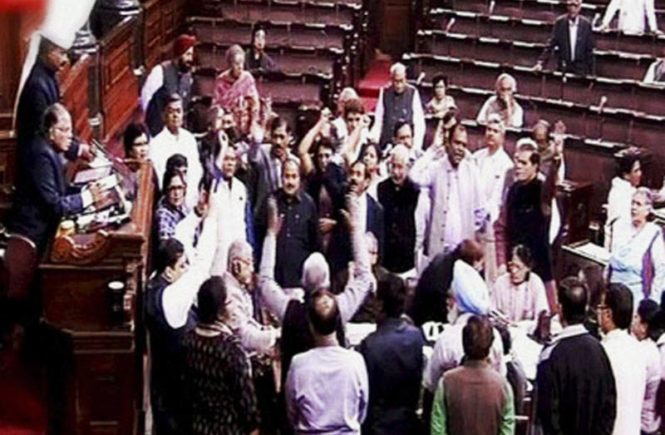
Finally, last week, we had Shri Pranab Mukherjee, telling the Indian parliamentarians that continued disruption of parliament by the opposition to protest against demonetisation is not acceptable at all. He reminded them that the ways of the street are ill-suited for the parliament and that crores of rupees are wasted when the parliament is disrupted in this manner.

The fact is that the Congress has been so used to ruling the country that it has come close not to believe in democracy at all. Hence, whenever it loses elections, it wants to believe that the people have made a terrible mistake in electing an alternative and that the country should get back to being ruled by it as quickly as possible. And, if the people can’t do it on their own, it would leave no stone unturned to facilitate conditions for its rightful return to ruling the country. In this it has been helped by various factors:

  • The country-wide movement against the imposition of Emergency in the country by Prime Minister Indira Gandhi after Allahabad court found her guilty of electoral malpractices although succeeded in installing a non-Congress government (Janata Government) for the first time in 1977, it lasted for only two years due to various factors such as internal squabbles, and the Hindu-Muslim riots due to external machinations by the Congress trying to portray that it was the only secular front in the country and that the country was doomed if it was to go the RSS way.
  • Generations of bureaucrats in the government have obtained reflected glory, power and influence by being as loyal to Congress governments as wazirs have been to the rajas. The Congress kept them in good humour soon as it was elected or re-elected to power. This arrangement worked so fine that I remember when in 1978 the first non-Congress was formed in Maharashtra, there was a news item that brought out that the babus, loyal to generations of Congress MLAs, didn’t let the newly elected non-Congress MLAs to transact any meaningful business.
  • Successive Congress governments shared the largesse with a number of think-tanks in the capital and elsewhere who mastered the art of pleasing their masters by carefully concocted theories that only secular (read Congress led) government would be the country’s saviour. And this, even after it facilitated the massacre of thousands of Sikhs in the capital and elsewhere after Indira Gandhi was killed by her own security-guard, a Sikh. Predictably, after Modi government was installed, Congress engineered the people’s movement against intolerance. At this juncture, it was helped in no mean measure by the Hindu revanchists who translated BJP victory as their licence to have a Hindu rashtra with supremacy of cow and other purely religious ideas. (Please read: ‘Is Communal Disharmony A Challenge To India’s March To Greatness?’ that I wrote in Feb 2015).

And just a week before I write, there is a newspaper item about Prime Minister Modi directly reaching out to the people since, he says, he is not allowed to speak in the parliament. It seems that the governments in India and the opposition take turns in denigrating the parliament. It also appears that the Indian parliamentarians take the word opposition very seriously and feel compelled to oppose anything and everything that the other party or front proposes, even if the idea was mooted by them in the past.

Why does the opposition feel compelled not to let the government duly elected by the people to function thereby questioning democracy as well as people’s verdict? I think the precedence of obtaining independence by disobedience movement engineered by Mahatma Gandhi goads it to employ similar tactics against all rulers as the father of the nation employed against the British. That we are already an independent country doesn’t direct it to change tactics more readily suitable and even acceptable in a functioning democracy. Hence, many a times, the opposition doesn’t mind putting the ruling party or even the nation to shame internationally as long as it can score points with the voters as an opposition. Consider the following:

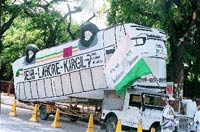
  • In order to infuse new thought in a stalemated Indo-Pak diplomacy, when the BJP PM, Atal Bihari Vajpayee, started a Sada-e-Sarhand (Call of the Frontier) Delhi-Lahore Bus on 19 Feb 1999 (on the inaugural day as the world watched agog, the Prime Minister Vajpayee traveled by the bus to attend a summit in Pakistan and was received at Wagah Border by Pakistan PM Nawaz Sharif), the opposition, as soon as the Kargil War started, protested on Delhi streets by displaying a large rubber-inflated bus, upside down. Even some of its own party men felt that it was in very poor taste; it showed as if it hated the enemy of the country less than the BJP:
(Pic courtesy: India Today)
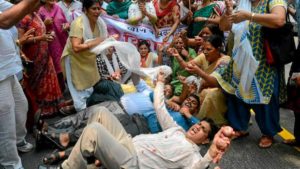
  • In order to prove that despite people’s verdict a non-Congress government wasn’t qualified (read experienced; since the only party that had any experience of ruling the country was the Congress), when Vajpayee government took over, it rejoiced in onions (staple food for the poor in the country) being made scarce by hoarders loyal to it and put his government to shame for mishandling the onion-crisis in 1998. The BJP, having quickly learnt from the opposition (Congress) how to bring the government to heel on the issue of onions, returned the favour in 2013:
BJP workers protest onion price rise in 2013
  • After the Uri terror attack on 18 Sep 16, the opposition took the Modi government to task for not coming equal to its pom-pomed speeches when it was in opposition to the effect that if voted to power it would teach a lesson to Pakistan if it indulges in proxy-war that it had got used to. So, on 29 Sep 16, eleven days after the terror attack at Uri that killed 19 Indian soldiers, Indian Director General of Military Operations (DGMO) Lt Gen Dilbir Singh declared it in a press statement that the Indian Army had made a preemptive strike against “terrorist teams” who were preparing to “carry out infiltration and conduct terrorist strikes inside Jammu and Kashmir and in various metros in other states.” (Please read: ‘Cross- LOC Surgical Counter-Terrorism Strikes, A New Indian Psyche And Resolve?’) Seeing this as a national issue of high-import internationally, the opposition (led by Congress) initially declared full support to the government, but later relentlessly made a mockery of the government for its false assertion. What was the trigger? The BJP government tried to get credit for the surgical strikes so as to sway the voters in the largest Indian electoral state of Uttar Pradesh. In retaliation, the Congress very quickly showed the government and hence the nation in poor light globally (Please also read: ‘ “India Retaliates” – The Aftermath And The Consequences’).
  • After the so called ‘Surgical Strikes’ by the Modi government, the Congress and any number ofĀ  think-tanks that it had so assiduously promoted during its tenures (which I mentioned in the beginning of this essay) including retired armed forces officers, claimed that such strikes had been carried out many times earlier too under Congress rule except that the Congress never talked about it in national interest (Ha! Ha! How the average Indian hopes that sometime or the other the political parties (all of them) would actually be guided by national interests and not electoral gains).
  • The Congress led opposition ensured that the complete winter session of the parliament was a wash-out on the issue of protesting against demonetisation of high-value currency notes of 1000 and 500 rupees, announced by PM Modi on the night of 08 Nov 16. That its Manmohan Singh government had mooted this in 2012 was soon forgotten. As far as Modi government is concerned, it took enormous credit for the courage to go in for demonetisation in order to rid the country of corruption and cross-border terrorism conveniently forgetting that in 2012, when in opposition, it had opposed it tooth and nail on the issues of distressing the common man and doing nothing to net the big fish who would, in any case, find ways and means to circumvent such demonetisation.

It can be seen with these examples that there is no consistent policy with any of our major political parties. The only consistent policy that it has is to denigrate the other party for whatever it does even if when it was in power it did or mooted exactly what it is opposing now. It ridicules the government when it is in opposition to have come up with some hare-brained idea but, finds merit in the same idea when it comes to power.

Who suffers? We, the people of India, suffer irrespective of who is in power and who is in opposition. And, this suffering is in many different ways:

  • First of all, our political polarisation makes us divided as people as we or they; either you are with us or against us. The politicians of all hues and parties rejoice in such divide and rule policy that was mastered by our erstwhile rulers: the British, and now perfected by our own rulers. The real issues facing our country are lost track of when we make everything into political or worse, electoral issues (Please read ‘How Proud Should We Be Of Indian Republic At 62?’ an essay written by me on Republic Day in 2011 and bringing out how Indian democracy and elections work and make us at the bottom of human growth indices.)
  • Such polarisation also ensures that we are unable to discuss the merits or otherwise of issues without taking sides. The debate on the television is all about the opposition holding a charge against the government about their wrong-doings and the government spokesperson bringing out that the opposition, when they were in power, did worse. It is as if all is forgiven and forgotten in the light of the misdeeds of the previous government.
  • Take the present issue of demonetisation for example. The country is divided squarely into mainly two types of people: the Modi-Bhakats (Disciples or Worshippers of Modi who feel that even at times when people are put into extreme hardships, Modi can’t do any wrong and will ultimately lead us all to pots-of-gold as soon as achhe-din (good days) are ushered in) and the Congress-Bhakats (Disciples or Worshippers of Congress) who feel that the sooner the nation returns to Congress rule and normalcy, the better. Very few have discussed, at any length, the merits or demerits of it objectively and whether there were other and better means available to achieve the same objective. Indeed, the objective (or the goal post) itself is still not clear: from tackling corruption to cashless society, the goal-past has been frequently shifted.
  • Granted that corruption in our society has reached such gargantuan proportions that some extreme measures were required, why is it that the Modi-Bhakats are silent about Modi government having exempted political parties from any adverse effects of possession of 1000 and 500 rupee notes? Doesn’t it realise that the mother or gangotri of all corruption in India is funding of political parties? Doesn’t it make mockery of the claim of Modi government that the travails undergone by the common man due to demonetisation would be well worth it since it would largely do away with corruption?
  • The common man, therefore, always makes sacrifices and the big fish (such as the political parties) laugh all the way to the bank or wherever they store their money, at his cost.

I would want the Modi government to be given a chance to prove its credentials. I salute the people’s verdict in its favour in the last Lok Sabha elections in April-May 2014. Afterall, before that the country had been plunged into a morass of almost total corruption, inefficiency, hopelessness and cynicism. The majority voted Modi into power to bring about a change. However, most Indians tend to forget that once brought into power the Prime Minister or the government ceases to represent only those (often as little as 9 percent of the electorate; please see these calculations in the article quoted earlier:Ā  ‘How Proud Should We Be Of Indian Republic At 62?’ ) that voted for him or it. The PM or the government when in power represents and is answerable to all the people of the country who have every right to discuss every issue on its own merit, without taking sides. For example, however fond I may be of Modi’s promise to bring about changes, as a retired defence forces person, I can never forget the fact that he and his government allowed the armed forces personnel to be denigrated, publicly abused and assaulted on the issue of OROP? How can I forget that whilst finding faults with the Congress for superseding LtGen SK Sinha in favour of Gen AS Vaidya, it did exactly the same with LtGen Bipin Rawat superseding two others?

In all these issues, follies and announcements, this time, though, there are bigger stakes. The people gave Modi government a clear majority to bring the country out of the pit of hopelessness that it had plunged into before him. If he fails and/or made to fail, we have a revolution waiting around the corner that is likely to be bloody, brought about by the people who are fed up of all governments and oppositions in the country; whose numbers include the vast majority of Indians.

Lets hope the government and the opposition keep this ominous warning in mind whilst blithely reducing every issue that the country faces into crass politics.


HOW WE SHOT STARS WHEN WE WERE YOUNG NAVY OFFICERS

If the title suggests to you that we went around with our Kodak or Agfa cameras (the prevalent models in the 1970s) to take pictures of our favourite film-stars like Dilip Kumar, Dev Anand, Vyjayanthimala or Nutan, you are as far away from the mark as someone who thinks pineapple is an apple-like fruit that grows on the pine trees. Worse, if you think, we – the navy officers – had decided to get rid of the bad guys or the villains in the Indian movies from Jeevan to Pran to Amjad Khan in Sholay and carried guns for that specific purpose, once again, you are wrong.

Shooting Stars is simply the process of bringing down to the horizon the images with the help of a marine sextant (see picture) of some of the 57 navigational stars given in the nautical almanac at the times of morning and evening nautical twilights (when both the stars and the horizon can be seen by the naked eye), thus measuring their exact angle with the earth’s horizon in degrees, arcminutes and arcseconds. The idea was to fix the position of a ship at sea, far from shore objects, in comparison to the known position of some of these 57 navigational stars. Naturally, in order to fix the position of the ship with some accuracy, one would have to get more than two bearing lines. The accuracy and the fastness of the observations would ensure that most of the bearing lines (from more than two stars) would meet at a point and that would be the fixed position of the ship. Without boring you with complex details, this in essence is the theory of the celestial navigation, also known as astronavigation. During our formative years in the navy, all of us had to learn the intricacies of the astronavigation.

Shooting the sun (Pic courtesy: wpclipart.com)

What about daytime?Ā you will ask me. Well, one would shoot the sun!Ā Aha, but sun is only one, you will persist. Yes, thank God, it is only one. However, if you measure the angle of the sun at different times of the day, allow for the changes in dead-reckoning (or DR) positions of the ship, you will get as many bearing lines as the number of times you shoot the sun, and then,Ā once again, you canĀ fix the ship. Fair enough,Ā you will now ask,Ā but, what exactly is a dead reckoning (DR) position. If you ain’t seeing the stars until now, a DR position is:

DR Position (Pic courtesy: sailtrain.co.uk)

the process of calculating one’s current position by using a previously determined position, or fix, and advancing that position based upon known or estimated speeds over elapsed time and course. The corresponding term in biology, used to describe the processes by which animals update their estimates of position or heading, is path integration.
I remember the time, when I underwent my higher-command course with the army at Mhow, and we joked about army in the mountains advancing with the speed of the mules (they provide logistic support to the army and no army can reach a place or sustain itself unless and until the mules carrying the logistics have cought up). We used to have any number of cartoons about the pongos (naval slang for army infantry guys) and mules. Little did the army guys know that some of our own methods also originated from the animals!

If you are with me so far, with or without stars in your eyes, you would then ask me if we already have the DR position, why to then further fix the ship? Well, DR positions are nowhere near being accurate. As with the animals, you would have to track all the various paths and speeds that the animal took and then arrive at his/her final position after a few hours. First of all it would depend upon the accuracy of the initial position and then on the accuracy of measurement of all the courses and speeds and drifts due to currents and winds and then arrive at the final position.
For example, lets say, the three or more plotted lines if they don’t meet at one point, they would form between them a figure called cocked-hat. Most often than not, all of us busying ourselves in astronavigation would land up with more cocked-hats than in the complete wardrobe of, say, Nelson.


Hence, astronavigation was for us the process of finding the ship’s position more accurately than the dead-reckoning (DR) position. A final question that you would ask me is that weren’t there modern technological means available to fix the ship? Well, there were, but, we were to learn astronavigation just-in-case in the same manner as we kept learning sails and masts even after the advent of steam-ships.
Finally, I might as well tell you that being at sea is very much different from anything that you can imagine. You have no idea of how lost you can get after spending a few hours or days at sea. All directions appear the same and there is nothing to differentiate one from the other. The only analogy that I can give you is the one given by my armoured course mates (how the poor guys miss out on becoming the army chiefs unless it is by accident!) in desert warfare; at times you have no idea of whether you are coming or going. Anyway, let me add that this confusion of being at sea has led Fleet Navigating Officers (the most qualified navigators in the fleet) of leading an entire fleet into waters and even harbours different from the ones that they had intended (as an example, please read: ‘Poor Communicator Had The Last Laugh’). In a major tactical exercise at sea, as another example, when the fleet at sea was divided into Red (enemy) and Blue (own) forces, two ships of the Blue forces encountered each other after going on different tracks and shot missiles at each other thinking of the other as Red ship.

A navy officer, of my era or earlier, would therefore be well versed with recognising navigational stars at sea and would rattle out star names such as Sirius, Rigel, Betelgeuse, Pollux, Aldebaran, Capella, Spica, Arcturus and the Belt of Orion simply by looking at the sky.

Other than that, let me assure you, there is a vast difference between the theory and the practice. For those of you who think it is ancient and outdated, let me tell you that the most modern navy in the world – the US Navy – discontinued (in part only) celestial navigation being taught to its officers in formative years only. And what is the part that they discontinued? Well, the part of physically calculating and drawing bearing lines ( a 22 step process that we all learnt). Instead, nowadays, the shooting star data (the physical data) is fed into a computer and a fix is obtained almost instantly. There are clearly advantages in astronavigation such as its signals cannot be jammed or stopped (unlike that of a radar or even satellite), it is globally available (stars and sun are available everywhere) and the process doesn’t give out any signals that can be detected by the enemy.

However, the inaccuracies of the process (two people are required at the same time to shoot stars: one for bringing the star to the horizon and the other for accurately noting the time of the observation with a chronometer) are many such as inaccurately calibrated sextant or chronometer, great inaccuracies in the last known position, misidentified stars, horizon not being clear due to many reasons (such as choppy seas) and inaccuracies in calculating and plotting. And these led to some hilarious situations at sea.

One that we had often heard was about these young Royal Navy officers trying out celestial navigation in the Thames river in the olden days. After the position calculated by them was plotted on the chart, the Navigator told them gravely that they would have to remove their hats as the ship had landed up in the middle of Saint Paul’s Cathedral.

In our case too, many a times the fix was plotted on the land. Minutes and even hours of shooting stars or the sun, calculating and plotting, would be of no use to the ship.

During my higher command course with the army, the only use for the navy that my army course mates found was to help them in their operations on land. Little did they know how often we had been helping them during the course of astronavigation by landing our ships just next to where they were busy fighting land battles!


SAB AJANABEE HAIN PAR KUCHH TO HAI APNA

ą¤°ą„‹ą¤Øą„‡ ą¤øą„‡ ą¤•ą„ą¤› न बन सका ą¤¤ą„‹ ą¤¹ą¤øą¤Øą„‡ ą¤•ą„€ ą¤†ą¤Æą„€ ą¤¬ą¤¾ą¤°ą„€,
ą¤•ą„ą¤› इस तरह ą¤øą„‡ ą¤¹ą¤®ą¤Øą„‡ ą¤¹ą„ˆ ą„›ą¤æą¤Øą„ą¤¦ą¤—ą„€ ą¤—ą„ą„›ą¤¾ą¤°ą„€ I

वह जब ą¤•ą¤°ą„€ą¤¬ ą¤†ą¤Æą„‡ ą¤¤ą„‹ हम ą¤¦ą„‚ą¤° ą¤¹ą„‹ ą¤—ą¤,
ą¤œą„€ą¤¤ą„€ ą¤¹ą„ą¤Æą„€ ą¤Æą„‡ ą¤¬ą¤¾ą„›ą„€ ą¤–ą„ą¤¦ ą¤øą„‡ ą¤¹ą„ˆ ą¤¹ą¤®ą¤Øą„‡ ą¤¹ą¤¾ą¤°ą„€ I

ą„›ą¤æą¤Øą„ą¤¦ą¤—ą„€ ą¤•ą„€ ą¤•ą¤¶ą„ą¤®-ओ-कश ą¤®ą„‡ą¤‚ यह ą¤­ą„€ ą¤­ą„ą¤²ą¤¾ दिया,
फिर ą¤•ą¤­ą„€ न मिल ą¤Ŗą¤¾ą¤Æą„‡ą¤—ą„€, यह ą„›ą¤æą¤Øą„ą¤¦ą¤—ą„€ ą¤¹ą¤®ą¤¾ą¤°ą„€ I

ą¤øą¤¾ą¤Æą„‡ ą¤¬ą„ą¤¤ą„‡ ą¤—ą¤ आफताब ą¤šą¤²ą„‡ ą¤œą¤¾ą¤Øą„‡ ą¤•ą„‡ बाद I
महताब ą¤•ą„€ किरण ą¤­ą„€ दिखा ą¤—ą¤Æą„€ ą¤²ą¤¾ą¤šą¤¾ą¤°ą„€ I

ą¤¦ą„ą¤Øą¤æą¤Æą¤¾ ą¤•ą„‡ ą¤¶ą„‹ą¤°-ओ-ą¤—ą„ą¤² ą¤®ą„‡ą¤‚ ą¤Ŗą¤°ą¤¾ą¤Æą„‹ą¤‚ ą¤øą„‡ ą¤•ą„ą¤Æą¤¾ ą¤¹ą„‹ शिकवा,
ą¤…ą¤Ŗą¤Øą„‡ ą¤¤ą„‹ जान ą¤²ą„‡ą¤¤ą„‡ ą¤®ą„‡ą¤°ą„€ यह ą¤¬ą„‡ą„˜ą¤°ą¤¾ą¤°ą„€ I

चमन ą¤•ą„‡ ą¤«ą„‚ą¤²ą„‹ą¤‚ ą¤•ą„€ ą¤Æą¤¾ą¤¦ą„‡ą¤‚ ą¤­ą„€ अब ą¤®ą„ą¤°ą¤ą¤¾ ą¤—ą¤Æą„€ą¤‚ ą¤¹ą„ˆą¤‚,
अब ą¤¤ą„‹ ą¤–ą¤æą„›ą¤¾ ą¤¹ą„€ ą¤²ą„‡ą¤•ą¤æą¤Ø ą¤²ą¤—ą¤¤ą„€ ą¤¹ą„ˆ ą¤®ą„ą¤ą¤•ą„‹ ą¤Ŗą¤Æą¤¾ą¤°ą„€ I

सब ą¤…ą¤œą¤Øą¤¬ą„€ ą¤¹ą„ˆą¤‚, रवि, पर ą¤•ą„ą¤› ą¤¤ą„‹ ą¤¹ą„ˆ अपना,
ą¤¤ą¤Øą„ą¤¹ą¤¾ą¤ˆ ą¤•ą„€ यह ą¤¦ą„Œą¤²ą¤¤ ą¤®ą„‡ą¤°ą„€ ą¤¹ą„€ ą¤¤ą„‹ ą¤¹ą„ˆ ą¤øą¤¾ą¤°ą„€ I

Rone se kuchh na ban saka to hasne ki aayi baari,
Kuchh is tarah se hamne hai zindagi guzaari.

Woh jab kareeb aaye to ham door ho gaye,
Jeeti huyi ye baazi khud se hai hamne haari.

Zindagi ki kashm-o-kash mein yah bhi bhula diya,
Phir kabhi na mil paayegi, yah zindagi hamaari.

Saaye badhte gaye aftaab jaane ke baad,
Mehtaab ki kiran bhi dikha gayi lachaari.

Duniya ke shor-o-gul mein paraayon se kyaa ho shikwa,
Apne to jaan lete meri yah beqraari.

Chaman ke phoolon ki yaadein bhi ab murjha gayin hain,
Ab to khiza hi lekin lagti hai mujh ko pyaari.

Sab ajanabee hain, Ravi, par kuchh to hai apna,
Tanhayi ki yeh daulat meri hi to hai saari.

RIVER RAFTING DOWN THE GANGES

I had never done this before even though I always wanted to. I have spent 37 years in the Navy; but, that’s like a person joining the air force on the strength of his having travelled on the upper deck of a double-decker bus.

My wife and I were visiting Haridwar and Rishikesh after our Course Get-together at Dehradun. The day before attempting to make true our fantasy we visited the place called Shivpuri (23 Kms from Rishikesh towards Badrinath), the launching ground of most river rafting done in that area except for the really intrepid ones who go much further up the river.

img_20161119_110739img_20161119_111424

Next day, we decided that we had to undertake a rapid quickly enough so as to get over the fear rather than launch ourselves from this location. So we went a kilometre further up and came to this spot:img_20161120_100243 img_20161120_100250 img_20161120_102806 img_20161120_105204
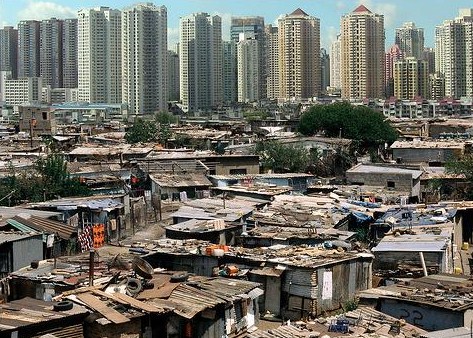
We were staying with the army at Raiwala and with their help, it wasn’t difficult to book the rafts at reasonable prices. There are of course a number of rafting operators readily available charging you as little as Rupees 500 per head and about Rupees 3000 for the entire raft. We had a little difficulty because on the morning of our adventure, the operator told me that we (my wife and I) were both on the other side of sixty and regulations permitted him to permit people up to 38 years of age to undertake the rafting. He somberly added that a few years back a qualified rafting guide had lost his life when the raft toppled (capsized) in a rapid. Even the Wikipedia talks about whitewater rafting as extreme sports that may result in fatality.

Lyn (short for Marilyn) and I however convinced the operator that we would be very very careful. With me being from the Navy, our guide soon gained confidence and I negotiated one of the rapids standing up in the raft. I also enjoyed jumping in the river and swimming.

img_20161120_111711 img_20161120_113719

Lyn and I with a person from the army (Parmeswaran) to help us and our guide (Aryan) and his assistant soon formed a reliable team (the primary spirit of the rafting) and trusted one another with our lives. I learnt that the international rafting association, the governing body of rafting anywhere classifies the rapids into six classes with Class 1 being those rapids that require slight manoeuvering, with small rough areas, and not requiringĀ  anything more than basic skills to the most dangerous rapids being of Class 6 with risk of serious injury and death being very high. But then, if there is no risk, there is no fun (Please read my: ‘The Lure Of Going On A Limb’ after my rappelling experience). They say only the most tortuous paths lead to the most beautiful destinations and in case of whitewater rafting, it is very true.

img_20161119_113921 img_20161119_115925 img_20161119_115928

There are of course a number of rapids by the time you get to the destination (Ram Jhoola at Rishikesh) and one of the fearful ones is called Roller Coaster. Here is a video made by me of other rafts going through this rapid (whilst you are in the raft and negotiating it, clicking videos is the last thing that you’d want to do. Hence, I don’t have videos of our negotiating these rapids):

Here is the first of the rapids called ‘Camel Top’ that we negotiated (the video is shot by me of another boat doing the same thing):

It is not just the rapids that give you thrill. Every once in a while you come across calmer waters (of course with strong under currents) and then you get to look out and admire the scenery and your other mates in the raft:

img_20161120_113942 img_20161120_114053 img_20161120_114055 img_20161120_115435 img_20161120_121305 img_20161120_121308 img_20161120_121400

In the above pics, you would have noticed a man on the bank, in maroon robes playing on the flute. He was playing the popular arti Raghupati Raghav Raja Ram. My video couldn’t capture the notes but I could capture the atmosphere:

Whilst paddling through the rapids, the technique that we used more often than not was to continue with the momentum as much as possible by rapid paddling called punching. High siding (leaning out as much as possible on the higher side in order to right the raft going through the rapid) was used only once or twice and we didn’t use low siding at all. For a navy-man, who has done these enough at sea in a sailing boat, there was nothing new, however. I must, at this stage, have a word of praise for my partner, my wife, for not just the daring but enjoying the adventure thoroughly:

img_20161120_115419 img_20161120_115824

I was reminded of the time, seven years ago, when we went to Andaman and Nicobar islands and I offered her to do snorkelling with me in Chidhiya Tapu. She was apprehensive of lowering herself into the sea because she doesn’t know swimming. However, after she learnt the technique and saw the beautiful choral underwater, she didn’t want to get out:

dsc03128 dsc03129 dsc03134 dsc03138 dsc03140

Rafting can actually be that kind of fun and more. One doesn’t ever want it to get over. It is like going through the river of life with all its ups and downs, dangerous and risky times, calm and happy occasions and of course the joy of having been there and done that.

Soon we had crossed the last of the rapids called Doble Trouble, the name having derived from the rocks in the middle of the river, dividing the river into two. At this point we started seeing first the Laxman Jhoola and then our destination the Ram Jhoola:

We had had an experience of a lifetime and as we saw the Ram Jhoola and the places around, wanted it to go on and on and never finish:

img_20161120_124044 img_20161120_124103 img_20161120_124740 img_20161120_124747 img_20161120_124812

The notes of the final part of the aarti of the evening before for Gange Maa echoed in our hearts and ears and we felt fortunate that Ganga Mata (Mother Ganga) gave us the opportunity to be with her and witness her kindness, loveliness and enchantment even if for just two and half hours:

Be part of this enchantment and do this adventure at least once in your life. As far as my wife and I are concerned, it has prepared us for bigger and greater adventures.

Zindagi na milegi dobara (You can’t get your life again).

PAISA FAINKO, TAMASHA DEKHO

ą¤•ą„ą¤Æą¤¾ ą¤…ą¤œą¤¬ ą¤¹ą„ˆ ą¤®ą„‡ą¤°ą„‡ ą¤¦ą„‡ą¤¶ ą¤®ą„‡ą¤‚ ą¤Æą„‡ ą¤Ŗą„ˆą¤øą„‡ का ą¤–ą„‡ą¤²?
ą¤…ą¤®ą„€ą¤° ą¤•ą„€ बद-ą¤…ą¤®ą¤²ą„€ ą„šą¤°ą„€ą¤¬ रहा ą¤¹ą„ˆ ą¤ą„‡ą¤² I

ą¤†ą„›ą¤¾ą¤¦ą„€ ą¤•ą„‡ ą¤µą„˜ą„ą¤¤ ą¤øą„‡ वह ą¤–ą„œą¤¾ ą¤¹ą„ˆ कतार ą¤®ą„‡ą¤‚,
ą¤•ą„‹ą¤ˆ ą¤¤ą„‹ ą¤¹ą„‹ą¤—ą¤¾ ą¤•ą¤­ą„€ ą¤•ą¤æą¤øą„€ ą¤­ą„€ सरकार ą¤®ą„‡ą¤‚,
ą¤œą„‹ ą¤‰ą¤øą¤•ą„‡ दिन ą¤­ą„€ ą¤µą„ˆą¤øą„‡ ą¤¹ą„€ बदल ą¤”ą¤¾ą¤²ą„‡,
ą¤œą„ˆą¤øą„‡ ą¤Øą„‡ą¤¤ą¤¾ą¤“ą¤‚ ą¤•ą„‡ ą¤¬ą¤¦ą¤²ą¤¤ą„‡ ą¤¹ą„ˆą¤‚ ą¤ą¤• ą¤¹ą„€ ą¤šą„ą¤Øą¤¾ą¤µ ą¤®ą„‡ą¤‚ I
ą¤•ą„ą¤Æą¤¾ ą¤…ą¤œą¤¬ ą¤¹ą„ˆ ą¤®ą„‡ą¤°ą„‡ ą¤¦ą„‡ą¤¶ ą¤®ą„‡ą¤‚ ą¤Æą„‡ ą¤Ŗą„ˆą¤øą„‡ का ą¤–ą„‡ą¤²?
बद उनवान ą¤•ą„‹ ą¤Øą¤¹ą„€ą¤‚, ईमानदार ą¤•ą„‹ ą¤®ą¤æą¤²ą„€ ą¤¹ą„ˆ ą¤œą„‡ą¤² I

यह ą¤µą„‹ą¤Ÿą„‹ą¤‚ और ą¤Øą„‹ą¤Ÿą„‹ą¤‚ ą¤µą¤¾ą¤²ą„‡ आम ą¤†ą¤¦ą¤®ą„€ ą¤•ą„‹ ą¤Ŗą„‚ą¤œą¤¤ą„‡ ą¤¹ą„ˆą¤‚,
पर ą¤…ą¤•ą„‡ą¤²ą„‡ ą¤®ą„‡ą¤‚ ą¤¤ą„‹ यह ą¤­ą¤—ą¤µą¤¾ą¤Øą„ ą¤•ą„‹ ą¤­ą„€ ą¤²ą„‚ą¤Ÿą¤¤ą„‡ ą¤¹ą„ˆą¤‚,
ą¤•ą¤¹ą„‹ ą¤‡ą¤Øą¤øą„‡ ą¤•ą¤­ą„€ यह ą¤­ą„€ ą„™ą„ą¤¦ą¤¾ ą¤•ą„‡ ą¤¹ą„€ ą¤¬ą¤Øą„ą¤¦ą„‡ ą¤¹ą„ˆą¤‚,
ą¤‡ą¤Øą¤•ą„‡ महल ą¤¬ą¤Øą¤¾ą¤Øą„‡ ą¤®ą„‡ą¤‚ ą¤œą¤æą¤Øą¤•ą„‡ हाऄ ą¤Ŗą„ˆą¤° ą¤øą„‚ą¤œą¤¤ą„‡ ą¤¹ą„ˆą¤‚ I
ą¤•ą„ą¤Æą¤¾ ą¤…ą¤œą¤¬ ą¤¹ą„ˆ ą¤®ą„‡ą¤°ą„‡ ą¤¦ą„‡ą¤¶ ą¤®ą„‡ą¤‚ ą¤Æą„‡ ą¤Ŗą„ˆą¤øą„‡ का ą¤–ą„‡ą¤²?
इनसानियत ओ ą¤‡ą¤–ą„ą¤²ą¤¾ą¤•ą¤æą¤Æą¤¤ ą¤•ą„€ ą¤œą„ˆą¤øą„‡ ą¤²ą¤—ą„€ ą¤¹ą„ą¤ˆ ą¤¹ą„ˆ ‘ą¤øą„‡ą¤²’ I

“ą„šą¤°ą„€ą¤¬ą„€ ą¤¹ą¤Ÿą¤¾ą¤“” “ą¤œą¤®ą„ą¤¹ą„‹ą¤°ą„€ą¤…ą¤¤ ą¤¬ą¤šą¤¾ą¤“” ą¤•ą„‡ ą¤Øą¤¾ą¤°ą„‡ ą¤¬ą¤¹ą„ą¤¤ ą¤øą„ą¤Ø ą¤²ą¤æą¤,
ą¤œą¤¾ą¤—ą¤¤ą„‡ ą¤øą„‹ą¤¤ą„‡ ą¤‡ą¤Øą„ą¤øą¤¾ą¤«-ओ-ą¤–ą„ą¤¶ą¤¹ą¤¾ą¤²ą„€ ą¤•ą„‡ ą¤–ą„ą¤µą¤¾ą¤¬ ą¤¬ą¤¹ą„ą¤¤ ą¤¬ą„ą¤Ø ą¤²ą¤æą¤,
अब ą¤‡ą¤‚ą„˜ą¤²ą¤¾ą¤¬ ą¤†ą¤Øą„‡ का ą¤®ą¤¾ą¤¹ą„Œą¤² बना जाता ą¤¹ą„ˆ,
ą¤‡ą¤Øą„ą¤¤ą„‡ą„™ą¤¾ą¤¬ ą¤†ą¤¤ą„‡ ą¤—ą¤ और हर दफा ą¤–ą„ą¤¦ą¤—ą¤°ą„ą„› ą¤¹ą„€ ą¤šą„ą¤Ø ą¤²ą¤æą¤ I
ą¤•ą„ą¤Æą¤¾ ą¤…ą¤œą¤¬ ą¤¹ą„ˆ ą¤®ą„‡ą¤°ą„‡ ą¤¦ą„‡ą¤¶ ą¤®ą„‡ą¤‚ ą¤Æą„‡ ą¤Ŗą„ˆą¤øą„‡ का ą¤–ą„‡ą¤²?
ą¤…ą¤®ą„€ą¤° ą¤•ą„€ बद-ą¤…ą¤®ą¤²ą„€ ą„šą¤°ą„€ą¤¬ रहा ą¤¹ą„ˆ ą¤ą„‡ą¤² I

atm2
(Pic courtesy: news18.com)

Kya ajab hai mere desh mein ye paise ka khel?
Ameer ki bad-amli gareeb raha hai jhel.

Azaadi ke waqt se woh khada hai qataar main,
Koi to hoga kabhi kisi bhi sarkaar mein,
Jo uske din bhi waise hi badal daale,
Jaise netaayon ke badlate hain ek hi chunaav mein,
Kya ajab hai mere desh mein ye paise ka khel?
Bad unwaan ko nahin, imaandaar ko mili hai jail.

Yeh voton aur noton waale aam aadmi ko poojte hain,
Par akele mein to yeh bhagwaan ko bhi lootte hain,
Kaho inse kabhi yeh bhi khuda ke hi bande hain,
Inke mahal banane mein jinke haath pair soojte hain.
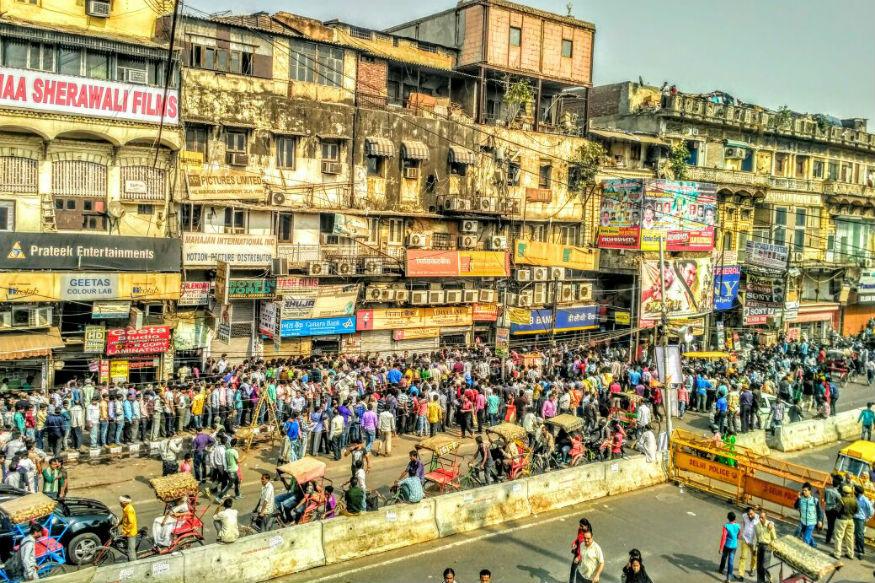
Kyaa ajab hai mere desh mein ye paise ka khel?
Insaaniyat o ikhlaqiyat ki jaise lagi hui hai ‘sale’.

“Gareebi hataao” “Jamhoriyat bachaao” ke naare bahut sun liye,
jaagte sote insaaf-o-khushaali ke khwaab bahut bun liye;
Ab inqlaab aane ka mahaul bana jaata hai,
Intekhaab aate gaye aur har dafaa khudgarz hi chun liye.
Kyaa ajab hai mere desh mein ye paise ka khel?
Ameer ki bad-amli gareeb raha hai jhel.

HIMACHAL THE BEAUTIFUL STATE, PART IV – RENUKA LAKE

My Fantasy Place

It is within three hours of drive from my place in Kandaghat (Please read: ‘Home Is Where The Heart Is – Kandaghat In Shimla Hills’) and yet, I hadn’t been there except with my parents when I was small.

It is my fantasy place. My fantasy is all about a boat in a lake on a moonlit night with a partner. So what if this time the boat happened to be not a rowing boat but a paddle-boat with a dragon face and so what if the moon was out in the forenoon itself? It was still my fantasy place.

The Journey to and from Renuka

My wife and I were on return passage to Kandaghat from Haridwar. We spent the night at the Special Forces Training School Mess atĀ Nahan and started from there after breakfast. The distance of 38 Kms from Nahan was spent looking at the beautiful scenery:

img_20161122_092229 img_20161122_092838 img_20161122_095610

On the way back from Renuka to Kandaghat via Kumhar Hatti, we realised that even if we had gone straight from Kandaghat, we would have been blessed with equally beautiful sights:

img_20161122_142221 img_20161122_153623 img_20161122_161721

Largest Natural Lake in Himachal

Renuka Lake is the largest natural lake in Himachal (the Gobind Sagar Lake in Bilaspur being the largest man-made reservoir in Himachal). We took a Golf Kart to go on the track around the lake and the driver told us that it is about 3.5 Kms (the actual circumference of the lake being 3.214 Kms). Many people feel that the Khajiar Lake near Dalhousie is most serene and isolated. Well, you have to be at Renuka to experience the quiet. You can hear the birds, the fish (the lake is house to large Mahseer fish), and even the dry leaves fall from the trees. You can whisper to your inner self; it is so quiet.

img_20161122_102252 img_20161122_102340 img_20161122_112340 img_20161122_114239

Religious Significance

Renuka Lake is not just a tourist spot of outstanding and enchanting beauty, it is a place of great religious significance. The lake is named after the goddess Renuka or Renu who is the avatar of goddess Parvati or Shakti, the wife of Lord Shiva. Indeed when we went boating, we had to do so bare feet as the lake is considered the abode of Renuka ji (the name literally meaning Mother of the Universe).

The temple of Lord Parshuram stands on the bank of the lake. Lord Parshuram was the sixth incarnation of Lord Vishnu. Bhagwati Renuka Ji, Lord Parshuram’s mother and her husband Maharishi Jamdagni performed deep meditation (known in Hindi as Tapa or तप, from the Hindi word Tapsaya और ą¤¤ą¤Ŗą¤øą„ą¤Æą¤¾) at a place appropriately called Tape Ka Tibba (Meditation Hillock). Lord Vishnu was pleased with their meditation and took birth as their son. He was named Ram by his parents but came to be known as Parshuram because he in turn pleased Lord Shiva with his meditation (Tapa) and received the divine weapon Parshu from him.

The temple of Lord Parshuram stands at the bank of Renuka Lake

On the opposite side of the temple, across the lake is the holy spot where there is an icon of Renuka ji:

img_20161122_123915img_20161122_124045

Renuka ji resides permanently in the lake after she took Jal Samadhi (meditative absorption in water) after King Sahastrabahu killed Maharishi Jamdagni for the latter’s refusal to hand over the Kamdhenu cow as the Maharishi explained that it was the property of Lord Indra given to him in trust. Renuka ji promised her son Lord Parshuram that every year on the occasion of Devprabodhini Ekadashi she would emerge from the lake to meet him. A five day international festival is held in Renuka on this occasion every year. This is immediately after Diwali and my wife and I missed it by a few days. A visit to the temple of Lord Parshuram is a must. You would be served with free Langar (community kitchen) whilst you are there:

img_20161122_131012

Tourist Interest

There is a HPTDC hotel and restaurant at the entrance itself. Both the rooms and food are available at reasonable prices (Rooms ranging from Rupees 2500 to 3500 per day and night).

img_20161122_115933

To go around the lake, one can hire boats and these are reasonably priced too (A four seater paddle boat costs Rs.250 and six seater Rs.350). There is a Security or Guard Boat on duty to help in case of distress.

img_20161122_115810

Boating in the lake is an unforgettable experience. My wife and I did it starting 11 AM to noon on 22 Nov. The sky was totally blue, the sun shone pleasantly and as its rays shimmered on the surface of the lake, these were reflected into the branches of the trees around. Whilst boating, if you keep hearing the words: “this is heaven on earth“, chances are that you yourself are saying them as a litany as you go from one enchanting sight to another:

img_20161122_110756 img_20161122_111024 img_20161122_111259 img_20161122_112135 img_20161122_114239

One can go on the 3.5 Kms track around the lake in the HPTDC provided Golf-Kart. They charge Rs. 50 per head. My wife and I took the trip by ourselves. There are pens of a mini-zoo all along this track:

img_20161122_121040 img_20161122_121315 img_20161122_121915 img_20161122_121930 img_20161122_122157 img_20161122_122601 img_20161122_123003 img_20161122_123044 img_20161122_123153

Parshuram Sarovar and Renuka Temple

Both are right next to the lake. Indeed, the way to the lake is through the Sarovar on the bank of which is the temple and a Forest Rest House:

img_20161122_101802 img_20161122_124731 img_20161122_124806 img_20161122_124937 img_20161122_125012 img_20161122_125034 img_20161122_125227

Memories Forever

Renuka Lake is definitely the place to spend a day and night and make precious memories that will last you a lifetime. In the end, here are some that we made:

Sunbyanyname brings you personalised experiences of travel. Please await my next destination.

THE SUPER COOL SUBMARINERS’ SUPER COOL WAYS

Submariners are a class apart. They are cooler than the arctic ice that you saw in the movie Ice Station Zebra in which Rock Hudson played Commander James Ferraday, Captain of the US attack submarine USS Tigerfish. Some of you who saw the movie would recall that the movie was ostensibly about rescuing British personnel on a drifting ice weather station in the arctic but actually about a classified intelligence mission. There was this scene in the movie when Commander Ferraday welcomes ‘Mr. Jones‘, the British intelligence agent on board by telling him, “Here on this boat, we are very informal. Everyone is known by his first name. My first name is ‘Captain’.”Ā  How cool that sounded. Well, submariners are like that.

Before they join the branch, there is a special psychology and psychiatrist test for them to qualify; for, if they ain’t the cool type, amongst other attributes, they can commit fatal mistakes in the closed confines of a submarine (In the F class of submarines, for example, the sailor on watch in the DG compartment didn’t have space enough to stand erect). Our famous tall submariner is Admiral VS Shekhawat. His bunk was extended by more than a foot on the submarine so that he could at least sleep properly. He was my CO on a ship and he was cooler than any cucumber.

Anyway, I hope you got the point about the submariners being the coolest of the cats.

What do all of us in the Navy do when we are not at sea? You would expect us to be enjoying life (“Coolex” as the navy men say it; the suffix ‘ex’ is used for exercises. Hence, TACEX would be a tactical exercise. In the same manner, ‘Coolex‘ would mean an exercise in cooling one’s heels!) or twiddling our thumbs. Far from it. Half of us are busy writing reports of the exercises done at sea (most of us return ashore bleary-eyed since the naval authorities are convinced that the time at sea is very costly for the nation and every minute must be made use of). The other half is given to such tasks as the ones ashore should have been doing but being overworked, they have to reluctantly pass it on to the people on the ships after they have enjoyed themselves doing nothing at sea.

One of the tasks given to me when I was commanding my boat Vipul was to conduct a Board of Inquiry into circumstances leading to an Assistant Logistic Officer (ALO) by the name of Lieutenant Devgun having walked away with Rupees 33 Lakhs from the accounts of the Submarine Base in Mumbai (COMCOS (West)). I was one of the members (a BoI normally has three members including the President). Our President was then Captain (later Rear Admiral) Kochhar, CO of the carrier Vikrant. And then we had a Logistic Officer, Commander Anand, who had all rules and regulations concerning accounts at the back of his hand.

To complete the background, I must mention that the rear wall of any BoI and Court Martial room has to have a picture of the President of India in his capacity as the Supreme Commander of the armed forces.

As we commenced the BoI, we realised that the cool submariners had left everything to the super cool Devgun. The Logistic Officer, Devgun’s immediate boss, for example, had become an expert at solving crosswords since he totally trusted his assistant Devgun to handle accounts, cash, money warrant, ledgers, and locking unlocking of the money safe held in his personal custody. All the others in the Base were equally cool about trusting Devgun with even surprise muster of accounts. He not just maintained Imprest Account but others, busy as they were, coolly disposed off even the handling of their Non-Public Fund accounts to him. The more we went into their coolness, the more we realised that anything and everything had been left to the man with a gun and the Hindi name for god in his name.

Indeed, the President of the BoI mentioned during one of the tea-breaks conjectured as to why couldn’t they have madee him the COMCOS (Commodore Commanding Submarines) since Devgun virtually did everything as a Lieutenant; and, he had risen to this rank from being a sailor?

More and more skeletons came out of the submariners’ cupboards as we took up one thread or the other. As an example, lets say there was a party at the Submarine Base. Who do you think did the local purchase of things required for the party? Well, you have easily guessed it; the cool submariners’ most trusted officer Devgun did it and made underhand money there too (as if 33 Lakh rupees (a huge sum during those days) wasn’t enough). Finally, we decided that we would have to restrict the scope of the BoI since it was otherwise becoming gargantuan with no end in sight. We informed the command headquarters accordingly.

One day, one of the witnesses (a woman) brought out that Devgun was also running a Chit Fund with the promise of making everyone rich. Whilst her evidence was being recorded, we had a tea-break. During the tea-break, the President enquired from the lady stenographer given to us to record the proceedings (in shorthand) (she was a steno at the submarine base itself) about this Chit Fund. She mentioned that many women employees of the Base had given him money for the Chit Fund so as to become rich. She also shyly suggested that many had even illicit relations with him.

On an impulse, the President BoI asked her if she too had lent money to him for the Chit Fund. She lowered her eyes and nodded.

After she went out, the President asked if we should remove the President’s picture from the rear wall and put up that of Devgun because he was the only one who had succeeded in even making women to pay for the fun he had.

Aftermath

After months of the BoI, once, by sheer accident, Devgun was caught and they put him in custody in a cell whilst awaiting court-martial. It is customary to put the personnel from the same unit as guards as well as officers to keep a watch and so the cool submariners guarded Devgun in sharp contrast to how he used to guard their interests in the past.

After being in the cell for a day or two, he mentioned to the cool officer on duty that both he and the officer could take a break and paint the town red. His I-Card and wallet were hence given back to him by thisĀ cool officer and as promised, Devgun took him to the apartment of a woman of ill repute. She lived on a higher floor in a multi-story building. Devgun handed over his I-Card, wallet and gold-chain etc to the officer waiting down there in his jeep whilst he went to have fun (as John Milton famously said: They also serve who sit in the jeep and wait). After 30 minutes or so Devgun emerged and told the officer that she was waiting for him. So now it was the turn of the officer to give him his I-Card, wallet etc whilst he (the officer) too went to taste the paradise.

That was the last that was seen of Devgun!

Kya Cool Hain Hum?!

“I Hate Your Blog, I Don’t Know Why”

Some of your friends who don’t exactly say it but mean it nevertheless remind you of people who are quite at home with stray dogs but cannot stand your pet-dogs. Why this strange-sounding simile? Well, on social-media discussions, the same people, would quote from little known, pedestrian authors and indeed from recirculated internet stuff that goes by the misnomer of ‘knowledge’, but readily ignore your well researched essay. There must be some psychology, some reasons behind this secret hatred for blogs. Let me examine some of these.

1. Mujhe Bhi Kuchh Kehna Hai (I too have something to say). In an essay titled ‘All Photographers And Writers, No Viewers And Readers’, I brought out that the biggest two techno-social changes that have affected our lives in the last decade or so are that everyone is a photographer and everyone can write and instantly publish. Hence, there is nothing unique or extraordinary about anyone who writes or clicks pictures. Lets take the latter first; if someone puts up pictures of his family trip to London, you can put up pictures of your trip to Rio. “London is really a destination where people used to go in the last century; it is time that these commoners now learn to go to more exotic locales. But, frankly, they don’t have it in them; for them, London is still abroad“. Now, let’s get to writing blogs: “What’s so special about what he has written? I don’t have time, else, I could have written ten such articles and with better English and humour”. If you ever visit largest Indian Blogging site Indiblogger, you will discover that they maintain a ranking of blogs dependant upon people voting for blog posts. And who are the people who vote? Well, other bloggers. Everyone, therefore, follows the tenet: ‘You scratch my back, I scratch yours‘.

2. Ghar Ki Murgi Dal Barabar (Home-grown chicken is worth (lowly) dal (cereal) only). Ah, the time when we used to read the brilliant stuff of really intelligent men and women in newspapers and magazines. Somehow the stuff that the boy or the girl next door writes does not sound that erudite or good. It is almost like discovering your son paints as good as Picasso or Rembrandt! How can that be? Yes, we want social media revolution to change governance in the country, our surroundings, world politics and community religion. However, our next door blogger doesn’t have the calibre to take on anything even close to it. In any case, having heard and read him a few times, we already have good knowledge of what he/she is going to say.

(Carton courtesy: allthingslearning.wordpress.com)

3. Quantity Has Made Quality Suffer. You can gather all kinds of arguments to support your theory. One of them is that delightful cuisine cannot be made for millions. Yes, blue jeans was an invention that changed the way masses dressed and really well to do people spent their lifetime. thereafter, in Levis. However, you cannot go to a gourmet dinner dressed in blue jeans, can you? Naturally, as seen by you since you make all the arguments to suit your bias, quality has certainly suffered now that everyone who has Internet can publish. In the words of the Urdu poet:

Barbad gulistaan karne ko to ek hi ullu kaafi tha,
Yahan..har shaakh pe ullu baitha hai anjam-e-gulistan kya hoga?

(For destroying the wonderful garden, even one owl is sufficient,
Here there is an owl on each branch, wonder what would happen to the garden?)

4. I Know The Author Well; He/She Can’t Write For Nuts. Whilst with the author in a novel, newspaper or periodical there was no personal linkages, more often than not, with a blogger, you are one to one. Hence, your mind works overtime to remember how he was a nincompoop when you were with him in school or college or elsewhere. He couldn’t make a sentence in English properly. Then there is another bigger problem, which is, that one reads so that one can quote in good company. People are taken aback when you suddenly quote a verse of Coleridge or some other quote of say, Tolstoy. But, imagine trying to impress a company by saying that your friend, the blogger wrote it. Naturally, you can’t even impress people by quoting him/her. Perhaps, if it makes a lot of sense, you can say Vikram Seth said it! In any case, who would have read all that Seth wrote?

5. Who Has The Time? The race for time is similar to Mumbai traffic or for that matter traffic in any other Indian city. Once, when a motorist overtook me in very slow moving traffic, by hook or crook, and I came parallel to him at the next traffic lights, I lowered my window and asked him, “भाई साहिब, मान ą¤²ą„‹ आप ą¤®ą„ą¤ą¤øą„‡ ą¤¦ą„‹ ą¤¤ą„€ą¤Ø मिनट ą¤Ŗą¤¹ą¤²ą„‡ ą¤…ą¤Ŗą¤Øą„‡ ą¤ ą¤æą¤•ą¤¾ą¤Øą„‡ पर ą¤Ŗą¤¹ą„ą¤ą¤š ą¤œą¤¾ą¤“ą¤—ą„‡; पर उस ą¤¦ą„‹ ą¤¤ą„€ą¤Ø मिनट ą¤®ą„‡ą¤‚ आप ą¤•ą¤°ą¤Øą„‡ ą¤•ą„ą¤Æą¤¾ ą¤µą¤¾ą¤²ą„‡ ą¤¹ą„ˆą¤‚?” (Brother, supposing that you reach your destination two or three minutes ahead of me; but, what exactly are you going to do in those two or three minutes). He laughed and laughed and said, “ą¤•ą„ą¤Æą¤¾ ą¤•ą¤°ą„‡ą¤‚? आदत ą¤Ŗą„ ą¤—ą¤Æą„€ ą¤¹ą„ˆ?” (What to do? It has become a habit). The same people who complain about lack of time spend hours solving the Sudoku.

6. He Is Only Promoting His Blog. In a way, unless you believe in literary masturbation, you write so that people would read. You don’t make any money writing your blog; however, they make it look like as if blogs are similar to prostitution in which you woo your clients by selling your body and soul. Recently, I had this experience when a friend used these exact words to win an argument that he was otherwise trying to win through profanity.

(Cartoon courtesy: paintermommy.com)

7. I Can’t Be Forced Into Reading Anything; I Choose To Read What I Want To. For heavens sake, our choices over a period of time are dwindling. With the onslaught of advertisements, we don’t ever have a choice of what we buy and use; we don’t have a choice in government making even though we vote election after election: many of us don’t have a choice of partner for life,and so on. At least, let me exercise choice in reading what I want to read rather than being forced to read something sent by a friend.

8. Why Can’t He Write ‘Short-and-Sweet’? Most highly popular blogs have just a picture or two or a quote or a paragraph of recirculated stuff. People immediately identify with such stuff. Such stuff also meets the demands of some of the reasons that I have given above, especially lack of time. A few years ago I started a number of groups on Facebook on various themes ranging from ‘Laugh With The Punjabis‘ and ‘Humour In And Out Of Uniform‘ to ‘Yaad Kiya Dil Ne‘ (a group for sharing music) and ‘Main Shayar To Nahin‘ (a group for sharing poetry). I insisted that people would write as per the theme of the group, write original, and steer clear of posting greetings, religious messages, political messages, and other such nonsense. I wrote my experiences in an essay titled: ‘Want To Start A Facebook Group? Have A Reality Check‘. Soon, all groups on Facebook become Friends Circles wherein everything and anything is posted. No one reads serious poetry either written by friends or by recognised poets, for example. People are happy to write, like and comment on such gibberish as:

जब ą¤¤ą„ą¤®ą„ą¤¹ą¤¾ą¤°ą„€ याद ą¤†ą¤¤ą„€ ą¤¹ą„ˆ ą¤¤ą„‹ ą¤¬ą¤¹ą„ą¤¤ ą¤¦ą¤°ą„ą¤¦ ą¤¹ą„‹ą¤¤ą¤¾ ą¤¹ą„ˆ,
जब ą¤¦ą¤°ą„ą¤¦ ą¤¹ą„‹ą¤¤ą¤¾ ą¤¹ą„ˆ ą¤¤ą„‹ ą¤¤ą„ą¤®ą„ą¤¹ą¤¾ą¤°ą„€ याद ą¤†ą¤¤ą„€ ą¤¹ą„ˆI

This is short and sweet. I accessed this site and found this s & s piece had 453 likes and 117 comments.

There you are: I have tried to find reasons as to why blogs are hated and disliked. If you are a blogger and you have some other reasons to add, please go ahead and share in the comments.

'It's so refreshing to meet someone who doesn't blog.' (Cartoon courtesy: jantoo.com)
(Cartoon courtesy: jantoo.com)

MOHAMMAD RAFI, DID HE SING OR CRY?

Blasphemy sells and sells big time. Karan Johar, the producer (alongwith Apoorva Mehta and Hiroo Yash Johar), director, story-writer and with dialogue writer (Niranjan Iyengar) of the movie Ai Dil Hai Mushkil (ADHM) is laughing all the way to the bank in having made yet another hit movie. However, a dialogue in the movie when the actress Anushka Sharma, playing the role of Alizeh, tells Ranbir Kapoor as Ayan Sanger about the god of songs (as held by millions of his fans) Mohammad Rafi that ā€˜Woh gaate kam, rotey zyada the’ has angered his fans. They protested and demanded an apology. However, Karan Johar with an eye on the box office (the more controversy a film gathers, the better it does at box office) has declined to tender apology or to blot out the offending dialogue. This confirms that unlike what the Censor Board people feel about it, this dialogue didn’t appear there accidentally but was a deliberate move to profit from such cheap, despicable and highly offensive stunt.

I am one of the affected fans of Mohammad Rafi. With his seemingly limitless range of singing encompassing romantic numbers, enchanting duets, comic songs, children’s songs, bhajans, ghazals, happy and lighthearted songs, songs in the vernacular, songs for the elderly, poor, men and women on the street, patriotic songs, rebellious songs and sorrowful songs, wedding and bidai songs, party songs and even pop songs (in each one of these he being the best), I am at a loss as to how this dialogue makes any sense.

Here, it is not my intention to give examples of songs that were not the so called crying songs, or to bring out what a wonderful person in real life our most beloved singer was. This piece has limited purpose. It is to prove to Karan Johar (I shall never again see any of his movies or television appearances) that he wasn’t right even in the essence of the most ridiculous lament: ā€˜Woh gaate kam, rotey zyada the’.

An artiste’s work speaks for itself and here I present to you some of my most revered idol’s so called crying songs just to bring home one small point to Karan Johar:Ā Mohammad Rafi’s singing wasn’t crying but on those rare occasions when he cried, it was singing of outstanding excellence. It is fashionable these days to make the movie titles as the titles of old and popular songs and Karan Johar has his share of movies with such titles. He chose the title of a peppy and popular song sung by Mohammad Rafi himself as the title of his movie and then went about denigrating the singer.

Shame!

Song #1
O duniya ke rakhwaale, sun dard bhare mere naale…

Mister Karan Johar should know that, in this song, Mohammad Rafi actually cried so beautifully that it is one of the best ever bhajans ever made. Even today, 64 years after the 1952 movie Baiju Bawra was made, we cry not just at the emotions of the song (I maintain that the best Hindi songs ever have been made by Shakeel Badayuni as lyricist, Naushad Ali as Music Director, Mohammad Rafi as singer and Dilip Kumar as actor.Ā  Though in Baiju Bawra, Bharat Bhushan was the actor but the other three proved their magic. Please read: ‘The Best Of Hindi Songs – Rafi, Shakeel, Naushad And Dilip Kumar Together’) but also for the fact that we shall never have this voice again. I can imagine not just people crying with the song but perhaps even God doing so. In the finale of the song when the throat bleeding pitch reaches a crescendo, you feel drained out listening to it but Rafi ji did it with his customary ease.

The makers of best songs in Hindi movies: Mohammad Rafi with Naushad Ali and Shakeel Badayuni

The song was composed by Naushad in Raag Darbari, Tal Kaherava (Naushad is credited with having brought Raaga based compositions in Hindi movies and each one of the Baiju Bawra’s thirteen songs (including Sargam) was based on a Raaga. Rafiji’s genre’ of singing included Raaga based songs and he did an outstanding job of singing them all.

Please enjoy a tour de force of a song and help revise Karan Johar’s views about Rafi ji’s singing and crying: O duniya ke rakhwaale, sun dard bhare mere naale …

Bhagavaan, bhagavaan … bhagavaan
O duniyaa ke rakhavaale, sun dard bhare mere naale
Sun dard bhare mere naale
Aas niraash ke do ra.ngo.n se, duniyaa tuune sajaaI
Nayyaa sa.ng tuufaan banaayaa, milan ke saath judaaI
Jaa dekh liyaa harajaaI
O… luT gaI mere pyaar kii nagarii, ab to niir bahaa le
ab to niir bahaa le
O… ab to niir bahaa le, o duniyaa ke rakhavaale …

Aag banii saavan kii barasaa, phuul bane a.ngaare
Naagan ban ga_ii raat suhaanii, patthar ban gae taare
Sab TuuT chuke hai.n sahaare, o … jiivan apanaa vaapas le le
Jiivan dene vaale, o duniyaa ke rakhavaale …

Chaa.nd ko Dhuu.NDhe paagal suuraj, shaam ko Dhuu.NDhe saveraa
Mai.n bhii Dhuu.NDhuu.N us priitam ko, ho naa sakaa jo meraa
Bhagavaan bhalaa ho teraa, o … qismat phuuTii aas na TuuTii
Paa.nv me.n pa.D gae chhaale, o duniyaa ke rakhavaale …

Mahal udaas aur galiyaa.n suunii, chup-chup hai.n diivaare.n
Dil kyaa uja.Daa duniyaa uja.Dii, ruuTh gaI hai.n bahaare.n
Ham jiivan kaise guzaare.n, o … ma.ndir girataa phir ban jaataa
Dil ko kaun sambhaale, o duniyaa ke rakhavaale …

O duniyaa ke rakhavaale
Rakhavaale
Rakhavaale
Rakhavaale …Ā  (throat bleeding pitch)

Song #2
Ye aansu mere dil ki zubaan hain….

Here is another one of those rare occasions when Mohammad Rafi expressed his emotions throught the medium of tears. Hasrat Jaipuri, the great lyricist who worked with the best music duo ever: Shankar Jaikishan, called these tears as the language of the heart (Dil ki zubaan). If Anushka Sharma or Karan Johar would pay attention to the lyrics and their superb rendition by Mohammad Rafi, they would instantly feel ashamed about passing off Rafi’s singing as crying. Each word in the song assumes greater meaning with the effect of his singing.

Mohammad Rafi with Hasrat Jaipuri, Shashi Kapoor and Jaikishan
Mohammad Rafi with Hasrat Jaipuri, Shashi Kapoor and Jaikishan (the song is picturised on Rajendra Kumar and Jamuna)

Pleaase enjoy: Ye aansu mere dil ki zubaan hain….

Ye aa.Nsuu mere dil kii zubaan hai.n -2
Mai.n ro_uu.N to ro de.n aa.Nsuu
Mai.n ha.Ns duu.N to ha.Ns de.n aa.Nsuu
Ye aa.Nsuu mere dil kii zubaan hai.n -2

Aa.Nkh se Tapakii jo chi.ngaarii, har aa.Nsuu me.n chhabii tumhaarii
Chiir ke mere dil ko dekho, bahate lahuu me.n priit tumhaarii
Ye jiivan jaise sulagaa tuufaan hai
Ye aa.Nsuu mere dil ki zubaan hai.n -2
Mai.n ro_uu.N to ro de.n aa.Nsuu
Mai.n ha.Ns duu.N to ha.Ns de.n aa.Nsuu
Ye aa.Nsuu mere dil kii zubaan hai.n -2

Jiivan-path par jiivan saathii, saath chale ho mu.Nh na mo.Do
Dard-o-Gam ke doraahe par, mujhako ta.Dapataa yuu.N na chho.Do
Ye naGamaa mere Gam kaa bayaan hai
Ye aa.Nsuu mere dil kii zubaan hai.n -2
Mai.n ro_uu.N to ro de.n aa.Nsuu
Mai.n ha.Ns duu.N to ha.Ns de.n aa.Nsuu
Ye aa.Nsuu mere dil kii zubaan hai.n -2

Song #3
Kabhi khud pe kabhi halaat pe rona aaya…

Mister Karan Johar, after you have made your millions blaspheming our most revered singer ever, please give it a thought that the song that I am giving you now is amongst the best of one of the best lyricists ever: Sahir Ludhianvi. Music Director Jaidev composed it in Raag Gara, Tal Dadra and after both of them did their bit to make this song great, finally it was the extraordinary rendition by Mohammad Rafi that made the emotions of Dev Anand on celluloid come alive.

Mohammad Rafi with Dev Anand

Please enjoy: Kabhi khud pe kabhi halaat pe rona aaya…

Kabhii Kud pe, kabhii haalaat pe ronaa aayaa
Baat nikalii, to har ik baat pe ronaa aayaa

Ham to samajhe the ki ham bhuul gae hai.n unako
Kyaa huaa aaj, ye kis baat pe ronaa aayaa

Kis liye jiite hai.n ham kisake liye jiite hai.n
Baarahaa aise savaalaat pe ronaa aayaa

Kaun rotaa hai kisii aur kii Kaatir ai dost
Sabako apanii hii kisii baat pe ronaa aayaa

Song #4
Ye hanste hue phool…

The 1957 movie Pyaasa has the most crying songs of Mohammad Rafi in a single movie and the songs are as much classic as the movie is. Time magazine ranked it in 2005 as one of the Top 100 movies of all times and the same magazine, in 2011, ranked it as one of the Ten Most Romantic movies in the world. And guess what? Guru Dutt plays a poet Vijay in the movie (Sahir Ludhianvi‘s poetry) whose poetry is considered pedestrian by people until later they realise that it is poetry of the highest excellence. Similarly, Karan Johar and Anushka would think it is mere crying when the rest of the world thinks of it as singing of great skill and brilliance. He sang those songs because the story demanded it and each one is a masterpiece composed by SD Burman.

Mohammad Rafi with Guru Dutt and SD Burman

For your information, Mister Karan Johar and Ms Anushka, when Mohammad Rafi through Vijay (Guru Dutt) sang in an audience in early stages of his poetry-writing in the movie: Tang aa chuke hain qash-ma-qash-e-zindagii se ham, thukaraa na dein jahaan ko kahiin bedilii se ham, one of the men in the audience, as ill-informed as you both are about real value of Rafi’s singing, used a variation of your blasphemous dialogue: “Aji janaab, khushii ke mauke par kyaa bedili kaa raag chhedaa huaa hai? Koi khushii kaa giit sunaaiye“, he replied in his singing voice: Ham gam-zadaa hain laayen kahaan se khushi ke geet, denge wohi jo paayenge is zindagii se ham. It was a brilliant reply as good in its lyrical value as in singing eminence.

And for irreverant people like you, Rafi had a beautiful reply in another song: Gam is qadar badhe, ke main ghabaraa ke pii gayaa; is dil kii bebasii pe
taras khaa ke pii gayaa. And a female voice commented: Achchhaa to ye shaayar bhii hain, in the same mocking way that you feel he was less a singer than a crier, Rafi, once again through Vijay (Guru Dutt)Ā responded brilliantly in the end: Thukaraa rahaa thaa mujhako badi der se jahaan, main aaj sab jahaan ko thukra ke pi gaya!

Rafi would have had something to say, in his singing voice to you too, Mister Karan Johar except that he had already concluded in the movie that he was above all this: Ye duniya agar mil bhi jaaye to kyaa hai?

Pyaasa was the last time when the pair of Sahir Ludhianvi and SD Burman were together and this is what they made Rafi sing. Please enjoy: Ye hanste hue phool…

Ye ha.Nsate huye phuul
Ye mahakaa hu_aa gulashan
( Ye ra.ng me.n aur nuur me.n
Duubii hu_ii raahe.n ) -2

(Ye phuulo.n kaa ras pii ke
machalate huye bha.Nware ) -2

Mai.n duu.N bhii to kyaa duu.N tumhe.n
Ai shoK nazaaro.n
Le de ke mere pass
Kuchh aa.Nsuu hai.n kuchh aahe.n

All I can say is that happy songs are much easier to sing. The sad songs of Pyaasa are amongst the most difficult songs that he sang.

Song #5
Woh jab yaad aaye bahut yaad aaye….

On a rough count, Lata Mangeshkar and Mukesh would have sung many more cryingly sad songs than Mohammad Rafi. However, in case of Lata, Karan Johar would have been politically correct never to compare her singing with her crying. He would have known that his film would have been forced to be banned rather than his making millions by mocking her. Also, the fact is that Mohammad Rafi put his heart and soul into any type of songs including sad ones and his songs are the ones that are remembered most for their heart rending quality. In many of these, that were duets, Lata ji matched him ably just as she did with romantic and peppy duets.

Amongst Rafi and Lata’s most popular duets of all times is this crying song, in which she rightly says: Magar rote rote hansi aa gayi hai, khyaalon mein aake woh jab muskaraye.

This also happens to be one of the best remembered songs in Raag Kalyan, Tal Kaherava, composed by Laxmikant Pyarelal on the excellent lyrics of Asad Bhopali. One of Rafi’s qualities was that even if the actors were of lesser calibre, he covered up for them by the depth of his singing. In the 1963 movie Parasmani, for example, he sang for Mahipal whilst Lata sang for Geetanjali.

Mohammad Rafi with Laxmikant Pyarelal

Please enjoy: Woh jab yaad aaye, bahut yaad aaye….

Wo jab yaad aae bahut yaad aae
Gam-e-zi.ndagii ke a.ndhere me.n hamane
Chiraag-e-muhabbat jalaae bujhaae

AahaTe.n jaag uThii.n raaste ha.ns diye
Thaamakar dil uThe ham kisii ke liye
Ka_ii baar aisaa bhii dhokhaa huaa hai
Chale aa rahe hai.n vo nazare.n jhukaae

Dil sulagane lagaa ashq bahane lage
Jaane kyaa-kyaa hame.n log kahane lage
Magar rote-rote ha.nsii aa ga_ii hai
Khayaalo.n me.n aake vo jab muskuraae

Wo judaa kyaa hue zi.ndagii kho ga_ii
Shammaa jalatii rahii roshanii kho ga_ii
Bahut koshishe.n kii.n magar dil na bahalaa
Ka_ii saaz chhe.De ka_ii giit gaae

Song #6
Hum tumse judaa ho ke mar jaayenge ro ro ke…

Talking about Asad Bhopali, two years after Parasmani he repeated the magic of his lyrics in the 1965 movie Ek Sapera Ek Lutera with Feroze Khan playing both the title roles. This time the music director was Usha Khanna, the only female music director of contemporary fame (though earlier there were two others too: Jaddan Bai and Saraswati Devi) in a male dominated Hindi films music scene. She composed the song in Raag Darbari Kanada, Tal Kaherava. I was not yet in my teens when I saw the movie with my parents and I do remember that this was the most popular song of the movie at that time.

rafi-with-usha-khanna-and-kishore-kumar

Please enjoy: Hum tumse judaa ho ke mar jaayenge ro ro ke….

Ham tumase judaa ho ke mar jaa_e.Nge ro-ro ke -2
Mar jaa_e.Nge ro-ro ke

Duniyaa ba.Dii zaalim hai dil to.D ke ha.Nsatii hai -2
Ik mauj kinaare se milane ko tarasatii hai
Kah do na ko_ii roke -2
Ham tumase judaa …

Vaade nahii.n bhuule.nge kasame.n nahii.n to.De.nge -2
Ye tay hai ki ham dono.n milanaa nahii.n chho.De.nge
Jo rok sake roke -2
Ham tumase judaa …

Sochaa thaa kabhii do dil milakar na judaa ho.nge
Maaluum na thaa ham yuu.N naaqaam-e-vafaa ho.nge
Qismat ne.n di_e dhokhe
Ham tumase judaa …

Song #7
Tere bin soone nayan hamaare….

Jag mein rahaa main jagase paraayaa
Saayaa bhii meraa mere saath na aayaa
Hansane ke din bhi roke guzaare
Haay! tere bin suune …

One of the greatest lyricists of all times – Shailendra (Please read: ‘The Best Songs Of Shailendra, The Lyricist Beyond Compare – Part I’ and ‘Part II’) penned those lyrics for the 1963 RK Rakhan movie Meri Soorat Teri Aankhen, which had Ashok Kumar in the most challenging role of his life (No successful actor of Karan Johar movies would ever take up such a role in which he is to be shown as dark and ugly; which only goes to prove that Karan Johar and his ilk are as devoid of reality around them as they are of respect for the finest singer on earth: Mohammad Rafi). These lyrics tell the story of some of the unfortunate people of India before (suddenly) everyone started moving in their cloistered and make believe world of riches, splashes of colour, skirts, jeans and fornication created by Karan Johar and the like. And, Mohammad Rafi was there to sing those emotions of the poor, the deprived and the victimised.

The great composer Sachin Dev Burman composed these lyrics in Raag Pilu (the favourite raaga of his contemporary OP Nayyar) and Tal Dadra. The last stanza has been sung by Lata Mangeshkar for Asha Parekh who was visiting that hilly and isolated locale with her lover Pradeep Kumar and who was visibly affected by the beauty of the singing.

Mohammad Rafi with Ashok Kumar

Please enjoy: Tere bin soone nayan hamare….

Tere bin suunii, nain hamaare
Haay! tere bin suunii
BaaT takat gaye saa.Njh sakhaare
Haay! tere bin suunii

Raat jo aaye Dhal jaaye pyaasii
Din kaa hai duujaa naam udaasii
Nindiyaa na aaye ab mere dvaare
Haay! tere bin suunii …

Jag me.n rahaa mai.n jagase paraayaa
Saayaa bhii meraa mere saath na aayaa
Ha.Nsane ke din bhii roke guzaare
Haay! tere bin suunii …

O anadekhe, o anajaane
Chhup ke na gaa ye prem taraane
Kaun hai tuu mohe ab to bataa re
Haay! tere bin suunii …

Song #8
Tum mujhe youn bhula na paaoge…

Finally, Mister Karan Johar, Anushka Sharma and party, this is as if directly sung by Mohammad Rafi for you. However much you try, you cannot forget Mohammad Rafi. Whenever you hear his songs, you too hum and will continue humming! Rafi ji had that quality. Even those who, for reasons known best to them, mock him, love Mohammad Rafi’s songs; there is no getting away from this reality.

This has been composed by my favourite music duo Shankar Jaikishan in my favourite Raag Jhinjhoti. Why is Jhinjhoti my favourite? Simple, because what I consider as the greatest song ever made in Hindi movies was sung in this Raag: Mere mehboob tujhe meri mohabbat ki kasam that was put together by the fabulous trio of Shakeel-Naushad-Rafi. Of course, S-J composed this song in Tal Dadra whereas Naushad’s song is in Tal Kaherava.

Mohammad Rafi sang it for Shammi Kapoor who admitted that this was the most challenging role of his career as Pagla Kahin Ka (the title of the 1970 movie).

Crying, Mister Karan Johar? Crying isn’t how you jeeringly put it in the movie; crying is empathising, crying is emotions melted into hot liquid, and in the case of Mohammad Rafi, crying is melody of the most outstanding refrain.

Once again Hasrat Jaipuri penned these powerful lyrics that have raw emotions hanging from hooks of despondency.

Mohammad Rafi with Shammi Kapoor, Hasrat Jaipuri and Shankar Jaikishan (Pic courtesy: mohdrafi.com)

Please enjoy: Tum mujhe youn bhula na paaoge…

Tum mujhe yU.N bhulaa naa paaoge
Haa.N tum mujhe yU.N bhulaa naa paaoge
Jab kabhii bhii sunoge giit mere
Sa.ng sa.ng tum bhii gunagunAoge
Haa.N tum mujhe yU.N bhulaa naa paaoge
Ho tum mujhe yU.N …

(Wo bahaare.n vo chaa.ndanii raate.n
Hamane kii thii jo pyAr kii baate.n ) – 2
Un nazaaro.n kii yaad aaegii
Jab khayaalo.n me.n mujhako laaoge
Haa.N tum mujhe yU.N bhulaa naa paaoge
Ho tum mujhe yU.N …

(Mere haatho.n me.n teraa cheharaa thaa
Jaise koI gulaab hotaa hai ) – 2
Aur sahaaraa liyaa thaa baaho.n kaa
Wo shaam kis tarah bhulaaoge
Haa.N tum mujhe yU.N bhulaa naa paaoge
Ho tum mujhe yU.N …

(Mujhako dekhe binaa qaraar naa thaa
Ek aisaa bhii daur guzaraa hai ) – 2
JhUTh maanU.N to pUchhalo dil se
Mai.n kahU.ngaa to rUTh jaaoge
Haa.N tum mujhe yU.n bhulaa naa paaoge

Jab kabhii bhii …

Perhaps now Mister Karan Johar, you would realise that all you did with that cheap and jeering dialogue of yours was akin to a man spitting at the moon.

How does it feel now, Mister Karan Johar, that the gooey stuff has landed on your own face? Apologise and help remove the blot from your own face and make millions of Mohammad Rafi fans happy. We pray that good sense would visit you soon and be your guest, even if for limited time.

NO ‘GOOD LADIES’ IN THE NAVY!

It is surprising that those who start on a common platform with a common vocabulary, culture and manners (say NDA or National Defence Academy at Khadakvasla, near Pune in Maharashtra) soon get absorbed in their service ethos as soon as they join their individual services: Army, Navy and the Air Force.

The expression or phrase: Good Lady or Lady Wife is typically Indian Army officers’ (males) way of addressing their wives. Now of course I am used to it but there was a time when I first heard it and decided that it was the equivalent of the expression “I have a bad headache” since even that expression suggests that there must be some people who have good headache too. Likewise, I am yet to meet a person who introduces his wife as a Bad Woman or Coarse Wife. One would, therefore, conclude that Good Lady or Lady Wife is an overkill as much as the overkill in the expression: bad headache. When you say you have a headache (without suffixing it with good or bad), I am sure people don’t automatically assume that you are having a rollicking time and that a headache is something worth having. Coming from the army wherein they have a penchant for abbreviating even short words like Night into Ni and Enemy into En (Please read: Bikini Speech, a piece I wrote when I was undergoing my Higher Command Course with the army)), it is certainly an exaggeration.

In the Navy, a ship is normally referred to as She. Here is a ready-made explanation from Glossophilia:

ā€œA ship is called a she because there is always a great deal of bustle around her; there is usually a gang of men about; she has a waist and stays; it takes a lot of paint to keep her good-looking; it is not the initial expense that breaks you, it is the upkeep; she can be all decked out; it takes an experienced man to handle her correctly; and without a man at the helm, she is absolutely uncontrollable. She shows her topsides, hides her bottom and, when coming into port, always heads for the buoys.ā€

Of course, that is the explanation that is often to be found in the folk-lore with the navies around the world and no one cares to remember that the Latin and the Sanskrit words for ship are similar: Navis and Naav and that both these are feminine. Nautical slang is not just folk-lore; we use it extensively on board as much as authors like Joseph Conrad did. Hence, a Lady’s Hole was a dainty niche in the stern of the ship wherein a light used to be kept for ships astern of her to steer by. Many others referred to Lady’s Hole as the place wherein a gun ammunition used to be kept.

However, be as it may, in the Navy, a ship is a lady and it requires Good Men to keep her looking comely and fighting-fit. We have so much respect for the ladies that we salute with palm inwards so as not to show our dirty palms to them as a result of keeping the lady clean and proper (the custom having originated in the Royal Navy when, during the Queen’s visit aboard a ship, a deck-hand engaged in manning the tarred lines of the ship, saluted her with his dirty palm facing away from the Queen, as a token of respect).

What about the ceremony of launching a ship by a lady breaking a bottle of wine on the bows of the ship? This practice originated from the religious ceremony of baptism of infants and by late 18th century, this custom ofĀ  breaking a bottle of wine on the ships bows as she was launched became a standard practice.

A Princess of the House of Hanover, then the ruling House of England, wasĀ  asked to sponsor one of the ships of the Navy. This became the equivalent of the Royal Army’s tradition of patronage for their regiments. Unfortunately, the Princess threw the bottle with more energy than accuracy and it struck one of the spectators, causing severe injuries to him who subsequently claimed damages from the Admiralty. To avoid a repetition, the Admiralty instituted the protocol of attaching a cord to the bottle.

We, in the Indian Navy, did away with the bottle of wine and introduced the tradition of breaking a coconut on the bows by a lady to launch a ship.

INS Sudarshini, the second of Sail Training Ships (first being INS Tarangini) being launched by Smt Letha Sushil wife of Vice Admiral K N Sushil, Flag Officer Commanding-in-Chief Southern Naval Command at Goa Shipyard

Thus, in naval traditions, ladies are associated with the ships from their launch onwards. When a lady joins the naval family as a wife, a coffee-table book is presented to her with the title: Welcome Young Lady. In the opening paragraph of the book, she is reminded of the fact that for a navy man, his ship (a she at that) happens to be his first love and the Young Lady ought to keep that in mind. Indeed, many of the naval wives, jokingly complain that their husbands spend more time with the lady (she) at sea than the lady at home.

Even at that no naval lady is prepared for the gaffe that was unwittingly cracked by one of the officers (not well versed in the nuances of the English language) thanking his host thus: I thank you from the bottom of my heart (at this stage he suddenly remembered his wife beside him and added) and from my wife’s bottom too.

Another one, stepping off the brow (gangplank) on to the ship, on an evening, introduced the Officer of the Day to his wife and vice-versa by just pointing to the two in turns and saying: “The OOD, the wife”.

It used to be a male world for months and years at sea, away from the land where the ladies and women abound. Irrespective of the saying that a sailor has a girl or a woman in every port, the poor guy was by himself and with his male counterparts at sea. Hence, calling a ship a “she” was not just endearing but also signified the dependent relationship that he had with the ship that sustained him in many different ways. It was thus a common practice of crafting female figureheads for a ship’s prow, for example, in the picture below:

(Pic courtesy: Pinterest)

Hence, whilst the army man proudly shows off his Good Lady or Lady Wife, a navy man is most likely to sing with Mohammad Rafi, a song praising the beauty of a woman, the lyrics for which were written by poet laureate Harindranath Chattopadhyay (brother of Sarojini Naidu). The laughter and spoken lines in the opening and closing sections of the song were performed by Harindranath Chattopadhyay. The song was released in 1969 as a parody to another of Shankar Jaikishan’s compositions for the 1965 movie Gumnaam (four years before this song was released): Hum kaale hain to kya hua dilwaale hain. You will enjoy the lyrics given in the following video except for the fact that the navy man would be singing it for his ship!

If I were to call my wife Good Lady or Lady Wife, she would make me see the stars that I won’t otherwise be seeing at sea.

Sujata or Savitri, Sharda or Sumitra, Jyoti, Ganga or Jamuna, a navy man thinks of best names for his first lady-love: his ship.

THE BEST SONGS OF SHAILENDRA, THE LYRICIST BEYOND COMPARE – PART II

I am a lyrical man; words of the songs are often the most important part of the songs for me. Indeed, on the Facebook I have a page titled ‘Lyrical’ to honour and pay tribute to various lyricists. I have several (almost a dozen) posts onĀ  my blog on my favourite lyricist and poet Shakeel Badayuni. The following posts about Shailendra have been reconstructed from the same page.

In Part I of this post, I gave you an introduction about my love for Shakeel Badayuni whom I regard as the best lyricist and poet in Hindi films ever. And then I went on to say that in the era in which Shakeel lived and was active, songs made or marred the success of movies. Hence lyricists were very important indeed. In addition to Shakeel, therefore, I started giving out lyrics of many of the other greats such as Shailendra, Rajendra Krishan, Sahir Ludhianvi, Kaifi Azmi, Neeraj, Anjaan, Anand Bakshi, Majrooh Sultanpuri and others. And then I started, on my Facebook page ‘Lyrical‘ ‘Remembering Great Lyricists‘ series. It isn’t surprising at all that the first one in these series happened to be on Shailendra. He was a complete lyricist in all genre’s of lyricism: serious, funny, spiritual, romantic, sad, happy and angry. Besides being associated with Shankar Jaikishan and Raj Kapoor, he associated with a number of music directors such as Salil Chowdhury and SD Burman. He was the lyricist of choice for the great Bimal Roy too. Gulzar called him the greatest lyricist in Hindi films, which is saying a lot since Gulzar himself is a lyricist of great fame besides wearing many other hats such as those of producer, director, story, dialogue and screenplay writer.

One would think of Shailendra as a rare lyricist for whom there was no other life beyond lyrics; this is because all the others including Shakeel were poets too in life beyond the films. All the talent that he was endowed with went into making beautiful lyrics and he made nearly 900 of them (864 to be exact), which were 98 more than Shakeel’s.

I decided to give you 50 from these 864 and in Part I, I gave you 25 of them from Kuchh aur zamaana kehta hai to Tera jaana dil ke armaano ka lut jaana.

In this part, therefore, I give you the remaining 25 songs. Please remember that these are just my list of the best 50 by Shailendra. It is quite possible that you will have your own list different from mine.

Song #26
Woh chand khila, woh taare hanse…..

Before we broke up at the end of Part I, we were taking up songs of 1959 movie Anadi (or Anari) for which Shailendra got his second Filmfare Award (for the song Sab kuchh seekha hamane). One last song from the movie before we take up other songs from other movies.

anari__1959__1334643460

Normally, in Raj Kapoor movies in which Shankar Jaikishan have directed music and composed songs on the lyrics of Shailendra and Hasrat Jaipuri, there is always a title song. For example, I have already given you the Awara’s title song penned by Shailendra, which was the biggest international hit ever.

Here is the title song of Anadi and it is a duet between Lata Mangeshkar and Mukesh singing for Nutan and Raj Kapoor respectively.

Please enjoy: Woh chand khila, woh taare hanse…..

vo chaa.Nd khilaa, vo taare ha.Nse
ye raat ajab matavaalii hai
samajhane vaale samajh gaye hai.n
na samajhe, na samajhe vo anaa.Dii hai.n
vo chaa.Nd khilaa …

chaa.Ndii sii chamakatii raahe.n
vo dekho jhuum jhuum ke bulaaye.n
kiraNo.n ne pasaarii baahe.n
ki aramaa.N naach naach laharaaye
baaje dil ke taar, gaaye ye bahaar
ubhare hai pyaar jiivan me.n
vo chaa.Nd khilaa …

kiraNo.d ne chunariyaa taanii
bahaare.n kis pe aaj hai.n diivaanii
chandaa kii chaal masataanii
hai paagal jisape raat kii raanii
taaro.n kaa jaal, le le dil nikaal
puucho na haal mere dil kaa
vo chaa.Nd khilaa …

Song #27

Dum bhar jo udhar moonh phere, O’ Chanda….

For the last song of the day, let us get back to 1951 movie Awara starring Raj Kapoor and Nargis. I have already given you the title song of the movie that became the biggest international hit of those times.

I have now selected for you a duet from this movie produced and directed by Raj Kapoor. Some of the most enchanting romantic duets in the Hindi movies have been sung by Mukesh and Lata Mangeshkar in Raj Kapoor movies.

Some of the most enchnting romantic duets have been sung by Lata and Mukesh (Pic courtesy: Lata Online)

This is even more enchanting because it is on a moonlit night, on a beach, in a boat and she (Nargis) wearing a sailor’s dress.

Please enjoy: Dum bhar jo udhar moonh phere, O’ Chanda….

lataa: dam bhar jo udhar mu.Nh phere
dam bhar jo udhar mu.Nh phere, o chandaa
mai unase pyaar kar luu.ngii, baate.n hazaar kar luu.Ngii

dil karataa hai pyaar ke sajade – 2
aur mai.n bhii unake saath
chaa.Nd ko chandaa roz hii dekhe
merii pahalii raat, ho … merii pahalii raat
baadal me.n ab chhup jaa re o chandaa
mai unase pyaar kar …
mukesh: dam bhar jo idhar mu.Nh phere
dam bhar jo idhar mu.Nh phere, o chandaa
mai unase pyaar kar luu.Ngaa, nazare.n to chaar kar luu.Ngaa

mai chor huu.N kaam hai chorii – 2
duniyaa me.n huu.N badanaam
dil ko churaataa aayaa huu.N mai.n
yehii meraa kaam, ho … yehii meraa kaam
aanaa tuu gavaahii dene o chandaa
mai unase pyaar kar luu.Ngaa, nazare.n to chaar kar luu.Ngaa

lataa: dil ko churaake kho mat jaanaa – 2
raah na jaanaa bhuul
in kadamo.n se kuchal naa denaa
mere dil kaa phuul, ho … mere dil kaa phuul
ye baat unhe.n samajhaa de o chandaa
mai unase pyaar kar luu.Ngii …

Song #28
Chand sa mukhada kyun sharmaaya…..

We were taking up the lyrics of our first lyricist in the great lyricists series: Shailendra. Everyone knows that I am leading up to his Birth Anniversary on 30th August; he was born on that day in 1921.

Lyricists, in the making of songs, are least remembered. However, please remember that they are actually the origin of songs. They translate the emotions of the stories’ scenes into melodies and then only the composer and the singer work on them and finally the actors enact them.

My favourite lyricist has been Shakeel Badayuni. However, Shailendra has been one of the greatest. Indeed, Gulzar and many others do regard him as the greatest.

We have already taken up 27 of his songs in the last nine days. Lets take up the tenth day songs.

Most people who know me well through songs and music know this as my fantasy song: a man and woman in the boat on a moonlit night. What is more, in this song, the woman (Madhubala) has the moon right behind her face and you look at one chand and then at the other.

It is from the 1959 movie Insaan Jaag Utha with Sunil Dutt starring opposite this chand, Madhubala that is.

SD Burman made many of these compositions that appear to have been based on raagas but are entirely his innovation. One of these was in Bambai Ka Babu: Deewana mastana hua dil jaane kahan hoke bahaar aayi. The other is this. It was sung by Mohammad Rafi for Sunil Dutt and Asha Bhosle for Madhubala.

Asha Bhosle, Mohammad Rafi and his 3 year old son Hamid Rafi (Munna)

Please enjoy my fantasy scene song: Chand sa mukhada kyun sharmaaya…..

naTakhaT taaro hame.n na nihaaro
hamarii ye priit na_ii

chaa.Nd saa mukha.Daa kyo.n sharmaayaa
aa.Nkh milii aur dil ghabaraayaa
chaa.Nd saa…

jhuk gae cha.nchal nainaa ik jhalakii dikhalaake
bolo gorii kyaa rakhaa hai palako.n me.n chhupaake
tujhako re saa.Nvariyaa tujhase hii churaake
naino.n me.n sajaayaa mai.nne gajaraa banaake
chaa.Nd saa…

ye bhiige nazaare karate hai.n ishaare
milane kii ye rut hai gorii din hai.n hamaare
sun lo piyaa pyaare kyaa kahate hai.n taare
hamane to ??? ??? kitano.n ke pyaare
kabhii na alag huii saayaa se kaayaa
chaa.Nd saa…

Song #29
Raat ke hamsafar, thak ke ghar ko chale….

The magic of love at night that was in the last song: Chand sa mukhada kyun sharmaya was repeated by Shailendra eight years later in 1967 too (of course there are many earlier songs such as Dil ki nazar se, Kahe jhoom jhoom raat ye suhaani, Dum bhar jo udhar moonh phere and Woh chand khila, that I have already given you).

Lyricist Shailendra in his house in Mumbai (Photo courtesy: Neeraj Bhushan)

The name of the movie is An Evening In Paris starring Shammi Kapoor and Sharmila Tagore making it four ‘Sh’ in the making of this song: Shailendra and Shankar Jaikishan being the other two.

This too was sung by Mohammad Rafi and Asha Bhosle.

Please enjoy: Raat ke hamsafar, thak ke ghar ko chale….

raat ke hamasafar, thak ke ghar ko chale
jhuumatii aa rahii hai subah pyaar kii
dekh kar saamane, ruup kii roshanii
phir luTii jaa rahii hai subah pyaar kii

raat ne pyaar ke jaam bhar kar diye
aa.Nkho.n aa.Nkho.n se jo mai.n ne tumane piye
hosh to ab talaq jaa ke lauTe nahii.n
jaane kyaa laa rahii hai subah pyaar kii
raat ke hamasafar …

Song #30
Dil tadap tadap ke keh raha hai aa bhi jaa…..

I end tonight with another enchanting duet penned by Shailendra. This one is between Mukesh singing for Dilip Kumar and Lata Mangeshkar singing for Vyjayanthimala.

As you have already guessed it, it is from the 1958 Bimal Roy movie Madhumati with Vyjanthimala in the title role and Dilip Kumar as Anand, the manager in the estate of Pran.

Songs for this movie, as for Bimal Roy’s movie Parakh, were composed by Salil Chowdhury and without any argument, these are the best of Salil da.

(Poster courtesy: saavn)

In this duet, Lata joins Mukesh as late as in the second stanza and it is so enchanting when she joins.

Please enjoy: Dil tadap tadap ke keh raha hai aa bhi jaa…..

mu: dil ta.Dap ta.Dap ke kah rahaa hai aa bhI jaa
tU hamase aa.Nkh nA churaa, tujhe kasam hai aa bhI jaa (2)

(tU nahii.n to ye bahaar kyA bahaar hai
gul nahii.n khile to terA intazaar hai ) – 2
ke terA intazaar hai – 2
dil ta.Dap ta.Dap …

la: aa aa
dil dha.Dak dha.Dak ke de rahaa hai ye sadA
tumhaarii ho chukii.n huu.N mai.n
tumhaare sAth huu.N sadA

(tumase merI zindagii kA ye shrR^i.ngaar hai
jii rahii huu.N mai.n ke mujhako tumase pyaar hai ) – 2
ke mujhako tumase pyaar hai – 2

mu: dil ta.Dap ta.Dap ke kah rahaa hai …

(muskuraate pyaar kA asar hai har kahii.n
dil kahaa.N hai ham kidhar hai.n kuchh khabar nahii.n ) – 2
kidhar hai kuchh khabar nahii.n – 2

dil ta.Dap ta.Dap ke kah rahaa hai …

Song #31

Aaj kal mein dhal gaya…..

Today, we are going to start with his sad song from the 1964 movie Beti Bete that starred Sunil Dutt as Ramu and Krishna, Saroja Devi B as Saroj, Jamuna as Lakshmi, with Mehmood as Munna, Jayant, Shubha Khote, Agha and Rajendra Nath in the supporting roles.

A widower with three young children (Ramu, Munna and Lakshmi) finds himself in debt. Blinded, in an industrial accident, he loses his job and is admitted to hospital. Upon returning home, he overhears the heartless landlord criticising him for not dying instead of “merely” blinding himself because, if he were dead, the children could be looked after in an orphanage. He decides not to enter the house and disappears. Left alone, the children are evicted. They lose contact with one another after one is left on a train and another is kidnapped. Years pass. The children grow up in different homes under different circumstances. But fate has decreed that the family shall meet again.

Shailendra‘s depiction of these three children in their destitution forms the lyrics of this song composed by Shankar Jaikishan and sung by Lata Mangeshkar.

Shailendra with Lata Mangeshkar (Pic courtesy: Filmfare)

I recall when I saw the movie fifty years back, I had tears in my eyes and as I looked around in the hall so many other eyes were wet too.

Please enjoy: Aaj kal mein dhal gaya…..

aaj kal me.n Dhal gayaa, din huaa tamaam
tuu bhii so jaa, so ga_ii, ra.ng bharii shaam

so gayaa chaman chaman, so ga_ii kalii-kalii
so gae hai.n sab nagar, so ga_ii galii-galii
nii.nd kah rahii hai chal, merii baa.Nh thaam, tuu bhii …

hai bujhaa-bujhaa saa dil, bojh saa.Ns-saa.Ns pe
jii rahe hai.n phir bhii ham, sirf kal kii aas pe
kah rahii hai chaa.Ndanii, leke teraa naam, tuu bhii …

kaun aaegaa idhar, kisakii raah dekhe.n ham
jinakii aahaTe.n sunii, jaane kisake ye kadam
apanaa koI bhii nahii.n, apane to hai.n raam, tuu bhii …

Song #32

Shailendra, one of the greatest lyricists in Hindi movies, came up with lyrics similar to the 1964 movie Beti Bete song four years later in this lullaby for the 1968 movie Brahmachari. Again destitution, again desolation and again Shailendra won. This time, for this song, he won his third and last Filmfare Award as Best Lyricst.

Brahmachari starred Shammi Kapoor, Rajshree, Pran, Mumtaz, Jagdeep, Sachin and Asit Sen.

Shammi Kapoor in the title role takes care of a number of orphans in his house since he himself was raised as an orphan. He has no money. And then, one day, the orphans have nothing to eat. Just like the Beti Bete song, in this heart-rending lullaby he is putting the children to sleep with empty tummies.

Once again, the song has been composed by Shankar Jaikishan. It was sung by Mohammad Rafi.

Shailendra flanked by Mohammad Rafi and Shankar (of Shankar-Jaikishan) (Pic courtesy: bollywoodirect.com)

Please enjoy: Main gaayun tum so jayo…..

mai.n gaauu.N tum so jaao
sukh sapano.n me.n kho jaao
maanaa aaj kii raat hai lambii
maanaa din thaa bhaarii
par jag badalaa badalegii
ek din taqadiir hamaarii
us din ke khvaab sajaao

kal tum jab aa.Nkhe.n khologe
jab hogaa ujiyaaraa
khushiyo.n kaa sandeshaa lekar
aaegaa saveraa pyaaraa
mat aas ke diip bujhaao,
mai.n gaaU.N …

jii karataa hai jiite jii
mai.n yU.N hii gaataa jaaU.n
gardish me.n thake haatho.n kaa
maathaa sahalaataa jaauu.n
phir ik din tum doharaao,
sukh sapano.n …

Song #33

Jin raaton ki bhor nahin hai, aaj aaisi hi raat aayi….

To complete the series of deplorable nights, today evening, is a personal favourite of mine.

When Kishore Kumar made his 1964 movie Door Gagan Ki Chhaon Mein he depicted the struggles of an ex army man (played by Kishore Kumar himself) for getting a bright future for his handicapped son (played by his son Amit Kumar). The movie has the motivating song depicting this dream Aa chal ke tujhe main le ke chalun. But that was penned by Kishore Kumar himself.

The versatile Kishore Kumar has tried his hands on many diffferent things: Acting, Production, Direction, Singing, Music Direction, Composition, and even writing Lyrics

This song of despondency, on the other hand, has been penned by Shailendra, sung by Kishore da on his own composition. The song depicts exactly opposite sentiments of the Aa chal ke tujhe song.

Please enjoy: Jin raaton ki bhor nahin hai, aaj aaisi hi raat aayi….

jin raato.n kii bhor nahii.n hai
aaj aisii hii raat aaI
jo jis Gam me.n Duub gayaa hai
saagar kii hai gaharAI

raat ke taaro.n tum hii bataao
merii vo ma.nzil hai kahaa.N
paagal banakar jisake liye mai.n
kho baiThaa huu.N dono jahaa.N
jin raato.n …

raah kisii kii huii naa roshan
jalanaa meraa bekaar gayaa
luuT ga_ii taqadiir mujhe mai.n
jiit ke baazii haar gayaa
jin raato.n kii bhor nahii.n hai …

Song #34
Yaad na jaaye beete dinon ki…..

As far as Yaad songs are concerned, Shailendra penned one of the best remembered Yaad songs. It is from the 1963 movie Dil Ek Mandir. Rajendra Kumar is a doctor in a hospital whereat his former beloved Meena Kumari comes to seek treatment for her husband Raaj Kumar. In this song, Rajendra Kumar is overwhelmed with emotions thinking of those days when he and Meena Kumari were together in love.

dil-ek-mandir

Shankar Jaikishan have composed it in Raag Kirwani, Tal Kaherava. Mohammad Rafi sang it.

Please enjoy: Yaad na jaaye beete dinon ki…..

yaad na jaae, biite dino.n kii
jaake na aaye jo din, dil kyuu.N bulaae, unhe.n
dil kyo.n bulaae
yaad na jaaye …

din jo pakheruu hote, pi.njare me.n mai.n rakh detaa – 2
paalataa unako jatan se
paalataa unako jatan se, motii ke daane detaa
siine se rahataa lagaae
yaad na jaae …

tasviir unakii chhupaake, rakh duu.N jahaa.N jii chaahe – 2
man me.n basii ye suurat
man me.n basii ye suurat, lekin miTe na miTaae
kahane ko hai vo paraae
yaad na jaae …

Song #35
Jhumati chali hawa yaad aa gaya koi….

Another very beautiful Yaad song penned by him was for the 1962 movie Sangeet Samrat Tansen that had Bharat Bhushan in the title role. It is amongst the best of songs sung by Mukesh.

Many of Mukesh’s songs have been penned by either Shailendra or Hasrat Jaipuri since they all worked for Raj Kapoor; Mukesh, being the singing voice of Raj Kapoor.

Mukesh with arms around Shailendra on one side and Hasrat Jaipuri on the other. In the front row are Raj Kapoor, Jaikishan and Shankar

For this movie, however, SN Tripathi was the Music Director who composed it in Raag Sohani, Tal Dadra.

Please enjoy: Jhumati chali hawa yaad aa gaya koi….

jhUmatii chalii havaa, yaad aa gayaa koI
bujhatii bujhatii aag ko, phir jalaa gayaa koI
jhUmatii chalii havaa …

kho ga_ii hai.n ma.nzile.n, miT gaye hai.n raaste
gardishe.n hii gardishe.n, ab hai.n mere vaaste
ab hai.n mere vaaste
aur aise me.n mujhe, phir bulaa gayaa koI
jhUmatii chalii havaa …

chup hai.n chaa.Nd chaa.Ndanii, chup ye aasamaan hai
miiThii miiThii nii.nd me.n, so rahaa jahaan hai
so rahaa jahaan hai
aaj aadhii raat ko, kyo.n jagaa gayaa koI
jhUmatii chalii havaa …

ek huuk sii uThii, mai.n sihar ke rah gayaa
dil ko apanaa thaam ke aah bhar ke rah gayaa
chaa.Ndanii kii oT se muskuraa gayaa koii
jhuumatii chalii havaa …

Song #36
Phir wo bhooli si yaad aayi hai….

The last song of Shailendra tonight on the Yaad theme is from the 1963 movie Begaana that starred Dharmendra, Supriya Chowdhury, Agha and Tarun Bose in the lead roles.

This song was composed by Sapan Jagmohan and sung by Mohammad Rafi.

sapan-jagmohan

Please enjoy: Phir wo bhooli si yaad aayi hai….

ko_ii mere dil se puuchhe tere tiir-e-niimakash ko
vo Kalish kahaa.N se uThatii jo jigar ke paar hotaa
(by Ghalib)

phir vo bhuulii sii yaad aa_ii hai -2
ai Gam-e-dil terii duhaa_ii hai
phir vo bhuulii sii …

baat itanii sii hai kahaanii me.n -2
ham bhii maare ga_e javaanii me.n -2
aag siine me.n khud lagaa_ii hai
ai Gam-e-dil terii …

aa.Nkh me.n buu.nd bhar jo paanii hai -2
pyaar kii ik yahii nishaanii hai -2
rote biitii hai jo bitaa_ii hai
ai Gam-e-dil terii …

Song #37
Ajeeb dastaan hai ye…..

Continuining with the Yaad theme in Shailendra songs (I gave you three yesterday). Wo shaam jab bhi aayegi, tum hamako yaad aayoge!

Having been born on 30th Aug 1923, he died at a very young age of 43 on 14th Dec 1966. Yet, exactly 50 years after his death, his songs are still as popular as they were those days.

One of his most popular songs these days is from 1960 Kamal Amrohi production Dil Apna Aur Preet Praayi that was directed by Kishore Sahu; yes, the same Kishore Sahu who acted as the archeaologist Marco in Guide, who negleted his wife Rosie (Waheeda Rehman) to such an extent that she ran away with the local tourist guide Raju (Dev Anand).

dil-apna-aur-preet-parai-1960

I saw this movie on 09 Nov last year and my first impression was that Kishore Sahu directed it very well indeed. Meena Kumari’s acting as Nurse Karuna in love with Doctor Sushil Verma (Raaj Kumar) (a doctor in my home-station Shimla) was the highlight of the movie, He, acceding to his mother’s wishes, got married to another woman whose father had done a number of favours to Raaj Kumar’s family.

This song is sung in the movie by Meena Kumari when he, Raj Kumar, returns with a wife, though still so much in love with Meena Kumari.

This is amongst the most memorable songs put together by Shailendra, Shankar Jaikishan and Lata Mangeshkar and I don’t foresee its popularity diminishing in near future at least. It is a boat song. It is a guitar song. It is a party song with a huge difference.

Please enjoy: Ajeeb dastaan hai ye…..

ajiib daastaa.n hai ye
kahaa.N shuruu kahaa.N khatam
ye ma.nzile.n hai kaun sii
na vo samajh sake na ham
ajiib daastaa.n…

(ye roshanii ke saath kyo.n
dhuaa.N uThaa chiraag se) -2
ye Kvaab dekhatii huu.N mai.n
ke jag pa.Dii huu.N Kvaab se
ajiib daastaa.n…

(kisiikaa pyaar leke tum
nayaa jahaa.N basaaoge) -2
ye shaam jab bhii aaegii
tum hamako yaad aaoge
ajiib daastaa.n…

(mubaarake.n tumhe.n ke tum
kisiike nuur ho gae) -2
kisiike itane paas ho
ke sabase duur ho gae
ajiib daastaa.n…

Song #38
Yaad aayi aadhi raat ko, kal raat ki tauba….

When I gave you the most remarkable song from the last movie Dil Apna Aur Preet Praayi, you must have shown surprise that the movie was directed by Kishore Sahu. Well, now, you are in for a bigger surprise since this movie is directed by the comedian Om Prakash, whose unique style of comedy based on elongated dialogue delivery couldn’t be imitated by anyone.

He himself wrote the story of the 1959 movie Kanhaiya starring Raj Kapoor and Nutan and Lalita Pawar.

kanhaiya

Coming at the heels of our participation in our most favourite fest Janamashatami, this story is so apt:

“Shanno (Nutan) is devoted to Lord Krishna alias Kanhaiya, and often wanders off alone in the woods dancing and singing to the flute notes of her Kanhaiya. She accidentally meets Kanhaiya (Raj Kapoor), the village drunk and falls in his arms assuming him to be her ā€˜Kanhaiya’ – Lord Krishna. The gossip spreads that Kanhaiya and Shanno are having an affair, and in order to stay in the same village, they must get married. Shanno, still under the misconception regarding Kanhaiya is thrilled and gives her consent. During the marriage Shanno is shocked when she realises who “Kanhaiya” really is – the town drunk and idler who has taken advantage of her love for Lord Krishna, and now insists on marrying her. What the Village Panchayat does when Shanno refuses to marry Kanhaiya and is even ready to light herself on the funeral pyre to prove her piety, and how they cope when the village is swamped with plague, forms the basis for the rest of the story.”

Lord Krishna, stories based on you will never cease as long as this world exists; or rightly, as long as you allow the world to exist.

This Yaad song by Shailendra is therefore a light-hearted Yaad song and not a sad, desolate one.

It is no surprise at all that Shankar Jaikishan have composed it and Mukesh has sung it.

Please enjoy: Yaad aayi aadhi raat ko, kal raat ki tauba….

yaad aayii aadhii raat ko, kal raat kii taubaa
dil puuchhataa hai jhuum ke, kis baat kii taubaa? taubaa
yaad aayii aadhii raat ko

chaahat me.n vafaa aur vo mar miTane kii qasame.n
kyaa baat hai bahake hu_e jazabaat kii taubaa, taubaa
yaad aayii aadhii raat ko

saaqi mujhe batalaa to de, muu.Nh pher ke mat ha.Ns
piine me.n agar Thiik to, kis baat kii taubaa? taubaa
yaad aayii aadhii raat ko

marane bhii na de.nge mujhe, dushaman merii jaa.N ke
har baat pe kahate hai.n ki, kis baat kii taubaa? taubaa
yaad aayii aadhii raat ko

Song #39
Tumhen yaad karte karte jayegi rayn saari….

And the last Yaad song that I am putting up tonight is probably the best Yaad song penned by Shailendra. It is everyone’s favourite. Some of my friends start seeing yellow on seeing and hearing this song!

It is from the 1966 movie Amrapali with Vyjayanthimala in the title role. It was based on the life of Amrapali (Ambapali), the nagarvadhu (royal courtesan) of Vaishali in present-day Bihar, the capital of the Licchavi republic in ancient India around 500 BC and Ajatashatru (played by Sunil Dutt), the Haryanka dynasty king of the Magadha empire, who falls in love with her. Though he destroys Vaishali to get her, she in the meantime has been transformed by her encounter with Gautama Buddha, of whom she becomes a disciple and an Arahant herself. Her story finds mention in old Pali texts and Buddhist traditions.

All songs of the movie have been penned by Shailendra and have semi-classical compositions by Shankar Jaikishan. This is the best of them. All songs have been sung by Lata Mangeshkar for Vyjayanthimala including this one.

Please enjoy: Tumhen yaad karte karte jayegi ran saari….

(tumhe.n yaad karate karate jaaegii rain saarii
tum le gaye ho apane sa.ng nii.nd bhii hamaarii ) – 2

man hai ki jaa basaa hai, a.njaan ik nagar me.n
kuchh khojataa hai paagal khoii huii Dagar me.n
itane ba.De mahal me.n, ghabaraauu.N mai.n bechaarii
tum le gaye ho apane sa.ng nii.nd bhii hamaarii
tumhe.n yaad karate karate

virahaa kii is chitaa se tum hii mujhe nikaalo
jo tum na aa sako to, mujhe svapna me.n bulaa lo
mujhe aise mat jalaao, merii priit hai ku.Nwaarii
tum le gaye ho apane sa.ng nii.nd bhii hamaarii
tumhe.n yaad karate karate

tumhe.n yaad karate karate,
tumhe.n yaad karate karate…..

Song #40
Zindagi khwaab hai…..

Two weeks of giving you songs penned by one of the greatest lyricists in Hindi films. As mentioned by me earlier, he was one lyricist who didn’t have a separate life as a poet, unlike most other lyricists of that era. He was full-time lyricist only. And this job he did exceedingly well until premature death at the age of 45 years took him away from us.

Just like Shakeel Badayuni, Shailendra penned a lot of songs about the meaning of life itself.

The most famous of these zindagi songs is still as popular. It is from the 1956 Raj Kapoor production Jaagte Raho that was directed by Amit Maitra and Sombhu Mitra. The film starred Raj Kapoor, a poor peasant who comes to city in search of work. In order to quench his thirst he enters an apartment building whose residents take him as a thief and hence the name of the movie. Nargis has got an important role in the final scene of the movie only, in the rendition of the bhajan: Jaago Mohan pyaare.

jagte-raho-1956-500x500

This song is picturised on Motilal, a rich drunkard. It is a composition of Salil Chowdhury in Raag Pilu, Taal Kaherava. Mukesh has sung it well as he did with all Raj Kapoor songs.

Please enjoy: Zindagi khwaab hai…..

ra.ngii ko naara.ngii kahe, bane duudh ko khoyaa
chalatii ko gaa.Dii kahe, dekh kabIraa royaa…

zi.ndagii Kvaab hai, Kvaab me.n jhuuTh kyaa
aur bhalaa sach hai kyaa
(motIlaal) sab sach hai
zindagI khvAb hai…

dil ne hamase jo kahaa, hamane vaisaa hii kiyaa – 2
fir kabhI furasat se soche.nge buraa thA yA bhalaa
zindagii Kvaab hai…

ek kataraa may kA jab, patthar se ho.nTho.n par pa.Daa – 2
usake siine me.n bhii dil dha.Dakaa ye usane bhii kahaa

(motIlaal) kyA

ek pyaalii bhar ke mai.nne, Gam ke maare dil ko dii
zahar ne maaraa zahar ko, murade me.n phir jaan aa gaI
zindagii Kvaab hai…

Song #41
Kahan jaa raha hai tu ai jaane waale….

Another song about the meaning of life.

This is from the 1955 movie Seema starring Nutan and Balraj Sahni. Some of Shailendra‘s songs (like his songs for his own production of 1966 Teesri Kasam, whose failure coupled by alcohol abuse led to his death) go very deep. This is one of them.

Once again, the composition is that of Shankar Jaikishan and the singer is Mohammad Rafi.

Please enjoy: Kahan jaa raha hai tu ai jaane waale….

kahaa.N jaa rahaa hai tuu ai jaane vaale -2
a.Ndheraa hai man kaa diyaa to jalaa le
kahaa.N jaa rahaa hai …

ye jiivan safar ek a.ndhaa safar hai -2
bahakanaa hai mumakin bhaTakane kaa Dar hai -2
sa.mbhalataa nahii.n dil kisii ke sa.mbhaale
kahaa.N jaa rahaa hai …

jo Thokar na khaa_e nahii.n jiit usakii
jo gir ke sa.mbhal jaa_e hai jiit usakii
nishaa.N ma.nzilo.n ke ye pairo.n ke chhaale
kahaa.N jaa rahaa hai …

kabhii ye bhii sochaa ki ma.nzil kahaa.N hai -2
ba.De se jahaa.N me.n ( teraa ghar kahaa.n hai ) -2
jo baa.Ndhe the ba.ndhan vo kyo.n to.D Daale
kahaa.N jaa rahaa hai …

Song #42
O jaanewale ho sake to laut ke aana….

And the last song before we take up the last eight songs on the occasion of his birth anniversary tomorrow is also a deep-meaning song about meaning and secret of life.

This is from the 1963 Bimal Roy movie Bandini with Nutan in the title role. Composition is that of SD Burman who excelled not just in Raaga based songs but also in semi-classical compositions of his own.

Recording for a song for the 1960 Bimal Roy movie Usne Kaha Tha. Shailendra, standing behind Bimal Roy, was the favourite choice of Bimal Roy for songs in his movies (Pic courtesy: filmkailm.com)

It has been sung so beautifully by Mukesh that he has made this immortal.

Please enjoy: O jaanewale ho sake to laut ke aana….

o jaanevaale ho sake to lauT ke aanaa
ye ghaaT tuu ye baaT kahii.n bhuul na jaanaa

bachapan ke tere miit tere sa.ng ke sahaare
Dhuu.NDhe.nge tujhe galii-galii sab ye Gam ke maare
puuchhegii har nigaah kal teraa Thikaanaa
o jaanevaale…

hai teraa vahaa.N kaun sabhii log hai.n paraae
parades kii garadish me.n kahii.n tuu bhii kho naa jaae
kaa.NTo.n bharii Dagar hai tuu daaman bachaanaa
o jaanevaale…

de de ke ye aavaaz koii har gha.Dii bulaae
phir jaae jo us paar kabhii lauT ke na aae
hai bhed ye kaisaa koii kuchh to bataanaa
o jaanevaale…

Song #43
Duniya bananewale kyaa tere mann mein samayi…

And finally the day of his birth anniversary. He was born on this day as Shankardas Kesarilal in Rawalpindi (now in Pakistan).

Tonight we begin with the songs of his own production in 1966, Teesri Kasam, a few months before he died on 14th Dec of the same year, not able to bear the shock of loss in his own production and because of alcohol abuse.

What went wrong? He took Basu Bhattacharya as the director who had not just learnt direction under the great Bimal Roy in Madhuamati and Sujata but was also married to Bimal Roy’s daughter Rinki. Indeed, when I saw the movie on my com last year, I felt that it was a great movie indeed. Afterall the movie won the National Award for Best Feature Film.

Both the lead actors Raj Kapoor and Waheeda Rehman were accomplished ones and in the movie you can make out that they have come up with great performances.

His own lyrics were amongst his finest and even 50 years after the movie, these songs are still fondly remembered. Shankar Jaikishan composed them into numbers that were semi-classical and very good indeed.

teesri-kasam

Then, what went wrong? One can never say about Indian audiences. They often complained about run-of-the-mill stories and when someone came up with anything other than what is called ‘formula’ movies, it failed!

Look at the list of songs of the movie:

1. “Aa Aa Bhi Jaa” Shailendra Lata Mangeshkar 5:03
2. “Chalat Musafir” Shailendra Manna Dey 3:04
3. “Duniya Bananewale” Hasrat Jaipuri Mukesh 5:03
4. “Haye Ghazab Kahin Tara Toota” Shailendra Asha Bhosle 4:13
5. “Maare Gaye Gulfaam” Hasrat Jaipuri Lata Mangeshkar 4:00
6. “Paan Khaye Saiyan Hamaaro” Shailendra Asha Bhosle 4:08
7. “Sajanwa Bairi Ho Gaye Hamar” Shailendra Mukesh 3:51
8. “Sajan Re Jhoot Mat Bolo” Shailendra Mukesh 3:43
9. “Lali Lali Doliya Mein Lali Re” Shailendra Asha Bhosle 3:11
10. “Kissa Hota Hai Shuru” Hasrat Jaipuri Shankar-Shambhu 2:57

Each one of them a classic.

Lets take Duniya banane waale kyaa tere mann mein samaayi that S-J composed in Raag Bhairavi, Tal Kaherava. It has been sung by Mukesh.

Please enjoy: Duniya bananewale kyaa tere mann mein samayi…

(duniyaa banaane vaale, kyaa tere man me.n samaaI
kaaheko duniyaa banaaI, tuune kaaheko duniyaa banaaI ) – 2

kaahe banaae tuune maaTii ke putale,
dharatii ye pyaarii pyaarii mukha.De ye ujale
kaahe banaayaa tuune duniyaa kaa khelaa – 2
jisame.n lagaayaa javaanii kaa melaa
gup-chup tamaashaa dekhe, vaah re terii khudaaI
kaaheko duniyaa banaaI, tuune kaaheko duniyaa banaaI …

tuu bhii to ta.Dapaa hogaa man ko banaakar,
tuufaa.n ye pyaar kaa man me.n chhupaakar
koI chhavi to hogii aa.Nkho.n me.n terii – 2
aa.Nsuu bhii chhalake ho.nge palako.n se terii
bol kyaa suujhii tujhako, kaaheko priit jagaaI
kaaheko duniyaa banaaI, tuune kaaheko duniyaa banaaI …

priit banaake tuune jiinaa sikhaayaa, ha.nsanaa sikhaayaa,
ronaa sikhaayaa
jiivan ke path par miit milaae – 2
miit milaake tuune sapane jagaae
sapane jagaake tuune, kaahe ko de dii judaaI
kaaheko duniyaa banaaI, tuune kaaheko duniyaa banaaI …

Song #44
Chalat musaafir moh liya re pinjade waali muniyaa….

It is based on the short story Mare Gaye Gulfam by the Hindi novelist Phanishwarnath Renu. It is the story of a naive bullock cart driver who falls in love with a dancer at nautanki, the popular folk theatre of the Bihar region.

This is not a classical or even semi classical composition by Shankar Jaikishan, but a folk music tune on Shailendra‘s lyrics. It has been sung by Manna De.

Please enjoy: Chalat musaafir moh liya re pinjade waali muniyaa….

chalat musaafir moh liyo re pi.nja.De vaalii muniyaa – 4

u.D u.D baiThii halava_iyaa dukaniyaa – 2
he raamaa!!!!
u.D u.D baiThii halava_iyaa dukaniyaa
aare!!
(barafii ke sab ras le liyo re
pi.nja.De vaalii muniyaa ) – 2

a he a he … he raamaa

u.D u.D baiThii bajajavaa dukaniyaa – 2
aahaa!!!!
u.D u.D baiThii bajajavaa dukaniyaa
aare!
(kapa.Daa ke sab ras le liyo re
pi.nja.De vaalii muniyaa ) – 3

jiyo jiyo palakadas jiyo!!

u.D u.D baiThii panava.Diyaa dukaniyaa – 2
he raamaa!!!!
u.D u.D baiThii panava.Diyaa dukaniyaa
aare!!
(bii.Daa ke sab ras le liyo re
pi.nja.De vaalii muniyaa ) – 3

Song #45
Paan khaye sainya hamaro….

What is Teesri Kasam all about? Hiraman (Raj Kapoor) is a rustic villager, a bullock cart driver, from a remote village in Bihar. Hiraman takes two vows based on difficult situations in his life. He then meets and befriends Hirabai, a nautanki dancer. In the end, Hiraman takes a third vow.

Hiraman has traditional and conservative values. While smuggling illegal goods on his bullock cart and narrowly escaping the police, Hiraman takes a vow (the first kasam) to never again carry illegal goods. Subsequently, while transporting bamboo for a timber trader, Hiraman’s load upsets the horses of two men. The two men then beat Hiramam. After this, Hiraman takes a second vow (the second kasam) to never again carry bamboo in his cart.

In the end, when he finds that Waheeda Rehman (Heerabai) cannot leave nautanki in order to be with him for the rest of the life, Hiraman takes his third vow (Teesri Kasam) never to fall in love with a nautanki-wali.

This song has been sung by Asha Bhosle for Waheeda Rehman. She dances on it in her nautanki and this probably was the most popular song of the movie.

S-J composed it in Raag Kalyan, Tal Dadra.

Please enjoy: Paan khaye sainya hamaro….

paan khaaye sai.nyaa.N hamaaro
saa.Nvalii suuratiyaa ho.nTh laal-laal
haay-haay malamal kaa kurataa
malamal ke kurate pe chhii.nT laal-laal
paan khaaye sai.nyaa.N hamaaro

( hamane ma.Ngaa_ii suramedaanii
le aayaa zaalim banaaras kaa zaradaa ) -2
aa
apanii hii duniyaa me.n khoyaa rahe wo
hamare dil kii na puuchhe bedardaa
puuchhe bedardaa

paan khaaye sai.nyaa.N hamaaro
hoy-hoy
saa.Nvalii suuratiyaa ho.nTh laal-laal
haay-haay malamal kaa kurataa
##laugh##
malamal ke kurate pe chhii.nT laal-laal
paan khaaye sai.nyaa.N hamaaro

( bagiyaa gun-gun paayal chhun-chhun
chupake se aa_ii hai rut matavaalii ) -2
aa
khil ga_ii.n kaliyaa.N duniyaa jaane
lekin na jaane bagiyaa kaa maalii
bagiyaa kaa maalii

paan khaaye sai.nyaa.N hamaaro
hoy-hoy
saa.Nvalii suuratiyaa ho.nTh laal-laal
haay-haay malamal kaa kurataa
malamal ke kurate pe chhii.nT laal-laal
paan khaaye sai.nyaa.N hamaaro

( khaa ke gilorii shaam se uu.Nghe
so jaaye wo diiyaa-baatii se pahale ) -2
haa
aa.Ngan-aTaarii me.n ghabaraa_ii Doluu.N
chorii ke Dar se dil moraa dahale
dil moraa dahale

paan khaaye sai.nyaa.N hamaaro
saa.Nvalii suuratiyaa ho.nTh laal-laal
haay-haay malamal kaa kurataa
##laugh##
malamal ke kurate pe chhii.nT laal-laal
paan khaaye sai.nyaa.N hamaaro

Song #46
Sajan re jhoot mat bolo….

We shall be taking two more songs penned by Shailendra in the 1966 movie Teesri Kasam before we call it quits. There was just one song penned by Shailendra’s great friend Hasrat Jaipuri in this movie and that was the song of the title of the story on which the movie was based: Maare gaye gulfaam.

Here is Mukesh singing yet another time for Raj Kapoor.

Please enjoy: Sajan re jhoot mat bolo…..

sajan re jhuuTh mat bolo, khudaa ke paas jaanaa hai
na haathii hai naa gho.Daa hai, vahaa.N paidal hii jaanaa hai

tumhaare mahal chaubaare, yahii.n rah jaae.nge saare – 2
aka.D kis baat ki pyaare
aka.D kis baat ki pyaare, ye sar phir bhii jhukaanaa hai
sajan re jhuuTh mat bolo, khudaa ke paas jaanaa hai …

bhalaa kiijai bhalaa hogaa, buraa kiijai buraa hogaa – 2
bahii likh likh ke kyaa hogaa
bahii likh likh ke kyaa hogaa, yahii.n sab kuchh chukaanaa hai
sajan re jhuuTh mat bolo, khudaa ke paas jaanaa hai …

la.Dakapan khel me.n khoyaa, javaanii nii.nd bhar soyaa – 2
bu.Dhaapaa dekh kar royaa
bu.Dhaapaa dekh kar royaa, vahii kissaa puraanaa hai
sajan re jhuuTh mat bolo, khudaa ke paas jaanaa hai
na haathii hai naa gho.Daa hai, vahaa.N paidal hii jaanaa hai
sajan re jhuuTh mat bolo, khudaa ke paas jaanaa hai …

Song #47
Sajanva bairi ho gaye hamaar….

And the last song from the 1966 Basu Bhattacharya movie Teesri Kasam on which Shailendra the lyricist staked a lot of money as a Producer is this: Sajanva bairi ho gaye hamaar.

If you notice, most of the songs of the movie have been penned keeping in mind the rustic culture. The movie was adjudged as the National Best Feature Film of that year. However, it was a commercial failure for Shailendra that affected him tremendously. He took to heavy drinking to get over his loss and that eventually led to his death.

Shailendra's close friends Jaikishan, Mukesh and Raj Kapoor having a last look at him (Pic courtesy: pankajmukesh)
Shailendra’s close friends Jaikishan, Mukesh and Raj Kapoor having a last look at him (Pic courtesy: pankajmukesh)

This too is a composition of S-J and has Mukesh‘s voice.

Please enjoy: Sajanva bairi ho gaye hamaar….

sajanavaa bairii ho gaye hamaar (2)
chiThiyaa ho to har koI baa.Nche
bhaag naa baa.Nche koy
karamavaa bairii ho gaye hamaar

jaae base parades balamavaa sautan ke bharamaae
naa sandes naa koI khabariyaa, rut aae rut jaae
naa koI is paar hamaarA – 2
naa koI us paar
sajanavaa bairii ho gaye hamaar

suunii sej god morii suunii marm naa jaane koy
chhaTapaT ta.Dape ek bichaarii mamataa aa.Nsuu roe
Duub gae ham biich bha.Nvar me.n – 2
sarake solah saal
karamavaa bairii ho gaye hamaar

Song #48
Kuven mein kood ke mar jaana, yaar tum shadi mat karna…..

I am now coming to the last three songs in way of remembering this great lyricist, the #1 lyricist that I have taken to begin a new series.

Here is a curious thing that I have done in selection of these three songs: they are all of different genre’s.

The first one is not just a comedy song but the comedy song. Immediately after I finished acting in a play written by me: Hamara Drama, I was called on stage and I sang this funny Kishore Kumar song. Of course, I walked away with Best Actor Award since my play too was a comedy. In addition, the play was adjudged the Best Play in the Southern Naval Command Annual Dramatic Competition.

Imagine Shailendra writing this funny song! What is more, imagine Salil Chowdhury composing it. And then, it is easy to imagine Kishore Kumar acting on it whilst singing it.

Please enjoy: Kuven mein kood ke mar jaana, yaar tum shadi mat karna…..

( kuve.n me.n ) -2 kuud ke mar jaanaa
yaar tum shaadii mat karanaa -2
mat karanaa -3
kuve.n me.n kuud ke …

dekhii dillii kii ek la.Dakii jisako dekh tabiiyat pha.Dakii
mukh se aah nikal ga_ii Tha.nDii andar-andar aag sii bha.Dakii
usakaa naam gharaanaa puuchhaa usakaa Thaur-Thikaanaa puuchhaa
apane dil kii uma.nge lekar pahu.Nchaa mai.n usake ba.ngale par -2
jaate hii jhuk ke salaam bajaayaa ##daddy## ko dil kaa bayaan sunaayaa
bhole-bhaale ##daddy## bole haa.N haa.N jii -2
haa.N haa.N jii
achchhaa Kyaal hai aapakaa diiji_e mujhe pataa apane baap kaa
aapake baap ko chiTThii ke zari_e bataa duu.Ngaa
jii achchhaa Kyaal hai aapakaa

chaay pilaa_uu.N ke Tha.nDaa ma.ngaa_uu.N oy hoy oy hoy
chaay pilaa_uu.N ke Tha.nDaa ma.ngaa_uu.N
ke muragii ke a.nDe kii bhurajii banaa_uu.N
chaay pilaa_uu.N ke Tha.nDaa ma.ngaa_uu.N
ke a.nDe khilaa_u.N ke bhurajii banaa_uu.N

ha.Ns kar jab vo la.Dakii bolii mere dil pe chal ga_ii golii
mere man ke bataashe TuuTe aakhir maan ga_e prabhu ruuThe
terii jay-jay ho karataar -3
ho terii jay-jay ho karataar ho -3
terii jay-jay ho karataar
are baap re
itane me.n aa gayaa usakaa bhaa_ii zaalim nikalaa ba.Daa hii kasaa_ii
kahane lagaa
mu.Nh aur masuur kii daal ve ( nikal jaa ) -2 yahaa.N se cha.nDaal ke bachche
( usakaa bhaa_ii thaa baaksar bhaarii ) -2 usane kii hamale kii taiyaarii
mai.n to dum ko dabaakar bhaagaa raste me.n bolaa man kaa kaagaa
kyaa kyaa
( kuve.n me.n ) -2 kuud ke mar jaanaa …

Song #49
Sur na saje kyaa gayun main….

You must be still amazed with the last song from the 1956 movie Parivaar and also cursing yourselves as to why wasn’t this introduced to you earlier. Additionally, you must be thinking that it must be some other Shailendra who would have penned this funny song.

However, the hallmark of a great lyricist is that he/she can take any genre’ of song and write well. Shailendra did well in penning the laughable comedy number.

Lets now turn to 1956 movie Basant Bahar.

basant-bahar

This song is as far away from the earlier song as you can get. It was composed by Shankar Jaikishan in Raag Pilu, Tal Kaherava. It was sung by Manna Dey and it is amongst the best classical based songs in Hindi movies.

Please enjoy: Sur na saje kyaa gayun main….

sur nA saje kyA gAU.N mai.n – 2
sur ke binA, jIvan sUnA – 2
sur nA saje kyA gAU.n mai.n
sur nA saje …

jalate gayaa jiivana meraa -2
is raat kaa na hogaa saveraa -2
sur naa saje …

dono.n jahA.n, mujhase rUThe – 2
tere binA ye gIt bhI jhUThe – 2
sur nA saje …

taT se lagii nadiyaa gaave -2
pii tum kahaa.N papiihaa gaave -2
sur naa saje …

(sa.ngIt man ko pa.nkh lagAe
gIto.n me.n rimajhim ras barasAe ) – 2
svar kI sAdhanA – 2
paramesh{}var kI
sur nA saje …

Song #50
O mere sanam, O mere sanam, do jism magar ik jaan hain hum…..

And the last song in my tribute to this great lyricist on the day of his ninety-fifth birth anniversary has been taken by me from the 1964 Raj Kapoor classic Sangam that was a triangle between Raj Kapoor, Rajendra Kumar and Vyjayanthimala. Raj Kapoor and Rajendra Kumar were very close friends as Sundar and Gopal respectively. They both loved Vyjayanthimala (Radha) but Gopal was able to keep silent for the sake of his friend whilst Radha was somewhat swept off her feet by the IAF officer Sundar whilst she was already in love with Gopal.

On their honey-moon in Europe, Sundar discovers Gopal’s love letters to Radha and this leads him to sing: Dost, dost na raha, another great Shailendra number.

This one is such a beautiful composition by S-J on lyrics that often leave me gaping in awe. S-J composed it in Raag Shivaranjani (they must be having the record of composing maximum songs based on Raagas), Tal Kaherava.

The image that one would want to remember Shailendra by: Centrestage with Shankar Jaikishan

Lata and Mukesh have sung this for Vyjayanthimala and Raj Kapoor respectively.

Please enjoy: O mere sanam, O mere sanam, do jism magar ik jaan hain hum…..

o mere sanam o mere sanam
do jism magar ek jaan hai.n ham
ek dil ke do aramaan hai.n ham
o mere sanam o mere sanam

tan sau.np diyaa, man sau.np diyaa
kuchh aur to mere paas nahii.n
jo tum se hai mere hamadam
bhagavaan se bhI vo aas nahii.n – 2
jis din se hue ek dUje ke
is duniyA se anajaan hai ham
ek dil ke do aramaan hai.n ham
o mere sanam o mere sanam

sunate hai.n pyaar kii duniyA me.n
do dil mushkil se samaate hai.n
kyA gair vahaa.N apano.n tak ke
sa.ng bhI nA aane paate hai.n – 2
hamane aakhir kyA dekh liyaa
kyA baat hai kyo.n hairaan hai ham
ek dil ke do aramaan hai.n ham
o mere sanam o mere sanam

mere apane, apanA ye milan
sa.ngam hai ye ga.ngA jamunaa kA
jo sach hai saamane AyA hai
jo bIt gayaa ek sapanaa thA – 2
ye dharatii hai insaano.n kii
kuchh aur nahii.n insaan hai.n ham
ek dil ke do aramaan hai.n ham
o mere sanam o mere sanam

There, that’s my list of 50 Best Songs of Shailendra. I have tried to give you all kinds of songs that he wrote: serious, romantic, comic, yaad songs, zindagi songs. The big problem that I have faced is that in narrowing it down to just 50 songs, I had to leave many good and even excellent ones. In case some song (s) is/are favourite of yours and you feel that I have done injustice in not including it, please pen your comments below.

Await my next blog-post about my next Great Lyricist: Rajendra Krishan.

Follow

Get every new post delivered to your Inbox

Join other followers:

error

Enjoy this blog? Please spread the word :)

RSS
Follow by Email
YouTube
YouTube
Set Youtube Channel ID
LinkedIn
Share
WhatsApp
Copy link
URL has been copied successfully!