I started this series on my Facebook group Yaad Kiya Dil Ne on 18 Aug 20. Since then, many other members have put up these songs. Here, I shall be giving you one of my own, per day.
This is the Song #18 in the series. I hope you liked Song #17 – Dil jo na keh saka.
Song #18
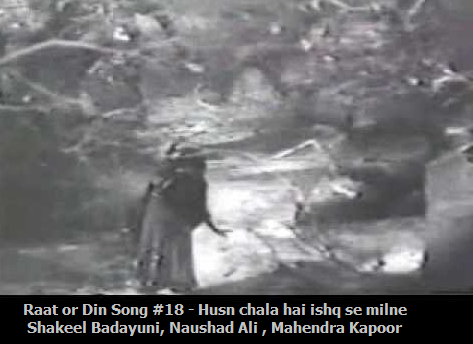
Husn chala hai ishq se milne
Theme-word: In the next line: Chand chhupa aur taare doobe Raat ghazab ki aayi
Remembering Mahendra Kapoor on His Death Anniversary 27 Sep
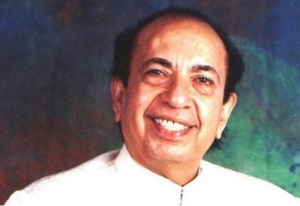 So fond he was of his guru Mohammad Rafi that one day, as related by Annu Kapoor on Mastii channel in a late night show, he was being felicitated on stage for his singing skills. He noticed the son of Mohammad Rafi, his guru, sitting in the audience. He called him on stage, touched his feet, garlanded him and said, “How can I be felicitated in a function that has the presence of the son of my guru?”
Yesterday, some people shared on WhatsApp late SP Balasubramanyam’s video of his washing the feet of his guru Yesudas and a question was asked whether such humility was ever found elsewhere. Okay, I have given an example.
And what about Mohammad Rafi himself? He stood outside the studio of Naushad the whole night once so that the latter would give him the bus fare to go home. Naushad was overwhelmed and said, “You could have just come inside any time rather than waiting the whole night outside.” Shocked, Rafi responded, “How could I disturb you in your work?”
Mahendra Kapoor, of course, has quite a few anecdotes of his humility. He also has quite a few of his songs that are now iconic. Chalo ek baar phir se readily comes to mind. There are many others. This song is his best as far as singing skills are concerned.
Sohni Mehiwal
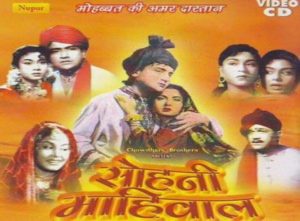 Everyone knows the legend of Sohni Mehiwal, a tragic romance of Punjab and I am not going to repeat it. On this night when Mahendra Kapoor sang this iconic song, she was to take the journey across the river on her clay pitcher that she used every night to meet Mehiwal, her lover. Sohni’s sister-in-law had already discovered the place where Sohni kept the pitcher and replaced it with a kuchcha one so that the love affair would be over once and for all. Sohni undertook the journey and drowned. Mehiwal saw her drowning and jumped into the river himself to save her. The river was in spate and he drowned too and united with her in death.
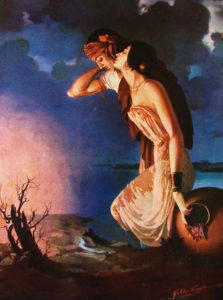 This particular incident is so popular in folk-lore that Shobha Singh of Andretta made his famous painting Sohni Mehiwal (now in Chandigarh Art Museuam). I have a copy of it in Whispering Winds, Kandaghat.
This 1958 film (from where I have taken up this song) was directed by Raja Nawathe and starred Bharat Bhushan and Nimmi as Mehiwal and Sohni.
The Song
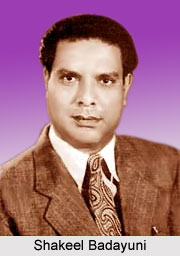 Shakeel Badayuni wrote about Love only (others were all part of Progressive Writers Movement and had Communist leanings) and he seems to have put in his best in this. His mentor Naushad has composed it so well. It was to be high pitch throughout and Naushad must have felt that Mahendra Kapoor’s voice was better suited for it. And indeed it was. Here are the lyrics:
चाँद छुपा और तारे डूबे रात ग़ज़ब की आई
हुस्न चला है इश्क़ से मिलने ज़ुल्म की बदली छाई

टूट पड़ी है आँधी ग़म की, आज पवन है पागल
काँप रही है धरती सारी, चीख रहे हैं बादल
दुनिया के तूफ़ान हज़ारों, हुस्न की इक तनहाई

मौत की नागन आज खड़ी है राह में फन फैलाये
जँगल-जँगल नाच रहे हैं शैतानों के साए
आज ख़ुदा खामोश है जैसे भूल गया हो ख़ुदाई

घोर अँधेरा मुश्किल राहें, कदम-कदम पे धोखे
आज मोहब्बत रुक न सकेगी, चाहे ख़ुदा भी रोके
राह-ए-वफ़ा में पीछे हटना, प्यार की है रुस्वाई

पार नदी के यार का डेरा, आज मिलन है तेरा
ओढ़ ले तू लेहरों की चुनरी बाँध ले मौज का सेहरा
डोले में मँझधार के होगी आज तेरी विदाई

डूब के इन ऊँची लेहरों में नैय्या पार लगा ले
उल्फ़त के तूफ़ान में ज़िन्दा रहते हैं मरने वाले
जीते-जी संसार में किसने प्यार की मंज़िल पायी

तेरे दिल के खून से होगा लाल चेनाब का पानी
दुनिया की तारीख में लिखी जायेगी येह क़ुर्बानी
सोहनी और महिवाल ने अपनी इश्क़ में जान गँवायी

coda : Lata, Rafi
हमारे प्यार के किस्से सुनाये जायेन्गे
येह गीत सारे ज़माने में गाये जायेन्गे
हम न होंगे फ़सान होगा (२)
आने वाले को आना होगा, जाने वाले को जाना होगा
Please enjoy: Husn chala hai ishq se milne…
I hope you liked my choice of Song #18 in Raat or Din series.
Please await Song #19 – Main rickshawala.
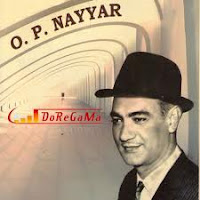 Some of the Hindi movies’ best duets and other songs were composed by him. His songs always ensured the success of movies such as Kashmir Ki Kali and Phir Wohi Dil Laaya Hoon and Phagun.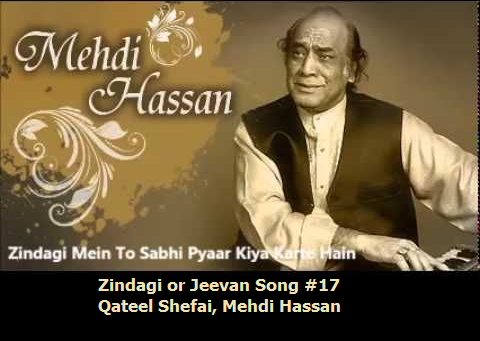
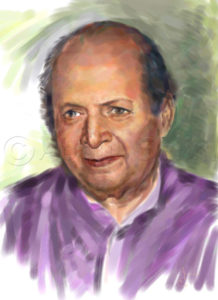
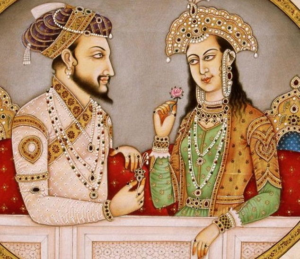 So, lets take the case of Shahjehan who erected Taj Mahal for Mumtaz. In 1607 he was engaged to Anjuman Banu Begum who was later to become Mumtaz Mahal (Chosen one of the Palace). They were only 14 years old when they got engaged and waited five years to get married. So, during this wait Shahjehan married Khandari Begum and got his first daughter through her. Before Mumtaz died, Shajehan married another eight women. So, it was nowhere near single minded devotion depicted poetically.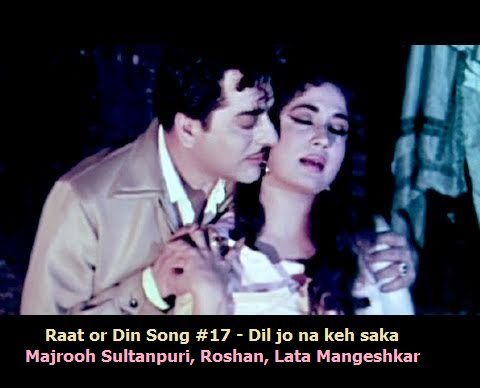
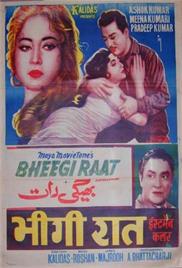 The song is from the 1965 Kalidas movie Bheegi Raat (Imagine having the theme-word in the title itself), which was a remake of the Hollywood movie An Affair To Remember.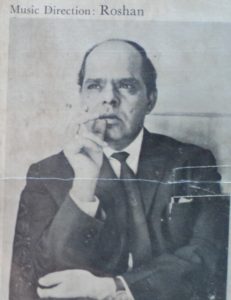
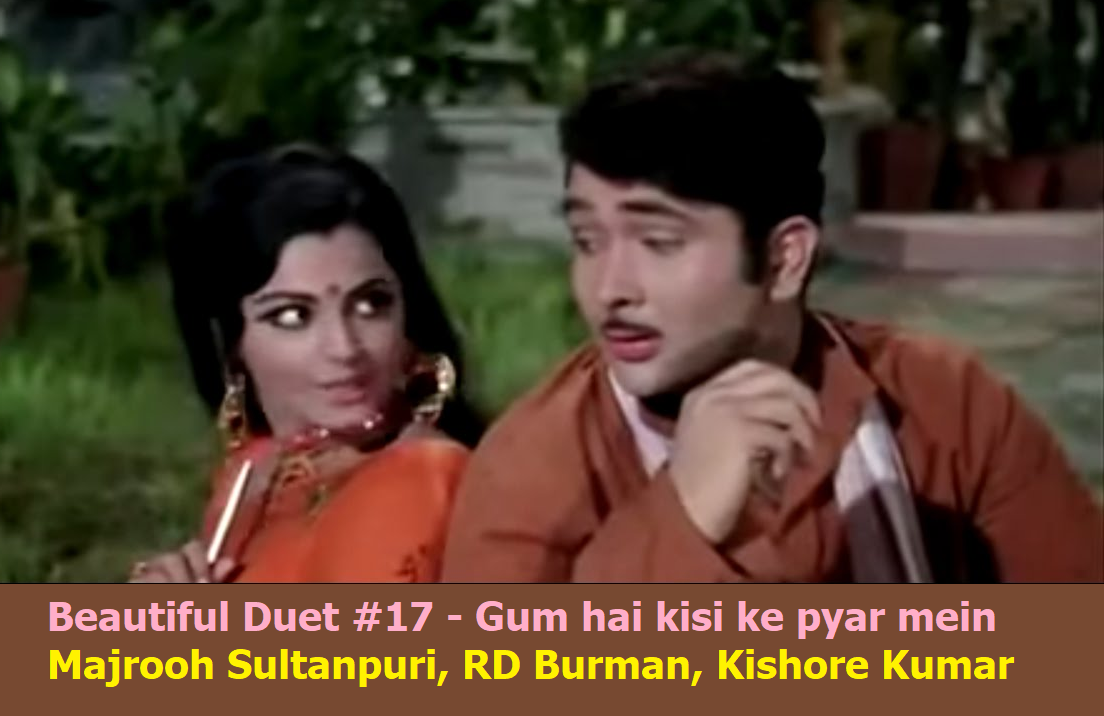
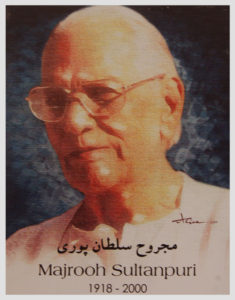 Majrooh was the reluctant lyricist (he never wanted to become one until Jigar Moradabadi coaxed him to). However, in his very first movie Shahenshah, in which AR Kardar and Naushad gave him a break, he came up with such memorable songs that the hero KL Saigal wanted one of these to be sung on his funeral (Jab dil hi toot gaya). No wonder that he became the first lyricist to be conferred with the highest award: Dadasaheb Phalke Award. He became a natural lyricist.
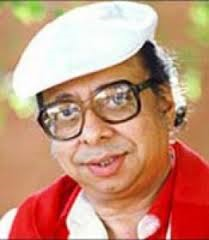 Here he is with RD Burman, the genius music director who gave us some memorable songs in various genre’s including Qawwali in Raag Kalawati in Hum Kisise Kam Nahin, serious songs in Aandhi, and pop songs that he mastered. This duet owes to him to come up with a tune that is still on everyone’s lips nearly five decades after the movie.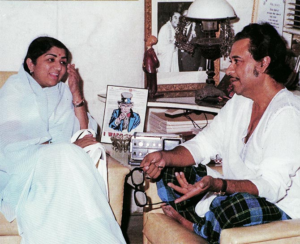
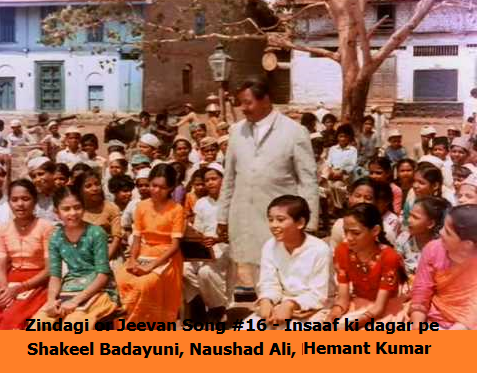
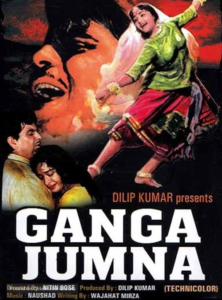 This was overwhelmingly voted as the Best Children’s Song in a poll in 2015. To imagine that the song occurred in the 1961 movie Gunga Jumna! Fifty four years later, it was still voted as the best! That says a lot about this song.
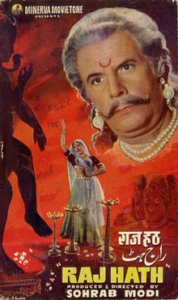
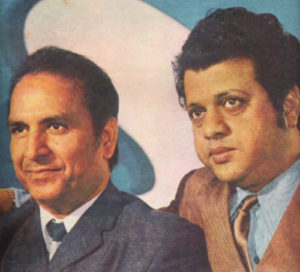 On one hand, Rajhath was all about Shams Lucknowi’s interesting story. On the other hand, in order to carry the story forward, Shankar Jaikishan composed some really memorable songs. The two songs that I mentioned are the best of the movie.
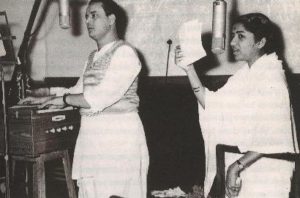 Here, Mukesh and Lata both have sung it well and have proved that they were great duet singers. Chand as a witness was a common theme for lovers and they confided in Chand whilst talking about their Love.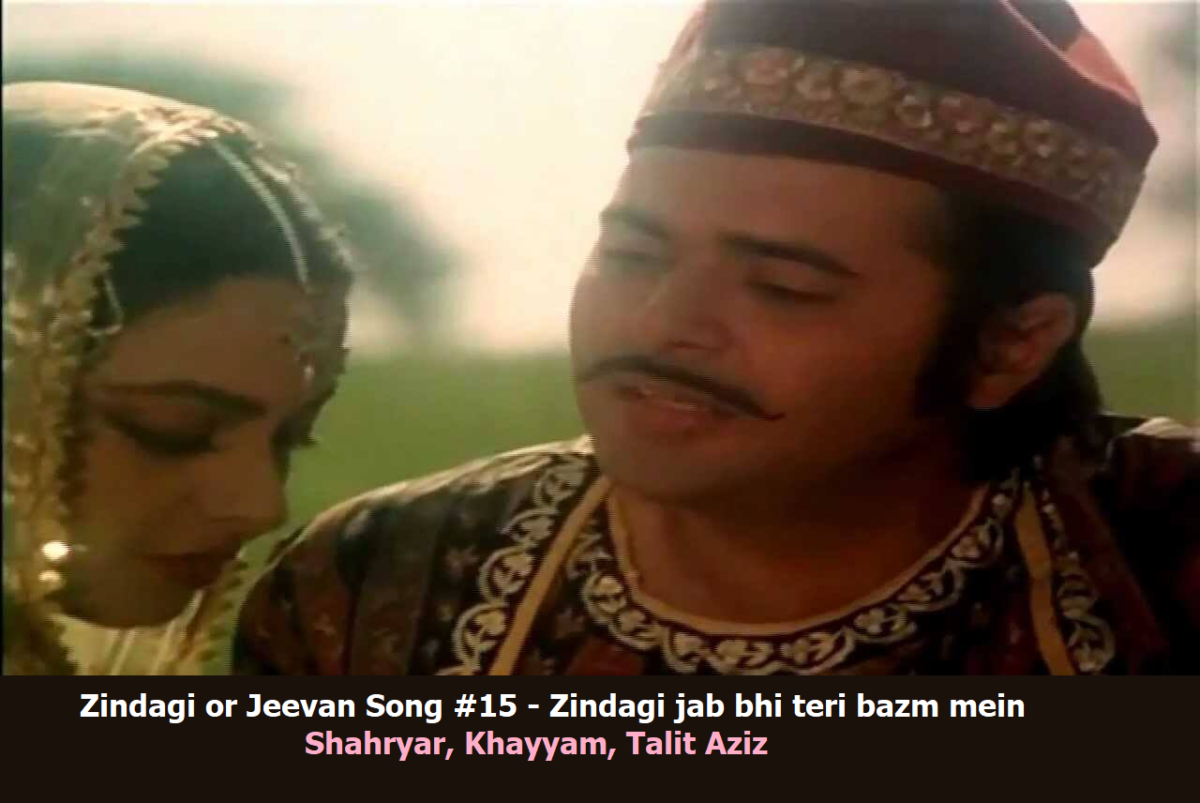
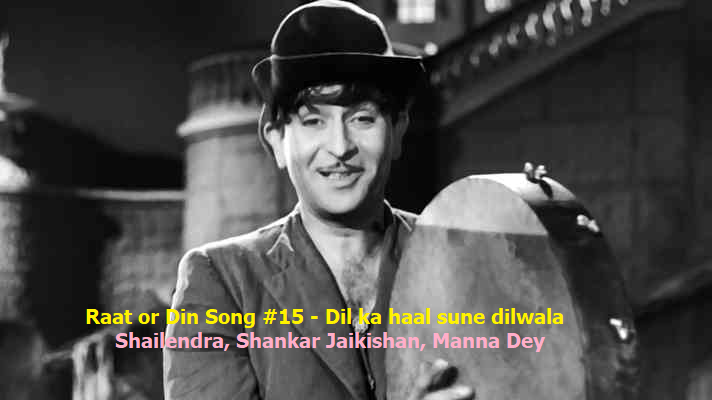
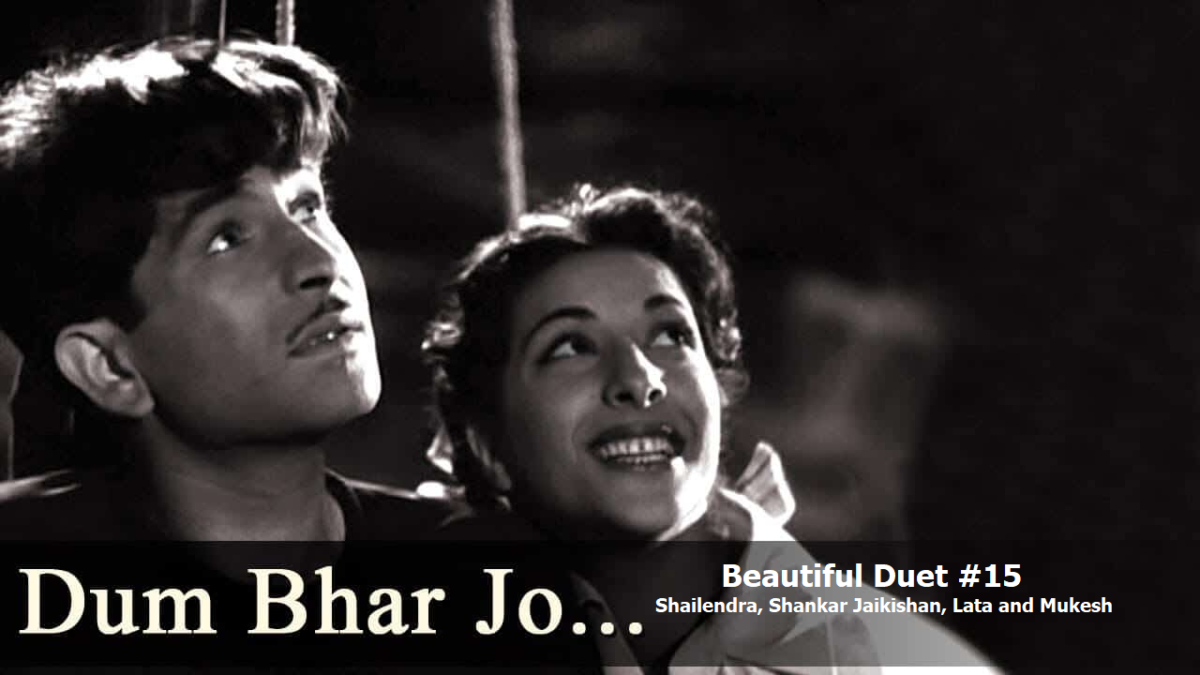
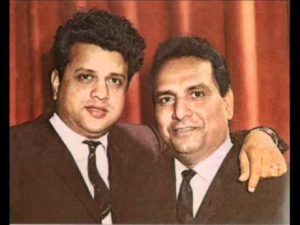 What is it about Shankar Jaikishan that doesn’t let a day go by when we don’t think of their remarkably beautiful music? The fact is that we can go on and on and still not do full justice to their mastery.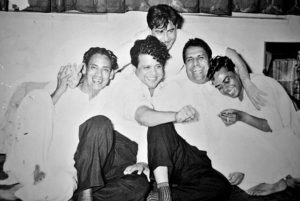
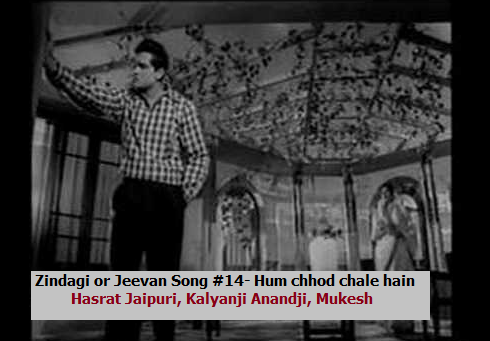
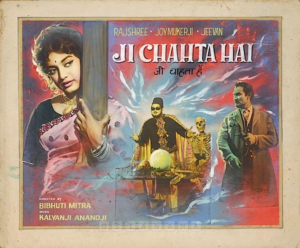
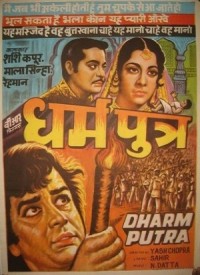 This movie, the 1961 movie Dharmaputra (based on the novel of the same name by Acharya Chatursen), was the debut movie of Shashi Kapoor as adult actor: he plays Dilip Rai. He sings this song to Indrani Mukherjee as Meena but is finally called upon to make peace with Mala Sinha as Husn Bano.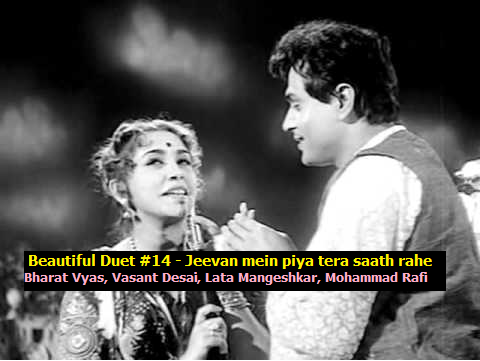
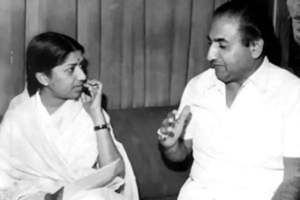 We all want newness and hence, after having enjoyed Lata – Rafi duets during our entire life, we want to sound novel by liking other singers. However, we know that some of the best duets in Hindi movies were sung by them. Somewhere, in the layers of our memory these are lying dormant until someone like me re-evokes them. I had given you, on 07 Sep, for example, their Teri duniya se door chale hoke majboor and most of you agreed that that was a classic.
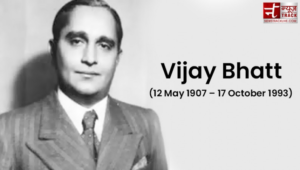 Vijay Bhatt did it once for the 1952 movie Baiju Bawra whose songs are still fondly remembered. He did it again in this movie that had the Bharat Ratna Bismillah Khan playing the Shehnai all throughout in the movie. The 1962 movie Himalaya Ki God Mein and 1965 movie Hariyali Aur Raasta are some other popular movies of his.
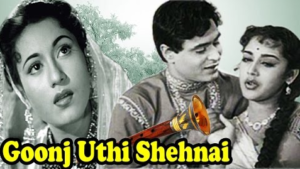 Goonj Uthi Shehnai’s story revolved around Rajendra Kumar as Kishan having learnt Shehnai on his own until Ulhas as Raghunath Maharaj hones his talent by taking him as a disciple when he was a boy. Raghunath’s daughter Ramkali (played by Anita Guha) adores him and dreams of becoming his wife. However, Kishan is so deeply in love with his childhood friend Gopi (played by Ameeta) that Rami (Ramkali) soon takes up the role of Kishan’s mother/sister to facilitate their love. Postman IS Johar as Kanhaiya is the fly in their ointment and gradually succeeds in separating the couple. In the end they die and only their souls meet.
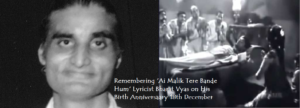 This duo of Lyricist – Music Director have given us some memorable songs; eg, Aye malik tere bande hum in V Shantaram’s classic Do Aankhen Barha Haath. Certainly, some of those cherished songs are in this movie:
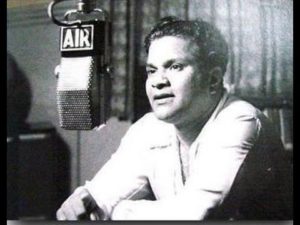 The melodious resolve by the lovers to live, love and die together has been brought out beautifully in the lyrics of Bharat Vyas and extraordinarily beautiful composition by Vasant Desai.