RRR Songs (Songs of Regret, Repentance and Ruefulness)
I started this new series on 17 Jan 21 on my Facebook Group Yaad Kiya Dil Ne. My efforts failed to involve people in writing their own stuff about songs and music rather than copying and pasting from here and there or worse, just sharing url of songs from YouTube. Hence, I had decided to give the group a burial that it deserved rather than making it like thousands of groups on Facebook about songs with nothing unique about them at all.
Hence this series shifted to my page Lyrical.
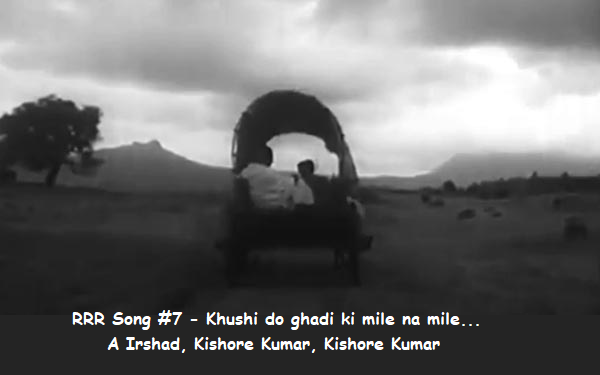
I hope you liked RRR Song #6: Khushi do ghadi ki mile na mile. Here is the next song:
Song #7
Main yeh soch kar us ke dar se utha tha
A Series Close to My Heart
So now you are hooked to the new series? Some of you have written back (thank you for that) that you can’t wait to see what would be the next song.
I plan. I have given you, so far, six songs of Regret, Repentance and Ruefulness whilst on alternate days I have kept up with the Great Lyricists series.
Lets Move Ahead
Mohammad Rafi – the God of Songs
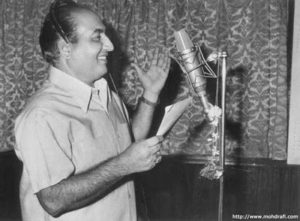 When you actually listen to Mohammad Rafi you are bound to say, for the nth time, that there was no one like him and no one is going to be. He was the god of songs. All of us have our favourites such as Hemant and Mukesh and yet we know, there is no comparison with Rafi. The other day I mentioned that Lata ji (my favourite female singer) was the delight of the composers, especially Shankar Jaikishan. She delivered exactly what was expected of her. Mohammad Rafi was several steps ahead of her in that he showed the composers how much more they could expect from him, every time. When he died, in Bombay, at the age of just 55 years, all composers admitted that they had still not exploited Rafi’s complete capabilities. Achha hai kuchh le jaane se dekar hi kuchh jaana.
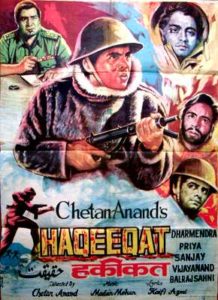 Take this song from Chetan Anand’s 1964 movie Haqeeqat explaining the debacle of 1962 Sino Indian War. Madan Mohan, the best composer ever for songs with pathos and agony, was trying in this song a new concept in that the song was like a free flowing poem, without traditional and recurrent mukhada and antaras. He actually asked Kishore Kumar and Manna De to sing it and then, disappointed, he turned, once again, to Mohammad Rafi.
Why am I in love with this song?
Yes, it is not just because of its outstanding rendition by Rafi. This song is the finest example of Lyrics, Composition, Music and even the scenario (of the war with its frustration and hopelessness) and scenery (of Ladakh), all blending seamlessly into giving us an unforgettable song. You have no idea of what tugs at your emotions more; nor do you care because you are, with the first few notes, transported into another world wherein the silence of your soul converses with you.
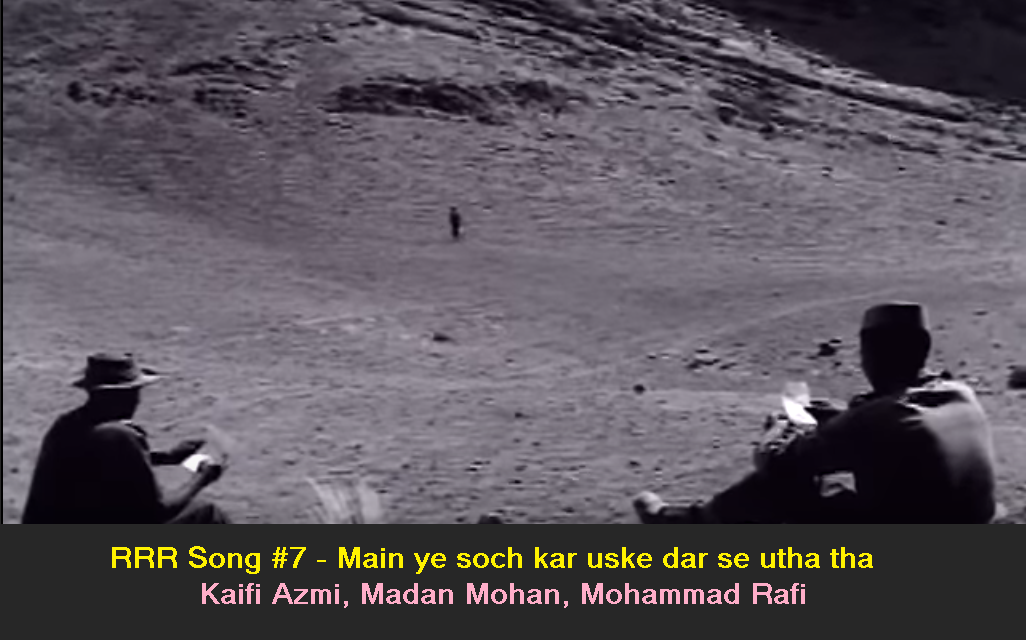
Look at this scene at the beginning of the song: the others have got their letters and Ram Singh hasn’t. And, in the deadly silence of the place, he seeks still more silent and isolated place whereat he can converse with himself (this still comes to you courtesy Sunbyanyname).
Kaifi Azmi
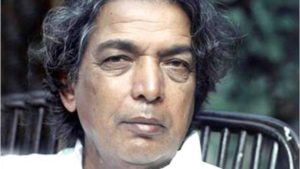 Of all the lyricists that I know of, Kaifi Azmi mastered the art of giving vent to the most intense and most powerful emotions through simplest words. One author who did that is my favourite: Ernest Hemingway. Likewise, taste this from Kaifi in Hanste Zakhm:
Dil ki naazuk ragen toot ti hain,
Yaad itna bhi koi na aaye,
Aaj socha to aansu bhar aaye….
These are, as I am fond of saying, raw emotions hanging from hooks of poignancy.
It is the same with this song. You know the background of the song and yet I am repeating it. Mail is received in that war sector and once again this jawan Ram Singh (played by debutant Sudhir who was later reduced to doing small villainous roles) hasn’t received a letter from his beloved. It is not just that he lost a bet with another jawan, he has come a cropper in his wager with life itself. Kaifi Azmi, Madan Mohan, Mohammad Rafi, and Chetan Anand had to now have a song that would rise from an individual situation to the general helplessness of a war that takes one as far as possible from normal human desires and longings. And, they did it so well.
The hopelessness of war as depicted in Haqeeqat
Please enjoy: Main yeh soch kar usake dar se utha tha ke woh roke legi mana legi mujhako…..
मैं ये सोचकर उसके दर से उठा था
के वो रोक लेगी मना लेगी मुझको
हवाओं में लहराता आता था दामन
के दामन पकड़कर बिठा लेगी मुझको
कदम ऐसे अंदाज़ से उठ रहे थे
के आवाज़ देकर बुला लेगी मुझको
मगर उसने रोका
न उसने मनाया
न दामन ही पकड़ा
न मुझको बिठाया
न आवाज़ ही दी
न वापस बुलाया
मैं आहिस्ता आहिस्ता बढ़ता ही आया
यहाँ तक के उससे जुदा हो गया मैं …
By this time, you would be convinced that in this song, we witnessed something extraordinary that the team of Chetan Anand’s 1964 movie Haqeeqat essayed to give to us. As with some of the other songs in the movie, notably Hoke majbuur mujhe usane bhualaya hoga, and Kar chale ham fida jaan-o-tan saathiyo, ab tumhaare hawaale watan saathiyo, this song leaves a lasting impact on one’s mind and heart. I have goosebumps every time I listen to it.
I hope you liked Song #7 in this series.
Please await Song #8: Jaane kahan gaye woh din.
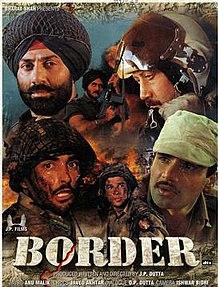 Films regarding patriotism and valour of the armed forces makes the makers laugh all the way to the bank. Being a member of the armed forces, seeing some of them, I too get carried away that perhaps they really feel for the brave jawans. Far from it.
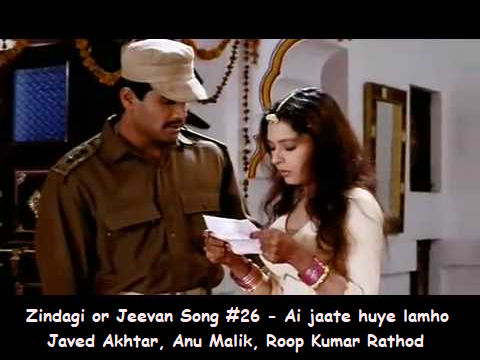
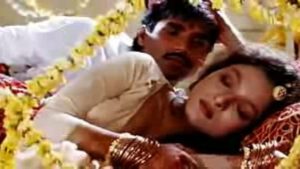 One of the clichés for war time movies is that on the honeymoon night (the focus of Hindi movies is always love) a telegram is received calling him to border. Somehow, wherever the loving couple is, the men from his unit find him to deliver the telegram (thank God that the Indian Postal authorities have now done away with the telegram and Hindi film makers will have to find some other way of appearing the poor guy consummating his wedding).
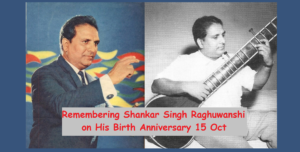 So strong was the bonding between Shankar Singh Raghuwanshi and Jaikishan Dayabhai Panchal that they were never addressed singly; they were always known as Shankar Jaikishan. Jaikishan was seven years younger to Shankar and died 16 years earlier and yet the Music Director’s name continued being Shankar Jaikishan.
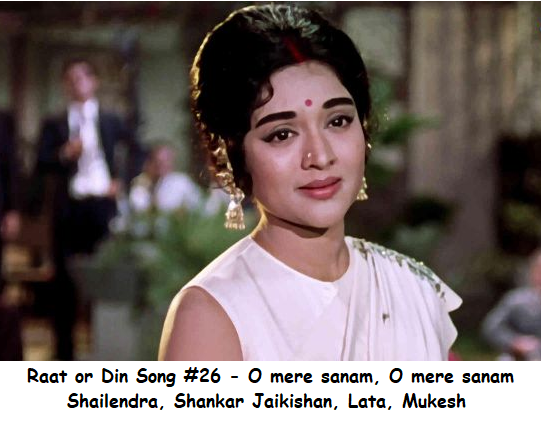
 Raag Shivaranjani is a Raag that belongs to Kafi Thaat. The mood of the raag is Karuna Rasa (pathos) that suited both Shakeel and Ravi very well. However, the MDs who had this as their favourite (both of them as opposed to Bhairavi that was favourite of Jaikishan only) were Shankar Jaikishan. Some of their popular numbers in this Raag are: Awaaz deke hamen tum bulao, Baharon phool barsao, Dil ke jharokhe mein tujhako bithakar, Jaane kahan gaye woh din, and O mere sanam.
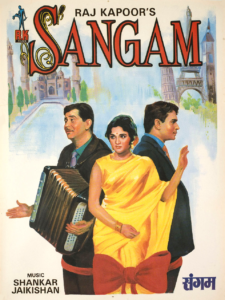 The main thing is Karuna ras. It is, as seen by me, the best song of the 1964 Raj Kapoor movie Sangam that portrayed a Love Traingle between Rajendra Kumar, Vyjaynthimala and Raj Kapoor. She used to love Rajendra Kumar and vice versa. However, Raj Kapoor swept her off her feet and so compulsive and obsessive was his love (Bol Radha bol sangam hoga ke nahin? and O mehbooba) that she married him.
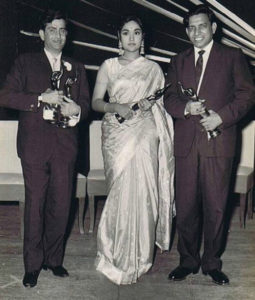
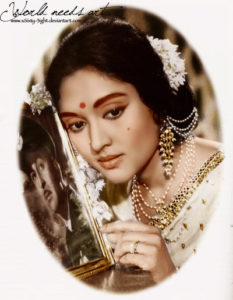 Hats off to Raj Kapoor for having made a movie wherein, like Bimal Roy’s Madhumati, Vyjayanthimala is the main protagonist of the movie. Here, in the end, she rues being tossed about between the two bosom pals: Rajendra Kumar and Raj Kapoor.
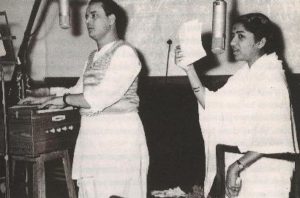 I could have given this song also in the Beautiful Duets series but that’s not my style. Lata sang for Vyjanthimala and Mukesh has always been the singing voice of Raj Kapoor in his movies.
 Santosh Anand started his career as Lyricist with Purab Aur Paschim in the year 1970. That movie was, of course, produced and directed by Manoj Kumar. This song of the 1972 movie Shor, also produced and directed by Manoj Kumar, has been his most popular song. It was composed by Laxmikant Pyarelal and made full use of violin, the first instrument that Pyarelal learnt from his Goan guru Antony Gonsalves (Pyarelal paid him tribute by having a song on him in Amar Akbar Antony). Santosh Anand received two Filmfare Awards since then: the 1974 one for Roti Kapada Aur Makaan song Main na bhoolunga and 1982 one for Prem Rog song Mohabbat hai kya cheez.
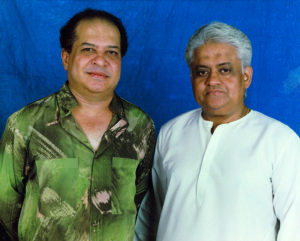 Both the songs for which he received Filmfare Awards were composed by Laxmikant Pyarelal.
 Door Ka Rahi that he made seven years later, in 1971, was also written, produced and directed by him, starred him and his son Amit (besides his elder brother Ashok Kumar and his daughter in the movie Tanuja). He was also the music director of the movie and composed and sang most of the songs:
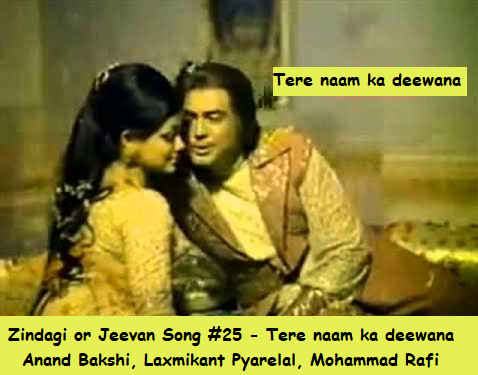
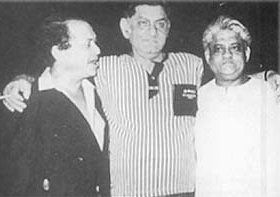 They paired together in a record 302 movies. One would thing that quantity was at the expense of quality. Amazingly, they continued having quality and popularity of their songs. They came together for the 1964 movie Mr X In Bombay with that great Kishore Kumar song: Mere mehboob qayamat hogi. Their last movie together was the 1992 movie Aashiq Awara. In these 29 years, Anand Bakshi wrote 1680 songs for them. That makes it nearly 58 songs per year and nearly 5 songs per month!
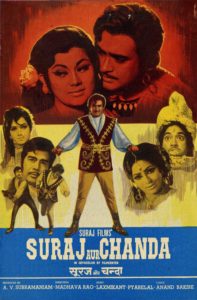
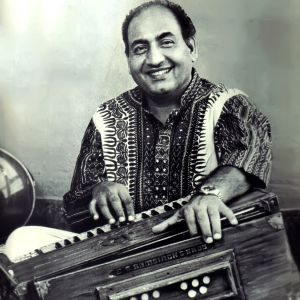 Mohammad Rafi sang some really beautiful songs for Laxmikant Pyarelal starting with their first movie together: Parasmani (Woh jab yaad aaye bahut yaad aaye) and followed by Dosti (Chahunga main tujhe saanjh savere.
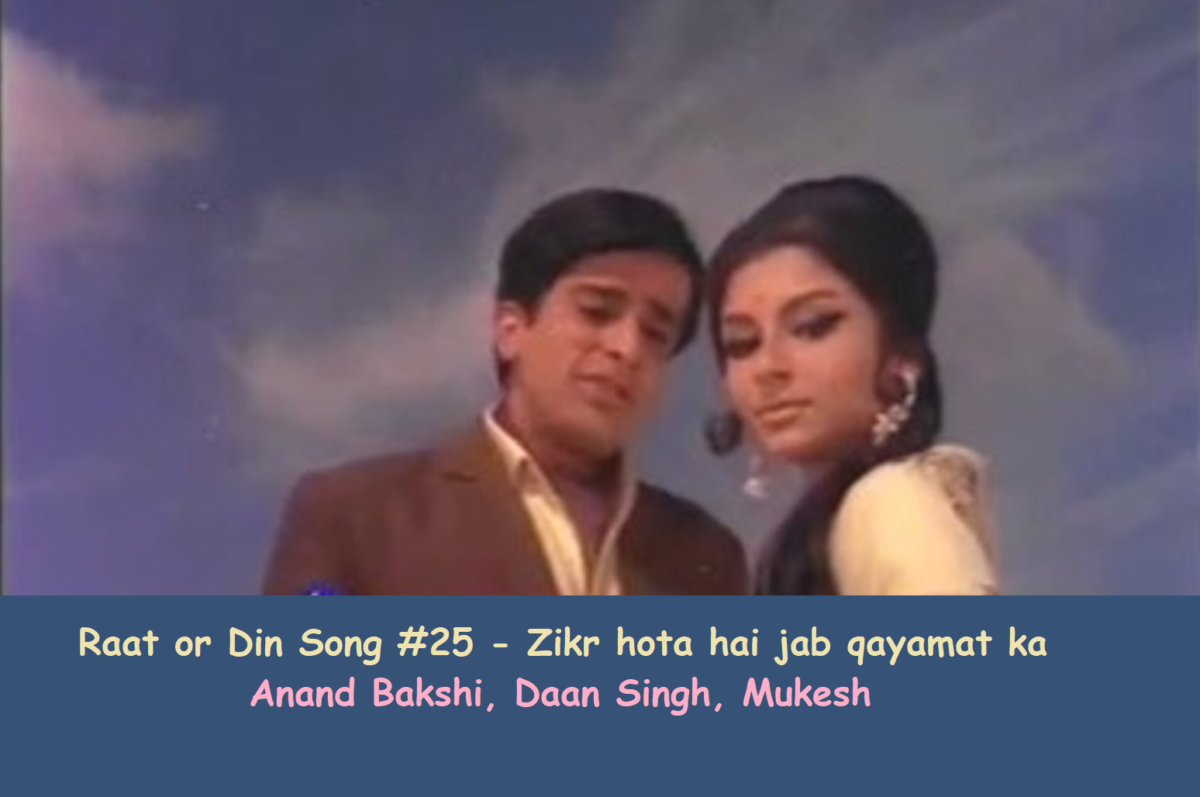
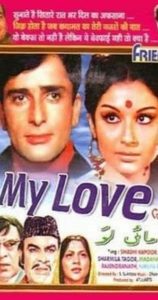 This song is from the 1970 S Sukhdev movie My Love starring Shashi Kapoor and Sharmila Tagore. It was penned by Anand Bakshi, composed by Daan Singh, sung by Mukesh and enacted by Shashi and Sharmila.
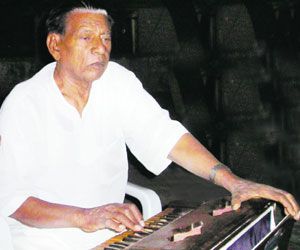 Daan Singh was born five years after Hasrat in Jaipur. He was from a musical family; his father was a Khayal singer. He was trained by no less a musician as Khemchand Prakash. And yet except for this movie songs and a handful of other movies, he never emerged big. This movie was his pinnacle with this song and Woh tere pyar ka gham.
 These songs are the genre’ of Mukesh and yet I feel he didn’t give his best in this; it somehow falls short of his usual sterling singing.
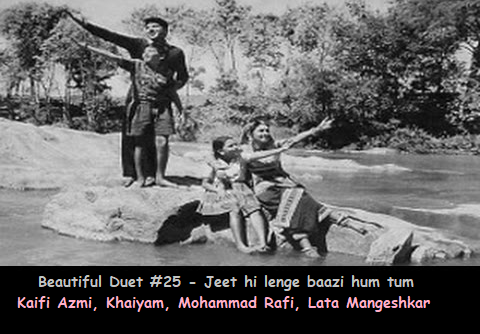
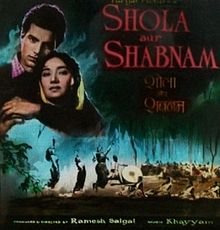 This is the main song of the 1961 Ramesh Sehgal movie Shola Aur Shabnam starring Dharmendra, Tarla Mehta and M Rajan as a triangle. Dharmendra and Tarla were childhood lovers. Dharmendra plays Ravi in the movie! Tarla is Sandhya (By herself, absence of Ravi or Sun). They separate.
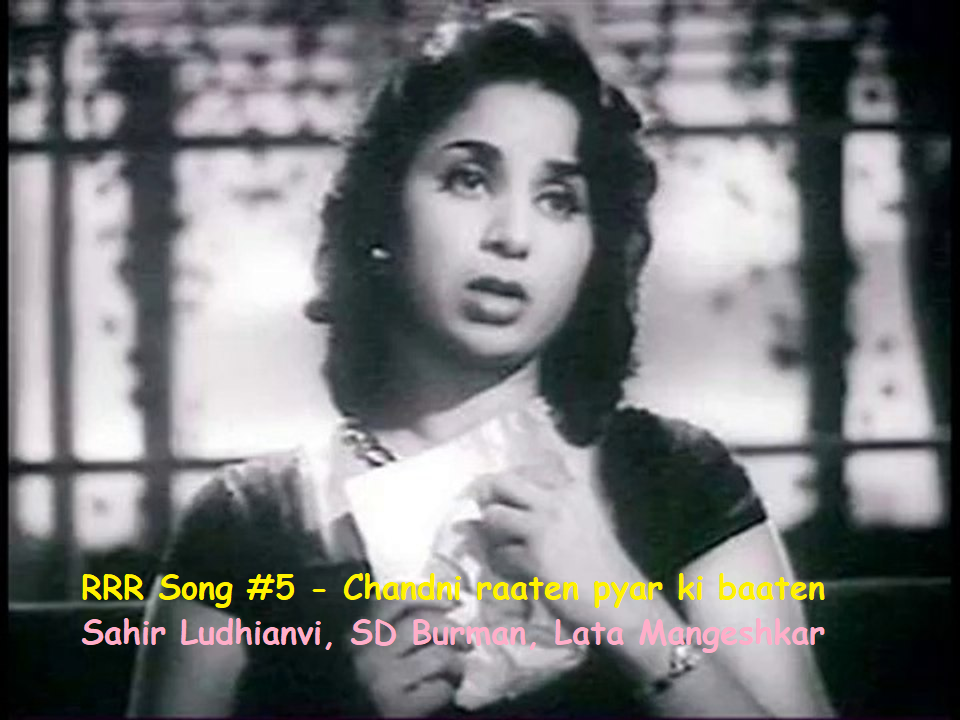
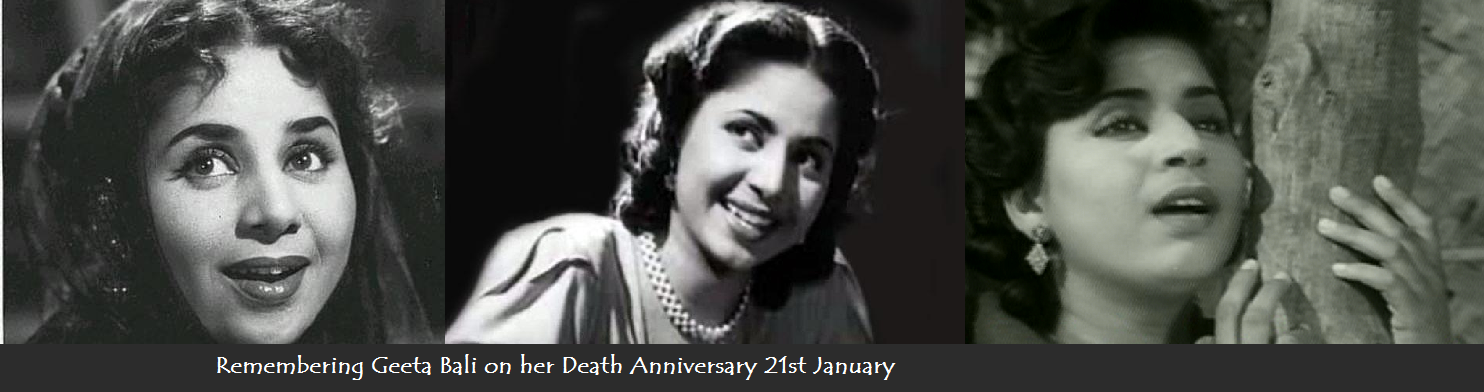 She died at the age of 35 years only. She had acted in about 70 movies in about ten years of her career as heroine that started with the 1946 (she was 16 years old then) movie Badnaami.
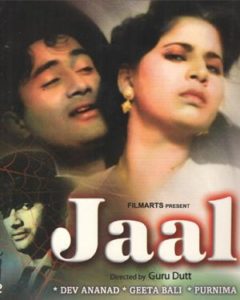 This was one of her best roles and the movie has got the most beautiful song of Sahir Ludhianvi on the composition of SD Burman in Raag Kafi: Ye raat ye chandni phir kahan.
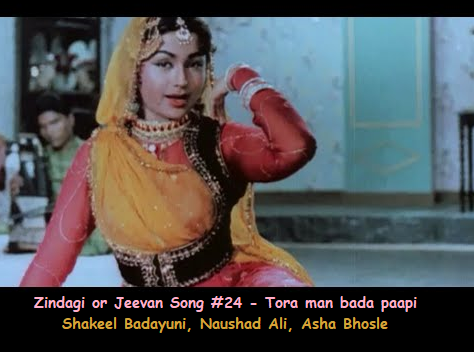
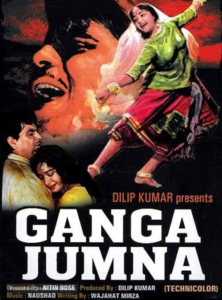 Finally, now with the Best Lyricist: Shakeel Badayuni and that also from Dilip Kumar’s own production Gunga Jumna that set a new standard for the hero. Many have copied this role of Dilip Kumar; one of them being Amitabh Bachchan by his own admission.
 SBG, most of you already know, went one step further. It made relationships stand on their head; as per SBG, the only correct relationship is that of Love (since Radha was not even married to Krishna in the worldly sense). Her devotion for Him ensures that Her name is taken even before His; you always call them Radhe Krishan and never Krishan Radhe!
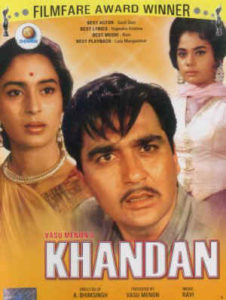 The movie was directed by A Bhimsingh who directed predominantly Tamil movies especially for AVM Productions. This movie was remake of Tamil movie Bhaaga Privinai starring Sivaji Ganesan.
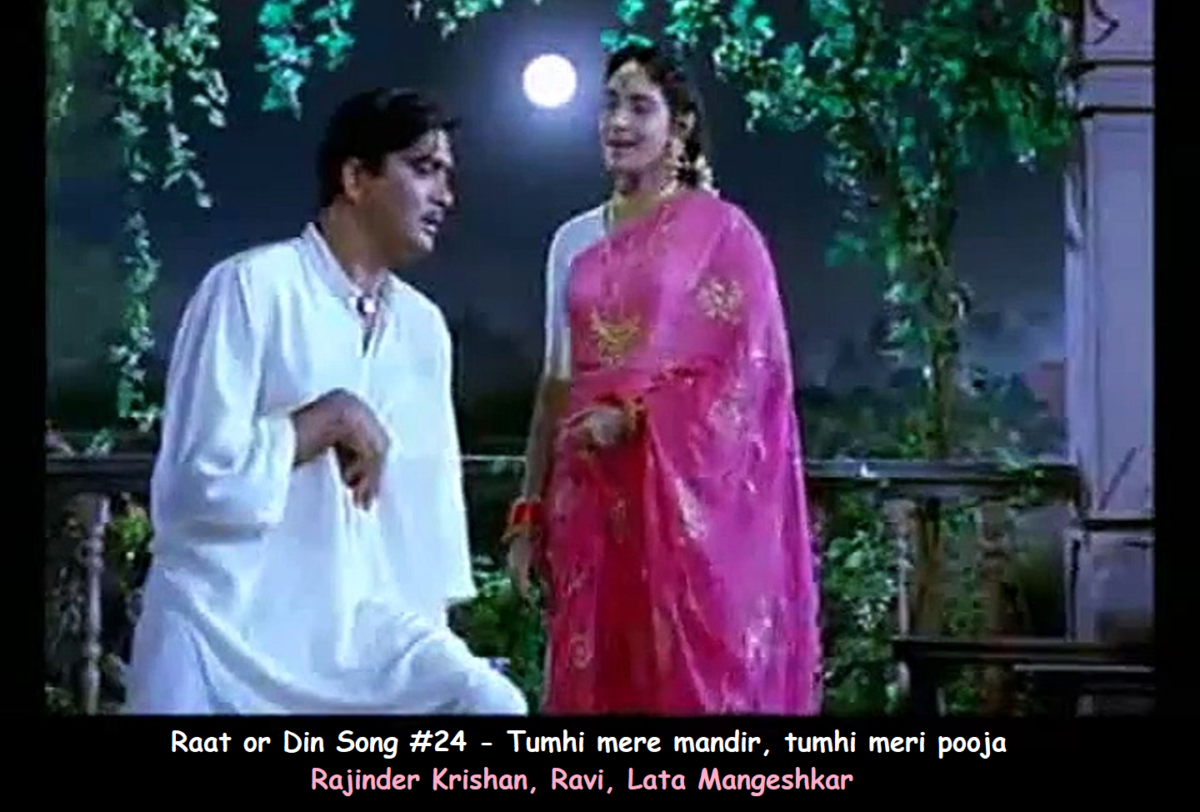
 Of course, Ravi composed this song so well that as soon as it was played people wanted to listen to it again and again. Lata’s singing is simply beautiful.
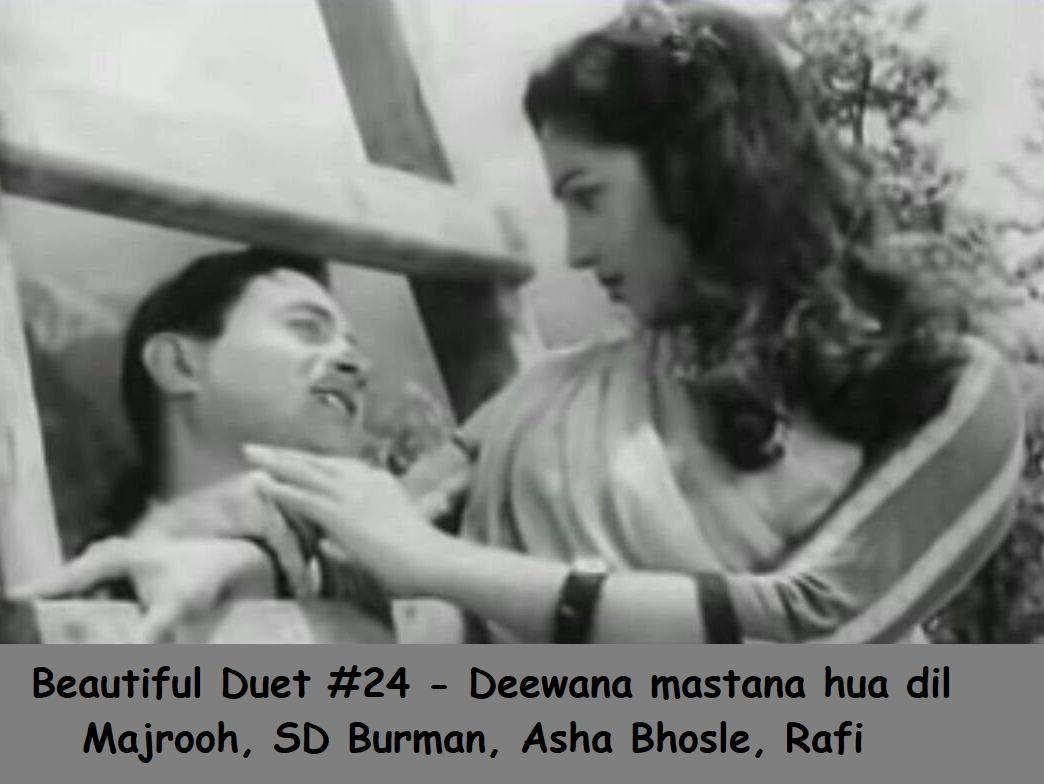
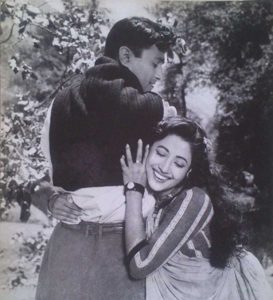 Dev Anand always had beautiful chemistry with his heroines. Here in this movie Bambai Ka Babu he is with Suchitra Sen. He loves her but, since he has accepted to feign as the lost son of a rich man, she happens to be his sister!
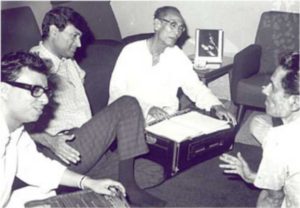 SD Burman composed many songs that appeared to be in raaga but came very close to the raagas only.
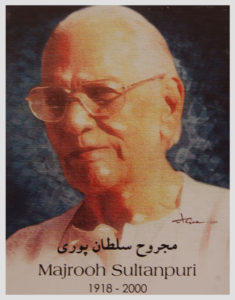 This was a 1960 movie; three years after Sahir broke up with SD Burman and hence Majrooh was very much in the saddle
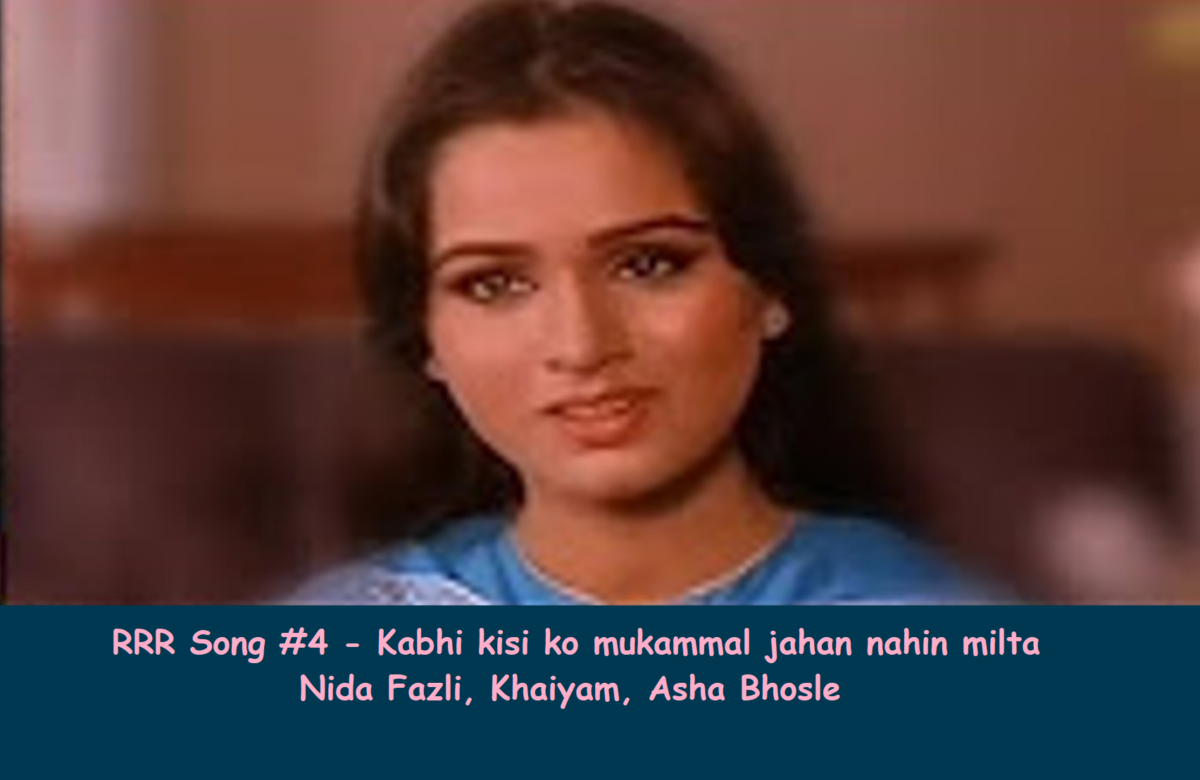
 However, in this song, Nida Fazli and the gentlest of composers Khayyam, have made it look like that it is sad and soulful.
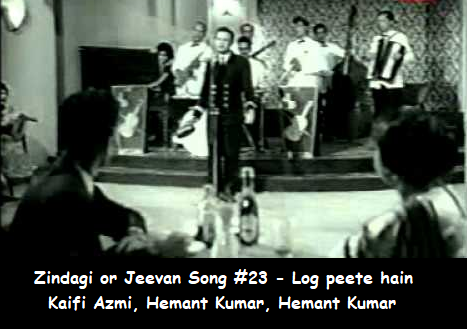
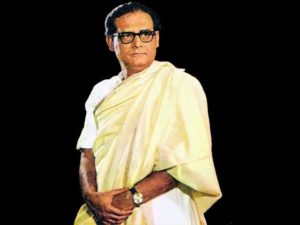 The other day (22 Nov to be exact) whilst giving you a song: Beqraar karke hamen youn na jayiye (Zindagi ki raahen ajeeb hain) in this series, I had brought out how well Hemant Kumar sang on his compositions. Beqraar karke is one. Jab jaag uthe armaan is another. These are both penned by Shakeel. However, even with Kaifi Azmi, he created similar magic, eg, Ye nayan dare dare.
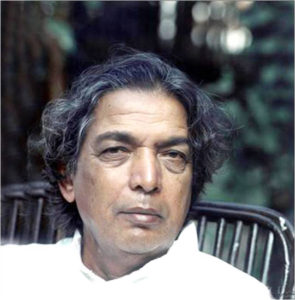 You have to give it to Kaifi for one unique attribute he had, which is, that he was able to bring out the strongest emotions through minimum words. Take Ye nayan dare dare, for example:
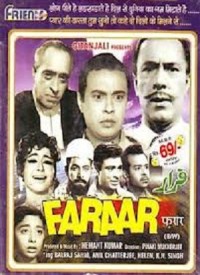 It was a Pinaki Bhushan Mukherjee movie and hence he took Anil Chatterjee as a hero as merchant navy officer Shankar Choudhry. One night whilst returning home from club he brings home an injured man Shekhar (Jagdev) to be seen by his dad, a doctor. He also informs Neela his sister who falls in love with this man. When Shekhar recovers, Shankar notices a change in his sister Neela. And then Shekhar is shot and the story becomes a murder mystery.