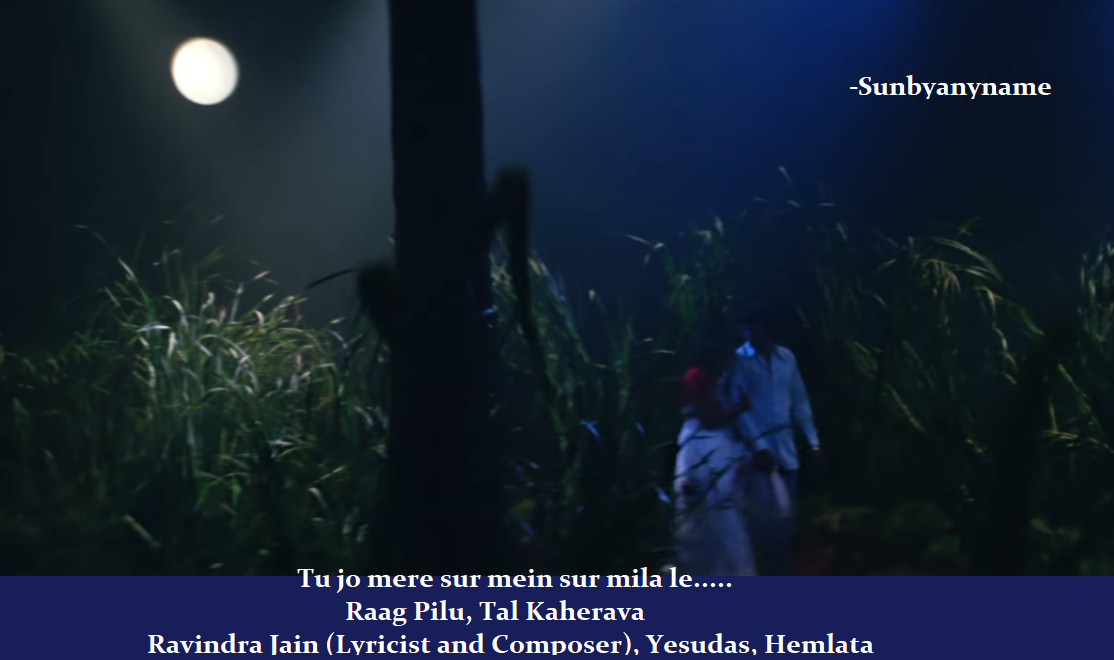
I started this series on my Facebook group Yaad Kiya Dil Ne on 23 Aug 20. Since then, many other members have put up these songs. Here, I shall be giving you one of my own, per day.
Last time, I gave you Beautiful Duet #32 – Ishaaron ishaaron mein. So here, then, is the next one:
Song #33
Tu jo mere sur mein sur mila le
Sorry, Again, for the Lateness of Hour
In the Raat or Din post of today: Dil ka haal sune dilwala, I had brought out the inability of Evani Leela to put up the songs today and hence at the last minute I came in. When I finished writing the post (no it wasn’t a copy of the previous post) I glanced at my tote and found that I had already posted it earlier on 21 Sep and the word Repeat was added.
This one is not a repeat, though.
Raag and Tal
It is in Raag Pilu and Tal Kaherava.
Raag Pilu belongs to the Kafi thaat. Its Jati is Audhav – Sampoorna, which means it is pentatonic (five notes or swar) in Aaroha (ascending) and heptatonic (all seven notes or sawr) in Avroha (descending). The swar that are vrajay (missing) in Aaroha are Re (Rishab) and Dha (Dhaivat). The dominant note (Vadi) is Dhaivat that lends to this raaga a light and tranquil touch. The raaga is full of devotion and piety and as both Amol Palekar and Zarina Wahab lip-sync it you can notice these in the eyes and mannerisms of the protagonists. The raag is well suited for the third prahar of the day; that is, early evening and that’s precisely when it is played in the movie too.
Chitchor – 1976 Movie
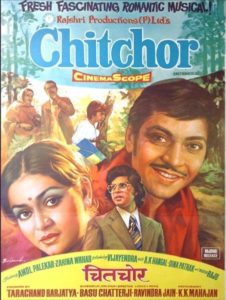 This song is from the 1976 Basu Chatterjee movie Chitchor starring Amol Palekar, Zarina Wahab and Vijayendra. The film is a Rajshri Productions film produced by Tarachand Barjatya. It is based on a Bengali story, Chittachakor by Subodh Ghosh.
Lets understand the story-line to see where the song fits in the movie:
Geeta’s (Zarina Wahab) Mumbai based sister Meera sends a letter to Geeta’s father Pitamber (AK Hangal) that an engineer would be arriving at their village and he is a possible match for Geeta. The family dutifully receives Vinod (Amol Palekar) at the railway station. He takes an instant liking to the family, especially Geeta and even tries to teach her music and singing. The two fall in love. All seems to be going well until another letter is received from Meera informing the family that the engineer Sunil (Vijayendra) was earlier delayed and would be arriving soon. Vinod (Amol Palekar) was merely the overseer.
He was nevertheless the Heart-stealer (Chitchor) for the naive village belle Geeta. There is a happy ending for the two.
The song is lip-synced by Amol Palekar and Zarina Wahab when Vijayendra arrives from Mumbai and the family is in the process of telling Zarina Wahab to switch her attention from Amol Palekar to Vijayendra.
The Lyricist and Composer
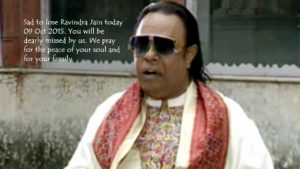 The lyricist of the song was Ravindra Jain and he composed the song too.
Ravindra Jain was born on 28 Feb 1944 in Aligarh. He was born blind to Sanskrit scholar and Ayurvedacharya, Pandit Indramani Jain and mother Kiran Jain.
He started singing at a very early age singing bhajans. His parents gave him music training fairly early. Ravindra Jain received basic training under Pandit GL Jain, Pandit Janardhan Sharma, and Pandit Nathu Ram. His entry into the films world was at the age of 16 in Calcutta. Ten years later he moved to Bombay wherein he made his debut as a composer for Prathibhushan Bhattacharya’s movie Kranthi. In 1972 he became a full fledged Music Director when Mohammad Rafi recorded a song composed by him that was never released.
Jain progressed his career in the early 1970s, composing for films such as Saudagar (1973 film), Chor Machaye Shor (1974), Geet Gaata Chal (1975), Chitchor (1976), Dulhan Wahi Jo Piya Man Bhaaye (1977), Paheli (1977) and Ankhiyon Ke Jharokhon Se (1978) and Nadiya ke paar (1982). Along with composing music, he also wrote the lyrics for many of his songs. Ravindra Jain’s father died during the recording sessions of the film Saudagar. However, Jain did not leave the studio until the recordings were finalised giving utmost importance to his work.
As far as his association with Yesudas is concerned, Jain is credited for bringing this great South Indian vocalist to Hindi movies, in singing in many of his movies in the 1970s and 1980s.
It is said that Jain was so enthralled by Yesudas’s voice, if he ever received his vision, Yesudas would be the first person he would want to see. Jain has worked on songs after his liaison with Yesudas, but he has failed to attain the pinnacle of glory he achieved with the master singer during the 1970s. Jain has described Yesudas as the ‘Voice of India’.
The Singers – Yesudas and Hemlata
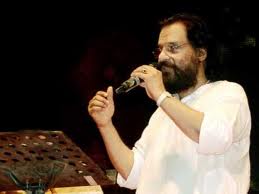
Kattassery Joseph Yesudas was born on 10th January 1940 in Fort Kochi (Kerala) in a Latin-rite Roman Catholic Christian family to late Augustine Joseph and late Elizabeth Joseph. His father, a well-known Malayalam classical musician and stage actor, was his first guru (teacher). Yesudas recorded his first popular song Jaathi Bhedam Matha Dwesham (music: MB Sreenivasan) on 14th November 1961. He got a break in Hindi movies with the 1971 movie Jai Jawan Jai Kisan. Therefore, in 2011 Yesudas completed 50 years as a playback singer. However, it was the 1976 Basu Chatterjee movie, with songs composed by Salil Chowdhury that really made him popular. The song he sang in the movie was: Jaaneman jaaneman tere do nayan. Yesudas has recorded over 70,000 songs and has won scores of accolades including the coveted Padma Shri (1975), Padma Bhushan (2002), Padma Vibhushan (2017) and a record seven National Awards for Best Playback Singer. On 2 Oct 2014, Yesudas sparked a row while speaking at a public function on the occasion of Gandhi Jayanthi, where he stated that “Women should not wear jeans and trouble others. You should dress modestly and do not behave like men”. This resulted in a number of protests from Women’s Rights and Political organizations, who asked him to withdraw the comment, which he never did.
Some of the popular songs of Ravindra Jain that have been sung by Yesudas are: Aaj se pehle, Gori tera gaanv badha pyara and Jab deep jale aana (Chitchor, 1976); Shikari raja aaye re and Utho he laal (Safed Haathi; 1977); Khushiyan hi khushiyan ho daaman mein jiske (Dulhan Wahi Jo Piya Man Bhaaye, 1977); Laal gulabi phool se bhari (Hamra Sansaar, 1978); Sabko chhuti mili mujhako mili kyun nahin and Tere honthon ke pyaale se jo chhalke (Mera Rakshak, 1978); Sunayana aaj in nazaron ko tum dekho and Aansu bhi hain khushiyan bhi hain (Sunayana, 1979); O goriyaa re, Oonchi neechi lehron ke kandhon par and Teara kuchh khoya ho to dhoond de (Naiyya, 1979); Neer bharan ka karke bahana (Gopal Krishna, 1979); Kaun hai aisa jise phoolon se (Raadha Aur Seeta, 1979); Ai mere udaas man and Ik but se mohabbat karke (Maan Abimaan, 1980); Sun sun gaon ki gori (Sasural, 1984); and Saambh sada shiv (Abodh, 1984).
The female singer of this song is Hemlata. Whilst Yesudas won the National Award for this song, she won the Filmfare Award for it (she has won five such awards so far). Having been born on 16 Aug 1954 in Hyderabad, when she was only 12 years old her family moved to Bombay. She had early influence by Ustad Allarakha and Ustad Rais Khan; the latter taught her ghazals. But, the one person who really took her up as a singer in the movies was Naushad Ali (is there no end to how many artistes Naushad helped become good and great including the playback singer Mukesh?) Later, she worked with Roshan and Khaiyyam.
Her association with Ravindra Jain was the most lasting. He used her voice for his debut movie in 1972: Kaanch Aur Heera. She thereafter sang in many of his movies such as Raakh Aur Chingari (1974), Geeta Gaata Chal (1975), Salakhen (1975), Tapasaya (1975), and Fakira (1976). Her singing for him in Akhiyon Ke Jharokhon Se made her very popular.
The Beautiful Duet
Ladies and gentlemen, please enjoy the beautiful duet: Tu jo mere sur mein sur mila le…
ये: तू जो मेरे सुर में -२
सुर मिला ले, संग गा ले
तो ज़िंदगी हो जाए सफ़ल
हे: तू जो मेरे मन का -२
घर बना ले, मन लगा ले
तो बंदगी हो जाए सफ़ल
दोनों: तू जो मेरे सुर में
ये: चाँदनी रातों में, हाथ लिए हाथों में
हे: चाँदनी रातों में, हाथ लिए हाथों में
दोनों: डूबे रहें एक दूसरे की, रस भरी बातों में
ये: तू जो मेरे संग में -२
मुस्कुरा ले, गुनगुना ले
तो ज़िंदगी हो जाए सफ़ल
हे: तू जो मेरे मन का…
दोनों: तू जो मेरे सुर में…
हे: क्यों हम बहारों से, खुशियाँ उधार लें
ये: क्यों हम बहारों से, खुशियाँ उधार लें
दोनों: क्यों न मिलके हम खुद ही अपना जीवन सुधार लें
हे: तू जो मेरे पथ में -२
दीप गा ले ओ उजाले
तो बंदगी हो जाए सफ़ल
ये: तू जो मेरे सुर में -२
सुर मिला ले, संग गा ले
तो ज़िंदगी हो जाए सफ़ल
I hope you liked my choice of Beautiful Duet #33.
Please await Beautiful Duet #34- Usko nahin dekha hamne kabhi.
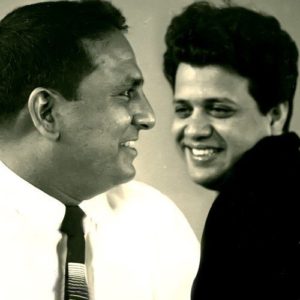 Years before I met my “die-hard fans of Shankar Jaikishan” of SJMF: Anand Desai, Chirag Patel, Uday Joglekar, Rajan Bedke and others, I had done a 45 days feature of these “composers of the millennium”. However, so intense and huge is the contribution of SJMF that every-time one puts up a song of SJ, one bows one’s head to SJMF.
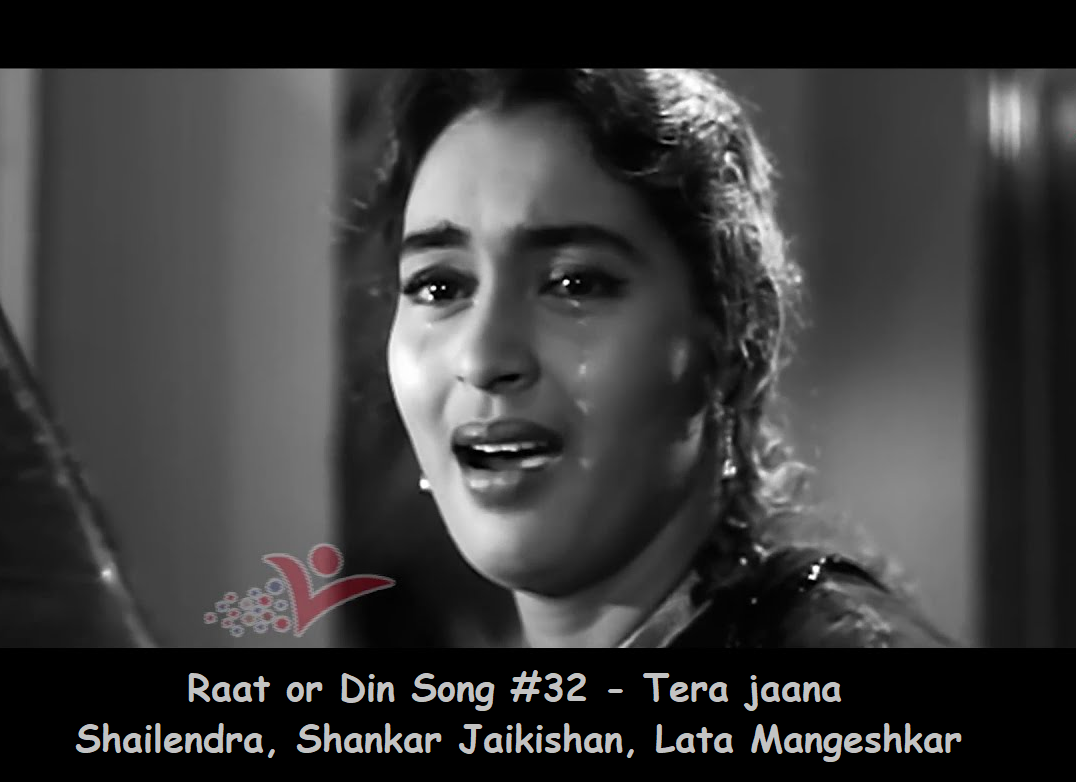
 I freak out on this song as one of the best compositions of my favourite duo: Shankar Jaikishan. Every movie of theirs had a song composed in the queen of ragas: Bhairavi, the raga most suited to express devotion. There were movies in which as many as four songs were composed by the duo in this raga. Jaikishan named his daughter Bhairavi because of his devotion to this devotional raga.
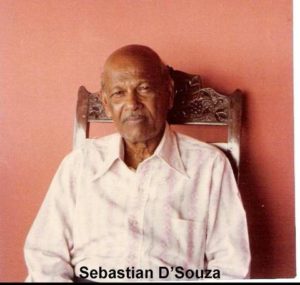 The guy who did it for Shankar Jaikishan to provide us with this memorable song arrangement was a Goan music arranger by the name of Sebastian D’Souza. If you notice a quality of music in Shankar Jaikishan songs wherein the music is not apologetically in the background but stand out as much as the lyrics and the voice, then it is thanks to Sebastian.
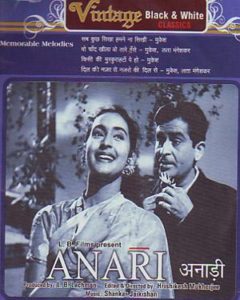 Shankar Jaikishan were a total musical experience that seamlessly fitted into the scheme of the director, in this case Hrishikesh Mukherjee and the song, its lyrics, its composition, arrangement, singing by Lata Mangehskar, cinematography, emotions and histrionics were all parts of a complete experience that the audience must get whilst watching the song. I am sure, at some time or the other in the song you shift to walking into the hearts of Nutan and Raj Kapoor. So powerful is this experience.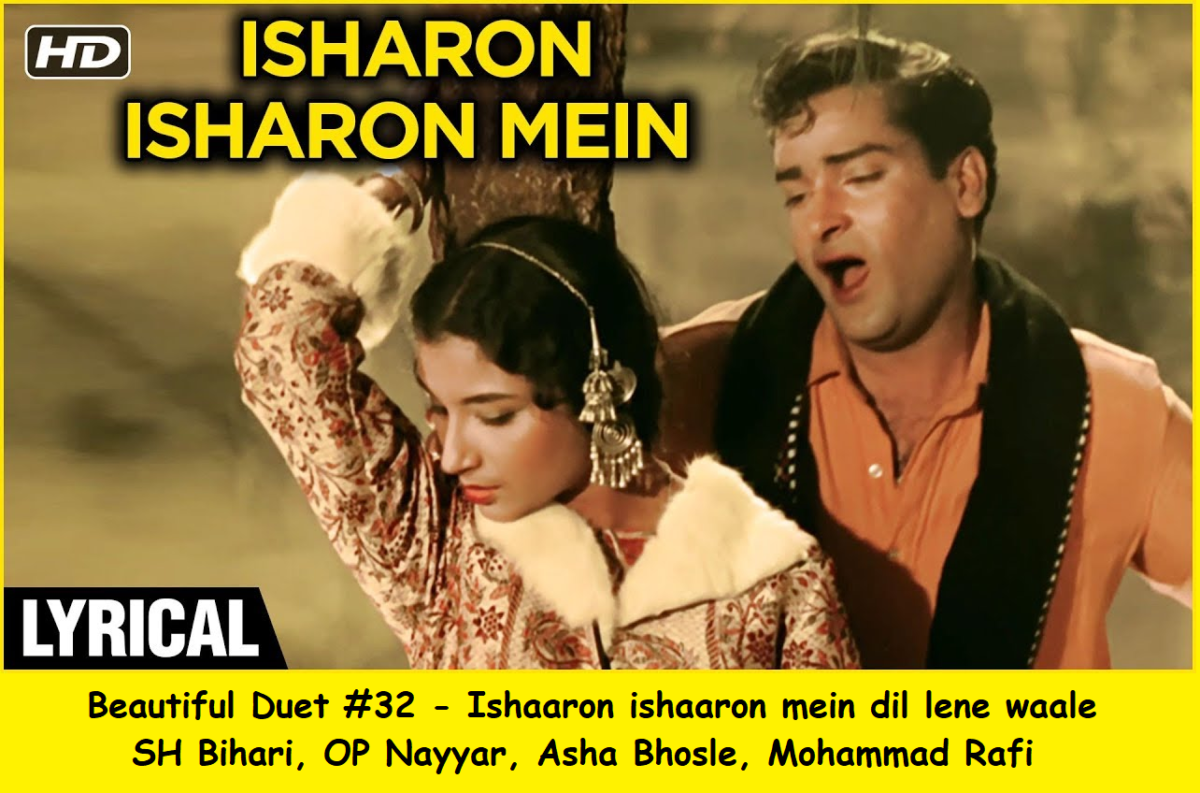
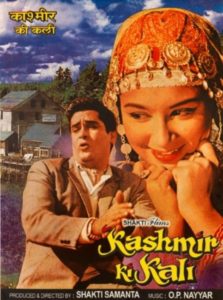 In the Zindagi song of the Day I gave you a song from the 1964 Shakti Samanta movie Kashmir Ki Kali: Hai duniya usi ki zamana usi ka. And today, we have yet another song from the same movie. This was, indeed, the hallmark of OP Nayyar: he had most of his songs in his movies becoming hits and super hits. Many years ago, I did a post on the songs of this movie and for those of you who have the time (less than one percent, that is), you may access all the songs of the movie here:
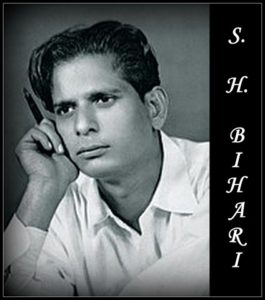 The song was penned by SH Bihari who featured in seven movies with OP Nayyar and made really refreshing and delightful songs for him. In this movie, the pair are at their best.
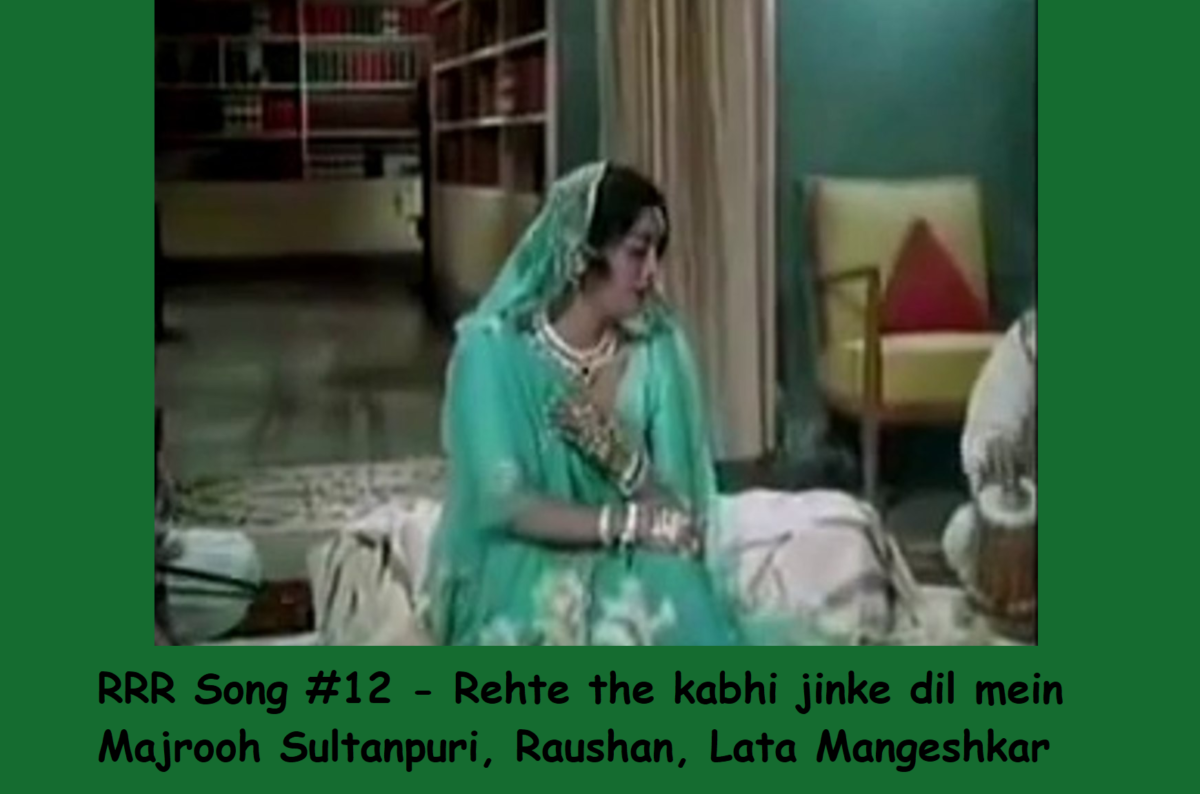
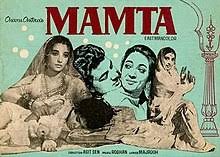 The movie happens to have story similar to 1958 Kalidas movie Adalat starring Nargis, Pradeep Kumar and Pran. That movie had some of the greatest songs of Madan Mohan on the lyrics of Rajinder Krishan.
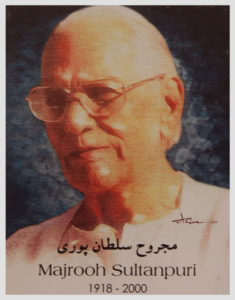 This movie had Majrooh and Roshan doing to its songs what Rajinder Krishan and Madan Mohan did to Adalat songs. They made the following: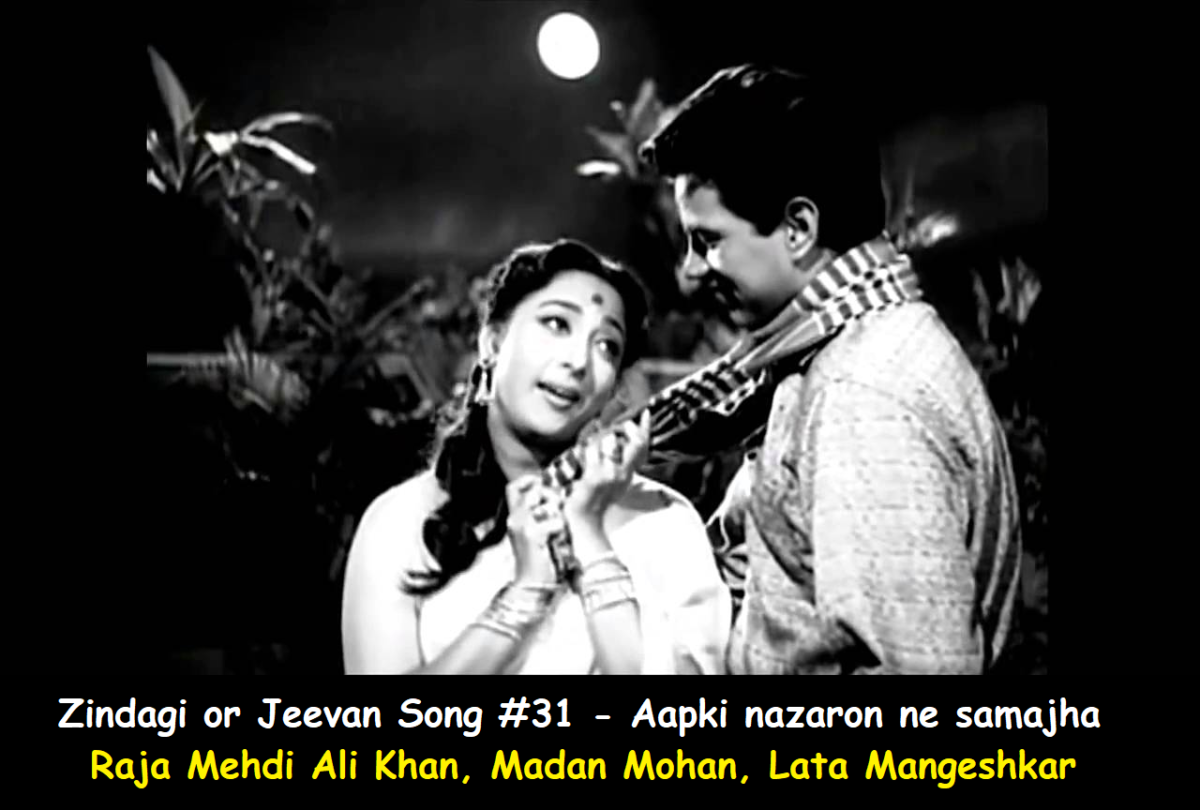
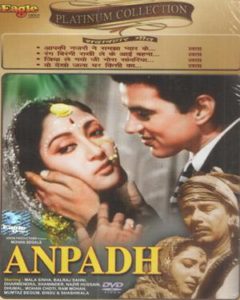 This 1962 movie directed by Mohan Kumar (almost all his movies starting with the letter A such as Aas Ka Panchhi, Ayee Milan Ki Bela, Aap Ki Parchhayiyan, Aman, Anjana, Aap Aaye Bahar Aayi, Avtar, Amba, All Rounder and Amrit (This is a fad in Hindi films industry; numerology and astrology plays a big role in selecting titles of movies), reflected the way we treated women. Being literate wasn’t considered necessary as long as they were well versed in wifely duties (cooking and embroidery and keeping a good and clean house). In this movie, Balraj Sahni as the brother of Mala Sinha felt that as long as they had enough money, being uneducated wasn’t important.
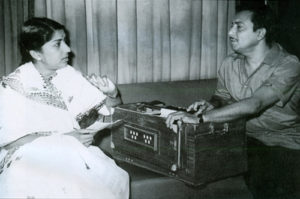
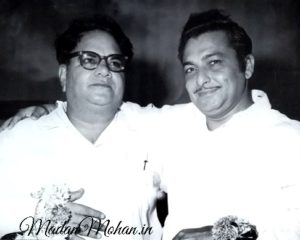 Madan Mohan was the Music Director for women. He made some of the most memorable songs Lata Mangeshkar (who was very fond of “Madan bhaiya”). I feel that in the top ten songs of Lata composed by Madan Mohan, these are equally divided between Rajinder Krishan and Raja Mehdi Ali Khan as lyricists; both of them being extraordinarily aligned to the emotions of women. If Raja would have Lag jaa gale ke phir, Rajinder Krishan would have Unako ye shikayat hai ke ham kuchh nahin kehte. Outstanding combinations both.
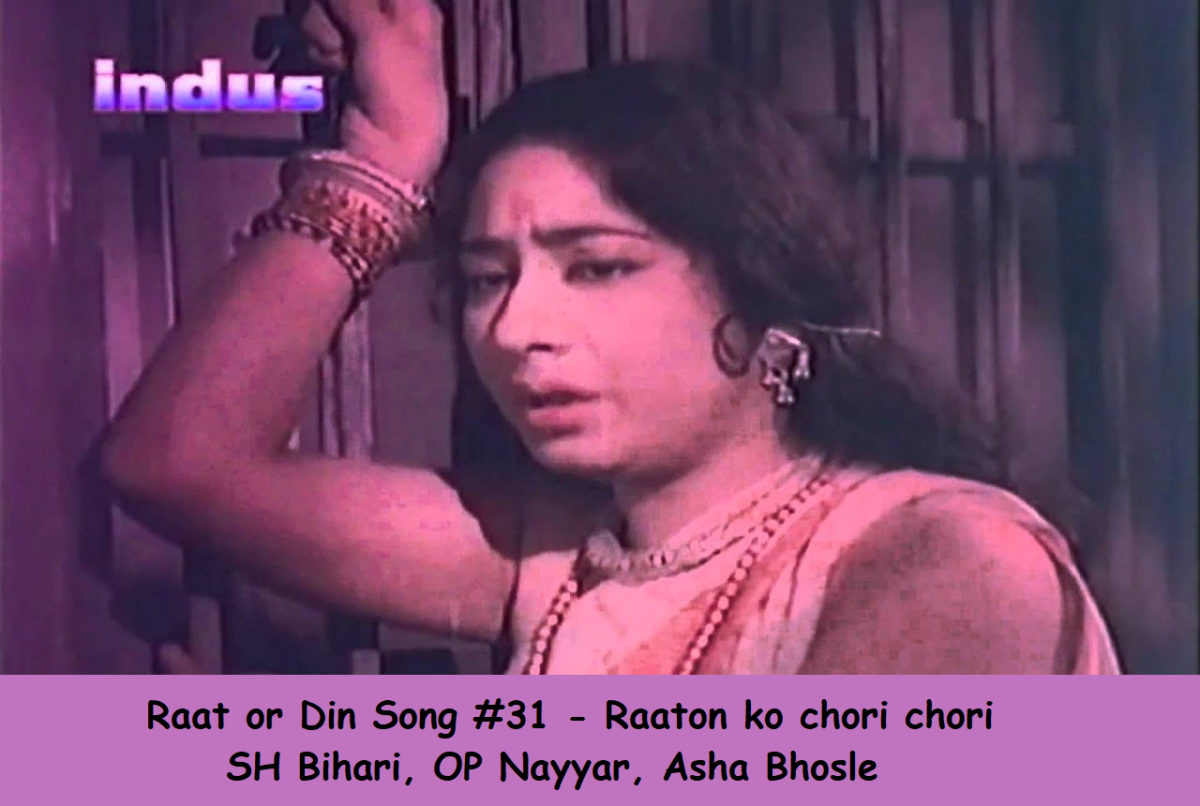
 I have liked all the lyrics of Shamsul Huda Bihari; particularly those that have been composed by OP Nayyar. One straightway thinks of Kashmir Ki Kali, Ek Mussafir Ek Hasina, Sawan Ki Ghata, and Yeh Raat Phir Na Aayegi.
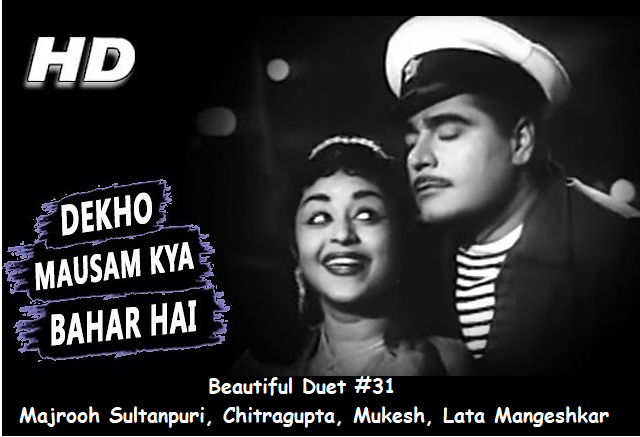
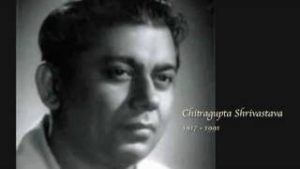 Chitragupt was one Music Director who was known for fusion; I have already given you his fusion song Jodi hamari jamega kaise Jani? Just like all our MDs (without exception) he wasn’t beyond copying tunes from abroad. He just lifted the tune for Dekho mausam kya bahaar hai from Bimbo: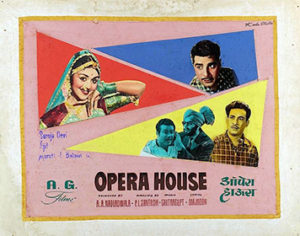
 Majrooh didn’t allow himself into being typified; from a typical Urdu poet he often went into all kinds of songs whether Western or Indian.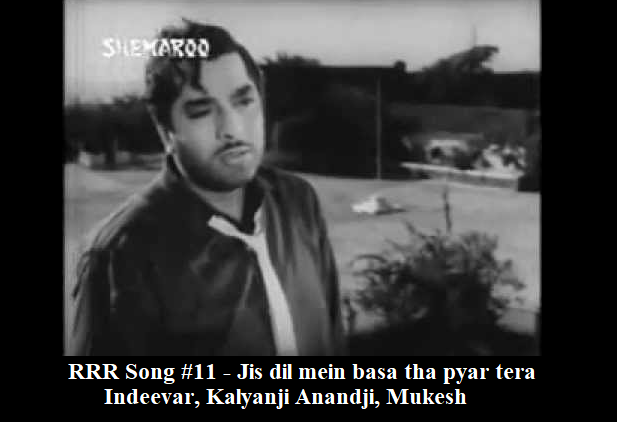
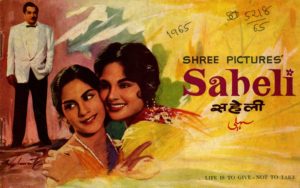
 Indeevar had written the lyrics at a time when he used to write very good and sensitive lyrics and when he hadn’t tied up with Bappi Lahiri to write some 500 trash songs for him for the lure of money.
 We have seen the handling of Raag Bhairavi by Jaikishan (SJ fame). Here it is Kalyanji Anandji who have thought of Bhairavi to compose it.
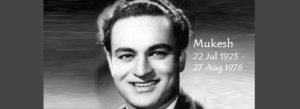 When it comes to RRR songs or Songs of Regret, Repentance and Ruefulness, one singer that comes to mind is Mukesh. He was the best in this genre’. Here too he has done a remarkably beautiful job of it.
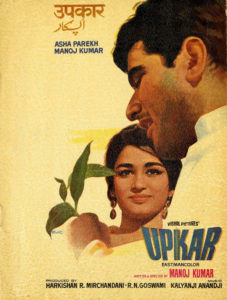
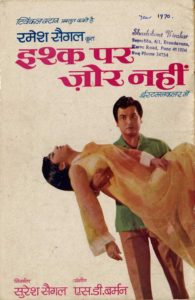 It was a 1970 Ramesh Saigal movie. Who was Ramesh Saigal? He was the one who gave us 1948 Dilip Kumar – Kamini Kaushal starrer Shaheed with the popular Raja Mehdi Ali Khan song: Watan ki raah mein watan ke naujwan shaheed hon. He also gave us 1950 spy thriller Samadhi starring Ashok Kumar and Nalini Jaywant, 1953 Dilip Kumar starrer Shikast with Shankar Jaikishan’s music and Wjahat Mirza’s story and dialogues, 1955 Sunil Dutt starrer Railway Platform, 1958 Raj Kapoor starrer Phir Subah Hogi with Sahr’s inspirational song Woh subah kabhi to aayegi, 1961 movie Shola Aur Shabnam with my all time favourite song Jeet hi lenge baazi hum tum and Jaane kya dhoondati rehti hain and then this movie in 1970; ie, nnine years after his last one: Shola Aur Shabnam.
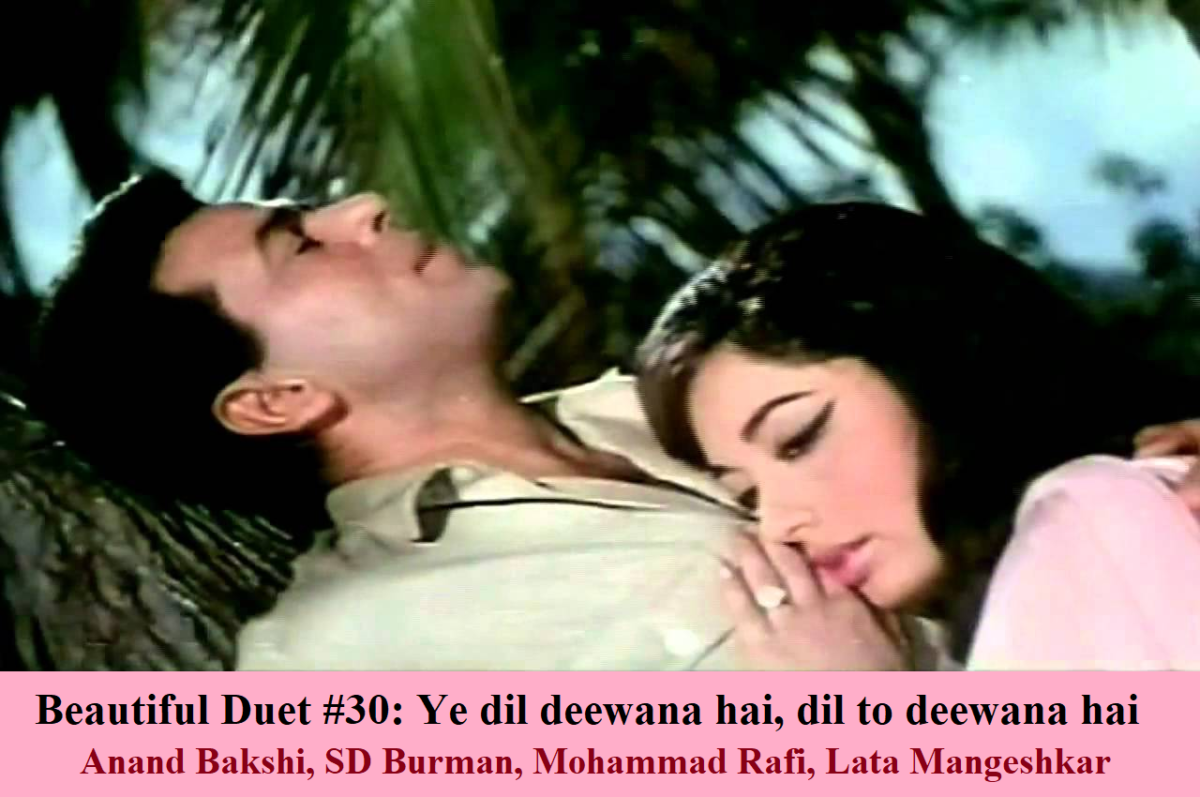
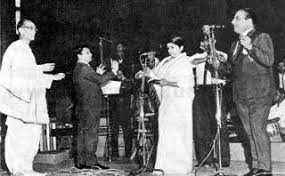 This duet has been sung by Mohammad Rafi and Lata Mangeshkar; the best pair for duets. It was composed as a rare song by Sachin Dev Burman who introduced Santoor for the first time in any movie until then. The lyrics and composition are thus unique.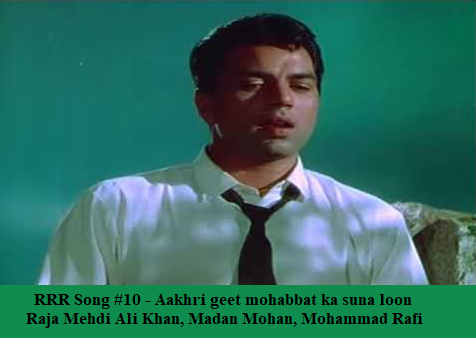
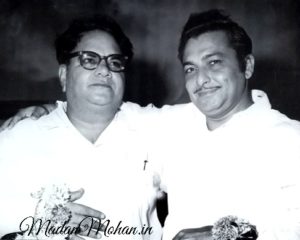 If you look up the You Tube, you would find that some of the most popular and best songs of Lata Mangeshkar have been crafted by the duo. Lets recall songs like Lag jaa gale se of Mera Saya, Agar mujhase mohabbat hai of Aap Ki Parchhayiyan and Aapki nazaron ne samajha pyar ke kabil mujhe of Anpadh.
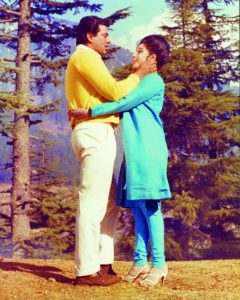 This too was sung by Mohammad Rafi for Dharmendra as the Dulhan Ek Raat Ki song: Ek haseen shaam ko. This is from the 1965 Rajendra Bhatia movie Neela Aakash with Mala Sinha as Neela and Dharmendra as Aakash and thus the title.