The fastest thing in the universe used to be light,
But we’ve discovered two more things that are faster;
Still, there is something so fast it is always out of sight,
That can make Man, of the Universe, a real master.
When God gave it to Man, he won’t have ever known,
It would be the fastest thing anyone ever sought;
At its speed no one had ever, in the universe, flown,
Man had been blessed with the Speed of Thought.
One moment it is here, the next it is light years away,
Light and everything else come a distant second;
No obstruction or barrier can ever come in its way,
It is much faster than anything anyone has reckoned.
With such proud possession with him why is it true,
That Man gets stuck in the desolation of his situation?
Why can’t he fly at the speed of thought and say adieu,
To all sadness, negativity, despondency and frustration?
Just think what miracle God has placed in your mind,
You are really the Master of the entire Universe;
Just fly at the speed of your thought and you can find,
You can get out of any situation that is adverse.
In any case the Universe is what you and I think about,
There is no difference between Reality and Imagination;
Yes, some will always be full of one or the other doubt,
You can get the proof with a little bit of meditation.
Your thoughts are indeed the fastest. Allow them to go astray you are a slave; Keep them under your control, you are the master.
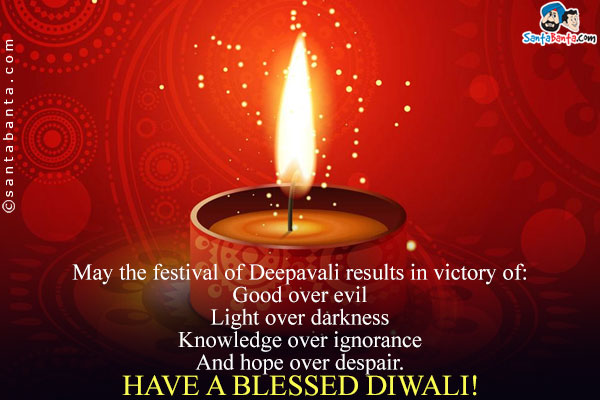
Diwali or Deepawali is the most major Indian festival,
That symbolises victory over Darkness of Light;
It has been held, over centuries, fully acceptable,
That such Light (as of knowledge) drives away the (ignorance) of the night.
Of course we illuminate our buildings and houses,
But more important is to lighten up heart and mind;
To clean these two spaces of evil thoughts and grouses,
And put all animosity, bitterness and sadness behind.
It is only then that the goddess of prosperity and wealth,
Would visit our home, heart, mind and soul;
When negativity leaves we’re assured of good health,
And all those things that put us back in control.
(Image courtesy: santabanta.com)
One is stunned at the wisdom of Indians of yore,
Who thought of a festival that signifies so much;
As spiritual festivals go, you can’t ask for more,
Than to have one that has such a sagacious touch.
Lets light these lamps today in home and heart,
And replace ignorance with knowledge in our lives;
Today, once again, lets give ourselves a fresh start,
And ensure that Lord Ram, again, in our midst arrives.
Happy Deepawali, my friends, both near and far,
I wish you prosperity, happiness, glory and success;
May you and your homes shine like the brightest star,
And may Laxmi quickly reach (and stay at) your address.
How big or long a Life should be?
Should one be able to live forever?
Who knows what couldn’t or could be,
If on this earth one were to die never?
The easy answer, my friends, to remember,
Is that Life doesn’t consist of days and years;
If Life could be just from January to December,
Who would remember all the joys and tears?
Life is measured by smiles, joys and cheers,
That you bring on the faces of those you assist;
Life is gauged when all the pain disappears,
Of those whose wounds that you’ve kissed.
Life consists of all those beautiful occasions,
When you thanked God for what you’ve got;
When you didn’t think of those mental equations,
In which others have infinity and you’ve naught.
Life is there when you think of here and now,
Without thinking of the elusive there and then;
Life is found when you have sweat on your brow,
And still you say: give it to me again and again.
Life is in those times when you say with surety: I have lived every moment that was, to me, given; With the thoughts of self-doubt and insecurity, I was never never never never never never driven.
People ask what is the life’s purpose or aim,
As if they’d live better if they knew precisely.
I think it is an excuse that is totally lame,
For not doing what you have to do nicely.
Life has as much meaning as we put in it,
It is a clean canvas on which we have to paint.
For this God has given us the complete kit,
And even given us an idea, however faint.
It is for us to follow this rather faint light,
And go with confidence wherever it takes us;
Those who do, turn out to be bold and bright,
Others would have simply missed the bus.
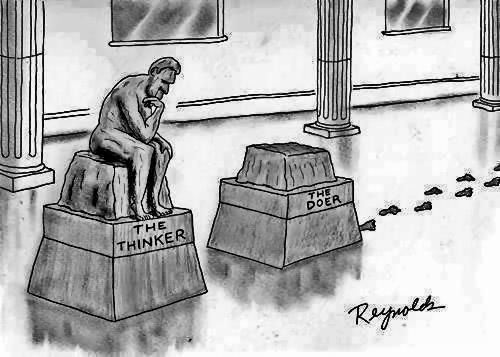
We have to do the best in what our hands find,
Don’t look for lofty aims and even results;
You live well if you have this right in your mind,
Others would only exchange excuses and insults.
Here is an example, that makes it very clear,
If you are a cobbler, aim to be best in your trade.
At what you are required to do, don’t ever sneer,
Everyone is not born for a king to be made.
A bad king is much worse than a good farmer,
Who doesn’t waste his time thinking about things;
The king, in words and appearance, may be a charmer,
But it’s the farmer’s grit and resolve that gives him wings.
They say an apple a day keeps the doctor away,
I can assure everyone so does a poem a day.
You can think about it today, being a Sunday,
When yet another poem by me comes your way.
That Songs and Raagas have curative powers,
Is already known to us all without any doubt;
It is like we have the aroma of many flowers,
That is actually healthier than eating sprouts.
Poems are like Songs with a certain cadence,
Recite them melodiously with all your heart;
You can feel around you the healthy fragrance,
That gives your day a most positive start.
(Image courtesy: www.thehealingpoems.com
If you trust me, look at Indian religious text,
That has been penned in verses with a flow;
So my suggestion to you is really in this context,
Don’t out of the window my GM Messages throw.
How much health benefits you gain by these,
Is actually placed by God in your own hand;
Just go with the tempo at your comfort and ease;
And start the day with health at your command.
When I say health, I mean physical and mental,
Even emotional health by these is guaranteed;
These messages have rhythm is not coincidental,
When I started these, I thought of this very need.
Should you shower love on people who hate?
Or should you match their hatred with your own?
I think it would really let them, to you, dictate,
If the seeds of their strong point in you are sown.
Shouldn’t you at least try that you win,
With your best trait against that of your rival.
Hatred only adds to all round chagrin,
Whereas Love is essential for world’s survival.
Let them practise negativity if they want,
You should spread positivity and compassion;
Don’t return their spite with your taunt,
Don’t let kindness go out of fashion.
An ear for an ear and an eye for an eye,
Will make the world become deaf and blind;
Instead of being a hawk be a dove in the sky,
Turn even the demons to best in humankind.
Wear a bright smile rather than a frown,
And see how you turn people to your trait;
Don’t try to show the other person down,
It’s better to love than to stoop to hate.
The keyword in gentlemen is to be gentle,
It is never a sign of weakness and defeat;
You’ve lost if you’re forever temperamental,
Don’t ever let chivalry become obsolete.
Lo and behold, you would soon find,
It’s not as cold as it initially seemed;
There is warmth in being loving and kind,
As if the summer sun actually beamed.
Sharing friendship and love around,
Also adds to feeling of being snug;
This is really a statement most profound:
There is nothing like a friendly warm hug.
Warmth lends as much fun in giving,
As one’d get in receiving from others,
You really have learnt the art of living,
By exchanging warmth with sisters & brothers.
Go ahead try it; the proof of the pudding is in the eating.
Don’t wait to say ‘I love you’ until it is too late.
From the first of June, 2018, I started writing Good Morning messages in the form of poems (Please read: ‘Good Morning Message #1‘).
The last such message was:‘Good Morning Message #126‘. And then I broke off. Today, after a gap of three weeks I am back again. Here goes:
Good morning Friends,
Why do we miss people when they’re gone?
Why can’t we love them when they’re there?
Is there a prize for being withdrawn?
Why can’t we come out with: “I care”?
Every morning when we wake up,
Can’t we pledge to love a little more?
There is wisdom in ‘kiss-and-make-up’,
It’s not a contest to keep the score.
If you love someone it’s better to say so,
Before fate decides not to give you a chance;
Whilst one can still hear it, let one know,
You may actually see the person dance.
It may just be your friend, son or mother,
Everyone can do with a dash of Love;
Open up and and don’t look for another,
Inspiration to come to you from above.
This message of love comes to you today,
Make use of it now and don’t just wait;
Let me sum up what it is trying to convey:
Tell people you love them before it’s too late.
Good Morning friends, it is good to be back,
And wish you all a lovely day in rhyme;
Let each one of you cultivate the knack,
Of saying ‘I love you’ whilst there is still time.
सपनो का राही हूँ,
सपने ही तो मेरे हैं।
जब सपनो से आगे बढ़ा,
वो दिन फिर क्या तेरे हैं?
सपने ही तो उजाले हैं,
बाकी सब अंधेरे हैं।
तुझे रातों के साये पसंद हैं,
मेरे लिए सपने ही सबेरे हैं।
चंद दिन की यहां खुशियां हैं,
जाने कहाँ फिर डेरे हैं?
ज़िन्दगी के क्या माईने हैं?
दो चार रोज़ के फेरे हैं।
जी लेने दे अपनी ज़ुल्फ़ों तले,
जब तक इनके साये घनेरे हैं।
जब तुम भूल जाओ हमें तो हमें भी बता देना,
क्या करेंगे हम भी तुम्हें फ़िर याद करके?
प्यार लौटा देते हैं जहां उसका हमें भी पता देना,
हमें भी खबर हो कहाँ बसते हैं औरों को बर्बाद करके।
सारी जिंदगी तेरी इबादत में ही गुज़ारी है,
ना जाने किस उम्मीद में रहे रोज़ फरियाद करके।
क्या कहें कैसी अब यह हालत हमारी है,
गमों और आँसुयों की दुनिया आबाद करके।
कितने वादे किए थे कितनी कसमें खाई थी,
दिल हलका कर लिया तूने इस बोझ से आज़ाद करके,
जाने क्यों मेरी ज़िंदगी में तूं आयी थी,
क्या मिल गया तुझे मुझको नाशाद करके?
This song is from the 1963 Babubhai Mistri movie Parasmani (Gold making stone). The movie starred Mahipal and Geetanjali. The story of the movie was written by Pandit Madhur (a lyricist in his own right, he wrote lyrics for Banphool (1945), Tulsidas (1954), Prabhu Ki Maya (1955), Lalkar (1956), Harishchandra (1958) and Chandrasena (1959) and Vishwanath Pande. Asad Bhopali penned four of the six songs in the movie. All were composed by Laxmikant Pyarelal.
Before we take up anything else about the movie, we should take up the music duo of Laxmikant Pyarelal who ruled the Hindi films music world from 1963 to 1998. Even though they had worked with several music directors earlier both separately and together, Parasmani was the debut movie of Laxmikant Pyarelal as Music Directror.

Laxmikant Pyarelal started off with 1963 movie Parasmani and they made such popular songs for their very first movie that these are fondly remembered even today:
1.
“Hansta Hua Noorani Chehra”
Asad Bhopali
Lata Mangeshkar, Kamal Barot
3:40
2.
“Mere Dil Mein Halki Si”
Asad Bhopali
Lata Mangeshkar
4:56
3.
“Ooi Maa Ooi Maa Yeh Kya Ho Gaya”
Asad Bhopali
Lata Mangeshkar
3:24
4.
“Salamat Raho Salamat Raho”
Indeevar
Mohammad Rafi
5:57
5.
“Woh Jab Yaad Aaye”
Asad Bhopali
Mohammad Rafi, Lata Mangeshkar
4:43
6.
“Chori Chori Jo Tumse Mili”
Faruk Kaiser
Mukesh, Lata Mangeshkar
4:01
The duo that started off so outstandingly well in their very first movie had indeed great future ahead for them. They received their first Filmfare Award for Best Music Director for the 1964 Satyen Bose movie Dosti.Dosti was only their sixth movie (they did a total of 635 movies between 1963 to 1998) after Parasmani (1963), Harishchandra Taramati (1963), Sati Savitri (1964), Sant Gyaneshwar (1964) and Mr X in Bombay (1964). All these movies too had excellent and memorable songs; eg, Main ek nanha sa main ek chhota sa bachcha hoon and Suraj re jalte rehna from Harishchandra Taramati; Tum gagan ke chandrama ho main dhara ki dhool hoon, Jeevan dor tumhi sang bandhi, Sakhi ri pi ka naam naam na poochho, and Itni jaldi kya hai gori saajan ke sang jaane ki from Sati Savitri; Jaago re prabhat aaya, Jyot se jyot jalaate chalo, and Ek do teen chaar bhaiya bano hoshiyar from Sant Gyaneshwar; Mere mehboob qyaamat hogi, Khoobsurat haseena jaan-e-jaan jaan-e-mann, Chali re chali re gori paniya bharan ko, and Julmi hamaare saanwariya ho Raam from Mr X In Bombay.
Laxmikant Shantaram Kudalkar was born on the day of Laxmi Pujan, Dipawali on 3 November 1937. Probably, because of the day of his birth, his parents named him Laxmikant, after the goddess Laxmi.
Pyarelal Ramprasad Sharma (born 3 September 1940) is the son of a renowned trumpeter Pandit Ramprasad Sharma (popularly known as Babaji), who taught him the basics of music. He started learning violin at the age of 8 and practised it 8 to 12 hours daily. He learnt to play violin from a Goan musician named Anthony Gonsalves. The song “My Name Is Anthony Gonsalves” from the movie Amar Akbar Anthony is regarded as a tribute to Mr. Gonsalves (the movie had music by Laxmikant–Pyarelal). Presently, he is amongst the leading violinists in the country. The violin notes that he played for Ek pyar ka nagma hai are amongst his memorable renditions.
Laxmikant was a great fan of Shankar Jaikishan and initially L-P’s music sounded like that of S-J. However, their meteoric rise spelt the end of not just S-J Era but the era of so many other MDs such as Naushad, Madan Mohan, SD Burman, Roshan, C Ramchandra and OP Nayyar. Of course, some of the credit was shared by RD Burman and Kalyanji Anandji.
L-P have won seven Filmfare Awards, two short of Shankar Jaikishan and three short of AR Rehman who has won it a record ten times. They are, of course, nominated for a record 25 times.
The lyricist who worked with Laxmikant Pyarelal the most was Anand Bakshi whose songs featured in as many as 220 of their movies.
Asad Bhopali, the lyricist of this song was born as Asadullah Khan on 10 Jul 1921 in Bhopal.
Asad Bhopali wrote two songs for Fazli Brothers’ Duniya (1949): Rona hai to chupke chupke (sung by Mohammad Rafi) and Armaan lute, dil toot gaya (sung by Suraiyya). The next year, he wrote songs for a couple of films; these songs were sung by Lata Mangeshkar and Shamshad Begum. Bhopali’s big break was BR Chopra’s Afsana (1951), for which he wrote 5 songs.
He received his only Filmfare Award for Best Lyricist very late for the 1989 movie Maine Pyar Kiya’s song: Dil deewana bin sajna ke maane na.
The song Woh jab yaad aaye bahut yaad aaye made him very popular. After Parasmani, L-P and Asad Bhopali were together for another ten movies:Mr. X In Bombay (1964; with such delightful songs as: Mere mehboob qayamat hogi, Zulmi hamare saanwariya ho Ram, Chali re chali re gori paniya bharan ko, and Khubsoorat hasina); Aaya Toofan (1964; Hum pyaar kiye jaayenge koi rok sake to rok le); Shreeman Funtoosh (1965; he wrote only one song. The others were penned by Anand Bakshi); Lootera (1965); Hum Sab Ustaad Hain (1965; Ajnabi tum jaane pehchane se lagte ho, Pyar bantate chalo); Boxer (1965; Khudaya khudaya mohabbat na hoti); Naag Mandir (1966; Ek manzil ek safar hai hamara aap ka); Chhaila Babu (1967; Tre pyar ne mujhe gham diya); Nirdosh(1973; Tujhe khanjar se kya maru ek nazar hai kafi); and Ranbhoomi (1991; Pee ke Shankar ji ki booti).
This song from 1964 movie Mr X In Bombay was another super-hit number from Asad Bhopali and Laxmikant Pyarelal.(Poster courtesy: Wikipedia)
As I said in the beginning, this song is from the 1963 Babubhai Mistri movie Parasmani. Lets look at the story penned by Pandit Madhur and Babubhai Mistri to see how this song came about in the movie:
The actor Mahipal plays Paras in the movie from whom the title is derived. Son of a Senapati, he is lost at sea when his ship passes through a cyclone. He is found and brought up by a villager and because of his genes becomes an accomplished swordsman and singer.
One day, he encounters the princess ( Rajkumari played by Gitanjali) and falls in love with her. His fame as a singer soon reaches the palace, and the Emperor summons him to sing for him. Pleased with his singing, the Emperor asks him for a wish, and Paras asks for the hand of his daughter. Enraged, the Emperor decides to punish Paras, but Paras escapes.
Appearing defeated, the Emperor asks Paras to seek a rare gem called a Parasmani, because he is under a curse that as soon as his daughter marries, it will be the last day for the Emperor. If Paras can find the Parasmani, the life of the Emperor can be saved. Only then can Paras marry the princess. Paras agrees to this and leaves on the search with his sister and brother.
Paras receives clues from various places and is directed to a cave. From this point, the film that is black and white earlier becomes Eastman Color. Fighting various magical creatures and volcanic lava, Paras meets the Sorceress Mayanagri (Jeevan Kala), who falls in love with the brave Paras. Taking him in confidence, she shows him her real self, which is an old woman. The Sorceress shows him the Parasmani, which Paras gains after killing a giant spider-like creature. Soon the old sorceress also meets her end. Paras and his siblings fly back to their kingdom where, after some crucial fights, he meets his father, Senapati, and is married to the princess.
The song comes about when the lovers are separated.
Laxmikant Pyarelal composed the song in Raag Kalyan, Tal Kaherava.
Raag Kalyan is the basic raag of Kalyan thaat, which is also known as Raag Yaman (from the Mughal period onwards). It is a Sampooran (all seven swars; ie, heptatonic) raaga with Madhyam being teevra and rest all swar being shuddha, which is normally to be played during the first prahar of the night (6 PM to 9 PM).
Raag Kalyan or Yaman is a fundamental raag and often the first raag taught to students of classical music.
Kalyan or Yaman is a very popular raag for composing Hindi movies’ songs. Following songs, as examples, have been composed in this raag:
Khuda Nigahbaan Ho
Main Kya Jaanu Kya
Aansoo Bhari Hai
Man Re Tu
Ang Ang Rang
Re Man Sur Mein Ga
Aapke Anorodh Par
Is Mod Se Jate
Jo Tum Todo Piya
Hamari Thodi Si Bewafai
Aaj Hum Apni
Nav Kalpana Nav Roop
Na Jao Saeeyan
Mithe Bol Bole
Mitwa Bole Meethe
Jane Kya Sochkar
Tarana
Mohe Maro Na Kanha
Dekho Ri Koi
Ehsaan Tera Hoga
Chale Ja Rahe Hain
Yahi Hai Tamanna
Gahar Se Nikalte
Saras Raat Man Bhaye
Kabhi Kabhi Mere Dil Mein
Nigahein Milane Ko
Paan Khayo Saiyan Hamaro
Sabere Ka Suraj
Tera Chhehera
Woh Shaam Kuchh
Maangne Se Jo Maut
Mausam Hai Aashiqana
Sapna ban Saajan
Chhupalo Yun Dil
Woh Jab Yaad Aaye
Jhamela Jhoote Jag Ka
Diya Jalao Jagmag
Nukta Chi Hain
Salaam-e-Hasrat
Mughal-E-Azam
Zindagi
Parvarish
Chitralekha
Sandhya
Lal Pathar
Anurodh
Aandhi
Meera
Thodi Si Bewafai
Pakeezah
Mrigtrishna
Sahib Bibi Aur Ghulam
Kinara
Parichaye
Kinara
Pakeezah
Manavta
Ganga Ki Leherein
Junglee
Kinare Kinare
Aapki Parchhaiyan
Papa Kehte Hain
Suwarn SundariKabhi Kabhi
Dil Hi To Hai
Teesri Kasam
Ek Baar Muskura Do
Aapas Ki Baat
Khamoshi
Sunehere Kadam
Pakeezah
Shokhiyan
Mamta
Parasmani
Bhajan
Tansen
Mirza Galib
Babar
Lata
K L Saigal
Mukesh
Rafi
Sulakshana
Asha, Manna Dey
Kishore
Lata, Kishore
Vani Jayram
Kishore, Lata
Lata
Rafi
Geeta Dutt
Bhupendra, Lata
Bhupendra
Kishore
Lata
Lata
Asha
Rafi
Manna Dey
Rafi
Udit Narayan
Rafi, LataMukesh, Lata
Asha
Asha
Kishore
Kishore
Kishore
Lata
Lata
Lata
Lata, Hemant
Lata, Rafi
Mukesh
K L Saigal
Suraiya
Sudha Malhotra
Please enjoy a composition of Laxmikant Pyarelal in Raag Kalyan or Yaman, Tal Kaherava on the lyrics of Asad Bhopali this unforgettable song sung by Mohammad Rafi and Lata Mangeshkar for Mahipal and Gitanjali in the 1963 Babubhai Mistri movie Parasmani: Woh jab yaad aaye bahut yaad aaye…..
वो जब याद आए बहुत याद आए
ग़म-ए-ज़िंदगी के अंधेरे में हमने
चिराग-ए-मुहब्बत जलाए बुझाए
आहटें जाग उठीं रास्ते हंस दिये
थामकर दिल उठे हम किसी के लिये
कई बार ऐसा भी धोखा हुआ है
चले आ रहे हैं वो नज़रें झुकाए
दिल सुलगने लगा अश्क़ बहने लगे
जाने क्या-क्या हमें लोग कहने लगे
मगर रोते-रोते हंसी आ गई है
ख़यालों में आके वो जब मुस्कुराए
वो जुदा क्या हुए ज़िंदगी खो गई
शम्मा जलती रही रोशनी खो गई
बहुत कोशिशें कीं मगर दिल न बहला
कई साज़ छेड़े कई गीत गाए
Laxmikant Pyarelal’s song for their debut movie is not counted merely among their good songs; it is considered one of their great numbers and here is what makes it so memorable:
Firstly, their composition and music arrangement is so good that you feel the pain of the separated lovers. It starts with an alaap from Lata Mangeshkar followed by silence when Rajkumari imagines Paras and vice-versa and then the music hits you like waves breaking against shore rocks. And then you hear the deep sonorous voice of Mohammad Rafi singing Woh jab yaad aaye…
At this stage, I must also bring out that there are many people (including me) who praise the duets of Mukesh with Lata or Hemant Kumar with Lata. However, if you recall the duets of Rafi with Lata (such as Mere Mehboob number Yaad mein teri jaag jaag ke ham, and this number) you would find sheer magic.
The lyrics and notes match perfectly and even though the song is in three stanzas, the strong tugs at your own emotions never cease. It must easily be the most liked Yaad song of all times.
The song has some compelling interludes and the silences before the music takes over (for example after Rafi sings the mukhada) add to its overall appeal.
Being in Raag Kalyan it is also relatively easy to sing; as easy as another great number in the same raag composed by Duttaram, penned by Hasrat Jaipuri and sung by Mukesh: Aansu bhari hain ye jeevan ki raahen.
Raaga Based Song of the Day:Teri aankhon ke siwa duniya mein rakha kya hai…. Raag Jhinjhoti, Tal Dadra
The legendary poet Faiz Ahmed Faiz wrote a nazm (poem) with the opening words: Mujh se pehli si mohabbat mere mehboob na maang. Malika-e-Tarannum (Queen of Melody) Noorjehan composed the nazm into an immortal ghazal in a gathering that was celebrating his release from prison (he was imprisoned for supporting Communist ideology). It became so popular because of her composition that she started being credited for having penned it in almost the same manner as Begum Akhtar owns Ai mohabbat tere anjaam pe rona aaya and not the poet Shakeel Badayuni.
The mukhada of that ghazal ended in the title of this song:
Mujh se pehli si muhabbat mere mehboob na maang
Maine samjhaa tha ke tu hai to darakhshaan hai hayaat
Tera gham hai to gham-e-dehar ka jhagdaa kyaa hai
Teri surat se hai aalam mein bahaaron ko sabaat Teri aankhon ke siwaa duniyaa mein rakhkhaa kya hai
Raj Khosla, the director of the 1969 movie Chirag called the lyricist Majrooh Sultanpuri and asked him to use this line as the title of the song. Due permission was taken to do so. This is how this great song was born.
This song was first sung byMohammad Rafi for Sunil Dutt in the movie. He addressed it to Asha Parekh.Later, Asha Parekh lip-synced it to Sunil Dutt in the voice of Lata Mangeshkar. This is the second song in succession in which I am giving you both the versions.
Today is the second time that I give you a song in this raaga. The first time I gave you a song in this raag was on the very first day: Tum mujhe youn bhula na paoge (Please see: ‘Raaga Based Song Of The Day #1‘).
I couldn’t have given you the best song ever composed in this raaga: Mere mehboob tujhe meri mohabbat ki kasam and hence I gave you what I thought was the second best. Coincidentally, that song, penned by Hasrat Jaipuri and composed by Shankar Jaikishan had two versions: first sung by Mohammad Rafi for Shammi Kapoor and then sung by Lata Mangeshkar for Asha Parikh. Ninety-five songs later we have come back to where we started from.
We have completed ninety-five days of Raaga Based Songs of the Day. Our first post in the series was titled ‘Raaga Based Song Of The Day #1’ and the song was a Mohammad Rafi and Lata Mangeshkar song from the 1970 Shakti Samanta movie Pagla Kahin Ka: Tum mujhe youn bhula na paoge. It is in Raag Jhinjhoti, Tal Kaherava.
Our ninety-fifth post or the last post here was titled ‘Raaga Based Song Of The Day #95‘ and the song was a Lata Mangeshkar song from the 1965 Kalidas movie Bheegi Raat starring Meena Kumari, Pradeep Kumar and Ashok Kumar: Dil jo na keh saka. It is in Raag Maru Bihag, Tal Kaherava.
In the last ninety-five days of sharing Raaga based songs of the day, I have given you songs based on Raag Jhinjhoti, Gara, Bhimpalasi, Madhuvanti, Shivaranjani, Bihag, Pahadi, Sarang, Pilu, Bhairavi, Khammaj, Charukesi, Kalyan or Yaman, Desh, Malgunji, Kirwani, Kedar, Bageshri, Megh Malhar, Bhupali, Ahir Bhairav, Malkaush, Mand, Adana, Kafi, Rageshri, Jaunpuri, Tilang, Janasammohini, Chayanat, Shuddha Kalyan, Gaur Sarang, Jogiya, Asavari, Maru Bihag, Durga, Lalit, Puria Dhanashri, Bhinna Sahdja, Sohani, Multani, Patdeep, Jaijaiwanti, Tilak Kamod, Hemant, Basant Mukhari, Gujri Todi, Kalavati, Hamir, Bhatiyar, Gawati, Shyam Kalyan, Gorakh Kalyan, Madhamat Sarang, Manj Khammaj, Darbari Kanada, Vibhas, Shankara, Bahar, Nand and Mian Ki Malhar; making it a total of 61 raagas. The raagas that have been repeated so far are Pahadi, the raaga of my home place in the Himalayas, Maru Bihag, Raag Kirwani, Jhinjhoti, Bhairavi, Gara, Basant Mukhari, Malkauns, Bhairavi, Mand, Sohani, Madhuvanti, Shivaranjani and Adana. Today, I am repeating Raag Jhinjhoti for the second time.
(Poster courtesy: Lyricsia.com)
Today’s song is from the 1969 Raj Khosla movie Chirag starring Sunil Dutt and Asha Parekh. Lets understand the story-line to see where the two versions of the song fit in the movie:
Ajay Singh (Sunil Dutt) meets Asha Chibber (Asha Parekh) and is led to believe that she belongs to a wealthy family. After a few misunderstandings, he does find out that she is a simple girl living a poor lifestyle. Both do fall in love, and Ajay goes to meet with Asha’s brother, Dr. O.P. Chibber (Om Prakash), and his wife, Shanti (Sulochana Latkar). They are pleased to meet him, and Ajay’s mother, Gayetridevi (Lalita Pawar) visits them and approves of Asha. Ajay and Asha get married and settle down. After marriage Asha is expected to conceive, but she is unable to do so. After a certain incident she also loses her eyesight and becomes dependent on Ajay. Frustrated Gayetridevi decides to ask Asha to leave the house, and arranges a second marriage for Ajay.
The first time the song is sung is the happy occasion when they are in love and he finds in her eyes the world that is waiting for him after marriage. She sings the last stanza of the song indicating that for her too his eyes were the whole world.
The second time this song is sung is when she loses her eyesight. She begins with the stanza that she had sung earlier with him and now every word has a new meaning. She concludes with the second stanza saying that as long as his eyes were hers too, she would live by that support.
Clearly, the movie’s story revolves around this song. And that’s why Raj Khosla wanted to get it right by borrowing a line from Faiz’s famous nazm.
The lyricist of the song was, once again, Majrooh Sultanpuri and the composer was Madan Mohan. On my Facebook page Lyrical I have, in the last few months, put up over a hundred of my favourite songs penned by Majrooh Sultanpuri.
Majrooh Sultanpuri was born on 01 Oct 1919 as Asrar ul Hassan Khan in a Tarin Pashtun family, in Sultanpur, Uttar Pradesh. His father was an officer in the police department, but, preferred to send his son for traditional madrasa (Urdu school) rather than provide him with English schooling.
He tried his hand at being a quack until he was noticed in a mushaira in Sultanpur.
He was a disciple of the great Urdu poet Jigar Moradabadi. When he visited Bombay in 1945 to participate in a mushaira, the director Abdul Rashid Kardar noticed him and invited him to write for the movies. Majrooh turned it down as he looked down upon movies. He was persuaded through his mentor Jigar Moradabadi and then there was no turning back.
Many traditionalists of the Urdu literature, however, felt that Majrooh sold his soul to the Hindi films and that he could have emerged a great poet in the likeness of Ghalib and Jigar.
The takhalus Majrooh means “injured” or “wounded”.
Majrooh was awarded, in 1993, the highest award – Dadasaheb Phalke award – for his lifetime contribution towards lyrics and poetry. He was the first lyricist ever to be given that award. For the film Dosti, that made Laxmikant Pyarelal famous, he was awarded the Filmfare Best Lyricist Award for the song: Chahunga main tujhe saanjh savere.
For someone who didn’t want to join Hindi movies, Majrooh emerged as a natural lyricist, very popular, very romantic and one who kept pace with the changing times.
Madan Mohan was born on 25 June 1924, at Erbil, Iraqi Kurdistan, where his father Rai Bahadur Chunilal was working as an Accountant General with the Kurdistan Peshmerga forces. In the later part of his life Madan Mohan, frustrated at not finding enough assignments, took to heavy drinking and finally he died of liver cirrhosis on 14 July 1975, in Mumbai.
However, during the peak of his career, some of the most memorable songs of Mohammad Rafi (for example for Dev Anand starrer Sharabi; viz, Sawan ke mahine mein, Mujhe le chalo phir aaj us gali, and Kabhi na kabhi kahin na kahin koi na koi to aayega) and Lata Mangeshkar were composed by him. He was the composer of choice for Raj Khosla in that for his triology on Sadhana, Raj Khosla took Madan Mohan for two of the three movies: Woh Kaun Thi and Mera Saya. Some of his best songs are to be found in Haqeeqat, Aap Ki Parchhayiyan, Anpadh, Jahan Ara and Dekh Kabira Roya.
He earned the reputation of being the best composer of ghazals in the movies and these became very memorable; eg, for the movie Adaalat: Unako yeh shikayat hai ke ham kuchh nahin kehte, and Youn hasraton ke daag.
As far as Lata Mangeshkar is concerned, some of her most memorable songs have been composed by Madan Mohan either on the lyrics of Rajinder Krishan or Raja Mehdi Ali Khan. These include Lag jaa gale se phir, and Aapki nazaron ne samajha.
Madan Mohan and Majrooh Sultanpuri worked together in seven movies: Night Club (1958), Ek Shola (1958), Aakhri Dao (1958), Jagir (1959), Akeli Mat Jaiyo (1963), Chirag (1969) and Dastak (1970).
These films had some very beautiful songs. Some of these are: Nigaahon ka ishara hai bahon ka sahaara hai (Night Club, 1958); Kahin chal na de raat ka kya thikana (Ek Shola, 1958); Tujhe kya sunayun main dilruba, and Hamsafar saath apna chhod chale (Aakhri Dao, 1958); Maane na haay baalam pardesiya (Jagir, 1959); Ye to kaho kaun ho tum, Thodi der ke liye mere ho jayo, and Woh jo milate the kabhi (Akeli Mat Jaiyo, 1963); Teri aankhon ke siwa and Chirag dil ka jalao (Chirag, 1969); Baiyan na dharo, Ham hain mata-e-koocha-o bazaar ki tarah, Mai ri main kaise kahun, and Tumse kahoon ek baat (Dastak, 1970).
Dastak’s Baiyan na dharo O balma is one of the most memorable songs put together by Majrooh Sultanpuri and Madan Mohan. It starred Sanjeev Kumar and Rehana Sultan.
Madan Mohan also made many memorable songs based on Raagas. One of his most memorable numbers is in Raag Pahadi, Tal Dadra, which was penned by Raja Mehdi Ali Khan: Lag jaa gale ke phir.
This song, as I told you, is in Raag Jhinjhoti, Tal Dadra.
Raag Jhinjhoti, as I told you on the first day itself (Please go through ‘Raaga Based Song Of The Day #1‘) is a raag named after an apsara. It belongs to Khammaj or Khamaj thaat. Its Jati is Shadhav-Sampoorna (Vakra) (Nishad is Varjya in Aaroh, Nishad is Komal in Avroh. Rest all Shuddha Swaras). It is normally to be sung in the second prahar of the night (9 PM to midnight).
Hindi songs composed in this raag have an element of self-pity about them; eg, Tum mujhe youn bhula na paoge, Badli badli duniya hai meri, Mose chhal kiye jaaye, Chhup gaya koi re door se pukaar ke, Ghungroo ki tarah bajta hi raha hoon main, Jaayun kahan bata ai dil, and Koi hamdam na raha koi sahara na raha.
I have, at various places earlier, told you about the Dadra Tal and hence don’t feel the need to repeat it here (For example, the latest being in ‘Raaga Based Song Of The Day #93‘).
Before we actually take up the song, first, lets take up the value added learning of today. From the last fourteen times we started learning about some of the leading personalities in Indian Classical Music or Shastriya Sangeet. The first one that we took up was Ustaad Asad Ali Khan,thefinest Rudra Veena player in the country. Then we took up Pandit Hari Parsad Chaurasia, the greatest Bansuri player in the country. Then we talked aboutAli Akbar Khan, the greatest Sarod player in the country. Then we took upPandit Ravi Shankar, the greatest Sitar player in the world. Then we took up the greatest classical singer in the country (of Carnatic tradition): MS Subbulakshmi. Then, we took upthe greatest classical singer in the country (of Hindustani tradition): Pandit Bhimsen Joshi. Then, we learnt about theShehnai maestro Ustad Bismillah Khan.Then, we learnt aboutAnnapurna Devi, a great Surbahar (bass sitar) player of Hindustani Classical Music.Thereafter, we took upPandit Shiv Kumar Sharma, the grestest Santoor player in the country.Then we learnt a little more aboutUstaad Alla Rakha Qureshi or simply Alla Rakha, the Tabla Maestro and father of Ustaad Zakir Hussain.Then we learnt about the master and one of the pioneers of fusion:Anand Shankar.Thenwe learnt about aVeena player who was also a great filmmaker: Sundaram Balachander. Then we learnt about Sarod Player Ustad Amjad Ali Khan. And then we learnt about Ustaad Zakir Hussain, the Tabla maestro.Finally, we learnt about Sitar Player and Composer Anoushka Shankar.
(Pic courtesy: The Hindu)
Tonight, we shall take up the great living vocalist: Pandit Jasraj of the Mewati gharana. He was born on 28 Jan 1930 in Village Pili Mandori in Hisar (now Fatehabad) district of Haryana. His father Motilal was a classical singer. He died when Jasraj was only 4 years old. Jasraj’s elder brother, Pratap Narain, was also an accomplished musician and was the father of music composer duo Jatin-Lalit, of singer-actress Sulakshana Pandit and of actress Vijeta Pandit.
Jasraj was initiated into vocal music by his father, but initially trained as an accompanist, playing the tabla at vocal performances by his brother, the singer Maniram. He credits the vocalist, Begum Akhtar, as inspiring him to take up classical music. Jasraj began training as a vocalist at the age of 15, and performed his first stage concert as a vocalist at the age of 22. Before becoming a stage performer, Jasraj worked as a performing artist on radio for several years.
Pandit Jasraj is a recipient of Padma Bhushan and Padma Vibushan (the third and second highest civilain honours in India). Jasraj has tutored several students who have gone on to perform as classical musicians including Sanjeev Abhyankar, Kala Ramnath,Tripti Mukherjee, Suman Ghosh, Kavita Krishnamurthy, Anuradha Paudwal, Sadhana Sargam, Shankar Mahadevan, and Ramesh Narayan.
Pandit Jasraj is married to Madhura Shantaram, the daughter of film director V Shantaram.
Returning to the song now. For a great song by both Majrooh and Madan Mohan, neither the direction nor cinematography is actually great. Even the acting by the lead actors is average. However, that doesn’t take away from the song superb lyrics, outstanding composition and remarkable singing by both Mohammad Rafi and Lata Mangehskar.
Ladies and gentlemen, please enjoy in Raag Jhinjhoti Tal Dadra, first Mohammad Rafi and Lata (one stanza) and later in the movie Lata sing a composition of Madan Mohan on the lyrics of Majrooh Sultanpuri in the 1969 Raj Khosla movie Chirag starring Sunil Dutt and Asha Parekh: Teri aankhon ke siwa duniya mein rakha kya hai…..
Mohammad Rafi and Lata First:
तेरी आँखों के सिवा दुनिया में रक्खा क्या है
ये उठें सुबह चले, ये झुकें शाम ढले
मेरा जीना मेरा मरना इन्हीं पलकों के तले
तेरी आँखों के सिवा …
Rafi
पलकों की गलियों में चेहरे बहारों के हँसते हुए
हैं मेरे ख़ाबों के क्या-क्या नगर इनमें बसते हुए
ये उठें सुबह चले …
इनमें मेरे आनेवाले ज़माने की तस्वीर है
चाहत के काजल से लिखी हुई मेरी तक़दीर है
ये उठें सुबह चले …
Lata
ये हों कहीं इनका साया मेरे दिल से जाता नहीं
इनके सिवा अब तो कुछ भी नज़र मुझको आता नहीं
ये उठें सुबह चले …
Lata Now: Asha Parekh is blinded and the words have a different meaning. She is looking forward to seeing the world through his eyes. Majrooh has done outstandingly well with the lyrics especially इनके सिवा अब तो कुछ भी नज़र मुझको आता नहीं:
तेरी आँखों के सिवा दुनिया में रक्खा क्या है
ये उठें सुबह चले, ये झुकें शाम ढले
मेरा जीना मेरा मरना इन्हीं पलकों के तले
तेरी आँखों के सिवा …
ये हों कहीं इनका साया मेरे दिल से जाता नहीं
इनके सिवा अब तो कुछ भी नज़र मुझको आता नहीं
ये उठें सुबह चले …
ठोकर जहाँ मैने खाई इन्होंने पुकारा मुझे
ये हमसफ़र हैं तो काफ़ी है इनका सहारा मुझे
ये उठें सुबह चले …
We have intended to learn about Raaga based music whilst we entertain ourselves with Raaga based songs. So, lets, once again, take stock of our collective learning so far:
On the first day we learnt about the Raaga system devised by Pandit Vishnu Narayan Bhatkhande, which is the prevalent system in Hindustani Classical Music and based on ten Thaats.
On the second day we learnt about Tal or Taal.
On the third day we learnt about characteristics of Raagas that included Swar, Jati, Thaat, Arohana and Avarohana, Vadi, Samvadi and Pakad.
On the fourth day, we learnt about Sargam.
On the fifth day, we learnt about notations used in Indian classical music or simply Swar Lipi.
On the sixth day, we learnt about the Ras (sentiments) that Raagas evoke.
On the seventh day, we learnt about various types of Swar: Shuddha, Achal, Vikrut, Komal and Teevra.
On the eighth day, we learnt the parts of a composition in Indian Classical Music.
On the ninth day, we learnt the names of some of the popular instruments used in Indian Classical Music.
On the tenth day, we learnt about the sources of names of Raagas.
On the eleventh day, we learnt about why Bhairavi is the first raag to be taught to beginners and also why it is the last in a performance.
On the twelfth day, we learnt about Khammaj Thaat.
On the thirteenth day, we learnt about Tal Punjabi Theka or Sitarkhani.
On the fourteenth day, we learnt about Alap.
On the fifteenth day, we learnt about List of Raagas (Raagmala) in my favourite book: Sri Guru Granth Sahib.
On thesixteenth day, we learnt about tips for raaga identification.
On the seventeenth day, we learnt the basics of Gharana system.
On the eighteenth day, we learnt about Filmi Sangeet.
On the nineteenth day, we learnt about the commonest Tal in Raagas: Tintal.
On the twentieth day, we learnt about the Kafi Thaat.
On the twenty-first day, we learnt a little more in detail about the classification of Raagas.
On the twenty-second day, we learnt the essential differences between Bhairavi and Bhairav.
On the twenty-third day, we learnt a little more in detail about the Jati or Jaati of a raaga.
On the twenty-fourth day, we learnt details of Thaat Bilawal, the most basic thaat in the Bhatkhande’s system of raagas.
On the twenty-fifth day, we learnt about Tintal.
On the twenty-sixth day, we learnt in detail about the Raaga – Samay linkage.
On the twenty-seventh day, we learnt about Lehar.
On the twenty-eighth day, we learnt about the history of the Hindustani Music.
On the twenty-ninth day, we learnt about Dhrupad.
On the thirtieth day, we learnt about Rupaktal that I was introduced to, a few months back, by my friend Anand Desai.
On the thirty-first day, we learnt about Khayal.
On the thirty-second day, we learnt about Thumri.
On the thirty-third day, we learnt about Tappa.
On the thirty-fourth day, we learnt about Tarana.
On the thirty-fifth day, we learnt about Tal Dipchandi (Moghali).
On the thirty-sixth day, we learnt about Tabla.
On the thirty-seventh day, we learnt about Kirtan.
On the thirty-eighth day, we learnt about Pakhawaj.
On the thirty-ninth day, we learnt about Hori.
On the fortieth day, we learnt about Dadra.
On the forty-first day, we learnt about Kajri.
On the forty-second day, we learnt about Chaiti.
On the forty-third day, we learnt about Sarangi.
On the forty-fourth day, we learnt about Shehnai.
On the forty-fifth day, we learnt about Sarod.
On the forty-sixth day, we learnt about Bansuri.
On the forty-seventh day, we learnt about Ektal and Tanpura.
On the forty-eighth day, we learnt about Veena.
On the forty-ninth day, we repeated our learning of Veena with a small excitement added.
On the fiftieth day, we learnt about Dilruba/Esraj.
On the fifty-first day, we learnt about Jaltarang.
On the fifty-second day we learnt about Qawwali.
On the fifty-third day, we learnt about Sitar.
On the fifty-fourth day, we learnt about Surbahar.
On the fifty-fifth day, we learnt about Harmonium.
On the fifty-sixth day, we learnt about Santoor.
On the fifty-seventh day, we learnt about Swarmandal.
On the fifty-eighth day, we learnt about the Shruti Box.
On the fifty-ninth day, we learnt about Alankar.
On the sixtieth day, we learnt about singing in Aakaar.
On the sixty-first day, we learnt about the Classification of Indian Musical Instruments.
On the sixty-second day, we learnt a little about Carnatic Music.
On the sixty-third day, we learnt about Natya Shastra.
On the sixty-fourth day, we learnt about evolution of musical instruments in India down the ages.
On the sixty-fifth day, we learnt about Riyaaz.
On the sixty-sixth day, we looked at a list of Raagas in Hindustani Classical Music.
On the sixty-seventh day, we learnt about the health benefits of raagas.
On the sixty-eighth day, we learnt a little more comprehensively about the moods and emotions that raagas evoke.
On the sixty-ninth day, we learnt about a mobile application to help identify raagas.
On the seventieth day, we learnt about Melakarta Raagas.
On the seventy-first day, we learnt about Sangita Makarand.
On the seventy-second day, we learnt about TaalMala an Android application for personalized accompaniment of musical instruments during Riyaaz or even during Concert.
On the seventy-third day, we learnt about Indian Classical Ragas, an Android application for mobile phones.
On the seventy-fourth day, we learnt about Saregama Classical, another application for Classical Raagas.
On the seventy-fifth day, we learnt about a free online service available to learn Indian Classical Music.
On the seventy-sixth day, we learnt about List of Hindustani Classical Musical Festivals in India and Abroad.
On the seventy-seventh day, we learnt about List of Carnatic Musical Festivals in India and Abroad.
On the seventy-eighth day, we learnt about Jhaptal.
On the seventy-ninth day, we learnt about Ektal.
On the eightieth day, we learnt about Tivra Tal.
On the eighty-first day, we learnt about the greatest Rudra Veena player ever: Ustaad Asad Ali Khan.
On the eighty-second day, we learnt about the greatest Bansuri player alive: Pandit Hariprasad Chaurasia.
On the eighty-third day, we learnt about the best Sarod player in the country: Ustaad Ali Akbar Khan.
On the eighty-fourth day, we learnt about the greatest Sitar player in the world: Pandit Ravi Shankar.
On the eighty-fifth day, we learnt about the greatest Indian vocalist of Carnatic tradition: MS Subbulakshmi.
On the eighty-sixth day, we not just learnt about the greatest vocalist of Hindustani tradition: Pandit Bhimsen Joshi but also learnt about Tal Hinch.
On the eighty-seventh day, we learnt about the Shehnai maestro Ustaad Bismillah Khan.
On the eighty-eighth day, we learnt about Annapurna Devi, the greatest Surbahar player in India.
On the eighty-ninth day, we learnt about Pandit Shiv Kumar Sharma, the greatest Santoor Player in the country.
On the ninetieth day, we learnt about Ustaad Alla Rakha, the Tabla maestro.
On the ninety-first day, we learnt about Anand Shankar, the great fusion musician from Bengal.
On the ninety-second day, we learnt about Sundaram Balachander, the great Veena player and film-maker.
On the ninety-third day, we learnt about Ustaad Amjad Ali Khan, the great Sarod player.
On the ninety-fourth day, we learnt about the Tabla maestro: Ustaad Zakir Hussain.
On the ninety-fifth day, we learnt about the Sitar player and Composer:Anoushka Shankar.
And today, on the ninety-sixth day, we learnt about the Vocalist Pandit Jasraj.
There is much more still to be learnt and enjoyed.