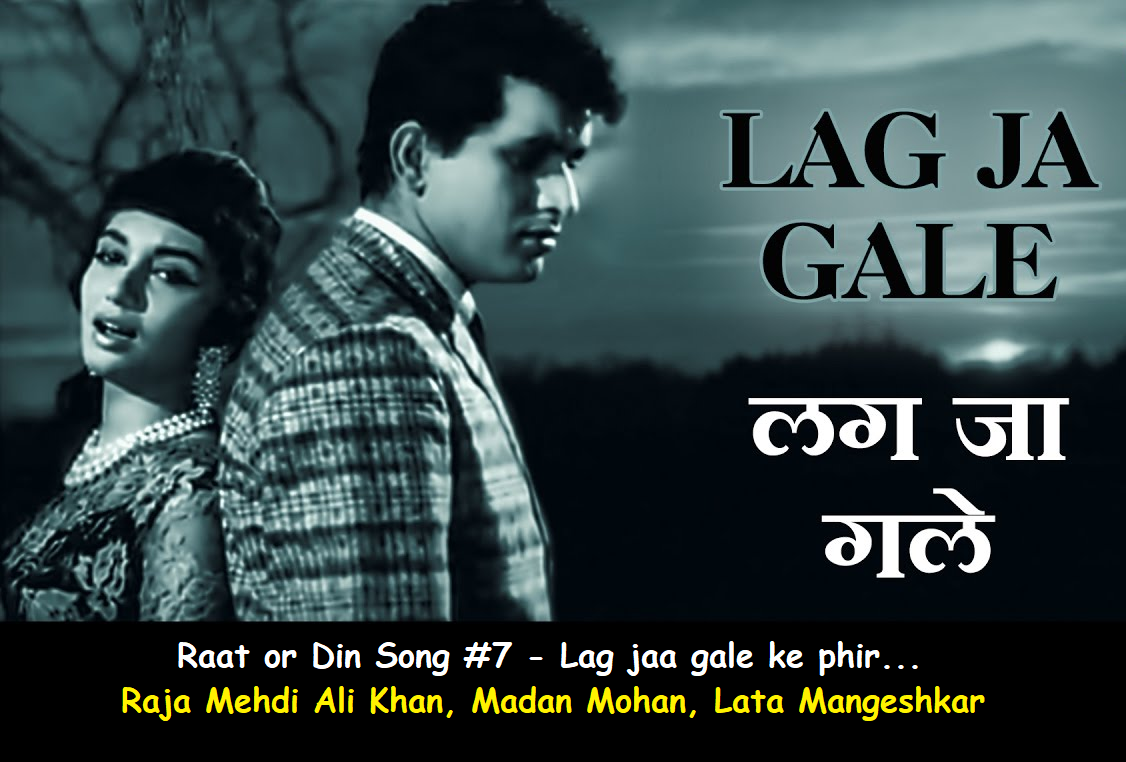
Raat or Din Songs Series
I started this series on my Facebook group Yaad Kiya Dil Ne on 18 Aug 20. Since then, many other members have put up these songs. Here, I shall be giving you one of my own, per day.
This is the Song #7 in the series. I hope you liked Song #6 – Raat ne kya kya khwab dikhaye.
Song #7
Lag jaa gale ke phir
Favourites Keep You Away from Really Good Songs
Except in this group Yaad Kiya Dil Ne wherein we listen to songs on merit irrespective of who was/is the Singer, Lyricist, Music Director and Actor(s), the groups formed for specific purpose of promoting some or the other actually keep you from the entire range of good songs.
Take this song put together by Lata Mangeshkar (she sang her finest songs for Sadhana), Madan Mohan and Raja Mehdi Ali Khan, just one of the hundreds of videos of this song has been watched on You Tube by 17 Crores people! It reminds you what a Time magazine correspondent had to say about the viewership of Football World Cup some five cups ago: “Perhaps, in future, it would be easier counting people who ain’t watching the Football World Cup.”
Raag Pahadi
There has been hardly a Fest in which I didn’t give you a song composed in the raag of my place in the hills: Raag Pahadi.
Today, I am giving you at a fairly early stage. This is in Tal Dadra. The Tal derives its name from Dadra style of singing (somewhat similar to Thumri), which itself derives its name from the name of the place Dadra. It is one of the commonest Tals, very symmetrical.
Pahadi, of course, is a raag as well as a dhun and by name if there is one raag that you can recognise, it is Pahadi. You may recall the very first song in Pahadi that I gave you in the same Tal: Aaj ki raat piya dil na todo, baat meri maan lo from 1950 movie Bazi. Do you feel the similarity? Listen to both and you will easily discern.
Raja Mehdi Ali Khan
After Shakeel Badayuni, the lyricist whom I love the most is Raja Mehdi Ali Khan. I have, now, on my blog, a number of articles on him and his poetry and lyrics. Some of the best and most memorable songs of Lata Mangeshkar were composed by her bhaiya Madan Mohan and these were equally divided between Raja Mehdi Ali Khan and Rajinder Krishan.
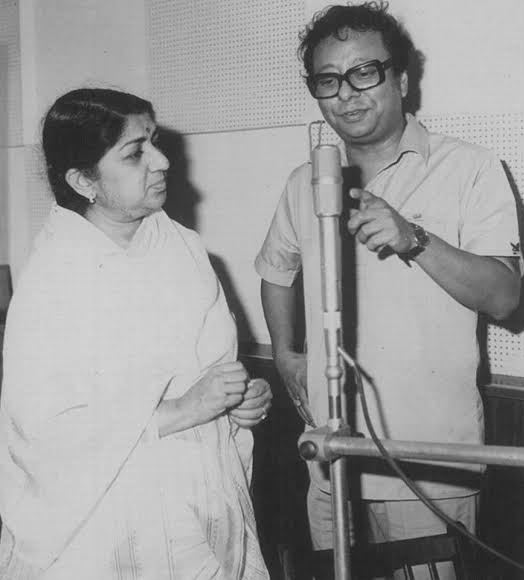
In addition to various expressions that he brought into the movies (such as bedardi balma), he brought in a respectable way of addressing: Aap. In this song too he used Aap in: Phir aap ke naseeb mein yeh raat ho na ho.
Both Raja Mehdi Ali Khan and Rajinder Krishan went about emoting as females and some of these leave you wondering whether they were females in men’s bodies. Whilst covering Raja Mehdi Ali Khan recently on my page Lyrical I gave you several songs in this genre’. Lets not forget that his very first song that he wrote at less than 17 years of age and sung by Geeta Dutt (even younger than him!) was on female’s emotions:
Mera sundar sapna beet gaya,
Main prem mein sab kuchh haar gayi,
Bedard zamana jeet gaya.
Terrific indeed. A very sensitive lyricist who died young but made unforgettable songs.
Sadhana and Bozo
Raj Khosla’s favourite heroine Sadhana brought in tremendous emotions and elegance in her histrionics. It is as if she knew that she was enacting a great song and people would remember her for this more than any other of her songs including O sajna barkha bahaar aayi and Tera mera pyar amar. So, all of us, without exception, know how she looked enacting this song: ethereal, enigmatic, as if part of the elements around her.
I must also admit that one reason her being in the song was enhanced was because of Bozo looking like – well, what he was good at – Bozo; the contrast is so great that one can even remove him from the song and it won’t be noticed.
My Own Poetry
Here is one. It is titled:
HAMEN YOUN JAANE NA DEEJIYE
रोक रखिये रात को, सुबह को आने ना दीजिये,
बैठे हैं आपकी बज़्म में, हमें यूँ जाने ना दीजिये।
आज तक हमने मानी है आपकी हर एक बात,
अपने आप को बढ़ चढ़ के, बातें बनाने ना दीजिये।
आपके साथ कई दिन बिताए थे हमने बहार में,
खिज़ा में बीते दिनों की यादों को सताने ना दीजिये।
प्यार में हमें बेहद खुशी का हुआ था एहसास,
चांदनी गयी तो अब आंसू बहाने ना दीजिये।
ग़म-ए-हिज्र की होने को है अब इन्तहा,
ग़म-ए-हिज्र में बेसबर मर जाने ना दीजिये।
आपकी आंखों ने पिलाये थे जाम उल्फत के,
आंखों से अब बेवफाई के पैमाने ना दीजिये।
खाये हैं इस दिल ने हजारों धोखे और फरेब,
दिल को और ज़ुल्म ओ सितम उठाने ना दीजिये।
आपके एहसान तले जल गया आशियां मेरा,
हो सके तो मुझे और ऐसे नज़राने ना दीजिये।
आपकी वफ़ा की गलत फहमी से ज़िन्दा हैं उम्मीदें,
उम्मीदों को इस तरह बेमौत दफनाने ना दीजिये।
रुखसत के बाद भी हम याद आएंगे, रवि,
बीती यादों को तन्हाई में तड़पाने ना दीजिये।
Please enjoy: Lag ja gale ke phir..
लग जा गले कि फिर ये हसीं रात हो न हो
शायद फिर इस जनम में मुलाक़ात हो न हो
लग जा गले से ...

हमको मिली हैं आज, ये घड़ियाँ नसीब से
जी भर के देख लीजिये हमको क़रीब से
फिर आपके नसीब में ये बात हो न हो
फिर इस जनम में मुलाक़ात हो न हो
लग जा गले कि फिर ये हसीं रात हो न हो

पास आइये कि हम नहीं आएंगे बार-बार
बाहें गले में डाल के हम रो लें ज़ार-ज़ार
आँखों से फिर ये प्यार कि बरसात हो न हो
शायद फिर इस जनम में मुलाक़ात हो न हो

लग जा गले कि फिर ये हस्सीं रात हो न हो
शायद फिर इस जनम में मुलाक़ात हो न हो
लग जा गले कि फिर ये हस्सीं रात हो न हो
I hope you liked my choice of Song #7 in Raat or Din series.
Please await Song #8 – Mujhe kuchh kehna hai.
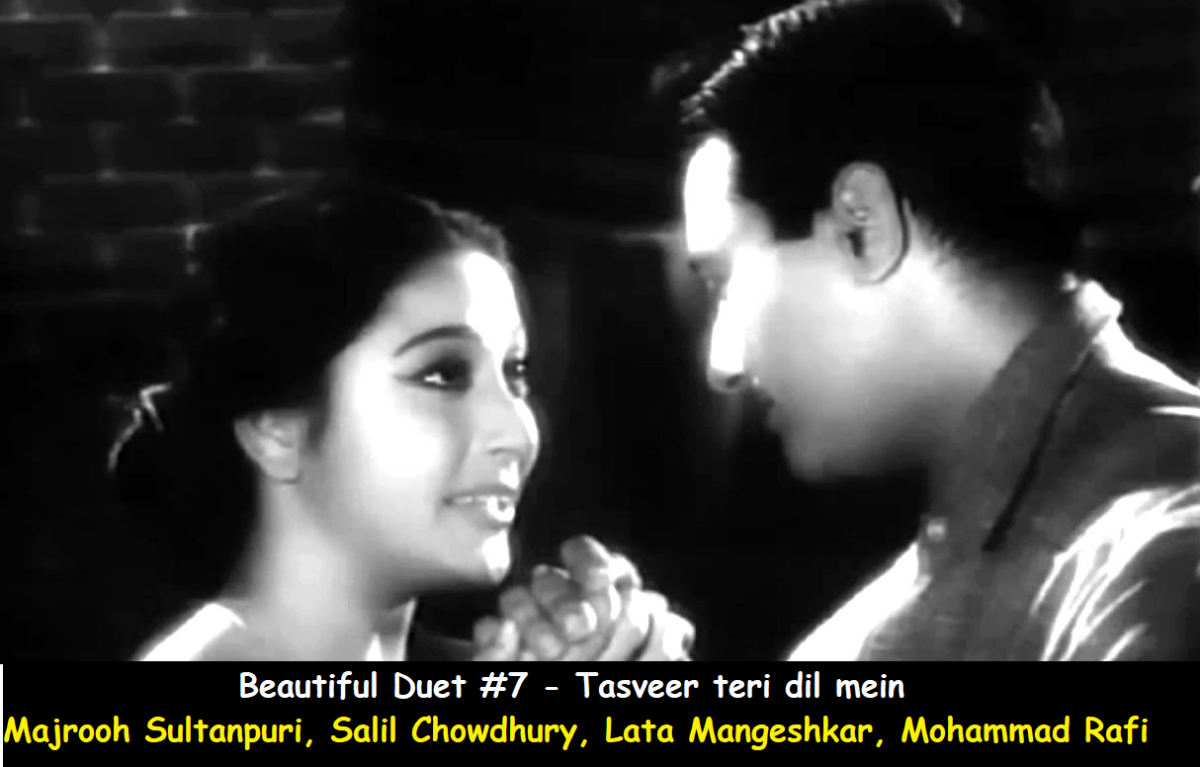


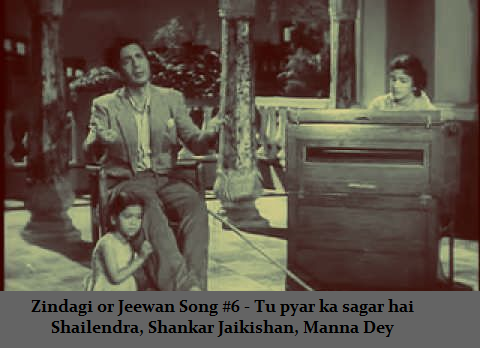
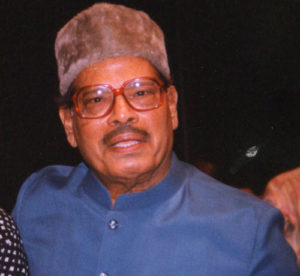 We lost him on this day in the year 2013. Having been born on the Labour Day in 1919 in Calcutta, he recorded his first playback song for the 1942 movie Tamanna, a duet with Suraiya that was composed by KC Dey: Jago aayee usha panchhi bole jago.
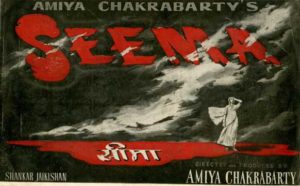 I have taken the song from the 1955 Amiya Chakraborty movie Seema starring Nutan and Balraj Sahni.
 Incidentally, both the movies won Nutan Best Actress Awards, as did three other movies: Sujata, Milan and Main Tulsi Tere Aangan Ki.
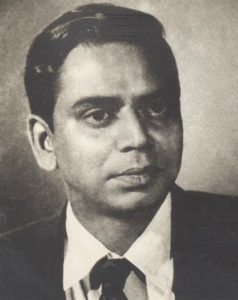 From Ashok (Balraj Sahni) being a kind-hearted Manager of an Orphanage, suddenly, in this hymn, Shailendra raises the level to God Himself.
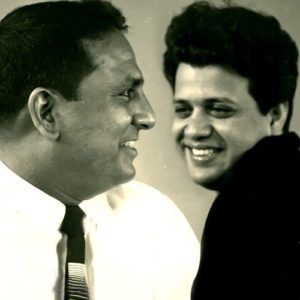 They chose a dignified Raag Darbari Kanada, Tal Kaherava to compose it. It is not my intention to give you intricacies of this raag here. Suffice it to say that if you think of other songs in the same raag and tal (not all by S-J), you would get the feel: Hum tujhase muhabbat karke sanam, Hum tumase juda hoke, Mohabbat ki jhooti kahani pe roye, O duniya ke rakhwale, Teri duniya mein dil lagta nahin and Tora man darpan kehlaye.
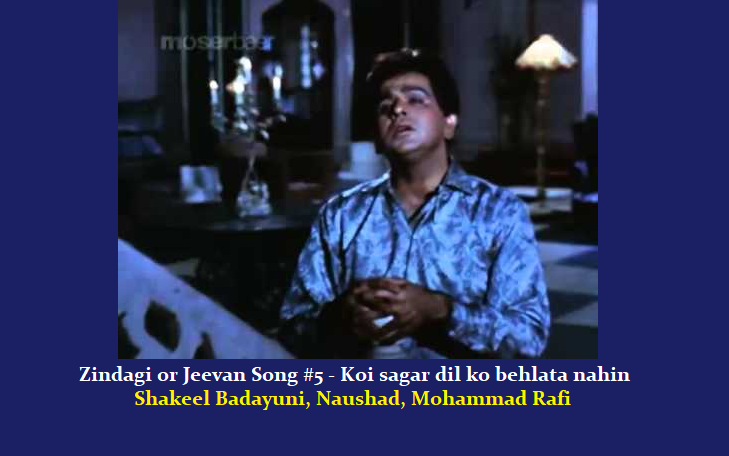
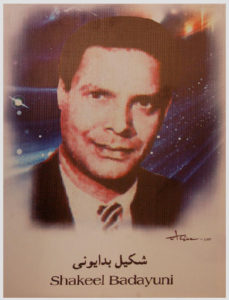 Everyone knows that I am very fond of Shakeel Badayuni. This blog www.sunbyanyname.com has more posts on him than on any other person. I have always felt that the most memorable songs in Hindi movies were made by Shakeel-Naushad-Mohammad Rafi-Dilip Kumar together. And in this 1966 Abdul Rashid Kardar (the one person who gave a break to so many: Majrooh and Shakeel being two) and Dilip Kumar (yes, he is credited as co-director of the movie) movie Dil Diya Dard Liya, the quartet has some of their best songs: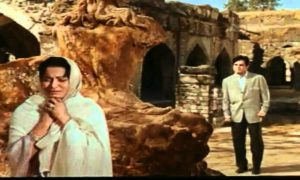
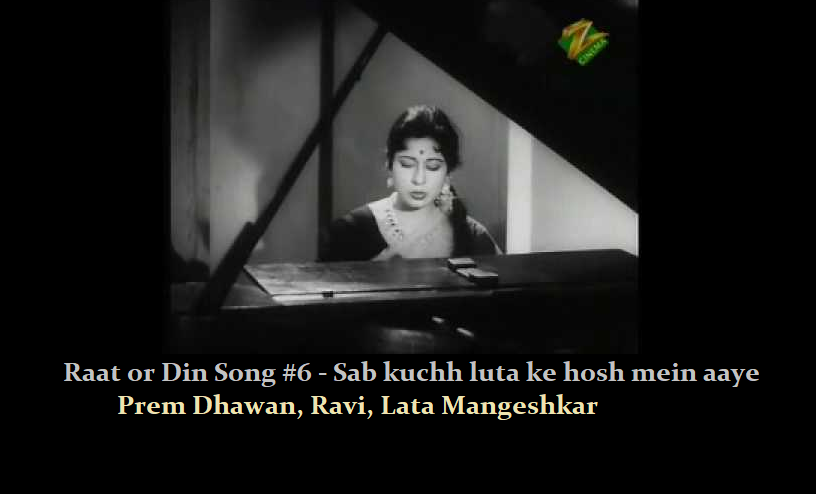
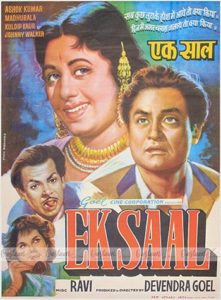
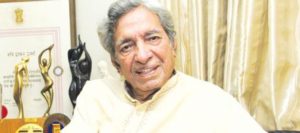
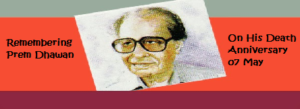 It was penned by Prem Dhawan (Shaheed songs and the unforgettable patriotic number Aye mere pyare watan tujh pe dil kurban.
 It was composed by Ravi who excelled in songs depicting abject misery and sadness (eg, Lo aa gayi unki yaad woh nahin aaye).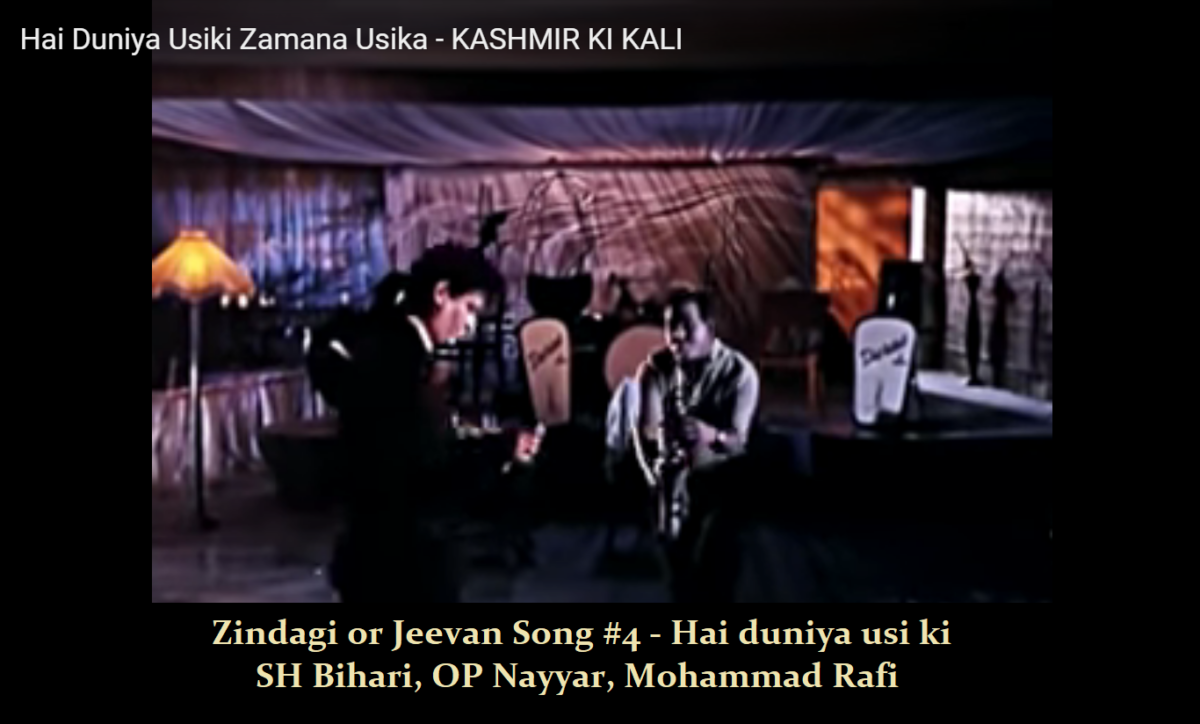
 Recently, I talked about the contribution of Kapoor family to Hindi cinema, which, thanks to their patronage was rid of the parochialism of Bengalis when the Hindi films industry was located in Calcutta. Indeed, Kapoors ensured that talent from all across the country was encouraged.
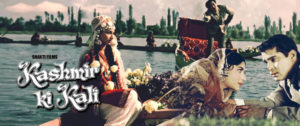 This 1964 Shakti Samanta movie was the debut film of Sharmila Tagore. There was tremendous chemistry between Sharmila and Sharmila and they both enacted their roles with passion: a poor flower girl in Srinagar and spoiled brat of a rich family respectively.
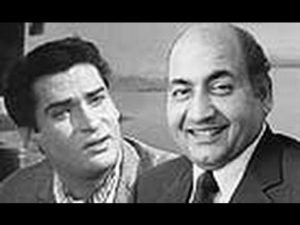 Mukesh became the singing voice of Raj Kapoor. Raj Kapoor gave some of his songs also to Manna Dey. However, Shammi Kapoor stuck with Mohammad Rafi. Hence, some of the best and most romantic songs of Mohammad Rafi are picturised on Shammi Kapoor.

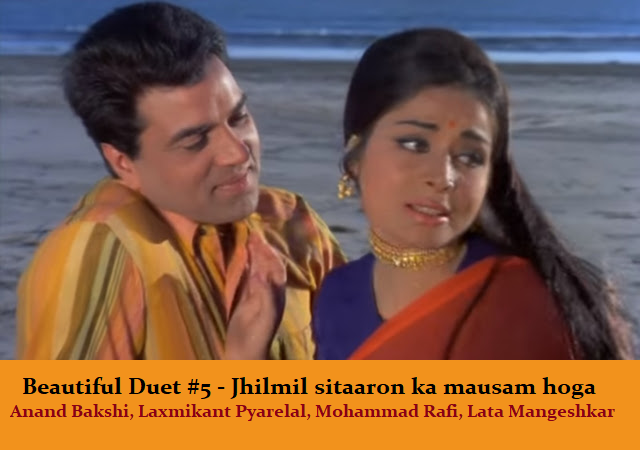
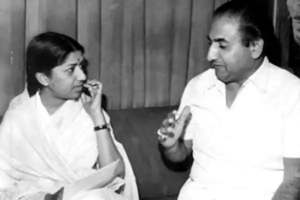 They are my all time favourites, We can talk about this pair and that pair but some of Hindi films’ best duets have been sung by them. I have very precious memories of these duets.
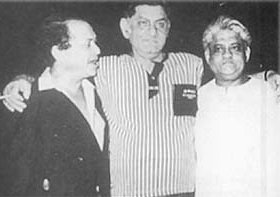 They were the most versatile pair of Lyricist with Music Director; they made songs of approximately 300 movies. No other pair is even close to their halfway mark. And yet, they maintained quality all throughout.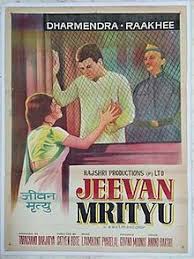
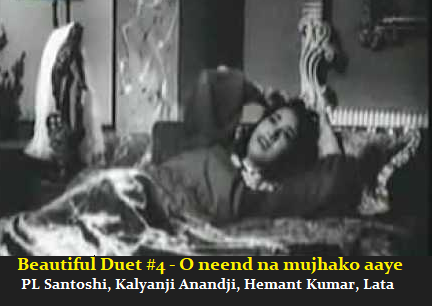
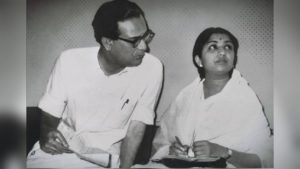
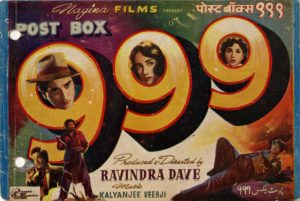
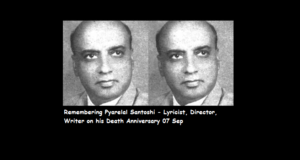 This song was penned by PL Santoshi or Pyarelal Santoshi, composed by Kalyanji Anandji and sung by Hemant Kumar for Sunil Dutt and Lata Mangeshkar for Shakila.