HOW UNBIASED OR INNOCENT CAN WE BECOME?

Is the world an obstacle course to cross and reach God? Is the purpose of our life or existence only to be with God or finally reach Him? Why is it that God can be obtained by the abnegation or denial of all human feelings, desires and wants? In our scriptures and even in ordinary conversation our baser feelings are described as being “animalistic“. But, who made those animals? Who made us? We tend to feel that whenever we do or think something ‘good’, God is controlling us. Then who is controlling us when we do or think ‘evil’ things? Who decides what is ‘good’ or ‘evil’? Who gives us any knowledge or consciousness? Is it God or does knowledge and consciousness exist in the world like internet; a huge highway?

Lets first examine the concept of consciousness. Consciousness is not an absolute term. Indeed, I have already established that there is no Absolute Virtue in this world (Read ‘Absolute Virtue’) and all virtues, qualities, good or bad, and hence beliefs and knowledge are in relation to others. Consciousness too is defined as ‘the relationship between our mind and the rest of the world with which we interact’. Thus, even though consciousness is awareness, it is subjective. And how do we know about consciousness? It is, we are at pains to say, something intrinsic, something intuitive. Something like our perception of God; an idea that emerged from nowhere but we intuitively know it is the right idea.

Consciousness: a relationship between us and the world (pic courtesy: zazenlife.com)

This then brings us to ‘Intuition‘. Intuition is known as the opposite of reason. And what is reason? It is the ability that we have ascribed to ourselves to think logically or to make sense of the facts presented to us. In other words, being reasonable is the same as being rational. Intuition on the other hand is the ability to have or use knowledge without reasoning. The origin of the word is Latin ‘intueri’ which means ‘to look inside’. Lets say you weigh factors in your mind and then decide on a course of action, your selection is dependent upon reason. However, if without weighing the facts in mind you, some inner voice or gut feeling tells you what you should do, you do so intuitively. Many people have won great fortunes or warriors won great battles by following their intuitions rather than reasoning. Intuition is also called Guardian Angel. It is not clear at whose behest your inner voice or Guardian Angel speaks to you.

Intuition: seeing it with the inner eye (pic courtesy: mindpowermasters.blogspot.com)

Lets subject Intuition to scrutiny, reasoning or logic. Is it really the opposite of rational and hence irrational or unreasonable or illogical? Then, how is it that even consciousness is what is intuitively known to us? What about post-event analysis or reasoning? For example, if an intuition can save you from an accident, what is irrational or illogical about it? Is it that if with your current sensory and extra-sensory knowledge leads you to disaster, then only it is fruit of a rational thought. Else, it is to be explained with the phrase ‘nothing succeeds like success’ or with the derisive ‘the b____r is just lucky’. About a century ago, in 1921, Carl Jung defined intuition as ‘perception by the unconscious’. Jung said that a person in whom intuition was dominant, an ‘intuitive type’, acted not on the basis of rational judgment but on sheer intensity of perception.

Last year, I wrote an article ‘Being Nonsensical May Be Far Sighted’. In this I had argued that since we compare our knowledge with what has been in the past, we limit our future knowledge. Therefore, the world’s knowledge grows only incrementally. Anybody who takes a leap of knowledge far beyond our current or past thinking is called non-sensical since we are limited by our senses. I also wrote that we live in ‘The Virtual World’ since even seeing is not believing and also, things do exist in the cosmos that are beyond our senses and hence, simply because we can’t see, touch, hear, taste and smell them are no grounds for their non-existence.

Okay, lets see what I have established so far in this article; it is that all consciousness, awareness, knowledge, rational, reasoning and logical approach is after all an attempt to compare the current knowledge with other current or previous knowledge so as to make sense of the facts presented to us. However, when we ‘intuitively‘ arrive at a conclusion, even if it turns out to be more right for us than reasoning, it is still the product of an irrational thinking or simply a ‘perception born out of unconscious’.

Intuition, therefore, may be defined as understanding or knowing without conscious recourse to thought, observation or reason. There is a great deal of mysticism or supernaturalism associated with it since we appear to be responding to cues, hints or suggestions given to us by our gut-feeling or without any previous knowledge. However, what if knowledge or awareness or consciousness about this previous knowledge is beyond the ambit of our senses? It would still then be historical data stored in the depths of our mind or hanging in the air, which comes to surface only when we are faced with a particular situation.

Sounds incredible? Well, it is not really so. We already have something called reflex action that makes a child instinctively take its hand away from fire or sharp object without having experienced it before during its short life of say three months. It is because generations of knowledge are imprinted in its nervous system through its parents, grandparents etc. Similarly, could this be that an intuition is nothing but generational knowledge imprinted in our system somewhere and it is designed to surface when it does? In that case, it is still comparing current knowledge with previous knowledge or simply experience. Have we experienced such a thing before? If yes, then how does the current experience compare with the previous one?

Therefore, experience is considered the very essence of consciousness; it is a subjective feeling, something intrinsic with each one of us. We are therefore conscious that there cannot be someone or something devoid of consciousness and still be called human.

Lets return to the original question: ‘who, therefore, gives us the consciousness, knowledge, awareness, and even intuition and reflex action, gut feeling or inner voice?’ Is there something beyond consciousness that drives us? Whenever we subject anything to our senses, we invariably compare it with a template we have in our mind of an earlier experience or history either directly through our memory or through intuition. Hence, we can never be innocent or unbiased since consciousness, knowledge, awareness, intuition etc all are relative and subjective. There is no absolute objectivity.

At this stage, let’s have a look at what exactly is Bias? How many times have you come across the expression, “Saala shakal se hi badmaash lagta hai” (He simply looks like a rogue). Lets give it a thought as to what exactly is contained in this statement? It is a template in our mind about what we think a rogue should look like. Have we got enough personal experience of rogues to form this template; or is it some one’s historic data, or description that has got us swayed?

Bias is, therefore, the tendency to have a one-sided perspective in comparison to other equally valid choices. It is a selfish point of view; something similar to a lover’s devotion towards his beloved. It is more emotional than reasoning. The fact is (this is my bias speaking) that every one of us has a philosophy of convenience and we invariably look for reasons to prove this theory or philosophy right.

A very good way to explain Bias by nirmukta.com

A bias can be cognitive if you take decisions based on cognitive skills rather than through evidence. We take shortcuts to arrive at decisions based on emotional and social factors rather than by seeking the proof of a particular statement, event or person.The term cognition comes from the Latin verb congnosco (con ‘with’ + gnōscō ‘know’), which itself is derived from the Ancient Greek verb gnόsko “γνώσκω” meaning ‘learning’. Hence cognition means: ‘to conceptualize’ or ‘to recognize’. If our mind, through emotional or social process of cognition has decided, even before hearing the evidence, that a certain person is bad influence; we cut out all reasoning and arguments against our decision. That’s Bias without our even stopping to think and analyse. Many a times we are not even aware that our mind does this to us; since, believe it or not, it is auto-programmed to do it without any inputs or help from us.

Take a mother’s love for her child; she gets immune to hearing anything that spoils her impression that she has the most beautiful child on earth.

With the kind of pre-knowledge that we are programmed to have, even before we are born, it is not possible for us to be ever unbiased or innocent. Every thought with us, whether conscious or intuitive, is based on historical knowledge (it may be immediate history or of thousands of years back) and hence, when we tell someone to clear his or her mind of all ideas and then make a decision, we are as far from the truth as we can get. Bias, with each one of us, is present in some manner or the other, in some degree or the other. All thinking is Bias in its larger sense. None of us can ever be totally innocent since all knowledge actually corrupts the mind and keeps the mind from reacting to a new situation or idea based on its own merit and not on historic data in our mind or elsewhere. Also, one can never be completely innovative; for, if one did, it would simply be non-sensical or beyond the scope of senses.

How then can we ever regain innocence? Indeed, this sentence unknowingly suggests that we had innocence at one time and lost it by our own actions, thoughts or inactions. Actually that itself is a myth. Anyway, lets at least examine the chances of our ever becoming unbiased or innocent.

The holy book that I look for guidance is the Sri Guru Granth Sahib. Guruji has described something called haume (Self or Ego) that gets into every thinking of ours and we are never free from it. According to Sri Guru Granth Sahib, if we can be rid of haume, we would be close to param aatma (Supreme Soul) or God.

Sounds very simple, is it? Get rid of haume and we are next to God. To help us examine it, we have to decide whether we have the Free Will to think or do things independently or some force somewhere guides us all the time?

Historically, there has been considerable debate with scholars and spiritual leaders about whether we have Free Will or not. It is a somewhat divided house. Is a person, of sane mind (whatever that means), to be morally responsible for his/her thoughts or actions or is what one does or doesn’t do already determined by a higher force; something that the Sri Guru Granth Sahib calls Kirt (writ already for you for a particular life or determined in advance)? Already, in most courts, a person’s guilt is held to be minimised or even held as zero if he or she was not sane or in a position to decide by himself or herself; for example, a small child suffocating her father through sheer ignorance will be held in the courts as innocent because a child is not expected to know what he/she is doing; and certainly not have mens rea (a guilty mind or an intention to commit wrong). However, if we carry forward this argument further, and come to the collective conclusion that no man or woman can ever be totally free to take a decision or commit a deed, what does it make of our collective reasoning to punish such a man? “For heavens sake, a forty-year old can’t be as innocent as a child”?

Lets study the concept of  Free Will a little more. Free Will is our ability to make choices free from all constraints. What stands in the way of Free Will is metaphysical determinism and what favours is the concept of metaphysical libertarianism.

Determinism broadly means that some form of determinism or pre-set conduct or behaviour is true, and hence there is nothing like Free Will. This takes four major forms: Casual, Logical, Theological and Biological. Lets just take one of these to understand what it is. Logical determinism is the notion that all propositions, whether about the past, present or future, are either true or false. The problem of free will, in this context, is the problem of how choices can be free, given that what one does in the future is already determined as true or false in the present.

In Hinduism, the various schools of thought do not agree with one another on whether we have Free Will or not. Here is Swami Vivekananda about it; one of Hinduism’s thinking and modern saints: “Therefore we see at once that there cannot be any such thing as free-will; the very words are a contradiction, because will is what we know, and everything that we know is within our universe, and everything within our universe is moulded by conditions of time, space and causality. … To acquire freedom we have to get beyond the limitations of this universe; it cannot be found here.”

I found this in Wikipedia: However, the preceding quote has often been misinterpreted as Vivekananda implying that everything is predetermined. What Vivekananda actually meant by lack of free will was that the will was not “free” because it was heavily influenced by the law of cause and effect—”The will is not free, it is a phenomenon bound by cause and effect, but there is something behind the will which is free.” Vivekananda never said things were absolutely determined and placed emphasis on the power of conscious choice to alter one’s past karma: “It is the coward and the fool who says this is his fate. But it is the strong man who stands up and says I will make my own fate.”

So, finally, we have come to the end of this long discourse; which is that we can never be unbiased or innocent. However, there is a Consciousness far beyond the western or common notion of consciousness as given above. If, in some way, we are able to arouse this consciousness, we can get over what is pre-determined for us.

Until then, we can be more unbiased or innocent than someone; and at the same time be less unbiased or innocent than someone else. Also, we cannot be absolutely unbiased or innocent. As Eugene O’ Neill wrote, “No man’s guilt is not yours; nor is any man’s innocence a thing apart.”

Sri Guru Granth Sahib, which I believe, in large parts, is based on the Vedas (the holiest of Hindu scriptures), has this to say about it: “Man jeete jag jeet(Conquer the mind to conquer the universe).

Easier said than done, since, you can’t free the Mind of Bias (borne out of haume) even for a second.

BEING NON-SENSICAL MAY BE FAR SIGHTED

I believe that it is not just ‘we are what we think‘; but, also, the universe is what we think it is. Surprised? Hogwash? We often refer to it as ‘magic’ or ‘supernatural’ what we cannot understand. Those who can let their imagination take wing can ‘see’ and ‘hear’ things better than others; something that we have called ESP (Extra Sensory Perception). I have proved in this section of my blog (The Virtual World) that even seeing is not believing; even seeing is still our imagination. So, in order to carry forward this argument, what if the saints and spiritual leaders before us had discovered that senses can get us only so far and no more; and that going beyond the senses may be the way to go. That is, the expression “are you out of your senses” may not describe you as an idiot but as a great intellectual?

Don’t get it? Well let me explain: Senses kind of ‘limit’ the range of our imagination or even ‘knowledge’, if you care to call it that. There is only an ‘incremental’ growth in the knowledge of the world with passage of time; even when there are such earth-shaking discoveries as atomic power and speed of electrons. So, because of this limitation, we are not able to acquire such knowledge about which we have no knowledge whatsoever. In other words, you can only discover such lands and treasures that you have at least imagined them to be there. It doesn’t mean all treasures and ‘lands’ (I am using the word ‘lands‘ in a metaphoric sense) have been found; least of all imagined. Therefore, in our life time, we shall never imagine those things, ‘treasures’, ‘lands’ that people will ‘imagine’, say, a thousand years from now.

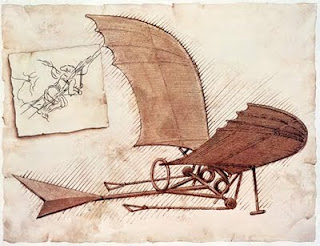
But, what, if we were to suddenly discover a machine or tool by virtue of which we could go beyond our current imagination and discover things or treasures of future generations? Impossible? Well, I am not too sure. Leonardo da Vinci did it; Lord Rama did it; Arjuna did it.

Probably, many of us do it but these are termed as – you guessed it – non-sensical; because, our collective sense has not (yet) taken us there.

Seen in this manner, I am convinced that there is no difference between Science, Spirituality and Mythology: the one that takes the bigger leap calls the other backward and idiotic. And who is to know which is the bigger leap? Well, our ‘current’ knowledge.

What happens to some of us or at least one of us who has travelled to the world beyond the year 2500 AD and lives amongst us? We don’t believe but he believes because he has seen it, heard it, felt it, smelled it and spoken to it.

Let me end on a lighter note (that I frequently do) to sum up our understanding of someone else’s understanding:

A man was going through the jungles of Africa and was held prisoner by cannibals. As they prepared to boil him alive and have him, he thought of scaring them with ‘Magic’. He pulled out a cigarette lighter (during those days the lighters were the flint-stone type) and jerked the wheel to produce a flame and turned to the cannibals and said, “See Magic”. Upon this the cannibal chief responded, “It indeed is. This is the first time I have seen a lighter that worked on first go”!

We, others, and universe are what we think we, others, and universe are.

WHOSE GOD IS IT ANYWAY?

We have just concluded the Navratri “celebrations”. I am convinced that people believe that gods must be deaf or sleeping and they need to be woken up with cacophonic music, ear splitting noise of conches and other religious instruments and blaring loudspeakers. It is as if when we did not have technology of woofers and mixers we had no means to reach God.

Earlier we had the Ayodhaya verdict. I sometimes keep comparing our times with times many centuries ago. As compared to then, we have better technical means available now to debate issues. However, I keep wondering whether the quality and impact of debates are any better than, say, during Peloponnesian wars. Is it the destiny of human race to periodically indulge in extreme foolishness and lunacy that do nothing for general upliftment of people? If we believe in God, all land, assets, and people belong to Him. Can some judges actually adjudicate now whether a miniscule portion of that land also belongs to Him or not? God, we are your children but many a times we act as if we are more powerful than even you. I’d rather join the ranks of pagans and atheists than to associate with such religions as divide God’s people.

Let us take the simplistic version of origin of Religion; no, not any particular religion; but just Religion. Many centuries ago, Man realised that there was great deal to be gained by staying together: mutual support, defence against animals and vagaries of Nature, and optimal utilisation of resources, to name a few. However, community living brought with it a set of problems if all the members were to follow their own rules, ethics, and standards. Thus, Religion was born: a set of principles for good community living. There were, however, many problems, dangers, disasters etc that Man was not able to protect himself against even when living in a community and hence the concept of God or gods originated. The philosophy was that anything beyond Man, both individually and collectively, was in the realm of an omnipotent and omnipresent God and all that we had to do was to have faith in Him and He would be our saviour. Indeed, the ancient images of gods included Snake, Sun, Tiger, Lion and all the things Man was afraid of. Thus, when faced with situations beyond his control, Man turned to God for succour. This pleading for succour could be done in many ways. But, Man realised that the best was to do it together in community. Therefore, somewhere along the line Religion got associated with the concept of praying to God. It is not clear whether Religion, being a set of principles for community living, came first or formal praying to God in community came first. However, principles like ‘Thou shalt not steal’ or ‘Thou shalt not covet your neighbour’s wife’ together with Prayers or Petitions to God became essential parts of most religions.

The concepts of Religion and God were refined over the ages and in keeping with the times. However, despite the refinements, because different people interpreted these differently, problems arose. One basic reason why these were interpreted differently was (and is) that logic and reason are more suited for individuals (eg, Lord Krishna reasoning it out with Arjuna before the battle of Mahabharta). More often than not, in collections of people called crowds, mob mentality takes over. So, whereas people individually are adequately reasonable, in crowds they behave at the level of common minimum reasoning laced with jingoism and parochialism. The reason for this is not difficult to fathom; it is an unquestioned faith in tenets of community honed over ages. Armies are built around such philosophies of convenience; ‘Good’ lies with us and ‘Evil’ is what they are. The concepts of jus ad bellum (right to wage war) and jus in bello (just war) also have their origin in this.

Oliver Cromwell, on 5th Aug 1650 wrote thus to the synod of church of England: “I beseech you in the bowels of Christ, think it possible that you may be mistaken”. But, like Rundi K Bakshi, played by Peter Sellers in the movie ‘The Party’, said, “In India we don’t think; we are sure”; there is no question of Indians, belonging to any community, thinking it possible that they may be mistaken. Gods, they feel, have bestowed upon them the burden of being ‘firm in faith’. Translated it means that there is religious merit in locking up good sense and following jus ad bellum unquestionably.

Whenever our collective understanding of tenets that should be followed in a community, that is Religion, became much haywire, we had leaders emerging who brought us back to good sense. These leaders reminded us primarily not to try to prove with mass reasoning that we knew to be intrinsically wrong. These reformists either started a new Religion or their teachings became new Religion. In some cases, like in the case of Hinduism, the religion remained the same but reforms made it better and more suited to emerging times.

As I said earlier, in our collective wisdom, the teachings of these leaders too became subject to interpretations. So when Mohammed said and practised that a Muslim should marry many women, he was talking about succour that such marriages provided to those women who had lost their protectors in war in early seventh century. But, over time, this was interpreted as a right of a Muslim to have many wives. In other religions too such interpretations to suit philosophy of the day became rampant. Our faith demanded that we did not think of these leaders as mere mortals; so we regarded them as gods or the God or prophets of God. Since Religion was close to armies in organisation, blind or unquestioned faith in tenets of the religion and gods was considered a virtue. Hence, people fighting in the name of God or Religion was sanctified in almost all religions. This included even Buddhism.

I think a time has come when we do not require organised Religion at all. We have come way off from the ancient times when Religion provided us with collective defence against Evil and fearful enemies including animals and demons. During those times and many centuries later Religion united us against such forces. But now, Religion has become the biggest divider of people. We should now move from community religion to individual religion. Indeed, Guru Nanak Dev, the founder of Sikhism, and many other reformers, during the major reformative movement of Hindu religion, described Kalyug as a positive era; in that whilst earlier we were praying to God in community, we could, in Kalyug, do it individually. In other words we can be one to one with God. We can evoke the Good within us and kill the Evil within us rather than seeking to destroy or look down upon the enemies or perceived enemies of our Religion. Guru Nanak borrowed a phrase from the Vedas to delineate the entire essence of what should be our Religion: “Man Jeete Jag Jeet” (Conquer your own Mind to conquer the Universe).

God is within us and all around us. We neither have to go to mountains, nor churches, mosques and temples to worship Him or Her. Collective worshipping of God or gods helps no one except to divide communities (who are also the same God’s creations and hence related to us) and only helps the politicians or so called custodians of faith who thrive from such polarisation.

I was very small when I went with my parents to see Hindi (we had not bastardised by calling it Bollywood) movie ‘Dhool Ka Phool’ (A Flower in Dust). But, still the words ring in my mind:

‘Tu Hindu banega na musalmaan banega,

Insaan ki aulad hai insaan banega.’

(My child, you will neither grow up to be a Hindu nor a Muslim; you are a human child and you will grow to become human)

I, for one, shall pray in a Mandir or fight for the right to pray in a Mandir if…..well, if a court can prove to me Ram is to be found or can be prayed to only in a Mandir. Similarly, I shall pray for Allah in a mosque if He can’t be found elsewhere.

When they objected to Guru Nanak for sleeping with his feet towards the mosque because it was the abode of God, he simply asked them to move his feet in a direction where there was no God.

Whose God is it anyway?

ABSOLUTE VIRTUE

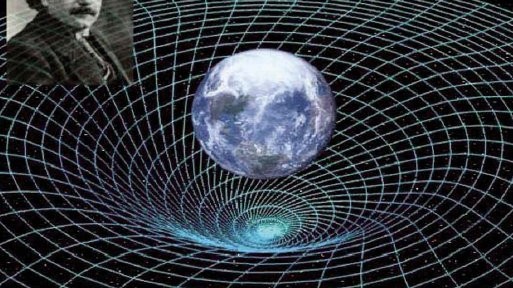
Playwright Eugene O’ Neil once said, “Remember that every man is a variation of yourself; no man’s guilt is not yours, nor is any man’s innocence a thing apart”. This relativity of human kind actually extends to the entire cosmic universe. The existence and even location of millions of objects in space is dependent upon other objects. If it were not for the gravity, many objects would lose their weight and position. For example, we cannot see Dark-Matter or perceive its existence, but because of gravity exerted by it, we know it is there! Imagine that Mass or Matter beyond electromagnetic waves is perceived by inference alone! Einstein’s Theory of Relativity further brings the relationship between Mass and Energy. According to him both are the same; that is, both are conserved separately but atomic particles (Matter) can be converted to a form of Energy (Non-Matter) such as Light, Heat or Kinetic.

That brings us to the Law of Conservation of Energy that we read about in the school. According to this the total amount of energy remains constant over time. In simple terms it means that when energy is consumed or dissipated it appears in an equivalent and some other form or forms. In other words Energy cannot be created or destroyed! Since there is relationship between Mass and Energy it also, by extension, means that the Total Energy or Total Mass in the universe is constant over Time as observed by us.

In my previous article ‘The Virtual World’, I had argued that how we see objects is dependent upon a form of Energy called Light emitted by such objects and reaching us over Time. If this Energy including Infrared and Ultraviolet were not to reach us, as far as we are concerned, such a thing does not exist. But, nay, Dark Matter does exist as otherwise who or what would be applying such gravitational force.

Suffice it to say that only constant is Total Mass or Total Energy and everything else is relative. Every consumption of energy by us is reappearing somewhere and someone is being affected by it. So far there is no difference between Science and Spirituality. We believe in the same thing. Where we differ is what we perceive by inference. Spirituality feels that there is a Creator since Scientists acknowledge the fact that Energy or Mass cannot be created but merely converted. Then who created it? For example, Guru Nanak as brought out in the very first lines of Guru Granth Sahib made an effort to explain God, the Creator (Ek Ongkaar). God, he said is Satnaam (Truth) and is “Aad Sach, Jugaad Sach, Hai Bhee Sach, Naanak Hosee Bhee Sach”. (True in the Beginning, True in the Primeval Age, True now, says Nanak, He shall certainly be True in the future). This means that God the Creator is beyond His Creation and when the Creation dies (or actually reappears as something else), He will not die.

Bhagwat Gita says exactly the same thing. Ahamaatmaa gudaakesha sarvabhootaashayasthitah; Ahamaadishcha madhyam cha bhootaanaamanta eva cha (‘I am, O Gudakesh, the Self that dwells within all beings, as also their primeval beginning, middle, and end’). Both, Guru Granth Sahib and Bhagwat Gita also tell Man not to worry about the past or the future because it was and is beyond him. Also understanding of the cosmic world is beyond man: Na tu maam shakyase drashtum anenaiva swachakshushaa; Divyam dadaami te chakshuh pashya me yogamaishwaram (But thou art not able to behold Me with these, thine own eyes; I give thee the divine eye; behold My lordly Yoga). It is only then that Arjuna saw various manifestations of Lord Krishna as the Creator.

Anyway, a deeper study of Science and Spirituality bring out that there is hardly any difference in what both believe in; except that Science feels that what is now unknown or un-understood by Man will be discovered by him later in a scientific way whereas Spirituality feels that God reveals to Man what He chooses to reveal.

As brought out on page 606 of Sri Guru Granth Sahib: Aape mar jivaida piyara sah  laide sabh lavaaia (The Beloved Himself kills and revives; all draw the breath of life, given by Him). Aape taanh dibaan hai piyara aape kaare laaia (The Beloved Himself is power and presence; He Himself engages us in our work). Jiu aap challaye tiu chalaye piyara jiu har prabh mere bhaayiya (As the Beloved makes me walk, I walk, as it pleases my Lord God). Aape janti jant hai piyara jan Nanak vajeh vajaaiya (The Beloved Himself is the musician, and the musical instrument; servant Nanak vibrates His vibration).

This is no different from Bhagwat Gita, eg, Chapter VII: Beejam maam sarvabhootaanaam viddhi paartha sanaatanam; Buddhir buddhimataamasmi tejastejaswinaamaham (Know Me, O Arjuna, as the eternal seed of all beings; I am the intelligence of the intelligent; the splendour of the splendid objects am I). Balam balavataam asmi kaamaraagavivarjitam; Dharmaaviruddho bhooteshu kaamo’smi bharatarshabha (Of the strong, I am the strength devoid of desire and attachment, and in (all) beings, I am the desire unopposed to Dharma, O Arjuna!) Ye chaiva saattvikaa bhaavaa raajasaastaamasaashcha ye; Matta eveti taanviddhi na twaham teshu te mayi (Whatever being (and objects) that are pure, active and inert, know that they proceed from Me. They are in Me, yet I am not in them). Tribhirgunamayair bhaavairebhih sarvamidam jagat; Mohitam naabhijaanaati maamebhyah paramavyayam (Deluded by these Natures (states or things) composed of the three qualities of Nature, all this world does not know Me as distinct from them and immutable).

At this stage, I am not going to get into any discussion about the Good and the Bad or Evil. However, it is important to take stock of what we have established so far

· One, we have established that Energy or Mass cannot be created or destroyed. These can only be converted to other forms.
· Two, we have established that there is a (so far unknown) Force (as believed by Science) or Creator who has created this fixed quantity of Energy or Mass and this Force or Creator is beyond the laws of Nature.
· Three, that because of our inability to produce new Energy or Mass (as opposed to converting what this Force or Creator has made available to us); every action of ours is relative to such reconverted forms.

Some simple examples of the last point above are that we, human beings, do not create water; we either melt ice to get water through the use of Heat Energy or convert sea water into water by excluding salt by evaporation. If the world balance of Total Mass or Total Energy is to be maintained, then every action of ours has an (or several) equal reaction(s) over Time; some of these are immediately noticeable by us whereas some take more time; some may be at the same place, whereas some may be at another distant place. An example of the latter is the concern of the developed world about global warming and environmental issues. They themselves used Energy during their industrialisation years causing unfettered depredation of the environment; but, they want China and India to put cap on emissions during their rapid industrialisation requiring unprecedented use of Energy. These are clearly double standards.

Here is what Jeremy Seabrook wrote in Outlook magazine (16 June 2008 issue) in an Opinion titled ‘The Paupers Arrive..Late for the Banquet’:

“In a world of prodigality and poverty, of excess and exiguity, and a system that violates the elements that sustain life, if India and China increased their wealth twenty- or fifty-fold, what would be the effect on the resource base of the earth? It is yet another unfortunate historical accident that India and China should be poised on the brink of the age of heroic consumption at the very time when the western powers are coming to the sober realisation that this era may be drawing to its close. The insistence that India and China forbear to pollute in the reckless fashion of the West at the time of its early industrialism is an indirect recognition of the impossible task they are faced with. Although the economy is the only area of experience in which the knowing and cynical of the world still believe miracles to occur, it would require unprecedented supernatural intervention to satisfy unbound human desires, which hover like an epic plague of locusts over the harvest-fields of the earth.”

Strong words these. However, these are in recognition of both our findings; that Energy consumed would produce some reaction somewhere else over Time; and two, that we have only a fixed amount of Energy. It is for this reason that I steered clear from any discussion on Good or Bad because who is going to be the judge? As seen by George Bush global food crisis of 2008 was a direct result of enhanced consumption by India and China! One man’s meat is another man’s poison.

This argument can be extended to arrive at the realisation that there is nothing like Absolute Virtue or Absolute Evil. In God’s Universe there are no Absolutes; everything and every action is in relation to another thing or action. It is because of the Relativity of Time. The only Absolute is the Creator Himself; He is Timeless.

What if ideas, concepts, words and sounds too have an Absolute Total Quantity over Time? In that case we would only be regenerating these (in the same manner as other forms of Energy)! When I was small I read of a machine that would produce all possible combinations of letters and digits and punctuation marks (say in just one language). It would thus produce all the literature of the world that has already been produced and all that that is going to be produced. There is only one problem though; the time taken for all the combinations would be eternal even with super computers. After that another eternity would be required to sift the meaningful from the gibberish and who knows all the meaningful from all the gibberish? In relative terms (the only terms known to us) one man’s gibberish is another man’s intellect!

Now we turn to the concept of Free Will. All religions believe, with some variations, that Man does not have Free Will. If you followed my arguments so far, we can never have free will since we have a position in this universe which is relative to others. Every action of ours is in relation to others. Here is what Swami Vivekanada had to say about the concept of Free Will,” Therefore we see at once that there cannot be any such thing as free-will; the very words are a contradiction, because will is what we know, and everything that we know is within our universe, and everything within our universe is moulded by conditions of time, space and causality. … To acquire freedom we have to get beyond the limitations of this universe; it cannot be found here.”

In Guru Granth Sahib it is said thus: Hukme karam kamavne payiye kirat firao (According to the Lord’s Command, people perform their actions; they wander around, driven by the karma of their past actions). And what exactly is this kirat? It is what God ordained for you. In Bhagwat Gita, Lord Krishna tells Arjuna not to be carried away by the fact that those arrayed across from him were all related to him and would die by his actions; he said in any case the whole universe is related to you and in any case they are going to die. But what about your Karma?

This brings us to the most interesting concept of Life and Death; we know that these are not Absolute. Hence, for something to be born (not Created but born in the sense of the word ‘Born’ as we understand), something has to die. This also explains the doubt by a number of meta-physicists who feel that if Creator or God already knows that his creation (say, a man) would be wicked when he grows up, why did he create him? It also explains why there are floods and earthquakes.

In the great Hindi movie Waqt (Time), there was a beautiful song whose lyrics were:

Aage bhi jaane na tu, peechhe bhi jaane na tu
jo bhi hai, bas yahi ek pal hai


Anjaane saayo ka raaho mein dera hai
Andekhi baahon ne ham sabko ghera hai
Ye pal ujaala hai baaqi andhera hai
Ye pal gawaana na ye pal hi tera hai
Jeene waale soch le yahi waqt hai kar le puri aarzoo.

(What is beyond you don’t know; what is past you have no knowledge
What is really there is only the present moment.

In this world dwell the shadows strange,
We are all embraced by unseen arms.
The present moment is the only light, rest is dark for us.
So do not lose this moment, only the moment belongs to you.
O living being, think, only this Time is your own
To fulfill all your desires)

There is only one flaw in the lyrics of the song; that is, the suggestion to “soch le” (think). It is because the moment you think, you are transported to another “pal” (moment), which is either in the past or yet to come.

A few years ago, when I went to Spain, I saw the bull-fighting that I had heard so much about. All the impressions that I carried of bravado were shattered when I learn that it was not so much fighting but it was actually more like a play or drama with three Acts called the tercios (thirds), the start of each one announced by a trumpet. The first stage is tercio de varas (the lancing thirds) when the picadors soften the hump of the bull with lances. In the next stage, the tercio de banderillas (the third of flags), the three banderilleros each attempt to plant two banderillas, sharp barbed sticks into the bull’s shoulders. These anger and invigorate the bull. In the final stage, the tercio de muerte (the third of death), the matador re-enters the ring alone with a small red cape, or muleta, and a sword so as to finally kill the bull by piercing his heart by a sword through the already softened hump, what is termed as estocada. Accidents do take place in all the three acts. However, in this play or ritual or drama the bull has no choice but to die.

I was reminded of the Hindi movie ‘Anand’s famous speech by Rajesh Khanna, “Babu moshaye yeh zindagi ek rang manch hai; aur hum sab usme kaam karne wali kathputliyan. In kathputliyon ki dore upar wale ke haath mein hai. Kab, kaise, kahan, kis kis ko uthna hai yeh koi nahin jaanta” (Dear Sir, our Life is a play-stage and we are all puppets participating in this play. The strings of the puppets are in the hands of the Almighty. When, how and where he would make anyone disappear (die) no one knows”.

Many have misinterpreted the last words of Christ on the cross, ‘Father forgive them, for they know not what they do’ to indicate the wickedness of the Romans. Actually, Christ has said these for the entire mankind. He knew that Man has no way of knowing what he is doing because only God has that knowledge. Talking about Christ, He also gave us an example of our ignorance in believing in Absolute Virtue when he saved Mary Magdalene from being stoned for being a sinner. He said the first stone would be cast by the one who had not sinned. No such person existed. No such person exists even today.

Hence, if there is nothing like Absolute Virtue and we do not exercise free-will to do anything, we can only strive to do Good in what we believe to be Good. We can neither be judgmental of our own deeds nor of those of others. Here is an excerpt from the song, from the movie ‘Do Aankhein Barha Haath’:

Ae maalik tere bande hum
aise ho humare karam
nekee par chale, aur badee se taley,
takey huste huey nikley dum


Bada kamjor hain aadmi,
abhi laakhon hain is mein kamee
par tu jo khadaa, hai dayalu bada,
teri kirpa se dharti thami
diya tune humey jab janam
too hee zelegaa hum sab ke ghum


jab julmon ka ho saamnaa,
tab tu hi humey thaamnaa
voh burai karey, hum bhalai bharey,
nahi badley ki ho kaamnaa
badh uthey pyaar ka har kadam
aur mitey bair ka ye bharam’

(O God, we are your servants,
Please make our karmas such
That we take the path of Good and be afraid to do the Evil
So that finally we return to you in joy.

Man is very frail,
As of now he has many shortcomings,
But you are all merciful,
And this Earth is in its place because of you.
Now that you gave us birth,
You will bear all cruelties done on us.

When we face cruelties,
Please keep us in your care.
But, when others do Evil and we do the Good,
We should never have a desire to seek revenge.
Let our every step be that of Love,
And we should shun all animosity.

I think that the realisation that there is no Absolute Virtue is the beginning of our knowledge about our Absolute Ignorance!

THE VIRTUAL WORLD

The entire ‘Srishti’ (Creation) – any Swami (man of God) would tell you – is ‘Maya’ (mirage); the only Reality is God. I heard this in my childhood and I heard it many times later. I heard it again recently and it is only now that I am beginning to realize that there is a great deal of truth in it. Reality is what one believes to be real. That’s why a person’s Reality is different from another person’s Reality, or as the English say, “One man’s meat is another man’s poison.” For heavens’ sake, it is the same object that we are talking about. How can it appear to be so diagonally opposite to different people?

Let us look at the concept of Reality; anything is real only if it exists in two variables known to us, that is, in Time and in Space. Let us tackle the Space factor first since it is easier to understand. How do we know a thing exists in Space? Simple, by feeling it with any of our five senses. Out of these five senses, for the sake of reasoning, we shall take the sense of Seeing. It is often said that seeing is believing. It is because there is no doubt about the existence of a thing after we have seen it with our own eyes. But now imagine that we enter a room in which this thing exists. It is pitch dark and we don’t know whether this thing exists unless we can make it out with other senses, that is touching, hearing, tasting and smelling. What if the thing is odourless, noiseless, tasteless and occupies no form? Difficult to imagine? Alright, let us just say that it has odour, noise, taste and form well below or well above the range of our senses; does it still exist? The answer is that we do not know. Hence, when we say that we don’t know, it does not mean that a thing does not exist. It is simply that it is beyond the range of our senses, which are our only way to establish if a thing exists. Therefore, as far as we are concerned, the existence of anything in Space is dependent upon our ability to see, touch, smell, hear or taste it.

All these are dependent upon the Rules that we ourselves make or discover. For example, many a times, we think of a person as extremely bright and intelligent when we see her and later find the same person extremely stupid when we hear her. Why? Simple – because Light travels much faster than Sound!

Let us pause to think of how do we see this person or any other person or thing? It is because of the Light emitted or reflected by that person or thing reaching us. And, Light travels at the, well, Speed of Light, which is very very fast indeed. Hence, we see the person or thing instantaneously. But, what if the person or thing is very far away, say, Light Years away? Well, in that case, by the time Light from that thing reaches us and supposing that thing is moving, we only imagine to see it where we see it, whereas in those Light Years, the thing may have actually moved elsewhere.

Let me explain this with an example. Let us say that a new star is born in the sky (it actually happens often), emitting, for the sake of hypothesis, distinctive light, say, green. Let us say, for the sake of argument, that you could travel faster than the Speed of Light and take a Space Odyssey towards this new emerging star and see it and return to earth. Now, let’s say, in the intervening time you have grand children and it is then, one day, when your grand children are playing in the courtyard that they see this new star in the sky (because of the light from that star having reached them after those many Light Years) and they run excitedly to you and shriek, “Grandma, come out and see there is a new Green Star in the sky.” And you, without stopping cutting the vegetables in the kitchen reply, “Oh, now you see, is it? I saw it fifty years back!”

So, you saw an event ahead in time in comparison to others, simply because you could travel faster than the speed of light! The distinction between what you always thought as Real World and Virtual World gets blurred! We refuse to believe it when the sages of yore used to call our world as Maya (the Myth). These worthy persons could travel (in body or estrella) at whatever speed they chose and actually (in our Reality) appeared sometimes at what appeared to be two or three different places at the same time!

So far, in our physical world, nothing can travel faster than the speed of Light and hence we tend to imagine that there is no other world. But think again; is it really true? Actually, something can travel faster than Light! Think about it; yes, our Dreams can actually travel much faster than any physical phenomenon known to us. If we do not get scared to, we can go Beyond the Rainbow and see another world and return to tell the story to others who would eventually see it many years later:

“Aa chal ke tujhe main le ke chaloon,
Ik aise gagan ke tale,
Jahan gham bhi na ho, aansoo bhi na ho,
Bus pyaar hi pyaar pale.

Jahan dur nazar daudayen, aazaad gagan laharaye,
Jahan rang birange panchhi, aasha ka sandesha layen.
Sapno mein pali, hansti ho kali,
Jahan sham suhani dhale,
Jahan gham bhi na ho, aansoo bhi na ho…”

This is an old Hindi song from the movie ‘Door Gagan Ki Chhayon Mein’ (Under the Far Skies), which is translated thus:
“Come let me lead you into that world,
Where there’d be no sorrow, no tears, but only Love.
Where as far as eyes can see,
You’d experience the unhindered sky,
Where birds of all colours,
Would bring the message of Hope.
In this dream world, Joy would blossom with sunrise,
And evenings’d lead to a sanguine sunset”.

Possible? I am sure we can make it possible. All we have to do is exactly what the Man from La Mancha, Don Quixote, did:

“To dream, the Impossible Dream
To touch the untouchable glory,
To reach the unreachable star…”

But, the doubts arise; don’t they always? “What if we all live in the virtual world? If we are always looking for ‘Tare Zameen Par’, who is to take care of Life’s real problems? What about electricity and water complaints, for example? The leaking faucet won’t be repaired simply by dreaming; the monthly bills have actually to be paid; children actually have to be dressed to go to school and the maid has to be actually trained over and over again”.

My answer is that there is time and place for everything! You dream when you can and you live when you have to. And if you can live and dream at the same time? Well, then, ladies and gentlemen, you are blessed indeed.

Follow

Get every new post delivered to your Inbox

Join other followers:

error

Enjoy this blog? Please spread the word :)

RSS
Follow by Email
YouTube
YouTube
Set Youtube Channel ID
LinkedIn
Share
WhatsApp
Copy link
URL has been copied successfully!